• Trade
  • Markets
  • Copy
  • Contests
  • News
  • 24/7
  • Calendar
  • Q&A
  • Chats
Trending
Screeners
SYMBOL
LAST
BID
ASK
HIGH
LOW
NET CHG.
%CHG.
SPREAD
SPX
S&P 500 Index
6827.42
6827.42
6827.42
6899.86
6801.80
-73.58
-1.07%
--
DJI
Dow Jones Industrial Average
48458.04
48458.04
48458.04
48886.86
48334.10
-245.98
-0.51%
--
IXIC
NASDAQ Composite Index
23195.16
23195.16
23195.16
23554.89
23094.51
-398.69
-1.69%
--
USDX
US Dollar Index
97.950
98.030
97.950
98.500
97.950
-0.370
-0.38%
--
EURUSD
Euro / US Dollar
1.17394
1.17409
1.17394
1.17496
1.17192
+0.00011
+ 0.01%
--
GBPUSD
Pound Sterling / US Dollar
1.33707
1.33732
1.33707
1.33997
1.33419
-0.00148
-0.11%
--
XAUUSD
Gold / US Dollar
4299.39
4299.39
4299.39
4353.41
4257.10
+20.10
+ 0.47%
--
WTI
Light Sweet Crude Oil
57.233
57.485
57.233
58.011
56.969
-0.408
-0.71%
--

Community Accounts

Signal Accounts
--
Profit Accounts
--
Loss Accounts
--
View More

Become a signal provider

Sell trading signals to earn additional income

View More

Guide to Copy Trading

Get started with ease and confidence

View More

Signal Accounts for Members

All Signal Accounts

Best Return
  • Best Return
  • Best P/L
  • Best MDD
Past 1W
  • Past 1W
  • Past 1M
  • Past 1Y

All Contests

  • All
  • Trump Updates
  • Recommend
  • Stocks
  • Cryptocurrencies
  • Central Banks
  • Featured News
Top News Only
Share

US Envoy Witkoff Says A Lot Of Progress Was Made At Berlin Talks On Russia/Ukraine War

Share

Syria's President Sharaa Sends Condolences To Trump Over Killing Of USA Soldiers In Syria - Syrian Presidency

Share

ECOWAS Commission President: ECOWAS Rejects Guinea-Bissau Junta Transition Plan, Demands Return To Constitutional Order

Share

On Sunday (December 14), The Bangladesh DSE Broad Index Closed Down 0.62% At 4932.97 Points

Share

US President Trump: A New Federal Reserve Chairman Will Be Chosen Soon

Share

US President Trump: Inflation Is “completely Offset” And You Don’t Want To See Deflation

Share

Trump: Will Be A Lot Of Damage Done To The People That Attacked Troops In Syria

Share

Trump: Terrible Attack In Bondi Beach

Share

Interior Ministry - Syria Arrests Five Suspects In Shooting Of USA And Syrian Troops In Palmyra

Share

France Says Conditions For EU Vote On MERCOSUR Deal Not Yet Met, Despite Recent Progress — Prime Minister's Office

Share

CEO: Tokyo Gas To Steer More Than Half Of Overseas Investments To US In Next 3 Years

Share

In The Past 24 Hours, The Marketvector Digital Asset 100 Small Cap Index Fell By 2.63%, Holding Steady Near The Daily Low Of 3868.93 Points Refreshed At 23:32 Beijing Time, And Has Continued To Fluctuate Downwards Since 12:00

Share

White House National Economic Council Director Kevin Hassett: Economic Data Indicates That The U.S. CPI Is Moving Toward The Federal Reserve's 2% Target

Share

Hamas Says Israel's Killing Of Senior Commander Threatens Ceasefire

Share

Source: Germany's Merz Greets Zelenskiy, Umerov, Kushner, Witkoff At Chancellery In Berlin

Share

[Over 20 Automakers, Including Jike, Xiaomi, And Wenjie, Announce Purchase Tax Guarantee, Saving Up To 15,000 Yuan] Starting January 1, 2026, The Purchase Tax For New Energy Vehicles Will Be Reduced From Full Exemption To A 50% Reduction. Currently, The Vehicle Purchase Tax Is 10%, And The 50% Reduction For New Energy Vehicles Means An Effective Tax Rate Of 5%. The Tax Exemption Cap Will Also Decrease From 30,000 Yuan To 15,000 Yuan. Faced With The Certain Increase In Costs And Uncertain Subsidy Details, The Market Has Proactively "jumped The Gun." Over 20 Automakers, Including Jike, Xiaomi, And Wenjie, Have Launched "purchase Tax Guarantee" Policies, Promising To Make Up The Tax Difference For Customers Who Place Orders Before The End Of The Year And Have Them Delivered Next Year, With A Maximum Amount Of 15,000 Yuan

Share

South Korea Imports 10.8 Million T Of Crude In November Versus 11.3 Million T Year Ago

Share

Qatar's Al Mana Holding Launches $200 Million Project To Produce Sustainable Aviation Fuel In Egypt's Ain Sokhna - Egypt Statement

Share

Israeli Foreign Ministry: One Israeli Citizen Among Dead In Australia Shooting Attack

Share

Israeli Prime Minister Netanyahu: He Warned Australia Prime Minister About Antisemitism

TIME
ACT
FCST
PREV
U.K. Trade Balance (Oct)

A:--

F: --

P: --

U.K. Services Index MoM

A:--

F: --

P: --

U.K. Construction Output MoM (SA) (Oct)

A:--

F: --

P: --

U.K. Industrial Output YoY (Oct)

A:--

F: --

P: --

U.K. Trade Balance (SA) (Oct)

A:--

F: --

P: --

U.K. Trade Balance EU (SA) (Oct)

A:--

F: --

P: --

U.K. Manufacturing Output YoY (Oct)

A:--

F: --

P: --

U.K. GDP MoM (Oct)

A:--

F: --

P: --

U.K. GDP YoY (SA) (Oct)

A:--

F: --

P: --

U.K. Industrial Output MoM (Oct)

A:--

F: --

P: --

U.K. Construction Output YoY (Oct)

A:--

F: --

P: --

France HICP Final MoM (Nov)

A:--

F: --

P: --

China, Mainland Outstanding Loans Growth YoY (Nov)

A:--

F: --

P: --

China, Mainland M2 Money Supply YoY (Nov)

A:--

F: --

P: --

China, Mainland M0 Money Supply YoY (Nov)

A:--

F: --

P: --

China, Mainland M1 Money Supply YoY (Nov)

A:--

F: --

P: --

India CPI YoY (Nov)

A:--

F: --

P: --

India Deposit Gowth YoY

A:--

F: --

P: --

Brazil Services Growth YoY (Oct)

A:--

F: --

P: --

Mexico Industrial Output YoY (Oct)

A:--

F: --

P: --

Russia Trade Balance (Oct)

A:--

F: --

P: --

Philadelphia Fed President Henry Paulson delivers a speech
Canada Building Permits MoM (SA) (Oct)

A:--

F: --

P: --

Canada Wholesale Sales YoY (Oct)

A:--

F: --

P: --

Canada Wholesale Inventory MoM (Oct)

A:--

F: --

P: --

Canada Wholesale Inventory YoY (Oct)

A:--

F: --

P: --

Canada Wholesale Sales MoM (SA) (Oct)

A:--

F: --

P: --

Germany Current Account (Not SA) (Oct)

A:--

F: --

P: --

U.S. Weekly Total Rig Count

A:--

F: --

P: --

U.S. Weekly Total Oil Rig Count

A:--

F: --

P: --

Japan Tankan Large Non-Manufacturing Diffusion Index (Q4)

--

F: --

P: --

Japan Tankan Small Manufacturing Outlook Index (Q4)

--

F: --

P: --

Japan Tankan Large Non-Manufacturing Outlook Index (Q4)

--

F: --

P: --

Japan Tankan Large Manufacturing Outlook Index (Q4)

--

F: --

P: --

Japan Tankan Small Manufacturing Diffusion Index (Q4)

--

F: --

P: --

Japan Tankan Large Manufacturing Diffusion Index (Q4)

--

F: --

P: --

Japan Tankan Large-Enterprise Capital Expenditure YoY (Q4)

--

F: --

P: --

U.K. Rightmove House Price Index YoY (Dec)

--

F: --

P: --

China, Mainland Industrial Output YoY (YTD) (Nov)

--

F: --

P: --

China, Mainland Urban Area Unemployment Rate (Nov)

--

F: --

P: --

Saudi Arabia CPI YoY (Nov)

--

F: --

P: --

Euro Zone Industrial Output YoY (Oct)

--

F: --

P: --

Euro Zone Industrial Output MoM (Oct)

--

F: --

P: --

Canada Existing Home Sales MoM (Nov)

--

F: --

P: --

Euro Zone Total Reserve Assets (Nov)

--

F: --

P: --

U.K. Inflation Rate Expectations

--

F: --

P: --

Canada National Economic Confidence Index

--

F: --

P: --

Canada New Housing Starts (Nov)

--

F: --

P: --

U.S. NY Fed Manufacturing Employment Index (Dec)

--

F: --

P: --

U.S. NY Fed Manufacturing Index (Dec)

--

F: --

P: --

Canada Core CPI YoY (Nov)

--

F: --

P: --

Canada Manufacturing Unfilled Orders MoM (Oct)

--

F: --

P: --

Canada Manufacturing New Orders MoM (Oct)

--

F: --

P: --

Canada Core CPI MoM (Nov)

--

F: --

P: --

Canada Manufacturing Inventory MoM (Oct)

--

F: --

P: --

Canada CPI YoY (Nov)

--

F: --

P: --

Canada CPI MoM (Nov)

--

F: --

P: --

Canada CPI YoY (SA) (Nov)

--

F: --

P: --

Canada Core CPI MoM (SA) (Nov)

--

F: --

P: --

Canada CPI MoM (SA) (Nov)

--

F: --

P: --

Q&A with Experts
    • All
    • Chatrooms
    • Groups
    • Friends
    Connecting
    .
    .
    .
    Type here...
    Add Symbol or Code

      No matching data

      All
      Trump Updates
      Recommend
      Stocks
      Cryptocurrencies
      Central Banks
      Featured News
      • All
      • Russia-Ukraine Conflict
      • Middle East Flashpoint
      • All
      • Russia-Ukraine Conflict
      • Middle East Flashpoint
      Search
      Products

      Charts Free Forever

      Chats Q&A with Experts
      Screeners Economic Calendar Data Tools
      Membership Features
      Data Warehouse Market Trends Institutional Data Policy Rates Macro

      Market Trends

      Market Sentiment Order Book Forex Correlations

      Top Indicators

      Charts Free Forever
      Markets

      News

      News Analysis 24/7 Columns Education
      From Institutions From Analysts
      Topics Columnists

      Latest Views

      Latest Views

      Trending Topics

      Top Columnists

      Latest Update

      Signals

      Copy Rankings Latest Signals Become a signal provider AI Rating
      Contests
      Brokers

      Overview Brokers Assessment Rankings Regulators News Claims
      Broker listing Forex Brokers Comparison Tool Live Spread Comparison Scam
      Q&A Complaint Scam Alert Videos Tips to Detect Scam
      More

      Business
      Events
      Careers About Us Advertising Help Center

      White Label

      Data API

      Web Plug-ins

      Affiliate Program

      Awards Institution Evaluation IB Seminar Salon Event Exhibition
      Vietnam Thailand Singapore Dubai
      Fans Party Investment Sharing Session
      FastBull Summit BrokersView Expo
      Recent Searches
        Top Searches
          Markets
          News
          Analysis
          User
          24/7
          Economic Calendar
          Education
          Data
          • Names
          • Latest
          • Prev

          View All

          No data

          Scan to Download

          Faster Charts, Chat Faster!

          Download App
          English
          • English
          • Español
          • العربية
          • Bahasa Indonesia
          • Bahasa Melayu
          • Tiếng Việt
          • ภาษาไทย
          • Français
          • Italiano
          • Türkçe
          • Русский язык
          • 简中
          • 繁中
          Open Account
          Search
          Products
          Charts Free Forever
          Markets
          News
          Signals

          Copy Rankings Latest Signals Become a signal provider AI Rating
          Contests
          Brokers

          Overview Brokers Assessment Rankings Regulators News Claims
          Broker listing Forex Brokers Comparison Tool Live Spread Comparison Scam
          Q&A Complaint Scam Alert Videos Tips to Detect Scam
          More

          Business
          Events
          Careers About Us Advertising Help Center

          White Label

          Data API

          Web Plug-ins

          Affiliate Program

          Awards Institution Evaluation IB Seminar Salon Event Exhibition
          Vietnam Thailand Singapore Dubai
          Fans Party Investment Sharing Session
          FastBull Summit BrokersView Expo

          USD/JPY Revisits Japanese Intervention Era Levels in Recent Market Trends

          Chandan Gupta

          Traders' Opinions

          Forex

          Summary:

          USD climbs to 150.88 against the Yen, hitting levels unseen since November. Fueled by US inflation stats and Fed rate buzz, it edges close to Japanese intervention benchmarks amid global currency dynamics. A noteworthy surge, indeed, echoing broader economic currents and speculation.
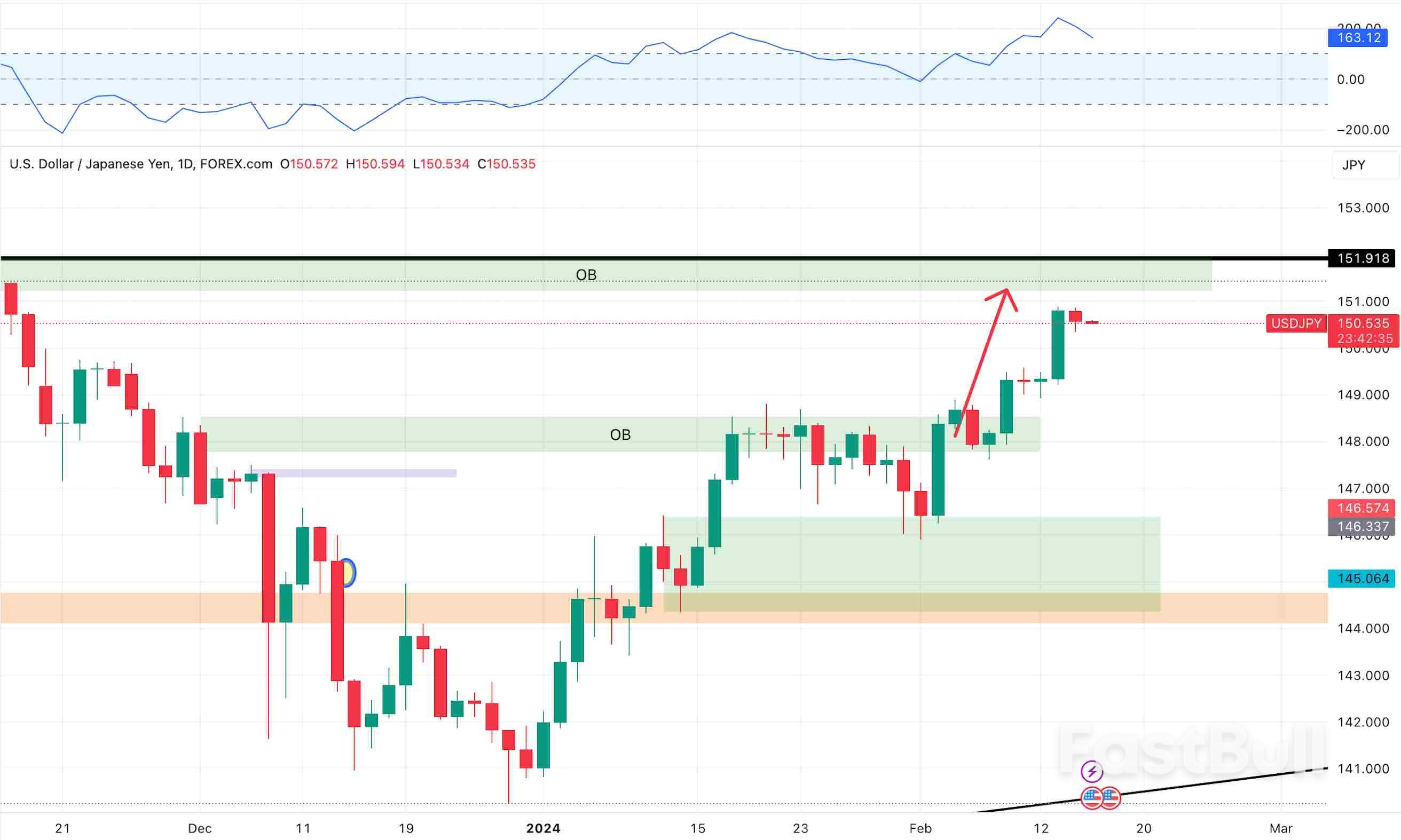
          The US dollar is having quite the ride against the Japanese yen (USD/JPY). It's on a roll, breaking through the psychological resistance of 150.00 and not stopping there – it's now eyeing the 150.88 mark, the highest since last November.
          What sparked this bullish spree? Well, the US inflation reading played a significant role. Higher than expected, it made Japanese assets less appealing. Consequently, the Japanese yen took a 1% dip, part of a broader decline in G10 currencies against the US dollar. Rumors are buzzing that the Federal Reserve might maintain high-interest rates for quite a while due to the inflation report.
          Japanese Finance Minister Shunichi Suzuki is keeping a close eye on this yen rollercoaster. He emphasized Japan's commitment to monitor the yen's value, which has seen a more than 23% plunge over the past two years, topping the Bloomberg charts as the major currency with the most significant drop.
          Adding fuel to the yen's pressure, Bank of Japan Deputy Governor Shinichi Uchida hinted at a slow and measured approach to interest rate hikes. Financial conditions will remain supportive, even after the bank ends its negative interest rate policy, in light of the current economic outlook and inflation scenario.
          The Japanese yen's performance in 2024 is less than stellar, witnessing a more than 6% drop against the dollar and over 3% against the euro. In 2022, Japanese authorities stepped into the forex market for the first time since 1998, shelling out around 9 trillion yen ($60 billion) to support their currency.
          The CPI report's impact extended beyond the yen, causing 1% or more declines in the Australian dollar, Norwegian krone, Swiss franc, New Zealand dollar, and Swedish krona.
          On the economic front, Japan's latest growth figures indicate a slip to the world's fourth-largest economy last year. A weakened currency and aging demographics are taking their toll. Despite an expected return to annual growth in the fourth quarter, the figures for the calendar year will likely show a decline in the value of German output in dollar terms. Meanwhile, the Indian economy is poised to surpass both in the coming years.
          The shift in economic rankings prompts questions about Japan's trajectory, reminiscent of when China overtook Japan in 2010. Although less severe this time, it signals evolving challenges for the nation.
          Now, let's talk expectations. The USD/JPY is primed to approach the psychological resistance at 150.00 again. Our live trading recommendations endorse buying USD/JPY at every level. However, caution is advised as the recent movement and technical indicators on the daily chart suggest potential overbought levels. There's also speculation about Japan intervening in the markets to prevent a further collapse of the yen exchange rate if the currency pair inches towards resistance levels of 150.85 and 151.40.
          In conclusion, the USD/JPY drama reflects a blend of economic data, central bank hints, and global currency dynamics. Buckle up for the twists and turns as the yen faces the challenges posed by the mighty greenback.USD/JPY Revisits Japanese Intervention Era Levels in Recent Market Trends_1
          Risk Warnings and Disclaimers
          You understand and acknowledge that there is a high degree of risk involved in trading. Following any strategies or investment methods may lead to potential losses. The content on the site is provided by our contributors and analysts for information purposes only. You are solely responsible for determining whether any trading assets, securities, strategy, or any other product is suitable for investing based on your own investment objectives and financial situation.
          Comments
          Add to Favorites
          Share

          Eurozone Industrial Output Data Unexpectedly High

          Zi Cheng

          Traders' Opinions

          Economic

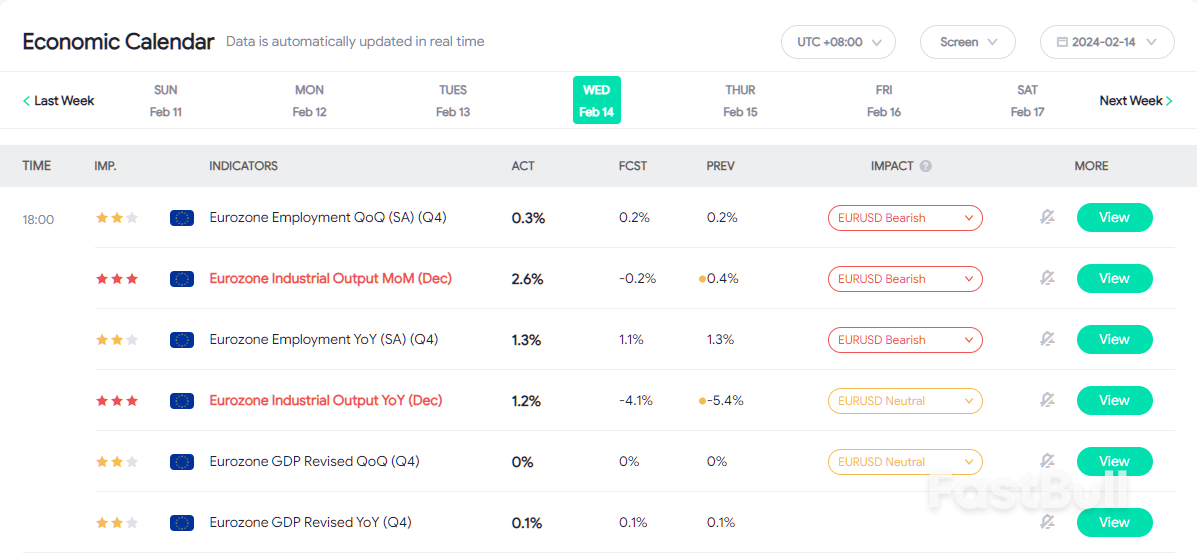
          In December, total production in the Eurozone surged unexpectedly by 2.6% compared to the previous month, marking the second consecutive increase following a revised 0.4% uptick in November, as reported by the European Union statistics agency Eurostat on Wednesday.
          Eurozone Industrial Output Data Unexpectedly High_1
          This result defied predictions of a 0.2% decline, according to a consensus among economists surveyed by The Wall Street Journal. Prior to November, industrial production had experienced declines in four out of the five preceding months amid subdued demand and high interest rates. However, data from purchasing managers' surveys indicated a positive shift in manufacturing sentiment throughout November, December, and January, suggesting a potential stabilization in the sector's weakness.
          In comparison to December 2022, output saw a 1.2% increase, marking the first year-on-year growth since February 2023. The upswing in production was primarily propelled by a substantial 20.5% rise in capital goods, encompassing machinery, equipment, and vehicles used in consumer goods production. Energy output experienced a modest 0.3% increase, while production of durable consumer goods and nondurable goods saw respective upticks of 0.5% and 0.2%.
          Ireland notably recorded a remarkable 23.5% surge in production, though the significance of this increase may be somewhat skewed due to its status as a hub for numerous multinational corporations. Ireland's statistical agency is currently reviewing the methodology for measuring industrial production to address this potential distortion.
          Meanwhile, Germany, traditionally a powerhouse of European industry, continued to face a challenging environment, with a 1.2% decline in production. Spain also experienced a slight dip of 0.4%, while France and Italy saw growth of 1.1% each.
          The current inventory cycle offers scant optimism for an imminent uptick in production, compounded by supply chain challenges stemming from the Red Sea region, which further exacerbate the manufacturing sector's struggles. Despite relatively favorable trends in energy prices amidst disruptions, the prevailing price levels appear insufficient to stimulate a rebound in production, as global competitiveness faces mounting pressure.
          However, amidst these challenges, there are glimmers of hope. While the resurgence of manufacturing is expected to be a gradual process, surveys indicate initial signs of improvement. The eurozone manufacturing Purchasing Managers' Index has shown cautious growth, albeit remaining significantly below the 50-point threshold. Additionally, businesses are displaying a slightly more optimistic outlook regarding orders. These developments suggest that the trough may be approaching for the beleaguered backbone of eurozone competitiveness.
          To stay updated on all economic events of today, please check out our Economic calendar
          Risk Warnings and Disclaimers
          You understand and acknowledge that there is a high degree of risk involved in trading. Following any strategies or investment methods may lead to potential losses. The content on the site is provided by our contributors and analysts for information purposes only. You are solely responsible for determining whether any trading assets, securities, strategy, or any other product is suitable for investing based on your own investment objectives and financial situation.
          Comments
          Add to Favorites
          Share

          For GBPUSD British Inflation Faces Challenges Amidst Intensifying Selling Pressures

          Chandan Gupta

          Traders' Opinions

          Economic

          Forex

          The pound's mood wasn't exactly cheerful despite upbeat news on wages and jobs in Britain. Surging to a 25-week high against the euro and outperforming its G10 counterparts post-wage announcements, it seemed like a celebration. But hold on – there's a twist.
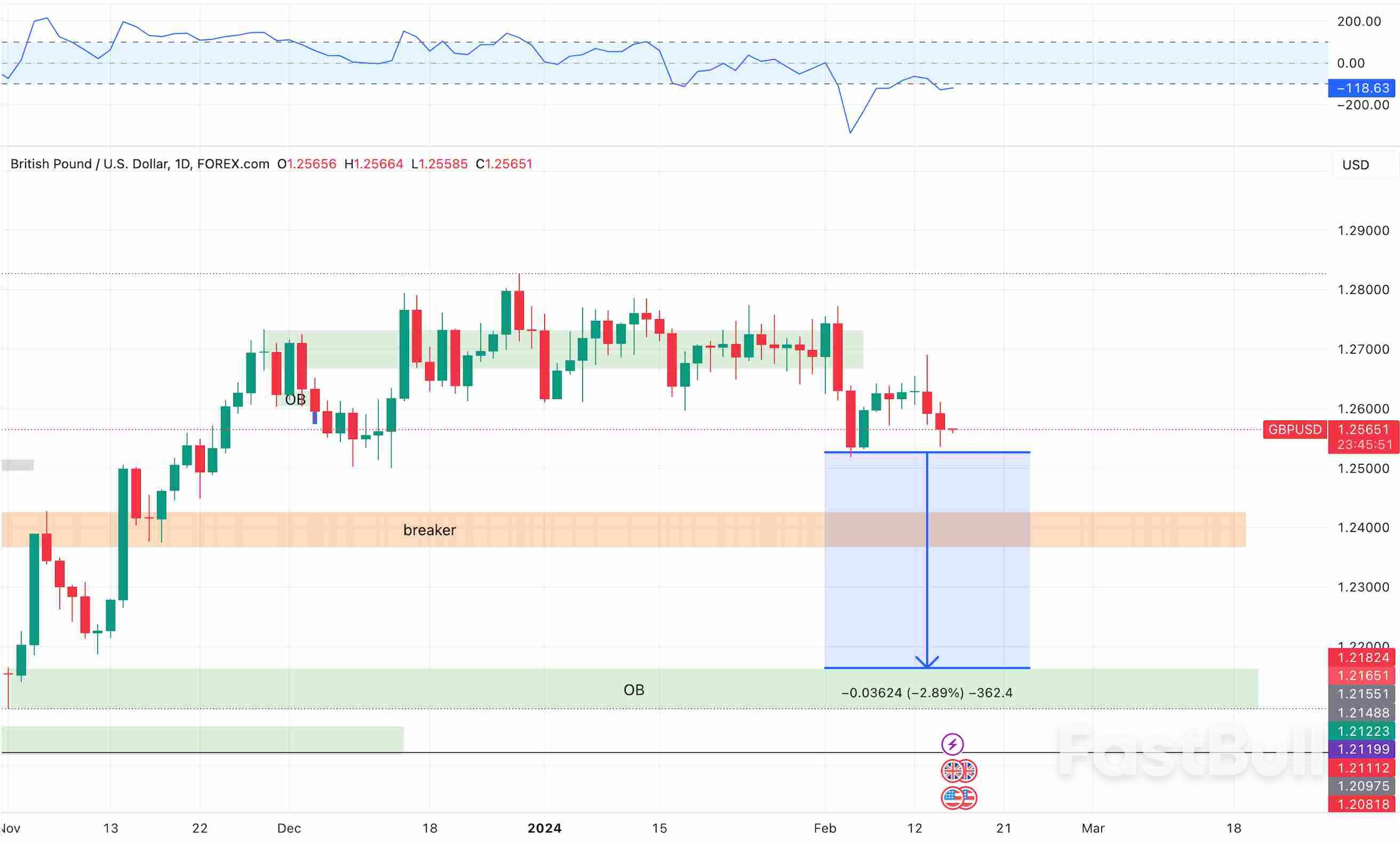
          The stellar data, surpassing expectations with a 5.8% drop in average income (including bonuses) year-on-year, initially pushed the GBP/USD exchange rate from 1.1755 to a robust 1.2688 resistance level. However, the excitement was short-lived as the greenback regained ground, pulling the rate down to the 1.2578 support level. Blame it on stronger-than-expected US inflation figures, extending the era of high US interest rates.
          In the UK, the economic calendar echoes the sentiment that interest rates may remain steady for a while. The prospect of a June rate cut at the Bank of England has dimmed slightly. The central bank, suspecting inflation's resilience due to robust wage dynamics, anticipates a challenging return to the 2.0% target. The labor market flexes its muscles with a lower-than-expected unemployment rate of 3.8%, downplaying market estimates of 4.0%.
          The Bank of England, in its February update, hints at a rollercoaster for inflation – expecting a dip to the 2.0% target by April but foreseeing a rise to around 3.0% by the year-end. Interest rates are set to stay put at 5.35%, squashing any notions of an early rate cut. The job market slows its growth pace, but it still beats expectations. British companies, playing the waiting game, opt to retain staff amid economic uncertainty, avoiding layoffs and anticipating recovery.
          Now, let's decipher the Bank of England's predicament. Initially tardy in responding to inflation in 2021, the Bank didn't go all-in on interest rate hikes. This cautious approach aims to tighten credit conditions, curbing demand, and easing inflation expectations without risking an economic collapse and a dip in labor demand.
          What's the market saying about all this? Expectations regarding the timing of the first interest rate cuts have dwindled, and the number of cuts in 2024 has decreased. Economists now eye June or August for the initial move.
          As for today's pound vs. dollar outlook, the GBP/USD appears bearish, hanging around and below the support level of 1.2600 pre-British inflation figures. The daily chart signals a movement toward and below this support. A clear break at 1.2550 would wave the red flag for a bearish shift. Bulls need to reclaim strength, returning above the 1.2775 resistance. With no significant US data today, the latest inflation figures will likely cast a lingering impact.
          In a nutshell, the pound's recent rollercoaster ride reflects a complex dance between economic indicators, global market dynamics, and central bank strategies. Stay tuned for the twists and turns in the evolving narrative of the pound's journey against the dollar.For GBPUSD British Inflation Faces Challenges Amidst Intensifying Selling Pressures_1
          To stay updated on all economic events of today, please check out our Economic calendar
          Risk Warnings and Disclaimers
          You understand and acknowledge that there is a high degree of risk involved in trading. Following any strategies or investment methods may lead to potential losses. The content on the site is provided by our contributors and analysts for information purposes only. You are solely responsible for determining whether any trading assets, securities, strategy, or any other product is suitable for investing based on your own investment objectives and financial situation.
          Comments
          Add to Favorites
          Share

          Equities Regain Stability as Traders Slash Rate Speculations

          Ukadike Micheal

          Economic

          Stocks

          Amidst a backdrop of shifting expectations for the Federal Reserve's rate cuts, global stocks managed to stabilize following a period of losses. This adjustment came after an unexpected increase in U.S. inflation, which surpassed initial forecasts. As a result, traders have reevaluated their predictions for U.S. interest rates, with futures now indicating a potential reduction of approximately 90 basis points by December. This contrasts with the previous estimate of 110 basis points prior to the inflation data release and 160 basis points at the close of 2023.
          The MSCI All-World index, which had recently reached two-year highs, remained flat, reflecting the impact of the previous day's decline in Wall Street that pulled the S&P 500 back below 5,000 points. Despite this, U.S. futures showed a modest increase of 0.4-0.6%. Notably, the CPI report revealed an unexpected rise in certain elements, such as service-sector inflation and shelter costs, contributing to the overall upturn.
          This unforeseen surge in inflation has prompted a reevaluation of the market landscape. David Morrison, a senior market analyst at Trade Nation, remarked on the implications of this development, emphasizing the shock factor and its potential to disrupt the anticipated trajectory towards lower inflation rates. The European STOXX edged up 0.5%, buoyed by a flurry of stronger earnings that bolstered the regional index. However, even Japan's Nikkei, which had recently reached its highest point in 34 years, experienced a 0.7% decline.
          The recent surge in the Nikkei has been closely linked to the weakening of the yen, which fell below the crucial 150 per dollar level for the first time in the current year. The yen's value, currently standing at 150.60 per dollar, has historically been viewed as a potential trigger for intervention by Japanese monetary authorities. Notably, Japan's top currency officials have cautioned against what they perceive as rapid and speculative movements in the yen.
          Following the inflation report, yields on 10-year U.S. Treasuries reached their highest point in over two months, leading to a surge in the dollar's strength. Despite a slight decrease, the benchmark 10-year yield remained elevated at 4.305%. The dollar, in turn, made gains against a basket of currencies, reaching 104.89, its highest level since November.
          The article also delves into the performance of other key financial indicators. Sterling experienced a 0.3% decline to $1.2554 following UK data that indicated a lack of expected inflation growth. In the cryptocurrency realm, bitcoin surged by 4.2%, surpassing the $50,000 mark and pushing its total market capitalisation above $1 trillion for the first time since November 2021. Oil prices continued to rise, building on the previous day's gains, amidst ongoing geopolitical tensions in the Middle East and eastern Europe. U.S. crude traded up 0.1% at $77.91, while Brent futures were up 0.1% at $82.88. Conversely, gold experienced a 0.1% decline, settling at $1,990 per ounce.
          From a technical standpoint, these developments are indicative of a complex interplay of market forces. The unexpected surge in U.S. inflation has led to recalibrations in traders' expectations for future interest rate adjustments. This has, in turn, influenced global stock performance, leading to a period of stabilization following prior losses. The impact has been felt not only in equities but also in currency markets, with the dollar gaining strength against a basket of currencies and the yen experiencing significant fluctuations.
          Furthermore, the performance of key commodities such as oil and gold has been influenced by these market dynamics. Geopolitical tensions have added an additional layer of complexity to the market landscape, contributing to the upward trajectory of oil prices. In the cryptocurrency realm, the resurgence of bitcoin beyond the $50,000 mark has underscored the ongoing volatility and resilience of the digital asset market.
          The recent market developments reflect a nuanced and intricate interplay of economic indicators, geopolitical factors, and investor sentiment. The unexpected surge in U.S. inflation has reverberated across global markets, prompting a reassessment of future interest rate trajectories and influencing the performance of various asset classes. As market participants navigate this evolving landscape, the need for a nuanced and adaptable approach to investment strategies becomes increasingly paramount.

          Source: Reuters

          To stay updated on all economic events of today, please check out our Economic calendar
          Risk Warnings and Disclaimers
          You understand and acknowledge that there is a high degree of risk involved in trading. Following any strategies or investment methods may lead to potential losses. The content on the site is provided by our contributors and analysts for information purposes only. You are solely responsible for determining whether any trading assets, securities, strategy, or any other product is suitable for investing based on your own investment objectives and financial situation.
          Comments
          Add to Favorites
          Share

          Canadian Home Sales Experience Uptick Amidst Falling Prices, Drawing in Buyers

          Ukadike Micheal

          Economic

          Forex

          The surge in home sales in January is indicative of several underlying factors that are shaping the housing market. One of the primary drivers of this surge is the anticipation of potential interest rate cuts by the Bank of Canada. The central bank's short-term lending rate, which is currently at its highest level in over 20 years, has been a significant factor influencing borrowing costs for homebuyers. A potential reduction in this rate is expected to ease the pressure on mortgage rates, making homeownership more affordable for prospective buyers.
          The speculation surrounding interest rate cuts has also led to increased market activity and competition among buyers. As a result, sales have risen, indicating a potential turning point in the market. However, it is important to note that despite the increase in sales, they still remain approximately 9% below the 10-year average. This suggests that while the market is showing signs of recovery, it is still working through the weakness of the past two years.
          Another crucial aspect of the current housing market conditions is the tightening of supply. The number of months it would take to clear all the houses on the market at the current rate of sales fell to 3.7 months in January from 4.1 in November. This reduction in inventory is a significant indicator of the changing dynamics within the housing market. It points to a potential shift towards a seller's market, where demand for homes outpaces the available supply.
          In addition to the tightening supply, the number of new listings rose by 1.5% compared to December but remains close to the lowest level since June. This indicates that homeowners may be hesitant to put their properties on the market, potentially due to uncertainty about the direction of prices or the overall economic conditions. As a result, the housing market is witnessing a dynamic interplay between supply and demand, which is likely to have a significant impact on prices and overall market stability.
          From a technical viewpoint, the increase in home sales and the speculation of potential interest rate cuts by the Bank of Canada have far-reaching implications for the housing market. A reduction in interest rates would lead to lower borrowing costs, potentially stimulating further demand for homes. However, the impact on prices and overall market stability will depend on various factors such as the pace of rate cuts, the existing housing shortage, and the overall economic conditions.
          The current trends in the Canadian housing market are indicative of a market in transition. The interplay between sales, prices, borrowing costs, and supply dynamics is shaping the trajectory of the market. As market conditions continue to evolve, it is essential to closely monitor how these factors influence the overall housing landscape.
          The recent surge in home sales combined with the anticipation of interest rate adjustments by the Bank of Canada is setting the stage for a potentially dynamic shift in the Canadian housing market. As market conditions continue to evolve, the interplay between sales, prices, borrowing costs, and supply dynamics will shape the trajectory of the housing market in the coming months. It is crucial for market participants, policymakers, and analysts to closely monitor these developments and their potential implications for the broader economy.

          Source: Bloomberg

          To stay updated on all economic events of today, please check out our Economic calendar
          Risk Warnings and Disclaimers
          You understand and acknowledge that there is a high degree of risk involved in trading. Following any strategies or investment methods may lead to potential losses. The content on the site is provided by our contributors and analysts for information purposes only. You are solely responsible for determining whether any trading assets, securities, strategy, or any other product is suitable for investing based on your own investment objectives and financial situation.
          Comments
          Add to Favorites
          Share

          UK Faces Imminent Deflation Threat as IEA Predicts Rate Cut to 4.0% by Year-End

          Warren Takunda

          Central Bank

          Economic

          In a startling revelation, the Institute of Economic Affairs (IEA) warns that the United Kingdom is on the brink of deflation and recession, prompting the Bank of England to slash interest rates to as low as 4.0% by the close of the year. Despite the headline inflation rate holding steady at 4.0% year-on-year in January, the IEA contends that a deeper analysis reveals a looming deflationary trend, posing a significant challenge to the UK economy.
          The IEA's prediction aligns with a growing consensus among economists that headline inflation is expected to reach the 2.0% target in April, potentially plummeting further in the subsequent months. This forecast is attributed to the impending sharp reduction in the Ofgem cap on energy bills, coupled with market forces such as a decline in food price inflation and weakness in retail sectors like 'furniture and household goods' and 'clothing and footwear.'
          The Office for National Statistics (ONS) reported that the January CPI inflation rate remained at 4.0%, disappointing market expectations and falling below the Bank of England's 4.1% projection. While this may bring relief to the Bank of England and the Treasury, both of which had anticipated a surge, the IEA warns that the current economic landscape could soon be overshadowed by the greater threats of recession and deflation.
          Analyzing the data, it becomes evident that the headline rate's stability is influenced by a decline in food price inflation and weaknesses in certain retail sectors. The December slump in retail sales has prompted increased discounting, showcasing market forces at play. Furthermore, the subdued growth in money and credit adds to the dampening effect on inflation, indicating that the UK is undergoing a significant disinflationary phase.
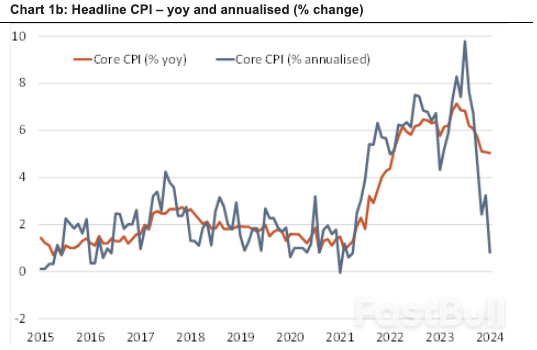
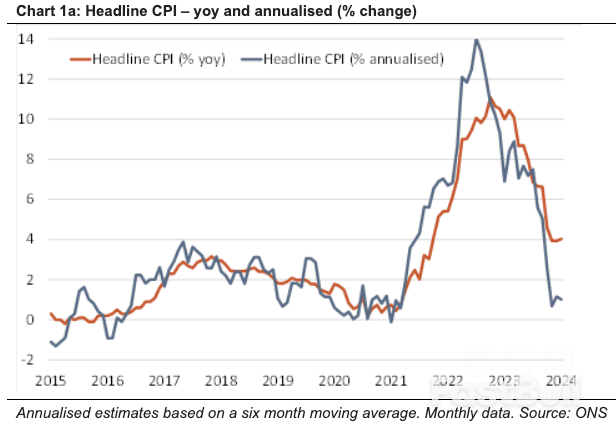
          Despite the headline CPI inflation running at double the Bank of England's 2.0% target, a deeper examination reveals a strong disinflationary trend. Berenberg Bank analysts illustrate this through year-on-year and six-month annualized calculations of headline and core inflation. While the year-on-year change remains above the 2% target, the six-month basis suggests a different picture, hovering around 1% due to minimal overall price level changes.
          UK Faces Imminent Deflation Threat as IEA Predicts Rate Cut to 4.0% by Year-End_1UK Faces Imminent Deflation Threat as IEA Predicts Rate Cut to 4.0% by Year-End_2
          The charts from Berenberg Bank emphasize that the current inflation rates are inflated by base effects from 2022 and H1 2023. Absent another major supply shock to prices, the year-on-year rates of headline and core inflation are expected to rapidly decline over the coming months, reaching 2% in spring and slightly below 2% through Q3.
          The Bank of England is expected to keep interest rates on hold until May, but when a move occurs, it is likely to be swift, culminating in rates around four percent by the end of the year. Today's inflation data reaffirms the trajectory for five cuts in 2024, commencing in June, as the UK economy navigates the challenges of deflation and recession.
          To stay updated on all economic events of today, please check out our Economic calendar
          Risk Warnings and Disclaimers
          You understand and acknowledge that there is a high degree of risk involved in trading. Following any strategies or investment methods may lead to potential losses. The content on the site is provided by our contributors and analysts for information purposes only. You are solely responsible for determining whether any trading assets, securities, strategy, or any other product is suitable for investing based on your own investment objectives and financial situation.
          Comments
          Add to Favorites
          Share

          Recession Verdict for UK Economy Will Be No Laughing Matter for Hunt and Sunak

          Devin

          Economic

          All eyes at the Treasury this week will be on estimates of economic growth in the final three months of 2023. A contraction in gross domestic product (GDP) in the fourth quarter would spell embarrassment for the government and disaster for Rishi Sunak.
          The second of the prime minister’s five pledges was to have the economy growing by the end of the year. Instead, it is widely expected that the Office for National Statistics (ONS) assessment of fourth-quarter activity will show that the economy contracted by 0.1%, after also shrinking by 0.1% in the third quarter (revised from an estimate of no growth). That would mean the UK was in a recession during the second half of 2023, albeit a shallow one. An economy is considered to be in recession after two consecutive quarters of contraction.
          The shallowness of the downturn is unlikely to stop Labour from ramping up its criticism of the government’s economic prowess. While much of the damage dates from the Liz Truss premiership and her chancellor Kwasi Kwarteng’s kamikaze budget, Jeremy Hunt promised that his steady hand on the tiller would provide the stability needed for companies to begin investing again.
          Yet Thursday’s GDP figures are expected to show that UK manufacturing was in recession all year and business investment negative, undermining Hunt’s claims. Corporate insolvencies are rising, with construction, retail and hospitality the worst-affected sectors.
          Nevertheless, Gabriella Willis, a UK economist at Santander, says Hunt can look forward to better times. Not only is it possible the recession may later be re-evaluated by the ONS, with contraction turning into growth, but 2024 generally is forecast to be a better year.​​​“The UK recession, if confirmed, looks set to be as short and shallow as they come. We see reasons to be a little more upbeat on 2024, with surveys for January suggesting 2024 started on a better footing, shrugging off the year-end lethargy,” she said.
          The Bank of England will be focusing on how fast pay is rising. Officials are concerned that labour market data due on Tuesday will show that despite the economic gloom, wages continued to rise in the dying months of 2023, which could mean inflation rising again later this year, limiting the scope for interest rate cuts.
          In a busy week for UK economic data, the ONS will also publish its inflation figures for January on Wednesday. Analysts say the signals are likely to be mixed, giving the Bank’s monetary policy committee (MPC) a headache when it meets next month. Wages are expected to have increased between November and December by about 0.4%, which for a single month represents a strong boost to disposable incomes. The annual figure for the average wage rise could remain at 6.5% – the same as it was in November, and well ahead of inflation.
          Catherine Mann, a former investment bank economist who started her career at the US Federal Reserve and is a member of the MPC, said in a recent speech that she feared companies were planning to put up prices this year even though their costs had fallen sharply.
          A few days after Mann’s speech, Sarah Breeden, a Bank insider who was promoted to the MPC last year, said she wanted to see wages growth falling before she would consider slicing back the cost of borrowing from its current level of 5.25%.
          Samuel Tombs, chief UK economist at Pantheon Macroeconomics, said the labour market was weakening, but not at the pace needed for the central bank to cut interest rates imminently. “It remains touch and go whether the MPC will be able to reduce [interest rates] as soon as May, as we and most investors expect,” he said.
          Inflation is proving a head-scratcher for all central banks after steep falls last autumn were reversed in the run-up to Christmas.
          Financial markets expect the UK consumer prices index (CPI) to rise again in January to 4.2%, from 4% in December and 3.9% in November.
          However, the recent increases are expected to be reversed during the spring, with CPI possibly falling below the Bank’s 2% target by June.
          This prediction has encouraged financial markets to bet that a cut in the interest rate is coming sooner rather than later.
          Bank governor Andrew Bailey is worried that speculation about early interest rate cuts has already brought down mortgage rates and that an economic rebound, while modest, is in train. It means the path to much lower interest rates, whenever it begins, could be long and winding.

          Source: The Guardian

          To stay updated on all economic events of today, please check out our Economic calendar
          Risk Warnings and Disclaimers
          You understand and acknowledge that there is a high degree of risk involved in trading. Following any strategies or investment methods may lead to potential losses. The content on the site is provided by our contributors and analysts for information purposes only. You are solely responsible for determining whether any trading assets, securities, strategy, or any other product is suitable for investing based on your own investment objectives and financial situation.
          Comments
          Add to Favorites
          Share
          FastBull
          Copyright © 2025 FastBull Ltd

          728 RM B 7/F GEE LOK IND BLDG NO 34 HUNG TO RD KWUN TONG KLN HONG KONG

          TelegramInstagramTwitterfacebooklinkedin
          App Store Google Play Google Play
          Products
          Charts

          Chats

          Q&A with Experts
          Screeners
          Economic Calendar
          Data
          Tools
          Membership
          Features
          Function
          Markets
          Copy Trading
          Latest Signals
          Contests
          News
          Analysis
          24/7
          Columns
          Education
          Company
          Careers
          About Us
          Contact Us
          Advertising
          Help Center
          Feedback
          User Agreement
          Privacy Policy
          Business

          White Label

          Data API

          Web Plug-ins

          Poster Maker

          Affiliate Program

          Risk Disclosure

          The risk of loss in trading financial instruments such as stocks, FX, commodities, futures, bonds, ETFs and crypto can be substantial. You may sustain a total loss of the funds that you deposit with your broker. Therefore, you should carefully consider whether such trading is suitable for you in light of your circumstances and financial resources.

          No decision to invest should be made without thoroughly conducting due diligence by yourself or consulting with your financial advisors. Our web content might not suit you since we don't know your financial conditions and investment needs. Our financial information might have latency or contain inaccuracy, so you should be fully responsible for any of your trading and investment decisions. The company will not be responsible for your capital loss.

          Without getting permission from the website, you are not allowed to copy the website's graphics, texts, or trademarks. Intellectual property rights in the content or data incorporated into this website belong to its providers and exchange merchants.

          Not Logged In

          Log in to access more features

          FastBull Membership

          Not yet

          Purchase

          Become a signal provider
          Help Center
          Customer Service
          Dark Mode
          Price Up/Down Colors

          Log In

          Sign Up

          Position
          Layout
          Fullscreen
          Default to Chart
          The chart page opens by default when you visit fastbull.com