- WTI
- XAUUSD
- XAGUSD
- USDX


Markets
Analysis
User
24/7
Economic Calendar
Education
Data
- Names
- Latest
- Prev







Don’t let trade rhetoric obscure your investment strategy. To navigate shifting global markets, you must grasp that a tariff is a direct levy on the importer.
For global investors and business owners, understanding trade policy is essential. At its core, a tariff is a direct levy placed on imported products. This guide explains how these cross-border duties function, who ultimately bears their cost, and how they impact international supply chains. Read on to master the mechanics of global trade taxes.
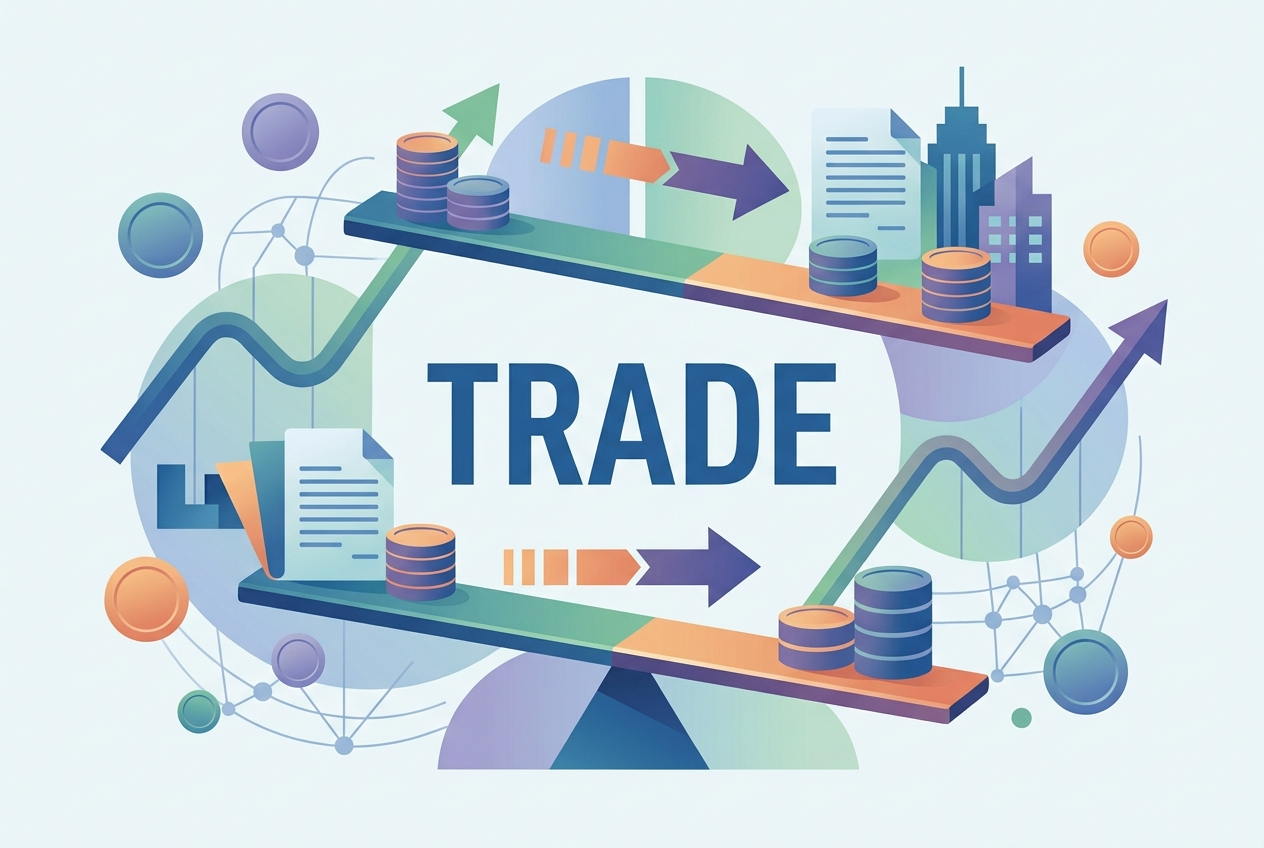
To navigate international markets successfully, investors must grasp what is a tariff and how does it work in practice. Essentially, it is a customs duty applied by a national government to goods crossing its borders. When companies import products, customs authorities assess this surcharge based on the product's classification, value, and origin before it enters the domestic market.
While many modern investors wonder, is a tariff a tax? The answer is yes, but with a highly specific scope. Unlike corporate income taxes or broad sales taxes like VAT that apply internally, customs duties strictly target cross-border trade. They are levied exclusively on imported goods at the point of entry, acting as a gatekeeping fee rather than a general revenue mechanism for domestic commerce.
Once an import duty is declared, the importing business must pay the designated government agency before the goods can clear customs. This upfront cost instantly increases the importer's operating expenses and ties up working capital. Consequently, the domestic supply chain must either absorb this margin compression or adjust pricing strategies further down the line to maintain profitability.
A common misconception in political discourse is that foreign nations cover these levies. To truly understand who pays a tariff, you must look at the mechanics of the border transaction. The upfront financial burden falls entirely on the domestic company importing the merchandise.
Foreign exporters do not write checks to the importing country's treasury. Instead, the domestic importer pays the local customs authority when the goods arrive at the port. While the foreign producer might eventually lose sales volume due to higher final retail prices, the actual cash for the duty comes directly from the domestic buyer's bank account.
Once the importer pays the border tax, executives face a critical pricing decision. They must evaluate their profit margins, market competition, and consumer price sensitivity to determine their next steps:
Ultimately, the downstream effect lands squarely on the end consumer. Retailers facing higher wholesale costs typically raise their sticker prices to preserve their profit margins. Whether you are buying consumer electronics, raw building materials, or everyday apparel, the added cost from an import duty quietly inflates your final checkout total.
Governments deploy import taxes for both economic and geopolitical reasons. While historically utilized to generate federal revenue, modern trade policy utilizes them primarily as strategic economic levers to protect local jobs or force foreign policy changes.
To shelter local manufacturers from cheaper international alternatives, governments enact specific targeted levies. If you are wondering what is a protective tariff, it is an elevated border tax designed to make imported goods artificially more expensive than domestic equivalents. This gives local industries a competitive price advantage, though it risks creating domestic market inefficiencies.
Duties are frequently weaponized to force foreign governments to alter their trade practices. For example, analysts researching when did tariffs start 2025 often point to the sweeping U.S. executive orders enacted in April of that year. These duties, invoked under the International Emergency Economic Powers Act, were explicitly designed as reciprocal measures to force international concessions. However, this aggressive strategy frequently triggers retaliation. What is a tariff war? It is a retaliatory cycle where multiple nations continuously hike duties on each other's goods, ultimately disrupting global supply chains and raising costs globally.
The economic efficacy of trade barriers remains a fiercely debated topic among institutional economists. While they successfully shield targeted local sectors in the short term, the macroeconomic fallout often offsets these initial gains. Broadly applied duties tend to increase inflation, reduce consumer purchasing power, and fracture established manufacturing supply chains.
| Economic Objective | Short-Term Impact | Long-Term Risk |
|---|---|---|
| Protect Local Jobs | Boosts employment in specifically protected domestic sectors. | May lead to industrial inefficiency and a lack of innovation. |
| Increase National Revenue | Generates direct and immediate tax income at the border. | Can shrink overall trade volume, subsequently reducing total tax receipts. |
| Geopolitical Leverage | Forces foreign governments to the negotiating table. | Frequently sparks retaliatory tariff wars, crippling domestic exporters. |
By fundamentally altering the cost of goods sold, these trade taxes reshape global investment flows. They force multinational corporations to continuously restructure their vendor networks to avoid heavily taxed jurisdictions.
A tariff is a government-imposed tax levied on goods and services imported from another country. It is collected by customs authorities at the border before the products can enter the domestic market.
In simple terms, it is a border fee that an importing business must pay to bring foreign goods into the country. This extra cost usually makes the imported item more expensive for the final consumer.
The two main types are ad valorem tariffs, calculated as a percentage of the item's total value, and specific tariffs, charged as a fixed fee per unit. Governments may also use tariff-rate quotas to combine both methods based on total import volume.
Tariffs generally raise the price of goods for domestic consumers and increase overhead for businesses relying on imported raw materials. While they protect specific local industries, they often trigger retaliatory trade barriers that harm domestic exporters.
Ultimately, a tariff is a powerful fiscal tool that drastically reshapes international trade. While it temporarily shields domestic industries, it invariably raises consumer prices and disrupts supply chains. For global investors, monitoring border policies is critical for anticipating market shifts and protecting portfolio profitability.

728 RM B 7/F GEE LOK IND BLDG NO 34 HUNG TO RD KWUN TONG KLN HONG KONG


The risk of loss in trading financial instruments such as stocks, FX, commodities, futures, bonds, ETFs and crypto can be substantial. You may sustain a total loss of the funds that you deposit with your broker. Therefore, you should carefully consider whether such trading is suitable for you in light of your circumstances and financial resources.
No decision to invest should be made without thoroughly conducting due diligence by yourself or consulting with your financial advisors. Our web content might not suit you since we don't know your financial conditions and investment needs. Our financial information might have latency or contain inaccuracy, so you should be fully responsible for any of your trading and investment decisions. The company will not be responsible for your capital loss.
Without getting permission from the website, you are not allowed to copy the website's graphics, texts, or trademarks. Intellectual property rights in the content or data incorporated into this website belong to its providers and exchange merchants.
Not Logged In
Log in to access more features


Log In
Sign Up