Markets
News
Analysis
User
24/7
Economic Calendar
Education
Data
- Names
- Latest
- Prev


Signal Accounts for Members
All Signal Accounts
All Contests


France Industrial Output MoM (SA) (Oct)A:--
F: --
France Trade Balance (SA) (Oct)A:--
F: --
Euro Zone Employment YoY (SA) (Q3)A:--
F: --
Canada Part-Time Employment (SA) (Nov)A:--
F: --
P: --
Canada Unemployment Rate (SA) (Nov)A:--
F: --
P: --
Canada Full-time Employment (SA) (Nov)A:--
F: --
P: --
Canada Labor Force Participation Rate (SA) (Nov)A:--
F: --
P: --
Canada Employment (SA) (Nov)A:--
F: --
P: --
U.S. PCE Price Index MoM (Sept)A:--
F: --
P: --
U.S. Personal Income MoM (Sept)A:--
F: --
P: --
U.S. Core PCE Price Index MoM (Sept)A:--
F: --
P: --
U.S. PCE Price Index YoY (SA) (Sept)A:--
F: --
P: --
U.S. Core PCE Price Index YoY (Sept)A:--
F: --
P: --
U.S. Personal Outlays MoM (SA) (Sept)A:--
F: --
U.S. 5-10 Year-Ahead Inflation Expectations (Dec)A:--
F: --
P: --
U.S. Real Personal Consumption Expenditures MoM (Sept)A:--
F: --
U.S. Weekly Total Rig CountA:--
F: --
P: --
U.S. Weekly Total Oil Rig CountA:--
F: --
P: --
U.S. Consumer Credit (SA) (Oct)A:--
F: --
China, Mainland Foreign Exchange Reserves (Nov)A:--
F: --
P: --
Japan Trade Balance (Oct)A:--
F: --
P: --
Japan Nominal GDP Revised QoQ (Q3)A:--
F: --
P: --
China, Mainland Imports YoY (CNH) (Nov)A:--
F: --
P: --
China, Mainland Exports (Nov)A:--
F: --
P: --
China, Mainland Imports (CNH) (Nov)A:--
F: --
P: --
China, Mainland Trade Balance (CNH) (Nov)A:--
F: --
P: --
China, Mainland Exports YoY (USD) (Nov)A:--
F: --
P: --
China, Mainland Imports YoY (USD) (Nov)A:--
F: --
P: --
Germany Industrial Output MoM (SA) (Oct)A:--
F: --
Euro Zone Sentix Investor Confidence Index (Dec)A:--
F: --
P: --
Canada National Economic Confidence Index--
F: --
P: --
U.K. BRC Like-For-Like Retail Sales YoY (Nov)--
F: --
P: --
U.K. BRC Overall Retail Sales YoY (Nov)--
F: --
P: --
Australia Overnight (Borrowing) Key Rate--
F: --
P: --
RBA Rate Statement
RBA Press Conference
Germany Exports MoM (SA) (Oct)--
F: --
P: --
U.S. NFIB Small Business Optimism Index (SA) (Nov)--
F: --
P: --
Mexico 12-Month Inflation (CPI) (Nov)--
F: --
P: --
Mexico Core CPI YoY (Nov)--
F: --
P: --
Mexico PPI YoY (Nov)--
F: --
P: --
U.S. Weekly Redbook Index YoY--
F: --
P: --
U.S. JOLTS Job Openings (SA) (Oct)--
F: --
P: --
China, Mainland M1 Money Supply YoY (Nov)--
F: --
P: --
China, Mainland M0 Money Supply YoY (Nov)--
F: --
P: --
China, Mainland M2 Money Supply YoY (Nov)--
F: --
P: --
U.S. EIA Short-Term Crude Production Forecast For The Year (Dec)--
F: --
P: --
U.S. EIA Natural Gas Production Forecast For The Next Year (Dec)--
F: --
P: --
U.S. EIA Short-Term Crude Production Forecast For The Next Year (Dec)--
F: --
P: --
EIA Monthly Short-Term Energy Outlook
U.S. API Weekly Gasoline Stocks--
F: --
P: --
U.S. API Weekly Cushing Crude Oil Stocks--
F: --
P: --
U.S. API Weekly Crude Oil Stocks--
F: --
P: --
U.S. API Weekly Refined Oil Stocks--
F: --
P: --
South Korea Unemployment Rate (SA) (Nov)--
F: --
P: --
Japan Reuters Tankan Non-Manufacturers Index (Dec)--
F: --
P: --
Japan Reuters Tankan Manufacturers Index (Dec)--
F: --
P: --
Japan Domestic Enterprise Commodity Price Index MoM (Nov)--
F: --
P: --
Japan Domestic Enterprise Commodity Price Index YoY (Nov)--
F: --
P: --
China, Mainland PPI YoY (Nov)--
F: --
P: --
China, Mainland CPI MoM (Nov)--
F: --
P: --


No matching data
Latest Views
Latest Views
Trending Topics
Top Columnists
Latest Update
White Label
Data API
Web Plug-ins
Affiliate Program
View All

No data
On 4 April 2025, the Supreme Court of Korea unanimously upheld the National Assembly’s impeachment of former South Korean presid
On 4 April 2025, the Supreme Court of Korea unanimously upheld the National Assembly’s impeachment of former South Korean president Yoon Suk-yeol, ending a dramatic saga that began with Yoon’s botched declaration of martial law in December 2024. Yet the outcome of this impeachment process, combined with South Korea’s status as an economically advanced democratic nation, has obscured the concerning and persistent influence of far-right elements in its political landscape.
While a majority of citizens turned out in massive protests against Yoon’s actions, vocal members of the conservative People Power Party and fervent far right groups have organised persistent counter rallies in his defence, even storming a district court in an attempt to delay legal proceedings. A February 2025 survey found that nearly four in ten South Koreans were against Yoon being impeached, suggesting that his support base may not be as marginal as it appears.
Far-right politics in South Korea stems from a deeply rooted tradition of extreme ideological polarisation. Since gaining independence in 1948, Korea’s conservative political leadership has often harnessed the fear of communism to consolidate their fragile hold on power. The Korean War, along with the enduring threat of attacks from North Korea, entrenched anti-communism as a powerful ideological barrier to left-wing mobilisation.
Within this dynamic, any form of progressive opposition could easily be framed as a threat to societal stability. And political democratisation in the late-1980s — initiated under a conservative establishment — did little to significantly weaken these dynamics or the far-right’s influence in politics.
In response to successive transfers of power to moderate liberals in the early-2000s, the so-called ‘New Right’ emerged. Aiming to replicate the success of pro-democracy activists and their grassroots mobilisation tactics, conservatives established powerful networks of far-right civic and religious groups and publishers to drive popular engagement. Yoon tapped into this latent force, elevating New Right forces who whitewashed South Korea’s authoritarian past and framed the progressive opposition as ideological enemies, anti-state actors and North Korean sympathisers.
With a background as a prosecutor, Yoon approached national governance with a similar black and white worldview. Yoon viewed his critics across civil society, the National Assembly and the media not as democratic interlocutors but as guilty criminal forces to be punished. As his policy agenda stalled in parliament, Yoon accused the opposition of secretly working on behalf of North Korean interests to bring him down.
A consistent throughline in support for Yoon’s politics has been the unusual intersection of two demographic groups — young male voters and elderly citizens. Young men have been at the forefront of protests and violent clashes in support of Yoon, starkly contrasting with younger women who overwhelmingly lean liberal and have been at the heart of protests calling for Yoon’s impeachment. Those over the age of 60 have also become an important voting base for the conservative party and key consumers of far-right online content and conspiracy theories.
This phenomenon can be largely attributed to a shared sense of economic disillusionment. In a job market dominated by irregular work, an overwhelming majority of young people are striving to secure stable employment in large corporations or the civil sector — a path that demands exceptional resumes. The lack of safety nets has intensified competition to a near life-or-death struggle for many young jobseekers. The rise of feminism and the #MeToo movement has further fuelled perceptions among young men that they are being unfairly disadvantaged in this ultracompetitive environment, particularly due to their mandatory two years of military conscription.
South Korea’s underdeveloped social welfare system has left it woefully unprepared to support its rapidly aging population. The country has consistently ranked highest in elderly poverty among OECD nations, with government statistics showing that over 38 per cent of seniors live in relative poverty. This demographic not only faces economic precarity but also carries vivid memories of the intense political polarisation that followed the Korean War, making them particularly susceptible to political rhetoric that stokes ideological paranoia against the left.
Yoon skilfully exploited this shared sense of deprivation felt by both groups, with his strongman governing style and imposition of martial law resonating with disillusioned men drawn to the patriarchal promise of order and control. To appeal to young men, Yoon framed feminism as an insidious force, even attempting to dismantle the Ministry of Gender Equality and Family. For the elderly, Yoon stoked red scare anxieties, reviving Cold War-era fears and conspiracies of North Korean aggression that had once defined their reality.
Despite the Supreme Court upholding Yoon’s impeachment, the former president and his supporters remain defiant. South Korea finds itself in a precarious situation, where those who attempted to dismantle democracy claim to be fighting to ‘save the country’. This psychological warfare is likely to persist, especially as Yoon will remain in the limelight with further legal proceedings not only for his insurrection attempt, but also for obstructing arrest and corruption scandals.
Yoon’s impeachment has done more than test South Korea’s political institutions — it has plunged an already disillusioned public into a deeper state of disorientation and polarisation. History shows that each time South Korean democracy has been pushed to the brink, the people have mobilised to claw it back. But with an increasingly divided citizenry, South Korea’s current trajectory points towards intensified partisan conflict, threatening to erode national cohesion for many years to come.
Christopher Khatouki is Research Fellow at the University of New South Wales.
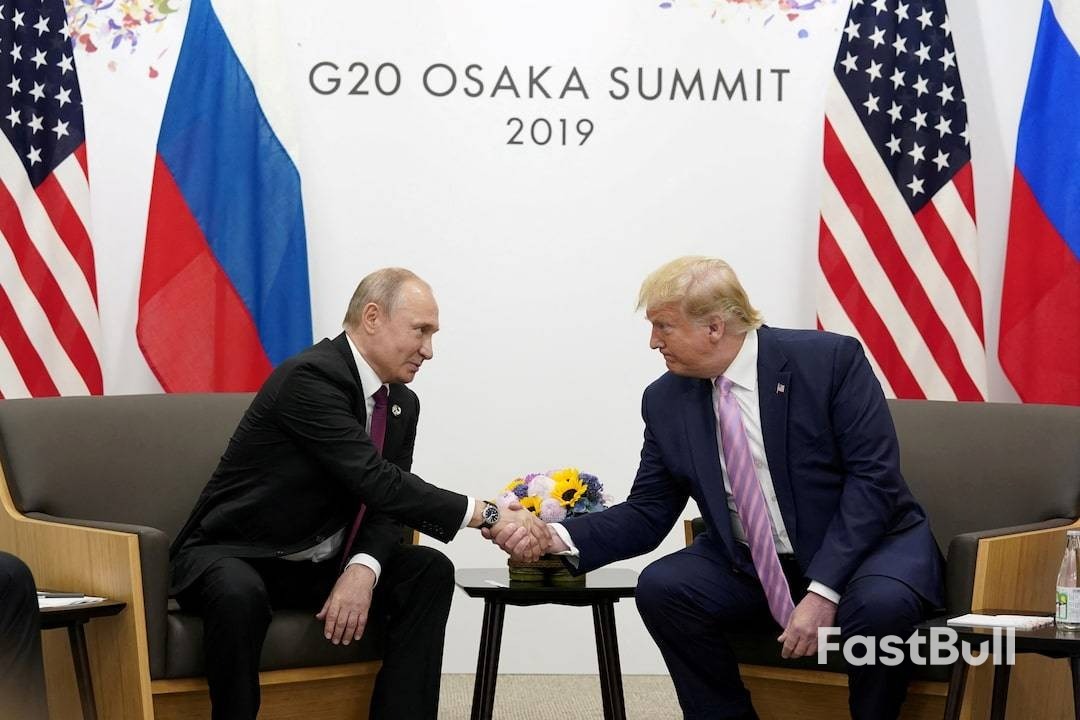
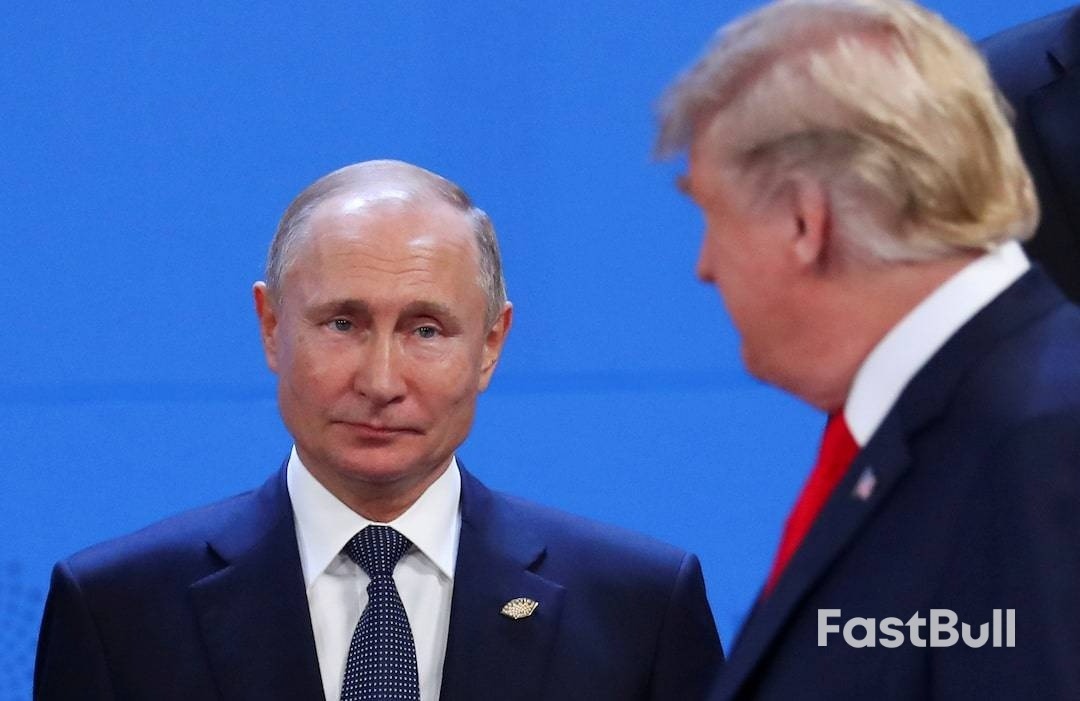
U.S. President Donald Trump said on Monday that Russia and Ukraine "will immediately start negotiations" toward a ceasefire and an end to their three-year-old war, speaking after he held a call with Russia's President Vladimir Putin.
"Negotiations between Russia and Ukraine will begin immediately," Trump said in a Truth Social post following his call with Putin, which lasted two hours.
After the call, Putin said efforts to end the war were "generally on the right track" and that Moscow was ready to work with Ukraine on a potential peace deal.
"We have agreed with the president of the United States that Russia will propose and is ready to work with the Ukrainian side on a memorandum on a possible future peace accord," Putin told reporters near the Black Sea resort of Sochi.
There was no immediate comment from Ukrainian President Volodymyr Zelenskiy on the statement that talks would begin immediately. A source familiar with the matter earlier said Zelenskiy spoke "for a few minutes" with Trump before the U.S. leader's call with Putin.
Kyiv has said it is ready for a ceasefire now while Moscow has said conditions must be met first.
In his social media post, Trump said the Vatican, "as represented by the Pope, has stated that it would be very interested in hosting the negotiations. Let the process begin!"
Putin and Trump spoke after direct talks last week in Turkey between Moscow and Kyiv, the first since 2022 in the early months of Russia's invasion of Ukraine. Talks last week failed to agree on a truce.
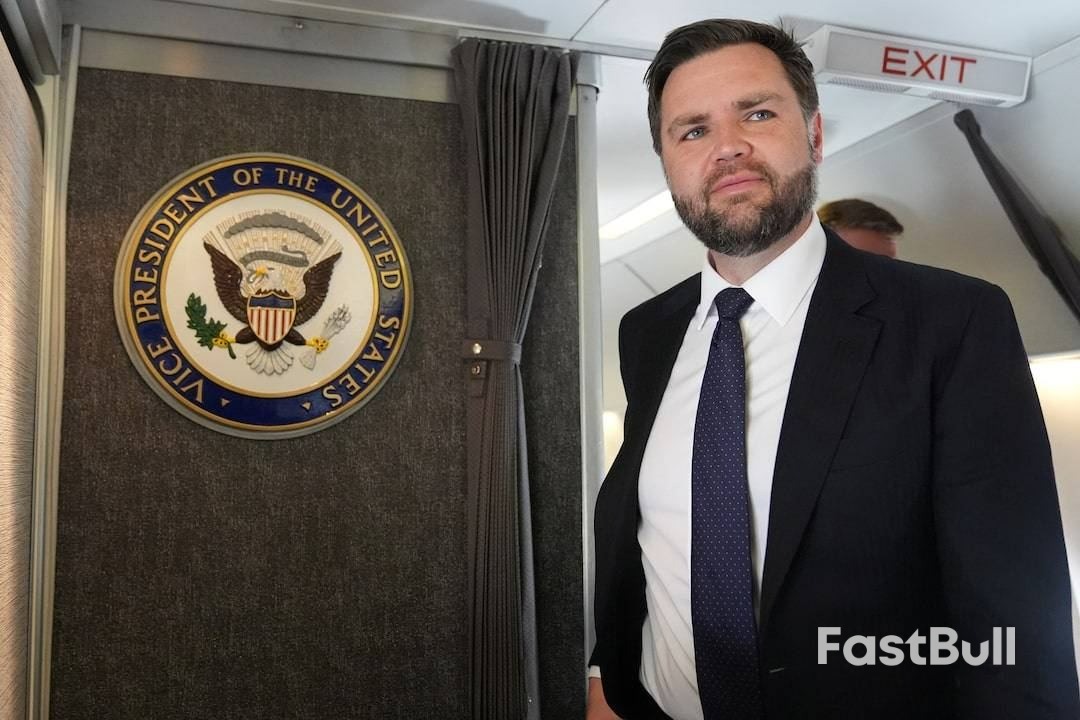
U.S. Vice President JD Vance earlier repeated a warning that Washington could walk away from the peace process.
Putin said the memorandum would define "a number of positions, such as, for example, the principles of settlement, the timing of a possible peace agreement."
He said that if appropriate agreements were reached, there could be a ceasefire, adding that direct talks between Russia and Ukraine gave "reason to believe that we are generally on the right track."
"The main thing for us is to eliminate the root causes of this crisis," Putin said. "We just need to determine the most effective ways to move towards peace.


Item 1 of 5 Vice President JD Vance talks to reporters on board of the Air Force Two at Leonardo da Vinci International Airport, in Rome, Monday, May 19, 2025. Jacquelyn Martin/Pool via REUTERS
[1/5]Vice President JD Vance talks to reporters on board of the Air Force Two at Leonardo da Vinci International Airport, in Rome, Monday, May 19, 2025. Jacquelyn Martin/Pool via REUTERS Purchase Licensing Rights, opens new tab.
He thanked Trump for supporting the resumption of direct talks between Moscow and Kyiv and said Trump noted Russia's support for peace, though the key question was how to move towards peace.
Trump, who has promised to bring a swift end to Europe's deadliest war since World War Two, has repeatedly called for a ceasefire after three years when Washington joined other Western countries in arming Ukraine.
European leaders have said they want the United States to join them in imposing tough new sanctions on Russia for refusing a ceasefire. The leaders of Britain, France, Germany and Italy spoke to Trump on Sunday ahead of his call with Putin.
Putin was speaking from Russia's Black Sea resort of Sochi while Trump was in Washington.
Shortly before the call, Vance told reporters that Washington recognised there was "a bit of an impasse here".
"And I think the president's going to say to President Putin: 'Look, are you serious? Are you real about this?'" Vance said as he prepared to depart from a visit to Italy.
"I think honestly that President Putin, he doesn't quite know how to get out of the war," Vance said.
He said it "takes two to tango. I know the president's willing to do that, but if Russia is not willing to do that, then we're eventually just going to say, 'This is not our war.'"
"We're going to try to end it, but if we can't end it, we're eventually going to say: 'You know what? That was worth a try, but we're not doing any more.'"
White House press secretary Karoline Leavitt told reporters that Trump wanted to see a ceasefire, but that he had grown "weary and frustrated with both sides of the conflict".
Asked if a package of secondary sanctions against Russia remains on the table, she said: "I think everything's on the table."
Putin, whose forces control a fifth of Ukraine and are advancing, has stood firm on his conditions for ending the war, despite public and private pressure from Trump and repeated warnings from European powers.
Reporting by Guy Faulconbridge and Vladimir Soldatkin in Moscow, Max Hunder and Tom Balmforth in Kyiv, Maxim Rodionov in London and Steve Holland, Susan Heavey Rami Ayyub and David Brunstrom in Washington; Editing by Clarence Fernandez, Gareth Jones and Cynthia Osterman
White Label
Data API
Web Plug-ins
Poster Maker
Affiliate Program
The risk of loss in trading financial instruments such as stocks, FX, commodities, futures, bonds, ETFs and crypto can be substantial. You may sustain a total loss of the funds that you deposit with your broker. Therefore, you should carefully consider whether such trading is suitable for you in light of your circumstances and financial resources.
No decision to invest should be made without thoroughly conducting due diligence by yourself or consulting with your financial advisors. Our web content might not suit you since we don't know your financial conditions and investment needs. Our financial information might have latency or contain inaccuracy, so you should be fully responsible for any of your trading and investment decisions. The company will not be responsible for your capital loss.
Without getting permission from the website, you are not allowed to copy the website's graphics, texts, or trademarks. Intellectual property rights in the content or data incorporated into this website belong to its providers and exchange merchants.
Not Logged In
Log in to access more features

FastBull Membership
Not yet
Purchase
Log In
Sign Up