Markets
News
Analysis
User
24/7
Economic Calendar
Education
Data
- Names
- Latest
- Prev




Signal Accounts for Members
All Signal Accounts
All Contests


U.K. Retail Sales MoM (SA) (Dec)A:--
F: --
P: --
France Manufacturing PMI Prelim (Jan)A:--
F: --
P: --
France Services PMI Prelim (Jan)A:--
F: --
P: --
France Composite PMI Prelim (SA) (Jan)A:--
F: --
P: --
Germany Manufacturing PMI Prelim (SA) (Jan)A:--
F: --
P: --
Germany Services PMI Prelim (SA) (Jan)A:--
F: --
P: --
Germany Composite PMI Prelim (SA) (Jan)A:--
F: --
P: --
Euro Zone Composite PMI Prelim (SA) (Jan)A:--
F: --
P: --
Euro Zone Manufacturing PMI Prelim (SA) (Jan)A:--
F: --
P: --
Euro Zone Services PMI Prelim (SA) (Jan)A:--
F: --
P: --
U.K. Composite PMI Prelim (Jan)A:--
F: --
P: --
U.K. Manufacturing PMI Prelim (Jan)A:--
F: --
P: --
U.K. Services PMI Prelim (Jan)A:--
F: --
P: --
Mexico Economic Activity Index YoY (Nov)A:--
F: --
P: --
Russia Trade Balance (Nov)A:--
F: --
P: --
Canada Core Retail Sales MoM (SA) (Nov)A:--
F: --
P: --
Canada Retail Sales MoM (SA) (Nov)A:--
F: --
U.S. IHS Markit Manufacturing PMI Prelim (SA) (Jan)A:--
F: --
P: --
U.S. IHS Markit Services PMI Prelim (SA) (Jan)A:--
F: --
P: --
U.S. IHS Markit Composite PMI Prelim (SA) (Jan)A:--
F: --
P: --
U.S. UMich Consumer Sentiment Index Final (Jan)A:--
F: --
P: --
U.S. UMich Current Economic Conditions Index Final (Jan)A:--
F: --
P: --
U.S. UMich Consumer Expectations Index Final (Jan)A:--
F: --
P: --
U.S. Conference Board Leading Economic Index MoM (Nov)A:--
F: --
P: --
U.S. Conference Board Coincident Economic Index MoM (Nov)A:--
F: --
P: --
U.S. Conference Board Lagging Economic Index MoM (Nov)A:--
F: --
P: --
U.S. UMich 1-Year-Ahead Inflation Expectations Final (Jan)A:--
F: --
P: --
U.S. Conference Board Leading Economic Index (Nov)A:--
F: --
P: --
U.S. Weekly Total Rig CountA:--
F: --
P: --
U.S. Weekly Total Oil Rig CountA:--
F: --
P: --
Germany Ifo Business Expectations Index (SA) (Jan)--
F: --
P: --
Germany IFO Business Climate Index (SA) (Jan)--
F: --
P: --
Germany Ifo Current Business Situation Index (SA) (Jan)--
F: --
P: --
Mexico Unemployment Rate (Not SA) (Dec)--
F: --
P: --
Canada National Economic Confidence Index--
F: --
P: --
U.S. Non-Defense Capital Durable Goods Orders MoM (Excl. Aircraft) (Nov)--
F: --
P: --
U.S. Durable Goods Orders MoM (Excl. Defense) (SA) (Nov)--
F: --
P: --
U.S. Durable Goods Orders MoM (Excl.Transport) (Nov)--
F: --
P: --
U.S. Durable Goods Orders MoM (Nov)--
F: --
P: --
U.S. Dallas Fed General Business Activity Index (Jan)--
F: --
P: --
U.K. BRC Shop Price Index YoY (Jan)--
F: --
P: --
China, Mainland Industrial Profit YoY (YTD) (Dec)--
F: --
P: --
Mexico Trade Balance (Dec)--
F: --
P: --
U.S. S&P/CS 20-City Home Price Index YoY (Not SA) (Nov)--
F: --
P: --
U.S. S&P/CS 20-City Home Price Index MoM (SA) (Nov)--
F: --
P: --
U.S. FHFA House Price Index MoM (Nov)--
F: --
P: --
U.S. FHFA House Price Index (Nov)--
F: --
P: --
U.S. Richmond Fed Manufacturing Composite Index (Jan)--
F: --
P: --
U.S. Conference Board Present Situation Index (Jan)--
F: --
P: --
U.S. Conference Board Consumer Expectations Index (Jan)--
F: --
P: --
U.S. Richmond Fed Manufacturing Shipments Index (Jan)--
F: --
P: --
U.S. Richmond Fed Services Revenue Index (Jan)--
F: --
P: --
U.S. Conference Board Consumer Confidence Index (Jan)--
F: --
P: --
Australia RBA Trimmed Mean CPI YoY (Q4)--
F: --
P: --
Australia CPI YoY (Q4)--
F: --
P: --
Australia CPI QoQ (Q4)--
F: --
P: --
Germany GfK Consumer Confidence Index (SA) (Feb)--
F: --
P: --
India Industrial Production Index YoY (Dec)--
F: --
P: --
India Manufacturing Output MoM (Dec)--
F: --
P: --


No matching data
Latest Views
Latest Views
Trending Topics
Top Columnists
Latest Update
White Label
Data API
Web Plug-ins
Affiliate Program
View All

No data
China’s outward investment is being rapidly restructured in response to prolonged trade tensions, with capital, supply chains, and talent increasingly flowing toward Southeast Asia, Europe...
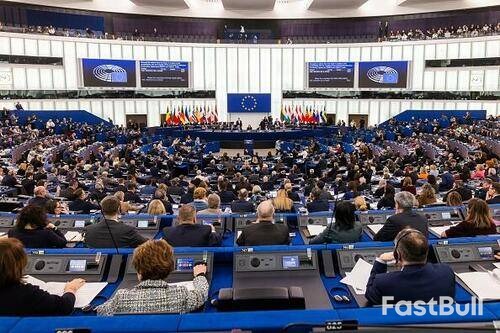
The massive EU-Mercosur trade agreement has been thrown into legal uncertainty after the European Parliament voted to send it to the EU's top court for review. The move stalls the deal's ratification, but a push by Germany and the European Commission to apply it "provisionally" means the fight is far from over.
In a razor-thin vote of 334 to 324, Members of the European Parliament (MEPs) in Strasbourg approved the legal referral. The decision came amid intense lobbying from agricultural groups and several member states fiercely opposed to the pact. Outside the chamber, farmers' protests underscored the high stakes of the vote.

Signed with the Mercosur bloc—Brazil, Argentina, Uruguay, and Paraguay—the agreement aims to create one of the world's largest free-trade zones by cutting tariffs on over 90% of bilateral trade. However, opponents argue it would open the floodgates to cheaper agricultural imports that don't meet the stringent quality standards required of European farmers.
The vote was met with immediate criticism from the deal's key supporters.
German Chancellor Friedrich Merz called the decision "regrettable," warning that it ignores Europe's strategic interests. "We are convinced of the agreement's legality," he stated on X. "No more delays. The agreement must now be applied provisionally."
The European Commission echoed this sentiment, expressing strong regret over the outcome. Olof Gill, the Commission's trade spokesman, insisted that all legal concerns had already been thoroughly addressed during negotiations. "According to our analysis, the questions raised in the motion by the parliament are not justified," Gill said, confirming that EU treaties do allow for provisional application while a court review is pending.
Outside the parliament, the mood was celebratory. Hundreds of farmers, many on tractors, had gathered in Strasbourg to protest what they call unfair competition. The announcement of the vote result was met with cheers.
"We've been on this for months and months, for years," said Quentin Le Guillous, who heads a French young farmers' group. "I'm going to tell my kids, 'I got it, we got it, we can be proud.'"
A coalition of member states including France, Poland, Austria, Ireland, and Hungary has consistently opposed the deal, citing risks to their domestic agriculture and food standards. French Foreign Minister Jean-Noël Barrot said the vote strengthens their position, declaring, "The fight continues to protect our agriculture and guarantee our food sovereignty."
Polish politicians also celebrated the outcome. Former Prime Minister and MEP Beata Szydło called it "a major defeat for von der Leyen and her strategy." Law and Justice MEP Maciej Wąsik credited the farmers, stating, "The farmers' protests have brought results!"
Szydło later slammed Chancellor Merz's call for provisional implementation. "The German Chancellor's incredible audacity in demanding that the Mercosur agreement enter into force despite the European Parliament's decision! Does democracy mean nothing if Germans don't like something?" she wrote.
Supporters of the trade pact argue that the parliament sidestepped a real debate, opting for a procedural delay instead of a substantive vote on the deal's merits.
"The European Parliament did not take a substantive position on Mercosur today; it voted on a procedural motion instead," said Manfred Weber, leader of the European People's Party. "This is an attempt to delay a much-needed agreement for ideological reasons." Like Merz, he also called for the deal to be applied provisionally.
Bernd Lange, chair of the parliament's international trade committee, was even more blunt, labeling the vote "absolutely irresponsible" and "an own goal" that is "very harmful for our economic interests and standing."
Just before the vote, European Commission President Ursula von der Leyen had urged lawmakers to avoid strategic paralysis. "The more trading partners we have worldwide, the more independent we are. And that is exactly what we need now," she argued.
The European Court of Justice will now examine the agreement's compliance with EU treaties, a process that could last several months. However, the looming possibility of provisional application means the celebrations among farmers and opposing nations could be cut short, leaving the future of the landmark trade deal hanging in the balance.
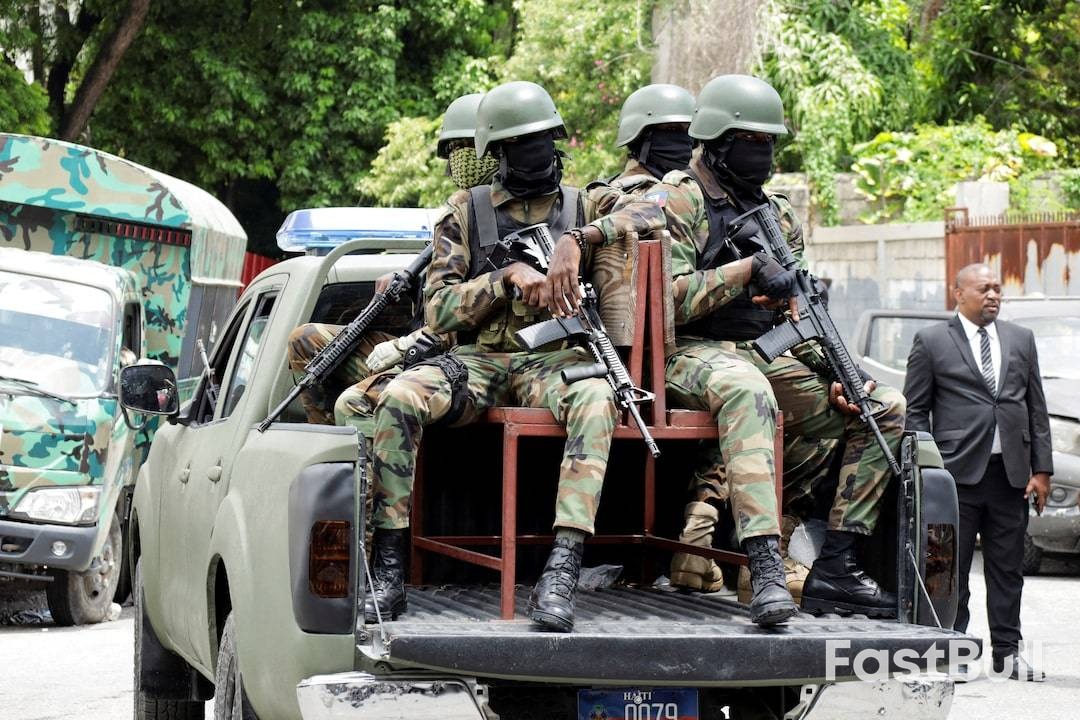
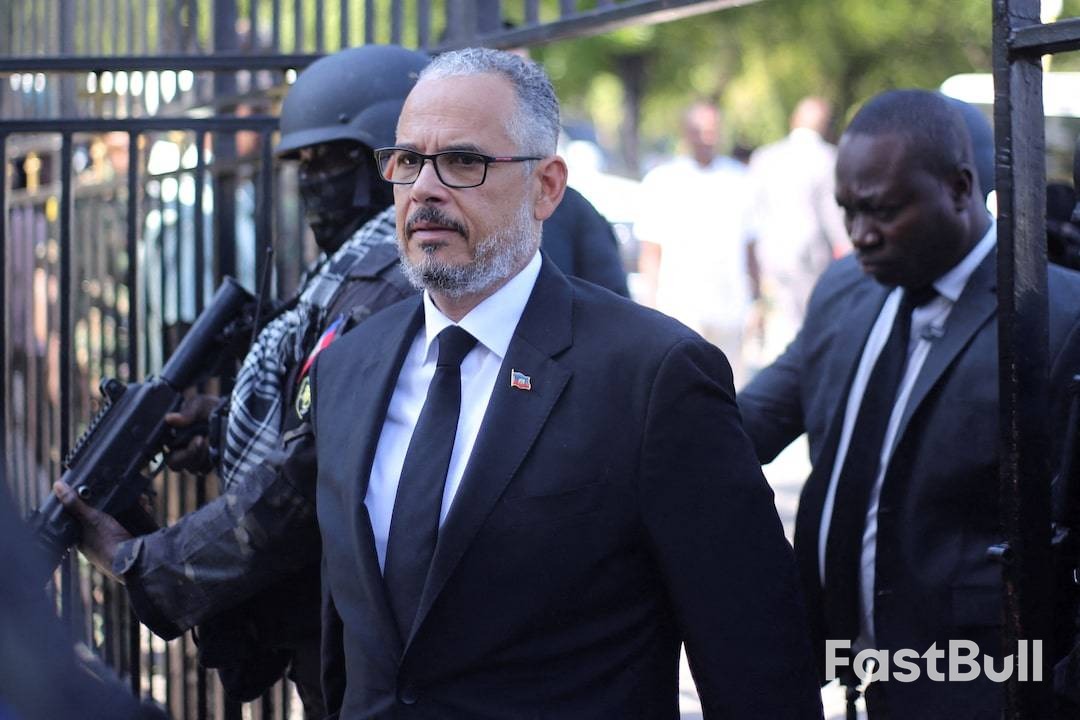
Haiti is facing a dual crisis as its transitional government's mandate is set to expire on February 7 with no clear succession plan, while a U.N.-backed security force intended to combat rampant gang violence remains underfunded and delayed. The convergence of political instability and unchecked insecurity threatens to push the Caribbean nation further into chaos.
According to the U.N.'s special envoy for Haiti, Carlos Ruiz, the international security force is expected to receive more troops in April and reach its full strength of 5,500 by the summer or autumn. However, the mission's progress has been slow, marked by significant delays and a severe lack of funding.

Currently, around 1,000 police officers, mostly from Kenya, are on the ground in Haiti. Since their initial deployment in June 2024, armed gangs have expanded their territory, moving from the capital into central and rural areas.
The scale of the challenge is immense. Haiti has an estimated 12,000 police officers, who are outmatched by a similar number of heavily armed gang members. These criminal groups are largely equipped with weapons smuggled from the United States, giving them significant firepower.
While the security response falters, Haiti's political leadership is mired in conflict. The transitional presidential council (CPT), established in April 2024 to guide the country toward new elections, has been plagued by infighting and corruption allegations. The worsening security situation has repeatedly postponed the country's first election in a decade.
Adding to the turmoil, recent reports suggest a majority of the CPT's members attempted to oust Prime Minister Alix Didier Fils-Aime just days before the council's mandate ends. According to the Miami Herald, the council's president opposed the move, and another plan was being formulated to remove him instead. None of the CPT members have publicly addressed these reports. If successful, it would mark the second time the CPT has removed a prime minister since its appointment.
"The country cannot spare more internal fighting," warned U.N. envoy Ruiz, urging the current authorities to use their remaining time to benefit the nation. He noted that if a new plan is not agreed upon, Haiti's constitution allows the prime minister to continue in his role to ensure a stable government.

Haiti's political instability has drawn sharp rebukes from international partners. U.S. Deputy Secretary of State Christopher Landau stated on Wednesday that any disruptive action by non-elected CPT members near the end of their term would have consequences.
"The U.S. would consider anyone supporting such a disruptive step favoring the gangs to be acting contrary to the interests of the United States, the region, and the Haitian people and will act accordingly," Landau posted on X.
The Bureau of Western Hemisphere Affairs amplified Washington's stance, directly accusing politicians of working with criminal groups. "It is the responsibility of corrupt Haitian politicians who use gangs and other armed groups to create chaos in the streets and then insist on a role in government to turn down the chaos they themselves have created," the bureau wrote. "They are criminals like the gangs they conspire with."
Canada's embassy in Haiti issued a similar warning, stating it would "take measures against any actor who compromises Haiti's peace, security and stability" and urging council members to step down when their mandate concludes.
The political paralysis has allowed armed gangs to tighten their grip on the country. These groups, which have historical ties to political figures, have become more economically independent by forging alliances and seizing new territories. Their reign has had a devastating impact on the Haitian people:
• Thousands have been killed.
• Most of the capital, Port-au-Prince, is under gang control.
• The conflict has expanded into Haiti's agricultural heartlands.
• Gangs have perpetrated massacres, mass rapes, kidnappings for ransom, and arson.
The violence has created a severe humanitarian crisis, with an estimated 1.4 million people internally displaced by the ongoing conflict.
Thailand's exports closed out 2025 on a high note, with December figures surging past expectations and pushing full-year growth to its best level in four years. However, the commerce ministry has signaled a more challenging road ahead in 2026, citing pressure from a strengthening baht and the impact of U.S. tariffs.
In December, exports—a critical engine for the Thai economy—jumped 16.8% compared to the previous year. This performance easily beat the 8.74% increase forecasted in a Reuters poll and accelerated from the 7.1% rise seen in November.
For the full year of 2025, exports expanded by 12.9%, marking the highest growth rate in four years.
The commerce ministry attributed the strong performance to robust demand for electronics and electrical appliances. This trend is being driven by global technological upgrades for the AI era and ongoing supply chain diversification amid geopolitical tensions.
Shipments to the United States, Thailand's largest market, were a standout performer. Exports to the U.S. skyrocketed by 54.3% year-over-year in December, contributing to a 32% annual increase for a total of $72.5 billion in 2025.
Trade with China also remained solid, with exports growing 4.4% in December and 12.6% for the full year.
Despite the strong finish to 2025, officials expect export growth to moderate in the coming year. The ministry anticipates that the impact of U.S. tariffs and adjustments in global trade will become more pronounced.
The official forecast for 2026 exports ranges from a 3.1% contraction to a 1.1% expansion. Nantapong Chiralerspong, head of the ministry's Trade Policy and Strategy Office, stated that the base-case scenario is a 1% decline.
Two primary factors are fueling this cautious outlook:
• A Stronger Baht: The Thai baht has appreciated about 1% against the dollar so far this year, following a 9% gain in 2025. This strengthening currency threatens the competitiveness of Thailand's key export and tourism sectors.
• U.S. Tariffs: The United States has imposed a 19% tariff on goods imported from Thailand. Further uncertainty remains regarding potential U.S. tariffs on products transshipped through Thailand from other countries.
On the other side of the ledger, imports also grew, rising 18.8% in December from a year earlier and beating the forecast of 15.77%. This resulted in a monthly trade deficit of $352 million, which was significantly smaller than the projected $1.8 billion deficit.
For the full year of 2025, imports increased by 12.9%, leading to a total trade deficit of $5.3 billion.
Looking ahead, Nantapong noted that the export landscape for 2026 contains both threats and potential bright spots. While geopolitical friction and the strong baht pose clear risks, the sector could find support from a continued expansion in the electronics cycle.
Additionally, government measures aimed at managing agricultural output and prices are expected to provide a buffer. "Exports in 2026 see both risks and opportunities," he concluded.
TikTok has established a new American-majority joint venture to manage its U.S. operations, a decisive move to sidestep a long-threatened ban over its ties to China.

The new company, named TikTok USDS Joint Venture LLC, will serve over 200 million users and 7.5 million businesses in the United States. According to a Thursday announcement from its Chinese parent company, ByteDance, the venture is structured to secure user data, applications, and algorithms through enhanced data privacy and cybersecurity protocols.
This deal marks the resolution of a years-long saga that placed the popular short-video app at the center of geopolitical tensions between Washington and Beijing.
The conflict began in August 2020 when then-President Donald Trump first attempted to ban TikTok, citing national security risks. U.S. lawmakers have long expressed concerns that ByteDance could be forced to share sensitive American user data with the Chinese government. There were also allegations that Beijing could use TikTok's algorithm to spread propaganda.
The pressure mounted in 2024 after the Biden administration passed a law mandating that ByteDance divest its U.S. operations by January 2025 or face a ban from Apple and Google app stores.
However, upon his return to office, Trump signed executive orders that extended the deadline and postponed the potential ban. He subsequently granted the company three more extensions last year, paving the way for the current deal.
The new joint venture places control firmly in the hands of American and global investors, who will collectively own 80.1% of the company. ByteDance will retain the remaining 19.9% stake.
The three managing investors in the new entity are:
• Cloud computing firm Oracle
• Private equity group Silver Lake
• Abu Dhabi-based investment firm MGX
Each of these three firms will hold a 15% stake in the venture. Other investors participating in the deal include the Dell Family Office, affiliates of Susquehanna International Group, and General Atlantic.
On Thursday, President Trump publicly praised the deal and claimed personal credit for its success.
"I am so happy to have helped in saving TikTok!" Trump posted on his Truth Social platform. "It will now be owned by a group of Great American Patriots and Investors, the Biggest in the World, and will be an important Voice."
The U.S. leader also extended his gratitude to Chinese President Xi Jinping for his role in finalizing the agreement.
"I would also like to thank President Xi, of China, for working with us and, ultimately, approving the Deal," he said.
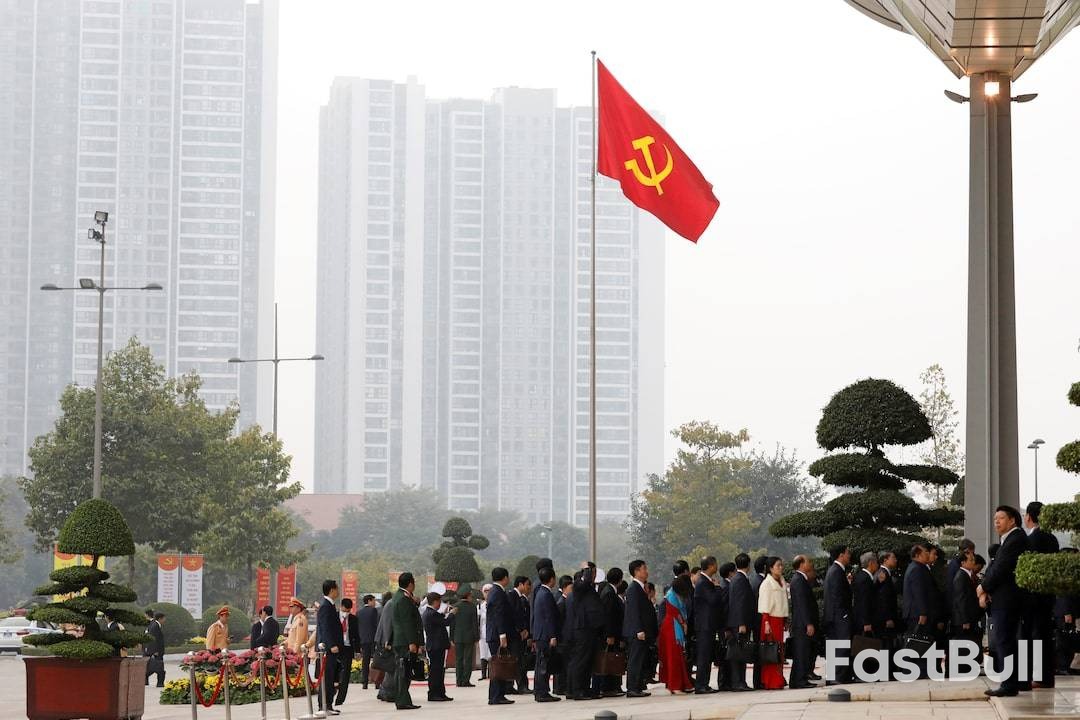
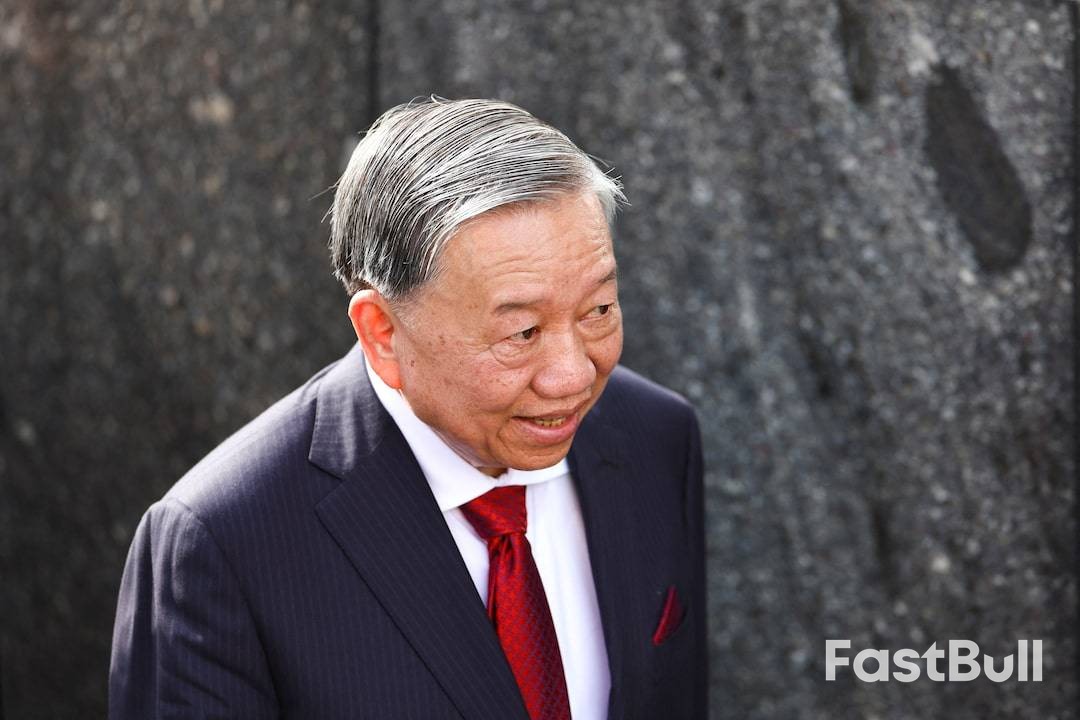
Vietnam's ruling Communist Party has concluded its 14th five-yearly congress, a pivotal event that selects the nation's top leader and charts its strategic course through 2030. The outcomes will shape the political and economic trajectory of one of Asia's most dynamic economies.

The party's leadership structure is determined through a multi-layered process. Roughly 1,600 delegates, who represent over 5 million party members, are tasked with appointing about 200 officials to the Central Committee. This body then selects the 17 to 19 members of the Politburo, the party's highest decision-making authority. From this elite group, the general secretary is chosen.
Current party chief To Lam, 68, received a preliminary endorsement from the party in December to continue in his role. However, the final decision was made by the newly elected delegates at the congress. In his brief tenure, Lam has been known for implementing sweeping reforms, tightening national security, and expanding the influence of the police ministry, an institution he led for nearly a decade.

Following the congress, the Politburo will nominate candidates for president, prime minister, and speaker of the parliament. These appointments must then be confirmed by lawmakers. While parliamentary elections are scheduled for March with a first meeting in April, an extraordinary session could be convened earlier to formalize these key government positions. The role of the party chief has grown increasingly powerful in recent years, making it the most influential post in the country.
Vietnam’s leadership operates on a principle of collective decision-making, which has ensured remarkable stability in both economic and foreign policy since the landmark Doi Moi reforms of the late 1980s. These reforms were instrumental in transforming the nation from a war-torn state into a fast-growing economic powerhouse.
On the world stage, Vietnam has long pursued a strategy of "Bamboo Diplomacy," carefully balancing its relationships with major global powers, including China, the United States, and Russia. Although Lam has moved away from using the specific phrase, the underlying pragmatic approach is expected to continue unless major geopolitical shifts occur.
Economically, Lam has shown a preference for cultivating private enterprise through the development of "national champions" that operate under state guidance. While Vietnam aims to reduce its dependence on the foreign investment that fuels its export-driven economy, it remains focused on attracting advanced technology and capital to achieve its ambitious goal of becoming a high-income country by 2045.
Economic growth remains the cornerstone of the Communist Party's legitimacy. In a speech to the congress, To Lam pledged to achieve annual economic growth of more than 10% for the remainder of the decade. This target is notably ambitious, especially when compared to the 6.5% to 7% goal for the 2021-2025 period, which was missed.
This bold vision comes as Vietnam navigates a complex global trade environment, including high U.S. tariffs on its goods that could impact revenue from its largest foreign market. To counter these challenges, the party is advancing a new growth model. According to a draft report, this model positions the private economy as the "driving force" while the state maintains a "leading role."
To support this strategy, the government plans to increase public spending on infrastructure and development projects. This will result in a projected budget deficit of approximately 5% of GDP over the next five years, a significant increase from the 3.1% to 3.2% recorded between 2021 and 2025.
The Communist Party of Vietnam, founded by Ho Chi Minh in 1930, has a long history of governance. It assumed control of northern Vietnam in 1954 following the end of French colonial rule. After the conclusion of the war with the United States and the fall of Saigon in 1975, Vietnam was reunified under the party.
Since then, it has ruled the country unchallenged, permitting no political opposition. This long-standing political structure provides the backdrop for the country's current leadership decisions and long-term strategic planning.
White Label
Data API
Web Plug-ins
Poster Maker
Affiliate Program
The risk of loss in trading financial instruments such as stocks, FX, commodities, futures, bonds, ETFs and crypto can be substantial. You may sustain a total loss of the funds that you deposit with your broker. Therefore, you should carefully consider whether such trading is suitable for you in light of your circumstances and financial resources.
No decision to invest should be made without thoroughly conducting due diligence by yourself or consulting with your financial advisors. Our web content might not suit you since we don't know your financial conditions and investment needs. Our financial information might have latency or contain inaccuracy, so you should be fully responsible for any of your trading and investment decisions. The company will not be responsible for your capital loss.
Without getting permission from the website, you are not allowed to copy the website's graphics, texts, or trademarks. Intellectual property rights in the content or data incorporated into this website belong to its providers and exchange merchants.
Not Logged In
Log in to access more features

FastBull Membership
Not yet
Purchase
Log In
Sign Up