Markets
News
Analysis
User
24/7
Economic Calendar
Education
Data
- Names
- Latest
- Prev


Signal Accounts for Members
All Signal Accounts
All Contests


France Trade Balance (SA) (Oct)A:--
F: --
Euro Zone Employment YoY (SA) (Q3)A:--
F: --
Canada Part-Time Employment (SA) (Nov)A:--
F: --
P: --
Canada Unemployment Rate (SA) (Nov)A:--
F: --
P: --
Canada Full-time Employment (SA) (Nov)A:--
F: --
P: --
Canada Labor Force Participation Rate (SA) (Nov)A:--
F: --
P: --
Canada Employment (SA) (Nov)A:--
F: --
P: --
U.S. PCE Price Index MoM (Sept)A:--
F: --
P: --
U.S. Personal Income MoM (Sept)A:--
F: --
P: --
U.S. Core PCE Price Index MoM (Sept)A:--
F: --
P: --
U.S. PCE Price Index YoY (SA) (Sept)A:--
F: --
P: --
U.S. Core PCE Price Index YoY (Sept)A:--
F: --
P: --
U.S. Personal Outlays MoM (SA) (Sept)A:--
F: --
U.S. 5-10 Year-Ahead Inflation Expectations (Dec)A:--
F: --
P: --
U.S. Real Personal Consumption Expenditures MoM (Sept)A:--
F: --
U.S. Weekly Total Rig CountA:--
F: --
P: --
U.S. Weekly Total Oil Rig CountA:--
F: --
P: --
U.S. Consumer Credit (SA) (Oct)A:--
F: --
China, Mainland Foreign Exchange Reserves (Nov)A:--
F: --
P: --
Japan Trade Balance (Oct)A:--
F: --
P: --
Japan Nominal GDP Revised QoQ (Q3)A:--
F: --
P: --
China, Mainland Imports YoY (CNH) (Nov)A:--
F: --
P: --
China, Mainland Exports (Nov)A:--
F: --
P: --
China, Mainland Imports (CNH) (Nov)A:--
F: --
P: --
China, Mainland Trade Balance (CNH) (Nov)A:--
F: --
P: --
China, Mainland Exports YoY (USD) (Nov)A:--
F: --
P: --
China, Mainland Imports YoY (USD) (Nov)A:--
F: --
P: --
Germany Industrial Output MoM (SA) (Oct)A:--
F: --
Euro Zone Sentix Investor Confidence Index (Dec)A:--
F: --
P: --
Canada National Economic Confidence Index--
F: --
P: --
U.K. BRC Like-For-Like Retail Sales YoY (Nov)--
F: --
P: --
U.K. BRC Overall Retail Sales YoY (Nov)--
F: --
P: --
Australia Overnight (Borrowing) Key Rate--
F: --
P: --
RBA Rate Statement
RBA Press Conference
Germany Exports MoM (SA) (Oct)--
F: --
P: --
U.S. NFIB Small Business Optimism Index (SA) (Nov)--
F: --
P: --
Mexico 12-Month Inflation (CPI) (Nov)--
F: --
P: --
Mexico Core CPI YoY (Nov)--
F: --
P: --
Mexico PPI YoY (Nov)--
F: --
P: --
U.S. Weekly Redbook Index YoY--
F: --
P: --
U.S. JOLTS Job Openings (SA) (Oct)--
F: --
P: --
China, Mainland M1 Money Supply YoY (Nov)--
F: --
P: --
China, Mainland M0 Money Supply YoY (Nov)--
F: --
P: --
China, Mainland M2 Money Supply YoY (Nov)--
F: --
P: --
U.S. EIA Short-Term Crude Production Forecast For The Year (Dec)--
F: --
P: --
U.S. EIA Natural Gas Production Forecast For The Next Year (Dec)--
F: --
P: --
U.S. EIA Short-Term Crude Production Forecast For The Next Year (Dec)--
F: --
P: --
EIA Monthly Short-Term Energy Outlook
U.S. API Weekly Gasoline Stocks--
F: --
P: --
U.S. API Weekly Cushing Crude Oil Stocks--
F: --
P: --
U.S. API Weekly Crude Oil Stocks--
F: --
P: --
U.S. API Weekly Refined Oil Stocks--
F: --
P: --
South Korea Unemployment Rate (SA) (Nov)--
F: --
P: --
Japan Reuters Tankan Non-Manufacturers Index (Dec)--
F: --
P: --
Japan Reuters Tankan Manufacturers Index (Dec)--
F: --
P: --
Japan Domestic Enterprise Commodity Price Index MoM (Nov)--
F: --
P: --
Japan Domestic Enterprise Commodity Price Index YoY (Nov)--
F: --
P: --
China, Mainland PPI YoY (Nov)--
F: --
P: --
China, Mainland CPI MoM (Nov)--
F: --
P: --


No matching data
Latest Views
Latest Views
Trending Topics
Top Columnists
Latest Update
White Label
Data API
Web Plug-ins
Affiliate Program
View All

No data
U.S. Treasury yields remained mostly flat on Monday as markets brace for a likely 25-basis-point rate cut from the Federal Reserve this week, with investor focus shifting to signals on future easing cycles....

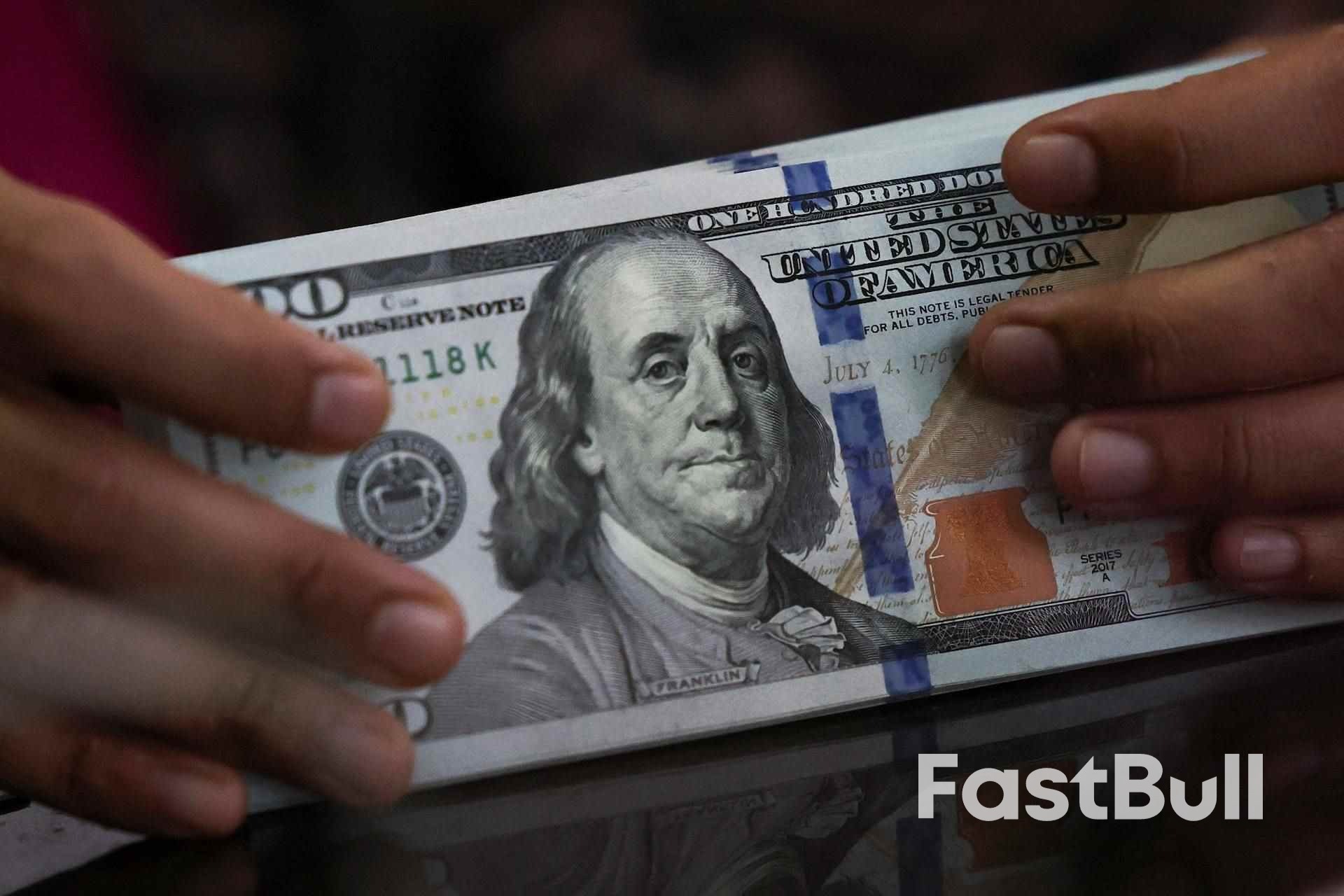
The dollar eased on Monday, ahead of a week packed with central bank meetings and headlined by the U.S. Federal Reserve, where an interest rate cut is all but priced in, although a highly divided committee makes for a wild card.
Besides the Fed decision on Wednesday, the central banks of Australia, Brazil, Canada and Switzerland also hold rate-setting meetings, although none of these are expected to make any changes to monetary policy.
Analysts expect the Fed to make a "hawkish cut", where the language of the statement, median forecasts and Chair Jerome Powell's press conference point to a higher bar on further rate reduction.
That could support the dollar if it pushes investors to dial back expectations for two or three rate cuts next year, though messaging could be complicated by policymakers' division as several have already all but indicated their voting intentions.
"We expect to see some dissents, potentially from both hawkish and dovish members," said BNY's head of markets macro strategy Bob Savage in a note to clients.
The Federal Open Market Committee has not had three or more dissents at a meeting since 2019, and that has happened just nine times since 1990.
Even though the U.S. currency has drifted lower for the past three weeks, dollar bulls have recovered some of their bottle. Weekly positioning data shows speculators hold their largest long position - one that assumes the value of the dollar will rise - since before President Donald Trump's "Liberation Day" tariff bombshell that sent the currency tumbling.
The labour market is softening, but overall growth is holding up, the stimulus from the "One Big Beautiful Bill" should start to filter through and inflation is still well above the central bank's target rate of 2%.
"These factors could discourage additional rate cuts if they spill over into stronger labour market conditions," MUFG currency strategist Lee Hardman said.
Beyond U.S. monetary policy, the euro edged up 0.1% to $1.1652, lifted by higher euro zone bond yields. German 30-year yields hit their highest since 2011 in early trading.
Unlike the Fed, the ECB is not expected to cut rates again in the coming year. Influential policymaker Isabel Schnabel on Monday said the central bank's next move could even be a hike.
The Australian dollar briefly touched a high of $0.6649, the highest since mid-September, to last trade down 0.1% on the day at $0.6635.
The Reserve Bank of Australia meets on Tuesday after a run of hot data on inflation, economic growth and household spending. Futures imply the next move will be up and possibly as soon as May, leaving the focus on the post-meeting statement and media conference.
"We expect the RBA to be on an extended hold, with the cash rate to remain at its current level of 3.60%," said analysts at ANZ in a note last week, revising previous expectations for a cut.
The Bank of Canada is also widely expected to leave its interest rate on hold on Wednesday and a hike is fully priced by December 2026. The currency was steady at C$1.3819 on Monday, having hit 10-week highs on Friday following strong jobs data.
The yen , which has stabilised in this past week, having weakened sharply in November, was mostly steady at 155.44 per dollar, while sterling held around $1.3325 and the Swiss franc was a touch stronger at 0.804 francs.
Bloomberg's Eric Balchunas dismisses comparisons between Bitcoin and tulip mania, citing its resilience and institutional adoption at a recent financial analysis event.
This perspective strengthens Bitcoin's position as a durable macro asset, supporting institutional interest and market confidence amidst ongoing asset volatility.
Eric Balchunas, a senior ETF analyst at Bloomberg, has rejected the notion that Bitcoin is a modern tulip mania, highlighting its long-term resilience and institutional interest.
This analysis underscores Bitcoin's lasting appeal and invalidates the comparison to historical speculative bubbles, reassuring both institutional and retail investors.
Balchunas refutes the "Bitcoin = tulip mania" analogy, arguing Bitcoin's 17‑year history of resilience differs vastly from the three-year tulip bubble. He highlights ongoing institutional adoption as a key factor in Bitcoin's durability.
Bloomberg's senior ETF analyst noted Bitcoin's performance, gaining approximately 250% over the past three years. His statements challenge historical perceptions and support Bitcoin as a durable financial asset.
"The tulip market rose and collapsed in around three years, punched once in the face and knocked out, whereas Bitcoin has been through 6–7 brutal selloffs over 17 years and still makes new highs." - Eric Balchunas, Senior ETF Analyst, Bloomberg Intelligence
Balchunas' assertions bolster confidence in Bitcoin's stability among investors. His analysis emphasizes continuing institutional interest, contrary to the short-lived tulip mania. Institutional flows remain strong, highlighting Bitcoin's sustained market presence.
Financially, Bitcoin's resilience enhances its status among non-productive store-of-value assets like gold. Institutional backing and ETF flows signify an asset exceeding typical bubble characteristics, supporting long-term strategic investments.
Historically, Bitcoin has rebounded from deep drawdowns, mirroring other resilient assets like gold. Balchunas' insights indicate a pattern of recovery and growth not aligned with single-cycle bubbles.
This analysis suggests that Bitcoin's role as a macro asset is cemented by its historical performance, encouraging ongoing adoption and positioning it beyond mere speculative comparisons.
In the euro area, focus turns to the Sentix investor confidence indicator for December and the German industrial production data for October. The Sentix indicator will give us the first signal of investor confidence in December while German industrial production is the first 'hard data' for Q4. The German PMIs suggest that industrial production in October was little changed compared to September.
Early tomorrow morning, the Reserve Bank of Australia RBA will hold its final monetary policy meeting of the year. We expect no policy changes, in line with consensus and market pricing. Recent solid economic data has driven a hawkish repricing of markets' policy rate expectations, with the next most likely policy change being a rate hike in H2 2026.
The big event this week is the FOMC meeting on Wednesday, preceded by the much-delayed September JOLTS job openings data on Tuesday. Rate decisions from Canada (Wednesday) as well as Switzerland and Turkey (Thursday) will also draw attention. In Scandinavia, notable data releases include final Swedish CPI and growth figures, Norwegian CPI, and Norges Bank's regional network report.
What happened overnight
In China, November trade data showed exports rising by 5.9% y/y (prior: -1.1%), exceeding expectations due to strong growth in shipments to non-US markets amid elevated US tariffs. Imports rose 1.9% y/y (prior: 1.0%), below forecasts and signalling subdued domestic demand. This marks the first time China's year-to-date trade surplus in goods exceeded USD 1tn. Read more in Research China – A two-speed economy, 8 December.
In Japan, total cash earnings were up 2.6% y/y in October compared to 2.1% in September. This leaves real earnings at -0.7% y/y as wages continue to struggle to compensate for particularly food price surges earlier this year. Q3 GDP growth was revised lower to -0.6% on lower investments and exports. This is considered a temporary setback following several strong quarters, though, and it is not enough to derail a December Bank of Japan-hike. Private spending edged 0.2% higher, reflecting continuous recovering consumer sentiment since the spring.
In Southeast Asia, Thailand launched air strikes on Cambodia, marking the collapse of the Trump-brokered peace deal. Cambodia accused Thailand of the attacks, while Malaysia called for restraint as tensions over historic border disputes escalate.
In the euro area, wage growth in Q3 rose against expectations, with compensation per employee rising to 4.0% y/y from 3.8% y/y in Q2. Compared to the ECB staff projections from September, which estimated Q3 wage growth at 3.2% y/y, the high print is a hawkish surprise for the ECB. With headline inflation averaging 2.1%, consumers experienced significant real wage gains, which is supportive for consumption. While inflation is expected below 2% next year due to temporary factors like energy prices and a stronger euro, strong wage growth indicates persistent domestic price pressures.
GDP growth in Q3 was revised up to 0.3% q/q from 0.2% q/q, driven by rounding adjustments. Private consumption contributed positively but slowed to 0.2% q/q from 0.3% q/q in Q2, reflecting cautious consumer behaviour despite solid real income gains of nearly 2% y/y. Apart from consumption, investments and government consumption were the main growth drivers, while net exports weighed negatively. Read more in Euro Area Macro Monitor – Southern Europe outshines in growth and public finances, 8 December.
In the US, the delayed September PCE inflation landed close to expectations. Core services inflation momentum cooled slightly at 0.2% m/m SA (cons: 0.2%, prior: 0.1981). At the same time, December's flash consumer confidence index from the University of Michigan revealed a decline in consumers' inflation expectations, with 1-year expectations falling to 4.1% (prior: 4.5%) and 5-year expectations dropping to 3.2% (prior: 3.4%), likely reflecting lower gasoline prices. While no major surprises, this on the margin supports the Fed's rate cut anticipated this week.
Also in the US, President Trump unveiled his National Security Strategy, emphasising his 'America First' vision. Key priorities include reinforcing US dominance in the Western Hemisphere via the revived Monroe Doctrine, countering China's influence in Latin America, and deterring conflict in the Indo-Pacific through military strength. The strategy also questions Europe's reliability as an ally, calling on NATO members to assume greater defence responsibilities. Notably, the Kremlin welcomed the strategy, stating its adjustments align with Russia's own global perspective.
In the Russia-Ukraine war, US Special Envoy Keith Kellogg stated that efforts to reach a breakthrough are "really close", with key issues including the Donbas region and Zaporizhzhia nuclear plant. However, the Kremlin has called for radical changes to US proposals, underscoring ongoing challenges in reaching a resolution. Today, Zelensky meets European leaders to discuss next steps, including securing meaningful guarantees.
In Japan-China relations, tensions escalated as Japanese aircraft were targeted by radar from Chinese fighter jets near Okinawa in two incidents Tokyo called "dangerous". PM Takaichi condemned the actions and lodged a protest with Beijing, while Japan vowed to respond calmly to maintain regional stability. The incidents highlight strained ties amid disputes over Taiwan and broader regional security challenges.
Equities: Equities slowed on Friday following strong gains earlier in the week. US and European indices were little changed on Friday but ended the week almost 1% higher. Nordic markets outperformed, with Stockholm and Helsinki locking in almost 2% for the week. The explanation is straightforward: Nordic equities lagged in the initial recovery. Asian markets are continuing higher this morning, while US and European futures are somewhat indecisive.
Although markets appeared calm on the surface on Friday, we note a clear risk-on rotation beneath it, with cyclical sectors rising roughly 1%, financed by declines in defensives. For the week as a whole, global cyclicals outperformed defensives by 2.5 p.p., the strongest relative performance since the earnings season.
FI and FX: Last week ended with slightly higher yields, both in Europe (2bp) and the US (4bp). We start the week at unchanged levels compared to Friday in US-treasuries. EURUSD is hovering around 1.165 and USDJPY at 155.2 as markets will increasingly focus on the widely expected Fed rate cut on Wednesday where markets price -23bp.
White Label
Data API
Web Plug-ins
Poster Maker
Affiliate Program
The risk of loss in trading financial instruments such as stocks, FX, commodities, futures, bonds, ETFs and crypto can be substantial. You may sustain a total loss of the funds that you deposit with your broker. Therefore, you should carefully consider whether such trading is suitable for you in light of your circumstances and financial resources.
No decision to invest should be made without thoroughly conducting due diligence by yourself or consulting with your financial advisors. Our web content might not suit you since we don't know your financial conditions and investment needs. Our financial information might have latency or contain inaccuracy, so you should be fully responsible for any of your trading and investment decisions. The company will not be responsible for your capital loss.
Without getting permission from the website, you are not allowed to copy the website's graphics, texts, or trademarks. Intellectual property rights in the content or data incorporated into this website belong to its providers and exchange merchants.
Not Logged In
Log in to access more features

FastBull Membership
Not yet
Purchase
Log In
Sign Up