

Markets
News
Analysis
User
24/7
Economic Calendar
Education
Data
- Names
- Latest
- Prev



Signal Accounts for Members
All Signal Accounts
All Contests
Citi Predicts Cn Allocation To Push Copper To Usd15-16K/ Ton In Coming Weeks, But Rather Unlikely To Sustain
Bombardier - Have Taken Note Of Post From President Of United States To Social Media And Are In Contact With Canadian Government
The Main Lithium Carbonate Futures Contract Hit Its Daily Limit Down, Falling 10.99% To 148,200 Yuan/ton
The Most Active Lithium Carbonate Futures Contract Fell 10.00% Intraday, Currently Trading At 149,540 Yuan/ton. The Most Active Platinum Futures Contract Declined 12.00% Intraday, Currently Trading At 627.10 Yuan/gram. The Most Active Tin Futures Contract On The Shanghai Stock Exchange Plummeted 6.00% Intraday, Currently Trading At 418,000.00 Yuan/ton. LME Tin Fell 2.00% Intraday, Currently Trading At 52,900.00 USD/ton
Platinum Futures Fell 10.00% Intraday, Currently Trading At 643.00 Yuan/gram; Spot Palladium Fell More Than 4.00% Intraday, Currently Trading At 1914.10 USD/ounce
WTI Crude Oil Touched $64 Per Barrel, Down 2.40% On The Day; Brent Crude Oil Fell Below $68 Per Barrel, Down 2.11% On The Day
The Most Active Shanghai Silver Futures Contract Fell 4.00% Intraday, Currently Trading At 28,324.00 Yuan/kg. The Most Active Shanghai Copper Futures Contract Declined 2.00% Intraday, Currently Trading At 104,120.00 Yuan/ton
Oil Futures Fell By More Than $1 Per Barrel, With Brent Crude Futures Dropping To A Low Of $69.62 Per Barrel And WTI Crude Futures Settling At $64.18 Per Barrel
The Australian Dollar Fell 1% Against The US Dollar; The New Zealand Dollar Fell 0.8% Against The US Dollar
 U.S. Exports (Nov)
A:--
F: --
P: --
 Canada Imports (SA) (Nov)
A:--
F: --
Canada Exports (SA) (Nov)A:--
F: --
U.S. Factory Orders MoM (Excl. Defense) (Nov)A:--
F: --
P: --
U.S. Factory Orders MoM (Nov)A:--
F: --
U.S. Wholesale Sales MoM (SA) (Nov)A:--
F: --
P: --
U.S. Factory Orders MoM (Excl. Transport) (Nov)A:--
F: --
U.S. Non-Defense Capital Durable Goods Orders Revised MoM (Excl. Aircraft) (SA) (Nov)A:--
F: --
U.S. EIA Weekly Natural Gas Stocks ChangeA:--
F: --
P: --
 Brazil CAGED Net Payroll Jobs (Dec)
A:--
F: --
P: --
U.S. Weekly Treasuries Held by Foreign Central BanksA:--
F: --
P: --
 South Korea Industrial Output MoM (SA) (Dec)
A:--
F: --
P: --
South Korea Services Output MoM (Dec)A:--
F: --
P: --
South Korea Retail Sales MoM (Dec)A:--
F: --
P: --
 Japan Tokyo CPI YoY (Excl. Food & Energy) (Jan)
A:--
F: --
P: --
Japan Tokyo CPI MoM (Excl. Food & Energy) (Jan)A:--
F: --
P: --
Japan Unemployment Rate (Dec)A:--
F: --
P: --
Japan Tokyo CPI YoY (Jan)A:--
F: --
P: --
Japan Jobs to Applicants Ratio (Dec)A:--
F: --
P: --
Japan Tokyo CPI MoM (Jan)A:--
F: --
P: --
Japan Tokyo Core CPI YoY (Jan)A:--
F: --
P: --
Japan Retail Sales YoY (Dec)A:--
F: --
Japan Industrial Inventory MoM (Dec)A:--
F: --
P: --
Japan Retail Sales (Dec)A:--
F: --
P: --
Japan Retail Sales MoM (SA) (Dec)A:--
F: --
Japan Large-Scale Retail Sales YoY (Dec)A:--
F: --
P: --
Japan Industrial Output Prelim MoM (Dec)A:--
F: --
P: --
Japan Industrial Output Prelim YoY (Dec)A:--
F: --
P: --
 Australia PPI YoY (Q4)
A:--
F: --
P: --
Australia PPI QoQ (Q4)A:--
F: --
P: --
Japan Construction Orders YoY (Dec)--
F: --
P: --
Japan New Housing Starts YoY (Dec)--
F: --
P: --
 France GDP Prelim YoY (SA) (Q4)
--
F: --
P: --
 Turkey Trade Balance (Dec)
--
F: --
P: --
France PPI MoM (Dec)--
F: --
P: --
 Germany Unemployment Rate (SA) (Jan)
--
F: --
P: --
Germany GDP Prelim YoY (Not SA) (Q4)--
F: --
P: --
Germany GDP Prelim QoQ (SA) (Q4)--
F: --
P: --
Germany GDP Prelim YoY (Working-day Adjusted) (Q4)--
F: --
P: --
 Italy GDP Prelim YoY (SA) (Q4)
--
F: --
P: --
 U.K. M4 Money Supply (SA) (Dec)
--
F: --
P: --
U.K. M4 Money Supply YoY (Dec)--
F: --
P: --
U.K. M4 Money Supply MoM (Dec)--
F: --
P: --
U.K. Mortgage Lending (Dec)--
F: --
P: --
U.K. Mortgage Approvals (Dec)--
F: --
P: --
Italy Unemployment Rate (SA) (Dec)--
F: --
P: --
 Euro Zone Unemployment Rate (Dec)
--
F: --
P: --
Euro Zone GDP Prelim QoQ (SA) (Q4)--
F: --
P: --
Euro Zone GDP Prelim YoY (SA) (Q4)--
F: --
P: --
Italy PPI YoY (Dec)--
F: --
P: --
 India Deposit Gowth YoY
--
F: --
P: --
 Mexico GDP Prelim YoY (Q4)
--
F: --
P: --
Brazil Unemployment Rate (Dec)--
F: --
P: --
 South Africa Trade Balance (Dec)
--
F: --
P: --
Germany CPI Prelim YoY (Jan)--
F: --
P: --
Germany CPI Prelim MoM (Jan)--
F: --
P: --
Germany HICP Prelim YoY (Jan)--
F: --
P: --
Germany HICP Prelim MoM (Jan)--
F: --
P: --
Canada GDP MoM (SA) (Nov)--
F: --
P: --
Canada GDP YoY (Nov)--
F: --
P: --











No matching data

Latest Views
Latest Views
Trending Topics
Top Columnists
Latest Update
White Label
Data API
Web Plug-ins
Affiliate Program
View All
No data
The Treasury added Thailand to its "monitoring list" of countries warranting close attention due to the growth of the Asian country's global current account surplus and its trade surplus with the U.S.
Donald Trump has a clear goal for the U.S. housing market: make it more affordable without letting home prices fall. His strategy hinges on lowering borrowing costs, specifically mortgage rates, while actively protecting the wealth of current homeowners.
However, economists question whether this approach can meaningfully tackle the housing affordability crisis, as it avoids addressing the core issue of high property values.
In a speech at the World Economic Forum in Davos, former President Trump laid out his vision. He argued that increasing the housing supply to drive down prices would disrupt the market and erode the wealth homeowners have built, especially since values soared post-pandemic.
"I am very protective of people that already own a house," Trump said. "Because we have had such a good run, the house values have gone up tremendously, and these people have become wealthy."
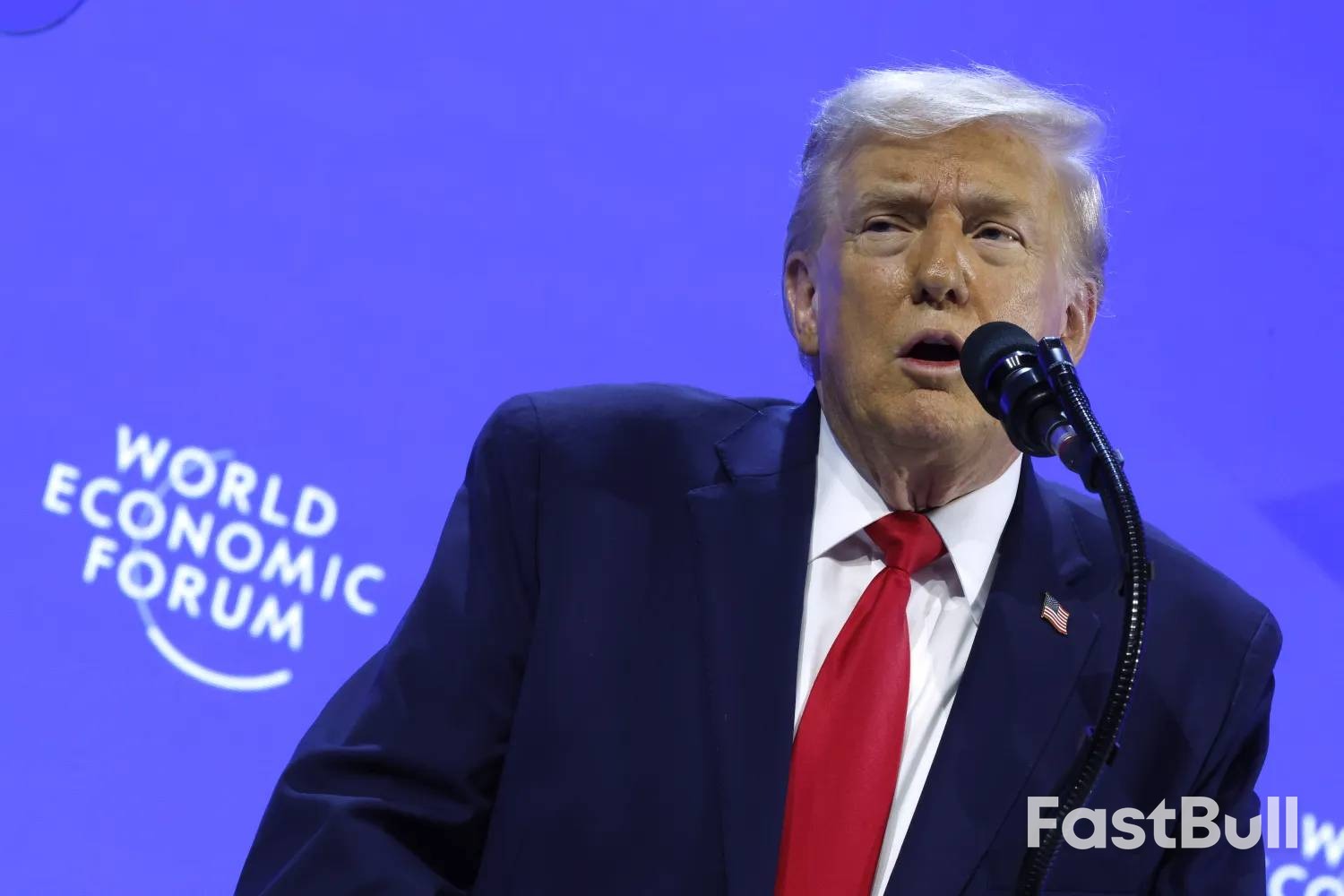
He framed lower interest rates as a solution that is "good for everybody." This signals a clear preference for one policy lever over another.
"This suggests that the administration sees lower mortgage rates as the preferred channel through which to improve affordability," noted Wells Fargo economists Charlie Dougherty and Ali Hajibeigi.
Yet, some experts argue that addressing high prices is unavoidable. "As a homeowner, I don't want to see the value of my property go down," said Shelton Weeks, an economics professor at Florida Gulf Coast University. "Ultimately, that bit of pain for other homeowners is the pathway to truly alleviating the housing affordability crisis."
Trump's proposals have consistently focused on reducing the cost of borrowing. Key initiatives include:
• Directing government-backed mortgage giants Fannie Mae and Freddie Mac to purchase $200 billion in mortgage bonds to help lower rates.
• Floating the idea of creating 50-year mortgages to provide homebuyers with more financing options.
While lower mortgage rates make monthly payments cheaper, they also risk stimulating demand. Without a corresponding increase in the number of homes for sale, this could backfire.
"Unless new listings pick up substantially, the lack of supply is likely to drive up prices, offsetting much of the affordability gain from lower mortgage rates," wrote Ben Ayers, a senior economist at Nationwide.
Protecting high home values has a direct impact on the broader economy. When homeowners feel wealthier due to rising property values, they tend to spend more—a phenomenon known as the "wealth effect."
"Because a home is often the largest source of family wealth, price swings can materially impact how people spend, save and borrow," the Dallas Federal Reserve explained in a recent report.
This housing wealth has been a key factor supporting strong consumer spending, which accounts for over two-thirds of U.S. economic activity. Data from the Bureau of Economic Analysis showed consumer spending rose 0.3% in both October and November. Trump's policy aims to keep this engine running.
"Affluent consumers continued to buoy spending with an extra boost from wealth effects," said Diane Swonk, chief economist at KPMG.
While prioritizing rate reduction, Trump has proposed some measures to increase the housing supply available to typical buyers. An executive order aims to ban large institutional investors from purchasing homes, targeting Wall Street's growing stake in the residential market.
However, analysts believe this move may have a limited impact. According to Wells Fargo, institutional investors account for a relatively small 2.5% share of the market. Furthermore, the policy's wording suggests it may not be an absolute prohibition.
"The order only appears to erect hurdles for additional home sales to investors and does not look to be an outright ban," Wells Fargo economists wrote. "There is no mention of completely stopping new sales, or mandating the liquidation of existing portfolios."
Trump himself acknowledged the tension between affordability and property values. "Every time you make it more and more and more affordable for somebody to buy a house cheaply, you're actually hurting the value of those houses," he said. "And I don't want to do anything that's going to hurt the value of people that own a house."
A critical government funding package failed to advance in the Senate on Thursday, significantly raising the chances of a government shutdown set to begin Saturday at 12:01 a.m. ET.
The procedural vote on the six-bill package fell short, with a final tally of 45-55. The measure needed 60 votes to overcome a filibuster and move forward.
The outcome was widely anticipated as the legislative standoff intensifies. The failure will likely force Senate Republicans back into negotiations with Democrats to find a path to keep the government open.
The core of the dispute is funding for the Department of Homeland Security (DHS). Democrats are demanding that funding for the agency be stripped from the package, insisting on new restrictions for federal immigration enforcement. This follows an incident where agents shot and killed two U.S. citizens in Minneapolis this month.
Seven Republican senators joined Democrats in blocking the bill. Majority Leader John Thune, a Republican from South Dakota, voted "no" as a procedural move to reserve the right to reconsider the vote later.
"Democrats are ready to pass five bipartisan funding bills in the Senate," Minority Leader Chuck Schumer, a New York Democrat, stated on the Senate floor. "We're ready to fund 96% of the federal government today, but the DHS bill still needs a lot of work."
Beyond the controversial Homeland Security allocation, the failed package also included funding for several other essential federal departments:
• Defense
• Treasury
• State
• Health and Human Services
• Labor
• Housing and Urban Development
• Transportation
• Education
With the deadline approaching, Republicans began signaling a potential compromise on Wednesday. Some expressed a willingness to separate the DHS funding bill from the main package, allowing the other departments to be funded while negotiations continue.
However, altering the bill presents its own procedural challenge, as it would require another vote in the House of Representatives, which is currently on recess.
Thune confirmed that Democrats are negotiating with the White House to find a solution. "Let's hope it lands," he told reporters.
He acknowledged that a resolution on the contentious issues would require a broader agreement. "There's a path to consider some of those things and negotiate that out between Republicans, Democrats, House, Senate, White House, but that's not going to happen in this bill," Thune said.
The United States is once again on the brink of a partial government shutdown after a critical funding bill failed to pass the Senate. With the deadline fast approaching, divisions in Congress are intensifying, raising the likelihood of significant disruptions to federal operations.
A pivotal vote on spending bill H.R. 7148 was defeated in the Senate with a 45-55 result, falling short of the 60 votes required for passage. The outcome threatens to halt operations for parts of the federal government as early as Friday night.
The opposition was notably bipartisan, with seven Republicans joining Democrats in voting against the measure. Despite clearing the House of Representatives, the bill stalled in the Senate as Republicans could not secure the necessary Democratic support, revealing deepening ideological divides.
The central sticking point is the Democratic push for substantial reforms within federal agencies, prompted by recent controversial incidents. Senators in opposition are demanding new restrictions on federal agents, including:
• A ban on the use of masks
• Mandatory body cameras
• Independent oversight on the application of force
Senate Minority Leader Chuck Schumer underscored his party's firm stance, stating, "No ICE funding bill will progress without restructuring." While another vote could potentially occur by Saturday morning, the prospects for a breakthrough appear dim.
While a previous funding agreement has already secured the budgets for the Justice Department, FBI, and Veterans Affairs until 2026, a partial shutdown would still have widespread consequences.
Key economic data releases could be delayed, and agencies like the IRS are anticipating operational disruptions. A prolonged shutdown, similar to the record 43-day stoppage seen previously, could have serious effects across various sectors, including cryptocurrencies.
Reflecting the high stakes and political uncertainty, gambling markets are signaling a strong expectation of a shutdown. Polymarket currently indicates a 75% probability that the government will experience a stoppage by Saturday.
Global banks are entering a new era of strength, with market valuations hitting historic highs as they navigate a more favorable regulatory and earnings environment. After years of building resilience against low interest rates, the industry is showing renewed confidence.
According to the Boston Consulting Group, 53% of banks worldwide now have a price-to-book ratio (PBR) above one. This is a significant jump from four years ago when only 35% of banks cleared that same threshold.
"Over the past decade or so, the financial industry has taken a more cautious, inward-looking stance, focusing on productivity improvements and compliance," noted Saurabh Tripathi, global leader of financial institutions practice at Boston Consulting Group.
Following discussions at the World Economic Forum in Davos, Switzerland, Tripathi observed a clear shift in sentiment. "Leaders in the banking sector feel confident they can sustain high profitability over the medium term, supported by stable net interest margins and regulatory easing," he said.
For years, the banking sector has contended with the headwinds of low interest rates, a reality that set in after the 2008 financial crisis. The easy-money policies adopted during the COVID-19 pandemic were later reversed by central banks in the U.S. and Europe to combat inflation.
Now, a new phase is beginning. "Policy rates are now entering a downward phase," Tripathi explained, pointing to a trend that started around mid-2024. However, he anticipates that the resulting decline in banks' net interest income "is likely to be gradual," allowing banks to maintain strong profitability.
A major tailwind for the sector is the push for financial deregulation, particularly from the Trump administration. In November, the U.S. Federal Deposit Insurance Corporation (FDIC) approved a final rule that eases capital standards for banks.
This rule aims to reduce the regulatory burden on major financial institutions compared to directives issued under the Biden administration, bringing U.S. standards more in line with international capital requirements.
The positive industry trend is reflected in the performance of individual banking giants in both the U.S. and Japan.
Wells Fargo's Remarkable Turnaround
Wells Fargo stands out as a prime example of a global bank improving its valuation. Around 2020, the group's PBR fell below 1, but it has since rebounded to approximately 2.
A key factor was the lifting of an enforcement action in June of last year, which had previously restricted the bank's asset growth due to past misconduct. With that restriction removed, Wells Fargo is free to pursue a growth-oriented strategy.
In a recent demonstration of its renewed capacity, Wells Fargo committed to a $29.5 billion loan as part of Netflix's $72 billion bid for Warner Bros. Discovery. This commitment represents the largest bridge facility of its kind for a single bank.
Japan's Banking Sector Rises
In Japan, leading institutions like Mitsubishi UFJ Financial Group have also seen their PBRs climb past the 1.0 mark, driven by the normalization of interest rates. The country's top banks are now on track to report record-breaking consolidated profits for the fiscal year ending in March.
This growth is further supported by policy changes. Japan's Financial Services Agency plans to ease rules that cap bank lending as a percentage of their capital. This move will empower banks to provide substantial, temporary funding for major corporate activities like acquisitions.
President Donald Trump issued a direct warning to Iran on Wednesday via social media, signaling that military strikes are on the table unless the nation's leaders agree to a comprehensive political settlement. The message comes as the United States military concentrates a formidable force for a potential operation against Iran.
Dozens of warships, including a nuclear-powered aircraft carrier, alongside hundreds of combat aircraft, are now positioned to attack if ordered.
The U.S. has assembled a powerful air and naval armada to back up its diplomatic pressure on Iran. All information regarding this deployment is based on open-source intelligence from outlets including the Pentagon and the White House.
Naval Power in the Region
The centerpiece of the naval deployment is the USS Abraham Lincoln aircraft carrier strike group, which is moving into the area from the Indo-Pacific. The deployment includes a massive concentration of firepower:
• Aircraft Carrier: The nuclear-powered USS Abraham Lincoln carries nine air squadrons, including F-35C Lightning II stealth fighters, F/A-18E/F Super Hornet jets, and EA-18G Electronic Warfare aircraft.
• Escort Fleet: The carrier is escorted by three Arleigh Burke-class guided-missile destroyers, each capable of launching dozens of Tomahawk land-attack cruise missiles.
• Additional Forces: Beyond the Lincoln's immediate group, another six Arleigh Burke-class destroyers are operating in the Arabian Sea, Red Sea, and Mediterranean Sea. It is also highly probable that U.S. Navy guided-missile submarines, armed with Tomahawks, are in the region.
Air Force Assets on High Alert
Significant U.S. Air Force assets are also stationed at bases across the Middle East and Europe, ready to support any potential action.
• European Bases: RAF Lakenheath in the United Kingdom houses approximately 54 F-35A Lightning II stealth fighters and 35 F-15E Strike Eagles. At least one squadron of F-16 Fighting Falcons is based in Italy.
• Middle Eastern Bases: In Jordan, the Muwaffaq Salti Air Base hosts 37 F-15E Strike Eagles and two squadrons of A-10 Thunderbolt attack jets.
• Strategic Bombers: The Air Force has dozens of B-1 Lancer, B-2 Spirit, and B-52 Stratofortress strategic bombers on standby in the continental U.S. for long-range precision strikes. Transport aircraft have also been observed making regular flights to the Middle East.
In a post on his Truth Social platform, President Trump detailed the military presence with a direct message to Tehran.
"A massive Armada is heading to Iran. It is moving quickly, with great power, enthusiasm, and purpose," Trump stated, noting it was a larger force than the one sent to Venezuela. He emphasized that the U.S. military is "ready, willing, and able to rapidly fulfill [their] mission, with speed and violence, if necessary."
However, Trump framed the deployment as leverage for diplomacy. He urged Iran to "quickly come to the table" and negotiate a resolution to longstanding issues with the West, specifically its nuclear weapons program. The president’s message suggests the military buildup aims to force a permanent solution, whether through negotiation or direct action.
To underscore his point, Trump reminded the Iranian regime of a past military operation, noting their previous failure to make a deal led to Operation Midnight Hammer. During that operation, the U.S. military used B-2 Spirit stealth bombers and Tomahawk missiles to conduct precision strikes against several of Iran's nuclear facilities.
"Time is running out, it is truly of the essence!" Trump concluded. "The next attack will be far worse! Don't make that happen again."
728 RM B 7/F GEE LOK IND BLDG NO 34 HUNG TO RD KWUN TONG KLN HONG KONG


White Label
Data API
Web Plug-ins
Poster Maker
Affiliate Program
The risk of loss in trading financial instruments such as stocks, FX, commodities, futures, bonds, ETFs and crypto can be substantial. You may sustain a total loss of the funds that you deposit with your broker. Therefore, you should carefully consider whether such trading is suitable for you in light of your circumstances and financial resources.
No decision to invest should be made without thoroughly conducting due diligence by yourself or consulting with your financial advisors. Our web content might not suit you since we don't know your financial conditions and investment needs. Our financial information might have latency or contain inaccuracy, so you should be fully responsible for any of your trading and investment decisions. The company will not be responsible for your capital loss.
Without getting permission from the website, you are not allowed to copy the website's graphics, texts, or trademarks. Intellectual property rights in the content or data incorporated into this website belong to its providers and exchange merchants.
Not Logged In
Log in to access more features


Log In
Sign Up


