• Trade
  • Markets
  • Copy
  • Contests
  • News
  • 24/7
  • Calendar
  • Q&A
  • Chats
Trending
Screeners
SYMBOL
LAST
BID
ASK
HIGH
LOW
NET CHG.
%CHG.
SPREAD
SPX
S&P 500 Index
6901.01
6901.01
6901.01
6903.47
6833.46
+14.33
+ 0.21%
--
DJI
Dow Jones Industrial Average
48704.00
48704.00
48704.00
48756.34
48099.46
+646.26
+ 1.34%
--
IXIC
NASDAQ Composite Index
23593.85
23593.85
23593.85
23606.70
23308.95
-60.30
-0.25%
--
USDX
US Dollar Index
98.360
98.440
98.360
98.360
98.260
+0.040
+ 0.04%
--
EURUSD
Euro / US Dollar
1.17312
1.17319
1.17312
1.17459
1.17310
-0.00071
-0.06%
--
GBPUSD
Pound Sterling / US Dollar
1.33903
1.33912
1.33903
1.33997
1.33823
+0.00048
+ 0.04%
--
XAUUSD
Gold / US Dollar
4271.35
4271.74
4271.35
4283.49
4264.56
-7.94
-0.19%
--
WTI
Light Sweet Crude Oil
57.849
57.886
57.849
57.903
57.638
+0.208
+ 0.36%
--

Community Accounts

Signal Accounts
--
Profit Accounts
--
Loss Accounts
--
View More

Become a signal provider

Sell trading signals to earn additional income

View More

Guide to Copy Trading

Get started with ease and confidence

View More

Signal Accounts for Members

All Signal Accounts

Best Return
  • Best Return
  • Best P/L
  • Best MDD
Past 1W
  • Past 1W
  • Past 1M
  • Past 1Y

All Contests

  • All
  • Trump Updates
  • Recommend
  • Stocks
  • Cryptocurrencies
  • Central Banks
  • Featured News
Top News Only
Share

Thai Prime Minister House Dissolution Will Not Affect Border Conflict With Cambodia

Share

Trump: On Thailand And Cambodia Will Have To Make A Couple Of Phone Calls

Share

Hang Seng Materials Index Up 3%

Share

Most Active China Coking Coal Contract Falls More Than 3%

Share

China's Central Bank Sets Yuan Mid-Point At 7.0638 / Dlr Versus Last Close 7.0570

Share

Philippine Central Bank Governor To Bloomberg TV: We're Intervening In Forex Market A Little Bit

Share

Shanghai's Most Active Tin Futures Contract Rises More Than 3%

Share

Shanghai's Most Active Copper Futures Contract Hit A New Record High At 94080 Yuan Per Metric Ton

Share

[Market Update] Spot Gold Fell Below $4,270 Per Ounce, Down 0.24% On The Day

Share

Thai Baht Firms To Strongest Level In Three Months, Last At 31.62 Per USA Dollar

Share

Japan's Nikkei Share Average Extends Gain, Last Up 1.6%

Share

Eurostoxx 50 Futures Rise 0.3%, DAX Futures Up 0.3%

Share

White House: Chairman Of SEC Shall Review All Rules, Regulations, Guidance, Bulletins, And Memoranda Relating To Proxy Advisors

Share

White House: Trump Signs Order To Increase Oversight Of And Take Action To Restore Public Confidence In The Proxy Advisor Industry

Share

Japan's TOPIX Index Up 1% At 3391.72

Share

Trump: I Am Granting Tina Peters A Full Pardon

Share

Japan's Nikkei Average Futures Up 1.2% In Early Trade

Share

Dept Of Homeland Security: Secretary Noem Announces $1 Billion In FEMA Funding For Georgia

Share

Japan Finance Minister Katayama: Will Review Various Special Measures For Corporate Tax

Share

[Market Update] Spot Silver Fell Below $63/ounce, Down 1.28% On The Day

TIME
ACT
FCST
PREV
Australia Labor Force Participation Rate (SA) (Nov)

A:--

F: --

P: --

Turkey Retail Sales YoY (Oct)

A:--

F: --

P: --

South Africa Mining Output YoY (Oct)

A:--

F: --

P: --

South Africa Gold Production YoY (Oct)

A:--

F: --

P: --

Italy Quarterly Unemployment Rate (SA) (Q3)

A:--

F: --

P: --

IEA Oil Market Report
Turkey 1-Week Repo Rate

A:--

F: --

P: --

South Africa Refinitiv/Ipsos Primary Consumer Sentiment Index (PCSI) (Dec)

A:--

F: --

P: --

Turkey Overnight Lending Rate (O/N) (Dec)

A:--

F: --

P: --

Turkey Late Liquidity Window Rate (LON) (Dec)

A:--

F: --

P: --

U.K. Refinitiv/Ipsos Primary Consumer Sentiment Index (PCSI) (Dec)

A:--

F: --

P: --

Brazil Retail Sales MoM (Oct)

A:--

F: --

P: --

U.S. Weekly Continued Jobless Claims (SA)

A:--

F: --

P: --
U.S. Exports (Sept)

A:--

F: --

P: --

U.S. Trade Balance (Sept)

A:--

F: --

P: --
U.S. Weekly Initial Jobless Claims (SA)

A:--

F: --

P: --
Canada Imports (SA) (Sept)

A:--

F: --

P: --
U.S. Initial Jobless Claims 4-Week Avg. (SA)

A:--

F: --

P: --

Canada Trade Balance (SA) (Sept)

A:--

F: --

P: --
Canada Exports (SA) (Sept)

A:--

F: --

P: --
U.S. Wholesale Sales MoM (SA) (Sept)

A:--

F: --

P: --
U.S. EIA Weekly Natural Gas Stocks Change

A:--

F: --

P: --

China, Mainland M1 Money Supply YoY (Nov)

--

F: --

P: --

China, Mainland M0 Money Supply YoY (Nov)

--

F: --

P: --

China, Mainland M2 Money Supply YoY (Nov)

--

F: --

P: --

U.S. 30-Year Bond Auction Avg. Yield

A:--

F: --

P: --

Argentina CPI MoM (Nov)

A:--

F: --

P: --

Argentina National CPI YoY (Nov)

A:--

F: --

P: --

Argentina 12-Month CPI (Nov)

A:--

F: --

P: --

U.S. Weekly Treasuries Held by Foreign Central Banks

A:--

F: --

P: --

Japan Industrial Output Final MoM (Oct)

--

F: --

P: --

Japan Industrial Output Final YoY (Oct)

--

F: --

P: --

U.K. Services Index MoM (SA) (Oct)

--

F: --

P: --

U.K. Services Index YoY (Oct)

--

F: --

P: --

Germany HICP Final YoY (Nov)

--

F: --

P: --

Germany HICP Final MoM (Nov)

--

F: --

P: --

U.K. Trade Balance Non-EU (SA) (Oct)

--

F: --

P: --

U.K. Trade Balance (Oct)

--

F: --

P: --

U.K. Services Index MoM

--

F: --

P: --

U.K. Construction Output MoM (SA) (Oct)

--

F: --

P: --

U.K. Industrial Output YoY (Oct)

--

F: --

P: --

U.K. Trade Balance (SA) (Oct)

--

F: --

P: --

U.K. Trade Balance EU (SA) (Oct)

--

F: --

P: --

U.K. Manufacturing Output YoY (Oct)

--

F: --

P: --

U.K. GDP MoM (Oct)

--

F: --

P: --

U.K. GDP YoY (SA) (Oct)

--

F: --

P: --

U.K. Industrial Output MoM (Oct)

--

F: --

P: --

U.K. Manufacturing Output MoM (Oct)

--

F: --

P: --

U.K. Monthly GDP 3M/3M Change (Oct)

--

F: --

P: --

Germany CPI Final MoM (Nov)

--

F: --

P: --

Germany CPI Final YoY (Nov)

--

F: --

P: --

U.K. Construction Output YoY (Oct)

--

F: --

P: --

France HICP Final MoM (Nov)

--

F: --

P: --

China, Mainland Outstanding Loans Growth YoY (Nov)

--

F: --

P: --

U.K. Inflation Rate Expectations

--

F: --

P: --

India CPI YoY (Nov)

--

F: --

P: --

India Deposit Gowth YoY

--

F: --

P: --

Brazil Services Growth YoY (Oct)

--

F: --

P: --

Mexico Industrial Output YoY (Oct)

--

F: --

P: --

Germany Current Account (Not SA) (Oct)

--

F: --

P: --

Philadelphia Fed President Henry Paulson delivers a speech
Q&A with Experts
    • All
    • Chatrooms
    • Groups
    • Friends
    Connecting
    .
    .
    .
    Type here...
    Add Symbol or Code

      No matching data

      All
      Trump Updates
      Recommend
      Stocks
      Cryptocurrencies
      Central Banks
      Featured News
      • All
      • Russia-Ukraine Conflict
      • Middle East Flashpoint
      • All
      • Russia-Ukraine Conflict
      • Middle East Flashpoint
      Search
      Products

      Charts Free Forever

      Chats Q&A with Experts
      Screeners Economic Calendar Data Tools
      Membership Features
      Data Warehouse Market Trends Institutional Data Policy Rates Macro

      Market Trends

      Market Sentiment Order Book Forex Correlations

      Top Indicators

      Charts Free Forever
      Markets

      News

      News Analysis 24/7 Columns Education
      From Institutions From Analysts
      Topics Columnists

      Latest Views

      Latest Views

      Trending Topics

      Top Columnists

      Latest Update

      Signals

      Copy Rankings Latest Signals Become a signal provider AI Rating
      Contests
      Brokers

      Overview Brokers Assessment Rankings Regulators News Claims
      Broker listing Forex Brokers Comparison Tool Live Spread Comparison Scam
      Q&A Complaint Scam Alert Videos Tips to Detect Scam
      More

      Business
      Events
      Careers About Us Advertising Help Center

      White Label

      Data API

      Web Plug-ins

      Affiliate Program

      Awards Institution Evaluation IB Seminar Salon Event Exhibition
      Vietnam Thailand Singapore Dubai
      Fans Party Investment Sharing Session
      FastBull Summit BrokersView Expo
      Recent Searches
        Top Searches
          Markets
          News
          Analysis
          User
          24/7
          Economic Calendar
          Education
          Data
          • Names
          • Latest
          • Prev

          View All

          No data

          Scan to Download

          Faster Charts, Chat Faster!

          Download App
          English
          • English
          • Español
          • العربية
          • Bahasa Indonesia
          • Bahasa Melayu
          • Tiếng Việt
          • ภาษาไทย
          • Français
          • Italiano
          • Türkçe
          • Русский язык
          • 简中
          • 繁中
          Open Account
          Search
          Products
          Charts Free Forever
          Markets
          News
          Signals

          Copy Rankings Latest Signals Become a signal provider AI Rating
          Contests
          Brokers

          Overview Brokers Assessment Rankings Regulators News Claims
          Broker listing Forex Brokers Comparison Tool Live Spread Comparison Scam
          Q&A Complaint Scam Alert Videos Tips to Detect Scam
          More

          Business
          Events
          Careers About Us Advertising Help Center

          White Label

          Data API

          Web Plug-ins

          Affiliate Program

          Awards Institution Evaluation IB Seminar Salon Event Exhibition
          Vietnam Thailand Singapore Dubai
          Fans Party Investment Sharing Session
          FastBull Summit BrokersView Expo

          US Seizure of Rogue oil Tanker off Venezuela Signals new Crackdown on Shadow Fleet

          Manuel

          Commodity

          Political

          Summary:

          On Thursday, the leader of the U.S.-backed Venezuelan opposition, Maria Corina Machado, applauded the Trump administration’s decision to seize the tanker.

          The oil tanker was steaming near the coast of Guyana recently when its location transponder showed it starting to zigzag. It was a seemingly improbable maneuver and the latest digital clue that the ship, the Skipper, was trying to obscure its whereabouts and the valuable cargo stored inside its hull: tens of millions of dollars’ worth of illicit crude oil.
          On Wednesday, U.S. commandos fast-roping from helicopters seized the 332-meter (1,090-feet) ship — not where it appeared to be navigating on ship tracking platforms but some 360 nautical miles to the northwest, near the coast of Venezuela.
          The seizure marked a dramatic escalation in President Donald Trump's campaign to pressure strongman Nicolás Maduro by cutting off access to oil revenues that have long been the lifeblood of Venezuela's economy. It could also signal a broader U.S. campaign to clamp down on ships like the Skipper, which experts and U.S. officials say is part of a shadowy fleet of rusting oil tankers that smuggle oil for countries facing stiff sanctions, such as Venezuela, Russia and Iran.
          “There are hundreds of flagless, stateless tankers that have been a lifeline for revenues, sanctioned oil revenues, for regimes like Maduro’s, Iran and for the Kremlin,” said Michelle Weise Bockmann, a senior analyst at Windward, a maritime intelligence firm that tracks such vessels. “They can no longer operate unchallenged.”
          Since the first Trump administration imposed punishing oil sanctions on Venezuela in 2017, Maduro's government has relied on scores of such oil tankers to smuggle their crude into global supply chains.

          Oil ships operate in shadows

          The ships cloak their locations by altering their automated identification system — a mandatory safety feature intended to help avoid collisions — to either go entirely dark or to “spoof” their location to appear to be navigating sometimes oceans away, under a false flag or with the fake registration information of another vessel.
          The dark fleet expanded following U.S. sanctions on Russia over its 2022 invasion of Ukraine. Experts say many of the ships are barely seaworthy, operate without insurance and are registered to shell companies that help conceal their ownership.
          The vessels often transfer their cargoes to other ships while at sea, further obscuring their origins, experts said.
          For the most part, Maduro's government has succeeded in using such tactics to get its oil to market. The country's oil production has increased about 25% over the last two years, according to OPEC data. Still, Wednesday's seizure could mark a turning point, experts said, foreshadowing a possible oil blockade that could deter smuggling from even some of the shipping industry's worst actors
          “The cost of doing business with Venezuela just went way up,” said Claire Jungman, director of maritime risk and intelligence at Vortexa, an oil analytics firm. “These are very risk-tolerant operators, but even they don't want to lose a hull. A physical seizure is an entirely different category of risk than falsifying paperwork and bank fines.”

          The Skipper's last few weeks

          The Skipper’s final weeks hiding in the Caribbean were reconstructed by Windward, which uses satellite imagery relied on by U.S. officials mapping the movements of the dark fleet.
          The U.S. sanctioned the Skipper in November 2022, when it was known as the M/T Adisa, for its alleged role in a network of dark vessels smuggling crude on behalf of Iran’s Revolutionary Guard and Lebanon’s Hezbollah militant group. The network was reportedly run by a Switzerland-based Ukrainian oil trader who was also sanctioned, the U.S. Treasury Department said at the time.
          In recent months, the ship has sailed to China with a cargo of Iranian oil, and it has also been linked to illicit cargoes from Russia, according to Windward. At the time of its seizure, Windward reported, the tanker was digitally manipulating its tracking signals to falsely indicate it was sailing off the coast of Guyana, which shares a border with Venezuela, and adjacent to a massive offshore oil field being developed by Exxon with strong U.S. support. It has also been falsely flying the Guyana flag, according to international ship registries, a major violation of maritime rules.
          Windward reported that the Skipper is one of about 30 sanctioned tankers operating near Venezuela, many of them vulnerable to U.S. interception because they are falsely flagged, making them stateless under international maritime law.
          “It's quite audacious,” said Bockmann, the Windward analyst. “Here’s this falsely flagged Guyana ship purporting to be in a Guyana oil field. It's quite bizarre.”
          The Skipper had about 2 million barrels of crude aboard
          The Skipper departed Venezuelan waters early this month with about 2 million barrels of heavy crude, roughly half of it belonging to a Cuban state-run oil importer, according to documents from the state-owned company PDVSA that were provided to The Associated Press on the condition of anonymity because the person did not have permission to share them.
          The high risk generates huge opportunities for profits — black market Venezuelan oil costs about $15 less per barrel than its legitimate crude, according to Francisco Monaldi, a Venezuelan oil expert at Rice University in Houston.
          Monaldi said he expects the price of illicit Venezuelan crude to drop because fewer buyers will be willing to risk having the cargo seized. However, he cautioned that it's too early to know if the U.S. will impose a full blockade on Venezuelan oil, such as the one the U.S. led against Iraq following its 1990 invasion of Kuwait.
          “It depends if this is just a one-off event or something more systematic,” he said.

          Crackdown risks raising oil prices

          Monaldi said one possible brake on Trump carrying out additional U.S. seizures is the impact it could have on gas prices at a time when Americans are concerned about high living costs. Although Venezuela's oil production has dwindled as a result of underinvestment to less than 1% of global output, commodity prices are notoriously volatile and traders may be worried that the aggressive tactics in Venezuela could be attempted elsewhere, he said.
          For Maduro, who called the seizure an “act of international piracy,” the stakes couldn't be higher. Oil has long been the lifeblood of Venezuela’s economy, generating enormous wealth but also creating a deep reliance on natural resources. Reflecting that double-edged dependence, the founder of OPEC, a Venezuelan by the name of Juan Pablo Pérez Alfonzo, in 1975 referred to the country’s vast oil deposits as the “Devil’s Excrement.” Oil prices were down 2% on Thursday.
          On Thursday, the leader of the U.S.-backed Venezuelan opposition, Maria Corina Machado, applauded the Trump administration’s decision to seize the tanker.
          “The regime is using the resources, the cash flows that come from illegal activities, including the black market of oil, not to give food for hungry children, not for teachers who earn one dollar a day, not to hospitals,” Machado told reporters in Norway’s capital, where she was awarded the Nobel Peace Prize. “They use those resources to repress and persecute our people.”

          Source: AP

          Risk Warnings and Disclaimers
          You understand and acknowledge that there is a high degree of risk involved in trading. Following any strategies or investment methods may lead to potential losses. The content on the site is provided by our contributors and analysts for information purposes only. You are solely responsible for determining whether any trading assets, securities, strategy, or any other product is suitable for investing based on your own investment objectives and financial situation.
          Add to Favorites
          Share

          Senate Rejects Obamacare Credit Renewal, Teeing Up Premium Spike

          Manuel

          Political

          The Senate rejected a pair of partisan measures addressing the impending expiration of Obamacare subsidies, setting up a Jan. 1 spike in health insurance premiums for more than 20 million Americans.
          With only a few days left before lawmakers leave for their Christmas break and few signs of life in stalled bipartisan negotiations, the failure Thursday of the dueling partisan plans all but guarantees the expiration of enhanced Affordable Care Act tax credits initiated during the pandemic era.
          Premium costs on average will more than double for people enrolled in Obamacare plans, forcing many of them to make hard choices on their health coverage and household finances. The outcome will have wide-ranging consequences for insurance companies, a health-care sector that accounts for one-sixth of the US economy and potentially next year’s midterm elections.
          Nearly 4 million people are expected to lose insurance over the next decade as a result, according to the Congressional Budget Office. Fewer healthy people signing up for health plans could also harm health insurers’ bottom lines.
          If fewer people buy health-care policies because of the higher costs, insurers will take in less revenue. And as healthy people choose to risk going without insurance coverage while sicker people stick with insurance plans, insurance becomes more expensive. Insurers including Centene Corp., Molina Healthcare Inc. and Oscar Health Inc. stand to lose the most.
          UnitedHealth Group Inc., Elevance Health Inc., and Cigna Group also sell exchange plans that would be hit if subsidies lapse. Hospitals also stand to come under more financial pressure as patients arrive without insurance coverage and aren’t able to pay for their care.
          The Democrats’ plan for a three-year extension of the Obamacare subsidies failed in a 51 to 48 vote, short of a 60-vote threshold needed to overcome procedural obstacles. Alaska’s two Republican senators, Lisa Murkowski and Dan Sullivan, joined Susan Collins of Maine and Josh Hawley of Missouri to cross party lines and vote with Democrats on the bill.
          A Republican plan to let the Obamacare subsidies lapse and partially replace them with federally funded tax-advantaged health savings accounts also failed on a 51 to 48 vote.
          The votes underlined the political challenge facing Republicans, who largely oppose the premium tax credits despite their popularity with voters. Three-quarters of Americans said they favored continuing the subsidies in a poll taken Oct. 27 to Nov. 2 by KFF, a nonpartisan health policy research institute.
          Senate Health, Education, Labor and Pensions Chairman Bill Cassidy of Louisiana, one of the authors of the Republican bill, shot down Democrats’ efforts to extend the subsidies, even for only a year, equating it to a giveaway to insurance companies. Senate Democratic leader Chuck Schumer, meanwhile, called Republicans’ bill a “ridiculous proposal.”Senate Rejects Obamacare Credit Renewal, Teeing Up Premium Spike_1
          Democrats have seized on the expiring tax credits as a way to paint Republicans as out-of-touch with the high costs voters face, part of a midterm election strategy laser-focused on affordability. A handful of Democrats won the guarantee of a Senate vote on renewing the subsidies in exchange for their support to end the government shutdown last month.
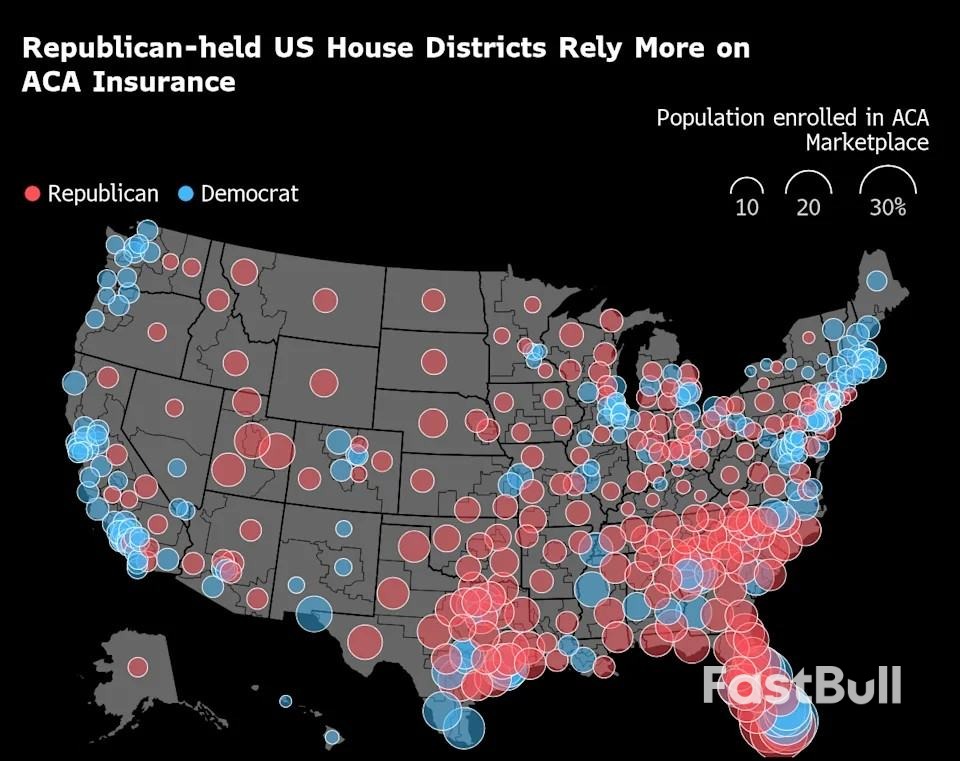
          The issue has divided Republicans, pitting moderates and lawmakers from states and districts with high ACA enrollment against GOP leadership and the rest of the party.
          Reliance on Obamacare is especially high in GOP-controlled states, which were less likely to expand Medicaid under former President Barack Obama’s sweeping health care law. That has ratcheted up pressure on Republicans to present an alternative to Democrats’ message on health care before they face voters next November, though they’ve struggled to unite around a vision.
          Republicans in the lead-up to Thursday released at least a half dozen competing health care proposals, including several that modified and extended the tax credits, before party leaders decided to move forward with the proposal for health savings accounts.
          In the House, Speaker Mike Johnson is pressing forward with a series of health care-related proposals that are likely to avoid addressing the expiring tax credits. But he faces a revolt from rank-and-file GOP moderates who are seeking to force a House vote on renewing the subsidies.

          Source: Bloomberg

          Risk Warnings and Disclaimers
          You understand and acknowledge that there is a high degree of risk involved in trading. Following any strategies or investment methods may lead to potential losses. The content on the site is provided by our contributors and analysts for information purposes only. You are solely responsible for determining whether any trading assets, securities, strategy, or any other product is suitable for investing based on your own investment objectives and financial situation.
          Add to Favorites
          Share

          Copper Hits Fresh All-Time High After Fed Delivers Rate Cut

          Manuel

          Commodity

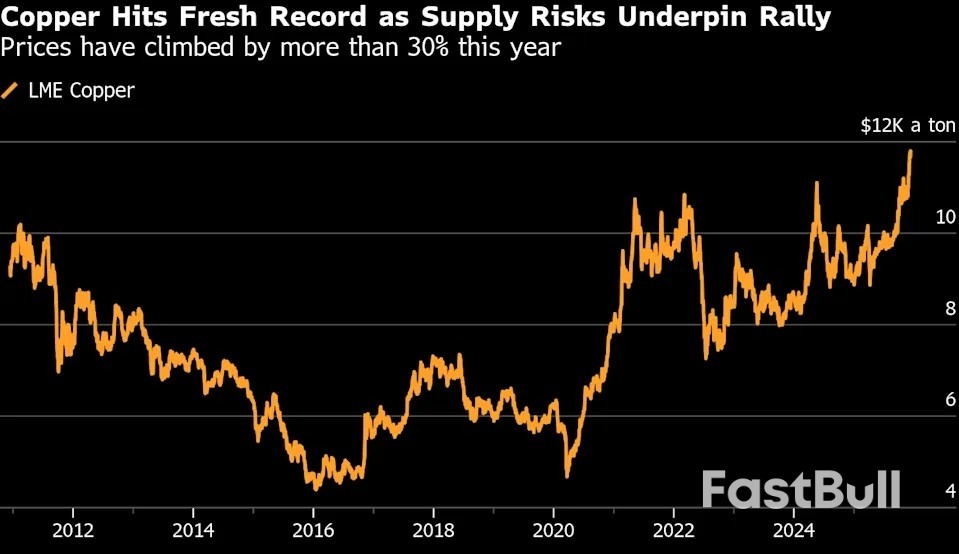
          Copper climbed to a fresh record high and most other industrial metals rose, after the Federal Reserve delivered a widely expected interest-rate cut and upgraded its growth forecast for the US economy.
          Copper advanced as much as 3% to $11,906 a ton in London, surpassing a peak struck on Monday. The US central bank lowered rates for a third straight meeting, but subtly changed the wording of its statement to hint at greater uncertainty around future reductions as it seeks to support growth while keeping inflation under control.
          The Fed now expects the US economy to grow by 2.3% next year, up from its previous projection of 1.8%, while anticipating that the pace of inflation will slow to 2.4%. Lower rates tend to benefit metals and other commodities, both by boosting their appeal relative to yield-bearing investments like bonds, and by lowering borrowing costs for capital-intensive manufacturing and industrial businesses.
          The sanguine outlook for the US economy also bolsters the demand outlook for industrial metals after a sharp decline in Chinese copper consumption over recent months. Beijing signaled on Monday that it would stick with a “proactive” fiscal approach and maintain a “moderately loose” monetary stance as it seeks to strengthen domestic demand.Copper Hits Fresh All-Time High After Fed Delivers Rate Cut_1
          Copper has rallied almost 35% this year, buoyed by a series of mine disruptions and fears of a shortage outside the US as traders rush supplies there ahead of potential tariffs next year. Rising consumption by the renewable energy sector is underpinning demand for the red metal over the longer term.
          Copper was up 2.7% to settle at $11,872 a ton on the London Metal Exchange, as all metals except nickel rallied on the exchange. Tin surged 4.4% to $41,751, the highest since April 2022, while zinc jumped 3.9%.

          Source: Bloomberg

          Risk Warnings and Disclaimers
          You understand and acknowledge that there is a high degree of risk involved in trading. Following any strategies or investment methods may lead to potential losses. The content on the site is provided by our contributors and analysts for information purposes only. You are solely responsible for determining whether any trading assets, securities, strategy, or any other product is suitable for investing based on your own investment objectives and financial situation.
          Add to Favorites
          Share

          Treasury Secretary Bessent Calls for Looser Regulations for the U.S. Financial System

          Manuel

          Political

          U.S. Treasury Secretary Scott Bessent is proposing to overhaul a regulatory panel that monitors the nation's financial stability, by advocating for looser regulations.
          The Financial Stability Oversight Council, a U.S. body created in the wake of the 2008 global financial crisis, monitors risks to the financial system and coordinates regulators' approaches to overseeing the U.S. financial system. In a letter released by Bessent Thursday, he said “too often in the past, efforts to safeguard the financial system have resulted in burdensome and often duplicative regulations."
          “Our administration is changing that approach," said Bessent, who chairs the committee, which is meeting on Thursday.
          Bessent said the council will begin to "consider where aspects of the U.S. financial regulatory framework impose undue burdens and where they harm economic growth, thereby undermining financial stability.”
          Voting members of the FSOC committee include the head of the Board of Governors of the Federal Reserve System; the Comptroller of the Currency; the director of the Consumer Financial Protection Bureau; the chairman of the Securities and Exchange Commission and several other agency heads.
          It was established in 2010 by the Dodd-Frank Wall Street Reform and Consumer Protection Act, a sweeping U.S. financial reform law created to prevent future economic meltdowns.
          A critic of the Trump administration, Sen. Elizabeth Warren, D-Mass., panned the idea of loosening financial regulations, saying “taking this hands-off approach to financial stability would leave our financial system and economy at greater risk in any economic environment.”
          “Going down this path just as cracks are emerging in the financial system and yellow lights are flashing across our economy is especially reckless," she said in a statement, citing the recent bankruptcies of subprime auto lender Tricolor Holdings, auto parts company First Brands, and home remodeling platform Renovo Home Partners.

          Source: AP

          Risk Warnings and Disclaimers
          You understand and acknowledge that there is a high degree of risk involved in trading. Following any strategies or investment methods may lead to potential losses. The content on the site is provided by our contributors and analysts for information purposes only. You are solely responsible for determining whether any trading assets, securities, strategy, or any other product is suitable for investing based on your own investment objectives and financial situation.
          Add to Favorites
          Share

          Gold Climbs To Over One-month High After Fed Rate Cut; Silver Hits Fresh Record

          Devin

          Commodity

          Dec 11 (Reuters) - Gold rose on Thursday to hit its highest level in more than a month after the U.S. Federal Reserve's quarter-point rate cut pushed the dollar lower, while silver surged to a fresh record high.

          Spot gold was up 1.2% at $4,275.39 per ounce, as of 11:49 a.m. ET (16:49 GMT), reaching its highest level since October 21. U.S. gold futures for February delivery gained 1.9% to $4,303.90 per ounce.

          Spot silver added 3.2% to $63.77 per ounce, hovering near the session's record high of $63.93.

          "Silver seems to be pulling gold up with it and it's also pulling up platinum and palladium...there's a lot of momentum behind it right now," said Marex analyst Edward Meir.

          The U.S. dollar slipped to over seven-week low against a basket of rival currencies, making greenback-priced gold more affordable for overseas buyers.

          "Inflation hasn't really come back down to the Fed's 2% target, so, when you're lowering rates in an inflationary environment that is still not optimum, and that's very bullish for gold," Meir added.

          The Federal Reserve on Wednesday delivered its third consecutive quarter-point cut, while policymakers also signaled a likely pause in further reductions as they monitor labor market trends and inflation that "remains somewhat elevated".

          Lower interest rates tend to be favorable to gold, as it is a non-yielding asset.

          U.S. President Donald Trump has advocated for lower interest rates since the start of his second term in January, and his nominee for the next Federal Reserve chair is expected to maintain that stance. White House economic adviser Kevin Hassett is currently viewed as the leading candidate for the position.

          Investors now await the monthly U.S. non-farm payrolls report, set to be released on December 16, for fresh cues on the Fed's policy path.

          Meanwhile, India's pension regulator on Wednesday permitted investments in gold and silver ETFs for the country's pension funds.

          Elsewhere, platinum gained 2.5% to $1,698.10, while palladium rose 1.3% to $1,494.88.

          Source: Reuters

          Risk Warnings and Disclaimers
          You understand and acknowledge that there is a high degree of risk involved in trading. Following any strategies or investment methods may lead to potential losses. The content on the site is provided by our contributors and analysts for information purposes only. You are solely responsible for determining whether any trading assets, securities, strategy, or any other product is suitable for investing based on your own investment objectives and financial situation.
          Add to Favorites
          Share

          Cred To The Fed? Jobless Claims Jump, Trade Gap Hits Narrowest In Over Five Years

          Justin

          Economic

          CRED TO THE FED: JOBLESS CLAIMS JUMP, TRADE GAP NARROWEST IN OVER FIVE YEARS

          Defenders of Powell & Co's December rate might look to today's data to support the notion that a softening labor market warranted the move.

          But is it smoke and mirrors?

          Last week, 236,000 U.S. workers joined the queue outside the unemployment office (USJOB=ECI), a 22.9% jump from the previous week and 16,000 more than analysts expected.

          Ironing out weekly volatility, the four-week moving average of initial claims now has a slight upward bias, but remains comfortably within the range associated with healthy labor market churn.

          At any rate, the recent spate of corporate layoff announcements is yet to have an obvious impact on the claims data.

          In fact, the oversized moves in this week's claims data can be at least partially blamed on seasonality.

          "Taking the past few weeks together, claims remain relatively low despite a recent uptick in layoff announcements," writes Nancy Vanden Houten, lead U.S. economist at Oxford Economics.

          Surprising in the other direction, ongoing jobless claims (USJOBN=ECI), which are reported on a one-week lag, unexpectedly dropped 5.1% to 1.838 million, or 109,000 shy of consensus. While still elevated, the jumbo-size weekly plunge happens at a time of weak hiring and consumer survey data that suggests laid-off workers are finding it increasingly difficult to find a replacement gig.

          It's possible that at least some of the drop can be attributed to benefits expiry, but not all of it.

          "Continued claims aren't immune to seasonal volatility so we won't read anything into that decline," Houten adds.

          Separately, investors were graced with trade data harkening back three months, when the government was a mere gleam in Washington's eye.

          Way back in September, the trade gap (USTBAL=ECI), or the difference in the value of goods and services imported to the U.S. and those exported abroad, unexpectedly narrowed by 11.0% to $52.8 billion.

          The reading is 2.3% narrower than economist predictions, notching the lowest trade deficit since June 2020.

          Under the hood, exports grew by 3.0% with a boost from a weak dollar, while the ebbing effects of punishing tariff policies helped imports, which account for the lion's share of the United States' total international trade and which partially rebounded from August's 5.2% drop, edging up 0.6%.

          Imports are a GDP detractor, so the shrinking trade deficit could bode well for the Commerce Department's next take on July-September GDP, if it ever arrives.

          "We aren't sure we'll see consistently smaller trade deficits going forward," says Oren Klachkin, financial markets economist at Nationwide. "Looking ahead, we see the trade deficit remaining relatively wide next year."

          "Firmer export growth fueled by a pickup in global demand and weaker dollar will be largely offset by stronger imports that will be a consequence of firmer US domestic demand."

          Source: TradingView

          To stay updated on all economic events of today, please check out our Economic calendar
          Risk Warnings and Disclaimers
          You understand and acknowledge that there is a high degree of risk involved in trading. Following any strategies or investment methods may lead to potential losses. The content on the site is provided by our contributors and analysts for information purposes only. You are solely responsible for determining whether any trading assets, securities, strategy, or any other product is suitable for investing based on your own investment objectives and financial situation.
          Add to Favorites
          Share

          Fed Cuts Rates as Reserve Operations Begin Amid Liquidity Strain

          Adam
          The FOMC decision to cut rates by 25 basis points, along with the introduction of reserve management operations, was widely expected—at least by me, and consistent with what I had been highlighting ahead of the meeting. It seemed clear that the Fed needed to prevent reserves from falling further, as the decline had been putting pressure on the overnight funding market, which we have been discussing here for months.
          Instead of freezing assets, they are trying to stabilize reserves, which is the more pressing issue. Perhaps things were worse behind the scenes than on the surface.
          The Fed clearly felt it had to act, announcing roughly $40 billion in bill purchases this month. In reality, this mostly offsets the week-to-week fluctuations we typically see on the balance sheet and may help lift reserves slightly. But the move feels a bit late, and the way they are implementing it almost comes across as a half-baked approach.
          The $40 billion does not appear to be a static amount. It sounds as though we will be learning the specific figures on the ninth of each month, at least until April, when the operation is expected to end.
          It is probably not a coincidence that the operation concludes around the same time Jay Powell is set to step down as Fed chair. It may even have been structured intentionally so that a new chair can come in and implement whatever policies they believe are appropriate.
          In a way, it seems Powell is trying to avoid letting the situation continue deteriorating under his tenure and is positioning himself to step aside before anything unfolds that could make the current environment worse.
          However, the real proof will come when we see how the overnight funding market actually behaves on a day-to-day basis—where SOFR trades and where volumes settle—and that will ultimately determine whether this operation is truly successful.
          In my view, $40 billion is unlikely to be enough to offset year-end funding pressures, and it will probably not be sufficient in January to meaningfully lower the rate pressures we have been seeing in a short period of time. But again, the results will speak for themselves as we monitor these dynamics day to day.
          Luckily, this comes at the perfect time for the $80 billion in Treasury settlements on Monday, 15 December.
          Anyway, Oracle (NYSE:ORCL) is getting smashed, down 10% on Wednesday, after its cloud revenue missed estimates and the company noted that CAPEX was rising to $50 billion from $35 billion. I guess that means today, we will be on CDS watch for the AI names once again.

          Source: investing

          Risk Warnings and Disclaimers
          You understand and acknowledge that there is a high degree of risk involved in trading. Following any strategies or investment methods may lead to potential losses. The content on the site is provided by our contributors and analysts for information purposes only. You are solely responsible for determining whether any trading assets, securities, strategy, or any other product is suitable for investing based on your own investment objectives and financial situation.
          Add to Favorites
          Share
          FastBull
          Copyright © 2025 FastBull Ltd

          728 RM B 7/F GEE LOK IND BLDG NO 34 HUNG TO RD KWUN TONG KLN HONG KONG

          TelegramInstagramTwitterfacebooklinkedin
          App Store Google Play Google Play
          Products
          Charts

          Chats

          Q&A with Experts
          Screeners
          Economic Calendar
          Data
          Tools
          Membership
          Features
          Function
          Markets
          Copy Trading
          Latest Signals
          Contests
          News
          Analysis
          24/7
          Columns
          Education
          Company
          Careers
          About Us
          Contact Us
          Advertising
          Help Center
          Feedback
          User Agreement
          Privacy Policy
          Business

          White Label

          Data API

          Web Plug-ins

          Poster Maker

          Affiliate Program

          Risk Disclosure

          The risk of loss in trading financial instruments such as stocks, FX, commodities, futures, bonds, ETFs and crypto can be substantial. You may sustain a total loss of the funds that you deposit with your broker. Therefore, you should carefully consider whether such trading is suitable for you in light of your circumstances and financial resources.

          No decision to invest should be made without thoroughly conducting due diligence by yourself or consulting with your financial advisors. Our web content might not suit you since we don't know your financial conditions and investment needs. Our financial information might have latency or contain inaccuracy, so you should be fully responsible for any of your trading and investment decisions. The company will not be responsible for your capital loss.

          Without getting permission from the website, you are not allowed to copy the website's graphics, texts, or trademarks. Intellectual property rights in the content or data incorporated into this website belong to its providers and exchange merchants.

          Not Logged In

          Log in to access more features

          FastBull Membership

          Not yet

          Purchase

          Become a signal provider
          Help Center
          Customer Service
          Dark Mode
          Price Up/Down Colors

          Log In

          Sign Up

          Position
          Layout
          Fullscreen
          Default to Chart
          The chart page opens by default when you visit fastbull.com