Markets
News
Analysis
User
24/7
Economic Calendar
Education
Data
- Names
- Latest
- Prev



Signal Accounts for Members
All Signal Accounts
All Contests


Moldova's Government: Problems In Ukraine's Power Grid Led To Moldova's Energy System Emergency Shutdown
[Bitcoin Falls Below $83,000, 24-Hour Gain Narrows To 0.53%] January 31, According To Htx Market Data, Bitcoin Fell Below $83,000, With A 24-Hour Growth Narrowing To 0.53%
[Canada Plans To Establish Defense Bank With Multiple Countries] Canadian Finance Minister François-Philippe Champagne Said On January 30 That Canada Will Work Closely With International Partners In The Coming Months To Establish A Defense Bank To Raise Funds For Maintaining Collective Security. Champagne Posted On Social Media Platform X That Day That More Than 10 Countries, Under Canada's Auspices, Discussed The Establishment Of A "Defense, Security And Reconstruction Bank." He Did Not Specify Which Countries Were Involved In The Discussions. According To Reuters, Supporters Hope The Proposed Defense Bank Will Be A Global Nation-support Institution With A AAA Credit Rating, Raising $135 Billion For Defense Projects In Europe And NATO Member States
[A Silver Long Whale With A $29M Long Position Gets Fully Liquidated, Losing Over $4M] January 31, According To Lookintochain Monitoring, With Today'S Spot Silver Price Falling Below $75 Per Ounce, A Single-Day Plunge Of Over 35% Set The Record For The Largest Single-Day Drop In History. The Whale "0X94D3" Who Was Long On Silver Saw Their $29 Million Long Position Liquidated, Resulting In A Loss Of Over $4 Million
Iran President Pezeshkian Says Trump, Netanyahu And Europe Stirred Tensions In Recent Protests, Provoking People
NASA Announced On January 30th That It Will Postpone A Key Rehearsal For The Artemis 2 Manned Lunar Orbit Mission Due To Extreme Cold Weather. The Mission's Execution Date Has Been Adjusted To No Earlier Than February 8th. The Rocket And Spacecraft For This Mission Arrived At The Kennedy Space Center Launch Pad In Florida In Mid-January. NASA Originally Planned To Conduct A Comprehensive Propellant Loading Rehearsal At The End Of January, Simulating Key Stages From Propellant Loading To The Launch Countdown—the Complete Launch Process Excluding Ignition And Liftoff
[Starmer Responds To Trump's Remarks On UK-China Cooperation: Ignoring China Would Be "Unwise"] According To The UK's Daily Telegraph, British Prime Minister Keir Starmer Responded To US President Trump's Remarks On UK-China Cooperation In Shanghai On The 30th, Stating That Ignoring China Would Be "unwise." "It Would Be Unwise To Simply Say 'we Should Ignore It.' You Know, French President Macron Has Already Visited (China) And Had Exchanges, And German Chancellor Merz Is Also Coming To Have Exchanges," Starmer Said. "If Britain Becomes The Only Country Refusing To Engage (with China), It Would Not Be In Our National Interest."
[0Xsun'S Associated Address Deposited 2 Million U Into Hyperliquid For A 4X Long Position On Silver] January 31, According To Onchain Lens Monitoring, The 0Xsun Associated Address Deposited 2 Million Usdc Into Hyperliquid At 9:00 A.M. Beijing Time Today And Opened A Long Position For Silver With 4X Leverage On Trade.Xyz
[Fear Of Losing To Starlink? French Government Blocks Eutelsat Sale Of Antenna Assets] French Minister Of Economy, Finance, Industry, Energy And Digital Sovereignty, Roland Lescuille, Disclosed To The Media On The 30th That The French Government Recently Blocked Eutelsat's Sale Of Ground Antenna Assets To A Swedish Buyer. He Said The Decision Was Based On "national Security" Concerns, Fearing That The Transaction Would Damage Eutelsat's Competitiveness And Allow Its Rival, SpaceX's Starlink System, To Dominate The European Market
[White House Office Of Management And Budget Instructs Affected Agencies To Begin Implementation Of Shutdown Plans] On January 30, Local Time, CCTV Reporters Learned That The Director Of The White House Office Of Management And Budget Issued A Memorandum To Heads Of Various Departments, Instructing Agencies Whose Funding Was Due At Midnight To Begin Preparations For A Government Shutdown. These Agencies Include The Department Of Defense, Department Of Homeland Security, Department Of State, Department Of Treasury, Department Of Labor, Department Of Health And Human Services, Department Of Education, Department Of Transportation, And Department Of Housing And Urban Development
Mexico's Ministry Of Foreign Affairs Says Minister Spoke With USA Secretary Of State Rubio To Reiterate Bilateral Collaboration On Agendas Of Common Interest
China Southern Command Says Carried Out Naval And Air Patrols Around Scarborough Shoal On 31 Jan

U.K. M4 Money Supply (SA) (Dec)A:--
F: --
U.K. M4 Money Supply YoY (Dec)A:--
F: --
P: --
Italy Unemployment Rate (SA) (Dec)A:--
F: --
P: --
Euro Zone Unemployment Rate (Dec)A:--
F: --
P: --
Euro Zone GDP Prelim QoQ (SA) (Q4)A:--
F: --
P: --
Euro Zone GDP Prelim YoY (SA) (Q4)A:--
F: --
P: --
Italy PPI YoY (Dec)A:--
F: --
P: --
Mexico GDP Prelim YoY (Q4)A:--
F: --
P: --
Brazil Unemployment Rate (Dec)A:--
F: --
P: --
South Africa Trade Balance (Dec)A:--
F: --
P: --
India Deposit Gowth YoYA:--
F: --
P: --
Germany CPI Prelim YoY (Jan)A:--
F: --
P: --
Germany CPI Prelim MoM (Jan)A:--
F: --
P: --
Germany HICP Prelim YoY (Jan)A:--
F: --
P: --
Germany HICP Prelim MoM (Jan)A:--
F: --
P: --
U.S. Core PPI YoY (Dec)A:--
F: --
U.S. Core PPI MoM (SA) (Dec)A:--
F: --
P: --
U.S. PPI YoY (Dec)A:--
F: --
P: --
U.S. PPI MoM (SA) (Dec)A:--
F: --
P: --
Canada GDP MoM (SA) (Nov)A:--
F: --
P: --
Canada GDP YoY (Nov)A:--
F: --
P: --
U.S. PPI MoM Final (Excl. Food, Energy and Trade) (SA) (Dec)A:--
F: --
P: --
U.S. PPI YoY (Excl. Food, Energy & Trade) (Dec)A:--
F: --
P: --
U.S. Chicago PMI (Jan)A:--
F: --
Canada Federal Government Budget Balance (Nov)A:--
F: --
P: --
U.S. Weekly Total Oil Rig CountA:--
F: --
P: --
U.S. Weekly Total Rig CountA:--
F: --
P: --
China, Mainland NBS Manufacturing PMI (Jan)A:--
F: --
P: --
China, Mainland NBS Non-manufacturing PMI (Jan)A:--
F: --
P: --
China, Mainland Composite PMI (Jan)A:--
F: --
P: --
South Korea Trade Balance Prelim (Jan)--
F: --
Japan Manufacturing PMI Final (Jan)--
F: --
P: --
South Korea IHS Markit Manufacturing PMI (SA) (Jan)--
F: --
P: --
Indonesia IHS Markit Manufacturing PMI (Jan)--
F: --
P: --
China, Mainland Caixin Manufacturing PMI (SA) (Jan)--
F: --
P: --
Indonesia Trade Balance (Dec)--
F: --
P: --
Indonesia Inflation Rate YoY (Jan)--
F: --
P: --
Indonesia Core Inflation YoY (Jan)--
F: --
P: --
India HSBC Manufacturing PMI Final (Jan)--
F: --
P: --
Australia Commodity Price YoY (Jan)--
F: --
P: --
Russia IHS Markit Manufacturing PMI (Jan)--
F: --
P: --
Turkey Manufacturing PMI (Jan)--
F: --
P: --
U.K. Nationwide House Price Index MoM (Jan)--
F: --
P: --
U.K. Nationwide House Price Index YoY (Jan)--
F: --
P: --
Germany Actual Retail Sales MoM (Dec)--
F: --
Italy Manufacturing PMI (SA) (Jan)--
F: --
P: --
South Africa Manufacturing PMI (Jan)--
F: --
P: --
Euro Zone Manufacturing PMI Final (Jan)--
F: --
P: --
U.K. Manufacturing PMI Final (Jan)--
F: --
P: --
Brazil IHS Markit Manufacturing PMI (Jan)--
F: --
P: --
Canada National Economic Confidence Index--
F: --
P: --
Canada Manufacturing PMI (SA) (Jan)--
F: --
P: --
U.S. IHS Markit Manufacturing PMI Final (Jan)--
F: --
P: --
U.S. ISM Output Index (Jan)--
F: --
P: --
U.S. ISM Inventories Index (Jan)--
F: --
P: --
U.S. ISM Manufacturing Employment Index (Jan)--
F: --
P: --
U.S. ISM Manufacturing New Orders Index (Jan)--
F: --
P: --
U.S. ISM Manufacturing PMI (Jan)--
F: --
P: --


No matching data
Latest Views
Latest Views
Trending Topics
Top Columnists
Latest Update
White Label
Data API
Web Plug-ins
Affiliate Program
View All

No data
A partial US government shutdown stems from Democratic demands for DHS immigration reforms following deadly incidents.
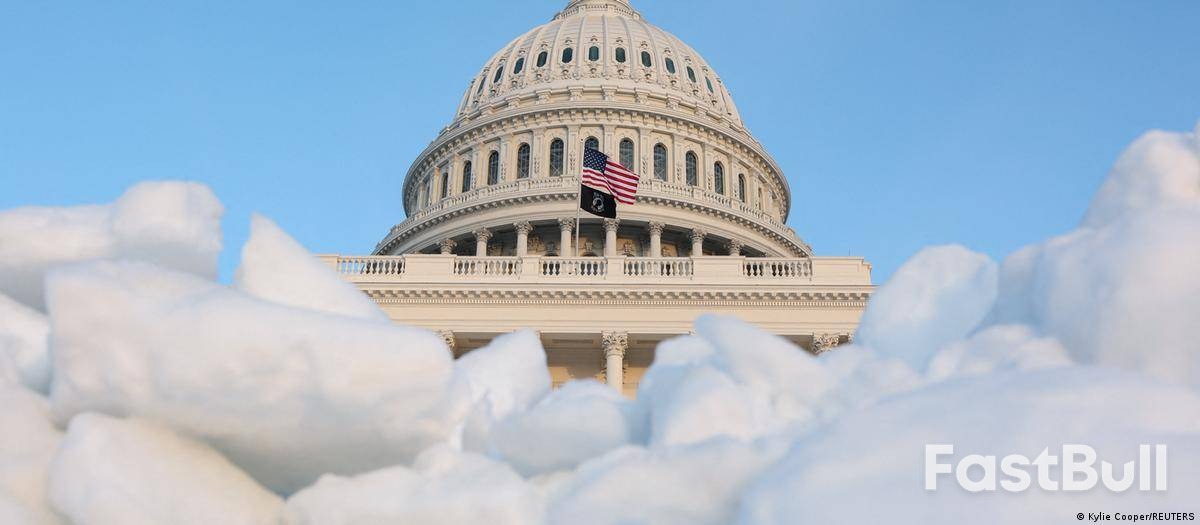
The United States government entered a partial shutdown on Saturday after Congress failed to pass a 2026 budget before a midnight deadline.
The political stalemate centers on funding for the Department of Homeland Security (DHS). Democratic senators are demanding new restrictions on federal immigration agents following a deadly incident during protests against the Trump administration's deportation policies.
The core of the dispute is a Democratic push to attach new rules to any funding for the DHS. This move comes after federal agents shot and killed two U.S. citizens, Alex Pretti and Renee Good, during protests in Minneapolis.
To approve new funding for the agency, Democrats are insisting on several key reforms, including:
• Stricter warrant requirements for immigration enforcement actions.
• A ban on immigration officers wearing masks.
• A mandate for all agents to wear body cameras.
The House of Representatives had previously approved a package to fund all six remaining federal departments. However, the legislative process hit a snag in the Senate.
Now, the House must vote on an amended bill passed by the Senate. This new version provides only temporary, two-week stopgap funding for the DHS, a measure designed to allow negotiations on immigration enforcement to continue. The House is scheduled to convene on Monday to vote on this compromise.
President Donald Trump has already given his approval to the Senate-backed package. He has urged the House to act quickly to resolve the shutdown and avoid a repeat of the record 43-day shutdown that occurred last fall.
If the current shutdown extends beyond a few days, it will directly impact tens of thousands of federal employees. Workers may be placed on unpaid leave or be forced to work without pay until a funding agreement is reached.
While Congress has already passed six of the twelve annual funding bills, the stalled package is critical as it funds the largest portion of the federal government's operations.
U.S. President Donald Trump has nominated Federal Reserve Governor Kevin Warsh to succeed Jerome Powell as chair of the central bank. The announcement, made Friday on Truth Social, initiates what is expected to be a high-stakes confirmation battle in the Senate.
Powell’s term as Fed Chair concludes in May, giving Trump an opportunity to install a candidate who has been a frequent critic of the central bank's direction. This move signals a potential "regime change" in monetary policy, aligning with the White House's desire for greater influence over interest rate decisions.
Trump expressed strong confidence in his nominee, a 55-year-old former Fed official and Morgan Stanley banker. "I have no doubt that he will go down as one of the GREAT Fed chairmen, maybe the best," the president stated, noting their long acquaintance. The selection confirmed widespread speculation, as prediction markets and Wall Street commentators had increasingly signaled Warsh as the frontrunner.
The nomination arrives during a period of volatility for digital assets. Bitcoin recently saw a sharp decline, falling from a high near $90,400 to a low of about $81,300. As of late Friday, Bitcoin was trading at $83,967, marking a 6.5% drop over the past week despite a 1.2% gain in the last 24 hours.
Historically, the Federal Reserve's interest rate policy has been a major driver for the crypto market. Digital assets like Bitcoin typically behave as "risk-on" investments, sensitive to broader financial conditions.
• Higher Interest Rates: When the Fed raises rates, safer investments like U.S. Treasurys offer more attractive yields. This tends to pull capital away from volatile assets, including cryptocurrencies.
• Lower Interest Rates: Conversely, cutting rates increases liquidity in the financial system. With more cash available, investors often seek higher returns by moving into riskier bets, which can benefit crypto.
Kevin Warsh is widely viewed as more hawkish on monetary policy than Jerome Powell. He has a track record of criticizing quantitative easing and the expansion of the Fed's balance sheet, suggesting he may favor tighter monetary conditions.
On cryptocurrency, Warsh holds a notably more positive stance than his predecessor. While Powell has consistently downplayed Bitcoin's economic significance, Warsh has offered a different perspective. In a recent discussion, he pushed back against the idea that Bitcoin undermines the Federal Reserve's ability to manage the economy.
Instead, Warsh argued that Bitcoin could function as a source of market discipline, providing an alternative signal for economic health without directly threatening the Fed's core functions. This viewpoint marks a significant departure from the current leadership's cautious and often dismissive tone toward digital currencies.

The U.S. government officially entered a partial shutdown on Saturday after Congress missed a midnight deadline to approve a new spending package.
The Senate managed to pass the funding deal with a bipartisan vote of 71 to 29. However, with the House of Representatives out of town, a vote on the measure is not expected until Monday. As a result, the partial shutdown began at 12:01 a.m. Eastern Time.
Unlike the record 43-day shutdown last fall that cost the economy an estimated $11 billion, this funding gap is expected to be brief. Lawmakers from both parties have been working to isolate a contentious debate over immigration enforcement to prevent it from disrupting broader government functions.
The core of the delay is a dispute over funding for the Department of Homeland Security (DHS) and the tactics used by its federal immigration agents.
Senate Democrats threatened to block the entire funding package after immigration agents shot a second U.S. citizen in Minneapolis. The death of nurse Alex Pretti on Saturday has led to widespread public outrage and prompted the Trump administration to de-escalate operations in the area. This was the second death of a U.S. citizen with no criminal record involving immigration agents this month.
In response, Democrats are pushing for several new restrictions on DHS agents:
• An end to roving patrols
• A requirement for agents to wear body cameras
• A prohibition on agents wearing face masks
• A requirement for agents to obtain a search warrant from a judge, not internally
Republicans have indicated they are open to considering some of these proposals.
The deal approved by the Senate provides a clear path forward by separating DHS funding from the rest of the government's budget. This allows critical agencies like the Pentagon and the Department of Labor to receive their approved funding immediately.
Meanwhile, funding for the Department of Homeland Security will be extended for just two weeks. This short-term extension is designed to give negotiators from both parties the time they need to reach a final agreement on new immigration enforcement rules.
Historically, short funding gaps are not unusual. According to the Congressional Research Service, the government has experienced 10 shutdowns of three days or fewer since 1977, most of which had a minimal real-world impact.
The U.S. government entered a partial shutdown on Saturday after Congress failed to approve a funding deal brokered between President Donald Trump and Democrats. The standoff centers on the Department of Homeland Security (DHS) following a fatal confrontation involving Border Patrol agents in Minneapolis.
The shutdown is expected to be brief, as the House of Representatives is scheduled to vote on the spending package when it returns from a week-long break on Monday. With President Trump’s support for the deal, a swift resolution is anticipated.
This marks the second government funding lapse since Trump returned to office. A previous 43-day shutdown in the autumn was the longest in history, causing widespread disruption by halting food aid for millions, canceling thousands of flights, and leaving federal workers unpaid for over a month.
The current shutdown is more limited in scope because several government departments are already fully funded through the end of the fiscal year on September 30.
Key services that will continue without interruption include:
• Department of Agriculture: Food stamp distribution will not be affected.
• National Parks: Will remain open.
• Veterans' Services: Operations will continue as normal.
• Justice Department: Funding is already secured.
However, a formal shutdown process has begun for affected agencies, including the Treasury, Defense, Homeland Security, Transportation, Health and Human Services, and Labor Departments. A memo from the White House Office of Management and Budget (OMB) confirmed the procedures.
Even within affected departments, essential personnel such as military staff and air traffic controllers will remain on the job through the weekend.
The funding battle escalated after a U.S. citizen, Alex Pretti, was killed during a confrontation with Border Patrol officers in Minneapolis last weekend. In response, Democrats refused to renew funding for the Department of Homeland Security without new restrictions on immigration enforcement.
The Democratic party is pushing for several key changes:
• Requiring DHS agents to use body cameras.
• Mandating judicial warrants for certain actions.
• Forbidding agents from masking their identities.
• Stopping broad immigration sweeps.
On Thursday, President Trump and Senate Democratic Leader Chuck Schumer reached a temporary agreement to resolve the impasse. The deal proposes funding the DHS for two weeks to allow for continued negotiations while fully funding the rest of the affected government agencies through September 30.
The Senate approved the funding measure on Friday, leaving the House as the final hurdle.
"It is our hope that this lapse will be short," OMB Director Russ Vought wrote in a memo, adding that the administration is ready to reopen the government as soon as Trump signs the bill. An administration official noted that if the House passes the legislation on Monday, operations could potentially resume the same day.
The shutdown does introduce some uncertainty. It remains unclear if the Bureau of Labor Statistics will delay its monthly jobs report, which is scheduled for release on Friday. Politically, the dispute comes as polls show Trump's deportation campaign is growing unpopular with voters, creating a potential liability for the Republican Party in the upcoming midterm elections.
A partial U.S. government shutdown began early Saturday morning, triggered by a procedural delay in Congress even after the Senate overwhelmingly passed a major funding agreement.
The Senate approved a package of five spending bills with a strong 71-29 bipartisan vote. The deal also included a two-week temporary funding measure for the Department of Homeland Security, giving lawmakers more time to resolve disagreements over the agency's budget.
However, the government's funding authority expired before the House of Representatives could vote on the package. With the House not scheduled to return to Washington until Monday, a shutdown became unavoidable. This lapse in funding follows the record 43-day shutdown experienced last year but is expected to be short-lived.
House Speaker Mike Johnson, R-La., indicated that the House would move quickly to resolve the situation. In a conference call with House Republicans on Friday, he announced his support for the Senate-passed deal, a decision he linked directly to President Donald Trump's endorsement of the package.
Johnson expressed his hope that the House would pass the bill on Monday. Once approved by the House, the spending legislation will be sent to President Trump for his signature.
On Thursday, Trump had encouraged lawmakers to support the deal in a post on his Truth Social platform, aiming to fund most of the federal government through the end of the fiscal year on September 30.
With congressional appropriations expired, several key federal departments are now operating in a shutdown status. These include the Departments of State, Defense, Labor, Health and Human Services, Education, and Transportation, among other related agencies.
In anticipation of the funding lapse, U.S. Office of Management and Budget Director Russell Vought issued a memo to federal agency heads on Friday. He instructed that employees "should report to work for their next regularly scheduled tour of duty to undertake orderly shutdown activities."
Vought added that the administration would continue working with Congress to finalize appropriations for Fiscal Year 2026. "It is our hope that this lapse will be short," he wrote.
The Senate's approval of the funding package was delayed by Republican Senator Lindsey Graham of South Carolina, who placed a hold on the measure to secure votes on his own legislative priorities. Senate leaders had originally planned a vote for Thursday night, but Graham's hold prevented it.
The deal had already separated funding for the Department of Homeland Security (DHS) into a temporary measure. This was a response to intense criticism from Democrats regarding the agency's aggressive immigration enforcement tactics in Minnesota.
Graham refused to lift his hold until he was guaranteed a vote on two key amendments:
• Sanctuary Cities: A bill to impose criminal penalties on state and local officials who "willfully interfere with the enforcement of federal immigration laws."
• Arctic Frost Investigation: An amendment requiring officials to notify senators if their phone records are obtained during a criminal investigation, a direct response to the "Arctic Frost" probe led by then-special counsel Jack Smith.
Graham had previously criticized Speaker Johnson after the House included language in its spending package to repeal a law that would have allowed senators to sue for up to $500,000 if their records were obtained during the Arctic Frost investigation.
China’s factory activity shrank in January, signaling a rocky start to the new year as sluggish domestic demand weighed on production. The official Purchasing Managers' Index (PMI) fell to 49.3, dropping from 50.1 in December and dipping below the 50-mark that separates expansion from contraction.
The reading missed the median forecast of 50.0 from a Reuters poll of analysts, highlighting unexpected weakness in the world's second-largest economy.
According to a statistician from the National Bureau of Statistics, Huo Lihui, some manufacturing sectors typically enter a slower phase in January, compounding the issue of weak market demand.
The downturn was visible across several key metrics. The non-manufacturing PMI, which covers services and construction, also declined, falling from 50.2 to 49.4—its lowest point since December 2022.
A breakdown of the sub-indices reveals a broad-based decline:
• New Orders: Fell to 49.2 from 50.8 in December.
• New Export Orders: Slipped to 47.8 from 49.0.
While China’s economy met its official 5% growth target last year, buoyed by strong exports, the headline number masked significant internal imbalances. Retail sales slowed in the last quarter, contributing to fourth-quarter GDP growth hitting a three-year low.
Growing concern over the persistent slump in domestic demand has prompted action from Beijing. The government has already allocated 62.5 billion yuan (US$8.99 billion) from its ultra-long special treasury bond funds. This capital is intended to support subsidies encouraging consumers to replace products ranging from home appliances to smartphones.
Meanwhile, China's central bank has cut sector-specific interest rates and indicated it has more room to lower banks' cash reserve requirements and implement broader rate cuts this year. Authorities are also shifting focus toward boosting consumption in the services sector to help absorb the output from manufacturing.
Despite these measures, analysts are skeptical about their immediate impact on stabilizing growth.
"Beijing will have to do much more in coming months to deliver an annual GDP growth rate above 4.5% in 2026," noted Ting Lu, chief China economist at Nomura. "As Beijing runs out of easily implemented policy tools, policymakers may need more time to prepare more comprehensive measures."
The government has declared boosting domestic demand its top priority this year. This runs parallel to a sharpened focus on achieving technological self-reliance to guard against foreign trade restrictions. At a recent seminar, President Xi Jinping called for "developing advanced manufacturing vigorously" and pledged to "make domestic demand the main driving force of economic growth."
China is expected to set its official growth target for the year between 4.5% and 5%, reflecting a cautious approach as policymakers remain wary of a stock market bubble. Market watchers are now awaiting the private sector RatingDog PMI, which is forecast to rise to 50.3 from 50.1. The data is scheduled for release on February 2.
The US Senate passed a government spending package late Friday, but a partial government shutdown appears unavoidable as House Speaker Mike Johnson does not plan to hold a vote on the legislation until Monday.
Funding is set to expire at midnight for several key government agencies, including the Treasury, Defense, Homeland Security, Transportation, Health and Human Services, and Labor Departments. While these agencies will begin the formal process of shutting down, the partial shutdown is not expected to cause widespread disruption if it is resolved early next week.
In anticipation of the lapse, the White House budget office instructed affected agencies on Friday night to begin their shutdown procedures. Agencies typically require half a day to wind down operations and another half a day to resume them.
"It is our hope that this lapse will be short," stated White House budget director Russ Vought in a memo. An administration official noted that if the House approves the funding bill on Monday, operations could potentially reopen the same day.
This funding gap marks the second time Congress has failed to fund the government during President Donald Trump's second term. The previous spending dispute led to a 43-day impasse that disrupted food aid for millions, cancelled thousands of flights, and left federal workers unpaid for over a month.
Lawmakers are forecasting that the current spending lapse will be resolved within days. If so, it would mean few interruptions to travel, the release of government economic data, and federal employee paychecks.
The path to funding was complicated by disputes over immigration policy and a last-minute objection from a key Republican senator.
Immigration Enforcement at the Heart of the Dispute
The shutdown fight intensified after a US citizen, Alex Pretti, was killed during a confrontation with Border Patrol officers in Minneapolis last weekend. In response, Democrats refused to approve new funding for the Department of Homeland Security without new restrictions on immigration enforcement.
The bill passed by the Senate addresses this by funding the Homeland Security Department for only two weeks, creating a window for further negotiations. The package funds several other government agencies through the end of September.
Senator Graham's Last-Minute Obstruction
The spending package faced delays late Thursday after Republican Senator Lindsey Graham of South Carolina announced he was blocking the bill. His objection stemmed from the bill's repeal of a law that could allow him to receive millions of dollars in court judgments.
The House had previously voted unanimously to repeal the provision, which permits eight senators to sue the Justice Department over phone metadata seized during the "Arctic Frost" investigation into efforts to undermine the 2020 presidential election.
Graham has stated he intends to use the law to seek legal recourse and make a point about the separation of powers. House Republicans, who sponsored the repeal, argued the provision is a waste of money and an unfair benefit to the investigated senators.
In a speech on the Senate floor Friday, Graham directly addressed the House effort, stating, "You jammed me, Speaker Johnson. I won't forget this."
Speaker Johnson plans to bring the spending package to the House floor for a vote on Monday evening. According to a source familiar with the plan, the vote will be held under an expedited process that requires a two-thirds majority for passage.
The outcome remains uncertain, with potential resistance from both conservative and progressive wings. House Democratic leaders, who were not part of the White House negotiations, are still evaluating the package and have not yet committed to supporting it, according to a Democratic aide.
White Label
Data API
Web Plug-ins
Poster Maker
Affiliate Program
The risk of loss in trading financial instruments such as stocks, FX, commodities, futures, bonds, ETFs and crypto can be substantial. You may sustain a total loss of the funds that you deposit with your broker. Therefore, you should carefully consider whether such trading is suitable for you in light of your circumstances and financial resources.
No decision to invest should be made without thoroughly conducting due diligence by yourself or consulting with your financial advisors. Our web content might not suit you since we don't know your financial conditions and investment needs. Our financial information might have latency or contain inaccuracy, so you should be fully responsible for any of your trading and investment decisions. The company will not be responsible for your capital loss.
Without getting permission from the website, you are not allowed to copy the website's graphics, texts, or trademarks. Intellectual property rights in the content or data incorporated into this website belong to its providers and exchange merchants.
Not Logged In
Log in to access more features
Log In
Sign Up