Markets
News
Analysis
User
24/7
Economic Calendar
Education
Data
- Names
- Latest
- Prev



Signal Accounts for Members
All Signal Accounts
All Contests


U.S. Core CPI (SA) (Dec)A:--
F: --
P: --
U.S. Core CPI YoY (Not SA) (Dec)A:--
F: --
P: --
U.S. Weekly Redbook Index YoYA:--
F: --
P: --
U.S. New Home Sales Annualized MoM (Oct)A:--
F: --
U.S. Annual Total New Home Sales (Oct)A:--
F: --
U.S. Cleveland Fed CPI MoM (SA) (Dec)A:--
F: --
P: --
U.S. Cleveland Fed CPI MoM (Dec)A:--
F: --
P: --
China, Mainland Exports (Dec)--
F: --
P: --
China, Mainland Imports YoY (CNH) (Dec)--
F: --
P: --
China, Mainland Imports (CNH) (Dec)--
F: --
P: --
China, Mainland Trade Balance (CNH) (Dec)--
F: --
P: --
China, Mainland Imports YoY (USD) (Dec)--
F: --
P: --
China, Mainland Exports YoY (USD) (Dec)--
F: --
P: --
China, Mainland M0 Money Supply YoY (Dec)--
F: --
P: --
China, Mainland M1 Money Supply YoY (Dec)--
F: --
P: --
China, Mainland M2 Money Supply YoY (Dec)--
F: --
P: --
U.S. EIA Natural Gas Production Forecast For The Next Year (Jan)A:--
F: --
P: --
U.S. EIA Short-Term Crude Production Forecast For The Next Year (Jan)A:--
F: --
P: --
U.S. EIA Short-Term Crude Production Forecast For The Year (Jan)A:--
F: --
P: --
EIA Monthly Short-Term Energy Outlook
U.S. 30-Year Bond Auction Avg. YieldA:--
F: --
P: --
Argentina 12-Month CPI (Dec)A:--
F: --
P: --
U.S. Budget Balance (Dec)A:--
F: --
P: --
Argentina CPI MoM (Dec)A:--
F: --
P: --
Argentina National CPI YoY (Dec)A:--
F: --
P: --
Richmond Federal Reserve President Barkin delivered a speech.
U.S. API Weekly Cushing Crude Oil StocksA:--
F: --
P: --
U.S. API Weekly Crude Oil StocksA:--
F: --
P: --
U.S. API Weekly Refined Oil StocksA:--
F: --
P: --
U.S. API Weekly Gasoline StocksA:--
F: --
P: --
South Korea Unemployment Rate (SA) (Dec)--
F: --
P: --
Japan Reuters Tankan Non-Manufacturers Index (Jan)--
F: --
P: --
Japan Reuters Tankan Manufacturers Index (Jan)--
F: --
P: --
China, Mainland Exports YoY (CNH) (Dec)--
F: --
P: --
China, Mainland Trade Balance (USD) (Dec)--
F: --
P: --
China, Mainland Outstanding Loans Growth YoY (Dec)--
F: --
P: --
U.K. 10-Year Note Auction Yield--
F: --
P: --
Canada Leading Index MoM (Dec)--
F: --
P: --
U.S. MBA Mortgage Application Activity Index WoW--
F: --
P: --
U.S. Core PPI YoY (Nov)--
F: --
P: --
U.S. PPI MoM (SA) (Nov)--
F: --
P: --
U.S. PPI YoY (Nov)--
F: --
P: --
U.S. Current Account (Q3)--
F: --
P: --
U.S. Retail Sales YoY (Nov)--
F: --
P: --
U.S. Retail Sales (Nov)--
F: --
P: --
U.S. Core Retail Sales MoM (Nov)--
F: --
P: --
U.S. PPI YoY (Excl. Food, Energy & Trade) (Nov)--
F: --
P: --
U.S. PPI MoM Final (Excl. Food, Energy and Trade) (SA) (Nov)--
F: --
P: --
U.S. Core Retail Sales (Nov)--
F: --
P: --
U.S. Retail Sales MoM (Excl. Automobile) (SA) (Nov)--
F: --
P: --
U.S. Retail Sales MoM (Nov)--
F: --
P: --
U.S. Retail Sales MoM (Excl. Gas Stations & Vehicle Dealers) (SA) (Nov)--
F: --
P: --
U.S. Core PPI MoM (SA) (Nov)--
F: --
P: --
Philadelphia Fed President Henry Paulson delivers a speech
U.S. Commercial Inventory MoM (Oct)--
F: --
P: --
U.S. Existing Home Sales Annualized Total (Dec)--
F: --
P: --
U.S. Existing Home Sales Annualized MoM (Dec)--
F: --
P: --
U.S. EIA Weekly Cushing, Oklahoma Crude Oil Stocks Change--
F: --
P: --
U.S. EIA Weekly Crude Stocks Change--
F: --
P: --
U.S. EIA Weekly Gasoline Stocks Change--
F: --
P: --
U.S. EIA Weekly Crude Demand Projected by Production--
F: --
P: --


No matching data
Latest Views
Latest Views
Trending Topics
Top Columnists
Latest Update
White Label
Data API
Web Plug-ins
Affiliate Program
View All

No data
The US budget deficit fell to a three-year low, driven by tariffs, but tax cuts and accounting changes cloud the true fiscal picture.
The U.S. budget deficit fell to a three-year low of $1.67 trillion in the 2025 calendar year, a development driven primarily by a historic increase in customs revenue generated from tariffs.
According to data released Tuesday by the Treasury Department, the deficit for December alone was $145 billion. This brought the total shortfall for the first quarter of the 2026 fiscal year, which started October 1, to $602 billion.
However, recent figures show some of this momentum may be fading. Customs duties slowed to $28 billion last month, marking the smallest collection since July.
The fiscal improvement in 2025 was overwhelmingly fueled by President Donald Trump's tariff hikes on major trading partners. For the full calendar year, revenue from these duties reached $264 billion, a substantial increase of $185 billion compared to the previous year.
This critical revenue stream, however, faces legal uncertainty. The Supreme Court is poised to rule on the legality of many of Trump's tariffs, a decision that could significantly impact future government income.
While tariffs boosted government coffers, the administration's signature tax legislation is beginning to have the opposite effect. Corporate tax receipts are falling, creating downward pressure on the budget.
In December, corporate tax payments dropped to $65 billion, a 28% decrease from the same month a year earlier. This fiscal drag is expected to intensify as the tax filing season gets underway, which will trigger a wave of individual tax refunds.
Further clouding the long-term outlook, the nonpartisan Congressional Budget Office projected in July that the "One Big Beautiful Bill Act" will add an estimated $3.4 trillion to deficits over the next decade through 2034.
The Trump administration has hailed the narrowing deficit as a major policy success. Treasury Secretary Scott Bessent pointed to the shrinking deficit-to-GDP ratio—down to an estimated 5.9% for the 2025 fiscal year from 6.3% a year prior—as proof of his economic strategy's effectiveness.
However, some budget analysts are questioning the official numbers. They argue that a recent change in how the financial impact of student loans is calculated has distorted the figures, making the deficit appear smaller than it is.
Analysts at JPMorgan Chase & Co. calculated that after adjusting for this accounting change, the actual deficit was more than $1.9 trillion. Under this alternative calculation, the deficit-to-GDP ratio would remain above 6%, painting a far less optimistic fiscal picture.
President Donald Trump has openly encouraged Iranians to continue their widespread protests against the government, promising that "help is on the way" and urging them to "take over your institutions, if possible."
Speaking in Detroit, Trump issued a direct warning to the Iranian leadership under Supreme Leader Ayatollah Ali Khamenei. "Save their names because they'll pay a very big price," he stated, escalating his rhetoric against the regime.
Trump's speech reinforces a message he posted on social media earlier the same day. It also follows a major policy announcement that the United States would impose a 25% tariff on any nation that conducts business with Iran.
While the president did not specify what further actions the U.S. might take, he previously told reporters that his administration was evaluating "some very strong options."
The president’s stance has become increasingly firm. In a Fox News interview last week, Trump declared the U.S. would hit Iran "very hard" if its government continued to shoot at protestors. A White House official also confirmed over the weekend that Trump has been briefed on a range of potential military strikes in Iran, which include nonmilitary sites.
Iran has been gripped by weeks of mass unrest, representing the most significant challenge to the Islamic Republic's authority since the 1979 revolution that overthrew the country's ruling dynasty.
The protests were initially triggered by a currency crisis and deteriorating economic conditions. However, the movement has since evolved, with demonstrators increasingly targeting the regime itself.
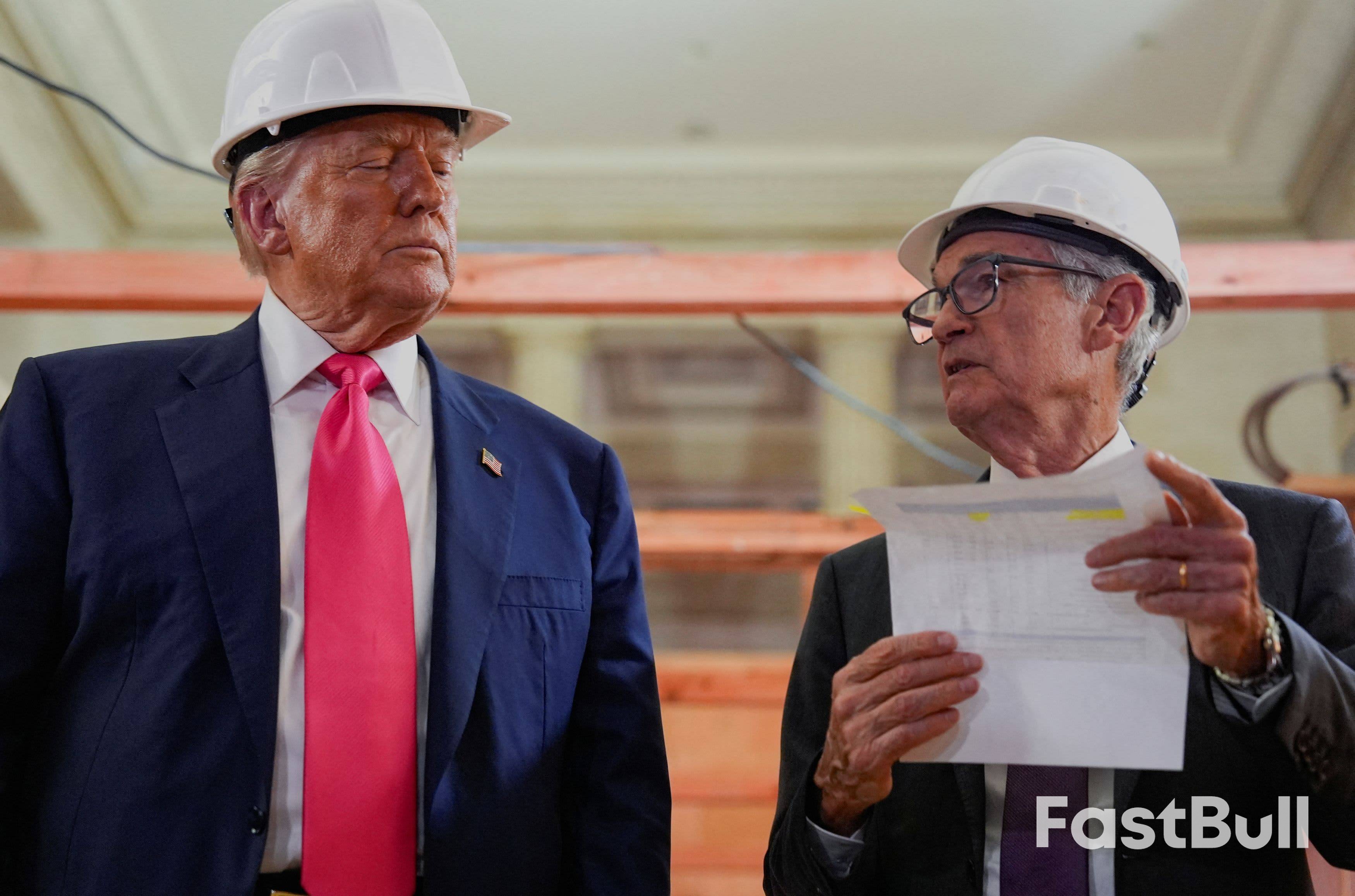
President Donald Trump intensified his criticism of Federal Reserve Chair Jerome Powell on Tuesday, labeling him either "incompetent" or "crooked" as the Department of Justice faces mounting opposition to its criminal investigation of the central bank chief.
The president’s remarks came in response to questions about whether the DOJ’s probe undermines the Federal Reserve's long-held independence from the executive branch.
Trump's criticism appeared to reference the multibillion-dollar renovation of the Fed's Washington headquarters, which is the focus of the DOJ's investigation. "He's billions of dollars over budget," Trump told reporters.
"So, he either is incompetent or he's crooked," Trump said outside the White House. "I don't know what he is. But he does a – certainly he doesn't do a very good job."
Later, during a speech at the Detroit Economic Club after touring a Ford auto plant in Michigan, Trump continued his attacks, saying of Powell, "That jerk will be gone soon."

The escalating rhetoric coincides with growing bipartisan criticism of the investigation and strong support for the Federal Reserve's autonomy.
JPMorgan Chase CEO Jamie Dimon weighed in on Tuesday after the bank's fourth-quarter earnings release. "Everyone we know believes in Fed independence," Dimon told reporters. "Anything that chips away at that is probably not a great idea."
Dimon warned that such actions could backfire, stating, "it will have the reverse consequences, it will raise inflation expectations and probably increase rates over time."
His concerns were echoed by Republican lawmakers, including staunch Trump allies. "If you wanted to design a system to guarantee that interest rates would go up and not down, the best way to do that would be to have the Federal Reserve and the executive branch of the United States get in a pissing contest," said Senate Banking Committee member John Kennedy, R-La., on Monday. "We need this like we need a hole in the head."
CNBC also learned that Treasury Secretary Scott Bessent has privately expressed concerns to Trump that the DOJ probe could complicate the confirmation process for the next Fed chair when Powell's term expires in May.
Despite the criticism, U.S. Attorney Jeanine Pirro indicated her Washington, D.C., office will not back down. In a post on X, she stated that her office had been "ignored" after multiple attempts to discuss cost overruns and Powell's congressional testimony with the Federal Reserve, "necessitating the use of legal process—which is not a threat."
"The word 'indictment' has come out of Mr. Powell's mouth, no one else's," Pirro wrote. "None of this would have happened if they had just responded to our outreach." She added, "We agree with the chairman of the Federal Reserve that no one is above the law, and that is why we expect his full cooperation."
Powell Links Probe to Interest Rate Pressure
Powell addressed the situation in a video statement Sunday night, confirming the DOJ had served grand jury subpoenas and threatened a "criminal indictment" related to his Senate testimony about the renovations.
He directly connected the legal action to Trump's public complaints about the Fed's monetary policy. "The threat of criminal charges is a consequence of the Federal Reserve setting interest rates based on our best assessment of what will serve the public, rather than following the preferences of the President," Powell said.
While affirming that "no one, certainly not the chair of the Federal Reserve, is above the law," Powell urged that "this unprecedented action should be seen in the broader context of the administration's threats and ongoing pressure."
Trump has denied any connection between the investigation and his views on interest rates. "No. I wouldn't even think of doing it that way," he told NBC News on Sunday. "What should pressure him is the fact that rates are far too high. That's the only pressure he's got."
Chile, the world's leading copper producer, may be on the verge of breaking a two-decade-long period of stagnant output. According to the country's mining industry association, Sonami, a new government initiative to cut red tape and ease regulations could unlock significant growth.
This move could provide a much-needed boost to a tightening global copper market, where prices have recently surged to record highs.
Sonami President Jorge Riesco stated that he agrees with projections from President-elect José Antonio Kast’s team, which suggest mining output could climb by 10% to 20% within the next two years. Riesco confirmed these projections were developed following consultations with Sonami.
The core of the strategy involves a pro-growth agenda focused on removing investment barriers. This could free up billions of dollars for mine expansions, leading to a substantial increase in production.
Chile's annual copper output, which slipped to 5.4 million metric tons last year, is already forecast by Sonami to reach between 5.5 million and 5.7 million tons this year, partly driven by high prices incentivizing more supply. The new policies aim to push production closer to the 6 million-ton mark.
An increase in Chilean supply would be welcome news for the global copper market. Prices recently soared above $6 a pound, and analysts have warned of a potential supply squeeze as producers struggle to keep pace with rising demand.
New Demand from AI and Defense
The supply-demand imbalance is being intensified by growing consumption from sectors like artificial intelligence and increased defense spending, creating upward pressure on prices.
Two Decades of Stagnant Production
Chile's situation reflects a broader challenge across the global mining industry. While the development of giant deposits like Escondida once cemented the nation's dominance, output has remained largely flat for twenty years. This stagnation is primarily due to declining ore grades and the increasing complexity and cost of new mining projects.
Despite the current price rally, Sonami forecasts that copper will average around $4.50 a pound this year, anticipating that some recent market disruptions will ease.
The investment landscape shows a mixed short-term picture. While mining investment in Chile is expected to fall by about 20% this year, the long-term outlook remains strong. Projections show a total investment of $26.8 billion between 2025 and 2029.
Speaking at the Detroit Economic Club on Tuesday, President Donald Trump launched a sharp critique of the Federal Reserve's approach to interest rates, arguing for a fundamental reversal of conventional monetary policy.
Trump asserted that the central bank should be cutting rates, not raising them, in response to positive economic data. He contrasted the current environment with a previous era, stating, "In the old days, when you had good numbers, interest rates would go down. When you had good numbers, the market would go through the roof."
The president expressed deep frustration with the Fed's current strategy, claiming it stifles market potential. He argued that strong economic announcements now often trigger market declines because investors immediately begin to price in the prospect of the Federal Reserve raising rates to cool the economy.
"Today, if you announce great numbers, they raise interest rates to try and kill it," Trump explained. "So you can never really have the kind of rally you should have."
Describing the current Fed chair as "a real stiff," Trump hinted that a new administration would pursue a dramatically different monetary course. He advocated for lowering interest rates precisely when the market is performing well to fuel further expansion.
"When the market goes up they should lower rates," he said. "You want to see 20% and 25%. You want to see what we can do." According to Trump, this aggressive approach would make the country "great."
He also touted the current strength of the U.S. economy, claiming it is significantly outpacing its global peers. "We're already growing double, triple and even quadruple the speed of almost every other major economy on Earth," he said, concluding with a bold declaration: "The Trump economic boom is officially begun."
Argentina's inflation rate climbed for the fourth consecutive month in December, exceeding analyst expectations and presenting a major hurdle for President Javier Milei's administration. Taming rising prices is critical for his goal of attracting foreign direct investment.
Consumer prices jumped 2.8% in December, outpacing the 2.5% median forecast from economists in a Bloomberg survey.
On an annual basis, inflation reached 31.5%. Despite the monthly acceleration, this marks the lowest year-end figure recorded since 2017, according to official government data.
Several key sectors fueled the price increases last month. The primary drivers included:
• Transportation
• Utilities
• Food, with beef cited as a notable seasonal factor
• Tourism
• Regulated services
This trend continues a pattern seen since September, with monthly inflation consistently remaining above the 2% mark.
The recent inflation figures come after a period of political volatility. A local election loss for Milei in Buenos Aires in September triggered a run on the peso. However, his subsequent landslide presidential victory in October helped stabilize the national currency.
In response to economic pressures, Argentina's central bank is overhauling its foreign exchange policy to build up foreign reserves. The previous system allowed the peso to trade within a narrow band that widened by a fixed 1% each month. Starting in January, this policy has changed: the band's expansion is now directly tied to the monthly inflation rate.
This means December's 2.8% inflation will cause the peso's trading range to expand at a faster pace in February.
Looking ahead, economists surveyed by the central bank project a significant slowdown in inflation. The consensus forecast sees the annual rate falling to 20.1% by 2026, with economic growth projected to reach 3.5%.
White Label
Data API
Web Plug-ins
Poster Maker
Affiliate Program
The risk of loss in trading financial instruments such as stocks, FX, commodities, futures, bonds, ETFs and crypto can be substantial. You may sustain a total loss of the funds that you deposit with your broker. Therefore, you should carefully consider whether such trading is suitable for you in light of your circumstances and financial resources.
No decision to invest should be made without thoroughly conducting due diligence by yourself or consulting with your financial advisors. Our web content might not suit you since we don't know your financial conditions and investment needs. Our financial information might have latency or contain inaccuracy, so you should be fully responsible for any of your trading and investment decisions. The company will not be responsible for your capital loss.
Without getting permission from the website, you are not allowed to copy the website's graphics, texts, or trademarks. Intellectual property rights in the content or data incorporated into this website belong to its providers and exchange merchants.
Not Logged In
Log in to access more features

FastBull Membership
Not yet
Purchase
Log In
Sign Up