

Markets
News
Analysis
User
24/7
Economic Calendar
Education
Data
- Names
- Latest
- Prev



Signal Accounts for Members
All Signal Accounts
All Contests
 France Industrial Output MoM (SA) (Oct)
A:--
F: --
France Trade Balance (SA) (Oct)A:--
F: --
 Euro Zone Employment YoY (SA) (Q3)
A:--
F: --
 Canada Part-Time Employment (SA) (Nov)
A:--
F: --
P: --
Canada Unemployment Rate (SA) (Nov)A:--
F: --
P: --
Canada Full-time Employment (SA) (Nov)A:--
F: --
P: --
Canada Labor Force Participation Rate (SA) (Nov)A:--
F: --
P: --
Canada Employment (SA) (Nov)A:--
F: --
P: --
 U.S. PCE Price Index MoM (Sept)
A:--
F: --
P: --
U.S. Personal Income MoM (Sept)A:--
F: --
P: --
U.S. Core PCE Price Index MoM (Sept)A:--
F: --
P: --
U.S. PCE Price Index YoY (SA) (Sept)A:--
F: --
P: --
U.S. Core PCE Price Index YoY (Sept)A:--
F: --
P: --
U.S. Personal Outlays MoM (SA) (Sept)A:--
F: --
U.S. 5-10 Year-Ahead Inflation Expectations (Dec)A:--
F: --
P: --
U.S. Real Personal Consumption Expenditures MoM (Sept)A:--
F: --
U.S. Weekly Total Rig CountA:--
F: --
P: --
U.S. Weekly Total Oil Rig CountA:--
F: --
P: --
U.S. Consumer Credit (SA) (Oct)A:--
F: --
 China, Mainland Foreign Exchange Reserves (Nov)
A:--
F: --
P: --
 Japan Trade Balance (Oct)
A:--
F: --
P: --
Japan Nominal GDP Revised QoQ (Q3)A:--
F: --
P: --
China, Mainland Imports YoY (CNH) (Nov)A:--
F: --
P: --
China, Mainland Exports (Nov)A:--
F: --
P: --
China, Mainland Imports (CNH) (Nov)A:--
F: --
P: --
China, Mainland Trade Balance (CNH) (Nov)A:--
F: --
P: --
China, Mainland Exports YoY (USD) (Nov)A:--
F: --
P: --
China, Mainland Imports YoY (USD) (Nov)A:--
F: --
P: --
 Germany Industrial Output MoM (SA) (Oct)
A:--
F: --
Euro Zone Sentix Investor Confidence Index (Dec)A:--
F: --
P: --
Canada National Economic Confidence Index--
F: --
P: --
 U.K. BRC Like-For-Like Retail Sales YoY (Nov)
--
F: --
P: --
U.K. BRC Overall Retail Sales YoY (Nov)--
F: --
P: --
 Australia Overnight (Borrowing) Key Rate
--
F: --
P: --
RBA Rate Statement RBA Press Conference Germany Exports MoM (SA) (Oct)--
F: --
P: --
U.S. NFIB Small Business Optimism Index (SA) (Nov)--
F: --
P: --
 Mexico 12-Month Inflation (CPI) (Nov)
--
F: --
P: --
Mexico Core CPI YoY (Nov)--
F: --
P: --
Mexico PPI YoY (Nov)--
F: --
P: --
U.S. Weekly Redbook Index YoY--
F: --
P: --
U.S. JOLTS Job Openings (SA) (Oct)--
F: --
P: --
China, Mainland M1 Money Supply YoY (Nov)--
F: --
P: --
China, Mainland M0 Money Supply YoY (Nov)--
F: --
P: --
China, Mainland M2 Money Supply YoY (Nov)--
F: --
P: --
U.S. EIA Short-Term Crude Production Forecast For The Year (Dec)--
F: --
P: --
U.S. EIA Natural Gas Production Forecast For The Next Year (Dec)--
F: --
P: --
U.S. EIA Short-Term Crude Production Forecast For The Next Year (Dec)--
F: --
P: --
EIA Monthly Short-Term Energy Outlook U.S. API Weekly Gasoline Stocks--
F: --
P: --
U.S. API Weekly Cushing Crude Oil Stocks--
F: --
P: --
U.S. API Weekly Crude Oil Stocks--
F: --
P: --
U.S. API Weekly Refined Oil Stocks--
F: --
P: --
 South Korea Unemployment Rate (SA) (Nov)
--
F: --
P: --
Japan Reuters Tankan Non-Manufacturers Index (Dec)--
F: --
P: --
Japan Reuters Tankan Manufacturers Index (Dec)--
F: --
P: --
Japan Domestic Enterprise Commodity Price Index MoM (Nov)--
F: --
P: --
Japan Domestic Enterprise Commodity Price Index YoY (Nov)--
F: --
P: --
China, Mainland PPI YoY (Nov)--
F: --
P: --


No matching data

Latest Views
Latest Views
Trending Topics
Top Columnists
Latest Update
White Label
Data API
Web Plug-ins
Affiliate Program
View All
No data
...who the hell are they surveying?
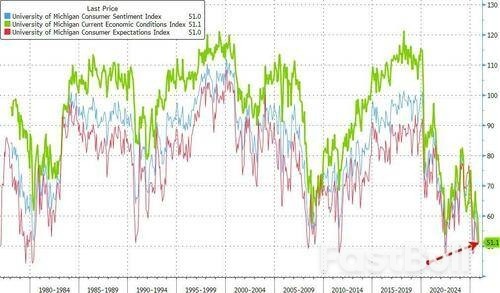
The weakness from the preliminary UMich data for November has been confirmed with the final sentiment print confirmed the so-called 'K-shaped' economy as sentiment slumps with stocks near record highs.
However, the small silver lining with today's UMich data was an improvement intra-month from 50.3 to 51.0 for the headline (but still at its lowest since June 2022).
After the federal shutdown ended, UMich Director Joanne Hsu notes that sentiment lifted slightly from its mid-month reading.
However, consumers remain frustrated about the persistence of high prices and weakening incomes.
Under the hood, Expectations picked up modestly from 50.3 to 51.0, just off record lows, while Consumer Expectations plunged to 51.1 - the lowest in the survey's history going back to 1977...
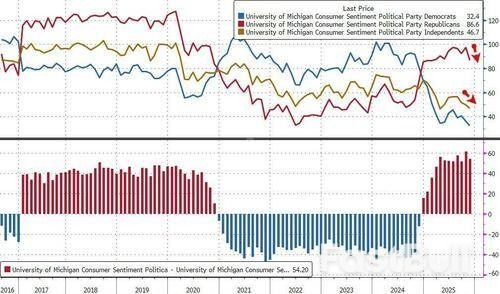
Interestingly, while Democrat's confidence remains vastly worse than the rest of the political cohorts, November saw Republicans and Independents lose some faith too...
On the bright side, inflation expectations tumbled. After four months of sharp increases to start 2025, long-run expectations fell for three consecutive months through July, followed by three more months of small increases. Long-run expectations softened considerably this month. The November reading is well below peaks in monthly readings from June 2022 and April 2025, but still above 2024 readings.
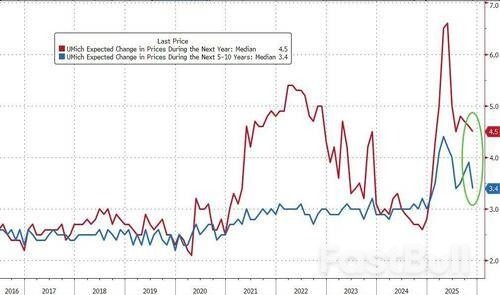
Expectations exhibit substantial uncertainty, particularly in light of ongoing developments with economic policy and concerns that impacts on inflation are still to come.
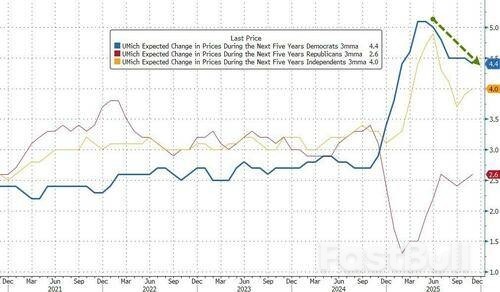
Democrats continue to lead the fear of inflation (though dropped to January lows this month)...
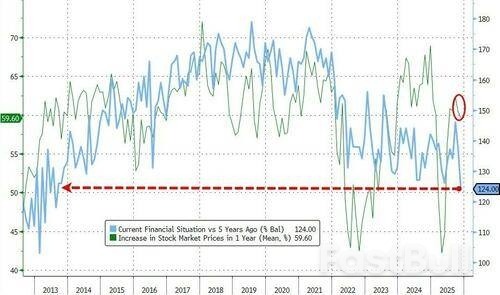
However, this month, current personal finances and buying conditions for durables both plunged more than 10%...
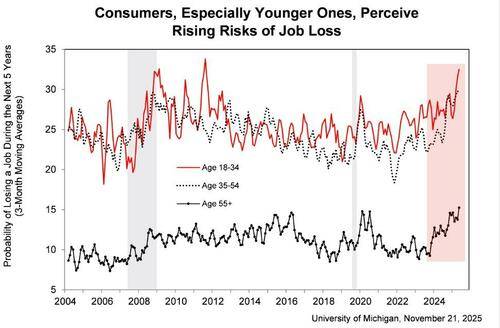
and young and old alike are worried about their jobs...
By the end of the month, sentiment for consumers with the largest stock holdings lost the gains seen at the preliminary reading.
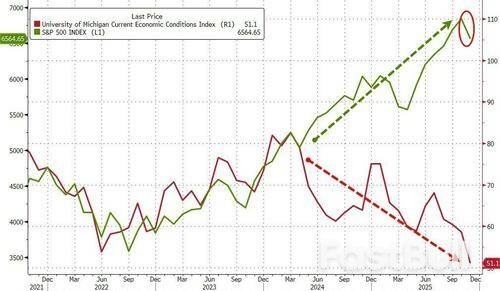
This group's sentiment dropped about 2 index points from October, likely a consequence of the stock market declines seen over the past two weeks.
Key points:
Cryptocurrency markets have surged in recent years, in part fuelled by the Trump administration's pro-crypto stance which has encouraged wider acceptance among financial institutions.
With a total value of $3.2 trillion and around $197 billion of trading volume per day, cryptocurrencies represent a small part of global markets, crypto tracker CoinGecko estimates.
But regulators and investors are still worried about whether any problems in the lightly regulated crypto world could spill over into the wider financial system.
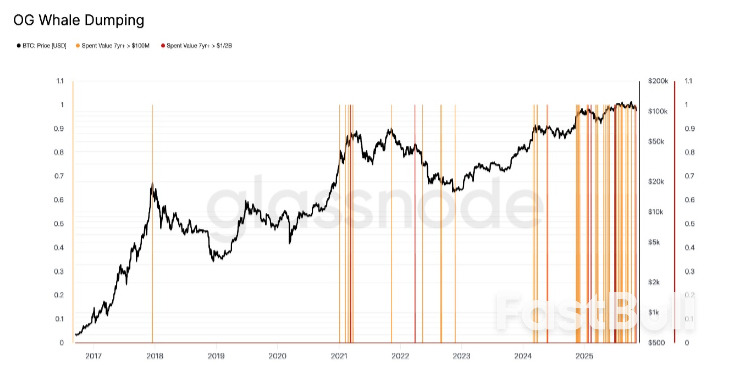
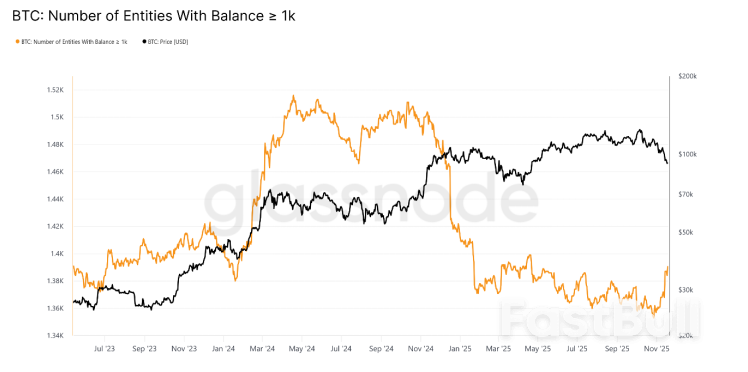
The biggest cryptocurrency, bitcoin, fell below $90,000 for the first time since April this week, and some $1.2 trillion has been wiped off the value of all cryptocurrencies in six weeks.
Bitcoin, generally moves in line with broader risk appetite. Its correlation with the S&P 500 on a one-month rolling basis this week was 0.84, its strongest in six weeks, LSEG data shows. Correlation is measured from -1 to 1.
Here's where crypto and mainstream markets intersect.
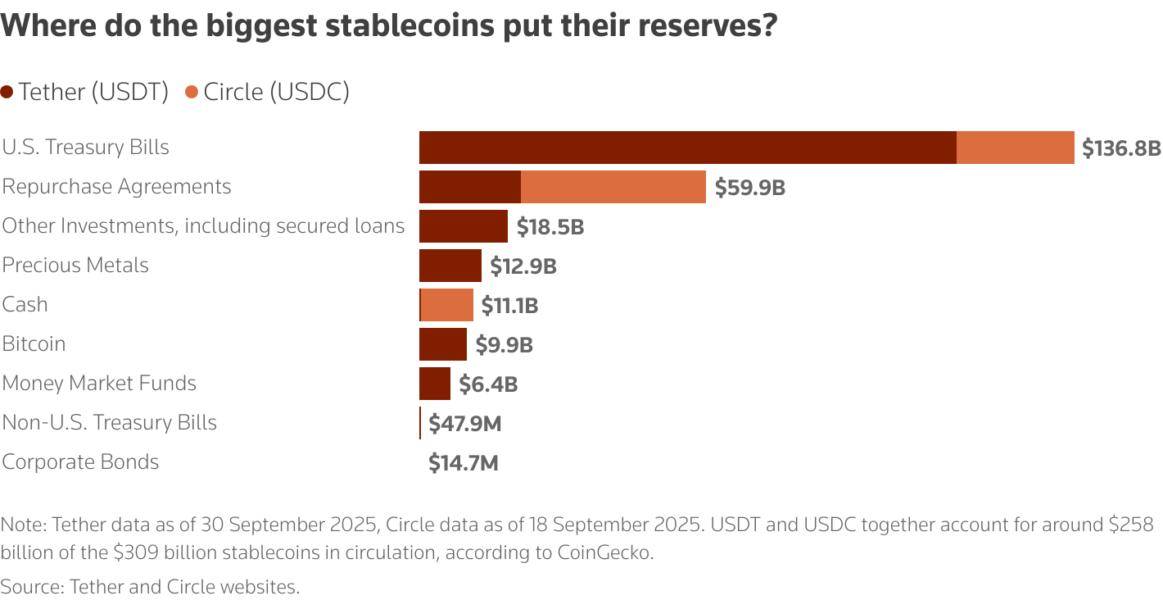
Stablecoins are cryptocurrencies pegged to a real-world currency, usually the U.S. dollar. Stablecoin issuers hold reserves to match the number of tokens they have created, and say that token-holders can swap their stablecoins back into dollars on demand.
Financial stability experts warn that a rush of redemption requests would cause a run on these reserves, affecting banks where cash is deposited, or even the assets that the reserves are invested in.
The stablecoin market is dominated by El Salvador-based Tether, which has around $181 billion in reserves, of which $112 billion is held in U.S. Treasuries. Rival Circle holds $24 billion in U.S. Treasuries.
Crypto stocks have soared in 2025, and more crypto companies have gone public. But pure players remain a tiny part of the overall market.
The market cap of stocks in the "blockchain and cryptocurrency" and "cryptocurrency mining" category is $225 billion, just 1.8% of the global equities market, LSEG data shows.
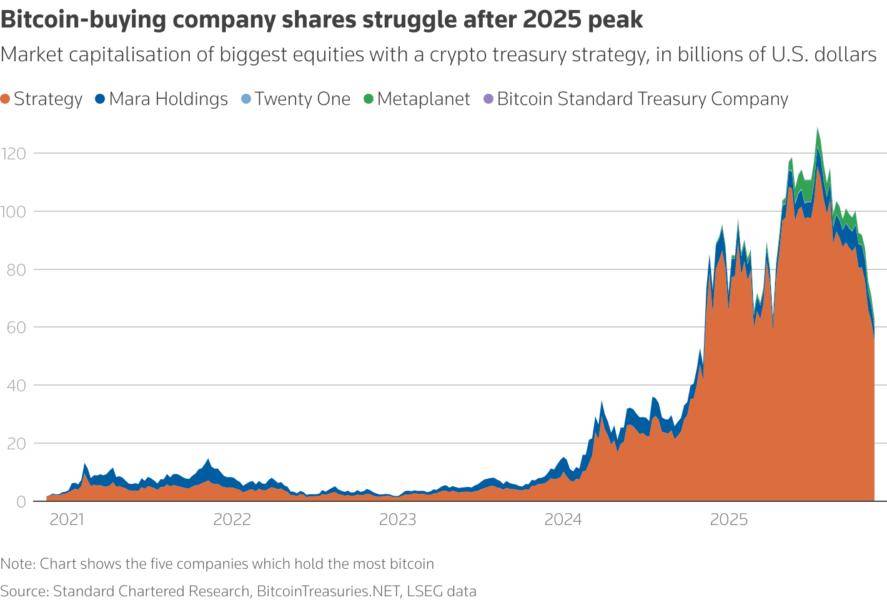
This excludes so-called crypto treasury companies, whose business model is to buy and hold crypto. While the bitcoin buyers include major players like Strategy, dozens of penny stocks have this year been taken over by crypto enthusiasts to bet on rising prices.
Standard Chartered estimates that a bitcoin price below $90,000 leaves half of these companies' corporate treasuries holding bitcoin worth less than they paid for it.
Four of the 173 new U.S. public listings in 2025 have been crypto companies, raising a combined $1.2 billion, around 3.3% of the total funds raised from U.S. IPOs, LSEG said.
Banks gain exposure to the crypto world by taking on crypto-linked clients, holding stablecoin reserves, or offering crypto-related services such as asset custody.
Some small banks specialise in crypto, concentrating the risk, as seen in 2023 when crypto-focused U.S. bank Silvergate Capital collapsed after customers pulled deposits.
U.S. regulators this year made it easier for banks to engage with crypto-related activities, pressuring regulators elsewhere to rethink their approach.
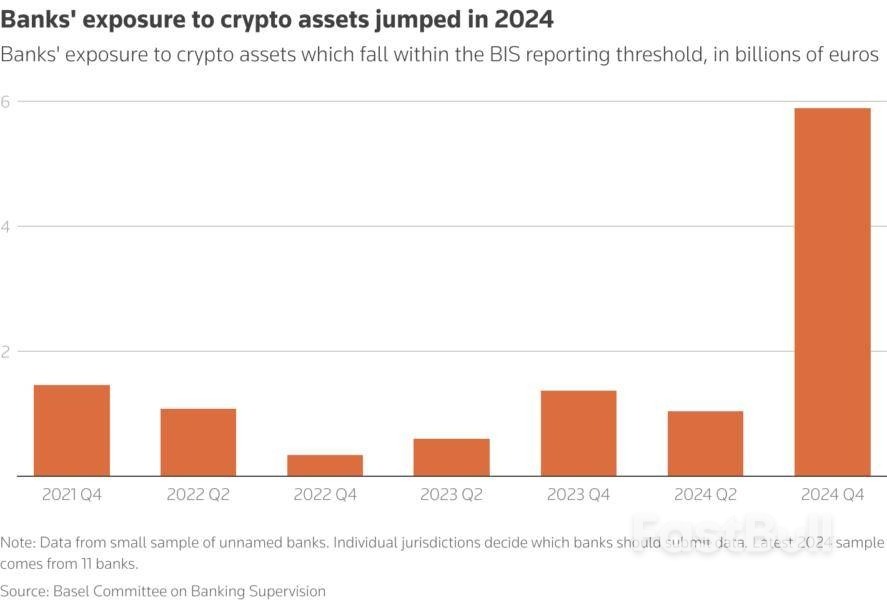
Data on banks' exposure is hard to find, but what is available suggests it is small but growing.
The European Central Bank said in a May review that significant institutions in the euro zone provided 4.7 billion euros worth of crypto asset custody services in 2024, up from 400 million euros in 2023.
Basel Committee on Banking Supervision data shows 5.9 billion euros worth of prudential exposure to crypto in the second half of 2024, among banks from countries which volunteered data.
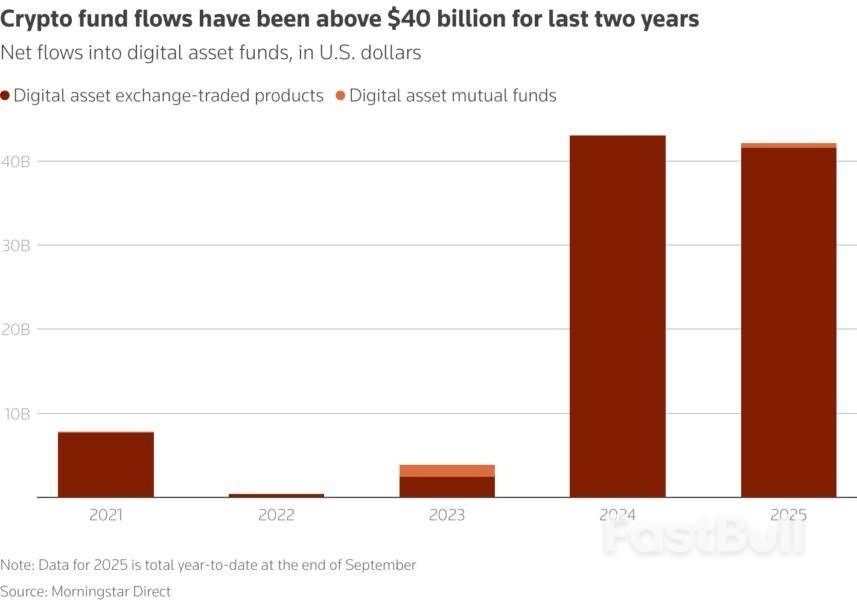
The January 2024 decision by U.S. regulators to allow bitcoin exchange-traded funds unleashed a new wave of buyers, including institutional investors such as sovereign wealth funds and pension funds pouring money into crypto.
The number of digital asset exchange-traded products worldwide has surged to 367 in 2025, up from 104 in 2021, according to Morningstar Direct data.
Still, with $222.3 billion in assets under management, crypto ETPs are tiny compared to the $17.4 trillion managed by the world's non-crypto ETPs, Morningstar estimates.
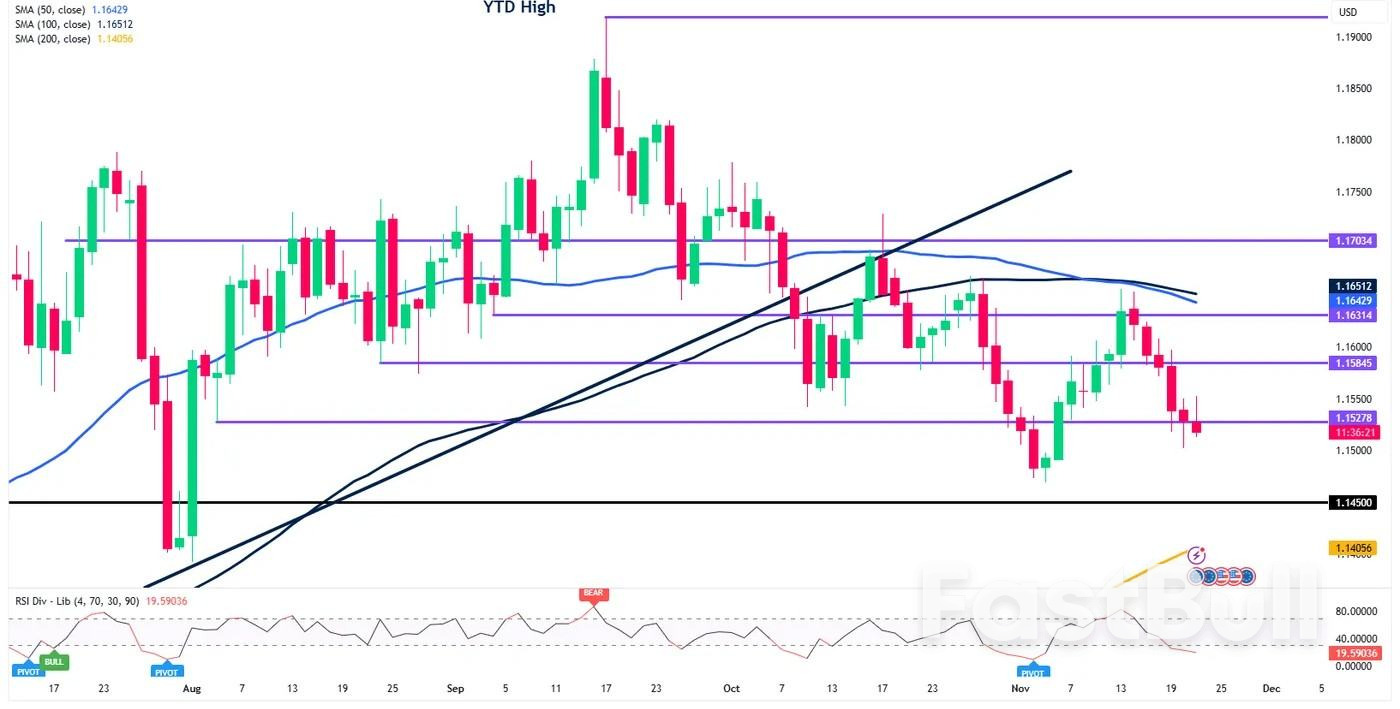
Geopolitical tensions are rising even as the United States under President Donald Trump pursues negotiations with Russia and China, according to BCA Research.
In a new report, the firm's Chief Geopolitical Strategist Matt Gertken said U.S. talks with both powers "have triggered a spike in EU–Russia tensions and Sino–Japanese tensions," with Europe, China and Japan facing "temporary hits to their exports and economies," while the U.S. remains "relatively aloof" from the fallout.
BCA Research warned that "Russia–NATO tensions point to a near-term military incident and spike in volatility," even as diplomatic channels remain open.
The firm stated that the U.S. and Russia are working on a new peace proposal for Ukraine, described as a "28-point plan devised between President Trump's top negotiator Steve Witkoff and his Russian counterpart, Kirill Dimitriev."
The plan reportedly covers the war, Ukraine's security guarantees, European security and the future of U.S.–Russia relations.
Despite cutting its ceasefire odds from 65% to 55% in October, BCA Research said a truce remains "more likely than not over the coming 12 months."
Russia, Gertken argued, has incentives to wind down the conflict as President Vladimir Putin faces "peak" approval levels that are "likely to fall going forward."
Declaring victory and stabilizing the economy is "the only chance to prevent it from collapsing to destabilizing lows," according to BCA.
Economic pressures are said to be mounting. BCA Research noted that Russian oil production is down 10% from its pre-COVID peak, natural gas output is down 15%, and China's imports of Russian oil have fallen 27% since 2024. India has also signaled it may curtail Russian imports to secure U.S. tariff relief.
Against this backdrop, BCA Research advised investors to "stay overweight U.S. assets and long Japanese yen."
728 RM B 7/F GEE LOK IND BLDG NO 34 HUNG TO RD KWUN TONG KLN HONG KONG


White Label
Data API
Web Plug-ins
Poster Maker
Affiliate Program
The risk of loss in trading financial instruments such as stocks, FX, commodities, futures, bonds, ETFs and crypto can be substantial. You may sustain a total loss of the funds that you deposit with your broker. Therefore, you should carefully consider whether such trading is suitable for you in light of your circumstances and financial resources.
No decision to invest should be made without thoroughly conducting due diligence by yourself or consulting with your financial advisors. Our web content might not suit you since we don't know your financial conditions and investment needs. Our financial information might have latency or contain inaccuracy, so you should be fully responsible for any of your trading and investment decisions. The company will not be responsible for your capital loss.
Without getting permission from the website, you are not allowed to copy the website's graphics, texts, or trademarks. Intellectual property rights in the content or data incorporated into this website belong to its providers and exchange merchants.
Not Logged In
Log in to access more features

FastBull Membership
Not yet
Purchase


Log In
Sign Up


