Markets
News
Analysis
User
24/7
Economic Calendar
Education
Data
- Names
- Latest
- Prev



Signal Accounts for Members
All Signal Accounts
All Contests


[Bitcoin Surges Above $78,000] February 2nd, According To Htx Market Data, Bitcoin Rebounded And Broke Through $78,000, Currently Trading At $78,005, With A 24-Hour Decrease Narrowed To 1.27%
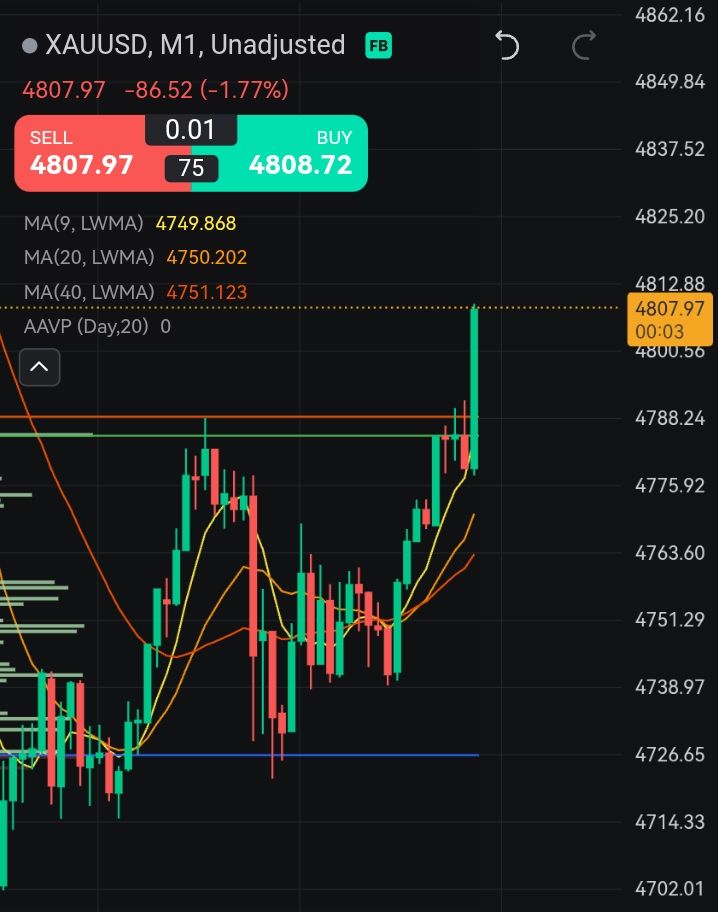
Spot Silver Recovered More Than $8 Of Its Losses, After Falling Nearly 10%. Spot Gold Narrowed Its Losses To 1.2%, After Falling More Than 3.5%
Bank Of Japan Summary: One Member Said With Economy Facing Labour Supply Constraints, Risks To Prices Have Become Skewed To The Upside
Bank Of Japan Summary: One Member Said It Is Necessary To Pay More Attention To Upside Risks To Prices
Bank Of Japan Summary: One Member Said Pass-Through To Prices Of Higher Import Prices Caused By Weak Yen Has Become More Pronounced
Bank Of Japan Summary: One Member Said Some Indicators Of Long-Term Inflation Expectations Have Already Started To Show Stability
Bank Of Japan Summary: One Member Said Weak Yen Pushes Up Profits And Wages Of Large Firms But Weighs On Those Of Smaller Firms, And Thus Could Lead To Wider Inequality
Bank Of Japan Summary Cites MOF Representative As Saying: Watching Recent Global, Japanese Market Volatility With Utmost Vigilance
Bank Of Japan Summary: One Member Said When There Is Rise In Bond Market Volatility, It Is Important For A Central Bank To Examine Whether Market Functioning Is Maintained
Bank Of Japan Summary: One Member Said Bank Of Japan Should Stick With Current Thinking And Keep Reducing Its Bond Purchases, While Responding To Exceptional Circumstances By, For Examine, Increasing Purchases
Bank Of Japan Summary: One Member Said Developments Seen In Japanese Government Bond Market Over Past Two Weeks Or So Have Been A One-Sided Steepening Of Yield Curve That Warrants Attention
Bank Of Japan Summary: One Member Said Bank Of Japan Should Raise Policy Rate At Intervals Of A Few Months

Euro Zone GDP Prelim QoQ (SA) (Q4)A:--
F: --
P: --
Euro Zone GDP Prelim YoY (SA) (Q4)A:--
F: --
P: --
Italy PPI YoY (Dec)A:--
F: --
P: --
Mexico GDP Prelim YoY (Q4)A:--
F: --
P: --
Brazil Unemployment Rate (Dec)A:--
F: --
P: --
South Africa Trade Balance (Dec)A:--
F: --
P: --
India Deposit Gowth YoYA:--
F: --
P: --
Germany CPI Prelim YoY (Jan)A:--
F: --
P: --
Germany CPI Prelim MoM (Jan)A:--
F: --
P: --
Germany HICP Prelim YoY (Jan)A:--
F: --
P: --
Germany HICP Prelim MoM (Jan)A:--
F: --
P: --
U.S. Core PPI YoY (Dec)A:--
F: --
U.S. Core PPI MoM (SA) (Dec)A:--
F: --
P: --
U.S. PPI YoY (Dec)A:--
F: --
P: --
U.S. PPI MoM (SA) (Dec)A:--
F: --
P: --
Canada GDP MoM (SA) (Nov)A:--
F: --
P: --
Canada GDP YoY (Nov)A:--
F: --
P: --
U.S. PPI MoM Final (Excl. Food, Energy and Trade) (SA) (Dec)A:--
F: --
P: --
U.S. PPI YoY (Excl. Food, Energy & Trade) (Dec)A:--
F: --
P: --
U.S. Chicago PMI (Jan)A:--
F: --
Canada Federal Government Budget Balance (Nov)A:--
F: --
P: --
U.S. Weekly Total Oil Rig CountA:--
F: --
P: --
U.S. Weekly Total Rig CountA:--
F: --
P: --
China, Mainland NBS Manufacturing PMI (Jan)A:--
F: --
P: --
China, Mainland NBS Non-manufacturing PMI (Jan)A:--
F: --
P: --
China, Mainland Composite PMI (Jan)A:--
F: --
P: --
South Korea Trade Balance Prelim (Jan)A:--
F: --
Japan Manufacturing PMI Final (Jan)A:--
F: --
P: --
South Korea IHS Markit Manufacturing PMI (SA) (Jan)A:--
F: --
P: --
Indonesia IHS Markit Manufacturing PMI (Jan)A:--
F: --
P: --
China, Mainland Caixin Manufacturing PMI (SA) (Jan)--
F: --
P: --
Indonesia Trade Balance (Dec)--
F: --
P: --
Indonesia Inflation Rate YoY (Jan)--
F: --
P: --
Indonesia Core Inflation YoY (Jan)--
F: --
P: --
India HSBC Manufacturing PMI Final (Jan)--
F: --
P: --
Australia Commodity Price YoY (Jan)--
F: --
P: --
Russia IHS Markit Manufacturing PMI (Jan)--
F: --
P: --
Turkey Manufacturing PMI (Jan)--
F: --
P: --
U.K. Nationwide House Price Index MoM (Jan)--
F: --
P: --
U.K. Nationwide House Price Index YoY (Jan)--
F: --
P: --
Germany Actual Retail Sales MoM (Dec)--
F: --
Italy Manufacturing PMI (SA) (Jan)--
F: --
P: --
South Africa Manufacturing PMI (Jan)--
F: --
P: --
Euro Zone Manufacturing PMI Final (Jan)--
F: --
P: --
U.K. Manufacturing PMI Final (Jan)--
F: --
P: --
Brazil IHS Markit Manufacturing PMI (Jan)--
F: --
P: --
Canada National Economic Confidence Index--
F: --
P: --
Canada Manufacturing PMI (SA) (Jan)--
F: --
P: --
U.S. IHS Markit Manufacturing PMI Final (Jan)--
F: --
P: --
U.S. ISM Output Index (Jan)--
F: --
P: --
U.S. ISM Inventories Index (Jan)--
F: --
P: --
U.S. ISM Manufacturing Employment Index (Jan)--
F: --
P: --
U.S. ISM Manufacturing New Orders Index (Jan)--
F: --
P: --
U.S. ISM Manufacturing PMI (Jan)--
F: --
P: --
South Korea CPI YoY (Jan)--
F: --
P: --
Japan Monetary Base YoY (SA) (Jan)--
F: --
P: --
Australia Building Approval Total YoY (Dec)--
F: --
P: --
Australia Building Permits MoM (SA) (Dec)--
F: --
P: --


No matching data
Latest Views
Latest Views
Trending Topics
Top Columnists
Latest Update
White Label
Data API
Web Plug-ins
Affiliate Program
View All

No data
UK PM Starmer considers joining an EU defense fund, signaling a deepening of post-Brexit security ties.
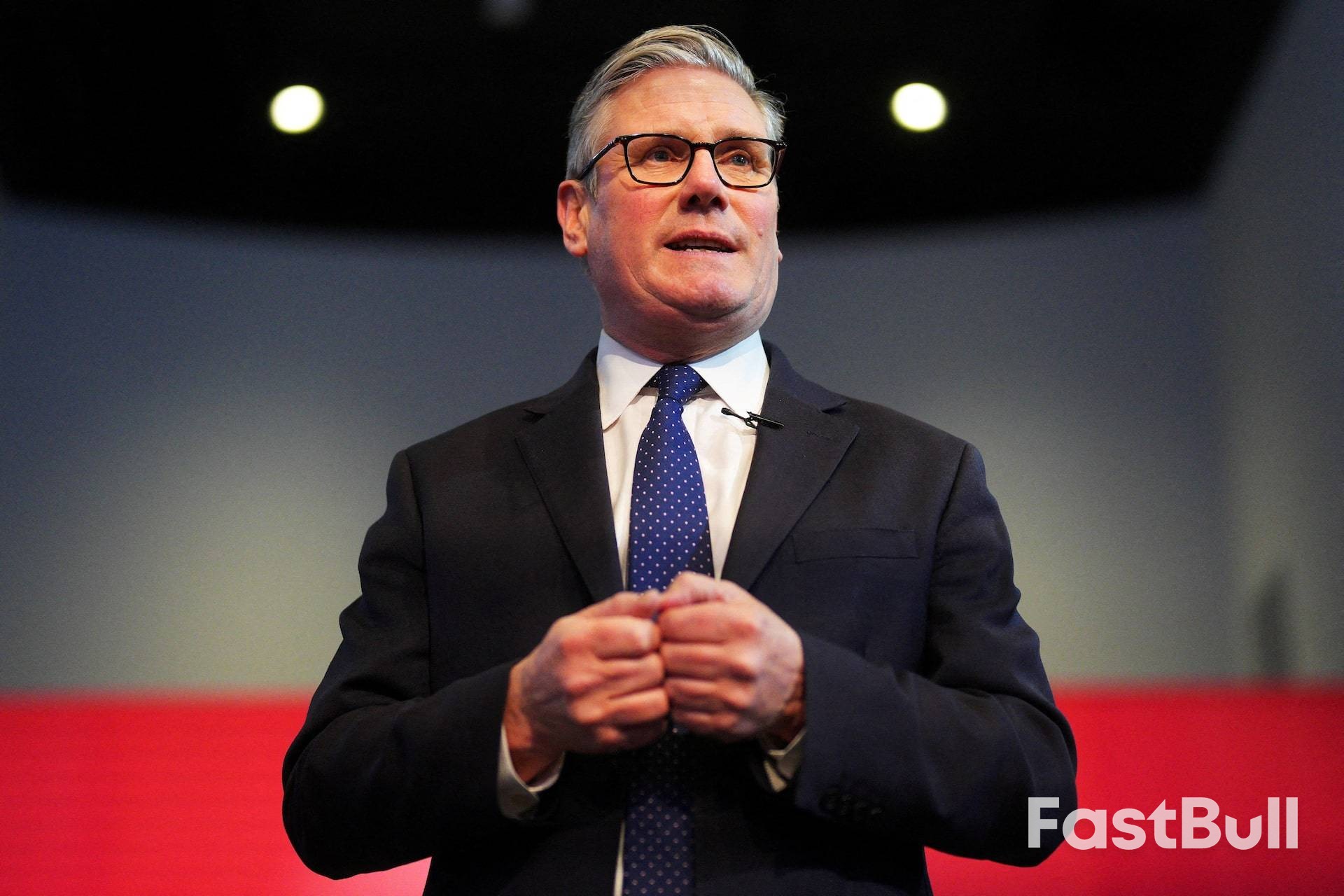
Prime Minister Keir Starmer has indicated that the UK will consider joining a potential new multi-billion-euro European Union fund designed to finance defense projects, signaling a possible deepening of post-Brexit security ties. The statement comes as British ministers prepare for crucial talks with EU officials in London this week.
The European Commission is exploring a second version of its SAFE loans scheme as the continent grapples with the need to bolster its defense capabilities. This strategic shift is driven by growing concerns over Russia and increasing doubts about the United States' long-term security commitments to Europe under President Donald Trump.
Speaking to reporters last week en route to China, Starmer emphasized the urgency for European rearmament. "That should require us to look at schemes like SAFE and others to see whether there is a way in which we can work more closely together," he stated.
Starmer added that greater collaboration is logical for the entire continent. "Whether it's SAFE or other initiatives, it makes good sense for Europe in the widest sense of the word - which is the EU plus other European countries - to work more closely together."
This renewed interest follows a setback in November when a British plan to join the original 150 billion-euro ($177 billion) SAFE fund collapsed. Those negotiations broke down after Starmer's government refused to make a financial contribution to participate, hindering a wider reset of UK-EU relations.
The SAFE scheme is structured for the EU to jointly borrow on financial markets and then lend the capital to member nations for defense-related projects. The potential for the UK to join a new iteration of this fund marks a significant development in its post-Brexit strategy.
The Prime Minister's move is consistent with his government's broader effort to work more closely with the EU and dismantle some of the trade barriers erected after the UK's departure from the bloc, which was finalized in 2020. This collaborative stance contrasts sharply with the often-tense relations between previous Conservative governments and Brussels.
Starmer has also taken a prominent role in coordinating European support for Ukraine, further demonstrating his commitment to continental security cooperation. The upcoming talks in London, which will include European Union Trade Commissioner Maros Sefcovic, are expected to explore these themes further.
The government's closer alignment with the EU has drawn criticism from Nigel Farage, whose Reform UK party is currently leading in the polls. Farage recently accused the governing Labour party of moving too close to the European Union.
Starmer dismissed the critique, accusing the Brexit campaigner of having a history of misleading the public. "I wouldn't listen too much to what Nigel Farage has to say about this," the Prime Minister said.
($1 = 0.8440 euros)
In a direct and unambiguous statement, Chinese President Xi Jinping has publicly declared his ambition to elevate the renminbi to the status of a global reserve currency. The message was delivered in a commentary published in Qiushi, the Communist Party's flagship journal on ideology.
Xi called for the creation of a "powerful currency" to be used widely across international trade, investment, and foreign exchange markets, ultimately achieving global reserve status. While this goal is not new for Beijing, the directness of Xi's language marks a significant shift.
The commentary was adapted from a speech Xi gave to regional officials in 2024 but was strategically released in 2026, a moment of considerable tension in global markets.
The timing of the announcement coincides with notable weakness in the U.S. dollar, which has fallen to a four-year low. Last week, 47th President Donald Trump described the dollar's slide as "great." Coupled with a leadership transition at the Federal Reserve and rising international frictions, central banks globally are beginning to reassess their exposure to the dollar.
"China senses the change of the global order more real than before," noted Kelvin Lam, a senior China+ economist at Pantheon Macroeconomics. He suggests Xi's push is directly linked to the emerging cracks in the dollar's long-standing dominance.
To support this ambition, Xi's commentary outlined the need for a "powerful central bank," globally competitive financial institutions, and the development of cities like Shanghai and Shenzhen into international financial hubs capable of attracting global capital and influencing global pricing.
This vision aligns with earlier statements from Pan Gongsheng, the governor of the People's Bank of China (PBoC). Last year, he forecasted the rise of a "multi-polar international monetary system" where the renminbi would compete alongside the dollar, euro, and other major currencies.
However, Han Shen Lin of The Asia Group clarified that China's immediate goal is not to replace the dollar but to establish the yuan as a "strategic counterweight" to limit U.S. leverage in a shifting global landscape.
The renminbi has already made significant inroads in specific areas. Since Russia's full-scale invasion of Ukraine in 2022, it has become the second-most used currency for trade finance.
But its role in official global reserves remains minimal. According to IMF data from the third quarter of 2025, the yuan's share of global reserves was just 1.93%. This figure pales in comparison to the U.S. dollar, which accounted for approximately 57% (down from 71% in 2000), and the euro at 20%.
Experts point to one major obstacle preventing wider adoption by central banks: China's capital controls. For the renminbi to become a true reserve currency, Beijing would need to allow for full convertibility and open its capital accounts. The current lack of openness remains a deal-breaker for many institutional investors.
Pressure is also coming from some of China's trading partners, who argue that the yuan is deliberately undervalued. This policy, they claim, unfairly boosts Chinese exports and distorts trade balances. China's trade surplus reached $1.2 trillion last year, fueling persistent complaints of currency manipulation.
The International Monetary Fund has also weighed in. IMF Managing Director Kristalina Georgieva recently stated that deflation in China had "resulted in significant real exchange rate depreciation" and urged Beijing to address the "imbalances" in its economy.
At a conference last month, PBoC vice-governor Zou Lan denied that China was intentionally weakening its currency to gain a trade advantage. He asserted that the central bank's policy objective is "to keep the renminbi stable and preserve its role as a store of value."
There are signs that China's central planners are willing to allow for modest appreciation. The yuan has already strengthened past the Rmb7 mark against the weaker U.S. dollar, though it continues to fall against the euro.
Zhang Jun, chief economist at China Galaxy Securities, suggested that as China pivots toward domestic growth and technological innovation, the yuan could strengthen further over time.
Han from The Asia Group concluded that while Xi's statement won't immediately upend foreign exchange markets, it solidifies a long-term strategic direction. "It cements a long-term tilt investors are already sniffing out," he said.
The United Kingdom is intensifying its drive to decarbonize its economy under the Labour government that took office in 2024, aiming to meet its ambitious net-zero emissions target by mid-century. But this green push is facing a significant challenge: a growing political rift over the immense costs of the transition.

The UK's commitment to achieving net-zero by 2050 was first established in 2021, aligning the nation with the goals of the international Paris Agreement on climate change. Initial strategies, however, faced legal hurdles, with courts ruling early proposals unlawful for their lack of concrete planning. This pushed the government to develop more detailed frameworks to guide the transition.
The government's current roadmap is the 2025 Carbon Budget and Growth Delivery Plan. A key initiative announced in December 2024 is the goal of achieving "Clean Power by 2030," backed by the Great British Energy Act. This legislation created a publicly-owned company to accelerate investment in renewables.
Other core policies include:
• Ending the sale of new petrol and diesel cars by 2030.
• Subsidizing electric heat pumps to replace gas boilers.
• Investing in carbon capture and storage (CO2) technology.
These policies have yielded tangible results. In 2024, renewable sources generated 51% of the UK's electricity, with wind power alone accounting for a 30% share. The country also became the first G7 nation to completely phase out coal power that same year. Overall, the UK's greenhouse gas emissions in 2024 were approximately 54% lower than 1990 levels.
Despite this progress, the government’s independent adviser, the Climate Change Committee (CCC), warned in June 2025 that further action is still required.
While the policy framework is in place, political consensus is fracturing. Opponents argue the transition is too expensive and complex, prioritizing environmental targets over economic stability. The main political parties hold starkly different views:
• Labour and Liberal Democrats: Both parties remain committed to the mid-century goal, arguing that reducing fossil fuel dependency is crucial for economic security amid volatile energy prices and geopolitical risks.
• Conservatives and Reform UK: These parties advocate for scrapping the net-zero target altogether. They claim the strategy is unaffordable and that the UK's emissions reductions have a negligible impact on global climate change compared to larger emitters like the US and China.
• Green Party: This party believes the current pace is too slow and wants to accelerate the timeline for achieving net-zero.
The central point of contention is the ultimate cost of the green transition, with estimates varying wildly. The Climate Change Committee (CCC) projects a net cost of around 0.2% of the UK's GDP annually between 2025 and 2050. This implies tens of billions in upfront investment each year until the end of the decade, with a total cumulative cost estimated at £108 billion.
However, a recent report from the Institute of Economic Affairs think tank, citing energy analyst David Turner, presents a far higher figure, suggesting the total cash cost could reach an astonishing £7.6 trillion by 2050.
The CCC maintains that most of this investment will come from the private sector. Furthermore, it projects that the savings from moving to cleaner, more efficient energy will outweigh the costs by the early 2040s, while also reducing spending on climate hazard mitigation. Supporting this view, the National Energy System Operator (NESO) for Great Britain stated that embracing clean energy fundamentally reduces exposure to volatile fossil fuel markets. According to a NESO report, meeting the 2050 goals could save the UK £36 billion annually compared to a scenario where the transition slows down.
The UK has successfully established robust policies that are accelerating its shift from fossil fuels to renewable energy and driving down emissions. However, the immense financial commitments required for this transition have created deep divisions within parliament. As parties clash over the economic trade-offs, the country's ability to meet its long-term climate targets hangs in the balance.
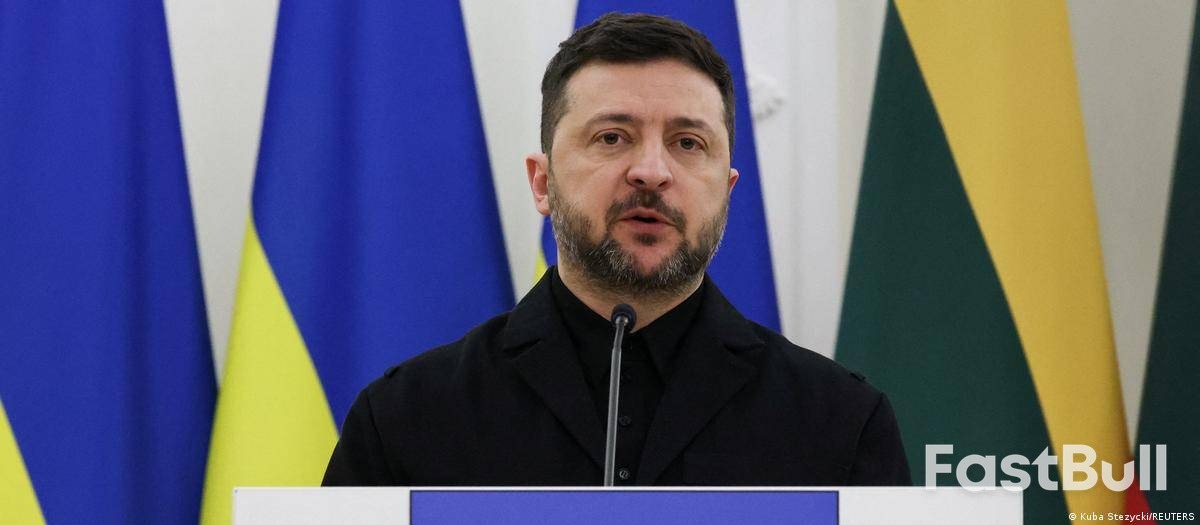
Ukrainian President Volodymyr Zelenskyy announced Sunday that the second round of U.S.-backed peace talks between Ukraine and Russia will be held in Abu Dhabi on February 4 and 5.
Zelenskyy stated that his country is prepared for a "substantive discussion," adding on the social media platform X, "We are interested in ensuring that the outcome brings us closer to a real and dignified end to the war."
The talks were originally scheduled to begin on Sunday but were postponed. Neither the Kremlin nor the United States has officially confirmed the new dates.

The delay followed a meeting in Florida between Russia's top envoy, Kirill Dmitriev, and a U.S. delegation. Zelenskyy did not specify a reason for the postponement.
Dmitriev described his discussion with the "U.S. peacemaking delegation" as constructive. The American officials included President Donald Trump's peace envoy Steve Witkoff, Treasury Secretary Scott Bessent, Trump's son-in-law Jared Kushner, and White House Senior Advisor Josh Gruenbaum.
"We are encouraged by this meeting that Russia is working toward securing peace in Ukraine," Witkoff said. No further details about the discussion were released by either side.
The Abu Dhabi negotiations are a key part of the Trump administration's efforts to resolve the conflict, which has now lasted nearly four years.
The first round of talks took place in late January but failed to produce a breakthrough on the central issue of territory, specifically the eastern Ukrainian region known as the Donbas.
Russia continues to demand that Ukrainian forces withdraw from the region. In response, Kyiv has warned that ceding any territory would only embolden Moscow.
The talks were set against a backdrop of fragile diplomacy. Russia had reportedly agreed to a request from President Trump to pause strikes on Ukraine's energy infrastructure to facilitate the negotiations, especially as Ukraine endures a harsh winter.
Kremlin spokesman Dmitry Peskov confirmed on Friday that the limited ceasefire would last only until Sunday to create a "good basis" for the talks.
However, violence continued on the ground. On Sunday, a Russian drone strike hit a company shuttle bus transporting mine workers in the Dnipropetrovsk region in central-eastern Ukraine. Energy firm DTEK and government officials confirmed that the attack killed 15 people and wounded seven.

Earlier the same day, regional officials reported separate Russian attacks on a maternity hospital and a residential building in the southeastern city of Zaporizhzhia, which left at least nine people injured.
White Label
Data API
Web Plug-ins
Poster Maker
Affiliate Program
The risk of loss in trading financial instruments such as stocks, FX, commodities, futures, bonds, ETFs and crypto can be substantial. You may sustain a total loss of the funds that you deposit with your broker. Therefore, you should carefully consider whether such trading is suitable for you in light of your circumstances and financial resources.
No decision to invest should be made without thoroughly conducting due diligence by yourself or consulting with your financial advisors. Our web content might not suit you since we don't know your financial conditions and investment needs. Our financial information might have latency or contain inaccuracy, so you should be fully responsible for any of your trading and investment decisions. The company will not be responsible for your capital loss.
Without getting permission from the website, you are not allowed to copy the website's graphics, texts, or trademarks. Intellectual property rights in the content or data incorporated into this website belong to its providers and exchange merchants.
Not Logged In
Log in to access more features
Log In
Sign Up