• Trade
  • Markets
  • Copy
  • Contests
  • News
  • 24/7
  • Calendar
  • Q&A
  • Chats
Screeners
SYMBOL
LAST
ASK
BID
HIGH
LOW
NET CHG.
%CHG.
SPREAD
SPX
S&P 500 Index
6872.50
6872.50
6872.50
6936.08
6864.83
-45.31
-0.65%
--
DJI
Dow Jones Industrial Average
49466.59
49466.59
49466.59
49649.86
49254.80
+225.59
+ 0.46%
--
IXIC
NASDAQ Composite Index
22853.65
22853.65
22853.65
23270.07
22819.57
-401.52
-1.73%
--
USDX
US Dollar Index
97.480
97.560
97.480
97.560
97.140
+0.280
+ 0.29%
--
EURUSD
Euro / US Dollar
1.18011
1.18019
1.18011
1.18377
1.17901
-0.00164
-0.14%
--
GBPUSD
Pound Sterling / US Dollar
1.36545
1.36557
1.36545
1.37328
1.36428
-0.00419
-0.31%
--
XAUUSD
Gold / US Dollar
4898.19
4898.60
4898.19
5091.84
4855.00
-48.06
-0.97%
--
WTI
Light Sweet Crude Oil
63.184
63.214
63.184
63.865
62.601
-0.450
-0.71%
--

Community Accounts

Signal Accounts
--
Profit Accounts
--
Loss Accounts
--
View More

Become a signal provider

Sell trading signals to earn additional income

View More

Guide to Copy Trading

Get started with ease and confidence

View More

Signal Accounts for Members

All Signal Accounts

Best Return
  • Best Return
  • Best P/L
  • Best MDD
Past 1W
  • Past 1W
  • Past 1M
  • Past 1Y

All Contests

  • All
  • Trump Updates
  • Recommend
  • Stocks
  • Cryptocurrencies
  • Central Banks
  • Featured News
Top News Only
Share

The NASDAQ 100 Index Fell By 2%

Share

The Main Shanghai Gold Futures Contract Fell By 2.00% During The Day, Currently Trading At 1098.00 Yuan/gram

Share

Bessent: Cap On Credit Card Interest At 10% For One Year Would Help Allow Americans To Recover From Past Inflation

Share

The Survey Results Show That OPEC Oil Production Declined In January, With Venezuela Experiencing Significant Fluctuations

Share

Spot Gold Touched $4,880 Per Ounce, Down 1.36% On The Day

Share

New York Gold Futures Fell Below $4,900 Per Ounce, Down 0.79% On The Day

Share

U.S. Treasury Secretary Bessant Stated That The U.S. Will Not "go To Any Lengths" To Loosen Financial Regulations

Share

A Senior Iranian Source Said The Outcome Of The Negotiations Depends On Whether The United States Changes Its Current Approach. Consultations Are Currently Underway Regarding The Final Arrangements For Friday's Talks And Whether Direct Negotiations Can Take Place

Share

Bessent: Repeats That He Always Supports A Strong Dollar Policy

Share

Europe's STOXX Index Up 0.02%, Euro Zone Blue Chips Index Down 0.23%

Share

France's CAC 40 Up 1.09%, Spain's IBEX Down 0.09%

Share

U.S. Treasury Secretary Bessenter: The Federal Reserve’s Involvement In Other Areas Would Damage Its Independence

Share

[Italian Banking Sector Continues To Hit Record Closing Highs] Germany's DAX 30 Index Preliminarily Closed Down 0.54% At 24,647.18 Points. France's Stock Index Preliminarily Closed Up 1.22%, Italy's Stock Index Preliminarily Closed Up 0.69% With Its Banking Index Up 0.36%, And The UK Stock Index Preliminarily Closed Up 1.22%

Share

The STOXX Europe 600 Index Closed Up 0.27% At 619.57 Points, A Record Closing High. The Eurozone STOXX 50 Index Closed Down 0.17% At 5984.95 Points. The FTSE Eurotop 300 Index Closed Up 0.21% At 2468.84 Points

Share

Bessent: It's Trump's Right To Voice His Opinion About Fed Monetary Policy

Share

U.S. Treasury Secretary Bessant: The Fed’s Dual Mandate (maintaining Price Stability And Achieving Full Employment) Is A “very Good Balance.”

Share

Bessent: Independence Of Federal Reserve Is Based On Its Trust Among The American People, It Has Lost That -House Financial Services Committee Hearing

Share

Brazil Benchmark Stock Index Bovespa Falls 2%

Share

Ukraine's Top Negotiator Says Talks In Abu Dhabi Were Substantive And Productive

Share

Msf Says Airstrike Hit Its Hospital In South Sudan's Jonglei State

TIME
ACT
FCST
PREV
Euro Zone Services PMI Final (Jan)

A:--

F: --

P: --

U.K. Composite PMI Final (Jan)

A:--

F: --

P: --

U.K. Total Reserve Assets (Jan)

A:--

F: --

P: --

U.K. Services PMI Final (Jan)

A:--

F: --

P: --

U.K. Official Reserves Changes (Jan)

A:--

F: --

P: --

Euro Zone Core CPI Prelim YoY (Jan)

A:--

F: --

P: --

Euro Zone Core HICP Prelim YoY (Jan)

A:--

F: --

P: --

Euro Zone HICP Prelim YoY (Jan)

A:--

F: --

P: --

Euro Zone PPI MoM (Dec)

A:--

F: --

P: --
Euro Zone Core HICP Prelim MoM (Jan)

A:--

F: --

P: --

Italy HICP Prelim YoY (Jan)

A:--

F: --

P: --

Euro Zone Core CPI Prelim MoM (Jan)

A:--

F: --

P: --

Euro Zone PPI YoY (Dec)

A:--

F: --

P: --
U.S. MBA Mortgage Application Activity Index WoW

A:--

F: --

P: --

Brazil IHS Markit Composite PMI (Jan)

A:--

F: --

P: --

Brazil IHS Markit Services PMI (Jan)

A:--

F: --

P: --

U.S. ADP Employment (Jan)

A:--

F: --

P: --
The U.S. Treasury Department released its quarterly refinancing statement.
U.S. IHS Markit Composite PMI Final (Jan)

A:--

F: --

P: --

U.S. IHS Markit Services PMI Final (Jan)

A:--

F: --

P: --

U.S. ISM Non-Manufacturing Price Index (Jan)

A:--

F: --

P: --

U.S. ISM Non-Manufacturing Employment Index (Jan)

A:--

F: --

P: --

U.S. ISM Non-Manufacturing New Orders Index (Jan)

A:--

F: --

P: --

U.S. ISM Non-Manufacturing Inventories Index (Jan)

A:--

F: --

P: --

U.S. ISM Non-Manufacturing PMI (Jan)

A:--

F: --

P: --

U.S. EIA Weekly Crude Oil Imports Changes

A:--

F: --

P: --

U.S. EIA Weekly Heating Oil Stock Changes

A:--

F: --

P: --

U.S. EIA Weekly Crude Demand Projected by Production

A:--

F: --

P: --

U.S. EIA Weekly Gasoline Stocks Change

A:--

F: --

P: --

U.S. EIA Weekly Crude Stocks Change

A:--

F: --

P: --

U.S. EIA Weekly Cushing, Oklahoma Crude Oil Stocks Change

A:--

F: --

P: --

Australia Trade Balance (SA) (Dec)

--

F: --

P: --

Australia Exports MoM (SA) (Dec)

--

F: --

P: --

Japan 30-Year JGB Auction Yield

--

F: --

P: --

Indonesia Annual GDP Growth

--

F: --

P: --

Indonesia GDP YoY (Q4)

--

F: --

P: --

France Industrial Output MoM (SA) (Dec)

--

F: --

P: --

Italy IHS Markit Construction PMI (Jan)

--

F: --

P: --

Euro Zone IHS Markit Construction PMI (Jan)

--

F: --

P: --

Germany Construction PMI (SA) (Jan)

--

F: --

P: --

Italy Retail Sales MoM (SA) (Dec)

--

F: --

P: --

U.K. Markit/CIPS Construction PMI (Jan)

--

F: --

P: --

France 10-Year OAT Auction Avg. Yield

--

F: --

P: --

Euro Zone Retail Sales YoY (Dec)

--

F: --

P: --

Euro Zone Retail Sales MoM (Dec)

--

F: --

P: --

U.K. BOE MPC Vote Cut (Feb)

--

F: --

P: --

U.K. BOE MPC Vote Hike (Feb)

--

F: --

P: --

U.K. BOE MPC Vote Unchanged (Feb)

--

F: --

P: --

U.K. Benchmark Interest Rate

--

F: --

P: --

MPC Rate Statement
U.S. Challenger Job Cuts (Jan)

--

F: --

P: --

U.S. Challenger Job Cuts MoM (Jan)

--

F: --

P: --

U.S. Challenger Job Cuts YoY (Jan)

--

F: --

P: --

Bank of England Governor Bailey held a press conference on monetary policy.
Euro Zone ECB Marginal Lending Rate

--

F: --

P: --

Euro Zone ECB Deposit Rate

--

F: --

P: --

Q&A with Experts
    • All
    • Chatrooms
    • Groups
    • Friends
    木木 flag
    srinivas
    gold!!!
    @srinivasIt's getting lower and lower.
    srinivas flag
    木木
    @木木it was expected
    木木 flag
    Gold is still falling, which is beyond my understanding! Can anyone explain this?
    ciu ciu flag
    @SlowBear ⛅ FORTUNATELY WE WAITED TODAY , IMAGIN IF WE SOLD
    SlowBear ⛅ flag
    木木
    Gold is still falling, which is beyond my understanding! Can anyone explain this?
    @木木 This is what we are expecting and it is simply playing according to plan lets all slowly grab money
    Sanjeev Ku flag
    Sanjeev Ku
    4852 done
    PrinceNgango flag
    SlowBear ⛅
    @SlowBear ⛅If only I was there maybe would've made an entry
    SlowBear ⛅ flag
    ciu ciu
    @SlowBear ⛅ FORTUNATELY WE WAITED TODAY , IMAGIN IF WE SOLD
    @ciu ciu LOl i mean we have to, waiting is a main key - but i did sell bro!
    SlowBear ⛅ flag
    PrinceNgango
    @PrinceNgangoIts cool bro, you willl get the next one - time is alwas here to work things out!
    PrinceNgango flag
    SlowBear ⛅
    @SlowBear ⛅
    ciu ciu flag
    SlowBear ⛅
    @SlowBear ⛅ YOU WHAT . YOU TOLD ME YOU WOULD WAIT FOR A DROP BELOW 4850 TO CONSIDER SELLING
    "Sheikh Nafis" recalled a message
    SlowBear ⛅ flag
    PrinceNgango
    @PrinceNgango Do not run after the market- remai calm and wahct out!
    木木 flag
    I bought $30,000 worth of gold. I'm still hoping it will continue to rise in value.
    Sheikh Nafis flag
    ?
    PrinceNgango flag
    SlowBear ⛅
    @SlowBear ⛅That use to be my biggest mistake but now, I've fixed that... If I miss the opportunity I wait for another one
    SlowBear ⛅ flag
    ciu ciu
    @ciu ciuI did, but when i saw the first drop below 5000 i took a tinyb entry of 0.01, but now i will be adding bro - common you said you sold too yeah? it was infact when you said that i went ahead to take a very tiny entry
    Jonas777 flag
    SlowBear ⛅ flag
    PrinceNgango
    @PrinceNgangoAways best to wait, i never get tired of waiting never ever!
    Jonas777 flag
    extreme delta
    Type here...
    Add Symbol or Code

      No matching data

      All
      Trump Updates
      Recommend
      Stocks
      Cryptocurrencies
      Central Banks
      Featured News
      • All
      • Russia-Ukraine Conflict
      • Middle East Flashpoint
      • All
      • Russia-Ukraine Conflict
      • Middle East Flashpoint
      Search
      Products

      Charts Free Forever

      Chats Q&A with Experts
      Screeners Economic Calendar Data Tools
      Membership Features
      Data Warehouse Market Trends Institutional Data Policy Rates Macro

      Market Trends

      Market Sentiment Order Book Forex Correlations

      Top Indicators

      Charts Free Forever
      Markets

      News

      News Analysis 24/7 Columns Education
      From Institutions From Analysts
      Topics Columnists

      Latest Views

      Latest Views

      Trending Topics

      Top Columnists

      Latest Update

      Signals

      Copy Rankings Latest Signals Become a signal provider AI Rating
      Contests
      Brokers

      Overview Brokers Assessment Rankings Regulators News Claims
      Broker listing Forex Brokers Comparison Tool Live Spread Comparison Scam
      Q&A Complaint Scam Alert Videos Tips to Detect Scam
      More

      Business
      Events
      Careers About Us Advertising Help Center

      White Label

      Broker API

      Data API

      Web Plug-ins

      Affiliate Program

      Awards Institution Evaluation IB Seminar Salon Event Exhibition
      Vietnam Thailand Singapore Dubai
      Fans Party Investment Sharing Session
      FastBull Summit BrokersView Expo
      Recent Searches
        Top Searches
          Markets
          News
          Analysis
          User
          24/7
          Economic Calendar
          Education
          Data
          • Names
          • Latest
          • Prev

          View All

          No data

          Scan to Download

          Faster Charts, Chat Faster!

          Download App
          English
          • English
          • Español
          • العربية
          • Bahasa Indonesia
          • Bahasa Melayu
          • Tiếng Việt
          • ภาษาไทย
          • Français
          • Italiano
          • Türkçe
          • Русский язык
          • 简中
          • 繁中
          Open Account
          Search
          Products
          Charts Free Forever
          Markets
          News
          Signals

          Copy Rankings Latest Signals Become a signal provider AI Rating
          Contests
          Brokers

          Overview Brokers Assessment Rankings Regulators News Claims
          Broker listing Forex Brokers Comparison Tool Live Spread Comparison Scam
          Q&A Complaint Scam Alert Videos Tips to Detect Scam
          More

          Business
          Events
          Careers About Us Advertising Help Center

          White Label

          Broker API

          Data API

          Web Plug-ins

          Affiliate Program

          Awards Institution Evaluation IB Seminar Salon Event Exhibition
          Vietnam Thailand Singapore Dubai
          Fans Party Investment Sharing Session
          FastBull Summit BrokersView Expo

          Trump's India Trade Deal: Big Claims, Murky Details

          Nathaniel Wright

          Energy

          Remarks of Officials

          Economic

          Commodity

          Political

          Summary:

          Trump heralded a US-India trade deal, but major discrepancies on oil and agriculture reveal an agreement far from final.

          U.S. President Donald Trump announced a significant "trade deal" with India on February 2 via a post on Truth Social. According to Trump, the agreement reduces the reciprocal tariff on Indian goods from 25% to 18%, a decision he said was made at the request of Indian Prime Minister Narendra Modi and out of "friendship and respect."

          Trump's post included several major claims about India's commitments:

          • An agreement to stop buying Russian oil.

          • A pledge to purchase "much more" oil from the U.S. and "potentially" Venezuela.

          • A promise to eliminate all existing tariff and non-tariff barriers.

          • An agreement to buy over $500 billion in American goods across energy, technology, and coal sectors.

          Prime Minister Modi confirmed his conversation with his "dear friend" Trump on X. However, his statement was far more limited. Modi only mentioned that "Made in India" products would now face a "reduced tariff" of 18% and expressed support for Trump's global efforts. He made no mention of commitments regarding Russian oil or the elimination of tariffs on U.S. goods.

          Officials Scramble to Clarify the Deal

          The discrepancy between the two leaders' announcements has created confusion, with officials on both sides suggesting the deal is not yet finalized.

          A day after the announcements, India's Commerce Minister Piyush Goyal stated that the final details are still being "worked out" and that a joint statement is expected "shortly" once "technical details" are confirmed.

          His American counterpart, U.S. Trade Representative Jamieson Greer, echoed this, noting that the paperwork has yet to be finalized but conceding that the "specifics and details" of the agreement have been defined. Citing government sources, the Asian News International (ANI) agency reported that a joint statement would likely be issued "this week."

          Just before Trump's announcement, India's Commerce Secretary Rajesh Agrawal, the former chief negotiator for the bilateral trade agreement, remarked that talks were "progressing well" but that a "larger bilateral trade agreement" is complex and "will take time."

          It appears the two nations have agreed on a framework to address the reciprocal tariff issue. While this is being called a trade deal, it stops short of a comprehensive free trade agreement that would resolve all outstanding points of friction.

          The Sticking Point: Agriculture and Market Access

          A key area of disagreement appears to be market access for U.S. agricultural products.

          Goyal reassured the Indian public that the country's sensitive sectors, particularly agriculture and dairy, have been protected. In stark contrast, Greer said India had agreed to reduce tariffs for the U.S. on "a variety" of goods, including agricultural products.

          Previously, Greer had described India as a "tough nut to crack" regarding its protected farm sector but noted that the offers made during the latest negotiations were the "best the U.S. has ever received." U.S. Secretary of Agriculture Brooke Rollins also announced on social media that the deal would allow more American farm products to be exported to India. Citing an anonymous government source, Reuters reported that India has agreed to partially open its agriculture sector.

          The Russian Oil Connection

          Uncertainty also surrounds the status of a 25% punitive tariff announced by the U.S. on August 6 as a penalty for India's continued purchases of Russian oil.

          U.S. Ambassador to India, Sergio Gor, confirmed that the total tariff on India will be 18%, which suggests the punitive tariff has been revoked. However, some Indian media outlets, citing White House sources, report that the revocation is conditional on India completely halting all imports of Russian oil, not just reducing them.

          Meanwhile, the Kremlin has stated it has not received any information from New Delhi regarding plans to stop buying its oil.

          India's Shifting Energy Sources

          India has already been diversifying its oil imports. Russia's share of India's oil imports fell to its lowest level in two years in December 2025. According to the Economic Survey 2025–26, U.S. crude accounted for 8.1% of India's oil imports between April and November 2025, up from 4–5% in the same period a year earlier.

          Imports from the UAE, Nigeria, Libya, Egypt, Brazil, and Brunei have also increased. While imports from Venezuela dropped during this period, they are expected to rise following Trump's statement.

          However, credit rating agency Moody's has warned that an immediate and complete halt of Russian oil imports could disrupt India's economic growth and fuel inflation. It is likely India will continue to reduce its reliance on Russian oil, but a complete stop, as claimed by Trump, presents a significant challenge.

          A Major Win for India, But at What Cost?

          Securing an 18% reciprocal tariff is a major achievement for New Delhi. This rate is one of the lowest among major Asian economies, trailing only Japan's 15%, and gives Indian exports a significant competitive advantage in the U.S. market.

          The central question, however, is what India conceded to get this deal. Until the final details are released, any assessment of the agreement's net benefit to the Indian economy remains premature.

          The timing of the announcement, just days after an India-EU Free Trade Agreement was unveiled, is telling. The pact with the EU was seen as a signal to the U.S. that its partners would not bow to threats of tariff wars. This new development indicates Washington has become more willing to accommodate India's demands, even as negotiations on contentious issues continue.

          Once the fine print is public, it will be clear whether the U.S. accommodated India's sensitivities on market access, particularly in agriculture. For now, the announcement has likely paused the recent downward trend in bilateral relations and created space to rebuild trust.

          To stay updated on all economic events of today, please check out our Economic calendar
          Risk Warnings and Disclaimers
          You understand and acknowledge that there is a high degree of risk involved in trading. Following any strategies or investment methods may lead to potential losses. The content on the site is provided by our contributors and analysts for information purposes only. You are solely responsible for determining whether any trading assets, securities, strategy, or any other product is suitable for investing based on your own investment objectives and financial situation.
          Add to Favorites
          Share

          Nasdaq Index: Forecast Turns Bearish After 50-Day MA Break as AI-Driven Tech Stress Builds

          Adam

          Economic

          Something Strange Is Happening Across Global Markets — And I’m Not Sure What It Means Yet

          I’ve been watching some unusual movement in global stock markets overnight. The patterns are intriguing, but I haven’t figured out what they’re telling me yet. I’m looking for relationships between the major global indexes to understand who’s leading and who’s following. Asian markets sold off overnight Wednesday, particularly software and IT stocks. Japan’s TIS plunged 16% and India’s major IT firms dropped 6-8%. But then European markets opened higher Wednesday morning, which caught me off guard. U.S. futures are hovering near flat. There’s still time before the U.S. cash market opens, but it’s something to watch to see if the volatility grows legs.
          Nasdaq Index: Forecast Turns Bearish After 50-Day MA Break as AI-Driven Tech Stress Builds_1

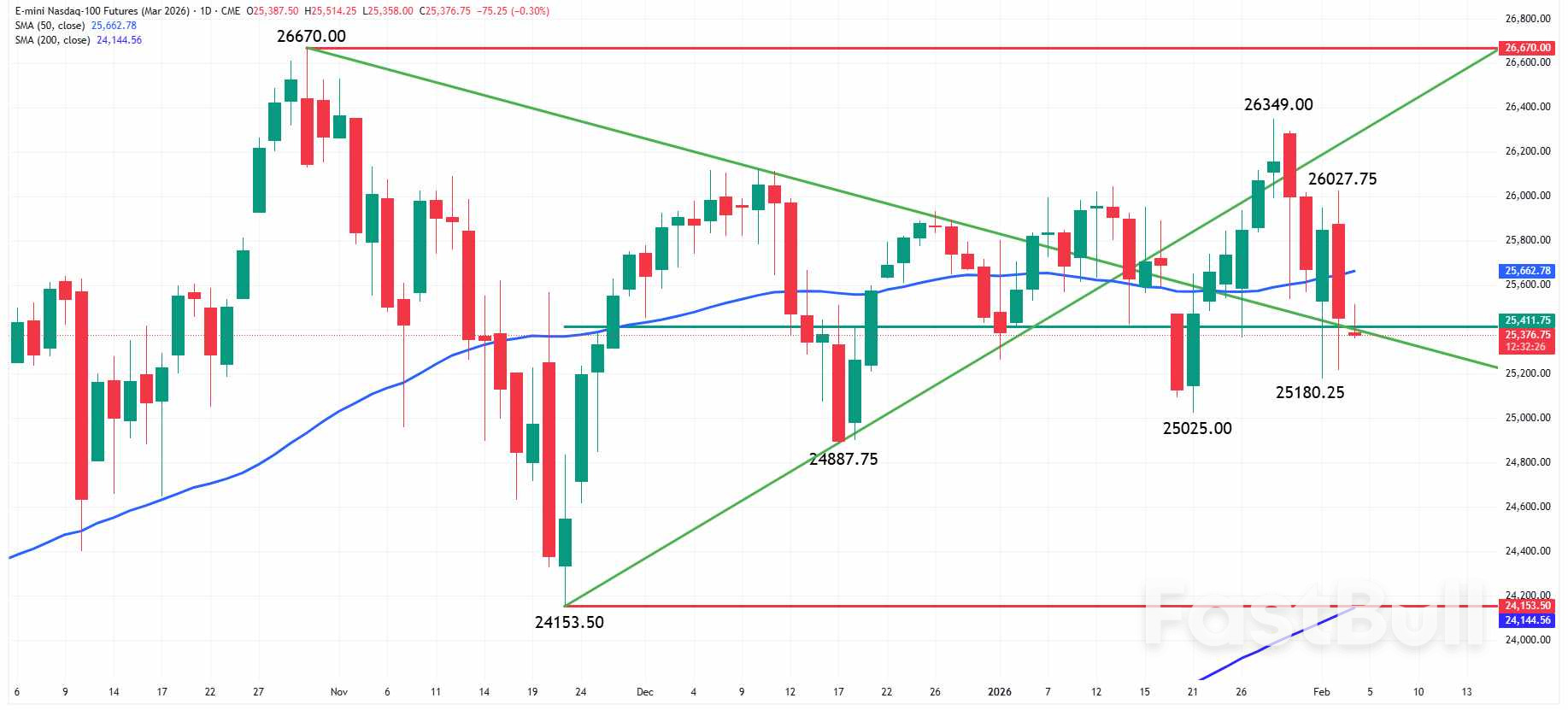
          Daily March E-mini Nasdaq 100 Index Futures

          Was yesterday’s action a sign of what’s coming? On Tuesday, February 3rd, the Dow briefly touched a fresh record high before closing down 0.3%. The S&P 500 fell 0.8% and the tech-heavy Nasdaq plunged 1.4%. This kind of divergence doesn’t happen every day.

          Tech Gets Hammered — Old Economy Stocks Hit New Highs

          The big story seems to be a massive rotation out of technology stocks, especially software companies. Apparently Anthropic rolled out new automation tools for its Cowork product and that’s got everyone spooked that AI will disrupt traditional software business models.
          ServiceNow is down 28% year-to-date, Salesforce has fallen 26%, and Intuit has dropped 34%. Those are brutal declines. Meanwhile “old economy” stocks like Caterpillar are hitting all-time highs.
          With Alphabet and Amazon reporting earnings Thursday, things could go either way. If they show strong AI monetization, maybe tech bounces back. If they disappoint or sound cautious, this could get worse.

          Nasdaq Breaks Below 50-Day MA — Is This Time Different?

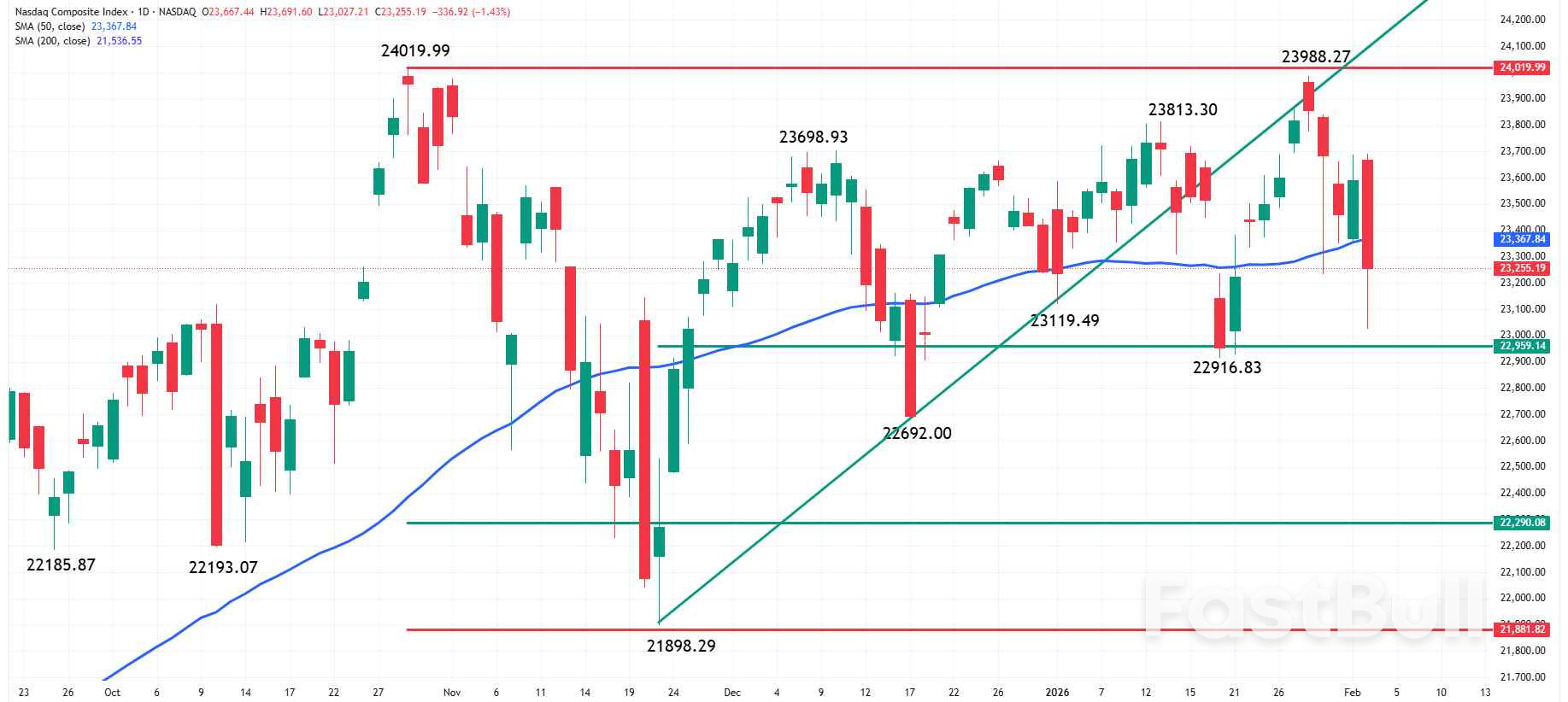
          Nasdaq Index: Forecast Turns Bearish After 50-Day MA Break as AI-Driven Tech Stress Builds_2Daily Nasdaq Composite Index (IXIC)

          Tuesday’s close below the 50-day moving average at 23367.84 is telling for the Nasdaq Composite Index (IXIC). Since late November, we’ve seen this indicator penetrated four times, only to lead to a quick recovery and nearly another record high. We’re going to be watching the reaction this time closely.
          Crossing to the weak side of a 50% level at 22959.14 and taking out the January 20 main bottom at 22916.83 will indicate strong selling pressure. That could even lead to an acceleration into the December 17 bottom at 22692.00, and in the worst case scenario, the November 21 bottom at 21898.29.
          Recovering the 50-day moving average will bring some relief to the market, but conditions won’t feel right unless Alphabet and Amazon right the ship.

          VIX Says People Are Nervous — But Not Panicking Yet

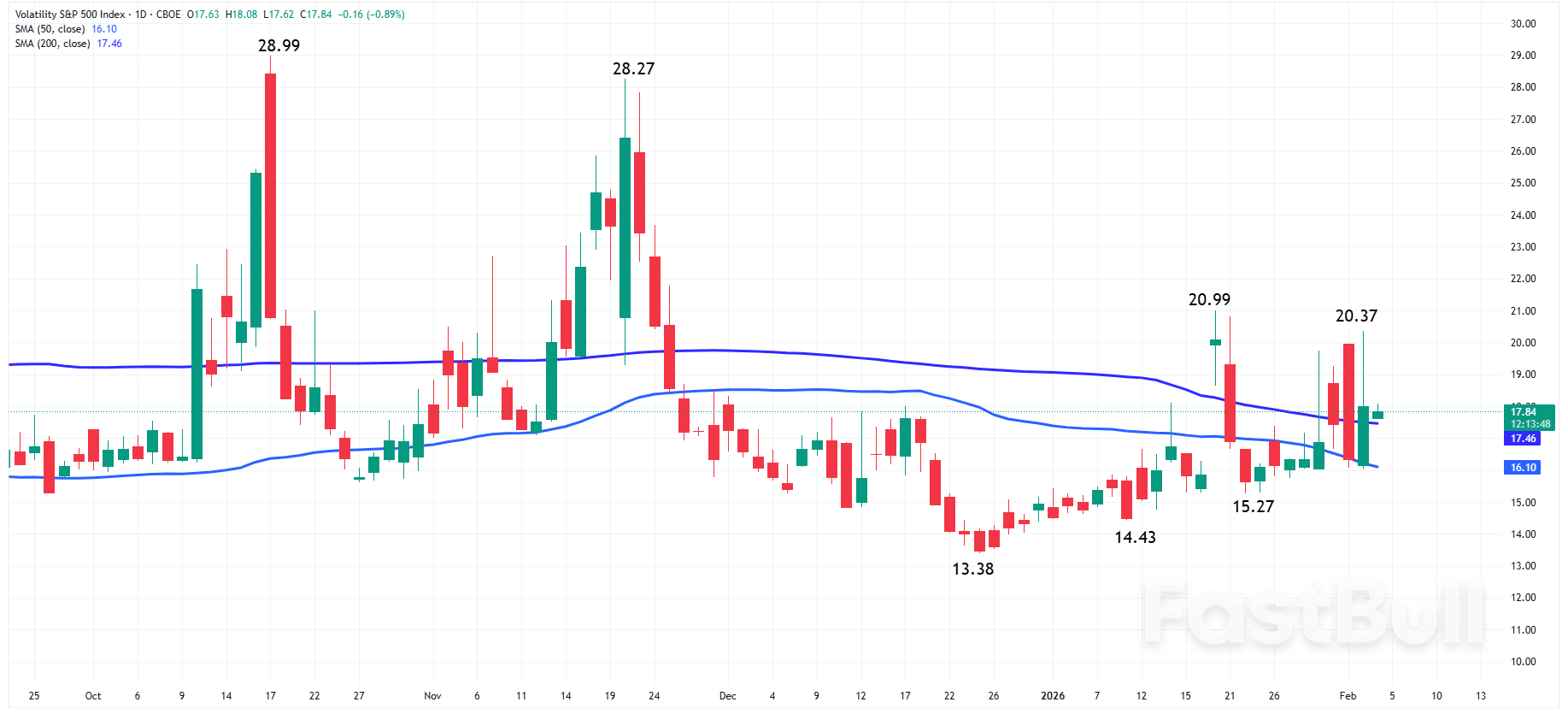
          Nasdaq Index: Forecast Turns Bearish After 50-Day MA Break as AI-Driven Tech Stress Builds_3Daily Volatility S&P 500 Index (VIX)

          The VIX is telling us something. On Tuesday, February 3rd, it rose to 20.37, its highest level since January 21, before closing at 18.00, up 1.66 or 10.16%. That’s elevated but not full-on panic mode. Still, people are clearly nervous and hedging their bets.

          Is This Healthy Broadening or the Start of a Real Tech Correction?

          So is this a healthy market broadening out, or are we watching the start of a real tech sector correction? Like I said, I’m not seeing a panic yet. I could just be witnessing a massive rotation. Usually when there’s smoke, stock investors sell first and ask questions later. I’m not seeing that either, but conditions could change quickly after the Amazon and Alphabet earnings releases.

          Source: fxempire

          To stay updated on all economic events of today, please check out our Economic calendar
          Risk Warnings and Disclaimers
          You understand and acknowledge that there is a high degree of risk involved in trading. Following any strategies or investment methods may lead to potential losses. The content on the site is provided by our contributors and analysts for information purposes only. You are solely responsible for determining whether any trading assets, securities, strategy, or any other product is suitable for investing based on your own investment objectives and financial situation.
          Add to Favorites
          Share

          Xi and Putin Vow Deeper Alliance Amid Global Turmoil

          Michael Ross

          Russia-Ukraine Conflict

          Economic

          Remarks of Officials

          Political

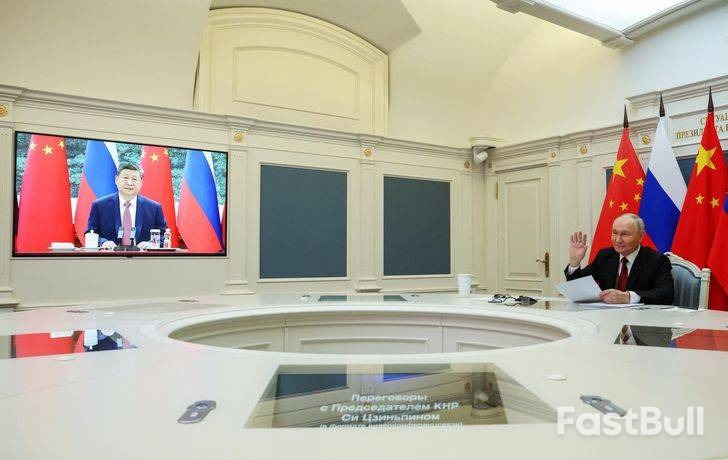
          Chinese President Xi Jinping and his Russian counterpart Vladimir Putin reaffirmed their strategic partnership on Wednesday, hailing their deepening alliance as a key stabilizing force in an increasingly turbulent world.

          In a video call, both leaders underscored their commitment to a united front against the West, building on ties that have grown closer since Russia's 2022 offensive in Ukraine. The discussion followed recent meetings between top officials from both nations, who agreed that their relationship could "break new ground" this year through expanded economic cooperation.

          Figure 1: Russian President Vladimir Putin greets his Chinese counterpart Xi Jinping during a video conference, reinforcing the strategic partnership between Moscow and Beijing.

          Xi told Putin that the international situation has become more turbulent since the start of the year. According to Chinese state broadcaster CCTV, Xi called for "deeper strategic coordination" to ensure that China-Russia relations "continue to develop steadily along the right track."

          Addressing Xi as his "dear friend," Putin echoed the sentiment, stating that "the foreign policy alliance between Moscow and Beijing remains an important stabilizing factor." He described their comprehensive partnership as "exemplary," though neither leader specified the exact areas where they would increase coordination.

          Economic Pivot and Strategic Silence on Ukraine

          Putin praised the strong trade ties between the two countries, which have become crucial for Moscow as it redirects exports toward Asia. This economic pivot is a direct response to the massive sanctions imposed by Western nations following the Kremlin's military actions in Ukraine.

          China has consistently avoided denouncing Russia's military campaign and has not called for a withdrawal of troops, a position that many of Ukraine's allies view as tacit support for Moscow.

          The video conference occurred as Russian, Ukrainian, and U.S. negotiators were meeting in Abu Dhabi for another round of talks aimed at ending the conflict. However, Putin made no reference to Ukraine during his call with Xi.

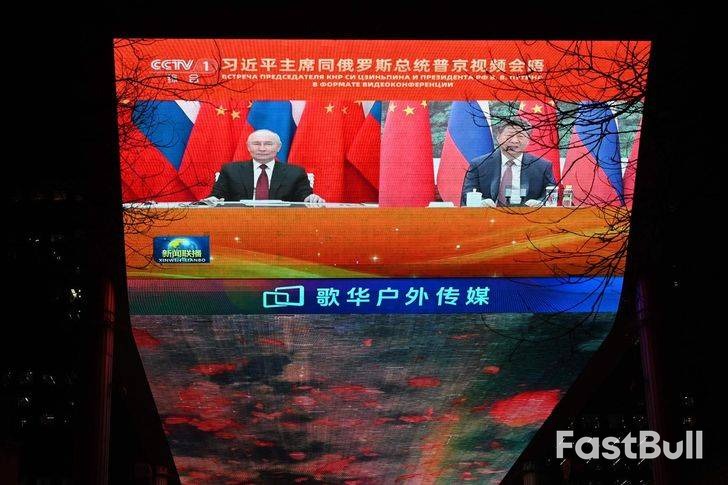
          Figure 2: The leaders' video call is broadcast on a public screen in Beijing, underscoring the high-profile nature of the China-Russia relationship.

          This high-level communication follows several in-person meetings. The two leaders last met in September when Putin attended a military parade in Beijing. Xi had also visited Moscow in May of last year for Russia's World War II victory celebrations. More recently, on Sunday, China's Foreign Minister Wang Yi met with Russia's security chief Sergei Shoigu in Beijing, where Wang stressed the need to jointly uphold multilateralism and "advocate for an equal and orderly multipolar world."

          China's Diplomatic Push and UN Commitment

          The call with Putin is part of a broader diplomatic effort by Xi to consolidate international support, particularly as China navigates its relationship with an increasingly unpredictable United States.

          During the discussion, Xi reiterated his commitment to the international system centered around the United Nations, where China holds a permanent, veto-wielding seat on the Security Council. This emphasis on the UN has been a consistent theme in his recent talks with leaders from France, Canada, Britain, and Brazil.

          This focus comes after U.S. President Donald Trump announced plans in January for a "Board of Peace," raising concerns that Washington may seek to create an alternative to the United Nations.

          Even while engaging with the UN, Beijing has pushed back against what it considers internal interference. It has also worked to position itself as a stable global partner, hosting Western leaders and U.S. allies who have been unsettled by Trump's policies, such as his tariff threats and his bid to acquire Greenland. In recent weeks, leaders from France, Canada, Finland, and Uruguay have all made visits to Beijing.

          To stay updated on all economic events of today, please check out our Economic calendar
          Risk Warnings and Disclaimers
          You understand and acknowledge that there is a high degree of risk involved in trading. Following any strategies or investment methods may lead to potential losses. The content on the site is provided by our contributors and analysts for information purposes only. You are solely responsible for determining whether any trading assets, securities, strategy, or any other product is suitable for investing based on your own investment objectives and financial situation.
          Add to Favorites
          Share

          Bitcoin-led crypto rout erases nearly $500 billion in a week

          Adam

          Cryptocurrency

          Almost half a trillion dollars has been wiped off cryptocurrencies in less than a week as a selloff led by Bitcoin accelerated.
          Total crypto market value has slumped by $467.6 billion since Jan. 29, according to CoinGecko data. Bitcoin on Tuesday tumbled to its lowest level since US President Donald Trump won re-election in early November 2024 and ushered in a more crypto-friendly administration.
          The original cryptocurrency, which hit a 15-month low of $72,877 in the US, regained some ground Wednesday and was trading at around $75,900 as of 6:05 a.m. in New York.
          Despite a pro-crypto White House and surging institutional adoption, Bitcoin has plummeted about 40% since rocketing to a record in early October. The rout follows a crippling series of liquidations on Oct. 10 that wiped out $19 billion in leveraged token bets, from which the broader crypto market has yet to recover.
          “Although there has been some rebound since the start of Wednesday, the sequence of lower local highs and lows indicates that selling on the rise prevails in the markets,” Alex Kuptsikevich, FxPro chief market analyst, said in a note.
          The declines follow a volatile week across global markets that also saw sharp swings in gold and silver. While precious metals found buyers on Tuesday after recent losses, cryptocurrencies failed to attract support. Bitcoin and US equities fell as rising tensions between the US and Iran prompted investors to seek safe assets.
          Bitcoin’s plunge is raising doubts that it functions as a kind of “digital gold,” as it hasn’t acted as a safe haven during a period of heightened geopolitical uncertainty. Investor Michael Burry this week warned that Bitcoin has been exposed as a purely speculative asset, failing to establish itself as a hedge similar to precious metals.
          In the past 24 hours, over $700 million in bullish and bearish crypto bets have been liquidated in the perpetual futures market, taking the total wipeout to over $6.67 billion since Jan. 29, CoinGlass data shows.
          Flows to US-listed Bitcoin exchange-traded funds remain choppy. After seeing about $562 million in net inflows on Monday, investors pulled out $272 million from the group on Tuesday, according to data compiled by Bloomberg.
          Historically, there’s been a “tremendous amount” of near-religious belief in holding on to Bitcoin no matter what, Michael Novogratz, chief executive officer of Galaxy Digital LP, said on an earnings call. “And somehow that virus or that fever broke, and you started seeing some selling.”

          Source: Bloomberg

          Risk Warnings and Disclaimers
          You understand and acknowledge that there is a high degree of risk involved in trading. Following any strategies or investment methods may lead to potential losses. The content on the site is provided by our contributors and analysts for information purposes only. You are solely responsible for determining whether any trading assets, securities, strategy, or any other product is suitable for investing based on your own investment objectives and financial situation.
          Add to Favorites
          Share

          US-India Trade Deal: Agriculture Remains a Hurdle

          Ukadike Micheal

          Economic

          Political

          India and the United States are negotiating a trade agreement that would see the U.S. lower tariffs on Indian goods from 50% to 18%. In return, India would stop purchasing Russian oil and reduce its own trade barriers. While the broad strokes of the deal have been shared, specific details remain under wraps, particularly regarding the contentious issue of agricultural market access.

          Key US Farm Exports Face a Closed Door

          India is unlikely to reduce tariffs on major U.S. agricultural imports like corn, soybeans, and soymeal. The primary reason is the country's ban on genetically modified (GM) food crops, a standard for the vast majority of U.S. corn and soybean production. This fundamental difference severely limits the potential for American market penetration.

          Furthermore, India’s import needs for these commodities are small compared to a country like China. India currently holds large domestic stockpiles of both corn and soymeal, which is used as animal feed. While it is the world's biggest importer of soyoil—sourcing mainly from Brazil, Argentina, and the U.S.—its purchases of raw soybeans are negligible.

          Other key areas face similar resistance:

          • Ethanol: India has sufficient domestic ethanol production from corn, rice, and sugarcane, making it improbable that it will agree to import U.S. ethanol or the corn needed to produce it.

          • Dairy: The U.S. has pushed for greater access to India’s heavily protected dairy market. However, New Delhi is expected to keep this sector off-limits to protect the livelihoods of millions of small farmers. Indian officials point to the vast difference in scale, with the average Indian farmer owning just two to three animals compared to herds of hundreds in the United States.

          Where India Might Offer Concessions

          While core agricultural sectors are protected, India may be willing to lower trade barriers on a range of other products. These are typically items that do not directly threaten the income of a large number of Indian farmers.

          Potential areas for concessions include:

          • Almonds, walnuts, and pistachios

          • Apples, pears, and berries

          • Fruits and vegetables

          • Wine and spirits

          Since India is already dependent on imports for many of these premium goods, reducing tariffs would be an easier political move for Prime Minister Narendra Modi's government. A deal in these areas would also allow President Donald Trump's administration to claim a victory for American farmers by securing new market access.

          The Political Power of India's Farmers

          Agriculture is a deeply sensitive issue in India. Although the sector makes up just 15% of the country's nearly $4 trillion economy, it provides a livelihood for almost half of its 1.4 billion people.

          Nearly 80% of farmers in India are smallholders who own two hectares of land or less, which limits their income potential. This massive population forms a powerful voting bloc that successive governments have been careful not to alienate.

          Farmer advocacy groups are already mobilizing against the potential deal. The Samyukt Kisan Morcha, a coalition of farmers' organizations, and prominent leaders like Rakesh Tikait have begun to criticize the Modi government's trade negotiations with Washington, signaling the political challenges that lie ahead.

          To stay updated on all economic events of today, please check out our Economic calendar
          Risk Warnings and Disclaimers
          You understand and acknowledge that there is a high degree of risk involved in trading. Following any strategies or investment methods may lead to potential losses. The content on the site is provided by our contributors and analysts for information purposes only. You are solely responsible for determining whether any trading assets, securities, strategy, or any other product is suitable for investing based on your own investment objectives and financial situation.
          Add to Favorites
          Share

          Oil News: Bullish Oil Outlook Builds as Supply Risks and API Drawdown Support Futures

          Adam

          Commodity

          WTI Holds Steady as Middle East Tensions Offset Supply Concerns

          WTI crude oil futures are trading steady-to-better early Wednesday as Middle East tensions offset concerns over supply. Although oversupply fears may be capping gains, the threat of military action between the United States and Iran is real enough to underpin prices. The geopolitical risk is real — prices jumped in reaction to news that the U.S. shot down an Iranian drone. If that wasn’t enough to rattle the market, armed Iranian boats reportedly approached a U.S.-flagged vessel in the Strait of Hormuz.
          At 11:09 GMT, March WTI Crude Oil futures are trading $63.54, up $0.33 or +0.52%.
          Just two weeks ago, crude oil prices rose as the U.S. moved an armada into the Strait. But oil retreated at the start of this week after President Trump said over the weekend that Washington and Tehran were talking. But yesterday’s activity in the area serves as a reminder that tensions can escalate at any time, leading traders to maintain the current supply disruption premium.

          API Drawdown Adds Support Ahead of EIA Report

          In addition to the war premium, the market also found support from Tuesday’s American Petroleum Institute (API) report that showed a more than 11-million barrel drawdown last week.
          Wednesday’s U.S. Energy Information Administration (EIA) inventories report is expected to show a 2-million barrel stockpile reduction.

          Trend Is Up — Trendline at $62.49 Holds the Key

          Oil News: Bullish Oil Outlook Builds as Supply Risks and API Drawdown Support Futures_1Daily March WTI Crude Oil Futures

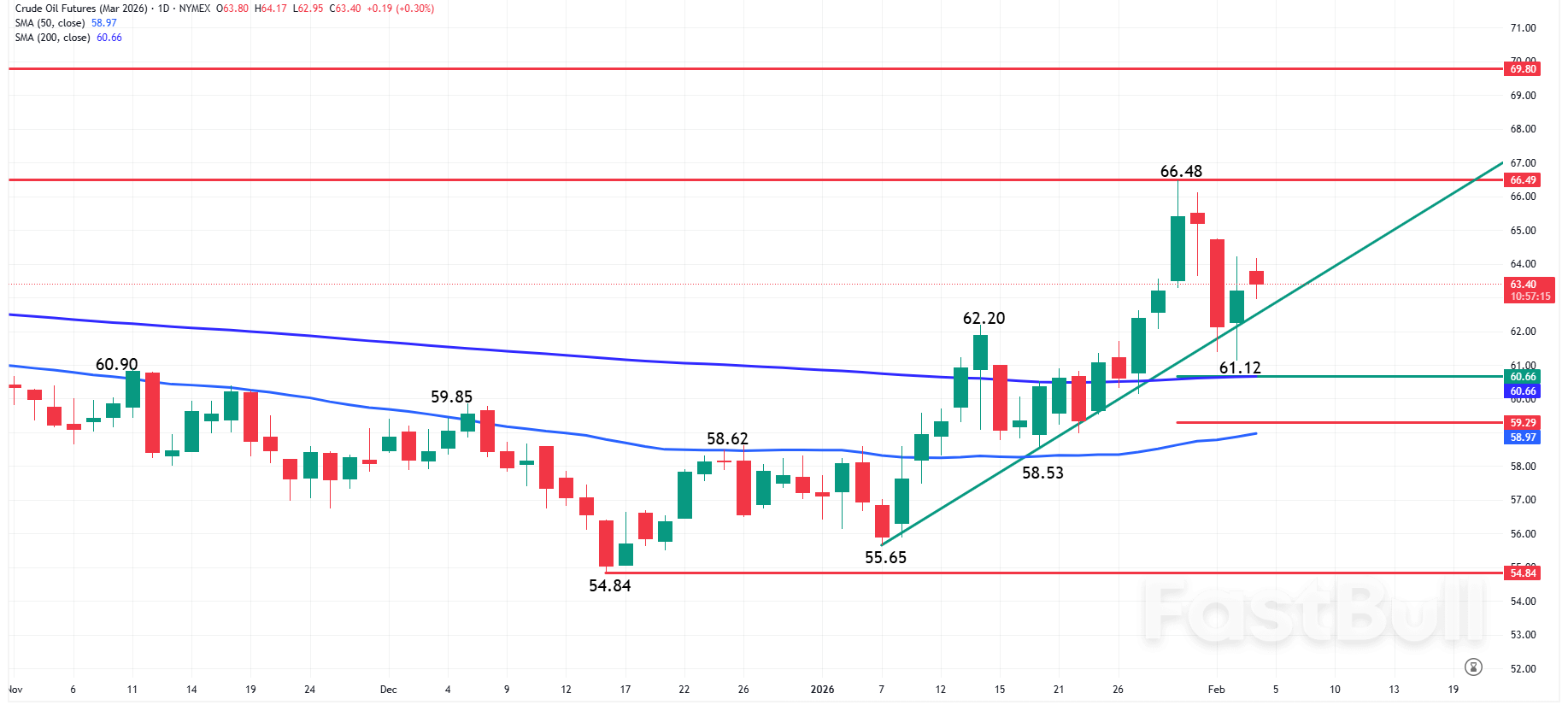
          Technically, the trend is up using all of our metrics. On Tuesday, the market closed on the strong side of a trendline that comes in today at $62.49. This is new support. A break back under this indicator will weaken the momentum.
          The swing chart is also indicating an uptrend. A trade through $58.53 will change the main trend to down, while a move through $66.48 will reaffirm the uptrend. A new minor bottom formed at $61.12. If this fails, momentum will shift to the downside.
          The main range is $54.84 to $66.48. Its 50% to 61.8% retracement zone at $60.66 to $59.29 is support and a value area.
          The market is also trading on the strong side of the 200-day moving average at $60.66 and the 50-day moving average at $58.97. The 200-day MA forms a support cluster at the 50% level at $60.66.

          Looking Ahead — Supply Disruption Risk Keeps Bulls in Control

          The possibility of a supply disruption is real, so we expect the market to remain underpinned unless there is bearish commentary out of Washington. Holding above the trendline at $62.49 is a sign of strength. The trendline is moving up $0.36 per day. Bullish traders are hoping this creates enough upside momentum to challenge the last swing top at $66.48. A breakout over the longer-term top at $66.49 will indicate the buying is getting stronger, while putting $69.80 on the radar.

          Source:fxempire

          Risk Warnings and Disclaimers
          You understand and acknowledge that there is a high degree of risk involved in trading. Following any strategies or investment methods may lead to potential losses. The content on the site is provided by our contributors and analysts for information purposes only. You are solely responsible for determining whether any trading assets, securities, strategy, or any other product is suitable for investing based on your own investment objectives and financial situation.
          Add to Favorites
          Share

          UN Warns of Imminent Cash Crisis Amid US Cuts

          Ukadike Micheal

          Remarks of Officials

          Political

          UN Budget Under Pressure from Record Unpaid Dues

          The United Nations is sounding the alarm over its finances, warning of a potential cash crisis by July as funding from the United States dwindles and unpaid dues from member states accumulate.

          U.N. Secretary-General António Guterres stated that outstanding contributions from members reached a record $1.568 billion by the end of 2025. With collections covering only 76.7% of assessed contributions, the organization's financial stability is at risk.

          Guterres cautioned that unless collections improve dramatically, the U.N. will be unable to fully implement its 2026 budget and could face a severe liquidity crisis by the middle of the year. The situation is compounded by new budgeting rules that require the U.N. to return certain "unspent funds" to members.

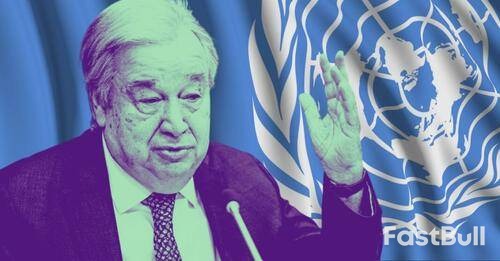
          Figure 1: U.N. Secretary-General António Guterres warns that without improved collections, the organization faces a potential liquidity crisis by mid-year.

          The Impact of Reduced US Financial Support

          The financial squeeze follows significant policy shifts from the Trump administration, which has been cutting support over claims the U.N. fails to advance U.S. interests. Historically, the United States has been the organization's largest financial backer.

          In 2024, for instance, U.S. taxpayers provided approximately 25% of the U.N.'s core budget and peacekeeping operations, along with 40% of its humanitarian assistance funding. The withdrawal of this support exposes the U.N.'s deep financial dependence on American contributions.

          This dynamic intensified in January 2026 when the United States formally withdrew from the World Health Organization and began exiting dozens of other international bodies, citing a misalignment with American priorities.

          Global Programs Face Cuts as Funding Dries Up

          The funding shortfall is already having tangible effects on U.N. operations worldwide. Agencies including the World Food Programme and various refugee organizations are reportedly preparing for layoffs and program reductions. Overall contributions have fallen to their lowest point in a decade, forcing a widespread tightening of spending.

          In his final yearly address before stepping down at the end of 2026, Secretary-General Guterres made a direct appeal to member states. "Either all member states honour their obligations to pay in full and on time—or member states must fundamentally overhaul our financial rules to prevent an imminent financial collapse," he wrote.

          Guterres also highlighted a world troubled by "self-defeating geopolitical divides" and "brazen violations of international law," while denouncing "wholesale cuts in development and humanitarian aid."

          The crisis raises a fundamental question that drives the U.S. position: why American taxpayers should continue funding a global institution that is increasingly viewed as ideologically opposed to their country's values and national interests.

          Risk Warnings and Disclaimers
          You understand and acknowledge that there is a high degree of risk involved in trading. Following any strategies or investment methods may lead to potential losses. The content on the site is provided by our contributors and analysts for information purposes only. You are solely responsible for determining whether any trading assets, securities, strategy, or any other product is suitable for investing based on your own investment objectives and financial situation.
          Add to Favorites
          Share
          FastBull
          Copyright © 2026 FastBull Ltd

          728 RM B 7/F GEE LOK IND BLDG NO 34 HUNG TO RD KWUN TONG KLN HONG KONG

          TelegramInstagramTwitterfacebooklinkedin
          App Store Google Play Google Play
          Products
          Charts

          Chats

          Q&A with Experts
          Screeners
          Economic Calendar
          Data
          Tools
          Membership
          Features
          Function
          Markets
          Copy Trading
          Latest Signals
          Contests
          News
          Analysis
          24/7
          Columns
          Education
          Company
          Careers
          About Us
          Contact Us
          Advertising
          Help Center
          Feedback
          User Agreement
          Privacy Policy
          Personal Information Protection Statement
          Business

          White Label

          Broker API

          Data API

          Web Plug-ins

          Poster Maker

          Affiliate Program

          Risk Disclosure

          The risk of loss in trading financial instruments such as stocks, FX, commodities, futures, bonds, ETFs and crypto can be substantial. You may sustain a total loss of the funds that you deposit with your broker. Therefore, you should carefully consider whether such trading is suitable for you in light of your circumstances and financial resources.

          No decision to invest should be made without thoroughly conducting due diligence by yourself or consulting with your financial advisors. Our web content might not suit you since we don't know your financial conditions and investment needs. Our financial information might have latency or contain inaccuracy, so you should be fully responsible for any of your trading and investment decisions. The company will not be responsible for your capital loss.

          Without getting permission from the website, you are not allowed to copy the website's graphics, texts, or trademarks. Intellectual property rights in the content or data incorporated into this website belong to its providers and exchange merchants.

          Not Logged In

          Log in to access more features

          Connect Broker
          Become a signal provider
          Help Center
          Customer Service
          Dark Mode
          Price Up/Down Colors

          Log In

          Sign Up

          Position
          Layout
          Fullscreen
          Default to Chart
          The chart page opens by default when you visit fastbull.com