Markets
News
Analysis
User
24/7
Economic Calendar
Education
Data
- Names
- Latest
- Prev



Signal Accounts for Members
All Signal Accounts
All Contests


[Fear Of Losing To Starlink? French Government Blocks Eutelsat Sale Of Antenna Assets] French Minister Of Economy, Finance, Industry, Energy And Digital Sovereignty, Roland Lescuille, Disclosed To The Media On The 30th That The French Government Recently Blocked Eutelsat's Sale Of Ground Antenna Assets To A Swedish Buyer. He Said The Decision Was Based On "national Security" Concerns, Fearing That The Transaction Would Damage Eutelsat's Competitiveness And Allow Its Rival, SpaceX's Starlink System, To Dominate The European Market
[White House Office Of Management And Budget Instructs Affected Agencies To Begin Implementation Of Shutdown Plans] On January 30, Local Time, CCTV Reporters Learned That The Director Of The White House Office Of Management And Budget Issued A Memorandum To Heads Of Various Departments, Instructing Agencies Whose Funding Was Due At Midnight To Begin Preparations For A Government Shutdown. These Agencies Include The Department Of Defense, Department Of Homeland Security, Department Of State, Department Of Treasury, Department Of Labor, Department Of Health And Human Services, Department Of Education, Department Of Transportation, And Department Of Housing And Urban Development
Mexico's Ministry Of Foreign Affairs Says Minister Spoke With USA Secretary Of State Rubio To Reiterate Bilateral Collaboration On Agendas Of Common Interest
China Southern Command Says Carried Out Naval And Air Patrols Around Scarborough Shoal On 31 Jan
Pentagon - USA State Dept Approves Potential Sale Of Patriot Advanced Capability-3 Missile Segment Enhancement Missiles To Saudi Arabia For An Estimated $9.0 Billion
Hong Kong Port Operator Violated Panama's Constitution, Failed To Serve Public Interest, Panama Court Ruled
South Korea Signs Deal With Norway To Supply Multiple Launch Rocket System Valued At 1.3 Trillion Won -South Korea Presidential Chief Of Staff
[Arctic Cold Wave Hits: Florida Citrus Industry At Risk Of Frost] The Southeastern United States Is Bracing For A Powerful Storm, Potentially Bringing Devastating Frost To Florida's Citrus Belt And Heavy Snowfall To The Carolinas. The Wind Chill In Central Florida's Orange-growing Regions Could Drop To Single Digits (Fahrenheit); Much Of Polk County Is Expected To Experience Sub-zero Temperatures, Threatening The Statewide Citrus Harvest. The Storm Is Also Expected To Bring Strong Winds And Coastal Flooding To The East Coast. Approximately 1,000 Flights Have Already Been Canceled Across The U.S. This Weekend, With Half Of Them Concentrated At Hartsfield-Jackson Atlanta International Airport
[Former Goldman Sachs Executive: Warsh's Fed Chairship Could Reduce Risk Of Massive Sell-Off Of US Assets] Fulcrum Asset Management Stated That Nominating Kevin Warsh As The Next Federal Reserve Chairman Reduces The Risk Of A Massive Sell-off Of US Assets Because The New Leader Is Expected To Take Measures To Address Inflation. "The Market Will Breathe A Huge Sigh Of Relief, And So Will The Dollar Market," Said Gavyn Davies, Co-founder And Chairman Of The London-based Firm, In A Video Released On The Fulcrum Website. He Added That Choosing Warsh Reduces The Risk Of A "crisis-laden 'sell America' Trade."
MSCI Emerging Markets Benchmark Equity Index Fell 1.7%, Its Worst Single-day Performance Since November 2025, Narrowing Its January Gain To Approximately 9%, Still Its Best Monthly Performance Since 2012. The Emerging Markets Currency Index Fell About 0.3%, Narrowing Its January Gain To 0.6%. On Friday, The South African Rand Fell 2.6% Against The US Dollar, Its Worst Performance Since April
Pentagon - USA State Department Approves Sales Of Joint Light Tactical Vehicles To Israel For $1.98 Billion
Federal Reserve Governor Bowman: I Look Forward To Working With Kevin Warsh, President Trump's Nominee For Federal Reserve Chairman
On Friday (January 30), At The Close Of Trading In New York (05:59 Beijing Time On Saturday), The Offshore Yuan (CNH) Was Quoted At 6.9584 Against The US Dollar, Down 137 Points From The Close Of Trading In New York On Thursday, Trading Within A Range Of 6.9437-6.9612 During The Day. In January, The Offshore Yuan Generally Continued To Rise, Trading Within A Range Of 6.9959-6.9313

U.K. M4 Money Supply (SA) (Dec)A:--
F: --
U.K. M4 Money Supply YoY (Dec)A:--
F: --
P: --
Italy Unemployment Rate (SA) (Dec)A:--
F: --
P: --
Euro Zone Unemployment Rate (Dec)A:--
F: --
P: --
Euro Zone GDP Prelim QoQ (SA) (Q4)A:--
F: --
P: --
Euro Zone GDP Prelim YoY (SA) (Q4)A:--
F: --
P: --
Italy PPI YoY (Dec)A:--
F: --
P: --
Mexico GDP Prelim YoY (Q4)A:--
F: --
P: --
Brazil Unemployment Rate (Dec)A:--
F: --
P: --
South Africa Trade Balance (Dec)A:--
F: --
P: --
India Deposit Gowth YoYA:--
F: --
P: --
Germany CPI Prelim YoY (Jan)A:--
F: --
P: --
Germany CPI Prelim MoM (Jan)A:--
F: --
P: --
Germany HICP Prelim YoY (Jan)A:--
F: --
P: --
Germany HICP Prelim MoM (Jan)A:--
F: --
P: --
U.S. Core PPI YoY (Dec)A:--
F: --
U.S. Core PPI MoM (SA) (Dec)A:--
F: --
P: --
U.S. PPI YoY (Dec)A:--
F: --
P: --
U.S. PPI MoM (SA) (Dec)A:--
F: --
P: --
Canada GDP MoM (SA) (Nov)A:--
F: --
P: --
Canada GDP YoY (Nov)A:--
F: --
P: --
U.S. PPI MoM Final (Excl. Food, Energy and Trade) (SA) (Dec)A:--
F: --
P: --
U.S. PPI YoY (Excl. Food, Energy & Trade) (Dec)A:--
F: --
P: --
U.S. Chicago PMI (Jan)A:--
F: --
Canada Federal Government Budget Balance (Nov)A:--
F: --
P: --
U.S. Weekly Total Oil Rig CountA:--
F: --
P: --
U.S. Weekly Total Rig CountA:--
F: --
P: --
China, Mainland NBS Manufacturing PMI (Jan)A:--
F: --
P: --
China, Mainland NBS Non-manufacturing PMI (Jan)A:--
F: --
P: --
China, Mainland Composite PMI (Jan)A:--
F: --
P: --
South Korea Trade Balance Prelim (Jan)--
F: --
Japan Manufacturing PMI Final (Jan)--
F: --
P: --
South Korea IHS Markit Manufacturing PMI (SA) (Jan)--
F: --
P: --
Indonesia IHS Markit Manufacturing PMI (Jan)--
F: --
P: --
China, Mainland Caixin Manufacturing PMI (SA) (Jan)--
F: --
P: --
Indonesia Trade Balance (Dec)--
F: --
P: --
Indonesia Inflation Rate YoY (Jan)--
F: --
P: --
Indonesia Core Inflation YoY (Jan)--
F: --
P: --
India HSBC Manufacturing PMI Final (Jan)--
F: --
P: --
Australia Commodity Price YoY (Jan)--
F: --
P: --
Russia IHS Markit Manufacturing PMI (Jan)--
F: --
P: --
Turkey Manufacturing PMI (Jan)--
F: --
P: --
U.K. Nationwide House Price Index MoM (Jan)--
F: --
P: --
U.K. Nationwide House Price Index YoY (Jan)--
F: --
P: --
Germany Actual Retail Sales MoM (Dec)--
F: --
Italy Manufacturing PMI (SA) (Jan)--
F: --
P: --
South Africa Manufacturing PMI (Jan)--
F: --
P: --
Euro Zone Manufacturing PMI Final (Jan)--
F: --
P: --
U.K. Manufacturing PMI Final (Jan)--
F: --
P: --
Brazil IHS Markit Manufacturing PMI (Jan)--
F: --
P: --
Canada National Economic Confidence Index--
F: --
P: --
Canada Manufacturing PMI (SA) (Jan)--
F: --
P: --
U.S. IHS Markit Manufacturing PMI Final (Jan)--
F: --
P: --
U.S. ISM Output Index (Jan)--
F: --
P: --
U.S. ISM Inventories Index (Jan)--
F: --
P: --
U.S. ISM Manufacturing Employment Index (Jan)--
F: --
P: --
U.S. ISM Manufacturing New Orders Index (Jan)--
F: --
P: --
U.S. ISM Manufacturing PMI (Jan)--
F: --
P: --


No matching data
Latest Views
Latest Views
Trending Topics
Top Columnists
Latest Update
White Label
Data API
Web Plug-ins
Affiliate Program
View All

No data
A key Republican senator is blocking President Trump’s Fed nominee amid a Justice Department probe into Chair Powell, exposing deep party divisions over central bank independence.
President Donald Trump’s choice of Kevin Warsh to lead the Federal Reserve has hit a significant roadblock from within his own party. Republican Senator Thom Tillis announced he will block the confirmation and any other Fed nominee until a Justice Department investigation into current Fed Chair Jerome Powell is resolved.
Tillis, a Republican from North Carolina, stated on X that he would "oppose the confirmation of any Federal Reserve nominee, including for the position of Chairman," until the inquiry is concluded with full transparency. His opposition creates a major hurdle for the White House, highlighting a growing rift within the Republican party over the president's attempts to influence the central bank.
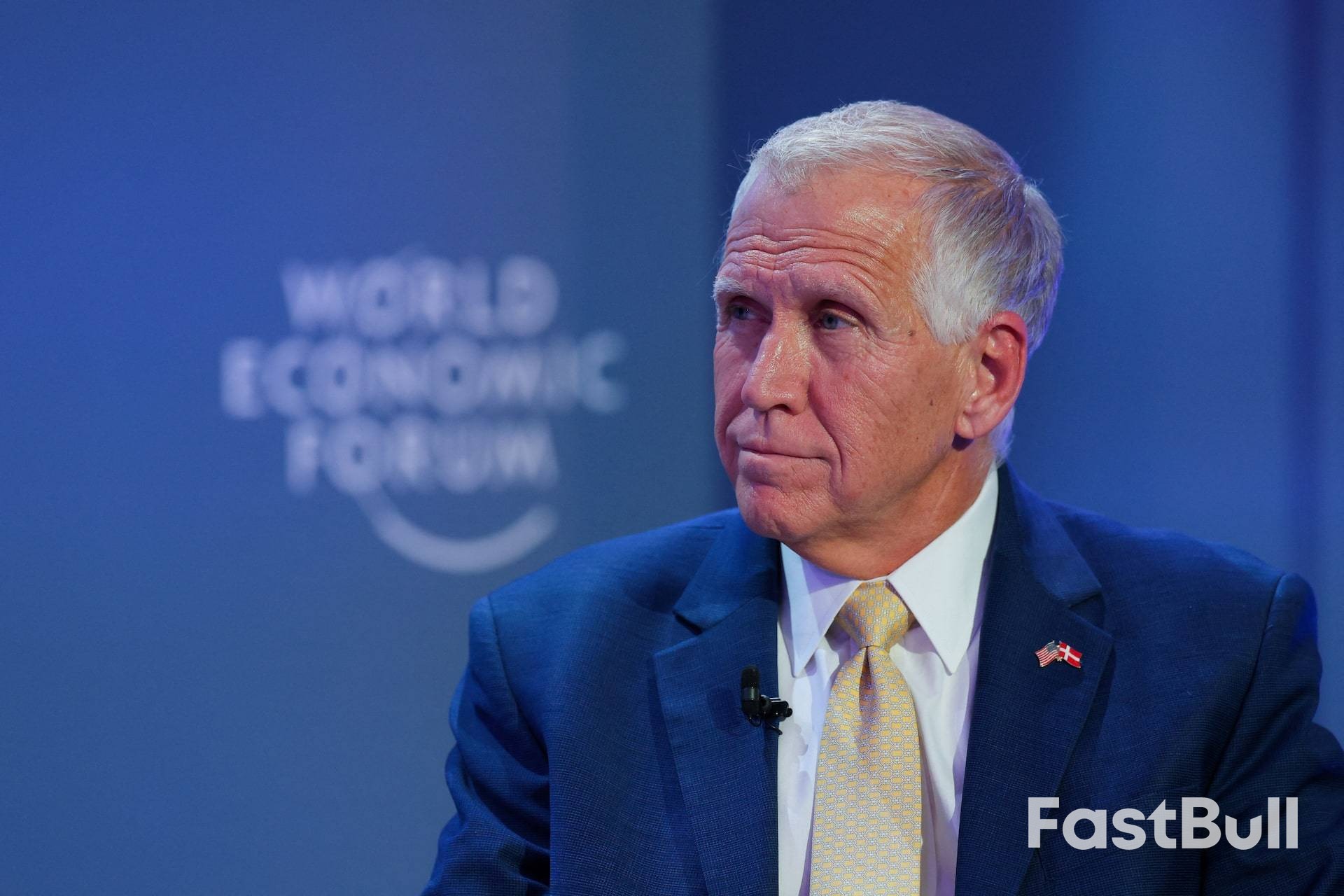
President Trump quickly fired back at the senator, labeling his stance as "obstructionist" and suggesting it explains "why he's no longer a senator." Tillis, who will not seek re-election in 2026 but remains in office until early next year, stood his ground.
"If he doesn't approve, we just have to wait until somebody comes in and we'll approve it, right?" Trump remarked at the White House.
Tillis, however, framed his move as a defense of institutional integrity. "This proves how the separation of powers works: one senator can prevent the most powerful man on the planet from potentially undermining the credibility and the independence of the Fed," he told reporters. "I don't consider that obstruction. I consider that doing my job."
As a member of the Senate Banking Committee, which oversees Fed confirmations, Tillis's vote is critical. The committee has a narrow 13-11 Republican majority, meaning a single Republican defection could stall the nomination before it reaches the full Senate.
The conflict centers on a Department of Justice inquiry into Fed Chair Jerome Powell. The probe reportedly stems from remarks Powell made to the committee last year regarding cost overruns on a renovation project at the Fed's Washington headquarters.
Earlier this month, Powell was served with a grand jury subpoena. He has denied any wrongdoing, calling the investigation a "pretext" to pressure the central bank on monetary policy. President Trump has been openly critical of Powell and has demanded significant interest rate cuts to stimulate the economy.
On Friday, Trump encouraged the probe, stating, "He's either incompetent, or he—or somebody—is a crook, and we'll find out."
Tillis dismissed the inquiry as a "bogus potential investigation." He is not alone in his concerns; Senator Lisa Murkowski of Alaska has also previously indicated she would not support a Trump Fed nominee while the investigation is active.
Tillis’s threat to block Warsh is the latest development in an ongoing clash with the president. The North Carolina senator has become more outspoken since announcing his retirement, notably breaking with Trump on a tax-and-spending bill over concerns about its impact on his home state.
While Republican senators have generally given Trump’s nominees wide latitude, a small but influential group has consistently emphasized the need to protect the Fed's independence from political pressure. This concern has grown amid administration criticism and investigations into both Powell and Fed Governor Lisa Cook, whom Trump previously attempted to fire.
Despite the opposition, Warsh's nomination has supporters. Senator Tim Scott, the Republican chair of the banking committee, welcomed the choice and promised a "thoughtful, timely confirmation process." Senator Bernie Moreno of Ohio called the pick "phenomenal" and predicted Warsh "will restore independence to the Federal Reserve."
Democrats on the committee are expected to uniformly oppose the nomination. Senator Elizabeth Warren, the committee's senior Democrat, described the move as "the latest step in Trump's attempt to seize control of the Fed."
"Donald Trump said anybody who disagrees with him will never be Fed Chairman. Former Fed Governor Kevin Warsh... has apparently passed the loyalty test," Warren said in a statement.
The timeline for Warsh's confirmation hearing remains unclear. White House economic adviser Kevin Hassett acknowledged on CNBC that the legal issues surrounding the Fed could complicate any Senate approval process until they are settled. "That it is an issue that should get resolved quickly," Hassett said.
The United States is encouraging India to resume purchases of Venezuelan oil, a strategic move designed to help Delhi replace crude imports from Russia. Sources indicate that India has already committed to significantly reducing its intake of Russian oil in the coming months, responding to increased U.S. tariffs on the trade.
India is reportedly on track to slash its Russian crude imports by several hundred thousand barrels per day. This shift aligns with Washington's broader effort to curtail the oil revenues funding Russia's war in Ukraine.
Following the 2022 invasion of Ukraine, India became a major buyer of discounted Russian oil. However, that trend is reversing. Indian Oil Minister Hardeep Singh Puri recently confirmed that the country is actively diversifying its crude sources as its reliance on Russian imports declines.
The reduction is expected to be sharp:
• January: Imports stood at approximately 1.2 million barrels per day (bpd).
• February: Projections show a drop to around 1 million bpd.
• March: A further decline to 800,000 bpd is anticipated.
Sources suggest these imports could eventually settle between 500,000 and 600,000 bpd, a move that could also help India secure a favorable trade deal with the United States.
This policy shift comes after the U.S. implemented a complex web of sanctions. The Trump administration imposed 25% tariffs in March 2025 on countries, including India, for buying Venezuelan oil. This was part of a campaign against Venezuelan President Nicolas Maduro, who U.S. forces captured on January 3. Since then, Washington has been directing the government in Caracas with plans to control the nation's oil industry indefinitely.
More recently, U.S. tariffs on Indian goods rose to 50% in August after an additional 25% was levied over its purchases of Russian oil. These pressures, combined with logistical challenges from Western sanctions, have prompted Indian refiners to seek alternative suppliers.
It remains unclear whether the new flow of Venezuelan oil would be sold directly by state oil company PDVSA or managed by third-party trading houses like Vitol or Trafigura. The White House and U.S. Treasury Department have not commented on the matter.
The shift away from Russian crude is already visible across India's refining sector. Data from December showed India's Russian oil imports falling to a two-year low, which in turn boosted OPEC's share of the Indian market to an 11-month high. Refiners are increasingly turning to suppliers in the Middle East, Africa, and South America.
Several key players have already adjusted their purchasing strategies:
• Hindustan Petroleum, Mangalore Refinery and Petrochemicals, and HPCL-Mittal Energy Ltd have reportedly stopped buying Russian oil entirely.
• Reliance Industries, which operates the world's largest refining complex, will purchase up to 150,000 bpd of Russian oil starting in February.
• State-owned refiners Indian Oil Corp and Bharat Petroleum Corp have slowed their purchases, according to officials at the recent India Energy Week conference.
Federal Reserve Vice Chair Michelle W. Bowman is signaling a crucial shift in focus toward protecting the U.S. workforce, highlighting growing risks in the labor market. Speaking on Friday, Bowman emphasized that her attention is turning to the potential for a rapid deterioration in employment, even as the central bank recently held interest rates steady.
Bowman expressed concern that the current "low-hiring, low-firing" environment could quickly transform into significant layoffs if broader economic activity weakens. This pivot suggests the Fed is becoming increasingly sensitive to employment data as it weighs its next policy moves.
The Vice Chair pointed to slowing private payroll growth, which averaged just 30,000 per month in the final quarter of last year, as a key reason for her cautious stance.
Regarding future interest rates, Bowman laid out a plan to reduce borrowing costs. "Looking ahead to 2026, my Summary of Economic Projections includes three cuts for this year," she stated during her remarks at the Southwestern Graduate School of Banking.
Despite this forward guidance, she described the latest decision to pause rate hikes as a "close call." The central bank is currently balancing its desire to shield the job market against the need for clearer economic data, particularly in the wake of the recent government shutdown.
After cutting rates by 75 basis points last year, Bowman argued the Fed can afford to "keep policy powder dry" while awaiting more accurate signals.
While the labor market remains a primary concern, Bowman remains confident that inflation will eventually return to the Fed's 2% target. She attributed its current elevation to the one-off effects of tariffs, which she expects to wane over time.
Ultimately, her message underscored the fragility of the current economic stability. Bowman warned that the central bank must be prepared to adjust policy swiftly if the "jobless expansion" begins to stall.
"History tells us that the labor market can appear to be stable right up until it isn't," she cautioned, highlighting the potential for an abrupt downturn.
Federal Reserve Vice Chair Michelle Bowman has clarified her stance on monetary policy, stating that while she still anticipates the need for interest rate cuts, she voted to hold rates steady this week to allow for more data analysis.
Speaking at a graduate banking event in Hawaii on Friday, Bowman confirmed her expectation for three quarter-percentage-point rate reductions this year. She framed the Federal Reserve's recent decision not as a shift in strategy, but as a tactical choice about the timing of the next move.
Bowman explained that the debate at this week's meeting centered on the pace of easing policy. After cutting rates by three-quarters of a percentage point over the last three meetings of 2025, the central bank faced a choice: continue cutting immediately or proceed more cautiously throughout the year.
Her vote to pause was driven by a desire to assess incoming information, particularly given the data gaps caused by last fall's government shutdown. While her long-term view remains unchanged—that weaker job market conditions and inflation moving toward 2% warrant looser policy—she noted some recent signs of stabilization in the labor market.
"The labor market is fragile," Bowman said. While she considered voting for a cut to protect against further deterioration, she ultimately felt it was prudent to wait. "We can afford to take time and 'keep policy powder dry' for a little while in order to carefully assess how the lower degree of policy restraint is flowing through to broader financial conditions and strengthening the labor market."
Despite her vote for a hold, Bowman stressed that the current policy stance should not be considered long-term. She signaled that any pause in rate cuts should be brief.
"We should also not imply that we expect to maintain the current stance of policy for an extended period of time," she stated, indicating a readiness to act at upcoming meetings. The Fed's next policy meeting is scheduled for March 17-18.
The Federal Open Market Committee voted 10-2 on Wednesday to keep the federal funds rate in its current 3.50%-3.75% range. The two dissenting votes came from Fed Governors Christopher Waller and Stephen Miran, who both favored an immediate rate cut. Bowman had been seen as a potential dissenter, but her comments reveal a more nuanced, data-dependent approach to the timing of policy adjustments.
Moody's has upgraded Israel's credit outlook to stable from negative, signaling renewed confidence in the nation's financial stability. The ratings agency affirmed Israel's sovereign rating at Baa1, citing a significant reduction in geopolitical risk as the primary driver for the improved forecast.
The decision follows a series of key developments that have eased regional tensions. Moody's pointed to the end of military conflict with Iran in June 2025 and the establishment of ceasefires with Hamas in Gaza (2025) and Hezbollah in Lebanon (2024).
While the agency notes that Israel's geopolitical environment will likely remain fragile, it assesses that the risk of resuming large-scale ground operations has receded. This reduction in immediate conflict risk was central to the outlook revision.
Israel's economy and public finances demonstrated notable resilience during the recent conflicts and are now positioned for a rebound. Moody's projects the economy will expand by 5.0% in 2026, followed by steady growth of 3.0-3.5% in the years after.
On the fiscal front, government deficits are expected to shrink from the highs recorded in 2024 and 2025. This should allow the country's debt-to-GDP ratio to stabilize at around 68%.
The affirmation of the Baa1 rating balances the positive outlook with the lingering financial costs of past conflicts. Compared to forecasts made before October 7, 2023, Moody's expects government debt to be approximately 18 percentage points higher over the medium term.
However, Israel's fundamental credit strengths remain intact, providing a strong buffer. These include:
• A track record of robust GDP growth.
• Continued investment in its vital technology sector.
• Strong access to capital markets, which helps limit borrowing costs and mitigate fiscal pressure.
The country's local and foreign-currency ceilings remain at Aa3, four notches above the sovereign rating, reflecting this balance between elevated geopolitical risks and a diversified, stable economy.
Looking ahead, Moody's outlined specific conditions that could lead to further rating actions.
A durable reduction in geopolitical risk, paired with a faster-than-expected fiscal consolidation, could create upward pressure on the rating. Conversely, a renewed escalation in regional tensions or a weakening of Israel's economic and fiscal prospects could lead to downward pressure.
White Label
Data API
Web Plug-ins
Poster Maker
Affiliate Program
The risk of loss in trading financial instruments such as stocks, FX, commodities, futures, bonds, ETFs and crypto can be substantial. You may sustain a total loss of the funds that you deposit with your broker. Therefore, you should carefully consider whether such trading is suitable for you in light of your circumstances and financial resources.
No decision to invest should be made without thoroughly conducting due diligence by yourself or consulting with your financial advisors. Our web content might not suit you since we don't know your financial conditions and investment needs. Our financial information might have latency or contain inaccuracy, so you should be fully responsible for any of your trading and investment decisions. The company will not be responsible for your capital loss.
Without getting permission from the website, you are not allowed to copy the website's graphics, texts, or trademarks. Intellectual property rights in the content or data incorporated into this website belong to its providers and exchange merchants.
Not Logged In
Log in to access more features
Log In
Sign Up