• Trade
  • Markets
  • Copy
  • Contests
  • News
  • 24/7
  • Calendar
  • Q&A
  • Chats
Trending
Screeners
SYMBOL
LAST
BID
ASK
HIGH
LOW
NET CHG.
%CHG.
SPREAD
SPX
S&P 500 Index
6870.39
6870.39
6870.39
6895.79
6858.28
+13.27
+ 0.19%
--
DJI
Dow Jones Industrial Average
47954.98
47954.98
47954.98
48133.54
47871.51
+104.05
+ 0.22%
--
IXIC
NASDAQ Composite Index
23578.12
23578.12
23578.12
23680.03
23506.00
+72.99
+ 0.31%
--
USDX
US Dollar Index
98.930
99.010
98.930
98.960
98.730
-0.020
-0.02%
--
EURUSD
Euro / US Dollar
1.16483
1.16490
1.16483
1.16717
1.16341
+0.00057
+ 0.05%
--
GBPUSD
Pound Sterling / US Dollar
1.33142
1.33151
1.33142
1.33462
1.33136
-0.00170
-0.13%
--
XAUUSD
Gold / US Dollar
4209.57
4209.91
4209.57
4218.85
4190.61
+11.66
+ 0.28%
--
WTI
Light Sweet Crude Oil
59.218
59.248
59.218
60.084
59.160
-0.591
-0.99%
--

Community Accounts

Signal Accounts
--
Profit Accounts
--
Loss Accounts
--
View More

Become a signal provider

Sell trading signals to earn additional income

View More

Guide to Copy Trading

Get started with ease and confidence

View More

Signal Accounts for Members

All Signal Accounts

Best Return
  • Best Return
  • Best P/L
  • Best MDD
Past 1W
  • Past 1W
  • Past 1M
  • Past 1Y

All Contests

  • All
  • Trump Updates
  • Recommend
  • Stocks
  • Cryptocurrencies
  • Central Banks
  • Featured News
Top News Only
Share

India Foreign Ministry: Advise Indian Nationals To Exercise Caution While Travelling To Or Transiting Through China

Share

Agrural - Brazil's 2025/26 Total Corn Output Seen At 135.3 Million Tonnes Versus 141.1 Million Tonnes In Previous Season

Share

Agrural - Brazil's 2025/26 Soybean Planting Hits 94% Of Expected Area As Of Last Thursday

Share

SEBI: Modalities For Migration To Ai Only Schemes And Relaxations To Large Value Funds For Accredited Investors

Share

All 6 Bank Of Israel Monetary Policy Committee Members Voted To Lower Benchmark Interest Rate 25 Bps To 4.25% On Nov 24

Share

India Government: Cancellations Are On Account Of Developer Delays And Not Due To Transmission Side Delays

Share

Fitch: We See Moderation Of Export Performance In China In 2026

Share

India Government: Revokes Grid Access Permissions For Renewable Energy Projects

Share

Stats Office - Tanzania Inflation At 3.4% Year-On-Year In November

Share

Temasek CEO Dilhan Pillay: We Are Taking A Conservative Stance On Allocating Capital

Share

Brazil Economists See Brazilian Real At 5.40 Per Dollar By Year-End 2025 Versus 5.40 In Previous Estimate - Central Bank Poll

Share

Brazil Economists See Year-End 2026 Interest Rate Selic At 12.25% Versus 12.00% In Previous Estimate - Central Bank Poll

Share

Brazil Economists See Year-End 2025 Interest Rate Selic At 15.00% Versus 15.00% In Previous Estimate - Central Bank Poll

Share

EU Commission Says Meta Has Committed To Give EU Users Choice On Personalised Ads

Share

Sources Revealed That The Bank Of England Has Invited Employees To Voluntarily Apply For Layoffs

Share

The Bank Of England Plans To Cut Staff Due To Budget Pressures

Share

Traders Believe There Is Less Than A 10% Chance That The European Central Bank Will Cut Interest Rates By 25 Basis Points In 2026

Share

Egypt, European Bank For Reconstruction And Development Sign $100 Million Financing Agreement

Share

Israel Budget Deficit 4.5% Of GDP In November Over Past 12 Months Versus 4.9% Deficit In October

Share

JPMorgan - Council Chaired By Jamie Dimon Includes Jeff Bezos

TIME
ACT
FCST
PREV
France Industrial Output MoM (SA) (Oct)

A:--

F: --

P: --
France Trade Balance (SA) (Oct)

A:--

F: --

P: --
Euro Zone Employment YoY (SA) (Q3)

A:--

F: --

P: --
Canada Part-Time Employment (SA) (Nov)

A:--

F: --

P: --

Canada Unemployment Rate (SA) (Nov)

A:--

F: --

P: --

Canada Full-time Employment (SA) (Nov)

A:--

F: --

P: --

Canada Labor Force Participation Rate (SA) (Nov)

A:--

F: --

P: --

Canada Employment (SA) (Nov)

A:--

F: --

P: --

U.S. PCE Price Index MoM (Sept)

A:--

F: --

P: --

U.S. Personal Income MoM (Sept)

A:--

F: --

P: --

U.S. Core PCE Price Index MoM (Sept)

A:--

F: --

P: --

U.S. PCE Price Index YoY (SA) (Sept)

A:--

F: --

P: --

U.S. Core PCE Price Index YoY (Sept)

A:--

F: --

P: --

U.S. Personal Outlays MoM (SA) (Sept)

A:--

F: --

P: --
U.S. 5-10 Year-Ahead Inflation Expectations (Dec)

A:--

F: --

P: --

U.S. Real Personal Consumption Expenditures MoM (Sept)

A:--

F: --

P: --
U.S. Weekly Total Rig Count

A:--

F: --

P: --

U.S. Weekly Total Oil Rig Count

A:--

F: --

P: --

U.S. Consumer Credit (SA) (Oct)

A:--

F: --

P: --
China, Mainland Foreign Exchange Reserves (Nov)

A:--

F: --

P: --

Japan Trade Balance (Oct)

A:--

F: --

P: --

Japan Nominal GDP Revised QoQ (Q3)

A:--

F: --

P: --

China, Mainland Imports YoY (CNH) (Nov)

A:--

F: --

P: --

China, Mainland Exports (Nov)

A:--

F: --

P: --

China, Mainland Imports (CNH) (Nov)

A:--

F: --

P: --

China, Mainland Trade Balance (CNH) (Nov)

A:--

F: --

P: --

China, Mainland Exports YoY (USD) (Nov)

A:--

F: --

P: --

China, Mainland Imports YoY (USD) (Nov)

A:--

F: --

P: --

Germany Industrial Output MoM (SA) (Oct)

A:--

F: --

P: --
Euro Zone Sentix Investor Confidence Index (Dec)

A:--

F: --

P: --

Canada National Economic Confidence Index

--

F: --

P: --

U.K. BRC Like-For-Like Retail Sales YoY (Nov)

--

F: --

P: --

U.K. BRC Overall Retail Sales YoY (Nov)

--

F: --

P: --

Australia Overnight (Borrowing) Key Rate

--

F: --

P: --

RBA Rate Statement
RBA Press Conference
Germany Exports MoM (SA) (Oct)

--

F: --

P: --

U.S. NFIB Small Business Optimism Index (SA) (Nov)

--

F: --

P: --

Mexico 12-Month Inflation (CPI) (Nov)

--

F: --

P: --

Mexico Core CPI YoY (Nov)

--

F: --

P: --

Mexico PPI YoY (Nov)

--

F: --

P: --

U.S. Weekly Redbook Index YoY

--

F: --

P: --

U.S. JOLTS Job Openings (SA) (Oct)

--

F: --

P: --

China, Mainland M1 Money Supply YoY (Nov)

--

F: --

P: --

China, Mainland M0 Money Supply YoY (Nov)

--

F: --

P: --

China, Mainland M2 Money Supply YoY (Nov)

--

F: --

P: --

U.S. EIA Short-Term Crude Production Forecast For The Year (Dec)

--

F: --

P: --

U.S. EIA Natural Gas Production Forecast For The Next Year (Dec)

--

F: --

P: --

U.S. EIA Short-Term Crude Production Forecast For The Next Year (Dec)

--

F: --

P: --

EIA Monthly Short-Term Energy Outlook
U.S. API Weekly Gasoline Stocks

--

F: --

P: --

U.S. API Weekly Cushing Crude Oil Stocks

--

F: --

P: --

U.S. API Weekly Crude Oil Stocks

--

F: --

P: --

U.S. API Weekly Refined Oil Stocks

--

F: --

P: --

South Korea Unemployment Rate (SA) (Nov)

--

F: --

P: --

Japan Reuters Tankan Non-Manufacturers Index (Dec)

--

F: --

P: --

Japan Reuters Tankan Manufacturers Index (Dec)

--

F: --

P: --

Japan Domestic Enterprise Commodity Price Index MoM (Nov)

--

F: --

P: --

Japan Domestic Enterprise Commodity Price Index YoY (Nov)

--

F: --

P: --

China, Mainland PPI YoY (Nov)

--

F: --

P: --

China, Mainland CPI MoM (Nov)

--

F: --

P: --

Q&A with Experts
    • All
    • Chatrooms
    • Groups
    • Friends
    Connecting
    .
    .
    .
    Type here...
    Add Symbol or Code

      No matching data

      All
      Trump Updates
      Recommend
      Stocks
      Cryptocurrencies
      Central Banks
      Featured News
      • All
      • Russia-Ukraine Conflict
      • Middle East Flashpoint
      • All
      • Russia-Ukraine Conflict
      • Middle East Flashpoint
      Search
      Products

      Charts Free Forever

      Chats Q&A with Experts
      Screeners Economic Calendar Data Tools
      Membership Features
      Data Warehouse Market Trends Institutional Data Policy Rates Macro

      Market Trends

      Market Sentiment Order Book Forex Correlations

      Top Indicators

      Charts Free Forever
      Markets

      News

      News Analysis 24/7 Columns Education
      From Institutions From Analysts
      Topics Columnists

      Latest Views

      Latest Views

      Trending Topics

      Top Columnists

      Latest Update

      Signals

      Copy Rankings Latest Signals Become a signal provider AI Rating
      Contests
      Brokers

      Overview Brokers Assessment Rankings Regulators News Claims
      Broker listing Forex Brokers Comparison Tool Live Spread Comparison Scam
      Q&A Complaint Scam Alert Videos Tips to Detect Scam
      More

      Business
      Events
      Careers About Us Advertising Help Center

      White Label

      Data API

      Web Plug-ins

      Affiliate Program

      Awards Institution Evaluation IB Seminar Salon Event Exhibition
      Vietnam Thailand Singapore Dubai
      Fans Party Investment Sharing Session
      FastBull Summit BrokersView Expo
      Recent Searches
        Top Searches
          Markets
          News
          Analysis
          User
          24/7
          Economic Calendar
          Education
          Data
          • Names
          • Latest
          • Prev

          View All

          No data

          Scan to Download

          Faster Charts, Chat Faster!

          Download App
          English
          • English
          • Español
          • العربية
          • Bahasa Indonesia
          • Bahasa Melayu
          • Tiếng Việt
          • ภาษาไทย
          • Français
          • Italiano
          • Türkçe
          • Русский язык
          • 简中
          • 繁中
          Open Account
          Search
          Products
          Charts Free Forever
          Markets
          News
          Signals

          Copy Rankings Latest Signals Become a signal provider AI Rating
          Contests
          Brokers

          Overview Brokers Assessment Rankings Regulators News Claims
          Broker listing Forex Brokers Comparison Tool Live Spread Comparison Scam
          Q&A Complaint Scam Alert Videos Tips to Detect Scam
          More

          Business
          Events
          Careers About Us Advertising Help Center

          White Label

          Data API

          Web Plug-ins

          Affiliate Program

          Awards Institution Evaluation IB Seminar Salon Event Exhibition
          Vietnam Thailand Singapore Dubai
          Fans Party Investment Sharing Session
          FastBull Summit BrokersView Expo

          Trump's Fed Firing: What To Know And Why It Matters

          Daniel Carter

          Central Bank

          Political

          Summary:

          President Donald Trump sent shockwaves through global markets Monday night by saying he would fire Federal Reserve Board Governor Lisa Cook.
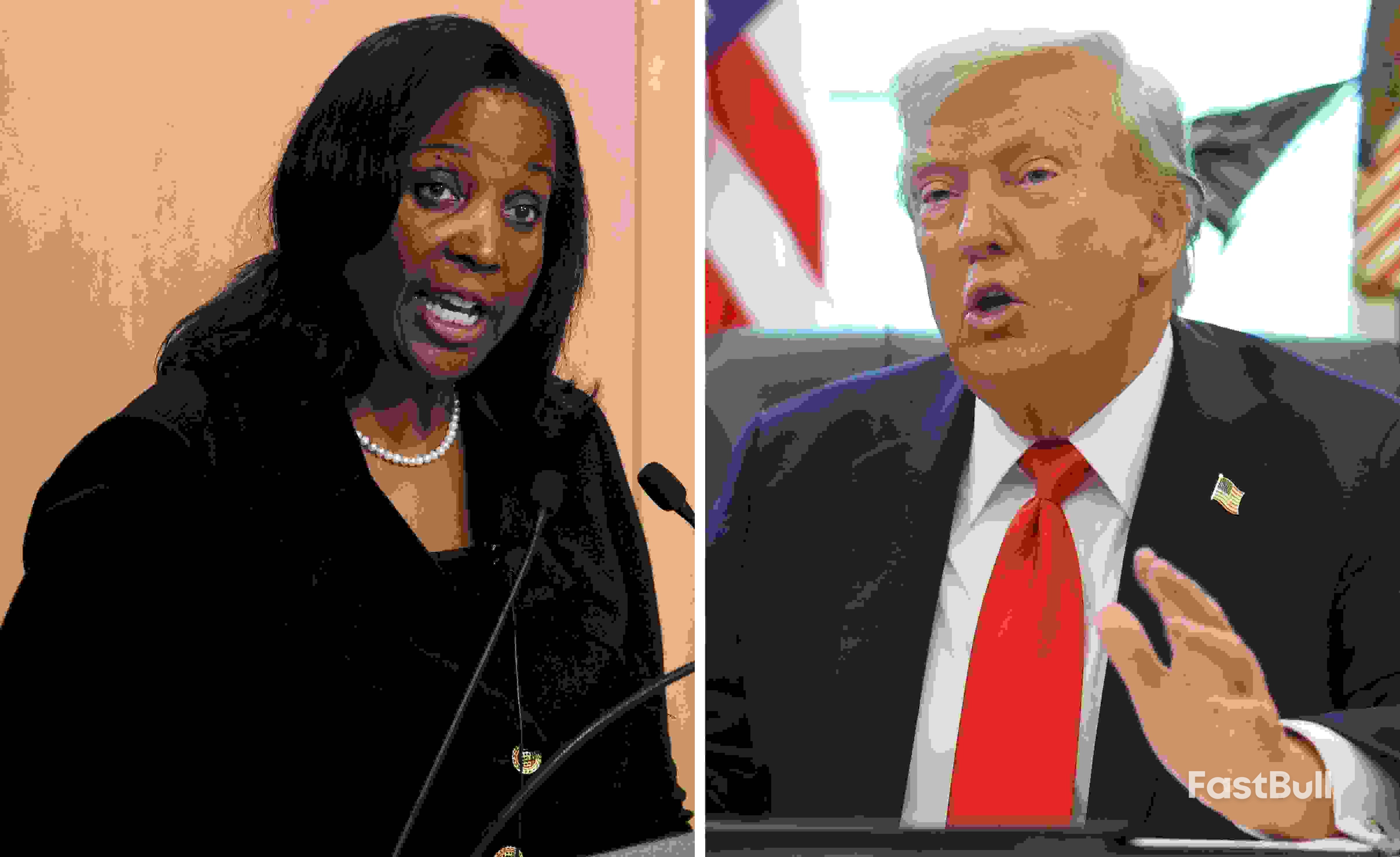
          Lisa Cook, governor of the US Federal Reserve, and U.S. President Donald Trump.

          Trump's decision not only put investors and economists on alert, but brought attention to the complicated innerworkings of the U.S. central bank. It also marks the latest escalation of Trump's monthslong pressure campaign against the Fed, historically politically independent, to lower interest rates.

          Why do we follow the Federal Reserve?

          The Federal Reserve manages monetary policy for the United States. Its dual mandate, set out in a 1977 act of Congress that amended the Federal Reserve Act, is to maximize full employment and ensure stable prices. Because the U.S. is home to the world's largest economy, the 111-year-old central bank also helps set the economic tone for all other developed as well as emerging markets. The Fed also supervises and regulates banks and their financial activities through a series of examinations, stress testing and corrective actions, and attempts to identify and mitigate systemic risks.
          A 12-person group within the Fed called the Federal Open Market Committee, or FOMC, sets the key overnight borrowing rate, currently set at 4.25% to 4.50%. The fed funds rate is the target interest rate that banks charge each other for overnight loans to meet their reserve requirements, and helps set the cost of home mortgages, car loans and credit card debt. The FOMC holds regularly scheduled meetings at least eight times a year.

          Who is Lisa Cook?

          Cook, the first African-American woman to sit on the Fed, has served as governor since 2022, according to her bank biography. Reappointed the following year, her 15-year term is due to expire in 2038.
          Before joining the Fed, Cook was a professor of economics and international relations at Michigan State University. A holder of a PhD in economics from the University of California, Berkeley, Cook was previously director of the American Economic Association Summer Training Program, a research associate at the National Bureau of Economic Research, on the faculty of Harvard University's Kennedy School of Government and a national fellow at Stanford University.
          From 2011 to 2012, Dr. Cook served as senior economist on the Council of Economic Advisers under President Barack Obama.

          What is a Fed governor?

          The Fed's Board of Governors consists of seven members who are appointed by the president and confirmed by the Senate. The governors are considered the core of the institution and are permanent members of the closely-watched FOMC. The other five voting members of the FOMC consist of the President of the Federal Reserve Bank of New York, a permanent member, and a rotating cast of four Reserve Bank presidents.

          Why is Trump firing her? Has she responded?

          In a social media post, Trump cited allegations that Cook made false statements on mortgage applications. Cook responded by saying he did not have the authority to fire her and that she would sue.
          The Fed said in an official statement on Tuesday afternoon that it would abide by any court decision governing the legality of Cook's firing. Although the president can fire a Fed governor "for cause," the law doesn't exactly define what that means. The case is expected to wind up before the Supreme Court.

          Is there a secondary motive?

          While Trump cited the mortgage issue, the move to fire Cook also comes amid his push for the Fed its key borrowing rate. Earlier this summer, Trump floated the idea of firing Fed Chair Jerome Powell, who he has repeatedly blamed for keeping rates unchanged since late last year.
          Trump may get his wish: Fed funds futures are pricing in a more than 89% likelihood that the central bank cuts rates at its next policy gathering in September, according to the CME FedWatch tool. That market assessment, however, is based more on a weak July labor report and downward revisions to job growth in May and June, rather than political pressure from the White House.

          What has the market reaction been?

          Following a trend in place since Trump resumed office in January, investors largely shook off any immediate concern that politics would intrude on monetary policy. Stocks rose on Tuesday.
          But signs of concern showed up in other areas. An index tracking the U.S. dollar against a basket of foreign currencies slid on Tuesday as investors looked to international alternatives. Gold — traditionally regarded as a safe store of value in times of rising inflation — rose in reaction to the White House move.

          What's the dispute mean for Main Street?

          Everyday Americans won't feel immediate impacts from Trump's decision on Cook. But it could have longer-term ramifications for economic policy.
          If Trump is able to remove Cook, it would create an opening to appoint an FOMC governor likely to vote in favor of lower interest rates.

          Source: CNBC

          Risk Warnings and Disclaimers
          You understand and acknowledge that there is a high degree of risk involved in trading. Following any strategies or investment methods may lead to potential losses. The content on the site is provided by our contributors and analysts for information purposes only. You are solely responsible for determining whether any trading assets, securities, strategy, or any other product is suitable for investing based on your own investment objectives and financial situation.
          Add to Favorites
          Share

          Commerce Secretary Lutnick Announces Plans to Issue US GDP Statistics on Blockchain

          Manuel

          Cryptocurrency

          Political

          Commerce Secretary Howard Lutnick announced the Department of Commerce will begin issuing GDP and other economic statistics on blockchain during a White House cabinet meeting on Aug. 26.
          Positioning the technology as a government-wide data distribution tool, Lutnick told President Donald Trump:
          “The Department of Commerce is going to start issuing its statistics on the blockchain, cause you [Trump] are the crypto president, and we are going to put the GDP on the blockchain so people can use the blockchain for data distribution.”
          Lutnick said the Commerce Department plans to make blockchain-based statistics “available for the entire government” while working through implementation details.
          The announcement represents the most prominent federal blockchain deployment under the Trump administration’s crypto-friendly policies.

          Existing federal programs

          The Commerce initiative builds on existing blockchain pilots across federal agencies.
          Treasury tested a grant distribution system using blockchain to track drawdowns with automatic reconciliation and audit trails, though it never launched publicly.
          The Commodity Futures Trading Commission operates a pilot program evaluating tokenized collateral and stablecoin-based financial transactions in regulated markets.
          At the same time, the Small Business Administration has evaluated blockchain for monitoring fraud and performance metrics in loan programs, according to Government Accountability Office reports.
          The Department of Defense and Homeland Security are exploring the use of blockchain for parts tracking, supply chain authentication, and digital documentation.
          The Navy and the Defense Logistics Agency collaborate with SIMBA Chain to track high-value parts through blockchain ledgers, thereby reducing manual data entry in defense supply chains.
          Customs and Border Protection previously ran blockchain trials to verify intellectual property data on imports and spot counterfeit goods.

          Congressional support

          The blockchain push aligns with pending congressional legislation. The “Deploying American Blockchains Act of 2025,” sponsored by Rep. Kat Cammack and passed by the House on June 23, moved to the Senate on June 24.
          The bill directs the Secretary of Commerce to promote US competitiveness in blockchain deployment and applications.
          The legislation would establish a Commerce Department Blockchain Deployment Program and create advisory committees that include federal agencies, private sector representatives, and blockchain infrastructure operators.
          The program would examine how federal agencies can benefit from distributed ledger technology while addressing concerns related to cybersecurity and regulatory compliance.
          The Commerce Department’s GDP blockchain initiative represents the latest federal commitment to distributed ledger technology for core government functions.

          Source: Cryptoslate

          Risk Warnings and Disclaimers
          You understand and acknowledge that there is a high degree of risk involved in trading. Following any strategies or investment methods may lead to potential losses. The content on the site is provided by our contributors and analysts for information purposes only. You are solely responsible for determining whether any trading assets, securities, strategy, or any other product is suitable for investing based on your own investment objectives and financial situation.
          Add to Favorites
          Share

          Trump’s Fed Gamble Risks Pushing Key Bond Rates Even Higher

          Manuel

          Central Bank

          Bond

          President Donald Trump’s unprecedented and escalating attack on the Federal Reserve runs the risk of backfiring by hitting financial markets and the economy with higher long-term borrowing costs.
          For weeks, he has lambasted Chair Jerome Powell for not slashing interest rates deeply to stimulate the economy and — as Trump sees it — lower the government’s debt bills.
          He’s already nominated the head of his Council of Economic Advisers to the central bank’s board and is now seeking to oust Governor Lisa Cook, setting the stage for a legal battle over the institution’s political autonomy.
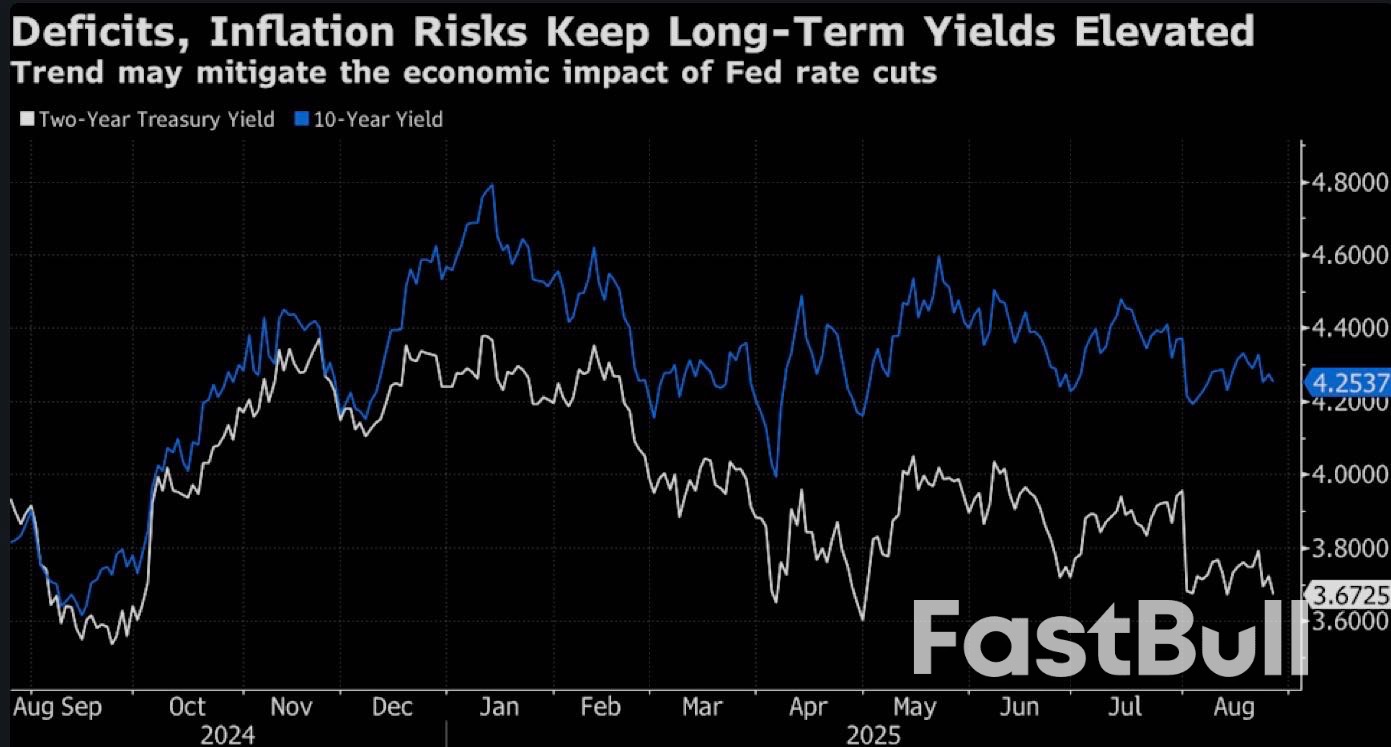
          Yet for all the Fed’s power over short-term interest rates, it’s the 10-year Treasury yield — set in real-time by traders around the world — that largely determines what Americans pay for trillions of dollars of mortgages, business loans and other debts.
          And even as Powell signals he’s ready to start easing monetary policy as soon as next month, those rates have been stubbornly high for other reasons: Tariffs are threatening to worsen still-elevated inflation; the budget deficit is poised to keep flooding the market with new Treasuries; and Trump’s tax cuts may even deliver a jolt of stimulus next year.
          Throw in fears that a Fed loyal to the president could cut rates too far, too fast — jeopardize the central bank’s inflation-fighting credibility in the process — and long-term rates could wind up even higher than they are now, squeezing the economy and potentially roiling other markets.
          “The combination of weaker US payroll growth and the White House baiting of the Fed, both institutional and personal, is starting to create real issues for investors in US Treasuries,” said David Roberts, head of fixed income at Nedgroup Investments, who expects long-term rates to rise even if short-term ones fall. “Inflation is running way above the Fed’s target. Much cheaper money now would likely stoke a boom, a weaker US dollar, and materially higher inflation.”Trump’s Fed Gamble Risks Pushing Key Bond Rates Even Higher_1
          The pressure on long-term interest rates isn’t unique to the US. They’ve been propped up in the UK, France and other countries by investors’ worries about the same combination of high government debt loads and increasingly unpredictable politics.
          But the crosscurrents of Trump’s return to the White House have posed their own challenges.
          During last year’s presidential campaign, when investors started betting on his victory, 10-year Treasury yields rose sharply even as the Fed started pulling its benchmark overnight rate back from a more than two decade high. That’s because investors were anticipating that the Republican’s tax-cut and deregulation agenda would add fuel to what was, at the time, a surprisingly resilient economy.
          Since Trump has taken office, though, the Fed has been on hold as his unpredictable trade war upends the economic outlook, spooks foreign investors and threatens to push up consumer prices. When Trump’s April tariff rollout unleashed one of the worst bond selloffs in recent decades, sending yields surging, Trump paused them, saying the markets were “getting a little bit yippy, a little bit afraid.”
          He has since reimposed the import levies and his trade policy has continued to remain in flux. At the same time, his tax-cut bill is set to add more than $3 trillion to the deficit over the next decade, which will add to the stockpile of debt unless his tariffs are kept in place by future presidents and wind up providing enough revenue to offset the cost.
          “The US has to issue a tremendous amount of debt in order to fund its deficit,” said Michael Arone, chief investment strategist at State Street Investment Management.
          He said that overhang is adding to concerns about growth and inflation. “As a result, I would expect that long rates will remain higher and more volatile than the market expects.”
          While Treasury Secretary Scott Bessent has said the administration’s cost-cutting and pro-growth policies would eventually pull down the 10-year yield — which he has held up as a key benchmark of success — that hasn’t happened yet. While shorter-term yields have dropped on anticipation of another round of Fed cuts, the 10-year’s rose as high as 4.31% Tuesday before settling around 4.26%, roughly where it was at the time of Trump’s election in November. The 30-year yield edged up to 4.92%.
          That marked a relatively muted response to Trump’s announcement that he was firing Cook from the Fed over unproven allegations of mortgage fraud, a move that Cook has vowed to fight in court. The Fed said it will abide by the outcome of the case.

          What Bloomberg Strategists say...

          “The attempted removal of Federal Reserve Governor Lisa Cook dominated traders’ thinking Tuesday. Higher term premium at the long end of the curve has been the biggest fallout so far. However, if efforts to gain political control of the the Fed gain more traction, we should expect a larger reaction both in premiums and inflation expectations.” —Edward Harrison, Macro Strategist, Markets Live
          Some of the market’s response reflects expectations that the courts will protect the Fed’s independence. Priya Misra, a portfolio manager at JPMorgan Investment Management, pointed to the “institutional safeguards that protect and jealously guard” the Fed from political pressure. Even Cook’s replacement, she said, would unlikely alter the Fed’s near-term trajectory.
          Moreover, with job growth slowing and Powell now telegraphing that another round of rate cuts may start as soon as next month, traders are already pricing in five quarter-point reductions through the end of next year. Powell, a Trump appointee whose term as chair ends in May, has also said he wouldn’t step down from his role and has sought to insulate the central bank from politics.
          Yet, a mounting effort by Trump to reshape the Fed would almost certainly keep bond markets on edge — and long-term debt yields elevated.
          Markets have grown accustomed to the Fed’s autonomy, with recent presidents going out of their way not to be seen as influencing the central bank’s policy.
          Its insulation from electoral politics hasn’t been an issue for investors since the early 1970s, when the Nixon administration sought to keep rates low by pressuring then Fed Chair Arthur Burns. That has served as a cautionary tale ever since, given the subsequent surge of inflation that many blamed on the central bank for caving to the president.
          “The unspoken Fed mandate is don’t be Arthur Burns,” said Steve Sosnick, chief strategist at Interactive Brokers. “You don’t bow to political pressure.”

          Source: Bloomberg

          Risk Warnings and Disclaimers
          You understand and acknowledge that there is a high degree of risk involved in trading. Following any strategies or investment methods may lead to potential losses. The content on the site is provided by our contributors and analysts for information purposes only. You are solely responsible for determining whether any trading assets, securities, strategy, or any other product is suitable for investing based on your own investment objectives and financial situation.
          Add to Favorites
          Share

          StanChart Says Ethereum Treasury Companies are Undervalued, Revises ETH Forecast to $7,500 by Year-End

          Manuel

          Cryptocurrency

          Standard Chartered said Ethereum (ETH) and the companies holding it in their treasuries remain undervalued, even as the second-largest crypto surged to a record $4,955 on Aug. 25.
          Geoffrey Kendrick, the bank’s head of crypto research, said treasury firms and exchange-traded funds have absorbed nearly 5% of all Ethereum in circulation since June. Treasury companies bought 2.6%, while ETFs added 2.3%.
          Combined, that 4.9% stake represents one of the fastest accumulation streaks in crypto history, surpassing the speed at which Bitcoin (BTC) treasuries and ETFs acquired 2% of supply in late 2024.

          Building toward 10%

          Kendrick said the recent buying spree marks the early phase of a broader accumulation cycle. In a July note, he projected that treasury firms could eventually control 10% of all ether outstanding.
          Kendrick argued that with companies such as BitMINE publicly targeting 5% ownership, the goal appears attainable. He noted that this would leave another 7.4% of supply still in play, creating strong tailwinds for Ethereum’s price.
          The sharp pace of accumulation emphasizes the growing role of institutional structures in crypto markets. Kendrick said the alignment of ETF flows with treasury purchases highlights a feedback loop that could tighten supply further and support higher prices.
          Kendrick revised the lender’s previous forecasts and said Ethereum could climb to $7,500 by year-end. He also called the latest pullback a “great entry point” for investors positioning ahead of further inflows.

          Valuation gaps

          While buying pressure has lifted prices, valuations of ether-holding firms have moved in the opposite direction.
          Net asset value (NAV) multiples for SharpLink and BitMINE, the two most established ETH treasury companies, have dropped below those of Strategy, the largest Bitcoin treasury firm.
          Kendrick said the discount is unjustified given that ETH treasuries can capture a 3% staking return, while Strategy generates no such income on its Bitcoin stash.
          He also pointed to SBET’s recent plan to repurchase shares if its NAV multiple falls below 1.0, saying that creates a hard floor for valuations.

          Source: Cryptoslate

          Risk Warnings and Disclaimers
          You understand and acknowledge that there is a high degree of risk involved in trading. Following any strategies or investment methods may lead to potential losses. The content on the site is provided by our contributors and analysts for information purposes only. You are solely responsible for determining whether any trading assets, securities, strategy, or any other product is suitable for investing based on your own investment objectives and financial situation.
          Add to Favorites
          Share

          Fed Governor Cook will sue Trump to keep her job, lawyer says

          Manuel

          Central Bank

          Political

          Federal Reserve Governor Lisa Cook will file a lawsuit to prevent President Donald Trump from firing her, a lawyer for the embattled central bank official said on Tuesday, kicking off what could be a protracted legal fight over the White House's effort to shape U.S. monetary policy.
          "His attempt to fire her, based solely on a referral letter, lacks any factual or legal basis. We will be filing a lawsuit challenging this illegal action," Cook's lawyer, prominent Washington attorney Abbe Lowell, said in a statement.
          The statement was issued a day after Trump said he would fire Cook, the first Black woman to serve on the Fed's governing body, for alleged "deceitful and potential criminal conduct" related to mortgages she took out in 2021.
          "We need people that are 100% above board and it doesn't seem like she was," Trump told reporters at a meeting. He said he had several "good people" in mind to replace Cook but would abide by any court decision that left her in her job.
          Trump's showdown with the nominally independent central bank follows other largely successful efforts to bring other elements of the U.S. government under his direct control. Since returning to office in January, the president has overseen the departure of hundreds of thousands of civil servants, dismantled several agencies and withheld billions of dollars of spending authorized by Congress.
          Trump pressured the Fed to lower interest rates during his first term in the White House and he has escalated that campaign in recent months. The president has demanded that rates be cut by several percentage points and threatened to fire Fed Chair Jerome Powell, although he recently backed away from that saber-rattling.
          Cook's departure would allow Trump to pick a majority of the Fed's seven-member board, including two incumbents and the pending nomination of White House economist Stephen Miran.
          The Fed said in a statement that Cook and other board members serve 14-year tenures and cannot be removed easily from office in order to ensure that monetary policy decisions are based on economic data and "the long-term interests of the American people."
          The attempt to influence U.S. monetary policy has knocked confidence in the dollar and U.S. sovereign debt and sparked fears of global financial turmoil. But market reaction to Trump's latest Fed gambit was tame on Tuesday.
          Wall Street's main equities indexes were largely flat on the day, while the dollar dropped. Yields on 2-year, 5-year and 10-year Treasury notes fell, reflecting higher expectations of a near-term rate cut, and rose on longer-dated bonds, in a sign the Fed's inflation-fighting credentials might weaken.
          Trump said in a letter to Cook on Monday that he had "sufficient cause" to fire her because she had described separate properties in Michigan and Georgia as primary residences on mortgage applications before she joined the Fed in 2022.
          In recent months Trump has fired several Black women who held senior government positions, including the head of the Library of Congress and the chair of the National Labor Relations Board.
          The Trump administration has also targeted other political opponents with similar accusations of mortgage fraud, including New York Attorney General Letitia James, a Black woman who secured a half-billion-dollar civil fraud judgment against Trump last year. A New York appeals court threw out the penalty last week, while preserving the case.

          MORTGAGE QUESTIONS

          William Pulte, a Trump appointee who is director of the Federal Housing Finance Agency, first raised questions about Cook's mortgages last week and referred the matter to U.S. Attorney General Pamela Bondi for investigation. Bondi has yet to say whether the Justice Department will take action.
          Trump accused Cook on Monday of having "deceitful and criminal conduct in a financial matter" and said he did not have confidence in her "integrity."
          Cook took out the two mortgages in question when she was an academic. Loans for primary residences can carry lower rates than mortgages on investment properties, which are considered riskier by banks. Cook listed three mortgages, including two personal residences, on a 2024 financial disclosure form.
          She is due to serve on the Fed board through 2038, but the Federal Reserve Act of 1913 allows removal of a sitting governor "for cause."
          Until now, that power has not been tested by U.S. presidents, who largely have taken a hands-off approach to Fed matters as a way to ensure confidence in U.S. monetary policy.
          Peter Conti-Brown, a scholar of the Fed's history at the University of Pennsylvania's Wharton School, noted that the mortgage transactions preceded her appointment to the Fed and were in the public record when she was vetted and confirmed by the Senate.
          "The idea that you can then reach back, turn the clock backward and say, you know, 'All these things that have happened before now constitute fireable offenses from your official position' is to me incongruous with the entire concept of 'for cause' removal," Conti-Brown said.
          It is unclear how the matter might play out ahead of the Fed's next policy meeting on September 16-17.
          Academic research has consistently found that policymakers who are allowed to manage inflation independent of political meddling generally achieve better outcomes, a principle that may now be tested at the world's most influential central bank.
          "The Fed as an institution escaped harm in the first Trump administration, and will not be so fortunate this time around," said Tim Duy, chief U.S. economist at SGH Macro Advisors.

          Source: Reuters

          Risk Warnings and Disclaimers
          You understand and acknowledge that there is a high degree of risk involved in trading. Following any strategies or investment methods may lead to potential losses. The content on the site is provided by our contributors and analysts for information purposes only. You are solely responsible for determining whether any trading assets, securities, strategy, or any other product is suitable for investing based on your own investment objectives and financial situation.
          Add to Favorites
          Share

          Tariff Clarity Can´t Shore up Falling Ocean Container Rates

          Manuel

          Economic

          China–U.S. Trade War

          Container rates on the all-important Asia-to-U.S. trade routes continue to trend downward following a July surge fueled by shippers frontloading imports ahead of tariff increases.
          Another 90-day extension of the tariff truce between China and the United States into November likely won’t stimulate another import surge, said shipping consultant Freightos, in an update.
          The tariff pause wasn’t driven solely by economic demands; FreightWaves has learned that the information technology systems of U.S. Customs and Border Protection has been unable to keep up pace with the increased data requirements resulting from the on-again, off-again swings in U.S. tariff and trade policies.
          “Tariffs meant to be reduced or removed on many types of goods are still being collected as implementation conditions still need to be fulfilled or details of the deals are still being hammered out,” said Freightos (NYSE: CRGO) research chief Judah Levine, in a note. “These implementation lags mean it will take longer to see if the tariff changes impact freight volumes and rates.”
          Levine said that trans-Pacific container arrivals likely peaked in July, as shippers brought in goods earlier than usual ahead of the China-U.S. tariff deadline in early August.
          “Asia-North America spot rates have fallen 60%-70% in an almost uninterrupted slide since that early rush,” he said. “Rates to the West Coast decreased 10% to $1,744 per forty foot equivalent unit last week – the lowest level for this lane since December 2023. East Coast prices fell 21% to $2,733 per FEU for a 34% slide so far in August.”
          While a top Chinese trade negotiator is set to visit Washington, growing vessel capacity is helping to push rates lower. At the same time, carriers are starting to shift some vessels away from U.S. services in a bid to avoid punitive port fees on China-linked ships which take effect in October.
          The Premier Alliance of Hyundai Merchant Marine, Ocean Network Express (ONE), and Yang Ming is splitting its Mediterranean Pacific South 2 (MS2) pendulum service in two: Asia–Mediterranean (MD2) and Middle East Gulf–U.S. Gulf Pacific South 2 (GS2). The split will take as many as 10 Chinese-built ships out of U.S. service.
          The charges start at $50 per net ton for Chinese-owned and -operated ships, and $18 per ton for non-Chinese operators of Chinese-built ships for each vessel calling at a U.S. port. The charges escalate over time. There are exemptions for empty vessels calling U.S. ports to load agricultural and other bulk exports.
          Freightos found trans-Atlantic rates essentially unchanged at $2,284 per FEU last week.
          “Not much freight impact is expected from the recent US-EU trade deal,” Levine noted, adding that auto tariff reductions have yet to take effect, and alcohol exports will not be exempted.
          Asia-North Europe spot prices fell 6% last week to about $3,100 per FEU, levels last seen in late June. Asia- Mediterranean rates were 1% lower at $3,100 per FEU, the lowest level since late May. “Prices on these lanes are 60% lower than last year, with trans-Pacific prices 70% lower,” said Levine, “reflecting growing overcapacity in the container market even as the new vessel orderbook size recently hit a new record.

          Source: FreightWaves

          To stay updated on all economic events of today, please check out our Economic calendar
          Risk Warnings and Disclaimers
          You understand and acknowledge that there is a high degree of risk involved in trading. Following any strategies or investment methods may lead to potential losses. The content on the site is provided by our contributors and analysts for information purposes only. You are solely responsible for determining whether any trading assets, securities, strategy, or any other product is suitable for investing based on your own investment objectives and financial situation.
          Add to Favorites
          Share

          Small caps are finally getting rate cuts, but they might still be left behind

          Adam

          Stocks

          Small-cap stocks are finally playing catch-up, leaving a market — which has been burned before — wondering if this time is for real.
          Fed Chair Jerome Powell reenergized the stock market on Friday as investors took his Jackson Hole remarks as a wink and a nod that a cut will be coming in September. Not surprisingly, interest rate-sensitive areas surged ahead, putting the small-cap Russell 2000 index up around 4% over the past month.
          The boost is a long time coming. While the S&P 500 (^GSPC), Nasdaq (^IXIC), and even the Dow (^DJI) have enjoyed plenty of record highs recently, the euphoria has not trickled down. The Russell 2000 (^RUT) hasn't seen a record close since 2021, despite nearly making it back to the top last fall before crashing once again as the trade war took off.
          Even as megacap tickers maintain staggering highs, some analysts see this small-cap run as the beginning of a rotation, signaling an end to the longstanding dominance of the tech giants.
          A broadening of the market rally would coincide with the next phase in the economic cycle. And it would allow sky-high valuations to take into account the skepticism of the AI trade, which resurfaced last week amid chatter of corporate restructuring, a lack of return on AI investments, and fear of an AI bubble.
          Small cap has plenty going for it besides rate cuts and AI angst. In a note to clients Monday, Mark Hackett, chief market strategist at Nationwide, pointed to fiscal stimulus, trade deals, and dollar weakness, which would favor cyclicals, small caps, and international equities. He also considered the downstream benefits of AI investments, which the broader market is only beginning to capture, "setting the stage for more balanced leadership," as he wrote in an email Monday.
          But Monday's market action provided the first hint that all that might still not be enough for small caps, as the Russell went back to its lagging ways. While one session alone is hardly proof that the rotation idea is off base, there's a sense that investors betting against Big Tech do so at their peril, especially as Nvidia (NVDA), the most valuable company on Wall Street and the flag bearer of the AI trade, reports on Wednesday.
          Then there's the "be careful what you wish for" of it all, which Lori Calvasina, head of US equity strategy at RBC Capital Markets, pointed out in a note Sunday. Though the small-cap world has yearned for cuts for years, they are definitionally a mixed blessing, as the very thing that prompts them is a flagging economy, under which small-cap stocks historically underperform.
          "We still don’t think cuts alone can bring about a period of sustainable Small Cap outperformance without a stronger economic backdrop than the one currently in place or being forecast by the economic community at large," Calvasina wrote.
          Whether a rotation from big to small happens remains to be seen. But one thing we have seen: Big Tech's knack for making money in any environment, whatever the interest rate.

          Source: finance.yahoo

          Risk Warnings and Disclaimers
          You understand and acknowledge that there is a high degree of risk involved in trading. Following any strategies or investment methods may lead to potential losses. The content on the site is provided by our contributors and analysts for information purposes only. You are solely responsible for determining whether any trading assets, securities, strategy, or any other product is suitable for investing based on your own investment objectives and financial situation.
          Add to Favorites
          Share
          FastBull
          Copyright © 2025 FastBull Ltd

          728 RM B 7/F GEE LOK IND BLDG NO 34 HUNG TO RD KWUN TONG KLN HONG KONG

          TelegramInstagramTwitterfacebooklinkedin
          App Store Google Play Google Play
          Products
          Charts

          Chats

          Q&A with Experts
          Screeners
          Economic Calendar
          Data
          Tools
          Membership
          Features
          Function
          Markets
          Copy Trading
          Latest Signals
          Contests
          News
          Analysis
          24/7
          Columns
          Education
          Company
          Careers
          About Us
          Contact Us
          Advertising
          Help Center
          Feedback
          User Agreement
          Privacy Policy
          Business

          White Label

          Data API

          Web Plug-ins

          Poster Maker

          Affiliate Program

          Risk Disclosure

          The risk of loss in trading financial instruments such as stocks, FX, commodities, futures, bonds, ETFs and crypto can be substantial. You may sustain a total loss of the funds that you deposit with your broker. Therefore, you should carefully consider whether such trading is suitable for you in light of your circumstances and financial resources.

          No decision to invest should be made without thoroughly conducting due diligence by yourself or consulting with your financial advisors. Our web content might not suit you since we don't know your financial conditions and investment needs. Our financial information might have latency or contain inaccuracy, so you should be fully responsible for any of your trading and investment decisions. The company will not be responsible for your capital loss.

          Without getting permission from the website, you are not allowed to copy the website's graphics, texts, or trademarks. Intellectual property rights in the content or data incorporated into this website belong to its providers and exchange merchants.

          Not Logged In

          Log in to access more features

          FastBull Membership

          Not yet

          Purchase

          Become a signal provider
          Help Center
          Customer Service
          Dark Mode
          Price Up/Down Colors

          Log In

          Sign Up

          Position
          Layout
          Fullscreen
          Default to Chart
          The chart page opens by default when you visit fastbull.com