• Trade
  • Markets
  • Copy
  • Contests
  • News
  • 24/7
  • Calendar
  • Q&A
  • Chats
Trending
Screeners
SYMBOL
LAST
BID
ASK
HIGH
LOW
NET CHG.
%CHG.
SPREAD
SPX
S&P 500 Index
6940.00
6940.00
6940.00
6967.31
6925.10
-4.47
-0.06%
--
DJI
Dow Jones Industrial Average
49359.32
49359.32
49359.32
49616.70
49246.24
-83.11
-0.17%
--
IXIC
NASDAQ Composite Index
23515.38
23515.38
23515.38
23664.26
23446.81
-14.63
-0.06%
--
USDX
US Dollar Index
98.950
99.030
98.950
99.230
98.830
-0.200
-0.20%
--
EURUSD
Euro / US Dollar
1.16217
1.16226
1.16217
1.16376
1.15775
+0.00239
+ 0.21%
--
GBPUSD
Pound Sterling / US Dollar
1.33886
1.33895
1.33886
1.34083
1.33409
+0.00121
+ 0.09%
--
XAUUSD
Gold / US Dollar
4666.92
4667.31
4666.92
4690.58
4621.05
+70.49
+ 1.53%
--
WTI
Light Sweet Crude Oil
59.373
59.408
59.373
59.404
58.682
+0.178
+ 0.30%
--

Community Accounts

Signal Accounts
--
Profit Accounts
--
Loss Accounts
--
View More

Become a signal provider

Sell trading signals to earn additional income

View More

Guide to Copy Trading

Get started with ease and confidence

View More

Signal Accounts for Members

All Signal Accounts

Best Return
  • Best Return
  • Best P/L
  • Best MDD
Past 1W
  • Past 1W
  • Past 1M
  • Past 1Y

All Contests

  • All
  • Trump Updates
  • Recommend
  • Stocks
  • Cryptocurrencies
  • Central Banks
  • Featured News
Top News Only
Share

China Stats Bureau Head: Rebounding Consumer Prices Will Help Companies And Help Stabilise Market Expectations

Share

Fitch - China's Stimulus Stabilises Markets But Unlikely To Revive Property Demand

Share

New Zealand's A2 Milk Slumps 14% On Reports Of Steep Drop In China Birth Rate

Share

China Stats Bureau Head: Expects China's Consumption To Grow Steadily In 2026 As Policy Support Gains Traction

Share

China Stats Bureau Head: Net Exports Accounted For 31.1% Of Q4 GDP Growth

Share

China Stats Bureau Head: Final Consumption Accounted For 52.9% Of Q4 GDP Growth

Share

China Stats Bureau Head: China Able To Maintain Stable, Sound Growth Momentum This Year

Share

China Stats Bureau Head: China's Economy Faces Problems And Challenges, Including Strong Supply And Weak Demand

Share

China Stats Bureau Head: China's Contribution To Global Growth Expected To Be Around 30% In 2025

Share

China Stats Bureau Head: China's Economic Development In 2025 'Hard Won'

Share

Most Active Dalian Iron Ore Contract Falls As Much As 3% To 790 Yuan/Metric Ton

Share

Indonesia's Rupiah Slips To 16905 Per USA Dollar For The First Time Since Early April 2025

Share

GDP Growth Rate Year On Year For Q4 In China Is 4.5%, Lower Than The Previous Value Of 4.8%. The Forecast Was 4.4%

Share

Indonesia's Benchmark Stock Index Inches Higher In Early Trade To A Record 9109.037 Points

Share

Onshore Yuan Little Changed After China GDP Data, Last At 6.9642 Per Dollar

Share

Yield On 5-Year Japanese Government Bond Rises 3.5 Basis Points To 1.675%

Share

Aussie Dollar Little Changed After China GDP Data, Last Down 0.12%

Share

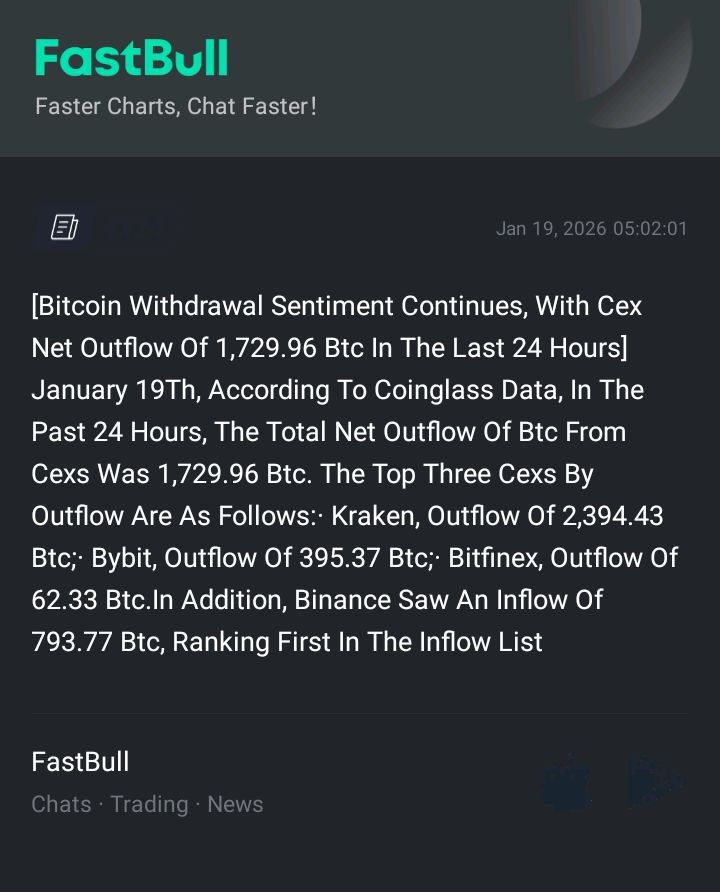
[Bitcoin Withdrawal Sentiment Continues, With Cex Net Outflow Of 1,729.96 Btc In The Last 24 Hours] January 19Th, According To Coinglass Data, In The Past 24 Hours, The Total Net Outflow Of Btc From Cexs Was 1,729.96 Btc. The Top Three Cexs By Outflow Are As Follows:· Kraken, Outflow Of 2,394.43 Btc;· Bybit, Outflow Of 395.37 Btc;· Bitfinex, Outflow Of 62.33 Btc.In Addition, Binance Saw An Inflow Of 793.77 Btc, Ranking First In The Inflow List

Share

China's 2025 Death Rate At 8.04 Deaths Per 1000 People Versus 7.76 Deaths Per 1000 People In 2024

Share

China 2025 Private Sector Fixed-Asset Investment -6.4% Year-On-Year

TIME
ACT
FCST
PREV
U.S. Philadelphia Fed Business Activity Index (SA) (Jan)

A:--

F: --

P: --

U.S. EIA Weekly Natural Gas Stocks Change

A:--

F: --

P: --

Richmond Federal Reserve President Barkin delivered a speech.
U.S. Weekly Treasuries Held by Foreign Central Banks

A:--

F: --

P: --

Germany CPI Final MoM (Dec)

A:--

F: --

P: --

Germany CPI Final YoY (Dec)

A:--

F: --

P: --

Germany HICP Final MoM (Dec)

A:--

F: --

P: --

Germany HICP Final YoY (Dec)

A:--

F: --

P: --

Brazil PPI MoM (Nov)

A:--

F: --

P: --

Canada New Housing Starts (Dec)

A:--

F: --

P: --
U.S. Capacity Utilization MoM (SA) (Dec)

A:--

F: --

P: --
U.S. Industrial Output YoY (Dec)

A:--

F: --

P: --

U.S. Manufacturing Capacity Utilization (Dec)

A:--

F: --

P: --

U.S. Manufacturing Output MoM (SA) (Dec)

A:--

F: --

P: --
U.S. Industrial Output MoM (SA) (Dec)

A:--

F: --

P: --
U.S. NAHB Housing Market Index (Jan)

A:--

F: --

P: --

Russia CPI YoY (Dec)

A:--

F: --

P: --

U.S. Weekly Total Rig Count

A:--

F: --

P: --

U.S. Weekly Total Oil Rig Count

A:--

F: --

P: --

Japan Core Machinery Orders YoY (Nov)

A:--

F: --

P: --

Japan Core Machinery Orders MoM (Nov)

A:--

F: --

P: --

U.K. Rightmove House Price Index YoY (Jan)

A:--

F: --

P: --

China, Mainland Urban Area Unemployment Rate (Dec)

A:--

F: --

P: --

China, Mainland GDP YoY (YTD) (Q4)

A:--

F: --

P: --

China, Mainland GDP (Q4)

A:--

F: --

P: --

China, Mainland GDP QoQ (SA) (Q4)

A:--

F: --

P: --

China, Mainland Annual GDP

A:--

F: --

P: --

China, Mainland Annual GDP Growth

A:--

F: --

P: --

China, Mainland GDP YoY (Q4)

A:--

F: --

P: --

China, Mainland Industrial Output YoY (YTD) (Dec)

A:--

F: --

P: --

Japan Industrial Output Final MoM (Nov)

--

F: --

P: --

Japan Industrial Output Final YoY (Nov)

--

F: --

P: --

Euro Zone Core HICP Final MoM (Dec)

--

F: --

P: --

Euro Zone HICP Final MoM (Dec)

--

F: --

P: --

Euro Zone HICP Final YoY (Dec)

--

F: --

P: --

Euro Zone HICP MoM (Excl. Food & Energy) (Dec)

--

F: --

P: --

Euro Zone Core CPI Final YoY (Dec)

--

F: --

P: --

Euro Zone Core HICP Final YoY (Dec)

--

F: --

P: --

Euro Zone CPI YoY (Excl. Tobacco) (Dec)

--

F: --

P: --

Euro Zone Core CPI Final MoM (Dec)

--

F: --

P: --

Canada National Economic Confidence Index

--

F: --

P: --

Canada CPI MoM (SA) (Dec)

--

F: --

P: --

Canada Core CPI MoM (SA) (Dec)

--

F: --

P: --

Canada CPI YoY (SA) (Dec)

--

F: --

P: --

Canada Trimmed CPI YoY (SA) (Dec)

--

F: --

P: --

Canada CPI YoY (Dec)

--

F: --

P: --

Canada CPI MoM (Dec)

--

F: --

P: --

Canada Core CPI YoY (Dec)

--

F: --

P: --

Canada Core CPI MoM (Dec)

--

F: --

P: --

South Korea PPI MoM (Dec)

--

F: --

P: --

China, Mainland 1-Year Loan Prime Rate (LPR)

--

F: --

P: --

China, Mainland 5-Year Loan Prime Rate

--

F: --

P: --

U.K. Average Weekly Earnings (3-Month Average, Including Bonuses) YoY (Nov)

--

F: --

P: --

U.K. Average Weekly Earnings (3-Month Average, Excluding Bonuses) YoY (Nov)

--

F: --

P: --

Germany PPI YoY (Dec)

--

F: --

P: --

Germany PPI MoM (Dec)

--

F: --

P: --

U.K. Unemployment Rate (Dec)

--

F: --

P: --

U.K. 3-Month ILO Unemployment Rate (Nov)

--

F: --

P: --

U.K. 3-Month ILO Employment Change (Nov)

--

F: --

P: --

U.K. Unemployment Claimant Count (Dec)

--

F: --

P: --

Q&A with Experts
    • All
    • Chatrooms
    • Groups
    • Friends
    Visxa Benfica flag
    @just BrendonFor me, the way you execute cleanly, avoid FOMO, wait for the setup to be clear before entering and gradually closing the target is what makes you a true pro
    just Brendon flag
    Visxa Benfica
    @just BrendonYeah, I think Gold is on an all-time high streak
    @Visxa Benficayes
    just Brendon flag
    Visxa Benfica
    @just BrendonFor me, the way you execute cleanly, avoid FOMO, wait for the setup to be clear before entering and gradually closing the target is what makes you a true pro
    @Visxa Benficathanks 🙏
    Visxa Benfica flag
    @just BrendonI prefer this approach to holding indefinitely and then reversing and taking a killing
    Visxa Benfica flag
    @just BrendonBut I'm also a little worried, because gold has soared too high
    pixar flag
    ws good
    john flag
    Visxa Benfica
    @just BrendonBut I'm also a little worried, because gold has soared too high
    @Visxa Benficait's what it is,,,gold has been doing this
    john flag
    john flag
    john
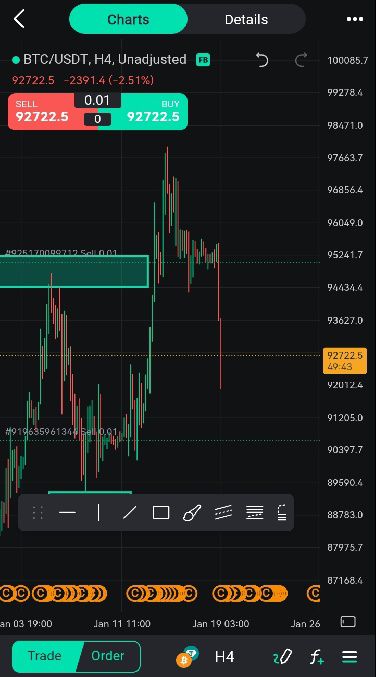
    I saw this short coming on btc yesterday
    just Brendon flag
    just Brendon
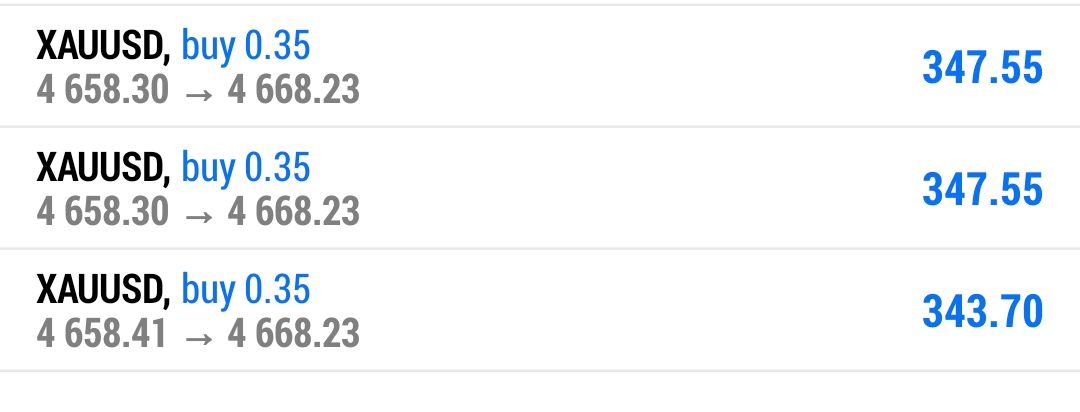
    xauusd Buy 4658/4656 target 4661 target 4664 target 4670 stop loss 4650
    ohhh it's coming Last Target Woohoo +100 Pip's Hit 4668 smashed Pro Entry Clean Execution ❤️‍🔥🔥
    just Brendon flag
    just Brendon flag
    just Brendon
    close half Set BE
    john flag
    just Brendon
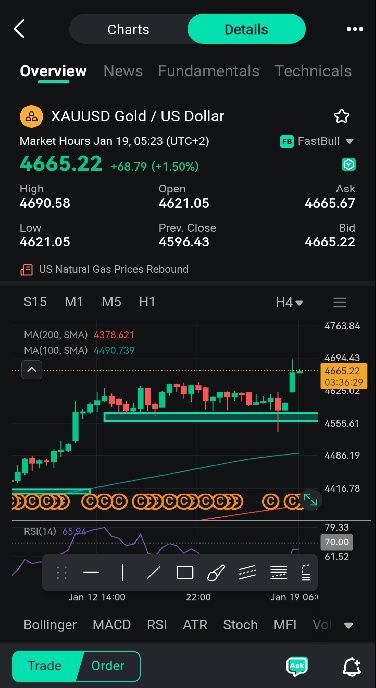
    @just Brendongold is now headed towards 4700
    john flag
    just Brendon
    @just Brendonyou have a good start for the week
    just Brendon flag
    john
    @johnthanks 👍
    john flag
    this one of the reason why btc is sliding
    john flag
    john flag
    just Brendon
    @just BrendonI am holding longs since last week and now I look forward to 4700
    john flag
    john flag
    john
    This is gold which got shy away from 4700 at 4690 so let buckle up for 4700
    Type here...
    Add Symbol or Code

      No matching data

      All
      Trump Updates
      Recommend
      Stocks
      Cryptocurrencies
      Central Banks
      Featured News
      • All
      • Russia-Ukraine Conflict
      • Middle East Flashpoint
      • All
      • Russia-Ukraine Conflict
      • Middle East Flashpoint
      Search
      Products

      Charts Free Forever

      Chats Q&A with Experts
      Screeners Economic Calendar Data Tools
      Membership Features
      Data Warehouse Market Trends Institutional Data Policy Rates Macro

      Market Trends

      Market Sentiment Order Book Forex Correlations

      Top Indicators

      Charts Free Forever
      Markets

      News

      News Analysis 24/7 Columns Education
      From Institutions From Analysts
      Topics Columnists

      Latest Views

      Latest Views

      Trending Topics

      Top Columnists

      Latest Update

      Signals

      Copy Rankings Latest Signals Become a signal provider AI Rating
      Contests
      Brokers

      Overview Brokers Assessment Rankings Regulators News Claims
      Broker listing Forex Brokers Comparison Tool Live Spread Comparison Scam
      Q&A Complaint Scam Alert Videos Tips to Detect Scam
      More

      Business
      Events
      Careers About Us Advertising Help Center

      White Label

      Data API

      Web Plug-ins

      Affiliate Program

      Awards Institution Evaluation IB Seminar Salon Event Exhibition
      Vietnam Thailand Singapore Dubai
      Fans Party Investment Sharing Session
      FastBull Summit BrokersView Expo
      Recent Searches
        Top Searches
          Markets
          News
          Analysis
          User
          24/7
          Economic Calendar
          Education
          Data
          • Names
          • Latest
          • Prev

          View All

          No data

          Scan to Download

          Faster Charts, Chat Faster!

          Download App
          English
          • English
          • Español
          • العربية
          • Bahasa Indonesia
          • Bahasa Melayu
          • Tiếng Việt
          • ภาษาไทย
          • Français
          • Italiano
          • Türkçe
          • Русский язык
          • 简中
          • 繁中
          Open Account
          Search
          Products
          Charts Free Forever
          Markets
          News
          Signals

          Copy Rankings Latest Signals Become a signal provider AI Rating
          Contests
          Brokers

          Overview Brokers Assessment Rankings Regulators News Claims
          Broker listing Forex Brokers Comparison Tool Live Spread Comparison Scam
          Q&A Complaint Scam Alert Videos Tips to Detect Scam
          More

          Business
          Events
          Careers About Us Advertising Help Center

          White Label

          Data API

          Web Plug-ins

          Affiliate Program

          Awards Institution Evaluation IB Seminar Salon Event Exhibition
          Vietnam Thailand Singapore Dubai
          Fans Party Investment Sharing Session
          FastBull Summit BrokersView Expo

          Trump's Economic Legacy: Why the Numbers Don't Add Up

          Nathaniel Wright

          Data Interpretation

          Economic

          China–U.S. Trade War

          Summary:

          Trump's economic policies faced a clear verdict: China's record trade surplus defied tariffs, while the US deficit ballooned.

          Discussions about Donald Trump's presidential performance are often dominated by politics, but two key metrics offer a clear verdict on his administration's economic policies: international trade and the federal budget. An analysis of the data reveals significant shortcomings in both areas.

          The Tariff Strategy and China's Unprecedented Surplus

          A central pillar of Trump's economic agenda was to reshape global trade by imposing heavy tariffs on other nations, particularly China. The stated goal was to revive American factories and generate a new stream of revenue for the U.S. government.

          However, the results have run counter to these expectations. After a year of this tariff-focused approach, China reported the largest trade surplus in history, reaching nearly $1.8 trillion. This figure caught most analysts by surprise, underscoring China's continued dominance as the world's leading supplier of goods like electric cars, electronics, and basic AI chips.

          Instead of being crippled by the tariffs, China successfully pivoted by finding new customers for products no longer destined for the U.S. and developed strategies to work around the trade barriers.

          Evidence of a Lasting Trend

          This trade performance doesn't appear to be a one-time event. In December, China's outbound shipments across all categories increased by 6.6%, suggesting that its record-breaking trade surplus is likely to grow even larger in the coming year.

          While China's exports directly to the U.S. did fall by 20%, this number can be misleading. China managed to circumvent some of the tariff impact by routing goods through other countries that have lower tariffs with the United States. Meanwhile, its exports to Asia, Africa, and even Europe saw booming growth.

          The Soaring US Budget Deficit

          The second area of concern is the rapidly expanding U.S. budget deficit. Despite high-profile efforts to cut government spending, the deficit has continued to climb.

          In December alone, the deficit hit a record $145 billion, a 67% increase ($58 billion) from the same month a year earlier. While officials pointed to explanations like calendar-driven shifts in benefit payments, the underlying trend remains one of inexorable growth in the deficit.

          Record Spending and Crushing Debt Costs

          The federal government's spending reached a new high in the first three months of fiscal year 2026, hitting $1.827 trillion. This represents a $33 billion, or 2%, increase over the same period in the prior year.

          At the same time, revenue from tariffs—the supposed solution—is showing signs of flattening out. New trade deals with nations like Korea have reduced some tariffs, and a pending Supreme Court ruling on the legality of the tariffs could further reduce customs receipts.

          A significant driver of the deficit is the mounting interest on government debt, which places a heavy burden on taxpayers. Key figures highlight the severity of the problem:

          • Interest Payments: The cost to service U.S. Treasury public debt grew by 15% ($46 billion) to $355 billion.

          • Rising Rates: This increase was driven by both a larger overall debt load and a higher weighted average interest rate, which rose to 3.32% in December from 3.28% a year earlier.

          • National Debt: With the U.S. federal debt-to-GDP ratio approaching 125% and debt per taxpayer exceeding $355,000, the nation's fiscal health is on a precarious footing.

          Given these conditions, even a small increase in interest rates could escalate this already worrying financial situation into a more alarming one.

          To stay updated on all economic events of today, please check out our Economic calendar
          Risk Warnings and Disclaimers
          You understand and acknowledge that there is a high degree of risk involved in trading. Following any strategies or investment methods may lead to potential losses. The content on the site is provided by our contributors and analysts for information purposes only. You are solely responsible for determining whether any trading assets, securities, strategy, or any other product is suitable for investing based on your own investment objectives and financial situation.
          Add to Favorites
          Share

          Nikkei's All-Time High: What's Driving Japan's Stock Rally?

          Oliver Scott

          Data Interpretation

          Political

          Remarks of Officials

          Economic

          Stocks

          Daily News

          Japanese stocks have surged to unprecedented levels, driven by expectations of more aggressive fiscal policy and growing confidence in corporate fundamentals. The rally has pushed valuations in the Tokyo market above regional peers like South Korea, Taiwan, and Hong Kong, yet many analysts believe there's still room for capital to flow in.

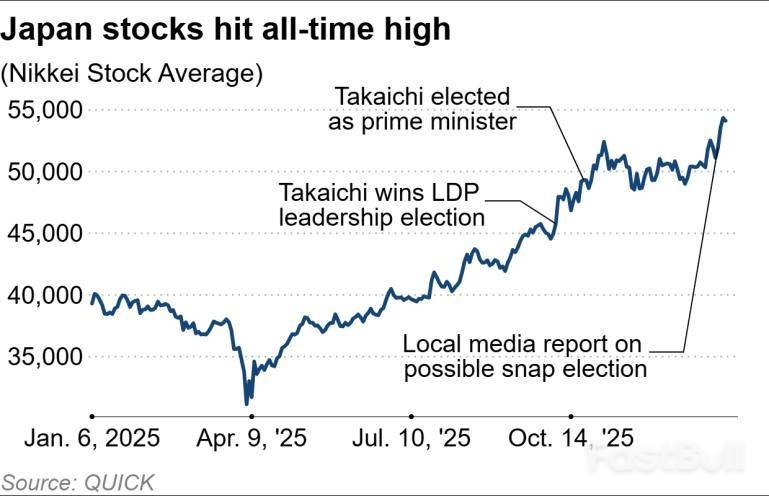
          Last week, the benchmark Nikkei Stock Average touched 54,341.23, while the broader Topix index climbed past 3,600. This explosive growth has largely been fueled by political developments and a positive outlook on corporate profits.

          Takaichi's Policies Fuel Market Optimism

          The primary catalyst for the market's ascent is Prime Minister Sanae Takaichi, whose rise to power in October and promise of a loose fiscal stance have ignited investor enthusiasm. Takaichi is now seeking to consolidate her power by dissolving the lower house of parliament on January 23, triggering a snap election.

          A victory would give her ruling Liberal Democratic Party (LDP) a stronger mandate, making it easier to pass budgets and implement economic policies. While the ruling coalition's lack of a majority in the upper chamber remains a challenge, the current environment points to further gains.

          "The path of least resistance for now is higher Nikkei, weaker yen and JGBs on a classic backdrop of the Takaichi trade," said Masahiko Loo, senior fixed income strategist at State Street Investment Management.

          This chart of the Nikkei Stock Average shows a powerful uptrend throughout 2025, culminating in an all-time high above 50,000 points. Key catalysts for the surge, including the election of Prime Minister Takaichi, are highlighted.

          How Japan's Valuations Stack Up Globally

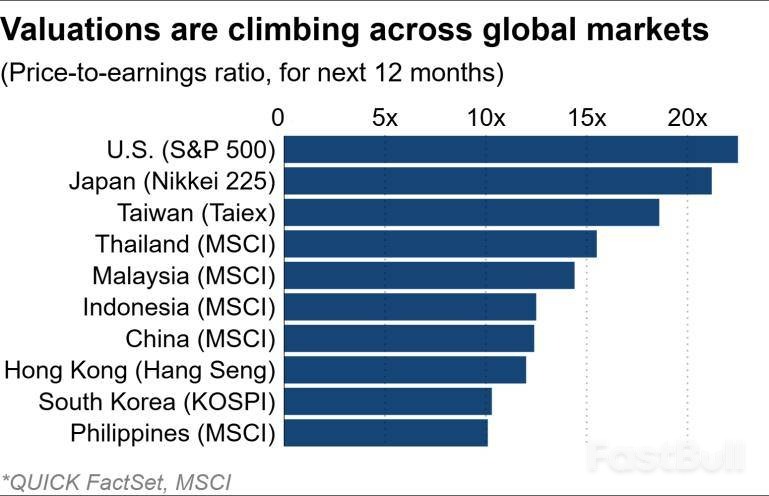
          In just over three months, the Nikkei average has climbed more than 9,000 points, a jump of about 20%. This has pushed the index's price-to-earnings (P/E) multiple toward the 20x range.

          In comparison, Taiwan's Taiex has a forward P/E ratio above 18x, while South Korea and Hong Kong remain relatively inexpensive at around 10x to 11x, despite their own market jumps in 2025.

          However, Japanese valuations are still below those in the United States, where an artificial intelligence boom has propelled the S&P 500's forward P/E ratio to around 22x.

          "Japan's valuation is a little high compared to past ranges, but when looking globally, it remains a reasonable place to diversify risk," said Hisashi Arakawa, head of Japan equities at Aberdeen Investments.

          This bar chart compares forward P/E ratios across major global stock markets. Japan and the U.S. show the highest valuations, both near or exceeding 20x, while other Asian markets like South Korea and Hong Kong offer comparatively lower multiples.

          Strong Earnings and Reforms Bolster Confidence

          A recovery in corporate earnings provides a significant tailwind for Japanese equities. The market consensus predicts double-digit profit growth for the fiscal year beginning in April.

          "Inflation has led to top-line growth for many companies," noted Ryota Sakagami, a strategist at Citigroup in Tokyo. He added that for non-manufacturers, inflation has also helped improve profit margins. "Overall, inflation has become a positive factor for corporate Japan and that will drive equities higher."

          Analysts predict that earnings in the next fiscal year will be supported by a robust non-manufacturing sector and a recovery among tariff-hit automakers and steelmakers.

          Furthermore, structural reforms, including revisions to the Corporate Governance Code and a greater focus on share buybacks and capital efficiency, are expected to continue attracting investor interest in the Tokyo market.

          The Big Question: Can High Valuations Last?

          Despite the optimism, some analysts urge caution. HSBC pointed out that Japan has "limited room for valuations to expand," arguing that return-on-equity (ROE) figures "have not shown meaningful improvements."

          While a P/E ratio helps measure if a stock is overvalued, ROE measures a company's profitability. High P/E multiples are common for companies with strong growth expectations, but low ROE can signal poor profit efficiency.

          Japanese companies have historically struggled to surpass the 10% mark in ROE. In contrast, U.S. companies have seen their ROE rise from 15% in 2015 to 21% recently, according to a report from UBS SuMi TRUST Wealth Management. During that same period, U.S. P/E multiples rose from the 15-17x range to around 22x.

          UBS suggested that "2026 could be a turning point for Japan" to adopt a market structure more like the U.S., where stocks benefit from both earnings and valuation expansion. "If Japan's ROE breaks above its current range, the market may anticipate a re-rating, attracting overseas investor inflows," the report added.

          Investor Strategy in a Pricey Asian Market

          Across Asia, equity valuations remain at comfortable levels, according to Lorraine Tan, director of Asia equity research at Morningstar. She noted that Asian equities "are trading around fair value" and are "not too extensive, not too overvalued," suggesting there is still upside potential. However, with some stocks in sectors like AI and materials becoming expensive, she advised investors to anticipate "a little bit more volatility and probably a bit more sector rotation."

          This environment is pushing investors to be more selective. Hong Kong-based asset manager Value Partners plans to maintain its emphasis on equity, seeing attractive potential in North Asia and "alpha opportunities from ASEAN." The firm noted that ASEAN markets lagged in 2025, but their "comparatively low valuations...warrant closer attention" in 2026.

          Citigroup's Sakagami argued that while South Korea and Taiwan have lower valuations than Japan, their markets are heavily concentrated in technology. "If the tech rally continues, South Korea and Taiwan's equity performance will likely be better," he said, "but in terms of global investors' asset allocation strategy, it will be difficult to only buy those markets." He concluded that there is still ample room for investors to buy Japanese equities as part of a diversified portfolio.

          To stay updated on all economic events of today, please check out our Economic calendar
          Risk Warnings and Disclaimers
          You understand and acknowledge that there is a high degree of risk involved in trading. Following any strategies or investment methods may lead to potential losses. The content on the site is provided by our contributors and analysts for information purposes only. You are solely responsible for determining whether any trading assets, securities, strategy, or any other product is suitable for investing based on your own investment objectives and financial situation.
          Add to Favorites
          Share

          Guyana's Oil Boom Faces Threat from Venezuelan Land Dispute

          Ukadike Micheal

          Political

          Commodity

          Remarks of Officials

          Economic

          Energy

          Guyana has rapidly become one of the Americas' most promising new oil producers, with major international companies tapping into vast offshore reserves. But this economic boom faces a significant geopolitical risk: a long-standing territorial claim from neighboring Venezuela, which holds the world's largest oil reserves.

          As the United States engages with Venezuela, the unresolved dispute over the resource-rich Essequibo region casts a shadow over Guyana's future as a stable petro-state.

          The High-Stakes Claim to Essequibo

          At the heart of the conflict is the Essequibo region, an area constituting roughly two-thirds of Guyana. Venezuela has long claimed this territory as its own. The region is rich in natural resources, including gold, diamonds, and, most importantly, the offshore oil fields that are fueling Guyana's growth.

          Major oil companies, including U.S. giants ExxonMobil and Chevron, alongside China's CNOOC, are actively developing operations in Guyana's waters. ExxonMobil's discovery of high-quality crude off the coast in 2015 triggered a wave of international investment, driving rapid economic development. This success also prompted the Venezuelan government to reassert its claim over Essequibo more forcefully.

          A Century of Disagreement

          The territorial fight between the two nations dates back more than a century. The key historical points include:

          • 1814: The region was ceded by the Dutch to Great Britain during the Napoleonic Wars.

          • 1831: Britain merged Essequibo with other territories to form the colony of British Guiana.

          • 1841: A newly independent Venezuela officially claimed the region.

          • 1899: An international tribunal formally awarded the territory to Britain, a ruling Venezuela has consistently rejected.

          Venezuela's government under Nicolás Maduro has accused Guyana and the U.S. of "legal colonialism" for developing the region. However, the International Court of Justice (ICJ) ruled in 2018 that the 1899 accord was legal and binding.

          Maduro Ramps Up Regional Pressure

          Despite the ICJ's ruling, the Maduro government escalated tensions. In 2023, it launched a large-scale military buildup along the Guyanese border, establishing bases and runways.

          That same year, Maduro held a referendum in which 95.9% of voters reportedly supported annexing Essequibo. Following the vote, he announced measures to create a Venezuelan state of "Guayana Esequiba" and grant operating licenses to the state-owned oil firm PDVSA within the territory. This prompted the ICJ to issue a binding order in May 2025 prohibiting Venezuela from holding elections in Essequibo.

          The U.S. Factor: A Deterrent to Conflict?

          The presence of American companies and strategic interests may be tempering the conflict. Allen Good, director of equity research at Morningstar, noted that any aggression from Venezuela would likely provoke a U.S. response, especially with ExxonMobil as the largest operator in Guyana. "Now, with the U.S.'s intent to control the country, any action by Venezuela becomes even more remote, removing a nuisance for Exxon and Guyana," Good said.

          In response, Guyana's President Irfaan Ali has reinforced his nation's commitment to its alliance with the United States. Foreign Secretary Robert Persaud stated on January 6th that the government maintains a "steadfast commitment to working with the United States - the region's strategic and important security ally."

          Why Venezuela Needs Essequibo's Oil

          While Venezuela sits on an estimated 300 billion barrels of oil, its energy sector is in crisis. Decades of underinvestment have left its infrastructure crumbling, requiring billions of dollars and over a decade to repair. Furthermore, its extra-heavy crude is expensive and carbon-intensive to extract and refine.

          For Caracas, gaining control over Essequibo's developing "low-carbon" oil fields offers a much faster path to generating new revenue and staving off economic collapse.

          An Unresolved Threat to Guyana's Future

          While U.S. intervention may have quieted Venezuela's claims for now, the dispute is far from resolved. Given the historical context and the immense resources at stake, it is unlikely that any Venezuelan government will abandon the claim to Essequibo.

          This unresolved conflict remains a direct threat to the oil-fueled expansion of South America's newest petro-state. The stability of Guyana's economic future will likely depend heavily on the extent of U.S. involvement in Venezuelan politics and its regional security role.

          To stay updated on all economic events of today, please check out our Economic calendar
          Risk Warnings and Disclaimers
          You understand and acknowledge that there is a high degree of risk involved in trading. Following any strategies or investment methods may lead to potential losses. The content on the site is provided by our contributors and analysts for information purposes only. You are solely responsible for determining whether any trading assets, securities, strategy, or any other product is suitable for investing based on your own investment objectives and financial situation.
          Add to Favorites
          Share

          Trump's Greenland Gambit: Tariffs Threaten NATO & Global Trade

          James Riley

          Remarks of Officials

          Economic

          Political

          Former President Donald Trump is once again shaking up the global order with an ambitious new goal: the acquisition of Greenland by 2026. His strategy hinges on the threat of new tariffs, a move that challenges longstanding alliances and risks significant economic turmoil.

          A New Geopolitical Push

          Even after his presidency, Trump's strategic objectives continue to make waves. His focus on acquiring Greenland follows a previous expression of interest in making Canada a U.S. state. This renewed geopolitical pressure coincides with his history of imposing heavy tariffs on China and challenging the autonomy of the U.S. Federal Reserve, notably through his attempt to dismiss its chair, Jerome Powell.

          As a key Supreme Court ruling on tariffs approaches in January, Trump is increasing pressure on nations that oppose his Greenland proposal. The new tariffs are designed to specifically target countries that refuse to cooperate, escalating international tensions.

          How Allies Are Responding

          Trump's tariff-driven diplomacy has triggered the most severe crisis in the Atlantic partnership in decades. On Truth Social, he warned that "World peace is in danger!" and argued that without U.S. control, China and Russia could seize Greenland.

          He has also criticized NATO allies' military deployments, insisting that only the U.S. can guarantee their protection and that tariffs will remain until his demands are met. This stance directly threatens the stability and cohesion of the NATO alliance.

          European Union leaders find themselves in a difficult position, having recently navigated a separate tariff dispute. They have condemned Trump's approach to acquiring land from Denmark and are signaling they may retaliate. Analysts now warn that Trump's actions could dismantle the post-World War II geopolitical framework established by the United States, with severe economic and political consequences for both the U.S. and the EU.

          Europe's Potential Counter-Measures

          In response to the U.S. pressure, the European Union is preparing a robust series of economic counter-actions. The potential retaliation includes:

          • A massive €93 billion tariff plan targeting the U.S.

          • The possible expulsion of American companies from European markets.

          • A heightened risk of market volatility, especially for cryptocurrencies, which could mirror the instability seen during previous U.S. tariff conflicts.

          Global leaders and economic analysts are closely monitoring the situation as Trump continues to challenge established alliances and economic norms. The unfolding events raise critical questions about the future of international cooperation and the resilience of the global financial system.

          To stay updated on all economic events of today, please check out our Economic calendar
          Risk Warnings and Disclaimers
          You understand and acknowledge that there is a high degree of risk involved in trading. Following any strategies or investment methods may lead to potential losses. The content on the site is provided by our contributors and analysts for information purposes only. You are solely responsible for determining whether any trading assets, securities, strategy, or any other product is suitable for investing based on your own investment objectives and financial situation.
          Add to Favorites
          Share

          Modi's Economic Crossroads: Growth vs. Debt in India

          Ukadike Micheal

          Data Interpretation

          Economic

          Political

          India's economy is posting world-beating numbers, with official data pointing to a 7.4% growth rate for the financial year ending in March. But behind the impressive headline figure, a critical decision looms for Prime Minister Narendra Modi that could determine the country's long-term trajectory.

          For over a decade, Modi's economic strategy has rested on two key pillars: fiscal restraint and aggressive infrastructure spending. Now, these two goals are in direct conflict, forcing a choice that can no longer be avoided.

          A Paradox of High Growth and Low Confidence

          On the surface, India's economy appears to be in a "Goldilocks phase," with low inflation, a manageable trade deficit, and healthy private-sector balance sheets. Yet, as commentator T.N. Ninan notes, this stability hasn't translated into a faster growth rate than a decade ago, when the economy faced far more challenges.

          Global investors seem to share this cautious sentiment. Ruchir Sharma highlighted in the Financial Times that despite its stellar growth, India is "not getting any love" in the form of expected capital inflows.

          The disconnect between the strong data and the uncertain outlook stems from a persistent, underlying weakness: chronically low private investment.

          How Public Spending Became India's Engine

          Since taking office in 2014, Prime Minister Modi has overseen a fundamental shift in India's growth model. The burden of investment has moved from private companies to the public sector. As a result, the share of federal government capital spending relative to GDP has doubled.

          This surge in public expenditure has come at a steep price. The defining number of the Modi era is not the 7.4% GDP growth but the 81% debt-to-GDP ratio—a sharp increase from the 60s when the current government came to power.

          The Vicious Cycle Crowding Out Private Capital

          The explosion in public debt has created a self-reinforcing downward spiral for the private sector. As the state consumes a vast portion of available credit, capital becomes scarce, pushing interest rates higher and discouraging entrepreneurs from borrowing and investing.

          The government's strategy was based on the hope that massive infrastructure projects, like new ports and highways, would "crowd in" private capital. This bet has not paid off. Instead of stimulating private enterprise, the approach has created a growth model dangerously dependent on government spending—and New Delhi is running out of fiscal runway.

          The Budget's High-Stakes Choice

          In the upcoming annual budget, the government must confront this reality. It faces a stark choice:

          • Continue the capital expenditure push, risking its fiscal consolidation targets.

          • Trim the construction pipeline, accepting slower medium-term growth in key sectors like steel and cement that rely heavily on public contracts.

          While the economic logic may point toward fiscal prudence, the political calculation is more complex. The marginal benefit of a lower risk premium on Indian debt is less visible than a new expressway. Modi has built his political brand around tangible projects like modern trains and new highways. In contrast, fiscal consolidation offers no ribbon-cutting ceremonies.

          Why Fiscal Discipline Is the Only Path Forward

          Despite the political pressures, the government has pledged to lower the debt-to-GDP ratio to 50% by 2031. Achieving this ambitious goal will be difficult even with sustained high growth and will almost certainly require cuts to capital expenditure.

          The evidence suggests that state-led infrastructure spending has failed to ignite private-sector investment or pay for itself through additional growth. To unlock India's economic potential, the government must tighten its belt. By reducing its own borrowing, the state can free up credit, lower borrowing costs, and create the conditions for private investment to finally flow.

          To secure India's future, the government must stop borrowing against it.

          To stay updated on all economic events of today, please check out our Economic calendar
          Risk Warnings and Disclaimers
          You understand and acknowledge that there is a high degree of risk involved in trading. Following any strategies or investment methods may lead to potential losses. The content on the site is provided by our contributors and analysts for information purposes only. You are solely responsible for determining whether any trading assets, securities, strategy, or any other product is suitable for investing based on your own investment objectives and financial situation.
          Add to Favorites
          Share

          Saudi Arabia's Sudan Gambit: A $4B Fighter Jet Deal

          James Riley

          Middle East Situation

          Political

          The brutal civil war in Sudan has become the frontline for a fierce regional rivalry between Saudi Arabia and the United Arab Emirates, with both Gulf powers determined to see their chosen faction win. Now, a potential multi-billion-dollar fighter jet deal involving Saudi Arabia and Pakistan could decisively tip the scales.

          This development comes as Saudi Arabia and Pakistan deepen their security ties, with some reports even suggesting a Pakistani nuclear umbrella over the Kingdom. The two nations are also reportedly bringing Turkey into a new security alliance, creating a strategic bloc aimed at deterring both Iran and Israel.

          Against this backdrop, Riyadh is considering a plan to convert $2 billion in loans to Pakistan into a major military procurement. The total value of the deal, including aircraft, equipment, and support, is estimated to be around $4 billion.

          The Deal: Arming Sudan with Pakistani Jets

          The centerpiece of this potential agreement is the purchase of Chinese-licensed JF-17 Thunder fourth-generation warplanes from Pakistan.

          However, these advanced jets are not intended for the Royal Saudi Air Force. Instead, Saudi Arabia plans to acquire the aircraft from Pakistan and transfer them to the Sudanese military government led by Abdel Fattah al-Burhan. Riyadh would finance the sale as part of its broader mission to support the internationally recognized government in Khartoum.

          Sudan: A Chessboard for Gulf Powers

          The Sudanese civil war has evolved into a clear proxy conflict between Saudi Arabia and the UAE. Riyadh backs the official government, while the UAE supports the rival Rapid Support Forces (RSF), a paramilitary group led by the warlord Mohammed Hamdan "Hemedti" Dagalo.

          For Saudi Arabia, Sudan is a strategic linchpin essential to its regional interests. The Kingdom is unwilling to let the Sudanese government collapse, which explains its willingness to finance a complex international arms deal to bolster its ally.

          Pakistan's Growing Role as an Arms Exporter

          This potential arrangement aligns with Pakistan's own strategic goals. Pakistan was already in separate talks with Sudan for a $1.5 billion defense package that could include JF-17s, drones, light attack aircraft, and advanced air defense systems to counter the RSF.

          Following a brief conflict with India where its air force performed well using Chinese-made aircraft and missiles, Pakistan has been aggressively marketing its defense products on the global stage. By promoting its Chinese-licensed systems, Pakistan aims to undercut Western arms manufacturers and elevate its own defense industrial base.

          As of now, no final contracts have been signed. While negotiations between Saudi, Pakistani, and Sudanese officials are reportedly underway, the number of JF-17s and the exact delivery logistics—whether they would be routed through Saudi Arabia or sent directly from Pakistan to Sudan—remain unconfirmed.

          Washington's Unease Over a Key Ally

          The proposed deal has caused concern in Washington. Saudi Arabia is one of the largest customers for the U.S. defense industry, accounting for roughly 24% of all American arms exports over the last five years. The Saudi military is heavily equipped with U.S.-made systems, which are not interoperable with Chinese platforms like the JF-17.

          Initial fears in Washington were that Riyadh was using Pakistan as an intermediary to diversify its own arsenal with cheaper, Chinese-licensed systems, a move that could significantly damage the U.S. arms industry.

          For now, that does not appear to be the case. The Saudis seem to be acting as strategic financiers to protect their interests in Sudan, not as direct challengers to U.S. arms suppliers. Riyadh has consistently shown a willingness to pay a premium for cutting-edge American military technology.

          A Sign of Future Shifts?

          While this deal is focused on Sudan, it raises long-term questions about Saudi Arabia's procurement strategy. The high cost of American weapons, combined with Riyadh's growing strategic distance from Washington amid the war in Gaza and instability surrounding Iran, could lead Saudi leaders to reconsider their options.

          Pakistan has already demonstrated that cheaper, Chinese-licensed systems can be effective in modern air combat. The question remains: how long before Saudi Arabia decides that diversifying its own fleet is a strategic necessity?

          Risk Warnings and Disclaimers
          You understand and acknowledge that there is a high degree of risk involved in trading. Following any strategies or investment methods may lead to potential losses. The content on the site is provided by our contributors and analysts for information purposes only. You are solely responsible for determining whether any trading assets, securities, strategy, or any other product is suitable for investing based on your own investment objectives and financial situation.
          Add to Favorites
          Share

          Canada Lowers Tariffs On Chinese EVs, Bringing Global Price Competition Closer Than Ever

          Gerik

          Economic

          A Sharp Policy Reversal In North American Trade

          Canada and China have announced a major recalibration of their trade relationship following high-level talks in Beijing, a move that carries significant implications for global electric vehicle markets. At the center of the agreement is Canada’s decision to reduce tariffs on Chinese-made electric vehicles from 100% to approximately 6.1%, while maintaining import quotas. This represents a dramatic departure from the protectionist stance adopted at the end of 2024, when Ottawa mirrored US policy by effectively closing its market to Chinese EVs.
          The earlier tariff regime had rendered Chinese electric vehicles commercially unviable in Canada, a policy aimed at shielding domestic manufacturers. China’s response was swift and severe, imposing an 84% tariff on Canadian canola, a move that disrupted a multi-billion-dollar export sector. The new agreement reverses much of that escalation and resets bilateral trade conditions.

          Import Quotas And Market Scale

          Under the revised framework, Canada will allow up to 49,000 Chinese electric vehicles to enter its market each year at the reduced tariff rate. By the fifth year of the agreement, this quota will rise to 70,000 vehicles. Prime Minister Mark Carney noted that this volume is broadly equivalent to China’s EV export levels to Canada in 2023, the final year before tariffs were imposed.
          Despite the scale of the tariff cut, the absolute market impact remains constrained by quotas. Canadian consumers purchased nearly 1.9 million vehicles last year, meaning Chinese EVs will continue to account for only a small fraction of total sales. The arrangement therefore reflects a controlled reopening rather than full market liberalization, linking access to regulatory limits rather than unfettered competition.

          Agricultural Relief And Diplomatic Reset

          In exchange, China will lower tariffs on Canadian canola to around 15% from March 1, significantly improving market access for Canadian farmers. This adjustment eases pressure on an export industry that had been effectively blocked following China’s retaliatory measures. The timing and scope of the tariff reduction align with broader efforts to repair strained relations, marking the first visit by a Canadian prime minister to Beijing in nearly a decade.
          The connection between agricultural relief and automotive concessions is transactional in structure. Improved access for Canadian farm products coincides with eased entry for Chinese industrial exports, illustrating how sector-specific trade barriers are being rebalanced rather than removed outright.

          Industrial Concerns And Domestic Opposition

          Not all stakeholders have welcomed the agreement. Canadian auto workers and industry observers have expressed concern that an influx of competitively priced Chinese EVs could intensify pressure in an already challenging market. Ontario Premier Doug Ford publicly opposed lifting the tariffs ahead of the final negotiations, underscoring domestic political resistance tied to employment and industrial policy.
          These concerns reflect an association between increased foreign competition and perceived risks to domestic manufacturing, even as overall import volumes remain capped. The debate highlights tensions between consumer affordability, industrial protection, and long-term competitiveness.

          Investment Expectations And Climate Strategy

          Prime Minister Carney has argued that the agreement could encourage significant Chinese investment in Canada’s automotive sector, potentially generating jobs while supporting national climate objectives. He emphasized that building a competitive domestic EV industry requires learning from innovative partners, accessing established supply chains, and expanding domestic demand.
          This perspective frames tariff reduction as a strategic lever rather than a concession, linking foreign participation with technology transfer and market development. Whether such investment materializes will depend on regulatory conditions and corporate strategy rather than tariff levels alone.

          Implications For The United States And Global Markets

          The agreement is likely to disappoint the administration of US President Donald Trump, given Washington’s continued hardline stance on Chinese EV imports. At the same time, US soybean farmers affected by retaliatory tariffs may view Canada’s approach as a potential template for easing trade tensions through sectoral compromise.
          More broadly, Canada’s decision brings the prospect of widespread availability of low-cost Chinese electric vehicles closer to reality. While quotas limit immediate impact, the symbolic shift signals that barriers surrounding Chinese EV exports are becoming more permeable. As similar adjustments emerge beyond Europe and into North America, the global EV market appears to be moving toward a phase where price competition from Chinese manufacturers is no longer a distant possibility but an increasingly tangible presence.
          To stay updated on all economic events of today, please check out our Economic calendar
          Risk Warnings and Disclaimers
          You understand and acknowledge that there is a high degree of risk involved in trading. Following any strategies or investment methods may lead to potential losses. The content on the site is provided by our contributors and analysts for information purposes only. You are solely responsible for determining whether any trading assets, securities, strategy, or any other product is suitable for investing based on your own investment objectives and financial situation.
          Add to Favorites
          Share
          FastBull
          Copyright © 2026 FastBull Ltd

          728 RM B 7/F GEE LOK IND BLDG NO 34 HUNG TO RD KWUN TONG KLN HONG KONG

          TelegramInstagramTwitterfacebooklinkedin
          App Store Google Play Google Play
          Products
          Charts

          Chats

          Q&A with Experts
          Screeners
          Economic Calendar
          Data
          Tools
          Membership
          Features
          Function
          Markets
          Copy Trading
          Latest Signals
          Contests
          News
          Analysis
          24/7
          Columns
          Education
          Company
          Careers
          About Us
          Contact Us
          Advertising
          Help Center
          Feedback
          User Agreement
          Privacy Policy
          Personal Information Protection Statement
          Business

          White Label

          Data API

          Web Plug-ins

          Poster Maker

          Affiliate Program

          Risk Disclosure

          The risk of loss in trading financial instruments such as stocks, FX, commodities, futures, bonds, ETFs and crypto can be substantial. You may sustain a total loss of the funds that you deposit with your broker. Therefore, you should carefully consider whether such trading is suitable for you in light of your circumstances and financial resources.

          No decision to invest should be made without thoroughly conducting due diligence by yourself or consulting with your financial advisors. Our web content might not suit you since we don't know your financial conditions and investment needs. Our financial information might have latency or contain inaccuracy, so you should be fully responsible for any of your trading and investment decisions. The company will not be responsible for your capital loss.

          Without getting permission from the website, you are not allowed to copy the website's graphics, texts, or trademarks. Intellectual property rights in the content or data incorporated into this website belong to its providers and exchange merchants.

          Not Logged In

          Log in to access more features

          FastBull Membership

          Not yet

          Purchase

          Become a signal provider
          Help Center
          Customer Service
          Dark Mode
          Price Up/Down Colors

          Log In

          Sign Up

          Position
          Layout
          Fullscreen
          Default to Chart
          The chart page opens by default when you visit fastbull.com