Markets
News
Analysis
User
24/7
Economic Calendar
Education
Data
- Names
- Latest
- Prev



Signal Accounts for Members
All Signal Accounts
All Contests


U.S. NY Fed Manufacturing Prices Received Index (Jan)A:--
F: --
P: --
U.S. NY Fed Manufacturing New Orders Index (Jan)A:--
F: --
P: --
U.S. NY Fed Manufacturing Employment Index (Jan)A:--
F: --
P: --
U.S. Export Price Index YoY (Nov)A:--
F: --
P: --
U.S. NY Fed Manufacturing Index (Jan)A:--
F: --
U.S. Initial Jobless Claims 4-Week Avg. (SA)A:--
F: --
U.S. Export Price Index MoM (Nov)A:--
F: --
P: --
Canada Manufacturing Unfilled Orders MoM (Nov)A:--
F: --
P: --
Canada Manufacturing New Orders MoM (Nov)A:--
F: --
P: --
U.S. Philadelphia Fed Manufacturing Employment Index (Jan)A:--
F: --
P: --
Canada Wholesale Sales YoY (Nov)A:--
F: --
P: --
Canada Wholesale Inventory MoM (Nov)A:--
F: --
P: --
U.S. Philadelphia Fed Business Activity Index (SA) (Jan)A:--
F: --
P: --
U.S. EIA Weekly Natural Gas Stocks ChangeA:--
F: --
P: --
Richmond Federal Reserve President Barkin delivered a speech.
U.S. Weekly Treasuries Held by Foreign Central BanksA:--
F: --
P: --
Germany CPI Final MoM (Dec)A:--
F: --
P: --
Germany CPI Final YoY (Dec)A:--
F: --
P: --
Germany HICP Final MoM (Dec)A:--
F: --
P: --
Germany HICP Final YoY (Dec)A:--
F: --
P: --
Brazil PPI MoM (Nov)A:--
F: --
P: --
Canada New Housing Starts (Dec)A:--
F: --
U.S. Capacity Utilization MoM (SA) (Dec)A:--
F: --
U.S. Industrial Output YoY (Dec)A:--
F: --
P: --
U.S. Manufacturing Capacity Utilization (Dec)A:--
F: --
P: --
U.S. Manufacturing Output MoM (SA) (Dec)A:--
F: --
U.S. Industrial Output MoM (SA) (Dec)A:--
F: --
U.S. NAHB Housing Market Index (Jan)A:--
F: --
P: --
Russia CPI YoY (Dec)A:--
F: --
P: --
U.S. Weekly Total Rig CountA:--
F: --
P: --
U.S. Weekly Total Oil Rig CountA:--
F: --
P: --
Japan Core Machinery Orders YoY (Nov)--
F: --
P: --
Japan Core Machinery Orders MoM (Nov)--
F: --
P: --
U.K. Rightmove House Price Index YoY (Jan)--
F: --
P: --
China, Mainland GDP YoY (YTD) (Q4)--
F: --
P: --
China, Mainland Industrial Output YoY (YTD) (Dec)--
F: --
P: --
Japan Industrial Output Final MoM (Nov)--
F: --
P: --
Japan Industrial Output Final YoY (Nov)--
F: --
P: --
Euro Zone Core HICP Final MoM (Dec)--
F: --
P: --
Euro Zone HICP Final MoM (Dec)--
F: --
P: --
Euro Zone HICP Final YoY (Dec)--
F: --
P: --
Euro Zone HICP MoM (Excl. Food & Energy) (Dec)--
F: --
P: --
Euro Zone Core CPI Final YoY (Dec)--
F: --
P: --
Euro Zone Core HICP Final YoY (Dec)--
F: --
P: --
Euro Zone CPI YoY (Excl. Tobacco) (Dec)--
F: --
P: --
Euro Zone Core CPI Final MoM (Dec)--
F: --
P: --
Canada National Economic Confidence Index--
F: --
P: --
Canada CPI MoM (SA) (Dec)--
F: --
P: --
Canada Core CPI MoM (SA) (Dec)--
F: --
P: --
Canada CPI YoY (SA) (Dec)--
F: --
P: --
Canada Trimmed CPI YoY (SA) (Dec)--
F: --
P: --
Canada CPI YoY (Dec)--
F: --
P: --
Canada CPI MoM (Dec)--
F: --
P: --
Canada Core CPI YoY (Dec)--
F: --
P: --
Canada Core CPI MoM (Dec)--
F: --
P: --
South Korea PPI MoM (Dec)--
F: --
P: --
China, Mainland 1-Year Loan Prime Rate (LPR)--
F: --
P: --
China, Mainland 5-Year Loan Prime Rate--
F: --
P: --
Germany PPI YoY (Dec)--
F: --
P: --
Germany PPI MoM (Dec)--
F: --
P: --


No matching data
Latest Views
Latest Views
Trending Topics
Top Columnists
Latest Update
White Label
Data API
Web Plug-ins
Affiliate Program
View All

No data
Powell’s term as head of the central bank ends on May 15. The search process is being led by Treasury Secretary Scott Bessent, who Trump has said removed himself from consideration for the role.
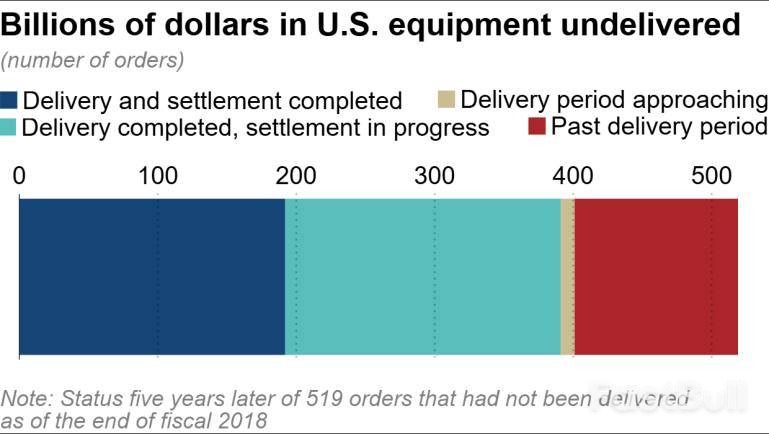
An investigation by Japan's Board of Audit has revealed that 118 orders for U.S. military equipment, valued at 1.14 trillion yen ($7.21 billion), have not been delivered at least five years after the contracts were signed. These delays are forcing Japan's Self-Defense Forces (SDF) to continue using older equipment, prompting calls for the Defense Ministry to address the issue with Washington.
In response to the audit, the Defense Ministry acknowledged the findings but noted that "the 118 cases... include equipment that Japan added to its orders later, and not all of them are delayed deliveries." The ministry stated its commitment to resolving the procurement issues on a case-by-case basis.
Japan acquires high-performance weapons and defense systems through Washington's Foreign Military Sales (FMS) program. This framework allows allied nations to purchase equipment directly from the U.S. government.
Key features of the FMS program include:
• Advance Payment: Purchasing countries must pay for the equipment upfront.
• Estimated Terms: Contracts are signed with estimated prices and delivery dates, which are not final.
• Final Settlement: A final financial settlement occurs only after the equipment is delivered, with any surplus funds returned by the U.S.
At the request of parliament, the Board of Audit reviewed the status of FMS contracts for fiscal years 2018-2023. The investigation found that of the 519 contracts that had already missed their delivery deadlines by the end of fiscal 2018, a staggering 118 remained unfulfilled by the end of fiscal 2023.

The primary causes for these delays appear to be administrative bottlenecks within the U.S. government when finalizing contracts with manufacturers, as well as subsequent changes to production schedules.
These delays have tangible consequences for Japan's military readiness. For example, Japan's Air Self-Defense Force (ASDF) signed four contracts worth 139.8 billion yen for maintenance equipment for its advanced E-2D early warning aircraft at Misawa Air Base.
Originally scheduled for delivery in fiscal years 2019-20, the shipment was postponed to fiscal 2024 or later due to issues at the manufacturing company. As a result, the ASDF unit has been forced to rely on equipment designed for its older E-2C aircraft.
Deliveries can also be postponed if the U.S. determines that shipping items to Japan would disrupt its own military operations. Concerns have also been raised by Japanese opposition parties that Russia's invasion of Ukraine could further strain supply chains for equipment like air defense missiles.
The long-term nature of FMS contracts introduces significant currency risk. The audit revealed that the recent depreciation of the yen has inflated Japan's financial burden. For fiscal years 2023-2025, the total payment amount is now estimated to be 300 billion yen higher than when the contracts were initially signed.
Despite these challenges, Japan sees the FMS program as essential for strengthening its defense capabilities, as much of the state-of-the-art equipment is difficult to produce domestically. As Japan increases its defense spending, its reliance on FMS procurement has grown, with related costs in fiscal 2023 hitting 1.38 trillion yen—more than triple the amount in fiscal 2018.

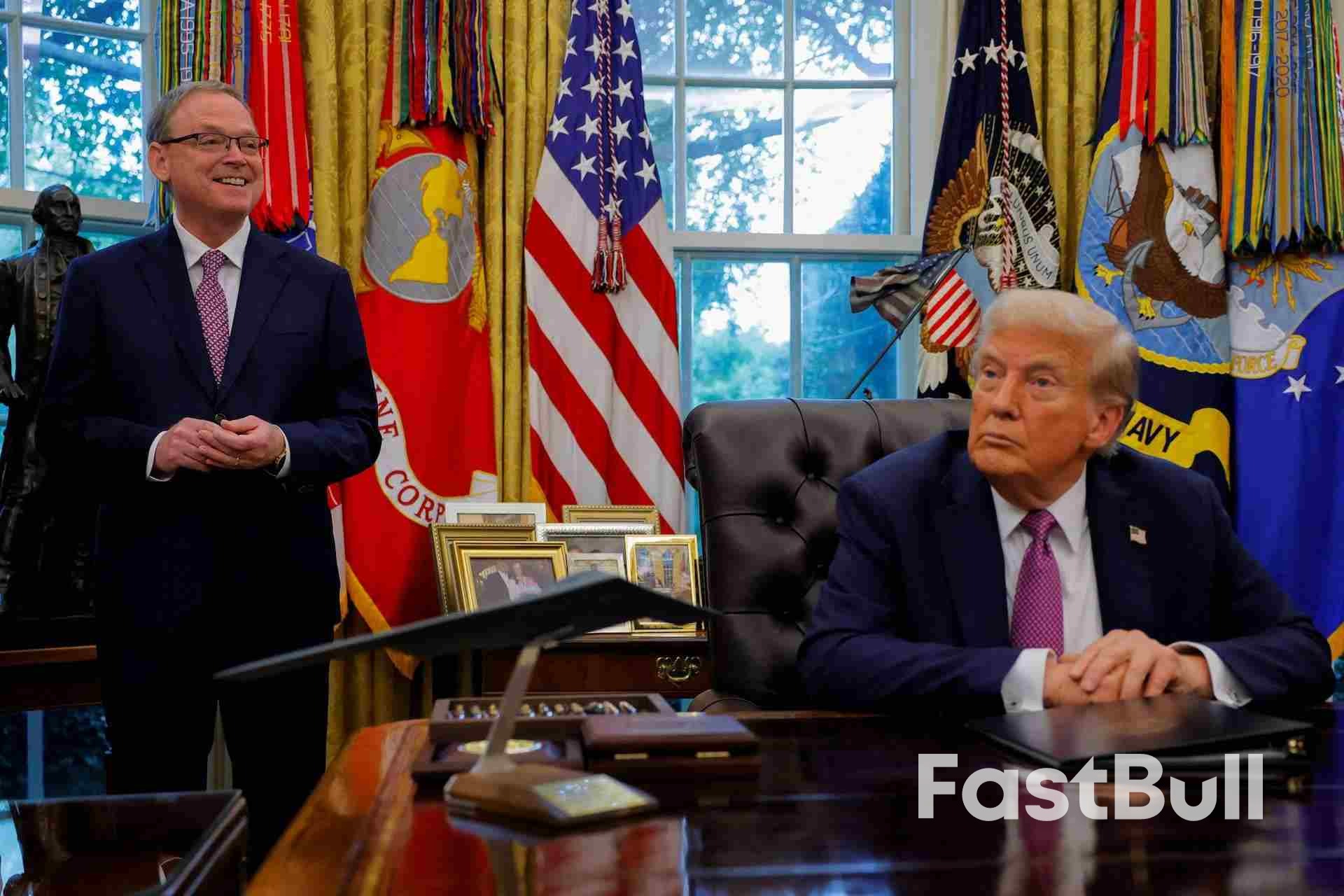
WASHINGTON, Jan 16 (Reuters) - U.S. President Donald Trump on Friday praised economic adviser Kevin Hassett at a White House event and said he may want to keep him in his current role, as the president considers his nominee for the next Federal Reserve chair.
"I see Kevin's in the audience, and I just want to thank you. You were fantastic on television today. I actually want to keep you where you are, if you want to know the truth," Trump said.
"Kevin Hassett is so good. I'm saying, 'Wait a minute, if I move him -- these Fed guys, certainly the one we have now, they don't talk much.' I would lose you. It's a serious concern to me," Trump said at the event.
Hassett earlier on Friday addressed the investigation opened by the Justice Department into Fed Chair Jerome Powell over cost overruns for a $2.5 billion project to renovate two historical buildings at the Fed's headquarters in Washington.
Powell has denied wrongdoing, and several Republican U.S. senators have joined foreign economic officials, investors and former U.S. government officials from both political parties in criticizing the probe as politicizing sensitive policymaking.
"Jay is a good man - I expect that there's nothing to see here, that the cost overruns are related to things like asbestos, as he says. But I sure wish they had been more transparent," Hassett said in a Friday interview on Fox Business Network's "Mornings with Maria."
Trump said in a Reuters interview on Wednesday that he has no plan to fire Powell from the Fed.
In the interview, Trump suggested he was inclined to nominate either Hassett or former Fed Governor Kevin Warsh.
"The two Kevins are very good," Trump told Reuters. "You have some other good people too, but I'll be announcing something over the next couple of weeks."
Trump reiterated his praise for Hassett at Friday's White House event.
"You've been incredible. We don't want to lose him, Susie, but we'll see how it all works out," Trump said, referencing his White House chief of staff Susie Wiles.
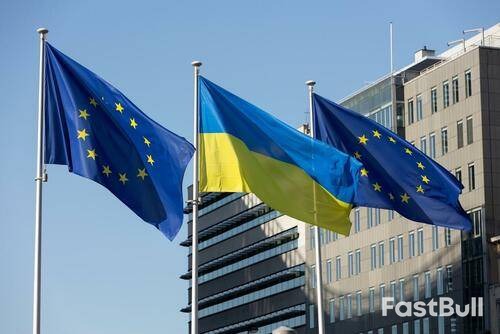
The European Union is exploring a radical overhaul of its decades-old membership process, considering a new "two-tier" system to potentially fast-track Ukraine's entry into the bloc. This move comes as Brussels seeks creative solutions to integrate Kyiv, possibly as a key component of a future peace deal to end the war with Russia.
The proposed model would effectively tear up the accession system used since the Cold War. Instead of a long, merit-based journey to full membership, Ukraine could be offered a "limited" or "reversed" membership first. Under this scenario, Kyiv would join the EU politically, with the full rights and obligations of a member state to be "earned" over a transitional period.

Discussions have intensified after a 20-point peace plan, negotiated between the US, Ukraine, and the EU, reportedly included a target for Ukrainian EU membership by 2027. This has put pressure on officials to find a workable path forward, even if traditional standards are not yet met.
Proponents of the change argue that the current geopolitical landscape demands a new approach. One EU official noted, "We have to recognize that we are in a very different reality than when the (accession) rules were first drawn up."
An EU diplomat elaborated on this view, framing it as a matter of continental security. "It is Europe's interest to have Ukraine in the E.U., because of our own security," the diplomat said. "It is why we need to look for creative solutions."
Despite the push for creative solutions, the path to fast-tracking Ukraine's membership is lined with significant obstacles.
The Unanimity Requirement
Any new member requires the formal, unanimous approval of all 27 existing EU nations, including sign-off from their national parliaments. Several member states could prove difficult to persuade.
• Political Resistance: Countries seen as more "Russia-friendly," such as Hungary and Slovakia, which are heavily reliant on Russian energy, may oppose an accelerated timeline.
• Merit-Based Concerns: Many EU governments believe any fixed date is unrealistic. They argue that accession must remain a merit-based process, contingent on a candidate country aligning its laws with EU standards.
• Precedent and Economic Strain: A "staged access" plan for Ukraine could open the floodgates for other hopefuls who are not economically ready, potentially creating a significant drain on the rest of the Union.
Even Poland, a key ally of Ukraine, could pose an obstacle. The two neighbors have recently been involved in tense diplomatic disputes, highlighting that even regional partners may not automatically support a special exception.
While membership rules are debated, the EU is already deepening its integration with Ukraine's defense sector. As Washington's support appears to have diminished, Brussels is stepping up.
Last November, the European Parliament approved a 1.5 billion euro ($1.7 billion) program aimed at strengthening ties between Europe's and Ukraine's military-industrial bases, signaling a continued and robust commitment to Kyiv's security, independent of the complex membership question.
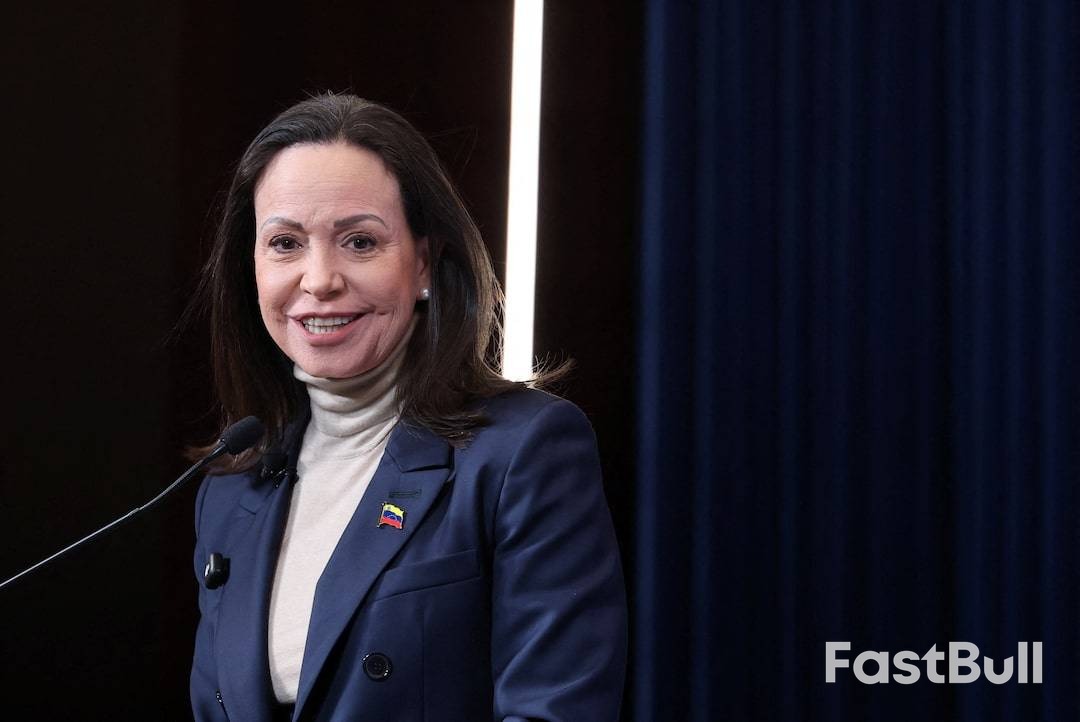
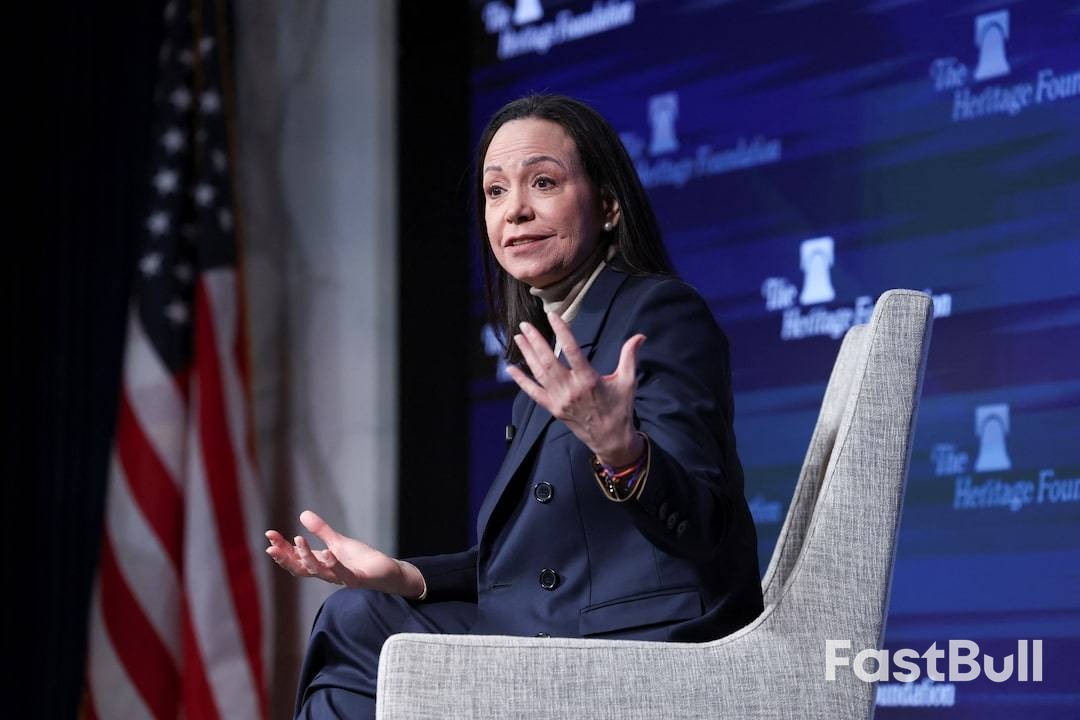
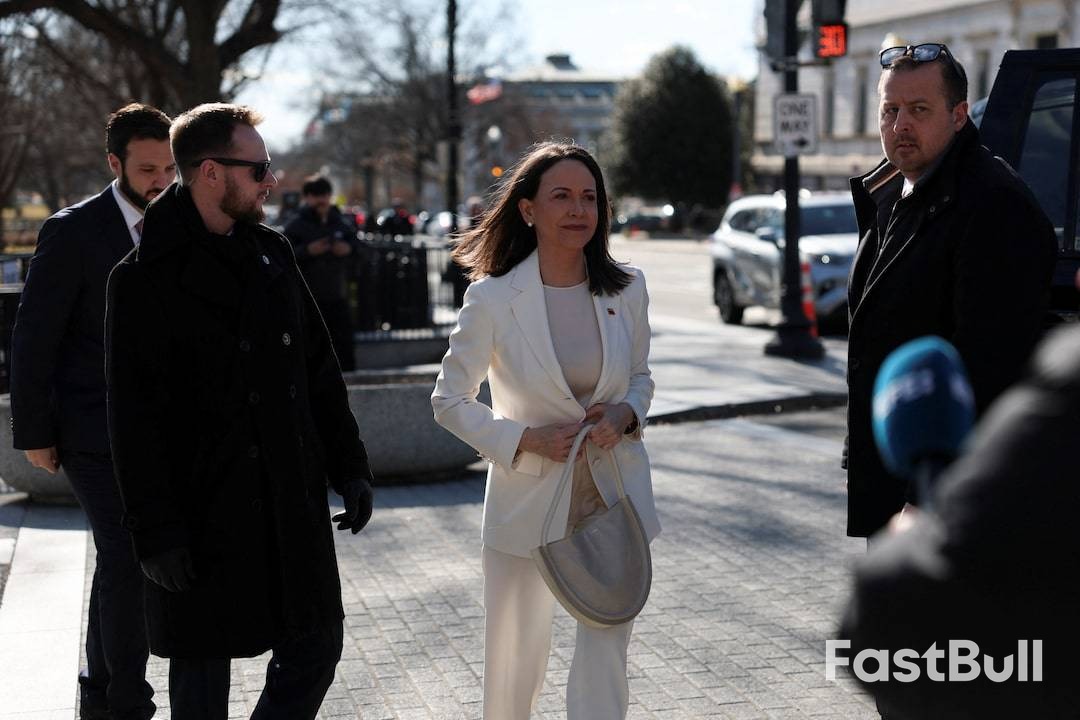
Venezuelan opposition leader Maria Corina Machado is in Washington pressing her case for a democratic transition, but she faces a Trump administration that appears more focused on oil policy than free elections in the post-Maduro era.
Following a high-profile meeting with President Donald Trump, Machado voiced confidence that Venezuela would see an "orderly transition" away from what she described as a "criminal regime." However, the U.S. government has so far backed an interim government led by former Maduro loyalists, signaling a pragmatic approach to the nation's future.

Speaking at a press conference at the Heritage Foundation, a conservative think tank with close ties to the administration, Machado insisted that a transition to free elections would eventually unfold. She argued that the "criminal structure" that has dominated Venezuela for years would dismantle itself, though she did not specify how this would occur.
"I am profoundly, profoundly confident that we will have an orderly transition," she stated, emphasizing that the process would be delicate and complex. Machado also downplayed any personal tension with interim President Delcy Rodriguez, framing the issue as a systemic one.

Since a January 3 raid that removed Nicolas Maduro from power, the Trump administration has made its priorities clear. Gaining access to Venezuela's vast oil reserves and maintaining order have taken precedence over the immediate restoration of democracy.
Trump has thrown his support behind the interim government led by Rodriguez, which is composed of former Maduro loyalists. This move is seen as the administration's best bet for short-term stability in the OPEC nation.
Underscoring this engagement, CIA Director John Ratcliffe flew to Caracas for a meeting with Rodriguez, coinciding with Machado's visit to the White House. This represents the highest-level known U.S. visit since Maduro's ouster and signals a direct line of communication between Washington and the current interim leadership.

During her Oval Office meeting, Machado made a strategic gesture by presenting her Nobel Peace Prize medal to President Trump, claiming he deserved it for his commitment to freedom for the Venezuelan people. Trump, who had openly sought the prize before Machado received it last month, praised the move on his Truth Social platform as a "wonderful gesture of mutual respect."
The White House later posted a photo of the two with Trump holding a framed display of the medal. This gesture comes after the Norwegian Nobel Institute clarified that the prize cannot be transferred, shared, or revoked.
Despite the warm reception, the White House has not changed its official stance. Trump had previously dismissed the idea of installing Machado to replace Maduro, who was taken to New York to face "narco-trafficking" charges. White House press secretary Karoline Leavitt affirmed Trump's "realistic" assessment that Machado currently lacks the support needed to lead Venezuela in the short term, even as the president looked forward to their meeting.
President Donald Trump's focus on spheres of influence is radically reshaping the strategic outlook for critical minerals in 2026. This aggressive foreign policy, highlighted by actions in Venezuela and rhetoric on Greenland, risks using genuine supply chain security concerns as a pretext for geopolitical maneuvering.
On January 14, Trump announced he would personally negotiate agreements to secure mineral supplies. While ensuring reliable supply chains is a valid priority, the administration's methods raise concerns. A balanced strategy of international partnership and targeted market interventions can build resilience, but recent actions suggest a disregard for sovereignty and international law that could destabilize markets.
The Trump administration's interest in acquiring Greenland is a prime example of how resource security is becoming entangled with foreign policy. While the White House has cited multiple security reasons, access to Greenland's mineral wealth is a key motivating factor, as prioritized in the December National Security Strategy (NSS).
Greenland holds significant deposits of rare earths and other critical minerals essential for US security projects like the F-35 fighter jet. Washington reportedly intervened last year to block the sale of a large project, rich in heavy rare earths and Gallium, to buyers with links to China.
However, the reality on the ground presents a different picture:
• Commercial Viability: Greenland's mining sector is years away from operating at a commercial scale.
• Operational Hurdles: The region is geologically challenging and difficult to develop.
• Existing Access: US companies can already access these resources without territorial control.
By challenging the island's sovereignty, the administration is creating political friction and driving a wedge between the US and its G7 and EU partners. This is happening at the exact moment their cooperation is needed for other critical mineral initiatives.
President Trump’s January 14 proclamation also floated the idea of using price floors and other trade restrictions for critical minerals. However, such measures are difficult to implement without the participation of allies in Europe and Asia. Current political tensions are setting back the diplomatic efforts required to build these alliances.
Other unilateral actions are also causing friction. In 2025, Trump signed Executive Order 14285 to fast-track domestic mining and assert US leadership in international waters. This move appears to bypass established frameworks like the International Seabed Authority (ISA) and the UN Convention on the Laws of the Sea (UNCLOS), which the US industry sees as too slow in creating regulations for extraction.
In response, traditional US partners are hedging against Washington's unilateralism. Non-US members of the G7 are expected to accelerate their Action Plan in 2026, focusing on developing standards-based markets, mobilizing capital, and investing in their own partnerships.
The relationship between the US and China is set to remain tense in 2026. However, an agreement reached by Presidents Trump and Xi Jinping in October 2025 may prevent a return to the severe export controls and tariffs that defined earlier disputes. China's past restrictions on rare earths served as a wake-up call for the US about its supply chain vulnerabilities.
For now, both nations seem unwilling to impose new, sweeping export bans on the most sensitive critical minerals, acknowledging the mutual costs and the difficulty of rerouting complex supply chains quickly.
Despite this, geopolitical tensions will continue to foster exclusionary practices in mineral markets. Governments are pressuring end-users to source materials from specific countries, and both the US and China will increasingly push their companies to avoid infrastructure funded by the other.
The long-term demand for minerals is driven by fundamental economic shifts, including the energy transition, digitization, and development in emerging markets. For example, building out Africa's energy infrastructure to EU or UK levels would require an estimated one billion metric tons of copper.
To succeed, the Trump administration must adopt a more nuanced understanding of individual mineral markets. Lumping all "critical minerals" together obscures their diverse risk profiles and can lead to ineffective policies that overshoot in some markets while undershooting in others.
The market dynamics in 2026 vary significantly by commodity:
• Nickel: A recent expansion in capacity has outpaced near-term demand from stainless steel and batteries, depressing prices and putting pressure on higher-cost producers.
• Lithium: New projects have come online faster than downstream capacity can absorb the production, leading to sharp price corrections despite strong long-term demand projections. Policy reversals on electric vehicle mandates have also weakened prices.
• Copper: This market faces a structural shortfall. Demand from EVs, data centers, and industrial electrification is accelerating while new supply is constrained by declining ore grades, project complexity, community opposition, and permitting delays.
Furthermore, labeling too many materials as "critical" dilutes strategic focus. The U.S. Geological Survey's (USGS) list now includes 60 materials, covering about 80% of all mined elements. Not every mineral can be a top priority.
Beyond the headlines, the US in 2026 must navigate ongoing trends like resource nationalism in Africa and increased investment in mining by Gulf states, which will both compete with and complement Western interests.
Ultimately, working with international partners offers the most effective path for the US to secure its supply chains and compete in an increasingly complex world. President Trump's ambitions in Greenland must not be allowed to undermine the long-standing alliances that have been a cornerstone of American strength.
The Trump administration has finalized a major trade deal with Taiwan, lowering tariffs on Taiwanese goods to 15% in exchange for a landmark $500 billion investment aimed at advancing the United States' technology sector. This move is set to reshape global tech alliances and semiconductor supply chains, particularly amid ongoing trade tensions between the U.S. and China.
Under the new terms, the 15% tariff reduction on Taiwanese products takes effect immediately. This decision follows extensive negotiations between key entities, including the U.S. Department of Commerce and the Taiwan Semiconductor Manufacturing Company (TSMC).
The central component of the agreement is Taiwan's commitment to channel $500 billion into critical U.S. tech industries. This substantial investment is directly linked to the preferential tariff treatment.
This trade deal significantly strengthens the partnership between the United States and Taiwan, a development that has drawn opposition from the Chinese government. The agreement positions Taiwan as a crucial strategic ally for the U.S. in both technology and global trade.
Cho Jung-tai, the Premier of Taiwan, highlighted the deal's importance, stating, "For the time being, we obtained the best tariff deal enjoyed by the countries with a trade surplus with the U.S. ... This also shows that the U.S. sees Taiwan as an important strategic partner."
The influx of capital is expected to energize the U.S. technology landscape, with a particular focus on stimulating the semiconductor and artificial intelligence (AI) sectors. This investment is anticipated to drive economic growth, foster innovation, and enhance America's technological capabilities.
Historically, similar trade and investment agreements have led to expansion and new employment opportunities within the tech industry.
While initial market reactions have been muted, the long-term effects of this deal could be profound. The tariff adjustment and massive investment are likely to trigger shifts in global trade flows, altering market shares and competitive dynamics. As the investment commitments are fulfilled, the deal is projected to provide a substantial boost to the American semiconductor and AI industries for years to come.
White Label
Data API
Web Plug-ins
Poster Maker
Affiliate Program
The risk of loss in trading financial instruments such as stocks, FX, commodities, futures, bonds, ETFs and crypto can be substantial. You may sustain a total loss of the funds that you deposit with your broker. Therefore, you should carefully consider whether such trading is suitable for you in light of your circumstances and financial resources.
No decision to invest should be made without thoroughly conducting due diligence by yourself or consulting with your financial advisors. Our web content might not suit you since we don't know your financial conditions and investment needs. Our financial information might have latency or contain inaccuracy, so you should be fully responsible for any of your trading and investment decisions. The company will not be responsible for your capital loss.
Without getting permission from the website, you are not allowed to copy the website's graphics, texts, or trademarks. Intellectual property rights in the content or data incorporated into this website belong to its providers and exchange merchants.
Not Logged In
Log in to access more features

FastBull Membership
Not yet
Purchase
Log In
Sign Up