Markets
News
Analysis
User
24/7
Economic Calendar
Education
Data
- Names
- Latest
- Prev



Signal Accounts for Members
All Signal Accounts
All Contests


U.K. Retail Sales MoM (SA) (Dec)A:--
F: --
P: --
France Manufacturing PMI Prelim (Jan)A:--
F: --
P: --
France Services PMI Prelim (Jan)A:--
F: --
P: --
France Composite PMI Prelim (SA) (Jan)A:--
F: --
P: --
Germany Manufacturing PMI Prelim (SA) (Jan)A:--
F: --
P: --
Germany Services PMI Prelim (SA) (Jan)A:--
F: --
P: --
Germany Composite PMI Prelim (SA) (Jan)A:--
F: --
P: --
Euro Zone Composite PMI Prelim (SA) (Jan)A:--
F: --
P: --
Euro Zone Manufacturing PMI Prelim (SA) (Jan)A:--
F: --
P: --
Euro Zone Services PMI Prelim (SA) (Jan)A:--
F: --
P: --
U.K. Composite PMI Prelim (Jan)A:--
F: --
P: --
U.K. Manufacturing PMI Prelim (Jan)A:--
F: --
P: --
U.K. Services PMI Prelim (Jan)A:--
F: --
P: --
Mexico Economic Activity Index YoY (Nov)A:--
F: --
P: --
Russia Trade Balance (Nov)A:--
F: --
P: --
Canada Core Retail Sales MoM (SA) (Nov)A:--
F: --
P: --
Canada Retail Sales MoM (SA) (Nov)A:--
F: --
U.S. IHS Markit Manufacturing PMI Prelim (SA) (Jan)A:--
F: --
P: --
U.S. IHS Markit Services PMI Prelim (SA) (Jan)A:--
F: --
P: --
U.S. IHS Markit Composite PMI Prelim (SA) (Jan)A:--
F: --
P: --
U.S. UMich Consumer Sentiment Index Final (Jan)A:--
F: --
P: --
U.S. UMich Current Economic Conditions Index Final (Jan)A:--
F: --
P: --
U.S. UMich Consumer Expectations Index Final (Jan)A:--
F: --
P: --
U.S. Conference Board Leading Economic Index MoM (Nov)A:--
F: --
P: --
U.S. Conference Board Coincident Economic Index MoM (Nov)A:--
F: --
P: --
U.S. Conference Board Lagging Economic Index MoM (Nov)A:--
F: --
P: --
U.S. UMich 1-Year-Ahead Inflation Expectations Final (Jan)A:--
F: --
P: --
U.S. Conference Board Leading Economic Index (Nov)A:--
F: --
P: --
U.S. Weekly Total Rig CountA:--
F: --
P: --
U.S. Weekly Total Oil Rig CountA:--
F: --
P: --
Germany Ifo Business Expectations Index (SA) (Jan)--
F: --
P: --
Germany IFO Business Climate Index (SA) (Jan)--
F: --
P: --
Germany Ifo Current Business Situation Index (SA) (Jan)--
F: --
P: --
U.S. Dallas Fed PCE Price Index YoY (Nov)--
F: --
P: --
Brazil Current Account (Dec)--
F: --
P: --
Mexico Unemployment Rate (Not SA) (Dec)A:--
F: --
P: --
Canada National Economic Confidence Index--
F: --
P: --
U.S. Non-Defense Capital Durable Goods Orders MoM (Excl. Aircraft) (Nov)--
F: --
P: --
U.S. Durable Goods Orders MoM (Excl. Defense) (SA) (Nov)--
F: --
P: --
U.S. Durable Goods Orders MoM (Excl.Transport) (Nov)--
F: --
P: --
U.S. Durable Goods Orders MoM (Nov)--
F: --
P: --
U.S. Chicago Fed National Activity Index (Nov)--
F: --
P: --
U.S. Dallas Fed New Orders Index (Jan)--
F: --
P: --
U.S. Dallas Fed General Business Activity Index (Jan)--
F: --
P: --
U.K. BRC Shop Price Index YoY (Jan)--
F: --
P: --
China, Mainland Industrial Profit YoY (YTD) (Dec)--
F: --
P: --
Mexico Trade Balance (Dec)--
F: --
P: --
U.S. S&P/CS 20-City Home Price Index YoY (Not SA) (Nov)--
F: --
P: --
U.S. S&P/CS 20-City Home Price Index MoM (SA) (Nov)--
F: --
P: --
U.S. FHFA House Price Index MoM (Nov)--
F: --
P: --
U.S. FHFA House Price Index (Nov)--
F: --
P: --
U.S. Richmond Fed Manufacturing Composite Index (Jan)--
F: --
P: --
U.S. Conference Board Present Situation Index (Jan)--
F: --
P: --
U.S. Conference Board Consumer Expectations Index (Jan)--
F: --
P: --
U.S. Richmond Fed Manufacturing Shipments Index (Jan)--
F: --
P: --
U.S. Richmond Fed Services Revenue Index (Jan)--
F: --
P: --
U.S. Conference Board Consumer Confidence Index (Jan)--
F: --
P: --
Australia RBA Trimmed Mean CPI YoY (Q4)--
F: --
P: --
Australia CPI YoY (Q4)--
F: --
P: --
Australia CPI QoQ (Q4)--
F: --
P: --


No matching data
Latest Views
Latest Views
Trending Topics
Top Columnists
Latest Update
White Label
Data API
Web Plug-ins
Affiliate Program
View All

No data
Trump threatens 200% tariffs on French wines, pressuring Macron to join his controversial 'Board of Peace' initiative.
U.S. President Donald Trump has announced he will impose a 200% tariff on French wines and champagnes, a move he says is intended to pressure French President Emmanuel Macron into joining his "Board of Peace" initiative.
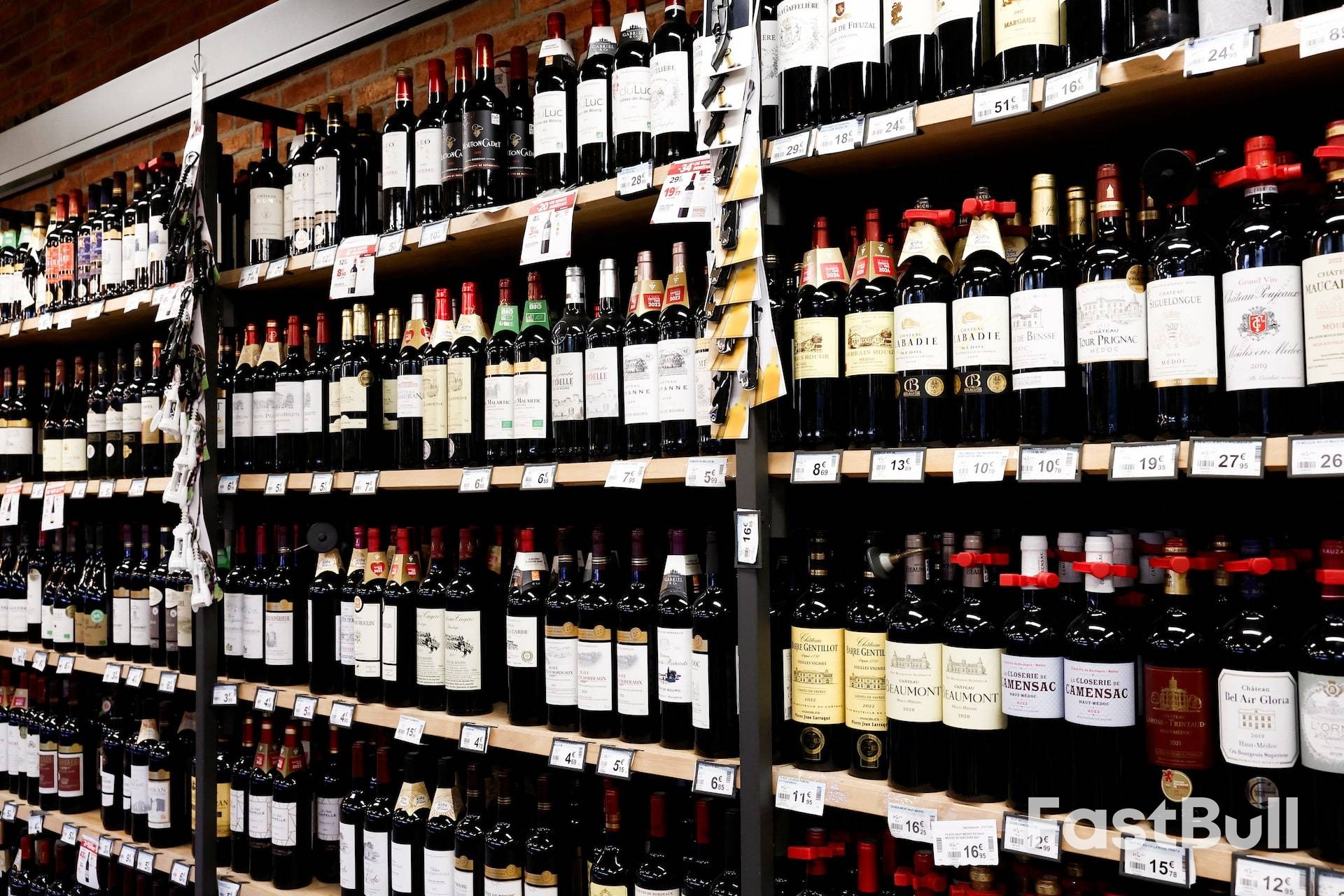
The threat came after Trump was asked about reports that Macron would not join the proposed global conflict resolution board. "Did he say that? Well, nobody wants him because he will be out of office very soon," Trump responded.
"I'll put a 200% tariff on his wines and champagnes, and he'll join, but he doesn't have to join," Trump added.
According to a source close to Macron, France intends to decline the invitation to the initiative at this stage.
President Trump first proposed the Board of Peace in September as part of a plan to end the war in Gaza. However, an invitation sent to world leaders last week details a much broader mandate aimed at ending conflicts globally.
A draft charter, which was sent by the U.S. administration to approximately 60 countries, outlines a significant financial commitment. According to the document, member nations are required to contribute $1 billion in cash if they wish for their membership to extend beyond three years.
The proposal has been met with caution from governments around the world. Diplomats have expressed concern that the initiative could potentially undermine the work of the United Nations.
In addition to the invitation to France, Trump confirmed on Monday that he has also invited Russian President Vladimir Putin to become a member of the peace board. "He's been invited," Trump stated.
China has unveiled a significant financial support package designed to stimulate investment and consumption, headlined by a 500 billion-yuan ($72 billion) loan guarantee facility aimed at private companies.
The Ministry of Finance announced on Tuesday that the two-year program is intended to help qualified private businesses secure financing for expansion activities, including equipment purchases, raw material acquisition, and technology upgrades.
To further encourage borrowing and investment, the government will also provide an annual interest subsidy of 1.5 percentage points. This subsidy applies to loans taken by small- and medium-sized enterprises (SMEs) for two years.
The support covers loans used for fixed-asset investments or for participation in projects backed by policy bank financing tools. According to a separate statement, each borrower can receive subsidies on loans up to a maximum of 50 million yuan.
These measures follow the release of official data showing China's economy grew in a divided pattern last year. While robust exports supported industrial production and helped the country meet its official growth target of around 5%, domestic demand told a different story. Consumption was sluggish, and investment experienced an unprecedented slump.
In response, top leaders have designated the expansion of domestic demand as the primary economic goal for 2026. The new stimulus appears more aggressive than what many analysts had anticipated. Previously, the consensus was that authorities would opt for a more measured approach, given the resilience of exports, existing debt constraints, and concerns about excess capacity in certain sectors.
Beyond the main loan guarantee program, the Ministry of Finance announced several other supportive measures:
• Consumer Loan Discounts: A policy offering loan discounts to consumers will be extended through the end of this year.
• Corporate Upgrades: Support for companies upgrading their equipment will be expanded to also cover borrowing for technological innovation.
• Service Sector: The ceiling for interest subsidies available to services firms is being raised.
U.S. President Donald Trump has renewed his push for American ownership of Greenland, announcing he will discuss the matter with officials at the World Economic Forum (WEF) in Davos, Switzerland. The move signals an escalation in his long-standing interest in the Danish territory.
Trump is scheduled to attend the WEF on Wednesday, marking his first in-person appearance at the conference since his previous term. He had also called for the U.S. to take control of Greenland during a remote speech to the forum last year.
Following what he described as a "good telephone call" with NATO Secretary General Mark Rutte, Trump confirmed that a meeting between "various parties" on the topic of Greenland would take place in Davos.
In a social media post, the president framed the acquisition as a strategic necessity, stating, "Greenland is imperative for National and World Security. There can be no going back." This rhetoric reinforces the administration's view of the territory's geopolitical importance.
Trump has dramatically increased pressure by threatening tariffs on eight European nations until a deal for Greenland is reached. This marks his most direct action yet to compel negotiations.
The proposed plan involves levying a 10% tariff on the unnamed countries starting in early February. According to the president, these duties will rise to 25% if an agreement for U.S. ownership is not finalized by July.
In a recent NBC News interview, Trump declined to clarify whether the U.S. military would be deployed to secure Greenland, a question that has gained urgency following a U.S. incursion in Venezuela earlier this year.
European leaders have uniformly rejected Trump's demands and are reportedly preparing retaliatory measures should the U.S. proceed with tariffs.
The renewed geopolitical uncertainty has already impacted global financial markets. Trump's comments triggered a broad market decline this week as investors reacted to the heightened tensions. The U.S. dollar also weakened amid growing caution toward American assets.
China is exploring the creation of a national merger and acquisition (M&A) fund as part of a strategic push to dominate next-generation technologies from artificial intelligence to robotics. The potential fund signals Beijing's increasing focus on creating a comprehensive support system for its high-tech industries.
The plan was announced by Wang Changlin, vice chairman of the National Development and Reform Commission (NDRC), at a press conference. "We will explore establishing a national-level merger and acquisition fund," he stated.
According to Wang, the initiative aims to strengthen government investment planning to foster innovation and accelerate the growth of "new productive forces"—a term Beijing uses for emerging and high-tech sectors.
This move follows the recent launch of a 100 billion yuan (RM58 billion) national venture capital fund, underscoring the urgency of China's tech ambitions. The country is already a leader in drone manufacturing and a serious contender in AI with homegrown firms like DeepSeek, supported by a massive expansion of data centers.
The proposed M&A fund is expected to fill a critical gap in the investment lifecycle for technology companies. According to Yin Ming, vice president at the Shanghai-based Baptized Capital, the fund would help create a more complete ecosystem for investors.
"The new fund will seek to encourage more M&A deals for technology firms with a certain scale," Yin explained. This would make it "easier for early backers including the state venture funds to exit at an appropriate time."
By providing a clear exit path, the fund could also reduce the perceived risk for early-stage investors, making it easier for them to commit capital to promising startups.
While Chinese officials highlight the long-term perspective of state-backed capital, some scholars have raised concerns. They warn that the government's lower tolerance for risk could impede the growth of high-tech firms and argue for a greater role for the private sector.
This strategic push comes as China's tech rivalry with the United States intensifies, particularly in critical areas like semiconductors. At the same time, tighter fiscal conditions, including rising debt and weaker government revenue, are forcing Beijing to be more disciplined with its investments.
Despite these challenges, the NDRC's Wang expressed confidence, addressing the US strategy of using technology as leverage. "Practice has proven that 'strangleholds' can't hold back progress," he said, referencing sectors targeted by trade restrictions. "China possesses a powerful innovative spirit and immense potential for innovation."
Federal Reserve Chairman Jerome Powell is set to attend a U.S. Supreme Court hearing concerning the case against Federal Reserve Board member Lisa Cook, according to sources familiar with the matter.
Powell's planned appearance in the courtroom on Wednesday is a rare and significant display of support from a sitting central bank governor, signaling a major development in the ongoing friction between the White House and the Federal Reserve.
The Supreme Court is currently reviewing whether President Donald Trump has the authority to remove Cook from his position on the Fed's seven-member board of governors. Trump's effort to oust a board member is viewed as an unprecedented move in modern history.
By attending the hearing personally, Powell is taking a much more visible stance than he has previously. This follows reports that the Trump administration sent notices to the Fed and threatened a criminal investigation into Powell himself. Appointed by Trump in 2018, Powell appears to be shifting from a cautious approach to a more direct confrontation with the administration.
The conflict intensified after Powell released a video message on January 11, describing the administration's actions as "pretexts" to pressure the Federal Reserve into making deep cuts to its policy interest rates.
While the Fed implemented three rate cuts late last year, bringing the rate to around 3.6 percent, President Trump has publicly argued that rates should be lowered to 1 percent. This view is not shared by the majority of economists.
The administration's formal case against Cook centers on accusations of mortgage fraud. However, Cook has denied these allegations, and no formal charges have been filed against him.
Cook initiated a lawsuit to protect his position on the board. On October 1, the Supreme Court issued a temporary ruling that allows him to remain in his role while the legal case proceeds.
Analysts note that if President Trump succeeds in removing Cook, he would be able to appoint a replacement of his choosing. Such a move could give Trump's appointees a majority on the Federal Reserve's board of governors.
This outcome would significantly increase the administration's influence over the central bank's critical decisions on interest rate policy and banking regulations, potentially compromising its long-held independence.
A major trade agreement between Malaysia and the United States remains on hold, nearly three months after it was signed, Prime Minister Datuk Seri Anwar Ibrahim confirmed in Parliament on Tuesday.
Anwar explained that Malaysia is seeking further clarification and adjustments to several clauses before the Agreement on Reciprocal Trade (ART) can officially come into force.
According to the Prime Minister, discussions between the United States Trade Representative (USTR) and Malaysia's Minister of Investment, Trade and Industry are ongoing. While verbal assurances have been received on certain points, the Malaysian government insists these commitments must be put in writing.
"We believe it would be better for these assurances to be put in writing before we finalise the agreement," Anwar stated during Minister's Question Time. He was responding to a query from Ahmad Tarmizi Sulaiman (PN–Sik) about the status of the deal's ratification.
Anwar also noted that any proposed changes to the ART will be discussed by the Cabinet. He confirmed there is currently no fixed schedule for completing the formal notifications required to activate the pact.
The ART was originally signed on October 26 of last year during an official visit by US President Donald Trump, on the sidelines of the 47th Asean Summit in Kuala Lumpur.
The agreement was designed as a strategic tool to lower US tariffs on Malaysian products, with rates on some goods set to decrease from 25% to 19%. It also aimed to address non-tariff barriers faced by US exporters in Malaysia.
However, the deal has faced criticism. Former prime minister Tun Dr Mahathir Mohamad warned that the agreement could risk Malaysia's economic sovereignty by forcing the country to align with Washington's trade and investment regulations.
Malaysia’s Attorney General's Chambers (AGC) previously addressed concerns about the agreement on November 3. The AGC clarified several key points regarding Malaysia's rights under the deal:
• Right to Terminate: Citing Article 7.5, the AGC affirmed that Malaysia can terminate the ART at any time with a written notice, without needing US consent.
• Sovereignty Protections: The agreement contains explicit protections intended to safeguard Malaysia's sovereignty and national interests.
• Activation Process: According to Article 7.2, the ART will only take effect 60 days after both countries have formally notified each other that their respective domestic legal procedures are complete.
In a separate matter, the Prime Minister commented on Malaysia's strategy for managing international relations, particularly in light of an announcement by US President Donald Trump to impose a 25% tariff on countries conducting business with Iran.
Anwar stated that Malaysia will continue to act with prudence. He revealed that he has personally engaged with Iranian leadership twice and that several Malaysian ministers have also visited the country.
While emphasizing that Malaysia cannot afford actions that might harm its national interests, he reaffirmed the country's diplomatic stance.
"As far as relations with Iran are concerned, we will continue to maintain ties and defend Iran's rights and sovereignty," Anwar said. "That is also a principle we uphold."
White Label
Data API
Web Plug-ins
Poster Maker
Affiliate Program
The risk of loss in trading financial instruments such as stocks, FX, commodities, futures, bonds, ETFs and crypto can be substantial. You may sustain a total loss of the funds that you deposit with your broker. Therefore, you should carefully consider whether such trading is suitable for you in light of your circumstances and financial resources.
No decision to invest should be made without thoroughly conducting due diligence by yourself or consulting with your financial advisors. Our web content might not suit you since we don't know your financial conditions and investment needs. Our financial information might have latency or contain inaccuracy, so you should be fully responsible for any of your trading and investment decisions. The company will not be responsible for your capital loss.
Without getting permission from the website, you are not allowed to copy the website's graphics, texts, or trademarks. Intellectual property rights in the content or data incorporated into this website belong to its providers and exchange merchants.
Not Logged In
Log in to access more features
Log In
Sign Up