• Trade
  • Markets
  • Copy
  • Contests
  • News
  • 24/7
  • Calendar
  • Q&A
  • Chats
Trending
Screeners
SYMBOL
LAST
BID
ASK
HIGH
LOW
NET CHG.
%CHG.
SPREAD
SPX
S&P 500 Index
6827.42
6827.42
6827.42
6899.86
6801.80
-73.58
-1.07%
--
DJI
Dow Jones Industrial Average
48458.04
48458.04
48458.04
48886.86
48334.10
-245.98
-0.51%
--
IXIC
NASDAQ Composite Index
23195.16
23195.16
23195.16
23554.89
23094.51
-398.69
-1.69%
--
USDX
US Dollar Index
98.000
98.080
98.000
98.070
97.920
+0.050
+ 0.05%
--
EURUSD
Euro / US Dollar
1.17288
1.17295
1.17288
1.17447
1.17276
-0.00106
-0.09%
--
GBPUSD
Pound Sterling / US Dollar
1.33639
1.33648
1.33639
1.33740
1.33546
-0.00068
-0.05%
--
XAUUSD
Gold / US Dollar
4339.43
4339.84
4339.43
4347.21
4294.68
+40.04
+ 0.93%
--
WTI
Light Sweet Crude Oil
57.447
57.477
57.447
57.601
57.194
+0.214
+ 0.37%
--

Community Accounts

Signal Accounts
--
Profit Accounts
--
Loss Accounts
--
View More

Become a signal provider

Sell trading signals to earn additional income

View More

Guide to Copy Trading

Get started with ease and confidence

View More

Signal Accounts for Members

All Signal Accounts

Best Return
  • Best Return
  • Best P/L
  • Best MDD
Past 1W
  • Past 1W
  • Past 1M
  • Past 1Y

All Contests

  • All
  • Trump Updates
  • Recommend
  • Stocks
  • Cryptocurrencies
  • Central Banks
  • Featured News
Top News Only
Share

Swiss Government Sees 2026 CPI At +0.2% (Previous Forecast Was +0.5%)

Share

Reuters Calculation - India's Nov Services Trade Surplus At $17.9 Billion

Share

India Trade Secretary: Reduction In Imports In November Due To Fall In Gold, Oil And Coal Shipments

Share

India Trade Secretary: Gold Imports Have Declined In Nov By About 60%

Share

India Trade Secretary: Exports In Sectors Such Engineering, Electronics , Gems And Jewellery Aided November Figures

Share

India's Nov Merchandise Trade Deficit At $24.53 Billion - Reuters Calculation (Poll $32 Billion)

Share

India's Nov Merchandise Imports At $62.66 Billion

Share

India's Nov Merchandise Exports At $38.13 Billion

Share

Stats Office - Swiss November Producer/Import Prices -1.6% Year-On-Year (Versus-1.7% In Prior Month)

Share

Stats Office - Swiss November Producer/Import Prices -0.5% Month-On-Month (Versus-0.3% In Prior Month)

Share

Thailand To Hold Elections On Feb 8 - Multiple Local Media Reports

Share

Taiwan Dollar Falls 0.6% To 31.384 Per USA Dollar, Lowest Since December 3

Share

Stats Office - Botswana November Consumer Inflation At 0.0% Month-On-Month

Share

Stats Office - Botswana November Consumer Inflation At 3.8% Year-On-Year

Share

Statistics Bureau - Kazakhstan's Jan-Nov Industrial Output +7.4% Year-On-Year

Share

Fca: Sets Out Plans To Help Build Mortgage Market Of Future

Share

Eurostoxx 50 Futures Up 0.38%, DAX Futures Up 0.43%, FTSE Futures Up 0.37%

Share

[Delivery Of New US Presidential Aircraft Delayed Again] According To The Latest Timeline Released By The US Air Force, The Delivery Of The First Of The Two Newly Commissioned Air Force One Presidential Aircraft Will Not Be Earlier Than 2028. This Means That The Delivery Of The New Air Force One Has Been Delayed Once Again

Share

German Nov Wholesale Prices +0.3% Month-On-Month

Share

Norway's Nov Trade Balance Nok 41.3 Billion - Statistics Norway

TIME
ACT
FCST
PREV
France HICP Final MoM (Nov)

A:--

F: --

P: --

China, Mainland Outstanding Loans Growth YoY (Nov)

A:--

F: --

P: --

China, Mainland M2 Money Supply YoY (Nov)

A:--

F: --

P: --

China, Mainland M0 Money Supply YoY (Nov)

A:--

F: --

P: --

China, Mainland M1 Money Supply YoY (Nov)

A:--

F: --

P: --

India CPI YoY (Nov)

A:--

F: --

P: --

India Deposit Gowth YoY

A:--

F: --

P: --

Brazil Services Growth YoY (Oct)

A:--

F: --

P: --

Mexico Industrial Output YoY (Oct)

A:--

F: --

P: --

Russia Trade Balance (Oct)

A:--

F: --

P: --

Philadelphia Fed President Henry Paulson delivers a speech
Canada Building Permits MoM (SA) (Oct)

A:--

F: --

P: --

Canada Wholesale Sales YoY (Oct)

A:--

F: --

P: --

Canada Wholesale Inventory MoM (Oct)

A:--

F: --

P: --

Canada Wholesale Inventory YoY (Oct)

A:--

F: --

P: --

Canada Wholesale Sales MoM (SA) (Oct)

A:--

F: --

P: --

Germany Current Account (Not SA) (Oct)

A:--

F: --

P: --

U.S. Weekly Total Rig Count

A:--

F: --

P: --

U.S. Weekly Total Oil Rig Count

A:--

F: --

P: --

Japan Tankan Small Manufacturing Outlook Index (Q4)

A:--

F: --

P: --

Japan Tankan Large Non-Manufacturing Diffusion Index (Q4)

A:--

F: --

P: --

Japan Tankan Large Non-Manufacturing Outlook Index (Q4)

A:--

F: --

P: --

Japan Tankan Large Manufacturing Outlook Index (Q4)

A:--

F: --

P: --

Japan Tankan Small Manufacturing Diffusion Index (Q4)

A:--

F: --

P: --

Japan Tankan Large Manufacturing Diffusion Index (Q4)

A:--

F: --

P: --

Japan Tankan Large-Enterprise Capital Expenditure YoY (Q4)

A:--

F: --

P: --

U.K. Rightmove House Price Index YoY (Dec)

A:--

F: --

P: --

China, Mainland Industrial Output YoY (YTD) (Nov)

A:--

F: --

P: --

China, Mainland Urban Area Unemployment Rate (Nov)

A:--

F: --

P: --

Saudi Arabia CPI YoY (Nov)

A:--

F: --

P: --

Euro Zone Industrial Output YoY (Oct)

--

F: --

P: --

Euro Zone Industrial Output MoM (Oct)

--

F: --

P: --

Canada Existing Home Sales MoM (Nov)

--

F: --

P: --

Euro Zone Total Reserve Assets (Nov)

--

F: --

P: --

U.K. Inflation Rate Expectations

--

F: --

P: --

Canada National Economic Confidence Index

--

F: --

P: --

Canada New Housing Starts (Nov)

--

F: --

P: --

U.S. NY Fed Manufacturing Employment Index (Dec)

--

F: --

P: --

U.S. NY Fed Manufacturing Index (Dec)

--

F: --

P: --

Canada Core CPI YoY (Nov)

--

F: --

P: --

Canada Manufacturing Unfilled Orders MoM (Oct)

--

F: --

P: --

U.S. NY Fed Manufacturing Prices Received Index (Dec)

--

F: --

P: --

U.S. NY Fed Manufacturing New Orders Index (Dec)

--

F: --

P: --

Canada Manufacturing New Orders MoM (Oct)

--

F: --

P: --

Canada Core CPI MoM (Nov)

--

F: --

P: --

Canada Trimmed CPI YoY (SA) (Nov)

--

F: --

P: --

Canada Manufacturing Inventory MoM (Oct)

--

F: --

P: --

Canada CPI YoY (Nov)

--

F: --

P: --

Canada CPI MoM (Nov)

--

F: --

P: --

Canada CPI YoY (SA) (Nov)

--

F: --

P: --

Canada Core CPI MoM (SA) (Nov)

--

F: --

P: --

Canada CPI MoM (SA) (Nov)

--

F: --

P: --

Federal Reserve Board Governor Milan delivered a speech
U.S. NAHB Housing Market Index (Dec)

--

F: --

P: --

Australia Composite PMI Prelim (Dec)

--

F: --

P: --

Australia Services PMI Prelim (Dec)

--

F: --

P: --

Australia Manufacturing PMI Prelim (Dec)

--

F: --

P: --

Japan Manufacturing PMI Prelim (SA) (Dec)

--

F: --

P: --

U.K. Unemployment Claimant Count (Nov)

--

F: --

P: --

U.K. Unemployment Rate (Nov)

--

F: --

P: --

U.K. 3-Month ILO Unemployment Rate (Oct)

--

F: --

P: --

Q&A with Experts
    • All
    • Chatrooms
    • Groups
    • Friends
    Connecting
    .
    .
    .
    Type here...
    Add Symbol or Code

      No matching data

      All
      Trump Updates
      Recommend
      Stocks
      Cryptocurrencies
      Central Banks
      Featured News
      • All
      • Russia-Ukraine Conflict
      • Middle East Flashpoint
      • All
      • Russia-Ukraine Conflict
      • Middle East Flashpoint
      Search
      Products

      Charts Free Forever

      Chats Q&A with Experts
      Screeners Economic Calendar Data Tools
      Membership Features
      Data Warehouse Market Trends Institutional Data Policy Rates Macro

      Market Trends

      Market Sentiment Order Book Forex Correlations

      Top Indicators

      Charts Free Forever
      Markets

      News

      News Analysis 24/7 Columns Education
      From Institutions From Analysts
      Topics Columnists

      Latest Views

      Latest Views

      Trending Topics

      Top Columnists

      Latest Update

      Signals

      Copy Rankings Latest Signals Become a signal provider AI Rating
      Contests
      Brokers

      Overview Brokers Assessment Rankings Regulators News Claims
      Broker listing Forex Brokers Comparison Tool Live Spread Comparison Scam
      Q&A Complaint Scam Alert Videos Tips to Detect Scam
      More

      Business
      Events
      Careers About Us Advertising Help Center

      White Label

      Data API

      Web Plug-ins

      Affiliate Program

      Awards Institution Evaluation IB Seminar Salon Event Exhibition
      Vietnam Thailand Singapore Dubai
      Fans Party Investment Sharing Session
      FastBull Summit BrokersView Expo
      Recent Searches
        Top Searches
          Markets
          News
          Analysis
          User
          24/7
          Economic Calendar
          Education
          Data
          • Names
          • Latest
          • Prev

          View All

          No data

          Scan to Download

          Faster Charts, Chat Faster!

          Download App
          English
          • English
          • Español
          • العربية
          • Bahasa Indonesia
          • Bahasa Melayu
          • Tiếng Việt
          • ภาษาไทย
          • Français
          • Italiano
          • Türkçe
          • Русский язык
          • 简中
          • 繁中
          Open Account
          Search
          Products
          Charts Free Forever
          Markets
          News
          Signals

          Copy Rankings Latest Signals Become a signal provider AI Rating
          Contests
          Brokers

          Overview Brokers Assessment Rankings Regulators News Claims
          Broker listing Forex Brokers Comparison Tool Live Spread Comparison Scam
          Q&A Complaint Scam Alert Videos Tips to Detect Scam
          More

          Business
          Events
          Careers About Us Advertising Help Center

          White Label

          Data API

          Web Plug-ins

          Affiliate Program

          Awards Institution Evaluation IB Seminar Salon Event Exhibition
          Vietnam Thailand Singapore Dubai
          Fans Party Investment Sharing Session
          FastBull Summit BrokersView Expo

          Trump Tariffs Updates: US Trade Talks With EU, Canada in Focus as G7 Kicks off

          Manuel

          Political

          China–U.S. Trade War

          Summary:

          The diverging signals came as the US made key progress with China, as the nations agreed to a framework and implementation plan to ease tariff and trade tensions.

          US trade and tariff talks with the European Union and Canada are in focus to start the week as President Trump attends the G7 summit in Canada.
          A report in the German newspaper Handelsblatt on Monday hinted the EU could agree to a baseline 10% US tariff on all European Union exports, in exchange for avoiding higher tariffs on cars, medicines, and electronics. The European Commission denied that report.
          Meanwhile, Trump said on the first day of the G7 gathering that a trade deal with Canada was possible.
          "We have different concepts. I have a tariff concept. Mark has a different concept," Trump said, standing alongside Canadian Prime Minister Mark Carney. "We're going to see if we can get to the bottom of it today."
          Canada's exports have been hit hard in Trump's trade salvos so far, as Trump has doubled duties on steel and aluminum imports to 50%. Meanwhile, Canada's auto exports to the US face 25% duties. Some products not included in the countries' existing trade agreement also face 25% levies.
          Trump told reporters last week that he would soon send letters to trading partners setting unilateral tariff rates, raising questions about the status of negotiations — as well as fears of a possible escalation back to his "Liberation Day" tariffs that roiled markets. Trump instituted a pause on his most punishing duties that expires July 9.
          The diverging signals came as the US made key progress with China, as the nations agreed to a framework and implementation plan to ease tariff and trade tensions.
          Trump and other US officials indicated the deal should resolve issues between the two countries on rare earth mineral exports. Trump said the US would impose a total of 55% tariffs on Chinese goods. Yahoo Finance's Ben Werschkul reports, citing a White House official, that Trump arrived at that figure by adding together an array of preexisting duties and not any new tariffs.
          Meanwhile last week, a federal appeals court held a decision saying his tariffs can temporarily stay in effect. The US Court of International Trade had blocked their implementation last month, deeming the method used to enact them "unlawful."

          Source: Yahoo Finance

          Risk Warnings and Disclaimers
          You understand and acknowledge that there is a high degree of risk involved in trading. Following any strategies or investment methods may lead to potential losses. The content on the site is provided by our contributors and analysts for information purposes only. You are solely responsible for determining whether any trading assets, securities, strategy, or any other product is suitable for investing based on your own investment objectives and financial situation.
          Add to Favorites
          Share

          Markets are shrugging off the Israel-Iran conflict. Some strategists warn of complacency

          Adam

          Economic

          Middle East Situation

          Global investors may be underpricing the impact of a conflict between Israel and Iran, market watchers warned on Monday, as stocks rallied despite escalating warfare in the Middle East.
          The two regional powers continued trading fire on Monday, marking the fourth consecutive day of fighting since Israel launched airstrikes against Iran last week.
          Despite the continued fighting — with hundreds reported dead — global stock markets sustained a positive momentum on Monday, seemingly shrugging off broader concerns about the conflict.
          Russ Mould, investment director at AJ Bell, warned on Monday that there was a risk markets were underpricing “the risk of a major conflagration in the Middle East,” particularly when it comes to the energy market.
          European shares opened broadly higher on Monday, with Asia-Pacific stocks and U.S. stock futures also trading in the green. Even Middle Eastern indexes saw gains on Monday, with the Tel Aviv 35 index last seen trading 1% higher after falling 1.5% last week.
          “This is partly because there are so many moving parts and geopolitical considerations, and partly because the potential outcomes are so unthinkable,” Mould said. “In a worst case, oil and share prices would be the least of our worries.”
          In a Monday morning note, David Roche, a strategist at Quantum Strategy, warned that the conflict between Israel and Iran “will last longer than the Israeli lightning-strikes that the market is used to.”
          Torbjorn Soltvedtp, principal Middle East analyst at Verisk Maplecroft, agreed, saying an escalation remained of “huge concern.”
          “What we have now is very different, and what we’re seeing is effectively a war and an open-ended one,” he told CNBC’s “Squawk Box Europe.”
          “And of course, that is something that has huge implications, not just for the region, but also for energy markets and how they interpret what is happening. You know, minute by minute and day by day.”
          Energy markets have moved the most on news of the attacks, as the Israel-Iran conflict stoked supply concerns.
          While Friday marked the biggest single-day gain for crude since Russia’s full-scale invasion of Ukraine in 2022, however, global benchmark Brent crude futures — last seen at $73.75 a barrel — were still far below the prices seen in the aftermath of Moscow’s incursion into Ukrainian territory.
          “A lull is the most likely outcome before later escalation when Iran rejects US Trump’s overtures,” Roche said. “The market is likely to mistake the lull for lasting peace. I would use the lull to buy into energy assets as a safe haven.”
          ‘Very modest’ market reaction
          Some market watchers are taking a somewhat less pessimistic view, however.
          In a note on Monday, Deutsche Bank’s Jim Reid noted that while both Iran and Israel had traded retaliatory blows, they had so far avoided “the most extreme escalatory steps.”
          “As geopolitical shocks are becoming more frequent it seems it’s now at least a yearly occurrence that we refer to our equity strategists’ work on the impact of such shocks and how long it takes for the market to recover from them,” he said.
          “The typical pattern is for the S&P 500
          to pull back about -6% in 3 weeks after the shock but then rally all the way back in another 3,” Reid said. ”[Our strategists] believe this incident will likely be milder than this unless we get notable escalation as they highlight that equity positioning is already underweight … and a -6% selloff would need it to fall all the way to the bottom of its usual range.”
          Philippe Gijsels, chief strategy officer at BNP Paribas Fortis, told CNBC on Monday that he feels the market is correct in not pricing a huge escalation, such as the U.S. being drawn into the fray, or a blockade of the Strait of Hormuz.
          The Strait of Hormuz, nestled between Iran and Oman, is a vital oil transit route through which millions of barrels of oil are transported every day.
          “Still, the market reaction has been very modest, so there is room for disappointment if things were to escalate,” Gijsels conceded on Monday.

          Source : cnbc

          To stay updated on all economic events of today, please check out our Economic calendar
          Risk Warnings and Disclaimers
          You understand and acknowledge that there is a high degree of risk involved in trading. Following any strategies or investment methods may lead to potential losses. The content on the site is provided by our contributors and analysts for information purposes only. You are solely responsible for determining whether any trading assets, securities, strategy, or any other product is suitable for investing based on your own investment objectives and financial situation.
          Add to Favorites
          Share

          Trump Media files for groundbreaking Bitcoin and Ethereum ETF

          Adam

          Cryptocurrency

          Trump Media & Technology Group (TMTG), the company behind the Truth Social platform, has filed to launch a new exchange-traded fund (ETF) that would track Bitcoin and Ethereum.
          The filing, submitted to the US Securities and Exchange Commission (SEC) on June 16, marks a bold move in the firm’s shift toward digital finance.
          According to the filing:
          “The Trust is a passive investment vehicle that does not seek to generate returns beyond tracking the prices of bitcoin and ether and, to the extent the Trust engages in Staking (as defined herein), rewards earned from its staked ether.”
          The proposed ETF will allocate 75% of its portfolio to Bitcoin and 25% to Ethereum.
          TMTG has partnered with crypto exchange Crypto.com to handle custody, trading execution, staking, and liquidity support.
          Yorkville America Digital is expected to sponsor the ETF. If the SEC approves the corresponding Form 19b-4, the fund will be listed on NYSE Arca.
          Despite the announcement, TMTG shares showed little movement. According to Google Finance data, the stock was down about 2% to under $20, its lowest price since April.
          Trump Media’s strategic shift towards crypto
          This move represents a significant step in TMTG’s efforts to pivot from a social media-centric platform to a broader fintech player.
          The firm has recently pursued this transition by partnering with Crypto.com and Yorkville America to develop a lineup of TMTG-branded ETFs blending digital and traditional assets.
          One of the flagship offerings will be this Truth Social Bitcoin and Ethereum ETF, a product that builds on an earlier filing by NYSE Arca to list the Truth Social Bitcoin ETF.
          In addition to its ETF ambitions, TMTG recently secured regulatory clearance for a $2.3 billion Bitcoin Treasury deal, signaling plans to bolster its crypto reserves.
          These developments signal TMTG’s growing commitment to digital assets. By partnering with key industry players and entering the ETF market, the company aims to capitalize on rising crypto adoption and offer regulated exposure to major digital assets.

          source : cryptoslate

          Risk Warnings and Disclaimers
          You understand and acknowledge that there is a high degree of risk involved in trading. Following any strategies or investment methods may lead to potential losses. The content on the site is provided by our contributors and analysts for information purposes only. You are solely responsible for determining whether any trading assets, securities, strategy, or any other product is suitable for investing based on your own investment objectives and financial situation.
          Add to Favorites
          Share

          Iranian State Broadcaster Hit As Iran Urges Trump To Make Israel Halt War

          Thomas

          Political

          An Israeli strike hit Iran's state broadcaster on Monday as Iran called on U.S. President Donald Trump to force a ceasefire in the four-day-old aerial war, while Israel's prime minister said his country was on the "path to victory".

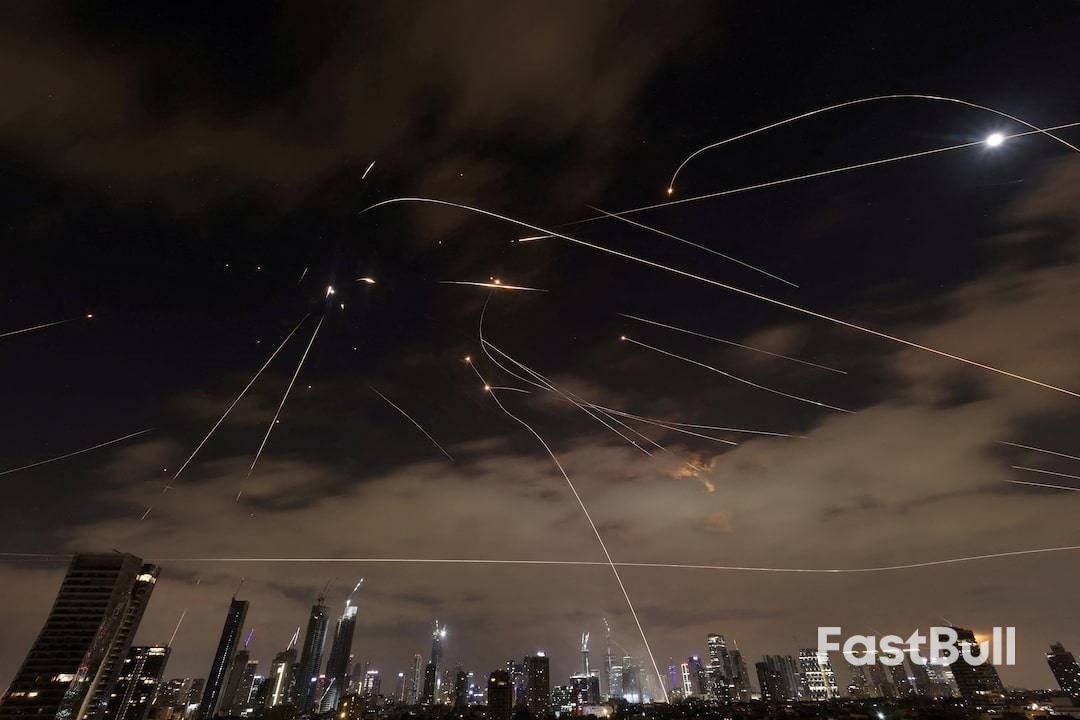
          Israeli forces stepped up their bombardment of Iranian cities, while Iran proved capable of piercing Israeli air defences with one of its most successful volleys yet of retaliatory missile strikes.

          "If President Trump is genuine about diplomacy and interested in stopping this war, next steps are consequential," Iran's Foreign Minister Abbas Araqchi said on X.

          "Israel must halt its aggression, and absent a total cessation of military aggression against us, our responses will continue. It takes one phone call from Washington to muzzle someone like Netanyahu. That may pave the way for a return to diplomacy."

          Sources told Reuters that Tehran had asked Qatar, Saudi Arabia and Oman to press Trump to use his influence on Israel to push for an immediate ceasefire. In return, Iran would show flexibility in nuclear negotiations, said the two Iranian and three regional sources.

          Israeli Prime Minister Benjamin Netanyahu told troops at an air base that Israel was on its way to achieving its two main aims: wiping out Iran's nuclear programme and destroying its missiles.

          "We are on the path to victory," he said. "We are telling the citizens of Tehran: ‘Evacuate’ — and we are taking action."

          Late on Monday, Israel said it had hit Iran's broadcasting authority, and footage showed a newsreader hurrying from her seat as a blast struck. Iran's State News Agency also reported the strike.

          Israel's defence minister said Israel had attacked the broadcaster after the evacuation of local residents.

          Meanwhile, Iranian state media reported that Iran was preparing for the "largest and most intense missile attack" yet against Israel.

          'DESPERATE'

          Israel launched its air war on Friday with a surprise attack that killed nearly the entire top echelon of Iran's military commanders and its leading nuclear scientists. It says it now has control of Iranian airspace and intends to escalate the campaign in coming days.

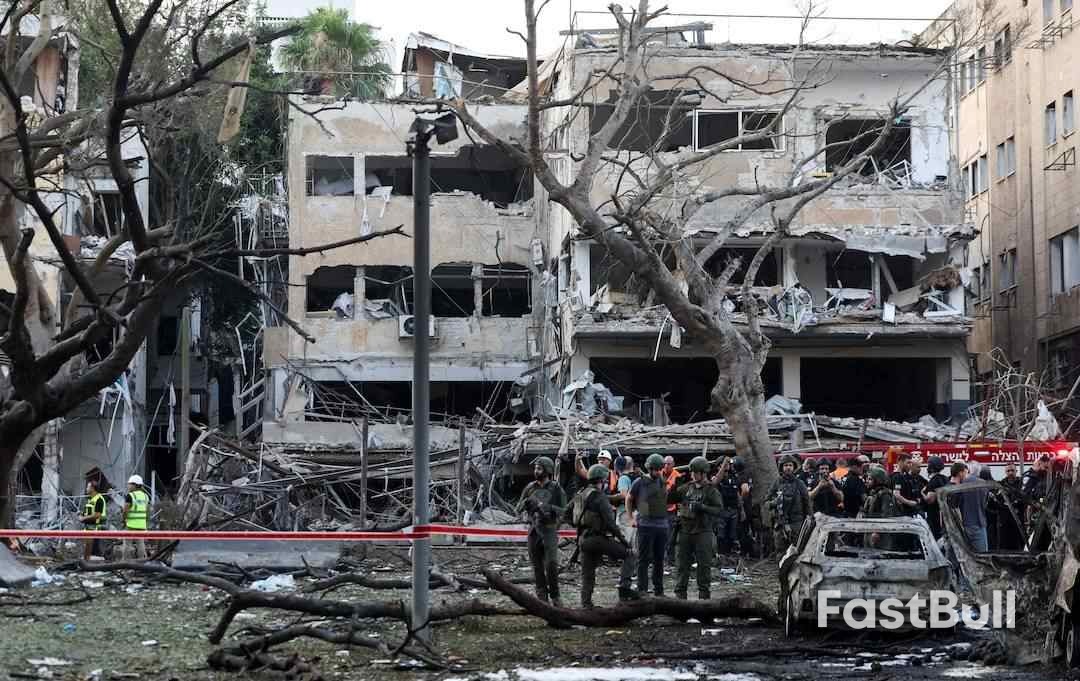
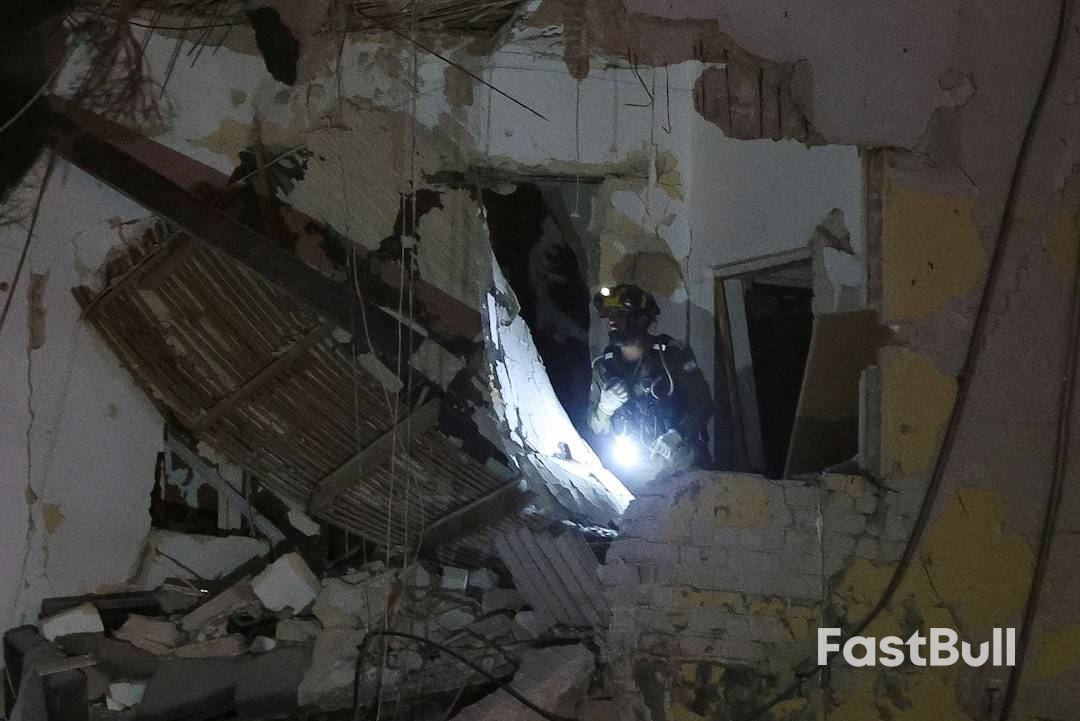
          Tehran's retaliation is the first time in decades of shadow war and proxy conflict that missiles fired from Iran have pierced Israeli defences in significant numbers and killed Israelis in their homes.

          Iran says more than 224 Iranians have been killed, most of them civilians. Media published images of wounded children, women, and the elderly from cities across the country.

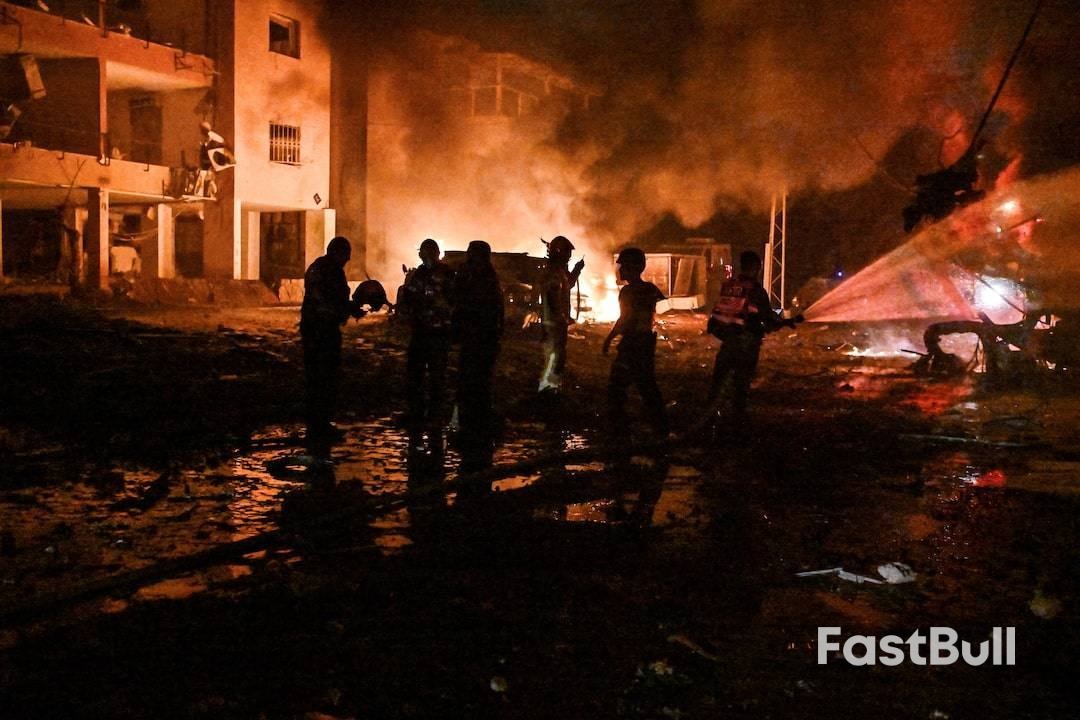
          State TV broadcast scenes of collapsed presidential buildings, burned-out cars, and shattered streets in Tehran. Many residents were trying to flee the capital, describing queues for petrol and bank machines that were out of cash.

          "I am desperate. My two children are scared and cannot sleep at night because of the sound of air defence and attacks, explosions. But we have nowhere to go. We hid under our dining table," Gholamreza Mohammadi, 48, a civil servant, told Reuters by phone from Tehran.

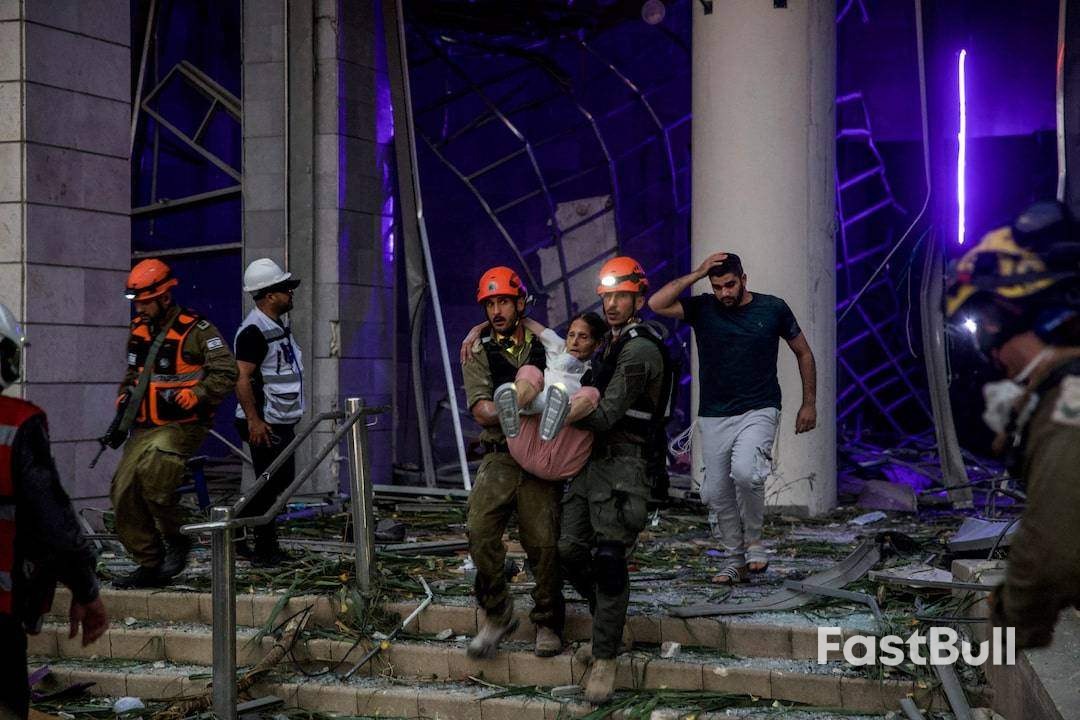
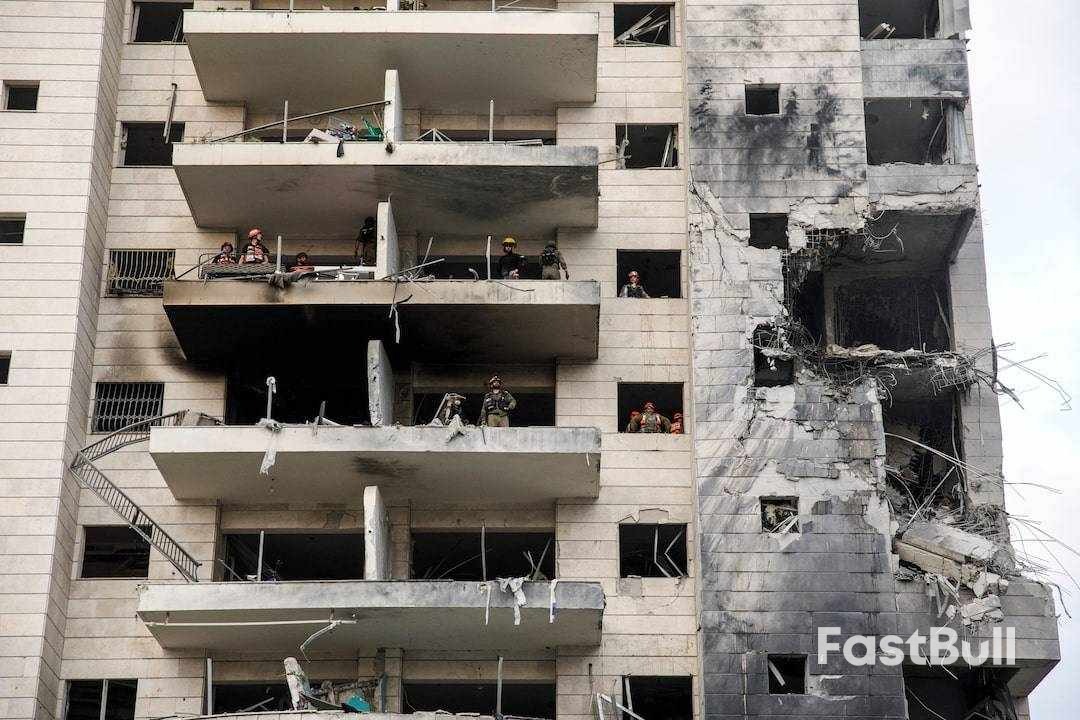
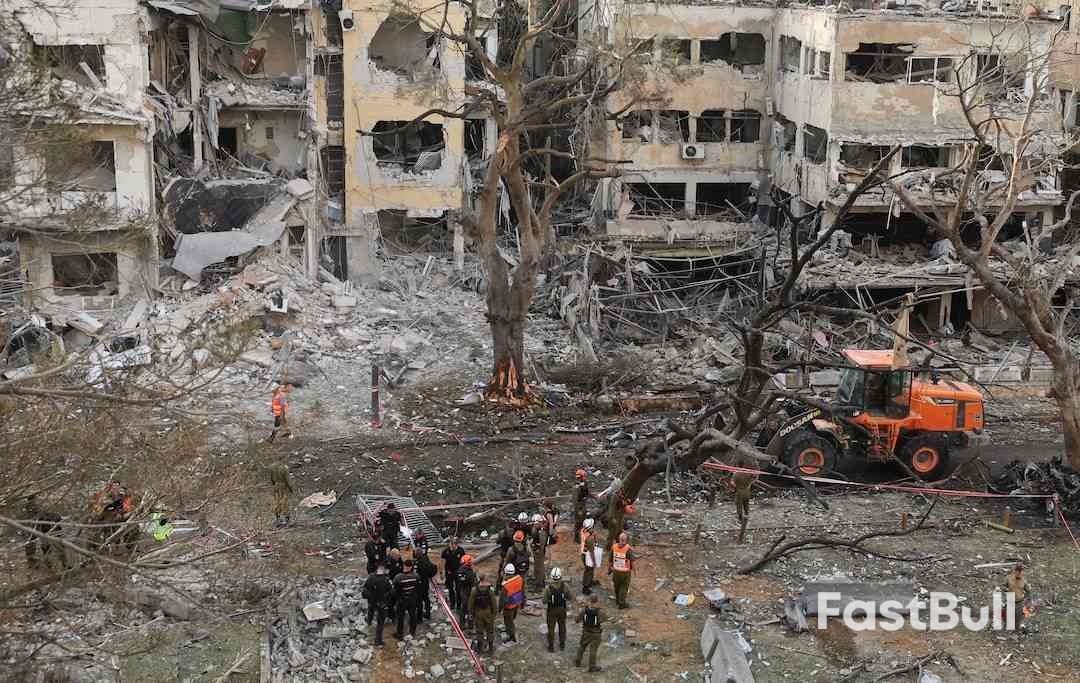
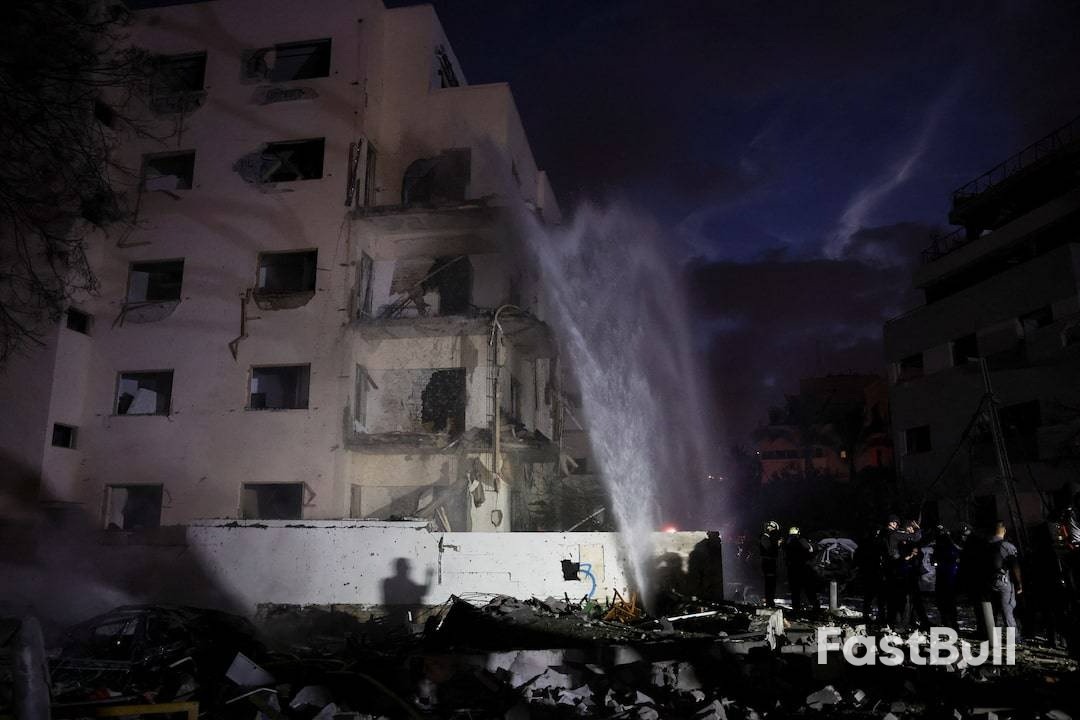
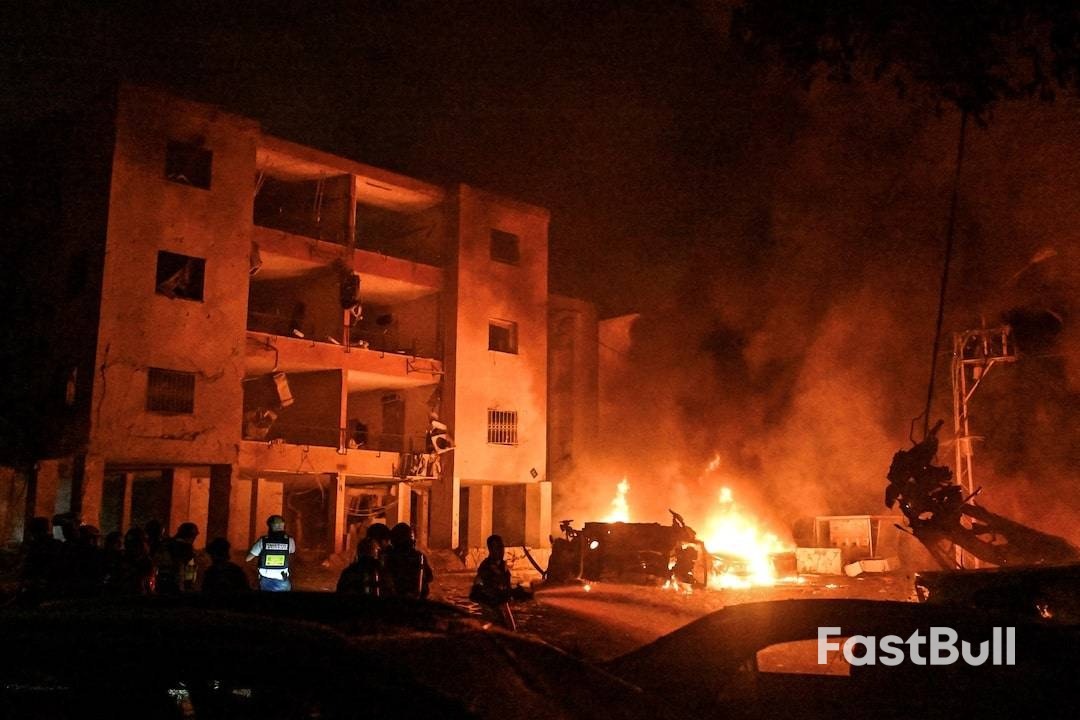
          In Israel, 24 people have been killed so far in Iran's missile attacks, all of them civilians. Round-the-clock television images showed rescuers working in ruins of flattened homes.
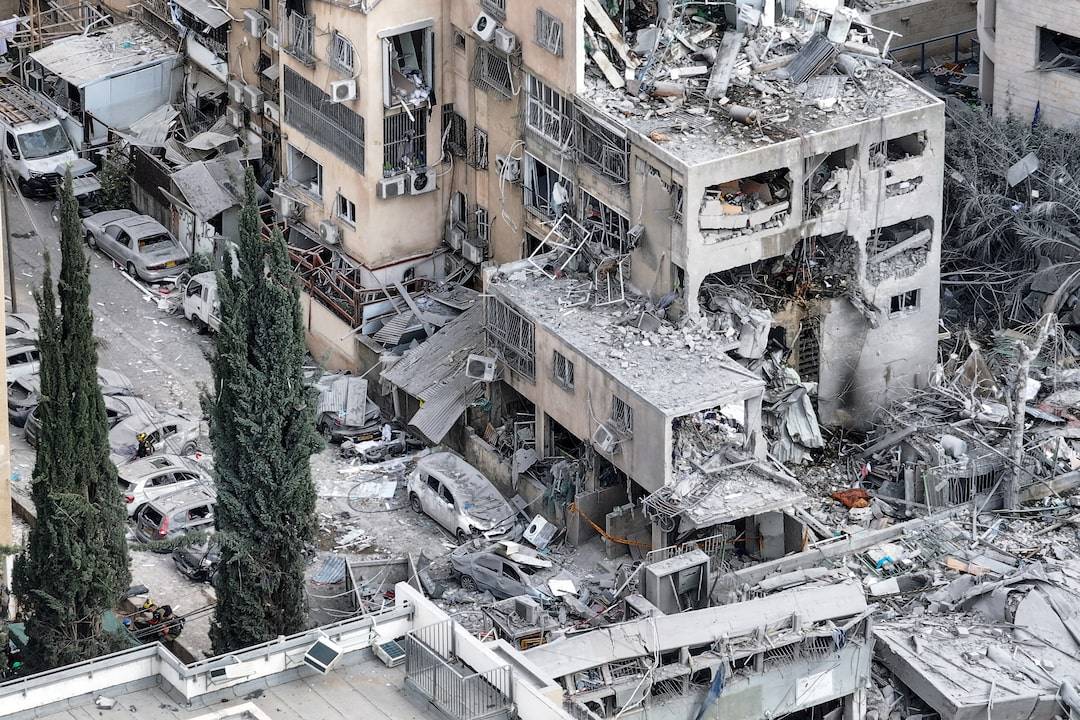

          Item 1 of 17 A drone photo shows the damage over residential homes and a school at the impact site following a missile attack from Iran on Israel, in Bnei Brak, Israel June 16, 2025. REUTERS/Chen Kalifa

          [1/17]A drone photo shows the damage over residential homes and a school at the impact site following a missile attack from Iran on Israel, in Bnei Brak, Israel June 16, 2025. REUTERS/Chen Kalifa Purchase Licensing Rights, opens new tab

          "It's terrifying because it's so unknown," said Guydo Tetelbaum, 31, a chef in Tel Aviv who was in his apartment when the alerts came in shortly after 4 a.m. (0100 GMT). He tried to reach a shelter but his door was blown in.

          Trump has consistently said the Israeli assault could end quickly if Iran agrees to U.S. demands that it accept strict curbs to its nuclear programme.

          Talks between the United States and Iran, hosted by Oman, had been scheduled for Sunday but were scrapped, with Tehran saying it could not negotiate while under attack.

          On Monday, Iranian lawmakers floated the idea of quitting the nuclear non-proliferation treaty, a move bound to be seen as a setback for any negotiations.

          'TEHRAN WILL PAY THE PRICE'

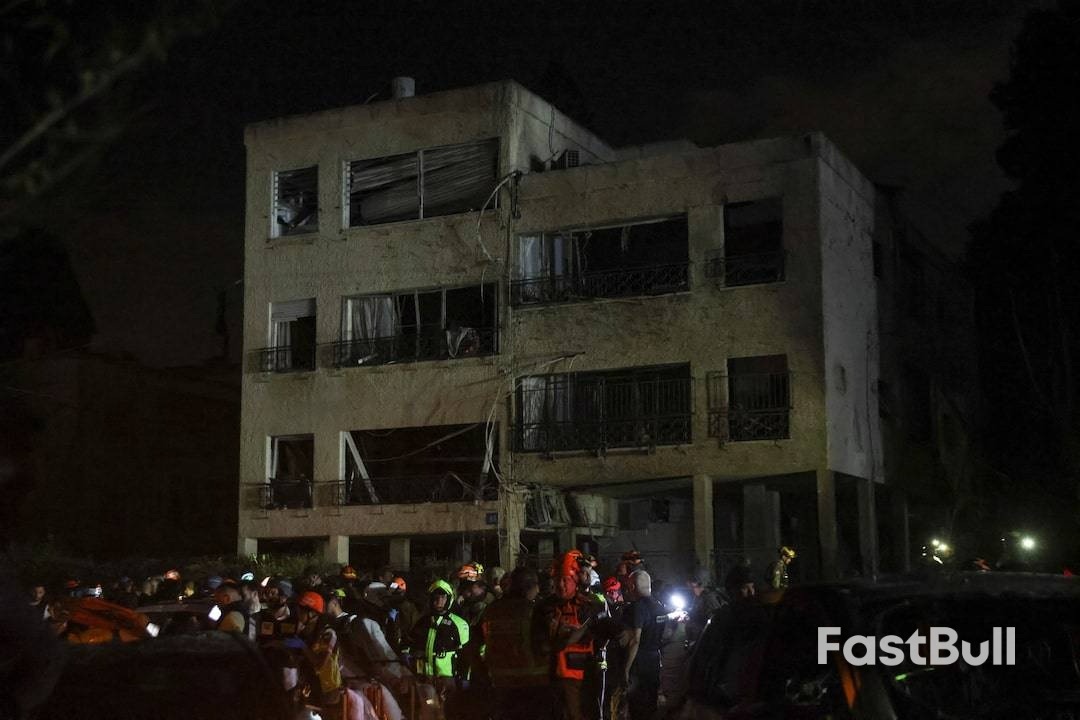
          Before dawn on Monday, Iranian missiles struck Tel Aviv and Haifa, killing at least eight people and destroying homes. Israeli authorities said seven of the missiles fired overnight had landed in Israel. At least 100 people were wounded.

          Iran's Revolutionary Guards said the latest attack employed a new method that caused Israel's multi-layered defence systems to target each other so missiles could get through.

          "The arrogant dictator of Tehran has become a cowardly murderer who targets the civilian home front in Israel to deter the IDF," Israeli Defence Minister Israel Katz said.

          "The residents of Tehran will pay the price, and soon."

          Global oil prices shot up on Friday at the prospect of conflict disrupting supplies from the Gulf. Prices eased on Monday, suggesting traders think exports could be spared despite Israeli attacks that hit domestic Iranian oil and gas targets.

          The sudden killing of so many Iranian military commanders and the apparent loss of control of airspace could prove to be the biggest test of the stability of Iran's system of clerical rule since the 1979 Islamic Revolution.

          Iran's network of regional allies who could once have been expected to rain rockets on Israel - Hamas in Gaza and Hezbollah in Lebanon - have been decimated by Israeli forces since the start of the Gaza war.

          Netanyahu has said that, while toppling the Iranian government is not Israel's primary aim, it believes that could be the outcome.

          Iran's currency has lost at least 10% of its value against the U.S. dollar since the start of Israel's attack.

          Art teacher Arshia, 29, told Reuters his family was leaving Tehran for the town of Damavand, around 50 km (30 miles) to the east, until the conflict was over.

          "My parents are scared. Every night there are attacks. No air raid sirens, and no shelters to go to. Why are we paying the price for the Islamic Republic's hostile policies?" said Arshia, who withheld his surname for fear of reprisal from authorities.
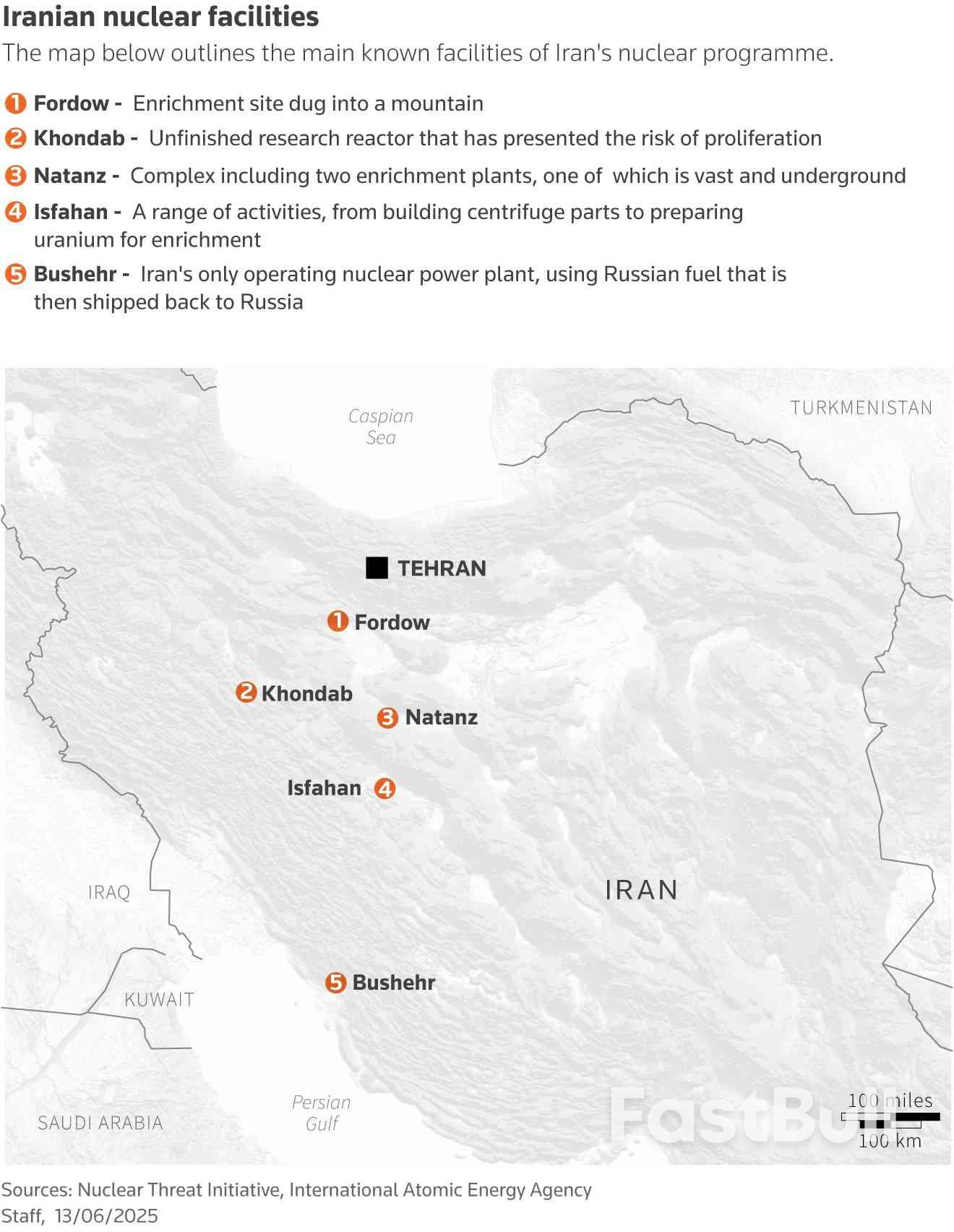
          the main known facilities of Iran's nuclear programme.
          Source: Reuters

          Risk Warnings and Disclaimers
          You understand and acknowledge that there is a high degree of risk involved in trading. Following any strategies or investment methods may lead to potential losses. The content on the site is provided by our contributors and analysts for information purposes only. You are solely responsible for determining whether any trading assets, securities, strategy, or any other product is suitable for investing based on your own investment objectives and financial situation.
          Add to Favorites
          Share

          Why US stocks aren't bracing for 'significant escalation' in Israel-Iran conflict yet

          Adam

          Stocks

          Economic

          Middle East Situation

          US stocks have remained resilient despite escalating tensions between Israel and Iran.
          Since Israel first launched missiles on Iran before the market open on Friday, the S&P 500 (^GSPC) is essentially flat.
          "So far, we think the US equity market hasn't baked in a significant escalation or broadening [of the conflict]," RBC Capital Markets head of US equity strategy research Lori Calvasina wrote in a note to clients on Sunday.
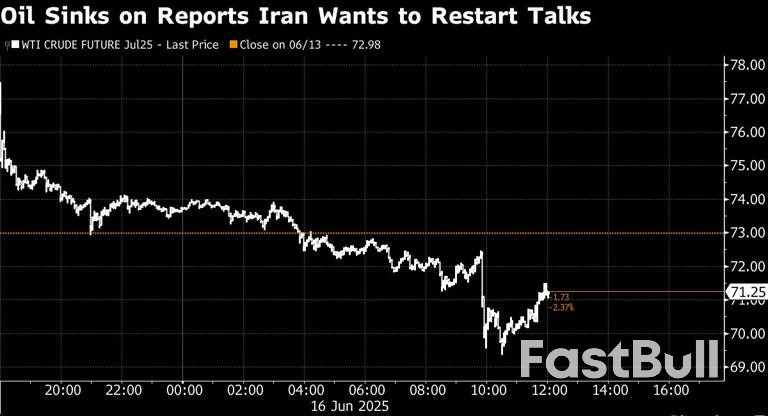
          Calvasina said the key risk to markets from the conflict would be an escalation of the attacks that leads to a jump in oil prices. Oil prices initially surged on Friday, with West Texas Intermediate futures (CL=F) hitting a high of $77 before paring back gains. By Monday morning, WTI futures had fallen to about $70 per barrel, reflecting just a 3% increase since the start of the conflict.
          Strategists have argued that a closure of the Strait of Hormuz — a waterway between the Persian Gulf and the Gulf of Oman that accounts for about 20% of global oil flows — would be the likely catalyst to keep sending oil prices higher. But that is looking increasingly unlikely.
          On Monday, the Wall Street Journal reported Iran is seeking to deescalate the conflict, citing insight from "Middle Eastern and European" officials. Stocks moved higher on the report, while oil futures quickly hit their lows of the session.
          For investors, the prevailing market fear of the conflict is that a large increase in oil prices could disrupt an already murky inflation picture, with investors waiting for increased tariffs to eventually lead to price increases later this year. This could keep the Federal Reserve from cutting interest rates and potentially weigh on the health of the US consumer.
          But as DataTrek Research co-founder Nick Colas pointed out in a note on Monday morning, that would typically require a large spike in oil prices. Colas analyzed the time period from 1987 through 2019 and found that WTI crude prices typically double compared to the previous year prior to recessions. Colas argued this puts the key level to watch for WTI crude at $120 a barrel, a far cry from the roughly $70 it sat at on Monday morning. This large of a jump in oil would require a "protracted bout of military action," per Colas.
          "While we assume Mideast tensions will soon subside, as they have repeatedly done over the last few years, oil prices can eventually impact the US economy and investors are best served by maintaining exposure to the Energy (XLE) sector," Colas wrote.

          Source: finance.yahoo

          To stay updated on all economic events of today, please check out our Economic calendar
          Risk Warnings and Disclaimers
          You understand and acknowledge that there is a high degree of risk involved in trading. Following any strategies or investment methods may lead to potential losses. The content on the site is provided by our contributors and analysts for information purposes only. You are solely responsible for determining whether any trading assets, securities, strategy, or any other product is suitable for investing based on your own investment objectives and financial situation.
          Add to Favorites
          Share

          Middle East chaos won’t drive gold prices to $4,000, but this will - Bank of America

          Adam

          Commodity

          Middle East Situation

          Gold prices have fallen back below $3,400 an ounce as the conflict between Israel and Iran has not seen regional escalation. But while the precious metal continues its broader consolidation, commodity analysts at Bank of America say it still has a path to $4,000 an ounce.
          In its latest report, the bank’s precious metals team, led by Michael Widmer stated that gold retains significant upside potential as investment demand has only just begun to grow. However, the analysts also cautioned that the chaos in the Middle East is not expected to provide sustainable bullish momentum for the yellow metal.
          Although gold is a popular safe-haven asset, historically, event-induced demand has never proven to be sustainable. Some analysts note that gold is facing selling pressure at the start of the week, as the conflict has not impacted global oil supplies—an event that would typically drive oil prices higher, influencing inflation and global economic growth.
          “When it comes to gold, wars are not always a clear-cut bullish price driver,” the analysts said. “The conflict adds, however, to the confluence of factors that have been supportive for the yellow metal.”
          Rather than focusing on specific geopolitical events, Bank of America analysts are monitoring the broader economic landscape and gold’s growing appeal as an important global monetary asset.
          This comes as U.S. government debt continues to grow at an unsustainable pace. Bank of America noted that gold is attracting new interest as Congress debates a new spending bill that aims to cut taxes—which is expected to increase the deficit by trillions of dollars.
          “Market concerns over fiscal sustainability are unlikely to fade, regardless of the outcome of Senate negotiations,” the analysts said. “Rates volatility and a weaker USD should then keep gold supported, especially if the U.S. Treasury or the Fed is ultimately forced to step in and support markets. As such, while wars and conflicts are usually not sustained price drivers, we see a path for gold to rally to $4,000/oz over the next 12 months.”
          Although gold appears a little crowded as prices have consolidated at elevated levels, Bank of America believes it still has room to grow.
          “We estimate that investors have allocated 3.5% of their portfolios (including global equity, investment-grade, and high-yield debt exposure) to gold, which does not seem excessive and remains below the all-time highs of 2011,” the analysts said. “Meanwhile, central banks have continued increasing their allocations. Their holdings are now equivalent to just under 18% of outstanding U.S. public debt, up from 13% a decade ago.”“That tally should serve as a warning to U.S. policymakers,” they said. “Continued apprehension over trade and U.S. fiscal deficits may well divert more central bank purchases away from U.S. Treasuries and into gold.”
          If demand does remain stable, the analysts expect gold prices to continue consolidating between $3,000 and $3,500 an ounce.
          A final supportive factor for gold is the broadening rally in the precious metals sector, as silver and platinum have attracted new bullish momentum.
          “Although silver had gone through a period of underperformance, the market has remained in deficit, mainly due to constrained mine supply. Hence, market participants have long anticipated a normalization in the gold-to-silver ratio, which has finally occurred, accompanied by an increase in assets under management at physically backed ETFs,” the analysts said. “We had a price objective of $40/oz for Q4 2025, so that rally arrived a bit earlier than we had anticipated, but we’re sticking with our forecast. If trade disputes normalize and global growth accelerates, silver should take another leg higher.”

          Source: Kitco

          Risk Warnings and Disclaimers
          You understand and acknowledge that there is a high degree of risk involved in trading. Following any strategies or investment methods may lead to potential losses. The content on the site is provided by our contributors and analysts for information purposes only. You are solely responsible for determining whether any trading assets, securities, strategy, or any other product is suitable for investing based on your own investment objectives and financial situation.
          Add to Favorites
          Share

          Stocks Rise on Reports Iran Wants to Restart Talks: Markets Wrap

          Adam

          Stocks

          Relative calm returned to global markets, with stocks climbing and oil sinking alongside gold as fears subsided that Israel’s war against Iran would escalate into a wider conflict. Equities extended gains on news reports Iran is signaling it wants to restart talks over nuclear programs.
          Equities bounced after Friday’s slide, with the S&P 500 up about 1%. West Texas Intermediate crude slid 2.5%, erasing an earlier rally. Treasuries moved away from session lows as the drop in oil eased inflation angst just days ahead of the Federal Reserve decision. Before that, the market will face a demand test during a $13 billion sale of 20-year bonds. The dollar fell.
          President Donald Trump said Iran wants to talk about de-escalating the conflict with Israel even as the two sides exchanged fire for the fourth consecutive day. Asked if the US would get more involved militarily, Trump said he didn’t want to discuss it.
          Tehran is signaling it wants to de-escalate hostilities with Israel and is willing to resume nuclear talks with the US as long as Washington doesn’t join the Israeli attacks, the Wall Street Journal reported Monday citing Middle Eastern and European officials it didn’t identify. A similar report by Reuters says Iran conveyed the message through Qatar, Saudi Arabia and Oman.
          The outbreak of hostilities between Israel and Iran disrupted the momentum that had driven the S&P 500 back near record levels. While markets initially adopted a cautious, risk-off stance to assess how the conflict might unfold, sentiment improved on Monday as investors speculated the attacks were unlikely to draw in more parties.
          “Focus will remain on geopolitical headlines, but as long as the conflict stays limited between Israel and Iran, it’s unlikely to materially impact the markets,” said Tom Essaye at The Sevens Report.
          Stocks Rise on Reports Iran Wants to Restart Talks: Markets Wrap_1
          “Markets got a reminder that tariffs aren’t the only potential source of market volatility,” said Chris Larkin at E*Trade from Morgan Stanley. “Right now, markets are signaling they expect the situation in the Middle East will remain contained, but any surprises could have an oversized impact on sentiment.”
          The S&P 500 risks sinking 20% if inflation spikes on the back of higher oil prices, according to a report by RBC Capital Markets strategists led by Lori Calvasina.
          In a worst-case scenario, they see the gauge returning to its April lows if the attacks drive up energy prices. And in a less-severe case, the index may fall about 13%, the strategists said.
          “The conflict has the potential to generate some additional angst about the health of the consumer, the broader economy, and the path of the Fed, a narrative shift that seems likely to be problematic for stock prices,” the strategists wrote in the note.
          Meantime, the trading desk at JPMorgan Chase & Co. led by head of global market intelligence Andrew Tyler said potential pullbacks ahead would present buying opportunities.
          They added that the bull case remains in place, assuming tariff relief in the longer term is still underway, but advised caution until there is more clarity on the US involvement in Middle East.
          Israel launched an attack on the South Pars gas field, forcing the halt of a production platform, following strikes on Iran’s nuclear sites and military leadership last week. However, critical crude oil-exporting infrastructure has so far been spared and there’s been no blockage of the vital Strait of Hormuz.
          While an attack on Iran’s gas production is a concern, the biggest fear for the oil market centers on Hormuz. Middle East producers ship about a fifth of the world’s daily output through the narrow waterway, and prices could soar further if Tehran attempts to disrupt shipments through the route.
          Iran is prepared to deliver a “major blow” to Israel following its recent strikes on Iranian cities and targets, Iran’s semi-official Mehr News Agency reported, citing a senior security official. The statement comes as Iranian state TV briefly went off air after an attack disrupted its broadcast.
          Tensions in the Middle East will only add to the conundrum that major central banks face as they assess risks to inflation and growth from tariffs and stop-start commerce flows.
          Investors will focus most on the Federal Reserve decision on Wednesday, with policymakers signaling an extended hold on rates. Investors and economists will look to Chair Jerome Powell for clues on what might eventually prompt the central bank to make a move, and when.

          source : Bloomberg

          Risk Warnings and Disclaimers
          You understand and acknowledge that there is a high degree of risk involved in trading. Following any strategies or investment methods may lead to potential losses. The content on the site is provided by our contributors and analysts for information purposes only. You are solely responsible for determining whether any trading assets, securities, strategy, or any other product is suitable for investing based on your own investment objectives and financial situation.
          Add to Favorites
          Share
          FastBull
          Copyright © 2025 FastBull Ltd

          728 RM B 7/F GEE LOK IND BLDG NO 34 HUNG TO RD KWUN TONG KLN HONG KONG

          TelegramInstagramTwitterfacebooklinkedin
          App Store Google Play Google Play
          Products
          Charts

          Chats

          Q&A with Experts
          Screeners
          Economic Calendar
          Data
          Tools
          Membership
          Features
          Function
          Markets
          Copy Trading
          Latest Signals
          Contests
          News
          Analysis
          24/7
          Columns
          Education
          Company
          Careers
          About Us
          Contact Us
          Advertising
          Help Center
          Feedback
          User Agreement
          Privacy Policy
          Business

          White Label

          Data API

          Web Plug-ins

          Poster Maker

          Affiliate Program

          Risk Disclosure

          The risk of loss in trading financial instruments such as stocks, FX, commodities, futures, bonds, ETFs and crypto can be substantial. You may sustain a total loss of the funds that you deposit with your broker. Therefore, you should carefully consider whether such trading is suitable for you in light of your circumstances and financial resources.

          No decision to invest should be made without thoroughly conducting due diligence by yourself or consulting with your financial advisors. Our web content might not suit you since we don't know your financial conditions and investment needs. Our financial information might have latency or contain inaccuracy, so you should be fully responsible for any of your trading and investment decisions. The company will not be responsible for your capital loss.

          Without getting permission from the website, you are not allowed to copy the website's graphics, texts, or trademarks. Intellectual property rights in the content or data incorporated into this website belong to its providers and exchange merchants.

          Not Logged In

          Log in to access more features

          FastBull Membership

          Not yet

          Purchase

          Become a signal provider
          Help Center
          Customer Service
          Dark Mode
          Price Up/Down Colors

          Log In

          Sign Up

          Position
          Layout
          Fullscreen
          Default to Chart
          The chart page opens by default when you visit fastbull.com