• Trade
  • Markets
  • Copy
  • Contests
  • News
  • 24/7
  • Calendar
  • Q&A
  • Chats
Trending
Screeners
SYMBOL
LAST
BID
ASK
HIGH
LOW
NET CHG.
%CHG.
SPREAD
SPX
S&P 500 Index
6827.42
6827.42
6827.42
6899.86
6801.80
-73.58
-1.07%
--
DJI
Dow Jones Industrial Average
48458.04
48458.04
48458.04
48886.86
48334.10
-245.98
-0.51%
--
IXIC
NASDAQ Composite Index
23195.16
23195.16
23195.16
23554.89
23094.51
-398.69
-1.69%
--
USDX
US Dollar Index
97.950
98.030
97.950
98.500
97.950
-0.370
-0.38%
--
EURUSD
Euro / US Dollar
1.17394
1.17409
1.17394
1.17496
1.17192
+0.00011
+ 0.01%
--
GBPUSD
Pound Sterling / US Dollar
1.33707
1.33732
1.33707
1.33997
1.33419
-0.00148
-0.11%
--
XAUUSD
Gold / US Dollar
4299.39
4299.39
4299.39
4353.41
4257.10
+20.10
+ 0.47%
--
WTI
Light Sweet Crude Oil
57.233
57.485
57.233
58.011
56.969
-0.408
-0.71%
--

Community Accounts

Signal Accounts
--
Profit Accounts
--
Loss Accounts
--
View More

Become a signal provider

Sell trading signals to earn additional income

View More

Guide to Copy Trading

Get started with ease and confidence

View More

Signal Accounts for Members

All Signal Accounts

Best Return
  • Best Return
  • Best P/L
  • Best MDD
Past 1W
  • Past 1W
  • Past 1M
  • Past 1Y

All Contests

  • All
  • Trump Updates
  • Recommend
  • Stocks
  • Cryptocurrencies
  • Central Banks
  • Featured News
Top News Only
Share

Syrian Interior Ministry Says Attacker Did Not Have Leadership Role In Security Forces, Did Not Say If He Was Junior Member

Share

Man Who Attacked Syrian, US Military Was Member Of Syrian Security Forces -Three Local Syrian Officials

Share

US Envoy Coale Says Belarus President Lukashenko Agreed To Do All He Can To Stop Weather Balloons Flying Into Lithuania

Share

Ukraine Says Russian Drone Attack Hit Civilian Turkish Vessel

Share

Islamic State Attacker In Syria Was Lone Gunman, Who Was Killed -USA Central Command

Share

US Envoy John Coale Says Around 1000 Remaining Political Prisoners In Belarus Could Be Released In Coming Months

Share

US Defense Secretary Hegseth: Attacker Was Killed By Partner Forces

Share

Pentagon Says Two USA Army Soldiers And One Civilian USA Interpreter Were Killed, And Three Were Wounded In Syria

Share

Israel Says It Kills Senior Hamas Commander Raed Saed In Gaza

Share

Ukraine's Navy Says Russian Drone Attack Hit Civilian Turkish Vessel Carrying Sunflower Oil To Egypt On Saturday

Share

Israeli Military Says It Put Planned Strike On South Lebanon Site On Hold After Lebanese Army Requested Access

Share

Norwegian Nobel Committee: Calls On The Belarusian Authorities To Release All Political Prisoners

Share

Norwegian Nobel Committee: His Freedom Is A Deeply Welcome And Long-Awaited Moment

Share

Ukraine Says It Received 114 Prisoners From Belarus

Share

USA Embassy In Lithuania: Maria Kalesnikava Is Not Going To Vilnius

Share

USA Embassy In Lithuania: Other Prisoners Are Being Sent From Belarus To Ukraine

Share

Ukraine President Zelenskiy: Five Ukrainians Released By Belarus In US-Brokered Deal

Share

USA Vilnius Embassy: USA Stands Ready For "Additional Engagement With Belarus That Advances USA Interests"

Share

USA Vilnius Embassy: Belarus, USA, Other Citizens Among The Prisoners Released Into Lithuania

Share

USA Vilnius Embassy: USA Will Continue Diplomatic Efforts To Free The Remaining Political Prisoners In Belarus

TIME
ACT
FCST
PREV
U.K. Trade Balance Non-EU (SA) (Oct)

A:--

F: --

P: --

U.K. Trade Balance (Oct)

A:--

F: --

P: --

U.K. Services Index MoM

A:--

F: --

P: --

U.K. Construction Output MoM (SA) (Oct)

A:--

F: --

P: --

U.K. Industrial Output YoY (Oct)

A:--

F: --

P: --

U.K. Trade Balance (SA) (Oct)

A:--

F: --

P: --

U.K. Trade Balance EU (SA) (Oct)

A:--

F: --

P: --

U.K. Manufacturing Output YoY (Oct)

A:--

F: --

P: --

U.K. GDP MoM (Oct)

A:--

F: --

P: --

U.K. GDP YoY (SA) (Oct)

A:--

F: --

P: --

U.K. Industrial Output MoM (Oct)

A:--

F: --

P: --

U.K. Construction Output YoY (Oct)

A:--

F: --

P: --

France HICP Final MoM (Nov)

A:--

F: --

P: --

China, Mainland Outstanding Loans Growth YoY (Nov)

A:--

F: --

P: --

China, Mainland M2 Money Supply YoY (Nov)

A:--

F: --

P: --

China, Mainland M0 Money Supply YoY (Nov)

A:--

F: --

P: --

China, Mainland M1 Money Supply YoY (Nov)

A:--

F: --

P: --

India CPI YoY (Nov)

A:--

F: --

P: --

India Deposit Gowth YoY

A:--

F: --

P: --

Brazil Services Growth YoY (Oct)

A:--

F: --

P: --

Mexico Industrial Output YoY (Oct)

A:--

F: --

P: --

Russia Trade Balance (Oct)

A:--

F: --

P: --

Philadelphia Fed President Henry Paulson delivers a speech
Canada Building Permits MoM (SA) (Oct)

A:--

F: --

P: --

Canada Wholesale Sales YoY (Oct)

A:--

F: --

P: --

Canada Wholesale Inventory MoM (Oct)

A:--

F: --

P: --

Canada Wholesale Inventory YoY (Oct)

A:--

F: --

P: --

Canada Wholesale Sales MoM (SA) (Oct)

A:--

F: --

P: --

Germany Current Account (Not SA) (Oct)

A:--

F: --

P: --

U.S. Weekly Total Rig Count

A:--

F: --

P: --

U.S. Weekly Total Oil Rig Count

A:--

F: --

P: --

Japan Tankan Large Non-Manufacturing Diffusion Index (Q4)

--

F: --

P: --

Japan Tankan Small Manufacturing Outlook Index (Q4)

--

F: --

P: --

Japan Tankan Large Non-Manufacturing Outlook Index (Q4)

--

F: --

P: --

Japan Tankan Large Manufacturing Outlook Index (Q4)

--

F: --

P: --

Japan Tankan Small Manufacturing Diffusion Index (Q4)

--

F: --

P: --

Japan Tankan Large Manufacturing Diffusion Index (Q4)

--

F: --

P: --

Japan Tankan Large-Enterprise Capital Expenditure YoY (Q4)

--

F: --

P: --

U.K. Rightmove House Price Index YoY (Dec)

--

F: --

P: --

China, Mainland Industrial Output YoY (YTD) (Nov)

--

F: --

P: --

China, Mainland Urban Area Unemployment Rate (Nov)

--

F: --

P: --

Saudi Arabia CPI YoY (Nov)

--

F: --

P: --

Euro Zone Industrial Output YoY (Oct)

--

F: --

P: --

Euro Zone Industrial Output MoM (Oct)

--

F: --

P: --

Canada Existing Home Sales MoM (Nov)

--

F: --

P: --

Euro Zone Total Reserve Assets (Nov)

--

F: --

P: --

U.K. Inflation Rate Expectations

--

F: --

P: --

Canada National Economic Confidence Index

--

F: --

P: --

Canada New Housing Starts (Nov)

--

F: --

P: --

U.S. NY Fed Manufacturing Employment Index (Dec)

--

F: --

P: --

U.S. NY Fed Manufacturing Index (Dec)

--

F: --

P: --

Canada Core CPI YoY (Nov)

--

F: --

P: --

Canada Manufacturing Unfilled Orders MoM (Oct)

--

F: --

P: --

Canada Manufacturing New Orders MoM (Oct)

--

F: --

P: --

Canada Core CPI MoM (Nov)

--

F: --

P: --

Canada Manufacturing Inventory MoM (Oct)

--

F: --

P: --

Canada CPI YoY (Nov)

--

F: --

P: --

Canada CPI MoM (Nov)

--

F: --

P: --

Canada CPI YoY (SA) (Nov)

--

F: --

P: --

Canada Core CPI MoM (SA) (Nov)

--

F: --

P: --

Q&A with Experts
    • All
    • Chatrooms
    • Groups
    • Friends
    Connecting
    .
    .
    .
    Type here...
    Add Symbol or Code

      No matching data

      All
      Trump Updates
      Recommend
      Stocks
      Cryptocurrencies
      Central Banks
      Featured News
      • All
      • Russia-Ukraine Conflict
      • Middle East Flashpoint
      • All
      • Russia-Ukraine Conflict
      • Middle East Flashpoint
      Search
      Products

      Charts Free Forever

      Chats Q&A with Experts
      Screeners Economic Calendar Data Tools
      Membership Features
      Data Warehouse Market Trends Institutional Data Policy Rates Macro

      Market Trends

      Market Sentiment Order Book Forex Correlations

      Top Indicators

      Charts Free Forever
      Markets

      News

      News Analysis 24/7 Columns Education
      From Institutions From Analysts
      Topics Columnists

      Latest Views

      Latest Views

      Trending Topics

      Top Columnists

      Latest Update

      Signals

      Copy Rankings Latest Signals Become a signal provider AI Rating
      Contests
      Brokers

      Overview Brokers Assessment Rankings Regulators News Claims
      Broker listing Forex Brokers Comparison Tool Live Spread Comparison Scam
      Q&A Complaint Scam Alert Videos Tips to Detect Scam
      More

      Business
      Events
      Careers About Us Advertising Help Center

      White Label

      Data API

      Web Plug-ins

      Affiliate Program

      Awards Institution Evaluation IB Seminar Salon Event Exhibition
      Vietnam Thailand Singapore Dubai
      Fans Party Investment Sharing Session
      FastBull Summit BrokersView Expo
      Recent Searches
        Top Searches
          Markets
          News
          Analysis
          User
          24/7
          Economic Calendar
          Education
          Data
          • Names
          • Latest
          • Prev

          View All

          No data

          Scan to Download

          Faster Charts, Chat Faster!

          Download App
          English
          • English
          • Español
          • العربية
          • Bahasa Indonesia
          • Bahasa Melayu
          • Tiếng Việt
          • ภาษาไทย
          • Français
          • Italiano
          • Türkçe
          • Русский язык
          • 简中
          • 繁中
          Open Account
          Search
          Products
          Charts Free Forever
          Markets
          News
          Signals

          Copy Rankings Latest Signals Become a signal provider AI Rating
          Contests
          Brokers

          Overview Brokers Assessment Rankings Regulators News Claims
          Broker listing Forex Brokers Comparison Tool Live Spread Comparison Scam
          Q&A Complaint Scam Alert Videos Tips to Detect Scam
          More

          Business
          Events
          Careers About Us Advertising Help Center

          White Label

          Data API

          Web Plug-ins

          Affiliate Program

          Awards Institution Evaluation IB Seminar Salon Event Exhibition
          Vietnam Thailand Singapore Dubai
          Fans Party Investment Sharing Session
          FastBull Summit BrokersView Expo

          Trump Hints at Major Trade Deal Beyond Tariffs

          Manuel

          Cryptocurrency

          China–U.S. Trade War

          Summary:

          President Trump indicated a major trade deal in development, noting its potential to surpass current tariff frameworks. This announcement, without specific trade details, piqued the interest of global trade circles.
          President Donald Trump announced the prospect of a "beautiful big deal" in the trade sector, potentially more significant than existing tariffs, according to ChainCatcher News.
          The potential trade deal suggested by Trump may alter international trade landscapes, sparking broad economic interest. His statement did not directly impact cryptocurrency markets, as tracked digital assets showed no unusual movements.

          Trump's Trade Deal Proposal to Surpass Tariff Strategies

          President Trump indicated a major trade deal in development, noting its potential to surpass current tariff frameworks. This announcement, without specific trade details, piqued the interest of global trade circles.
          The lack of specifics in Trump's announcement means the immediate implications remain unclear. However, such a move could reshape global trade strategies, reflecting Trump's emphasis on leveraging negotiation for trade deals. "A 'beautiful big deal' is coming, possibly bigger than tariffs," President Trump remarked, highlighting the potential magnitude of the changes.
          Community and market responses have been measured. With previous trade deal statements leading to significant market shifts, such announcements often attract mixed reactions from political and economic analysts, though the cryptocurrency sector remains largely unaffected.

          Limited Cryptocurrency Impact Despite Broader Market Reactions

          Did you know? President Trump’s trade announcements in the past sometimes led to stock market volatility but have shown limited direct effects on cryptocurrencies.
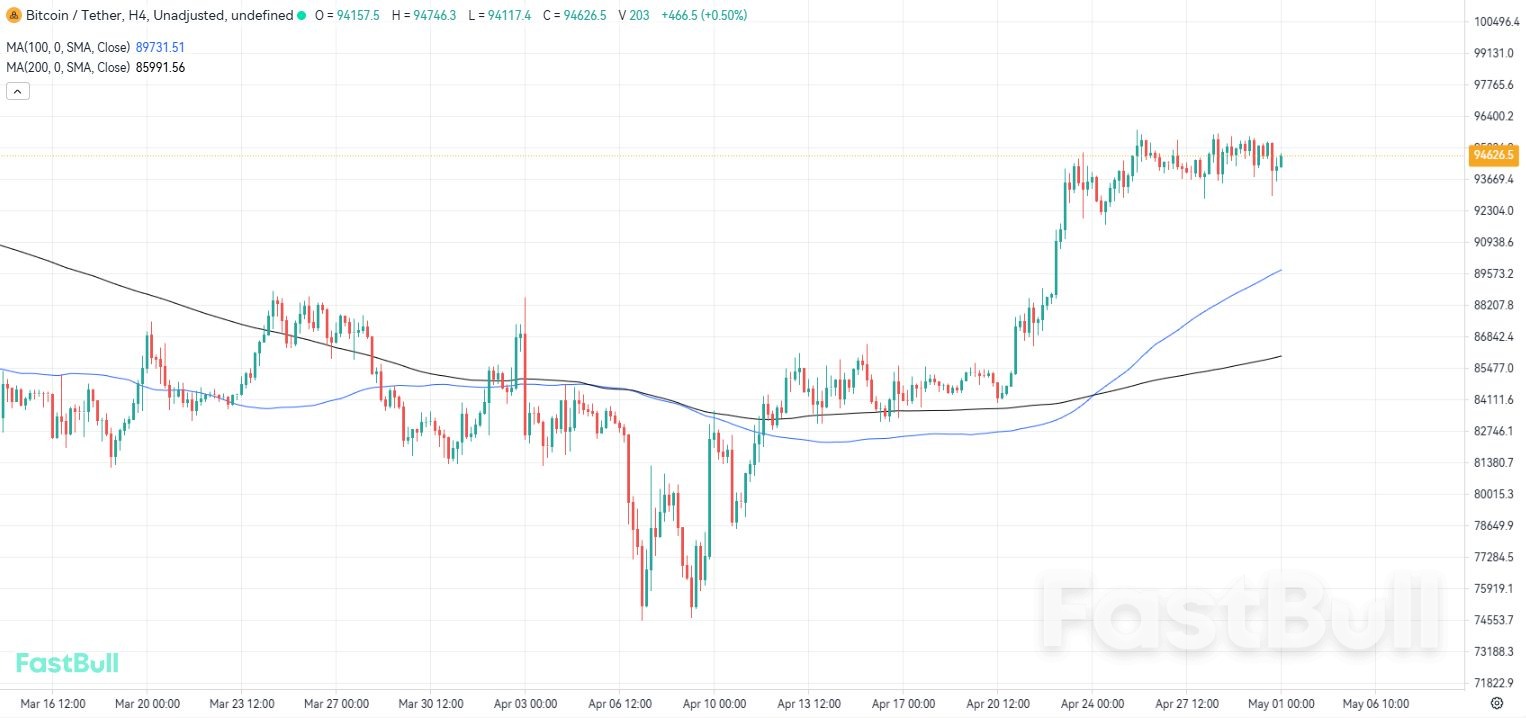
          Bitcoin (BTC) trades at $94,557.97 with a market cap of 1.88 trillion, maintaining a 63.65% market dominance as per CoinMarketCap. Recently, BTC saw a 0.53% drop in 24-hours, yet experienced a 14.39% rise over 30 days. These fluctuations mirror broader market dynamics reported on April 30, 2025.Trump Hints at Major Trade Deal Beyond Tariffs_1
          According to Coincu research, while Trump's announcement might influence traditional markets, the cryptocurrency sector remains largely insulated unless detailed trade impacts on related fintech technologies emerge. Historical connections between trade policies and crypto values suggest limited effects, contrary to broader financial indices. President Trump's pledge to revitalize the crypto industry further underscores the need for attentive monitoring of his market strategies.

          Source: Coincu

          Risk Warnings and Disclaimers
          You understand and acknowledge that there is a high degree of risk involved in trading. Following any strategies or investment methods may lead to potential losses. The content on the site is provided by our contributors and analysts for information purposes only. You are solely responsible for determining whether any trading assets, securities, strategy, or any other product is suitable for investing based on your own investment objectives and financial situation.
          Add to Favorites
          Share

          Solana Policy Institute, Superstate, and Orca Seek SEC Approval for Securities Trading on Public Blockchains

          Manuel

          Cryptocurrency

          Political

          A coalition led by the Solana Policy Institute, decentralized exchange Orca, and registered investment adviser Superstate has filed a request with the US Securities and Exchange Commission (SEC) to launch a pilot program for the issuance and secondary trading of securities on public blockchains.
          The April 30 filing proposes that the SEC grant exemptive relief to facilitate the project, named “Project Open,” under existing regulatory frameworks.
          The initiative would allow US entities to issue securities on public blockchain networks and permit investors to trade those securities through compliant interfaces. Orca would serve as the venue for secondary transactions.
          Solana Policy Institute CEO Miller Whitehouse-Levine said:
          “Project Open is an embodiment of American progress in financial innovation. Our goal is to work constructively with the SEC and industry partners to create internet capital markets, and make all capital markets more efficient, accessible, and transparent.”
          Superstate would issue the securities, while the Solana Policy Institute would coordinate technical and regulatory engagement.
          The filing is structured as a time-limited pilot under SEC Rules 5b-3 and 15c3-3, requesting regulatory relief to design and operate a market structure compatible with existing investor protection rules while utilizing blockchain settlement layers.
          The sponsors aim to demonstrate that publicly accessible blockchains can support transparent and compliant markets for traditional securities.

          Project Open

          The proposal would allow the issuance of tokens to represent securities on a public blockchain, like Solana (SOL), allowing for programmable compliance features and settlement mechanisms.
          The securities would be available to eligible investors through interfaces governed by know-your-customer (KYC) and anti-money laundering (AML) requirements.
          Orca would provide the liquidity venue and price discovery, while Superstate, already operating under an SEC-registered investment advisor (RIA) structure, would serve as the issuer. The pilot proposes a measured scope, targeting limited asset types and capped transaction volumes.
          It seeks to evaluate the feasibility of public blockchain infrastructure as an alternative to existing clearing and settlement systems such as DTCC, with a focus on regulatory auditability, transparency, and operational resilience.
          The coalition seeks no-action relief or exemption orders from the SEC’s Divisions of Trading and Markets and Investment Management.
          The petition also outlines legal arguments asserting that the pilot would remain within the bounds of the Investment Company Act and Exchange Act, given its narrow structure and oversight features.

          Regulatory engagement amid market evolution

          The filing arrives at a time when the SEC is increasing its engagement with tokenization and blockchain-based infrastructure.
          Project Open explicitly calls for the use of public, decentralized blockchain infrastructure. The sponsors argue that public chains offer verifiable audit trails, open access to market data, and lower barriers to entry for issuers and intermediaries, aligning with the SEC’s long-term goals for transparency and investor protection.
          The pilot would also provide empirical data on investor behavior, system performance, and compliance monitoring in a blockchain-native environment, which would inform future policymaking.
          The filing includes technical documentation detailing the cryptographic settlement model, token standards, and access controls to support supervisory visibility and enforce compliance.
          The SEC has not issued a formal response, and there is no current timeline for a decision.
          If approved, the Project Open pilot would represent one of the first SEC-sanctioned efforts to operationalize securities trading directly on a public blockchain with a registered asset manager and decentralized exchange as counterparties.

          Source: Cryptoslate

          Risk Warnings and Disclaimers
          You understand and acknowledge that there is a high degree of risk involved in trading. Following any strategies or investment methods may lead to potential losses. The content on the site is provided by our contributors and analysts for information purposes only. You are solely responsible for determining whether any trading assets, securities, strategy, or any other product is suitable for investing based on your own investment objectives and financial situation.
          Add to Favorites
          Share

          Fed Signals Rates Will remain Unchanged Despite Market Bets on Looming Cuts

          Manuel

          China–U.S. Trade War

          Central Bank

          Federal Reserve policymakers have signaled that short-term interest rates will remain unchanged as they wait for clearer signs that inflation is nearing the U.S. central bank's 2% goal or until there is a whiff of a deteriorating job market.
          The data so far has presented neither of those scenarios to the Fed, and though economists say the real drag from President Donald Trump's aggressive import tariffs lies ahead, there is a great amount of uncertainty over where the policies will end up and the degree and timing of their impact on prices and jobs.
          "The cone of possibilities," as Cleveland Fed President Beth Hammack put it recently, is quite large, and includes the possibility of persistently higher inflation coupled with a slowdown in economic activity that would require the central bank to pick which battle to fight.
          That dilemma has not stopped traders from betting that by June a faltering economy will likely move the Fed to resume its rate cuts, ultimately lowering borrowing costs by a full percentage point by the end of this year. They added to those bets on Wednesday after data showed the U.S. economy shrank last quarter and the Fed's preferred measure of price inflation did not rise at all on a monthly basis in March.
          But while economists say such a rate-cutting scenario is not out of the question, they are quick to note that inflation remains elevated, and is likely to worsen at least temporarily as retailers raise prices to cover higher costs from the sharp increase in import levies.
          The Personal Consumption Expenditures Price Index excluding volatile food and energy prices, which Fed officials feel maps best to where inflation is headed, eased to 2.6% in March from 3% in February, the data showed.
          Longer-term inflation expectations remain largely grounded, but a few Fed policymakers have taken note of a sharp rise in short-term inflation expectations that they worry could set the stage for a resurgence in price pressures.
          "The Fed's in a very tricky spot; you have inflation that is already above target, you have inflation expectations that are, sort of showing that, perhaps they're becoming a little unhinged," said Tom Porcelli, chief U.S. economist at PGIM Fixed Income. "And we're now waiting for the inflation to show up on the back of tariffs. I mean, the Fed is on hold."
          At the same time, Fed policymakers are keenly focused on the potential for tariffs to slow the economy and potentially trigger layoffs, a situation that in the absence of persistent inflation would move them to cut rates, perhaps sharply. That's not evident so far.

          'PERIOD OF STAGNATION'

          The U.S. economy contracted by an annualized 0.3% last quarter in large part because U.S. businesses rushed to buy imported goods ahead of Trump's tariffs. The report also showed consumer spending down-shifted from a 4% growth pace last quarter to a still-decent 1.8%, and business investment soared.
          The GDP report overall would allow the Fed to continue to characterize economic activity as "solid," though only in the rear-view mirror, said Gregory Daco, chief economist at EY Parthenon.
          "This shock is unlike anything we've seen before," Daco said. "It's a massive self-imposed supply shock resulting from policy uncertainty, market volatility, surging tariffs and monetary policy inertia."
          The front-loading of demand in the first quarter, he said, sets the stage for a drop-off in demand this quarter, "a far more troubling phase of the ongoing economic slowdown."
          Or as Pantheon Macro economists wrote, "A period of stagnation now likely lies ahead if the current set of tariffs is maintained, with recession the most likely outcome" if the sweeping import duties Trump announced on April 2 and then partially paused come into force in July. The Trump administration, which this week eased some tariffs on automakers, says trade talks are ongoing.
          On Friday policymakers will get some of the first data on the current quarter, with the Labor Department's closely watched monthly jobs report expected to show a slowdown in hiring but no change in the 4.2% unemployment rate.
          The Fed is nearly universally expected to hold its benchmark overnight interest rate in the current 4.25%-4.50% range at the end of a two-day policy meeting next week.
          Futures contracts that settle to the Fed's policy rate continue to suggest that the rate cuts would resume in June, with a total of four quarter-percentage-point reductions likely. The U.S. central bank cut rates three times last year, for a total of 100 basis points of easing.

          Source: Reuters

          Risk Warnings and Disclaimers
          You understand and acknowledge that there is a high degree of risk involved in trading. Following any strategies or investment methods may lead to potential losses. The content on the site is provided by our contributors and analysts for information purposes only. You are solely responsible for determining whether any trading assets, securities, strategy, or any other product is suitable for investing based on your own investment objectives and financial situation.
          Add to Favorites
          Share

          Muddied GDP Report Leaves Investors With Little Clarity About Economic Risk

          Manuel

          Economic

          Forex

          Investors were left with little clarity on Wednesday about the health of the U.S. economy despite a fresh report on gross domestic product, with the fallout from President Donald Trump's sweeping tariffs muddying growth signals.
          On its face, the first-quarter data showing the first U.S. economic contraction since 2022 was alarming and brought immediate pressure on U.S. stocks.
          But some economists had braced for an even deeper contraction and were encouraged by the data. The weakness stemmed from a surge in imports as businesses sought to avoid higher costs from the new tariffs, a phenomenon that many analysts said was poised to reverse in coming months.
          Investors faced a similar position as they had before the highly anticipated report, vulnerable to twists and turns in Trump's very much unresolved trade war that stood to keep markets on edge and the potential for a recession still on the table.
          "There's just massive distortion and volatility in the economic data right now because of the pull-through of tariffs," said Matthew Miskin, co-chief investment strategist at John Hancock Investment Management. The GDP report "doesn't help shake off this economic contraction fear that has been gripping markets."
          U.S. gross domestic product fell at a 0.3% annualized rate last quarter. Imports jumped at a 41.3% rate, resulting in a large trade gap that chopped off a record 4.83 percentage points from GDP.
          "It's more frustration for the long term investor because you're not getting a really good read on what the actual economy is doing," Mark Hackett, chief market strategist at Nationwide. "We need to know what's happening in the economy ... and reports like this don't give us a lot of useful data on that."
          Larry Werther, chief U.S. economist of Daiwa Capital Markets America, said he was encouraged that consumer spending, which accounts for more than two-thirds of the economy, grew at a 1.8% rate, indicating "the domestic economy was still on track" in the first quarter.
          Recession was not Werther's base assumption "but odds of it in the next 12 months have increased substantially" from the start of the year, he said.
          Meanwhile, the persistent uncertainty itself poses a risk to markets.
          "This period where tariffs are trying to be negotiated and acknowledged by the market makes things extremely difficult to model, predict, etc," said Peter Andersen, founder of Andersen Capital Management in Boston.

          STOCKS FALL AFTER GDP REPORT

          Stock futures fell sharply after the report but major averages pared some of their losses by mid-day. The S&P 500 was last off about 1%, and down 10% from its February record high.
          Wednesday's data leaves investors at a crossroads: On the one hand, even allowing for the one-off tariffs-related hit, the growth picture looks lackluster; while on the other hand, with markets braced for the worst, any signs of better-than-expected data in coming months could spark a rally in risk sentiment.
          "People are positioned conservatively ... and when that happens, it doesn't take a ton of good news to move the markets pretty violently positive," Nationwide's Hackett said.
          In the meantime, investors are trying to position for a variety of outcomes. Lack of clarity on the tariff situation is leading Sonu Varghese, global macro strategist at Carson Group, to favor a "barbell" approach to portfolios, with defensive, low-volatility stocks at one end and high-momentum, growth equities at the other.
          Investors will quickly get another view of the economy on Friday, with the release of the U.S. employment report.
          "Everything else is skewed because of tariffs ... but right now consumption is still holding the economy together," Varghese said.
          "If the labor market starts to falter here, then we have a big problem going forward."

          Source: Reuters

          To stay updated on all economic events of today, please check out our Economic calendar
          Risk Warnings and Disclaimers
          You understand and acknowledge that there is a high degree of risk involved in trading. Following any strategies or investment methods may lead to potential losses. The content on the site is provided by our contributors and analysts for information purposes only. You are solely responsible for determining whether any trading assets, securities, strategy, or any other product is suitable for investing based on your own investment objectives and financial situation.
          Add to Favorites
          Share

          Oil Plunges On Report Saudis Bracing For Price War, Can "Live With Lower Oil Prices"

          Thomas

          Economic

          Commodity

          It had already been a miserable month for oil, which has suffered its worst monthly performance since 2021 and also is on pace for its month of April on record... and then it got even worse when shortly before noon ET, when Reuters reported, citing multiple sources, that Saudi Arabian officials are briefing allies and industry experts to say the kingdom is unwilling to prop up the oil market with further supply cuts and can handle a prolonged period of low prices.

          This shift in Saudi policy could suggest a move toward producing more and expanding its market share, a major change after five years spent balancing the market through deep output as a leader of the OPEC+ group of oil producers. Those cuts had supported prices, in turn bolstering the oil export revenue that many oil producers rely on, but many OPEC+ members - most notably Kazakhstan - took advantage of the production restraint and blew away through their export quotas, infuriating other cartel members.

          Sure enough, Reuters notes that Riyadh has been angered by Kazakhstan and Iraq producing above their OPEC+ targets. And after pushing members to adhere to those targets and to compensate for oversupply in recent months, a frustrated Riyadh is changing tack, OPEC+ sources said.

          Saudi Arabia pushed for a larger-than-planned OPEC+ output hike in May, a decision that helped send oil prices below $60 a barrel to a 4-year low.

          And now that Kazahkstan blew it for all cartel members, everyone will share the pain equally, as lower prices are bad news for producers that rely on oil exports to fund their economies. Although producers like Saudi have a very low cost of production, they need higher oil prices to pay for government spending. When oil prices fall, many large oil-producing countries come under pressure to cut their budgets.

          And just to confirm that they are not bluffing, the Saudis appear to be briefing allies and experts that they are ready to do just that. The last time they did just that was in March 2020, just before covid shut down the global economy and briefly sent oil prices negative, sparking budget crises across all OPEC members.

          Saudi officials in recent weeks have told allies and market participants the kingdom can live with the fall in prices by raising borrowing and cutting costs, the five sources said.

          "The Saudis are ready for lower prices and may need to pull back on some major projects," one of the sources said. All sources declined to be named due to sensitivity of the issue.

          The problem is that Saudi Arabia needs oil prices above $90 to balance its budget, higher than other large OPEC producers such as the United Arab Emirates, according to the International Monetary Fund (IMF). As a result, Riyadh may need to delay or cut back some projects due to the price drop, analysts have said.

          OPEC+, which besides the Organization of the Petroleum Exporting Countries also includes allies such as Russia, may decide to speed up output hikes again in June, OPEC+ sources have said. OPEC+ is cutting output by over 5 million barrels or 5% of global supply, to which Saudi Arabia is contributing two-fifths.

          Russia, the second largest exporter in OPEC+ behind Saudi Arabia, is aware of Riyadh's plans for faster output increases, said two of the five sources who are familiar with the Russian thinking and conversations with Riyadh. Even so, Russia would prefer the group stick to slower output increases.

          Saudi Arabia and Russia, the de facto leaders of OPEC+, make the biggest contributions to OPEC+ cuts. Russia's budget balances at about $70 a barrel and the Kremlin's spending is on the rise due to the Russian war in Ukraine.

          Russia may see a further fall in revenue as prices for its discounted, sanctioned oil could fall below $50 a barrel as a result of OPEC+ output rises, one of the two sources said.

          Theories on the apparent change in Saudi strategy range from punishing OPEC+ members exceeding their quotas to a move to fight for market share after ceding ground to non-OPEC+ producers such as the United States and Guyana. Higher output may also be a fillip to U.S. President Donald Trump, who has called for OPEC to boost output to help keep U.S. gasoline prices down.

          Trump is due to visit Saudi Arabia in May and could offer Riyadh an arms package and a nuclear agreement. OPEC+ decided to triple its planned output increase to 411,000 bpd.

          That still leaves OPEC+ holding back more than 5 million bpd, curbs the group aims to unwind by the end of 2026.

          "We would still call this a 'managed' unwind of cuts and not a fight for market share," UBS analyst Giovanni Staunovo said.

          “This confirms the market’s fears that Saudi Arabia’s accelerated unwinds were not temporary, but a long-term strategy shift,” said Rebecca Babin, a senior energy trader at CIBC Private Wealth Group. It raises the question of whether “Saudi is going to repeat the 2020 playbook to dramatically increase production.”

          For now the market is voting "yes", and the news sent WTI tumbling as much as 4%,or more than $2 to just under $58, the lowest price since early 2021 (and a level which was only briefly breached after Trump's Liberation Day sent oil to $55 before rebounding rapidly).
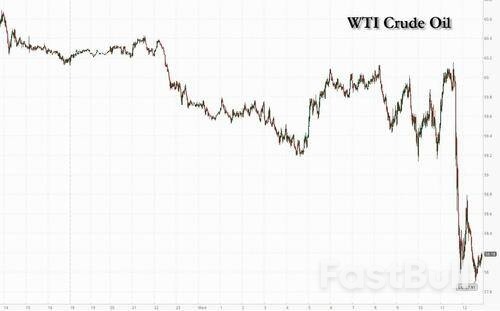
          OPEC+ rocked the crude market in early April, with a surprise decision to increase supply in May by 411,000 barrels a day, the equivalent of three monthly tranches from a previous plan. Morgan Stanley has said it expects a “meaningful surplus” to develop over time, while JPMorgan Chase & Co. warned the cartel may accelerate planned production increases at a meeting next week.

          Beyond OPEC+, non-cartel nations are also expected to add supplies, including drillers in Canada and Guyana, feeding concerns about a global glut.

          At the same time, hopes are fading that there will be quick breakthroughs in US-led trade negotiations, weighing on the outlook for energy demand. The US economy contracted for the first time since 2022 in the first quarter as a result of a surge in pre-tariff imports and softer consumer spending. In China, factory activity slipped into the worst contraction since December 2023, revealing early damage from the trade war.

          Source: Zero Hedge

          To stay updated on all economic events of today, please check out our Economic calendar
          Risk Warnings and Disclaimers
          You understand and acknowledge that there is a high degree of risk involved in trading. Following any strategies or investment methods may lead to potential losses. The content on the site is provided by our contributors and analysts for information purposes only. You are solely responsible for determining whether any trading assets, securities, strategy, or any other product is suitable for investing based on your own investment objectives and financial situation.
          Add to Favorites
          Share

          European automotive industry: results plunge, shares climb. Thanks, Donald?

          Adam

          Economic

          China–U.S. Trade War

          European manufacturers no longer know which saint—or which president—to turn to. Their profits are plummeting, their forecasts are melting like snow in the sun, although their shares are resisting on the stockmarket. The reason? Another sleight of hand by Donald Trump.
          On Wednesday morning, the automotive sector index was performing fairly well. Stellantis gained 2%, while Mercedes and Volkswagen each rose 1%. What do they have in common? The publication of sluggish quarterly results and the withdrawal of their annual forecasts. Manufacturers are mired in a tariff storm from Washington. But all it took was a decree from Donald Trump, softening – slightly – the shock of his own taxes, to put a smile back on investors' faces.

          Forecasts thrown out of the window

          European car manufacturers have no visibility for the rest of the year. Stellantis and Mercedes have simply withdrawn their 2025 forecasts. Volkswagen, for its part, has guided towards a margin just at the lower end of the previously announced range. The day before, Volvo Car threw in the towel for the next two years.
          The backdrop is the same anxiety: the impact of tariffs on imported parts imposed by the Trump administration. These measures are disrupting global production chains and driving up manufacturing costs in an already tense environment marked by the transition to electric vehicles and competition from China.

          The White House hears the cry for help

          Faced with discontent in the sector, Donald Trump has pulled a partial concession out of his hat. On Tuesday, he signed an executive order allowing car manufacturers producing in the United States to benefit from tax credits on certain imported parts. This is a way of temporarily calming the situation and avoiding social unrest in the Midwest, the historic stronghold of the auto industry.
          "The president's leadership allows for more investment in the US economy," said Mary Barra, CEO of GM. Jim Farley of Ford echoed her sentiments. It's likely that the statements had been prepared well in advance of the president's visit to Michigan, the birthplace of Detroit and an ideal political showcase.
          But behind the smiles, the concern remains palpable. GM has suspended its own forecasts despite solid results. A conference with analysts has even been postponed until the situation becomes clearer. It seems that even the American giants no longer know how to interpret the signals coming from Washington.

          The stockmarket follows the emotion

          What is striking about this picture is the growing disconnect between economic performance and market reaction. Industry is faltering, margins are shrinking, visibility is disappearing... but stock prices are rising. Because in a post-truth society, a statement or a decree can turn everything upside down. Because investors are now betting on politicians' intentions rather than on quarterly figures.
          We could laugh about it if it weren't so revealing of the prevailing feverishness. The automotive sector, a pillar of European industry, finds itself dancing to the unpredictable tune of the US president. Manufacturers are suspending their forecasts, but the markets are already anticipating the next U-turn.
          This feverishness is reflected in the very disparate performances of carmakers on the stock market since the beginning of the year. These performances depend on an explosive mix of commercial momentum, supply chain structure, assembly site location, ability to bow to pressure from Washington, and a whole range of other variables. Stellantis (-33%) comes in last, while Volkswagen is curiously in pole position (+11%). Another example is that the market values Ford (+2.5%) more than General Motors (-12%). There is also a wide gap between Renault (+1.5%) and Tesla (-28%). In such a context, it is hardly surprising that the automotive sector's valuation multiple is among the lowest on the stock market: the median P/E ratio for the sector in 2026 is 5.35x, excluding Tesla (106x) and Ferrari (40x). Investors have no reason to pay more for such a lack of visibility.

          Source: marketscreener

          To stay updated on all economic events of today, please check out our Economic calendar
          Risk Warnings and Disclaimers
          You understand and acknowledge that there is a high degree of risk involved in trading. Following any strategies or investment methods may lead to potential losses. The content on the site is provided by our contributors and analysts for information purposes only. You are solely responsible for determining whether any trading assets, securities, strategy, or any other product is suitable for investing based on your own investment objectives and financial situation.
          Add to Favorites
          Share

          Oil Prices On Track For Biggest Monthly Drop Since 2021 As Trade War Sparks Recession, Demand Fears

          Catherine Richards

          Commodity

          Crude oil prices are headed for their worst monthly drop since 2021 as fears over a global economic downturn and demand shock as a result of tariffs come as the supply of oil is about to surge.
          West Texas Intermediate crude oil prices, the US benchmark, were down over 3.5% on Wednesday to trade as low as $58.20 a barrel, while Brent crude, the international benchmark, also fell over 3.5% to as low as $60.93 a barrel.
          WTI crude oil prices have lost over 16% this month, while Brent crude has dropped closer to 17%, the largest monthly decline since November 2021.
          Wednesday's drop followed data out early Wednesday that showed the US economy contracted in the first quarter for the first time in three years. Labor market data also showed slower hiring in the US than forecast, a signal that tariffs may be weighing on economic growth.
          These reports followed data out of China this week that showed factory activity in the country contracting at the fastest rate in over a year, stoking further worries that the US-China trade spat will hurt growth and, in turn, global oil demand. China is the world's largest crude oil importer.
          An increase in supply is also expected next month from the Organization of Petroleum Exporting Countries and its allies (OPEC+), putting pressure on prices. A report from Reuters suggested that another increase in production is being contemplated to take effect in June.
          The S&P 500 has been in recovery mode in recent weeks, recovering some of its steep early April declines amid an optimistic tone from Trump officials on tariff reprieves and potential deals.
          Oil prices, however, have not seen the kind of support from investors enjoyed by stocks during a moderating of trade tensions through April.
          "While the recent de-escalation in trade talks has certainly reduced the probability of a bear case, that doesn't imply that the 'Trump put' extends over the energy sector, as President Trump and his aides continue to pursue lower oil and gasoline prices — as low as $50 per barrel," wrote JPMorgan's Natasha Kaneva and her team on Tuesday.
          On the demand side, "the markets may be underestimating the final tariff levels that the Trump administration plans to impose on US imports," said Kaneva.
          On the consumer side, gas prices have actually risen over the month of April amid increased demand and better weather across much of the country. Data from AAA showed the average per-gallon cost of regular gas stood at $3.18 as of Wednesday, up from $3.16 a month ago.

          Source: Yahoo Finance

          Risk Warnings and Disclaimers
          You understand and acknowledge that there is a high degree of risk involved in trading. Following any strategies or investment methods may lead to potential losses. The content on the site is provided by our contributors and analysts for information purposes only. You are solely responsible for determining whether any trading assets, securities, strategy, or any other product is suitable for investing based on your own investment objectives and financial situation.
          Add to Favorites
          Share
          FastBull
          Copyright © 2025 FastBull Ltd

          728 RM B 7/F GEE LOK IND BLDG NO 34 HUNG TO RD KWUN TONG KLN HONG KONG

          TelegramInstagramTwitterfacebooklinkedin
          App Store Google Play Google Play
          Products
          Charts

          Chats

          Q&A with Experts
          Screeners
          Economic Calendar
          Data
          Tools
          Membership
          Features
          Function
          Markets
          Copy Trading
          Latest Signals
          Contests
          News
          Analysis
          24/7
          Columns
          Education
          Company
          Careers
          About Us
          Contact Us
          Advertising
          Help Center
          Feedback
          User Agreement
          Privacy Policy
          Business

          White Label

          Data API

          Web Plug-ins

          Poster Maker

          Affiliate Program

          Risk Disclosure

          The risk of loss in trading financial instruments such as stocks, FX, commodities, futures, bonds, ETFs and crypto can be substantial. You may sustain a total loss of the funds that you deposit with your broker. Therefore, you should carefully consider whether such trading is suitable for you in light of your circumstances and financial resources.

          No decision to invest should be made without thoroughly conducting due diligence by yourself or consulting with your financial advisors. Our web content might not suit you since we don't know your financial conditions and investment needs. Our financial information might have latency or contain inaccuracy, so you should be fully responsible for any of your trading and investment decisions. The company will not be responsible for your capital loss.

          Without getting permission from the website, you are not allowed to copy the website's graphics, texts, or trademarks. Intellectual property rights in the content or data incorporated into this website belong to its providers and exchange merchants.

          Not Logged In

          Log in to access more features

          FastBull Membership

          Not yet

          Purchase

          Become a signal provider
          Help Center
          Customer Service
          Dark Mode
          Price Up/Down Colors

          Log In

          Sign Up

          Position
          Layout
          Fullscreen
          Default to Chart
          The chart page opens by default when you visit fastbull.com
