• Trade
  • Markets
  • Copy
  • Contests
  • News
  • 24/7
  • Calendar
  • Q&A
  • Chats
Trending
Screeners
SYMBOL
LAST
BID
ASK
HIGH
LOW
NET CHG.
%CHG.
SPREAD
SPX
S&P 500 Index
6827.42
6827.42
6827.42
6899.86
6801.80
-73.58
-1.07%
--
DJI
Dow Jones Industrial Average
48458.04
48458.04
48458.04
48886.86
48334.10
-245.98
-0.51%
--
IXIC
NASDAQ Composite Index
23195.16
23195.16
23195.16
23554.89
23094.51
-398.69
-1.69%
--
USDX
US Dollar Index
97.910
97.990
97.910
98.070
97.810
-0.040
-0.04%
--
EURUSD
Euro / US Dollar
1.17460
1.17467
1.17460
1.17596
1.17262
+0.00066
+ 0.06%
--
GBPUSD
Pound Sterling / US Dollar
1.33858
1.33865
1.33858
1.33961
1.33546
+0.00151
+ 0.11%
--
XAUUSD
Gold / US Dollar
4334.47
4334.88
4334.47
4350.16
4294.68
+35.08
+ 0.82%
--
WTI
Light Sweet Crude Oil
56.844
56.874
56.844
57.601
56.789
-0.389
-0.68%
--

Community Accounts

Signal Accounts
--
Profit Accounts
--
Loss Accounts
--
View More

Become a signal provider

Sell trading signals to earn additional income

View More

Guide to Copy Trading

Get started with ease and confidence

View More

Signal Accounts for Members

All Signal Accounts

Best Return
  • Best Return
  • Best P/L
  • Best MDD
Past 1W
  • Past 1W
  • Past 1M
  • Past 1Y

All Contests

  • All
  • Trump Updates
  • Recommend
  • Stocks
  • Cryptocurrencies
  • Central Banks
  • Featured News
Top News Only
Share

Fed Data - USA Effective Federal Funds Rate At 3.64 Percent On 12 December On $102 Billion In Trades Versus 3.64 Percent On $99 Billion On 11 December

Share

Brazil's Petrobras Says No Impact Seen On Oil, Petroleum Products Output As Workers Start Planned Strike

Share

Statement: US Travel Group Warns New Proposed Trump Administration Requirements For Foreign Tourists To Provide Social Media Histories Could Mean Millions Of People Opting Not To Visit

Share

Blackrock: Kerry White Will Become Head Of Citi Investment Management At Citi Wealth

Share

Blackrock: Rob Jasminski, Head Of Citi Investment Management, Has Joined With Team

Share

Blackrock: Effective Dec 15, Citi Investment Management Employees Will Join Blackrock

Share

Blackrock: Formally Launch Citi Portfolio Solutions Powered By Blackrock

Share

According To Data From The Federal Reserve Bank Of New York, The Secured Overnight Funding Rate (Sofr) Was 3.67% On The Previous Trading Day (December 15), Compared To 3.66% The Day Before

Share

Peru Energy And Mines Ministry: Copper Production Up 4.8% Year-On-Year In October To 248192 Metric Tons

Share

Security Source: Ukrainian Drones Hits Russian Oil Infrastructure In Caspian Sea For Third Time

Share

Spot Palladium Extends Gains, Last Up 5% To $1562.7/Oz

Share

Mexico's Economy Ministry Announces Start Of Anti-Dumping Investigation And Anti-Subsidy Investigations Into USA Pork Imports

Share

Canada Nov CPI Common +2.8%, CPI Median +2.8%, CPI Trim +2.8% On Year

Share

NY Fed's Empire State Prices Paid Index +37.6 In December Versus+49.0 In November

Share

Canada Nov Consumer Prices +0.1% On Month, +2.2% On Year

Share

Canada Nov CPI Core -0.1% On Month, +2.9% On Year

Share

Canada Nov Core CPI, Seasonally Adjusted +0.2% On Month, Oct +0.3% (Unrevised)

Share

UK Health Minister Streeting On Doctors' Strike: Vote To Go Ahead Reveals The Bma's Shocking Disregard For Patient Safety

Share

Venezuelan State Oil Company Pdvsa Says Was Subject To Cyber Attack But Operations Unaffected

Share

Russia Central Bank Says January-October Current Account Surplus At $37.1 Billion

TIME
ACT
FCST
PREV
Japan Tankan Small Manufacturing Outlook Index (Q4)

A:--

F: --

P: --

Japan Tankan Large Non-Manufacturing Outlook Index (Q4)

A:--

F: --

P: --

Japan Tankan Large Manufacturing Outlook Index (Q4)

A:--

F: --

P: --

Japan Tankan Small Manufacturing Diffusion Index (Q4)

A:--

F: --

P: --

Japan Tankan Large Manufacturing Diffusion Index (Q4)

A:--

F: --

P: --

Japan Tankan Large-Enterprise Capital Expenditure YoY (Q4)

A:--

F: --

P: --

U.K. Rightmove House Price Index YoY (Dec)

A:--

F: --

P: --

China, Mainland Industrial Output YoY (YTD) (Nov)

A:--

F: --

P: --

China, Mainland Urban Area Unemployment Rate (Nov)

A:--

F: --

P: --

Saudi Arabia CPI YoY (Nov)

A:--

F: --

P: --

Euro Zone Industrial Output YoY (Oct)

A:--

F: --

P: --

Euro Zone Industrial Output MoM (Oct)

A:--

F: --

P: --

Canada Existing Home Sales MoM (Nov)

A:--

F: --

P: --

Canada National Economic Confidence Index

A:--

F: --

P: --

Canada New Housing Starts (Nov)

A:--

F: --

P: --
U.S. NY Fed Manufacturing Employment Index (Dec)

A:--

F: --

P: --

U.S. NY Fed Manufacturing Index (Dec)

A:--

F: --

P: --

Canada Core CPI YoY (Nov)

A:--

F: --

P: --

Canada Manufacturing Unfilled Orders MoM (Oct)

A:--

F: --

P: --

U.S. NY Fed Manufacturing Prices Received Index (Dec)

A:--

F: --

P: --

U.S. NY Fed Manufacturing New Orders Index (Dec)

A:--

F: --

P: --

Canada Manufacturing New Orders MoM (Oct)

A:--

F: --

P: --

Canada Core CPI MoM (Nov)

A:--

F: --

P: --

Canada Trimmed CPI YoY (SA) (Nov)

A:--

F: --

P: --

Canada Manufacturing Inventory MoM (Oct)

A:--

F: --

P: --

Canada CPI YoY (Nov)

A:--

F: --

P: --

Canada CPI MoM (Nov)

A:--

F: --

P: --

Canada CPI YoY (SA) (Nov)

A:--

F: --

P: --

Canada Core CPI MoM (SA) (Nov)

A:--

F: --

P: --

Canada CPI MoM (SA) (Nov)

A:--

F: --

P: --

Federal Reserve Board Governor Milan delivered a speech
U.S. NAHB Housing Market Index (Dec)

--

F: --

P: --

Australia Composite PMI Prelim (Dec)

--

F: --

P: --

Australia Services PMI Prelim (Dec)

--

F: --

P: --

Australia Manufacturing PMI Prelim (Dec)

--

F: --

P: --

Japan Manufacturing PMI Prelim (SA) (Dec)

--

F: --

P: --

U.K. 3-Month ILO Employment Change (Oct)

--

F: --

P: --

U.K. Unemployment Claimant Count (Nov)

--

F: --

P: --

U.K. Unemployment Rate (Nov)

--

F: --

P: --

U.K. 3-Month ILO Unemployment Rate (Oct)

--

F: --

P: --

U.K. Average Weekly Earnings (3-Month Average, Including Bonuses) YoY (Oct)

--

F: --

P: --

U.K. Average Weekly Earnings (3-Month Average, Excluding Bonuses) YoY (Oct)

--

F: --

P: --

France Services PMI Prelim (Dec)

--

F: --

P: --

France Composite PMI Prelim (SA) (Dec)

--

F: --

P: --

France Manufacturing PMI Prelim (Dec)

--

F: --

P: --

Germany Services PMI Prelim (SA) (Dec)

--

F: --

P: --

Germany Manufacturing PMI Prelim (SA) (Dec)

--

F: --

P: --

Germany Composite PMI Prelim (SA) (Dec)

--

F: --

P: --

Euro Zone Composite PMI Prelim (SA) (Dec)

--

F: --

P: --

Euro Zone Services PMI Prelim (SA) (Dec)

--

F: --

P: --

Euro Zone Manufacturing PMI Prelim (SA) (Dec)

--

F: --

P: --

U.K. Services PMI Prelim (Dec)

--

F: --

P: --

U.K. Manufacturing PMI Prelim (Dec)

--

F: --

P: --

U.K. Composite PMI Prelim (Dec)

--

F: --

P: --

Euro Zone ZEW Economic Sentiment Index (Dec)

--

F: --

P: --

Germany ZEW Current Conditions Index (Dec)

--

F: --

P: --

Germany ZEW Economic Sentiment Index (Dec)

--

F: --

P: --

Euro Zone Trade Balance (Not SA) (Oct)

--

F: --

P: --

Euro Zone ZEW Current Conditions Index (Dec)

--

F: --

P: --

Euro Zone Trade Balance (SA) (Oct)

--

F: --

P: --

U.S. Retail Sales MoM (Excl. Automobile) (SA) (Oct)

--

F: --

P: --

Q&A with Experts
    • All
    • Chatrooms
    • Groups
    • Friends
    Connecting
    .
    .
    .
    Type here...
    Add Symbol or Code

      No matching data

      All
      Trump Updates
      Recommend
      Stocks
      Cryptocurrencies
      Central Banks
      Featured News
      • All
      • Russia-Ukraine Conflict
      • Middle East Flashpoint
      • All
      • Russia-Ukraine Conflict
      • Middle East Flashpoint
      Search
      Products

      Charts Free Forever

      Chats Q&A with Experts
      Screeners Economic Calendar Data Tools
      Membership Features
      Data Warehouse Market Trends Institutional Data Policy Rates Macro

      Market Trends

      Market Sentiment Order Book Forex Correlations

      Top Indicators

      Charts Free Forever
      Markets

      News

      News Analysis 24/7 Columns Education
      From Institutions From Analysts
      Topics Columnists

      Latest Views

      Latest Views

      Trending Topics

      Top Columnists

      Latest Update

      Signals

      Copy Rankings Latest Signals Become a signal provider AI Rating
      Contests
      Brokers

      Overview Brokers Assessment Rankings Regulators News Claims
      Broker listing Forex Brokers Comparison Tool Live Spread Comparison Scam
      Q&A Complaint Scam Alert Videos Tips to Detect Scam
      More

      Business
      Events
      Careers About Us Advertising Help Center

      White Label

      Data API

      Web Plug-ins

      Affiliate Program

      Awards Institution Evaluation IB Seminar Salon Event Exhibition
      Vietnam Thailand Singapore Dubai
      Fans Party Investment Sharing Session
      FastBull Summit BrokersView Expo
      Recent Searches
        Top Searches
          Markets
          News
          Analysis
          User
          24/7
          Economic Calendar
          Education
          Data
          • Names
          • Latest
          • Prev

          View All

          No data

          Scan to Download

          Faster Charts, Chat Faster!

          Download App
          English
          • English
          • Español
          • العربية
          • Bahasa Indonesia
          • Bahasa Melayu
          • Tiếng Việt
          • ภาษาไทย
          • Français
          • Italiano
          • Türkçe
          • Русский язык
          • 简中
          • 繁中
          Open Account
          Search
          Products
          Charts Free Forever
          Markets
          News
          Signals

          Copy Rankings Latest Signals Become a signal provider AI Rating
          Contests
          Brokers

          Overview Brokers Assessment Rankings Regulators News Claims
          Broker listing Forex Brokers Comparison Tool Live Spread Comparison Scam
          Q&A Complaint Scam Alert Videos Tips to Detect Scam
          More

          Business
          Events
          Careers About Us Advertising Help Center

          White Label

          Data API

          Web Plug-ins

          Affiliate Program

          Awards Institution Evaluation IB Seminar Salon Event Exhibition
          Vietnam Thailand Singapore Dubai
          Fans Party Investment Sharing Session
          FastBull Summit BrokersView Expo

          The surge in gold prices in not good news: an explainer on what's driving it

          Adam

          Commodity

          Summary:

          Gold’s surge reflects Fed dovishness, falling real yields, and rising inflation risks—conditions usually bullish for bullion. But it signals policy mistakes, stagflation fears, and threats to Fed independence, raising systemic uncertainty.
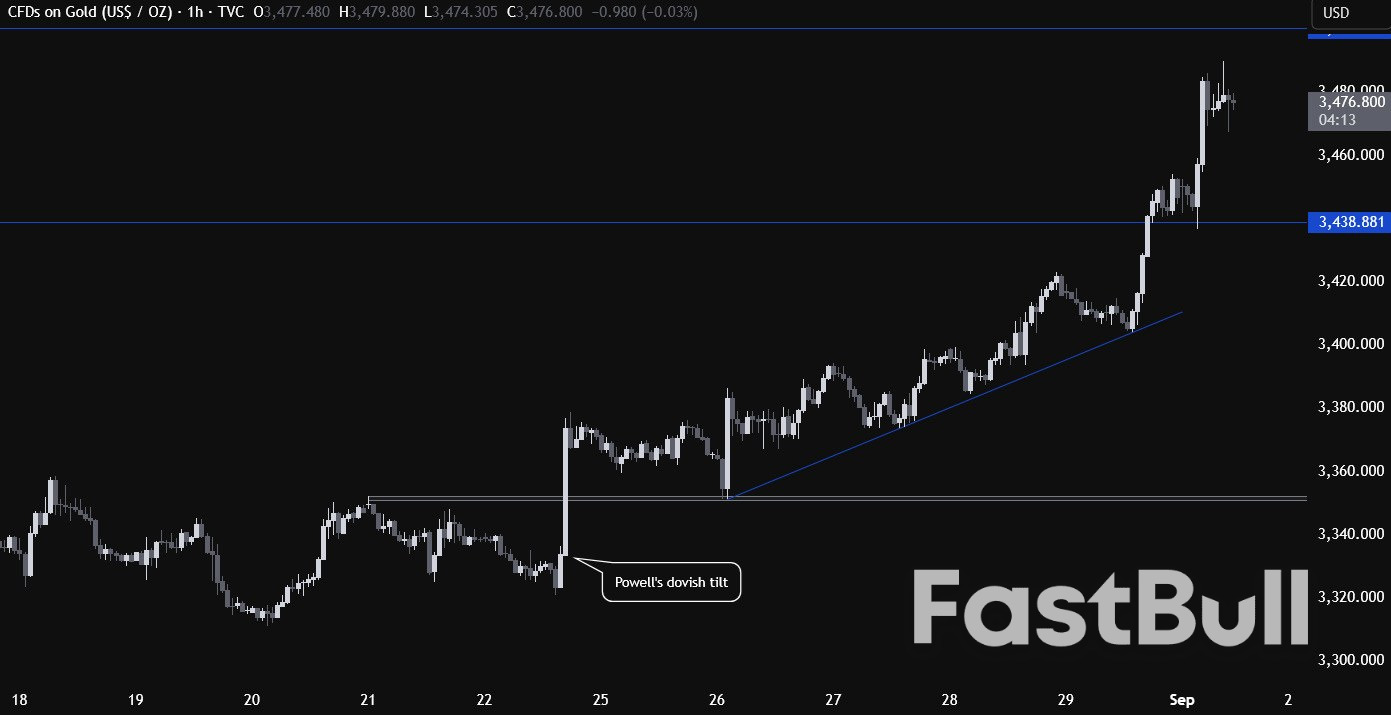
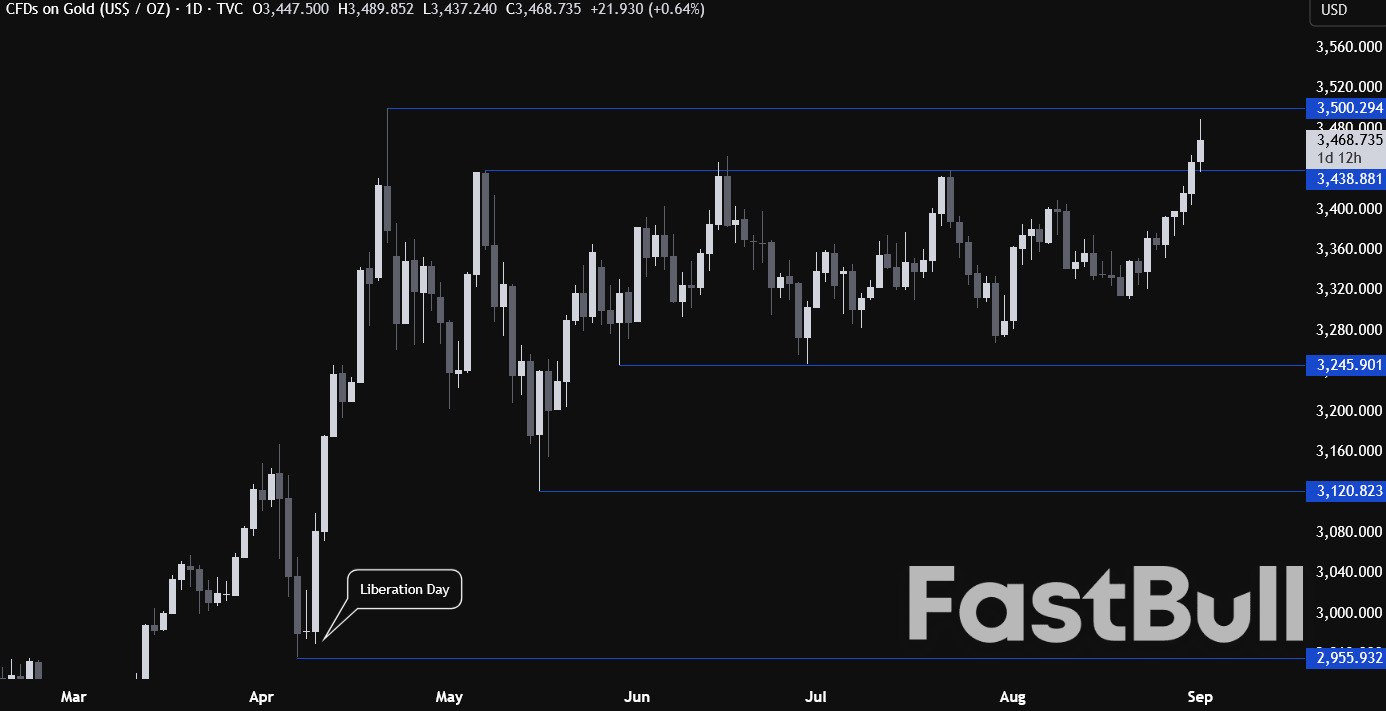
          Gold is of course one of the main topics of the day in the markets as the precious metal is approaching the all-time high after several months of rangebound price action. Now, this latest move higher since Friday could be just a technical squeeze and I wouldn't chase it ahead of the key US data. Nonetheless, it's a good opportunity to talk about the reasons driving it higher.
          The catalyst that triggered the whole rally that eventually led to a breakout of the 4-month range was of course Powell's dovish tilt at the Jackson Hole Symposium.
          The surge in gold prices in not good news: an explainer on what's driving it_1

          Federal Reserve Bias and Real Yields

          And this is the first bad news for the surge in prices. A too accomodative Federal Reserve into a strengthening economy and rising inflation.
          The main driver of gold prices is the change in real yields. In this case, the real yield is the difference between nominal Treasury yield and inflation expectations.
          When inflation expectations rise faster than nominal yields or nominal yields fall faster than inflation expectations, real yields fall and that’s positive for gold. Conversely, when inflation expectations fall faster than nominal yields or nominal yields rise faster than inflation expectations, real yields rise and that’s negative for gold.
          The surge in gold prices in not good news: an explainer on what's driving it_2
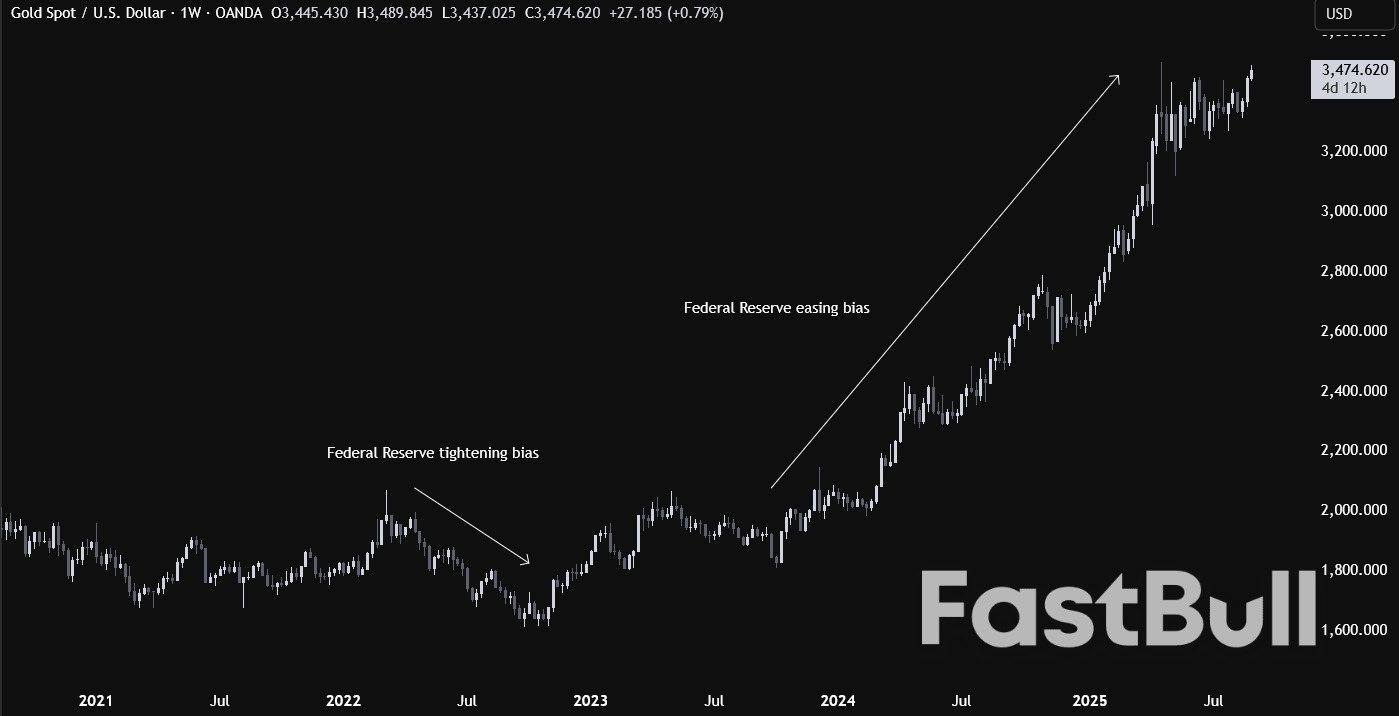
          In the chart above you can see that when the Fed started to hike rates in 2022 and kept the tightening bias, gold prices kept on falling for most of the year. By the end of 2022, we reached the peak in the tightening expectations and the market started to look towards a less hawkish Fed after the first lower than expected US inflation report.
          That unwinding led to the first rally that extended into the summer of 2023 where hawkish data and Fed commentary led to a correction into the final part of the year. Then again, Fed's Waller was the first governor opening the door for rate cuts and eventually the Fed adopted an easing bias.
          Since then, gold just kept on rallying and the momentum increased when the market priced in more and more rate cuts. Of course, when we got the hawkish repricing in those aggressive cuts, we saw pullbacks like the one in November 2024 when Trump got elected and the markets expected a less dovish Fed.
          The problem is that Trump adopted policies that the markets expected to be stagflationary. The trade war and the tax cuts led the market to expect higher inflation with lower growth. That culminated in the "Liberation Day" when Trump unveiled much aggressive tariff rates than expected. Gold experienced a parabolic surge.
          The surge in gold prices in not good news: an explainer on what's driving it_3
          Luckily, Trump reversed his aggressive tariffs and the de-escalation led to improving economic conditions. The Fed got less dovish because of the inflation threat and gold of course got stuck in a range awaiting the next direction.
          Now, the economic conditions are clearly improving. The tariffs saga is behind us, even though there are still minor things going on. The data is showing a strengthening economy as seen also with the latest US PMIs and Atlanta Fed GDPNow. Inflation risk is much higher than recession risk. And in the face of this, the Fed wants to cut interest rates.
          In fact, real yields have been falling recently and that was a tailwind for gold prices. The Fed's dovish reaction function is what continues to support gold. And that's not going to change unless they start talking about rate hikes (which looks like it's not going to happen anytime soon).
          The Fed might be making another policy mistake which not only could keep inflation higher for longer, but could also lead to a de-anchoring of inflation expectations. And re-anchoring them would require a painful recession.

          Attacks on Fed Independence

          The second bad news is the continuous attack on Fed independence from the Trump's administration. Last week, US VP Vance made it pretty clear that they are against Fed independence in an interview with USA Today. Moreover, Trump is testing his powers of firing Fed governors with Fed governor Lisa Cook. This is all noise for now because Fed independence can be reduced or revoked only by the US Congress and it's very unlikely that it would ever happen.
          Nonetheless, that's a risk (and a huge one) to keep an eye on because the economic and financial consequences would be enormous. In such a scenario, gold would be the best asset to own and we would almost certainly see a once in a lifetime parabolic surge in prices.

          Source: investinglive

          Risk Warnings and Disclaimers
          You understand and acknowledge that there is a high degree of risk involved in trading. Following any strategies or investment methods may lead to potential losses. The content on the site is provided by our contributors and analysts for information purposes only. You are solely responsible for determining whether any trading assets, securities, strategy, or any other product is suitable for investing based on your own investment objectives and financial situation.
          Add to Favorites
          Share

          Canada's GDP weaker than expected, Canadian dollar shrugs

          Adam

          Economic

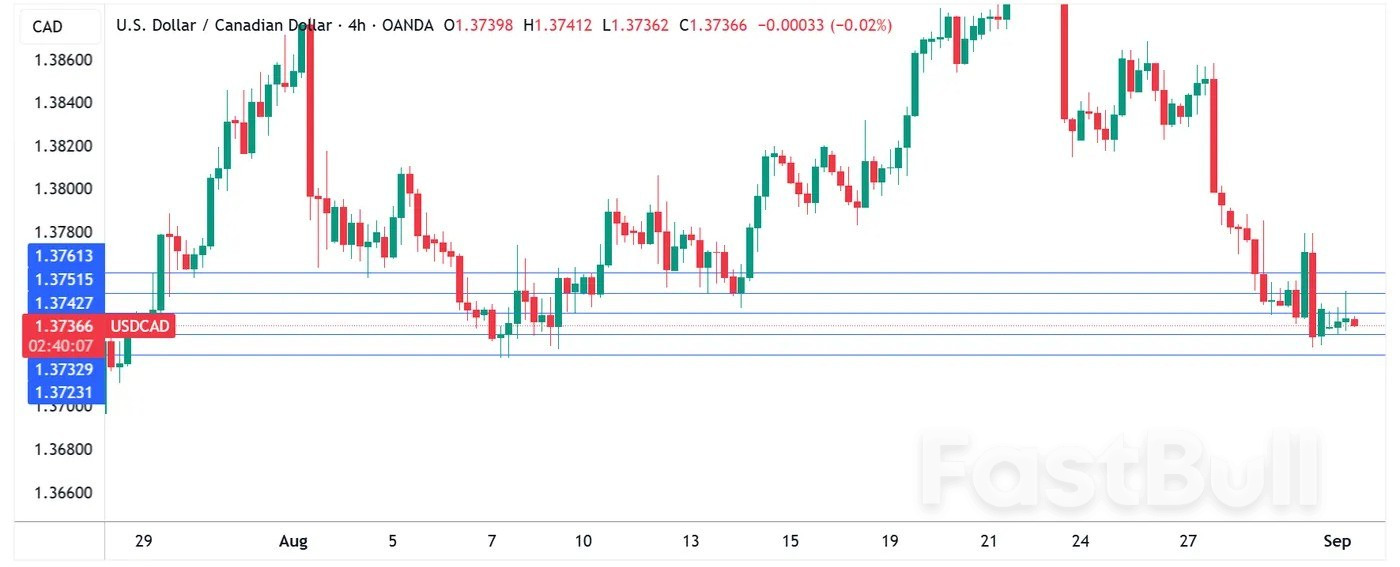
          The Canadian dollar is coming off its first winning week since July. USD/CAD is calm on Monday, trading at 1.3739, down 0.04% on the day.
          Canada's GDP for June was a disappointment, declining 0.1% m/m in June. This was unchanged from May and missed the market estimate of 0.1%. The decline was driven by decreased activity in manufacturing, as US tariffs made themselves felt in the Canadian economy.
          Quarterly, GDP fell by 1.6% in Q2, after a downwardly revised gain of 2% in Q1. This missed the market estimate of -0.6%. Notably, this was the first quarterly contraction in seven quarters, as US tariffs took a toll on Canadian exports.
          The weak GDP release has raised expectations of a Bank of Canada rate cut at the September 17 meeting. The money markets have raised the likelihood of a quarter-point cut to 48%, up from 40% just prior to the GDP report. The BoC has maintained rates at 2.75% at three consecutive meetings and the employment and inflation data for August will be critical in determining whether the central bank holds or cuts rates.
          US PCE core inflation hits five-month high
          The US core personal consumption expenditures price index (core PCE) the Federal Reserve's preferred inflation indicator, crept higher to 2.9% in July, up from 2.8% in June. This was the highest level since February and matched the market estimate. Monthly, core PCE rose 0.3%, unchanged from June and in line with the market estimate.
          USD/CAD Technical
          USD/CAD is testing resistance at 1.3742. Above, there is resistance at 1.3751 and 1.3761
          Below, there is support at 1.3732 and 1.3723
          Canada's GDP weaker than expected, Canadian dollar shrugs_1

          USDCAD 4-Hour Chart, September 1, 2025

          Source: marketpulse

          To stay updated on all economic events of today, please check out our Economic calendar
          Risk Warnings and Disclaimers
          You understand and acknowledge that there is a high degree of risk involved in trading. Following any strategies or investment methods may lead to potential losses. The content on the site is provided by our contributors and analysts for information purposes only. You are solely responsible for determining whether any trading assets, securities, strategy, or any other product is suitable for investing based on your own investment objectives and financial situation.
          Add to Favorites
          Share

          Iran’S Oil Sector: Strategic Presence, Diminished Influence

          Samantha Luan

          Economic

          Commodity

          Forex

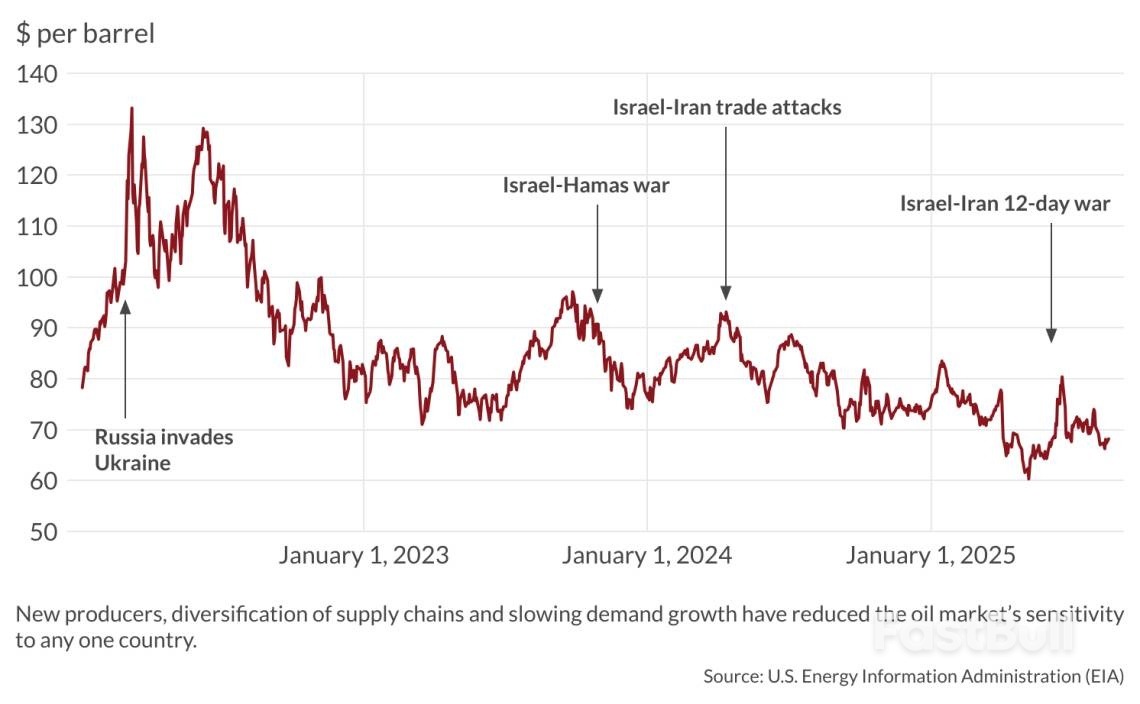
          Iran remains a major oil producer, but its actual influence on global oil markets has declined considerably. This stems not only from sanctions, which have often fallen short of their goals, but also from fundamental structural changes in the global oil landscape. The rise of new producers, the diversification of supply chains and slower demand growth have all reduced the market’s sensitivity to any single country, including Iran.

          This shift was evident during recent tensions involving the United States, Israel and Iran. While the rhetoric and military posturing raised concerns, oil markets remained largely calm. Critically, there were no direct disruptions to oil production or trade routes – particularly the Strait of Hormuz, which Iran itself relies on to export crude. As a result, there were no significant supply losses. Oil prices spiked briefly, but the reaction was modest and short-lived. The oil market’s restraint reflected not Iranian deterrence or strength, but an increasing global capacity to absorb shocks.

          Nevertheless, Tehran was eager to project an image of resilience and victory. Yet behind the political narrative, its sway in oil markets and its ability to influence prices or global supply dynamics has steadily eroded. The strong cards it once held as a producer have been weakened by internal issues, including chronic underinvestment, and more importantly, by external factors beyond its control.

          Sanctions have undoubtedly constrained Iran, but they are porous. China’s continued purchases of Iranian oil, often at a discount, and its role in helping Iran circumvent restrictions have kept export volumes afloat. Nonetheless, this has not translated into real market power. With enforcement spread thin and global supply tightening at times, Iran has remained relevant but not dominant.

          If sanctions on Iran are lifted, neither a rapid surge in production nor exports is likely. The country is already producing and exporting at relatively high levels, and any further increase would require substantial investment and time. Conversely, if sanctions are tightened, Iran’s economy would face further strain, but the global oil market would be unlikely to experience a major disruption, particularly if other Organization of Petroleum Exporting Countries (OPEC) members continued to raise output.

          If stricter sanctions on Tehran coincide with a substantial curtailment of Russian oil, the world’s third-largest producer, Iranian barrels could temporarily gain strategic value. Still, this effect would probably be short-lived, as other producers, including the U.S. and Gulf states, can compensate. In short, the global oil market is well-supplied.

          Iran is rich in oil and gas

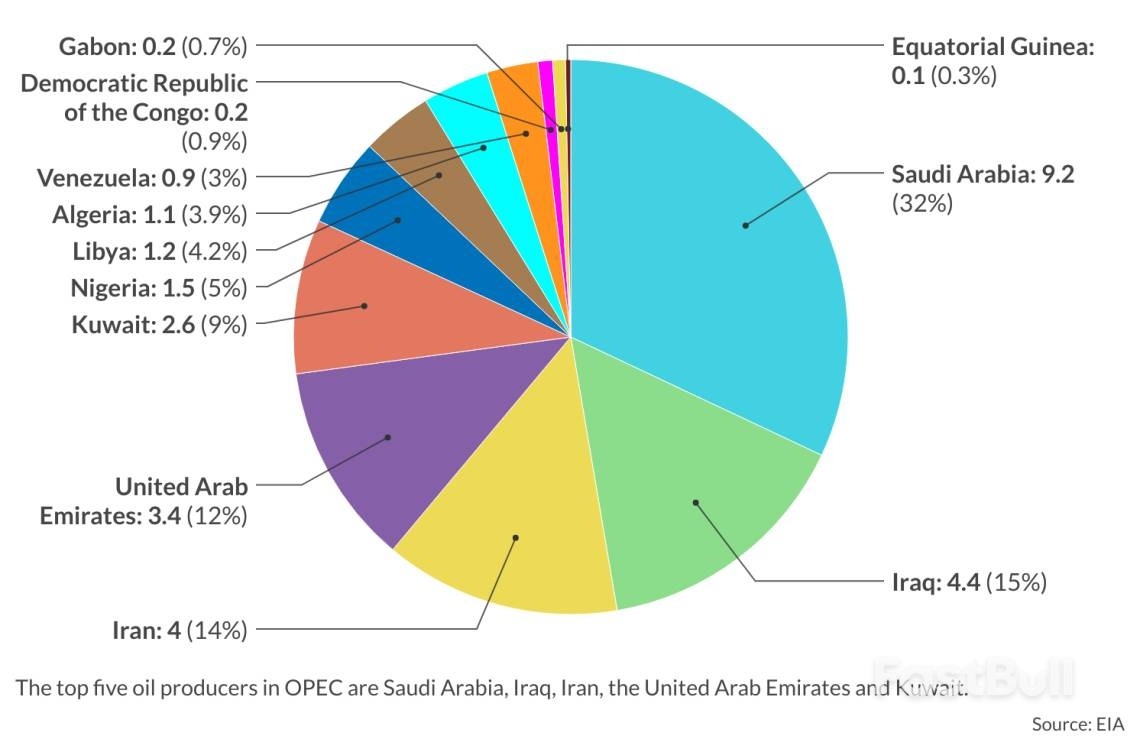
          Iran possesses the world’s fourth-largest proven oil reserves, accounting for 9 percent of the global total, behind Venezuela, Saudi Arabia and Canada. It also has the second-largest proven natural gas reserves, with a 17 percent share, second only to Russia. It is the third-largest crude oil producer within OPEC and is the fourth-largest exporter.

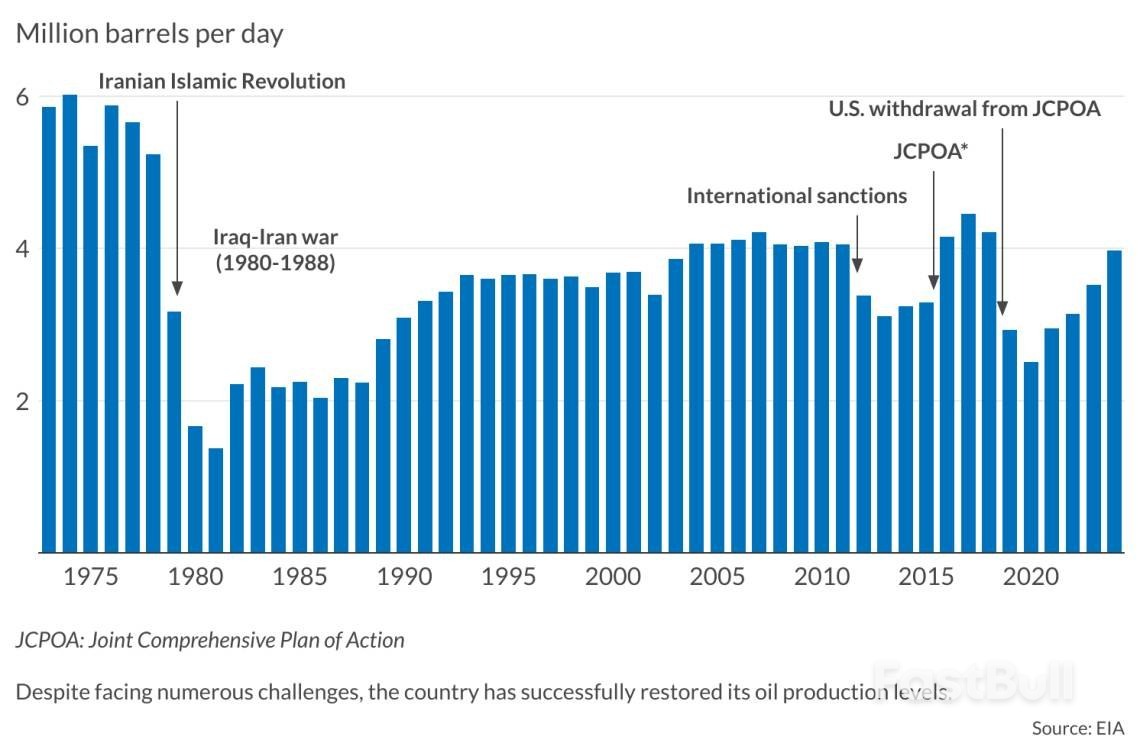
          As a founding member of OPEC, Iran once held considerable influence within the organization, at times nearly rivalling Saudi Arabia’s dominance. At its peak in 1974, Iran was producing over 6 million barrels per day (mb/d), second only to Saudi Arabia’s 8.4 mb/d, while Iraq trailed at just 1.9 mb/d. However, the Iran-Iraq War (1980-1988), prolonged sanctions and limited foreign investment have since constrained the country’s production potential.

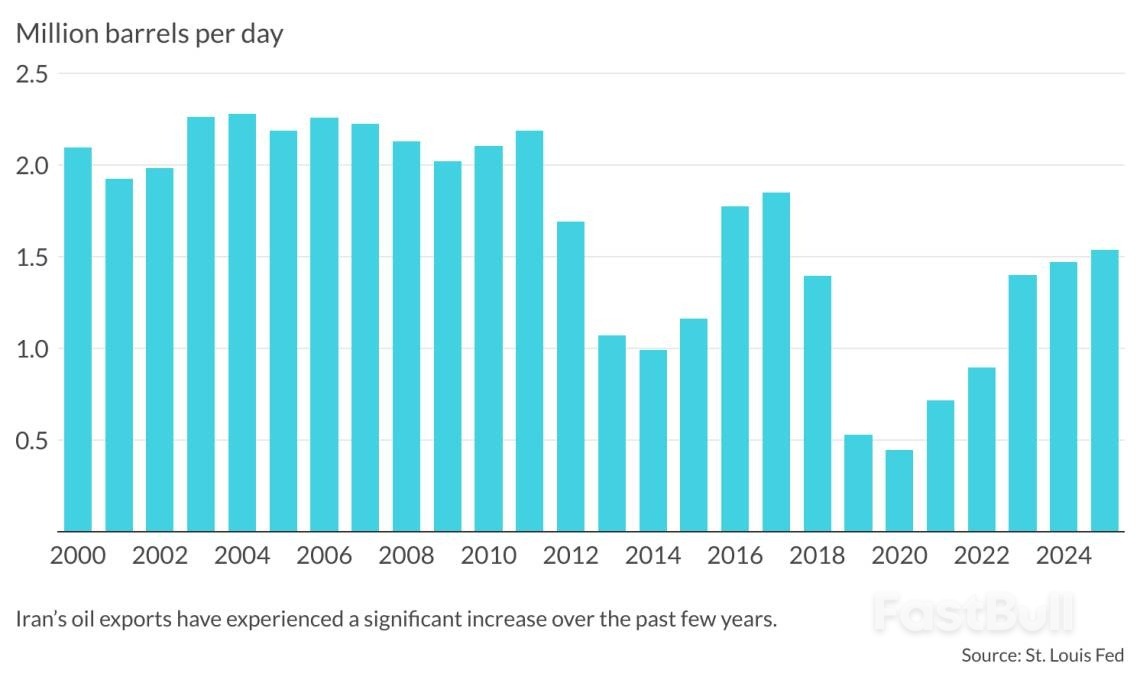
          Despite these setbacks, Iran has repeatedly demonstrated resilience. Following the imposition of sanctions on its energy sector by the U.S. and the European Union in 2011 and 2012, the country’s oil exports were cut in half by 2015. But after the Joint Comprehensive Plan of Action (JCPOA) was signed in 2015, where Iran agreed to limit its nuclear program in exchange for the lifting of economic penalties, oil production rebounded swiftly. Within two years, output rose by 1.3 mb/d, and crude oil exports increased by over 1 mb/d within a year, returning to pre-sanctions levels.

          The U.S. withdrawal from the JCPOA in 2018 during the first administration of President Donald Trump and its reinstatement of unilateral sanctions targeting Iran’s oil sector caused another sharp decline. Production fell by 1.9 mb/d within a year, and in October 2020 reached its lowest level since 1989.

          Even so, Iran has gradually rebuilt output, recording one of the largest increases in oil production among OPEC members between 2021 and 2024. Notably, Iran is exempt from OPEC production quotas due to the ongoing sanctions, allowing it to maximize production and exports. In 2024, its oil output reached a post-sanctions annual high of 4 mb/d.

          China has helped Iran evade sanctions

          Iran’s oil exports have surged in recent years, tripling from approximately 400,000 barrels per day during the height of the Trump administration’s “maximum pressure” campaign to around 1.5 mb/d in 2024. This resurgence has been enabled by a combination of lax sanctions enforcement and Iran’s persistent efforts to circumvent restrictions, often with the support of key trading partners such as China, the world’s largest crude oil importer.

          Today, China is the primary destination for Iranian oil, while smaller volumes are also directed to countries like Syria, the United Arab Emirates and Venezuela. To avoid detection and obscure the origin of shipments, Iran relies heavily on a so-called “shadow fleet” of tankers that operate without transponders and often engage in ship-to-ship transfers, tactics that Russia has since emulated.

          Financial transactions related to these exports are typically conducted in yuan through smaller Chinese banks, a system that limits the ability of Western authorities to track payments and enforce sanctions. Once Iranian oil reaches China, it is reportedly rebranded – often as Malaysian or Middle Eastern crude – and sold to independent Chinese refineries, known as “teapots,” which operate with fewer regulatory constraints.

          It is widely believed that this trade arrangement has allowed Chinese companies to save billions of dollars. At the same time, Tehran has greatly benefited from the continued revenue. According to the U.S. Energy Information Administration (EIA), Iran’s oil export revenues reached an estimated $43 billion in 2024, marking a $1 billion annual increase. This accounted for more than 57 percent of the country’s total export revenue in 2024, the highest share since the reimposition of U.S. sanctions in 2018, according to the World Bank.

          Iran is a vulnerable giant

          Despite its apparent resilience, Iran remains far more vulnerable than it appears. Although it continues to bypass sanctions, the crude oil it exports is sold at steep discounts, raising questions about the accuracy of reported revenue figures. As confirmed by the EIA, official estimates of Iran’s oil income do not reflect the price reductions offered to buyers of sanctioned crude. Iran has further increased its discounts to remain competitive with Russia in the Chinese market.

          This reliance is compounded by the concentration of Iran’s export destinations. While Beijing has a diversified portfolio of energy suppliers, Iran is heavily reliant on China for its oil exports. The same vulnerability applies to non-oil trade. According to the World Bank, Iran’s top three trading partners, China, Iraq and the UAE, account for 60 percent of its exports and 70 percent of its imports.Iran’s oil revenues in the financial year 2023-2024 reportedly fell well short of expectations, covering only about half of the amount projected in the national budget.

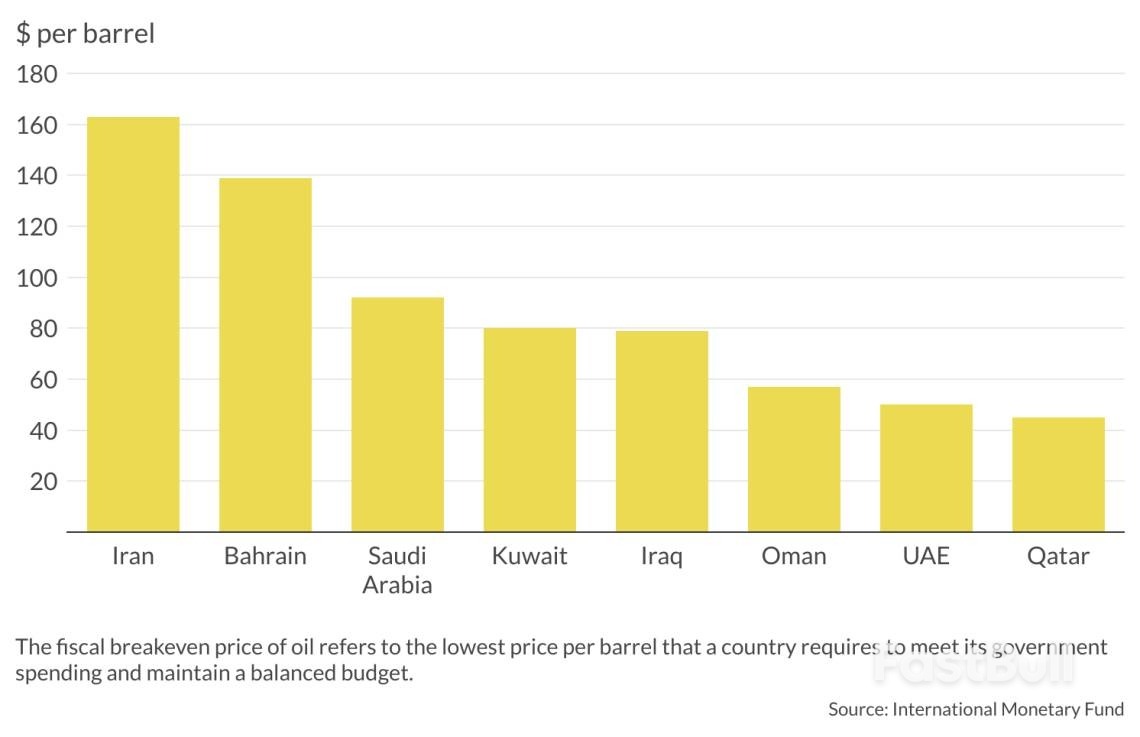
          As a result, the government was forced to reduce spending to help contain the deficit. According to the International Monetary Fund, Iran would need oil prices to exceed $163 per barrel to balance its budget in 2025, the highest fiscal breakeven oil price among Middle Eastern oil exporters.

          Structural constraints hinder Iran’s production

          Although Iran’s oil production has increased in recent years, it remains well below its peak levels of the 1970s, even with the country’s large reserves and the advancements in drilling and extraction technologies since then.Iran nationalized its oil industry in 1951, and the sector remained open to foreign investment for several decades. This changed after the 1979 Islamic Revolution, when international investment in oil and gas was largely prohibited under the Iranian Constitution. The Iran-Iraq War further devastated the oil sector, leaving it in urgent need of rebuilding.

          In response, the government adopted a more flexible stance toward foreign investment and introduced a new contractual framework known as the buyback contract. Under this model, international oil companies were permitted to invest only up to the point of first production, at which time the project would be transferred to the National Iranian Oil Company in exchange for a pre-agreed fixed fee.

          However, these terms have historically been unattractive to international investors. Even after the JCPOA agreement in 2015, Tehran struggled to secure major international deals. This was due in part to internal divisions over the role of foreign capital in the energy sector, as well as lingering U.S. secondary sanctions that continued to limit access to global financial and banking systems.

          In the absence of foreign investment, especially in recent years, Iran has increasingly relied on domestic firms to develop its oil projects. But these companies often lack the capital, advanced technology and technical expertise required to sustain output, particularly from mature fields. Sanctions have further exacerbated these challenges by limiting access to financing, curtailing technology transfers, raising trade costs and reducing overall competitiveness.

          Meanwhile, as its production capacity has stagnated, other OPEC members, such as Iraq and the UAE, have expanded their market share, often at Iran’s expense.One strategic asset Iran still controls is the Strait of Hormuz. Disruption to this key maritime passage could significantly affect worldwide energy supplies and prices, especially for major importers like China. Regardless of occasional threats from Iranian officials to block the strait, such actions have never materialized.

          Source: GIS

          To stay updated on all economic events of today, please check out our Economic calendar
          Risk Warnings and Disclaimers
          You understand and acknowledge that there is a high degree of risk involved in trading. Following any strategies or investment methods may lead to potential losses. The content on the site is provided by our contributors and analysts for information purposes only. You are solely responsible for determining whether any trading assets, securities, strategy, or any other product is suitable for investing based on your own investment objectives and financial situation.
          Add to Favorites
          Share

          Alibaba is up 18%: thank you, AI!

          Adam

          Stocks

          The cloud division, up 26%, significantly exceeded forecasts (18.4%) to reach 33.4 billion yuan ($4.67 billion). This is a strong signal, welcomed by analysts, who see it as a sustainable growth driver for the group.

          What has changed?

          The Chinese group is now clearly focusing on AI as a strategic lever. "Our investments in AI are starting to bear fruit," said CEO Eddie Wu, adding that more than 100 billion yuan has been invested in AI and infrastructure over the past 12 months. According to DZ Bank, AI-related revenues have grown by triple digits for the eighth consecutive quarter.
          Alibaba is stepping up its technological announcements and even developing its own chips, according to the Wall Street Journal, against a backdrop of Sino-American tensions over advanced components. The goal is to reduce its dependence on Nvidia and secure the deployment of its data centers in China.
          But the cloud's performance does not completely mask the weaknesses of the rest of the group. Overall revenue reached 247.7 billion yuan, below expectations (253.2 billion). Adjusted EBITA fell 14% and free cash flow turned negative, at -18.8 billion yuan, weighed down by heavy investments in infrastructure and express delivery.

          Is this the return to favor expected by the market?

          Not yet, but the market seems willing to believe so. The rise in the stock price reflects renewed confidence, supported by the rise of the cloud and Alibaba's AI strategy.
          However, the group is at a turning point. Its core business, e-commerce in China, remains under pressure: revenues are up 10%, but EBITA is down 21%. Quick commerce, which enables deliveries within an hour, is weighing on profitability. Nevertheless, Alibaba sees it as a vehicle for expansion, with an ambitious target of an additional 1 trillion yuan in GMV per year within three years.
          Internationally, the recovery of AliExpress and growth in Europe and the Middle East confirm a certain dynamism, but margins remain low. The group still needs to convince investors that it can transform its massive investments into sustainable growth drivers without sacrificing profitability.
          But it is clear that it is the AI narrative that has been boosting the stock since this weekend.

          Source: MarketScreener

          Risk Warnings and Disclaimers
          You understand and acknowledge that there is a high degree of risk involved in trading. Following any strategies or investment methods may lead to potential losses. The content on the site is provided by our contributors and analysts for information purposes only. You are solely responsible for determining whether any trading assets, securities, strategy, or any other product is suitable for investing based on your own investment objectives and financial situation.
          Add to Favorites
          Share

          Legal battle rages over tariffs; jobs report looms large - what’s moving markets

          Adam

          Economic

          U.S. markets are set to be closed on Monday, although investors are preparing for a potentially consequential week that will see the unveiling of fresh labor market data. Analysts have suggested that the figures could all but cement expectations that the Federal Reserve will cut interest rates at its upcoming policy meeting later this month. Elsewhere, a legal battle over sweeping U.S. tariffs rages on, with an appeals court rejecting the Trump administration’s levies.

          U.S. markets closed for Labor Day

          U.S. markets are due to be shuttered on Monday in observance of Labor Day.
          With the holiday making for relatively thin trading, Asian shares were mixed, with Japan’s Nikkei and stocks in South Korea slipping. Still, equities in China extended their recent bull run, fueled in part by a stronger-than-anticipated survey on manufacturing activity in the world’s second largest economy.
          Hong Kong shares of e-commerce titan Alibaba (HK:9988) also notched a double-digit spike, its largest one-day surge since 2022, thanks to enthusiasm around the prospects for its cloud unit.
          Investors are gearing up for a return this week from a muted summer period. Awaiting them are a host of key upcoming events, including a slew of economic data points and a crucial Federal Reserve interest rate decision -- both of which could sway sentiment in September.
          Following a tariff-driven swoon in April, Wall Street has marched steadily higher, spurred on by hopes that U.S. President Donald Trump’s sweeping levies will not -- as many have feared -- plunge the U.S. economy into a recession. Optimism around the potential returns from massive investments in artificial intelligence has underpinned stocks as well.

          Legal battle over Trump’s tariffs

          The Trump administration’s tariffs have faced a range of legal challenges, particularly from those who have argued against the president’s use of emergency executive branch powers to put the import taxes in place.
          A crucial ruling was delivered late on Friday, when the U.S. Court of Appeals for the Federal Circuit rejected the tariffs, upholding a lower court decision. The White House now has until mid-October to appeal to the Supreme Court, or else the ruling comes into effect.
          Media reports have suggested that Trump officials have long anticipated that the high court would eventually need to settle the matter, adding that the administration is confident that the tariffs -- and Trump’s push to assert his authority to enact them -- will eventually be supported by the court’s conservative majority.
          In a note to clients, analysts at Vital Knowledge said the the appeals court decision is "at best neutral" for markets, flagging it "won’t come close come close to eliminating Trump’s import taxes, and it just creates more uncertainty for Corporate America as the White House searches for a studier legal scaffolding for its draconian trade policy[.]"

          Economic data ahead this week

          Headlining the economic calendar this week will be release of the latest labor market report on Friday, which could provide some insight into the health of the wider economy and serve as one of the final tests of investor confidence that the Fed will slash rates at its September meeting.
          An unexpectedly soft U.S. payrolls report last month bolstered bets that the Fed would cut borrowing costs, even as policymakers remain wary of lingering inflationary pressures.
          Fed Chair Jerome Powell later suggested in a closely-monitored speech at an economic symposium in Wyoming that risks to the job market were increasing. As of Monday morning, there was a more than 87% probability that the Fed will reduce rates by 25 basis points from its current range of 4.25% to 4.5% at the end of its two-day gathering on Sept. 16-17, according to CME’s FedWatch Tool.
          Economists are estimating that nonfarm payrolls will come in at 74,000 in August, not far from the mark of 73,000 in July. The previous data set was itself a cause of controversy, with deep downward revisions sparking Trump’s ire and leading to the ouster of the commissioner of the Bureau of Labor Statistics, which compiles the monthly jobs figures.

          China factory activity data

          China’s factory activity expanded at the fastest pace in five months in August, a private-sector survey showed on Monday, offering a glimmer of improvement amid weaker official signals.
          The RatingDog China General Manufacturing PMI rose to 50.5 in August from 49.5 in July, exceeding a forecast of 49.7 and breaking into expansion territory above the 50-point growth threshold.
          The jump was largely driven by a surge in new orders, the survey noted, even as export demand continued to decline for a fifth consecutive month. Meanwhile, firms reported their fastest accumulation of unfinished work in six months.
          "New export orders are still in contraction, but the pace of decline has eased. That’s encouraging, yet we shouldn’t get carried away, because external demand looks partly pulled forward while domestic demand stays soft, so the upside to output may be limited unless domestic demand firms up," said Yao Yu, Founder at RatingDog.
          Despite the uptick, manufacturers remained cautious on hiring, with employment contracting for the fifth month running. Rising input costs, fueled by sharper raw material price increases, and persistent supplier delays also tempered optimism.

          Oil higher

          Oil prices were higher in choppy trading on Monday, as traders weighed supply disruptions linked to airstrikes in the Russia-Ukraine conflict against the prospect of rising output and the impact of elevated U.S. tariffs on demand.
          By 03:41 ET, Brent Oil Futures expiring in October had risen 0.5% to $67.81 per barrel, while West Texas Intermediate (WTI) crude futures also ticked up 0.6% to $64.36 per barrel.
          Both contracts dropped more than 7% in August, dragged down by supply glut fears from steady OPEC+ production hikes.
          “Oil prices settled lower last week despite growing European calls for secondary sanctions on buyers of Russian oil and gas. The mild reaction may suggest the market is becoming increasingly numb towards sanction risks,” analysts at ING said in a note.
          Meanwhile, Ukraine’s president said on Sunday that the country would retaliate against Russian drone strikes on its power facilities. Both sides have exchanged air attacks in recent weeks that have targeted energy infrastructure and threatened to put a crimp on Russian oil exports.

          Source: investing

          To stay updated on all economic events of today, please check out our Economic calendar
          Risk Warnings and Disclaimers
          You understand and acknowledge that there is a high degree of risk involved in trading. Following any strategies or investment methods may lead to potential losses. The content on the site is provided by our contributors and analysts for information purposes only. You are solely responsible for determining whether any trading assets, securities, strategy, or any other product is suitable for investing based on your own investment objectives and financial situation.
          Add to Favorites
          Share

          Markets Today: Silver Hits Fresh All-Time Highs, Gold Up as Geopolitical Risks Rise, DAX Trades Below 50-day MA on US Labor Day Holiday

          Adam

          Economic

          Asia Market Wrap - Alibaba on a Roll as Nikkei Slips

          Stock markets in Asia generally went down after technology stocks fell in the US on Friday. Companies that make computer chips were hit the hardest, causing Japan's stock market to drop.
          Hong Kong's market, however, did the opposite and went up. This was because the stock price for the company Alibaba jumped dramatically, which also helped boost the value of other artificial intelligence companies like Baidu and Tencent.
          The drop for other major chipmakers, such as Samsung and SK Hynix, happened after the United States stopped allowing the sale of certain chip-making equipment to China.
          Japan's main stock market index, the Nikkei, fell to its lowest level in three weeks.
          Most of the decline was caused by sharp drops in two very large companies. The stock price for Advantest, a company that makes equipment for testing computer chips, fell significantly. At the same time, SoftBank Group, a major investor in technology and AI companies, also saw its stock price go down.
          Several other companies related to computer chips also saw their stock prices fall. This included Disco, which dropped 7.7%, Socionext, which was down 6.3%, and Furukawa Electric, which fell 5.5%.
          Together with Advantest and SoftBank Group, these five companies were the worst-performing stocks on the Nikkei for the day.
          A different, broader measure of Japanese stocks, the Topix, fell by a much smaller amount.

          China Factory Activity Steady as Asian Countries Feel the Bite

          New reports released on Monday show that U.S. tariffs are hurting factory production throughout Asia. This bad news overshadowed some surprisingly good results from China, putting pressure on governments in the region to find ways to help their weak economies.
          Experts are concerned because many Asian companies had previously rushed to ship their goods early to avoid the U.S. taxes. Now that those shipments are done, analysts believe these companies will struggle to make a profit in the future because their sales to other countries are expected to drop.
          For example, countries that export a lot of goods, like Japan, South Korea, and Taiwan, all saw their factory activity decrease in August. This highlights the major challenge Asian countries face in dealing with the impact of the U.S. tariffs.
          In Japan, factory activity shrank for the second straight month. While the situation improved slightly from July, the score was still below the 50-mark, meaning production is still contracting. A key problem for Japan is that orders for its goods from other countries fell at the fastest rate in over a year, mainly because of weak demand from China, Europe, and the U.S.
          South Korea's factories also continued to shrink, marking the seventh month in a row of contraction. Similar to Japan, there was a very slight improvement from the previous month, but overall activity is still declining.

          European Open - European Stocks Benefit from US Holiday

          Stock markets in the UK and Europe started the day on a positive note. This comes after news that house prices in the UK are not rising very quickly.
          The FTSE and the DAX are both higher this morning. The FTSE 100 went up by 0.3% with the DAX 0.5% higher.
          The STOXX 600 is up 0.4% thanks in large part to aerospace and defence stocks with names like the UK’s BAE Systems leading the way with gains of around 2.4%.
          The biggest winner in the UK is a software developer called Kainos Group, whose stock jumped over 17% after it predicted strong future sales. Domino's Pizza is also having a good day, with its stock up almost 7% after the company confirmed its financial goals and announced a plan to buy back its own shares.
          Elsewhere, the Danish drug maker Novo Nordisk is up about 3% after sharing positive news that its weight-loss drug, Wegovy, is significantly more effective at reducing heart risks compared to a rival's treatment.
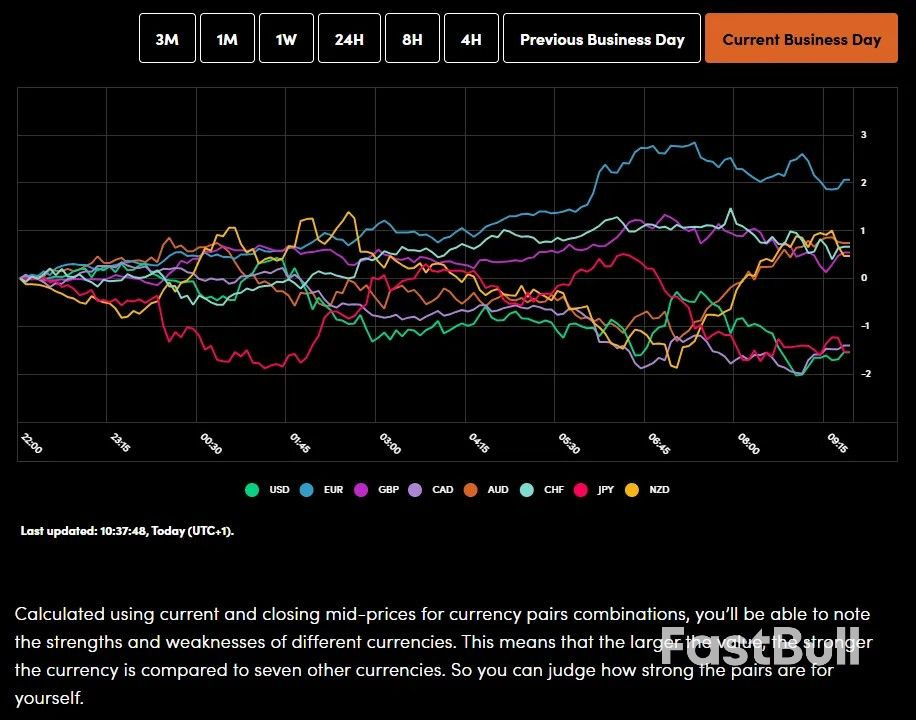
          On the FX front, the US dollar is a bit weaker today, dropping to its lowest value in over a month. This continues its recent downward trend, as the dollar lost more than 2% of its value during August.
          As the dollar has fallen, other major currencies like the Euro and the British Pound have become stronger. Against the Japanese Yen, the dollar is mostly unchanged this morning, but it also weakened against the Yen last month by 2.5%.
          Meanwhile, China's currency, the yuan, is holding steady at a very strong level, near its highest point against the dollar in about ten months.
          Currency Power Balance
          Markets Today: Silver Hits Fresh All-Time Highs, Gold Up as Geopolitical Risks Rise, DAX Trades Below 50-day MA on US Labor Day Holiday_1
          Gold prices soared overnight as geopolitical risks piled up as the Financial Times reported overnight about the possibility of European troops in Ukraine with US backing.
          This coupled with renewed tensions around Iran's nuclear programme and the weakening US Dollar amid rate cut expectations has pushed the precious metal to within touching distance of the all-time highs at $3500/oz.
          Oil prices are a bit mixed this morning as different factors pull them in opposite directions. On one hand, things that could reduce supply, like the conflict between Russia and Ukraine, are pushing prices up. A weaker US dollar also helps lift prices.
          On the other hand, worries that too much oil is being produced globally, along with concerns that U.S. tariffs could hurt the economy and lower the demand for oil, are trying to pull prices down.
          As a result, Brent crude (the international price) is up slightly to around $67.79 a barrel, while WTI (the U.S. price) is down a little to $64.33. This comes after a weak August, when oil prices fell for the first time in four months because major oil-producing countries increased their supply.
          Economic Data Releases and Final Thoughts
          Looking at the economic calendar, the European session will be quiet moving forward after PMI data was released this morning.
          Spanish, French, Italian and Euro Area PMI all beat estimates but Germany did come in below expectations.
          Moving forward, sentiment will be key and likely hinge on any news on the geopolitical front ahead of US jobs data this week. Remember it is aUS labor day holiday today and tis could lead to thin trading and low liquidity as the day progresses.
          Chart of the Day - DAX
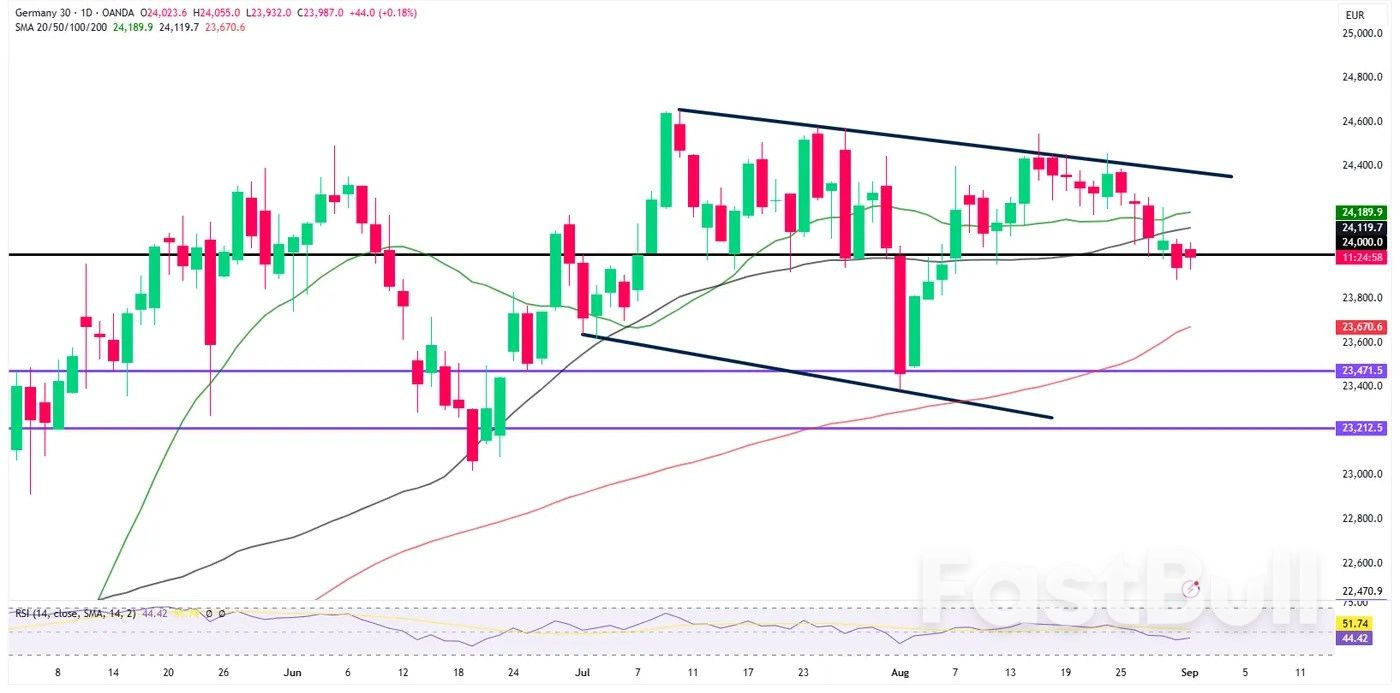
          From a technical standpoint, the DAX is back at the 24000 handle as it eyes a bounce.
          However, there are growing challenges as sentiment remains rather fragile.
          Immediate resistance at rests at 24119 before the 24190 and 24350 will be key.
          Immediate support rests at 23670 and 23440.
          DAX Daily Chart, September 1. 2025
          Markets Today: Silver Hits Fresh All-Time Highs, Gold Up as Geopolitical Risks Rise, DAX Trades Below 50-day MA on US Labor Day Holiday_2

          Source: marketpulse

          To stay updated on all economic events of today, please check out our Economic calendar
          Risk Warnings and Disclaimers
          You understand and acknowledge that there is a high degree of risk involved in trading. Following any strategies or investment methods may lead to potential losses. The content on the site is provided by our contributors and analysts for information purposes only. You are solely responsible for determining whether any trading assets, securities, strategy, or any other product is suitable for investing based on your own investment objectives and financial situation.
          Add to Favorites
          Share

          Modi Shores Up Ties With China, Russia In Defiance Of Trump

          Winkelmann

          Forex

          Political

          Economic

          Good morning. Indian Prime Minister Narendra Modi meets Vladimir Putin today after he reset relations with China. German Chancellor Friedrich Merz sees the war in Ukraine dragging on with no clear end in sight. And the UK wins a £10 billion deal from Norway’s navy. Listen to the day’s top stories.Indian Prime Minister Narendra Modi was due to meet Vladimir Putin in Tianjin, China, today after resetting relations with Chinese President Xi Jinping, as the three countries seek to strengthen ties amid trade tensions with the US. The trio last met in 2024.

          German Chancellor Friedrich Merz warned the Ukraine war may “go on for a long time.” Now in its fourth year, Russia’s full-scale invasion of Ukraine is the longest war in Europe since World War II. In an interview with ZDF, he also rejected a coalition partner’s call to raise taxes in Germany.Norway picked the UK as the supplier of frigates for its navy, in what would be its biggest ever defense investment. Norway had considered France, Germany and the US as a potential strategic partner for the deal, which the UK defense ministry said on Sunday was worth £10 billion.Former Barclays executive Naguib Kheraj is among candidates being considered as a potential successor to HSBC Chairman Mark Tucker, according to Sky News. Kheraj spent more than a decade at Barclays, including as group finance director and vice chairman. He has also been CEO of JPMorgan Cazenove and deputy chairman of Standard Chartered.

          France accused Italy of fiscal dumping, sparking a heated exchange between the two nations. Italian Prime Minister Giorgia Meloni's office vehemently denied the allegations, asserting Italy's economic attractiveness stems from stability and credibility. The dispute risks reigniting tensions between Rome and Paris, potentially impacting their previously improved relations.

          Check out our Markets Today live blog for all the latest news and analysis relevant to UK assets.A €2 trillion upheaval looms for European bond markets as the Dutch pension system undergoes reform.Russian President Vladimir Putin's assaults on Ukraine have worn down the will, the magnificent defiance, of the Ukrainian people, writes Max Hastings. Almost all now recognize, as they did not a year ago, that they will be obliged to cede the east of their country to win any hope of peace. This is monstrously unjust.

          Source: Bloomberg Europe

          To stay updated on all economic events of today, please check out our Economic calendar
          Risk Warnings and Disclaimers
          You understand and acknowledge that there is a high degree of risk involved in trading. Following any strategies or investment methods may lead to potential losses. The content on the site is provided by our contributors and analysts for information purposes only. You are solely responsible for determining whether any trading assets, securities, strategy, or any other product is suitable for investing based on your own investment objectives and financial situation.
          Add to Favorites
          Share
          FastBull
          Copyright © 2025 FastBull Ltd

          728 RM B 7/F GEE LOK IND BLDG NO 34 HUNG TO RD KWUN TONG KLN HONG KONG

          TelegramInstagramTwitterfacebooklinkedin
          App Store Google Play Google Play
          Products
          Charts

          Chats

          Q&A with Experts
          Screeners
          Economic Calendar
          Data
          Tools
          Membership
          Features
          Function
          Markets
          Copy Trading
          Latest Signals
          Contests
          News
          Analysis
          24/7
          Columns
          Education
          Company
          Careers
          About Us
          Contact Us
          Advertising
          Help Center
          Feedback
          User Agreement
          Privacy Policy
          Business

          White Label

          Data API

          Web Plug-ins

          Poster Maker

          Affiliate Program

          Risk Disclosure

          The risk of loss in trading financial instruments such as stocks, FX, commodities, futures, bonds, ETFs and crypto can be substantial. You may sustain a total loss of the funds that you deposit with your broker. Therefore, you should carefully consider whether such trading is suitable for you in light of your circumstances and financial resources.

          No decision to invest should be made without thoroughly conducting due diligence by yourself or consulting with your financial advisors. Our web content might not suit you since we don't know your financial conditions and investment needs. Our financial information might have latency or contain inaccuracy, so you should be fully responsible for any of your trading and investment decisions. The company will not be responsible for your capital loss.

          Without getting permission from the website, you are not allowed to copy the website's graphics, texts, or trademarks. Intellectual property rights in the content or data incorporated into this website belong to its providers and exchange merchants.

          Not Logged In

          Log in to access more features

          FastBull Membership

          Not yet

          Purchase

          Become a signal provider
          Help Center
          Customer Service
          Dark Mode
          Price Up/Down Colors

          Log In

          Sign Up
          Position
          Layout
          Fullscreen
          Default to Chart
          The chart page opens by default when you visit fastbull.com