Markets
News
Analysis
User
24/7
Economic Calendar
Education
Data
- Names
- Latest
- Prev


Signal Accounts for Members
All Signal Accounts
All Contests


Turkey Trade BalanceA:--
F: --
P: --
Germany Construction PMI (SA) (Nov)A:--
F: --
P: --
Euro Zone IHS Markit Construction PMI (Nov)A:--
F: --
P: --
Italy IHS Markit Construction PMI (Nov)A:--
F: --
P: --
U.K. Markit/CIPS Construction PMI (Nov)A:--
F: --
P: --
France 10-Year OAT Auction Avg. YieldA:--
F: --
P: --
Euro Zone Retail Sales MoM (Oct)A:--
F: --
P: --
Euro Zone Retail Sales YoY (Oct)A:--
F: --
P: --
Brazil GDP YoY (Q3)A:--
F: --
P: --
U.S. Challenger Job Cuts (Nov)A:--
F: --
P: --
U.S. Challenger Job Cuts MoM (Nov)A:--
F: --
P: --
U.S. Challenger Job Cuts YoY (Nov)A:--
F: --
P: --
U.S. Initial Jobless Claims 4-Week Avg. (SA)A:--
F: --
P: --
U.S. Weekly Initial Jobless Claims (SA)A:--
F: --
P: --
U.S. Weekly Continued Jobless Claims (SA)A:--
F: --
P: --
Canada Ivey PMI (SA) (Nov)A:--
F: --
P: --
Canada Ivey PMI (Not SA) (Nov)A:--
F: --
P: --
U.S. Non-Defense Capital Durable Goods Orders Revised MoM (Excl. Aircraft) (SA) (Sept)A:--
F: --
U.S. Factory Orders MoM (Excl. Transport) (Sept)A:--
F: --
P: --
U.S. Factory Orders MoM (Sept)A:--
F: --
P: --
U.S. Factory Orders MoM (Excl. Defense) (Sept)A:--
F: --
P: --
U.S. EIA Weekly Natural Gas Stocks ChangeA:--
F: --
P: --
Saudi Arabia Crude Oil ProductionA:--
F: --
P: --
U.S. Weekly Treasuries Held by Foreign Central BanksA:--
F: --
P: --
Japan Foreign Exchange Reserves (Nov)A:--
F: --
P: --
India Repo RateA:--
F: --
P: --
India Benchmark Interest RateA:--
F: --
P: --
India Reverse Repo RateA:--
F: --
P: --
India Cash Reserve RatioA:--
F: --
P: --
Japan Leading Indicators Prelim (Oct)A:--
F: --
P: --
U.K. Halifax House Price Index YoY (SA) (Nov)--
F: --
P: --
U.K. Halifax House Price Index MoM (SA) (Nov)--
F: --
P: --
France Current Account (Not SA) (Oct)--
F: --
P: --
France Trade Balance (SA) (Oct)--
F: --
P: --
France Industrial Output MoM (SA) (Oct)--
F: --
P: --
Italy Retail Sales MoM (SA) (Oct)--
F: --
P: --
Euro Zone Employment YoY (SA) (Q3)--
F: --
P: --
Euro Zone GDP Final YoY (Q3)--
F: --
P: --
Euro Zone GDP Final QoQ (Q3)--
F: --
P: --
Euro Zone Employment Final QoQ (SA) (Q3)--
F: --
P: --
Euro Zone Employment Final (SA) (Q3)--
F: --
Brazil PPI MoM (Oct)--
F: --
P: --
Mexico Consumer Confidence Index (Nov)--
F: --
P: --
Canada Unemployment Rate (SA) (Nov)--
F: --
P: --
Canada Labor Force Participation Rate (SA) (Nov)--
F: --
P: --
Canada Employment (SA) (Nov)--
F: --
P: --
Canada Part-Time Employment (SA) (Nov)--
F: --
P: --
Canada Full-time Employment (SA) (Nov)--
F: --
P: --
U.S. Dallas Fed PCE Price Index YoY (Sept)--
F: --
P: --
U.S. PCE Price Index YoY (SA) (Sept)--
F: --
P: --
U.S. PCE Price Index MoM (Sept)--
F: --
P: --
U.S. Personal Outlays MoM (SA) (Sept)--
F: --
P: --
U.S. Core PCE Price Index MoM (Sept)--
F: --
P: --
U.S. UMich 5-Year-Ahead Inflation Expectations Prelim YoY (Dec)--
F: --
P: --
U.S. Core PCE Price Index YoY (Sept)--
F: --
P: --
U.S. 5-10 Year-Ahead Inflation Expectations (Dec)--
F: --
P: --
U.S. UMich Current Economic Conditions Index Prelim (Dec)--
F: --
P: --
U.S. UMich Consumer Sentiment Index Prelim (Dec)--
F: --
P: --
U.S. UMich 1-Year-Ahead Inflation Expectations Prelim (Dec)--
F: --
P: --
U.S. UMich Consumer Expectations Index Prelim (Dec)--
F: --
P: --


No matching data
Latest Views
Latest Views
Trending Topics
Top Columnists
Latest Update
White Label
Data API
Web Plug-ins
Affiliate Program
View All

No data
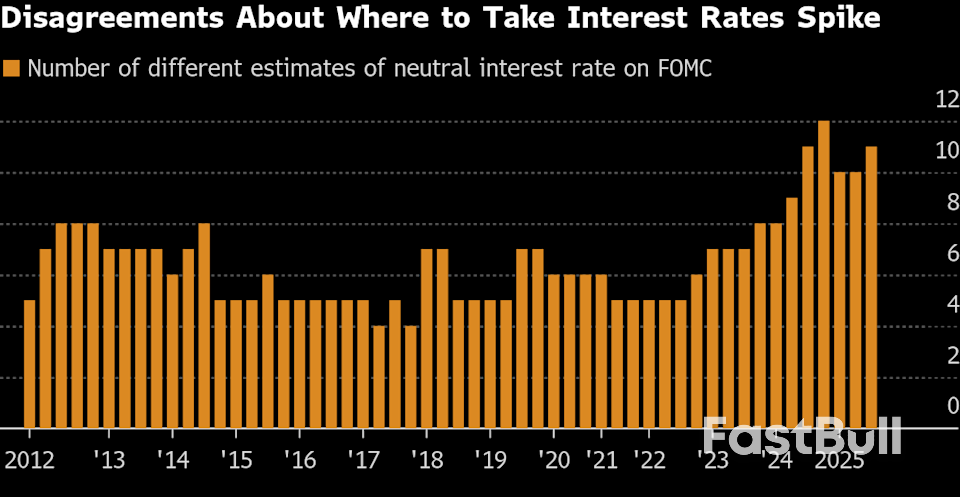
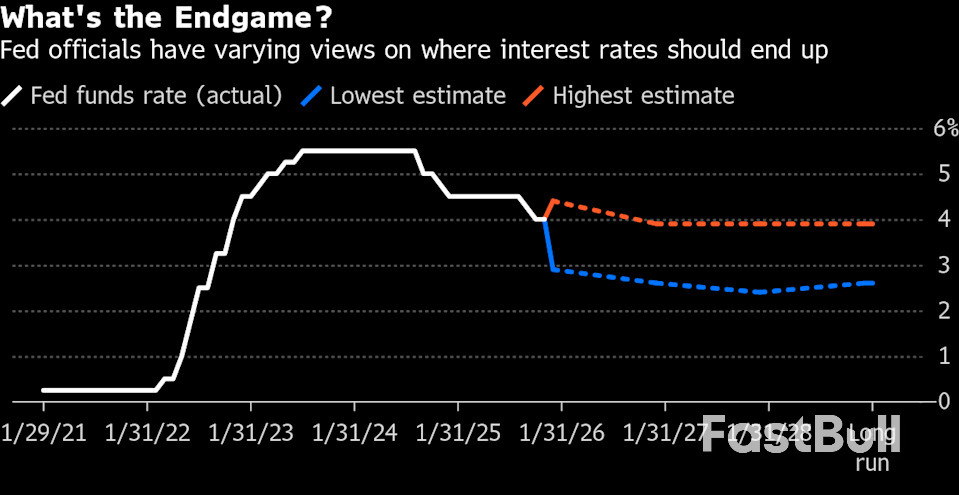
The Fed is increasingly divided over the “neutral” interest rate as officials debate how far to cut amid mixed economic risks. Diverging r-star estimates complicate policy, leaving data—not theory—to guide decisions.
On Tuesday, the Organization for Economic Co-operation and Development (OECD) announced that global GDP is holding up better than expected, as a rise in artificial intelligence investment helps mitigate the impact of U.S. tariff hikes.
The OECD warned that this resilience is still brittle and that any renewed trade disputes or unfulfilled AI aspirations could jeopardize the future.
In the OECD Economic Outlook, the organization estimated that global growth would decline moderately from 3.2% in 2025 to 2.9% in 2026, leaving its forecasts unchanged from those in its prior estimates in September. The OECD projected that global growth would recover to 3.1% in 2027.
OECD forecasts that near-term activity will decrease as higher effective tariff rates progressively feed through, weighing on investment and trade, amid continued geopolitical and economic uncertainty. The organization claimed that growth is likely to firm again later in 2026 as the impact of tariffs fades, financial conditions recover, and lower inflation stimulates consumption, with rising Asian economies being the leading drivers of global growth.
According to OECD, the U.S. economy is expected to fall from 2.8% in 2024 to 1.8% in 2025 and then drop to 1.7% in 2026. In 2027, the U.S. economy is projected to be at 1.9%
The OECD said that AI investment, fiscal support, and predicted Federal Reserve rate cuts are helping counter the drag from tariffs on imported products, lower immigration, and federal employment cutbacks.
The Paris-based organization revised its prediction for the euro zone's 2025 growth to 1.3% from 1.2%, underpinned by strong labor markets and increasing public investment in Germany. According to the organization, growth is expected to slow to 1.2% in 2026, down from 1% previously due to financial constraints in France and Italy.
According to the OECD Economic Outlook, China's growth is forecast to remain stable at 5% in 2025, up from 4.9% in the previous forecast. The organization expects China's growth to drop to 4.4% in 2026, unchanged from the last outlook, as fiscal assistance expires and new U.S. tariffs on products imported from China take effect.
Japan's GDP is predicted to rise 1.3% in 2025, up from 1.1%, driven by strong corporate earnings and investment, before dropping to 0.9% in 2026.
The Paris-based organization said that inflation is forecast to drop in most G20 economies as economic growth moderates and labor market pressures ease. The OECD stated that headline inflation remains sticky in some locations but is predicted to return to its goal by 2027 in almost all major economies.
According to the International Economic Organization, global trade growth is predicted to decrease from 4.2% in 2025 to 2.3% in 2026 as the full effects of tariffs weigh on investment and consumption.
The OECD Economic Outlook revealed that most major economies are expected to return to their inflation targets set by central banks by mid-2027. In the U.S., inflation is expected to peak in mid-2026, following a period of tariff pass-through, and then decline.
In China and certain emerging countries, inflation is predicted to rise gradually as excess production capacity is eliminated.
The Paris-based organization stated that countries need to discover ways of participating cooperatively within the global trading system. Additionally, the organization stated that countries need to work together to make trade policy more predictable and secure a lasting resolution to trade disputes.
According to OECD, most major central banks are likely to hold or cut borrowing prices during the coming year as inflation pressures recede. The Federal Reserve is expected to lower rates somewhat by the end of 2026, barring any inflation surprises from tariffs.
The international economic organization said that central banks should remain sensitive to fluctuations in inflation dynamics. The financial watchdog further claimed that steady policy rate reductions can continue if underlying inflation continues to decline and expectations remain anchored.
The OECD warned that countries experiencing tariff-driven price pressures may need to be more cautious, adjusting the pace of interest-rate cuts to avoid reigniting inflation.
From a control tower overlooking a muddy field in central Estonia, Maido Ruusmann and a pair of local investors watched as a meter-long spy drone was launched into the air using a giant elastic band. It climbed to a height of a kilometer and traced circles in the sky, sending data and images back to about a dozen people huddled around monitors on the ground below.
Ruusmann, a member of parliament from the southern part of the country, organized the demonstration less for national security reasons than for local economic ones. Like many rural areas, his hometown of Tõrva has seen its population decline over the years. Ruusmann was hoping that if the investors were to reach a deal with Skyassist, the Ukrainian defense company that manufactures the drone, they would set up a production facility in his region.
"We need to be salesmen for our town. All local governments have to compete for people and investment," he said later by phone. "The defense and drone industry is the industry of the future."
Estonia's relationship with its eastern neighbor and former occupier is tense. Russia took years to remove its troops after Estonia regained its independence in 1991. And as Russian President Vladimir Putin has become more aggressive about reclaiming his country's former territories, Estonia has been vocal about the threat posed by Moscow.
Since 2022, the year Russia launched its full-scale invasion of Ukraine, Estonia has hiked taxes, cut public spending and increased borrowing to triple its defense budget from €776 million ($897 million) to €2.4 billion in 2026. Military spending next year will translate to over 5% of the nation's gross domestic product, the highest in Europe. Though widely seen as necessary, that spending — most of which has gone towards foreign weapon systems such as US-made HIMARS rocket launchers — is also a burden. It comes in the wake of a multi-year recession, and as Estonia struggles with the euro area's highest rate of inflation.
Estonia's Defense Ministry is now focused on keeping more of that money in the country by channeling it into a domestic defense sector. Leveraging Estonia's status as a globally competitive startup hub, Tallinn announced in January that it would set aside €100 million to launch one of Europe's first funds explicitly focused on weapons.
That has supercharged a growing ecosystem of local defense startups, many of which were founded by Ukrainians or use that country's battlefields to test out their products. With governments across the EU beefing up their defense budgets — Germany alone has committed to spending more than €500 billion on defense between 2026 and 2029 — the hope is that Estonian companies will eventually draw international investment.
Tõrva is a bucolic lakeside town of 2,600 people that comes alive during the summer, when tourists arrive to enjoy its saunas and annual Fire Festival. While those months are crucial for the region's economy, average incomes remain among the lowest in the country. The biggest industries have long been agriculture and timber, and the largest employer is a woodworking factory.
The question of how to reinvigorate Tõrva's economy was on Ruusmann's mind last July when he was approached at the Fire Festival by a Skyassist representative. The dronemaker's Kyiv plant had recently been hit in a Russian air strike, but even before that, the company was looking to expand its manufacturing footprint in Europe.
"Unfortunately, there are no completely safe places in Ukraine today," said Skyassist's chief executive officer Igor Krynychko, who had only a few days earlier touted his product in neighboring Latvia.
At the time, Ruusmann, Tõrva's former mayor, was working with officials from neighboring towns to find tenants for a proposed €10 million industrial park that they hoped would become an economic hub for the region. Ruusmann, who has made several trips to Ukraine, most recently to deliver generators as part of a political delegation, had been wondering whether defense companies might be a good option.
"It was an interesting coincidence, because it's exactly what we had been talking about," he said.
Defense is a relatively new industry in Estonia, as the private sector wasn't allowed to manufacture weapons domestically until 2018. "If you went to a bank five years ago to talk about making lethal weapons, they would send you away immediately," said Jens Haug, who is on the management team for Nitrotol, an Estonian maker of explosives. That changed after a lobbying push.
"They are much more accommodating now," Haug noted.
The sector has grown quickly — there are around 200 companies in the defense industry association, including dronemaker Threod and unmanned vehicles builder Milrem — and sales by Estonian defense companies rose from €245 million in 2022 to €500 million in 2024. The amount of defense-linked government spending going into the Estonian economy is also increasing. In 2023, it was €395 million; in 2024, it was €489 million.
Estonia's size and newness to the sector, however, pose challenges. European governments typically purchase weapons from US manufacturers or their own domestic defense giants. While larger nations can keep tax revenues within their borders through deals with homegrown companies, Estonia is simply too small a market to adopt that model.
"The defense industry here needs to be international by its nature," said Nele Loorents, a research fellow at the International Center for Defence and Security in Tallinn.
Estonia is also treading carefully when it comes to partnerships with foreign defense giants. Military procurement cycles can last for years, with bad decisions having expensive and long-lasting consequences. Estonian officials learned that the hard way in the 1990s, when its first major weapons purchase from a state-owned Israeli company delivered dated artillery and guns that didn't work. (Some issues were eventually resolved, and the deal was later viewed more positively.)
Tallinn recently declined an offer from the German defense group Rheinmetall to build a new ammunition plant in the country on the grounds that, according to the Defense Ministry, the terms weren't favorable enough. Rheinmetall did not respond to a request for comment, but similar projects are moving ahead in Lithuania and Latvia.
One advantage Estonia does have is that its defense officials can be nimble when needed. As Russia's war in Ukraine escalated, it quickly became clear that Europe lacked production capacity for artillery shells. Estonia, which wasn't making any shells at the time, took this as a mandate. The government is now finalizing a deal with an artillery ammo manufacturer.
"From a national security standpoint, if you have production capacity in the country, you can use that for your own needs in a crisis situation," said Indrek Sirp, special advisor for defense industry development at the Ministry of Defense.
For the last two years, Sirp has been busy scouting sites that could host industrial parks for arms manufacturers. In April, the government selected two locations: one in Ermistu, in southwestern Estonia; the other in Põhja-Kiviõli, in the northeast of the country. Tallinn plans to spend about €50 million on infrastructure before missiles and explosives companies move in, and he anticipates they will need to put in another €200 to €300 million. In November, citing market interest, Sirp said the government would look into creating two additional industrial parks.
Despite broad public support for bulking up Estonia's defenses, however, some of these efforts have run into red tape and community resistance. In Ermistu, three local nonprofits and dozens of individuals filed a lawsuit to halt development on the industrial park, accusing the government of ignoring environmental and noise considerations. That worries some in the defense sector, who say that legal and bureaucratic obstacles to arms production could slow things down at a critical moment.
"We haven't moved fast enough," said Kalev Stoicescu, chair of the Estonian parliament's national defense committee. "What we initially wanted to do in four-to-eight years, we now need to do in one-to-three years because we don't know how the international security situation will develop."
For Ukrainian arms manufacturers accustomed to working at the speed of war, adapting to their new context may also be an adjustment.
"The main challenge is the excessive bureaucracy of the European market," said Krynychko, Skyassist's CEO. "Sometimes we see that some of the requirements of European licensing systems do not quite correspond to the requirements of real combat."
US negotiations with Russia over a plan to end its war in Ukraine will not make unilateral decisions about NATO's future, Secretary General Mark Rutte said.
Instead, those issue will be settled in another channel, Rutte told reporters in Brussels on Tuesday, ahead of a foreign ministers' meeting on Wednesday.
"When it comes to the NATO elements of a deal to end the war against Ukraine, that will be dealt with separately and that obviously will include NATO," he said. But Rutte declined to confirm whether another forum existed already, only saying he was "closely coordinating" with the US.
Rutte's comments come as a US delegation arrives in Moscow for negotiations over a potential plan to end Russia's war in Ukraine. US envoy Steve Witkoff is scheduled to meet with Russian President Vladimir Putin on Tuesday, following discussions over the weekend between the US and Ukrainian officials.
The US push has forced NATO into existential discussions about its own future. Throughout the talks, Washington has unilaterally floated ideas that would alter the military alliance's foundation — offering to restrict NATO expansion, shift European forces and alter the transatlantic security arrangement.
"There are some items of the peace plan that need to rest with other organizations, including NATO," Canadian Foreign Minister Anita Anand said Tuesday in a Bloomberg TV interview.
NATO allies were hoping to hear from Secretary of State Marco Rubio on Wednesday about the negotiations, according to people familiar with the matter, but the US diplomat is skipping the meeting.
Rutte insisted that he's in "constant contact" with Rubio. "I totally accept him not being able to be here."
Still, NATO leaders are wary that Washington will ignore the military alliance and pressure Ukraine to accept Russia-friendly concessions. They were startled last month when a US-drafted peace plan suggested Ukraine concede Russian-desired territory, cap its military and never join NATO.
Those demands have since been revised or dropped after US discussions with Ukrainian and European officials. On Monday, Ukrainian President Volodymyr Zelenskiy said the latest version "looks better."
Rutte agreed, saying that officials have "moved on" from the early plan and dropped the more contentious proposals.
"You need to start somewhere, you need to have proposals on the table," he said, praising the US effort.
Putin has signaled an openness to the talks, saying the US plan could be "the basis for future agreements," while adding that no final version exists. Yet the Russian leader has given no indication he will roll back demands for territory or NATO constraints.
To address NATO members' anxieties, Rutte called an extraordinary meeting of the alliance's political decision-making body, the North Atlantic Council, where ambassadors aired their fears and got a readout on the negotiations. Concerns included potential territorial concessions and security guarantees for Ukraine, said the people familiar with the matter.
The meeting was also meant to start a discussion about what any peace plan would mean for NATO, the people added, speaking on the condition of anonymity.
Rutte has been in frequent contact with the US and President Donald Trump, according to European diplomats, representing Europe's views. Allies are also being encouraged to keep contributing to a program allowing NATO allies to purchase US-made weapons for Ukraine, the people said.
Separately, Ukrainian Foreign Minister Andrii Sybiha will brief allies on the negotiations on Wednesday.
"In the end we need two to tango," Rutte said. "We also need Russia to tango. That's being tested at the moment."
Daily Light Crude Oil FuturesWhite Label
Data API
Web Plug-ins
Poster Maker
Affiliate Program
The risk of loss in trading financial instruments such as stocks, FX, commodities, futures, bonds, ETFs and crypto can be substantial. You may sustain a total loss of the funds that you deposit with your broker. Therefore, you should carefully consider whether such trading is suitable for you in light of your circumstances and financial resources.
No decision to invest should be made without thoroughly conducting due diligence by yourself or consulting with your financial advisors. Our web content might not suit you since we don't know your financial conditions and investment needs. Our financial information might have latency or contain inaccuracy, so you should be fully responsible for any of your trading and investment decisions. The company will not be responsible for your capital loss.
Without getting permission from the website, you are not allowed to copy the website's graphics, texts, or trademarks. Intellectual property rights in the content or data incorporated into this website belong to its providers and exchange merchants.
Not Logged In
Log in to access more features

FastBull Membership
Not yet
Purchase
Log In
Sign Up