Markets
News
Analysis
User
24/7
Economic Calendar
Education
Data
- Names
- Latest
- Prev



Signal Accounts for Members
All Signal Accounts
All Contests


Top USA And Israeli Generals Met On Friday At The Pentagon Amid Iran Tensions, Two USA Officials Tell Reuters
[Bitcoin Briefly Dips Below $77,000, Ethereum Briefly Dips Below $2,300] February 1st, According To Htx Market Data, Bitcoin Briefly Dropped Below $77,000, Now Trading At $77,011, With A 24-Hour Decrease Of 5.32%.Ethereum Briefly Dropped Below $2,300, Now Trading At $2,301.07, With A 24-Hour Decrease Of 9.28%
Qatar Prime Minister: Qatar To Introduce 10 Year Residency For Entrepreneurs And Senior Executives
[Speaker Of The U.S. House Of Representatives: Confident Of Sufficient Votes To End Partial Government Shutdown By Tuesday] February 1st, According To Nbc News, U.S. House Speaker Johnson Said He Is Confident That There Will Be Enough Votes By At Least Tuesday To End The Partial Government Shutdown
Iranian Official Tells Reuters: Media Reports Of Plans For Revolutionary Guards To Hold Military Exercise In Strait Of Hormuz Are Wrong
Ukraine's Defence Minister Says Kyiv And Spacex Working On System To Ensure Only Authorized Starlink Terminals Work In Ukraine
Russian Security Committee's Vice Chairman Medvedev: Europe Has Failed To Defeat Russia In Ukraine
Russian Security Committee's Vice Chairman Medvedev: We Never Found The Two Nuclear Submarines Trump Spoke Of Deploying Closer To Russia
Russian Security Committee's Vice Chairman Medvedev: Victory Will Come 'Soon' In Ukraine But Equally Important To Think Of How To Prevent New Conflicts
Russian Security Committee's Vice Chairman Medvedev: Trump Is An Effective Leader Who Seeks Peace
Russian Defence Ministry: Russia Gains Control Over Two Villages In Ukraine's Kharkiv And Donetsk Regions

U.K. M4 Money Supply (SA) (Dec)A:--
F: --
Italy Unemployment Rate (SA) (Dec)A:--
F: --
P: --
Euro Zone Unemployment Rate (Dec)A:--
F: --
P: --
Euro Zone GDP Prelim QoQ (SA) (Q4)A:--
F: --
P: --
Euro Zone GDP Prelim YoY (SA) (Q4)A:--
F: --
P: --
Italy PPI YoY (Dec)A:--
F: --
P: --
Mexico GDP Prelim YoY (Q4)A:--
F: --
P: --
Brazil Unemployment Rate (Dec)A:--
F: --
P: --
South Africa Trade Balance (Dec)A:--
F: --
P: --
India Deposit Gowth YoYA:--
F: --
P: --
Germany CPI Prelim YoY (Jan)A:--
F: --
P: --
Germany CPI Prelim MoM (Jan)A:--
F: --
P: --
Germany HICP Prelim YoY (Jan)A:--
F: --
P: --
Germany HICP Prelim MoM (Jan)A:--
F: --
P: --
U.S. Core PPI YoY (Dec)A:--
F: --
U.S. Core PPI MoM (SA) (Dec)A:--
F: --
P: --
U.S. PPI YoY (Dec)A:--
F: --
P: --
U.S. PPI MoM (SA) (Dec)A:--
F: --
P: --
Canada GDP MoM (SA) (Nov)A:--
F: --
P: --
Canada GDP YoY (Nov)A:--
F: --
P: --
U.S. PPI MoM Final (Excl. Food, Energy and Trade) (SA) (Dec)A:--
F: --
P: --
U.S. PPI YoY (Excl. Food, Energy & Trade) (Dec)A:--
F: --
P: --
U.S. Chicago PMI (Jan)A:--
F: --
Canada Federal Government Budget Balance (Nov)A:--
F: --
P: --
U.S. Weekly Total Oil Rig CountA:--
F: --
P: --
U.S. Weekly Total Rig CountA:--
F: --
P: --
China, Mainland NBS Manufacturing PMI (Jan)A:--
F: --
P: --
China, Mainland NBS Non-manufacturing PMI (Jan)A:--
F: --
P: --
China, Mainland Composite PMI (Jan)A:--
F: --
P: --
South Korea Trade Balance Prelim (Jan)A:--
F: --
Japan Manufacturing PMI Final (Jan)--
F: --
P: --
South Korea IHS Markit Manufacturing PMI (SA) (Jan)--
F: --
P: --
Indonesia IHS Markit Manufacturing PMI (Jan)--
F: --
P: --
China, Mainland Caixin Manufacturing PMI (SA) (Jan)--
F: --
P: --
Indonesia Trade Balance (Dec)--
F: --
P: --
Indonesia Inflation Rate YoY (Jan)--
F: --
P: --
Indonesia Core Inflation YoY (Jan)--
F: --
P: --
India HSBC Manufacturing PMI Final (Jan)--
F: --
P: --
Australia Commodity Price YoY (Jan)--
F: --
P: --
Russia IHS Markit Manufacturing PMI (Jan)--
F: --
P: --
Turkey Manufacturing PMI (Jan)--
F: --
P: --
U.K. Nationwide House Price Index MoM (Jan)--
F: --
P: --
U.K. Nationwide House Price Index YoY (Jan)--
F: --
P: --
Germany Actual Retail Sales MoM (Dec)--
F: --
Italy Manufacturing PMI (SA) (Jan)--
F: --
P: --
South Africa Manufacturing PMI (Jan)--
F: --
P: --
Euro Zone Manufacturing PMI Final (Jan)--
F: --
P: --
U.K. Manufacturing PMI Final (Jan)--
F: --
P: --
Brazil IHS Markit Manufacturing PMI (Jan)--
F: --
P: --
Canada National Economic Confidence Index--
F: --
P: --
Canada Manufacturing PMI (SA) (Jan)--
F: --
P: --
U.S. IHS Markit Manufacturing PMI Final (Jan)--
F: --
P: --
U.S. ISM Output Index (Jan)--
F: --
P: --
U.S. ISM Inventories Index (Jan)--
F: --
P: --
U.S. ISM Manufacturing Employment Index (Jan)--
F: --
P: --
U.S. ISM Manufacturing New Orders Index (Jan)--
F: --
P: --
U.S. ISM Manufacturing PMI (Jan)--
F: --
P: --
South Korea CPI YoY (Jan)--
F: --
P: --
Japan Monetary Base YoY (SA) (Jan)--
F: --
P: --
Australia Building Permits MoM (SA) (Dec)--
F: --
P: --


No matching data
Latest Views
Latest Views
Trending Topics
Top Columnists
Latest Update
White Label
Data API
Web Plug-ins
Affiliate Program
View All

No data
Russia's Medvedev lauded Trump's 'effective chaos' and peace efforts, yet dismissed his nuclear submarine claims.
Dmitry Medvedev, the deputy chairman of Russia's Security Council, has offered a sharp analysis of U.S. President Donald Trump, praising him as an effective and peace-seeking leader while simultaneously dismissing his claims about deploying nuclear submarines near Russia.
The comments come as a new round of peace talks involving the United States, Russia, and Ukraine is scheduled for this week in Abu Dhabi. Trump has repeatedly stated that a deal to end the war in Ukraine is close and has positioned himself as a "peacemaker" president.
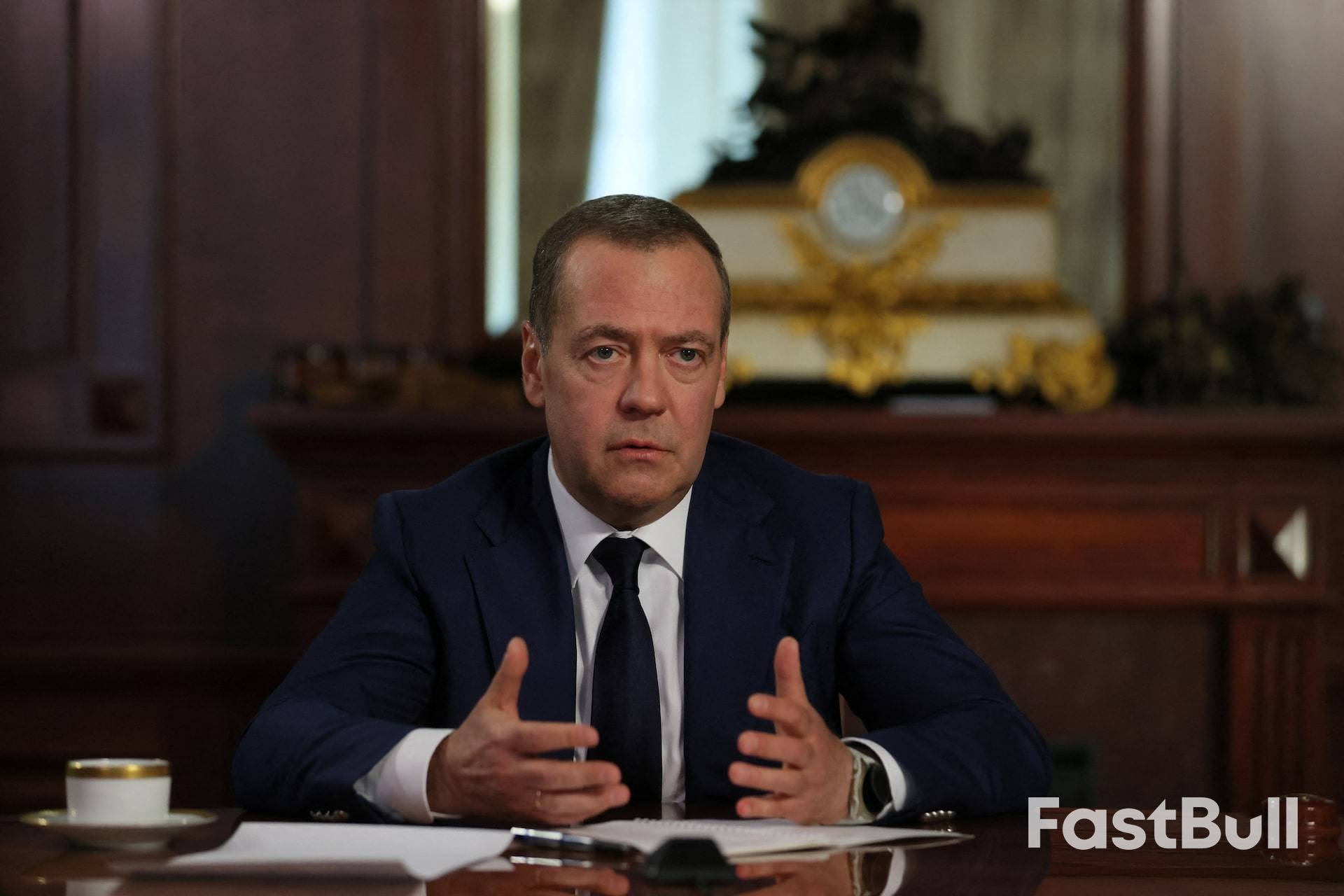
In an interview with Reuters, TASS, and the WarGonzo Russian war blogger, Medvedev pushed back against the notion that Trump is merely a chaotic force in global politics. While acknowledging Trump’s "emotional" and sometimes "brash" style, Medvedev described it as "effective."
"The chaos that is commonly referred to, which is created by his activities, is not entirely true," said Medvedev, who served as Russia's president from 2008 to 2012. "It is obvious that behind this lies a completely conscious and competent line."
Medvedev, who has become known for his hawkish statements, lauded Trump's courage for resisting the U.S. establishment and suggested the key to understanding him lies in his business background.
According to Medvedev, Moscow respects the American people's decision to elect Trump, and relations have improved under his leadership.
"Trump wants to go down in history as a peacemaker—and he is really trying," Medvedev said. "And that is why contacts with Americans have become much more productive."
While President Vladimir Putin has the final say on Russian policy, Medvedev's comments offer insight into the thinking of hardline figures within the Moscow elite.
Despite the praise, Medvedev openly questioned a specific military claim made by Trump. In August, Trump stated he had ordered two U.S. nuclear submarines to move closer to Russia following what he called "highly provocative" comments from Medvedev.
When asked about the threat, Medvedev’s response was blunt: "We still have not found them."
Regarding the ongoing war, Medvedev projected confidence, stating that a Russian military victory would come "soon." However, he stressed that the ultimate goal was not just to win but to secure a lasting peace.
"I would like this to happen as soon as possible," he said. "But it is equally important to think about what will happen next. After all, the goal of victory is to prevent new conflicts."
Currently, Russia controls about a fifth of Ukraine's territory. Ukrainian forces continue to hold approximately 10%, or 5,000 square kilometers, of the eastern Donbas region.
A US military operation in Venezuela on January 3, 2026, sent shockwaves through the international community. Washington framed the action as a counter-narcotics measure, but it stood as a clear violation of international law. The move directly contradicted a principle often cited by the US and its allies: that changing the status quo by force is unacceptable.
This was followed by another assertive move when President Donald Trump announced retaliatory tariffs on Denmark and seven other European nations on January 17. The tariffs were a response to their opposition to his proposal to acquire Greenland.
These rapid and radical actions highlight a growing sense of urgency from Trump, whose approval ratings have been declining ahead of the November midterm elections. The President has stated that the only check on his power is his own morality, not international law.
This new foreign policy direction has been dubbed 'Donroeism'—a modern reinterpretation of the 19th-century Monroe Doctrine. Under this framework, the United States is shifting its strategic focus to the Western Hemisphere. The primary goals are to establish regional dominance and eliminate perceived threats, including drug trafficking, illegal immigration, and the influence of Russia and China in the Americas.
This pivot raises fundamental questions about the future of the post-World War II security architecture. The system of collective defense through NATO in Europe and bilateral alliances in East Asia now faces a potential transformation. President Trump's long-standing threat to withdraw the United States from NATO could become a reality.
In East Asia, US policy toward China also appears to be evolving. Since China became the world's second-largest economy around 2010, Washington has treated Beijing as its primary global competitor, using its 'Indo-Pacific Strategy' to build alliances and contain Chinese influence.
However, recent events suggest a strategic adjustment. During the APEC summit in late October 2025, Trump and Chinese President Xi Jinping agreed to a one-year truce in the trade war and planned reciprocal state visits for 2026, while avoiding contentious discussions over Taiwan. Trump has also made references to a 'G2' framework, implying an elevated global status for China. This suggests that as Washington concentrates on the Western Hemisphere, it may be seeking to avoid direct confrontation with Beijing.
For China, a stable relationship with the US and a healthy economy are top priorities. With domestic consumption sluggish and real GDP growth at approximately 5% in 2025, avoiding another trade war is crucial. From this perspective, the trade truce and high-level diplomacy are positive outcomes for the Xi administration.
Some analysts have speculated that the US military action in Venezuela could embolden China to take military action against Taiwan, a key political objective for Xi as he nears the end of his third term. This interpretation, however, is likely flawed. While the Venezuela operation was a violation of another country's sovereignty, Beijing considers Taiwan a purely internal affair.
China is expected to pursue reunification on its own timeline. Its strategy will likely involve:
• Applying political pressure through the Kuomintang and other allies in Taiwan.
• Conducting military exercises in the Taiwan Strait.
• Steadily expanding its military capabilities.
The decisive factor remains the US response. Under Donroeism, many observers now believe the likelihood of American military intervention in a Taiwan contingency is decreasing.
Japan finds itself in a situation similar to Europe, which is now pursuing greater strategic independence. Surrounded by nuclear-armed China and Russia, and a nuclear-capable North Korea, Japan cannot realistically abandon the US nuclear umbrella. The political and economic costs of developing its own nuclear deterrent are simply too high.
At the same time, unconditional alignment with Washington may not always serve Japan's national interests. Instead of simply following America's lead, Japan should aim to become an ally capable of influencing US policy. The key to achieving this lies in developing an autonomous diplomatic strategy focused on Asia.
Even without US participation, Japan should work to expand the CPTPP to include China and South Korea, create regional confidence-building frameworks, and strengthen ties with South Korea, Australia, ASEAN nations, and India.
Tensions Derail Japan-China Diplomacy
Constructive engagement with China is essential for regional stability, but relations between Tokyo and Beijing are tense. Japanese Prime Minister Sanae Takaichi, despite her conservative reputation, initially took a conciliatory stance, securing a meeting with Xi at the APEC summit.
However, immediately after the summit, Takaichi posted on social media about her meeting with Taiwan's APEC representative. She later told the Diet that a conflict over Taiwan could constitute a "survival-threatening situation" for Japan, implying Tokyo might invoke collective self-defense to support the US.
Beijing viewed these actions as a diplomatic insult to President Xi and responded with retaliatory measures. China discouraged travel to Japan, suspended seafood imports, and placed export controls on dual-use items and rare earths. Takaichi has refused to retract her statements, and with Taiwan being Beijing's "core interest of core interests," the outlook for improving Japan-China relations is bleak.
President Trump's 'Donroeism' is reshaping the foundations of the global order, from the Western Hemisphere to Europe and East Asia. For Japan, relying solely on its alliance with the United States is no longer sufficient. To navigate this increasingly unstable environment, Japan must pursue a more independent, Asia-centered foreign policy.
India has announced a strategic cut in tariffs on a range of capital goods and raw materials. The move is designed to reduce the country's economic dependence on China, particularly in sectors vital for the green energy transition, while also lowering costs for exporters navigating global trade pressures.
According to analysts, these customs duty reforms are crucial for India to reach its ambitious $1 trillion goods export target. Lowering input costs is expected to help Indian companies better integrate into global supply chains and attract new investment from firms looking to diversify away from China.
Finance Minister Nirmala Sitharaman confirmed that India will lower the duty on capital goods essential for processing critical minerals and manufacturing lithium-ion battery cells. This policy directly supports the nation's energy transition efforts by aiming to break its reliance on Chinese supply chains.
The government also eliminated tariffs on two key materials:
• Sodium antimonate, used in solar glass production.
• Monazite, a crucial source of rare earth elements for permanent magnets in electric vehicles (EVs).
This measure comes as China, which dominates over 90% of the global processing capacity for these magnets, placed export curbs on rare earth magnets last year. Those restrictions posed a significant challenge to India's EV production plans.
The tariff adjustments also aim to support local manufacturing in several export-oriented industries. Sitharaman announced concessions for the marine, leather, and textile sectors, all of which have been challenged by punitive tariffs imposed by the U.S. under President Donald Trump.
Furthermore, India will cut duties on raw materials needed to produce aircraft parts for the defense maintenance and repair sector. Inputs for the electronics industry will also see similar tariff reductions.
Analysts view these tariff cuts as a sign of policy continuity. Rather than a radical overhaul, the moves represent incremental adjustments designed to align India's duty structure with new trade agreements amid rising global uncertainty, geopolitical tensions, and protectionism.
As the global economic order continues to evolve, Prime Minister Narendra Modi's government is placing a renewed bet on its manufacturing sector. While these budget reforms fell short of some expectations, they reflect a clear strategy.
In a related move, the government made a one-time concession for Special Economic Zones (SEZs), which are typically export-focused. Due to disruptions in global trade leaving them with unused capacity, these zones will now be permitted to sell their products into the domestic Indian market.
India’s latest annual federal budget is a "tactical" move but falls short of being a "breakthrough" plan, according to an assessment from Moody's Ratings. The agency stated that the government's financial roadmap for the upcoming fiscal year will not alter India's credit profile.
Christian de Guzman, a senior vice president at Moody's, explained that despite a track record of fiscal discipline, the country's deficit remains wider than it was before the COVID-19 pandemic. "We haven't seen the fiscal metrics improve sufficiently enough to actually change the credit profile," he said.
The government plans to continue its path of fiscal consolidation, aiming to reduce the budget gap to 4.3% of GDP from 4.4% in the current year. However, Moody's views this incremental improvement as insufficient to warrant a change in its assessment.
For the current financial year, India's economy is projected to grow by 7.4%, with inflation expected to be around 2%. The fiscal deficit is set to land at 4.4% of gross domestic product.
Last year, Moody's affirmed its "stable" outlook on India's sovereign ratings, citing the economy's sustained strength and the reliability of domestic funding sources for its budget deficits.
Presented by Finance Minister Nirmala Sitharaman, the budget places a significant bet on boosting the country's manufacturing sector. This strategy is central to the Modi government's ambition to drive growth in Asia's third-largest economy amid global volatility. The long-term goal is to increase manufacturing's share of GDP from its current level of under 20% to 25%, creating jobs for the millions of new workers entering the labor force annually.
While Moody's acknowledges that planned reforms and a recent free trade agreement with the EU are positive for the sector, de Guzman suggested these steps may not be enough to achieve the government's ambitious targets.
The budget follows consumption and income tax cuts announced by New Delhi last year. According to de Guzman, these tax reforms are expected to weigh on government revenue. Tax revenue is projected to decline by 0.2 percentage points in the next fiscal year compared to current estimates.
This revenue pressure is compounded by the government's significant borrowing needs.
• Planned Borrowing: The government intends to borrow 17.2 trillion rupees ($187.63 billion) in the new fiscal year.
• Market Impact: Such large-scale borrowing has already pushed bond yields to near one-year highs and threatens to crowd out private investment, potentially contributing to a high-interest-rate environment.
• Debt Servicing: De Guzman highlighted a worsening outlook for debt affordability. "For the next fiscal year, the ratio of interest payments to revenue is actually set to worsen," he said, attributing this to a lack of significant debt reduction and a narrowing revenue base.
As part of its fiscal policy, the government has adopted debt-to-GDP as its primary target. It aims to reduce this ratio from 56.1% in the current year to 55.6% next year.
India's government has implemented a pivotal tax change, handing a major victory to foreign companies like Apple and clearing a significant hurdle for electronics manufacturing in the country. The new policy allows international firms to supply machinery to their Indian contract manufacturers for five years without incurring local tax liabilities.
The move, announced as part of Finance Minister Nirmala Sitharaman's 2026-27 annual budget, directly addresses a long-standing concern for Apple and is a key component of Prime Minister Narendra Modi's agenda to expand smartphone production within India.
Previously, India's tax laws posed a risk for Apple. If the company provided its high-end iPhone manufacturing equipment to local partners, Indian authorities could classify this as a "business connection." This interpretation would have made Apple's profits from iPhone sales in India subject to domestic taxes.
This risk forced Apple's contract manufacturers, including Foxconn and Tata, to bear the multi-billion dollar cost of purchasing the necessary machinery themselves, potentially slowing down expansion plans. Apple had been actively lobbying Indian officials to amend the law to remove this obstacle and support its future growth.
The government has now clarified its position to encourage investment. An explanatory budget document stated that the change aims "to promote manufacturing of electronic goods for a contract manufacturer."
Under the new provision, any income a foreign company earns from providing capital goods, equipment, or tooling to a contract manufacturer based in India is eligible for a tax exemption.
Key Limitations and Focus on Exports
This tax relief comes with specific conditions:
• Time-Limited: The exemption is set to apply until the 2030-31 tax year.
• Location-Specific: It only covers factories established in customs-bonded areas, which are legally considered outside India's customs jurisdiction.
This structure makes these facilities ideal for export-oriented production. While goods can be sold domestically from these zones, they would be subject to import taxes, reinforcing the focus on international markets.
Industry experts view the policy shift as a game-changer. "This exemption removes a key deal-breaking risk for electronics manufacturing in India," said Shankey Agrawal, a partner at the tax-focused law firm BMR Legal. "The result is faster scale-up and greater confidence for global electronics players to manufacture in India."
The decision comes as Apple significantly expands its manufacturing footprint in India as part of a broader strategy to diversify its supply chain beyond China. According to Counterpoint Research, this shift is already showing results. Since 2022, India's share of global iPhone shipments has quadrupled to 25%, while Apple's share of the Indian domestic market has doubled to 8%.
While China still accounts for the majority of global iPhone shipments at 75%, this new tax policy is set to accelerate India's rise as a critical hub for global electronics manufacturing.
India's government has introduced a major tax reform that directly benefits foreign electronics companies like Apple, removing a key obstacle to expanding manufacturing in the country. The change allows foreign firms to supply machinery to their Indian contract manufacturers for five years without triggering a significant tax risk.
This move is a critical part of Prime Minister Narendra Modi's agenda to establish India as a global smartphone production hub. Apple had been actively lobbying for this reform, arguing that existing tax laws hindered its ability to scale up production efficiently.
Previously, Apple faced a unique challenge in India that it didn't encounter in China. Under Indian law, if Apple provided high-end iPhone machinery to its manufacturing partners, tax authorities could deem this a "business connection." This interpretation risked making Apple's profits from iPhone sales in India subject to local taxes.
To avoid this risk, Apple's contract manufacturers, including Foxconn and Tata, had to invest billions of dollars in their own equipment. The new policy, announced in the 2026-27 annual budget by Finance Minister Nirmala Sitharaman, directly addresses this long-standing concern.
The government's new rule change clarifies that a foreign company's income will not be taxed simply because it owns and provides capital goods to a local contract manufacturer.
Key details of the policy include:
• Targeted Application: The exemption applies to factories located in "customs-bonded areas," which are treated as being outside India's formal customs territory.
• Export Focus: Devices produced in these zones and sold domestically will still incur import taxes, making these facilities ideal for export-focused manufacturing.
• Time-Limited: The rule change will be in effect until the 2030-31 tax year.
The government's budget documents state that "any income arising on account of providing capital goods, equipment or tooling to a contract manufacturer...is eligible for exemption."
Industry experts believe this policy shift will significantly accelerate electronics manufacturing in India.
"This exemption removes a key deal-breaking risk for electronics manufacturing in India," noted Shankey Agrawal, a partner at the tax law firm BMR Legal. "The result is faster scale-up and greater confidence for global electronics players to manufacture in India."
The decision comes as Apple steadily increases its footprint in India as part of a broader strategy to diversify its supply chain beyond China. According to Counterpoint Research, the iPhone's market share in India has doubled to 8% since 2022. More significantly, India's share of global iPhone shipments has quadrupled to 25% over the same period, while China's share stands at 75%.
This legislative change is the result of numerous discussions between Apple and Indian officials, signaling a successful effort to create a more favorable environment for the company's future growth in the country.

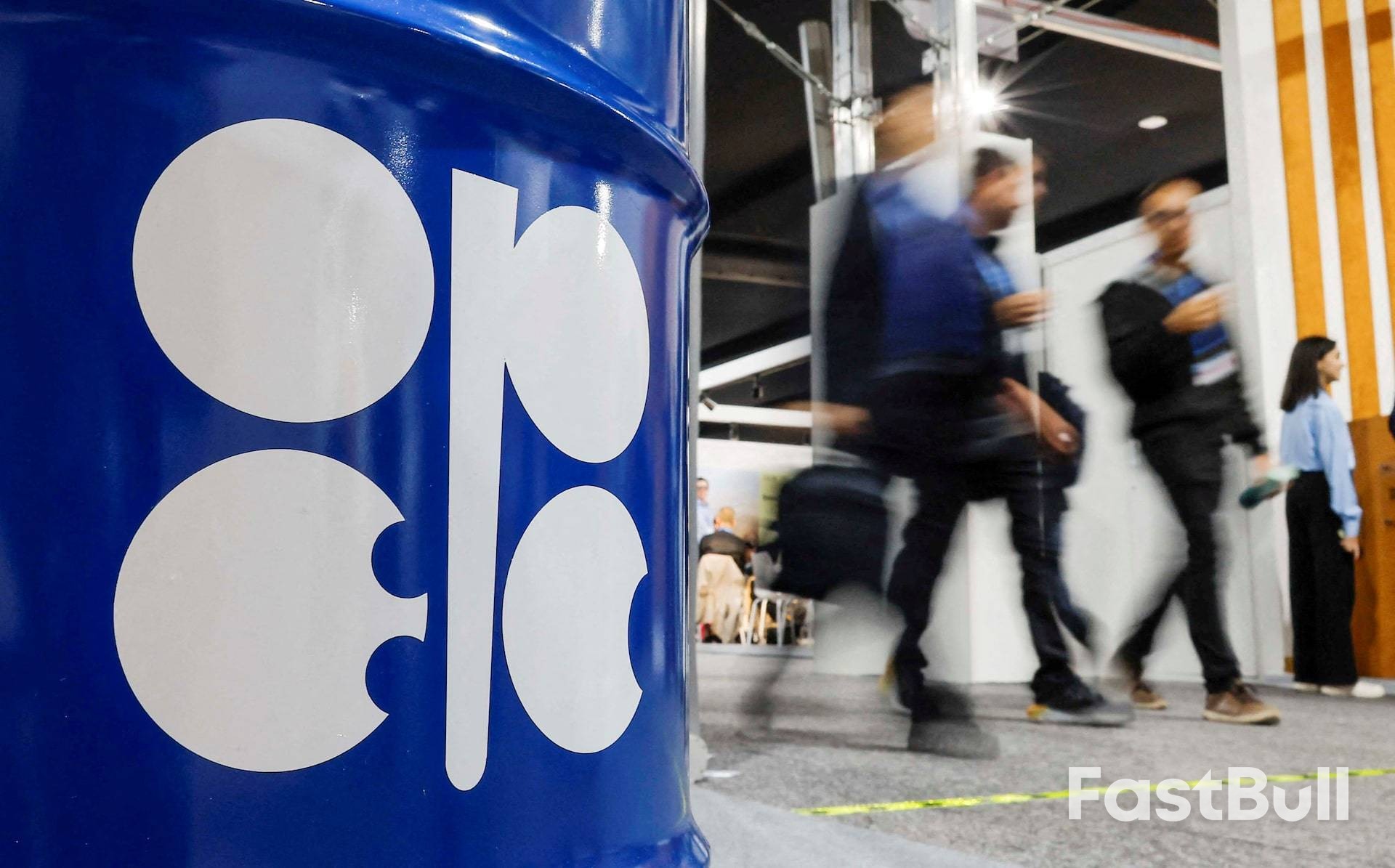
OPEC+ is expected to maintain its current oil output policy for March, holding off on planned production increases when the group meets on Sunday. According to three OPEC+ delegates, the decision to pause comes even as crude prices have surged to six-month highs over concerns that the U.S. might launch military strikes against Iran, a key OPEC member.
The upcoming meeting of eight key OPEC+ producers follows a week where Brent crude closed near $70 a barrel, just shy of the $71.89 six-month peak reached on Thursday. This price strength persists despite some speculation that a supply glut in 2026 could eventually push prices lower.
The primary driver behind the recent oil price rally is the escalating tension between the United States and Iran. U.S. President Donald Trump is reportedly weighing several options against Tehran, including targeted strikes on security forces and leaders. Washington has already imposed extensive sanctions to cut off Iran's oil revenue, a critical source of state funding.
While both nations have signaled a potential willingness to engage in dialogue, Tehran stated on Friday that its defense capabilities would be part of any discussion. This tense geopolitical backdrop is keeping the oil market on edge and supporting higher prices.
The group of eight producers—Saudi Arabia, Russia, the United Arab Emirates, Kazakhstan, Kuwait, Iraq, Algeria, and Oman—previously agreed to raise their collective production quotas by approximately 2.9 million barrels per day between April and December 2025. This increase represented about 3% of global demand.
However, the alliance then decided to freeze any further output increases for the period of January through March 2026, citing seasonally weaker consumption patterns. Sunday's meeting is expected to uphold this pause for March, with no decisions anticipated for policy beyond that month.
The meeting of the eight OPEC+ members is scheduled to begin at 1330 GMT on Sunday. OPEC+, which includes the Organization of the Petroleum Exporting Countries along with Russia and other allies, collectively produces about half of the world's oil.
A separate OPEC+ panel, the Joint Ministerial Monitoring Committee (JMMC), is also set to meet on Sunday. However, this committee serves an advisory role and does not have the authority to make decisions on production policy.
Beyond the situation in Iran, oil prices have also found support from supply disruptions in Kazakhstan. The country's oil sector has faced a series of operational issues in recent months. On Wednesday, Kazakhstan announced it was in the process of restarting its massive Tengiz oilfield in stages, but the recent losses have contributed to market tightness.
White Label
Data API
Web Plug-ins
Poster Maker
Affiliate Program
The risk of loss in trading financial instruments such as stocks, FX, commodities, futures, bonds, ETFs and crypto can be substantial. You may sustain a total loss of the funds that you deposit with your broker. Therefore, you should carefully consider whether such trading is suitable for you in light of your circumstances and financial resources.
No decision to invest should be made without thoroughly conducting due diligence by yourself or consulting with your financial advisors. Our web content might not suit you since we don't know your financial conditions and investment needs. Our financial information might have latency or contain inaccuracy, so you should be fully responsible for any of your trading and investment decisions. The company will not be responsible for your capital loss.
Without getting permission from the website, you are not allowed to copy the website's graphics, texts, or trademarks. Intellectual property rights in the content or data incorporated into this website belong to its providers and exchange merchants.
Not Logged In
Log in to access more features
Log In
Sign Up