Markets
News
Analysis
User
24/7
Economic Calendar
Education
Data
- Names
- Latest
- Prev



Signal Accounts for Members
All Signal Accounts
All Contests


[Economist: Fed Could Further Shrink Balance Sheet If It Uses Term Open Market Operations (Tomos)] Bill Nelson, Chief Economist And Head Of Research At The Bank Policy Institute (Bpi), Believes The Federal Reserve's Reluctance To Restart Term Open Market Operations (Tomos) Is Hindering Further Reduction In Its Balance Sheet, And This Resistance Is Based On Misunderstanding. Nelson Writes, "Without Term Open Market Operations, The Fed Simply Cannot Achieve Meaningful Balance Sheet Reduction. To Reduce Its Balance Sheet, The Fed Must Raise Money Market Rates To A Level Slightly Above The Interest Rate On Reserves (IOR) So That Banks Have An Incentive To Shift Funds From Reserves To Other Liquid Assets."
U.S. Treasury Yields Rose Further As Data Showed That The U.S. ISM Manufacturing Sector Expanded At Its Fastest Pace Since February 2022 In January
The US ISM Manufacturing New Orders Index For January Was 57.1, Compared To 47.7 In The Previous Month
Ism USA Manufacturing Prices Paid Index 59.0 In January (Consensus 59.0) Versus 58.5 In December
Gold Volatility Hits Highest Level Since 2008, Dwarfing Even Bitcoin's Rollercoaster Ride. Gold's Volatility Has Surpassed That Of Bitcoin, Highlighting The Metal's Dramatic Price Swings, Comparable To The Most Volatile Periods Of The Past Two Decades, Following A Rapid Price Surge. Bloomberg Data Shows That Gold's 30-day Volatility Has Climbed To Over 44%, The Highest Since The 2008 Financial Crisis. This Level Exceeds Bitcoin's Volatility Of Approximately 39%—the Original Cryptocurrency Often Referred To As "digital Gold."
The Final Reading Of The S&P Global Manufacturing PMI Output Sub-index For January Rose To 55.2, A New High Since August, Marking The Eighth Consecutive Month Of Expansion. The Final Reading Of The Employment Sub-index Fell, Reaching A New Low Since October
A White House Official Said U.S. Middle East Envoy Witkov Will Travel To Abu Dhabi On Wednesday And Thursday For Talks With Russia And Ukraine
A White House Official Said U.S. Middle East Envoy Witkov Will Arrive In Israel On Tuesday And Meet With Israeli Prime Minister Netanyahu
The Final Reading Of The S&P Global Manufacturing PMI For January In The United States Was 52.4, In Line With Expectations Of 52 And The Preliminary Reading Of 51.9
Spokesman: US Treasury Has Not Pledged Funds To African Development Bank's Adf 2025 Financing Round

China, Mainland NBS Non-manufacturing PMI (Jan)A:--
F: --
P: --
South Korea Trade Balance Prelim (Jan)A:--
F: --
Japan Manufacturing PMI Final (Jan)A:--
F: --
P: --
South Korea IHS Markit Manufacturing PMI (SA) (Jan)A:--
F: --
P: --
Indonesia IHS Markit Manufacturing PMI (Jan)A:--
F: --
P: --
China, Mainland Caixin Manufacturing PMI (SA) (Jan)A:--
F: --
P: --
Indonesia Trade Balance (Dec)A:--
F: --
P: --
Indonesia Inflation Rate YoY (Jan)A:--
F: --
P: --
Indonesia Core Inflation YoY (Jan)A:--
F: --
P: --
India HSBC Manufacturing PMI Final (Jan)A:--
F: --
P: --
Australia Commodity Price YoY (Jan)A:--
F: --
P: --
Russia IHS Markit Manufacturing PMI (Jan)A:--
F: --
P: --
Turkey Manufacturing PMI (Jan)A:--
F: --
P: --
U.K. Nationwide House Price Index MoM (Jan)A:--
F: --
P: --
U.K. Nationwide House Price Index YoY (Jan)A:--
F: --
P: --
Germany Actual Retail Sales MoM (Dec)A:--
F: --
Italy Manufacturing PMI (SA) (Jan)A:--
F: --
P: --
South Africa Manufacturing PMI (Jan)A:--
F: --
P: --
Euro Zone Manufacturing PMI Final (Jan)A:--
F: --
P: --
U.K. Manufacturing PMI Final (Jan)A:--
F: --
P: --
Turkey Trade Balance (Jan)A:--
F: --
P: --
Brazil IHS Markit Manufacturing PMI (Jan)A:--
F: --
P: --
Canada National Economic Confidence IndexA:--
F: --
P: --
Canada Manufacturing PMI (SA) (Jan)A:--
F: --
P: --
U.S. IHS Markit Manufacturing PMI Final (Jan)A:--
F: --
P: --
U.S. ISM Output Index (Jan)A:--
F: --
P: --
U.S. ISM Inventories Index (Jan)A:--
F: --
P: --
U.S. ISM Manufacturing Employment Index (Jan)A:--
F: --
P: --
U.S. ISM Manufacturing New Orders Index (Jan)A:--
F: --
P: --
U.S. ISM Manufacturing PMI (Jan)A:--
F: --
P: --
South Korea CPI YoY (Jan)--
F: --
P: --
Japan Monetary Base YoY (SA) (Jan)--
F: --
P: --
Australia Building Approval Total YoY (Dec)--
F: --
P: --
Australia Building Permits MoM (SA) (Dec)--
F: --
P: --
Australia Building Permits YoY (SA) (Dec)--
F: --
P: --
Australia Private Building Permits MoM (SA) (Dec)--
F: --
P: --
Australia Overnight (Borrowing) Key Rate--
F: --
P: --
RBA Rate Statement
Japan 10-Year Note Auction Yield--
F: --
P: --
Saudi Arabia IHS Markit Composite PMI (Jan)--
F: --
P: --
RBA Press Conference
Turkey PPI YoY (Jan)--
F: --
P: --
Turkey CPI YoY (Jan)--
F: --
P: --
Turkey CPI YoY (Excl. Energy, Food, Beverage, Tobacco & Gold) (Jan)--
F: --
P: --
Turkey Trade Balance (Jan)--
F: --
P: --
U.S. Weekly Redbook Index YoY--
F: --
P: --
U.S. JOLTS Job Openings (SA) (Dec)--
F: --
P: --
Mexico Manufacturing PMI (Jan)--
F: --
P: --
U.S. API Weekly Refined Oil Stocks--
F: --
P: --
U.S. API Weekly Gasoline Stocks--
F: --
P: --
U.S. API Weekly Cushing Crude Oil Stocks--
F: --
P: --
U.S. API Weekly Crude Oil Stocks--
F: --
P: --
Japan IHS Markit Services PMI (Jan)--
F: --
P: --
Japan IHS Markit Composite PMI (Jan)--
F: --
P: --
China, Mainland Caixin Services PMI (Jan)--
F: --
P: --
China, Mainland Caixin Composite PMI (Jan)--
F: --
P: --


No matching data
Latest Views
Latest Views
Trending Topics
Top Columnists
Latest Update
White Label
Data API
Web Plug-ins
Affiliate Program
View All

No data
CIPS warns of ‘cracks’ in global supply chain affecting computers, electrical machinery and transport equipment
A nearly 9% drop in copper prices over the last two trading sessions marks a sharp return to reality for a market that analysts say had surged far ahead of its underlying fundamentals.
The recent rally, which pushed copper to a record high of $14,527.50 per metric ton last Thursday, appears unsustainable when measured against weak demand, rising stockpiles, and the prospect of increased supply.
Analysts argue that the recent price action was driven more by speculative momentum than by market realities. "Prices had moved way beyond fundamentals, pushed up by investors crowding into the market," said Macquarie analyst Alice Fox, who noted the global market was in a surplus of around 600,000 tons last year.
According to Fox, copper prices remain too high and would need to fall below $11,000 a ton to accurately reflect the current supply-and-demand balance. Even at last week's peak, prices were well above the levels considered necessary to incentivize new production investments.
The correction began swiftly. On Monday, copper hit a three-week low of $12,414.50, tumbling 9% from its recent peak. The slide was partly triggered by a stronger U.S. dollar, which gained after President Donald Trump appointed Kevin Warsh as the next Federal Reserve chair.
The broader economic picture also fails to support the case for bullish copper prices. Tariffs and trade tensions under the Trump administration have pressured global manufacturing activity over the past year. While factory output in some regions expanded in January, the growth came from a low base after months of contraction, offering only tentative reassurance.
Further weighing on demand is China's upcoming Lunar New Year holiday in mid-February. The event will bring industrial activity to a standstill in the country, which consumes over half of the world's copper, estimated at 26 million tons this year.
While much of last year's price gains were fueled by supply disruptions from accidents in Indonesia and Chile, the supply landscape is changing. Production ramp-ups at mines in Zambia and Mongolia are expected to bring more copper to the market this year.
This outlook is echoed by StoneX analyst Natalie Scott-Gray. "While we forecast copper in a deeper deficit market year on year, we still do not see the market as historically out of balance," she said. Scott-Gray added that while supply risks exist, "fundamentals certainly do not support copper at current levels."
The most telling sign of weak demand is the dramatic increase in stockpiles. Inventories in warehouses registered with the London Metal Exchange (LME), Shanghai Futures Exchange (SHFE), and Comex have more than doubled since August, now totaling over 930,000 tons. This glut of metal suggests that consumption is not keeping pace with availability, signaling the potential for further price declines.
Global factory activity showed signs of a turnaround in January, fueled by a strong performance from key Asian exporters and a return to output growth in the eurozone. Private surveys suggest the economic drag from U.S. tariffs may be starting to fade, offering a cautiously optimistic outlook for world trade.
The International Monetary Fund recently raised its 2026 global growth forecast, citing receding tariff concerns and a sustained boom in AI investment that has boosted both asset values and productivity expectations. This improved backdrop appears to be translating into stronger demand for manufactured goods.
Manufacturing sectors across Asia reported a notable pickup in activity, driven by rebounding overseas demand. According to Shivaan Tandon, Asia Economist at Capital Economics, "Exports from most countries have surged in recent months, and we think the near-term outlook for Asia's export-oriented manufacturing sectors remains favourable."
China's Factory Activity Expands
The RatingDog China General Manufacturing Purchasing Managers' Index (PMI), compiled by S&P Global, climbed to 50.3 in January from 50.1 in December. This marks its highest level since October and sits above the 50-point threshold that separates growth from contraction. The upbeat survey, which noted a rebound in export orders, contrasts with an earlier official report that showed activity faltering. China's export strength was a key factor that helped its economy grow by 5.0% last year, offsetting weaker domestic consumption.
Japan and South Korea Hit Milestones
Japan and South Korea, two of the region's industrial powerhouses, saw manufacturing growth accelerate to multi-year highs.
• Japan: The S&P PMI reached its strongest level since August 2022, bolstered by solid demand from the U.S. and Taiwan. Annabel Fiddes, an economics associate director at S&P Global Market Intelligence, noted, "Japan's manufacturing industry propelled itself back into growth territory at the start of 2026, with firms signalling the strongest upturns in output and new orders for nearly four years."
• South Korea: The country's PMI rose to its highest reading since August 2024.
Elsewhere in Asia, Taiwan's PMI increased to 51.7 from 50.9, and Indonesia's rose to 52.6 from 51.2. Meanwhile, India's manufacturing activity also saw a slight improvement, though it did not significantly boost hiring or business optimism.
The eurozone's manufacturing sector also showed tentative signs of bottoming out. The HCOB Eurozone Manufacturing PMI rose to 49.5 in January from a nine-month low of 48.8 in December.
Critically, the output component of the index climbed back into expansion territory, rising to 50.5 from 48.9 a month earlier. Germany, the bloc's largest economy, saw its factory output return to growth after a contraction in December, while France recorded its fastest pace of output expansion in nearly four years.
However, the recovery remains fragile. The broader manufacturing sectors in Germany, Spain, Italy, and Austria all remained in contraction. Paolo Grignani, a senior economist at Oxford Economics, offered a sober assessment: "While it is too early to say, today's PMI might signal the start of converging growth rates... All in all, the European manufacturing sector remained in the doldrums at the start of the year."
Outside the EU, Britain's manufacturing PMI climbed to its highest point since August 2024, with new orders expanding at the fastest rate in almost four years.
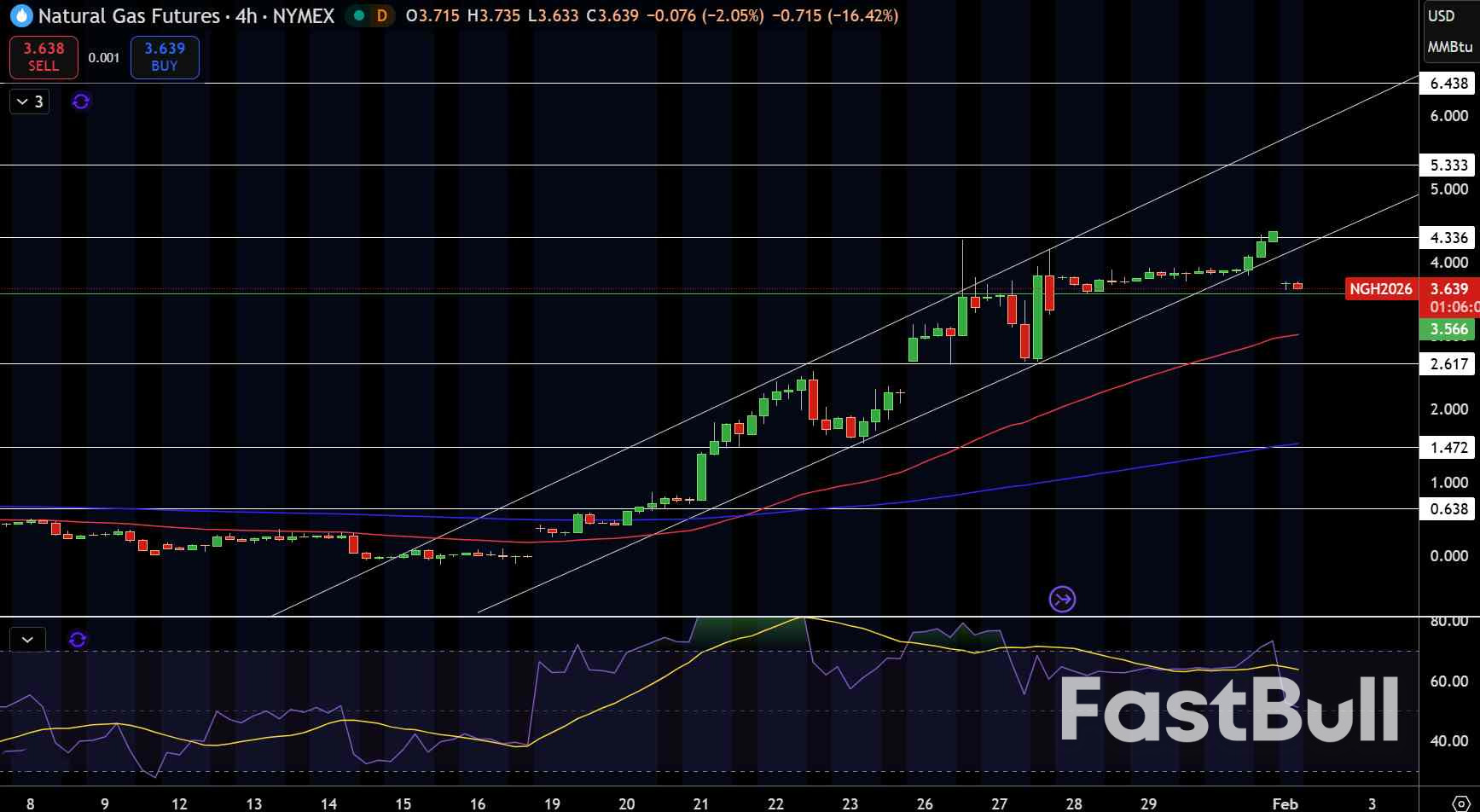
Natural Gas (NG) Price Chart
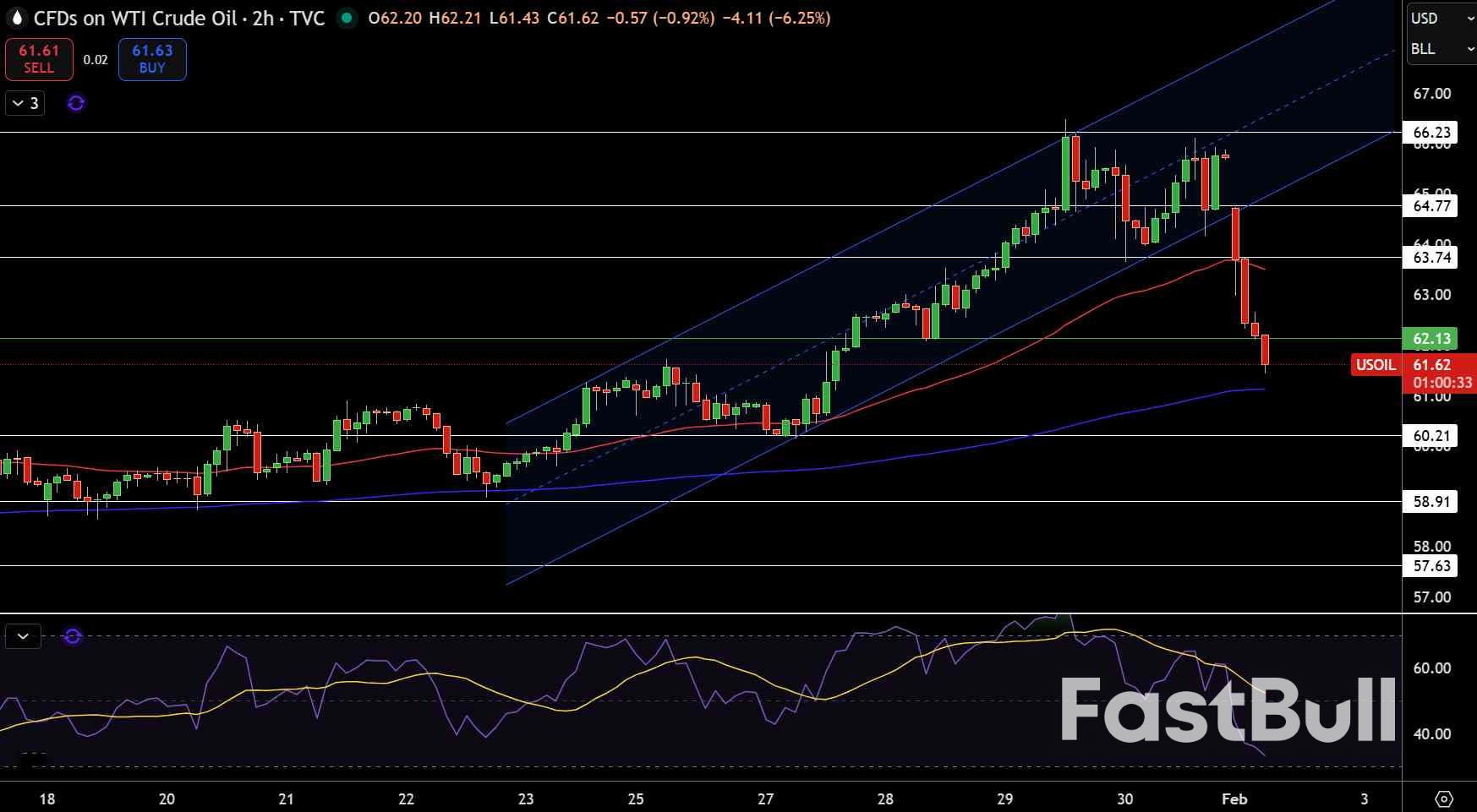
WTI Price Chart
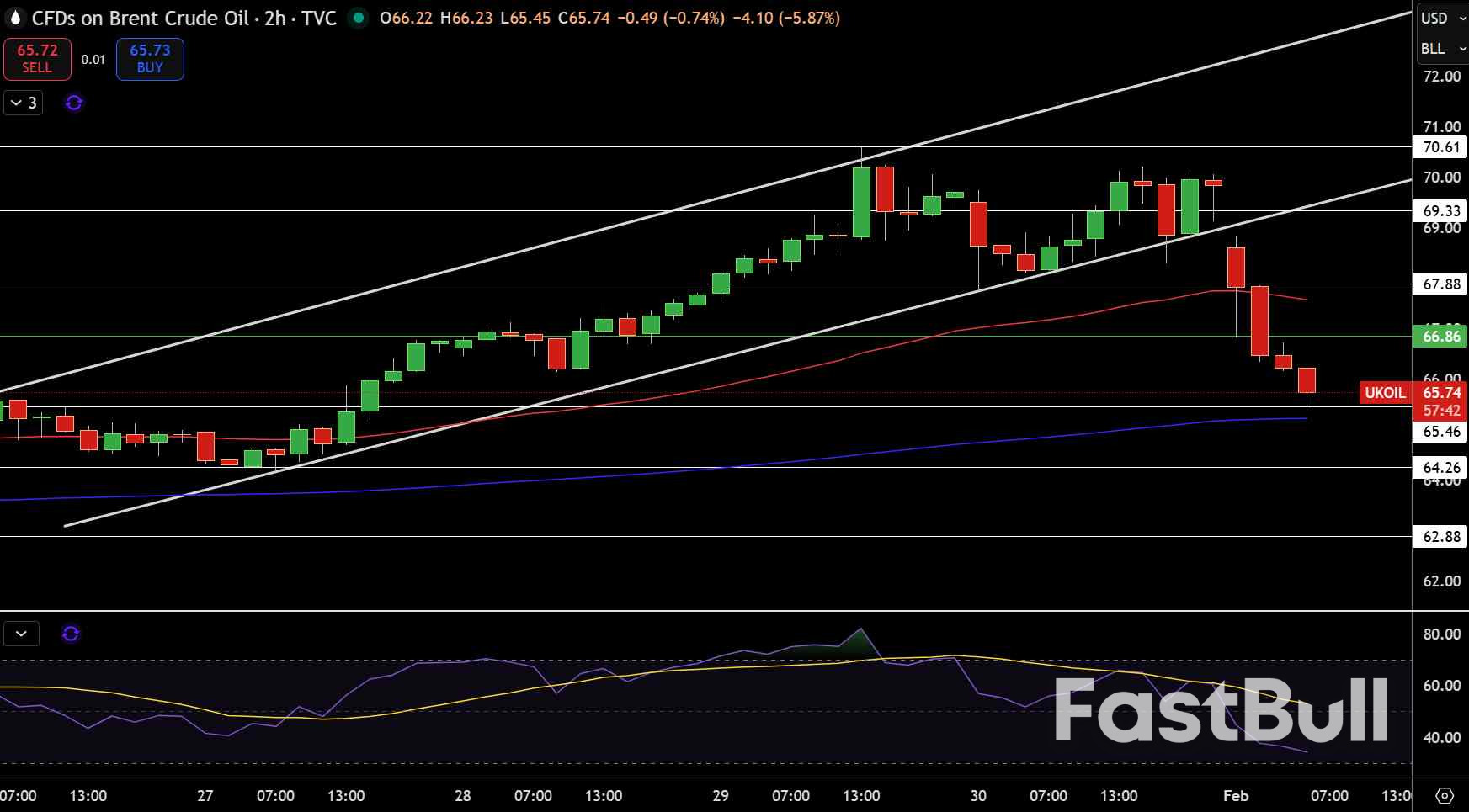
Brent Price ChartFrance is poised to approve its 2026 budget on Monday, ending a period of intense political instability that has defined President Emmanuel Macron's government since his 2024 snap election resulted in a hung parliament. The budget's passage, secured by the expected failure of two no-confidence motions, provides a much-needed reprieve for Prime Minister Sebastien Lecornu’s weak minority government.
For nearly two years, budget negotiations have paralyzed French politics, coming at a time when a major hole in public finances demanded urgent belt-tightening. The prolonged deadlock cost two prime ministers their jobs, rattled debt markets, and raised concerns among France's European partners.
Prime Minister Lecornu, whose chaotic appointment in October was widely criticized, has managed to navigate the political impasse by securing the support of Socialist lawmakers. This breakthrough, achieved through targeted but expensive concessions, has boosted his political standing.
The newfound stability has been welcomed by investors. The premium on French government debt over the German benchmark has returned to levels last seen before Macron's snap election announcement in June 2024, signaling a return of market confidence.
With the Socialists confirming they will not back the no-confidence motions, the long-overdue 2026 budget is finally set to become law. Veteran political commentator Alain Duhamel summed up the outcome on RTL radio, calling it "a political success and an economic failure," highlighting the trade-offs made to end the gridlock despite a projected budget deficit of 5% of GDP.
The government paid a steep price for the Socialists' support. The most significant concession was the suspension of an unpopular pension reform, which delays the planned increase in the retirement age to 64 until after the 2027 presidential election.
This move effectively stalls Macron’s signature push for supply-side economic reforms. With just over a year left in his second term and historically low approval ratings, his domestic agenda has lost momentum. Lawmakers show little appetite for unpopular spending cuts as the election cycle intensifies.
However, Macron’s allies argue that Lecornu’s flexible approach prevented the return of wealth taxes and protected the president's legacy of making France more attractive to foreign investment.
Having lost control of the domestic agenda, President Macron is now focusing almost exclusively on foreign policy. He is championing a more self-reliant Europe and advocating a firmer stance in confronting U.S. President Donald Trump on issues ranging from tariffs to the Greenland crisis.
At home, however, his centrist political bloc appears significantly weakened and lacks a clear successor.
Several figures from Macron's camp are already preparing for the 2027 presidential race, including two former prime ministers, Edouard Philippe and Gabriel Attal. Prime Minister Lecornu has also seen his popularity rise in recent months.
The risk for the centrists is fragmentation. With no primary planned, it remains uncertain if a mainstream candidate can consolidate enough support to reach the second round of the election. This situation could create a major opening for the resurgent far right, whether it is led by Jordan Bardella or Marine Le Pen.

White Label
Data API
Web Plug-ins
Poster Maker
Affiliate Program
The risk of loss in trading financial instruments such as stocks, FX, commodities, futures, bonds, ETFs and crypto can be substantial. You may sustain a total loss of the funds that you deposit with your broker. Therefore, you should carefully consider whether such trading is suitable for you in light of your circumstances and financial resources.
No decision to invest should be made without thoroughly conducting due diligence by yourself or consulting with your financial advisors. Our web content might not suit you since we don't know your financial conditions and investment needs. Our financial information might have latency or contain inaccuracy, so you should be fully responsible for any of your trading and investment decisions. The company will not be responsible for your capital loss.
Without getting permission from the website, you are not allowed to copy the website's graphics, texts, or trademarks. Intellectual property rights in the content or data incorporated into this website belong to its providers and exchange merchants.
Not Logged In
Log in to access more features
Log In
Sign Up