Markets
News
Analysis
User
24/7
Economic Calendar
Education
Data
- Names
- Latest
- Prev


Signal Accounts for Members
All Signal Accounts
All Contests


Japan Tankan Small Manufacturing Outlook Index (Q4)A:--
F: --
P: --
Japan Tankan Large Non-Manufacturing Outlook Index (Q4)A:--
F: --
P: --
Japan Tankan Large Manufacturing Outlook Index (Q4)A:--
F: --
P: --
Japan Tankan Small Manufacturing Diffusion Index (Q4)A:--
F: --
P: --
Japan Tankan Large Manufacturing Diffusion Index (Q4)A:--
F: --
P: --
Japan Tankan Large-Enterprise Capital Expenditure YoY (Q4)A:--
F: --
P: --
U.K. Rightmove House Price Index YoY (Dec)A:--
F: --
P: --
China, Mainland Industrial Output YoY (YTD) (Nov)A:--
F: --
P: --
China, Mainland Urban Area Unemployment Rate (Nov)A:--
F: --
P: --
Saudi Arabia CPI YoY (Nov)A:--
F: --
P: --
Euro Zone Industrial Output YoY (Oct)A:--
F: --
P: --
Euro Zone Industrial Output MoM (Oct)A:--
F: --
P: --
Canada Existing Home Sales MoM (Nov)A:--
F: --
P: --
Canada National Economic Confidence IndexA:--
F: --
P: --
Canada New Housing Starts (Nov)A:--
F: --
U.S. NY Fed Manufacturing Employment Index (Dec)A:--
F: --
P: --
U.S. NY Fed Manufacturing Index (Dec)A:--
F: --
P: --
Canada Core CPI YoY (Nov)A:--
F: --
P: --
Canada Manufacturing Unfilled Orders MoM (Oct)A:--
F: --
P: --
U.S. NY Fed Manufacturing Prices Received Index (Dec)A:--
F: --
P: --
U.S. NY Fed Manufacturing New Orders Index (Dec)A:--
F: --
P: --
Canada Manufacturing New Orders MoM (Oct)A:--
F: --
P: --
Canada Core CPI MoM (Nov)A:--
F: --
P: --
Canada Trimmed CPI YoY (SA) (Nov)A:--
F: --
P: --
Canada Manufacturing Inventory MoM (Oct)A:--
F: --
P: --
Canada CPI YoY (Nov)A:--
F: --
P: --
Canada CPI MoM (Nov)A:--
F: --
P: --
Canada CPI YoY (SA) (Nov)A:--
F: --
P: --
Canada Core CPI MoM (SA) (Nov)A:--
F: --
P: --
Canada CPI MoM (SA) (Nov)A:--
F: --
P: --
Federal Reserve Board Governor Milan delivered a speech
U.S. NAHB Housing Market Index (Dec)--
F: --
P: --
Australia Composite PMI Prelim (Dec)--
F: --
P: --
Australia Services PMI Prelim (Dec)--
F: --
P: --
Australia Manufacturing PMI Prelim (Dec)--
F: --
P: --
Japan Manufacturing PMI Prelim (SA) (Dec)--
F: --
P: --
U.K. 3-Month ILO Employment Change (Oct)--
F: --
P: --
U.K. Unemployment Claimant Count (Nov)--
F: --
P: --
U.K. Unemployment Rate (Nov)--
F: --
P: --
U.K. 3-Month ILO Unemployment Rate (Oct)--
F: --
P: --
U.K. Average Weekly Earnings (3-Month Average, Including Bonuses) YoY (Oct)--
F: --
P: --
U.K. Average Weekly Earnings (3-Month Average, Excluding Bonuses) YoY (Oct)--
F: --
P: --
France Services PMI Prelim (Dec)--
F: --
P: --
France Composite PMI Prelim (SA) (Dec)--
F: --
P: --
France Manufacturing PMI Prelim (Dec)--
F: --
P: --
Germany Services PMI Prelim (SA) (Dec)--
F: --
P: --
Germany Manufacturing PMI Prelim (SA) (Dec)--
F: --
P: --
Germany Composite PMI Prelim (SA) (Dec)--
F: --
P: --
Euro Zone Composite PMI Prelim (SA) (Dec)--
F: --
P: --
Euro Zone Services PMI Prelim (SA) (Dec)--
F: --
P: --
Euro Zone Manufacturing PMI Prelim (SA) (Dec)--
F: --
P: --
U.K. Services PMI Prelim (Dec)--
F: --
P: --
U.K. Manufacturing PMI Prelim (Dec)--
F: --
P: --
U.K. Composite PMI Prelim (Dec)--
F: --
P: --
Euro Zone ZEW Economic Sentiment Index (Dec)--
F: --
P: --
Germany ZEW Current Conditions Index (Dec)--
F: --
P: --
Germany ZEW Economic Sentiment Index (Dec)--
F: --
P: --
Euro Zone Trade Balance (Not SA) (Oct)--
F: --
P: --
Euro Zone ZEW Current Conditions Index (Dec)--
F: --
P: --
Euro Zone Trade Balance (SA) (Oct)--
F: --
P: --
U.S. Retail Sales MoM (Excl. Automobile) (SA) (Oct)--
F: --
P: --


No matching data
Latest Views
Latest Views
Trending Topics
Top Columnists
Latest Update
White Label
Data API
Web Plug-ins
Affiliate Program
View All

No data
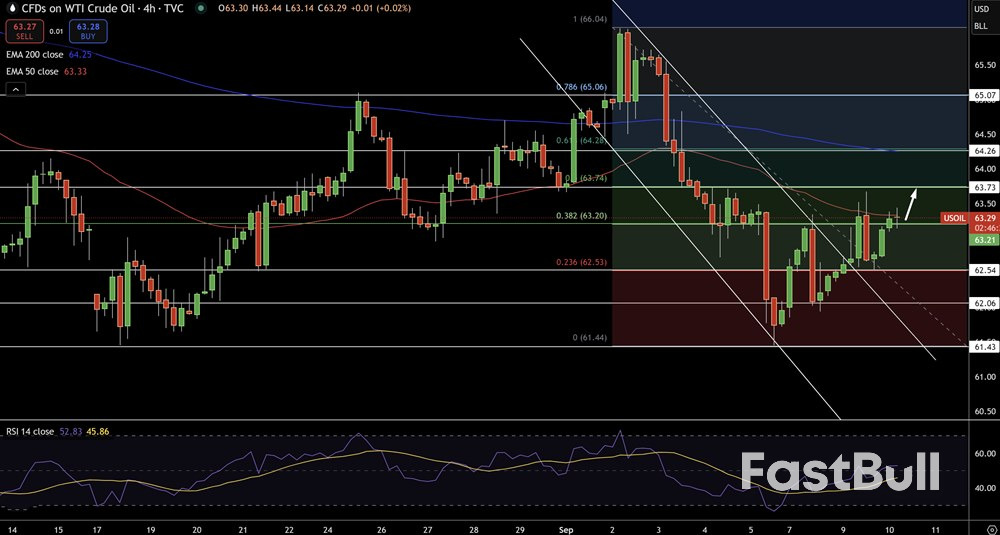
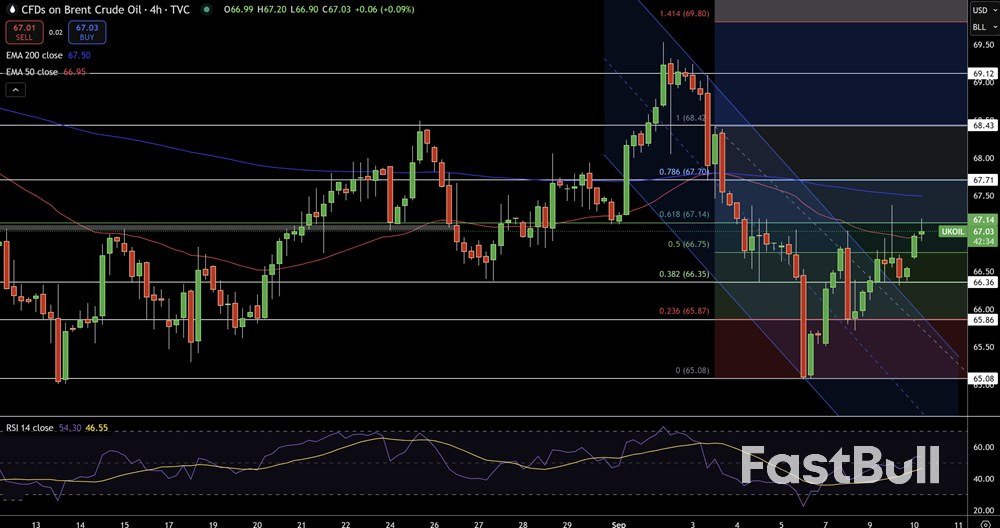
Oil rose above \$63 as Middle East tensions and U.S. tariff threats stirred markets. OPEC+ supply limits, rising inventories, and technical signals suggest cautious upside for crude and natural gas.
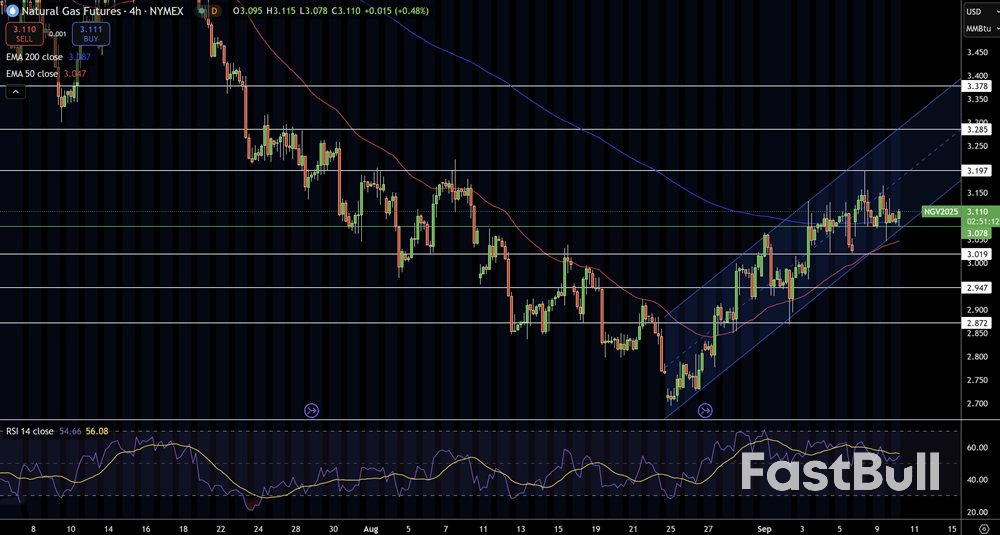
Natural Gas (NG) Price Chart
WTI Price Chart
Brent Price ChartThe Iron Beam costs a mere $2 per interception, meaning it is cheaper than the Iron Dome.Israel’s Iron Beam missile shield was displayed at the DSEI 2025 defense show in London earlier this month. The unprecedented defensive technology has been used recently in the ongoing Gaza War, making its public appearance at the exhibition even more significant. The Iron Beam and its components, including the Naval Iron Beam, the Lite Beam, the mobile Iron Beam-M, and the Iron Beam 450, are designed to intercept and destroy a vast array of aerial threats with precision. Considering the technology’s near-zero per-interception cost and reduced collateral impact, the Iron Beam will surely play a major role in Israel’s air defense strategy going forward.
As explained by Brig. Gen Daniel Gold, the head of the Israeli Defense Force’s (IDF) Directorate of Defense Research and Development, “Israel is the first country in the world to present a large-scale operational laser interception capability. The vision of the laser was demonstrated during the war with immense operational and technological success.”
The Iron Beam has gained widespread media attention in recent months following its premiere combat interceptions in May. Developed by Israeli defense contractor Rafael Advanced Defense Systems, the impressive directed-energy weapon air defense system truly embodies what it means to be a futuristic technology. The Iron Beam is largely connected to the US Strategic Defense Initiative, formed under the Ronald Reagan administration in the 1980s. Known as the “Star Wars” program, the proposed missile defense system included studies of advanced weapons concepts. However, the program was ultimately nixed due to technological shortfalls of the time. Israel continued to research the possibility of such weapons and was able to build a prototype for its Iron Beam program back in 2014. The Iron Beam uses a solid crystalline material to focus the beam, rather than gas or liquid, like many earlier directed-energy weapons prototypes designed in the 1980s. Since the Israeli defense system reportedly costs a mere $2 per interception, it clearly represents a cheaper alternative to its counterparts like the Iron Dome.
The Iron Beam may be more cost-friendly and futuristic than its sister air defense systems in Israel, but the directed-energy weapon cannot replace the work of the Iron Dome, the Arrow 2/3 systems, or David’s Sling. The Iron Dome functions as Israel’s first layer of defense. Specializing in taking out short-range rockets and other projectiles, the Iron Dome has been an effective measure in countering the mass barrages launched by Hamas and Hezbollah. David’s Sling is the middle layer in Israel’s defense apparatus, designed to counter the threat of medium to long-range rockets. The crux of the weapon system is the Stunner missile, which, according to Raytheon, is proven to defeat at least 92 percent of the worldwide ballistic missile threat inventory. Israel’s Arrow systems were developed to intercept long-range missiles by operating outside the atmosphere and make up the highest tier of the IDF’s air defense.
In an oil and gas report sent to Rigzone late Monday, Macquarie strategists, including Walt Chancellor, revealed that they are forecasting that U.S. crude inventories will be up by 2.8 million barrels for the week ending September 5.
“This follows a 2.4 million barrel build in the prior week, with the crude balance realizing looser than our expectations,” the strategists said in the report.
“For this week’s balance, from refineries, we model a slight reduction in crude runs (-0.1 million barrels per day). Among net imports, we also model a slight decrease, with exports (-0.6 million barrels per day) and imports (-0.7 million barrels per day) lower on a nominal basis,” they added.
Timing of cargoes remains a source of potential volatility in this week’s crude balance, the Macquarie strategists warned in the report.
“From implied domestic supply (prod.+adj.+transfers), we look for a slight increase (+0.1 million barrels per day) on a nominal basis this week,” they said.
“Rounding out the picture, we anticipate a similar increase (+0.5 MM BBL) in SPR [Strategic Petroleum Reserve] stocks this week,” they added.
The Macquarie strategists went on to state in the report that, “among products”, they “look for a small gasoline draw (-0.6 million barrels) with builds in distillate (+3.3 million barrels) and jet (+1.2 million barrels)”.
“Amidst holiday effects, we model implied demand for these three products at ~13.9 million barrels per day for the week ending September 5,” the strategists said in the report.
In its latest weekly petroleum status report at the time of writing, which was released on September 4 and included data for the week ending August 29, the U.S. Energy Information Administration (EIA) highlighted that U.S. commercial crude oil inventories, excluding those in the SPR, increased by 2.4 million barrels from the week ending August 22 to the week ending August 29.
The EIA report showed that crude oil stocks, not including the SPR, stood at 420.7 million barrels on August 29, 418.3 million barrels on August 22, and 418.3 million barrels on August 30, 2024. Crude oil in the SPR stood at 404.7 million barrels on August 29, 404.2 million barrels on August 22, and 379.7 million barrels on August 29, 2024, the report highlighted.
Total petroleum stocks - including crude oil, total motor gasoline, fuel ethanol, kerosene type jet fuel, distillate fuel oil, residual fuel oil, propane/propylene, and other oils - stood at 1.670 billion barrels on August 29, according to the report. Total petroleum stocks were up 7.6 million barrels week on week and up 20.6 million barrels year on year, the report showed.
In a market analysis sent to Rigzone on September 5, Li Xing, Financial Markets Strategist Consultant to Exness, said, “sentiment deteriorated following the latest report from the Energy Information Administration, which revealed an unexpected 2.4 million barrel increase in U.S. crude inventories”.
“This directly contradicted analyst forecasts for a 1.8 million barrel draw and bolstered the case for weakening domestic demand,” Xing added.
In an oil and gas report sent to Rigzone by the Macquarie team on September 2, Macquarie strategists, including Walt Chancellor, revealed that they were forecasting that U.S. crude inventories would be down by 1.1 million barrels for the week ending August 29.
The EIA’s next weekly petroleum status report is scheduled to be released on September 10. It will include data for the week ending September 5.
The report states that it provides timely information on supply and selected prices of crude oil and principal petroleum products. On its website, the EIA notes that it collects, analyzes, and disseminates independent and impartial energy information to promote sound policymaking, efficient markets, and public understanding of energy and its interaction with the economy and the environment.
Are you tracking the pulse of the crypto market? The latest buzz is all about the Altcoin Season Index, which has just surged to 56! This significant move signals a potential shift in market dynamics, making it a crucial indicator for every crypto enthusiast and investor. Understanding this index can provide invaluable insights into where the market might be heading next.
The Altcoin Season Index, meticulously compiled by CoinMarketCap, serves as a vital barometer for the cryptocurrency market. It helps us understand whether altcoins are generally outperforming Bitcoin or vice versa. This index isn’t just a random number; it’s a carefully calculated metric designed to provide clarity in a complex market.
The recent rise of the Altcoin Season Index by four points from the previous day to 56 suggests growing momentum for altcoins. While not yet a full-blown altcoin season, this upward trend is certainly catching the attention of astute investors.
Understanding the score of the Altcoin Season Index is key to grasping prevailing market trends. A score closer to 100 indicates a strong altcoin season, where a significant portion of the market’s capital flows into alternative cryptocurrencies.Specifically, an altcoin season is officially declared when a staggering 75% of these top 100 altcoins have outperformed Bitcoin over the preceding 90-day period. This threshold signifies a broad-based rally across the altcoin market.
Conversely, if Bitcoin is the dominant performer, we find ourselves in a ‘Bitcoin season’. During such times, Bitcoin typically consolidates its position, often drawing capital away from altcoins. The current movement of the Altcoin Season Index at 56 shows a compelling shift towards altcoin strength, indicating that more altcoins are beginning to outshine Bitcoin.
For investors, the Altcoin Season Index offers invaluable insights into potential market rotations. Recognizing the signs of an impending altcoin season can present significant opportunities for portfolio growth and strategic adjustments. During these periods, many altcoins can experience rapid price appreciation, often outpacing Bitcoin’s gains.
Paying attention to the Altcoin Season Index can empower you to make more informed decisions rather than simply reacting to price movements.
While an increasing Altcoin Season Index is exciting, it’s crucial to approach the market with a balanced perspective. The crypto market is known for its volatility, and altcoin rallies can be particularly intense, both upwards and downwards. This dynamic environment presents both significant challenges and immense opportunities.
One challenge is the sheer number of altcoins available. Deciding which ones have genuine potential amidst the hype requires thorough research and a deep understanding of their underlying technology and use cases. Another is the risk of ‘altcoin busts,’ where speculative bubbles can form and burst quickly, leading to substantial losses for unprepared investors. Always do your diligent research before committing capital.
However, the opportunities are immense for those who are well-informed. Emerging technologies, innovative use cases, and strong community support can drive certain altcoins to new heights. The current movement of the Altcoin Season Index might indicate that more capital is flowing into these alternative assets, seeking higher returns and innovative projects beyond Bitcoin.
The current trajectory of the Altcoin Season Index at 56 indicates a cautious optimism. It’s not a full sprint into an altcoin season yet, but it’s certainly more than a jog. This suggests a period where selective altcoins could see significant gains. What should investors consider doing now to best position themselves?
The recent surge of the Altcoin Season Index to 56 is a compelling indicator of shifting tides in the cryptocurrency landscape. While not a definitive altcoin season yet, this upward movement suggests that altcoins are gaining strength against Bitcoin. By understanding what the index signifies, its calculation, and how to interpret its movements, investors can better position themselves to capitalize on potential opportunities. Always remember to conduct your own research and manage risks wisely in this dynamic market. The stage is set for an exciting period; are you ready to navigate it?
Frequently Asked Questions (FAQs)
1. What does the Altcoin Season Index measure?
The Altcoin Season Index measures the performance of the top 100 cryptocurrencies (excluding stablecoins and wrapped tokens) against Bitcoin over the past 90 days. It indicates whether altcoins are generally outperforming Bitcoin or vice versa.
2. How is an altcoin season officially declared?
An altcoin season is officially declared when 75% of the top 100 altcoins (excluding stablecoins and wrapped tokens) have outperformed Bitcoin over the preceding 90 days. A score closer to 100 on the index signals a strong altcoin season.
3. Why did the Altcoin Season Index rise to 56?
The Altcoin Season Index rose to 56 because a greater number of the top 100 altcoins have started to outperform Bitcoin over the last 90 days, indicating a shift in market momentum and increased interest in alternative cryptocurrencies.
4. What’s the difference between an altcoin season and a Bitcoin season?
An altcoin season occurs when altcoins broadly outperform Bitcoin, typically indicated by a high Altcoin Season Index score. A Bitcoin season, conversely, is when Bitcoin is the dominant performer, often attracting capital from altcoins and showing a lower index score.
5. How can I use the Altcoin Season Index in my investment strategy?
You can use the Altcoin Season Index as a guide for portfolio allocation. A rising index might suggest increasing exposure to well-researched altcoins, while a falling index could indicate a preference for Bitcoin or more cautious investing. Always combine this with your own due diligence.
6. Is a score of 56 on the Altcoin Season Index a guarantee of an altcoin rally?
No, a score of 56 on the Altcoin Season Index is not a guarantee of an immediate, full-blown altcoin rally. While it indicates growing momentum and a positive trend for altcoins, it is still below the 75% threshold for an official altcoin season. It suggests a potential shift, but market conditions can change rapidly.
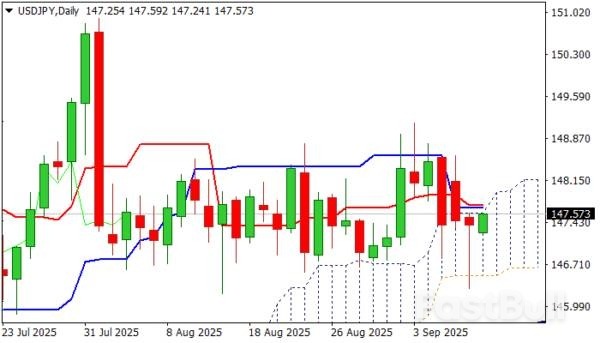
USDJPY regained traction on Wednesday, after spiking to the lowest in nearly one month on Tuesday.
Strong downside rejection formed a bear trap pattern (under daily cloud base), as well as Hammer candle (Tuesday), adding to developing positive signals.
Strong resistances at 147.60 zone (daily cloud top / converged 10/20 DMA’s) are under pressure, with sustained break here to strengthen near-term structure for fresh recovery towards targets at 148.05/46 (Fibo) and key barrier at 148.70 (200DMA).
Bullish near-term bias expected while the price holds above 55DMA (147.18), but caution is required as daily studies are bearishly aligned (daily RSI below 50 / 14-d momentum in negative territory).
Thursday’s release of US August inflation report will be in focus for the final signals ahead of FOMC policy meeting next week.
Res: 147.72; 148.05 148.46; 148.70.Sup: 147.39; 147.18;146.70; 146.30.

White Label
Data API
Web Plug-ins
Poster Maker
Affiliate Program
The risk of loss in trading financial instruments such as stocks, FX, commodities, futures, bonds, ETFs and crypto can be substantial. You may sustain a total loss of the funds that you deposit with your broker. Therefore, you should carefully consider whether such trading is suitable for you in light of your circumstances and financial resources.
No decision to invest should be made without thoroughly conducting due diligence by yourself or consulting with your financial advisors. Our web content might not suit you since we don't know your financial conditions and investment needs. Our financial information might have latency or contain inaccuracy, so you should be fully responsible for any of your trading and investment decisions. The company will not be responsible for your capital loss.
Without getting permission from the website, you are not allowed to copy the website's graphics, texts, or trademarks. Intellectual property rights in the content or data incorporated into this website belong to its providers and exchange merchants.
Not Logged In
Log in to access more features

FastBull Membership
Not yet
Purchase
Log In
Sign Up