• Trade
  • Markets
  • Copy
  • Contests
  • News
  • 24/7
  • Calendar
  • Q&A
  • Chats
Trending
Screeners
SYMBOL
LAST
BID
ASK
HIGH
LOW
NET CHG.
%CHG.
SPREAD
SPX
S&P 500 Index
6966.29
6966.29
6966.29
6978.37
6917.65
+44.83
+ 0.65%
--
DJI
Dow Jones Industrial Average
49504.06
49504.06
49504.06
49571.41
49197.06
+237.96
+ 0.48%
--
IXIC
NASDAQ Composite Index
23671.34
23671.34
23671.34
23721.15
23426.48
+191.33
+ 0.81%
--
USDX
US Dollar Index
98.860
98.940
98.860
98.980
98.600
+0.290
+ 0.29%
--
EURUSD
Euro / US Dollar
1.16309
1.16389
1.16309
1.16618
1.16179
-0.00271
-0.23%
--
GBPUSD
Pound Sterling / US Dollar
1.33930
1.34121
1.33930
1.34505
1.33922
-0.00468
-0.35%
--
XAUUSD
Gold / US Dollar
4509.15
4509.15
4509.15
4517.06
4452.75
+31.36
+ 0.70%
--
WTI
Light Sweet Crude Oil
58.641
58.670
58.641
59.589
57.491
+0.393
+ 0.67%
--

Community Accounts

Signal Accounts
--
Profit Accounts
--
Loss Accounts
--
View More

Become a signal provider

Sell trading signals to earn additional income

View More

Guide to Copy Trading

Get started with ease and confidence

View More

Signal Accounts for Members

All Signal Accounts

Best Return
  • Best Return
  • Best P/L
  • Best MDD
Past 1W
  • Past 1W
  • Past 1M
  • Past 1Y

All Contests

  • All
  • Trump Updates
  • Recommend
  • Stocks
  • Cryptocurrencies
  • Central Banks
  • Featured News
Top News Only
Share

California's Budget Plan Proposes To Collect More Taxes On Delivery Apps

Share

US President Trump: It Was A Very Good Meeting

Share

USA Energy Secretary: I Am In Touch With Venezuela

Share

USA Energy Secretary Chris Wright: Chevron Timeline Is Of 18-24 Months For Venezuela

Share

U.S. Agriculture Secretary Rollins: The Trump Administration Has Suspended Federal Funding To Minnesota, Effective Immediately. This Includes Currently Activated Funds And Any Funds That May Be Approved In The Future

Share

The Two-year US Treasury Yield Rose About 4.4 Basis Points On Non-farm Payrolls Day, And Has Risen About 5.9 Basis Points This Week. On Friday (January 9), In Late New York Trading, The Yield On The Benchmark 10-year US Treasury Note Fell 0.19 Basis Points To 4.1653%, Reaching A Daily High Of 4.2028% When The US Non-farm Payrolls Report Was Released At 21:30 Beijing Time. The Yield Experienced Two Waves Of Upward Movement Followed By Pullbacks During The Day, And Has Fallen A Cumulative 2.53 Basis Points This Week, Trading Within The 4.2028%-4.1221% Range. The Two-year US Treasury Yield Rose 4.39 Basis Points To 3.5321%, Rising To 3.5342% After The Non-farm Payrolls Report Was Released, And Subsequently Exhibiting A W-shaped Pattern, Rising A Cumulative 5.88 Basis Points This Week. It Remained Below 3.48% From January 5-8, And Has Been Rising Steadily Since January 8

Share

SPDR Gold Holdings Down 0.24%, Or 2.57 Tonnes

Share

[Public Expectations Warm Up Canadian Prime Minister's Visit To China] According To The Global Times, The Canadian Prime Minister's Office Announced That Prime Minister Mark Carney Will Visit China From January 13th To 17th To Discuss Trade, Energy, And Security Issues. If The Trip Takes Place, It Will Be The First Visit To China By A Canadian Prime Minister Since 2017. Canadian Media Generally Hold High Expectations For Carney's Visit, Describing It As A "reset" Or "cautious Restart" Of Sino-Canadian Relations. These Keywords Reflect Canada's Objective Understanding Of The Current State Of Sino-Canadian Relations. The Global News Canada Described It As: "For Farmers In Saskatchewan, This Visit Is Something They've Been Eagerly Anticipating." This Vivid Metaphor Expresses The Fervent Hope Of The Canadian Public For A Warming Of Sino-Canadian Relations

Share

Trafigura, Vitol Providing Logistical, Marketing Services For Sale Of Venezuelan Oil At Request Of US Government - Trafigura Statement

Share

Brazil Farmers Harvest 0.53% Of Expected Soybean Area Versus 0.05% At This Time In 2025 - Patria Agronegocios

Share

On Friday (January 9), In Late New York Trading, S&P 500 Futures Rose 0.60%, Dow Jones Futures Rose 0.47%, NASDAQ 100 Futures Rose 0.96%, And Russell 2000 Futures Rose 0.77%

Share

[Trump Pushes $100 Billion Venezuela Plan, Oil Giants Respond Lukewarmly] Despite Pressure From US President Trump To Invest At Least $100 Billion To Revive Venezuelan Oil Production, Major US Oil Executives Expressed Caution About Returning To Venezuela During Meetings With Him. "If You Don't Want To Go In, Tell Me, Because There Are 25 People Who Aren't Here Today Who Would Be Willing To Take Your Place," Trump Told Oil Representatives On Friday

Share

The S&P/TSX Composite Index In Canada Closed Up 0.72% At 32,612.93 Points, Setting A New Closing Record High After Two Trading Days, And Gaining 2.29% For The Week. The Small-cap Index Closed Up 1.14% At 1,260.03 Points, Also A New Closing Record High, And Gained 4.61% For The Week

Share

The U.S. Supreme Court Is Reviewing The Securities And Exchange Commission's (SEC) Power To Recover Illicit Gains

Share

The S&P 500 Rose 44.82 Points, Or 0.65%, To 6966.28. The Dow Jones Industrial Average Rose 237.96 Points, Or 0.48%, To 49504.07. The Nasdaq Composite Rose 191.331 Points, Or 0.82%, To 23671.346. The NASDAQ 100 Rose 259.156 Points, Or 1.02%, To 25766.258. The Nasdaq Biotechnology Index Rose 0.18% To 5817.44. The Philadelphia Semiconductor Index Rose 2.73% To 7638.779. The Philadelphia Stock Exchange KBW Bank Index Fell 0.39% To 170.61. The Dow Jones KBW Regional Bank Index Fell 0.83% To 129.40

Share

Trafigura's CEO Announced At A White House Meeting That The First Ships Carrying Venezuelan Oil Are Scheduled To Load Next Week

Share

Federal Reserve: U.S. Bank Deposits Totaled $18.535 Trillion Last Week, Compared With $18.619 Trillion The Previous Week

Share

US President Trump: Russia Has Decided Not To Confront The US Over Oil Tankers

Share

US President Trump: I Am Creating A "recipe" For Investing In Venezuela

Share

US President Trump: Today’s Nonfarm Payrolls Report Is Amazing

TIME
ACT
FCST
PREV
U.S. Average Hourly Wage MoM (SA) (Dec)

A:--

F: --

P: --
U.S. Average Weekly Working Hours (SA) (Dec)

A:--

F: --

P: --

U.S. New Housing Starts Annualized MoM (SA) (Oct)

A:--

F: --

P: --
U.S. Total Building Permits (SA) (Oct)

A:--

F: --

P: --

U.S. Building Permits MoM (SA) (Oct)

A:--

F: --

P: --

U.S. Annual New Housing Starts (SA) (Oct)

A:--

F: --

P: --
U.S. U6 Unemployment Rate (SA) (Dec)

A:--

F: --

P: --

U.S. Manufacturing Employment (SA) (Dec)

A:--

F: --

P: --
U.S. Labor Force Participation Rate (SA) (Dec)

A:--

F: --

P: --

U.S. Private Nonfarm Payrolls (SA) (Dec)

A:--

F: --

P: --
U.S. Unemployment Rate (SA) (Dec)

A:--

F: --

P: --
U.S. Nonfarm Payrolls (SA) (Dec)

A:--

F: --

P: --
U.S. Average Hourly Wage YoY (Dec)

A:--

F: --

P: --
Canada Full-time Employment (SA) (Dec)

A:--

F: --

P: --

Canada Part-Time Employment (SA) (Dec)

A:--

F: --

P: --

Canada Unemployment Rate (SA) (Dec)

A:--

F: --

P: --

Canada Labor Force Participation Rate (SA) (Dec)

A:--

F: --

P: --

U.S. Government Employment (Dec)

A:--

F: --

P: --

Canada Employment (SA) (Dec)

A:--

F: --

P: --

U.S. UMich Consumer Expectations Index Prelim (Jan)

A:--

F: --

P: --

U.S. UMich Consumer Sentiment Index Prelim (Jan)

A:--

F: --

P: --

U.S. UMich Current Economic Conditions Index Prelim (Jan)

A:--

F: --

P: --

U.S. UMich 1-Year-Ahead Inflation Expectations Prelim (Jan)

A:--

F: --

P: --

U.S. UMich 5-Year-Ahead Inflation Expectations Prelim YoY (Jan)

A:--

F: --

P: --

U.S. 5-10 Year-Ahead Inflation Expectations (Jan)

A:--

F: --

P: --

China, Mainland M1 Money Supply YoY (Dec)

--

F: --

P: --

China, Mainland M0 Money Supply YoY (Dec)

--

F: --

P: --

China, Mainland M2 Money Supply YoY (Dec)

--

F: --

P: --

U.S. Weekly Total Oil Rig Count

A:--

F: --

P: --

U.S. Weekly Total Rig Count

A:--

F: --

P: --

Indonesia Retail Sales YoY (Nov)

--

F: --

P: --

Euro Zone Sentix Investor Confidence Index (Jan)

--

F: --

P: --

India CPI YoY (Dec)

--

F: --

P: --

Germany Current Account (Not SA) (Nov)

--

F: --

P: --

Canada National Economic Confidence Index

--

F: --

P: --

FOMC Member Barkin Speaks
U.S. 3-Year Note Auction Yield

--

F: --

P: --

U.S. 10-Year Note Auction Avg. Yield

--

F: --

P: --

Japan Trade Balance (Customs Data) (SA) (Nov)

--

F: --

P: --

Japan Trade Balance (Nov)

--

F: --

P: --

U.K. BRC Overall Retail Sales YoY (Dec)

--

F: --

P: --

U.K. BRC Like-For-Like Retail Sales YoY (Dec)

--

F: --

P: --

Turkey Retail Sales YoY (Nov)

--

F: --

P: --

U.S. NFIB Small Business Optimism Index (SA) (Dec)

--

F: --

P: --

Brazil Services Growth YoY (Nov)

--

F: --

P: --

Canada Building Permits MoM (SA) (Nov)

--

F: --

P: --

U.S. CPI MoM (SA) (Dec)

--

F: --

P: --

U.S. CPI YoY (Not SA) (Dec)

--

F: --

P: --

U.S. Real Income MoM (SA) (Dec)

--

F: --

P: --

U.S. CPI MoM (Not SA) (Dec)

--

F: --

P: --

U.S. Core CPI (SA) (Dec)

--

F: --

P: --

U.S. Core CPI YoY (Not SA) (Dec)

--

F: --

P: --

U.S. Core CPI MoM (SA) (Dec)

--

F: --

P: --

U.S. Weekly Redbook Index YoY

--

F: --

P: --

U.S. New Home Sales Annualized MoM (Oct)

--

F: --

P: --

U.S. Annual Total New Home Sales (Oct)

--

F: --

P: --

U.S. Cleveland Fed CPI MoM (SA) (Dec)

--

F: --

P: --

China, Mainland Imports YoY (CNH) (Dec)

--

F: --

P: --

China, Mainland Trade Balance (CNH) (Dec)

--

F: --

P: --

Q&A with Experts
    • All
    • Chatrooms
    • Groups
    • Friends
    EuroTrader flag
    peterfx
    @peterfxyeahh and you too brother, the weekend is definitely gonna be an amazing one filled with lots of opportunities
    EuroTrader flag
    SNYPPER_TRADES™️
    @SNYPPER_TRADES™️yeahh seems its the biggest yet thats hosted by fastbull. everyone wants a piece of the price
    43NEJ6O15Z flag
    hello
    ethane flag
    43NEJ6O15Z
    hello
    @43NEJ6O15Z Yes, hi, how are you?
    benny flag
    stop or limit the impact of emotions on yourself to be successfull in trading.Replace positivity with clarity and focus.
    Mayor flag
    who is planning on trading btc this weekend
    benny flag
    Mayor
    who is planning on trading btc this weekend
    @Mayor i might if i find a good setup
    Mayor flag
    benny
    @bennycan you share ur setup
    benny flag
    i have to see it to share it and so time will tell if it will show up or not
    Mayor flag
    benny
    i have to see it to share it and so time will tell if it will show up or not
    @bennyokay
    ZK6WXRW2EY flag
    Hello/Good evening, I'm currently in Benin. I'm creating my account for the contest, and it's asking me to link my number, but it says "SMS sending failed." 😌
    mack rich flag
    am back with a trading bot just fund and trade with me no loss
    asgsag asd flag
    interesting
    mack rich flag
    am preparing many bot too
    asgsag asd flag
    I'm back with Buffett! Just invest and you can trade with me—guaranteed no losses.
    mack rich flag
    which will make trading very easy on deriv
    mack rich flag
    just download deriv and create your account does all my bot is free
    ethane flag
    mack rich
    am back with a trading bot just fund and trade with me no loss
    @mack rich 😡
    3310197 flag
    wti
    3310544 flag
    SNYPPER_TRADES™️
    XAUUSD 2ND TRADE FOR THE DAY BTCUSD MISSED ENTRY
    @SNYPPER_TRADES™️u will find a new entry soon and can you share insight of the xauusd with me
    Type here...
    Add Symbol or Code

      No matching data

      All
      Trump Updates
      Recommend
      Stocks
      Cryptocurrencies
      Central Banks
      Featured News
      • All
      • Russia-Ukraine Conflict
      • Middle East Flashpoint
      • All
      • Russia-Ukraine Conflict
      • Middle East Flashpoint
      Search
      Products

      Charts Free Forever

      Chats Q&A with Experts
      Screeners Economic Calendar Data Tools
      Membership Features
      Data Warehouse Market Trends Institutional Data Policy Rates Macro

      Market Trends

      Market Sentiment Order Book Forex Correlations

      Top Indicators

      Charts Free Forever
      Markets

      News

      News Analysis 24/7 Columns Education
      From Institutions From Analysts
      Topics Columnists

      Latest Views

      Latest Views

      Trending Topics

      Top Columnists

      Latest Update

      Signals

      Copy Rankings Latest Signals Become a signal provider AI Rating
      Contests
      Brokers

      Overview Brokers Assessment Rankings Regulators News Claims
      Broker listing Forex Brokers Comparison Tool Live Spread Comparison Scam
      Q&A Complaint Scam Alert Videos Tips to Detect Scam
      More

      Business
      Events
      Careers About Us Advertising Help Center

      White Label

      Data API

      Web Plug-ins

      Affiliate Program

      Awards Institution Evaluation IB Seminar Salon Event Exhibition
      Vietnam Thailand Singapore Dubai
      Fans Party Investment Sharing Session
      FastBull Summit BrokersView Expo
      Recent Searches
        Top Searches
          Markets
          News
          Analysis
          User
          24/7
          Economic Calendar
          Education
          Data
          • Names
          • Latest
          • Prev

          View All

          No data

          Scan to Download

          Faster Charts, Chat Faster!

          Download App
          English
          • English
          • Español
          • العربية
          • Bahasa Indonesia
          • Bahasa Melayu
          • Tiếng Việt
          • ภาษาไทย
          • Français
          • Italiano
          • Türkçe
          • Русский язык
          • 简中
          • 繁中
          Open Account
          Search
          Products
          Charts Free Forever
          Markets
          News
          Signals

          Copy Rankings Latest Signals Become a signal provider AI Rating
          Contests
          Brokers

          Overview Brokers Assessment Rankings Regulators News Claims
          Broker listing Forex Brokers Comparison Tool Live Spread Comparison Scam
          Q&A Complaint Scam Alert Videos Tips to Detect Scam
          More

          Business
          Events
          Careers About Us Advertising Help Center

          White Label

          Data API

          Web Plug-ins

          Affiliate Program

          Awards Institution Evaluation IB Seminar Salon Event Exhibition
          Vietnam Thailand Singapore Dubai
          Fans Party Investment Sharing Session
          FastBull Summit BrokersView Expo

          Meloni's Endgame: Tackling Italy's Stagnant Economy and Politics

          Ukadike Micheal

          Data Interpretation

          Economic

          Political

          Summary:

          Italy's Meloni, a global force, tackles domestic stagnation and political reform to secure her legacy.

          Giorgia Meloni has built a political career on defying expectations. After establishing herself as a major force in Europe, Italy's first female prime minister is now confronting the two domestic challenges that could define her legacy: stagnant living standards and a political system prone to gridlock.

          A victory on either front would likely secure the right-wing leader a second term, potentially making her Italy's longest-serving postwar leader. Success on both could permanently reshape the country's power structure.

          This scenario was hard to imagine in 2022 when Meloni, then a new premier, inherited a post-pandemic economy heavily reliant on EU financial support. Since then, she has outmaneuvered her main domestic rival, gained the confidence of investors, and amplified Italy's influence on global issues from Ukraine to the Mercosur trade agreement. Her stability stands in stark contrast to the political and economic struggles facing Europe's traditional power centers in Berlin and Paris.

          "Meloni's foreign policy posture is as rooted in Italy's long instinct for caution as it is forged by constraint, with her coalition split on issues including the EU and Ukraine," notes Beniamino Irdi, head of Milan-based consultancy Highground and a former government official. "Like a judoka, she has so far turned those limits into a reputation for balance and strategic sobriety. Paired with rare domestic stability, that has made Rome a credible interlocutor for many."

          While international affairs may dominate headlines, it is her deep-rooted domestic challenges that will ultimately determine her political future.

          Confronting Decades of Economic Stagnation

          After implementing several restrained budgets, Meloni's government is now considering more significant fiscal measures, including deeper tax cuts, to stimulate the economy. The urgency is clear: according to the World Bank, Italy's gross domestic product per capita was lower in 2024 than it was in 2008.

          The economic strain is putting immense pressure on Italian households. A December report from the Censis research institute found that the average Italian family has become 8.5% poorer over the past 15 years. This decline has disproportionately affected lower and middle-class families, widening the nation's wealth gap. The situation is set to become more challenging as a €190 billion ($222 billion) EU Covid-era recovery fund is scheduled to run out this year.

          Rewriting the Rules of Italian Politics

          To address the economic uncertainty, Meloni's coalition is simultaneously pursuing a strategy to overhaul the country's political framework. Following defeats in regional elections in 2025, her alliance has developed plans to increase its ability to stay in and effectively wield power. They see the upper house of Parliament as a major obstacle, where current laws could deny her an outright majority if the opposition unites against her.

          The Referendum Gambit

          As a first step, the government is considering fast-tracking a referendum on judicial reforms. According to sources familiar with the plan, the idea is to hold the vote as soon as possible to capitalize on current public sentiment and build momentum ahead of the election year. However, President Sergio Mattarella has reportedly advised against this move. Both Meloni's and Mattarella's offices declined to comment.

          The risks are high. "Meloni's subsequent steps will depend on that first outcome," says Cristina Fasone, a law professor at Luiss University in Rome. "With referendums, anything can happen." The warning is clear: former Prime Minister Matteo Renzi famously lost his premiership after a failed constitutional referendum he championed.

          Reforming the Prime Minister's Office

          Another major proposal involves changing the process for electing the prime minister. Currently, the president appoints a candidate to form a government after parliamentary elections. A bill introduced in 2024 to reform this system has stalled amid intense criticism from the opposition, who argue it would destroy the checks and balances enshrined in Italy's post-fascist constitution.

          According to Fasone, the coalition's immediate priority will be driven by consensus. "The majority's current main objective is to eliminate the chance of the opposition winning in the single-member constituencies of the south at the 2027 elections," she said.

          Meloni's Pitch to Voters

          Despite the domestic hurdles, Meloni continues to leverage her track record. Italy's financial risk profile has improved significantly, with the spread between Italian and German 10-year bond yields—a key market indicator—falling to its lowest point since 2009.

          "The mantra was headlines along the lines of: Europe is shaking, Meloni threatens European stability," she recalled at a party event last month. "Three years have passed and the mood has changed quite a bit."

          The opposition has struggled to capitalize on her vulnerabilities, though approval ratings for Meloni and her government have dipped since 2022. While she has faced criticism for centralizing power, her international role continues to grow. Italy played a decisive part in votes on the EU-Latin America trade deal and a plan to issue joint debt to support Ukraine. Since early 2025, she has also navigated a careful relationship with Donald Trump while managing tensions within her own coalition over aid to Kyiv.

          Ultimately, Meloni is fusing the economic and political arguments into a single, powerful message for voters. Citing her government's stability, she argued that political chaos has come at a steep price. "In 10 years, that's cost €265 billion – the equivalent of an entire budget law every year," she said. "That's how much Italians have paid out of their own pocket for the left's palace intrigues."

          To stay updated on all economic events of today, please check out our Economic calendar
          Risk Warnings and Disclaimers
          You understand and acknowledge that there is a high degree of risk involved in trading. Following any strategies or investment methods may lead to potential losses. The content on the site is provided by our contributors and analysts for information purposes only. You are solely responsible for determining whether any trading assets, securities, strategy, or any other product is suitable for investing based on your own investment objectives and financial situation.
          Add to Favorites
          Share

          Trump Administration Says It Is Creating New DOJ Division To Tackle Fraud

          James Whitman

          Political

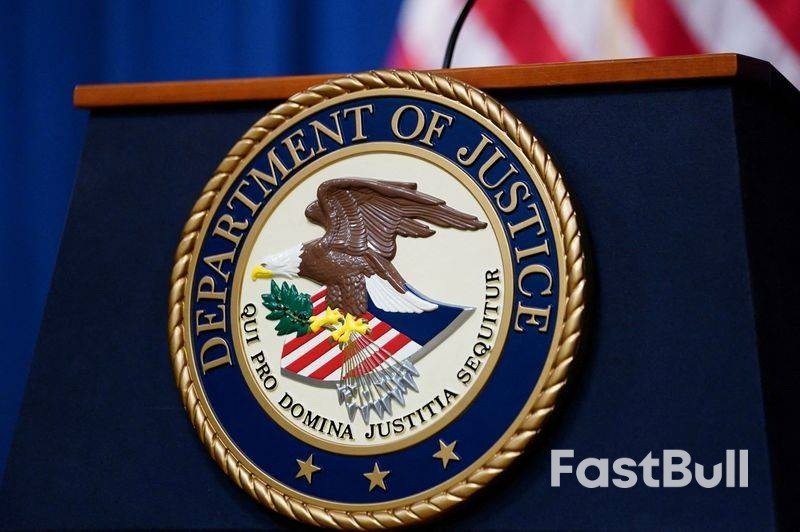
          President Donald Trump's administration said on Thursday it was creating a new division at the U.S. Department of Justice to combat what the White House called "rampant" fraud across the country.

          Rights advocates and critics have said the Trump administration has used fraud allegations as an excuse to target immigrants and political opponents. They have also dismissed Trump's ability to tackle fraud, citing pardons from Trump to those who have faced fraud convictions in the past.

          "To combat the rampant and pervasive problem of fraud in the United States, the DOJ's new division for national fraud enforcement will enforce the federal criminal and civil laws against fraud targeting federal government programs, federally funded benefits, businesses, nonprofits and private citizens nationwide," the White House said in a statement.

          In recent weeks, the Trump administration has singled out Minnesota, alleging rampant fraud is being committed by immigrants in the welfare system and social-service programs.

          Trump administration officials have frequently and sharply attacked the state's Somali community, the largest in the country. Rights and immigration advocates say Trump has exaggerated isolated examples and used those to engage in what they called federal overreach.

          The assistant attorney general for the new Justice Department division will be responsible for leading the department's efforts to investigate, prosecute and remedy fraud affecting the federal government, federally funded programs and private citizens, the White House said.

          The White House said the official will advise the U.S. attorney general and deputy attorney general "on issues involving significant, high-impact fraud investigations and prosecutions and related policy matters."

          Earlier this week, the Trump administration said it would freeze more than $10 billion in federal childcare and family assistance funds to California, Colorado, Illinois, Minnesota and New York, citing what the administration called fraud concerns. The states later sued the Trump administration.

          The administration has threatened federal funding cuts to organizations and states over a number of issues ranging from alleged fraud in programs in states governed by Democrats to diversity initiatives and pro-Palestinian university protests against U.S. ally Israel's assault on Gaza.

          Source: Reuters

          Risk Warnings and Disclaimers
          You understand and acknowledge that there is a high degree of risk involved in trading. Following any strategies or investment methods may lead to potential losses. The content on the site is provided by our contributors and analysts for information purposes only. You are solely responsible for determining whether any trading assets, securities, strategy, or any other product is suitable for investing based on your own investment objectives and financial situation.
          Add to Favorites
          Share

          US Jobs Report: Slow Hiring & What It Means for the Fed

          Henry Thompson

          Economic

          Remarks of Officials

          Central Bank

          Political

          Data Interpretation

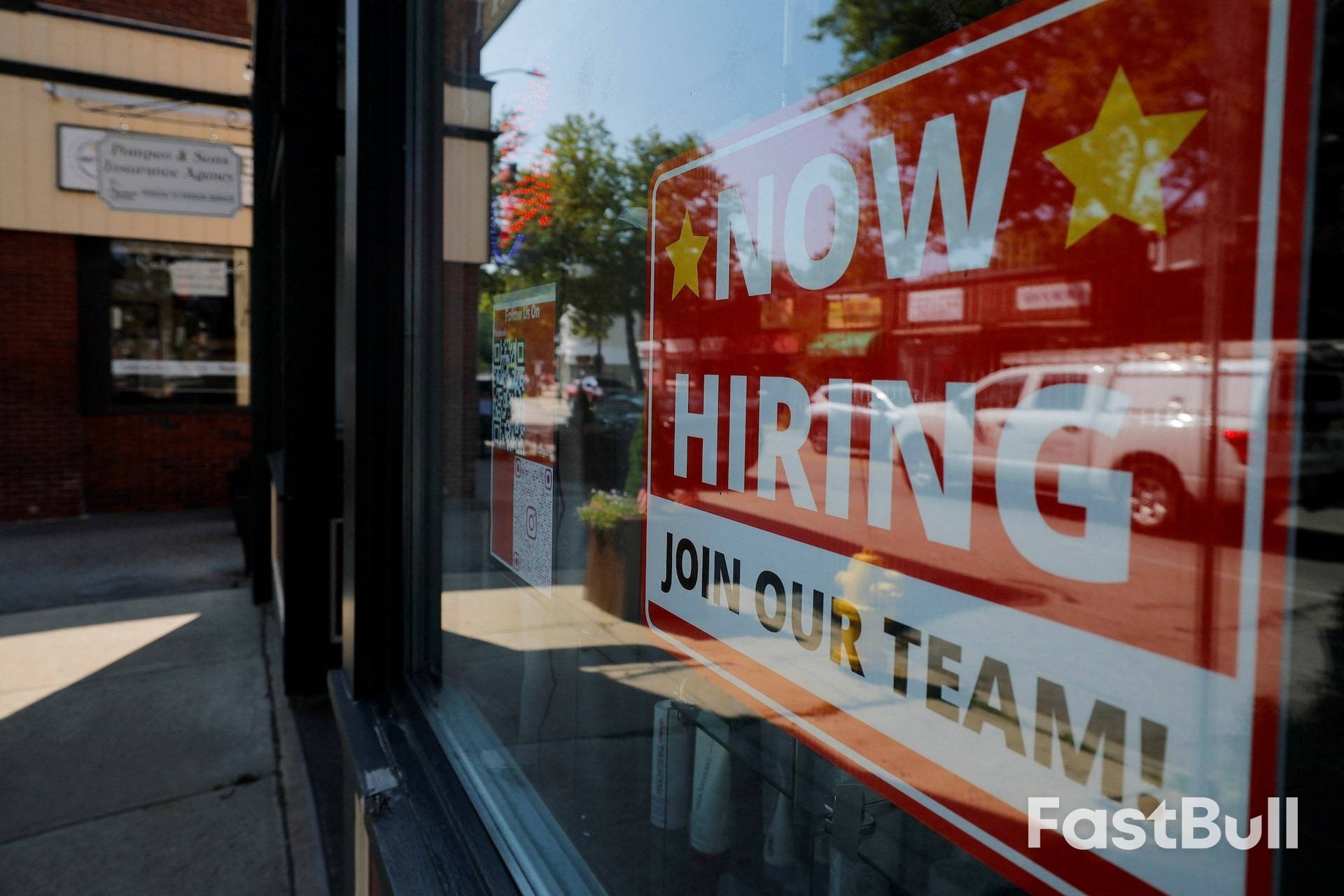
          The upcoming U.S. jobs report is expected to show hiring cooled in December, as businesses remain cautious about expanding their workforce amid ongoing import tariffs and rising investment in artificial intelligence.

          Economists forecast that nonfarm payrolls grew by just 60,000, while the unemployment rate is anticipated to have dipped slightly to 4.5%. This data could reinforce the Federal Reserve's decision to keep interest rates unchanged this month.

          The "No Hire, No Fire" Labor Market

          The Labor Department's report is likely to confirm that the economy is in a "jobless expansion," a state where economic growth and worker productivity outpace hiring. This trend, which saw a surge in the third quarter partly due to an AI spending boom, has left the labor market in what many analysts call a "no hire, no fire" mode.

          "It's not so much weak demand because the economy seems to be doing not bad, but businesses are very cautious about taking on new workers," said Sal Guatieri, a senior economist at BMO Capital Markets. He attributes this hesitation to a desire to control costs in the face of tariffs and a belief in the future productivity gains from AI-driven automation.

          Payroll Forecasts vs. Economic Needs

          A Reuters survey of economists projects that nonfarm payrolls increased by 60,000 last month, following a 64,000 rebound in November. This is a significant drop from the 105,000 jobs lost in October, a decline largely driven by federal government buyouts.

          To keep pace with population growth, economists estimate the economy needs to add between 50,000 and 120,000 jobs each month.

          The labor market lost significant momentum last year, adding well below one million jobs, compared to the roughly 2 million created in 2024. This figure may be revised even lower next month when the Bureau of Labor Statistics (BLS) publishes its payrolls benchmark revision. The BLS has already estimated that about 911,000 fewer jobs were created in the 12 months through March than initially reported, citing issues with its birth-death model for estimating business openings and closings.

          Starting in January, the BLS plans to change its model to incorporate more current sample information each month.

          Tariffs and Labor Supply Weigh on Job Creation

          The sharp slowdown in job growth has been widely blamed on President Donald Trump's aggressive trade and immigration policies, which analysts say have reduced both the demand for and supply of workers.

          "There has been continuous uncertainty over tariffs," noted Dan North, senior economist at Allianz Trade North America. "We also have a falling supply of labor since the foreign-born labor is shrinking fairly rapidly."

          The government also plans to release five years of revised household survey data alongside the December report. However, annual population control adjustments, usually incorporated in January, will be delayed.

          Unemployment Rate: The Fed's Key Signal

          While the median forecast for the unemployment rate is 4.5%, down from a four-year high of 4.6% in November, some analysts see it ticking up to 4.7%. Such a move, they argue, could pressure the Federal Reserve to cut interest rates.

          "A 4.7% unemployment rate in December would not only confirm that November was relatively free of shutdown-related measurement issues, but that downside risks to the labor market have increased even more since the Fed's December meeting," said Veronica Clark, an economist at Citigroup.

          In December, the U.S. central bank cut its benchmark interest rate to a range of 3.50%-3.75% but signaled a pause to assess the economy's direction.

          Can Rate Cuts Solve Structural Hiring Problems?

          Even if the Fed acts, some economists believe monetary policy has its limits against the current challenges. Job growth has become narrowly concentrated in sectors like healthcare and social assistance, suggesting the problems are more structural than cyclical.

          "Lowering interest rates may help to buoy the economy at the margin, but it is unlikely to push companies that are on temporary hold as it relates to hiring decisions due to tariff-related uncertainty to add workers," explained Stephen Stanley, chief U.S. economist at Santander U.S. Capital Markets. "The Fed is certainly powerless to counteract the concerns related to AI."

          To stay updated on all economic events of today, please check out our Economic calendar
          Risk Warnings and Disclaimers
          You understand and acknowledge that there is a high degree of risk involved in trading. Following any strategies or investment methods may lead to potential losses. The content on the site is provided by our contributors and analysts for information purposes only. You are solely responsible for determining whether any trading assets, securities, strategy, or any other product is suitable for investing based on your own investment objectives and financial situation.
          Add to Favorites
          Share

          China’s Crackdown on Solar Monopolies Signals Shift in Polysilicon Market Dynamics

          Gerik

          Economic

          Regulatory Pressure Targets Polysilicon Giants

          China’s solar industry, long considered a cornerstone of its green energy ambitions, is facing intensified scrutiny from domestic regulators. The State Administration for Market Regulation (SAMR) summoned six major polysilicon producers including Tongwei Co. and GCL Technology Holdings alongside the China Photovoltaic Industry Association, to address concerns over anti-competitive practices. The companies were cautioned against collusion on pricing, output, and sales coordination.
          This intervention emerges in the wake of recent efforts by leading producers to consolidate the oversupplied polysilicon sector by launching a fund aimed at purchasing outdated capacity from smaller firms. While this initiative was originally welcomed as a remedy for the sector’s chronic supply glut, it also sparked sharp mid-year price hikes, prompting the regulator’s current warnings.

          Consolidation Plan Faces Structural Challenges

          The regulator’s meeting is now being interpreted as a direct rebuke of the aggressive consolidation blueprint. Analysts at BofA Global Research have expressed skepticism toward the initiative, noting that the fund’s potential to distort market competition appears excessive. Rather than delivering stability, the consolidation may be contributing to unsustainable pricing behavior and exacerbating losses elsewhere in the solar supply chain.
          This concern is reflected in market reactions. Shares in Tongwei dropped over 3% in Shanghai, while GCL fell by more than 4% in Hong Kong following news of the regulatory warning. The swift decline suggests investor uncertainty over the long-term viability of the consolidation approach and mounting pressure for a more balanced restructuring strategy.

          Imbalance in Solar Supply Chain Raises Red Flags

          Recent data from the China Silicon Industry Association underscores the volatility affecting upstream materials. Polysilicon prices surged between 9.8% and 10.5% during the past week alone, while wafer prices also climbed by 8.4% to 9.2%. Yet these increases contrast sharply with falling production figures: polysilicon output in December fell to 1.32 million tons, down 28% year-on-year, and wafer production dropped to 47.7 gigawatts, down 14.2% month-on-month.
          This pattern reveals a growing misalignment between supply and demand across the supply chain. While rising polysilicon costs suggest temporary pricing power among upstream firms, the lack of recovery in downstream component prices such as cells and modules has raised concerns about the sustainability of this model. Without coordinated recovery across all tiers of the value chain, profitability risks becoming overly concentrated and unstable.

          Strategic Shifts: Diversification and De-subsidization

          In response to cost pressures, solar companies are exploring innovations to reduce reliance on expensive inputs. Longi Green Energy Technology, for example, announced plans to substitute silver a costly component in its solar cells with more affordable base metals. Meanwhile, Jinko Solar reported a 20.56-megawatt module order from Australia, signaling continued international demand despite internal restructuring.
          Over the longer term, industry analysts expect China’s solar sector to undergo broader reforms that include a redistribution of profit margins across the supply chain, tighter industry standards, and a gradual phase-out of supportive policies such as export tax rebates. These changes may reduce volatility but also raise entry barriers for smaller or less efficient players.

          Causal and Correlational Dynamics at Play

          The price surge in polysilicon is causally linked to supply constraints and consolidation plans, particularly the fund that incentivized capacity buyouts. However, the broader rise in wafer and cell prices is more correlational, supported by slight output reductions and cost pass-throughs rather than genuine demand growth. The regulatory response, while reactive, also reflects a strategic intent to prevent monopolistic control over critical inputs at a time when China is repositioning itself as a global clean energy leader.
          The solar sector’s current correction phase reveals the limits of uncoordinated consolidation in resolving overcapacity. While the ambition to stabilize prices is valid, the risk of overconcentration and price manipulation has triggered regulatory pushback. Going forward, the industry will need to navigate a more complex terrain balancing innovation, regulatory compliance, and profitability while avoiding the pitfalls of monopolistic behavior that could undermine global confidence in China's clean energy leadership.

          Source: Bloomberg

          To stay updated on all economic events of today, please check out our Economic calendar
          Risk Warnings and Disclaimers
          You understand and acknowledge that there is a high degree of risk involved in trading. Following any strategies or investment methods may lead to potential losses. The content on the site is provided by our contributors and analysts for information purposes only. You are solely responsible for determining whether any trading assets, securities, strategy, or any other product is suitable for investing based on your own investment objectives and financial situation.
          Add to Favorites
          Share

          Japan Seeks G7 Support in China Rare Earths Standoff

          James Riley

          Remarks of Officials

          Economic

          Commodity

          Political

          Japan is launching a diplomatic blitz to counter China's growing leverage over critical resources, engaging with G7 nations and key regional partners. The move comes amid rising concerns that Beijing is weaponizing its control over the global rare earths market as a trade dispute between the two economic giants escalates.

          A Diplomatic Push to Secure Alliances

          Top Japanese officials are embarking on a series of high-level talks to build a united front. Finance Minister Satsuki Katayama is set to meet with her counterparts from other major industrialized democracies during a trip to the US, with critical minerals at the top of the agenda.

          "The fundamental consensus among the G-7 nations is that it is unacceptable for countries to secure monopolies through non-market means," Katayama stated, highlighting that China's actions represent a crisis for the global economy and a serious economic security challenge.

          Simultaneously, Defense Minister Shinjiro Koizumi is scheduled for discussions with his US counterpart. At home, Prime Minister Sanae Takaichi will host South Korea's Lee Jae Myung for a summit aimed at reaffirming the alliance between the two key US allies.

          The Heart of the Dispute: Rare Earths and Trade

          Tensions have been mounting since early November, when comments from Takaichi suggested Japan could use its military if China attempts to seize Taiwan by force. In response, Beijing has rolled out new export restrictions and initiated an anti-dumping investigation into a key chip-making material, prompting Japan to shore up support from its allies.

          Japanese Chief Cabinet Secretary Minoru Kihara has publicly called for the smooth shipment of rare earths and food, responding to reports that Beijing is obstructing trade in these goods.

          "I believe international trade in rare earths should proceed smoothly, and I consider this to be extremely important," Kihara said. "China's export control measures on rare earths and other materials have been ongoing for some time and are having a serious impact on the global supply chain."

          A report from the Wall Street Journal, citing two Chinese exporters, indicated that China has already begun to restrict exports of rare earths and rare-earth magnets to Japan. However, a person familiar with the matter noted that a Japanese importer had not been notified of any halt in export procedures as of Friday afternoon. Finance Minister Katayama confirmed she would verify transaction details with Japan's customs authorities.

          China's Broader Economic Pressure

          Beijing's actions extend beyond rare earths. This week, China announced new export controls on dual-use items that could potentially enhance Japan's military capabilities. It also launched an anti-dumping probe into Japan's production of dichlorosilane, a crucial material used in semiconductor manufacturing.

          Adding to the friction, Japan has lodged a protest against China's deployment of a mobile drilling vessel in the East China Sea.

          Assessing the Impact and Path Forward

          According to Japan's Trade Minister Ryosei Akazawa, it is difficult to assess the full impact of the new curbs on dual-use items, as their exact content remains unclear. He noted that China's rare earth restrictions, in place since April of last year, have already forced various Japanese industries to adjust production.

          "We are currently scrutinizing the impact on Japan's economy," Akazawa said. "We intend to take necessary measures in a resolute and calm manner, after comprehensively considering the situation from various perspectives."

          Japan's diplomatic calendar remains busy, with Takaichi's meetings with South Korea's Lee scheduled for Tuesday and Wednesday, followed by a visit from Italian Prime Minister Giorgia Meloni from January 15-17.

          "The importance of Japan-South Korea relations and Japan-South Korea-US cooperation has increased significantly," Kihara emphasized, highlighting the plan for close communication and shuttle diplomacy to ensure stable relations.

          To stay updated on all economic events of today, please check out our Economic calendar
          Risk Warnings and Disclaimers
          You understand and acknowledge that there is a high degree of risk involved in trading. Following any strategies or investment methods may lead to potential losses. The content on the site is provided by our contributors and analysts for information purposes only. You are solely responsible for determining whether any trading assets, securities, strategy, or any other product is suitable for investing based on your own investment objectives and financial situation.
          Add to Favorites
          Share

          Greenland No Longer a Joke: Trump’s Arctic Ambitions Spark Global Tensions, Legal Risks, and Market Divergence

          Gerik

          Economic

          Geopolitical Escalation: From Buying Greenland to Mining It

          President Donald Trump’s polar interest has transitioned from speculation to statecraft. His administration is in direct talks with Amaroq, a mining firm operating in Greenland, to explore joint investment in critical resources like gold, gallium, and rare minerals. While Greenland’s leadership has cautiously welcomed economic cooperation, they have drawn a clear line: Greenland is not for sale. As MP Aaja Chemnitz asserted, economic collaboration is possible, but sovereignty is non-negotiable.
          This declaration comes just days before a high-stakes diplomatic meeting between U.S. Secretary of State Marco Rubio and Danish/Greenlandic officials, including Foreign Ministers Lokke Rasmussen and Vivian Motzfeldt. Though initiated by Denmark, Rubio is reportedly using the meeting to formally raise the idea of a Greenland acquisition, reviving the Trump administration’s long-standing ambition.

          $2.8 Trillion and a New Cold Front?

          A U.S. think tank has provocatively pegged Greenland’s "value" at nearly $2.8 trillion, though this estimate is speculative and lacks legal or economic consensus. Yet even discussing such a valuation sends powerful signals globally. It invites comparisons to Cold War-style land grabs, prompting European skepticism and drawing quiet yet keen observation from strategic competitors like Russia and China.
          China, which declared itself a "near-Arctic state" in 2018, views Arctic access as vital to its long-term geopolitical strategy. Any U.S. military or resource foothold in Greenland could be seen as an encroachment, triggering countermoves and elevating tensions in an already fragmented global order.

          U.S. Senate Pushes Back on Military Overreach

          Amid the Greenland developments, the U.S. Senate passed a War Powers Resolution aimed at limiting further military strikes in Venezuela. This bipartisan move would require Trump to seek Congressional authorization before engaging in any future military action, signaling growing resistance to unchecked executive power in foreign affairs. This could indirectly constrain similar military maneuvering related to Arctic positioning.
          Investor behavior reflects the geopolitical undercurrents. On Thursday, the Dow Jones Industrial Average rose by 0.55%, while the Nasdaq slid by 0.44%, indicating a rotation out of tech and into defensive stocks. In Europe, the Stoxx 600 fell slightly by 0.19%. Meanwhile, U.S. and global defense equities rallied, boosted by Trump’s proposal for a massive $1.5 trillion defense budget amid growing strategic uncertainties.
          CLSA, a major investment bank, released its list of favored defensive and countercyclical stocks, citing concerns over "AI trade exhaustion" and macroeconomic instability. The shift suggests institutional investors are bracing for a volatile year, driven by policy risks and potential military escalations.

          Tariff Legality Under Review: $150 Billion in Reimbursements?

          The economic implications of Trump’s global moves may face a sharp legal test on Friday. The U.S. Supreme Court is expected to rule on whether the Trump administration’s use of the International Emergency Economic Powers Act (IEEPA) to levy tariffs was lawful.
          If the court rules against the administration, it could force the U.S. Treasury to reimburse importers, potentially returning over $150 billion in previously collected duties. This would blow a hole in fiscal projections that underpin Trump’s expanded military and foreign policy agendas including potential Arctic operations. The decision could also set a new precedent on executive authority in trade.
          What was once dismissed as an outlandish Trump soundbite is rapidly becoming a strategic flashpoint. As the U.S. engages with Greenland not just for resources but for control, the world watches closely. The intersection of resource politics, Arctic militarization, and sovereignty claims now defines one of the most surprising geopolitical stories of 2026. Combined with legal challenges on tariffs and military authority, the Trump administration is facing pressure on multiple fronts and the next few days could determine whether the Arctic becomes a new zone of cooperation or confrontation.

          Source: CNBC

          To stay updated on all economic events of today, please check out our Economic calendar
          Risk Warnings and Disclaimers
          You understand and acknowledge that there is a high degree of risk involved in trading. Following any strategies or investment methods may lead to potential losses. The content on the site is provided by our contributors and analysts for information purposes only. You are solely responsible for determining whether any trading assets, securities, strategy, or any other product is suitable for investing based on your own investment objectives and financial situation.
          Add to Favorites
          Share

          Trump’s Venezuela Strategy Entangles Beijing’s Billions

          Gerik

          Political

          Venezuelan Oil Now Under U.S. Control, But Not Entirely

          President Donald Trump’s declaration of control over Venezuelan oil fields faces a critical reality: a significant portion of those reserves are contractually linked to China. For years, Caracas relied on oil-for-loan arrangements with Beijing to keep its economy afloat. With Nicolás Maduro now removed from power, the legitimacy of these deals faces renewed scrutiny, especially as the U.S. has begun redirecting Venezuela’s oil flows through its own sanctioned channels.
          The Trump administration has seized Venezuelan oil tankers and is initiating the sale of 30 to 50 million barrels from local storage, with profits to be returned to the Venezuelan people via U.S.-controlled accounts. This maneuver positions Washington not just as a political force, but as the de facto manager of Venezuela’s most critical export commodity.

          U.S. Leverage vs. Chinese Exposure

          China’s financial exposure in Venezuela is immense. Estimates place outstanding debts at a minimum of $10 billion, though the number could be higher due to delayed repayments caused by U.S. sanctions. The oil-backed loan structure has bound China’s interests to Venezuelan output, making current U.S. interference both financially disruptive and politically provocative.
          According to Morgan Stanley, Chinese state-owned enterprises namely Sinopec and CNPC hold rights to over 4.4 billion barrels of Venezuelan reserves, more than any other foreign nation. These holdings are now in a precarious state as the new U.S.-aligned interim government may seek to void contracts previously negotiated under Maduro, thereby threatening China’s repayment pathway.

          Strategic Balance Ahead of Trump-Xi Meeting

          Despite these tensions, Washington seems cautious about provoking a wider dispute with Beijing. Trump is expected to visit China in April to reinforce a trade truce secured with Xi Jinping in late 2025. Analysts suggest that turning Venezuela into a geopolitical fault line would be counterproductive to this diplomatic effort.
          Craig Singleton from the Foundation for Defense of Democracies emphasizes that the White House aims to retain leverage without escalating friction unnecessarily. Trump’s broader strategy appears to isolate adversarial influences in the Western Hemisphere while preserving space for economic cooperation with China.

          Beijing’s Stakes Extend Beyond Oil

          China’s investment footprint in Venezuela is not limited to petroleum. Over the past two decades, Chinese firms have also built infrastructure projects such as railways, ports, and telecommunications. These ventures part of broader strategic partnerships are now vulnerable to collapse if the U.S.-backed transitional government chooses to review or cancel contracts signed during the Maduro era.
          Historical precedent casts a long shadow. The downfall of Libya’s Muammar Gaddafi saw billions in Chinese investments evaporate overnight. A similar scenario looms in Caracas, and Chinese academics like Cui Shoujun have already expressed concern that Maduro’s deals could be declared illegal under the new regime.

          Beijing’s Diplomatic Response and Limitations

          In response to Maduro’s capture, China issued a strongly worded condemnation, calling the U.S. actions a violation of Venezuelan sovereignty and international norms. Beijing demanded the release of Maduro and reiterated its commitment to continuing economic ties with Venezuela regardless of the political transition.
          Nonetheless, China’s influence in the Western Hemisphere remains limited. While Venezuela is the only Latin American country to share a top-tier strategic partnership with Beijing, China lacks the capability to safeguard its interests when faced with direct U.S. intervention. As Singleton noted, diplomatic protests alone offer little protection when Washington acts unilaterally.
          The evolving situation reveals a web of intertwined interests: U.S. ambition to reassert influence in Latin America, China’s sunk costs and exposure, and Venezuela’s uncertain political future. Whether Trump can manage Beijing’s economic entanglements without derailing the fragile trade détente remains to be seen. What is certain is that Venezuela has once again become a litmus test for great-power competition and oil remains the currency of power.

          Source: Bloomberg

          Risk Warnings and Disclaimers
          You understand and acknowledge that there is a high degree of risk involved in trading. Following any strategies or investment methods may lead to potential losses. The content on the site is provided by our contributors and analysts for information purposes only. You are solely responsible for determining whether any trading assets, securities, strategy, or any other product is suitable for investing based on your own investment objectives and financial situation.
          Add to Favorites
          Share
          FastBull
          Copyright © 2026 FastBull Ltd

          728 RM B 7/F GEE LOK IND BLDG NO 34 HUNG TO RD KWUN TONG KLN HONG KONG

          TelegramInstagramTwitterfacebooklinkedin
          App Store Google Play Google Play
          Products
          Charts

          Chats

          Q&A with Experts
          Screeners
          Economic Calendar
          Data
          Tools
          Membership
          Features
          Function
          Markets
          Copy Trading
          Latest Signals
          Contests
          News
          Analysis
          24/7
          Columns
          Education
          Company
          Careers
          About Us
          Contact Us
          Advertising
          Help Center
          Feedback
          User Agreement
          Privacy Policy
          Personal Information Protection Statement
          Business

          White Label

          Data API

          Web Plug-ins

          Poster Maker

          Affiliate Program

          Risk Disclosure

          The risk of loss in trading financial instruments such as stocks, FX, commodities, futures, bonds, ETFs and crypto can be substantial. You may sustain a total loss of the funds that you deposit with your broker. Therefore, you should carefully consider whether such trading is suitable for you in light of your circumstances and financial resources.

          No decision to invest should be made without thoroughly conducting due diligence by yourself or consulting with your financial advisors. Our web content might not suit you since we don't know your financial conditions and investment needs. Our financial information might have latency or contain inaccuracy, so you should be fully responsible for any of your trading and investment decisions. The company will not be responsible for your capital loss.

          Without getting permission from the website, you are not allowed to copy the website's graphics, texts, or trademarks. Intellectual property rights in the content or data incorporated into this website belong to its providers and exchange merchants.

          Not Logged In

          Log in to access more features

          FastBull Membership

          Not yet

          Purchase

          Become a signal provider
          Help Center
          Customer Service
          Dark Mode
          Price Up/Down Colors

          Log In

          Sign Up

          Position
          Layout
          Fullscreen
          Default to Chart
          The chart page opens by default when you visit fastbull.com