• Trade
  • Markets
  • Copy
  • Contests
  • News
  • 24/7
  • Calendar
  • Q&A
  • Chats
Trending
Screeners
SYMBOL
LAST
BID
ASK
HIGH
LOW
NET CHG.
%CHG.
SPREAD
SPX
S&P 500 Index
6827.42
6827.42
6827.42
6899.86
6801.80
-73.58
-1.07%
--
DJI
Dow Jones Industrial Average
48458.04
48458.04
48458.04
48886.86
48334.10
-245.98
-0.51%
--
IXIC
NASDAQ Composite Index
23195.16
23195.16
23195.16
23554.89
23094.51
-398.69
-1.69%
--
USDX
US Dollar Index
97.950
98.030
97.950
98.500
97.950
-0.370
-0.38%
--
EURUSD
Euro / US Dollar
1.17394
1.17409
1.17394
1.17496
1.17192
+0.00011
+ 0.01%
--
GBPUSD
Pound Sterling / US Dollar
1.33707
1.33732
1.33707
1.33997
1.33419
-0.00148
-0.11%
--
XAUUSD
Gold / US Dollar
4299.39
4299.39
4299.39
4353.41
4257.10
+20.10
+ 0.47%
--
WTI
Light Sweet Crude Oil
57.233
57.485
57.233
58.011
56.969
-0.408
-0.71%
--

Community Accounts

Signal Accounts
--
Profit Accounts
--
Loss Accounts
--
View More

Become a signal provider

Sell trading signals to earn additional income

View More

Guide to Copy Trading

Get started with ease and confidence

View More

Signal Accounts for Members

All Signal Accounts

Best Return
  • Best Return
  • Best P/L
  • Best MDD
Past 1W
  • Past 1W
  • Past 1M
  • Past 1Y

All Contests

  • All
  • Trump Updates
  • Recommend
  • Stocks
  • Cryptocurrencies
  • Central Banks
  • Featured News
Top News Only
Share

USA Embassy In Lithuania: Maria Kalesnikava Is Not Going To Vilnius

Share

USA Embassy In Lithuania: Other Prisoners Are Being Sent From Belarus To Ukraine

Share

Ukraine President Zelenskiy: Five Ukrainians Released By Belarus In US-Brokered Deal

Share

USA Vilnius Embassy: USA Stands Ready For "Additional Engagement With Belarus That Advances USA Interests"

Share

USA Vilnius Embassy: Belarus, USA, Other Citizens Among The Prisoners Released Into Lithuania

Share

USA Vilnius Embassy: USA Will Continue Diplomatic Efforts To Free The Remaining Political Prisoners In Belarus

Share

USA Vilnius Embassy: Belarus Releases 123 Prisoners Following Meeting Of President Trump's Envoy Coale And Belarus President Lukashenko

Share

USA Vilnius Embassy: Masatoshi Nakanishi, Aliaksandr Syrytsa Are Among The Prisoners Released By Belarus

Share

USA Vilnius Embassy: Maria Kalesnikava And Viktor Babaryka Are Among The Prisoners Released By Belarus

Share

USA Vilnius Embassy: Nobel Peace Prize Laureate Ales Bialiatski Is Among The Prisoners Released By Belarus

Share

Belarusian Presidential Administration Telegram Channel: Lukashenko Has Pardoned 123 Prisoners As Part Of Deal With US

Share

Two Local Syrian Officials: Joint US-Syrian Military Patrol In Central Syria Came Under Fire From Unknown Assailants

Share

Israeli Military Says It Targeted 'Key Hamas Terrorist' In Gaza City

Share

Rwanda's Actions In Eastern Drc Are A Clear Violation Of Washington Accords Signed By President Trump - Secretary Of State Rubio

Share

Israeli Military Issues Evacuation Warning In Southern Lebanon Village Ahead Of Strike - Spokesperson On X

Share

Belarusian State Media Cites US Envoy Coale As Saying He Discussed Ukraine And Venezuela With Lukashenko

Share

Belarusian State Media Cites US Envoy Coale As Saying That US Removes Sanctions On Belarusian Potassium

Share

Thai Prime Minister: No Ceasefire Agreement With Cambodia

Share

US, Ukraine To Discuss Ceasefire In Berlin Ahead Of European Summit

Share

Incoming Czech Prime Minister Babis: Czech Republic Will Not Take On Guarantees For Ukraine Financing, European Commission Must Find Alternatives

TIME
ACT
FCST
PREV
U.K. Trade Balance Non-EU (SA) (Oct)

A:--

F: --

P: --

U.K. Trade Balance (Oct)

A:--

F: --

P: --

U.K. Services Index MoM

A:--

F: --

P: --

U.K. Construction Output MoM (SA) (Oct)

A:--

F: --

P: --

U.K. Industrial Output YoY (Oct)

A:--

F: --

P: --

U.K. Trade Balance (SA) (Oct)

A:--

F: --

P: --

U.K. Trade Balance EU (SA) (Oct)

A:--

F: --

P: --

U.K. Manufacturing Output YoY (Oct)

A:--

F: --

P: --

U.K. GDP MoM (Oct)

A:--

F: --

P: --

U.K. GDP YoY (SA) (Oct)

A:--

F: --

P: --

U.K. Industrial Output MoM (Oct)

A:--

F: --

P: --

U.K. Construction Output YoY (Oct)

A:--

F: --

P: --

France HICP Final MoM (Nov)

A:--

F: --

P: --

China, Mainland Outstanding Loans Growth YoY (Nov)

A:--

F: --

P: --

China, Mainland M2 Money Supply YoY (Nov)

A:--

F: --

P: --

China, Mainland M0 Money Supply YoY (Nov)

A:--

F: --

P: --

China, Mainland M1 Money Supply YoY (Nov)

A:--

F: --

P: --

India CPI YoY (Nov)

A:--

F: --

P: --

India Deposit Gowth YoY

A:--

F: --

P: --

Brazil Services Growth YoY (Oct)

A:--

F: --

P: --

Mexico Industrial Output YoY (Oct)

A:--

F: --

P: --

Russia Trade Balance (Oct)

A:--

F: --

P: --

Philadelphia Fed President Henry Paulson delivers a speech
Canada Building Permits MoM (SA) (Oct)

A:--

F: --

P: --

Canada Wholesale Sales YoY (Oct)

A:--

F: --

P: --

Canada Wholesale Inventory MoM (Oct)

A:--

F: --

P: --

Canada Wholesale Inventory YoY (Oct)

A:--

F: --

P: --

Canada Wholesale Sales MoM (SA) (Oct)

A:--

F: --

P: --

Germany Current Account (Not SA) (Oct)

A:--

F: --

P: --

U.S. Weekly Total Rig Count

A:--

F: --

P: --

U.S. Weekly Total Oil Rig Count

A:--

F: --

P: --

Japan Tankan Large Non-Manufacturing Diffusion Index (Q4)

--

F: --

P: --

Japan Tankan Small Manufacturing Outlook Index (Q4)

--

F: --

P: --

Japan Tankan Large Non-Manufacturing Outlook Index (Q4)

--

F: --

P: --

Japan Tankan Large Manufacturing Outlook Index (Q4)

--

F: --

P: --

Japan Tankan Small Manufacturing Diffusion Index (Q4)

--

F: --

P: --

Japan Tankan Large Manufacturing Diffusion Index (Q4)

--

F: --

P: --

Japan Tankan Large-Enterprise Capital Expenditure YoY (Q4)

--

F: --

P: --

U.K. Rightmove House Price Index YoY (Dec)

--

F: --

P: --

China, Mainland Industrial Output YoY (YTD) (Nov)

--

F: --

P: --

China, Mainland Urban Area Unemployment Rate (Nov)

--

F: --

P: --

Saudi Arabia CPI YoY (Nov)

--

F: --

P: --

Euro Zone Industrial Output YoY (Oct)

--

F: --

P: --

Euro Zone Industrial Output MoM (Oct)

--

F: --

P: --

Canada Existing Home Sales MoM (Nov)

--

F: --

P: --

Euro Zone Total Reserve Assets (Nov)

--

F: --

P: --

U.K. Inflation Rate Expectations

--

F: --

P: --

Canada National Economic Confidence Index

--

F: --

P: --

Canada New Housing Starts (Nov)

--

F: --

P: --

U.S. NY Fed Manufacturing Employment Index (Dec)

--

F: --

P: --

U.S. NY Fed Manufacturing Index (Dec)

--

F: --

P: --

Canada Core CPI YoY (Nov)

--

F: --

P: --

Canada Manufacturing Unfilled Orders MoM (Oct)

--

F: --

P: --

Canada Manufacturing New Orders MoM (Oct)

--

F: --

P: --

Canada Core CPI MoM (Nov)

--

F: --

P: --

Canada Manufacturing Inventory MoM (Oct)

--

F: --

P: --

Canada CPI YoY (Nov)

--

F: --

P: --

Canada CPI MoM (Nov)

--

F: --

P: --

Canada CPI YoY (SA) (Nov)

--

F: --

P: --

Canada Core CPI MoM (SA) (Nov)

--

F: --

P: --

Q&A with Experts
    • All
    • Chatrooms
    • Groups
    • Friends
    Connecting
    .
    .
    .
    Type here...
    Add Symbol or Code

      No matching data

      All
      Trump Updates
      Recommend
      Stocks
      Cryptocurrencies
      Central Banks
      Featured News
      • All
      • Russia-Ukraine Conflict
      • Middle East Flashpoint
      • All
      • Russia-Ukraine Conflict
      • Middle East Flashpoint
      Search
      Products

      Charts Free Forever

      Chats Q&A with Experts
      Screeners Economic Calendar Data Tools
      Membership Features
      Data Warehouse Market Trends Institutional Data Policy Rates Macro

      Market Trends

      Market Sentiment Order Book Forex Correlations

      Top Indicators

      Charts Free Forever
      Markets

      News

      News Analysis 24/7 Columns Education
      From Institutions From Analysts
      Topics Columnists

      Latest Views

      Latest Views

      Trending Topics

      Top Columnists

      Latest Update

      Signals

      Copy Rankings Latest Signals Become a signal provider AI Rating
      Contests
      Brokers

      Overview Brokers Assessment Rankings Regulators News Claims
      Broker listing Forex Brokers Comparison Tool Live Spread Comparison Scam
      Q&A Complaint Scam Alert Videos Tips to Detect Scam
      More

      Business
      Events
      Careers About Us Advertising Help Center

      White Label

      Data API

      Web Plug-ins

      Affiliate Program

      Awards Institution Evaluation IB Seminar Salon Event Exhibition
      Vietnam Thailand Singapore Dubai
      Fans Party Investment Sharing Session
      FastBull Summit BrokersView Expo
      Recent Searches
        Top Searches
          Markets
          News
          Analysis
          User
          24/7
          Economic Calendar
          Education
          Data
          • Names
          • Latest
          • Prev

          View All

          No data

          Scan to Download

          Faster Charts, Chat Faster!

          Download App
          English
          • English
          • Español
          • العربية
          • Bahasa Indonesia
          • Bahasa Melayu
          • Tiếng Việt
          • ภาษาไทย
          • Français
          • Italiano
          • Türkçe
          • Русский язык
          • 简中
          • 繁中
          Open Account
          Search
          Products
          Charts Free Forever
          Markets
          News
          Signals

          Copy Rankings Latest Signals Become a signal provider AI Rating
          Contests
          Brokers

          Overview Brokers Assessment Rankings Regulators News Claims
          Broker listing Forex Brokers Comparison Tool Live Spread Comparison Scam
          Q&A Complaint Scam Alert Videos Tips to Detect Scam
          More

          Business
          Events
          Careers About Us Advertising Help Center

          White Label

          Data API

          Web Plug-ins

          Affiliate Program

          Awards Institution Evaluation IB Seminar Salon Event Exhibition
          Vietnam Thailand Singapore Dubai
          Fans Party Investment Sharing Session
          FastBull Summit BrokersView Expo

          Imports Hold Back US Economy In First Quarter, Inflation Flares Up

          Alex

          Economic

          Summary:

          The U.S. economy grew at its slowest pace in nearly two years in the first quarter amid a surge in imports and small build-up of unsold goods at businesses...
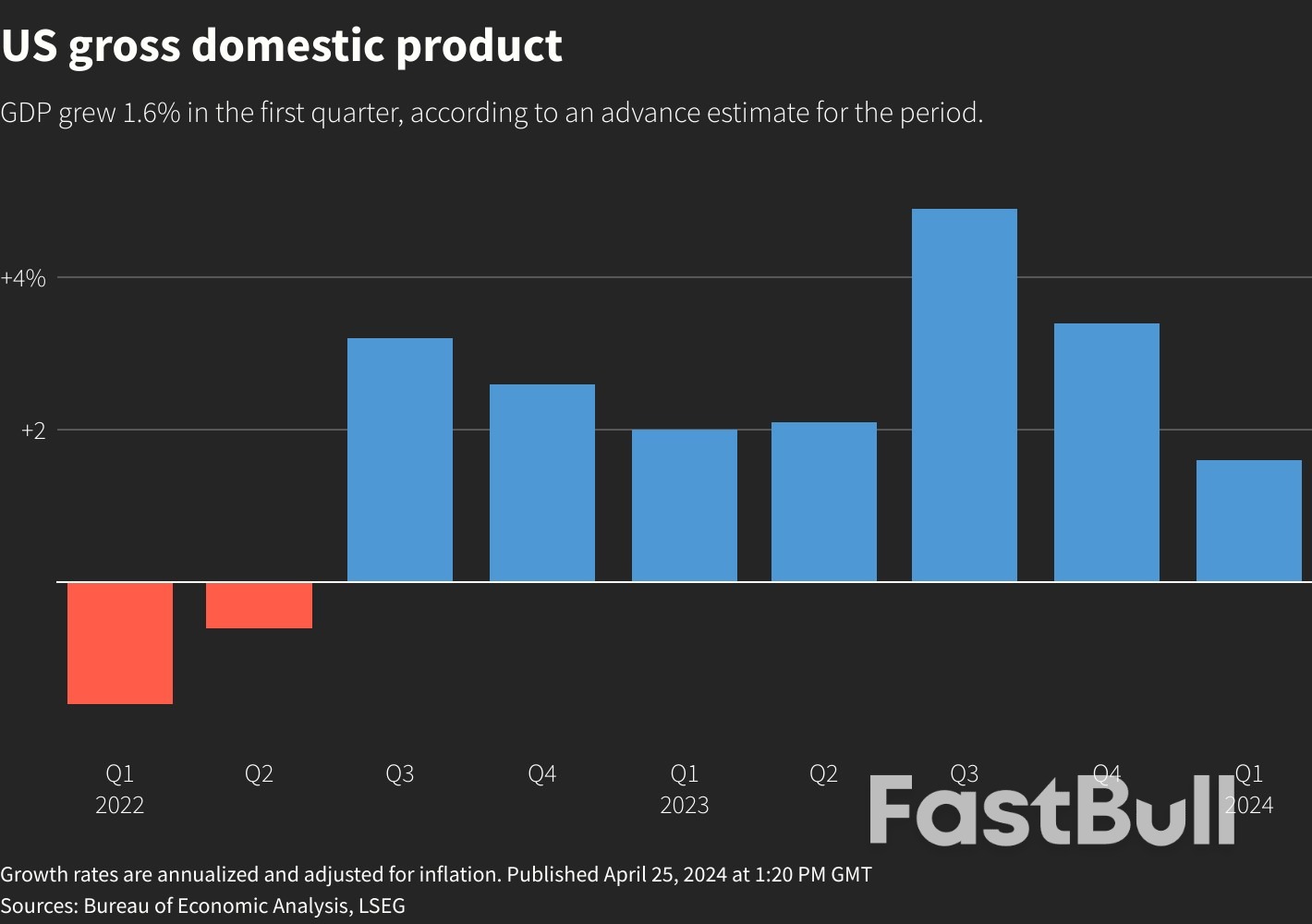
          The U.S. economy grew at its slowest pace in nearly two years in the first quarter amid a surge in imports and small build-up of unsold goods at businesses, signs of solid demand that together with an acceleration in inflation reinforced expectations the Federal Reserve would not cut interest rates before September.
          The cooler-than-expected growth reported by the Commerce Department in its snapshot of first-quarter gross domestic product on Thursday, which also reflected a downshift in government spending, exaggerated the moderation in economic activity. Domestic demand, a better growth measure, was strong as consumer spending moderated slightly while business investment picked up and the housing recovery gained steam.
          Trade and inventories are the most volatile GDP components, and are often subject to revision when the government updates its growth estimates. Fed officials are expected to leave rates unchanged at the U.S. central bank's policy meeting next week.
          "The Fed will likely see the GDP report as solid, while the upward surprise to inflation will support the central bank's case for waiting longer before cutting rates," said Daniel Vernazza, chief international economist at UniCredit.
          GDP increased at a 1.6% annualized rate last quarter, the slowest pace since the second quarter of 2022, the Commerce Department's Bureau of Economic Analysis said. Economists polled by Reuters had forecast GDP would rise at a 2.4% rate, with estimates ranging from a 1.0% pace to a 3.1% rate.
          The economy grew at a 3.4% rate in the fourth quarter. The first-quarter growth pace was below what U.S. central bank officials regard as the non-inflationary growth rate of 1.8%.
          Excluding inventories, government spending and trade, the economy grew at a 3.1% rate after expanding at a 3.3% rate in the fourth quarter. That also dispels the notion that government spending was fueling the economy.
          The U.S. economy, which has outperformed the economies of other advanced nations, is being supported by a resilient labor market.
          U.S. Treasury Secretary Janet Yellen told Reuters in an interview that she was focused on consumer and business spending.
          "Those two elements of final demand came in line with last year's growth rate ... so this is the underlying strength of the U.S. economy that showed continuing robust strength and an economy firing on all cylinders."
          Price pressures heated up by the most in a year, with a measure of inflation in the economy increasing at a 3.1% rate after rising at a 1.9% pace in the October-December quarter.
          The personal consumption expenditures (PCE) price index excluding food and energy surged at a 3.7% rate after increasing at a 2.0% pace in the fourth quarter.
          The so-called core PCE price index is one of the inflation measures tracked by the Fed for its 2% target. Inflation was boosted by increases in the costs of services like, transportation, insurance and housing, which offset a decline in goods prices such as motor vehicles and parts.
          The strong readings pose an upside risk to March PCE inflation data due to be released on Friday, though much would depend on revisions to the January and February data.
          The Fed has kept its benchmark overnight interest rate in the 5.25%-5.50% range since July. It has raised the policy rate by 525 basis points since March of 2022.
          Stocks on Wall Street were trading lower. The dollar slipped against a basket of currencies. U.S. Treasury yields rose.Imports Hold Back US Economy In First Quarter, Inflation Flares Up_1

          Tight Labor Market

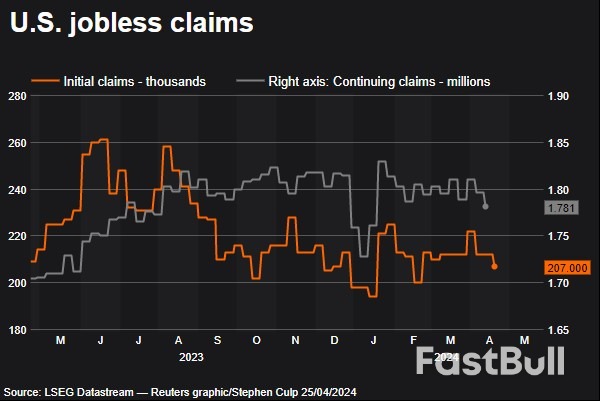
          A significant slowdown in the labor market is not yet evident. The Labor Department's weekly jobless claims report showed initial claims for unemployment benefits fell 5,000 to a seasonally adjusted 207,000 in the week ending April 20.
          The number of people receiving benefits after an initial week of aid, a proxy for hiring, declined 15,000 to 1.781 million during the week ending April 13. The so-called continuing claims data covered the period during which the government surveyed households for April's unemployment rate.
          Continuing claims fell between the March and April survey periods, implying the unemployment rate was likely unchanged after dipping to 3.8% last month from 3.9% in February.
          Imports Hold Back US Economy In First Quarter, Inflation Flares Up_2Low layoffs are keeping wages high, sustaining consumer spending, which accounts for more than two-thirds of economic activity. Consumer spending grew at a still-solid 2.5% rate, slowing from the 3.3% growth pace rate notched in the October-December quarter. Spending was driven by healthcare, financial services and insurance, which more than offset a decline in goods, including motor vehicles and gasoline.
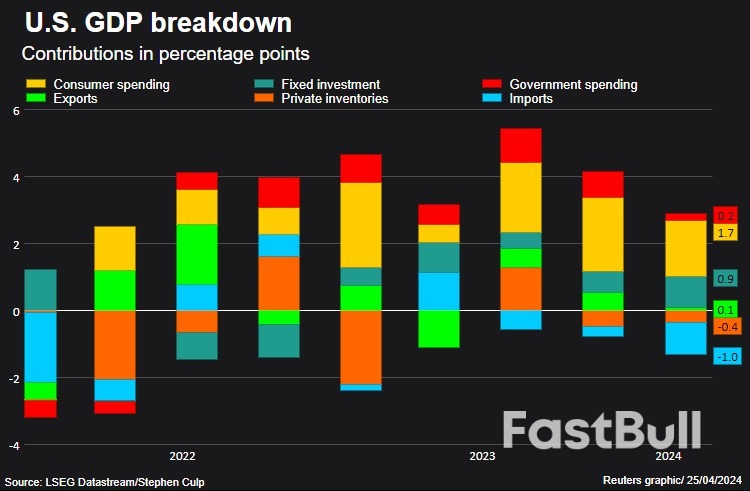
          Spending is likely to gradually cool this year. Lower-income households have depleted their COVID-19 pandemic savings and are largely relying on debt to fund purchases. Recent data and comments from bank executives indicated that lower-income borrowers were increasingly struggling to keep up with their loan payments.
          Though income increased at a $407.1 billion rate compared with the fourth quarter's $230.2 billion pace, the gains were eroded by inflation and higher taxes. Income at the disposal of households after accounting for inflation and taxes rose at a 1.1% rate versus a 2.0% pace in the October-December quarter.
          The saving rate decreased to 3.6% from 4.0% in the prior quarter.
          "The recent stickiness in inflation lends downside risk to the near-term forecast for consumption as it could weigh on real disposable income," said Ryan Sweet, chief economist at Oxford Economics.
          Inventories were whittled down, rising at a $35.4 billion rate after increasing at a $54.9 billion pace in the fourth quarter. Inventories subtracted 0.35 percentage point from GDP growth. Part of the spending was satiated with imports, which resulted in the trade deficit widening to $973.2 billion from $918.5 billion in the October-December quarter. Trade chopped off 0.86 percentage point from GDP growth.
          Imports Hold Back US Economy In First Quarter, Inflation Flares Up_3Government spending decelerated to a 1.2% rate from the 4.6% pace notched in the October-December quarter amid a decline in federal government outlays, mostly defense. Business spending picked up as companies invested in artificial intelligence.
          Investment in nonresidential structures like factories contracted for the first time in more than year as the boost from policies by the Biden administration to bring the production of semiconductor manufacturing back to the U.S. faded.
          Residential investment recorded its fastest pace of growth since the fourth quarter of 2020, thanks to rising home sales and housing construction, despite higher mortgage rates.
          "Don't underestimate this economy," said Shannon Grein, an economist at Well Fargo.

          Source: Reuters

          To stay updated on all economic events of today, please check out our Economic calendar
          Risk Warnings and Disclaimers
          You understand and acknowledge that there is a high degree of risk involved in trading. Following any strategies or investment methods may lead to potential losses. The content on the site is provided by our contributors and analysts for information purposes only. You are solely responsible for determining whether any trading assets, securities, strategy, or any other product is suitable for investing based on your own investment objectives and financial situation.
          Add to Favorites
          Share

          Euro Turns To GDP And Inflation Data For A Lifeline

          XM

          Economic

          Forex

          Imminent rate cuts bruise euro

          It’s been a difficult year for the euro, which has already declined 3% against the dollar as the economic divergence between the Eurozone and the United States has convinced investors the ECB is set to cut interest rates faster and deeper than the Fed.
          Economic growth in the euro area has been stagnant for about a year now and inflation has cooled rapidly, falling to just 2.4% in March. As such, ECB officials have made it abundantly clear they intend to slash rates in June, so that looks almost like a done deal. The real question is how they will proceed afterwards. Euro Turns To GDP And Inflation Data For A Lifeline _1
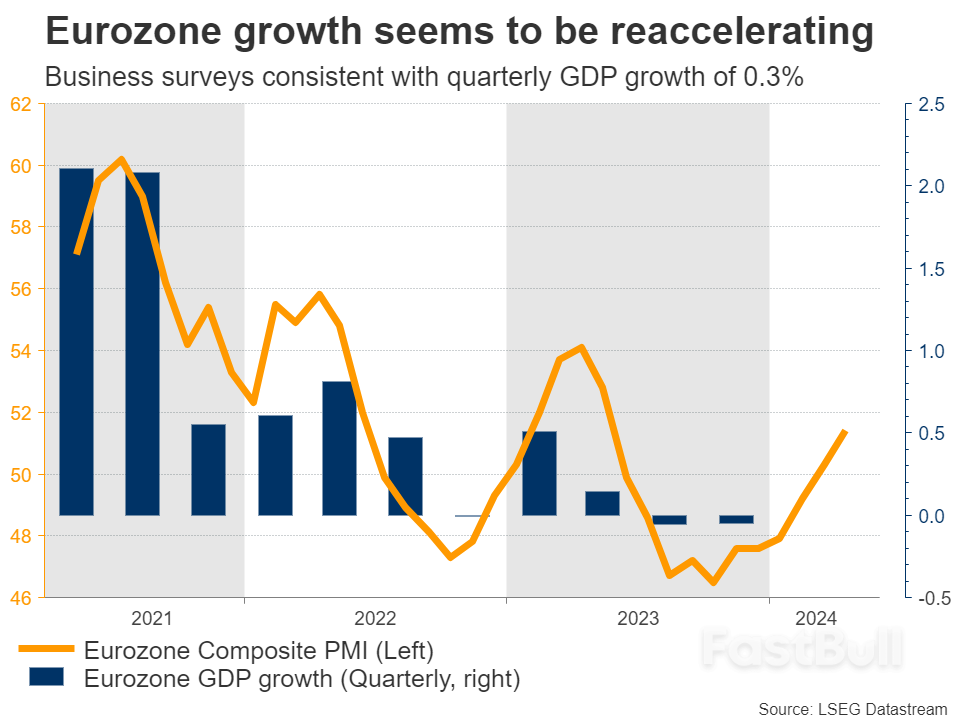
          In this sense, some leading indicators have flashed encouraging signals lately, with business surveys pointing to a reacceleration in growth and inflationary pressures. If that is reflected in official data soon, the ECB might decide to ‘play it slow’ with any subsequent rate cuts beyond June.

          GDP and inflation data on the radar

          Next week, the spotlight will fall on the first estimate of Eurozone GDP growth for Q1 and inflation stats for April, both due on Tuesday. The unemployment rate for March will follow on Friday.
          Business surveys were consistent with GDP expanding by 0.3% in the first quarter compared to the preceding quarter, when growth was flat. The same surveys warned that inflation fired up again in April as companies raised their selling prices at a faster clip, reflecting rising wage and energy costs.
          A reacceleration in both growth and inflation could throw the euro a much-needed lifeline, bolstering the single currency through the interest rate channel as traders unwind some bets of rapid ECB rate cuts.
          Euro Turns To GDP And Inflation Data For A Lifeline _2
          Looking at the euro/dollar chart, the pair has been trading below a downtrend line this year with a clear structure of lower highs and lower lows, which keeps the prevailing trend negative.
          That said, a strong batch of data could allow the latest recovery to continue, perhaps towards 1.0800, a region reinforced by the 50- and 200-day simple moving averages (SMAs).
          On the downside, a disappointment in the upcoming data can bring the pair under renewed selling interest. A potential drop back below the 1.0690 zone would shift the focus towards the April lows near 1.0600.

          Euro outlook

          In the bigger picture, the euro’s losses this year have been concentrated mostly against the mighty US dollar. Against the British pound, the single currency has only lost 1%, while it has risen almost 7% against the sinking Japanese yen.Euro Turns To GDP And Inflation Data For A Lifeline _3
          Judging by economic performance, these patterns can persist. The US economy is the strongest in terms of growth, so the dollar may continue to outperform in the foreseeable future, especially if stock markets remain shaky. The Eurozone and UK economies are in similar shape, which suggests those two currencies could continue to trade almost in lockstep.
          Hence, the euro’s best chance at further gains may be against the yield-starved Japanese yen. In this sense, the main risk is the prospect of FX intervention by Tokyo. That said, the yen might need to fall even further before authorities step in.
          To stay updated on all economic events of today, please check out our Economic calendar
          Risk Warnings and Disclaimers
          You understand and acknowledge that there is a high degree of risk involved in trading. Following any strategies or investment methods may lead to potential losses. The content on the site is provided by our contributors and analysts for information purposes only. You are solely responsible for determining whether any trading assets, securities, strategy, or any other product is suitable for investing based on your own investment objectives and financial situation.
          Add to Favorites
          Share

          Bank of Japan Center Stage, US Tech Supports

          Samantha Luan

          Central Bank

          Economic

          Forex

          Asia's market spotlight on Friday falls on the Bank of Japan's policy announcement, as the cat-and-mouse game of when or if Tokyo intervenes in the currency market continues, and investors digest the latest U.S. mega tech earnings reports.
          The BOJ decision and guidance from Governor Kazuo Ueda top the regional calendar, which also includes Tokyo consumer price inflation for April, producer price inflation from Australia and industrial production from Singapore.
          Investor sentiment and overall risk appetite in early Asian trade on Friday will be determined in large part by the results from Microsoft, Alphabet and Intel reported after the closing bell on Wall Street on Thursday.
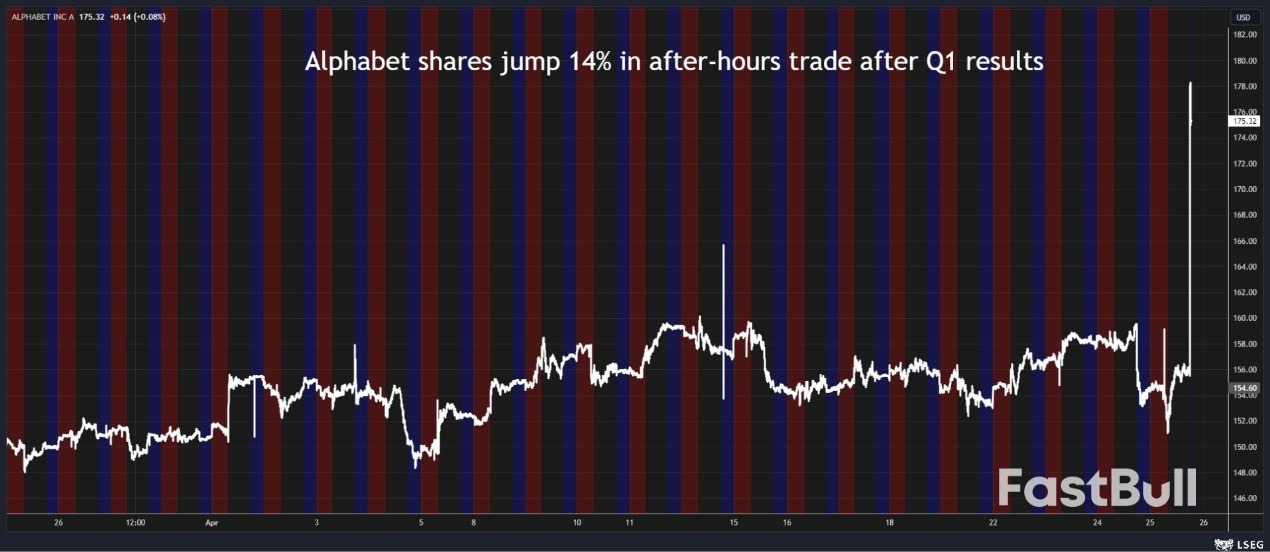
          Microsoft and Google parent Alphabet were resounding beats. Shares in Alphabet jumped as much as 14% and Microsoft 6% in after-hours trading, but Intel shares slumped as much as 7%.Bank of Japan Center Stage, US Tech Supports_1
          Risk appetite was dealt a heavy blow on Thursday by surprisingly high U.S. inflation and soft GDP growth numbers, and the leap in bond yields to new highs for the year will do little to improve the mood in Asia and across emerging markets.
          On the other hand, U.S. stocks on Thursday closed off their lows and after-hours earnings were mostly upbeat. If Asian stocks hold the line on Friday, they will register their best week since July last year.
          All eyes, however, are on Tokyo, where the BOJ is expected to keep its key interest rate on hold and project inflation to stay near its 2% target in coming years on prospects of steady wage gains.Bank of Japan Center Stage, US Tech Supports_2
          But the yen's slide to a fresh 34-year low against the dollar means Ueda will have to walk a delicate line in maintaining a steady, calibrated path to exiting ultra-easy policy while at the same time addressing the huge pressure bearing down on the currency.
          Erring too dovish risks pouring even more fuel on the current yen-selling flames, while an overly hawkish stance could threaten GDP growth and spark unwanted volatility in financial markets.
          One option policymakers are considering, according to Jiji news agency, is weighing up measures to reduce the central bank's government bond purchases. This would likely push down the BOJ's bond holdings, ushering in a phase of quantitative tightening, Jiji said.
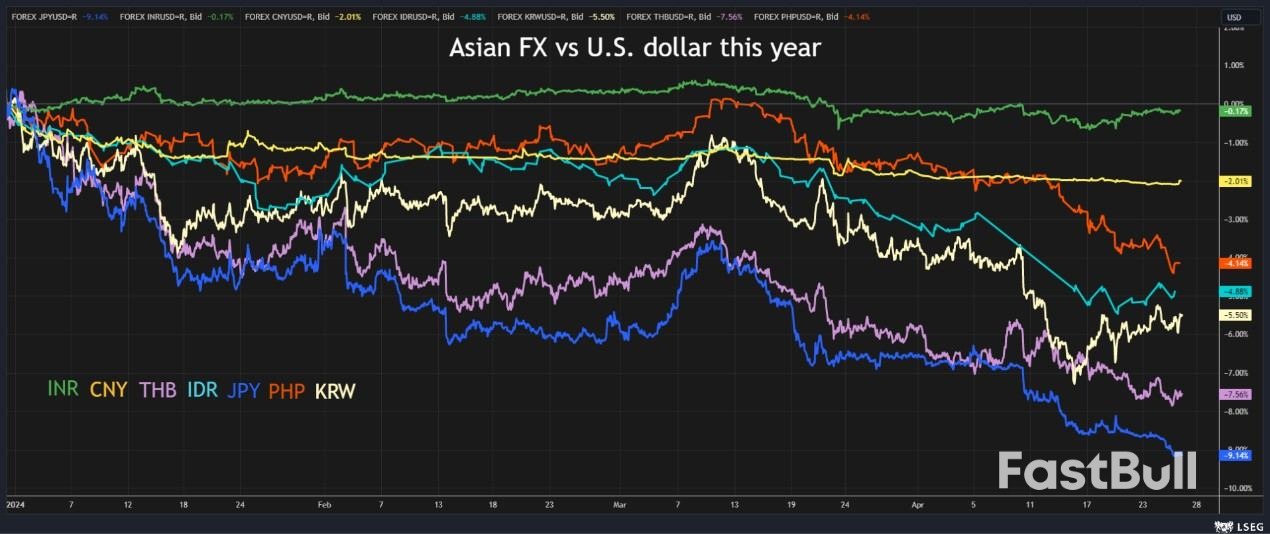
          The yen goes into the BOJ decision at a 34-year low well below 155.00 per dollar and down 9% this year, Once again, it is on the defensive against other Asian currencies, much to the likely displeasure of policymakers in capitals across the continent.
          In an interview with Reuters on Thursday U.S. Treasury Secretary Janet Yellen sidestepped the issue of Japanese intervention, but said such instances should ideally be rare and only in response to excessive volatility.Bank of Japan Center Stage, US Tech Supports_3
          Here are key developments that could provide more direction to markets on Friday:
          - Bank of Japan policy announcement
          - Japan Tokyo inflation (April)
          - Australia PPI inflation (Q1)

          Source: Reuters

          To stay updated on all economic events of today, please check out our Economic calendar
          Risk Warnings and Disclaimers
          You understand and acknowledge that there is a high degree of risk involved in trading. Following any strategies or investment methods may lead to potential losses. The content on the site is provided by our contributors and analysts for information purposes only. You are solely responsible for determining whether any trading assets, securities, strategy, or any other product is suitable for investing based on your own investment objectives and financial situation.
          Add to Favorites
          Share

          Japan Ready To Take Necessary Steps On Yen Movements:Finance Chief

          Alex

          Economic

          Central Bank

          Japan is closely watching currency movements and is ready to take all necessary steps, Finance Minister Shunichi Suzuki said Friday, amid market caution about intervention to slow the yen's fall to 34-year lows against the U.S. dollar.
          Suzuki said he is "concerned" about the negative aspect of the weaker yen, while noting that it also has a positive side. He declined to say when and what specific steps the government would take against excessive volatility in the currency market.
          "In line with our policy, the government will continue to monitor currency market developments closely and take all necessary steps" against excessive yen fluctuations, he told reporters.
          The yen's weakness stems from the still wide interest rate differential between Japan and the United States, despite the Bank of Japan's decision last month to increase interest rates for the first time in 17 years. Financial markets have pared back expectations that the U.S. Federal Reserve will start cutting rates as early as June after a series of robust economic data.
          A weak yen inflates import costs for resource-scarce Japan and accelerates inflation, while boosting the overseas earnings of Japanese exporters in yen terms.
          "We are concerned about the negative side of the weaker yen," Suzuki said, adding that responding to rising prices is a major priority for the government.
          His comments came ahead of the conclusion Friday of the BOJ's two-day policy meeting, with attention focused on the Japanese central bank's assessment of the impact of the yen's recent depreciation on the economy, particularly inflation.
          Some market participants say the yen could fall further depending on the outcome, boosting the likelihood of a yen-buying, dollar-selling intervention by Japan.
          Japanese authorities have warned of "appropriate" action to rectify rapid yen movements in recent days, but the yen has already passed the 155 line, viewed by market players as a threshold that could prompt the government to step in.

          Source:Kyodo News

          To stay updated on all economic events of today, please check out our Economic calendar
          Risk Warnings and Disclaimers
          You understand and acknowledge that there is a high degree of risk involved in trading. Following any strategies or investment methods may lead to potential losses. The content on the site is provided by our contributors and analysts for information purposes only. You are solely responsible for determining whether any trading assets, securities, strategy, or any other product is suitable for investing based on your own investment objectives and financial situation.
          Add to Favorites
          Share

          Tech Reverses US Stock Losses,BOJ In Focus

          Samantha Luan

          Economic

          Stocks

          Stellar earnings reports from Microsoft Corp. and Alphabet Inc triggered an after-hours tech rally that sent US futures higher. Japan’s stocks were rangebound before a monetary policy decision.
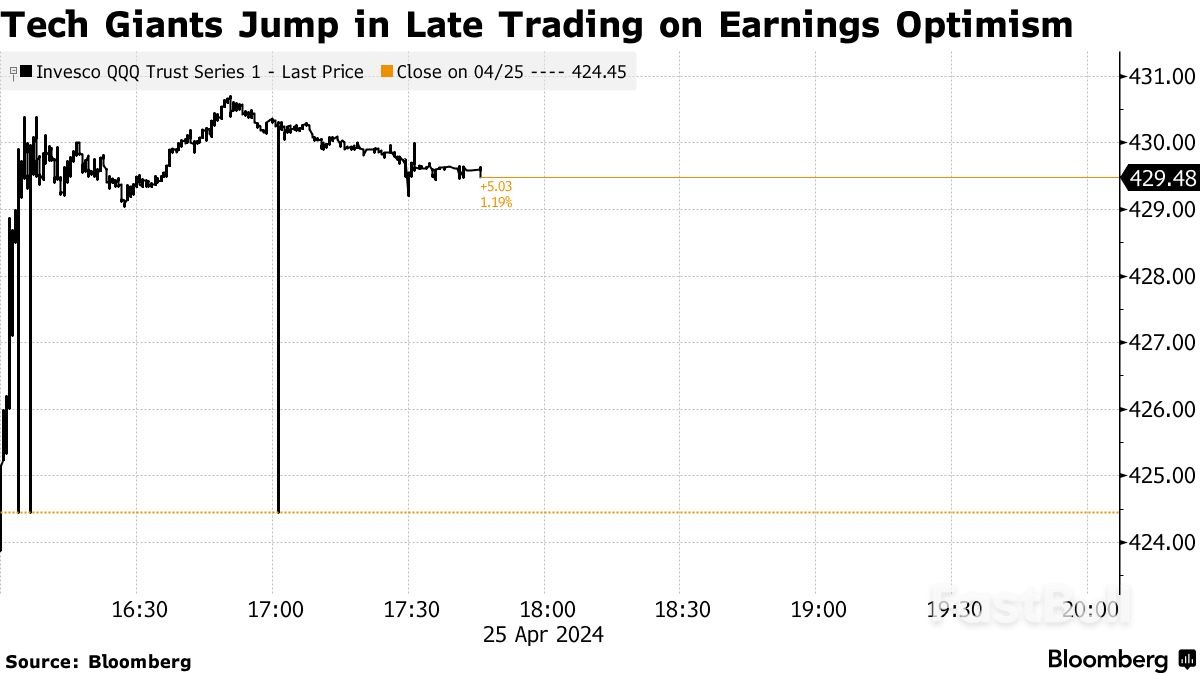
          Futures contracts for the S&P 500 rallied 0.8% in early Asian trading, while those for the Nasdaq 100 rose more than 1%. The moves unwound Thursday’s losses of around 0.5% for each benchmark and came after Microsoft and Alphabet both beat Wall Street profit estimates. Snap Inc. also rallied in late trading on a bullish revenue projection.
          Japanese stocks were mixed in opening trade on Friday, while South Korean shares rose. Australian shares retreated, weighed down by BHP Group Ltd., which declined following news of its takeover bid for Anglo American Plc. Futures contracts in Hong Kong also fell.
          The yen was little changed before a Bank of Japan interest-rate decision and a Jiji report said authorities will consider measures to shrink government bond purchases at the Friday meeting. Policymakers are forecast to leave rates unchanged after the yen slid to the lowest level against the dollar since 1990 this week.
          Treasuries opened little changed following further losses on Thursday when the latest US data pushed back expectations for Federal Reserve interest-rate cuts. Australian 10-year yields rose more than 10 basis points, while New Zealand’s equivalent benchmark yield climbed around seven basis points.
          Tech Reverses US Stock Losses,BOJ In Focus_1
          The US core PCE price index advanced at a faster-than-expected 3.7% clip. The print combined with a US gross domestic product data that trailed all forecasts to rekindle the specter of stagflation.
          “This report was the worst of both worlds: economic growth is slowing and inflationary pressures are persisting,” said Chris Zaccarelli at Independent Advisor Alliance. “The Fed wants to see inflation start coming down in a persistent manner, but the market wants to see economic growth and corporate profits increasing.”

          Tech Optimism

          A $250 billion exchange-traded fund tracking the Nasdaq 100 climbed 1.2% after the close of regular trading on Thursday. In a sigh of relief to investors worried about lofty valuations of the sector that has powered the bull market, Alphabet crushed sales estimates and announced a dividend. Fellow megacap Microsoft also beat forecasts, lifted by corporate demand for the software maker’s cloud and artificial-intelligence offerings.
          Investors have shown they are excited about the prospects of AI — but want tech companies to continue to focus on revenue and profit in the meantime.
          Like other big techs, Alphabet has been plowing money into developing AI, a strategy that has helped drive demand for its cloud services. Google is a distant third in the cloud-computing market, trailing Amazon.com Inc. and Microsoft, but the company’s prowess in AI could help it close the gap.

          Source:Bloomberg

          To stay updated on all economic events of today, please check out our Economic calendar
          Risk Warnings and Disclaimers
          You understand and acknowledge that there is a high degree of risk involved in trading. Following any strategies or investment methods may lead to potential losses. The content on the site is provided by our contributors and analysts for information purposes only. You are solely responsible for determining whether any trading assets, securities, strategy, or any other product is suitable for investing based on your own investment objectives and financial situation.
          Add to Favorites
          Share

          US GDP Growth Slows Markedly, And Inflation Remains The Focus

          ING

          Economic

          Higher inflation catches the markets' eye, rather than weaker growth

          US first quarter GDP growth is an annualised 1.6%, well below the 2.5% consensus expectation, but inflation is hotter with the core PCE deflator up 3.7% annualised versus 3.4% expected. This suggests, assuming no revisions to monthly data, that the core PCE deflator will come in above 0.4% today rather than the current 0.3%MoM consensus forecast. Unsurprisingly, Treasury yields have pushed higher as if that is the case, it makes a near-term Federal Reserve interest rate cut look even more unlikely.
          That said, this inflation number is a quarter-on-quarter annualised measure, so any revisions to October through February could have influenced today's outcome - we won't know until when we get the monthly income and spending report. We could still get a 0.3%MoM, but we have to acknowledge that yesterday’s data makes it look less likely.

          US GDP Growth Slows Markedly, And Inflation Remains The Focus_1

          GDP still running below pre-pandemic trend levels

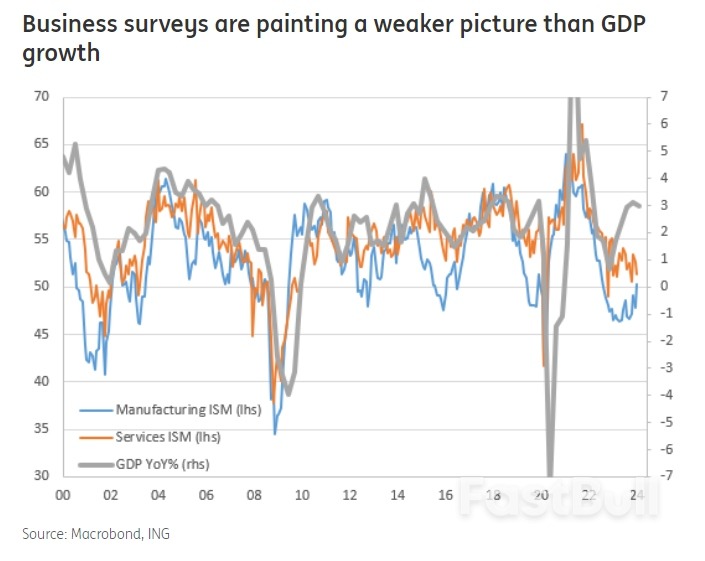
          In terms of the GDP growth breakdown, consumer spending was softer than thought likely, rising 2.5% annualised, while residential investment was a very firm +13.9%. Business capex was subdued, government spending saw a marked slowdown to 1.2%, while weakness in net trade subtracted 0.9pp from the headline growth rate, and inventories subtracted a further 0.35pp. The chart above shows that while GDP has performed well, the level of output is still a couple of percentage points below where we perhaps could have been had the pandemic not happened, and instead, the economy had continued running at its 2024-19 growth trend.US GDP Growth Slows Markedly, And Inflation Remains The Focus_2
          As for the growth outlook, we expect to see more subdued activity in upcoming quarters. The divergence between business surveys and official data is very wide. We strongly suspect that business caution will translate into weaker hiring and wage growth and subdued business capex, and that will eventually show up in the official GDP data. The move higher in market borrowing costs this year will also weigh on activity and eventually dampen price pressures in the economy. Nonetheless, there is next to no chance of a rate cut before September.
          To stay updated on all economic events of today, please check out our Economic calendar
          Risk Warnings and Disclaimers
          You understand and acknowledge that there is a high degree of risk involved in trading. Following any strategies or investment methods may lead to potential losses. The content on the site is provided by our contributors and analysts for information purposes only. You are solely responsible for determining whether any trading assets, securities, strategy, or any other product is suitable for investing based on your own investment objectives and financial situation.
          Add to Favorites
          Share

          Loonie Loses Luster: Weak Retail Sales Raise Doubts About Rate Cuts (Canadian Dollar weakens vs. USD)

          Warren Takunda

          Forex

          Economic

          The Canadian dollar (CAD) is feeling the heat, falling below the key 1.37 USD level and approaching a five-month low. This decline is primarily driven by two diverging forces: a sluggish Canadian economy and a strengthening US dollar.
          Canadian Consumers Tighten Belts
          Disappointing retail sales data is painting a picture of a Canadian consumer pulling back on spending. The first quarter saw no growth in retail sales, marking the slowest pace since mid-2023. This economic weakness adds pressure to the Bank of Canada (BOC) to consider rate cuts at its upcoming June meeting.
          US Dollar Supported by Rate Hike Bets
          On the other hand, the US dollar is benefiting from expectations of sustained interest rate hikes by the Federal Reserve. Persistent inflation and a robust labor market are fueling this sentiment, even if US GDP growth sputtered in the first quarter. This monetary policy divergence between the US and Canada is making the greenback a more attractive proposition for investors.
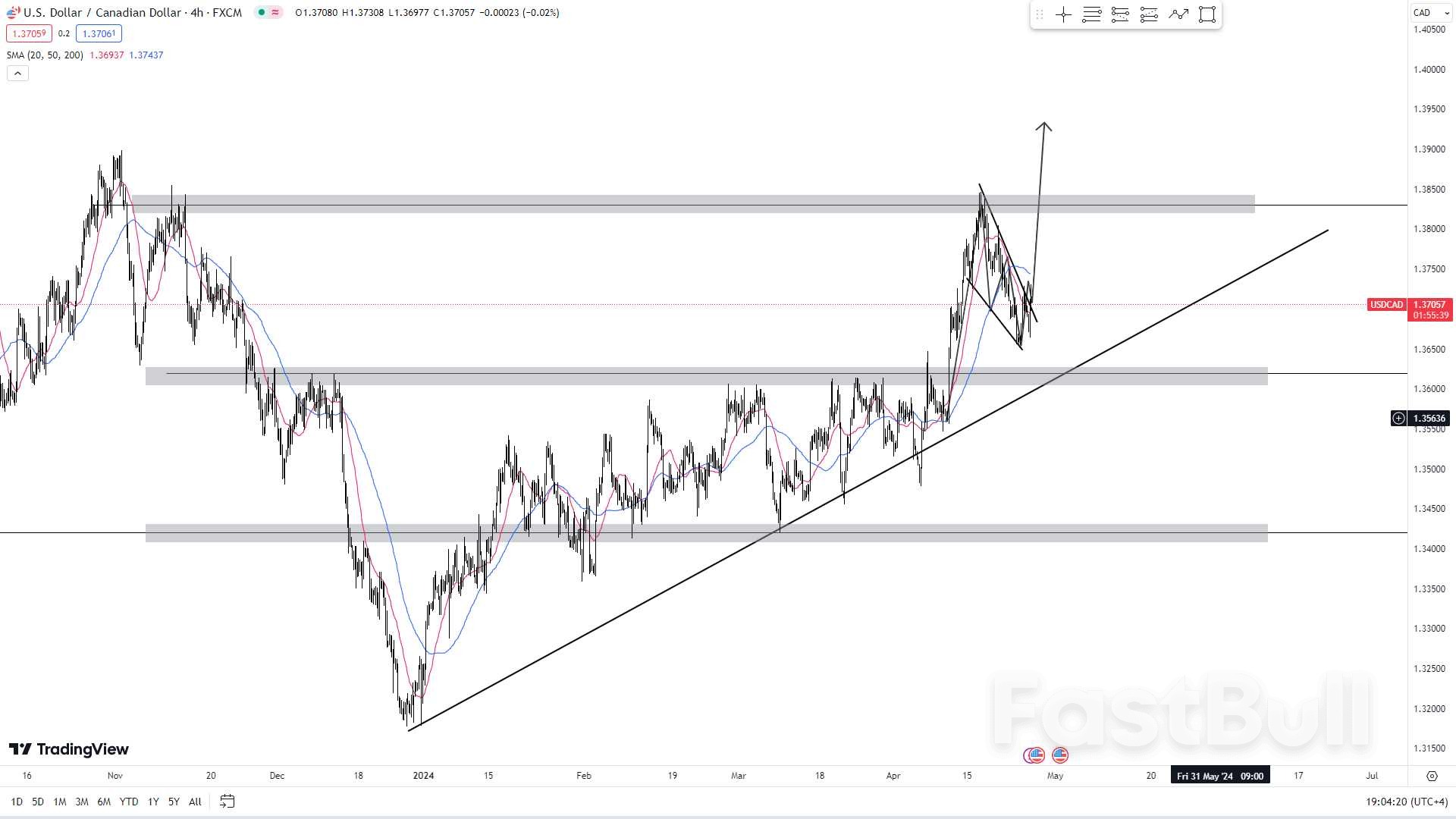
          Technical OutlookLoonie Loses Luster: Weak Retail Sales Raise Doubts About Rate Cuts (Canadian Dollar weakens vs. USD) _1
          The technical outlook for the USD/CAD pair presents a mixed picture. Intraday bias currently sits in neutral territory, with the key support level at 1.3660 USD acting as a potential floor. A strong rebound from this level could signal a continuation of the near-term bullishness for the USD/CAD pair. Conversely, a sustained break below 1.3660 USD could trigger a deeper decline, potentially targeting the 55-day exponential moving average (EMA) currently sitting around 1.3592 USD.
          Taking a broader perspective, the recent price action from the 2022 high of 1.3976 USD as a potential corrective pattern within a larger uptrend. This suggests that the current weakness might be a temporary pause before the uptrend resumes. In this scenario, strong support should emerge above the previously broken resistance level of 1.2947 USD, potentially leading to a rebound. A decisive break above 1.3976 USD would definitively confirm a resumption of the entire uptrend that began from the 2021 low of 1.2005 USD. The next potential target on that uptrend path could be the 61.8% projection of the Fibonacci retracement between 1.2401 USD and 1.3976 USD, coming in at approximately 1.4149 USD.
          Shifting to shorter timeframes, particularly the 4-hour and 1-hour charts, the USD/CAD pair has been trading within a descending channel. Recently, the price action exited this channel and hit a resistance level, which is often associated with selling pressure. This presents two potential behavioral scenarios for the 4-hour timeframe.
          The first scenario posits that if the pair is unable to break above the current resistance zone, it could retrace back down to the support level created by the previous order block (OB) that caused the price to jump. This support level would likely be situated around the area where the price exited the descending channel.
          The second scenario takes into account the recent exit from the descending channel. This return to the resistance level could be interpreted as a pullback towards the broken channel before the uptrend continues. However, for this scenario to play out, the pair would need to decisively break above the resistance level and the 61.8% Fibonacci retracement level to target the next potential resistance zone. If this breakout fails to materialize, the first scenario becomes more likely.
          To stay updated on all economic events of today, please check out our Economic calendar
          Risk Warnings and Disclaimers
          You understand and acknowledge that there is a high degree of risk involved in trading. Following any strategies or investment methods may lead to potential losses. The content on the site is provided by our contributors and analysts for information purposes only. You are solely responsible for determining whether any trading assets, securities, strategy, or any other product is suitable for investing based on your own investment objectives and financial situation.
          Add to Favorites
          Share
          FastBull
          Copyright © 2025 FastBull Ltd

          728 RM B 7/F GEE LOK IND BLDG NO 34 HUNG TO RD KWUN TONG KLN HONG KONG

          TelegramInstagramTwitterfacebooklinkedin
          App Store Google Play Google Play
          Products
          Charts

          Chats

          Q&A with Experts
          Screeners
          Economic Calendar
          Data
          Tools
          Membership
          Features
          Function
          Markets
          Copy Trading
          Latest Signals
          Contests
          News
          Analysis
          24/7
          Columns
          Education
          Company
          Careers
          About Us
          Contact Us
          Advertising
          Help Center
          Feedback
          User Agreement
          Privacy Policy
          Business

          White Label

          Data API

          Web Plug-ins

          Poster Maker

          Affiliate Program

          Risk Disclosure

          The risk of loss in trading financial instruments such as stocks, FX, commodities, futures, bonds, ETFs and crypto can be substantial. You may sustain a total loss of the funds that you deposit with your broker. Therefore, you should carefully consider whether such trading is suitable for you in light of your circumstances and financial resources.

          No decision to invest should be made without thoroughly conducting due diligence by yourself or consulting with your financial advisors. Our web content might not suit you since we don't know your financial conditions and investment needs. Our financial information might have latency or contain inaccuracy, so you should be fully responsible for any of your trading and investment decisions. The company will not be responsible for your capital loss.

          Without getting permission from the website, you are not allowed to copy the website's graphics, texts, or trademarks. Intellectual property rights in the content or data incorporated into this website belong to its providers and exchange merchants.

          Not Logged In

          Log in to access more features

          FastBull Membership

          Not yet

          Purchase

          Become a signal provider
          Help Center
          Customer Service
          Dark Mode
          Price Up/Down Colors

          Log In

          Sign Up

          Position
          Layout
          Fullscreen
          Default to Chart
          The chart page opens by default when you visit fastbull.com