• Trade
  • Markets
  • Copy
  • Contests
  • News
  • 24/7
  • Calendar
  • Q&A
  • Chats
Trending
Screeners
SYMBOL
LAST
BID
ASK
HIGH
LOW
NET CHG.
%CHG.
SPREAD
SPX
S&P 500 Index
6870.39
6870.39
6870.39
6895.79
6858.28
+13.27
+ 0.19%
--
DJI
Dow Jones Industrial Average
47954.98
47954.98
47954.98
48133.54
47871.51
+104.05
+ 0.22%
--
IXIC
NASDAQ Composite Index
23578.12
23578.12
23578.12
23680.03
23506.00
+72.99
+ 0.31%
--
USDX
US Dollar Index
98.820
98.900
98.820
98.960
98.730
-0.130
-0.13%
--
EURUSD
Euro / US Dollar
1.16598
1.16605
1.16598
1.16717
1.16341
+0.00172
+ 0.15%
--
GBPUSD
Pound Sterling / US Dollar
1.33309
1.33318
1.33309
1.33462
1.33151
-0.00003
0.00%
--
XAUUSD
Gold / US Dollar
4210.04
4210.45
4210.04
4218.85
4190.61
+12.13
+ 0.29%
--
WTI
Light Sweet Crude Oil
59.990
60.020
59.990
60.063
59.752
+0.181
+ 0.30%
--

Community Accounts

Signal Accounts
--
Profit Accounts
--
Loss Accounts
--
View More

Become a signal provider

Sell trading signals to earn additional income

View More

Guide to Copy Trading

Get started with ease and confidence

View More

Signal Accounts for Members

All Signal Accounts

Best Return
  • Best Return
  • Best P/L
  • Best MDD
Past 1W
  • Past 1W
  • Past 1M
  • Past 1Y

All Contests

  • All
  • Trump Updates
  • Recommend
  • Stocks
  • Cryptocurrencies
  • Central Banks
  • Featured News
Top News Only
Share

Switzerland's Consumer Confidence Index Fell To 34 In November, Compared With A Previous Reading Of -36.9

Share

Shares In Italy's Fincantieri Up 3.2% In Early Trade

Share

India's Nifty Smallcap 100 Index Falls 2.75%

Share

Britain's FTSE 100 Up 0.17%, France's CAC 40 Down 0.07%

Share

Europe's STOXX Index Up 0.04%, Euro Zone Blue Chips Index Up 0.02%

Share

United Arab Emirates Energy Minister: Natural Gas Is Important And We Intend To Not Only Satisfy Our Local Demand, But Also Grow Our Export Of LNG

Share

Yomiuri: Mitsubishi Ufj Bank Chief Hanzawa Likely To Become MUFG President

Share

Benin's International Bonds Slip After Attempted Coup, 2052 Maturity Down By 1.5 Euro Cents, Tradeweb Data

Share

China Vice Commerce Minister, On Nexperia: Root Cause Of Chaos In The Global Semiconductor Supply Chain Lies In The Netherlands

Share

United Arab Emirates Energy Minister: We Should Not Be Worrying About When Demand For Fossil Fuels Will Peak

Share

China Vice Commerce Minister: Urges Germany And EU Auto Association To Push EU Commission To Resolve EV Anti-Subsidy Case

Share

China Vice Commerce Minister Held Video Conferences With The President Of The German Association Of The Automotive Industry And The President Of The European Automobile Manufacturers Association, Respectively, To Exchange Views On Cooperation In The Automotive Industry And Supply Chain Between China And Germany And Between China And Europe

Share

China Vice Commerce Minister: Welcomes Eu Automakers To Continue To Invest In China

Share

China Says It Is Ready To Improve US Ties While Safeguarding Sovereignty

Share

The Chinese Foreign Ministry Stated That Japanese Prime Minister Takaichi And The Right-wing Forces Behind Him Continue To Misjudge The Situation, Refuse To Repent, Turn A Deaf Ear To Criticism Both Domestically And Internationally, Downplay Their Interference In Other Countries' Internal Affairs And Threats Of Force, Distort The Truth, Disregard Right And Wrong, And Show No Basic Respect For International Law And The Fundamental Norms Of International Relations. They Attempt To Revive Japanese Militarism By Instigating Conflict And Confrontation, Thus Breaking Through The Post-war International Order. Neighboring Asian Countries And The International Community Should Remain Highly Vigilant

Share

Indonesia Government Proposes Additional 11.5 Trillion Rupiah State Injection In 2025 For Housing, Transportation Sectors

Share

Sweden Prime Minister, In Letter Sent To European Commission And European Council President: Russia's Aggression Against Ukraine Is An Existential Threat To Europe

Share

Sweden Prime Minister, In Letter Sent To European Commission And European Council President: Must Move Ahead Quickly On Proposals To Use The Cash Balances From Russia's Immobilized Assets For A Reparations Loan To Ukraine

Share

China's Foreign Ministry Strongly Urges Japan To Immediately Cease Its Dangerous Actions That Disrupt China's Normal Military Exercises

Share

French Socialist Party's Faure: We Will Vote For French Budget's Social Security Programme

TIME
ACT
FCST
PREV
U.S. Personal Income MoM (Sept)

A:--

F: --

P: --

U.S. PCE Price Index YoY (SA) (Sept)

A:--

F: --

P: --

U.S. PCE Price Index MoM (Sept)

A:--

F: --

P: --

U.S. Personal Outlays MoM (SA) (Sept)

A:--

F: --

P: --

U.S. Core PCE Price Index MoM (Sept)

A:--

F: --

P: --

U.S. Core PCE Price Index YoY (Sept)

A:--

F: --

P: --

U.S. UMich 5-Year-Ahead Inflation Expectations Prelim YoY (Dec)

A:--

F: --

P: --

U.S. Real Personal Consumption Expenditures MoM (Sept)

A:--

F: --

P: --

U.S. UMich Current Economic Conditions Index Prelim (Dec)

A:--

F: --

P: --

U.S. UMich 1-Year-Ahead Inflation Expectations Prelim (Dec)

A:--

F: --

P: --

U.S. UMich Consumer Expectations Index Prelim (Dec)

A:--

F: --

P: --

U.S. Weekly Total Rig Count

A:--

F: --

P: --

U.S. Weekly Total Oil Rig Count

A:--

F: --

P: --

U.S. Unit Labor Cost Prelim (SA) (Q3)

--

F: --

P: --

U.S. Consumer Credit (SA) (Oct)

A:--

F: --

P: --

China, Mainland Foreign Exchange Reserves (Nov)

A:--

F: --

P: --

Japan Wages MoM (Oct)

A:--

F: --

P: --

Japan Trade Balance (Oct)

A:--

F: --

P: --

Japan Nominal GDP Revised QoQ (Q3)

A:--

F: --

P: --

Japan Trade Balance (Customs Data) (SA) (Oct)

A:--

F: --

P: --

Japan GDP Annualized QoQ Revised (Q3)

A:--

F: --

P: --
China, Mainland Exports YoY (CNH) (Nov)

A:--

F: --

P: --

China, Mainland Trade Balance (USD) (Nov)

A:--

F: --

P: --

China, Mainland Imports YoY (CNH) (Nov)

A:--

F: --

P: --

China, Mainland Exports (Nov)

A:--

F: --

P: --

China, Mainland Imports (CNH) (Nov)

A:--

F: --

P: --

China, Mainland Trade Balance (CNH) (Nov)

A:--

F: --

P: --

China, Mainland Imports YoY (USD) (Nov)

A:--

F: --

P: --

China, Mainland Exports YoY (USD) (Nov)

A:--

F: --

P: --

Germany Industrial Output MoM (SA) (Oct)

A:--

F: --

P: --

Euro Zone Sentix Investor Confidence Index (Dec)

--

F: --

P: --

Canada Leading Index MoM (Nov)

--

F: --

P: --

Canada National Economic Confidence Index

--

F: --

P: --

China, Mainland Trade Balance (USD) (Nov)

--

F: --

P: --

U.S. 3-Year Note Auction Yield

--

F: --

P: --

U.K. BRC Overall Retail Sales YoY (Nov)

--

F: --

P: --

U.K. BRC Like-For-Like Retail Sales YoY (Nov)

--

F: --

P: --

Australia Overnight (Borrowing) Key Rate

--

F: --

P: --

RBA Rate Statement
RBA Press Conference
Germany Exports MoM (SA) (Oct)

--

F: --

P: --

U.S. NFIB Small Business Optimism Index (SA) (Nov)

--

F: --

P: --

Mexico Core CPI YoY (Nov)

--

F: --

P: --

Mexico 12-Month Inflation (CPI) (Nov)

--

F: --

P: --

Mexico PPI YoY (Nov)

--

F: --

P: --

Mexico CPI YoY (Nov)

--

F: --

P: --

U.S. Weekly Redbook Index YoY

--

F: --

P: --

U.S. JOLTS Job Openings (SA) (Oct)

--

F: --

P: --

China, Mainland M2 Money Supply YoY (Nov)

--

F: --

P: --

China, Mainland M0 Money Supply YoY (Nov)

--

F: --

P: --

China, Mainland M1 Money Supply YoY (Nov)

--

F: --

P: --

U.S. EIA Short-Term Crude Production Forecast For The Next Year (Dec)

--

F: --

P: --

U.S. EIA Short-Term Crude Production Forecast For The Year (Dec)

--

F: --

P: --

U.S. EIA Natural Gas Production Forecast For The Next Year (Dec)

--

F: --

P: --

EIA Monthly Short-Term Energy Outlook
U.S. 10-Year Note Auction Avg. Yield

--

F: --

P: --

U.S. API Weekly Cushing Crude Oil Stocks

--

F: --

P: --

U.S. API Weekly Crude Oil Stocks

--

F: --

P: --

U.S. API Weekly Refined Oil Stocks

--

F: --

P: --

U.S. API Weekly Gasoline Stocks

--

F: --

P: --

Q&A with Experts
    • All
    • Chatrooms
    • Groups
    • Friends
    Connecting
    .
    .
    .
    Type here...
    Add Symbol or Code

      No matching data

      All
      Trump Updates
      Recommend
      Stocks
      Cryptocurrencies
      Central Banks
      Featured News
      • All
      • Russia-Ukraine Conflict
      • Middle East Flashpoint
      • All
      • Russia-Ukraine Conflict
      • Middle East Flashpoint
      Search
      Products

      Charts Free Forever

      Chats Q&A with Experts
      Screeners Economic Calendar Data Tools
      Membership Features
      Data Warehouse Market Trends Institutional Data Policy Rates Macro

      Market Trends

      Market Sentiment Order Book Forex Correlations

      Top Indicators

      Charts Free Forever
      Markets

      News

      News Analysis 24/7 Columns Education
      From Institutions From Analysts
      Topics Columnists

      Latest Views

      Latest Views

      Trending Topics

      Top Columnists

      Latest Update

      Signals

      Copy Rankings Latest Signals Become a signal provider AI Rating
      Contests
      Brokers

      Overview Brokers Assessment Rankings Regulators News Claims
      Broker listing Forex Brokers Comparison Tool Live Spread Comparison Scam
      Q&A Complaint Scam Alert Videos Tips to Detect Scam
      More

      Business
      Events
      Careers About Us Advertising Help Center

      White Label

      Data API

      Web Plug-ins

      Affiliate Program

      Awards Institution Evaluation IB Seminar Salon Event Exhibition
      Vietnam Thailand Singapore Dubai
      Fans Party Investment Sharing Session
      FastBull Summit BrokersView Expo
      Recent Searches
        Top Searches
          Markets
          News
          Analysis
          User
          24/7
          Economic Calendar
          Education
          Data
          • Names
          • Latest
          • Prev

          View All

          No data

          Scan to Download

          Faster Charts, Chat Faster!

          Download App
          English
          • English
          • Español
          • العربية
          • Bahasa Indonesia
          • Bahasa Melayu
          • Tiếng Việt
          • ภาษาไทย
          • Français
          • Italiano
          • Türkçe
          • Русский язык
          • 简中
          • 繁中
          Open Account
          Search
          Products
          Charts Free Forever
          Markets
          News
          Signals

          Copy Rankings Latest Signals Become a signal provider AI Rating
          Contests
          Brokers

          Overview Brokers Assessment Rankings Regulators News Claims
          Broker listing Forex Brokers Comparison Tool Live Spread Comparison Scam
          Q&A Complaint Scam Alert Videos Tips to Detect Scam
          More

          Business
          Events
          Careers About Us Advertising Help Center

          White Label

          Data API

          Web Plug-ins

          Affiliate Program

          Awards Institution Evaluation IB Seminar Salon Event Exhibition
          Vietnam Thailand Singapore Dubai
          Fans Party Investment Sharing Session
          FastBull Summit BrokersView Expo

          How this Nvidia rival is trying to take chunks of its market share

          Adam

          Economic

          Summary:

          AI chip startup Groq, led by ex-Google engineer Jonathan Ross, challenges Nvidia by offering faster deployment of language processing units. Backed by major investors and Saudi funding, it’s growing rapidly.
          The race to better compete with Nvidia (NVDA) is well underway.
          Enter well-funded private company Groq (GROQ.PVT), led by chip veteran Jonathan Ross. While at Google (GOOG), Ross designed the custom chips that the tech giant would go on to use for training its AI models.
          Ross tells me his startup, founded in 2016, is finding numerous opportunities to wrestle business away from the iron grips of AI chip titan Nvidia by moving quicker.
          "[Nvidia CEO Jensen Huang] said, if you want to spend $100 billion and have hardware in two years in your data center, there's only one company in the world that you can trust to do that, and that's Nvidia," Ross said on a new episode of Yahoo Finance's Opening Bid podcast (see video above; listen below). "I agree with that statement. But where people come to us is they don't want to wait two years."
          "They want to be able to spend $100 million and have a bunch of chips set up in three months. ... And if you want do that, there's only one company in the world you can go to, and that's Groq."
          The company makes what it calls language processing units (LPUs). These LPUs are designed to make large language models run faster and more efficiently than Nvidia GPUs, which target training models.
          Groq’s last capital raise came in August 2024, when it raised $640 million from companies including BlackRock (BLK) and Cisco (CSCO).
          The company’s valuation at the time stood at $2.8 billion, a fraction of Nvidia’s more than $3 trillion market cap. It currently clocks in at $3.5 billion, according to Yahoo Finance private markets data.
          Ross was part of the high-profile tech leader delegation that included Huang, AMD CEO Lisa Su, and Tesla CEO Elon Musk and joined President Trump on a trip to Saudi Arabia.
          Ross was able to secure $1.5 billion from Saudi Arabia to expand AI chip delivery to the country.
          "They want to become net exporters of intelligence the way that they are net exporters of energy at the moment," Ross said of the deal with Saudi Arabia.

          Source: finance.yahoo

          To stay updated on all economic events of today, please check out our Economic calendar
          Risk Warnings and Disclaimers
          You understand and acknowledge that there is a high degree of risk involved in trading. Following any strategies or investment methods may lead to potential losses. The content on the site is provided by our contributors and analysts for information purposes only. You are solely responsible for determining whether any trading assets, securities, strategy, or any other product is suitable for investing based on your own investment objectives and financial situation.
          Add to Favorites
          Share

          How Low Can the Bitcoin Price Go?

          Warren Takunda

          Cryptocurrency

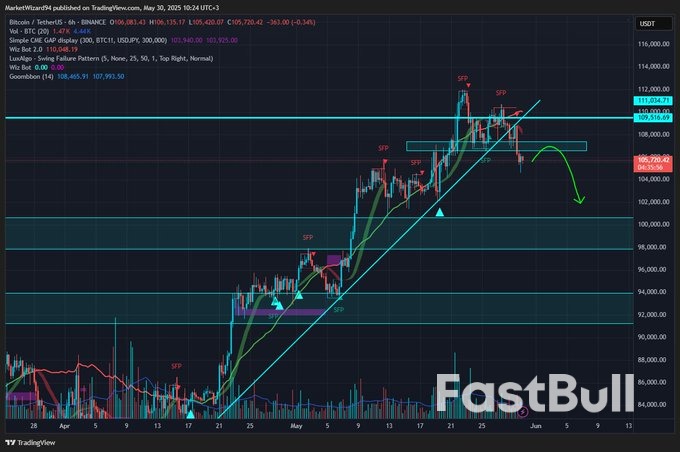
          Bitcoin has dropped 10% from all-time highs in a week as new support zones appear — where might BTC price action head next?
          Crypto traders and analysts weigh in on their market expectations as bulls fight for $105,000 to end the Wall Street trading week.

          Trader: Bitcoin bull market “likely” near its end

          Bitcoin has taken a break from upside this week, returning to test levels last seen around ten days ago.
          While the majority expects this to be a temporary consolidation phase before upside returns, some are wary of being too complacent — and even see the bull market soon coming to an end.
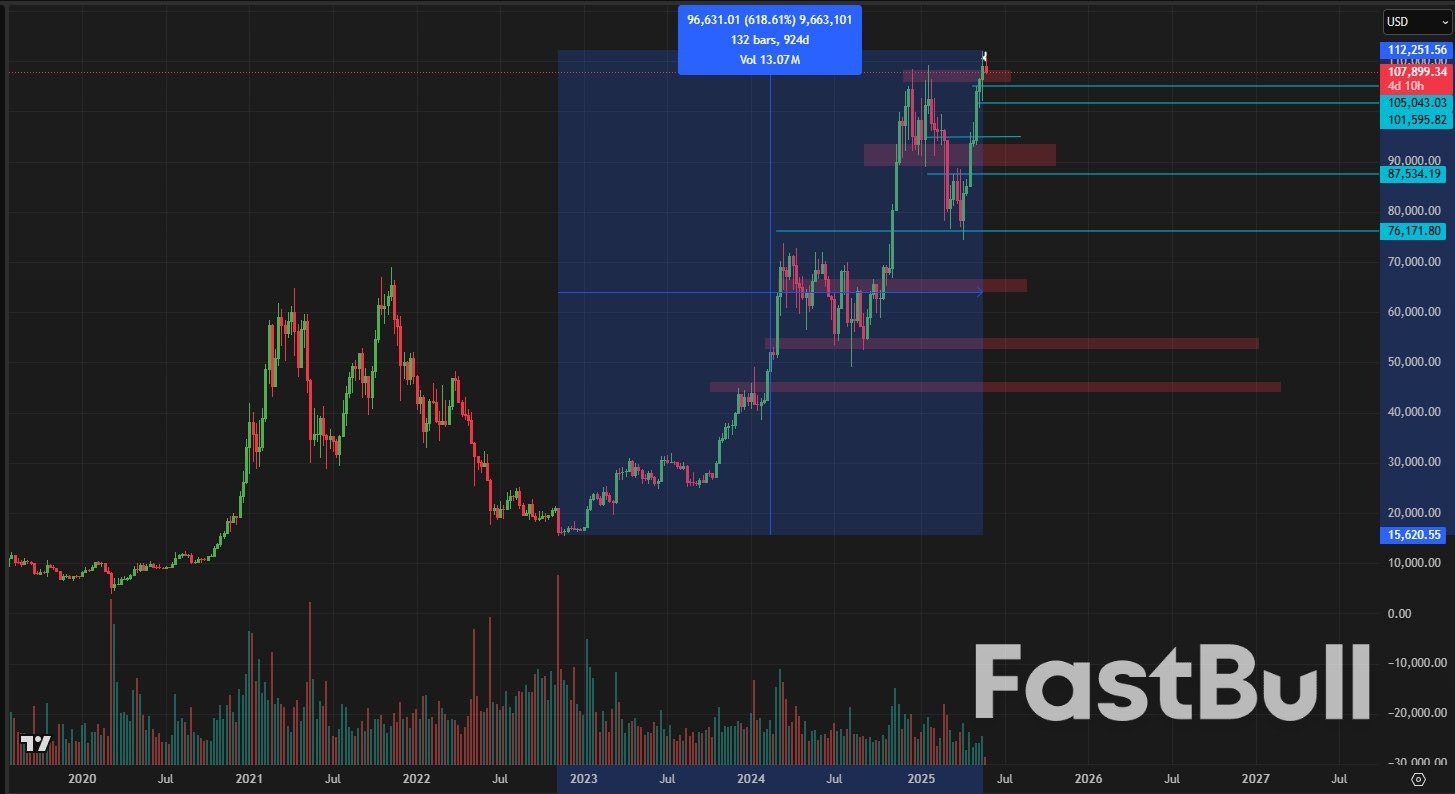
          Popular trader Roman is among them. Based on the principle of diminishing returns each price cycle, he argues, the current bull run’s days are numbered.
          “This cycle so far 600%, Last cycle we saw 2,000% the cycle before we saw 10,000%,” he wrote in part of an X thread on May 28.
          “If you haven’t noticed, returns are diminishing over time. It’s likely that we’ve topped or are extremely close!”BTC/USD 1-week chart.

          How Low Can the Bitcoin Price Go?_1Source: Roman/X

          An accompanying chart revealed key support levels on high timeframes, with $105,000 figuring as one of them.
          In a separate post, Roman said that he expected “some sideways action” once $105,000 came back into play.

          Liquidations bring back sub-$100,000 support

          Other market participants are beginning to see levels closer to the $100,000 mark returning next.How Low Can the Bitcoin Price Go?_2
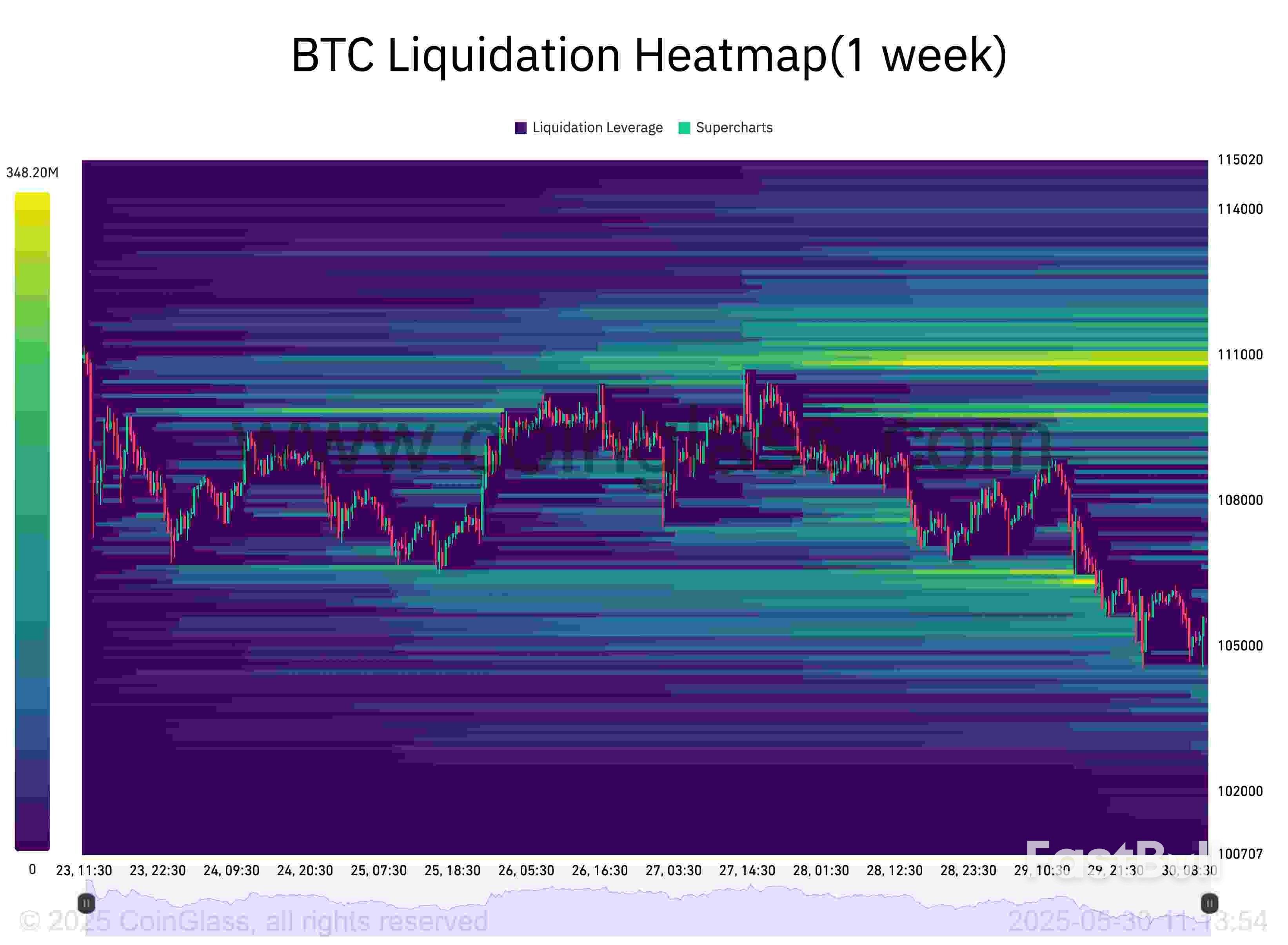
          A look at the latest state of exchange order book liquidity meanwhile reveals the $103,000-$104,000 range as a zone of immediate interest.
          Below that, however, data from monitoring resource CoinGlass shows that little stands in the way of a drop below the six-figure boundary.How Low Can the Bitcoin Price Go?_3

          BTC liquidation heatmap. Source: CoinGlass

          “Notice the significant long liquidation clusters below current price, especially around the 103K and 99K zones. This shows where leveraged long positions will get wiped out and acts as a potential support,” trading account TheKingfisher explained on X on the day.

          Classic support lines await retest

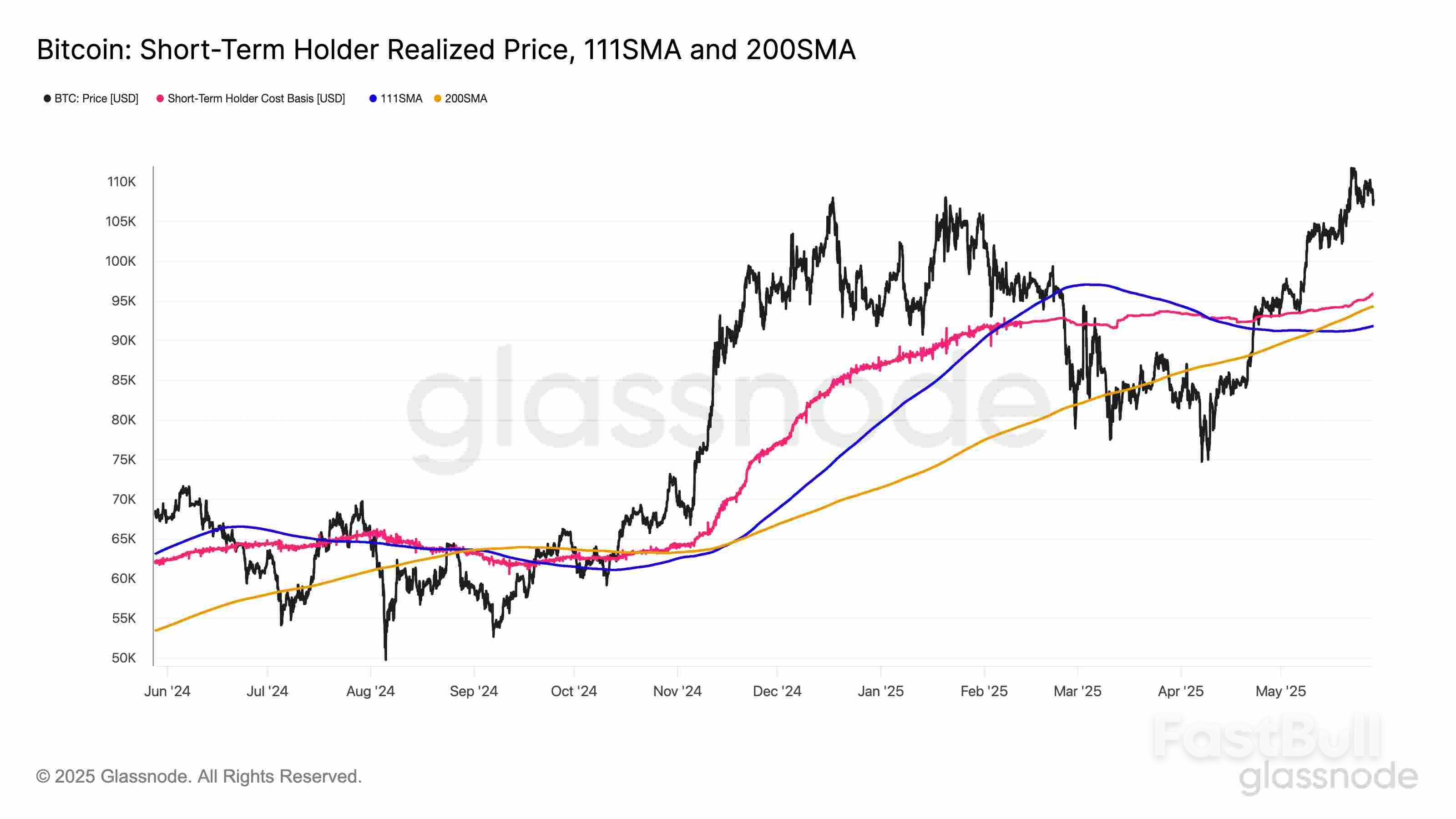
          Zooming out, onchain analytics platform Glassnode flagged three important support trend lines this week.
          Two daily simple moving averages (SMAs), it says, as well as the short-term holder cost basis, constitute key levels to watch as the bull market unfolds.
          The 111-day and 200-day SMA currently sit at $92,100 and $94,700, respectively, per data from Cointelegraph Markets Pro and TradingView.
          “The 111DMA and 200DMA are widely used technical metrics for evaluating the momentum and trend strength of the Bitcoin market. We can complement these technical price models with the Short-Term Holder cost-basis, an on-chain metric which reflects the average acquisition price for new investors in the market,” Glassnode comments in the latest edition of its weekly newsletter, “The Week Onchain.”
          “Historically, this level has served as a key threshold, often delineating between local bull and bear market regimes.”

          How Low Can the Bitcoin Price Go?_4BTC/USD chart with 111-day, 200-day SMA, short-term holder cost basis. Source: Glassnode

          The short-term holder cost basis now stands at $95,900.
          “Currently, the price is trading well above all three key levels, underscoring the strength of the market rally since April,” Glassnode adds.
          “Notably, these pricing levels are closely aligned in value, and this convergence provides strong confluence around a critical support zone, one that will be important to hold in order to sustain further upside momentum.”

          Source: Cointelegraph

          Risk Warnings and Disclaimers
          You understand and acknowledge that there is a high degree of risk involved in trading. Following any strategies or investment methods may lead to potential losses. The content on the site is provided by our contributors and analysts for information purposes only. You are solely responsible for determining whether any trading assets, securities, strategy, or any other product is suitable for investing based on your own investment objectives and financial situation.
          Add to Favorites
          Share

          Oil Prices Fall On Possible Larger OPEC+ Output Hike For July

          Dark Current

          Economic

          Commodity

          HOUSTON, May 30 (Reuters) - Oil prices fell on Friday and headed for a second consecutive weekly loss, as investors weigh a potentially larger OPEC+ output hike for July, and uncertainty spreads around U.S. tariff policy after the latest courtroom twist.

          Brent crude futures fell by 21 cents, or 0.33%, to $63.94 a barrel by 1451 GMT. U.S. West Texas Intermediate crude fell by 34 cents, or 0.56%, to $60.60 a barrel.

          The Brent July futures contract is due to expire on Friday. The more liquid August contract was trading 43 cents lower, or 0.71%, at $59.77 a barrel.

          At these levels, the front-month benchmark contracts were headed for weekly losses over 1%.

          Price moves dipped into negative territory after Reuters reported that OPEC+ may discuss an increase in July output larger than the 411,000 barrels per day (bpd) that the group had made for May and June.

          "The oil price would probably only come under greater pressure if the oil-producing countries were to increase their production even more than in previous months or give indications that there will be similarly high production increases in the following months," Commerzbank analysts said earlier on Friday in a note, published before the news.

          Senior Analyst Phil Flynn with Price Futures Group said an online post on Truth Social by U.S. President Donald Trump that seemed to threaten more changes in tariff levels for Chinese imports also put pressure on crude prices.

          "Trump's Truth Social message on China failing to observe a truce on tariffs also combined with the Reuters headline to push prices down," Flynn said.

          The potential OPEC+ output hike comes as the global surplus has widened to 2.2 million bpd, likely necessitating a price adjustment to prompt a supply-side response and restore balance, said JPMorgan analysts in a note, adding that they expect prices to remain within the current range before easing into the high $50s by year-end.

          Trump's tariffs were expected to remain in effect after a federal appeals court temporarily reinstated them on Thursday, reversing a trade court's decision a day earlier to put an immediate block on the sweeping duties.

          Oil prices were down more than 1% on Thursday.

          Oil prices have lost more than 10% since Trump announced his "Liberation Day" tariffs on April 2.

          Also pressuring prices, U.S. consumer spending slowed in April, according to data published on Friday.

          Source: Reuters

          To stay updated on all economic events of today, please check out our Economic calendar
          Risk Warnings and Disclaimers
          You understand and acknowledge that there is a high degree of risk involved in trading. Following any strategies or investment methods may lead to potential losses. The content on the site is provided by our contributors and analysts for information purposes only. You are solely responsible for determining whether any trading assets, securities, strategy, or any other product is suitable for investing based on your own investment objectives and financial situation.
          Add to Favorites
          Share

          Fed Seen On Hold Amid Cooler Inflation, Cautious Consumer

          Thomas

          Central Bank

          Economic

          Federal Reserve policymakers wary of cutting interest rates in the face of President Donald Trump's aggressive tariffs will likely stick to their wait-and-see stance amid fresh data Friday showing muted inflation last month and evidence of increased consumer caution.

          April's 2.1% year-over year increase in the Personal Consumption Expenditure price index, down from 2.3% in March, puts inflation within a stone's throw of the Fed's 2% target.But analysts don't see that trend continuing, with businesses expected to pass on to consumers at least some of their rising costs from higher import levies. Already goods prices are firming, the report showed.

          "The Fed will welcome the favorable inflation reading in this report, but they are likely to interpret it as the calm before the storm," said Olu Sonola, who heads U.S. economic research at Fitch Ratings. The central bank will continue to wait for the storm, unless consumer spending buckles and the unemployment rate rises rapidly, Sonula added.

          Consumer spending growth slowed to 0.2% last month, the Commerce Department also said on Friday, and the personal saving rate jumped to 4.9% from 4.3%. Analysts saw both as signs of renewed consumer caution amid uncertainty over tariff policy that continues to change on a near-daily basis.

          For the Fed, wrote III Capital Management's Karim Basta, there's "nothing to do but wait."

          SEPTEMBER RATE CUT?

          The Fed has kept short-term borrowing costs in the 4.25%-4.50% range since last December. Since their last meeting, in May, policymakers have repeatedly voiced concerns that tariffs could reverse progress on inflation.

          "As long as inflation is printing above target and there's some uncertainty about how quickly it can come back down to 2%, well, then inflation is going to be my focus because the labor market's in solid shape," San Francisco Fed President Mary Daly told Reuters late Thursday, adding that rates need to stay moderately restrictive to keep that pressure on prices.

          Dallas Fed President Lorie Logan late Thursday similarly said it could be "quite some time" before it's clear if Trump's policies pose bigger risks to employment or to inflation; for now, she said, the risks are in rough balance, leaving the Fed on hold.

          Traders after the data continued to bet that by September the Fed will begin cutting rates gradually, bringing the policy rate down to 3.75%-4.0% by year's end.
          Source: Kitco

          To stay updated on all economic events of today, please check out our Economic calendar
          Risk Warnings and Disclaimers
          You understand and acknowledge that there is a high degree of risk involved in trading. Following any strategies or investment methods may lead to potential losses. The content on the site is provided by our contributors and analysts for information purposes only. You are solely responsible for determining whether any trading assets, securities, strategy, or any other product is suitable for investing based on your own investment objectives and financial situation.
          Add to Favorites
          Share

          Dollar’s Weekly Gain Looks Like A Blip As Pressures Mount

          Olivia Brooks

          Economic

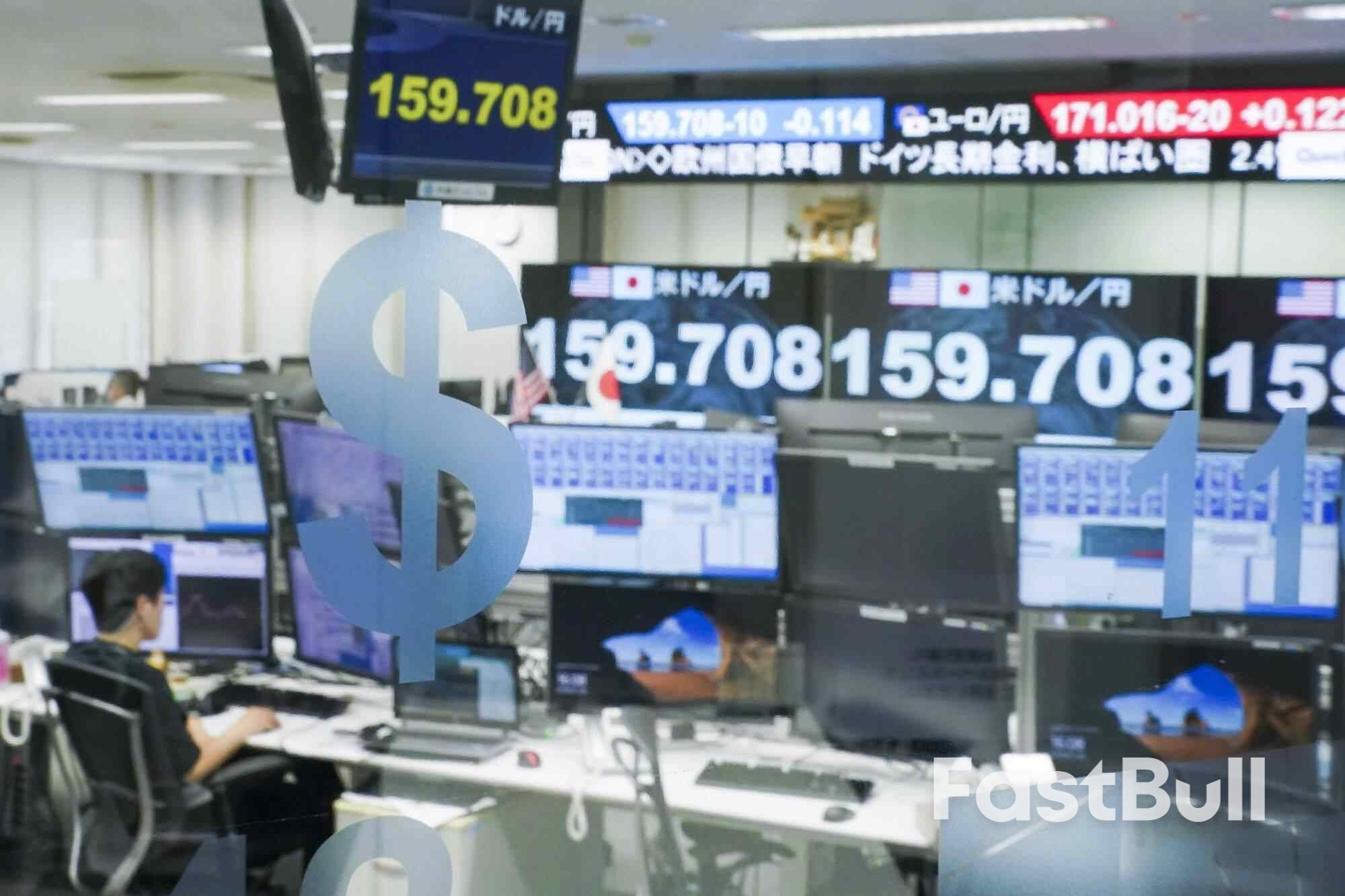
          The best week for the dollar in three months isn’t enough to reverse its broader declines as US trade and policy uncertainty weighs on sentiment.

          A gauge of dollar strength is on track for its longest monthly losing streak in five years despite being up 0.4% so far this week. Investors were focused on a proposed US measure that would hit companies from countries deemed to have “discriminatory” tax policies.

          “If the bill as presently written takes effect, it would deter foreign investment in US assets at a time when the country faces increasing reliance on foreign capital to finance its ballooning debt,” wrote Elias Haddad, a strategist at Brown Brothers Harriman & Co. in a note. “Clearly, this is not good for the dollar.”

          Concern that President Donald Trump’s erratic trade policies will undermine the economy are adding to the greenback’s weakness and eroding its appeal as a traditional haven bet. A court battle is underway over the legality of Trump’s sweeping tariffs — though the US administration insists they’re here to stay.

          The Bloomberg Dollar Spot Index pared earlier gains to trade up 0.1% on Friday as reports showed US consumers hitting the brakes on spending in April while goods imports plummeted by a record as companies adjusted to higher tariffs. US consumer sentiment rebounded in late May, according to the University of Michigan.

          The latest data is “still insufficient for the Federal Reserve to seriously consider its cuts,” said Yusuke Miyairi, a foreign-exchange strategist at Nomura. “Choppy price action in the dollar continues, owing to the market following back-and-forth tariff headlines.”

          Earlier in the week, stronger-than-expected economic data lifted the dollar amid a global bond rally. But on Thursday, the greenback weakened after weak jobs results.

          Meanwhile, a gauge of emerging-market currencies is on track for its first weekly loss since mid-April as investors scale back on risk following recent gains. The South African rand slumped more than 1% against the dollar on Friday.

          While currencies including the rand and Mexico’s peso have strengthened more than 4% against the greenback since Trump unveiled his comprehensive list of tariffs, traders are taking some profits amid renewed global trade noise.
          Source: Yahoo Finance

          To stay updated on all economic events of today, please check out our Economic calendar
          Risk Warnings and Disclaimers
          You understand and acknowledge that there is a high degree of risk involved in trading. Following any strategies or investment methods may lead to potential losses. The content on the site is provided by our contributors and analysts for information purposes only. You are solely responsible for determining whether any trading assets, securities, strategy, or any other product is suitable for investing based on your own investment objectives and financial situation.
          Add to Favorites
          Share

          The end of the easy US stock bet has been good to contrarians

          Adam

          Stocks

          Economic

          On Wall Street, it’s been years since anyone had to think very hard to make money. Buy the largest US stocks, ignore everything else and watch your portfolio soar. Investing was reduced to one-click simplicity.
          Then life got more complicated. President Donald Trump’s sudden tariff escalation in April offered a glimpse of what a world without that certainty might look like. Confidence wavered—not just in megacap resilience, but in American economic exceptionalism and Trump’s market-friendly reputation. But after a sharp market decline, some of the panic subsided.
          The president backed away from some of his most dramatic tariff plans, and major US equity indexes bounced back. On May 28, a US trade court said many of Trump’s tariffs were illegal, with the administration appealing the decision. Yet for many, the market and political mayhem highlighted the increasing fragility of the one-way buy-America trade.
          You can still see the shadows of all that doubt in the lower value of the dollar, in Moody’s Ratings’ (MCO) recent decision to downgrade America’s debt, and in the steady drumbeat of money finding its way to anything that isn’t just another bet on US stocks.
          The end of the easy US stock bet has been good to contrarians_1
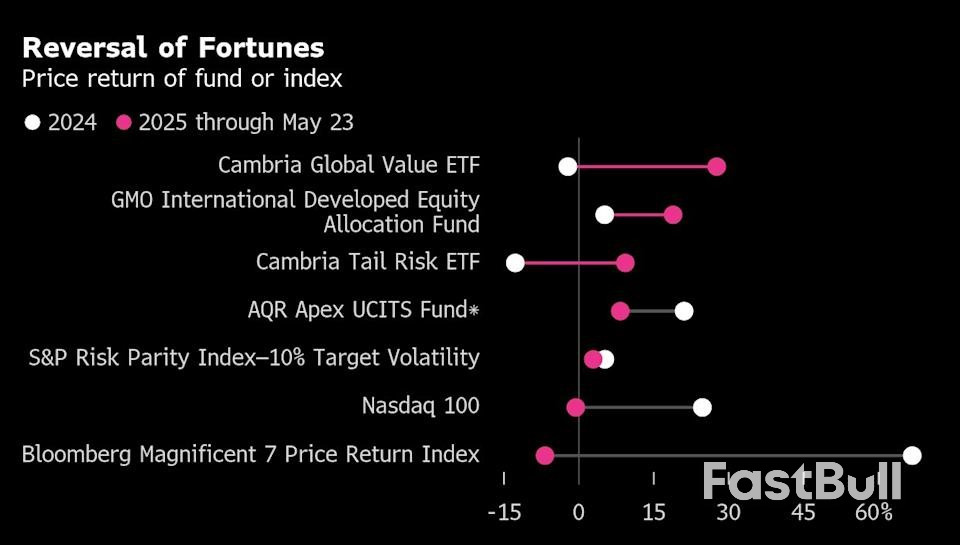
          A motley crew of finance professionals long dismissed as having complex and cautious strategies have been having their moment. With megacap valuations still looking stretched, these money managers are pitching a slew of allocation ideas to investors newly receptive to the age-old virtue of diversification. “I am looking forward to this being a world again where prices matter,” says Ben Inker, the co-head of asset allocation at Grantham Mayo Van Otterloo, a money manager known for bull-market skepticism as well as its dedication to value investing.
          His GMO International Developed Equity Allocation Fund is up about 20% this year—its biggest outperformance over the S&P 500 (^GSPC) since the strategy’s 2006 inception. The fund has about half its assets in Europe and almost 30% in Japan.
          Meb Faber, too, has been waiting patiently for this. The founder of Cambria Investment Management LP has been calling the end of the US exceptionalism trade for years. Before 2025 his model, which spread money across regions and assets, had trailed the S&P 500 in 14 out of 16 years. Now people are seeing the virtues of contrarian strategies. “Nobody is interested in talking about or wanting any of these investments, and all of a sudden you just blink, and the next thing you know, they’re outperforming,” Faber says.
          Nothing lasts forever, Faber says. He points the 1980s, when international markets, Japan’s in particular, left American equities in the dust. That episode foreshadowed the Nikkei 225’s (^N225) two decades of woe.
          Fund flows highlight the shift away from the go-long-US trade. International equities are attracting money in droves. Exchange-traded funds holding value stocks, which typically snub the top-heavy Magnificent Seven tech stocks, have already seen $30 billion in inflows this year.
          Hedge funds attracted about $14 billion in cash this year through April, according to data compiled by fund administrator Citco. And quantitatively driven diversification strategies—with names like risk parity and factor investing that seem designed to resist easy marketing—are gaining fresh attention.
          Also on the hot list: buffer funds, a breed of ETF that employs stock options to limit a portfolio’s downside while capping the upside. And there’s been a revival of once-dormant techniques such as portable alpha, a way of using borrowed money to try to sprinkle some idiosyncratic bets on top of exposure to the market index. “There’s not as big an opportunity cost in introducing diversification and having to sacrifice that core stock exposure,” says Corey Hoffstein, chief investment officer of quantitative money manager Newfound Research, speaking of portable alpha.
          This year “has been about making diversification look great again,” says Dan Villalon, principal at AQR Capital Management LLC, a Greenwich, Connecticut-based manager of quant and hedge fund strategies. “We see it in every dimension: We see in equity markets. We see it in asset classes. We see it in alternative strategies.” AQR has long warned that US dominance of equity markets is at risk and that investors are underdiversified. Of course, the push to spread out risks comes with big pitfalls. In an age of artificial intelligence advances, there’s a constant fear of missing out on another Big Tech rally.
          Already, chipmaker Nvidia Corp. (NVDA)—a key member of the Mag 7—has roared back from its April depths, notching a near-30% return over the past month. Moreover, the leverage used in many market-defying strategies can easily backfire. And many of these techniques layer on cost and are poorly understood by clients. Villalon, for example, has been an outspoken critic of buffer funds.
          AQR has published research arguing that a simple mix of stocks and safe Treasury bills is a better bet for those seeking downside protection.Christine Benz, director of personal finance and retirement planning at the research firm Morningstar Inc., likewise argues that most individual investors can do just fine with a low-cost, do-it-yourself version of diversification. Just own a broad of mix of different assets.
          “I would argue that the basic principles of asset allocation are delivering beautifully this year—the vanilla strategy of holding cash and bonds to cushion against equity losses has been a winning one. Diversifying equity exposure globally has also helped.”
          And there’s still a large chorus warning against giving up on stocks in the world’s most dynamic economy. “With ever more complex investment products becoming available to retail investors, history keeps proving that a simple, diversified portfolio of large-cap stocks wins out,” says Liz Miller, president of Summit Place Financial Advisors LLC. “Alternative and structured investments can appeal to investors’ fears of market volatility, but long-term growth comes from investing appropriately in equities and staying committed throughout market turmoil.”
          Still, investors seem to have widened their view of the range of outcomes. For Vineer Bhansali, CIO and founder of LongTail Alpha LLC, it’s been the busiest time since the onset of the pandemic. LongTail’s name refers to the rare but extreme events that can occur at both ends of the bell curve of possible market outcomes; the firm sells strategies that hedge the really bad ones but often suffer losses in a bull market.
          Bhansali says clients are calling all day with concerns about high exposure to US stocks and market patterns breaking down. Recently, a $24 billion Australian pension fund allocated to the strategies. “Everybody has a lot of US assets,” Bhansali says. “Trade, the reason this whole thing is happening, is a global phenomenon. Everybody gets pulled into it. Everybody’s concerned about what happens to their old global asset allocation.”

          source : finance.yahoo

          To stay updated on all economic events of today, please check out our Economic calendar
          Risk Warnings and Disclaimers
          You understand and acknowledge that there is a high degree of risk involved in trading. Following any strategies or investment methods may lead to potential losses. The content on the site is provided by our contributors and analysts for information purposes only. You are solely responsible for determining whether any trading assets, securities, strategy, or any other product is suitable for investing based on your own investment objectives and financial situation.
          Add to Favorites
          Share

          Investors see US stocks rally broadening, even as 'Magnificent Seven' rebound

          Adam

          Stocks

          Megacap technology and growth stocks have retaken U.S. market leadership in recent weeks, but investors say that factors are in place that could allow a broader group of stocks to outperform for the rest of the year.
          After technology shares led by a small group of stocks known as the "Magnificent Seven" drove equity indexes higher in 2023 and 2024, much of Wall Street expected a broader swath of stocks to do better this year.
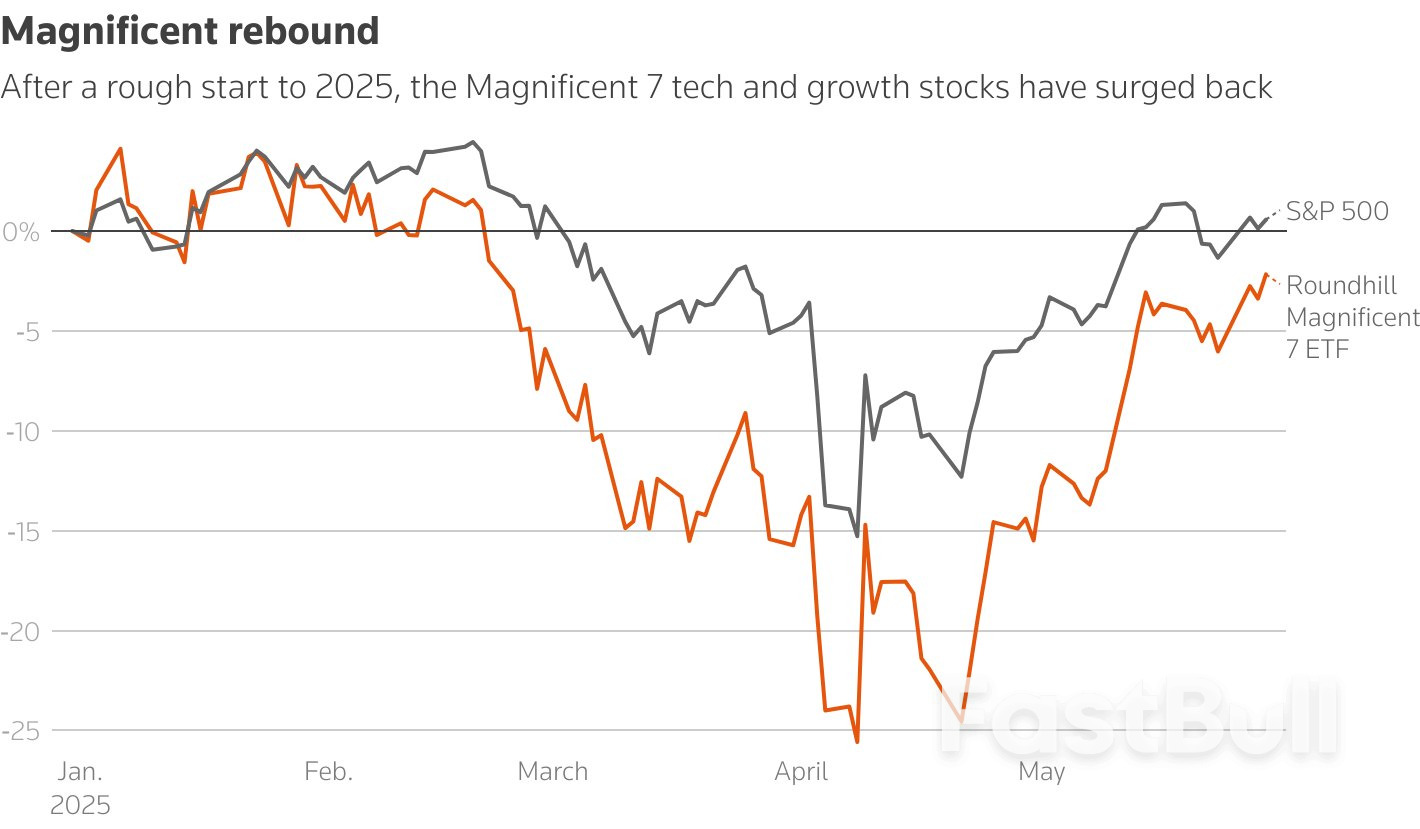
          After stumbling in early 2025, the Magnificent Seven have stormed back amid an overall rebound in equities fueled by easing trade worries. The group, which includes Microsoft (MSFT.O), Meta Platforms (META.O), and Apple (AAPL.O),has accounted for over 40% of the S&P 500's (.SPX) total return since the close on April 8, when stocks began to recover from U.S. President Donald Trump's jarring April 2 "Liberation Day" tariff declaration, according to Howard Silverblatt, senior index analyst at S&P Dow Jones Indices.
          The tech trade got a fresh boost on Thursday as shares of Nvidia (NVDA.O), another Mag 7 company, gained 3% after the AI chipmaker's sales beat quarterly expectations.
          But investors say more enticing valuations and an improving earnings backdrop are poised to allow strong performance for a broader group of stocks, as long as the economy avoids significant hiccups in the coming months.
          Coming into the year, "we were pretty poised to see a broadening of market participation," said Michael Reynolds, vice president of investment strategy at Glenmede.
          "We think that's a story that's still relatively intact, that the rest of the market's earnings growth can actually be relatively competitive to some of these megacap tech companies and be supportive of returns through the rest of this year."
          The U.S. market has shown signs of broadening its gains. The top-performing S&P 500 sectors so far this year have been industrials (.SPLRCI), consumer staples (.SPLRCS), utilities (.SPLRCU), opens new tab and financials (.SPSY).
          After lagging badly the prior two years, the equal-weight version of the S&P 500 (.SPX)-- which represents performance of the average index stock -- has performed more in line so far in 2025 with the standard S&P 500, which is market-cap weighted so the larger stocks influence it more.
          More recently, however, the Mag 7 have outperformed as they did in 2023 and 2024 when they accounted for well over half the S&P 500'S 58% two-year return.
          While the S&P 500 has gained over 18% from its April lows, an ETF covering the Magnificent Seven (MAGS.Z) -- which also includes Amazon (AMZN.O), Alphabet (GOOGL.O), opens new tab and Tesla (TSLA.O), -- has surged more than 30%.
          Investors see US stocks rally broadening, even as 'Magnificent Seven' rebound_1

          S&P 500 vs MAGS ETF in 2025

          A strong first-quarter earnings season in general helped lift the stocks, which as a group had sold off particularly sharply earlier in the year over worries about the artificial intelligence business landscape, and economic fallout from Trump's sweeping tariffs.
          Indeed, even as Nvidia reported another blockbuster quarter, the maker of AI chips did warn of more risks to its business emerging in the technology conflict between the U.S. and China.
          With the rebound, valuations for the Magnificent Seven have also become more elevated. The group's median price-to-earnings ratio as of Wednesday was around 28 times earnings estimates for the next 12 months, after falling as low as 22.2 in April, according to LSEG Datatream. The S&P 500, including the Magnificent Seven, was at a P/E of 21.4.
          Michael O'Rourke, chief market strategist at JonesTrading, said the megacap stocks have benefited recently as investors have been "chasing exposure" to equities on better-than-expected tariff news by buying funds covering indexes such as the S&P 500, in which the stocks have heavy weightings, or by buying the stocks themselves.
          "It's easier to just go for the index or go for the larger names in the index because they're liquid and you can quickly add exposure that way," O'Rourke said.
          However, he said, there are a lot of other large-cap names trading at "much more attractive levels."
          "The headline-driven trading has to subside," he said. "When the market is less focused on trade and geopolitics, that will allow broadening to re-emerge."
          To catch up, the rest of the S&P 500 may have to close the earnings growth gap with the Mag 7.
          In 2024, Magnificent Seven earnings grew 36.9% against a 7% increase for the rest of the S&P 500, according to Tajinder Dhillon, senior research analyst at LSEG. This year, the gap is expected to narrow, with Mag-7 earnings rising 15.9% against a 6.5% rise for the rest of the index.
          "All the earnings growth was in those big Mag-7 names, and we have started to see a broadening in earnings growth," said Chris Fasciano, chief market strategist at Commonwealth Financial Network.
          Commonwealth is recommending investors diversify their equity exposure, including to the financials and industrials sectors, as well as to mid-cap stocks, Fasciano said.
          Still, Mag 7 stocks could retain their popularity if Wall Street grows concerned about a significant economic slowdown, having become somewhat of a defensive play for investors in recent years. Their businesses are expected to be relatively resilient to the broader growth environment while investors are also drawn to their general financial strength.
          Indeed, stable economic growth will be especially critical for economically sensitive areas such as industrials, materials and financial stocks.
          "Better growth is going to be the trigger for a more sustainable broadening out and participation," said Garrett Melson, portfolio strategist at Natixis Investment Managers.

          source :reuters

          Risk Warnings and Disclaimers
          You understand and acknowledge that there is a high degree of risk involved in trading. Following any strategies or investment methods may lead to potential losses. The content on the site is provided by our contributors and analysts for information purposes only. You are solely responsible for determining whether any trading assets, securities, strategy, or any other product is suitable for investing based on your own investment objectives and financial situation.
          Add to Favorites
          Share
          FastBull
          Copyright © 2025 FastBull Ltd

          728 RM B 7/F GEE LOK IND BLDG NO 34 HUNG TO RD KWUN TONG KLN HONG KONG

          TelegramInstagramTwitterfacebooklinkedin
          App Store Google Play Google Play
          Products
          Charts

          Chats

          Q&A with Experts
          Screeners
          Economic Calendar
          Data
          Tools
          Membership
          Features
          Function
          Markets
          Copy Trading
          Latest Signals
          Contests
          News
          Analysis
          24/7
          Columns
          Education
          Company
          Careers
          About Us
          Contact Us
          Advertising
          Help Center
          Feedback
          User Agreement
          Privacy Policy
          Business

          White Label

          Data API

          Web Plug-ins

          Poster Maker

          Affiliate Program

          Risk Disclosure

          The risk of loss in trading financial instruments such as stocks, FX, commodities, futures, bonds, ETFs and crypto can be substantial. You may sustain a total loss of the funds that you deposit with your broker. Therefore, you should carefully consider whether such trading is suitable for you in light of your circumstances and financial resources.

          No decision to invest should be made without thoroughly conducting due diligence by yourself or consulting with your financial advisors. Our web content might not suit you since we don't know your financial conditions and investment needs. Our financial information might have latency or contain inaccuracy, so you should be fully responsible for any of your trading and investment decisions. The company will not be responsible for your capital loss.

          Without getting permission from the website, you are not allowed to copy the website's graphics, texts, or trademarks. Intellectual property rights in the content or data incorporated into this website belong to its providers and exchange merchants.

          Not Logged In

          Log in to access more features

          FastBull Membership

          Not yet

          Purchase

          Become a signal provider
          Help Center
          Customer Service
          Dark Mode
          Price Up/Down Colors

          Log In

          Sign Up

          Position
          Layout
          Fullscreen
          Default to Chart
          The chart page opens by default when you visit fastbull.com