• Trade
  • Markets
  • Copy
  • Contests
  • News
  • 24/7
  • Calendar
  • Q&A
  • Chats
Trending
Screeners
SYMBOL
LAST
BID
ASK
HIGH
LOW
NET CHG.
%CHG.
SPREAD
SPX
S&P 500 Index
6855.86
6855.86
6855.86
6861.30
6847.07
+28.45
+ 0.42%
--
DJI
Dow Jones Industrial Average
48593.24
48593.24
48593.24
48679.14
48557.21
+135.20
+ 0.28%
--
IXIC
NASDAQ Composite Index
23308.52
23308.52
23308.52
23345.56
23265.18
+113.36
+ 0.49%
--
USDX
US Dollar Index
97.850
97.930
97.850
98.070
97.810
-0.100
-0.10%
--
EURUSD
Euro / US Dollar
1.17542
1.17549
1.17542
1.17596
1.17262
+0.00148
+ 0.13%
--
GBPUSD
Pound Sterling / US Dollar
1.33926
1.33935
1.33926
1.33961
1.33546
+0.00219
+ 0.16%
--
XAUUSD
Gold / US Dollar
4329.24
4329.67
4329.24
4350.16
4294.68
+29.85
+ 0.69%
--
WTI
Light Sweet Crude Oil
56.898
56.928
56.898
57.601
56.789
-0.335
-0.59%
--

Community Accounts

Signal Accounts
--
Profit Accounts
--
Loss Accounts
--
View More

Become a signal provider

Sell trading signals to earn additional income

View More

Guide to Copy Trading

Get started with ease and confidence

View More

Signal Accounts for Members

All Signal Accounts

Best Return
  • Best Return
  • Best P/L
  • Best MDD
Past 1W
  • Past 1W
  • Past 1M
  • Past 1Y

All Contests

  • All
  • Trump Updates
  • Recommend
  • Stocks
  • Cryptocurrencies
  • Central Banks
  • Featured News
Top News Only
Share

The Nasdaq Golden Dragon China Index Fell 0.9% In Early Trading

Share

The S&P 500 Opened 32.78 Points Higher, Or 0.48%, At 6860.19; The Dow Jones Industrial Average Opened 136.31 Points Higher, Or 0.28%, At 48594.36; And The Nasdaq Composite Opened 134.87 Points Higher, Or 0.58%, At 23330.04

Share

Miran: Goods Inflation Could Be Settling In At A Higher Level Than Was Normal Before The Pandemic, But That Will Be More Than Offset By Housing Disinflation

Share

Miran, Who Dissented In Favor Of A Larger Cut At Last Fed Meeting, Repeats Keeping Policy Too Tight Will Lead To Job Losses

Share

Miran: Does Not Think Higher Goods Inflation Is Mostly From Tariffs, But Acknowledges Does Not Have A Full Explanation For It

Share

Toronto Stock Index .GSPTSE Rises 67.16 Points, Or 0.21 Percent, To 31594.55 At Open

Share

Miran: Excluding Housing And Non-Market Based Items, Core Pce Inflation May Be Below 2.3%, “Within Noise” Of The Fed's 2% Target

Share

Polish State Assets Minister Balczun Says Jsw Needs Over USD 830 Million Financing To Keep Liquidity For A Year

Share

Miran: Prices Are “Once Again Stable” And Monetary Policy Should Reflect That

Share

Fed's Miran: Current Excess Inflation Is Not Reflective Of Underlying Supply And Demand In The Economy

Share

Portugal Treasury Puts 2026 Net Financing Needs At 13 Billion Euros, Up From 10.8 Billion In 2025

Share

Portugal Treasury Expects 2026 Net Financing Needs At 29.4 Billion Euros, Up From 25.8 Billion In 2025

Share

Bank Of America Says With Indonesia's Smelter Now Ramping Up, It Expects Aluminium Supply Growth To Accelerate To 2.6% Year On Year In 2026

Share

Bank Of America Expects A Deficit In Aluminium Next Year And Sees Prices Pushing Above $3000/T

Share

Fed Data - USA Effective Federal Funds Rate At 3.64 Percent On 12 December On $102 Billion In Trades Versus 3.64 Percent On $99 Billion On 11 December

Share

Brazil's Petrobras Says No Impact Seen On Oil, Petroleum Products Output As Workers Start Planned Strike

Share

Statement: US Travel Group Warns New Proposed Trump Administration Requirements For Foreign Tourists To Provide Social Media Histories Could Mean Millions Of People Opting Not To Visit

Share

Blackrock: Kerry White Will Become Head Of Citi Investment Management At Citi Wealth

Share

Blackrock: Rob Jasminski, Head Of Citi Investment Management, Has Joined With Team

Share

Blackrock: Effective Dec 15, Citi Investment Management Employees Will Join Blackrock

TIME
ACT
FCST
PREV
Japan Tankan Small Manufacturing Outlook Index (Q4)

A:--

F: --

P: --

Japan Tankan Large Non-Manufacturing Outlook Index (Q4)

A:--

F: --

P: --

Japan Tankan Large Manufacturing Outlook Index (Q4)

A:--

F: --

P: --

Japan Tankan Small Manufacturing Diffusion Index (Q4)

A:--

F: --

P: --

Japan Tankan Large Manufacturing Diffusion Index (Q4)

A:--

F: --

P: --

Japan Tankan Large-Enterprise Capital Expenditure YoY (Q4)

A:--

F: --

P: --

U.K. Rightmove House Price Index YoY (Dec)

A:--

F: --

P: --

China, Mainland Industrial Output YoY (YTD) (Nov)

A:--

F: --

P: --

China, Mainland Urban Area Unemployment Rate (Nov)

A:--

F: --

P: --

Saudi Arabia CPI YoY (Nov)

A:--

F: --

P: --

Euro Zone Industrial Output YoY (Oct)

A:--

F: --

P: --

Euro Zone Industrial Output MoM (Oct)

A:--

F: --

P: --

Canada Existing Home Sales MoM (Nov)

A:--

F: --

P: --

Canada National Economic Confidence Index

A:--

F: --

P: --

Canada New Housing Starts (Nov)

A:--

F: --

P: --
U.S. NY Fed Manufacturing Employment Index (Dec)

A:--

F: --

P: --

U.S. NY Fed Manufacturing Index (Dec)

A:--

F: --

P: --

Canada Core CPI YoY (Nov)

A:--

F: --

P: --

Canada Manufacturing Unfilled Orders MoM (Oct)

A:--

F: --

P: --

U.S. NY Fed Manufacturing Prices Received Index (Dec)

A:--

F: --

P: --

U.S. NY Fed Manufacturing New Orders Index (Dec)

A:--

F: --

P: --

Canada Manufacturing New Orders MoM (Oct)

A:--

F: --

P: --

Canada Core CPI MoM (Nov)

A:--

F: --

P: --

Canada Trimmed CPI YoY (SA) (Nov)

A:--

F: --

P: --

Canada Manufacturing Inventory MoM (Oct)

A:--

F: --

P: --

Canada CPI YoY (Nov)

A:--

F: --

P: --

Canada CPI MoM (Nov)

A:--

F: --

P: --

Canada CPI YoY (SA) (Nov)

A:--

F: --

P: --

Canada Core CPI MoM (SA) (Nov)

A:--

F: --

P: --

Canada CPI MoM (SA) (Nov)

A:--

F: --

P: --

Federal Reserve Board Governor Milan delivered a speech
U.S. NAHB Housing Market Index (Dec)

--

F: --

P: --

Australia Composite PMI Prelim (Dec)

--

F: --

P: --

Australia Services PMI Prelim (Dec)

--

F: --

P: --

Australia Manufacturing PMI Prelim (Dec)

--

F: --

P: --

Japan Manufacturing PMI Prelim (SA) (Dec)

--

F: --

P: --

U.K. 3-Month ILO Employment Change (Oct)

--

F: --

P: --

U.K. Unemployment Claimant Count (Nov)

--

F: --

P: --

U.K. Unemployment Rate (Nov)

--

F: --

P: --

U.K. 3-Month ILO Unemployment Rate (Oct)

--

F: --

P: --

U.K. Average Weekly Earnings (3-Month Average, Including Bonuses) YoY (Oct)

--

F: --

P: --

U.K. Average Weekly Earnings (3-Month Average, Excluding Bonuses) YoY (Oct)

--

F: --

P: --

France Services PMI Prelim (Dec)

--

F: --

P: --

France Composite PMI Prelim (SA) (Dec)

--

F: --

P: --

France Manufacturing PMI Prelim (Dec)

--

F: --

P: --

Germany Services PMI Prelim (SA) (Dec)

--

F: --

P: --

Germany Manufacturing PMI Prelim (SA) (Dec)

--

F: --

P: --

Germany Composite PMI Prelim (SA) (Dec)

--

F: --

P: --

Euro Zone Composite PMI Prelim (SA) (Dec)

--

F: --

P: --

Euro Zone Services PMI Prelim (SA) (Dec)

--

F: --

P: --

Euro Zone Manufacturing PMI Prelim (SA) (Dec)

--

F: --

P: --

U.K. Services PMI Prelim (Dec)

--

F: --

P: --

U.K. Manufacturing PMI Prelim (Dec)

--

F: --

P: --

U.K. Composite PMI Prelim (Dec)

--

F: --

P: --

Euro Zone ZEW Economic Sentiment Index (Dec)

--

F: --

P: --

Germany ZEW Current Conditions Index (Dec)

--

F: --

P: --

Germany ZEW Economic Sentiment Index (Dec)

--

F: --

P: --

Euro Zone Trade Balance (Not SA) (Oct)

--

F: --

P: --

Euro Zone ZEW Current Conditions Index (Dec)

--

F: --

P: --

Euro Zone Trade Balance (SA) (Oct)

--

F: --

P: --

U.S. Retail Sales MoM (Excl. Automobile) (SA) (Oct)

--

F: --

P: --

Q&A with Experts
    • All
    • Chatrooms
    • Groups
    • Friends
    Connecting
    .
    .
    .
    Type here...
    Add Symbol or Code

      No matching data

      All
      Trump Updates
      Recommend
      Stocks
      Cryptocurrencies
      Central Banks
      Featured News
      • All
      • Russia-Ukraine Conflict
      • Middle East Flashpoint
      • All
      • Russia-Ukraine Conflict
      • Middle East Flashpoint
      Search
      Products

      Charts Free Forever

      Chats Q&A with Experts
      Screeners Economic Calendar Data Tools
      Membership Features
      Data Warehouse Market Trends Institutional Data Policy Rates Macro

      Market Trends

      Market Sentiment Order Book Forex Correlations

      Top Indicators

      Charts Free Forever
      Markets

      News

      News Analysis 24/7 Columns Education
      From Institutions From Analysts
      Topics Columnists

      Latest Views

      Latest Views

      Trending Topics

      Top Columnists

      Latest Update

      Signals

      Copy Rankings Latest Signals Become a signal provider AI Rating
      Contests
      Brokers

      Overview Brokers Assessment Rankings Regulators News Claims
      Broker listing Forex Brokers Comparison Tool Live Spread Comparison Scam
      Q&A Complaint Scam Alert Videos Tips to Detect Scam
      More

      Business
      Events
      Careers About Us Advertising Help Center

      White Label

      Data API

      Web Plug-ins

      Affiliate Program

      Awards Institution Evaluation IB Seminar Salon Event Exhibition
      Vietnam Thailand Singapore Dubai
      Fans Party Investment Sharing Session
      FastBull Summit BrokersView Expo
      Recent Searches
        Top Searches
          Markets
          News
          Analysis
          User
          24/7
          Economic Calendar
          Education
          Data
          • Names
          • Latest
          • Prev

          View All

          No data

          Scan to Download

          Faster Charts, Chat Faster!

          Download App
          English
          • English
          • Español
          • العربية
          • Bahasa Indonesia
          • Bahasa Melayu
          • Tiếng Việt
          • ภาษาไทย
          • Français
          • Italiano
          • Türkçe
          • Русский язык
          • 简中
          • 繁中
          Open Account
          Search
          Products
          Charts Free Forever
          Markets
          News
          Signals

          Copy Rankings Latest Signals Become a signal provider AI Rating
          Contests
          Brokers

          Overview Brokers Assessment Rankings Regulators News Claims
          Broker listing Forex Brokers Comparison Tool Live Spread Comparison Scam
          Q&A Complaint Scam Alert Videos Tips to Detect Scam
          More

          Business
          Events
          Careers About Us Advertising Help Center

          White Label

          Data API

          Web Plug-ins

          Affiliate Program

          Awards Institution Evaluation IB Seminar Salon Event Exhibition
          Vietnam Thailand Singapore Dubai
          Fans Party Investment Sharing Session
          FastBull Summit BrokersView Expo

          Gold down on mild profit taking, rally in U.S. stocks

          Adam

          Commodity

          Summary:

          Gold eased on profit-taking after U.S. CPI met expectations, with stocks rallying and reducing safe-haven demand. December gold fell to $3,399.20, while silver rose, both retaining strong near-term technical advantages.
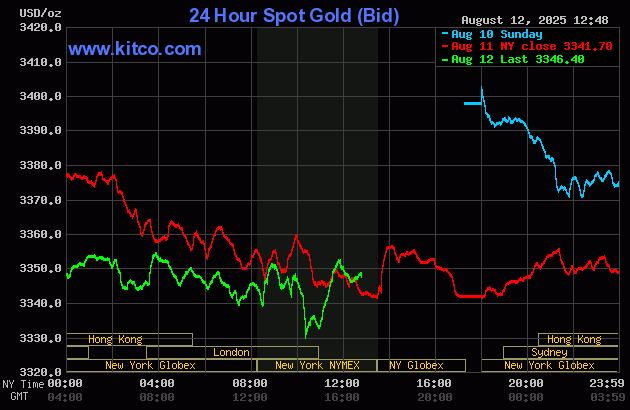
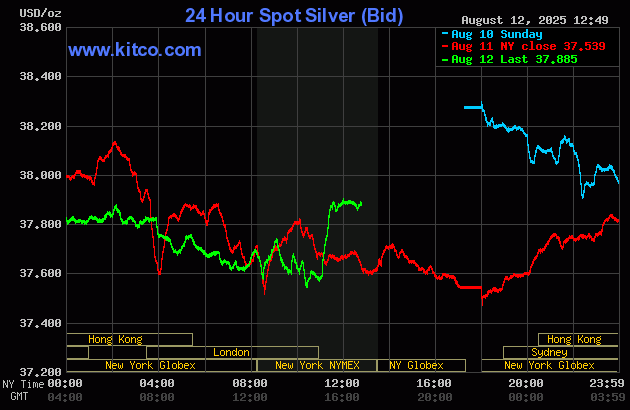
          Gold prices are slightly down in midday U.S. trading but well up from overnight lows following a U.S. inflation report that is being deemed as non-problematic but still not dovish. Some light profit taking from the shorter-term futures traders is featured today. Silver prices are moderately higher at midday. December gold was last down $5.90 at $3,399.20. September silver prices were up $0.223 at $38.01.
          Today’s July U.S. consumer price index report showed a rise of 2.7%, year-on-year, versus expectations for up 2.8%. The core rate (minus food and energy) was up 3.1%, year-on-year and was expected to come in at up 3.0% and compares to a rise of 2.9% in the June report. The marketplace has been betting on a quarter-point interest rate cut at the Fed’s Sept. 17 FOMC meeting. Some are even thinking tame inflation data today could give the Fed a green light for a half-point cut in September. Today’s CPI data was close to market expectations but does not fall squarely into the camp of the U.S. monetary policy doves. Still, it looks like the stock and financial markets don’t have a problem with today’s CPI numbers. The solid rallies in the U.S. stock indexes were bearish for the safe-haven metals, from a competing asset class perspective.
          Gold traded modestly lower overnight after President Trump Monday said imports of bullion won’t be subject to U.S. tariffs. The Trump administration's decision regarding gold tariffs roiled the gold market the past two trading sessions. U.S. tariffs on gold bullion would have major implications for flows around the world.
          Bloomberg reports Wealthy investors in Asia have shown strong appetite for gold, with those in Hong Kong more than doubling their allocation to the precious metal in a year, according to a 2025 HSBC survey. Some billionaire families are earning returns by lending their physical bullion to local jewelers, while others are entering profit-sharing ventures or playing the arbitrage game, buying discounted bars in one market and selling them for premiums in another, said Bloomberg.
          The key outside markets today see the U.S. dollar index solidly lower, with crude oil prices down and trading around $63.25 a barrel. The yield on the benchmark 10-year U.S. Treasury note is presently around 4.4%.
          Gold down on mild profit taking, rally in U.S. stocks_1
          Technically, December gold futures bulls have the firm overall near-term technical advantage but faded today. Bulls’ next upside price objective is to produce a close above solid resistance at $3,500.00. Bears' next near-term downside price objective is pushing futures prices below solid technical support at the July low of $3,319.20. First resistance is seen at today’s high of $3,410.80 and then at $3,450.00. First support is seen at $3,375.00 and then at $3,350.00. Wyckoff's Market Rating: 7.0.
          Gold down on mild profit taking, rally in U.S. stocks_2
          September silver futures bulls have the firm overall near-term technical advantage. Silver bulls' next upside price objective is closing prices above solid technical resistance at the July high of $39.91. The next downside price objective for the bears is closing prices below solid support at the July low of $36.28. First resistance is seen at this week’s high of $38.56 and then at $39.00. Next support is seen at the overnight low of $37.515 and then at $37.00. Wyckoff's Market Rating: 7.0.

          Source:kitco

          Risk Warnings and Disclaimers
          You understand and acknowledge that there is a high degree of risk involved in trading. Following any strategies or investment methods may lead to potential losses. The content on the site is provided by our contributors and analysts for information purposes only. You are solely responsible for determining whether any trading assets, securities, strategy, or any other product is suitable for investing based on your own investment objectives and financial situation.
          Add to Favorites
          Share

          Trump threatens Fed chair Powell with ‘major lawsuit,’ demands interest rate cut

          Adam

          Economic

          President Donald Trump on Tuesday threatened to allow a “major lawsuit” against Federal Reserve Chairman Jerome Powell to proceed, escalating his pressure on the central bank leader to cut interest rates.
          Trump said in a Truth Social post that the suit would relate to Powell’s management of pricey renovations at the Fed’s headquarters in Washington, D.C., which the president has previously criticized.
          Trump did not say when that suit could be filed or by whom.
          “Jerome ‘Too Late’ Powell must NOW lower the rate,” Trump wrote in the post.
          “Steve ‘Manouychin’ really gave me a ’beauty’when he pushed this loser,” Trump wrote, referring to his first-term Treasury Secretary Steven Mnuchin having encouraged him to nominate Powell as Fed chair in 2017.
          “The damage he has done by always being Too Late is incalculable. Fortunately, the economy is sooo good that we’ve blown through Powell and the complacent Board,” Trump claimed.
          “I am, though, considering allowing a major lawsuit against Powell to proceed because of the horrible, and grossly incompetent, job he has done in managing the construction of the Fed Buildings.”
          “Three Billion Dollars for a job that should have been a $50 Million Dollar fix up. Not good!” he wrote.
          White House press secretary Karoline Leavitt declined to share more about the potential lawsuit when asked for clarification later Tuesday.
          “He’s considering a lawsuit, and I won’t speak on it any further. I will allow the president to do that,” Leavitt said.
          The Fed declined to comment on Trump’s post.
          Powell and the Fed have previously defended the ongoing renovations of two historic buildings in D.C., which house the central bank, and explained why costs have risen during the projects.
          Powell pushed back on Trump to his face last month when the president visited the construction site and claimed that renovation costs had topped $3.1 billion.
          “I haven’t heard that from anybody,” Powell said then.
          Trump has railed against Powell for months as he pressured the central bank to quickly slash interest rates by multiple percentage points.
          Trump claims that doing so would save the United States vast sums of money by reducing the cost of borrowing to finance government operations.
          After raising the benchmark federal funds rate in 2022 in the wake of the Covid-19 pandemic, the Fed gradually cut interest rates multiple times in 2024, the final full year of President Joe Biden’s term in office.
          But it has kept rates steady throughout 2025 so far, defying Trump’s demands.
          In congressional testimony in July, Powell said the Fed would have already cut rates this year if Trump had not implemented his major tariff policy.
          Fed officials in June indicated they expect two rate cuts this year.
          Traders currently anticipate a quarter-point rate reduction following the Federal Open Market Committee’s September meeting. Expectations have risen for further cuts after FOMC meetings in October and December.

          Source: cnbc

          To stay updated on all economic events of today, please check out our Economic calendar
          Risk Warnings and Disclaimers
          You understand and acknowledge that there is a high degree of risk involved in trading. Following any strategies or investment methods may lead to potential losses. The content on the site is provided by our contributors and analysts for information purposes only. You are solely responsible for determining whether any trading assets, securities, strategy, or any other product is suitable for investing based on your own investment objectives and financial situation.
          Add to Favorites
          Share

          S&P 500, Nasdaq Pace for Record Closes as Fed Rate Cut Bets Jump After CPI Inflation Report

          Manuel

          Stocks

          Central Bank

          US stocks moved higher on Tuesday as Wall Street digested fresh inflation data and President Trump revealed his pick to head the Bureau of Labor Statistics.
          The Dow Jones Industrial Average (^DJI) rose about 1% or more than 450 points. The S&P 500 (^GSPC) popped nearly 1%, while the tech-heavy Nasdaq (^IXIC) also added around 1.1%. Both the S&P 500 and Nasdaq Composite were pacing for record closes.
          The latest data from the Bureau of Labor Statistics showed that "core" inflation, which excludes volatile food and energy costs, rose 3.1% over the past year in July, ahead of June's 2.9% increase. The reading indicated that rising goods inflation is no longer being offset by easing services inflation.
          But on a headline basis, the Consumer Price Index (CPI) increased 2.7% year over year, matching June and coming in softer than economists' expectations of a 2.8% rise.
          The report was the first major piece of economic data to be released by the Bureau of Labor Statistics after Trump fired Erika McEntarfer as commissioner earlier this month, following the release of the July jobs report. Late Monday, Trump announced that he nominated E.J. Antoni, chief economist at the conservative Heritage Foundation, to lead the agency.
          Investors will get two more pulse checks on the state of the economy later this week, with the release of the Producer Price Index on Thursday and retail sales data on Friday.
          In corporate news, Intel (INTC) stock gained over 1% after CEO Lip-Bu Tan met with Trump, who had called for Tan's resignation just last week.
          After the meeting, Trump posted to Truth Social calling the meeting "a very interesting one" and hailing the CEO's "success and rise" as "an amazing story."
          On Tuesday, reports said China urged local firms not to use Nvidia H20 chips, complicating Trump's bid to turn those sales into a US windfall. Trump also granted another 90-day pause on the most punishing tariffs on China as the two countries work toward a trade deal.

          Source: Reuters

          Risk Warnings and Disclaimers
          You understand and acknowledge that there is a high degree of risk involved in trading. Following any strategies or investment methods may lead to potential losses. The content on the site is provided by our contributors and analysts for information purposes only. You are solely responsible for determining whether any trading assets, securities, strategy, or any other product is suitable for investing based on your own investment objectives and financial situation.
          Add to Favorites
          Share

          China Commerce Ministry Expert Sees Uncertainty Despite US Truce

          Adam

          Economic

          Trade ties between the world’s two biggest economies remain vulnerable to uncertainty even though President Donald Trump extended a pause for elevated tariffs on Chinese goods for another three months, according to a senior researcher at the Ministry of Commerce in Beijing.
          A better outcome for China would include a mechanism to ensure both sides make good on bilateral agreements, said Zhou Mi, an expert at the Chinese Academy of International Trade and Economic Cooperation, a think tank that operates under the aegis of the ministry directly involved in the trade talks.
          The Trump administration “frequently sends out a range of signals, often through its negotiation tactics and public statements — some of which even contradict each other,” Zhou said in an interview on Tuesday.
          “This creates a climate of uncertainty that makes businesses and markets increasingly concerned about the stability and outlook for economic and trade policies between China and the US, as well as the US and other countries,” he said.
          The measured tone is a reminder of the threats that linger as China and the US try to hammer out a more lasting agreement. With ties still in flux, companies will likely find it difficult to plan for long-term development, or accurately assess potential returns and risks, Zhou added.
          Trump’s order, signed just before a tariff hike set for Tuesday, prolonged the truce through Nov. 10. The decision came weeks after negotiators from the two countries agreed to a preliminary agreement on the delay in Sweden.
          Despite the pause, US tariffs on Chinese goods are already at 55% on average, much higher than the rates imposed on other countries. It’s a discrepancy that’s caused a slump in shipments to America this year even as Chinese exports soared to other markets.
          Ideally, Zhou said, China would like to bring US tariffs down through negotiations to their level prior to Trump’s first term as president, which was at the most-favored-nation rate in low single digits.
          Restrictions in other areas — such as investment, technology collaboration and cultural exchange — should also be reduced to “lower the costs of cooperation,” he said.
          Ideally, Zhou said, China would like to bring US tariffs down through negotiations to their level prior to Trump’s first term as president, which was at the most-favored-nation rate in low single digits.
          Restrictions in other areas — such as investment, technology collaboration and cultural exchange — should also be reduced to “lower the costs of cooperation,” he said.

          Source: Bloomberg

          To stay updated on all economic events of today, please check out our Economic calendar
          Risk Warnings and Disclaimers
          You understand and acknowledge that there is a high degree of risk involved in trading. Following any strategies or investment methods may lead to potential losses. The content on the site is provided by our contributors and analysts for information purposes only. You are solely responsible for determining whether any trading assets, securities, strategy, or any other product is suitable for investing based on your own investment objectives and financial situation.
          Add to Favorites
          Share

          Trump's "Deadly Serious" Russia Squeeze Shown In Big Tariffs On Ally India

          Owen Li

          Russia-Ukraine Conflict

          “India is not only buying massive amounts of Russian Oil, they are then, for much of the Oil purchased, selling it on the Open Market for big profits,” U.S. President Donald Trump posted last week on Truth Social. “They don’t care how many people in Ukraine are being killed by the Russian War Machine. Because of this, I will be substantially raising the Tariff paid by India to the USA.”

          These words directly implicate buyers of Russian oil as accomplices in the murder of tens of thousands of Ukrainian people in the war started by the Kremlin on 24 February 2022, as indeed they have been. Had these words been said in 2008 when Europe continued to buy Russian oil after it attacked Georgia, or in 201,4 when the continent continued to buy Russian oil after it annexed Ukraine’s Crimea region, then the 2022 full-scale invasion of Ukraine might never have happened. They were not said, it did happen, but this time around, the U.S. President is looking to the future in his actions today. His seriousness is further underlined by the fact that India – long seen as a key ally to Washington in the Asia-Pacific region – now faces big tariffs.

          So what does this all mean, and what will happen next?
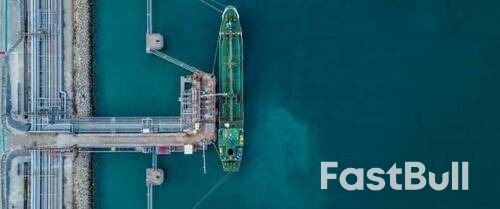
          Slightly in advance of the 8 August deadline imposed by Trump on Russia to make a peace deal with Ukraine, the U.S. doubled its tariffs on India to 50% -- a rate that will come into effect on 27 August. The U.S. is India’s top export market, constituting 18% of its exports and 2.2% of its gross domestic product (GDP). Many of the country’s major exporting firms had already stated that they could not deal with the 25% tariffs, as they are too high to absorb, and passing them on to customers makes their products uncompetitive. Initial analysts’ estimates are that 50% tariffs could reduce India’s GDP by nearly 1% this year. But the U.S. knows all this, which is one of the reasons why it has chosen to do it, according to a very senior European Union (E.U.) energy security source who spoke exclusively to OilPrice.com on the day of the new Indian tariffs announcement.

          “India is known as a key ally of the U.S. globally, and especially in Asia Pacific, and the thinking is that if he [Trump] is willing to do that to India, then he would be willing to do that to anyone else, and this is absolutely the case – he [Trump] is deadly serious on squeezing Russia’s economy from here,” he said. “The message should not be lost on European countries who might be thinking of easing up on the sanctions being rolled out on Russia from now to December 2027 [when the intention is to end all imports of Russian oil and gas],” he added.

          Indeed, a closely co-ordinated ramping up of sanctions against Moscow by the U.S. and E.U. is seen by both sides as key to preventing Russian President Vladimir Putin from realising his dream of reconstituting the full scope of the U.S.S.R.’s previous European empire, as analysed in full in my latest book on the new global oil market order. “Trump believes that the continuation of European purchases of Russian oil and gas after the annexation of Crimea, especially in 2014, was key to the Russian action in Ukraine in 2022, as underlined in his comments on the Nordstream gas pipelines [from Russia to the heart of Europe],” he highlighted.

          In this context, India has a multi-layered strategic importance to the U.S. The most notable of these is the objective of positioning it as the regional counterweight to China’s economic, political, and military presence in the Asia-Pacific region, as analysed in full in my latest book on the new global oil market order. Washington’s efforts in this regard intensified following the 15 June 2020 clash between Chinese and Indian troops in the disputed territory of the Galwan Valley in the Himalayas, as the U.S. believed this marked a new push back strategy from India against China’s policy of seeking to increase its economic and military alliances through its multi-generational power-grab project, the ‘Belt and Road Initiative’ (BRI). The U.S. further believed that this push back might also be echoed in India’s economic desire to finally make substantive progress on its ‘Neighbourhood First’ policy as an alternative to China’s BRI programme. However, for this to work, India would need access to secure energy sources over the long term, as – like China – it has few oil and gas sources of its own. Indeed, given the potential economic growth projections for India, the International Energy Agency forecast that the Asian sub-continental power would constitute the biggest share of global energy demand growth at 25% in the coming two decades. In fact, the IEA predicted India would overtake the European Union as the world’s third-biggest energy consumer by 2030. It was at this point – in Trump’s first term as president – that the plan was hatched to link this plan to use India to challenge China as Asia’s major power in parallel with a corollary objective to use the UAE to promote further relationship normalisation deals (‘Abraham Accords’) between Israel and key Arab states in the Middle East. This remains a second key reason why India is so important to Washington.

          Nevertheless, India – along with China and Turkey – is still one of the biggest buyers of Russia's energy exports three years into Moscow’s war in Ukraine. According to industry figures, last month saw it receive 1.6 million barrels per day (bpd) of oil from Russia, while China imported around 1 million bpd and Turkey about 500,000 bpd. Over the entirety of 2024, China was the largest buyer of Russian oil, at about 2.2 million bpd, followed by India on 1.76 million bpd, and Turkey on 0.3 million bpd. The U.S. has already warned China that ongoing imports of Russian oil could lead to huge tariffs being imposed on the country, according to the E.U. source. “During the talks [end-July U.S.-China trade talks in Stockholm], [U.S. Treasury Secretary Scott] Bessent told his opposite number [Vice Premier He Lifeng] that legislation [‘Sanctioning Russia Act of 2025’] is being drawn up in Congress authorising the imposition of up to 500% tariffs on countries that buy sanctioned Russian oil,” he exclusively told OilPrice.com last week. In reality, the Act goes wider to encompass any country that “knowingly sells, supplies, transfers, or purchases oil, uranium, petroleum products, or petrochemical products that originated in the Russian Federation”. It currently has 84 listed co-sponsors in the U.S. Senate alone, according to the U.S. Congress website, and the Speaker of the House has also indicated his chamber’s support to pass the bill.

          The U.S. has also suggested to China that it may treat Beijing’s assistance to Russia in much the same manner as it has started to treat the same for Iran. This was seen in the very recent U.S. State Department announcement on Iran-related sanctions that it would impose sanctions on 20 entities it believes are engaged in trading Iranian oil and petrochemical products, including China’s Zhoushan Jinrun Petroleum Transfer Co., an oil terminal in the greater Zhoushan port area. Under Secretary of the Treasury for Terrorism and Financial Intelligence Brian E. Nelson said of these China sanctions that:

          “The Iranian regime continues to fuel conflict in the Middle East to fund its destabilizing activities, [and] Today, the United States is taking action to stem the flow of revenue that the regime uses to support terrorism abroad, as well as to oppress its own people.”

          Zhoushan Jinrun was highlighted by the State Department for: “…knowingly engaging in a significant transaction for the purchase, acquisition, sale, transport, or marketing of petroleum or petroleum products from Iran”. The port is the fourth of China’s to be sanctioned by Washington in recent weeks, following similar actions against Huaying Huizhou Daya Bay Petrochemical Terminal Storage in March, Guangsha Zhoushan in April, and Dongying Port in May.

          “More is to come,” the very senior U.S. legal source told OilPrice.com at the time of the sanctions announcement and could include a dramatically increased list of blacklisted Chinese officials, businesses, banks, financial houses, ports, ships, and supportive infrastructure to the facilitation of Russian oil imports.
          Source: Zero Hedge

          Risk Warnings and Disclaimers
          You understand and acknowledge that there is a high degree of risk involved in trading. Following any strategies or investment methods may lead to potential losses. The content on the site is provided by our contributors and analysts for information purposes only. You are solely responsible for determining whether any trading assets, securities, strategy, or any other product is suitable for investing based on your own investment objectives and financial situation.
          Add to Favorites
          Share

          How the world’s most valuable company got caught in the middle of Trump’s spat with China

          Adam

          Economic

          Nvidia, the world’s most valuable company, has found itself caught in the middle of President Donald Trump’s historic trade war with China. The result: an extraordinary concession from a $4.5 trillion corporation that will give the United States a percentage of every high-end AI chip sold in China.
          The deal, which AMD also signed for some of its chips, could split the difference between two competing Trump administration goals: maintain America’s AI dominance while securing a critical trade agreement with China. It could also give the White House billions of dollars to spend as it wishes.

          What Nvidia agreed to

          Nvidia and AMD have agreed to pay the US government 15% of their revenues from semiconductor sales to China in exchange for licenses to export their technology there.
          The White House in April blocked the export of certain AI chips to China, including Nvidia’s H20 chips and AMD’s MI308 chips. The deal with the Trump administration allows the companies to obtain export licenses to restart sales of those chips in China, a US official told CNN. The Financial Times first reported the story Sunday.
          Nvidia previewed the deal last month, when it said it would resume sales of the H20 chip to China after the Trump administration expressed openness to allowing the export of certain AI chips again. But the 15% payment was a surprise. Trump said Nvidia was initially asked to pay a 20% cut, but they negotiated the rate down to 15%.
          The deal came together after Nvidia CEO Jensen Huang met with President Donald Trump on Wednesday, the official said. Although the export licenses were granted Friday, no shipments have yet been made.
          “We follow rules the US government sets for our participation in worldwide markets,” a Nvidia spokesperson said in a statement. “While we haven’t shipped H20 to China for months, we hope export control rules will let America compete in China and worldwide.”
          AMD has not responded to CNN’s request for comment.

          How extraordinary is this?

          Governments, including the United States, have taken control of companies in the past when they were considered to be of strategic importance to national security. During the financial crisis in 2009, the United States took control of General Motors and Chrysler, and the proceeds of those stakes went directly into the US Treasury after the government sold them for a profit.
          But it’s not clear that the US government has ever demanded a percentage of a company’s business without taking an equity stake – or if it’s even legal to do so.
          The US Constitution forbids taxes on exports. To get around that, the deal’s terms have been structured as a voluntary agreement, so it won’t be considered a tax or a tariff, a US official said. Instead, Nvidia and AMD will voluntarily send funds to the US government. The companies will have no say whatsoever on how the US government deploys that money after it is sent.
          “It’s hard to identify any historical precedent for this sort of arrangement,” said Sarah Kreps, law professor and director of the Tech Policy Institute at Cornell University’s Brooks School of Public Policy.

          What about national security?

          In recent years, the US government has sought to restrict China’s access to advanced American technology in an effort to slow its progress on AI and let the United States get farther ahead. But the White House’s reversal on export controls may be an acknowledgement that China is advancing in AI regardless, so American companies might as well be allowed to benefit. It could also give the White House another way to raise revenue for the US government, along with tariffs.
          “It seems like there’s been some vacillation within the administration about and toward China, and I think that reflects the internal divide within the administration between the China hawks and the economic pragmatists,” Kreps said. “It seems like increasingly, the economic pragmatists are holding sway.”
          That approach would align with arguments from Nvidia’s Huang, who has said that restricting sales of American AI chips is bad for US national security. Chinese developers could simply undermine US leadership by creating their own alternatives if they can’t buy American technology, according to Huang, who has met with Trump repeatedly in recent months.
          The White House agrees with Huang, believing it’s better to have China locked into a US-made chip sold through legitimate channels than to force China to the black market, a US official said. China has been able to subvert existing channels to obtain restricted chips anyway.

          Why is Trump charging 15%?

          Big questions remain about where the 15% commission idea emerged and what it could mean for national security.
          A US official said that the payment allows the administration to maintain control of the export process and bring in revenue for the US government in the process. Still, it’s not clear that the penalty for Nvidia and AMD will effectively limit the flow of the chips or erase any potential national security issues.
          “If there’s a legitimate national security concern about exporting these chips to China, then I don’t see how the payments to the US government address those risks. In fact, they don’t at all,” said Scott Kennedy, senior adviser and trustee chair in Chinese business and economics at the Center for Strategic and International Studies. “And if there’s not a sufficient national security risk or they can be adequately mitigated … then the US government should just get out of the way and expect nothing in return.”

          What does this mean for Nvidia?

          Nvidia released the H20 chip last year as a way to maintain access to the Chinese market — which made up 13% of the company’s sales in 2024 — in the face of US export controls imposed by the Biden administration.
          But the chips are widely believed to have contributed to DeepSeek, an advanced Chinese AI model that shook Silicon Valley upon its release earlier this year, raising concerns that China was further ahead on AI than previously understood.
          After the Trump administration barred H20 sales to China in April, Nvidia said it took billions of dollars in charges and lost revenue because of the export controls in the first quarter and projected a similar outcome in the second quarter.
          So, even if it has to fork over 15% of those sales to the White House, resuming shipments of the H20 to China could mean billions more dollars in revenue for Nvidia — which became the first publicly traded company to top $4 trillion in valuation last month. Shares of Nvidia (NVDA) rose as much as 0.5% on Monday.
          Combined, Nvidia and AMD could earn as much as $35 billion in annual revenue from sales of their H20 and MI380 chips to China, according to CFRA Research analyst Angelo Zino’s estimates. That means the White House would earn around $5 billion in revenue. “We acknowledge the tax will have a negative impact on profit margins tied to China sales but view the reentry into the second-largest GPU market to be worth the cost,” Zino said in emailed commentary Monday.

          How important are these chips?

          Trump on Monday called Nvidia’s H20 chip “obsolete,” saying that China “already has it in a different form.”
          But some experts disagree with Trump’s characterization of the chips.
          “These H20s are still state of the art,” CSIS’s Kennedy said. Although they’re less advanced, in some ways, than other Nvidia chips, “they also come with elements that make them extremely sophisticated and valuable,” including their memory capabilities.
          Nvidia’s H20 chip is also good at inference, says Param Singh, professor of business technologies and marketing at Carnegie Mellon University, which refers to the process an AI model goes through when answering a question.
          But Nvidia’s H100 and H200 series chips, as well as its Blackwell line of chips, are much more powerful and better equipped to train large language models like OpenAI’s GPT-5 he says. It’s not the same as calling it obsolete, but using a chip like the H20 instead could mean it might take longer to train cutting edge AI models.
          “There’s a huge difference in the amount of calculations that an H100 chip could do versus an H20,” he said.
          Nvidia likely reasoned that there is enough Chinese demand for the chips to make the 15% commission to the White House a worthwhile trade-off for its business, according to Kreps. “You have to do a calculation based on what was lost from the export controls,” she said.

          Will Trump approve more advanced chips?

          Trump on Monday left open the possibility that Nvidia could export its super high-end Blackwell chips for a higher price. The Trump administration had closed the door on the export of that technology to China — even after reversing course on the H20.
          However, Trump on Monday said that he’d consider allowing Nvidia to sell the Blackwell chip.
          “The Blackwell is superduper advanced. I wouldn’t make a deal with that, although it’s possible,” Trump said. “I’d make a deal a somewhat enhanced in a negative way. Blackwell, in other words, take 30% to 50% off of it, but that’s the latest and the greatest in the world. Nobody has it. They won’t have it for five years.”
          Trump said Huang will return to the White House in the future to discuss selling an “unenhanced” version of Blackwell.
          “I think he’s coming to see me again about that, but that will be a unenhanced version of the big one,” Trump said. “You know, we will sometimes sell fighter jets to a country and we’ll give them 20% less than we have.”

          What does China want?

          Questions from Beijing about the security of American AI chips also raise uncertainty about just how successful Trump’s commission policy could be.
          China could choose not to buy US tech firm Nvidia’s H20 chips, the social media account Yuyuan Tantian, which is affiliated with state broadcaster CCTV, said on Sunday. It claimed that the chips could have “backdoors” that impact their function and security, following previous similar claims from China’s cybersecurity administration. Nvidia has repeatedly denied that its products have backdoors.
          However, that statement could be less an indication that China won’t buy American chips and more a signal to Chinese tech companies to continue innovating in semiconductors even if US shipments do resume, Kennedy said.

          What does this mean for a broader trade deal?

          For the Trump administration, the cost-benefit analysis is that it opens up the flow of mid-tier chips to China while giving the administration a key bargaining chip in its ongoing trade talks, a US official said.
          Treasury Secretary Scott Bessent has called Nvidia export controls a “negotiating chip” in the larger US-China trade talks.
          But China knows that, and its posturing over supposed security concerns with the H20 chip this weekend suggests that it won’t be won over so easily — even if it wants the chips for its market.

          Source: cnn

          To stay updated on all economic events of today, please check out our Economic calendar
          Risk Warnings and Disclaimers
          You understand and acknowledge that there is a high degree of risk involved in trading. Following any strategies or investment methods may lead to potential losses. The content on the site is provided by our contributors and analysts for information purposes only. You are solely responsible for determining whether any trading assets, securities, strategy, or any other product is suitable for investing based on your own investment objectives and financial situation.
          Add to Favorites
          Share

          Crypto Rally Stalls as Market Awaits Key US Inflation Data

          Adam

          Cryptocurrency

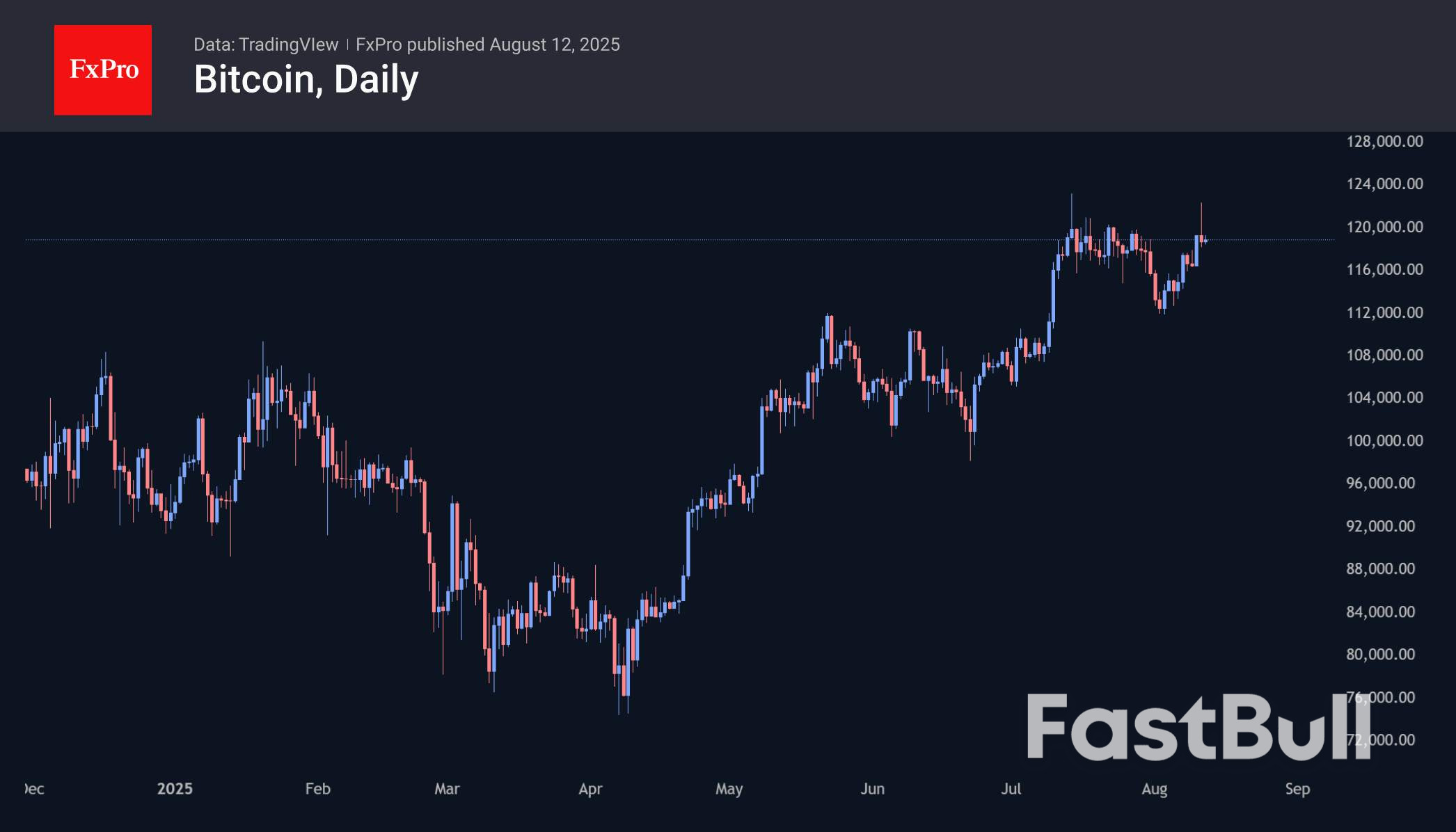
          Bitcoin closed Monday near its opening levels, losing nearly 3% of its 3.5% jump at the start of the day to $119K.

          Bitcoin Pulls Back Ahead of US Inflation Data, Ethereum Holds Strong

          Crypto Rally Stalls as Market Awaits Key US Inflation Data_1
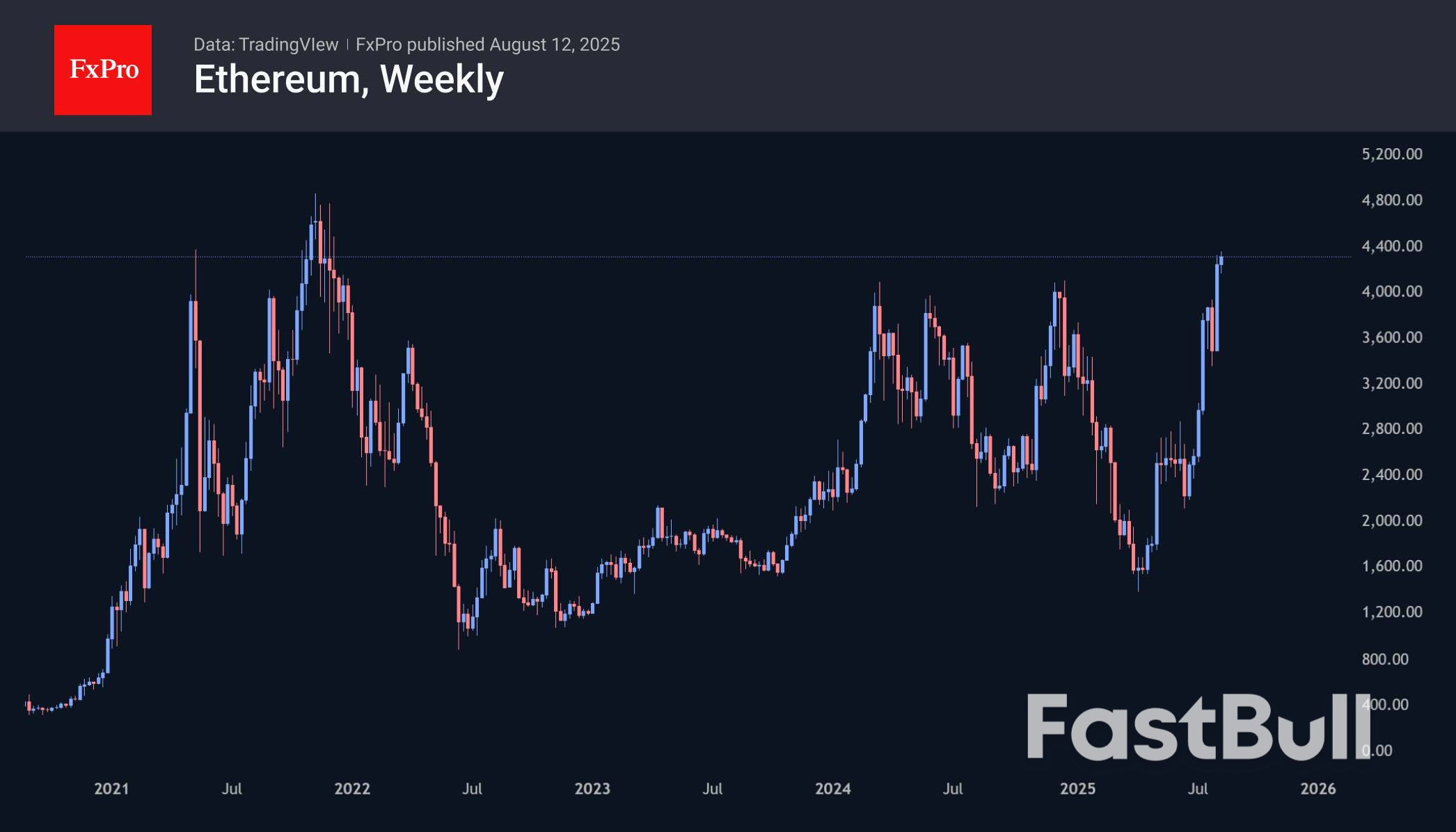
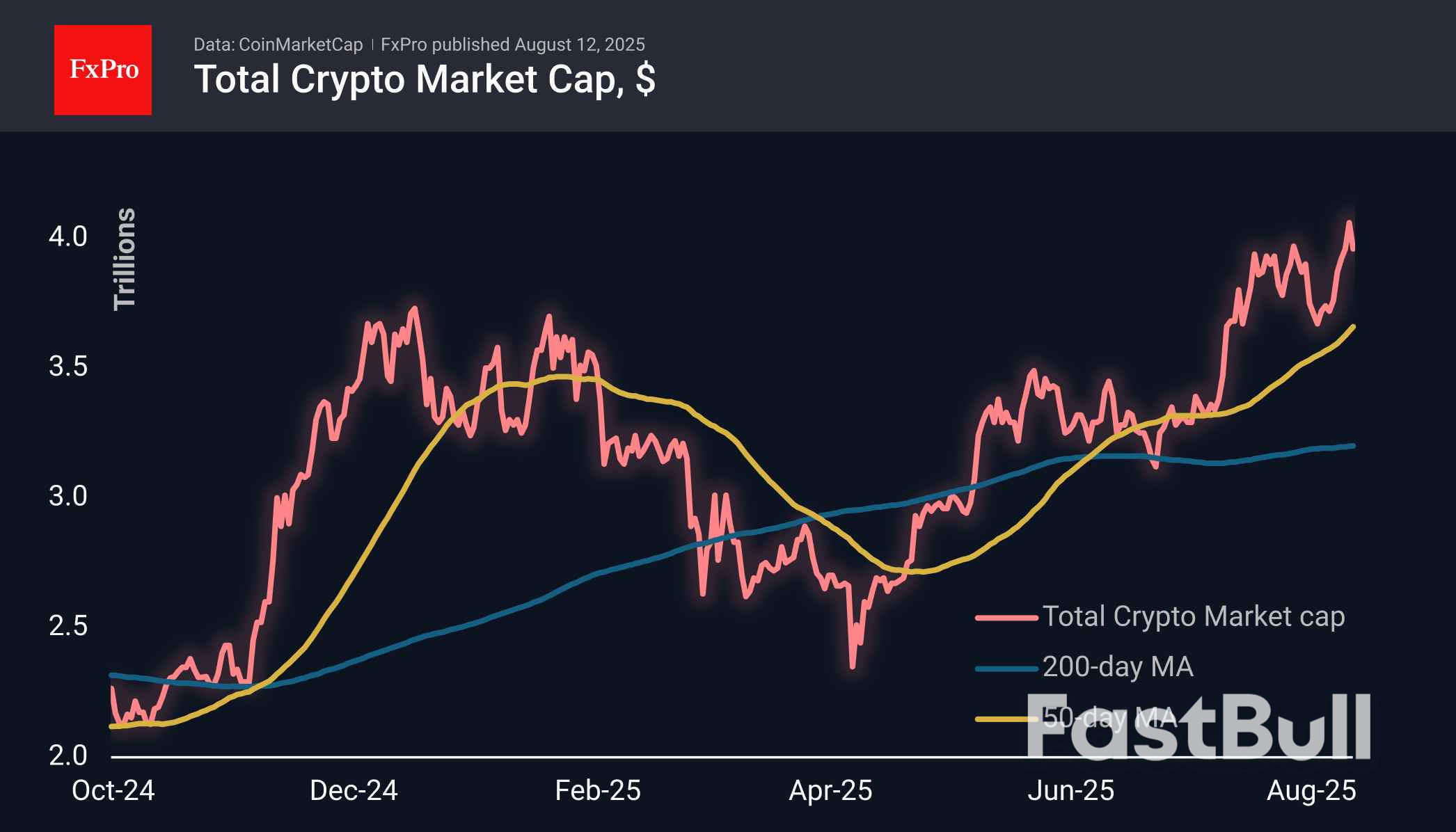
          The crypto market capitalisation fell below the $4 trillion mark, down 1.8% over the last day. Bitcoin failed to stay above $120K, Ethereum’s growth stalled at $4300, and many major altcoins have seen declines in the last couple of days.
          Crypto Rally Stalls as Market Awaits Key US Inflation Data_2
          Bitcoin closed Monday near its opening levels, losing nearly 3% of its 3.5% jump at the start of the day to $119K. There are fears of a repeat of the situation we saw in July, when a promising breakthrough turned into an exhausting sideways movement and rattled nerves with a decline in the first days of August. We attribute the BTC pullback to the cautious mood of major players ahead of US inflation data released later on Tuesday.
          Crypto Rally Stalls as Market Awaits Key US Inflation Data_3
          Ethereum is holding steady at the top at nearly $4300, indicating an optimistic mood among bulls: they are taking a wait-and-see approach rather than rushing to lock in profits after the rally. It seems the market is seriously set on moving towards historic highs at $4800, and is looking for a suitable reason to do so.

          Crypto News

          According to CoinShares, global investment in crypto funds rose by $578 million last week, more than doubling the outflow a week earlier. Investments in Bitcoin increased by $265 million, Ethereum by $270 million, Solana by $22 million, XRP by $18 million, and Near by $10 million. Investments in Sui decreased by $3 million.
          Strategy additionally purchased 155 BTC last week at an average price of $116,401 per coin, according to company founder Michael Saylor. The company now owns 628,946 BTC, purchased at an average price of $73,288. The total investment is estimated at $46.09 billion.
          According to Lookonchain, an unknown crypto whale has purchased 221,166 ETH worth about $1 billion over the past seven days. Market participants are optimistic about the coin’s prospects.
          Sky Protocol, formerly known as Maker, received a B- credit rating from S&P Global Ratings. This is the first rating of a DeFi platform by a traditional rating agency. Sky Protocol is a decentralised lending platform that allows users to take out loans secured by cryptocurrencies.

          Source: fxempire

          Risk Warnings and Disclaimers
          You understand and acknowledge that there is a high degree of risk involved in trading. Following any strategies or investment methods may lead to potential losses. The content on the site is provided by our contributors and analysts for information purposes only. You are solely responsible for determining whether any trading assets, securities, strategy, or any other product is suitable for investing based on your own investment objectives and financial situation.
          Add to Favorites
          Share
          FastBull
          Copyright © 2025 FastBull Ltd

          728 RM B 7/F GEE LOK IND BLDG NO 34 HUNG TO RD KWUN TONG KLN HONG KONG

          TelegramInstagramTwitterfacebooklinkedin
          App Store Google Play Google Play
          Products
          Charts

          Chats

          Q&A with Experts
          Screeners
          Economic Calendar
          Data
          Tools
          Membership
          Features
          Function
          Markets
          Copy Trading
          Latest Signals
          Contests
          News
          Analysis
          24/7
          Columns
          Education
          Company
          Careers
          About Us
          Contact Us
          Advertising
          Help Center
          Feedback
          User Agreement
          Privacy Policy
          Business

          White Label

          Data API

          Web Plug-ins

          Poster Maker

          Affiliate Program

          Risk Disclosure

          The risk of loss in trading financial instruments such as stocks, FX, commodities, futures, bonds, ETFs and crypto can be substantial. You may sustain a total loss of the funds that you deposit with your broker. Therefore, you should carefully consider whether such trading is suitable for you in light of your circumstances and financial resources.

          No decision to invest should be made without thoroughly conducting due diligence by yourself or consulting with your financial advisors. Our web content might not suit you since we don't know your financial conditions and investment needs. Our financial information might have latency or contain inaccuracy, so you should be fully responsible for any of your trading and investment decisions. The company will not be responsible for your capital loss.

          Without getting permission from the website, you are not allowed to copy the website's graphics, texts, or trademarks. Intellectual property rights in the content or data incorporated into this website belong to its providers and exchange merchants.

          Not Logged In

          Log in to access more features

          FastBull Membership

          Not yet

          Purchase

          Become a signal provider
          Help Center
          Customer Service
          Dark Mode
          Price Up/Down Colors

          Log In

          Sign Up

          Position
          Layout
          Fullscreen
          Default to Chart
          The chart page opens by default when you visit fastbull.com