Markets
News
Analysis
User
24/7
Economic Calendar
Education
Data
- Names
- Latest
- Prev


Signal Accounts for Members
All Signal Accounts
All Contests


U.K. Input PPI MoM (Not SA) (Dec)A:--
F: --
U.K. Core CPI MoM (Dec)A:--
F: --
P: --
U.K. Retail Prices Index MoM (Dec)A:--
F: --
P: --
U.K. Input PPI YoY (Not SA) (Dec)A:--
F: --
P: --
U.K. CPI YoY (Dec)A:--
F: --
P: --
U.K. Output PPI MoM (Not SA) (Dec)A:--
F: --
P: --
U.K. Output PPI YoY (Not SA) (Dec)A:--
F: --
P: --
U.K. Core Retail Prices Index YoY (Dec)A:--
F: --
P: --
U.K. Core CPI YoY (Dec)A:--
F: --
P: --
U.K. Retail Prices Index YoY (Dec)A:--
F: --
P: --
Indonesia 7-Day Reverse Repo RateA:--
F: --
P: --
Indonesia Loan Growth YoY (Dec)A:--
F: --
P: --
Indonesia Deposit Facility Rate (Jan)A:--
F: --
P: --
Indonesia Lending Facility Rate (Jan)A:--
F: --
P: --
South Africa Core CPI YoY (Dec)A:--
F: --
P: --
South Africa CPI YoY (Dec)A:--
F: --
P: --
IEA Oil Market Report
U.K. CBI Industrial Output Expectations (Jan)A:--
F: --
U.K. CBI Industrial Prices Expectations (Jan)A:--
F: --
P: --
South Africa Retail Sales YoY (Nov)A:--
F: --
P: --
U.K. CBI Industrial Trends - Orders (Jan)A:--
F: --
P: --
Mexico Retail Sales MoM (Nov)A:--
F: --
P: --
U.S. MBA Mortgage Application Activity Index WoWA:--
F: --
P: --
Canada Industrial Product Price Index YoY (Dec)A:--
F: --
Canada Industrial Product Price Index MoM (Dec)A:--
F: --
U.S. Weekly Redbook Index YoYA:--
F: --
P: --
U.S. Pending Home Sales Index YoY (Dec)A:--
F: --
P: --
U.S. Pending Home Sales Index MoM (SA) (Dec)A:--
F: --
P: --
U.S. Construction Spending MoM (Oct)A:--
F: --
U.S. Pending Home Sales Index (Dec)A:--
F: --
P: --
U.S. API Weekly Refined Oil Stocks--
F: --
P: --
U.S. API Weekly Gasoline Stocks--
F: --
P: --
U.S. API Weekly Cushing Crude Oil Stocks--
F: --
P: --
U.S. API Weekly Crude Oil Stocks--
F: --
P: --
South Korea GDP Prelim YoY (SA) (Q4)--
F: --
P: --
South Korea GDP Prelim QoQ (SA) (Q4)--
F: --
P: --
Japan Imports YoY (Dec)--
F: --
P: --
Japan Exports YoY (Dec)--
F: --
P: --
Japan Goods Trade Balance (SA) (Dec)--
F: --
P: --
Japan Trade Balance (Not SA) (Dec)--
F: --
Australia Employment (Dec)--
F: --
P: --
Australia Labor Force Participation Rate (SA) (Dec)--
F: --
P: --
Australia Unemployment Rate (SA) (Dec)--
F: --
P: --
Australia Full-time Employment (SA) (Dec)--
F: --
P: --
Turkey Consumer Confidence Index (Jan)--
F: --
P: --
Turkey Capacity Utilization (Jan)--
F: --
P: --
Turkey Late Liquidity Window Rate (LON) (Jan)--
F: --
P: --
Turkey Overnight Lending Rate (O/N) (Jan)--
F: --
P: --
Turkey 1-Week Repo Rate--
F: --
P: --
U.K. CBI Distributive Trades (Jan)--
F: --
P: --
U.K. CBI Retail Sales Expectations Index (Jan)--
F: --
P: --
U.S. Weekly Continued Jobless Claims (SA)--
F: --
P: --
U.S. Initial Jobless Claims 4-Week Avg. (SA)--
F: --
P: --
U.S. Real Personal Consumption Expenditures Final QoQ (Q3)--
F: --
P: --
Canada New Housing Price Index MoM (Dec)--
F: --
P: --
U.S. Weekly Initial Jobless Claims (SA)--
F: --
P: --
U.S. Real GDP Annualized QoQ Final (Q3)--
F: --
P: --
U.S. PCE Price Index Final QoQ (AR) (Q3)--
F: --
P: --
U.S. Personal Outlays MoM (SA) (Nov)--
F: --
P: --
U.S. Core PCE Price Index YoY (Nov)--
F: --
P: --


No matching data
Latest Views
Latest Views
Trending Topics
Top Columnists
Latest Update
White Label
Data API
Web Plug-ins
Affiliate Program
View All

No data
India's budget confronts global trade risks from a fragile US AI boom and China's slowdown, urging demand revival.
As India prepares for its Union Budget on February 1, its economic strategy for the coming year will be heavily influenced by developments in the world's two largest economies: the United States and China. Both present a complex and challenging picture for global stability and trade.
The U.S. economy appeared strong at the end of 2025, posting a robust 4.3 percent growth in the third quarter driven by consumer spending. However, a closer look reveals significant imbalances that question the sustainability of this momentum.
Investment growth is almost entirely concentrated in the expansion of AI capacity. This narrow focus is accompanied by several warning signs: corporate hiring has nearly stopped, AI-related stocks show unsustainably high price-to-earnings multiples, and the final consumer demand for AI-driven products remains uncertain. Furthermore, building out AI infrastructure is highly energy-intensive, a growing concern as this expansion moves into developing nations.
Consumption growth itself is on shaky ground. It is heavily skewed toward upper-income households and is expected to slow. Future trends will largely depend on how President Donald Trump's proposed tax cuts are financed.
The Double-Edged Sword of Tariffs
One proposed funding mechanism is revenue from tariffs, which saw a dramatic increase in 2025. In May 2025, tariff revenues were four times higher than the previous year and 25 percent higher than the preceding month, even without significant changes in import prices.
However, this strategy carries significant risks. The sharp rise in average tariffs, from around 2 percent to nearly 10 percent, is set to fuel domestic inflation and suppress consumer demand, which will ultimately erode tariff revenues.
At the same time, tax cuts will add to the national debt, pushing it toward an unsustainable level and driving up interest rates. This combination is likely to trigger a contraction in both consumption and investment, casting serious doubt on whether the late-2025 growth spurt can be maintained.
The outlook from China is even more concerning for the global economy. The country's growth has been in a long-term decline, falling from 8-10 percent in the decades after 1980 to around 5 percent in 2024-25 and is now trending even lower.
Two major factors are depressing domestic demand: the ongoing real estate crisis and an aging population that constrains consumption.
Export Surge Masks Deeper Weakness
Even China's recent surge in exports offers little comfort. Much of this growth stems from two temporary phenomena:
• Trade Diversion: Exports are being rerouted from the U.S. to developing countries, many of which are now erecting their own tariff and non-tariff barriers in response.
• Tariff Arbitrage: Chinese goods are reaching the U.S. market indirectly through partners like Mexico and Vietnam to circumvent tariffs.
This arbitrage channel is already closing. The U.S. is expected to block these routes, and Mexico has already imposed tariffs of up to 35 percent on countries without free trade agreements, with a 50 percent tariff on automobiles and auto parts.
For India, the global trade landscape in 2026 looks challenging. The recent spike in commodity trade was largely driven by businesses making pre-emptive purchases before the Trump tariff regime took effect. With that over, opportunities appear limited, with the notable exception of services trade, which remains resilient due to its links with the U.S. economy.
Still, India has options. Trade diversion away from the U.S. could create new openings with partners like the EU and the U.K. New trade agreements could revive India's textile and leather exports, which were hit hard by 50 percent U.S. tariffs. During a recent visit, German Chancellor Friedrich Merz suggested an India-EU Free Trade Agreement could be finalized by February.
Certain sectors, such as petroleum products and pharmaceuticals, are expected to maintain sales even in the U.S. market. However, the strongest momentum will likely be in services, a key focus in most ongoing FTA negotiations.
The best-case scenario for India would be the removal of prohibitive U.S. tariffs. This would position the country as the preferred "new China" for foreign direct investment from the U.S. and Europe. India's high growth rates and favorable demographics are powerful long-term assets, and technology transfer via FDI remains a critical goal. The primary challenge is that unfavorable U.S. tariffs deter not only American investors but also those from the 38-member OECD bloc.
Ultimately, the central issue plaguing the global economy is the need to rejuvenate demand. Here, China is a key factor. With foreign reserves exceeding $3.2 trillion, it has become a "global saver," creating excess savings worldwide.
To boost global demand, China must transition from a saver to a global buyer. This, however, presents a major political challenge for President Xi Jinping. The country's powerful exporter lobby benefits from the current model and is most likely to resist any change to the status quo.
The critical question for 2026 is whether this dynamic can shift. Both the United States and China continue to act as bulls in the china shop of the global economy.
A landmark free trade agreement between the European Union and the South American Mercosur bloc is facing a potential two-year delay after EU lawmakers narrowly voted to send the deal for a legal review. The move escalates the conflict between member states over the pact, which took 25 years to negotiate.
The European Parliament voted 334 to 324, with 11 abstentions, to ask the EU Court of Justice for an opinion on the agreement. This action threatens to derail the largest trade pact the EU has ever signed, which involves Mercosur members Argentina, Brazil, Paraguay, and Uruguay.
The vote exposes a deep divide within the EU over the deal's strategic importance versus its economic impact on sensitive domestic industries, particularly agriculture.
Germany Pushes for Quick Implementation
Supporters of the deal, led by Germany and Spain, argue it is a geopolitical necessity. They see the agreement as a vital tool to counter global trade disruptions and secure access to critical minerals, thereby reducing economic reliance on China.
German Chancellor Friedrich Merz called the referral to the court regrettable, stating on social media that the EU assembly had "misjudged the geopolitical situation." He and other proponents insist the deal should be applied on a provisional basis to avoid further delays, warning that Mercosur governments are growing impatient after decades of negotiations.
French Farmers Fear Influx of Cheap Imports
Opposition is spearheaded by France, the EU’s largest agricultural producer. French farmers and their unions argue the agreement will open the floodgates to cheap imports of beef, sugar, and poultry, undercutting local producers who face stricter standards. This fear has fueled repeated protests across the country.

France's largest farm union, FNSEA, celebrated the vote as a victory. French Prime Minister Sebastien Lecornu echoed this sentiment, calling it "an important vote that needs to be respected."

The motion, brought forward by 144 lawmakers, asks the EU Court of Justice to rule on two key questions:
1. Can the agreement be applied provisionally before it is fully ratified by all member states?
2. Do its provisions illegally restrict the EU's authority to set its own environmental and consumer health policies?
The court typically takes around two years to issue such opinions. While the EU could theoretically apply the pact provisionally in the meantime, the narrow vote makes this politically challenging. Furthermore, the European Parliament would retain the power to annul the agreement later.

The European Commission, which negotiated the deal, stated that the legal questions raised in the motion have been addressed in previous trade agreements. The Commission now plans to engage with EU governments and lawmakers before deciding on its next course of action.
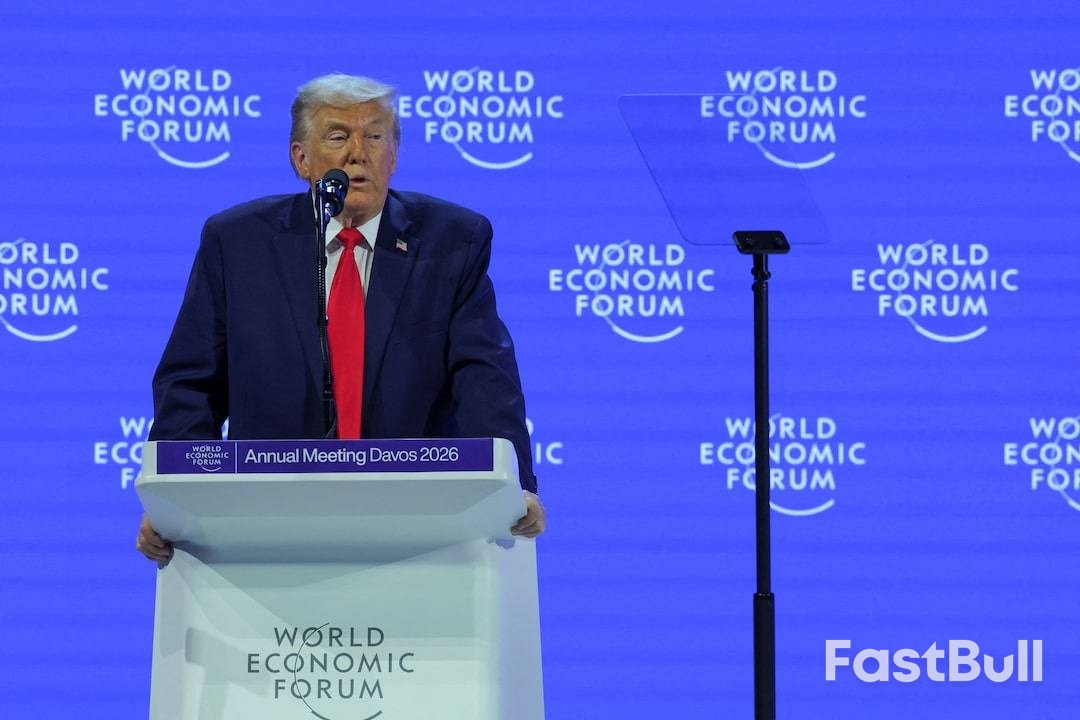
Speaking at the World Economic Forum in Davos, President Donald Trump called for immediate negotiations for the United States to acquire Greenland, presenting the idea to a global audience of business and political leaders.
"I'm seeking immediate negotiations to once again discuss the acquisition of Greenland by the United States, just as we have acquired many other territories throughout our history," Trump stated during his address in Switzerland.
The speech created a direct challenge for allied leaders at the forum, where the potential crisis over the Arctic island has become a major topic of discussion.
Trump framed the potential acquisition as a strategic move essential for collective security. He argued that U.S. control of Greenland would strengthen the NATO alliance rather than pose a threat to it.
"This would not be a threat to NATO. This would greatly enhance the security of the entire Alliance," he explained.
At the same time, Trump reiterated his long-standing criticism of the military alliance, claiming the U.S. is not treated fairly. "The United States is treated very unfairly by NATO," he said. "We've so much and we get so little in return."
Pivoting from foreign policy, Trump hailed his administration's economic record as a model for other nations, particularly those in Europe. He marked the one-year anniversary of his inauguration by highlighting a booming American economy.
"After 12 months back in the White House, our economy is booming," Trump said, listing several achievements:
• Exploding growth
• Surging productivity
• Soaring investment
• Rising incomes
• Defeated inflation
He positioned the United States as the world's primary economic driver. "The USA is the economic engine on the planet and when America booms, the entire world booms," he declared.
Trump's address also contained a stark warning for Europe. He suggested the continent's liberal governments were on the wrong path and should follow his lead to achieve prosperity.
"I love Europe, and I want to see Europe go good, but it's not heading in the right direction," he said.
He criticized European policies on mass immigration and green technologies, which he has previously called a "scam." Trump argued that a focus on energy, trade, immigration, and economic growth is essential for a strong and unified West.
The president also signaled a domestic agenda aimed at affordability, hinting at policies that could target major stakeholders like Wall Street banks, investment firms, and health insurers, reinforcing his populist credentials before the Davos audience.
Germany has leveled accusations of war crimes against Russia, condemning a series of missile and drone attacks targeting Ukraine's energy infrastructure. The strikes have plunged large areas of Kyiv and other cities into darkness, cutting off heat and water supplies as temperatures drop to freezing levels.
Steffen Meyer, a deputy spokesman for Chancellor Friedrich Merz's government, stated that Germany condemns the recent barrages "in the strongest terms." He argued that by crippling essential services and hitting residential buildings, Moscow is using the cold as a tool of war.
"Russia is using the freezing cold as a weapon," Meyer told reporters in Berlin. "These are war crimes."
The sharp condemnation from Berlin serves as an urgent plea for Western allies to refocus on the conflict in Ukraine, which is approaching its fourth year. The statement comes as many international leaders gather for the World Economic Forum in Davos, where attention has been drawn to other issues, including U.S. President Donald Trump's territorial claims on Greenland.
According to government officials, a planned meeting between Chancellor Merz and President Trump at the Swiss summit is now unlikely to happen after Trump's arrival was delayed.
Russia’s Defense Ministry acknowledged the attacks in a statement on Telegram, describing them as a "massive strike." The ministry claimed its targets were industrial facilities along with energy and transport infrastructure used to support the Ukrainian military.
The impact on civilians has been severe. As overnight temperatures in the Ukrainian capital were forecast to fall to -14°C (7°F), millions have been affected by disruptions to power, water, and heating since two major attacks on January 9.
Ukrainian President Volodymyr Zelenskiy said that repair crews, emergency services, and energy company employees are working to restore supplies. As of early Wednesday, approximately 4,000 buildings in Kyiv were still without heat, and nearly 60% of the city lacked electricity following the latest assault.
Zelenskiy, a prominent figure at Davos in previous years, indicated he would likely cancel his trip to the forum to manage the country's response. However, he left open the possibility of attending if peace talks show significant progress.
While Germany issued its strong rebuke, separate U.S. diplomatic efforts are moving forward. American envoy Steve Witkoff announced that he and Jared Kushner, Trump’s son-in-law, will travel to Russia on Thursday for discussions with President Vladimir Putin regarding new peace proposals.
In an interview with Bloomberg News in Davos, Witkoff stated that Trump remains "focused on that peace deal — it's a very, very important part of his agenda." He added that he planned to meet with Ukrainian officials later on Wednesday.
When asked about the recent Russian attacks, Witkoff avoided direct criticism. "First of all, they are in a war, so they are shooting at each other," he commented. "We don't condone that, we think it's unfortunate."
This is not the first time Russia’s actions have been labeled as war crimes. The International Criminal Court issued an arrest warrant for President Putin in March 2018 for alleged war crimes, specifically related to accusations of abducting children from Ukraine since the 2022 invasion.
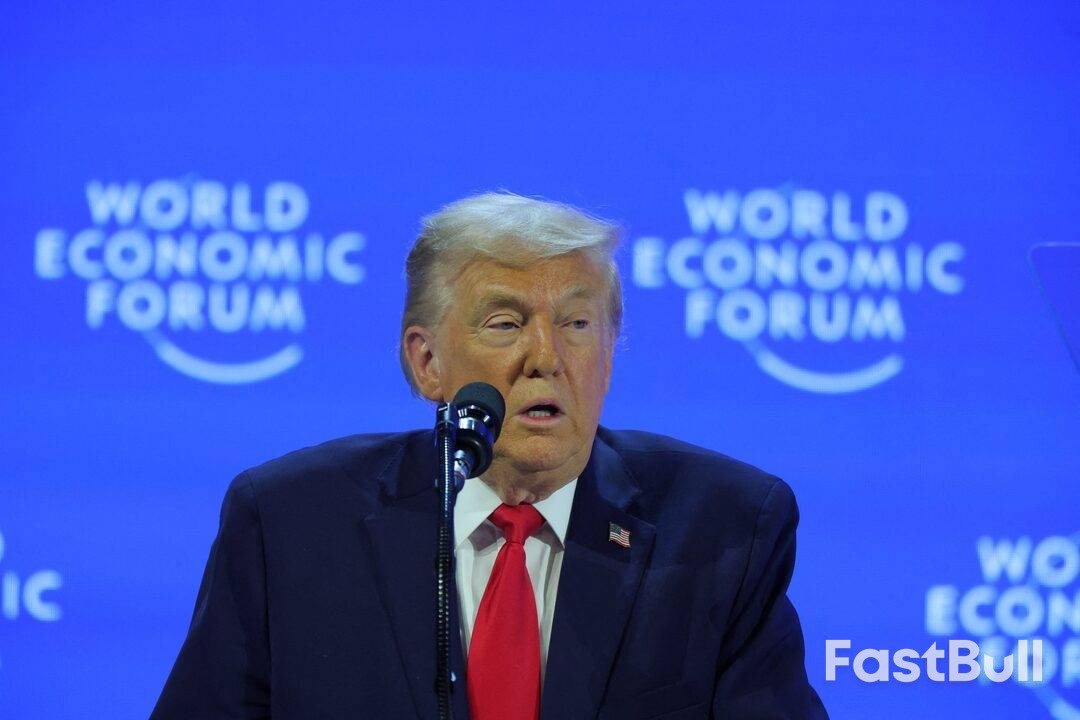
Speaking at the World Economic Forum in Davos, Switzerland, U.S. President Donald Trump delivered a sharp critique of the European continent, stating it is "not heading in the right direction." The address on Wednesday, intended to highlight his economic policies, was largely overshadowed by fraying transatlantic relations and his administration's surprising push to acquire Greenland.
"I love Europe and I want to see Europe go good," Trump remarked during his speech at the annual global summit.

While the speech was slated to focus on Trump's "America First" economic agenda, his interest in Greenland became a central topic. A senior White House official confirmed that Trump might also touch on Greenland and Venezuela, with a more detailed foreign policy discussion scheduled for Thursday.
Trump, who marked the end of a turbulent first year in office, confirmed his intentions at a news conference on Tuesday. He stated he would hold meetings in Davos concerning the Danish territory and expressed optimism that a deal could be reached.

National Security Cited as Primary Motive
The president framed the potential acquisition as a strategic necessity. "I think we will work something out where NATO is going to be very happy and where we're going to be very happy," he said. "But we need it for security purposes. We need it for national security."
This move has generated significant international reaction:
• NATO Concerns: Leaders within the alliance have warned that Trump's Greenland strategy could potentially upend the military coalition.
• Danish Response: In contrast, the leaders of Denmark and Greenland have proposed various ways to accommodate a larger U.S. presence on the strategically vital island, which has a population of 57,000.

When pressed on how far he was willing to pursue the acquisition—a topic Trump has previously linked to his frustration over not receiving a Nobel Peace Prize—he offered a simple reply: "You'll find out." His presence and agenda are set to overshadow the traditional discussions among global elites at the WEF, focusing on economic and political trends.
The S&P 500 has returned approximately 15% year to date (YTD) while Korea's Kospi surged nearly 70% from its 2022 lows on the back of artificial intelligence (AI)-driven semiconductor demand. The KLCI, meanwhile, has delivered single-digit gains and Bursa Malaysia continues to see more delistings than new entrants.
The conventional justification points to dollar strength and emerging market risk aversion. But the USD is down almost 10% this year against a basket of global currencies. A more structural reason deserves attention: the research coverage gap that leaves most Malaysian stocks invisible to institutional capital — and Singapore's aggressive policy response that Malaysia has yet to match.
Of the approximately 1,050 companies listed on Bursa Malaysia, almost three-quarters have zero analyst coverage, based on data from Refinitiv I/B/E/S. This is not a Malaysian problem alone. Across Asean, around the same proportion of listed companies lack coverage.
Singapore is receptive to this issue. In July 2025, the Monetary Authority of Singapore committed S$50 million (RM157 million) to enhance its Grant for Equity Market Singapore (GEMS) scheme, specifically targeting research coverage of mid- and small-cap companies. The enhanced programme pays research firms up to S$6,000 per published report on under-covered stocks, up from S$4,000 previously. Importantly, it allows both sell-side and buy-side firms to submit reports. The former can generate flows and commissions from trading (even if their recommendations do not perform well) and the latter typically put their money where their mouth is through direct fund allocations aligned with their views. The grant also extends to pre-initial public offering (IPO) companies to build coverage pipelines before listings. This sits within a broader S$5 billion Equity Market Development Programme, Singapore's most aggressive capital markets intervention in a generation.
Malaysia's equivalent is Bursa RISE+, launched in April 2025 as a successor to Bursa RISE. The programme aims to enhance the visibility of 60 publicly listed companies over two years, plus 40 private or pre-IPO firms annually. The earlier Bursa RISE initiative, which ran from 2022 to 2024, covered 60 companies and reported that a little more than two-thirds continued receiving research coverage after the programme ended.
But the maths is on a different scale. At 30 public companies per year, and even assuming only half of Malaysia's uncovered stocks merit institutional research, the current approach would take over a decade to meaningfully close the gap. Singapore's model, direct per-report funding that scales with output, can expand coverage as research capacity grows.
The coverage gap creates a cycle that Malaysian capital markets practitioners know well. Companies without analyst coverage struggle to attract institutional attention, regardless of their fundamentals. Fund managers face career risk buying stocks without third-party validation and risk flying blind, especially international investors without boots on the ground. Lower institutional interest reduces trading volumes, widens spreads and depresses valuations. Not to mention that, typically, institutional investors also provide another form of corporate governance.
The coverage gap matters particularly for Malaysia's ambitions as a global hub for Islamic finance. The Securities Commission Malaysia lists 850 shariah-compliant securities on Bursa Malaysia, approximately 80% of all listings. Many lack analyst coverage.
For Islamic fund managers, this can create an uncomfortable constraint: restrict portfolios to the 80 to 100 large-cap shariah stocks with coverage, sacrificing diversification, or venture into uncovered names. International Islamic funds from the Gulf states often filter for analyst coverage as a first screen, excluding most of Malaysia's compliant universe before fundamental analysis begins.
Analysis of Asean equity returns over the past five years shows that covered and uncovered stocks delivered nearly identical average returns of approximately 40%. But the dispersion tells a different story. Return volatility among uncovered stocks runs 48% higher than covered names. The 10th to 90th percentile range of YTD returns spans -33% to +122% for uncovered stocks, versus -15% to +114% for covered ones. Both the upside and downside are amplified in the parts of the market that institutional capital cannot see. It reflects the scant information infrastructure and where both risks and opportunities lie.
The approximately 750 uncovered companies on Bursa Malaysia are not all penny stocks or shell companies. They include manufacturers, technology firms, consumer businesses and service providers. Many are profitable, growing and reasonably valued. They remain invisible not because they lack quality but because traditional research economics cannot reach them.
The economics that created this gap are structural and understanding why matters for any policy response. Research coverage follows liquidity. Academic research documents this relationship as an illiquidity premium, meaning less liquid stocks must offer higher expected returns to compensate investors for trading costs and information asymmetry.
Brokerages generate revenue from trading commissions, which are positively affected by institutional order flow. A stock trading RM10 million daily attracts coverage because the research pays for itself through commissions. A stock trading RM1 million daily does not, regardless of whether the underlying business is sound.
This creates a size threshold. Employing a single equity research analyst can run from RM700,000 to RM900,000 annually once you factor in salary, support staff, data subscriptions and compliance overhead. Each analyst covers 10 to 15 stocks. For a mid-cap Malaysian company with RM500 million market capitalisation and RM1 million to RM2 million average daily trading value, commission revenue from institutional activity rarely exceeds RM30,000 annually, a fraction of coverage cost. The economics only work above roughly RM1 billion market cap, which excludes most of Bursa Malaysia.
This structural unprofitability worsened after Europe's MiFID II regulations forced the unbundling of research from trading commissions in 2018. Global research budgets fell 20%-30%, with analyst coverage declining 6%-10% overall and disproportionately more for emerging market and small-cap stocks where economics were already marginal.
The coverage that disappeared is not coming back through market forces alone and is worth incentivising. Research coverage generates positive externalities beyond the private returns to brokerages and fund managers. Analysts serve as external monitors, flagging accounting irregularities and governance lapses that might otherwise go unnoticed. Covered companies face more scrutiny, which deters fraud and self-dealing. These are public goods — benefits that accrue to the market as a whole, not just to the parties producing or consuming the research — and contribute to overall capital formation in the region.
Singapore's GEMS enhancement offers several design features worth examining. First, per-report funding that scales with output rather than curating a fixed list of companies. This allows coverage to expand as research capacity grows. Second, talent co-funding that builds analyst capacity rather than just redistributing existing coverage among the same companies. Third, pre-IPO coverage that builds the research ecosystem before companies need it, reducing the information asymmetry that disadvantages new entrants. This spills over into supporting the venture capital market as well.
Singapore's scheme also now includes digital platforms and systematic research providers, a nod towards technology-assisted coverage. The premise is that algorithmic approaches might extend research at lower marginal cost. Machine learning systems can process financial statements and flag anomalies across large universes of companies, and there is genuine value in automating routine monitoring tasks. But the application of AI to equity research faces significant challenges: large language models are prone to numerical errors (particularly problematic for financial data); the signal-to-noise ratio in financial markets is far lower than in domains where AI has succeeded; and the feedback loops required to train effective systems are slow and ambiguous. Reinforcement learning, which has transformed game-playing and robotics, struggles in financial applications precisely because market outcomes provide noisy, delayed signals that make learning difficult. And that is a feature of the financial markets, not a bug.
Bursa RISE+ represents a step in the right direction. The question is whether the current programme is sufficient and whether Malaysia will consider the design elements that give Singapore's approach more room to grow. The current divergence in policy designs between Singapore and Malaysia will likely widen the information gap between the two markets. For Malaysian investors and policymakers, the question is not whether the coverage gap matters — the academic evidence is clear that it does. The question is whether the current response matches the scale of the problem.
White Label
Data API
Web Plug-ins
Poster Maker
Affiliate Program
The risk of loss in trading financial instruments such as stocks, FX, commodities, futures, bonds, ETFs and crypto can be substantial. You may sustain a total loss of the funds that you deposit with your broker. Therefore, you should carefully consider whether such trading is suitable for you in light of your circumstances and financial resources.
No decision to invest should be made without thoroughly conducting due diligence by yourself or consulting with your financial advisors. Our web content might not suit you since we don't know your financial conditions and investment needs. Our financial information might have latency or contain inaccuracy, so you should be fully responsible for any of your trading and investment decisions. The company will not be responsible for your capital loss.
Without getting permission from the website, you are not allowed to copy the website's graphics, texts, or trademarks. Intellectual property rights in the content or data incorporated into this website belong to its providers and exchange merchants.
Not Logged In
Log in to access more features

FastBull Membership
Not yet
Purchase
Log In
Sign Up