Markets
News
Analysis
User
24/7
Economic Calendar
Education
Data
- Names
- Latest
- Prev



Signal Accounts for Members
All Signal Accounts
All Contests


U.K. Retail Sales MoM (SA) (Dec)A:--
F: --
P: --
France Manufacturing PMI Prelim (Jan)A:--
F: --
P: --
France Services PMI Prelim (Jan)A:--
F: --
P: --
France Composite PMI Prelim (SA) (Jan)A:--
F: --
P: --
Germany Manufacturing PMI Prelim (SA) (Jan)A:--
F: --
P: --
Germany Services PMI Prelim (SA) (Jan)A:--
F: --
P: --
Germany Composite PMI Prelim (SA) (Jan)A:--
F: --
P: --
Euro Zone Composite PMI Prelim (SA) (Jan)A:--
F: --
P: --
Euro Zone Manufacturing PMI Prelim (SA) (Jan)A:--
F: --
P: --
Euro Zone Services PMI Prelim (SA) (Jan)A:--
F: --
P: --
U.K. Composite PMI Prelim (Jan)A:--
F: --
P: --
U.K. Manufacturing PMI Prelim (Jan)A:--
F: --
P: --
U.K. Services PMI Prelim (Jan)A:--
F: --
P: --
Mexico Economic Activity Index YoY (Nov)A:--
F: --
P: --
Russia Trade Balance (Nov)A:--
F: --
P: --
Canada Core Retail Sales MoM (SA) (Nov)A:--
F: --
P: --
Canada Retail Sales MoM (SA) (Nov)A:--
F: --
U.S. IHS Markit Manufacturing PMI Prelim (SA) (Jan)A:--
F: --
P: --
U.S. IHS Markit Services PMI Prelim (SA) (Jan)A:--
F: --
P: --
U.S. IHS Markit Composite PMI Prelim (SA) (Jan)A:--
F: --
P: --
U.S. UMich Consumer Sentiment Index Final (Jan)A:--
F: --
P: --
U.S. UMich Current Economic Conditions Index Final (Jan)A:--
F: --
P: --
U.S. UMich Consumer Expectations Index Final (Jan)A:--
F: --
P: --
U.S. Conference Board Leading Economic Index MoM (Nov)A:--
F: --
P: --
U.S. Conference Board Coincident Economic Index MoM (Nov)A:--
F: --
P: --
U.S. Conference Board Lagging Economic Index MoM (Nov)A:--
F: --
P: --
U.S. UMich 1-Year-Ahead Inflation Expectations Final (Jan)A:--
F: --
P: --
U.S. Conference Board Leading Economic Index (Nov)A:--
F: --
P: --
U.S. Weekly Total Rig CountA:--
F: --
P: --
U.S. Weekly Total Oil Rig CountA:--
F: --
P: --
Germany Ifo Business Expectations Index (SA) (Jan)--
F: --
P: --
Germany IFO Business Climate Index (SA) (Jan)--
F: --
P: --
Germany Ifo Current Business Situation Index (SA) (Jan)--
F: --
P: --
U.S. Dallas Fed PCE Price Index YoY (Nov)--
F: --
P: --
Brazil Current Account (Dec)--
F: --
P: --
Mexico Unemployment Rate (Not SA) (Dec)A:--
F: --
P: --
Canada National Economic Confidence Index--
F: --
P: --
U.S. Non-Defense Capital Durable Goods Orders MoM (Excl. Aircraft) (Nov)--
F: --
P: --
U.S. Durable Goods Orders MoM (Excl. Defense) (SA) (Nov)--
F: --
P: --
U.S. Durable Goods Orders MoM (Excl.Transport) (Nov)--
F: --
P: --
U.S. Durable Goods Orders MoM (Nov)--
F: --
P: --
U.S. Chicago Fed National Activity Index (Nov)--
F: --
P: --
U.S. Dallas Fed New Orders Index (Jan)--
F: --
P: --
U.S. Dallas Fed General Business Activity Index (Jan)--
F: --
P: --
U.K. BRC Shop Price Index YoY (Jan)--
F: --
P: --
China, Mainland Industrial Profit YoY (YTD) (Dec)--
F: --
P: --
Mexico Trade Balance (Dec)--
F: --
P: --
U.S. S&P/CS 20-City Home Price Index YoY (Not SA) (Nov)--
F: --
P: --
U.S. S&P/CS 20-City Home Price Index MoM (SA) (Nov)--
F: --
P: --
U.S. FHFA House Price Index MoM (Nov)--
F: --
P: --
U.S. FHFA House Price Index (Nov)--
F: --
P: --
U.S. Richmond Fed Manufacturing Composite Index (Jan)--
F: --
P: --
U.S. Conference Board Present Situation Index (Jan)--
F: --
P: --
U.S. Conference Board Consumer Expectations Index (Jan)--
F: --
P: --
U.S. Richmond Fed Manufacturing Shipments Index (Jan)--
F: --
P: --
U.S. Richmond Fed Services Revenue Index (Jan)--
F: --
P: --
U.S. Conference Board Consumer Confidence Index (Jan)--
F: --
P: --
Australia RBA Trimmed Mean CPI YoY (Q4)--
F: --
P: --
Australia CPI YoY (Q4)--
F: --
P: --
Australia CPI QoQ (Q4)--
F: --
P: --


No matching data
Latest Views
Latest Views
Trending Topics
Top Columnists
Latest Update
White Label
Data API
Web Plug-ins
Affiliate Program
View All

No data
Former U.S. Special Counsel Jack Smith unsuccessfully prosecuted President Donald Trump, told a House of Representatives panel on Thursday that Trump was "looking for ways to stay in power" following his defeat in the 2020 election as he confronted Republican criticism of his investigation.
Former U.S. Special Counsel Jack Smith, who unsuccessfully prosecuted President Donald Trump, told a House of Representatives panel on Thursday that Trump was "looking for ways to stay in power" following his defeat in the 2020 election as he confronted Republican criticism of his investigation.
Smith fielded questions from the Republican-controlled House Judiciary Committee about his two criminal cases, which he dropped after Trump won the 2024 presidential election. One case accused Trump of conspiring to overturn his defeat in the 2020 election, while the other accused him of unlawfully holding onto classified documents.
The hearing marked the first time the American public heard at length from Smith, whose historic prosecutions dominated Trump's years out of power and helped fuel the Republican president's quest for retribution since returning to office. Smith told the panel he expected Trump's Justice Department to try to bring criminal charges against him.
"President Trump was charged because the evidence established that he willfully broke the very laws that he took an oath to uphold," Smith told the House panel. "If asked whether to prosecute a former president based on the same facts today, I would do so, regardless of whether that president was a Democrat or a Republican."
After the hearing, Trump reiterated his calls for Smith to be prosecuted, writing on social media that he had "destroyed the lives of many innocent people."
Republican lawmakers sought to discredit Smith's investigation and buttress Trump's claims that the probes were an abuse of the legal system. Republicans focused particular attention on Smith's decision to seek limited phone records from former House Speaker Kevin McCarthy and several Republican senators, along with court orders that barred lawmakers from being notified of the subpoenas.
Trump allies have argued that the records show Smith's investigation was overzealous and aimed at the political opposition.
"It was always about politics," Representative Jim Jordan of Ohio, the Republican chair of the Judiciary Committee, said at the start of the hearing. "To get Donald Trump, they were willing to do just about anything."
Smith said the records were necessary to examine Trump's efforts to pressure Republican lawmakers to block certification of the election. He said he had "grave concerns about obstruction of justice in this investigation, specifically with regards to Donald Trump."
Smith's testimony focused primarily on the case that accused Trump of using false voter fraud claims to obstruct the certification of election results following his 2020 defeat to Democrat Joe Biden. He told lawmakers that Republican witnesses, especially those who informed Trump that his fraud claims were not true, would have formed the core of the case had it gone to trial.
"Our investigation revealed that Donald Trump was not looking for honest answers about whether there was fraud in the election," Smith said. "He was looking for ways to stay in power."
A federal judge has barred the Justice Department from disclosing many of the details surrounding Smith's second case, which accused Trump of stashing highly sensitive government documents at his Mar-a-Lago residence following the end of his first term in 2021.
Trump pleaded not guilty to all charges and has repeatedly argued the charges were improperly aimed at damaging his 2024 campaign.
Neither case reached trial and Smith dropped them after Trump won reelection, citing a Justice Department policy against prosecuting a sitting president.
The Trump administration has fired dozens of Justice Department lawyers, FBI agents and staffers who worked on the investigations.
Democrats defended Smith as an apolitical career prosecutor who was guided by the evidence in building his cases against Trump.
Representative Jamie Raskin of Maryland, the top Democrat on the panel, said Trump has assailed Smith "not because you did anything wrong, but because you did everything right."
"You had the audacity to do your job," Raskin added.
The 43-day government shutdown may be over, but its shadow still looms over the U.S. economy, scrambling the official data that the Federal Reserve relies on to guide its interest rate policy.
Key inflation reports have been delayed and distorted, leaving investors and policymakers navigating with an unclear picture of the economy. This data disruption is a major reason the Fed is expected to hold interest rates steady in its upcoming meeting.
Here are the core issues:
• Delayed Reports: Major inflation gauges, like the Personal Consumption Expenditures (PCE) index, are running a month behind schedule and won't catch up until April.
• Distorted Data: The October Consumer Price Index (CPI) survey was skipped entirely, forcing statisticians to use estimates that could skew inflation figures for months.
• Policy Uncertainty: Without reliable, up-to-date inflation data, Fed officials may hesitate to adjust monetary policy, preferring to wait for a clearer signal.
The government shutdown, which spanned October and part of November, directly interfered with the collection and publication of critical economic data.
The Bureau of Economic Analysis is still playing catch-up on the Personal Consumption Expenditures report, the Fed's preferred inflation metric. Thursday's release covered data for October and November, not December as would normally be expected. The regular monthly schedule for PCE reports isn't projected to resume until April.
Meanwhile, the Consumer Price Index, another vital inflation measure, was also hit hard. The Bureau of Labor Statistics (BLS) was unable to conduct its surveys in October, forcing it to skip data collection for that month. Collection in November also occurred later than usual, raising concerns among some economists that holiday sales could have distorted the results.

This lack of timely and accurate information makes it difficult to assess the true rate of inflation, increasing the risk that policymakers and investors could be caught off guard by future reports.
The Federal Reserve is currently torn between two priorities: keeping interest rates high to combat inflation or cutting them to support a weakening job market. To make this decision, the central bank depends on economic data to determine which threat—rising prices or unemployment—is greater. With the data feed disrupted, the Fed may choose to wait for more clarity before making any significant moves.
"Fed officials are likely to want to see several more months of data in order to get a clearer understanding of the underlying trends," wrote Brett Ryan, a senior economist at Deutsche Bank, in a commentary.
The shutdown's impact on housing cost data could have particularly long-lasting effects. Economists have pointed out that because the BLS had to estimate changes in rent and home ownership costs for October, the official inflation numbers may be misleading.
According to economists at Goldman Sachs led by Jessica Rindels, the methodology used to guess October's figures understated shelter inflation in both October and November. "We do not expect an unwind until April 2026, when the units that were supposed to be surveyed in October are sampled again," they wrote.
Because housing is a major component of both household budgets and inflation calculations, this statistical anomaly could be making inflation appear significantly lower than it actually is.
Omair Sharif, founder of Inflation Insights, noted that while the annual "core" CPI inflation appeared to cool to 2.6% in December, this could be a mirage caused by the data issues. "Given distortions in the data, including with respect to rent/OER, core inflation is likely still closer to 3% than 2.5%," Sharif wrote.
Ultimately, the data "blackout" that officials worried about during the shutdown has not fully lifted. As Nomura's chief economist David Seif explained, "Noisy inflation data due to the government shutdown have likely made it difficult for policymakers to gauge the underlying trend of inflation."
A resolution to block President Donald Trump from taking further military action in Venezuela without congressional approval was narrowly defeated in the U.S. House of Representatives. The measure failed on a 215-215 tie vote, marking the second time in recent days that lawmakers have tried and failed to rein in the president's war-making authority, following a similar defeat in the Senate.
The proposed legislation would have directed the President to "remove United States Armed Forces from Venezuela, unless explicitly authorized by a declaration of war or specific statutory authorization."
The razor-thin margin highlights a growing unease within Congress, including among some Republicans, over Trump's foreign policy. The vote underscores a deepening debate about whether Congress should reassert its constitutional power to declare war, a right many feel has been eroded by presidential overreach.
Opponents of the resolution dismissed it as a pointless exercise, arguing that the U.S. does not currently have troops on the ground in Venezuela.
"We do not have anybody there in Venezuela fighting," said Republican Representative Brian Mast of Florida during the pre-vote debate.
Republicans also framed the measure as a politically motivated attack on the president. Mast, the chairman of the House Foreign Affairs Committee, claimed the legislation was driven by "spite," adding, "You will condemn him no matter what he does."
Supporters of the resolution countered that their goal was to prevent the United States from being drawn into another protracted conflict, similar to the decades-long engagements in Afghanistan and Iraq.
"The American people want us to lower their cost of living, not enable war," stated Representative Gregory Meeks of New York, the leading Democrat on the foreign affairs panel.
This view was echoed by Representative Jim McGovern of Massachusetts, a key sponsor of the resolution. "If the president is contemplating further military action, then he has a moral and constitutional obligation to come here and get our approval," he argued.
The debate occurred against a backdrop of significant U.S. operations. On January 3, American forces entered Caracas and captured Venezuelan President Nicolas Maduro. A large U.S. naval flotilla is now blockading the country, firing on boats in the southern Caribbean and Pacific.
President Trump has recently stated that the U.S. will run Venezuela for years. He also told Iranian protestors that "help is on the way" and has threatened military action to acquire Greenland from Denmark, a NATO ally.
Some Democrats criticized the administration for not having a clear plan for Venezuela following Maduro's removal. "The machinery of repression was left in place and the Democratic hopes of Venezuelans are being left behind," said Representative Debbie Wasserman Schultz of Florida.
The Trump administration maintains that Maduro's capture was not a military operation but a limited judicial action to bring him to the U.S. for trial on drug charges. The recent close votes on war powers, including a Senate measure that failed last week only after Vice President JD Vance cast a tie-breaking vote, show the deep divisions over the issue.

President Donald Trump announced Thursday that he has made a final decision on who will next lead the Federal Reserve, concluding a search for the successor to the world's most influential central banker.
"I'll be telling you soon. I have somebody that I think will be very good," Trump told reporters. The statement has fueled intense speculation in global financial markets about the future of U.S. monetary policy.
The search has narrowed to a shortlist of candidates from both government and the private sector. The individuals considered in the final round of interviews include:
• Kevin Hassett, Director of the National Economic Council
• Rick Rieder, a BlackRock executive
• Christopher Waller, a current Fed Governor
• Kevin Warsh, a former Fed governor
While Hassett was widely considered the leading contender, recent signals from the White House suggest the administration's thinking may have changed. President Trump is reportedly considering the advantages of keeping his top economic advisor in his current role rather than appointing him to the central bank.
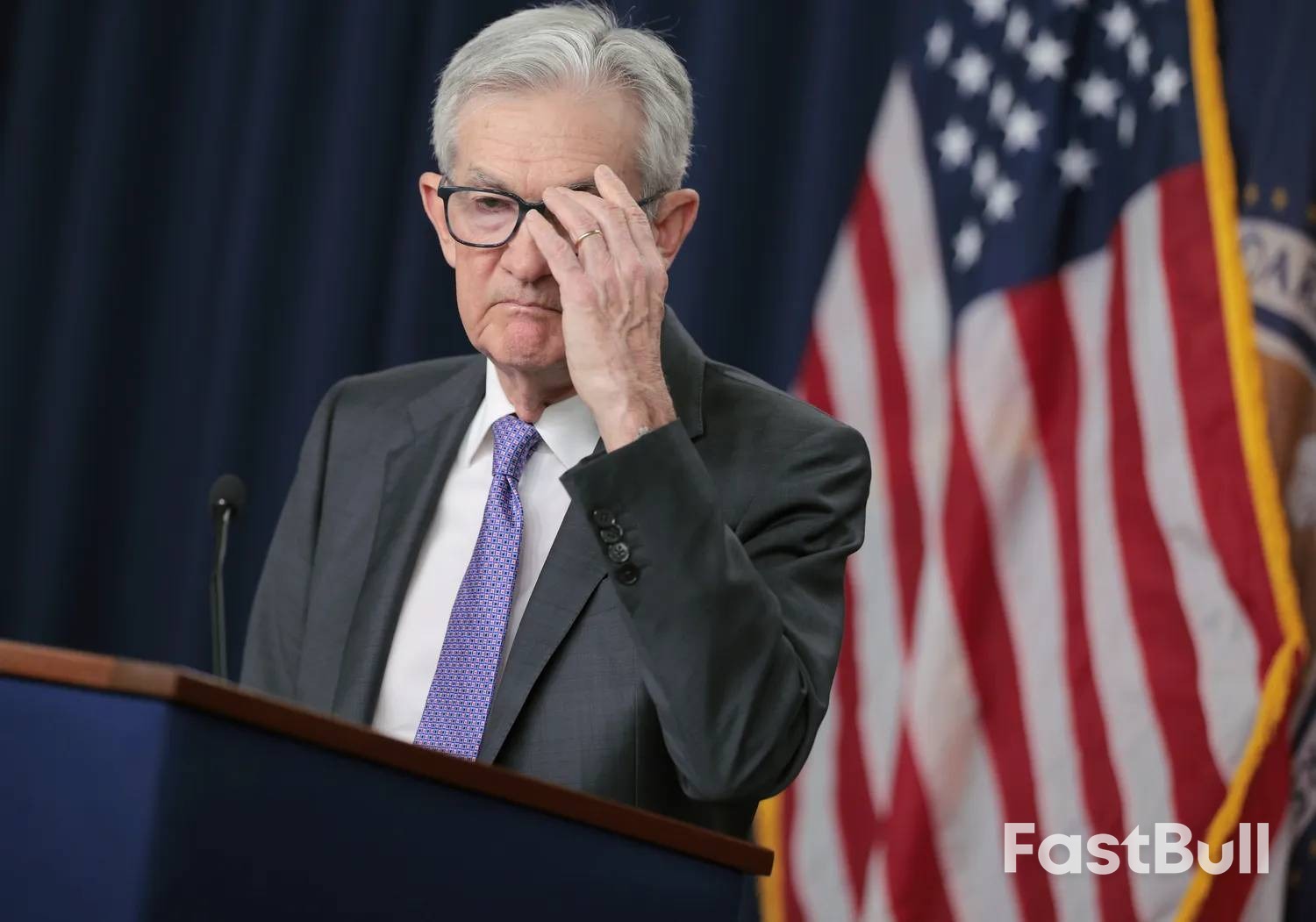
The search for a new chair is unfolding against a backdrop of President Trump's repeated public criticism of the current Federal Reserve Chair, Jerome Powell. The president has openly clashed with Powell over the direction of interest rate policy.
Adding to the pressure, the central bank is also facing a high-profile investigation into its spending, making the leadership transition a critical moment for the institution.
At the World Economic Forum in Davos, Switzerland, U.S. President Donald Trump held a signing ceremony on Thursday for the charter of his "Board of Peace," an initiative joined by over 20 global leaders. The White House confirmed that 25 countries have so far accepted the invitation to join, including Argentina, Belarus, Egypt, Hungary, Pakistan, Saudi Arabia, Turkey, and the United Arab Emirates.
The board was first envisioned as a transitional body for Gaza after the Israel-Hamas ceasefire and received formal backing from the U.N. Security Council in November 2025. However, the charter signed in Davos makes no specific mention of Gaza, signaling Trump's ambition to give the body a much broader mandate.
The document grants Trump significant authority, allowing him to name his successor, veto most decisions, and issue directives to advance the board's mission. "I think we can spread out to other things as we succeed with Gaza," Trump stated. "Once the board is formed, we can do pretty much whatever we want to do."
A Divided Global Response
The initiative has split the international community. Of the more than 50 countries invited, many are still considering the proposal or have rejected it.
• Hesitant Participants: Israel's Prime Minister Benjamin Netanyahu plans to join despite initial reservations about Turkey's inclusion, though no Israeli representative was at the ceremony. The United Kingdom is withholding its support over concerns that Russian President Vladimir Putin might participate. Putin has said he is still reviewing the proposal, although Trump claimed he had already accepted.
• European Rejections: France, Germany, Sweden, and Norway have all declined to participate. Spain, Italy, and Belgium are still reviewing the charter. The White House listed Belgium as having accepted, but the country's foreign affairs minister, Maxime Prévot, called this "incorrect," stating, "We wish for a common and coordinated European response. As many European countries, we have reservations to the proposal."
Notably, as of January 21, the U.S. State Department had paused all immigrant visa issuances for applicants from 13 of the countries that have signed on to the board.
Fears of a UN Alternative
Critics warn that the Board of Peace could undermine the authority of the United Nations. Trump, who earlier suggested the board "might" replace the U.N., said on Thursday it would work "in conjunction with the United Nations." This follows the Trump administration's announcement that it would withdraw the U.S. from 31 U.N. organizations and its effective exit from the World Health Organization.
"The board's very existence confirms that the United States, the primary founder of the U.N. system eight decades ago, is no longer committed to it," wrote Richard Gowan and Daniel Forti in Foreign Policy. They argue the initiative may be "a symptom—and an accelerant—of the decline of the multilateral security system."
Negotiations regarding a potential agreement on Greenland were ongoing Thursday, according to Trump. In an interview with Fox Business, he said the deal would grant the United States "total access" to the island with "no time limit."
On Wednesday, Trump announced that he and NATO Secretary-General Mark Rutte had "formed the framework of a future deal with respect to Greenland and, in fact, the entire Arctic Region." The announcement coincided with Trump retracting tariff threats against Denmark and seven other NATO nations. In his Davos speech, Trump framed the U.S. acquisition of Greenland and the creation of a "Golden Dome" defense system as essential to national security, while ruling out a forced seizure of the territory.
Danish Defense Minister Troels Lund Poulsen stated that while Rutte cannot negotiate on behalf of Denmark, he trusted the situation was in a "better position." However, he set a firm boundary: "We will not cede sovereignty over parts of the Kingdom." Danish Prime Minister Mette Frederiksen echoed this, saying Denmark is open to discussing Arctic security as long as its territorial integrity is respected.
Rutte said the issue of Greenland's status within the Kingdom of Denmark did not come up with Trump and expressed confidence a deal could be reached quickly, possibly in early 2026.
On Wednesday, Israeli strikes in Gaza killed at least 11 Palestinians, including three journalists, two children, and one woman, according to Gaza health officials. The Palestinian Journalists Syndicate stated the journalists were on a "humanitarian journalistic mission" when they were killed. The Israeli military claimed the journalists were operating a Hamas-affiliated drone that it perceived as a threat.
The union asserted that "Targeting journalists while performing their professional duties is part of a policy adopted by the Israeli occupation to silence the Palestinian voice."
Meanwhile, satellite imagery reported by Reuters and the BBC suggests that Israeli forces have moved some of the concrete yellow blocks marking the ceasefire line deeper into Gaza. Israeli Defense Minister Israel Katz has previously stated that anyone crossing the line would be "met with fire." The Israel Defense Forces (IDF) rejected claims that the line has been moved.
Guinea-Bissau will hold presidential and legislative elections on December 6, according to a decree signed Wednesday by military junta leader Gen. Horta Inta-a. The announcement follows a coup last November, when military officers seized power from then-President Umaro Sissoco Embaló, claiming they had uncovered a plot to manipulate election results.
The takeover mirrored a pattern of military coups in West Africa since 2020, including in Mali, Niger, Guinea, and Burkina Faso. However, some African leaders and opposition figures have alleged the coup was a sham staged by Embaló to prevent an electoral loss.
Inta-a, who heads a one-year transitional government, said conditions are now in place for free elections. It is unclear if the planned vote will satisfy the Economic Community of West African States, which has called for a "rapid return to constitutional normalcy."
In a new study, scientists have identified handprints on a cave wall on the Indonesian island of Sulawesi as the world's oldest known cave art. By dating calcium carbonate crusts over the prints, researchers found the images are at least 67,800 years old.
The finding suggests the island was home to early modern humans with "sophisticated cognition," according to archaeologist Adhi Agus Oktaviana, who found the handprints in 2015. The prints appear to have been altered to look like pointed claws, which researchers believe may relate to an Indigenous practice for warding off misfortune. "This is the strongest piece of evidence that our species … playfully and imaginatively transformed a human hand mark into something else," said study co-author and archaeologist Adam Brumm.

White Label
Data API
Web Plug-ins
Poster Maker
Affiliate Program
The risk of loss in trading financial instruments such as stocks, FX, commodities, futures, bonds, ETFs and crypto can be substantial. You may sustain a total loss of the funds that you deposit with your broker. Therefore, you should carefully consider whether such trading is suitable for you in light of your circumstances and financial resources.
No decision to invest should be made without thoroughly conducting due diligence by yourself or consulting with your financial advisors. Our web content might not suit you since we don't know your financial conditions and investment needs. Our financial information might have latency or contain inaccuracy, so you should be fully responsible for any of your trading and investment decisions. The company will not be responsible for your capital loss.
Without getting permission from the website, you are not allowed to copy the website's graphics, texts, or trademarks. Intellectual property rights in the content or data incorporated into this website belong to its providers and exchange merchants.
Not Logged In
Log in to access more features
Log In
Sign Up