Markets
News
Analysis
User
24/7
Economic Calendar
Education
Data
- Names
- Latest
- Prev



Signal Accounts for Members
All Signal Accounts
All Contests


U.S. Core CPI (SA) (Dec)A:--
F: --
P: --
U.S. Core CPI YoY (Not SA) (Dec)A:--
F: --
P: --
U.S. Weekly Redbook Index YoYA:--
F: --
P: --
U.S. New Home Sales Annualized MoM (Oct)A:--
F: --
U.S. Annual Total New Home Sales (Oct)A:--
F: --
U.S. Cleveland Fed CPI MoM (SA) (Dec)A:--
F: --
P: --
U.S. Cleveland Fed CPI MoM (Dec)A:--
F: --
P: --
China, Mainland Exports (Dec)--
F: --
P: --
China, Mainland Imports YoY (CNH) (Dec)--
F: --
P: --
China, Mainland Imports (CNH) (Dec)--
F: --
P: --
China, Mainland Trade Balance (CNH) (Dec)--
F: --
P: --
China, Mainland Imports YoY (USD) (Dec)--
F: --
P: --
China, Mainland Exports YoY (USD) (Dec)--
F: --
P: --
China, Mainland M0 Money Supply YoY (Dec)--
F: --
P: --
China, Mainland M1 Money Supply YoY (Dec)--
F: --
P: --
China, Mainland M2 Money Supply YoY (Dec)--
F: --
P: --
U.S. EIA Natural Gas Production Forecast For The Next Year (Jan)A:--
F: --
P: --
U.S. EIA Short-Term Crude Production Forecast For The Next Year (Jan)A:--
F: --
P: --
U.S. EIA Short-Term Crude Production Forecast For The Year (Jan)A:--
F: --
P: --
EIA Monthly Short-Term Energy Outlook
U.S. 30-Year Bond Auction Avg. YieldA:--
F: --
P: --
Argentina 12-Month CPI (Dec)A:--
F: --
P: --
U.S. Budget Balance (Dec)A:--
F: --
P: --
Argentina CPI MoM (Dec)A:--
F: --
P: --
Argentina National CPI YoY (Dec)A:--
F: --
P: --
Richmond Federal Reserve President Barkin delivered a speech.
U.S. API Weekly Cushing Crude Oil StocksA:--
F: --
P: --
U.S. API Weekly Crude Oil StocksA:--
F: --
P: --
U.S. API Weekly Refined Oil StocksA:--
F: --
P: --
U.S. API Weekly Gasoline StocksA:--
F: --
P: --
South Korea Unemployment Rate (SA) (Dec)--
F: --
P: --
Japan Reuters Tankan Non-Manufacturers Index (Jan)--
F: --
P: --
Japan Reuters Tankan Manufacturers Index (Jan)--
F: --
P: --
China, Mainland Exports YoY (CNH) (Dec)--
F: --
P: --
China, Mainland Trade Balance (USD) (Dec)--
F: --
P: --
China, Mainland Outstanding Loans Growth YoY (Dec)--
F: --
P: --
U.K. 10-Year Note Auction Yield--
F: --
P: --
Canada Leading Index MoM (Dec)--
F: --
P: --
U.S. MBA Mortgage Application Activity Index WoW--
F: --
P: --
U.S. Core PPI YoY (Nov)--
F: --
P: --
U.S. PPI MoM (SA) (Nov)--
F: --
P: --
U.S. PPI YoY (Nov)--
F: --
P: --
U.S. Current Account (Q3)--
F: --
P: --
U.S. Retail Sales YoY (Nov)--
F: --
P: --
U.S. Retail Sales (Nov)--
F: --
P: --
U.S. Core Retail Sales MoM (Nov)--
F: --
P: --
U.S. PPI YoY (Excl. Food, Energy & Trade) (Nov)--
F: --
P: --
U.S. PPI MoM Final (Excl. Food, Energy and Trade) (SA) (Nov)--
F: --
P: --
U.S. Core Retail Sales (Nov)--
F: --
P: --
U.S. Retail Sales MoM (Excl. Automobile) (SA) (Nov)--
F: --
P: --
U.S. Retail Sales MoM (Nov)--
F: --
P: --
U.S. Retail Sales MoM (Excl. Gas Stations & Vehicle Dealers) (SA) (Nov)--
F: --
P: --
U.S. Core PPI MoM (SA) (Nov)--
F: --
P: --
Philadelphia Fed President Henry Paulson delivers a speech
U.S. Commercial Inventory MoM (Oct)--
F: --
P: --
U.S. Existing Home Sales Annualized Total (Dec)--
F: --
P: --
U.S. Existing Home Sales Annualized MoM (Dec)--
F: --
P: --
U.S. EIA Weekly Cushing, Oklahoma Crude Oil Stocks Change--
F: --
P: --
U.S. EIA Weekly Crude Stocks Change--
F: --
P: --
U.S. EIA Weekly Gasoline Stocks Change--
F: --
P: --
U.S. EIA Weekly Crude Demand Projected by Production--
F: --
P: --


No matching data
Latest Views
Latest Views
Trending Topics
Top Columnists
Latest Update
White Label
Data API
Web Plug-ins
Affiliate Program
View All

No data
A $50B foreign aid bill largely blunts Trump's deep cuts to democracy and media, balancing presidential and congressional priorities.
Congressional negotiators have unveiled a $50 billion foreign aid and diplomacy spending bill for fiscal year 2026, striking a compromise that pushes back against the drastic cuts proposed by President Donald Trump.
The legislation, hammered out between senior Democrats and Republicans, largely spares several democracy and journalism organizations that the administration, advised by Elon Musk's Department of Government Efficiency, had slated for closure.
The bill's final figures are being framed differently by each party. House Republicans are emphasizing the $9.3 billion, or 16%, in cuts compared to fiscal 2025 levels. In contrast, Senate Democrats note that the funding is $3.8 billion higher than the initial House Republican proposal and a full $19 billion more than the White House's request.
While the bill could see amendments before its expected passage this month, the current text reflects a painstakingly negotiated deal and is likely close to its final form.
Liz Schrayer, president of the U.S. Global Leadership Coalition, described the agreement as a necessary compromise. "This deal minimizes cuts, protects funding for critical programs, and reaffirms Congress's spending authority," she said. "It also rejects other harsher proposals that would have undercut America's global footprint at a time when our rivals like China, Russia, and Iran are eager to step into the void."
As the first foreign aid bill negotiated under the second Trump administration, the legislation carries clear marks of the president's agenda.
Key provisions reflecting White House priorities include:
• America First Opportunity Fund: A new flexible spending account funded with $850 million. The administration initially sought an unrestricted $2.9 billion fund, which Democrats criticized as a "slush fund." Congress established broad spending categories for the account but did not designate specific country or project amounts.
• Development Finance Corporation: The U.S. International Development Finance Corporation receives nearly $1 billion for its operations.
• PEPFAR Wind-Down: Secretary of State Marco Rubio is directed to begin scaling down the global anti-HIV program known as PEPFAR.
The bill does not, however, address the administration's recent military operations in Venezuela or threats to annex Greenland. The Senate is separately pursuing limitations on military action in Venezuela through the War Powers Resolution.
Despite White House proposals to eliminate or drastically reduce their budgets, several international agencies and programs received significant funding.
Humanitarian and Development Aid
The Millennium Challenge Corporation, a metrics-based anti-poverty agency, will receive $830 million. This is a reduction from its $930 million budget in fiscal 2025 but is $606 million more than the administration's request, which sought to cut its budget by over 75%.
The bill allocates $5.5 billion for humanitarian aid, falling short of the $7.4 billion provided in 2025 but exceeding the administration's $4 billion request. Meanwhile, the U.S. Agency for International Development (USAID) receives no new funding, but the legislation also omits any official language to close the agency, leaving open the possibility of its revival under a future administration.
Democracy and Media Programs
Congress completely ignored the administration's plan to zero out funding for the National Endowment for Democracy. The organization, which supports global democracy and human rights initiatives, will receive $315 million, matching its funding from the previous year.
The U.S. Agency for Global Media (USAGM), which includes Voice of America and Radio Free Europe/Radio Liberty, is funded at $643 million. This marks a decrease from nearly $870 million in fiscal 2025 but directly counters the administration's order last year to close all U.S. taxpayer-funded international broadcasters.
Regional Foundations See Mixed Fates
Two smaller grant-making foundations targeted for closure by the administration received funding, but with starkly different outcomes.
Reflecting the administration's focus on the Western Hemisphere, the Inter-American Foundation saw its funding increased from $20 million to $29 million. The White House had only requested $10 million to cover its close-out costs.
In contrast, the United States African Development Foundation had its budget slashed from $23 million to $12 million. Even so, this amount is double the $6 million in close-out funds requested by the administration.
Finally, the U.S. Institute of Peace, which the administration has attempted to shut down while also renaming it for President Trump, will receive $20 million. This is half its fiscal 2025 appropriation but slightly more than the $18.5 million in closure costs the White House requested.
The battle over the Federal Reserve's political independence is shifting to the Supreme Court, marking a new front in the ongoing conflict between the central bank and the White House. The high court is set to hear arguments on January 21 in a case that could determine President Donald Trump's authority to dismiss members of the Fed's board, with major implications for Chairman Jerome Powell.
At the center of the legal showdown is Federal Reserve Governor Lisa Cook. Last year, the Trump administration accused Cook of committing mortgage fraud related to properties purchased under federally subsidized housing programs and attempted to remove her from office. While courts have so far blocked her dismissal, a White House victory at the Supreme Court could set a powerful precedent.

The outcome of the Cook hearing is seen by analysts as directly linked to the fate of Fed Chair Jerome Powell. President Trump has been a vocal critic of Powell and has previously considered firing him.
"If the Court rules against Cook, that would significantly raise the probability that Powell could also be removed based on the DoJ investigation," noted Bank of America economist Aditya Bhave. "We have been arguing that the Cook case is more important for the policy trajectory than the identity of the next Fed Chair. We think that's even more true now."
The stakes were raised significantly when Powell announced on Sunday that he had been served with Justice Department subpoenas. The investigation reportedly centers on a multimillion-dollar renovation project at the Federal Reserve's headquarters in Washington, D.C., and whether Powell was truthful about the project during congressional testimony.
This marks the first time in history that the Justice Department has pursued a sitting Federal Reserve chair. While previous presidents have tried to influence Fed policy, Trump's public and aggressive approach is unprecedented.
On the surface, removing Powell might seem like a short-term issue, as his term as chairman expires in May. However, his term on the Board of Governors does not end until 2028. This means he could remain at the Fed and potentially obstruct the administration's push for what Trump recently demanded on social media: "MEANINGFULLY!!!" lower interest rates.
This situation could also motivate Powell to serve out his full term as a governor to act as a bulwark against political interference in the central bank's operations.
Analysts are drawing parallels to a post-World War II power struggle. In 1948, President Harry Truman removed Marriner Eccles as Fed Chair, but Eccles chose to stay on as a governor until 1951, continuing to advocate for central bank independence. His name now adorns a Fed building.
Some experts suggest an even bolder scenario could unfold. Matthew Luzzetti, chief U.S. economist at Deutsche Bank, believes recent events increase the chance that Powell will remain at the Fed.
"If the administration insists on following through with a criminal prosecution of Chair Powell, and Senate Republicans stand firm in not advancing nominees to the Federal Reserve Board, it is likely the FOMC would choose Powell to remain on as chair," Luzzetti explained in a client note. This would create a situation where the rate-setting committee is led by Powell, even if Trump names a separate chair for the central bank itself.
The legal and political drama is being watched closely by financial markets. A victory for Cook in the Supreme Court could lead to a protracted battle of wills between the White House and the Fed, creating significant policy uncertainty.
Traders are currently betting against any interest rate changes at the upcoming policy meeting, with CME Group data suggesting the next rate cut is not expected until June.
Kevin Gordon, head of macro research and strategy at Charles Schwab, highlighted the market's reaction to the news about Powell. "Even though the magnitude of various markets' moves in response to the Powell news has been limited, the direction (dollar down, stocks down, bonds down) is indicative of how these shocks are to be digested if they persist over the long term." He added that the Cook decision "will carry immense weight when it comes to any president's ability to shape the structure of the Fed."
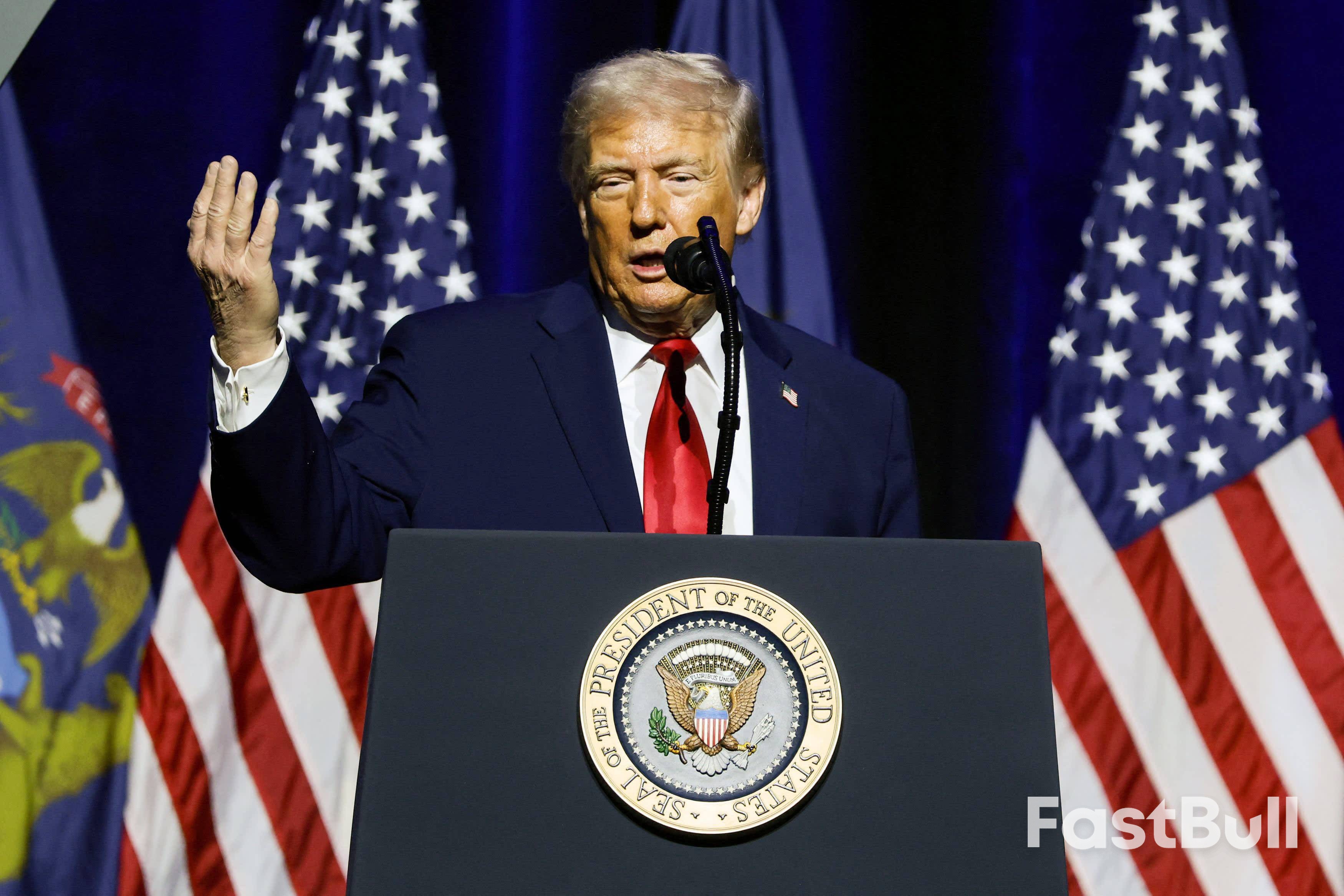
President Donald Trump announced a plan to cut all federal funding to so-called sanctuary cities by the end of the month, escalating his administration's long-running conflict with Democratic-led states and cities over immigration policy.
Speaking at an economic event in Detroit, Trump stated that his administration has also issued "90-day notices" to states like California that bill the federal government for costs associated with immigration.
"Additionally, starting February 1, we're not making any payments to sanctuary cities," Trump declared. "They do everything possible to protect criminals at the expense of American citizens, and it breeds fraud and crime and all of the other problems that come."
Trump is framing the funding cuts and a broader immigration crackdown as a direct response to fraud against federal programs. He specifically highlighted cases in Minnesota where Somali immigrants are accused of defrauding social safety net programs.
The president positioned his deportation efforts as a comprehensive solution that could help lower consumer prices and reduce the federal deficit. He also announced he would seek to "revoke the citizenship of any naturalized immigrant from Somalia or anywhere else who is convicted of defrauding our citizens."
The move drew sharp criticism from Democratic officials. Minnesota Governor Tim Walz and California Governor Gavin Newsom, while denouncing instances of fraud, accused the Trump administration of pursuing a political vendetta. They argue the policy will ultimately cut funding from vital public programs.
Trump's announcement is part of a wider effort to sell his economic agenda to an electorate concerned with the rising cost of living. The president has made a series of economic promises that have captured headlines but have yet to be fully implemented.
He teased several upcoming policy announcements aimed at addressing affordability, including:
• Housing: A detailed plan to make homeownership more affordable for all Americans.
• Healthcare: A new "healthcare affordability framework" to be unveiled this week, designed to lower premiums and prescription drug costs.
• Economic Policy: A speech at the World Economic Forum in Davos, where he plans to detail efforts to ban institutional investors from purchasing homes and to cap credit card interest rates.
The president also pledged to continue working to drive down oil prices in the coming weeks.
The U.S. budget deficit fell to a three-year low of $1.67 trillion in the 2025 calendar year, a development driven primarily by a historic increase in customs revenue generated from tariffs.
According to data released Tuesday by the Treasury Department, the deficit for December alone was $145 billion. This brought the total shortfall for the first quarter of the 2026 fiscal year, which started October 1, to $602 billion.
However, recent figures show some of this momentum may be fading. Customs duties slowed to $28 billion last month, marking the smallest collection since July.
The fiscal improvement in 2025 was overwhelmingly fueled by President Donald Trump's tariff hikes on major trading partners. For the full calendar year, revenue from these duties reached $264 billion, a substantial increase of $185 billion compared to the previous year.
This critical revenue stream, however, faces legal uncertainty. The Supreme Court is poised to rule on the legality of many of Trump's tariffs, a decision that could significantly impact future government income.
While tariffs boosted government coffers, the administration's signature tax legislation is beginning to have the opposite effect. Corporate tax receipts are falling, creating downward pressure on the budget.
In December, corporate tax payments dropped to $65 billion, a 28% decrease from the same month a year earlier. This fiscal drag is expected to intensify as the tax filing season gets underway, which will trigger a wave of individual tax refunds.
Further clouding the long-term outlook, the nonpartisan Congressional Budget Office projected in July that the "One Big Beautiful Bill Act" will add an estimated $3.4 trillion to deficits over the next decade through 2034.
The Trump administration has hailed the narrowing deficit as a major policy success. Treasury Secretary Scott Bessent pointed to the shrinking deficit-to-GDP ratio—down to an estimated 5.9% for the 2025 fiscal year from 6.3% a year prior—as proof of his economic strategy's effectiveness.
However, some budget analysts are questioning the official numbers. They argue that a recent change in how the financial impact of student loans is calculated has distorted the figures, making the deficit appear smaller than it is.
Analysts at JPMorgan Chase & Co. calculated that after adjusting for this accounting change, the actual deficit was more than $1.9 trillion. Under this alternative calculation, the deficit-to-GDP ratio would remain above 6%, painting a far less optimistic fiscal picture.
President Donald Trump has openly encouraged Iranians to continue their widespread protests against the government, promising that "help is on the way" and urging them to "take over your institutions, if possible."
Speaking in Detroit, Trump issued a direct warning to the Iranian leadership under Supreme Leader Ayatollah Ali Khamenei. "Save their names because they'll pay a very big price," he stated, escalating his rhetoric against the regime.
Trump's speech reinforces a message he posted on social media earlier the same day. It also follows a major policy announcement that the United States would impose a 25% tariff on any nation that conducts business with Iran.
While the president did not specify what further actions the U.S. might take, he previously told reporters that his administration was evaluating "some very strong options."
The president’s stance has become increasingly firm. In a Fox News interview last week, Trump declared the U.S. would hit Iran "very hard" if its government continued to shoot at protestors. A White House official also confirmed over the weekend that Trump has been briefed on a range of potential military strikes in Iran, which include nonmilitary sites.
Iran has been gripped by weeks of mass unrest, representing the most significant challenge to the Islamic Republic's authority since the 1979 revolution that overthrew the country's ruling dynasty.
The protests were initially triggered by a currency crisis and deteriorating economic conditions. However, the movement has since evolved, with demonstrators increasingly targeting the regime itself.
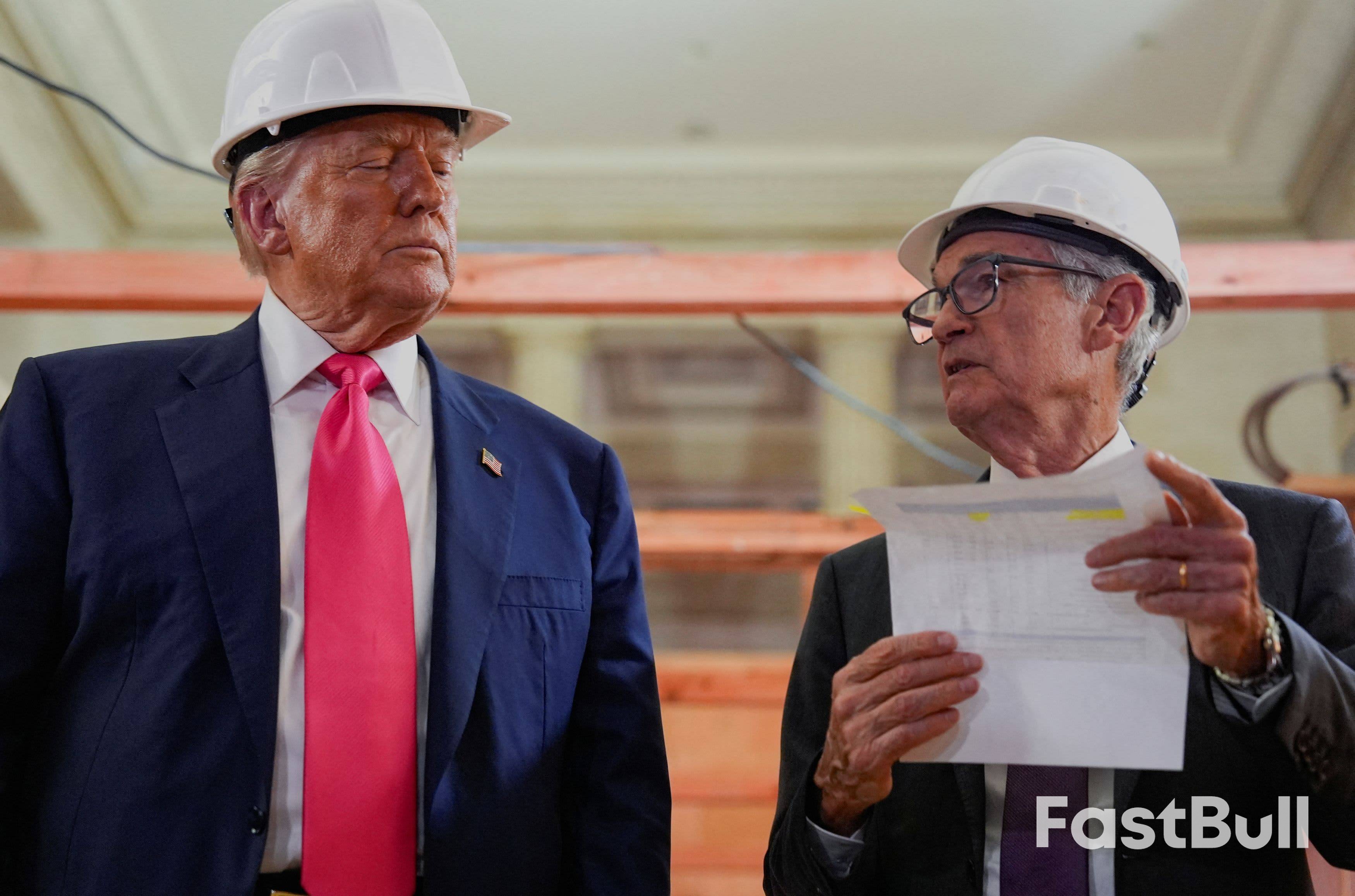
President Donald Trump intensified his criticism of Federal Reserve Chair Jerome Powell on Tuesday, labeling him either "incompetent" or "crooked" as the Department of Justice faces mounting opposition to its criminal investigation of the central bank chief.
The president’s remarks came in response to questions about whether the DOJ’s probe undermines the Federal Reserve's long-held independence from the executive branch.
Trump's criticism appeared to reference the multibillion-dollar renovation of the Fed's Washington headquarters, which is the focus of the DOJ's investigation. "He's billions of dollars over budget," Trump told reporters.
"So, he either is incompetent or he's crooked," Trump said outside the White House. "I don't know what he is. But he does a – certainly he doesn't do a very good job."
Later, during a speech at the Detroit Economic Club after touring a Ford auto plant in Michigan, Trump continued his attacks, saying of Powell, "That jerk will be gone soon."

The escalating rhetoric coincides with growing bipartisan criticism of the investigation and strong support for the Federal Reserve's autonomy.
JPMorgan Chase CEO Jamie Dimon weighed in on Tuesday after the bank's fourth-quarter earnings release. "Everyone we know believes in Fed independence," Dimon told reporters. "Anything that chips away at that is probably not a great idea."
Dimon warned that such actions could backfire, stating, "it will have the reverse consequences, it will raise inflation expectations and probably increase rates over time."
His concerns were echoed by Republican lawmakers, including staunch Trump allies. "If you wanted to design a system to guarantee that interest rates would go up and not down, the best way to do that would be to have the Federal Reserve and the executive branch of the United States get in a pissing contest," said Senate Banking Committee member John Kennedy, R-La., on Monday. "We need this like we need a hole in the head."
CNBC also learned that Treasury Secretary Scott Bessent has privately expressed concerns to Trump that the DOJ probe could complicate the confirmation process for the next Fed chair when Powell's term expires in May.
Despite the criticism, U.S. Attorney Jeanine Pirro indicated her Washington, D.C., office will not back down. In a post on X, she stated that her office had been "ignored" after multiple attempts to discuss cost overruns and Powell's congressional testimony with the Federal Reserve, "necessitating the use of legal process—which is not a threat."
"The word 'indictment' has come out of Mr. Powell's mouth, no one else's," Pirro wrote. "None of this would have happened if they had just responded to our outreach." She added, "We agree with the chairman of the Federal Reserve that no one is above the law, and that is why we expect his full cooperation."
Powell Links Probe to Interest Rate Pressure
Powell addressed the situation in a video statement Sunday night, confirming the DOJ had served grand jury subpoenas and threatened a "criminal indictment" related to his Senate testimony about the renovations.
He directly connected the legal action to Trump's public complaints about the Fed's monetary policy. "The threat of criminal charges is a consequence of the Federal Reserve setting interest rates based on our best assessment of what will serve the public, rather than following the preferences of the President," Powell said.
While affirming that "no one, certainly not the chair of the Federal Reserve, is above the law," Powell urged that "this unprecedented action should be seen in the broader context of the administration's threats and ongoing pressure."
Trump has denied any connection between the investigation and his views on interest rates. "No. I wouldn't even think of doing it that way," he told NBC News on Sunday. "What should pressure him is the fact that rates are far too high. That's the only pressure he's got."
Chile, the world's leading copper producer, may be on the verge of breaking a two-decade-long period of stagnant output. According to the country's mining industry association, Sonami, a new government initiative to cut red tape and ease regulations could unlock significant growth.
This move could provide a much-needed boost to a tightening global copper market, where prices have recently surged to record highs.
Sonami President Jorge Riesco stated that he agrees with projections from President-elect José Antonio Kast’s team, which suggest mining output could climb by 10% to 20% within the next two years. Riesco confirmed these projections were developed following consultations with Sonami.
The core of the strategy involves a pro-growth agenda focused on removing investment barriers. This could free up billions of dollars for mine expansions, leading to a substantial increase in production.
Chile's annual copper output, which slipped to 5.4 million metric tons last year, is already forecast by Sonami to reach between 5.5 million and 5.7 million tons this year, partly driven by high prices incentivizing more supply. The new policies aim to push production closer to the 6 million-ton mark.
An increase in Chilean supply would be welcome news for the global copper market. Prices recently soared above $6 a pound, and analysts have warned of a potential supply squeeze as producers struggle to keep pace with rising demand.
New Demand from AI and Defense
The supply-demand imbalance is being intensified by growing consumption from sectors like artificial intelligence and increased defense spending, creating upward pressure on prices.
Two Decades of Stagnant Production
Chile's situation reflects a broader challenge across the global mining industry. While the development of giant deposits like Escondida once cemented the nation's dominance, output has remained largely flat for twenty years. This stagnation is primarily due to declining ore grades and the increasing complexity and cost of new mining projects.
Despite the current price rally, Sonami forecasts that copper will average around $4.50 a pound this year, anticipating that some recent market disruptions will ease.
The investment landscape shows a mixed short-term picture. While mining investment in Chile is expected to fall by about 20% this year, the long-term outlook remains strong. Projections show a total investment of $26.8 billion between 2025 and 2029.
White Label
Data API
Web Plug-ins
Poster Maker
Affiliate Program
The risk of loss in trading financial instruments such as stocks, FX, commodities, futures, bonds, ETFs and crypto can be substantial. You may sustain a total loss of the funds that you deposit with your broker. Therefore, you should carefully consider whether such trading is suitable for you in light of your circumstances and financial resources.
No decision to invest should be made without thoroughly conducting due diligence by yourself or consulting with your financial advisors. Our web content might not suit you since we don't know your financial conditions and investment needs. Our financial information might have latency or contain inaccuracy, so you should be fully responsible for any of your trading and investment decisions. The company will not be responsible for your capital loss.
Without getting permission from the website, you are not allowed to copy the website's graphics, texts, or trademarks. Intellectual property rights in the content or data incorporated into this website belong to its providers and exchange merchants.
Not Logged In
Log in to access more features

FastBull Membership
Not yet
Purchase
Log In
Sign Up