• Trade
  • Markets
  • Copy
  • Contests
  • News
  • 24/7
  • Calendar
  • Q&A
  • Chats
Trending
Screeners
SYMBOL
LAST
BID
ASK
HIGH
LOW
NET CHG.
%CHG.
SPREAD
SPX
S&P 500 Index
6857.13
6857.13
6857.13
6865.94
6827.13
+7.41
+ 0.11%
--
DJI
Dow Jones Industrial Average
47850.93
47850.93
47850.93
48049.72
47692.96
-31.96
-0.07%
--
IXIC
NASDAQ Composite Index
23505.13
23505.13
23505.13
23528.53
23372.33
+51.04
+ 0.22%
--
USDX
US Dollar Index
98.860
98.940
98.860
98.980
98.840
-0.120
-0.12%
--
EURUSD
Euro / US Dollar
1.16566
1.16574
1.16566
1.16590
1.16408
+0.00121
+ 0.10%
--
GBPUSD
Pound Sterling / US Dollar
1.33436
1.33446
1.33436
1.33452
1.33165
+0.00165
+ 0.12%
--
XAUUSD
Gold / US Dollar
4220.70
4221.11
4220.70
4221.12
4194.54
+13.53
+ 0.32%
--
WTI
Light Sweet Crude Oil
59.344
59.381
59.344
59.469
59.187
-0.039
-0.07%
--

Community Accounts

Signal Accounts
--
Profit Accounts
--
Loss Accounts
--
View More

Become a signal provider

Sell trading signals to earn additional income

View More

Guide to Copy Trading

Get started with ease and confidence

View More

Signal Accounts for Members

All Signal Accounts

Best Return
  • Best Return
  • Best P/L
  • Best MDD
Past 1W
  • Past 1W
  • Past 1M
  • Past 1Y

All Contests

  • All
  • Trump Updates
  • Recommend
  • Stocks
  • Cryptocurrencies
  • Central Banks
  • Featured News
Top News Only
Share

S.Africa's Gross Reserves At $72.068 Billion At End November - Central Bank

Share

[Market Update] Spot Silver Broke Through $58/ounce, Up 1.56% On The Day

Share

Dollar/Yen Down 0.33% To 154.61

Share

Kremlin Says No Plans For Putin-Trump Call For Now

Share

Kremlin Says Moscow Is Waiting For USA Reaction After Putin-Witkoff Meeting

Share

Cctv - China, France: Say Both Sides Support All Efforts For A Ceasefire, Restore Peace According To Intl Law

Share

[Chinese Ambassador To The US Xie Feng Hopes Chinese And American Business Communities Will Focus On Three Lists] On December 4, Chinese Ambassador To The US Xie Feng Delivered A Speech At The China-US Economic And Trade Cooperation Forum Jointly Hosted By The China Council For The Promotion Of International Trade And The Meridian International Center. Xie Feng Said That In November 2026, China Will Host The APEC Leaders' Informal Meeting For The Third Time In Shenzhen, Guangdong Province. In December 2026, The United States Will Also Host The G20 Meeting. Regarding How Chinese And American Business Communities Can Seize These Opportunities, He Suggested Focusing On Three Lists: First, Continue To Expand The Dialogue List; Second, Continuously Lengthen The Cooperation List; And Third, Constantly Reduce The Problem List

Share

India's Nifty Financial Services Index Extends Gains, Last Up 0.75%

Share

Eni : Jp Morgan Cuts To Underweight From Overweight

Share

Cctv - China, France: Signed Protocol On Sanitary, Phytosanitary Requirements For Export Of French Alfalfa Grass

Share

India's NIFTY IT Index Last Up 1.3%

Share

India's Nifty 50 Index Rises 0.35%

Share

Israel Sets 2026 Defence Budget At $34 Billion

Share

Russia Says Azov Sea's Port Of Temryuk Damaged In Ukrainian Attack

Share

Israel's Defense Budget For 2026 Will Be 112 Billion Israeli Shekels - Defense Minister Office

Share

One India Rate Panel Member Ram Singh Was Of View That Stance Should Be Changed To 'Accommodative' From 'Neutral' - Monetary Policy Committee Statement

Share

Reserve Bank Of India Chief: Will Continue To Meet Productive Needs Of Economy In Proactive Manner

Share

Reserve Bank Of India Chief: System Level Financial Parameters Of Nbfcs Sound

Share

Reserve Bank Of India Chief: Dollar Rupee Swap To Be For 3 Years, To Be Conducted This Month

Share

India's Nifty Realty Index Extend Gains, Last Up 1.4%

TIME
ACT
FCST
PREV
Turkey Trade Balance

A:--

F: --

P: --

Germany Construction PMI (SA) (Nov)

A:--

F: --

P: --

Euro Zone IHS Markit Construction PMI (Nov)

A:--

F: --

P: --

Italy IHS Markit Construction PMI (Nov)

A:--

F: --

P: --

U.K. Markit/CIPS Construction PMI (Nov)

A:--

F: --

P: --

France 10-Year OAT Auction Avg. Yield

A:--

F: --

P: --

Euro Zone Retail Sales MoM (Oct)

A:--

F: --

P: --

Euro Zone Retail Sales YoY (Oct)

A:--

F: --

P: --

Brazil GDP YoY (Q3)

A:--

F: --

P: --

U.S. Challenger Job Cuts (Nov)

A:--

F: --

P: --

U.S. Challenger Job Cuts MoM (Nov)

A:--

F: --

P: --

U.S. Challenger Job Cuts YoY (Nov)

A:--

F: --

P: --

U.S. Initial Jobless Claims 4-Week Avg. (SA)

A:--

F: --

P: --

U.S. Weekly Initial Jobless Claims (SA)

A:--

F: --

P: --

U.S. Weekly Continued Jobless Claims (SA)

A:--

F: --

P: --

Canada Ivey PMI (SA) (Nov)

A:--

F: --

P: --

Canada Ivey PMI (Not SA) (Nov)

A:--

F: --

P: --

U.S. Non-Defense Capital Durable Goods Orders Revised MoM (Excl. Aircraft) (SA) (Sept)

A:--

F: --

P: --
U.S. Factory Orders MoM (Excl. Transport) (Sept)

A:--

F: --

P: --

U.S. Factory Orders MoM (Sept)

A:--

F: --

P: --

U.S. Factory Orders MoM (Excl. Defense) (Sept)

A:--

F: --

P: --

U.S. EIA Weekly Natural Gas Stocks Change

A:--

F: --

P: --

Saudi Arabia Crude Oil Production

A:--

F: --

P: --

U.S. Weekly Treasuries Held by Foreign Central Banks

A:--

F: --

P: --

Japan Foreign Exchange Reserves (Nov)

A:--

F: --

P: --

India Repo Rate

A:--

F: --

P: --

India Benchmark Interest Rate

A:--

F: --

P: --

India Reverse Repo Rate

A:--

F: --

P: --

India Cash Reserve Ratio

A:--

F: --

P: --

Japan Leading Indicators Prelim (Oct)

A:--

F: --

P: --

U.K. Halifax House Price Index YoY (SA) (Nov)

--

F: --

P: --

U.K. Halifax House Price Index MoM (SA) (Nov)

--

F: --

P: --

France Current Account (Not SA) (Oct)

--

F: --

P: --

France Trade Balance (SA) (Oct)

--

F: --

P: --

France Industrial Output MoM (SA) (Oct)

--

F: --

P: --

Italy Retail Sales MoM (SA) (Oct)

--

F: --

P: --

Euro Zone Employment YoY (SA) (Q3)

--

F: --

P: --

Euro Zone GDP Final YoY (Q3)

--

F: --

P: --

Euro Zone GDP Final QoQ (Q3)

--

F: --

P: --

Euro Zone Employment Final QoQ (SA) (Q3)

--

F: --

P: --

Euro Zone Employment Final (SA) (Q3)

--

F: --

P: --
Brazil PPI MoM (Oct)

--

F: --

P: --

Mexico Consumer Confidence Index (Nov)

--

F: --

P: --

Canada Unemployment Rate (SA) (Nov)

--

F: --

P: --

Canada Labor Force Participation Rate (SA) (Nov)

--

F: --

P: --

Canada Employment (SA) (Nov)

--

F: --

P: --

Canada Part-Time Employment (SA) (Nov)

--

F: --

P: --

Canada Full-time Employment (SA) (Nov)

--

F: --

P: --

U.S. Dallas Fed PCE Price Index YoY (Sept)

--

F: --

P: --

U.S. PCE Price Index YoY (SA) (Sept)

--

F: --

P: --

U.S. PCE Price Index MoM (Sept)

--

F: --

P: --

U.S. Personal Outlays MoM (SA) (Sept)

--

F: --

P: --

U.S. Core PCE Price Index MoM (Sept)

--

F: --

P: --

U.S. UMich 5-Year-Ahead Inflation Expectations Prelim YoY (Dec)

--

F: --

P: --

U.S. Core PCE Price Index YoY (Sept)

--

F: --

P: --

U.S. 5-10 Year-Ahead Inflation Expectations (Dec)

--

F: --

P: --

U.S. UMich Current Economic Conditions Index Prelim (Dec)

--

F: --

P: --

U.S. UMich Consumer Sentiment Index Prelim (Dec)

--

F: --

P: --

U.S. UMich 1-Year-Ahead Inflation Expectations Prelim (Dec)

--

F: --

P: --

U.S. UMich Consumer Expectations Index Prelim (Dec)

--

F: --

P: --

Q&A with Experts
    • All
    • Chatrooms
    • Groups
    • Friends
    Connecting
    .
    .
    .
    Type here...
    Add Symbol or Code

      No matching data

      All
      Trump Updates
      Recommend
      Stocks
      Cryptocurrencies
      Central Banks
      Featured News
      • All
      • Russia-Ukraine Conflict
      • Middle East Flashpoint
      • All
      • Russia-Ukraine Conflict
      • Middle East Flashpoint
      Search
      Products

      Charts Free Forever

      Chats Q&A with Experts
      Screeners Economic Calendar Data Tools
      Membership Features
      Data Warehouse Market Trends Institutional Data Policy Rates Macro

      Market Trends

      Market Sentiment Order Book Forex Correlations

      Top Indicators

      Charts Free Forever
      Markets

      News

      News Analysis 24/7 Columns Education
      From Institutions From Analysts
      Topics Columnists

      Latest Views

      Latest Views

      Trending Topics

      Top Columnists

      Latest Update

      Signals

      Copy Rankings Latest Signals Become a signal provider AI Rating
      Contests
      Brokers

      Overview Brokers Assessment Rankings Regulators News Claims
      Broker listing Forex Brokers Comparison Tool Live Spread Comparison Scam
      Q&A Complaint Scam Alert Videos Tips to Detect Scam
      More

      Business
      Events
      Careers About Us Advertising Help Center

      White Label

      Data API

      Web Plug-ins

      Affiliate Program

      Awards Institution Evaluation IB Seminar Salon Event Exhibition
      Vietnam Thailand Singapore Dubai
      Fans Party Investment Sharing Session
      FastBull Summit BrokersView Expo
      Recent Searches
        Top Searches
          Markets
          News
          Analysis
          User
          24/7
          Economic Calendar
          Education
          Data
          • Names
          • Latest
          • Prev

          View All

          No data

          Scan to Download

          Faster Charts, Chat Faster!

          Download App
          English
          • English
          • Español
          • العربية
          • Bahasa Indonesia
          • Bahasa Melayu
          • Tiếng Việt
          • ภาษาไทย
          • Français
          • Italiano
          • Türkçe
          • Русский язык
          • 简中
          • 繁中
          Open Account
          Search
          Products
          Charts Free Forever
          Markets
          News
          Signals

          Copy Rankings Latest Signals Become a signal provider AI Rating
          Contests
          Brokers

          Overview Brokers Assessment Rankings Regulators News Claims
          Broker listing Forex Brokers Comparison Tool Live Spread Comparison Scam
          Q&A Complaint Scam Alert Videos Tips to Detect Scam
          More

          Business
          Events
          Careers About Us Advertising Help Center

          White Label

          Data API

          Web Plug-ins

          Affiliate Program

          Awards Institution Evaluation IB Seminar Salon Event Exhibition
          Vietnam Thailand Singapore Dubai
          Fans Party Investment Sharing Session
          FastBull Summit BrokersView Expo

          Fed’s Musalem Says Could Support Another Cut, Policy Not Preset

          Kevin Du

          Central Bank

          Summary:

          Federal Reserve Bank of St. Louis President Alberto Musalem said he could support another interest-rate reduction to bolster a slowing labor market, but emphasized officials should make decisions meeting by meeting given economic uncertainty.

          Federal Reserve Bank of St. Louis President Alberto Musalem said he could support another interest-rate reduction to bolster a slowing labor market, but emphasized officials should make decisions meeting by meeting given economic uncertainty.

          “I could support a path with an additional reduction in the policy rate if there are further risks to the labor market that emerge,” and if the risks for persistent inflation remain contained, Musalem said Friday during an event in Washington. “I do think we need to not be on a preset course.”

          A sharp slowdown in hiring this year has raised concerns about the labor market and motivated officials to lower their benchmark rate by a quarter percentage point last month. Fed Chair Jerome Powell signaled earlier this week that policymakers are likely to lower rates again when they gather on Oct. 28-29.

          But Musalem and other officials have urged their peers to remain on guard against inflation, which is still running above the Fed’s 2% target and rising.

          “Right now, I think it’s particularly important to go meeting by meeting,” Musalem said during the conversation with Bloomberg TV’s Michael McKee.

          The St. Louis Fed chief added that he estimates current Fed policy to be “somewhere between modestly restrictive and neutral.”

          “That’s a reason why I said that we have to tread cautiously,” he said. “I see limited room for further easing before monetary policy could become overly accommodative.”
          Source: Bloomberg Europe

          Risk Warnings and Disclaimers
          You understand and acknowledge that there is a high degree of risk involved in trading. Following any strategies or investment methods may lead to potential losses. The content on the site is provided by our contributors and analysts for information purposes only. You are solely responsible for determining whether any trading assets, securities, strategy, or any other product is suitable for investing based on your own investment objectives and financial situation.
          Add to Favorites
          Share

          Week Ahead for FX, Bonds: U.S. Inflation, PMI Data in Focus as Shutdown Continues

          Adam

          Bond

          Forex

          Below are the most important global events likely to affect FX and bond markets in the week starting Oct. 20.
          Delayed U.S. inflation data are due to be released during the week and will attract attention from investors seeking evidence on the likelihood of future interest-rate cuts.
          As long as the U.S. government shutdown continues, however, major U.S. data will be delayed, leaving greater focus than usual on provisional purchasing managers' surveys for October for a gauge of how well the U.S. economy is performing.
          In Europe, focus will center on purchasing managers' surveys and U.K. inflation data. In Asia, political developments in Japan and a key economic meeting in China could set the tone for market sentiment in the weeks ahead.

          U.S.

          A continued U.S. government shutdown would mean economic data continue to be delayed, complicating the outlook for U.S. interest-rate cuts. However, the Bureau for Labor Statistics is calling back some employees to produce inflation data for September, which is expected to be released on Friday, Oct. 24.
          Amid a lack of other major data releases--with key jobs data for September still not published--these inflation figures will likely grab keen attention, economists at HSBC said in a note.
          "We continue to expect the impact of the higher tariffs to keep building in the coming months, particularly in import-intensive sectors, but it will be interesting to see if the areas that have already seen spikes in prices--such as audio equipment and bananas--see further price pressures," they said.
          Also on Friday, flash purchasing managers' data on U.S. manufacturing and services activity in October will be closely watched, particularly for any clues on labor-market health and for any indications on the impact of the shutdown on consumer sentiment.
          Investors anticipate that a weak labor market will lead the Federal Reserve to cut interest rates by 25 basis points in both October and December, with further reductions to come in 2026.
          Fed governor Christopher Waller said recently that he supported continued policy easing, echoing comments from Fed Chair Jerome Powell. The Fed's next policy decision is on Oct. 29.
          Other data include the University of Michigan's final consumer sentiment index for October, due to be released on Friday. Weekly jobless claims and September existing home sales figures on Thursday, followed by September new home sales figures on Friday will likely be delayed if the shutdown continues.
          The Treasury will sell $13 billion in 20-year bonds on Wednesday and $26 billion in five-year inflation-protected TIPS on Thursday.

          Canada

          Canadian inflation data for September are due to be released Tuesday and will be closely watched as investors gauge the likelihood that the Bank of Canada will cut interest rates again at its next meeting on Oct. 29.
          If the inflation data suggest underlying inflation is slowing even closer to 2%, this may be enough for the BOC to cut rates again, despite September employment being stronger than expected, Citi economists said in a note.
          "The unemployment rate is still at cycle highs, suggesting a widening output gap. September CPI this month may be more important for October [rate] cut chances than jobs," they said.
          Canadian money markets currently price in a 64% chance that the BOC will reduce interest rates by 25 basis points to 2.25% later this month, LSEG data show.
          Canadian retail sales data for August are due on Thursday.

          Eurozone

          Flash October purchasing managers' surveys on manufacturing and services activity will be the highlight in a week light on European data, alongside the EU Summit on Thursday and Friday.
          Flash PMI data for October from France, Germany and the eurozone are scheduled for Thursday, alongside France's monthly business survey and the eurozone's flash consumer confidence indicator, both for October.
          "With regard to October we suspect that the latest political developments in France will continue to weigh domestically, but that there remains underlying momentum in euro area activity more broadly and therefore forecast a rise in the [eurozone PMI] composite index to 51.5," said Investec analyst Ryan Djajasaputra in a note.
          German producer price data for September are scheduled for Monday.
          Bond auctions will include Germany selling October 2027-dated green Bobls and February 2035-dated green Bunds on Tuesday, as well as November 2032-dated Bunds on Wednesday.
          Bond issuance is also scheduled from Slovakia on Monday and Finland on Tuesday.

          U.K.

          The coming week will be a busy one for U.K. economic data as investors watch for any signs that interest rates could be cut again this year. At the same time, they will scrutinize any signals on possible tax increases or spending cuts at the upcoming Nov. 26 budget.
          Focus will center on Wednesday's consumer-price inflation data for September. Inflation is expected to remain elevated and to pick up even further, potentially taking annual CPI to 4.0%. However, the Bank of England has flagged that it expects September will mark the peak for inflation.
          High inflation means most investors anticipate that interest rates won't fall again until next year and will be kept on hold at the BOE's next meetings in November and December. Recent weak U.K. jobs data, however, caused the prospect of a reduction in December to creep up. U.K. money markets now price in a 49% chance of a December rate cut, LSEG data show.
          Signs of a weak economy could increase December rate-cut chances even further. In that light, investors will pay close attention to Friday's flash purchasing managers' data on manufacturing and services activity in October, as well as retail sales data for September on the same day.
          "The anticipation of a greater tax burden might already be prompting households to be more cautious about some discretionary spending," Investec economist Sandra Horsfield said in a note.
          U.K. public finance data for September are released on Tuesday and are expected to show increased borrowing, potentially increasing concerns about the U.K.'s tricky fiscal outlook ahead of next month's budget.
          Producer-price data for September are due to be released on Wednesday, having been suspended since March due to problems with methodology reported by the Office for National Statistics.
          Other data due during the week include the GfK consumer confidence survey for October, due on Friday.
          The U.K. plans to sell July 2053 green gilts on Tuesday and March 2031 gilts on Thursday.
          Scandinavia
          Denmark and Sweden will hold bond auctions on Wednesday.
          Hungary
          The Hungarian central bank announces a rate decision on Monday.
          Market pricing shows about an 85% chance that interest rates will be left unchanged at 6.5%, and a 15% chance of another rate cut, LSEG data show.
          "Contrary to the government's recently expressed view in favor of policy easing, "we do not see any room for a cut in the base rate yet," ING analysts said in a note.
          Rate cuts are unlikely this year as the central bank remains focused on addressing high inflation expectations, they said.

          Turkey

          Turkey's central bank is expected to cut interest rates further at its meeting on Thursday.
          The latest inflation data showed inflation rose to 33.3% in September but this was largely driven by higher food prices with core inflation easing further, Capital Economics economist Jason Tuvey said in a note.
          "The further easing of underlying price pressures will give officials enough confidence that they can press ahead with additional 250 basis points rate cuts at its forthcoming meetings that takes the one-week repo rate down from 40.50% now to 35.50% by year-end," he said.
          Capital Economics expects further easing next year with rates reaching 25.00% by end-2026.

          Japan

          An extraordinary Diet session is expected to be convened to select Japan's new prime minister. It remains uncertain whether Sanae Takaichi, leader of the ruling Liberal Democratic Party, will secure enough votes, given the party's minority status and ongoing coalition talks.
          Investors will focus on central bank speeches, with BOJ policy board member Hajime Takata slated to deliver a speech in Hiroshima on Monday, and Deputy Gov. Ryozo Himino to speak at an event on Tuesday. The BOJ will release its semiannual financial system report on Thursday, assessing the health of the banking sector and financial markets.
          Data due Friday are expected to show that inflation remains stubborn. Consumer prices excluding fresh food likely rose 2.9% in September from a year earlier, according to a Quick poll, and compared with the 2.7% rise in August. Trade figures for September are scheduled for release on Wednesday.
          The BOJ will conduct outright purchases of government bonds on Wednesday, covering maturities from over three years up to 25 years, to help stabilize the domestic bond market.
          The ministry of finance will auction about 300 billion yen of 10-year climate transition JGBs on Tuesday. These bonds may attract investors interested in Japan's decarbonization push, as transition securities gain traction as a financing tool for green initiatives.

          China

          China faces a packed data calendar, with third-quarter GDP figures taking center stage as markets assess how the economy has fared under renewed tariff pressure.
          The week begins with September house price, property investment and sales data, which are expected to underscore the sector's prolonged slump. A Wall Street Journal poll suggests the economy likely grew 4.8% in the third quarter from a year earlier, down from 5.2% the previous quarter, as domestic demand stayed soft.

          Source: morningstar

          Risk Warnings and Disclaimers
          You understand and acknowledge that there is a high degree of risk involved in trading. Following any strategies or investment methods may lead to potential losses. The content on the site is provided by our contributors and analysts for information purposes only. You are solely responsible for determining whether any trading assets, securities, strategy, or any other product is suitable for investing based on your own investment objectives and financial situation.
          Add to Favorites
          Share

          'Bull wave' will push gold to $5,000/oz by June 2026 – HSBC

          Adam

          Commodity

          The ongoing bull market rally that has already propelled gold to successive all-time highs above $4,300 per ounce will drive prices as high as $5,000 early next year, according to analysts at HSBC.
          “The bull market is likely to continue to press prices higher for 1H’26 and we could very well reach a high of $5,000/oz some time in 1H 2026,” the British banking giant said in a Friday research note. The analysts’ forecast is supported by elevated risks to the global economy and the impact of new entrants into the precious metals market.
          HSBC also raised its average gold price forecast for 2025 to $3,455 per ounce, up from $3,355, and increased its average gold price forecast for 2026 to $4,600, up from its previous estimate of $3,950 per ounce.
          HSBC noted that gold’s advance has been fueled by geopolitical tensions, robust central bank buying, rising exchange-traded-fund inflows, expectations of U.S. rate cuts and tariff-related economic uncertainties. The bank also cited economic policy uncertainty and rising public debt as factors supporting the price.
          HSBC warned, however, that they also expect significant volatility followed by some price moderation in the second half of 2026.
          “Unlike previous rallies, we believe many of these new buyers are likely stay in the gold space – even after the rally ends – not so much for appreciation necessarily as for gold’s diversification and ‘safe haven’ qualities,” the analysts wrote.
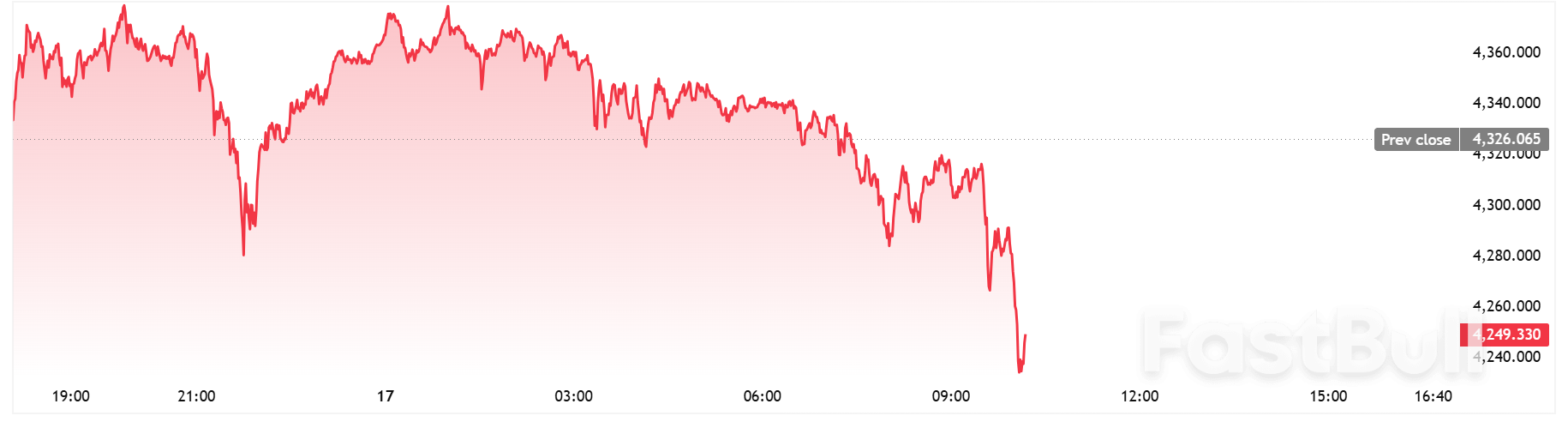
          Gold is seeing a pullback in Friday’s trading after the yellow metal’s spot price hit a new all-time high of $4,380.99 at 1 am EDT.
          'Bull wave' will push gold to $5,000/oz by June 2026 – HSBC_1
          Spot gold last traded at $4,248.41 for a loss of 1.79% on the daily chart.

          Source: kitco

          Risk Warnings and Disclaimers
          You understand and acknowledge that there is a high degree of risk involved in trading. Following any strategies or investment methods may lead to potential losses. The content on the site is provided by our contributors and analysts for information purposes only. You are solely responsible for determining whether any trading assets, securities, strategy, or any other product is suitable for investing based on your own investment objectives and financial situation.
          Add to Favorites
          Share

          AI boom rippling across to Britain's pound, Swedish crown

          Adam

          Economic

          The boom in investment in artificial intelligence is starting to be felt for the first time in currency markets across Europe, and analysts reckon the Swedish crown and sterling stand to benefit the most.
          Trading in the almost $10 trillion-a-day FX markets this year has been driven by broad dollar weakness given tariff-related concerns and U.S. rate cut expectations.
          But dig deeper and the impact of AI, which has helped drive stocks to record highs, is rippling across to currencies.
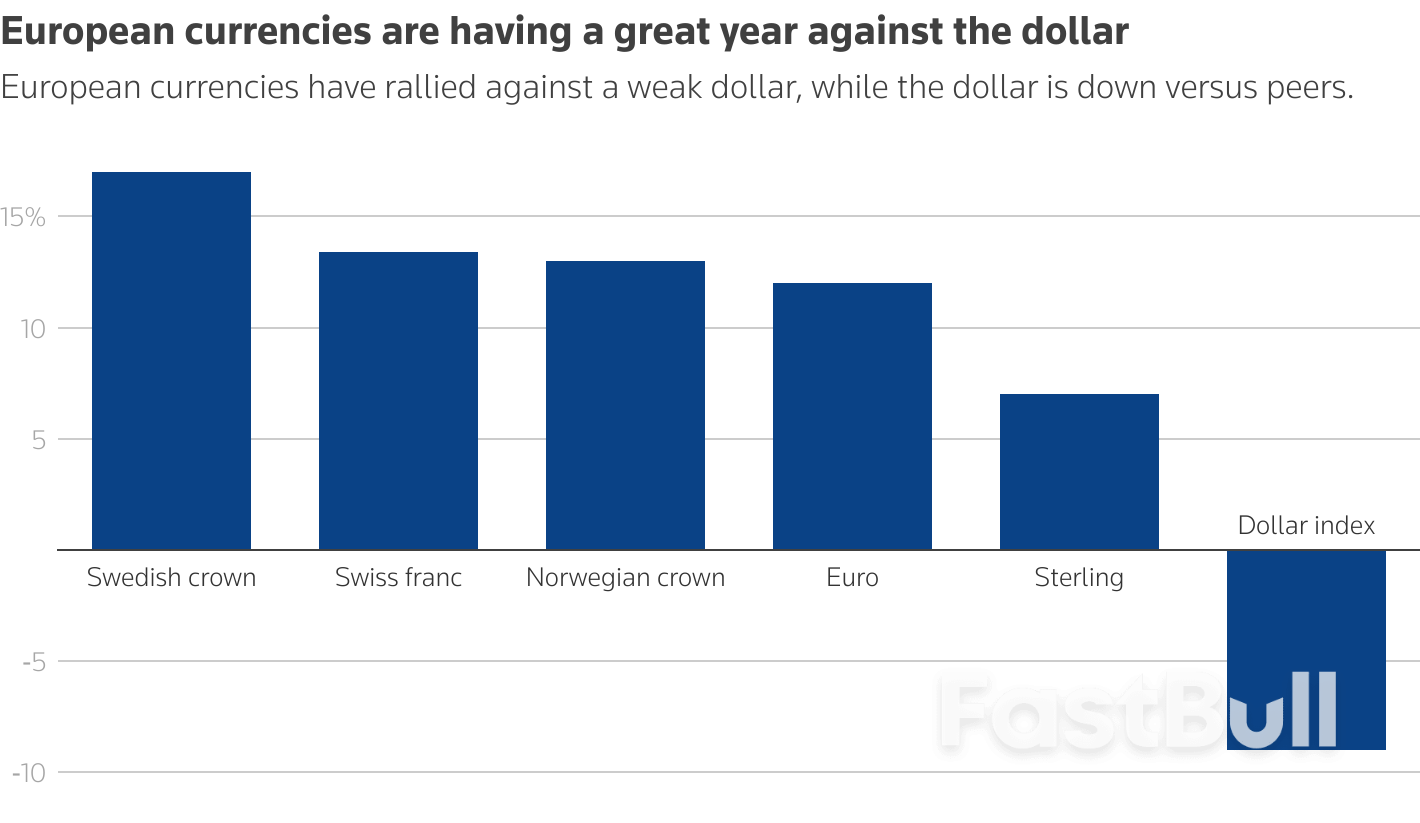
          According to JPMorgan, the resilience of the Swedish crown , or krona, and sterling in recent months may be partially attributable to tech as Sweden and Britain stand out on measures of AI investment and their currencies are receiving a tailwind from this dynamic, even if only a small one.
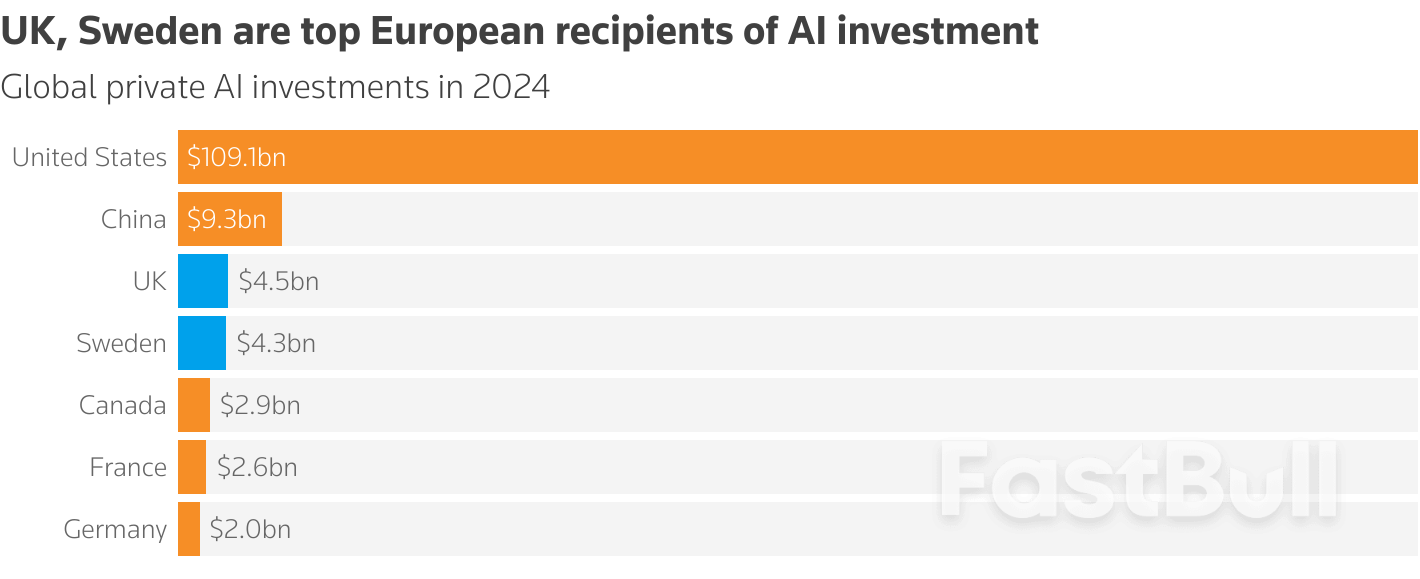
          By one measure, the UK and Sweden received just over $4 billion each last year in private AI investments, ranking third and fourth in a Stanford University AI index of biggest beneficiaries of such investments, behind the United States and China.
          AI boom rippling across to Britain's pound, Swedish crown_1

          AI index report from Stanford University shows that the US, China, UK and Sweden were the top beneficiaries of AI investment last year

          Sweden's krona is the strongest-performing major European currency against a weak dollar so far this year, having climbed almost 15%. Sterling has rallied 7%.
          Dissecting the exact impact of AI on currency moves is hard, analysts say, given other factors at play such as interest rate expectations or fiscal unease, especially with sterling.
          "Large AI investments have been announced for both countries," said Rabobank's head of FX strategy Jane Foley. "The inward investment could certainly have created some demand for sterling and Swedish crown respectively and created some resilience".
          AI boom rippling across to Britain's pound, Swedish crown_2

          European currencies have rallied against a weak dollar, while the dollar is down versus peers.

          The crown is also up against the euro and other Scandinavian currencies. Sterling, hurt by fiscal worries, is down against the euro and Swiss franc, however.
          Investments in Swedish AI companies, which bring higher demand for crowns, would cause a visible spike in the currency, while the impact of such investments on sterling would be less visible because it is already so heavily traded, Rabobank's Foley said.
          Sterling is the world's fourth most-traded currency, accounting for just over 10% of all trades, while Sweden's crown accounts for less than 2%, according to the Bank for International Settlements.
          BIG PROMISES
          Britain and the United States last month agreed a technology pact, with top U.S. firms led by Microsoft (MSFT.O) pledging 31 billion pounds ($42 billion) in UK investments.
          AI giant Nvidia (NVDA.O) plans to provide its data centre platform to Swedish companies including telecoms gear maker Ericsson (ERICb.ST), and drug developer AstraZeneca (AZN.L). Microsoft, Facebook's owner Meta (META.O), Google's owner Alphabet (GOOGL.O), and Canada's Brookfield Asset Management (BAM.TO) plan data centres in Sweden given the country's reliable electricity supplies and infrastructure.
          While it's too soon to say what impact AI will have on economic growth or unemployment, which could potentially add to strains on public finances, the announcements offered a favourable backdrop for the krona and sterling, analysts said.
          A report by SEB released earlier this year looking at major Swedish participants in the FX market showed their net overweight position in the crown was close to record highs.
          Societe Generale head of corporate research for FX and rates Kenneth Broux said U.S. tech investment pledges can diminish pessimism ahead of Britain's November budget, when taxes are expected to rise, lifting sterling's appeal.
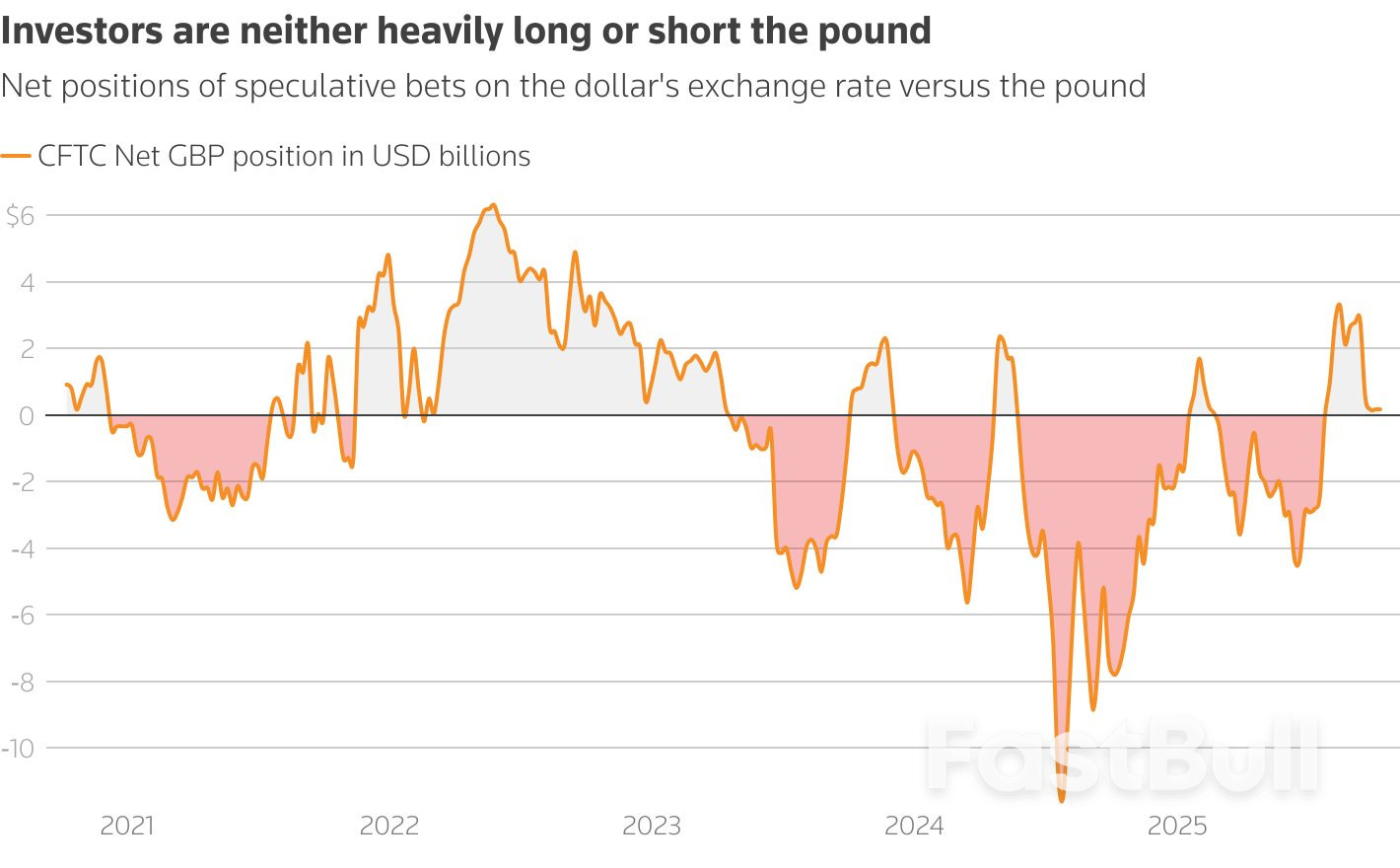
          Latest CFTC positioning shows investors are neither heavily in favour nor against sterling. Speculators have eroded bullish dollar positions against the pound from August's almost three-year high of $3.3 billion to just $165 million, reflecting waning conviction that the greenback will rally against sterling.
          AI boom rippling across to Britain's pound, Swedish crown_3

          Net positions of speculative bets on the dollar's exchange rate versus the pound

          "What AI does potentially change is the outlook for productivity growth, the Achilles' heel of the UK economy", said Broux.
          An aging population in the West opens the door to “reskilling and upskilling” which can help keep a lid on welfare payments and potential unemployment benefits caused by AI, he added.
          Some are broadly positive on sterling. Investment firm St James's Place has an overweight position. Deutsche Bank expects sterling to rise to $1.45 over the next couple of years, compared with roughly $1.34 currently.
          And HSBC Private Bank's global CIO Willem Sels said that while his near-term view on sterling was not too positive given the looming budget, he sensed that investor sentiment towards the UK was more "constructive" than it appears.
          "One of the reasons for that is that people see the UK as a relatively interesting destination for AI-related investment," Sels said.
          "This is why we also saw (Nvidia CEO) Jensen Huang sitting next to the Prime Minister (Keir Starmer earlier this year) and talking about the strength of the UK."

          Source: reuters

          To stay updated on all economic events of today, please check out our Economic calendar
          Risk Warnings and Disclaimers
          You understand and acknowledge that there is a high degree of risk involved in trading. Following any strategies or investment methods may lead to potential losses. The content on the site is provided by our contributors and analysts for information purposes only. You are solely responsible for determining whether any trading assets, securities, strategy, or any other product is suitable for investing based on your own investment objectives and financial situation.
          Add to Favorites
          Share

          Soybeans Rise As Trump’s Trade Remarks Spark US Demand Optimism

          Devin

          Economic

          Commodity

          Soybean futures rose as US President Donald Trump said high threatened tariffs with China were not viable, sparking optimism that the world’s largest economies will move toward a trade deal.

          Soybean futures have been treading water in recent weeks as China has yet to purchase a single shipment of US crops from the harvest currently wrapping up. Trump is expected to meet with Chinese counterpart Xi Jinping later this month on the sidelines of the Asia-Pacific Economic Cooperation summit in South Korea.

          “Grain and oilseed markets are mostly steady to firm after President Trump’s comment this morning,” StoneX Chief Commodities Economist Arlan Suderman said in a note. “Trump indicated that things will be alright with China once he and President Xi are able to meet on the sideline of the APEC conference in South Korea in a couple of weeks.”

          Soy prices also rose after US Agriculture Secretary Brooke Rollins said on Thursday that the US is in talks with some South American nations over the possibility of doing “some crushing there for our soybeans and others.” Rollins said she spoke with two countries that are “interested in purchasing,” but she didn’t specify which nations or which products they’d purchase.

          Source: Bloomberg Europe

          To stay updated on all economic events of today, please check out our Economic calendar
          Risk Warnings and Disclaimers
          You understand and acknowledge that there is a high degree of risk involved in trading. Following any strategies or investment methods may lead to potential losses. The content on the site is provided by our contributors and analysts for information purposes only. You are solely responsible for determining whether any trading assets, securities, strategy, or any other product is suitable for investing based on your own investment objectives and financial situation.
          Add to Favorites
          Share

          Is AI really making electricity bills higher? Here’s what the experts say

          Adam

          Economic

          Lindsey Martin’s electricity bill reached $314 in July, the highest bill she had received this year until that point, she said on TikTok. In the video’s more than 4,000 comments, many users reported similar power-bill spikes.
          Martin’s bill jumped even higher in August to $372, a notable leap from around $150 two to three years ago.
          “I thought that was so high, I could not believe my bill was $150,” Martin, a Kentucky-based registered nurse, told CNN over the phone. “And now I wish my bill was $150.”
          Martin isn’t alone. Residential electricity costs are on the rise, according to data from the US Energy Information Administration (EIA). The average price of electricity in America has increased 13% since 2022, with the cost of retail electricity expected to grow faster than the rate of inflation, the report says. Some regions, like the Pacific, Middle Atlantic and New England, could see even higher increases than the national average.
          The increases have largely been driven by the costs of updating and maintaining the power grid and other necessary infrastructure, particularly in the face of increasingly common severe weather events, according to experts on energy and computing who spoke with CNN.
          But a new technological wave is also driving up electricity bills: The AI boom is boosting electricity demand and power resources as tech giants pour billions into what many believe is the biggest computing shift in decades. OpenAI and Broadcom announced a partnership just this week to design and develop 10 gigawatts of custom AI chips and systems, more than enough to power a major city.
          That trend is only expected to continue. Data centers are projected to consume approximately 6.7% to 12% of US electricity in 2028, up from 4.4% in 2023, according to a December 2024 report from the Department of Energy. A Bloomberg News analysis found that areas near data centers saw an increase in electricity costs of as much as 267% compared to five years ago.
          The power industry just isn’t equipped to keep up, said Bob Johnson, an analyst with market research firm Gartner who follows the semiconductor industry.
          ‘Explosion in demand’ for AI
          Investment in data centers has moved fast as tech behemoths stake the future of their businesses on AI. Meta said it spent $17 billion in capital expenditures, which typically refers to money spent on data centers and infrastructure, for the quarter that ended in June, while Microsoft said it spent $24.2 billion. Data center construction spending reached a high of $40 billion in June, according to a Bank of America Institute report.
          Existing data centers likely need to be updated to ensure they have enough capacity to handle new power-hungry AI services and products.
          That growth is contributing to more electricity demand than the United States has seen in two decades, leading to a need for more investment in electricity generation and transmission, said Rich Powell, CEO of the Clean Energy Buyers Association, a trade group that represents electricity buyers.
          Other factors behind the increased demand include a shift to electric-based heating systems in homes and new manufacturing plants, according to the Bank of America report.
          There weren’t enough data center construction and upgrades in the past to affect consumer prices, said Ram Rajagopal, senior fellow for Stanford University’s Precourt Institute for Energy. But now the AI industry is seeing an “explosion in demand.”
          AI tools are also growing increasingly sophisticated, evolving beyond text-based queries to handle complex tasks like generating realistic video clips in a matter of seconds and coding websites from scratch. This means they also require more resources than ever.
          “AI is really computationally intensive,” said Shaolei Ren, an associate professor of electrical and computer engineering at the University of California, Riverside.
          What goes into your electricity bill
          Rates vary by location, but retail electricity prices generally include the “cost of generating, transmitting and delivering” electricity and can sometimes factor in investment in upgrading infrastructure, according to the EIA.
          Large buyers of electricity typically pay lower rates because the distribution infrastructure is less complex; power needs to be piped to one location rather than hundreds or thousands of homes, said Johnson. Pricing models haven’t been updated to take into account the surge in data center growth, he said, although that can vary by location.
          Oregon, for example, passed a bill requiring data centers to “pay for the actual strain they place on Oregon’s electrical grid” so that the costs don’t get passed on to the consumer.
          “In other words, the homeowners shouldn’t have to pay for data centers, but that’s not built into the pricing structure,” he said.

          Source: cnn

          To stay updated on all economic events of today, please check out our Economic calendar
          Risk Warnings and Disclaimers
          You understand and acknowledge that there is a high degree of risk involved in trading. Following any strategies or investment methods may lead to potential losses. The content on the site is provided by our contributors and analysts for information purposes only. You are solely responsible for determining whether any trading assets, securities, strategy, or any other product is suitable for investing based on your own investment objectives and financial situation.
          Add to Favorites
          Share

          ECB To Ensure Inflation Doesn't Get Stuck Below 2%

          Daniel Carter

          Central Bank

          Economic

          The European Central Bank will make sure a projected undershoot of the inflation target next year doesn't become more pronounced, Governing Council member Martins Kazaks said.
          “We're focusing on the medium term to deliver 2% and there's going to be some volatility around it,” the Latvian central-bank chief said in an interview. “But if there is a risk that inflation is consistently and significantly below 2%, and for a longer period of time, then of course we will need to move.”
          The ECB predicts prices will grow 1.7% in 2026, followed by a re-acceleration to just below its goal the following year. While most officials don't see a need to act on this outlook, there's an intensifying debate on how the global environment is likely to affect Europe.
          After eight cuts to 2%, analysts and investors see only slim chances of another move anytime soon. ECB officials have repeatedly stressed that they're going to decide meeting to meeting, and that they're happy with current policy settings.
          Speaking on the sidelines of the IMF's annual meetings in Washington, Kazaks said the decision whether to cut or not won't come down to “one single data point.” Instead, it's “typically a larger set of variables that highlights the risk of an undershoot that's long and sizable enough that we need a preventive move to not deviate from the 2% target too much.”
          Officials can afford to “take a bit of time to look at the data” because inflation expectations haven't moved much from the ECB's goal, he added.
          The central bank's December meeting is widely seen as the next opportunity for a more intense discussion on the economy and the inflation outlook. The ECB is set to produce a new round of forecasts that will include 2028 for the first time.
          Kazaks said risks abound on both sides, though officials are “more aware” of those that could pull inflation lower. They include the euro's exchange rate and possible dumping of Chinese products on European markets.
          On the other hand, geopolitical fragmentation is producing more supply shocks and Europe could introduce tariffs or other measures to protect against a flood of Chinese goods, according to Kazaks. “But these upside risks are much less clear at the moment,” he said.
          Even so, the Latvian policymaker insisted he has an open mind on what to do with borrowing costs.
          “Taking it meeting by meeting is the appropriate choice,” he said. “I don't think we need any kind of bias to the upside or the downside.”

          Source: Bloomberg Europe

          To stay updated on all economic events of today, please check out our Economic calendar
          Risk Warnings and Disclaimers
          You understand and acknowledge that there is a high degree of risk involved in trading. Following any strategies or investment methods may lead to potential losses. The content on the site is provided by our contributors and analysts for information purposes only. You are solely responsible for determining whether any trading assets, securities, strategy, or any other product is suitable for investing based on your own investment objectives and financial situation.
          Add to Favorites
          Share
          FastBull
          Copyright © 2025 FastBull Ltd

          728 RM B 7/F GEE LOK IND BLDG NO 34 HUNG TO RD KWUN TONG KLN HONG KONG

          TelegramInstagramTwitterfacebooklinkedin
          App Store Google Play Google Play
          Products
          Charts

          Chats

          Q&A with Experts
          Screeners
          Economic Calendar
          Data
          Tools
          Membership
          Features
          Function
          Markets
          Copy Trading
          Latest Signals
          Contests
          News
          Analysis
          24/7
          Columns
          Education
          Company
          Careers
          About Us
          Contact Us
          Advertising
          Help Center
          Feedback
          User Agreement
          Privacy Policy
          Business

          White Label

          Data API

          Web Plug-ins

          Poster Maker

          Affiliate Program

          Risk Disclosure

          The risk of loss in trading financial instruments such as stocks, FX, commodities, futures, bonds, ETFs and crypto can be substantial. You may sustain a total loss of the funds that you deposit with your broker. Therefore, you should carefully consider whether such trading is suitable for you in light of your circumstances and financial resources.

          No decision to invest should be made without thoroughly conducting due diligence by yourself or consulting with your financial advisors. Our web content might not suit you since we don't know your financial conditions and investment needs. Our financial information might have latency or contain inaccuracy, so you should be fully responsible for any of your trading and investment decisions. The company will not be responsible for your capital loss.

          Without getting permission from the website, you are not allowed to copy the website's graphics, texts, or trademarks. Intellectual property rights in the content or data incorporated into this website belong to its providers and exchange merchants.

          Not Logged In

          Log in to access more features

          FastBull Membership

          Not yet

          Purchase

          Become a signal provider
          Help Center
          Customer Service
          Dark Mode
          Price Up/Down Colors

          Log In

          Sign Up

          Position
          Layout
          Fullscreen
          Default to Chart
          The chart page opens by default when you visit fastbull.com