Markets
News
Analysis
User
24/7
Economic Calendar
Education
Data
- Names
- Latest
- Prev



Signal Accounts for Members
All Signal Accounts
All Contests


Venezuela's Machado Says She Told Rubio In Meeting On Wednesday That She Wants To Go Back To Her Country
Powell: I Think It's Hard To Look At Incoming Data And Say Policy Is Significantly Restrictive
Apollo Analyst Slok: "The Idea That Fed Governor Waller Is 'testing The Waters' For 'dissent' Is Unfair."
Powell: There Are No Plans Yet For What Will Happen After My Term As Federal Reserve Chairman Ends

U.S. Richmond Fed Services Revenue Index (Jan)A:--
F: --
P: --
U.S. 5-Year Note Auction Avg. YieldA:--
F: --
P: --
U.S. API Weekly Refined Oil StocksA:--
F: --
P: --
U.S. API Weekly Crude Oil StocksA:--
F: --
P: --
U.S. API Weekly Gasoline StocksA:--
F: --
P: --
U.S. API Weekly Cushing Crude Oil StocksA:--
F: --
P: --
Australia RBA Trimmed Mean CPI YoY (Q4)A:--
F: --
P: --
Australia CPI YoY (Q4)A:--
F: --
P: --
Australia CPI QoQ (Q4)A:--
F: --
P: --
Germany GfK Consumer Confidence Index (SA) (Feb)A:--
F: --
P: --
Germany 10-Year Bund Auction Avg. YieldA:--
F: --
P: --
India Industrial Production Index YoY (Dec)A:--
F: --
P: --
India Manufacturing Output MoM (Dec)A:--
F: --
P: --
U.S. MBA Mortgage Application Activity Index WoWA:--
F: --
P: --
Canada Overnight Target RateA:--
F: --
P: --
BOC Monetary Policy Report
U.S. EIA Weekly Crude Stocks ChangeA:--
F: --
P: --
U.S. EIA Weekly Cushing, Oklahoma Crude Oil Stocks ChangeA:--
F: --
P: --
U.S. EIA Weekly Crude Demand Projected by ProductionA:--
F: --
P: --
U.S. EIA Weekly Crude Oil Imports ChangesA:--
F: --
P: --
U.S. EIA Weekly Heating Oil Stock ChangesA:--
F: --
P: --
U.S. EIA Weekly Gasoline Stocks ChangeA:--
F: --
P: --
BOC Press Conference
Russia PPI MoM (Dec)A:--
F: --
P: --
Russia PPI YoY (Dec)A:--
F: --
P: --
U.S. Interest Rate On Reserve BalancesA:--
F: --
P: --
U.S. Target Federal Funds Rate Lower Limit (Overnight Reverse Repo Rate)A:--
F: --
P: --
U.S. Federal Funds Rate TargetA:--
F: --
P: --
U.S. Target Federal Funds Rate Upper Limit (Excess Reserves Ratio)A:--
F: --
P: --
FOMC Statement
FOMC Press Conference
Brazil Selic Interest Rate--
F: --
P: --
Australia Import Price Index YoY (Q4)--
F: --
P: --
Japan Household Consumer Confidence Index (Jan)--
F: --
P: --
Turkey Economic Sentiment Indicator (Jan)--
F: --
P: --
Euro Zone M3 Money Supply (SA) (Dec)--
F: --
P: --
Euro Zone Private Sector Credit YoY (Dec)--
F: --
P: --
Euro Zone M3 Money Supply YoY (Dec)--
F: --
P: --
Euro Zone 3-Month M3 Money Supply YoY (Dec)--
F: --
P: --
South Africa PPI YoY (Dec)--
F: --
P: --
Euro Zone Consumer Confidence Index Final (Jan)--
F: --
P: --
Euro Zone Selling Price Expectations (Jan)--
F: --
P: --
Euro Zone Industrial Climate Index (Jan)--
F: --
P: --
Euro Zone Services Sentiment Index (Jan)--
F: --
P: --
Euro Zone Economic Sentiment Indicator (Jan)--
F: --
P: --
Euro Zone Consumer Inflation Expectations (Jan)--
F: --
P: --
Italy 5-Year BTP Bond Auction Avg. Yield--
F: --
P: --
Italy 10-Year BTP Bond Auction Avg. Yield--
F: --
P: --
France Unemployment Class-A (Dec)--
F: --
P: --
South Africa Repo Rate (Jan)--
F: --
P: --
Canada Average Weekly Earnings YoY (Nov)--
F: --
P: --
U.S. Nonfarm Unit Labor Cost Final (Q3)--
F: --
P: --
U.S. Initial Jobless Claims 4-Week Avg. (SA)--
F: --
P: --
U.S. Weekly Continued Jobless Claims (SA)--
F: --
P: --
U.S. Trade Balance (Nov)--
F: --
P: --
U.S. Weekly Initial Jobless Claims (SA)--
F: --
P: --
Canada Trade Balance (SA) (Nov)--
F: --
P: --
U.S. Exports (Nov)--
F: --
P: --
Canada Imports (SA) (Nov)--
F: --
P: --
Canada Exports (SA) (Nov)--
F: --
P: --
U.S. Unit Labor Cost Revised MoM (SA) (Q3)--
F: --


No matching data
Latest Views
Latest Views
Trending Topics
Top Columnists
Latest Update
White Label
Data API
Web Plug-ins
Affiliate Program
View All

No data
EU finalizes 2027 Russian gas ban, though critics warn of a new, risky dependency on US energy.
European Union member states have finalized a legally binding ban on Russian gas imports, establishing a firm 2027 deadline to end the bloc's reliance on Russian energy. The move transforms a long-standing political goal into enforceable law, nearly four years after Russia's full-scale invasion of Ukraine.
Under the newly signed law, the EU will phase out Russian energy in two key stages. The bloc will first halt all imports of Russian liquefied natural gas (LNG) by the end of 2026. This will be followed by a complete ban on pipeline gas imports by September 30, 2027.
The agreement includes a minor flexibility clause. Countries that face difficulties replacing Russian supply and filling storage reserves before winter can delay the final pipeline cutoff to November 1, 2027.
Before 2022, Russia supplied over 40% of the EU's gas. By 2025, that figure has dropped to approximately 13%. However, a significant gap remains between Brussels' policy goals and the continent's actual energy consumption.
Data from the Centre for Research on Energy and Clean Air shows that last month, the five largest EU importers spent €1.4 billion ($1.66 billion) on Russian energy, primarily gas and LNG. Hungary was the largest buyer, followed by France and Belgium.
European Parliament President Roberta Metsola celebrated the new law, stating, "We have just signed the ban on Russian gas into law. Europe is securing control of our energy supply and strengthening our autonomy."
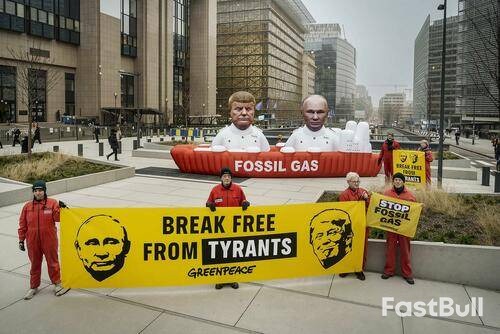
Despite the official optimism, critics argue that the EU is not achieving energy independence but is merely substituting one dependency for another. One European commentator described the situation as ensuring "continued submissiveness to the US."
Journalist Mark Ames echoed this sentiment, mocking claims of newfound energy freedom. He criticized the Danish Prime Minister for bragging about swapping "dependence on cheap Russian gas, which posed a theoretical threat, for dependence on expensive US gas, a direct existential threat to Denmark."
This perspective is shared by industry experts. "We've replaced one massive dependency with another one," Henning Gloystein, a managing director for energy at Eurasia Group, told The New York Times. "That looked fine three years ago, but now it doesn't."
After the invasion of Ukraine in February 2022, the United States played a critical role in stabilizing Europe's energy markets. Tankers carrying US LNG were shipped to ports across Europe, helping to replace Russian fuel and calm market volatility.
A report in The New York Times noted that while "those gas flows looked heroic" at the time, "now, they are raising eyebrows." The report highlights the potential risks of this new reliance, pointing out that since beginning his second term, "President Trump has sought to use trade as leverage in disputes with other countries, including his recent push to take over Greenland."
A South Korean court sentenced former first lady Kim Keon Hee on Wednesday to one year and eight months in jail after finding her guilty of accepting Chanel bags and a diamond pendant from Unification Church officials in return for political favours.
The court cleared Kim, the wife of ex-President Yoon Suk Yeol who was ousted from office last year, on charges of stock price manipulation and violating the political funds act.
Prosecutors will appeal against the two not-guilty verdicts, media reports said.
The ruling, which can also be appealed by the former first lady, comes amid a series of trials following investigations into Yoon's brief imposition of martial law in 2024 and related scandals involving the once-powerful couple.
The position of first lady does not come with any formal power allowing involvement in state affairs, but she is a symbolic figure representing the country, the lead judge of a three-justice bench said.
"A person who was in such a position might not always be a role model, but the person must not be a bad example to the public," he said in the ruling.
The court ordered her to pay a 12.8 million won ($8,990) fine and ordered the confiscation of the diamond necklace. Kim has been held in detention since August while she was being investigated by a team led by a special prosecutor.
Prosecutors had demanded 15 years in jail and fines of 2.9 billion won over all the accusations she faced.
The court cleared Kim on charges of manipulating stock prices and violating political funding laws.
Kim had denied all the charges. Her lawyer said the team would review the ruling and decide whether to appeal the bribery conviction.
Kim, clad in a dark suit and wearing a face mask, was escorted by guards into the courtroom at the Seoul Central District Court and sat quietly while the verdict was delivered.
Supporters of Yoon and Kim, who braved freezing temperatures outside the court compound, cheered after the not-guilty verdicts on two of the charges were delivered.
The Unification Church said the gifts were delivered to her without expecting anything. Its leader Han Hak-ja, who is also on trial, has denied that she directed it to bribe Kim.
Kim had drawn intense public scrutiny even before her husband was elected president in 2022 over questions about her academic records and lingering suspicion that she had been long involved in manipulating stock prices.
Her alleged association with a political broker and a person known as a shaman also drew public criticism that the two may be unduly influencing the former first couple.
Yoon, who was ousted from power last April, also faces eight trials on charges including insurrection, after his failed bid to impose martial law in December 2024.
He has appealed against a five-year jail term handed to him this month for obstructing attempts to arrest him after his martial law decree.
At a separate trial this month, prosecutors have sought the death penalty for Yoon on the charge of masterminding an insurrection. The court will rule on the case on February 19.
Yoon has argued it was within his powers as president to declare martial law and that the action was aimed at sounding the alarm over the obstruction of government by opposition parties.
The European Union and Vietnam are poised to elevate their relationship to a comprehensive strategic partnership, a move expected during European Council President Antonio Costa's official visit to the Southeast Asian nation.
This landmark agreement would be the EU's first of its kind within the ASEAN bloc, signaling a significant deepening of ties. For Vietnam, this is a familiar and strategic move. The country has already inked similar high-level pacts with global powers including the United States, China, Russia, Japan, and Australia as it cements its growing economic and security role. With 17 trade agreements already in place, Vietnam is aggressively pursuing policies to drive double-digit growth for its trade-reliant economy.
European Council President Antonio Costa emphasized the partnership's global significance, stating it would "send a powerful signal in an unsettled world." He framed the agreement as a mutual choice for "long-term cooperation over short-term hedging."
This push for stronger alliances comes as global trade dynamics have been roiled by protectionist measures, such as the tariffs enacted under former U.S. President Donald Trump, which strained traditional alliances and prompted governments to diversify their diplomatic and economic relationships.
"The geopolitical situation is quite critical," Julien Guerrier, the EU's ambassador to Vietnam, remarked to reporters in Hanoi. He added that the upgraded partnership is "a message to the world that we want to reinforce our partnerships with countries like India, like Vietnam."
The economic relationship between the EU and Vietnam is already robust and growing. The EU stands as Vietnam’s fourth-largest trading partner, with two-way trade expanding by 10% to 15% annually. According to Vietnamese government data, this figure is on track to reach approximately $73.8 billion in 2025.
Investment flows are equally significant. The EU is one of Vietnam's top 10 foreign investors, with total foreign direct investment (FDI) reaching about $30 billion.
This new strategic chapter is built on the success of the EU-Vietnam Free Trade Agreement (EVFTA), which took effect in 2020. The agreement was a game-changer, eliminating nearly 99% of tariffs and boosting bilateral trade by around 40%, according to Costa.
Beyond commerce, the two sides have also established a Defence and Security Dialogue mechanism, highlighting the relationship's expanding scope.
Looking ahead, Costa noted that closer diplomatic ties will "provide a stronger platform to deepen cooperation in areas that matter most." The key focus areas for the enhanced partnership will include:
• Green energy
• Advanced technologies
• Skills and education
• Security

The U.S. government is discussing a plan to remove some sanctions on Venezuela's oil industry, a move designed to help American companies boost the nation's crude production. The policy shift follows a $2 billion deal announced by President Trump earlier this month after the ousting of President Nicolas Maduro.
According to sources familiar with the discussions, the plan involves issuing a general sanction waiver. This would create a legal pathway for energy companies to return to Venezuela without risking penalties from Washington.
Demand for access appears to be strong. A number of major energy firms and service providers have already been applying for individual sanction waivers to operate in the country, including:
• Chevron
• Repsol
• Eni
• Reliance Industries
The new arrangement follows President Trump's announcement that Venezuela would be required to supply 50 million barrels of crude oil to the United States as an initial step. Some observers see the plan as a potential U.S. takeover of the Venezuelan oil industry, a development the current Venezuelan government does not seem to oppose.
This week, interim president Delcy Rodriguez stated she expects new investments into the country's oil sector to reach $1.4 billion this year, an increase from $900 million in 2025.
Despite the potential opportunities, not all industry players are enthusiastic. Exxon has notoriously described Venezuela as "uninvestable," a characterization that reportedly angered President Trump.
Revitalizing the nation's oil industry will require massive capital. Estimates suggest that a total investment of around $100 billion is needed over the next decade to reverse the gradual production decline seen in recent years.
If this investment materializes, Venezuela's crude output could grow significantly. According to analysis by Enverus, production could climb to 1.5 million barrels per day by 2035—a 50% increase from current levels. In a best-case scenario, that daily average could rise to as high as 3 million barrels.
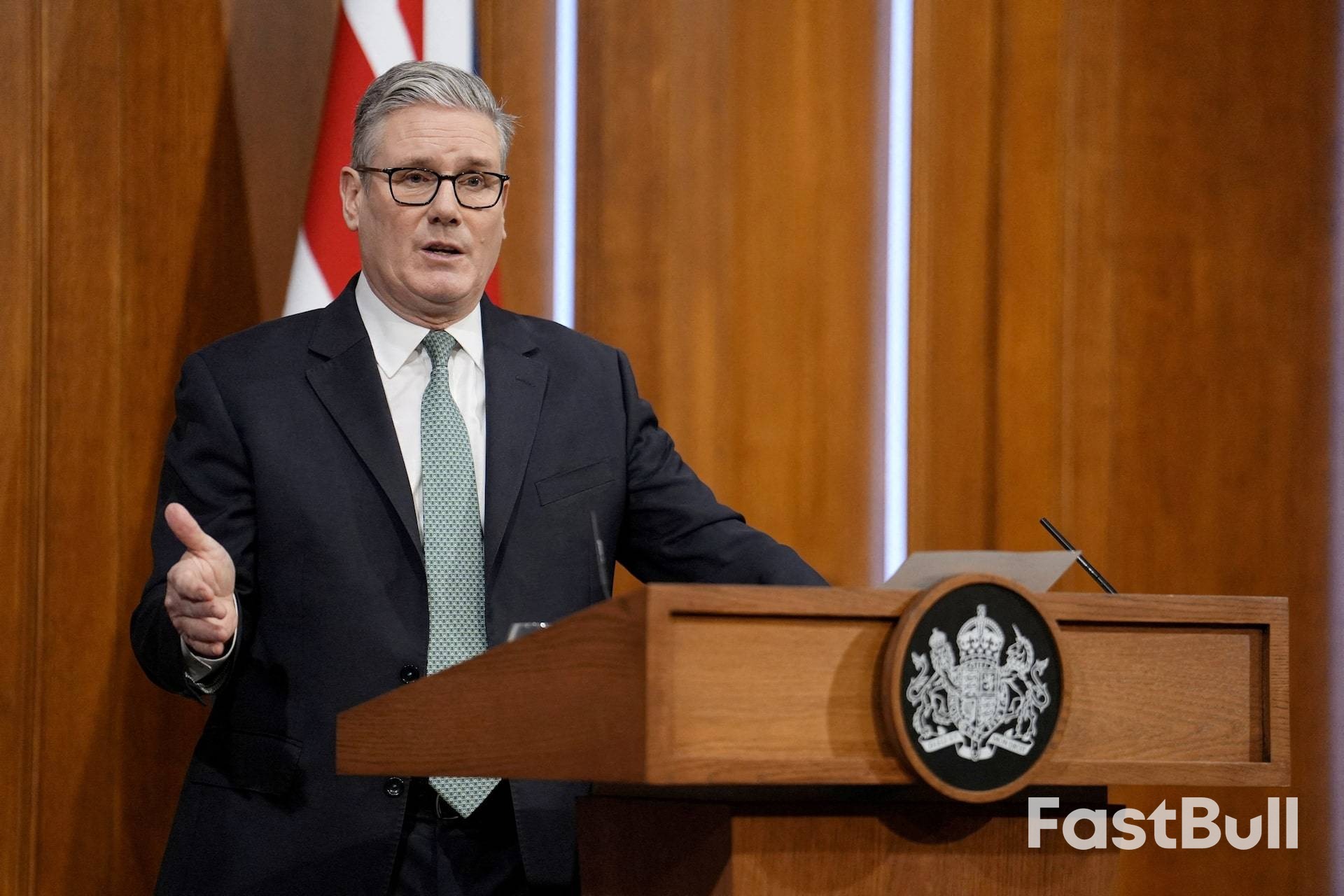
British Prime Minister Keir Starmer is heading to Beijing in a landmark visit aimed at recalibrating the UK's political and business relationship with China. The trip, the first by a British leader since 2018, comes as Western nations navigate an increasingly volatile relationship with the United States.
On the flight to China, Starmer emphasized that Britain cannot ignore the economic opportunities offered by the world's second-largest economy, but must also manage potential security threats.
"It doesn't make sense to stick our head in the ground and bury it in the sand when it comes to China; it's in our interests to engage," he stated. "It's going to be a really important trip for us and we'll make some real progress."
Starmer is accompanied by a delegation of over 50 business leaders. His agenda includes meetings with President Xi Jinping and Premier Li Qiang in Beijing on Thursday, followed by discussions with local executives in Shanghai on Friday.

This visit could mark a significant turning point for UK-China ties, which have been strained for years. Key points of friction have included Beijing's security crackdown in Hong Kong, its support for Russia in the Ukraine war, and allegations from British security services of Chinese espionage targeting UK officials.
For Beijing, the visit provides an opportunity to position itself as a stable and dependable international partner amidst global uncertainty.
The trip is part of a broader trend of Western diplomacy with China, as countries hedge against the unpredictability of the United States.
Starmer's mission unfolds against a backdrop of recent tensions with former U.S. President Trump. These include his threats over Greenland, criticism of a UK deal to cede the Chagos Archipelago to Mauritius, and comments about NATO allies' combat roles in Afghanistan. Just days before Starmer's arrival, Trump threatened to impose a 100% tariff on Canadian goods if Prime Minister Mark Carney finalized a trade deal with China.
Despite this, Starmer expressed confidence that Britain could deepen its economic relationship with China without alienating Washington, citing the UK's historically close partnership with the U.S. on defense, security, intelligence, and trade.
When questioned about his agenda, Starmer was reluctant to detail his planned discussions with Chinese leaders, including whether he would raise the case of Hong Kong media tycoon Jimmy Lai or press China to influence Russia over the Ukraine war. However, he indicated he hoped to make "progress" on securing more visa-free travel between the two countries.
Starmer's strategy has drawn sharp criticism from some politicians in both the UK and the U.S., who argue that he is underestimating the security risks posed by China. He has consistently defended the visit as essential to his plan to drive economic growth and improve living standards in Britain.
The Prime Minister also distanced himself from recent comments by Canada's Mark Carney, who suggested at the World Economic Forum in Davos that the rules-based global order was over. Carney had called for middle powers to unite against American hegemony.
"I'm a pragmatist, a British pragmatist applying common sense," Starmer said, rejecting the notion that his government must choose between the U.S. and Europe.
White Label
Data API
Web Plug-ins
Poster Maker
Affiliate Program
The risk of loss in trading financial instruments such as stocks, FX, commodities, futures, bonds, ETFs and crypto can be substantial. You may sustain a total loss of the funds that you deposit with your broker. Therefore, you should carefully consider whether such trading is suitable for you in light of your circumstances and financial resources.
No decision to invest should be made without thoroughly conducting due diligence by yourself or consulting with your financial advisors. Our web content might not suit you since we don't know your financial conditions and investment needs. Our financial information might have latency or contain inaccuracy, so you should be fully responsible for any of your trading and investment decisions. The company will not be responsible for your capital loss.
Without getting permission from the website, you are not allowed to copy the website's graphics, texts, or trademarks. Intellectual property rights in the content or data incorporated into this website belong to its providers and exchange merchants.
Not Logged In
Log in to access more features
Log In
Sign Up