• Trade
  • Markets
  • Copy
  • Contests
  • News
  • 24/7
  • Calendar
  • Q&A
  • Chats
Screeners
SYMBOL
LAST
ASK
BID
HIGH
LOW
NET CHG.
%CHG.
SPREAD
SPX
S&P 500 Index
6915.62
6915.62
6915.62
6932.95
6895.49
+2.26
+ 0.03%
--
DJI
Dow Jones Industrial Average
49098.70
49098.70
49098.70
49265.46
48963.05
-285.30
-0.58%
--
IXIC
NASDAQ Composite Index
23501.23
23501.23
23501.23
23610.74
23374.26
+65.22
+ 0.28%
--
USDX
US Dollar Index
97.230
97.310
97.230
98.250
97.200
-0.820
-0.84%
--
EURUSD
Euro / US Dollar
1.18281
1.18301
1.18281
1.18334
1.17280
+0.00736
+ 0.63%
--
GBPUSD
Pound Sterling / US Dollar
1.36430
1.36467
1.36430
1.36452
1.34817
+0.01433
+ 1.06%
--
XAUUSD
Gold / US Dollar
4986.45
4986.45
4986.45
4990.01
4899.61
+50.62
+ 1.03%
--
WTI
Light Sweet Crude Oil
61.105
61.357
61.105
61.253
59.453
+1.510
+ 2.53%
--

Community Accounts

Signal Accounts
--
Profit Accounts
--
Loss Accounts
--
View More

Become a signal provider

Sell trading signals to earn additional income

View More

Guide to Copy Trading

Get started with ease and confidence

View More

Signal Accounts for Members

All Signal Accounts

Best Return
  • Best Return
  • Best P/L
  • Best MDD
Past 1W
  • Past 1W
  • Past 1M
  • Past 1Y

All Contests

  • All
  • Trump Updates
  • Recommend
  • Stocks
  • Cryptocurrencies
  • Central Banks
  • Featured News
Top News Only
Share

Senate Majority Leader Chuck Schumer Informed Republicans That He Is Urging Them (supported By President Trump's Republican Party) To Amend The Draft Legislation Regarding The Department Of Homeland Security's (DHS) Budget. Democrats Do Not Want To Advance The Current DHS Funding Bill. Schumer Is Demanding That Republicans Move Forward With The Five-cent Appropriation Bill Before The Deadline

Share

Israeli Fire Kills Three In Gaza, Medics Say, As US Pushes Deal

Share

Dollar/Yen Dips, Down 0.47% At 155.00 Yen

Share

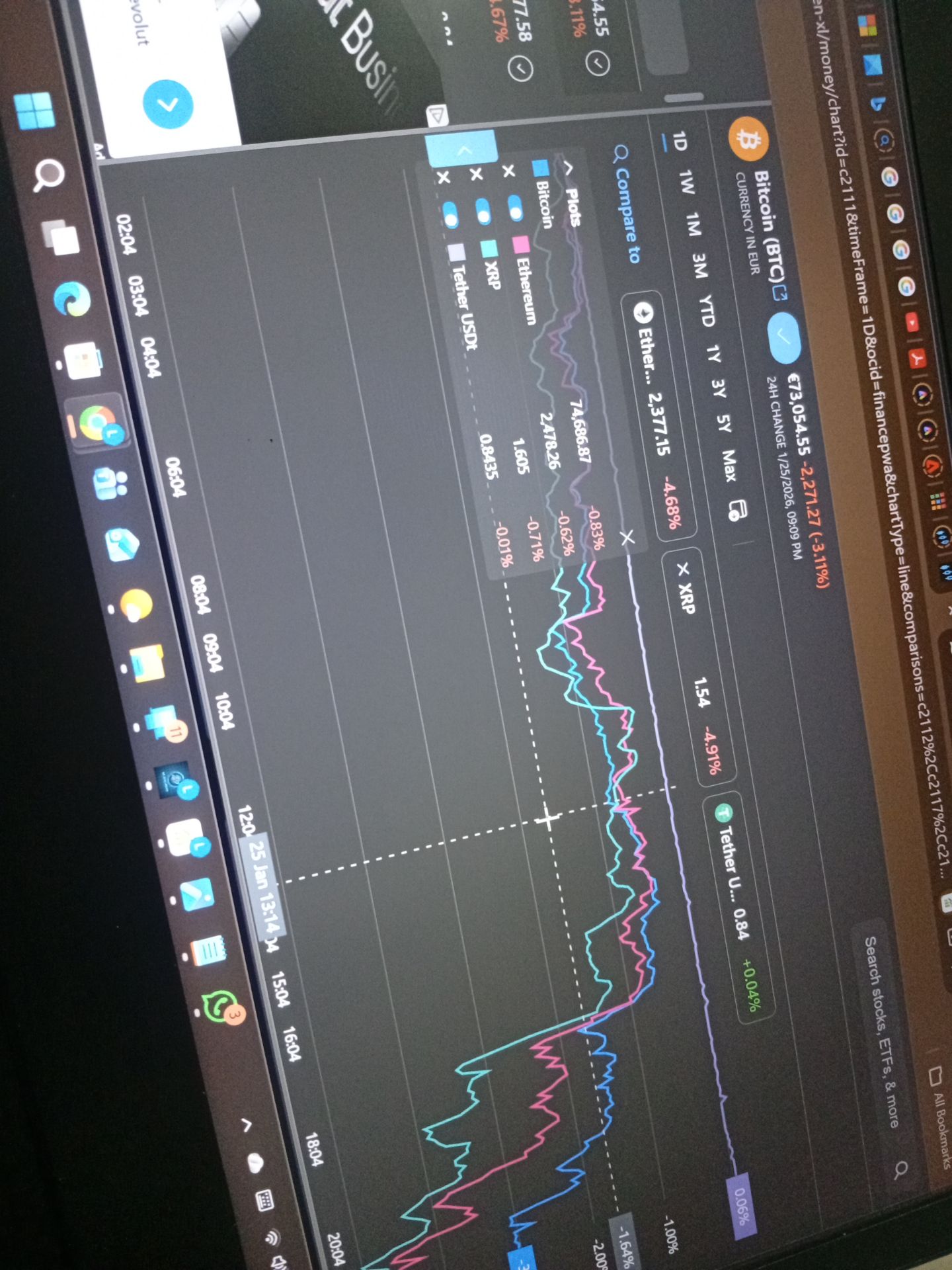
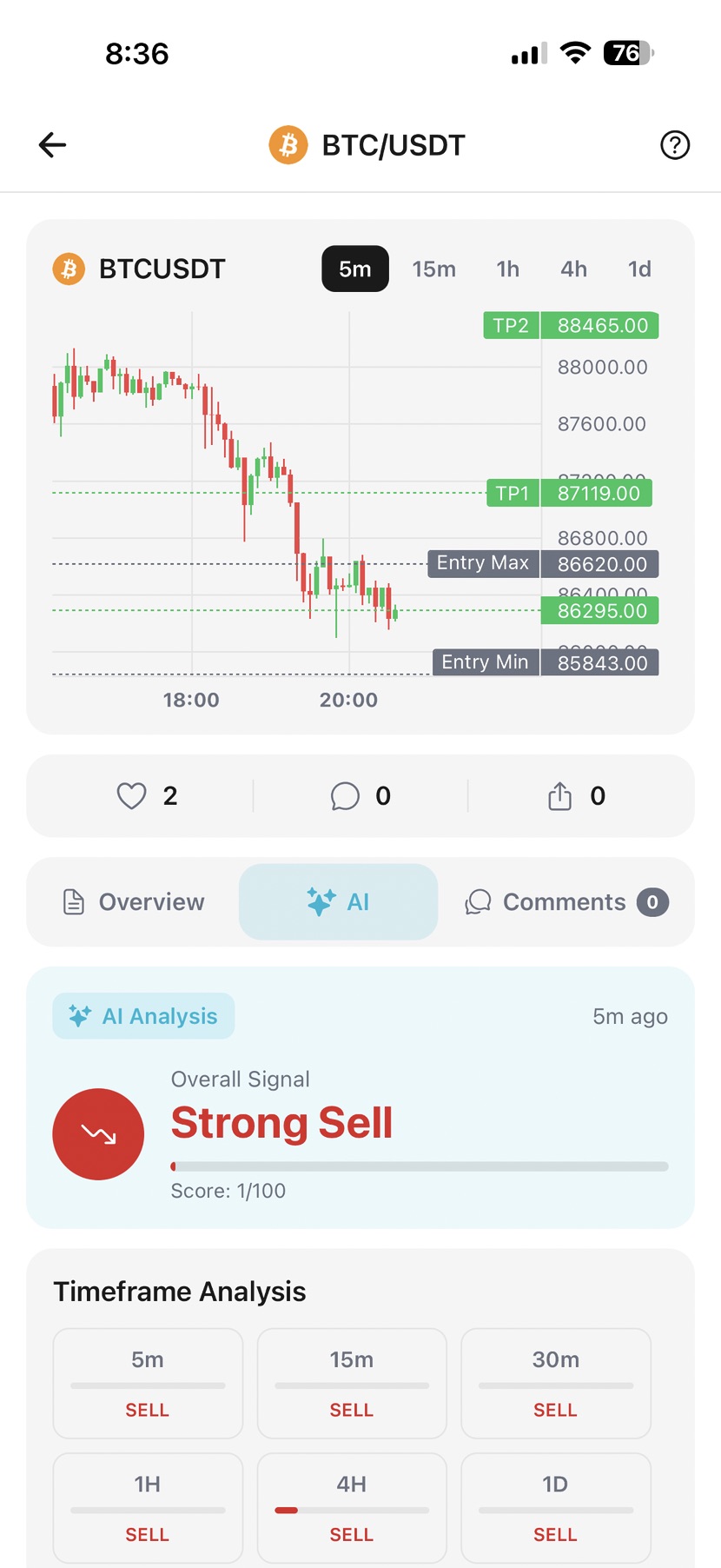
[Bitcoin Dips Below $88,000, 24-Hour Change -1.47%] January 26Th, According To Htx Market Data, Bitcoin Fell Below $88,000, With A 24-Hour Decrease Of 1.47%

Share

Ukraine President Zelenskiy: Documenт Of Safety Guarantees From USA Is 100% Ready

Share

Ukraine President Zelenskiy: Russia Is Avoiding Committing To A Lasting And Just Peace And Is Not Accepting A Ceasefire As A Prelude

Share

CEO: Volkswagen Ag May Pull Plans For US Audi Plant Absent Tariff Cuts

Share

Canada Has No Intention Of Making Free Trade Deal With China- Prime Minister Mark Carney

Share

Canada Respects Our Commitments Under Usma- Prime Minister Mark Carney

Share

Trump Envoy Witkoff: USA Talks With Israeli Prime Minister Netanyahu On Peace Board Were Constructive, Positive

Share

102918 Number Of Power Outage Reported In Louisiana As Of 8:09 Am Et - Poweroutage.US Website

Share

523067 Number Of Power Outage Reported In US As Of 7:22 Am Et - Poweroutage.US Website

Share

107295 Number Of Power Outage Reported In Mississippi As Of 6:34 Am Et - Poweroutage.US Website

Share

Oil Ministry - Iraq's Total Oil Exports For December At 107.651 Million Barrels

Share

Airbus CEO Says Company Faced Significant Collateral Damage From Trade Tensions In 2025

Share

Kremlin: Russian Military Will Attentively Monitor US Plans For Golden Dome - Including In Context Of Greenland

Share

100765 Number Of Power Outages Reported In Texas As Of 6 Am Et - Poweroutage.US Website

Share

Russia Will Never Discuss Anything With EU's Kallas, Will Just Wait For Her To Leave Her Post - Interfax Cites Kremlin

Share

Statistics Bureau - Israel's Industrial Production 6.3% Seasonally Adjusted In November Versus 1.5% In October

Share

Israel Raised 207 Billion Shekels In Debt In 2025

TIME
ACT
FCST
PREV
U.K. Retail Sales MoM (SA) (Dec)

A:--

F: --

P: --

France Manufacturing PMI Prelim (Jan)

A:--

F: --

P: --

France Services PMI Prelim (Jan)

A:--

F: --

P: --

France Composite PMI Prelim (SA) (Jan)

A:--

F: --

P: --

Germany Manufacturing PMI Prelim (SA) (Jan)

A:--

F: --

P: --

Germany Services PMI Prelim (SA) (Jan)

A:--

F: --

P: --

Germany Composite PMI Prelim (SA) (Jan)

A:--

F: --

P: --

Euro Zone Composite PMI Prelim (SA) (Jan)

A:--

F: --

P: --

Euro Zone Manufacturing PMI Prelim (SA) (Jan)

A:--

F: --

P: --

Euro Zone Services PMI Prelim (SA) (Jan)

A:--

F: --

P: --

U.K. Composite PMI Prelim (Jan)

A:--

F: --

P: --

U.K. Manufacturing PMI Prelim (Jan)

A:--

F: --

P: --

U.K. Services PMI Prelim (Jan)

A:--

F: --

P: --

Mexico Economic Activity Index YoY (Nov)

A:--

F: --

P: --

Russia Trade Balance (Nov)

A:--

F: --

P: --

Canada Core Retail Sales MoM (SA) (Nov)

A:--

F: --

P: --

Canada Retail Sales MoM (SA) (Nov)

A:--

F: --

P: --
U.S. IHS Markit Manufacturing PMI Prelim (SA) (Jan)

A:--

F: --

P: --

U.S. IHS Markit Services PMI Prelim (SA) (Jan)

A:--

F: --

P: --

U.S. IHS Markit Composite PMI Prelim (SA) (Jan)

A:--

F: --

P: --

U.S. UMich Consumer Sentiment Index Final (Jan)

A:--

F: --

P: --

U.S. UMich Current Economic Conditions Index Final (Jan)

A:--

F: --

P: --

U.S. UMich Consumer Expectations Index Final (Jan)

A:--

F: --

P: --

U.S. Conference Board Leading Economic Index MoM (Nov)

A:--

F: --

P: --

U.S. Conference Board Coincident Economic Index MoM (Nov)

A:--

F: --

P: --

U.S. Conference Board Lagging Economic Index MoM (Nov)

A:--

F: --

P: --

U.S. UMich 1-Year-Ahead Inflation Expectations Final (Jan)

A:--

F: --

P: --

U.S. Conference Board Leading Economic Index (Nov)

A:--

F: --

P: --

U.S. Weekly Total Rig Count

A:--

F: --

P: --

U.S. Weekly Total Oil Rig Count

A:--

F: --

P: --

Germany Ifo Business Expectations Index (SA) (Jan)

--

F: --

P: --

Germany IFO Business Climate Index (SA) (Jan)

--

F: --

P: --

Germany Ifo Current Business Situation Index (SA) (Jan)

--

F: --

P: --

U.S. Dallas Fed PCE Price Index YoY (Nov)

--

F: --

P: --

Brazil Current Account (Dec)

--

F: --

P: --

Mexico Unemployment Rate (Not SA) (Dec)

A:--

F: --

P: --

Canada National Economic Confidence Index

--

F: --

P: --

U.S. Non-Defense Capital Durable Goods Orders MoM (Excl. Aircraft) (Nov)

--

F: --

P: --

U.S. Durable Goods Orders MoM (Excl. Defense) (SA) (Nov)

--

F: --

P: --

U.S. Durable Goods Orders MoM (Excl.Transport) (Nov)

--

F: --

P: --

U.S. Durable Goods Orders MoM (Nov)

--

F: --

P: --

U.S. Chicago Fed National Activity Index (Nov)

--

F: --

P: --

U.S. Dallas Fed New Orders Index (Jan)

--

F: --

P: --

U.S. Dallas Fed General Business Activity Index (Jan)

--

F: --

P: --

U.K. BRC Shop Price Index YoY (Jan)

--

F: --

P: --

China, Mainland Industrial Profit YoY (YTD) (Dec)

--

F: --

P: --

Mexico Trade Balance (Dec)

--

F: --

P: --

U.S. S&P/CS 20-City Home Price Index YoY (Not SA) (Nov)

--

F: --

P: --

U.S. S&P/CS 20-City Home Price Index MoM (SA) (Nov)

--

F: --

P: --

U.S. FHFA House Price Index MoM (Nov)

--

F: --

P: --

U.S. FHFA House Price Index (Nov)

--

F: --

P: --

U.S. Richmond Fed Manufacturing Composite Index (Jan)

--

F: --

P: --

U.S. Conference Board Present Situation Index (Jan)

--

F: --

P: --

U.S. Conference Board Consumer Expectations Index (Jan)

--

F: --

P: --

U.S. Richmond Fed Manufacturing Shipments Index (Jan)

--

F: --

P: --

U.S. Richmond Fed Services Revenue Index (Jan)

--

F: --

P: --

U.S. Conference Board Consumer Confidence Index (Jan)

--

F: --

P: --

Australia RBA Trimmed Mean CPI YoY (Q4)

--

F: --

P: --

Australia CPI YoY (Q4)

--

F: --

P: --

Australia CPI QoQ (Q4)

--

F: --

P: --

Q&A with Experts
    • All
    • Chatrooms
    • Groups
    • Friends
    Jon Jony flag
    It's strange that BTC is dumped on Sundays before the market opens.
    Brandon Ki flag
    Jon Jony
    It's strange that BTC is dumped on Sundays before the market opens.
    @Jon Jonylikely to continue longing Gold to new ATH, but look this crazy crash on Sunday could be a warning
    Eurusdonly flag
    Eurusdonly flag
    Eurusdonly flag
    Eurusdonly
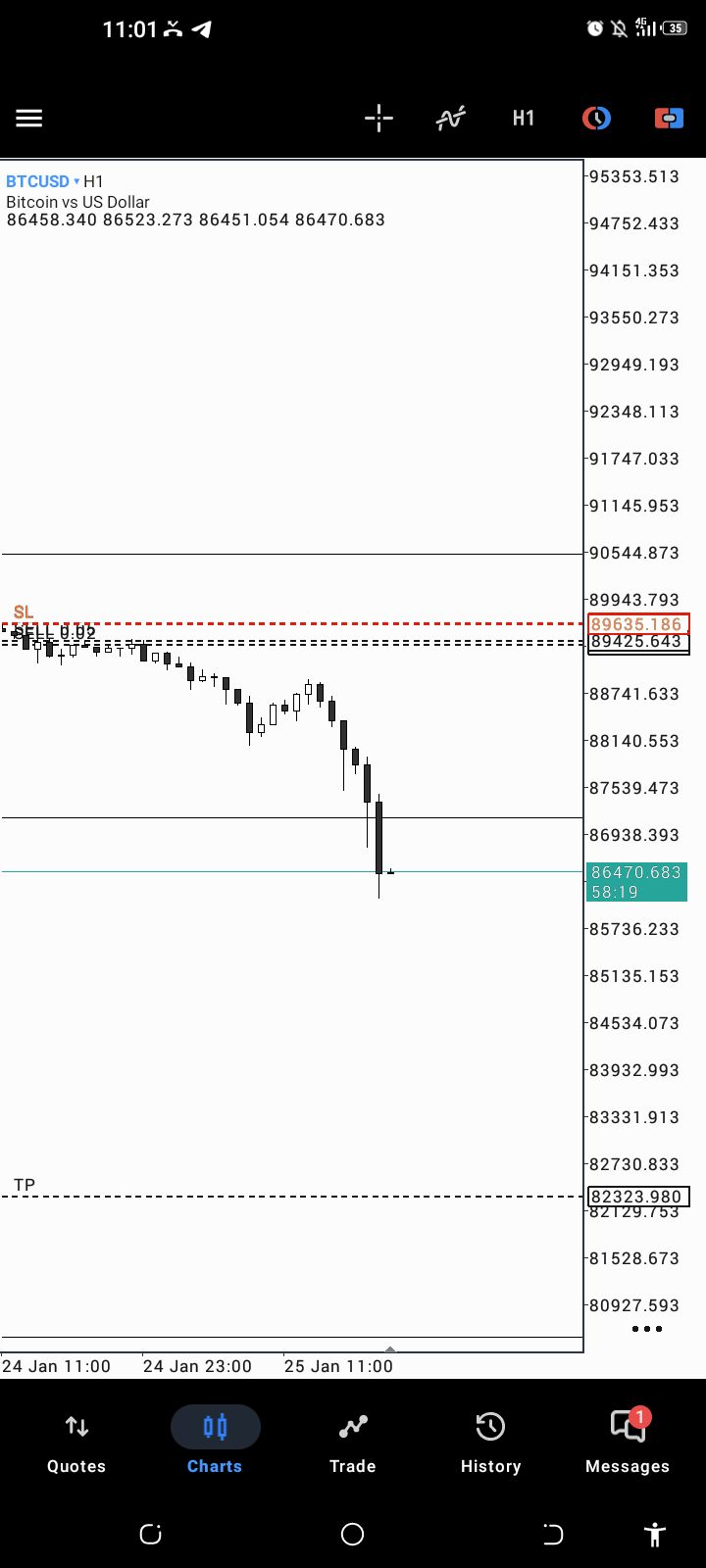
    i have been holding Shorts on Btcusd
    Eurusdonly flag
    Eurusdonly
    who got this ?
    Jon Jony flag
    Sundays and such obemas are sold, small ones are unlikely to make such discoveries next year if the whales don't buy it, then this will be a signal
    FORMFOREXL flag
    Brandon Ki flag
    Jon Jony
    Sundays and such obemas are sold, small ones are unlikely to make such discoveries next year if the whales don't buy it, then this will be a signal
    @Jon Jonysomething crazy is cooking
    Jon Jony flag
    How I love these moments like watching a movie
    "Jon Jony" recalled a message
    "Jon Jony" recalled a message
    "Jon Jony" recalled a message
    Eurusdonly flag
    Eurusdonly
    i love this drop on btcusd
    Eurusdonly flag
    83000 target 🎯
    Imran ahma flag
    Jon Jony flag
    Jon Jony flag
    The turning point should be at this moment, we'll see what the whales decide.
    Jon Jony flag
    gripping blockbuster
    Jon Jony flag
    are they really buying it out?
    Type here...
    Add Symbol or Code

      No matching data

      All
      Trump Updates
      Recommend
      Stocks
      Cryptocurrencies
      Central Banks
      Featured News
      • All
      • Russia-Ukraine Conflict
      • Middle East Flashpoint
      • All
      • Russia-Ukraine Conflict
      • Middle East Flashpoint
      Search
      Products

      Charts Free Forever

      Chats Q&A with Experts
      Screeners Economic Calendar Data Tools
      Membership Features
      Data Warehouse Market Trends Institutional Data Policy Rates Macro

      Market Trends

      Market Sentiment Order Book Forex Correlations

      Top Indicators

      Charts Free Forever
      Markets

      News

      News Analysis 24/7 Columns Education
      From Institutions From Analysts
      Topics Columnists

      Latest Views

      Latest Views

      Trending Topics

      Top Columnists

      Latest Update

      Signals

      Copy Rankings Latest Signals Become a signal provider AI Rating
      Contests
      Brokers

      Overview Brokers Assessment Rankings Regulators News Claims
      Broker listing Forex Brokers Comparison Tool Live Spread Comparison Scam
      Q&A Complaint Scam Alert Videos Tips to Detect Scam
      More

      Business
      Events
      Careers About Us Advertising Help Center

      White Label

      Data API

      Web Plug-ins

      Affiliate Program

      Awards Institution Evaluation IB Seminar Salon Event Exhibition
      Vietnam Thailand Singapore Dubai
      Fans Party Investment Sharing Session
      FastBull Summit BrokersView Expo
      Recent Searches
        Top Searches
          Markets
          News
          Analysis
          User
          24/7
          Economic Calendar
          Education
          Data
          • Names
          • Latest
          • Prev

          View All

          No data

          Scan to Download

          Faster Charts, Chat Faster!

          Download App
          English
          • English
          • Español
          • العربية
          • Bahasa Indonesia
          • Bahasa Melayu
          • Tiếng Việt
          • ภาษาไทย
          • Français
          • Italiano
          • Türkçe
          • Русский язык
          • 简中
          • 繁中
          Open Account
          Search
          Products
          Charts Free Forever
          Markets
          News
          Signals

          Copy Rankings Latest Signals Become a signal provider AI Rating
          Contests
          Brokers

          Overview Brokers Assessment Rankings Regulators News Claims
          Broker listing Forex Brokers Comparison Tool Live Spread Comparison Scam
          Q&A Complaint Scam Alert Videos Tips to Detect Scam
          More

          Business
          Events
          Careers About Us Advertising Help Center

          White Label

          Data API

          Web Plug-ins

          Affiliate Program

          Awards Institution Evaluation IB Seminar Salon Event Exhibition
          Vietnam Thailand Singapore Dubai
          Fans Party Investment Sharing Session
          FastBull Summit BrokersView Expo

          Europe Confronts A Technology Dependence Nightmare Scenario With The United States

          Gerik

          Economic

          Summary:

          Growing political tensions with Washington are pushing the European Union to seriously prepare for a worst-case scenario in which access to U.S. technology services could be restricted...

          A Hypothetical Risk That Is No Longer Dismissed

          For years, the idea that Europe might be abruptly cut off from essential U.S. digital services was widely considered unrealistic. Yet recent political signals from Donald Trump, including explicit threats and references to coercive measures against allies, have fundamentally altered risk perceptions in Brussels. European officials are now openly planning for scenarios once regarded as implausible, including the possibility of executive actions in Washington that could limit European access to cloud computing, email systems, and critical enterprise software.
          Such services underpin not only Europe’s private sector but also its public administration. The prospect of external control over these digital foundations has transformed technological dependence from a theoretical concern into a concrete strategic vulnerability.

          Economic Exposure Reveals Structural Dependence

          The scale of Europe’s reliance on American technology firms is substantial. According to data from International Data Corporation, European customers spent nearly 25 billion U.S. dollars in 2024 on infrastructure services provided by the five largest U.S. technology companies, accounting for 83 percent of the regional market. This concentration creates a strong correlation between Europe’s digital resilience and policy decisions made outside the continent.
          At the same time, U.S. firms exported more than 360 billion dollars’ worth of digital services to Europe in 2024, spanning online advertising, cloud computing, and artificial intelligence. This mutual exposure underscores the depth of integration but also magnifies the consequences of political disruption.

          Technology Sovereignty Moves From Concept To Policy

          As concerns intensified, the European Parliament adopted a resolution emphasizing technological sovereignty, encouraging public procurement to prioritize European solutions and calling for new legislation to support domestic cloud providers. The European Commission is now drafting a legal framework aimed at reducing external dependency and strengthening control over data governance.
          Only months ago, openly framing U.S. technology as a security risk was politically sensitive. Today, European officials increasingly acknowledge that external control over critical data and infrastructure constitutes a non-negligible threat to economic and institutional autonomy.

          France And Germany Drive National Initiatives

          Europe’s two largest economies have taken the lead in translating strategic concerns into concrete initiatives. Emmanuel Macron has elevated the creation of European technology champions to a central policy priority, actively supporting Mistral AI as one of the continent’s few globally competitive AI firms. France has also promoted its nuclear energy capacity as a strategic advantage for attracting data center investment.
          In Germany, Friedrich Merz has convened a digital sovereignty summit, advocating regulatory flexibility and preferential treatment for European technology in public procurement. Germany’s digital ministry has begun testing openDesk, an open-source alternative to Microsoft’s office software, across federal government systems. These initiatives reflect a causal relationship between geopolitical uncertainty and policy-driven efforts to localize digital infrastructure.

          U.S. Tech Firms Adapt To Preserve Market Access

          American technology giants are acutely aware of the risk of losing their dominant position in Europe. Companies such as Google, Amazon, and Microsoft have adjusted their strategies by expanding data center investments within the EU, establishing European-managed subsidiaries, and forming joint ventures with local partners to deliver so-called sovereign cloud services.
          Amazon recently launched a cloud service in Germany operated exclusively by EU citizens. Microsoft has deepened cooperation with Delos Cloud, a subsidiary of SAP, to provide domestically controlled cloud services. Google has established a joint venture in France designed to shield European clients from extraterritorial data access requests. These moves signal recognition that regulatory trust and data control are becoming decisive competitive factors.

          Control Rather Than Full Decoupling

          Despite heightened rhetoric, European governments are not yet pursuing a complete technological separation from the United States. Former Google Europe executive Matt Brittin has noted that European policymakers are primarily seeking stronger control and security guarantees rather than outright decoupling.
          The emerging European strategy therefore reflects a nuanced balance. The objective is not to dismantle transatlantic technological ties but to reduce asymmetrical dependence and ensure that Europe retains the capacity to function independently in a crisis. As political uncertainty persists, technological sovereignty has shifted from an abstract ambition to a central pillar of Europe’s long-term strategic planning.
          To stay updated on all economic events of today, please check out our Economic calendar
          Risk Warnings and Disclaimers
          You understand and acknowledge that there is a high degree of risk involved in trading. Following any strategies or investment methods may lead to potential losses. The content on the site is provided by our contributors and analysts for information purposes only. You are solely responsible for determining whether any trading assets, securities, strategy, or any other product is suitable for investing based on your own investment objectives and financial situation.
          Add to Favorites
          Share

          ECB Signals A Year Of Rate Stability As Inflation Nears Target

          Gerik

          Economic

          Political

          Policy Signals Point Toward Prolonged Stability

          The latest meeting account from the European Central Bank indicates a clear preference for patience rather than immediate policy adjustment. At its December 17–18 meeting, the ECB kept its key interest rate at 2 percent and upgraded its growth outlook for the euro area. Financial markets interpreted this combination as a signal that the bar for further monetary easing has been set particularly high.
          This interpretation is reinforced by remarks from Philip Lane, who stated that as long as the economy evolves broadly in line with forecasts, changes in interest rates are unlikely to feature on the near-term policy agenda. The meeting minutes echoed this stance, noting that the Governing Council could afford to be patient, while stressing that patience should not be confused with hesitation or an unwillingness to act if conditions change.

          Inflation Risks Appear Balanced Rather Than Directional

          A central theme in the ECB’s assessment is the unusually high degree of uncertainty surrounding new risk factors, including the rapid expansion of artificial intelligence and the potential impact of U.S. trade tariffs. Within the Governing Council, views on inflation risks remain divided. Some policymakers see risks tilted slightly toward inflation falling below target, while a smaller group remains concerned about the possibility of inflation overshooting.
          This internal divergence explains why the ECB is deliberately avoiding any guidance that would imply a predetermined direction for its next move. The minutes explicitly caution against creating the impression that the next policy step would necessarily involve either tightening or easing. This approach reflects a correlation between heightened uncertainty and the ECB’s communication strategy, rather than a causal trigger for imminent policy change.

          Market Expectations Align With ECB Comfort Zone

          Despite the ECB’s careful language, financial markets are increasingly pricing in a prolonged period of rate stability. Investors broadly expect the central bank to keep rates unchanged not only at the February 5 meeting but potentially throughout the entire year. While ECB officials rarely comment directly on market pricing, the December minutes suggest a notable degree of comfort with these expectations, provided the macroeconomic outlook remains intact.
          The document states that current market-implied interest rate levels are broadly consistent with the Governing Council’s medium-term orientation and its latest projections. This alignment reduces the incentive for the ECB to actively steer expectations in a different direction.

          Policymakers Emphasize Caution Over Preemptive Action

          Several senior policymakers have publicly reinforced the case for maintaining current settings unless a clear shock materializes. Martin Kocher argued in a recent interview that acting too proactively could itself generate unnecessary uncertainty. He stressed the importance of avoiding premature commitments when inflation risks do not clearly lean in one direction.
          Kocher acknowledged rising geopolitical uncertainty, partly linked to statements by Donald Trump regarding Greenland, but emphasized that such risks should not automatically prompt a policy response unless they translate into concrete inflationary pressures. Over the past six months, he noted, risks had shifted modestly in a more positive direction, supported by slightly stronger growth expectations and stable financial markets.

          Confidence In The Medium-Term Outlook

          Philip Lane further underlined that there is no active debate about interest rates in the short term if the euro area economy continues on its current trajectory. While acknowledging that external shocks, such as a deviation by the Federal Reserve from its mandate, could alter the outlook, Lane expressed confidence that eurozone inflation would remain sustainably close to the 2 percent target, as projected in December.
          Similarly, Alvaro Santos Pereira argued that monetary policy has already delivered what was required to support the economy. With price stability largely restored, he sees no compelling reason to adjust interest rates further and urged governments to focus instead on structural reforms to strengthen growth.
          Taken together, the ECB’s messaging suggests a deliberate pause grounded in confidence rather than indecision. The current stance reflects a judgment that inflation dynamics and growth prospects do not justify immediate intervention, while flexibility is preserved to respond if conditions shift materially. For now, interest rate stability appears to be not merely a market expectation, but a policy outcome the ECB is prepared to endorse under its baseline scenario.
          To stay updated on all economic events of today, please check out our Economic calendar
          Risk Warnings and Disclaimers
          You understand and acknowledge that there is a high degree of risk involved in trading. Following any strategies or investment methods may lead to potential losses. The content on the site is provided by our contributors and analysts for information purposes only. You are solely responsible for determining whether any trading assets, securities, strategy, or any other product is suitable for investing based on your own investment objectives and financial situation.
          Add to Favorites
          Share

          Why China Is Gaining an Edge in the Global AI Race

          Gerik

          Economic

          Infrastructure First As A Strategic Choice

          China’s recent progress in artificial intelligence reflects a development model that places infrastructure at the center of technological advancement. At the World Economic Forum in Davos, Zhang Yutong, Chair of Moonshot AI, emphasized that prioritizing energy and computing infrastructure allows China to unlock deeper layers of AI innovation. This perspective highlights how foundational investments shape long-term technological capability rather than short-term application wins.
          The rapid expansion of power generation capacity has pushed electricity costs to relatively low levels across many regions in China. This condition is particularly relevant for AI model training, where massive data centers run continuously on high-performance chips from firms such as Nvidia, Advanced Micro Devices, and Huawei Technologies. As model sizes and training complexity grow, electricity availability increasingly shapes the pace and stability of AI research.

          Energy Supply As A Competitive Differentiator

          A recent analysis by Brookings Institution projects that electricity demand from Chinese data centers will more than double within five years, reaching around 277 terawatt-hours by 2030. Despite the scale of this increase, Brookings notes that it is unlikely to constrain China, given the country’s historical ability to expand energy supply at speed.
          This situation contrasts sharply with the United States, where power shortages are emerging as a structural constraint. Major technology companies such as Google and Meta have begun acquiring power-generation assets to secure sufficient electricity for AI training. The divergence in energy availability has become a significant variable in the AI competition, positioning China with greater operational flexibility.

          Renewables And Regional Computing Strategy

          China’s advantage is reinforced by its “East Data, West Computing” strategy, which places large data centers in western regions rich in solar and wind resources. Gong Ke, Executive Director of China’s New Generation AI Development Strategy Institute at Nankai University, explained that a substantial share of new energy capacity by 2030 will come from renewable sources. This alignment between clean energy and computing demand supports long-term scalability without relying solely on fossil fuels.
          The relationship between renewable energy deployment and data center expansion reflects a strong correlation between infrastructure planning and AI capacity growth. Rather than responding to demand reactively, China has embedded computing needs into its national energy strategy.

          Efficiency Pressure Within Chinese AI Firms

          Despite infrastructure advantages, Chinese AI developers still face tighter access to advanced computing resources than their U.S. counterparts. Zhang Yutong noted that companies like Moonshot AI must maintain strict cost-efficiency discipline. This constraint encourages optimization in model architecture, training methods, and deployment efficiency rather than reliance on sheer computing volume.
          This dynamic shapes a distinctive innovation path. Chinese AI firms are increasingly focused on achieving better performance per unit of computation, which influences both research priorities and commercialization strategies.

          Enterprise-Level Adoption And Productivity Gains

          At the application layer, Tencent Holdings illustrates how infrastructure-backed AI deployment translates into productivity improvements. Dowson Tong, Senior Executive Vice President and CEO of Tencent Cloud, stated that AI tools now support not only internal coding tasks but also product management, design, and accounting. Tencent has rolled out internal AI systems across its workforce of more than 100,000 employees, embedding AI into daily operations.
          However, adoption patterns differ from the United States. While advanced coding agents such as Anthropic’s Claude Code have seen rapid uptake in American firms, many Chinese enterprises remain cautious about paying for premium productivity tools. This reflects structural differences in enterprise software spending rather than technological capability.

          Infrastructure As The Backbone Of AI Competition

          Viewed holistically, the combination of low-cost electricity and extensive data center capacity functions as a strategic lever rather than a simple cost advantage. As AI development becomes increasingly computation-intensive, energy and infrastructure operate as foundational enablers alongside data and algorithms.
          China’s infrastructure-first approach supports a stable development trajectory in an era marked by global competition for power, chips, and computing capacity. At the same time, the pressure to optimize efficiency shapes a distinct ecosystem where success depends not on who controls the most GPUs, but on who trains models more intelligently, deploys them faster, and commercializes them more effectively.
          Over the long term, this balance between scale and efficiency may play a decisive role in redefining global AI competition, with energy emerging as a variable as critical as data and algorithms themselves.
          To stay updated on all economic events of today, please check out our Economic calendar
          Risk Warnings and Disclaimers
          You understand and acknowledge that there is a high degree of risk involved in trading. Following any strategies or investment methods may lead to potential losses. The content on the site is provided by our contributors and analysts for information purposes only. You are solely responsible for determining whether any trading assets, securities, strategy, or any other product is suitable for investing based on your own investment objectives and financial situation.
          Add to Favorites
          Share

          Europe’s Unified Response to U.S. Pressure Over Greenland

          Gerik

          Economic

          Political

          A Sudden Shock to Transatlantic Relations

          According to Euronews on January 24, the transatlantic alliance faced one of its most severe tests since the end of the Cold War after Donald Trump threatened to impose tariffs in order to pressure Europe into accepting U.S. control over Greenland. The White House framed the proposed tariffs as leverage for negotiating what it described as a full acquisition of the resource-rich autonomous territory belonging to Denmark.
          Within five days, Europe entered a heightened state of alert as Washington announced plans to levy an additional 10 percent tariff on eight European countries, all members of NATO. Unlike previous trade disputes centered on market access or industrial subsidies, this confrontation directly challenged territorial sovereignty, fundamentally altering Europe’s strategic calculus.

          Rapid Political Alignment Across Europe

          European reactions were swift and unusually cohesive. Heads of state and government across the continent publicly reaffirmed Denmark’s sovereignty, characterizing the tariff threat as an unprecedented act of coercion between allies. Emmanuel Macron stated unequivocally that no form of pressure or intimidation could force Europe to change its position.
          This unity marked a clear departure from earlier episodes in 2025, when internal divisions weakened Europe’s negotiating posture on U.S. trade disputes. In this case, the perceived threat to territorial integrity functioned as a causal trigger for rapid consensus, overriding longstanding national differences on trade and security policy.

          Trade Retaliation as a Credible Deterrent

          European Union ambassadors convened urgently in Brussels to prepare countermeasures should U.S. tariffs take effect in early February. France proposed activating the EU’s so-called trade bazooka, a legal mechanism allowing broad and immediate retaliation. A package of countermeasures valued at 93 billion euros was swiftly assembled, signaling Europe’s readiness to escalate economically if necessary.
          At the same time, the European Parliament moved to suspend indefinitely the ratification of an EU-U.S. trade agreement, effectively freezing tariff concessions for American exports. This step demonstrated that Europe’s response was not symbolic but structurally embedded within its institutional decision-making.

          A Shift in the Nature of the Crisis

          European diplomats emphasized that the Greenland dispute represented a qualitative shift rather than a routine trade conflict. Instead of negotiating trade balances, Europe faced the use of tariffs as leverage for territorial claims against an ally. Speaking at the World Economic Forum in Davos, Ursula von der Leyen stressed that the EU’s response would be unified, proportionate, and resolute.
          The link between territorial pressure and economic coercion fundamentally reshaped Europe’s response strategy, explaining the unusually high level of institutional coordination and political resolve.

          Diplomacy Takes Precedence Over Escalation

          Despite firm positioning, European leaders consistently emphasized diplomacy as their preferred path. German Chancellor Friedrich Merz stated that the EU sought to prevent escalation and maintain the foundations of the transatlantic partnership. This approach reflected a correlation between Europe’s hardline preparatory measures and its parallel efforts to keep diplomatic channels open.
          Tensions peaked in Davos when President Trump reiterated his desire to control Greenland, while explicitly ruling out the use of military force. This statement was widely interpreted as a signal of flexibility rather than finality.

          NATO Mediation and a De-escalation Framework

          A breakthrough emerged when Mark Rutte met President Trump on the sidelines of the Davos forum. The two sides reportedly agreed on a framework focused on strengthening security cooperation in Greenland and the Arctic, rather than altering sovereignty arrangements. In exchange, Washington withdrew its tariff threat and softened its position on ownership of the island.
          Subsequent emergency meetings in Brussels reflected a noticeably calmer atmosphere, although caution remained. Danish Prime Minister Mette Frederiksen traveled to Nuuk to reaffirm that any decisions concerning Greenland must involve both Copenhagen and the local Greenlandic authorities.

          Strategic Lessons for Europe

          The Greenland episode concluded without triggering a trade war, yet its political aftershocks continue to resonate. For many European governments, the willingness of the United States to employ tariffs as a tool of territorial pressure crossed a clear red line. This experience has strengthened Europe’s conviction that greater strategic autonomy is essential in an increasingly unpredictable global environment.
          Rather than fracturing the transatlantic alliance, the crisis exposed its vulnerabilities and reinforced Europe’s determination to defend sovereignty through unity, credible deterrence, and controlled diplomacy.
          To stay updated on all economic events of today, please check out our Economic calendar
          Risk Warnings and Disclaimers
          You understand and acknowledge that there is a high degree of risk involved in trading. Following any strategies or investment methods may lead to potential losses. The content on the site is provided by our contributors and analysts for information purposes only. You are solely responsible for determining whether any trading assets, securities, strategy, or any other product is suitable for investing based on your own investment objectives and financial situation.
          Add to Favorites
          Share

          New Tax Framework Creates Stronger Foundations for Household Business Growth

          Gerik

          Economic

          A Strategic Shift in Tax Policy for Household Businesses

          Recent public discussions have raised concerns that new tax regulations for household and individual businesses could increase compliance costs and financial pressure. However, when viewed within the broader policy framework set by the Party, the National Assembly, and the Government, these reforms represent a necessary structural adjustment aimed at protecting household businesses, particularly small and micro-scale operators, while laying the groundwork for a more transparent and equitable business environment.
          Household businesses remain one of the most dynamic segments of the Vietnamese economy, contributing significantly to employment, income stability, and social welfare. Between 2022 and 2025, Vietnam recorded approximately 3 to 4 million household businesses, with more than 2 million maintaining regular tax declarations. Despite their scale and social role, total tax revenue from this sector accounted for less than 2 percent of state budget revenues. This contrast highlights both the sector’s economic importance and its structural limitations.

          Structural Constraints Behind Modest Fiscal Contributions

          The data reveal two fundamental characteristics of household businesses. On one hand, they form a large, flexible economic force with strong social impact. On the other hand, their predominantly small and micro-scale operations limit their ability to standardize accounting, management, and data systems. This constraint restricts productivity growth, scalability, and sustainable contributions to the broader economy.
          The long-standing presumptive tax mechanism helped simplify procedures and suited small-scale operations during earlier development stages. However, its inherent limitations have become increasingly evident. Presumptive assessments rely heavily on subjective estimations, making it difficult to accurately reflect real business performance. This structural mismatch weakens transparency and fairness across economic actors.

          From Presumptive Taxation to Self-Declaration

          The decision to end presumptive taxation from 2026, as stipulated in Resolution 68-NQ/TW, reflects a structural transition rather than a revenue-driven tightening. Moving toward self-declaration and self-payment aligns Vietnam’s tax administration with modern international practices and addresses the inefficiencies of the old system. This transition supports a fairer competitive environment and provides institutional space for private sector development.
          To facilitate this shift, authorities have implemented coordinated support measures, including legal reforms, training programs, and extensive communication campaigns. These efforts aim to help household businesses adapt smoothly to new compliance requirements while minimizing transitional risks.

          Raising the Tax-Free Revenue Threshold

          A cornerstone of the reform is the substantial increase in the tax-free revenue threshold for household and individual businesses. Under the amended Personal Income Tax Law and Tax Administration Law passed on December 10, 2025, effective from July 1, 2026, businesses with annual revenue below 500 million VND are exempt from personal income tax and value-added tax. This represents a fivefold increase from the previous threshold of 100 million VND.
          The impact of this adjustment is significant. Approximately 2.3 million household businesses, representing around 90 percent of the total, are expected to be exempt from tax obligations. The Government estimates a total tax reduction of about 11.8 trillion VND, encompassing both personal income tax and VAT. This outcome demonstrates a direct causal relationship between higher exemption thresholds and reduced compliance pressure for small operators.

          Enhancing Fairness Through Income-Based Taxation

          For household businesses that meet accounting and documentation requirements, the new framework allows taxation based on actual income rather than a fixed percentage of revenue. This change improves alignment between tax obligations and real profitability, correcting distortions inherent in revenue-based presumptive methods. Importantly, tax authorities have reaffirmed the principle of non-retroactivity, ensuring that income declarations from 2026 onward will not be used to reassess or penalize previous presumptive tax periods.
          Additional relief measures include the exemption from business license fees starting in 2026 and beyond, as guided by official tax directives and supporting regulations. These measures collectively reduce administrative costs and reinforce policy consistency in supporting private economic development.

          Supporting the Transition from Household Businesses to Enterprises

          Tax policy reforms also extend beyond immediate relief to long-term structural transformation. Under the Corporate Income Tax Law enacted in 2025, enterprises newly established from household or individual businesses are granted a two-year corporate income tax exemption starting from the first year of taxable income. This incentive reduces financial pressure during the early transition phase and encourages scaling, formalization, and competitiveness.
          This approach reflects a consistent policy orientation: extending tax incentives previously reserved for enterprises to household businesses in order to protect smaller, more vulnerable operators while promoting sustainable growth. By shifting from revenue-based equalization toward income-sensitive taxation, the reforms address fairness concerns and eliminate the rigid “one-size-fits-all” nature of the former system.

          Observable Behavioral and Fiscal Outcomes

          Contrary to concerns that stricter management would discourage business activity, data from 2025 indicate improved transparency, compliance, and fiscal contributions within the household business sector. Tax revenue from household businesses exceeded 32.8 trillion VND, marking a 37.5 percent increase compared to 2024 and a 65.2 percent rise from 2023. This trend suggests a strong correlation between clearer policy direction, improved trust, and higher voluntary compliance.
          Notably, more than 3,200 household businesses transitioned into enterprise status, while over 18,300 presumptive taxpayers voluntarily adopted the declaration-based method in 2025. These figures reflect growing awareness, acceptance, and proactive adaptation among business owners rather than resistance or withdrawal.

          Digitalization and Changing Business Models

          The reform period coincides with rapid shifts in consumer behavior and payment practices. Increasing adoption of online shopping and cashless payments has prompted many household businesses to migrate toward digital platforms, sometimes abandoning physical storefronts altogether to optimize costs and efficiency. This transformation reinforces the need for transparent, data-based tax administration capable of capturing evolving business models.
          Overall, the new tax framework is structured to support small household businesses, enhance fairness, and encourage gradual formalization. The positive response from the business community and the measurable fiscal outcomes suggest that these policies are fostering cooperation rather than confrontation between taxpayers and authorities. Sustained dialogue, mutual understanding, and consistent implementation will remain essential to ensure that these reforms translate into long-term, inclusive economic growth.
          To stay updated on all economic events of today, please check out our Economic calendar
          Risk Warnings and Disclaimers
          You understand and acknowledge that there is a high degree of risk involved in trading. Following any strategies or investment methods may lead to potential losses. The content on the site is provided by our contributors and analysts for information purposes only. You are solely responsible for determining whether any trading assets, securities, strategy, or any other product is suitable for investing based on your own investment objectives and financial situation.
          Add to Favorites
          Share

          India Set to Cut EU Car Tariffs in Landmark Deal

          King Ten

          Political

          Economic

          India is preparing to dramatically lower import tariffs on European cars, a move that would significantly open one of the world's most protected auto markets. According to sources familiar with the negotiations, tariffs could be slashed from a high of 110% down to 40% as part of a sweeping free trade agreement with the European Union.

          The agreement, dubbed "the mother of all deals," could be announced as early as Tuesday, marking the conclusion of lengthy negotiations. Prime Minister Narendra Modi's government has reportedly agreed to an immediate tax reduction for a limited number of cars imported from the 27-nation bloc.

          A Phased Approach to Tariff Reduction

          The proposed changes represent the most aggressive step India has taken to open its auto sector. The plan involves a multi-stage process designed to gradually integrate European vehicles into the market.

          Key details of the reported plan include:

          • Initial Cut: Import duties will immediately drop to 40% for roughly 200,000 combustion-engine cars per year.

          • Price Threshold: The reduced tariff will apply to cars with an import price exceeding €15,000 ($17,739).

          • Long-Term Goal: The tariff is expected to be lowered further to just 10% over time.

          This new tariff structure stands in stark contrast to the current rates of 70% and 110%, which have been a point of contention for global automakers, including criticism from Tesla CEO Elon Musk.

          Electric Vehicles Placed on a Slower Track

          Notably, battery electric vehicles (EVs) will be excluded from the initial tariff reductions. This carve-out is designed to last for five years to shield investments made by domestic automakers like Mahindra & Mahindra and Tata Motors in India's growing EV industry. After this five-year period, EVs are expected to benefit from similar duty cuts.

          Shifting Dynamics in a Booming Market

          India is the world's third-largest car market by sales, trailing only the United States and China. However, its 4.4-million-unit-per-year market is currently dominated by Japan's Suzuki Motor and homegrown brands Mahindra and Tata, which together command a two-thirds market share. European carmakers hold less than 4% of the market.

          Lower import taxes would be a significant boost for European brands.

          • Luxury Players: Companies like Mercedes-Benz and BMW, which already assemble some cars in India, could expand their offerings and market reach.

          • Mass-Market Brands: Automakers such as Volkswagen, Renault, and Stellantis could sell imported models at more competitive prices, allowing them to test consumer demand before committing to local manufacturing.

          This policy shift comes as the Indian auto market is projected to expand to 6 million units annually by 2030. Anticipating this growth, some European companies are already increasing their focus on India. Renault is planning a strategic comeback, while the Volkswagen Group is finalizing its next phase of investment through its Skoda brand.

          Beyond the auto sector, the free trade pact is expected to expand bilateral trade and support Indian exports in other key areas, such as textiles and jewelry, which have faced tariff pressure in other markets.

          To stay updated on all economic events of today, please check out our Economic calendar
          Risk Warnings and Disclaimers
          You understand and acknowledge that there is a high degree of risk involved in trading. Following any strategies or investment methods may lead to potential losses. The content on the site is provided by our contributors and analysts for information purposes only. You are solely responsible for determining whether any trading assets, securities, strategy, or any other product is suitable for investing based on your own investment objectives and financial situation.
          Add to Favorites
          Share

          Trump's Oil Gambit: A Hidden War on China's AI Ambitions

          Michael Ross

          Commodity

          China–U.S. Trade War

          Political

          Economic

          Energy

          The Trump administration's intense focus on Venezuela and Iran centers on a single commodity: oil. But the strategy runs deeper than controlling energy markets. It's a calculated effort to restrict China's access to cheap, reliable crude at the precise moment Beijing needs it most—to power its race for dominance in artificial intelligence (AI).

          While this policy has multiple goals, including curbing China's influence in the West and countering the BRICS currency, its most critical function is to create an energy bottleneck for America's chief technological rival.

          Squeezing Venezuela: Cutting Off China's Discounted Oil

          For years, Venezuela offered an incredibly good deal for China. Sanctioned by the U.S. and isolated from Western markets, Caracas sold its crude at a heavy discount to Chinese refiners willing to accept the risk. This oil wasn't premium, but it was dependable and cheap, supplying about 5% of China's annual needs—a small but significant buffer against global price volatility.

          The Trump administration's decision to blockade Venezuelan oil exports and assert control over its infrastructure effectively killed this arrangement. With this U.S. intervention, China lost access to a supply source that accounted for roughly 4% of its needs, forcing Beijing to seek alternatives that are often more expensive, further away, or politically complicated. For the world's largest oil importer, even minor disruptions create major headaches.

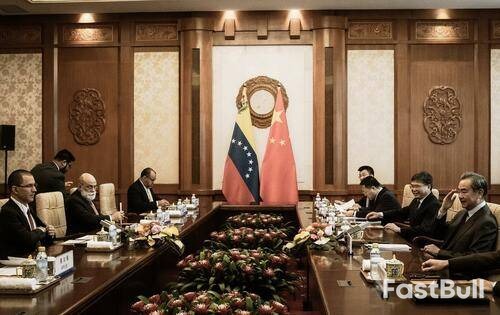
          Figure 1: Chinese Foreign Minister Wang Yi (right) and Venezuelan Foreign Minister Jorge Arreaza (left) during a 2020 meeting in Beijing, highlighting the deep diplomatic and energy ties between the two nations.

          Iran: The High-Stakes Target in China's Energy Supply

          Compared to Iran, Venezuela's oil flow to China is minor. China is Iran's single largest oil customer, purchasing as much as 80% of Tehran's exported crude. This deeply discounted oil is the lifeblood for China's independent refineries, petrochemical industry, and power-hungry industrial base. In short, Iranian oil is a critical input for China’s economic and technological growth.

          This dependency casts Trump's pressure campaign against the Iranian regime in a new light. The combination of tariffs, strict sanctions enforcement, and support for internal dissent is designed to put China in a strategic bind. Beijing must choose between continuing to buy Iranian oil and risking severe U.S. economic retaliation, or complying with sanctions and losing one of its most vital and affordable energy sources. Either path forces China to pay more for less reliable energy.

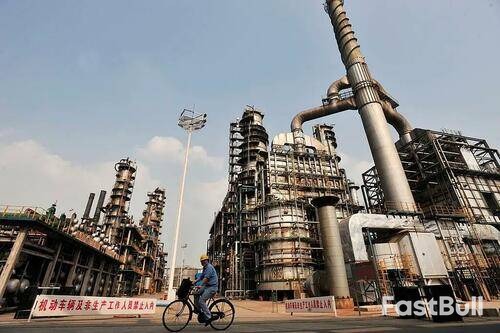
          Figure 2: A worker at a Sinopec refinery in Wuhan, China. Facilities like this are major consumers of imported crude oil, making them vulnerable to disruptions in supply from key partners like Iran.

          The AI Race Runs on Oil, Not Just Code

          There is a common misconception that AI operates in a clean, digital world of algorithms and cloud servers. The reality is that AI runs on electricity, which is still predominantly generated from fossil fuels and nuclear power. The energy requirements are staggering. Training a single large AI model consumes enormous power, and a hyperscale data center can use as much electricity as a medium-sized city.

          This physical reality makes energy, not just silicon chips, the primary bottleneck in the global AI competition.

          Beijing is acutely aware of this. It continues to approve new coal plants and expand its natural gas infrastructure even as it invests heavily in renewables. This isn't a contradiction; it's a strategy.

          • Grid Stability: Oil and gas provide the stable, always-on power that intermittent renewables cannot guarantee, which is essential for data centers running AI systems.

          • Industrial Inputs: AI hardware itself is petroleum-dependent. Plastics, resins, coolants, and advanced composites used in servers and chips are all derived from oil.

          • Cost of Intelligence: Relatively cheap oil lowers the cost of training AI models. The nation that can train more models faster and for less money gains a decisive advantage.

          By cutting China off from discounted oil, the U.S. isn't just raising fuel prices—it's raising the cost of developing intelligence itself.

          Energy Leverage: America's Asymmetric Advantage

          This is the core of the strategy. The United States doesn't have to win by building more data centers if it can make it too expensive for China to power its own. America benefits from abundant domestic oil and gas, growing LNG exports, and the deep capital markets needed to finance new energy-intensive infrastructure.

          China, in contrast, is fundamentally vulnerable. It imports over 70% of its oil, much of it from politically unstable or sanctioned nations. By disrupting these supply chains, the U.S. can make China's AI ambitions more fragile, expensive, and subject to geopolitical pressure. Oil thus becomes a powerful weapon that indirectly targets China's technological progress.

          Reshaping the Global AI Power Balance

          While Russia remains a factor in global energy markets, it is not the primary target of this strategy. The real objective is to slow China's momentum. The Trump administration's energy foreign policy is designed to blunt China's rise without direct conflict, forcing it to spend more capital and operate with a structural disadvantage in the most important technological race of the 21st century.

          Ultimately, dominance in AI won't be achieved by writing the best code alone. It will be determined by who can affordably and reliably power the most machines for the longest time. By squeezing Venezuela and pressuring Iran, the U.S. is betting that energy geopolitics, not algorithms, will decide the winner. If that bet pays off, the future of AI will be shaped not just in Silicon Valley or Shenzhen, but in the oil fields and shipping lanes few are watching.

          To stay updated on all economic events of today, please check out our Economic calendar
          Risk Warnings and Disclaimers
          You understand and acknowledge that there is a high degree of risk involved in trading. Following any strategies or investment methods may lead to potential losses. The content on the site is provided by our contributors and analysts for information purposes only. You are solely responsible for determining whether any trading assets, securities, strategy, or any other product is suitable for investing based on your own investment objectives and financial situation.
          Add to Favorites
          Share
          FastBull
          Copyright © 2026 FastBull Ltd

          728 RM B 7/F GEE LOK IND BLDG NO 34 HUNG TO RD KWUN TONG KLN HONG KONG

          TelegramInstagramTwitterfacebooklinkedin
          App Store Google Play Google Play
          Products
          Charts

          Chats

          Q&A with Experts
          Screeners
          Economic Calendar
          Data
          Tools
          Membership
          Features
          Function
          Markets
          Copy Trading
          Latest Signals
          Contests
          News
          Analysis
          24/7
          Columns
          Education
          Company
          Careers
          About Us
          Contact Us
          Advertising
          Help Center
          Feedback
          User Agreement
          Privacy Policy
          Personal Information Protection Statement
          Business

          White Label

          Data API

          Web Plug-ins

          Poster Maker

          Affiliate Program

          Risk Disclosure

          The risk of loss in trading financial instruments such as stocks, FX, commodities, futures, bonds, ETFs and crypto can be substantial. You may sustain a total loss of the funds that you deposit with your broker. Therefore, you should carefully consider whether such trading is suitable for you in light of your circumstances and financial resources.

          No decision to invest should be made without thoroughly conducting due diligence by yourself or consulting with your financial advisors. Our web content might not suit you since we don't know your financial conditions and investment needs. Our financial information might have latency or contain inaccuracy, so you should be fully responsible for any of your trading and investment decisions. The company will not be responsible for your capital loss.

          Without getting permission from the website, you are not allowed to copy the website's graphics, texts, or trademarks. Intellectual property rights in the content or data incorporated into this website belong to its providers and exchange merchants.

          Not Logged In

          Log in to access more features

          Connect Broker
          Become a signal provider
          Help Center
          Customer Service
          Dark Mode
          Price Up/Down Colors

          Log In

          Sign Up

          Position
          Layout
          Fullscreen
          Default to Chart
          The chart page opens by default when you visit fastbull.com