• Trade
  • Markets
  • Copy
  • Contests
  • News
  • 24/7
  • Calendar
  • Q&A
  • Chats
Trending
Screeners
SYMBOL
LAST
BID
ASK
HIGH
LOW
NET CHG.
%CHG.
SPREAD
SPX
S&P 500 Index
6846.50
6846.50
6846.50
6878.28
6827.18
-23.90
-0.35%
--
DJI
Dow Jones Industrial Average
47739.31
47739.31
47739.31
47971.51
47611.93
-215.67
-0.45%
--
IXIC
NASDAQ Composite Index
23545.89
23545.89
23545.89
23698.93
23455.05
-32.22
-0.14%
--
USDX
US Dollar Index
99.000
99.080
99.000
99.000
99.000
+0.050
+ 0.05%
--
EURUSD
Euro / US Dollar
1.16350
1.16380
1.16350
1.16365
1.16322
-0.00014
-0.01%
--
GBPUSD
Pound Sterling / US Dollar
1.33194
1.33240
1.33194
1.33217
1.33140
-0.00011
-0.01%
--
XAUUSD
Gold / US Dollar
4189.70
4190.14
4189.70
4218.85
4175.92
-8.21
-0.20%
--
WTI
Light Sweet Crude Oil
58.555
58.807
58.555
60.084
58.495
-1.254
-2.10%
--

Community Accounts

Signal Accounts
--
Profit Accounts
--
Loss Accounts
--
View More

Become a signal provider

Sell trading signals to earn additional income

View More

Guide to Copy Trading

Get started with ease and confidence

View More

Signal Accounts for Members

All Signal Accounts

Best Return
  • Best Return
  • Best P/L
  • Best MDD
Past 1W
  • Past 1W
  • Past 1M
  • Past 1Y

All Contests

  • All
  • Trump Updates
  • Recommend
  • Stocks
  • Cryptocurrencies
  • Central Banks
  • Featured News
Top News Only
Share

Ukraine's Security Must Be Guaranteed, In The Long Term, As A First Line Of Defence For Our Union, Says European Commission President

Share

Ukraine's Sovereignty Must Be Respected, Says European Commission President

Share

The Goal Is A Strong Ukraine, On The Battlefield And At The Negotiating Table, Says European Commission President

Share

As Peace Talks Are Ongoing, The EU Remains Ironclad In Its Support For Ukraine, Says European Commission President

Share

Pepsico: Asking USA-Based Pepna Employees As Well As Pbus Division Offices And Pfus Region Offices To Work Remotely This Week

Share

A U.S. Judge Ruled That President Trump’s Ban On Several Wind Power Projects Was Illegal

Share

Senior USA Administration Official: We Continue To Monitor Drc-Rwanda Situation Closely, Continue To Work With All Sides To Ensure Commitments Are Honored

Share

Israeli Military Says It Has Struck Infrastructure Belonging To Hezbollah In Several Areas In Southern Lebanon

Share

SPDR Gold Holdings Down 0.11%, Or 1.14 Tonnes

Share

On Monday (December 8), In Late New York Trading, S&P 500 Futures Fell 0.21%, Dow Jones Futures Fell 0.43%, NASDAQ 100 Futures Fell 0.08%, And Russell 2000 Futures Fell 0.04%

Share

Morgan Stanley: Data Center ABS Spreads Are Expected To Widen In 2026

Share

(US Stocks) The Philadelphia Gold And Silver Index Closed Down 2.34% At 311.01 Points. (Global Session) The NYSE Arca Gold Miners Index Closed Down 2.17%, Hitting A Daily Low Of 2235.45 Points; US Stocks Remained Slightly Down Before The Opening Bell—holding Steady Around 2280 Points—before Briefly Rising Slightly

Share

IMF: IMF Executive Board Approves Extension Of The Extended Credit Facility Arrangement With Nepal

Share

Trump: Same Approach Will Apply To Amd, Intel, And Other Great American Companies

Share

Trump: Department Of Commerce Is Finalizing Details

Share

Trump: $25% Will Be Paid To United States Of America

Share

Trump: President Xi Responded Positively

Share

[Consumer Discretionary ETFs Fell Over 1.4%, Leading The Decline Among US Sector ETFs; Semiconductor ETFs Rose Over 1.1%] On Monday (December 8), The Consumer Discretionary ETF Fell 1.45%, The Energy ETF Fell 1.09%, The Internet ETF Fell 0.18%, The Regional Banks ETF Rose 0.34%, The Technology ETF Rose 0.70%, The Global Technology ETF Rose 0.93%, And The Semiconductor ETF Rose 1.13%

Share

Trump: I Have Informed President Xi, Of China, That United States Will Allow Nvidia To Ship Its H200 Products To Approved Customers In China

Share

Argentina's Merval Index Closed Up 0.02% At 3.047 Million Points. It Rose To A New Daily High Of 3.165 Million Points In Early Trading In Buenos Aires Before Gradually Giving Back Its Gains

TIME
ACT
FCST
PREV
France Trade Balance (SA) (Oct)

A:--

F: --

P: --
Euro Zone Employment YoY (SA) (Q3)

A:--

F: --

P: --
Canada Part-Time Employment (SA) (Nov)

A:--

F: --

P: --

Canada Unemployment Rate (SA) (Nov)

A:--

F: --

P: --

Canada Full-time Employment (SA) (Nov)

A:--

F: --

P: --

Canada Labor Force Participation Rate (SA) (Nov)

A:--

F: --

P: --

Canada Employment (SA) (Nov)

A:--

F: --

P: --

U.S. PCE Price Index MoM (Sept)

A:--

F: --

P: --

U.S. Personal Income MoM (Sept)

A:--

F: --

P: --

U.S. Core PCE Price Index MoM (Sept)

A:--

F: --

P: --

U.S. PCE Price Index YoY (SA) (Sept)

A:--

F: --

P: --

U.S. Core PCE Price Index YoY (Sept)

A:--

F: --

P: --

U.S. Personal Outlays MoM (SA) (Sept)

A:--

F: --

P: --
U.S. 5-10 Year-Ahead Inflation Expectations (Dec)

A:--

F: --

P: --

U.S. Real Personal Consumption Expenditures MoM (Sept)

A:--

F: --

P: --
U.S. Weekly Total Rig Count

A:--

F: --

P: --

U.S. Weekly Total Oil Rig Count

A:--

F: --

P: --

U.S. Consumer Credit (SA) (Oct)

A:--

F: --

P: --
China, Mainland Foreign Exchange Reserves (Nov)

A:--

F: --

P: --

Japan Trade Balance (Oct)

A:--

F: --

P: --

Japan Nominal GDP Revised QoQ (Q3)

A:--

F: --

P: --

China, Mainland Imports YoY (CNH) (Nov)

A:--

F: --

P: --

China, Mainland Exports (Nov)

A:--

F: --

P: --

China, Mainland Imports (CNH) (Nov)

A:--

F: --

P: --

China, Mainland Trade Balance (CNH) (Nov)

A:--

F: --

P: --

China, Mainland Exports YoY (USD) (Nov)

A:--

F: --

P: --

China, Mainland Imports YoY (USD) (Nov)

A:--

F: --

P: --

Germany Industrial Output MoM (SA) (Oct)

A:--

F: --

P: --
Euro Zone Sentix Investor Confidence Index (Dec)

A:--

F: --

P: --

Canada National Economic Confidence Index

A:--

F: --

P: --

U.K. BRC Like-For-Like Retail Sales YoY (Nov)

--

F: --

P: --

U.K. BRC Overall Retail Sales YoY (Nov)

--

F: --

P: --

Australia Overnight (Borrowing) Key Rate

--

F: --

P: --

RBA Rate Statement
RBA Press Conference
Germany Exports MoM (SA) (Oct)

--

F: --

P: --

U.S. NFIB Small Business Optimism Index (SA) (Nov)

--

F: --

P: --

Mexico 12-Month Inflation (CPI) (Nov)

--

F: --

P: --

Mexico Core CPI YoY (Nov)

--

F: --

P: --

Mexico PPI YoY (Nov)

--

F: --

P: --

U.S. Weekly Redbook Index YoY

--

F: --

P: --

U.S. JOLTS Job Openings (SA) (Oct)

--

F: --

P: --

China, Mainland M1 Money Supply YoY (Nov)

--

F: --

P: --

China, Mainland M0 Money Supply YoY (Nov)

--

F: --

P: --

China, Mainland M2 Money Supply YoY (Nov)

--

F: --

P: --

U.S. EIA Short-Term Crude Production Forecast For The Year (Dec)

--

F: --

P: --

U.S. EIA Natural Gas Production Forecast For The Next Year (Dec)

--

F: --

P: --

U.S. EIA Short-Term Crude Production Forecast For The Next Year (Dec)

--

F: --

P: --

EIA Monthly Short-Term Energy Outlook
U.S. API Weekly Gasoline Stocks

--

F: --

P: --

U.S. API Weekly Cushing Crude Oil Stocks

--

F: --

P: --

U.S. API Weekly Crude Oil Stocks

--

F: --

P: --

U.S. API Weekly Refined Oil Stocks

--

F: --

P: --

South Korea Unemployment Rate (SA) (Nov)

--

F: --

P: --

Japan Reuters Tankan Non-Manufacturers Index (Dec)

--

F: --

P: --

Japan Reuters Tankan Manufacturers Index (Dec)

--

F: --

P: --

Japan Domestic Enterprise Commodity Price Index MoM (Nov)

--

F: --

P: --

Japan Domestic Enterprise Commodity Price Index YoY (Nov)

--

F: --

P: --

China, Mainland PPI YoY (Nov)

--

F: --

P: --

China, Mainland CPI MoM (Nov)

--

F: --

P: --

Italy Industrial Output YoY (SA) (Oct)

--

F: --

P: --

Q&A with Experts
    • All
    • Chatrooms
    • Groups
    • Friends
    Connecting
    .
    .
    .
    Type here...
    Add Symbol or Code

      No matching data

      All
      Trump Updates
      Recommend
      Stocks
      Cryptocurrencies
      Central Banks
      Featured News
      • All
      • Russia-Ukraine Conflict
      • Middle East Flashpoint
      • All
      • Russia-Ukraine Conflict
      • Middle East Flashpoint
      Search
      Products

      Charts Free Forever

      Chats Q&A with Experts
      Screeners Economic Calendar Data Tools
      Membership Features
      Data Warehouse Market Trends Institutional Data Policy Rates Macro

      Market Trends

      Market Sentiment Order Book Forex Correlations

      Top Indicators

      Charts Free Forever
      Markets

      News

      News Analysis 24/7 Columns Education
      From Institutions From Analysts
      Topics Columnists

      Latest Views

      Latest Views

      Trending Topics

      Top Columnists

      Latest Update

      Signals

      Copy Rankings Latest Signals Become a signal provider AI Rating
      Contests
      Brokers

      Overview Brokers Assessment Rankings Regulators News Claims
      Broker listing Forex Brokers Comparison Tool Live Spread Comparison Scam
      Q&A Complaint Scam Alert Videos Tips to Detect Scam
      More

      Business
      Events
      Careers About Us Advertising Help Center

      White Label

      Data API

      Web Plug-ins

      Affiliate Program

      Awards Institution Evaluation IB Seminar Salon Event Exhibition
      Vietnam Thailand Singapore Dubai
      Fans Party Investment Sharing Session
      FastBull Summit BrokersView Expo
      Recent Searches
        Top Searches
          Markets
          News
          Analysis
          User
          24/7
          Economic Calendar
          Education
          Data
          • Names
          • Latest
          • Prev

          View All

          No data

          Scan to Download

          Faster Charts, Chat Faster!

          Download App
          English
          • English
          • Español
          • العربية
          • Bahasa Indonesia
          • Bahasa Melayu
          • Tiếng Việt
          • ภาษาไทย
          • Français
          • Italiano
          • Türkçe
          • Русский язык
          • 简中
          • 繁中
          Open Account
          Search
          Products
          Charts Free Forever
          Markets
          News
          Signals

          Copy Rankings Latest Signals Become a signal provider AI Rating
          Contests
          Brokers

          Overview Brokers Assessment Rankings Regulators News Claims
          Broker listing Forex Brokers Comparison Tool Live Spread Comparison Scam
          Q&A Complaint Scam Alert Videos Tips to Detect Scam
          More

          Business
          Events
          Careers About Us Advertising Help Center

          White Label

          Data API

          Web Plug-ins

          Affiliate Program

          Awards Institution Evaluation IB Seminar Salon Event Exhibition
          Vietnam Thailand Singapore Dubai
          Fans Party Investment Sharing Session
          FastBull Summit BrokersView Expo

          Euro Zone Inflation Hits Record High 10%, Raising Pressure on ECB

          Damon
          Summary:

          Euro zone inflation zoomed past forecasts to hit a fresh record high this month, reinforcing expectations for another jumbo interest rate hike from the European Central Bank in October.
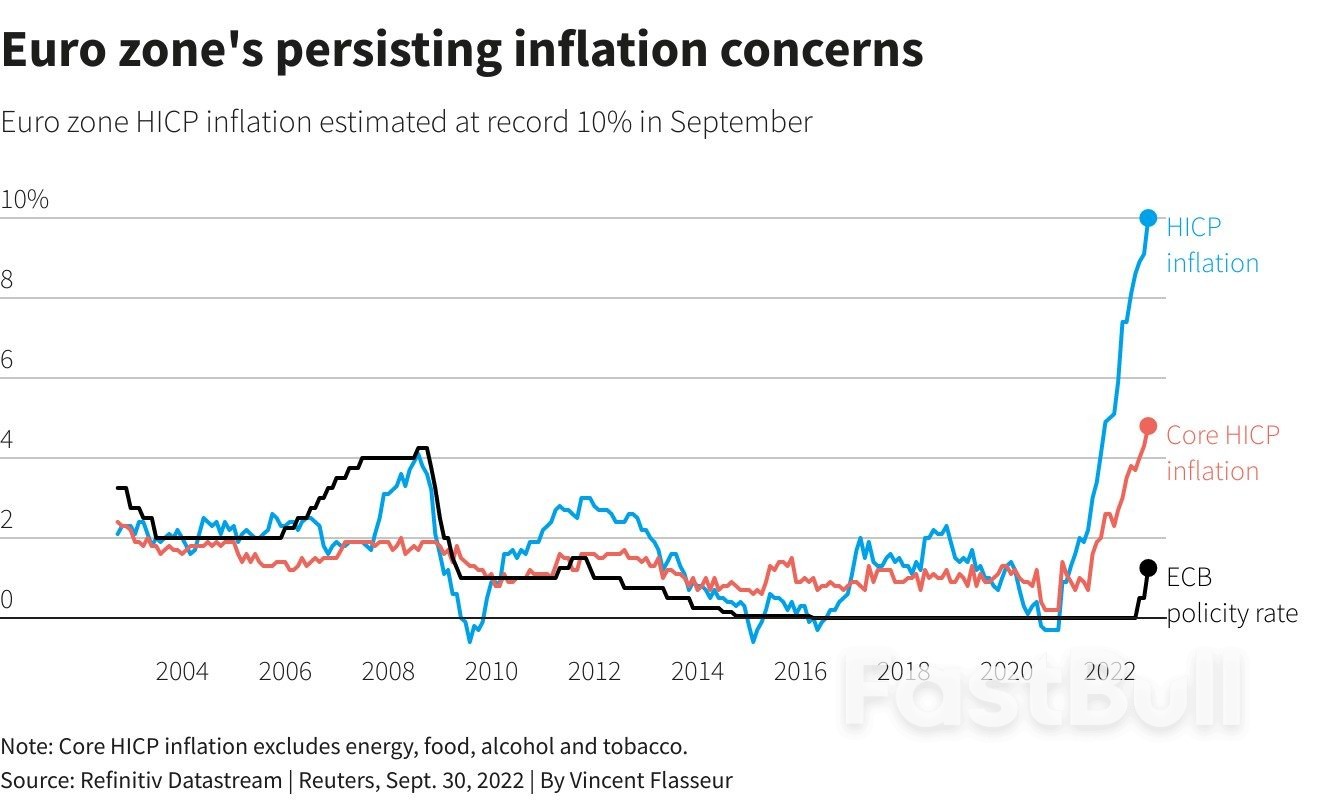
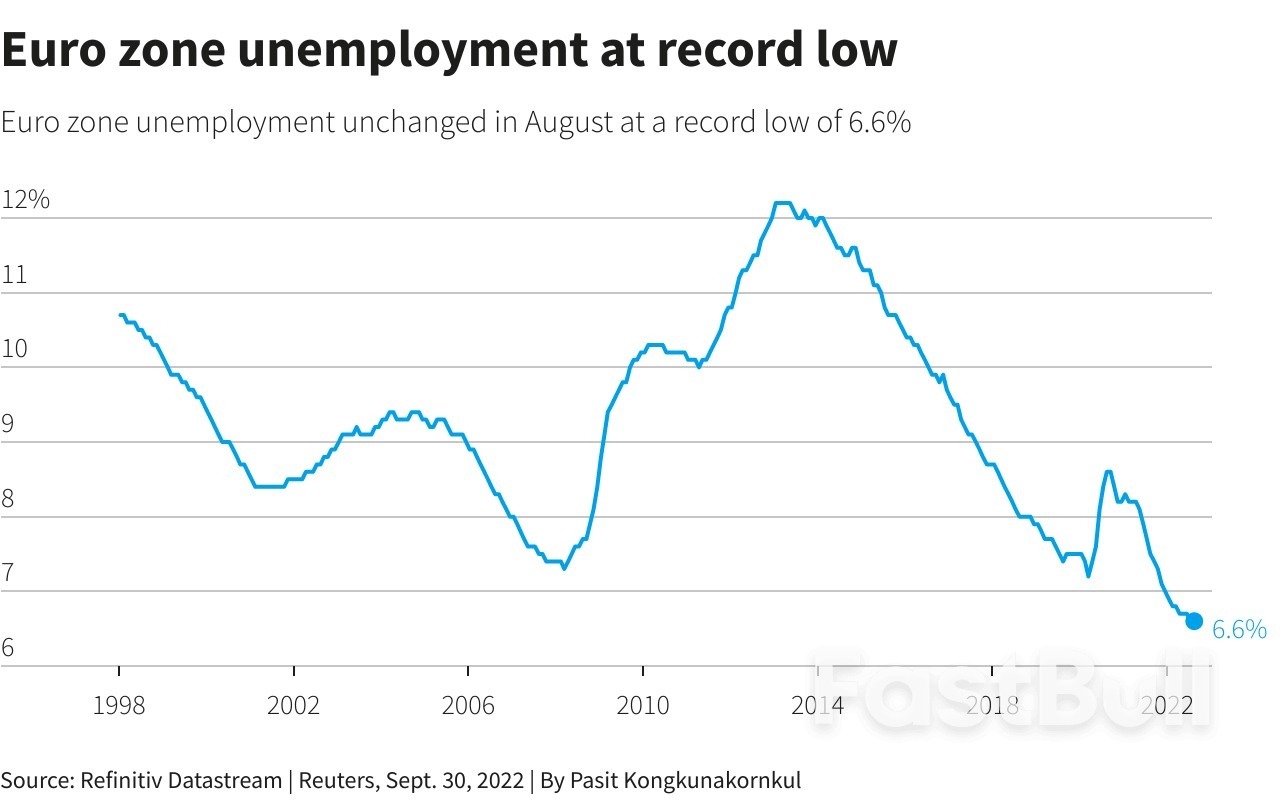
          Euro zone inflation zoomed past forecasts to hit a fresh record high this month, reinforcing expectations for another jumbo interest rate hike from the European Central Bank in October.
          Price growth in the 19 countries sharing the euro accelerated to 10.0% in September from 9.1% a month earlier, data from Eurostat showed on Friday, beating expectations for a reading of 9.7%.
          Figures a day earlier had shown inflation in Germany, the bloc's biggest economy, jumping to its highest rate since the time of the Korean War 70 years ago.
          Inflation was still driven mainly by volatile energy and food prices but continued to broaden out, with virtually all categories, from services to industrial goods, now showing painfully high readings.
          That is likely to make uncomfortable reading for the ECB, which targets price growth at 2%, as it suggests that inflation is increasingly being fuelled by excess demand and is at risk of getting entrenched.
          Indeed, underlying inflation, which filters out volatile food and fuel prices and is closely watched by the ECB, also jumped to a fresh high, adding to the urgency for more rate hikes after oversized moves in July and September.
          Excluding food and fuel prices, inflation jumped to 6.1% from 5.5% while an even narrower measure, which also excludes alcohol and tobacco, rose to 4.8% from 4.3%.
          Energy prices were meanwhile up 41% compared to a year ago while unprocessed food was up 13%.Euro Zone Inflation Hits Record High 10%, Raising Pressure on ECB_1
          While the ECB's next rate meeting is still almost a month away, a host of policymakers have already made the case for another 75 basis point rate hike after a combined 125 basis points of moves in two meetings, the ECB's fastest pace of policy tightening on record.
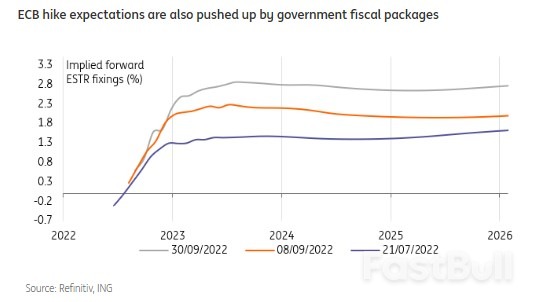
          Markets now see the 0.75% deposit rate rising to around 2% by the end of the year, then to around 3% next spring before levelling off.
          A key problem is that an inflation peak, predicted many times by the ECB, could still be months away as household energy contracts are repriced and sky-high gas prices filter through.
          A devastating drought over the summer will keep food prices under pressure while the fall of the euro to a two-decade low against the dollar will raise imported inflation, particularly since the bloc's energy bill is mostly denominated in dollars.
          But price pressures may be tamed by a looming recession. Expensive energy and projected gas shortages are draining savings and are likely to eat deep into growth as consumers will have little spare cash left.
          The European Systemic Risk Board, the EU's financial risk watchdog, warned on Thursday that a perfect storm may be brewing that could challenge financial stability, as businesses and households yet to recover from the pandemic now face a fresh hit.Euro Zone Inflation Hits Record High 10%, Raising Pressure on ECB_2
          Confidence indicators across the bloc have also been plummeting in recent weeks, suggesting that the euro zone may already be in recession with little respite likely until the spring.
          This could also provide desperately needed help for the ECB.
          Workers would normally demand big pay increases during bouts of high inflation but firms are also facing soaring costs, leaving them little cash to increase wages. This is keeping wage growth muted and offering hope that price growth will eventually stabilize and start retreating next year.

          Source: Reuters

          Risk Warnings and Disclaimers
          You understand and acknowledge that there is a high degree of risk involved in trading. Following any strategies or investment methods may lead to potential losses. The content on the site is provided by our contributors and analysts for information purposes only. You are solely responsible for determining whether any trading assets, securities, strategy, or any other product is suitable for investing based on your own investment objectives and financial situation.
          Comments
          Add to Favorites
          Share

          UK is Not in Recession as Pandemic Savings Help

          Devin
          The UK is not in recession, according to official figures, which showed the economy grew slightly over the second quarter.
          The Office of National Statistics said Gross Domestic Product grew by 0.2 per cent over the three months to June.
          It previously estimated the economy shrank by 0.1 per cent in the period.
          Based on this guidance, the Bank of England suggested the UK was likely to currently be in recession as it forecast another decline, of 0.2 per cent, for the three months to September, in its Monetary Policy Committee meeting earlier this month.
          A recession is defined by two consecutive quarters of decline.
          So even if the economy declines, as predicted this quarter, it will still not meet the technical definition.
          The economy has been thrown into turmoil over the past week by the new chancellor's mini budget, which represented the country's biggest tax cuts in 50 years, abolishing the top rate of tax, among other changes.
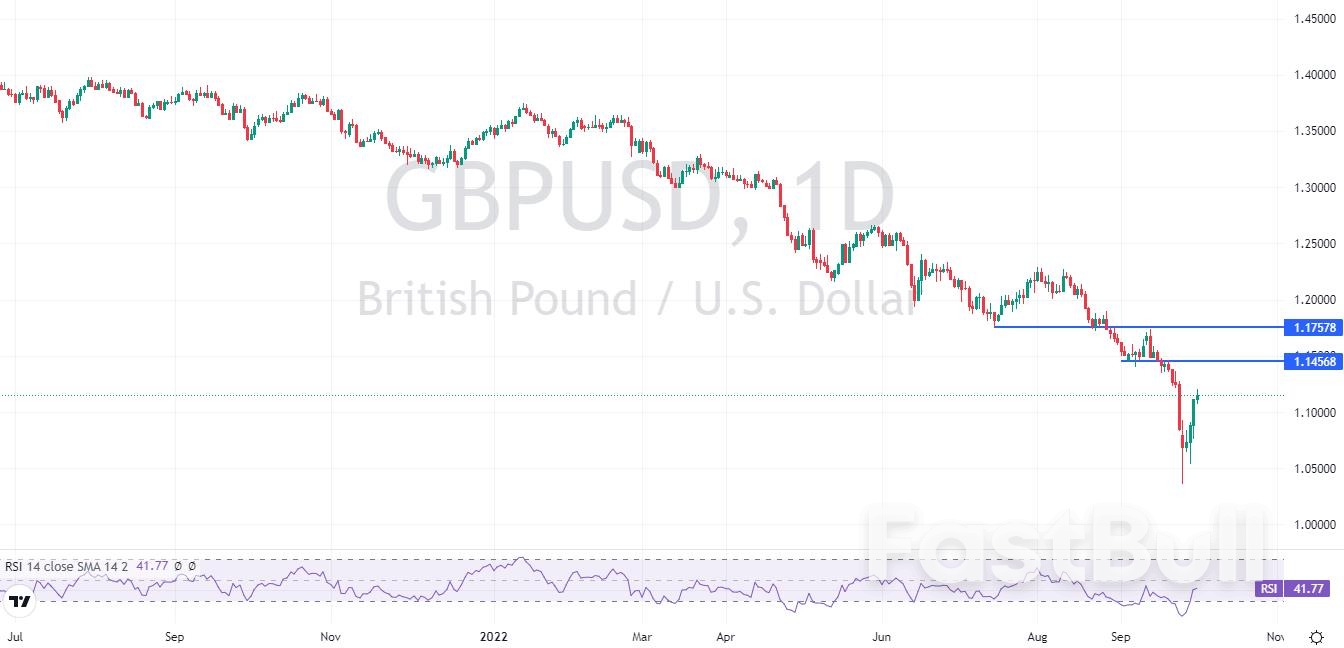
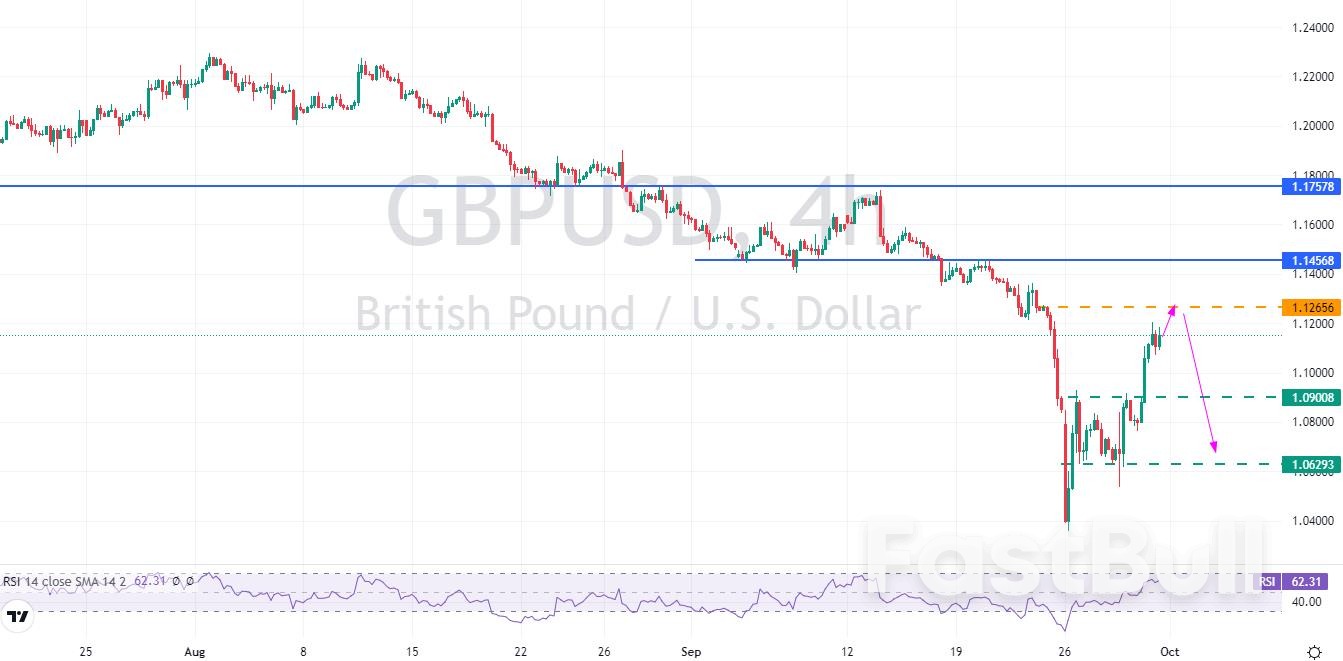
          The pound plummeted, falling to its lowest-ever level against the dollar, while the FTSE tumbled, and the Bank of England was forced to step in to save the pensions system from crashing.
          Base interest rates are now predicted to treble between now and next year, rising to more than 6 per cent.
          The ONS said the growth in the second quarter was driven by improvements for the health and financial sectors.
          ONS chief economist Grant Fitzner said: "These improved figures show the economy grew in the second quarter, revised up from a small fall.
          "They also show that, while household savings fell back in the most recent quarter, households saved more than we previously estimated during and after the pandemic."
          However, the new figures showed that despite growth in the latest quarter, the economy as a whole is smaller than previously predicted.
          Economists said they believe overall GDP is now 0.2 per cent below pre-pandemic levels, having previously said they thought it was 0.6 per cent bigger than before Covid-19 struck.
          "Overall, these new figures show that the economy was slightly smaller than our previous estimate, and in the second quarter was a little below its level when the pandemic struck, as the economy shrank more than we first estimated during the early months of the pandemic but rebounded more strongly in the latter half of 2021," said Mr. Fitzner.
          Meanwhile, house price growth stalled stalled month-on-month in September, but property values were still 9.5 per cent higher than a year earlier, according to an index.
          Property values recorded 0.0 per cent growth month-on-month, following a 0.7 per cent monthly increase in August. That makes September the first month to not record a sequential rise since July 2021.
          Robert Gardner, Nationwide's chief economist, said: "In September, annual house price growth slowed to single digits for the first time since October last year, although, at 9.5 per cent, the pace of increase remained robust.
          "Prices were unchanged over the month from August, after taking account of seasonal effects. This is the first month not to record a sequential rise since July 2021.
          "There have been further signs of a slowdown in the market over the past month, with the number of mortgages approved for house purchase remaining below pre-pandemic levels and surveyors reporting a decline in new buyer inquiries.
          "Nevertheless, the slowdown to date has been modest and, combined with a shortage of stock on the market, this has meant that price growth has remained firm."
          The mini-budget included cuts to stamp duty.
          But many mortgages have been pulled in recent days and some provides have been repricing them ahead of the predicted interest rate rises.
          Defaqto, a financial comparison website, said almost 3,000 mortgage products have been withdrawn from the market this week. And more than 20 providers have withdrawn their entire fixed-rate mortgage rates.
          Mr. Gardner said: "By lowering transaction costs, the reduction in stamp duty may provide some support to activity and prices, as will the strength of the labour market, assuming it persists, with the unemployment rate at its lowest level since the early 1970s.
          "However, headwinds are growing stronger suggesting the market will slow further in the months ahead. High inflation is exerting significant pressure on household budgets with consumer confidence declining to all-time lows.
          "Housing affordability is becoming more stretched.
          "Deposit requirements remain a major barrier, with a 10 per cent deposit on a typical first-time buyer property equivalent to almost 60 per cent of annual gross earnings - an all-time high.
          "Moreover, the significant increase in prices in recent years, together with the significant increase in mortgage rates since the start of the year, have pushed the typical mortgage payment as a share of take-home pay well above the long-run average."

          Source: The National News

          Risk Warnings and Disclaimers
          You understand and acknowledge that there is a high degree of risk involved in trading. Following any strategies or investment methods may lead to potential losses. The content on the site is provided by our contributors and analysts for information purposes only. You are solely responsible for determining whether any trading assets, securities, strategy, or any other product is suitable for investing based on your own investment objectives and financial situation.
          Comments
          Add to Favorites
          Share

          [Fed] Mester: Rates Haven't Entered the Restrictive Zone and Terminal Rate Will Be Slightly above 4.6%

          FastBull Featured

          Remarks of Officials

          Cleveland Fed President Loretta Mester said in an interview with CNBC on September 28 as follows.
          No one is sure whether there are huge hidden problems in the financial sector at the moment. Despite the turmoil in global markets, no market failures are seen in the U.S.
          The Bank of England's measures are somewhat incoherent. For financial stability reasons and for market functioning reasons they had to go in and buy bonds. Market functioning is incredibly important because you won't be able to hit any monetary policy goals if the markets aren't functioning.
          Real interest rates based on inflation expectations for the coming year must be in a positive range and remain there for some time. The federal funds rate is still not in the restrictive territory.
          The turmoil in the UK will not affect the Fed's rate hikes and there is reason to slow the pace of rate hikes at this time. Based on the expectation that inflation will be more persistent, the terminal rate next year will be slightly higher than the 4.6% in the September SEP. A federal funds rate above 4% is important for lowering inflation. So far, the U.S. economy has been able to digest higher interest rates. The labor market remains in short supply. A stronger dollar also helps to reduce inflation.
          Risk Warnings and Disclaimers
          You understand and acknowledge that there is a high degree of risk involved in trading. Following any strategies or investment methods may lead to potential losses. The content on the site is provided by our contributors and analysts for information purposes only. You are solely responsible for determining whether any trading assets, securities, strategy, or any other product is suitable for investing based on your own investment objectives and financial situation.
          Comments
          Add to Favorites
          Share

          Singapore Tightens Housing Loan Limits as Rates Rise

          Owen Li
          Singapore has unveiled a package of measures for the property market, including tightening lending limits for housing loans in response to a rise in interest rates, as well as new steps to moderate demand.
          The move would ensure "prudent borrowing" and "avoid future difficulties" in servicing home loans, said Singapore's central bank, the Ministry of National Development and the Housing & Development Board in a joint statement late on Thursday.
          The measures - including lowering the amount of government loans available to buy public housing by 5 percentage points - were announced late on Thursday and came into effect from Friday.
          The interest rate floor used in bank loan calculations has also been raised, reducing the amount of lending a person can obtain in relation to their income level when buying from either the public or private property market.
          OCBC economist Selena Ling said the steps should "dampen any exuberance and slow the pace of price appreciation".
          The measures would have less impact on foreign investors as they are more attuned to the global interest rate situation or less dependent on loans, Ling said.
          The new measures are mainly targeted at the "overheated" resale public housing market, said Christine Sun, senior vice president of research & analytics at OrangeTee & Tie.
          Analysts expect the measures to slow property price growth in the fourth quarter.
          Reuters had earlier reported record numbers of Singapore public housing apartments were sold at over S$1 million ($697,739).
          The government implemented a broad package of cooling measures last December, but there was still a "clear upward momentum" in public housing prices which increased by more than 5% since then to the end of the second quarter this year, the authorities said in the statement.
          Meanwhile, private home prices also rose 3.5% in the second quarter, five times the 0.7% increase in the previous quarter.
          The higher prices of apartments in Singapore, where real estate is viewed as a safe-harbour investment, have been exacerbated by COVID-19-related construction delays creating a shortage of new units.
          Authorities said in Thursday's statement that interest rates had risen significantly and are likely to go up further.
          "We urge households to exercise prudence before taking up any new loans, and be sure of their debt-servicing ability before making long-term financial commitments."
          Share prices of major developers in Singapore like City Developments, GuocoLand and Frasers Property, fell more than 1.5% on Friday following the new measures, compared with a 0.4% drop in the broader market.
          Many central banks across the world have increased interest rates to fight inflation. In Singapore, bank mortgage interest rates are determined by commercial banks. Three local banks have in recent weeks temporarily removed fixed-rate home loans.
          Singapore's monthly inflation rate has remained elevated in recent months, and economists widely expect the central bank to tighten policy at its scheduled review next month.
          ($1 = 1.4332 Singapore dollars)

          Source: Reuters

          Risk Warnings and Disclaimers
          You understand and acknowledge that there is a high degree of risk involved in trading. Following any strategies or investment methods may lead to potential losses. The content on the site is provided by our contributors and analysts for information purposes only. You are solely responsible for determining whether any trading assets, securities, strategy, or any other product is suitable for investing based on your own investment objectives and financial situation.
          Comments
          Add to Favorites
          Share

          Are We Witnessing Light Retracement to $80 Levels Or It Will Break Previous Support And Roll Down

          Traders' Opinions

          On Friday, WTI crude futures were trading near $81 per barrel and were revised down for the fourth consecutive month. Oil markets have been falling since June due to restricting monetary policies, which have raised concerns about a global economic downturn and a decline in energy demand. A strong dollar also contributed to the bearish mood. The US oil benchmark, which has fallen around 23% since the end of June, is also on track to record its first quarterly loss since the first quarter of 2020. Investors are anticipating an OPEC+ meeting on October 5 as lower oil prices have sparked rumors that the organization may announce another production cut. Russia is allegedly pressuring the group to reduce output by approximately 1 million barrels per day. Markets are keeping an eye on the European Union's and Russia's developing energy spat, as an EU ban on Russian oil is expected to go into force on December 5.
          As it makes a string of higher highs and lows, the price of oil trades to a new weekly high ($82.94). Crude may continue to retrace its losses from the monthly high ($90.39), as data prints coming out of the US give rise to a more optimistic picture for energy consumption.
          According to recent Energy Information Administration (EIA) data, crude stocks decreased for the first time this month in the week ending September 23 compared to expectations for a rise of 0.443 million barrels. The Organization of Petroleum Exporting Countries (OPEC) may be influenced by signs of resilient demand as the group returns to its previous production schedule, and the group may provide a steady supply over the coming months as the environment of rising interest rates across advanced economies dims the outlook for global growth.
          The most recent Monthly Oil Market Report (MOMR) asserts that in 2023, hopes for better and healthier economic growth, associated to predicted adjustments in the containment of COVID-19 in China, are expected to boost oil consumption, so OPEC may follow a predetermined course.
          A closer examination of the EIA records reveals that weekly field output shrank to 12,000K in the week ending September 23 from publishing at 12,100K for four straight weeks, which may influence oil prices until then.
          That being said, recent developments may support the price of oil as expectations for strong demand are met with indications of a constrained supply. Additionally, crude may stage a larger recovery over the next few days in the wake of the failed attempt to test the January low ($74.27), which it failed to do.

          Technical Analysis:

          As it reverses ahead of the January low ($74.27), the price of oil forms a string of higher highs and lows, and the negative momentum may continue to slow as the Relative Strength Index (RSI) moves away from oversold area.
          The $90.60 to $91.60 level becomes accessible with a move above the 50 SMA ($88.86), however the price of crude oil may follow the downward slope of the moving average, similar to the price action seen last weeks.
          With the next area of interest being around $73.20 (38.2% )to $74.40 (50%), which corresponds with the January low ($74.27), inability to secure above crossover between $78.50 (61.8%) to $79.80 (61.8%) could raise the cost of oil towards the $76.50 (50%) to $76.90 (50%) region.
          Are We Witnessing Light Retracement to $80 Levels Or It Will Break Previous Support And Roll Down_1
          The bearish trend scenario is still alive on an intraday and short-term basis as the price of crude oil tested the resistance of the bearish channel and rebounded bearishly from there. We are waiting for further rise to reach our negative goals, which begin at 79.35 and continue to 76.30.
          The price will be pushed to achieve new gains that reach 84.85 and may extend to 87.35 before any new attempt to decline. Take note that exceeding 82.40 will stop the anticipated decrease and stop the price from declining.
          A trading range between 78.50 support and 82.40 resistance is anticipated for today.
          Are We Witnessing Light Retracement to $80 Levels Or It Will Break Previous Support And Roll Down_2
          Risk Warnings and Disclaimers
          You understand and acknowledge that there is a high degree of risk involved in trading. Following any strategies or investment methods may lead to potential losses. The content on the site is provided by our contributors and analysts for information purposes only. You are solely responsible for determining whether any trading assets, securities, strategy, or any other product is suitable for investing based on your own investment objectives and financial situation.
          Comments
          Add to Favorites
          Share

          [BOE] Pill: Tax Cuts Will Prompt a Significant and Necessary Monetary Policy Response in November

          FastBull Featured

          Remarks of Officials

          Huw Pill, Chief Economist of the Bank of England (BOE), delivered a speech on September 29 on the developments in the economy and markets affected by the tax cuts.
          Over the course of the past week, there has been a significant repricing of financial assets. The intervention announced on Wednesday, September 28, by the BOE is intended to facilitate an orderly adjustment in the positions and structures in the bond market as these factors can lead to a self-sustaining vicious spiral of collateral calls, forced sales, and disappearing liquidity (i.e. dysfunction). Restoring market functioning helps reduce any risks from contagion to credit conditions for UK households and businesses.
          The intervention is targeted specifically at the bond market, and it is time-limited. These operations do not create central bank money on a lasting basis. They will not shift the monetary trends, which ultimately pin down developments in the price level.
          The BOE's monetary policy will not be indifferent to the re-pricing of financial assets. This is because changes in asset prices have an important impact on macro developments through a variety of channels: via the cost of financing; via the cost of imports; and via their impact on both aggregate demand and aggregate supply. On my read, recent fiscal announcements will provide a stimulus to demand relative to supply in the short to medium term. We need to incorporate these effects into our overall assessment of the economic outlook and the prospects for price developments.
          Recent market developments have posed a challenge for monetary policy. Monetary policy is designed to reduce demand through interest rate changes, but recent market developments have affected the BOE's efforts to balance supply and demand. More importantly, the impact of market developments must be seen in the context of all important macroeconomic influences on supply and demand, including the impact of government fiscal policy over the past few weeks, as well as energy price developments and the labor market. The MPC will make a full assessment at its November meeting.
          This assessment will include evidence of recent weakness in economic activity and the impact of the government's energy price guarantee on headline inflation, wages and pricing behavior. The evolution of international commodity prices, particularly developments in wholesale natural gas markets must be taken into account, and the impact of the government's growth plans and other fiscal announcements will need to be assessed.
          During the intervening period, we need to rely on our communication about the economic and policy outlook through remarks, and its transmission to market developments, the real economy, and wage and price setting behavior, via market participants' expectations.
          At present, on the basis of the fiscal easing announced last week, the macroeconomic policy environment looks set to rebalance. Taken in conjunction with the macroeconomic impact of ensuing market developments, it is hard to avoid the conclusion that the fiscal easing announced last week will prompt a significant and necessary monetary policy response in November.

          Recent Developments in the Economic and Markets

          Risk Warnings and Disclaimers
          You understand and acknowledge that there is a high degree of risk involved in trading. Following any strategies or investment methods may lead to potential losses. The content on the site is provided by our contributors and analysts for information purposes only. You are solely responsible for determining whether any trading assets, securities, strategy, or any other product is suitable for investing based on your own investment objectives and financial situation.
          Comments
          Add to Favorites
          Share

          Buying Time Rather Than Bonds

          Damon

          ECB remains undeterred from its tightening plans

          German inflation came in at 10%, and eurozone inflation today is expected in close vicinity. European Central Bank officials have all the reason to continue stepping up the hawkish rhetoric. Scanning recent ECB comments suggests that the Council is indeed homing in on a 75bp hike in October, and it is unlikely to stop there. Spain's de Cos pitched the terminal rate at 2.25-2.5% yesterday. If that is the target then an overall increase of at least another 150bp is on the cards over the next 'several' meetings. This is also what our economists are now seeing as a likely outcome given the ECB's new reaction function.
          The UK experience does not appear to deter the ECB from their chosen path. Not even when it comes to the topic of quantitative tightening. The main focus in the eurozone obviously remains Italy, but Reuters reported yesterday that the ECB does not view the recent widening of the 10Y Italy Germany yield spread towards 250bp as a concern. It was not disorderly and not unwarranted given that Italy currently faces a period of uncertainty as the new government is being evaluated. In their view, there is no reason to activate the Transmission Protection Mechanism.Buying Time Rather Than Bonds_1

          Ramped up funding plans likely to face quantitative tightening headwinds

          However, there is no denying that market conditions are far from normal. With the ECB signalling sped up plans to pull away from the bond market, and hawkish officials like Holzman even mulling active sales, markets are right to be concerned when at the same time fiscal policies point to government funding plans with likely considerable upward revisions.
          Germany has just announced plans for an energy price cap with an attached price tag of up to €200bn. Now Germany is one of the core issuers where markets would have few qualms of digesting the additional supply. But under current market circumstances it speaks volumes when the Finance Minister in a press conference takes pains to put some distance between his plans and the controversial UK government budget plan: In his own words, the German package is not expansive fiscal policy, but targeted to the current emergency and with no inflationary impact. To the contrary it should dampen inflation, and by 2023 the plan is to fall back to the debt brake. We'd say it is still a lot of potential issuance coming in the direction of markets. And they have seen implied volatilities ratched up and yields already increase dramatically over the past weeks.

          Buying Time Rather Than Bonds_2Rates still under upward pressure

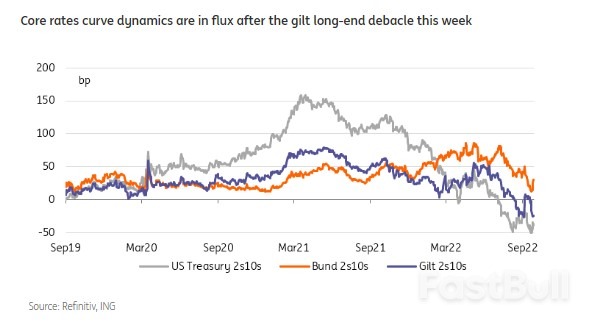
          Eurozone curves have seen their flattening trend being stopped in their tracks, even reversed. Despite the upped hawkish rhetoric front-end rates actually declined. It could also be growing concerns over how far the ECB will actually be able to push the envelope on policy tightening, but maybe some of the UK spillover that had also dragged the front end higher still needed to be priced out.
          The longer end may feel the pressure from the fiscal front and current quantitative tightening chatter. One could also argue that the German package may help soften the blow of the upcoming recession, even if it cannot prevent it, but then the pressure on risk assets seems to tell another story. The upshot is that the picture for curves appears murkier than the outlook for general direction of rates, which we think should still be higher.

          Today's events and market view

          The highlight will be the release of the eurozone flash CPI. Consensus is looking for a 9.7% year-on-year reading. The acceleration of German inflation into double digits yesterday points to some upside risk. In any case it should ensure further hawkishness from the ECB where the central bank's current key figure Isabel Schnabel joins a discussion panel aptly named "Fight against Inflation" today.
          The US will also see another busy slate of Fed speakers: Barkin, Brainard, Bowman and Williams. Much of the economy still looks frothy, which should keep Fed official focussed on the inflation fight. Next to the Fed's favoured inflation gauge, the PCE deflator, we will also see the release of personal income and spending data.

          Source: Reuters

          Risk Warnings and Disclaimers
          You understand and acknowledge that there is a high degree of risk involved in trading. Following any strategies or investment methods may lead to potential losses. The content on the site is provided by our contributors and analysts for information purposes only. You are solely responsible for determining whether any trading assets, securities, strategy, or any other product is suitable for investing based on your own investment objectives and financial situation.
          Comments
          Add to Favorites
          Share
          FastBull
          Copyright © 2025 FastBull Ltd

          728 RM B 7/F GEE LOK IND BLDG NO 34 HUNG TO RD KWUN TONG KLN HONG KONG

          TelegramInstagramTwitterfacebooklinkedin
          App Store Google Play Google Play
          Products
          Charts

          Chats

          Q&A with Experts
          Screeners
          Economic Calendar
          Data
          Tools
          Membership
          Features
          Function
          Markets
          Copy Trading
          Latest Signals
          Contests
          News
          Analysis
          24/7
          Columns
          Education
          Company
          Careers
          About Us
          Contact Us
          Advertising
          Help Center
          Feedback
          User Agreement
          Privacy Policy
          Business

          White Label

          Data API

          Web Plug-ins

          Poster Maker

          Affiliate Program

          Risk Disclosure

          The risk of loss in trading financial instruments such as stocks, FX, commodities, futures, bonds, ETFs and crypto can be substantial. You may sustain a total loss of the funds that you deposit with your broker. Therefore, you should carefully consider whether such trading is suitable for you in light of your circumstances and financial resources.

          No decision to invest should be made without thoroughly conducting due diligence by yourself or consulting with your financial advisors. Our web content might not suit you since we don't know your financial conditions and investment needs. Our financial information might have latency or contain inaccuracy, so you should be fully responsible for any of your trading and investment decisions. The company will not be responsible for your capital loss.

          Without getting permission from the website, you are not allowed to copy the website's graphics, texts, or trademarks. Intellectual property rights in the content or data incorporated into this website belong to its providers and exchange merchants.

          Not Logged In

          Log in to access more features

          FastBull Membership

          Not yet

          Purchase

          Become a signal provider
          Help Center
          Customer Service
          Dark Mode
          Price Up/Down Colors

          Log In

          Sign Up

          Position
          Layout
          Fullscreen
          Default to Chart
          The chart page opens by default when you visit fastbull.com