• Trade
  • Markets
  • Copy
  • Contests
  • News
  • 24/7
  • Calendar
  • Q&A
  • Chats
Trending
Screeners
SYMBOL
LAST
BID
ASK
HIGH
LOW
NET CHG.
%CHG.
SPREAD
SPX
S&P 500 Index
6827.42
6827.42
6827.42
6899.86
6801.80
-73.58
-1.07%
--
DJI
Dow Jones Industrial Average
48458.04
48458.04
48458.04
48886.86
48334.10
-245.98
-0.51%
--
IXIC
NASDAQ Composite Index
23195.16
23195.16
23195.16
23554.89
23094.51
-398.69
-1.69%
--
USDX
US Dollar Index
97.950
98.030
97.950
98.500
97.950
-0.370
-0.38%
--
EURUSD
Euro / US Dollar
1.17394
1.17409
1.17394
1.17496
1.17192
+0.00011
+ 0.01%
--
GBPUSD
Pound Sterling / US Dollar
1.33707
1.33732
1.33707
1.33997
1.33419
-0.00148
-0.11%
--
XAUUSD
Gold / US Dollar
4299.39
4299.39
4299.39
4353.41
4257.10
+20.10
+ 0.47%
--
WTI
Light Sweet Crude Oil
57.233
57.485
57.233
58.011
56.969
-0.408
-0.71%
--

Community Accounts

Signal Accounts
--
Profit Accounts
--
Loss Accounts
--
View More

Become a signal provider

Sell trading signals to earn additional income

View More

Guide to Copy Trading

Get started with ease and confidence

View More

Signal Accounts for Members

All Signal Accounts

Best Return
  • Best Return
  • Best P/L
  • Best MDD
Past 1W
  • Past 1W
  • Past 1M
  • Past 1Y

All Contests

  • All
  • Trump Updates
  • Recommend
  • Stocks
  • Cryptocurrencies
  • Central Banks
  • Featured News
Top News Only
Share

USA Embassy In Lithuania: Maria Kalesnikava Is Not Going To Vilnius

Share

USA Embassy In Lithuania: Other Prisoners Are Being Sent From Belarus To Ukraine

Share

Ukraine President Zelenskiy: Five Ukrainians Released By Belarus In US-Brokered Deal

Share

USA Vilnius Embassy: USA Stands Ready For "Additional Engagement With Belarus That Advances USA Interests"

Share

USA Vilnius Embassy: Belarus, USA, Other Citizens Among The Prisoners Released Into Lithuania

Share

USA Vilnius Embassy: USA Will Continue Diplomatic Efforts To Free The Remaining Political Prisoners In Belarus

Share

USA Vilnius Embassy: Belarus Releases 123 Prisoners Following Meeting Of President Trump's Envoy Coale And Belarus President Lukashenko

Share

USA Vilnius Embassy: Masatoshi Nakanishi, Aliaksandr Syrytsa Are Among The Prisoners Released By Belarus

Share

USA Vilnius Embassy: Maria Kalesnikava And Viktor Babaryka Are Among The Prisoners Released By Belarus

Share

USA Vilnius Embassy: Nobel Peace Prize Laureate Ales Bialiatski Is Among The Prisoners Released By Belarus

Share

Belarusian Presidential Administration Telegram Channel: Lukashenko Has Pardoned 123 Prisoners As Part Of Deal With US

Share

Two Local Syrian Officials: Joint US-Syrian Military Patrol In Central Syria Came Under Fire From Unknown Assailants

Share

Israeli Military Says It Targeted 'Key Hamas Terrorist' In Gaza City

Share

Rwanda's Actions In Eastern Drc Are A Clear Violation Of Washington Accords Signed By President Trump - Secretary Of State Rubio

Share

Israeli Military Issues Evacuation Warning In Southern Lebanon Village Ahead Of Strike - Spokesperson On X

Share

Belarusian State Media Cites US Envoy Coale As Saying He Discussed Ukraine And Venezuela With Lukashenko

Share

Belarusian State Media Cites US Envoy Coale As Saying That US Removes Sanctions On Belarusian Potassium

Share

Thai Prime Minister: No Ceasefire Agreement With Cambodia

Share

US, Ukraine To Discuss Ceasefire In Berlin Ahead Of European Summit

Share

Incoming Czech Prime Minister Babis: Czech Republic Will Not Take On Guarantees For Ukraine Financing, European Commission Must Find Alternatives

TIME
ACT
FCST
PREV
U.K. Trade Balance Non-EU (SA) (Oct)

A:--

F: --

P: --

U.K. Trade Balance (Oct)

A:--

F: --

P: --

U.K. Services Index MoM

A:--

F: --

P: --

U.K. Construction Output MoM (SA) (Oct)

A:--

F: --

P: --

U.K. Industrial Output YoY (Oct)

A:--

F: --

P: --

U.K. Trade Balance (SA) (Oct)

A:--

F: --

P: --

U.K. Trade Balance EU (SA) (Oct)

A:--

F: --

P: --

U.K. Manufacturing Output YoY (Oct)

A:--

F: --

P: --

U.K. GDP MoM (Oct)

A:--

F: --

P: --

U.K. GDP YoY (SA) (Oct)

A:--

F: --

P: --

U.K. Industrial Output MoM (Oct)

A:--

F: --

P: --

U.K. Construction Output YoY (Oct)

A:--

F: --

P: --

France HICP Final MoM (Nov)

A:--

F: --

P: --

China, Mainland Outstanding Loans Growth YoY (Nov)

A:--

F: --

P: --

China, Mainland M2 Money Supply YoY (Nov)

A:--

F: --

P: --

China, Mainland M0 Money Supply YoY (Nov)

A:--

F: --

P: --

China, Mainland M1 Money Supply YoY (Nov)

A:--

F: --

P: --

India CPI YoY (Nov)

A:--

F: --

P: --

India Deposit Gowth YoY

A:--

F: --

P: --

Brazil Services Growth YoY (Oct)

A:--

F: --

P: --

Mexico Industrial Output YoY (Oct)

A:--

F: --

P: --

Russia Trade Balance (Oct)

A:--

F: --

P: --

Philadelphia Fed President Henry Paulson delivers a speech
Canada Building Permits MoM (SA) (Oct)

A:--

F: --

P: --

Canada Wholesale Sales YoY (Oct)

A:--

F: --

P: --

Canada Wholesale Inventory MoM (Oct)

A:--

F: --

P: --

Canada Wholesale Inventory YoY (Oct)

A:--

F: --

P: --

Canada Wholesale Sales MoM (SA) (Oct)

A:--

F: --

P: --

Germany Current Account (Not SA) (Oct)

A:--

F: --

P: --

U.S. Weekly Total Rig Count

A:--

F: --

P: --

U.S. Weekly Total Oil Rig Count

A:--

F: --

P: --

Japan Tankan Large Non-Manufacturing Diffusion Index (Q4)

--

F: --

P: --

Japan Tankan Small Manufacturing Outlook Index (Q4)

--

F: --

P: --

Japan Tankan Large Non-Manufacturing Outlook Index (Q4)

--

F: --

P: --

Japan Tankan Large Manufacturing Outlook Index (Q4)

--

F: --

P: --

Japan Tankan Small Manufacturing Diffusion Index (Q4)

--

F: --

P: --

Japan Tankan Large Manufacturing Diffusion Index (Q4)

--

F: --

P: --

Japan Tankan Large-Enterprise Capital Expenditure YoY (Q4)

--

F: --

P: --

U.K. Rightmove House Price Index YoY (Dec)

--

F: --

P: --

China, Mainland Industrial Output YoY (YTD) (Nov)

--

F: --

P: --

China, Mainland Urban Area Unemployment Rate (Nov)

--

F: --

P: --

Saudi Arabia CPI YoY (Nov)

--

F: --

P: --

Euro Zone Industrial Output YoY (Oct)

--

F: --

P: --

Euro Zone Industrial Output MoM (Oct)

--

F: --

P: --

Canada Existing Home Sales MoM (Nov)

--

F: --

P: --

Euro Zone Total Reserve Assets (Nov)

--

F: --

P: --

U.K. Inflation Rate Expectations

--

F: --

P: --

Canada National Economic Confidence Index

--

F: --

P: --

Canada New Housing Starts (Nov)

--

F: --

P: --

U.S. NY Fed Manufacturing Employment Index (Dec)

--

F: --

P: --

U.S. NY Fed Manufacturing Index (Dec)

--

F: --

P: --

Canada Core CPI YoY (Nov)

--

F: --

P: --

Canada Manufacturing Unfilled Orders MoM (Oct)

--

F: --

P: --

Canada Manufacturing New Orders MoM (Oct)

--

F: --

P: --

Canada Core CPI MoM (Nov)

--

F: --

P: --

Canada Manufacturing Inventory MoM (Oct)

--

F: --

P: --

Canada CPI YoY (Nov)

--

F: --

P: --

Canada CPI MoM (Nov)

--

F: --

P: --

Canada CPI YoY (SA) (Nov)

--

F: --

P: --

Canada Core CPI MoM (SA) (Nov)

--

F: --

P: --

Q&A with Experts
    • All
    • Chatrooms
    • Groups
    • Friends
    Connecting
    .
    .
    .
    Type here...
    Add Symbol or Code

      No matching data

      All
      Trump Updates
      Recommend
      Stocks
      Cryptocurrencies
      Central Banks
      Featured News
      • All
      • Russia-Ukraine Conflict
      • Middle East Flashpoint
      • All
      • Russia-Ukraine Conflict
      • Middle East Flashpoint
      Search
      Products

      Charts Free Forever

      Chats Q&A with Experts
      Screeners Economic Calendar Data Tools
      Membership Features
      Data Warehouse Market Trends Institutional Data Policy Rates Macro

      Market Trends

      Market Sentiment Order Book Forex Correlations

      Top Indicators

      Charts Free Forever
      Markets

      News

      News Analysis 24/7 Columns Education
      From Institutions From Analysts
      Topics Columnists

      Latest Views

      Latest Views

      Trending Topics

      Top Columnists

      Latest Update

      Signals

      Copy Rankings Latest Signals Become a signal provider AI Rating
      Contests
      Brokers

      Overview Brokers Assessment Rankings Regulators News Claims
      Broker listing Forex Brokers Comparison Tool Live Spread Comparison Scam
      Q&A Complaint Scam Alert Videos Tips to Detect Scam
      More

      Business
      Events
      Careers About Us Advertising Help Center

      White Label

      Data API

      Web Plug-ins

      Affiliate Program

      Awards Institution Evaluation IB Seminar Salon Event Exhibition
      Vietnam Thailand Singapore Dubai
      Fans Party Investment Sharing Session
      FastBull Summit BrokersView Expo
      Recent Searches
        Top Searches
          Markets
          News
          Analysis
          User
          24/7
          Economic Calendar
          Education
          Data
          • Names
          • Latest
          • Prev

          View All

          No data

          Scan to Download

          Faster Charts, Chat Faster!

          Download App
          English
          • English
          • Español
          • العربية
          • Bahasa Indonesia
          • Bahasa Melayu
          • Tiếng Việt
          • ภาษาไทย
          • Français
          • Italiano
          • Türkçe
          • Русский язык
          • 简中
          • 繁中
          Open Account
          Search
          Products
          Charts Free Forever
          Markets
          News
          Signals

          Copy Rankings Latest Signals Become a signal provider AI Rating
          Contests
          Brokers

          Overview Brokers Assessment Rankings Regulators News Claims
          Broker listing Forex Brokers Comparison Tool Live Spread Comparison Scam
          Q&A Complaint Scam Alert Videos Tips to Detect Scam
          More

          Business
          Events
          Careers About Us Advertising Help Center

          White Label

          Data API

          Web Plug-ins

          Affiliate Program

          Awards Institution Evaluation IB Seminar Salon Event Exhibition
          Vietnam Thailand Singapore Dubai
          Fans Party Investment Sharing Session
          FastBull Summit BrokersView Expo

          Dollar Slump Puts Pressure On Global Central Banks: Devalue Their Currencies Or Stay Strong?

          Devin

          Forex

          Economic

          Summary:

          The dollar is tanking, and it’s forcing every central bank on Earth to make a choice they hate. Either devalue their own currencies to keep exports alive, or let their money get stronger and watch their economies choke on lower demand.

          That’s the setup right now. The situation has been building for weeks, and it’s getting worse. The US government is all over the place under Trump’s second term, and nobody trusts what’s coming next.

          Investors have started dumping the dollar and US Treasurys, and the numbers show just how bad it’s gotten. The dollar index has fallen more than 9% this year. The latest Global Fund Manager Survey from Bank of America shows that 61% of managers expect the dollar to lose more value over the next 12 months.

          That’s the worst sentiment these managers have had about the dollar in nearly two decades.

          Safe currencies surge as the dollar bleeds

          The greenback’s collapse has pushed other currencies higher, especially the so-called safe ones. The Japanese yen is up by more than 10% against the dollar this year while the Swiss franc and euro are each up by over 11%, according to data from LSEG at press time.

          These surges sound nice, yes, but they’re actually a problem. A strong currency makes exports more expensive, and for countries that rely on selling stuff abroad, that’s a problem they don’t need right now.

          The Mexican peso has surged by 5.5%, the Canadian dollar is up by over 4%, the Polish zloty climbed by more than 9%, and the Russian ruble jumped by a huge 22% against the dollar this year, LSEG’s data shows.

          But not all currencies are rising. Some are crashing hard. The Vietnamese dong and Indonesian rupiah dropped to their lowest ever levels against the dollar this month. The Turkish lira also hit a fresh record low last week. Even China’s yuan, which dipped to a new low two weeks ago, has only barely bounced back.

          Adam Button, who works as chief currency analyst at ForexLive, said the weakness of the dollar is something central banks have been waiting for. “Most central banks would be happy to see 10%-20% declines in the US dollar,” he said.

          Button pointed out that dollar strength has been a pain in the ass for years, especially for countries that either peg to the dollar or have big dollar-denominated debts. When the dollar is weak, it lowers their repayment costs. It also helps kill off imported inflation, since a stronger local currency means cheaper imports. That gives central banks space to cut rates and try to get their economies moving again.

          Central banks hesitate as inflation, capital flight risks grow

          But that’s just the upside. Button said the other side of the coin is the problem with exports. A strong local currency makes a country’s goods more expensive in global markets. That’s especially bad in Asia, which handles most of the world’s manufacturing.

          This is why countries like Indonesia are unlikely to slash rates anytime soon. Their currency is already too unstable. But places like India or South Korea might still have some space to cut. The problem is that once rates drop, investors might move their money into US assets chasing better yields, which triggers capital outflows.

          Switzerland is in a league of its own. Button pointed out that 75% of Swiss GDP comes from exports, and a strong franc has been a nightmare for the last 15 years. During global panic, investors always run to the franc, pushing it even higher. If this keeps up, Button said Switzerland might have no choice but to devalue.

          Some countries are using the window of falling inflation. The European Central Bank dropped rates by 25 basis points at its April meeting. They said inflation is falling toward their 2% goal, so they’ve got room.

          Source: CryptoSlate

          To stay updated on all economic events of today, please check out our Economic calendar
          Risk Warnings and Disclaimers
          You understand and acknowledge that there is a high degree of risk involved in trading. Following any strategies or investment methods may lead to potential losses. The content on the site is provided by our contributors and analysts for information purposes only. You are solely responsible for determining whether any trading assets, securities, strategy, or any other product is suitable for investing based on your own investment objectives and financial situation.
          Add to Favorites
          Share

          IMF Now Sees Global Growth More Reliant On China And India

          Grace Montgomery

          Economic

          The International Monetary Fund expects China and India — the world’s most populous countries — to play a bigger role driving the global economy, as it downgrades growth forecasts due to an escalating trade war.

          The IMF cut its global projection for this year to 2.8% in the updated World Economic Outlook released Tuesday, down from the 3.3% it was expecting in January. The Fund’s team had to rapidly revise country forecasts due to high levels of uncertainty, after US President Donald Trump announced sweeping worldwide tariffs and then dialed some of them back, at least temporarily.

          Compared to the forecasts it made in October, the IMF now expects a bigger share of growth to come from China and India, according to projections published this week based on purchasing power parity. Meanwhile, the expected contribution from the US was revised downward.

          China will be the top contributor to global growth over the next five years, with a 23% share — up from 21.7% six months ago — according to Bloomberg calculations based on the IMF numbers published Tuesday. India is now expected to add more than 15% of additional output through 2030, while the US share drops to 11.3% from a prior estimate of 11.6%.

          Global growth will remain concentrated, the IMF forecasts suggest, with some 80% of it coming from the top 25 countries.

          Despite the lower projected US contribution, it’s still forecast to chip in a bigger share than the European Union — and the IMF sees that gap widening slightly on an annual basis in the coming years.

          Source: Bloomberg Europe

          To stay updated on all economic events of today, please check out our Economic calendar
          Risk Warnings and Disclaimers
          You understand and acknowledge that there is a high degree of risk involved in trading. Following any strategies or investment methods may lead to potential losses. The content on the site is provided by our contributors and analysts for information purposes only. You are solely responsible for determining whether any trading assets, securities, strategy, or any other product is suitable for investing based on your own investment objectives and financial situation.
          Add to Favorites
          Share

          India Pulls Ahead Of Rivals As Trump’s Trade War Shakes Markets

          Thomas

          Economic

          The South Asian nation is well-positioned to withstand ruptures to global trade. When Washington announced its harshest levies yet on dozens of countries this month, India was insulated from the ripple effects by its relatively small export base. Trump’s proposed tariff on Indian goods — 26% — was also far lower than those imposed on manufacturing rivals in Southeast Asia, like Vietnam, where the threat of a 46% import tax fueled panic through factories making products for American buyers.

          As the US and other large economies stare at recessions, India’s economy is still expected to grow more than 6% — slower than last year, but still the fastest of other major nations, buffered in part by its massive domestic market of 1.4 billion people. The US has prioritized India in its trade negotiations, with Vice President JD Vance touching down in New Delhi this week, where he met with Prime Minister Narendra Modi.

          More broadly, as ties continue to fray between Washington and Beijing, India is using its relative strength to cast itself anew as the natural alternative for capital once bound for China — the next “factory to the world” and an emerging superpower that wants to play more of a role as global king-maker under Modi.

          “That’s why we respect him,” Vance said on Tuesday. “He stands strong for India’s interests.”

          That confidence reflects in India’s markets. Stocks and the rupee closed on Tuesday at their strongest level of 2025, and benchmark 10-year yields have hit a fresh three-year low. Last week, the benchmark NSE Nifty 50 Index erased all losses triggered by Trump’s announcement of so-called reciprocal tariffs, making India the first major stock market to recover — even if some of the rosiness is partly because a decline in share prices had taken place before Trump set off a slump in global equities in February.

          Rahul Saraf, Citigroup Inc.’s head of investment banking in India, called the country “uniquely resilient” to the macro shocks of a new world order under Trump, pointing to the fairly unlevered balance sheets of local companies and a profusion of money with private equity firms and sovereign wealth funds ready to fund deals.

          Over the past few weeks, as the trade war ripped at the seams of supply chains, India has already tried to pick up the pieces. Air India Ltd. is considering acquiring Boeing Co. planes rejected by Chinese carriers, according to people familiar with the matter. Alphabet Inc. is discussing shifting some of its global production of Google Pixel smartphones to India from Vietnam. And UBS Group AG is transferring its onshore wealth management to India’s 360 One WAM Ltd., a significant boost for the Swiss bank’s exposure in Asia.

          For now, officials in the US and India also seem willing to overlook some of their historical differences, united by a desire to pull together as a check on Chinese dominance in the region. Modi and Trump have long enjoyed cordial personal ties, and the return of the Trump administration came as welcome news across much of New Delhi following the US leader’s defeat of Joe Biden in November.

          Many in India’s government see in Trump a leader who would be easier to work with — less critical of India’s close ties with Russian President Vladimir Putin, and less demanding of accountability for its alleged involvement in extra-judicial killings of overseas activists.

          “The strong relationship between India and the US cuts across all party lines,” said Manoranjan Sharma, chief economist of Infomerics Ratings. “Now that the US wants to distance itself from China, it’s natural that it will choose India as a partner.”

          Months before the rollout of Trump’s levies, Modi’s tax bureaucracy was hard at work cutting tariffs on American bourbon, chemicals and cars. And unlike countries like Colombia, which responded with fury at the Trump administration’s deportations of undocumented migrants in shackles, India said it was the duty of all countries to combat illegal migration and accepted plane-loads of its migrants without complaint.

          In a White House where getting meetings with the president and his top deputies is proving tricky for many world leaders, India has faced less pushback. Modi was among the first foreign leaders to visit Trump in February, when the two sides agreed to strike the first tranche of a bilateral trade deal by the fall. India is on a short list of countries the US is prioritizing negotiations with during Trump’s 90-day tariff pause, which ends in July.

          Trump officials say the negotiations — which includes tariffs, but also Indian purchases of defense equipment and energy from the US — will be tough, and it’s unclear yet whether an agreement would allow India to escape the reciprocal duties.

          However, Vance signaled this week that both sides had made “significant progress” toward the trade deal, with the broad outlines of a roadmap in place for further discussions.

          Vance’s four-day trip — the first by a US vice president in over a decade — included dinner with Modi, touring Jaipur’s ancient sandstone forts with his family and visiting a sacred Hindu temple outside New Delhi. Days before his meeting with the vice president, Modi said he spoke with Trump aide and Tesla Inc. chief Elon Musk about potential areas of collaboration. If all goes to plan, Trump will also touch down in India in the coming months.

          Even so, Trump 2.0 has been defined, at least so far, by its unpredictability. In the longer term, whether India succeeds in luring more business away from competitors will depend, partly, on how it plays its cards with the US. On the campaign trail in his first term, Trump frequently criticized India, calling it the “tariff king” and complaining that high trade barriers made it difficult for American companies like Harley-Davidson Inc. to do business on the subcontinent.

          Arup Raha, the chief economist for Asia Pacific at Oxford Economics, cautioned against reading too much into the tea leaves. India’s historical weaknesses in manufacturing — whether from tough labor laws or paralyzing bureaucracy — mean that it’s unlikely to replace China as a manufacturing hub in the near-term.

          Still, India has the right mix of strengths to make it a real player in today’s multipolar world, Raha said. In any case, there aren’t many better options out there.

          “If you are looking for a large ally, that’s India,” he said.

          Source: Bloomberg Europe

          To stay updated on all economic events of today, please check out our Economic calendar
          Risk Warnings and Disclaimers
          You understand and acknowledge that there is a high degree of risk involved in trading. Following any strategies or investment methods may lead to potential losses. The content on the site is provided by our contributors and analysts for information purposes only. You are solely responsible for determining whether any trading assets, securities, strategy, or any other product is suitable for investing based on your own investment objectives and financial situation.
          Add to Favorites
          Share

          Bitcoin: Next Key Area Of Resistance After The Price Passed $90,000

          Damon

          Cryptocurrency

          Following this impressive milestone, analysts are turning to on-chain data to identify potential challenges ahead.

          Based on insights from IntoTheBlock, experts have highlighted the next key area of resistance for Bitcoin, expected between $95,600 and $98,290.

          On-Chain Data Reveals Resistance Zones

          According to on-chain data from IntoTheBlock, the next significant resistance area lies between $95,600 and $98,290. This level is marked by a large number of addresses that bought BTC at these price points, making them “out of the money” if the price moves beyond this range. These addresses could sell off their holdings, creating selling pressure that might hinder Bitcoin’s price action.

          What Does This Mean for Bitcoin?

          As Bitcoin reaches the $90,000 mark, the next challenge will be breaking through the $95,600 to $98,290 range.

          READ MORE:

          XRP Network Activity Skyrockets by 67% — Is a Price Surge Coming Next?

          This key resistance zone could determine whether Bitcoin continues to climb or faces a correction. Traders are watching these levels closely, as breaking through them could signal further bullish movement, while rejection could signal a pullback.

          The post Bitcoin: Next Key Area of Resistance After the Price Passed $90,000 appeared first on Coindoo.

          Source: CryptoSlate

          Risk Warnings and Disclaimers
          You understand and acknowledge that there is a high degree of risk involved in trading. Following any strategies or investment methods may lead to potential losses. The content on the site is provided by our contributors and analysts for information purposes only. You are solely responsible for determining whether any trading assets, securities, strategy, or any other product is suitable for investing based on your own investment objectives and financial situation.
          Add to Favorites
          Share

          May Natural Gas Contract 'Flirting With $3 Psychological Level'

          Patricia Franklin

          Economic

          Commodity

          In an EBW Analytics Group report sent to Rigzone by the EBW team today, Eli Rubin, an energy analyst at the company, said the May natural gas contract is “flirting with [the] $3.00 per million British thermal units (MMBtu) psychological level”.

          “The May natural gas contract sank to $2.994 yesterday and closed at $3.016 - a year to date low,” Rubin noted in the report, adding that Henry Hub spot natural gas traded at $3.15 per MMBtu.

          “While the $3.00 level may offer support, technicals indicate further weakness ahead,” Rubin warned in the report.

          “However, maintenance on the Permian Highway pipeline could limit supplies to the Gulf Coast this week, sustained weather driven demand is possible into the weekend, and daily LNG feedgas nominations are up with recoveries at Sabine Pass and Plaquemines,” Rubin went on to state.

          According to Rubin, fundamental catalysts aligning with the $3.00 benchmark could prevent further declines.

          “Still, the emergence of storage surpluses and very weak spring fundamentals suggest deeper losses may continue,” Rubin said in the report.

          “May-October contracts average $3.37 per MMBtu, and another 10 percent decline would put prices on a trajectory to reach the October five-year storage average of 3,753 billion cubic feet,” Rubin added.

          “While the outlook for Cal 2026 increasingly appears underpriced, it could remain so for an extended period before eventually rising,” Rubin added.

          In a separate EBW report sent to Rigzone by the EBW team yesterday, Rubin noted that the natural gas physical market was showing “signs of weakness”.

          “The May natural gas contract flirted with the 200-day moving average at $3.21 per MMBtu repeatedly last week, but closed above the key benchmark every day,” Rubin highlighted in that report.

          “As Henry Hub spot prices dropped below $3.00 over the weekend to a ten-week low, however, increasing bearish pressure may open the way for near to medium term declines,” Rubin warned.

          “Further, support from last week’s cold is fading. By the end of week three, a 74 billion cubic foot storage deficit to five-year normals could flip to a 25 billion cubic foot surplus,” Rubin continued.

          “LNG is softening at Sabine Pass. April production is almost 40 billion cubic feet per week higher year over year, although maintenance on Permian Highway Pipeline could limit supply later this week,” Rubin said.

          Rubin went on to point out in that report that long-term contracts were “holding up relatively well”.

          “Despite a 28.2 cent plunge in the May contract last week, 1Q2026 futures dipped 1.7 cents. Technical resistance may hold, but mounting fundamental pressure (triple-digit injections have not yet begun) suggests another leg lower over the next 30-45 days,” Rubin said.

          The EBW team informed Rigzone that it did not publish an expanded edition of its report on Friday. In another EBW report sent to Rigzone on Thursday, Rubin highlighted that the May natural gas contract slid to a “fresh 10 week low”.

          “The NYMEX front-month closed a hair under $3.25 per MMBtu yesterday, reaching the lowest levels since early February,” Rubin said in that report.

          “Intraday trading again saw support at the 200-day moving average of $3.21 - but falling weather driven demand may continue to weigh on pricing. Henry Hub spot prices averaged $3.21,” Rubin added.

          In this report, Rubin went on to warn that the outlook was weak over the next 30-45 days, “with projected triple-digit injections and a nascent storage surplus”.

          “Forced selling over the past two weeks, however, creates a dynamic whereby longs are looking for signs of a firmer bottom to reestablish positions,” Rubin said.

          “Winter 2025-26 gas futures already rose yesterday, for example, despite weakness at the front of the curve,” Rubin went on to state in that report.

          The U.S. Energy Information Administration (EIA) boosted its Henry Hub natural gas spot price forecast for 2025 and 2026 in its latest short term energy outlook (STEO), which was released on April 10.

          According to its April STEO, the EIA now sees the Henry Hub spot price averaging $4.27 per million British thermal units (MMBtu) this year and $4.60 per MMBtu next year. In its previous STEO, which was released in March, the EIA saw the Henry Hub spot price averaging $4.19 per MMBtu in 2025 and $4.47 per MMBtu in 2026.

          The EIA projected in its April STEO that the Henry Hub spot price will come in at $3.93 per MMBtu in the second quarter of 2025. In its March STEO, the EIA projected that the Henry Hub spot price would average $3.88 per MMBtu in the second quarter of this year.

          Source: Rigzone

          To stay updated on all economic events of today, please check out our Economic calendar
          Risk Warnings and Disclaimers
          You understand and acknowledge that there is a high degree of risk involved in trading. Following any strategies or investment methods may lead to potential losses. The content on the site is provided by our contributors and analysts for information purposes only. You are solely responsible for determining whether any trading assets, securities, strategy, or any other product is suitable for investing based on your own investment objectives and financial situation.
          Add to Favorites
          Share

          Bitcoin Risks 10%–15% BTC Price Dip After Key Rejection Near $89K 1/2

          Warren Takunda

          Cryptocurrency

          Bitcoin traders see a BTC price reversal beginning as classic resistance stops bulls in their tracks.Bitcoin Risks 10%–15% BTC Price Dip After Key Rejection Near $89K   1/2_1

          BTC/USD 1-hour chart. Source: Cointelegraph/TradingView

          200-day moving average keeps BTC price pinned

          Data from Cointelegraph Markets Pro and TradingView shows BTC/USD cooling after hitting new April highs of $88,874.
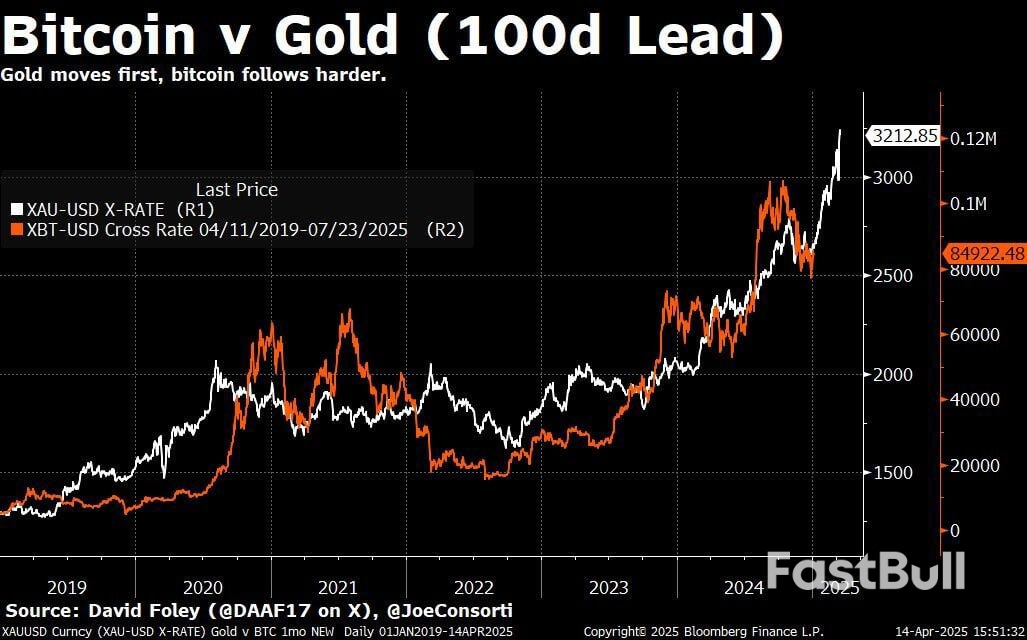
          Having found strength at the start of the week, Bitcoin raised hopes of a gold copycat move as the latter set multiple all-time highs.
          Those highs continued on April 22, while BTC price action conversely saw rejection at the key 200-day simple moving average (SMA).
          “Interesting spot. Broke above the Daily 200EMA (Blue) and diagonal resistance. So far, saw a sharp rejection from the Daily 200MA (Purple),” trader Daan Crypto Trades said in a post on X alongside an explanatory chart.
          “Fun won't start until we get some daily closes back above the previous range low at ~$90K. Important to hold ~$85K below I'd say.”

          Bitcoin Risks 10%–15% BTC Price Dip After Key Rejection Near $89K   1/2_2BTC/USD 1-day chart. Source: Daan Crypto Trades/X

          The 200-day SMA traditionally forms support during Bitcoin bull markets, but was lost in March as crypto faced sell-side pressure when the US trade war began.
          Since then, BTC/USD has seen five-month lows under $75,000, and despite a healthy rebound, some market participants are keen to call time on the latest episode of price upside.
          Among them is fellow trader Roman, who referenced stochastic relative strength index (RSI) values in “overbought” territory.
          “As we approach horizontal resistance, I wanted to show that the last 4 times stoch RSI has been overbought, we’ve seen a 10-15% correction,” he noted, adding that such a move “would make perfect sense” given downward momentum on the S&P 500.
          Daily stochastic RSI was at the top of its 0-100 scale on April 22.Bitcoin Risks 10%–15% BTC Price Dip After Key Rejection Near $89K   1/2_3

          BTC/USD 1-day chart with 200 SMA, stoch RSI data. Source: Cointelegraph/TradingView

          Bitcoin “reversal has started,” says trader

          As Cointelegraph continues to report, other bullish market commentary focuses on the confluence of macroeconomic factors that traditionally fuel BTC price gains.
          These include rapidly weakening US dollar strength, all-time highs in the global M2 money supply and a delayed reaction to gold’s breakout.
          “In the past few weeks, I’m looking at different onchain data and global events, which makes me believe that BTC reversal has started,” trader Cas Abbe concluded in a dedicated X thread on the topic.
          Abbe rejected the idea that the current BTC rebound will end up as a “bull trap,” pointing to whale accumulation and the reemerging Coinbase premium in addition to macroeconomic factors.
          “I believe that $74K-$75K zone was the bottom for $BTC. Most alts have also bottomed out and we could see a sustained rally,” he added.Bitcoin Risks 10%–15% BTC Price Dip After Key Rejection Near $89K   1/2_4

          BTC/USD vs. XAU/USD chart. Source: Cas Abbe/X

          Source: Cointelegraph

          Risk Warnings and Disclaimers
          You understand and acknowledge that there is a high degree of risk involved in trading. Following any strategies or investment methods may lead to potential losses. The content on the site is provided by our contributors and analysts for information purposes only. You are solely responsible for determining whether any trading assets, securities, strategy, or any other product is suitable for investing based on your own investment objectives and financial situation.
          Add to Favorites
          Share

          Dollar Close to Multi-Year Lows Versus Euro, Swiss Franc as Trump Attacks the Fed

          Warren Takunda

          Economic

          The dollar marked a fresh low against the yen and hovered around multi-year lows versus the euro and the Swiss franc on Tuesday as President Donald Trump's attacks on the Federal Reserve raised concerns about the central bank's independence.
          Analysts said the dollar was left in an especially fragile state amid market concerns over the U.S. administration’s tariffs, which could trigger a global trade war.
          Doubts about Fed independence threaten the dollar's value as a reserve currency, with some analysts noting possible divestments from what many consider over-exposure to U.S. assets.
          The U.S. currency accelerated losses after Thailand's prime minister said trade negotiations with Washington - scheduled to begin on Wednesday - would be postponed.
          Trump ramped up his criticism of Fed chief Jerome Powell on Monday, calling him a "major loser" and demanding that he lower interest rates "NOW" or risk an economic slowdown.
          On Friday, White House economic adviser Kevin Hassett said the president and his team were continuing to study whether they could fire Powell, a day after Trump said his termination "cannot come fast enough".
          Trump's onslaught comes after Powell last week said the central bank can afford to be patient in judging how to set policy, and that rates should not be lowered until it is clearer that U.S. tariffs won't stoke persistently higher inflation.
          "The current worst-case scenario for the greenback is that Powell caves in and delivers an emergency rate cut, although that remains a low-probability event," said Francesco Pesole, strategist at ING.
          "Removing Powell from office or his resignation would have similar market effects."
          Barclays lifted its euro/dollar forecast to $1.15 based on the assessment of the removal of the Fed chair as a low-likelihood event, but argued that further revisions could therefore soon be needed should the situation escalate.
          China on Monday accused Washington of abusing tariffs and warned countries against striking a broader economic deal with the United States at its expense, ratcheting up the trade war between the world's two biggest economies.
          The dollar was down 0.35% at 140.40 yen , after falling below the psychological 140 level for the first time since mid-September.
          The greenback rose 0.18% to 0.8103 Swiss franc , not far from the decade-low 0.8042 reached in the previous session.
          The euro fell 0.12% to $1.1498, after jumping to $1.1573 on Monday for the first time since November 2021.
          The single currency dropped after Thursday's European Central Bank policy meeting as investors increased bets on future rate cuts, pricing in 65 basis points of monetary easing by year-end from 55 bps before the ECB's statement.
          Sterling was 0.12% higher at $1.3390 after surging as high as $1.3421 for the first time since September.
          Even the risk-sensitive Australian dollar climbed to a fresh four-month peak of $0.64385.
          "It may take another sell‑off in the U.S. government bond market or U.S. equity market to encourage President Trump to refrain from such comments, said Joseph Capurso, head of international and sustainable economics at Commonwealth Bank of Australia, of the threats to Fed independence.
          The U.S. dollar index , which measures the greenback against six other major currencies, was broadly steady at 98.33, after sinking as low as 97.923 in the previous session, a level not seen since March 2022.

          Source: Reuters

          To stay updated on all economic events of today, please check out our Economic calendar
          Risk Warnings and Disclaimers
          You understand and acknowledge that there is a high degree of risk involved in trading. Following any strategies or investment methods may lead to potential losses. The content on the site is provided by our contributors and analysts for information purposes only. You are solely responsible for determining whether any trading assets, securities, strategy, or any other product is suitable for investing based on your own investment objectives and financial situation.
          Add to Favorites
          Share
          FastBull
          Copyright © 2025 FastBull Ltd

          728 RM B 7/F GEE LOK IND BLDG NO 34 HUNG TO RD KWUN TONG KLN HONG KONG

          TelegramInstagramTwitterfacebooklinkedin
          App Store Google Play Google Play
          Products
          Charts

          Chats

          Q&A with Experts
          Screeners
          Economic Calendar
          Data
          Tools
          Membership
          Features
          Function
          Markets
          Copy Trading
          Latest Signals
          Contests
          News
          Analysis
          24/7
          Columns
          Education
          Company
          Careers
          About Us
          Contact Us
          Advertising
          Help Center
          Feedback
          User Agreement
          Privacy Policy
          Business

          White Label

          Data API

          Web Plug-ins

          Poster Maker

          Affiliate Program

          Risk Disclosure

          The risk of loss in trading financial instruments such as stocks, FX, commodities, futures, bonds, ETFs and crypto can be substantial. You may sustain a total loss of the funds that you deposit with your broker. Therefore, you should carefully consider whether such trading is suitable for you in light of your circumstances and financial resources.

          No decision to invest should be made without thoroughly conducting due diligence by yourself or consulting with your financial advisors. Our web content might not suit you since we don't know your financial conditions and investment needs. Our financial information might have latency or contain inaccuracy, so you should be fully responsible for any of your trading and investment decisions. The company will not be responsible for your capital loss.

          Without getting permission from the website, you are not allowed to copy the website's graphics, texts, or trademarks. Intellectual property rights in the content or data incorporated into this website belong to its providers and exchange merchants.

          Not Logged In

          Log in to access more features

          FastBull Membership

          Not yet

          Purchase

          Become a signal provider
          Help Center
          Customer Service
          Dark Mode
          Price Up/Down Colors

          Log In

          Sign Up

          Position
          Layout
          Fullscreen
          Default to Chart
          The chart page opens by default when you visit fastbull.com