Markets
News
Analysis
User
24/7
Economic Calendar
Education
Data
- Names
- Latest
- Prev



Signal Accounts for Members
All Signal Accounts
All Contests


Indonesia Lending Facility Rate (Jan)A:--
F: --
P: --
South Africa Core CPI YoY (Dec)A:--
F: --
P: --
South Africa CPI YoY (Dec)A:--
F: --
P: --
IEA Oil Market Report
U.K. CBI Industrial Output Expectations (Jan)A:--
F: --
U.K. CBI Industrial Prices Expectations (Jan)A:--
F: --
P: --
South Africa Retail Sales YoY (Nov)A:--
F: --
P: --
U.K. CBI Industrial Trends - Orders (Jan)A:--
F: --
P: --
Mexico Retail Sales MoM (Nov)A:--
F: --
P: --
U.S. MBA Mortgage Application Activity Index WoWA:--
F: --
P: --
Canada Industrial Product Price Index YoY (Dec)A:--
F: --
Canada Industrial Product Price Index MoM (Dec)A:--
F: --
U.S. Weekly Redbook Index YoYA:--
F: --
P: --
U.S. Pending Home Sales Index YoY (Dec)A:--
F: --
P: --
U.S. Pending Home Sales Index MoM (SA) (Dec)A:--
F: --
P: --
U.S. Construction Spending MoM (Oct)A:--
F: --
U.S. Pending Home Sales Index (Dec)A:--
F: --
P: --
U.S. API Weekly Refined Oil StocksA:--
F: --
P: --
U.S. API Weekly Gasoline StocksA:--
F: --
P: --
U.S. API Weekly Cushing Crude Oil Stocks--
F: --
P: --
U.S. API Weekly Crude Oil StocksA:--
F: --
P: --
South Korea GDP Prelim YoY (SA) (Q4)A:--
F: --
P: --
South Korea GDP Prelim QoQ (SA) (Q4)A:--
F: --
P: --
Japan Imports YoY (Dec)A:--
F: --
P: --
Japan Exports YoY (Dec)A:--
F: --
P: --
Japan Goods Trade Balance (SA) (Dec)A:--
F: --
P: --
Japan Trade Balance (Not SA) (Dec)A:--
F: --
Australia Employment (Dec)A:--
F: --
Australia Labor Force Participation Rate (SA) (Dec)A:--
F: --
P: --
Australia Unemployment Rate (SA) (Dec)A:--
F: --
P: --
Australia Full-time Employment (SA) (Dec)A:--
F: --
P: --
Turkey Consumer Confidence Index (Jan)--
F: --
P: --
Turkey Capacity Utilization (Jan)--
F: --
P: --
Turkey Late Liquidity Window Rate (LON) (Jan)--
F: --
P: --
Turkey Overnight Lending Rate (O/N) (Jan)--
F: --
P: --
Turkey 1-Week Repo Rate--
F: --
P: --
U.K. CBI Distributive Trades (Jan)--
F: --
P: --
U.K. CBI Retail Sales Expectations Index (Jan)--
F: --
P: --
U.S. Weekly Continued Jobless Claims (SA)--
F: --
P: --
U.S. Initial Jobless Claims 4-Week Avg. (SA)--
F: --
P: --
U.S. Real Personal Consumption Expenditures Final QoQ (Q3)--
F: --
P: --
Canada New Housing Price Index MoM (Dec)--
F: --
P: --
U.S. Weekly Initial Jobless Claims (SA)--
F: --
P: --
U.S. Real GDP Annualized QoQ Final (Q3)--
F: --
P: --
U.S. PCE Price Index Final QoQ (AR) (Q3)--
F: --
P: --
U.S. PCE Price Index MoM (Nov)--
F: --
P: --
U.S. PCE Price Index YoY (SA) (Nov)--
F: --
P: --
U.S. Real Personal Consumption Expenditures MoM (Nov)--
F: --
P: --
U.S. Personal Income MoM (Nov)--
F: --
P: --
U.S. Core PCE Price Index MoM (Nov)--
F: --
P: --
U.S. Personal Outlays MoM (SA) (Nov)--
F: --
P: --
U.S. Dallas Fed PCE Price Index YoY (Nov)--
F: --
P: --
U.S. Core PCE Price Index YoY (Nov)--
F: --
P: --
U.S. EIA Weekly Natural Gas Stocks Change--
F: --
P: --
U.S. Kansas Fed Manufacturing Composite Index (Jan)--
F: --
P: --
U.S. Kansas Fed Manufacturing Production Index (Jan)--
F: --
P: --
U.S. EIA Weekly Crude Stocks Change--
F: --
P: --
U.S. EIA Weekly Crude Demand Projected by Production--
F: --
P: --


No matching data
Latest Views
Latest Views
Trending Topics
Top Columnists
Latest Update
White Label
Data API
Web Plug-ins
Affiliate Program
View All

No data
The U.S. dollar sagged to near a two-month low at the start of the Asian trading session on Tuesday as markets awaited the release of a slew of economic data, including the delayed November U.S. jobs report. The dollar index, which measures the currency's strength against a basket of six key rivals, was down 0.2% at 98.261, approaching the lowest levels since October 17.
Markets will have to contend with a host of other policy catalysts during the week with several central bank decisions due, including the Bank of Japan, which is expected to hike rates by 25 basis points to 0.75%, while the Bank of England may make an equal-sized cut to 3.75%.
The European Central Bank is expected to keep interest rates on hold, alongside Sweden's Riksbank and Norway's Norges Bank.
Against the yen, the dollar eased 0.1% to 155.07 yen, as traders braced for the BOJ's decision on Friday.
The euro was steady at $1.17535 as peace talks to end the war in Ukraine made progress, with United States offering to provide NATO-style security guarantees for Kyiv. The British pound was flat at $1.3376.
Against the Chinese yuan trading offshore, the dollar was flat at 7.0371 yuan, its weakest levels since October 3 2024.
The Australian dollar edged up 0.1% to $0.66445, though the currency was little changed following a private survey showing that consumer sentiment slid in December after turning positive for the first time the previous month. The kiwi dollar added 0.1% to $0.5788.
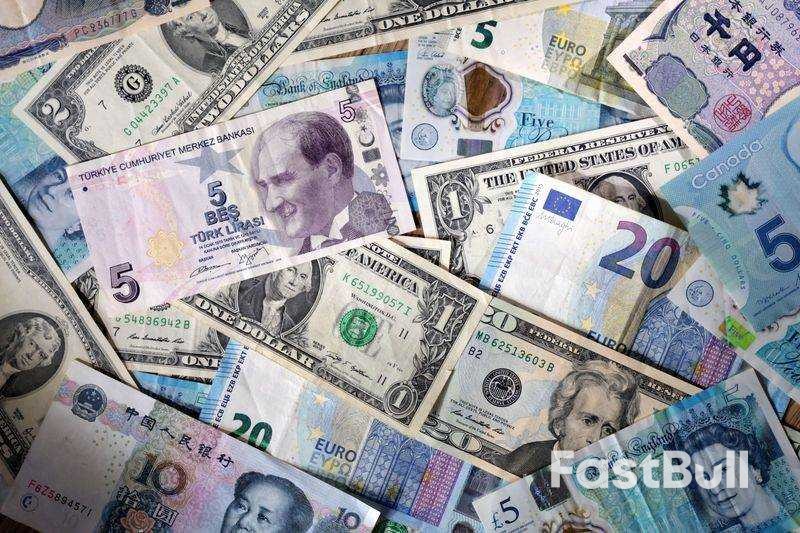
Both the Australian and New Zealand central banks have shut the door on any further rate cuts, providing momentum to the Antipodean currencies.
The New Zealand government will head into an election year facing deeper budget deficits and a delayed return to surplus as an economic recovery takes longer to gather momentum.
The operating balance is projected to return to surplus in the year ending June 2030, according to new Treasury Department forecasts released Tuesday in Wellington in the half-year fiscal and economic update. In the May budget, the surplus was expected in 2029.
Despite the forecasts, Finance Minister Nicola Willis is targeting a return to surplus a year earlier in 2029, she told a briefing. Previously she aimed to reach surplus in 2028.
"Achieving these fiscal goals will require ongoing restraint and tight control of discretionary spending," she said. "Government agencies have been instructed to keep seeking savings and efficiencies that support this disciplined approach."
If the projections are accurate, the budget will be in deficit for at least 10 straight years through 2029.
Since taking office in late 2023, Willis has targeted savings by cutting spending, firing public sector workers and reprioritizing government programs. Annual savings have reached about NZ$11 billion ($6.4 billion), she said today.
Still, the deficits and the need for fiscal restraint adds to signs the government will have limited scope to boost spending ahead of an election expected in late 2026. Willis reiterated that health, education, defense and law and order will be priorities in her next budget.
The near-term fiscal outlook reflects weaker gross domestic product growth as high interest rates and global uncertainty stalled a recovery earlier this year. Annual average growth is now projected to be 1.7% in the 12 months through June 2026, much less than the 2.9% pace forecast in the budget.
Falling interest rates are expected to lift GDP growth to 3.4% in the 12 months through June 2027 while the pace of expansion will slow thereafter to around 2.5% a year, Treasury said.
"Monetary policy stimulus is expected to underpin a cyclical recovery," the agency said. "Improved consumer spending gives some confidence that the recovery is under way, with increased business and residential investment expected to follow."
The budget balance – the operating balance before gains and losses excluding revenue and spending by state-owned accident insurer ACC, or OBEGALx – will be NZ$13.9 billion in the year through June 2026. That's 3% of GDP and wider than the NZ$12.1 billion projected in the budget.
OBEGALx is expected to narrow to NZ$10.4 billion in 2027 and reach a surplus of NZ$2.3 billion in 2030.
The wider deficits imply more debt, with net core Crown debt rising to NZ$254 billion or 46.1% of GDP by 2030. The peak in debt will come in 2028 at 46.9% of GDP.


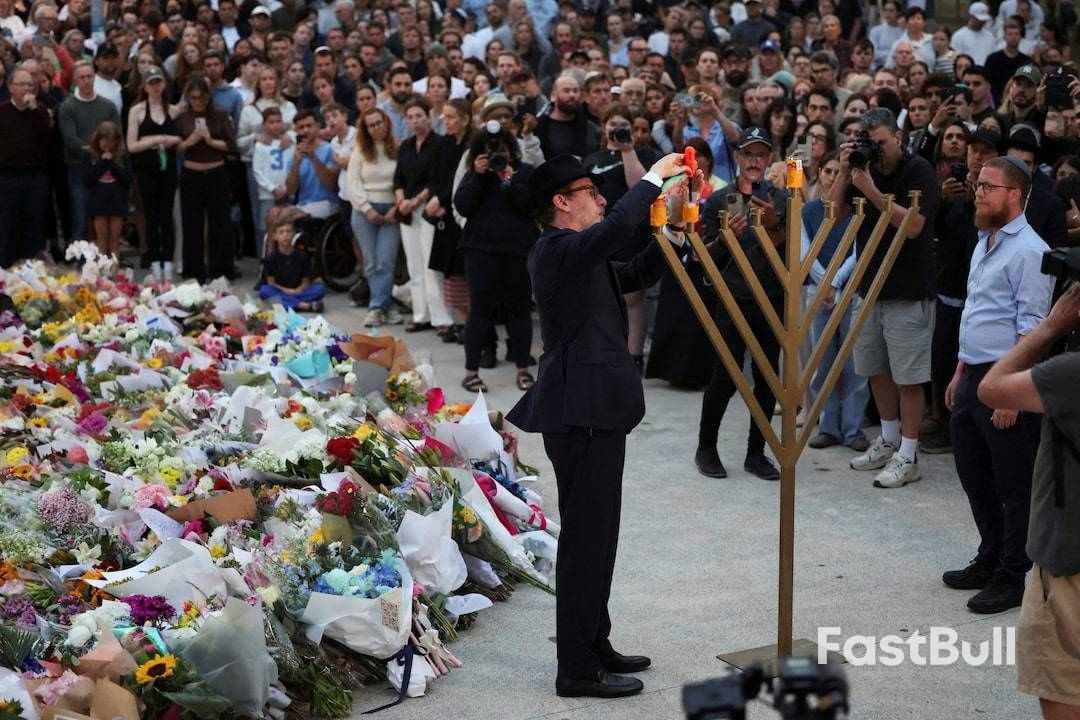
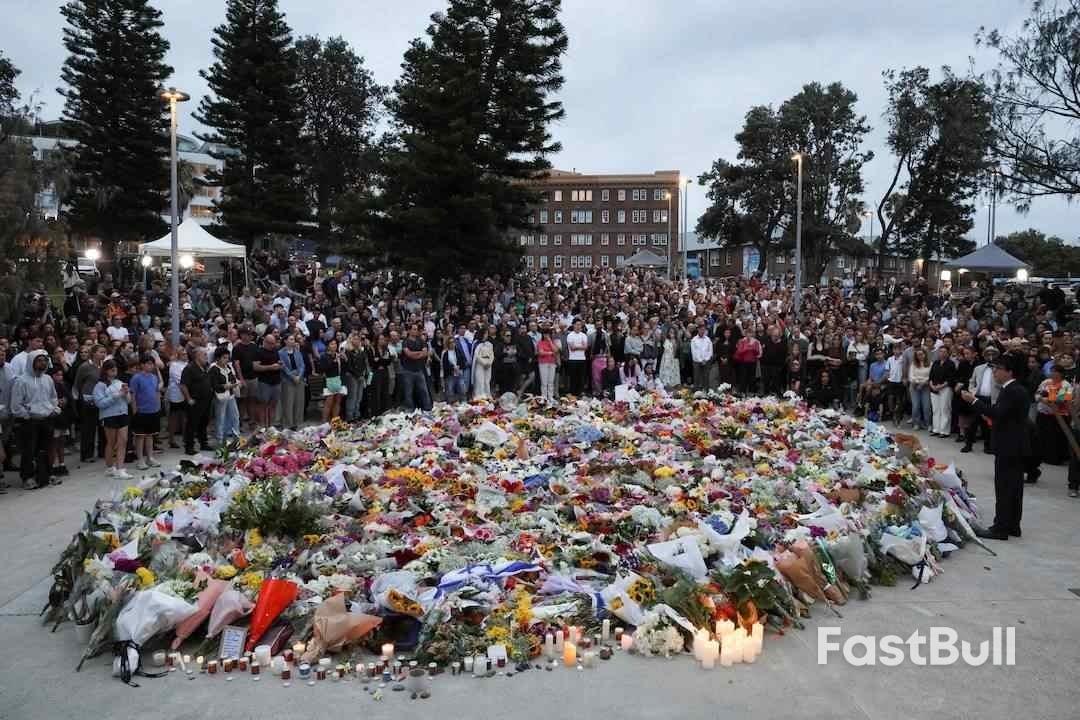
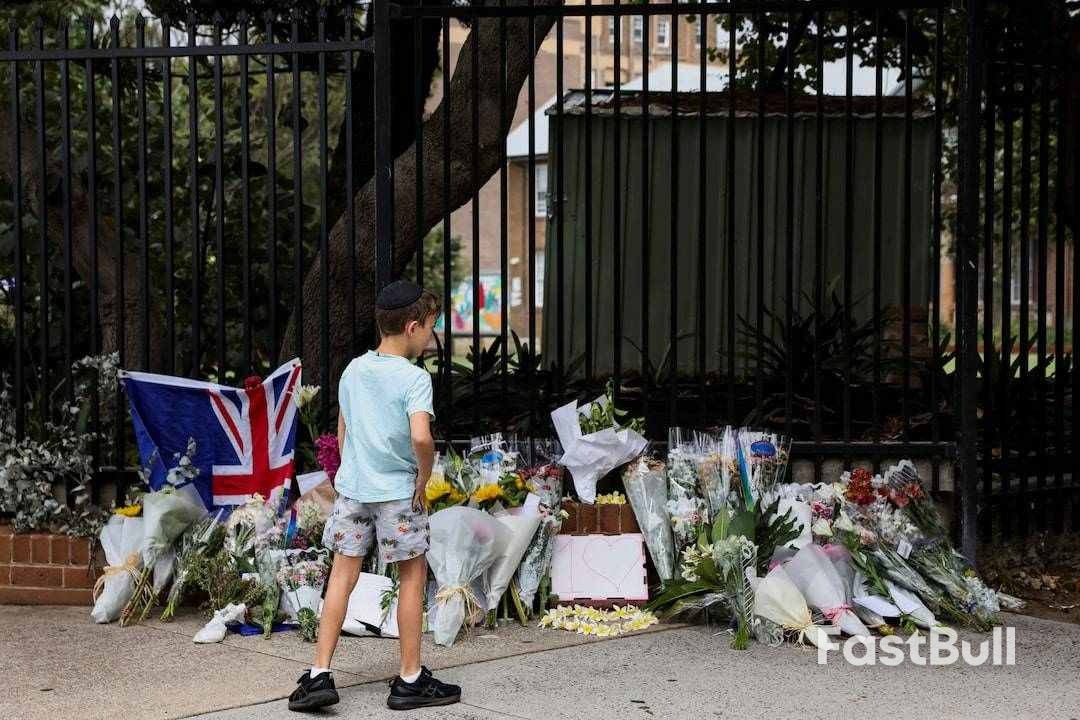
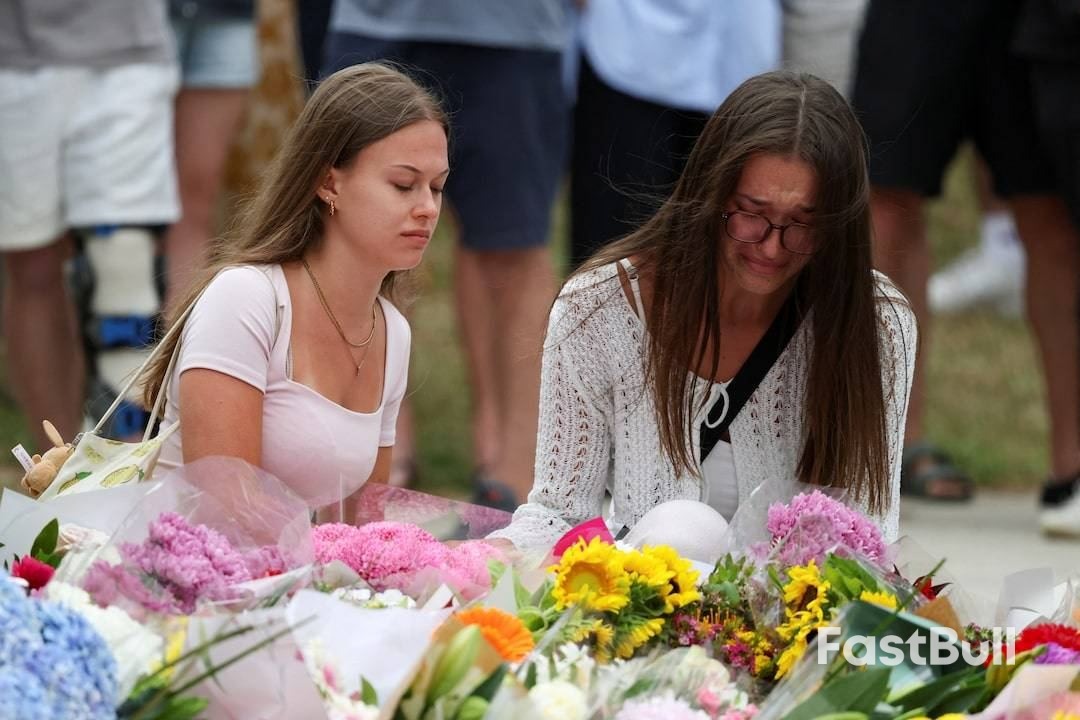
Israel's ambassador to Australia has called for greater protection of Jewish people in Australia as dozens of people lined up on Tuesday at Sydney's Bondi Beach to pay tribute to the 15 victims and those wounded in the weekend's Hanukkah festival shootings.
The attack by two gunmen on Sunday was Australia's worst mass shooting in nearly 30 years, and is being investigated as an act of terrorism targeting the Jewish community.
The death toll stands at 16 including one of the alleged gunmen, aged 50, who was shot by police. The man's 24-year-old son and alleged accomplice was in critical condition in hospital, police said on Monday.
Israeli Ambassador Amir Maimon urged the Australian government to take all required steps to secure the lives of Jews in Australia, with Sunday's attack only the worst of a recent spate of antisemetic crimes in the city.
"Only Australians of Jewish faith are forced to worship their gods behind closed doors, CCTV, guards," Maimon told reporters in Bondi, after laying flowers at the temporary memorial and paying his respects to the victims.
"My heart is torn apart ... it is insane."
A string of antisemitic incidents in Australia has unfolded in the past sixteen months, prompting the head of the nation's main intelligence agency to declared that antisemitism was his top priority in terms of threat to life.
"What one can expect when graffiti is painted all over Australia on synagogues, buildings, public buildings, calling for the death of Israel, death to the IDF, and then cars are put on fire?" Maimon said.
The father and son allegedly fired upon hundreds of people at the festival during a roughly 10-minute killing spree at one of Australia's top tourist destinations, forcing people to flee and take shelter before both were shot by police.
The federal government has launched a review of Australia's gun laws, already among the toughest in the world, in the aftermath of the attack.
Police have not released the suspects' names but national broadcaster ABC and other media have identified them as Sajid Akram and his son Naveed Akram.
There are currently 25 survivors receiving care in several Sydney hospitals, officials said.
Ahmed al Ahmed, the 43-year-old Muslim father-of-two who charged at one of the gunmen and seized his rifle, remains in a Sydney hospital with gunshot wounds. He has been hailed as a hero around the world, including by U.S. President Donald Trump.
At Bondi, the beach was open on Tuesday but was largely empty under overcast skies, as a growing memorial of flowers was established at the Bondi Pavilion, metres from the location of the shootings.
Bondi is Sydney's best-known beach, located about 8.2 km (5 miles) from the city centre, and draws hundreds of thousands of international tourists each year.
"This is my community. This is my history and I'm watching what's occurred, and it's as a tribute and respect to be here," said Carolyn, 67, a Jewish woman who declined to give her surname.
"Antisemitism has no place here. But what I'm seeing here is hope. I'm seeing people from most communities here doing that. They're showing their respect, and it's very important."
Olivia Robertson, 25, visited the memorial before work.
"This is the country that our grandparents have come to for us to feel safe and to have opportunity," she said.
"And now this has happened right here in our backyard. It's pretty shocking."
Australia's gun laws are now being examined by the federal government, after police said the older man had six registered weapons and had held a gun licence since 2015.
Two flags of militant group Islamic State were found in the gunmen's vehicle, ABC News reported, without citing a source.
Home Affairs Minister Tony Burke said gun laws introduced by the previous conservative Liberal-National coalition government in 1996 following the Port Arthur massacre needed to be re-examined.
"It is clear now that those laws need to be brought back up to date because it should never be the case that it is physically possible for two people to do what we saw on Sunday," he told Channel Nine.
U.S. Rabbi Yossi Lazaroff wrote on social media that he was flying to Sydney to be with his son Leibel who was wounded in the shooting.
"Sitting on a very long plane ride to Australia from Texas, while still grappling with the lives lost and communicating with the hospital as my son Leibel goes into multiple surgeries for his life-threatening injuries," he wrote on X.
The 15 victims ranged from a rabbi who was a father of five, to a Holocaust survivor, to a 10-year-old girl named Matilda Britvan, according to interviews, officials and media reports. Two police officers remained in critical but stable condition in hospital, New South Wales police said.
Matilda's aunt has spoken publicly of her family's heartbreak, saying they were devastated by her death.
"I am beyond belief that this happened. I look on the phone and I am hoping it's like a little big joke, not real," Lina Chernykh told 7NEWS Australia.
She said Matilda's father, her brother, was overwhelmed by grief and unable to speak with anyone.
Matilda was with her 6-year-old sister, Summer, at the time of the attack.
"I hope she gets through this … and we all get through this," Chernykh said.

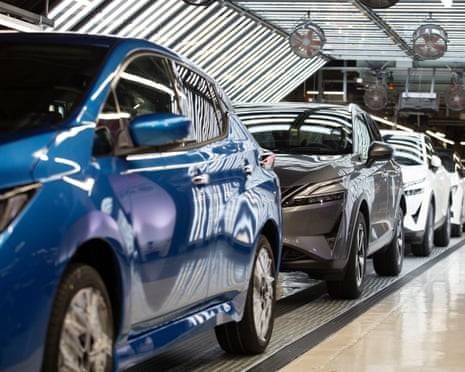
Nissan has started the production of its latest electric car in Sunderland, a crucial step in the UK automotive industry's transition away from petrol and diesel.
The Japanese manufacturer will launch the third generation of the Leaf on Tuesday, which was the first mass-market battery electric car to be built in the UK. Nissan has made 282,704 Leaf models at the north-east England plant so far.
Nissan said it has invested more than £450m into manufacturing the new Leaf, including more than £300m directly into the company's UK operations. Chris McDonald, the industry minister, will visit the factory on Tuesday.
The site is Britain's biggest car factory, with 6,000 employees and the theoretical ability to make 600,000 cars a year. However, the factory only made 284,000 in 2024, according to the data company MarkLines, amid a difficult period for European manufacturers.
Sales of the new Leaf will be important in securing the future of production across the rest of the plant. In 2023, Nissan said it was considering building another two electric cars in Sunderland. Those cars are seen as replacements for the petrol Qashqai SUV and Juke crossover that are made there, but Nissan has not yet made a final investment decision.
Going forward with the later models will be vital for the future of a next-door battery factory run by the manufacturer AESC, which is majority-owned by a Chinese company.
The Leaf investment comes as Nissan is going through the painful process of shutting seven factories and cutting 20,000 jobs worldwide. Nissan overexpanded in an effort to become the world's largest carmaker but it has faced years of leadership turmoil and intense competition, including from newer Chinese rivals.
Sunderland will not be hit by the closures. However, Nissan's chief executive, Ivan Espinosa, who was tasked this year with turning the company around, said in May that the carmaker would consider building cars in Sunderland for China's Dongfeng, its partner in a joint venture in the Chinese city of Wuhan.
Peter Kyle, the business secretary said: "Sunderland is the beating heart of the UK's automotive industry, and Nissan's investment is a major commitment to the north-east and a huge vote of confidence in our economy."
Nissan's vice-president for manufacturing at the plant, Adam Pennick, added: "There is huge pride and excitement in our team to be building this brilliant car in Sunderland."
The UK government has confirmed that the Leaf will qualify for the full £3,750 electric car grant. The car will have a range of up to 386 miles per charge with a bigger, 75 kilowatt-hour battery.
U.S. President Donald Trump on Monday evening sued the British Broadcasting Corporation (BBC) for defamation over editing footage of him for a documentary on the 2021 Capitol riots.
Trump in a court filing accused the public broadcaster of publishing a "false, defamatory… and malicious depiction of President Trump" in a 2024 documentary aired just before the presidential elections on BBC's Panorama programme.
Trump sued the BBC for one count of defamation and for one count of violating Florida's Deceptive and Unfair Trade Practices Act, and is seeking up to $5 billion for each count.
The lawsuit shows Trump making good on his threats to sue the broadcaster over the documentary, which the president had lambasted for suggesting that he encouraged his supporters to storm the Capital building in 2021 to overturn his election loss against Joe Biden.
Trump accused the broadcaster of splicing footage of a January 2021 speech to make it appear that he told supporters to march on the Capital and "fight like hell," while omitting a sector where he called for a peaceful demonstration.
The BBC had apologized to Trump over the documentary, vowing to never air it again. But the broadcaster had also said that it did not believe the documentary provided grounds for a lawsuit.
Trump has sued a slew of media houses for alleged defamation, including CBS and ABC. But while he has sued for exorbitant amounts, most cases have resulted in a substantially lower settlement for the president.
Trump's lawsuit against the BBC comes just shortly after reports said his administration had canceled a technology deal with the UK.
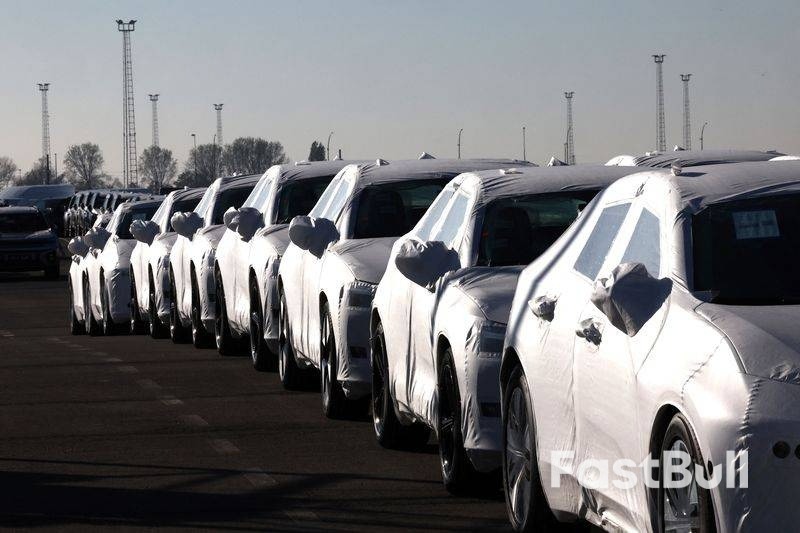
The European Commission is set to backtrack on the EU's ban on new combustion-engine cars from 2035 by allowing up to 10% of non-electric vehicles after intense pressure from Germany, Italy and Europe's auto sector.
The EU executive appears to have yielded to the call from carmakers to be allowed to keep selling plug-in hybrids and range extenders with CO2-neutral biofuel or synthetic fuel as they struggle to compete against Tesla and Chinese electric vehicles.
The move, which will need approval by EU governments and the European Parliament, would be the EU's most significant climb-down from its green policies of the past five years.
Carmakers such as Volkswagen and Fiat owner Stellantis have pushed for an easing of targets and fines for missing them. European automotive lobby group ACEA called it "high noon" for the sector, adding that the Commission should ease intermediate 2030 targets as well.
However, the electric vehicle industry says this will undermine investment and result in the EU yielding even more ground to China in the shift to EVs.
"Moving from a clear 100% zero-emissions target to 90% may seem small, but if we backtrack now, we won't just hurt the climate. We'll hurt Europe's ability to compete," said Polestar CEO Michael Lohscheller.
William Todts, executive director of clean transport advocacy group T&E, said the EU was playing for time while China was racing ahead.
"Clinging to combustion engines won't make European automakers great again," he said.
The Commission will also detail plans to boost the share of EVs in corporate fleets, notably company cars, which account for about 60% of Europe's new car sales. The precise measure is not clear, but there may be an insistence on some local content. The auto industry wants incentives rather than mandatory targets.

The EU executive is also likely to propose a new regulatory category for small EVs that would incur lower taxes and earn extra credits towards meeting CO2 targets.
Credits might also be earned through more sustainable production, such as vehicles made with low-carbon steel.
Japan's manufacturing activity contracted at a slower pace while the service sector lost some steam in December, private-sector surveys showed, weighing on the economy at the end of 2025.
Looking ahead to 2026, business confidence was robust but waned from the previous month particularly in manufacturing, attributing the uncertain outlook to global economic conditions, an ageing population and rising costs.
The S&P Global flash Japan Manufacturing Purchasing Managers' Index (PMI) rose to 49.7 from 48.7 in November, extending a contraction for the sixth straight month. The 50.0 threshold separates expansion from contraction.
"Growth remains centred on the service sector... as manufacturing production and sales weakened further," said Annabel Fiddes, economics associate director at S&P Global Market Intelligence.
While factory output waned slightly in December from November, demand for goods fell at the slowest rate in a year and a half. Fiddes added the improvement suggests the sector could be stabilising.
A closely watched Bank of Japan quarterly survey released on Monday showed big Japanese manufacturers' business sentiment hit a four-year high in the three months to December. However, firms expected conditions to worsen three months ahead as they fret over the impact of higher U.S. tariffs and soft consumption.
Meanwhile, the flash Japan services PMI slightly fell to 52.5 in December from 53.2 in November. Combining manufacturing and services, the flash composite PMI declined to 51.5 in December from 52.0 in the previous month.
At the composite level, the survey showed overall employment rose at the fastest pace since May 2024 and outstanding business expanded at the quickest pace in two-and-a-half years. On the other hand, the rate of inflation climbed at the fastest pace in eight months and both goods and services firms raised their selling prices.
White Label
Data API
Web Plug-ins
Poster Maker
Affiliate Program
The risk of loss in trading financial instruments such as stocks, FX, commodities, futures, bonds, ETFs and crypto can be substantial. You may sustain a total loss of the funds that you deposit with your broker. Therefore, you should carefully consider whether such trading is suitable for you in light of your circumstances and financial resources.
No decision to invest should be made without thoroughly conducting due diligence by yourself or consulting with your financial advisors. Our web content might not suit you since we don't know your financial conditions and investment needs. Our financial information might have latency or contain inaccuracy, so you should be fully responsible for any of your trading and investment decisions. The company will not be responsible for your capital loss.
Without getting permission from the website, you are not allowed to copy the website's graphics, texts, or trademarks. Intellectual property rights in the content or data incorporated into this website belong to its providers and exchange merchants.
Not Logged In
Log in to access more features

FastBull Membership
Not yet
Purchase
Log In
Sign Up