• Trade
  • Markets
  • Copy
  • Contests
  • News
  • 24/7
  • Calendar
  • Q&A
  • Chats
Trending
Screeners
SYMBOL
LAST
BID
ASK
HIGH
LOW
NET CHG.
%CHG.
SPREAD
SPX
S&P 500 Index
6870.39
6870.39
6870.39
6895.79
6858.28
+13.27
+ 0.19%
--
DJI
Dow Jones Industrial Average
47954.98
47954.98
47954.98
48133.54
47871.51
+104.05
+ 0.22%
--
IXIC
NASDAQ Composite Index
23578.12
23578.12
23578.12
23680.03
23506.00
+72.99
+ 0.31%
--
USDX
US Dollar Index
98.920
99.000
98.920
98.960
98.730
-0.030
-0.03%
--
EURUSD
Euro / US Dollar
1.16505
1.16513
1.16505
1.16717
1.16341
+0.00079
+ 0.07%
--
GBPUSD
Pound Sterling / US Dollar
1.33157
1.33164
1.33157
1.33462
1.33136
-0.00155
-0.12%
--
XAUUSD
Gold / US Dollar
4210.33
4210.74
4210.33
4218.85
4190.61
+12.42
+ 0.30%
--
WTI
Light Sweet Crude Oil
59.210
59.240
59.210
60.084
59.181
-0.599
-1.00%
--

Community Accounts

Signal Accounts
--
Profit Accounts
--
Loss Accounts
--
View More

Become a signal provider

Sell trading signals to earn additional income

View More

Guide to Copy Trading

Get started with ease and confidence

View More

Signal Accounts for Members

All Signal Accounts

Best Return
  • Best Return
  • Best P/L
  • Best MDD
Past 1W
  • Past 1W
  • Past 1M
  • Past 1Y

All Contests

  • All
  • Trump Updates
  • Recommend
  • Stocks
  • Cryptocurrencies
  • Central Banks
  • Featured News
Top News Only
Share

Temasek CEO Dilhan Pillay: We Are Taking A Conservative Stance On Allocating Capital

Share

Brazil Economists See Brazilian Real At 5.40 Per Dollar By Year-End 2025 Versus 5.40 In Previous Estimate - Central Bank Poll

Share

Brazil Economists See Year-End 2026 Interest Rate Selic At 12.25% Versus 12.00% In Previous Estimate - Central Bank Poll

Share

Brazil Economists See Year-End 2025 Interest Rate Selic At 15.00% Versus 15.00% In Previous Estimate - Central Bank Poll

Share

EU Commission Says Meta Has Committed To Give EU Users Choice On Personalised Ads

Share

Sources Revealed That The Bank Of England Has Invited Employees To Voluntarily Apply For Layoffs

Share

The Bank Of England Plans To Cut Staff Due To Budget Pressures

Share

Traders Believe There Is Less Than A 10% Chance That The European Central Bank Will Cut Interest Rates By 25 Basis Points In 2026

Share

Egypt, European Bank For Reconstruction And Development Sign $100 Million Financing Agreement

Share

Israel Budget Deficit 4.5% Of GDP In November Over Past 12 Months Versus 4.9% Deficit In October

Share

JPMorgan - Council Chaired By Jamie Dimon Includes Jeff Bezos

Share

UK Government: UK Health Security Agency Identified New Recombinant Mpox Virus In England In Individual Who Had Recently Travelled To Asia

Share

European Central Bank Governing Council Member Kazimir: I See No Reason To Change Rates In The Coming Months, Definitely No In December

Share

European Central Bank Governing Council Member Kazimir: Overengineering Policy Around Small Inflation Deviations Would Introduce Unnecessary Policy Uncertainty

Share

European Central Bank Governing Council Member Kazimir: European Central Bank Must Be Vigilant About Some Upside Risks To Inflation

Share

European Central Bank Governing Council Member Kazimir: Forex Pass Through To Prices May Not Be As Strong As Expected

Share

Document: EU Looking At Options For Boosting Lebanon's Internal Security Forces

Share

Thai Foreign Ministry: Military Action Will Continue Until Thai Sovereignty, Territorial Integrity Secure

Share

Ukraine President Zelenskiy: No Accord So Far On Eastern Ukraine In US Talks

Share

NATO: Ukrainian President Zelenskiy Will Meet NATO's Rutte And EU Commission Chief Von Der Leyen And Costa In Brussels On Monday

TIME
ACT
FCST
PREV
France Industrial Output MoM (SA) (Oct)

A:--

F: --

P: --
France Trade Balance (SA) (Oct)

A:--

F: --

P: --
Euro Zone Employment YoY (SA) (Q3)

A:--

F: --

P: --
Canada Part-Time Employment (SA) (Nov)

A:--

F: --

P: --

Canada Unemployment Rate (SA) (Nov)

A:--

F: --

P: --

Canada Full-time Employment (SA) (Nov)

A:--

F: --

P: --

Canada Labor Force Participation Rate (SA) (Nov)

A:--

F: --

P: --

Canada Employment (SA) (Nov)

A:--

F: --

P: --

U.S. PCE Price Index MoM (Sept)

A:--

F: --

P: --

U.S. Personal Income MoM (Sept)

A:--

F: --

P: --

U.S. Core PCE Price Index MoM (Sept)

A:--

F: --

P: --

U.S. PCE Price Index YoY (SA) (Sept)

A:--

F: --

P: --

U.S. Core PCE Price Index YoY (Sept)

A:--

F: --

P: --

U.S. Personal Outlays MoM (SA) (Sept)

A:--

F: --

P: --
U.S. 5-10 Year-Ahead Inflation Expectations (Dec)

A:--

F: --

P: --

U.S. Real Personal Consumption Expenditures MoM (Sept)

A:--

F: --

P: --
U.S. Weekly Total Rig Count

A:--

F: --

P: --

U.S. Weekly Total Oil Rig Count

A:--

F: --

P: --

U.S. Consumer Credit (SA) (Oct)

A:--

F: --

P: --
China, Mainland Foreign Exchange Reserves (Nov)

A:--

F: --

P: --

Japan Trade Balance (Oct)

A:--

F: --

P: --

Japan Nominal GDP Revised QoQ (Q3)

A:--

F: --

P: --

China, Mainland Imports YoY (CNH) (Nov)

A:--

F: --

P: --

China, Mainland Exports (Nov)

A:--

F: --

P: --

China, Mainland Imports (CNH) (Nov)

A:--

F: --

P: --

China, Mainland Trade Balance (CNH) (Nov)

A:--

F: --

P: --

China, Mainland Exports YoY (USD) (Nov)

A:--

F: --

P: --

China, Mainland Imports YoY (USD) (Nov)

A:--

F: --

P: --

Germany Industrial Output MoM (SA) (Oct)

A:--

F: --

P: --
Euro Zone Sentix Investor Confidence Index (Dec)

A:--

F: --

P: --

Canada National Economic Confidence Index

--

F: --

P: --

U.K. BRC Like-For-Like Retail Sales YoY (Nov)

--

F: --

P: --

U.K. BRC Overall Retail Sales YoY (Nov)

--

F: --

P: --

Australia Overnight (Borrowing) Key Rate

--

F: --

P: --

RBA Rate Statement
RBA Press Conference
Germany Exports MoM (SA) (Oct)

--

F: --

P: --

U.S. NFIB Small Business Optimism Index (SA) (Nov)

--

F: --

P: --

Mexico 12-Month Inflation (CPI) (Nov)

--

F: --

P: --

Mexico Core CPI YoY (Nov)

--

F: --

P: --

Mexico PPI YoY (Nov)

--

F: --

P: --

U.S. Weekly Redbook Index YoY

--

F: --

P: --

U.S. JOLTS Job Openings (SA) (Oct)

--

F: --

P: --

China, Mainland M1 Money Supply YoY (Nov)

--

F: --

P: --

China, Mainland M0 Money Supply YoY (Nov)

--

F: --

P: --

China, Mainland M2 Money Supply YoY (Nov)

--

F: --

P: --

U.S. EIA Short-Term Crude Production Forecast For The Year (Dec)

--

F: --

P: --

U.S. EIA Natural Gas Production Forecast For The Next Year (Dec)

--

F: --

P: --

U.S. EIA Short-Term Crude Production Forecast For The Next Year (Dec)

--

F: --

P: --

EIA Monthly Short-Term Energy Outlook
U.S. API Weekly Gasoline Stocks

--

F: --

P: --

U.S. API Weekly Cushing Crude Oil Stocks

--

F: --

P: --

U.S. API Weekly Crude Oil Stocks

--

F: --

P: --

U.S. API Weekly Refined Oil Stocks

--

F: --

P: --

South Korea Unemployment Rate (SA) (Nov)

--

F: --

P: --

Japan Reuters Tankan Non-Manufacturers Index (Dec)

--

F: --

P: --

Japan Reuters Tankan Manufacturers Index (Dec)

--

F: --

P: --

Japan Domestic Enterprise Commodity Price Index MoM (Nov)

--

F: --

P: --

Japan Domestic Enterprise Commodity Price Index YoY (Nov)

--

F: --

P: --

China, Mainland PPI YoY (Nov)

--

F: --

P: --

China, Mainland CPI MoM (Nov)

--

F: --

P: --

Q&A with Experts
    • All
    • Chatrooms
    • Groups
    • Friends
    Connecting
    .
    .
    .
    Type here...
    Add Symbol or Code

      No matching data

      All
      Trump Updates
      Recommend
      Stocks
      Cryptocurrencies
      Central Banks
      Featured News
      • All
      • Russia-Ukraine Conflict
      • Middle East Flashpoint
      • All
      • Russia-Ukraine Conflict
      • Middle East Flashpoint
      Search
      Products

      Charts Free Forever

      Chats Q&A with Experts
      Screeners Economic Calendar Data Tools
      Membership Features
      Data Warehouse Market Trends Institutional Data Policy Rates Macro

      Market Trends

      Market Sentiment Order Book Forex Correlations

      Top Indicators

      Charts Free Forever
      Markets

      News

      News Analysis 24/7 Columns Education
      From Institutions From Analysts
      Topics Columnists

      Latest Views

      Latest Views

      Trending Topics

      Top Columnists

      Latest Update

      Signals

      Copy Rankings Latest Signals Become a signal provider AI Rating
      Contests
      Brokers

      Overview Brokers Assessment Rankings Regulators News Claims
      Broker listing Forex Brokers Comparison Tool Live Spread Comparison Scam
      Q&A Complaint Scam Alert Videos Tips to Detect Scam
      More

      Business
      Events
      Careers About Us Advertising Help Center

      White Label

      Data API

      Web Plug-ins

      Affiliate Program

      Awards Institution Evaluation IB Seminar Salon Event Exhibition
      Vietnam Thailand Singapore Dubai
      Fans Party Investment Sharing Session
      FastBull Summit BrokersView Expo
      Recent Searches
        Top Searches
          Markets
          News
          Analysis
          User
          24/7
          Economic Calendar
          Education
          Data
          • Names
          • Latest
          • Prev

          View All

          No data

          Scan to Download

          Faster Charts, Chat Faster!

          Download App
          English
          • English
          • Español
          • العربية
          • Bahasa Indonesia
          • Bahasa Melayu
          • Tiếng Việt
          • ภาษาไทย
          • Français
          • Italiano
          • Türkçe
          • Русский язык
          • 简中
          • 繁中
          Open Account
          Search
          Products
          Charts Free Forever
          Markets
          News
          Signals

          Copy Rankings Latest Signals Become a signal provider AI Rating
          Contests
          Brokers

          Overview Brokers Assessment Rankings Regulators News Claims
          Broker listing Forex Brokers Comparison Tool Live Spread Comparison Scam
          Q&A Complaint Scam Alert Videos Tips to Detect Scam
          More

          Business
          Events
          Careers About Us Advertising Help Center

          White Label

          Data API

          Web Plug-ins

          Affiliate Program

          Awards Institution Evaluation IB Seminar Salon Event Exhibition
          Vietnam Thailand Singapore Dubai
          Fans Party Investment Sharing Session
          FastBull Summit BrokersView Expo

          Dollar Finds Footing Ahead Of Fed Meet

          Winkelmann

          Forex

          Economic

          Summary:

          The U.S. dollar steadied on Monday after two weeks of selling, ahead of a week crammed with central bank meetings and headlined by the U.S. Federal Reserve, where an interest rate cut is all but priced in but a divided committee makes for a wild card.
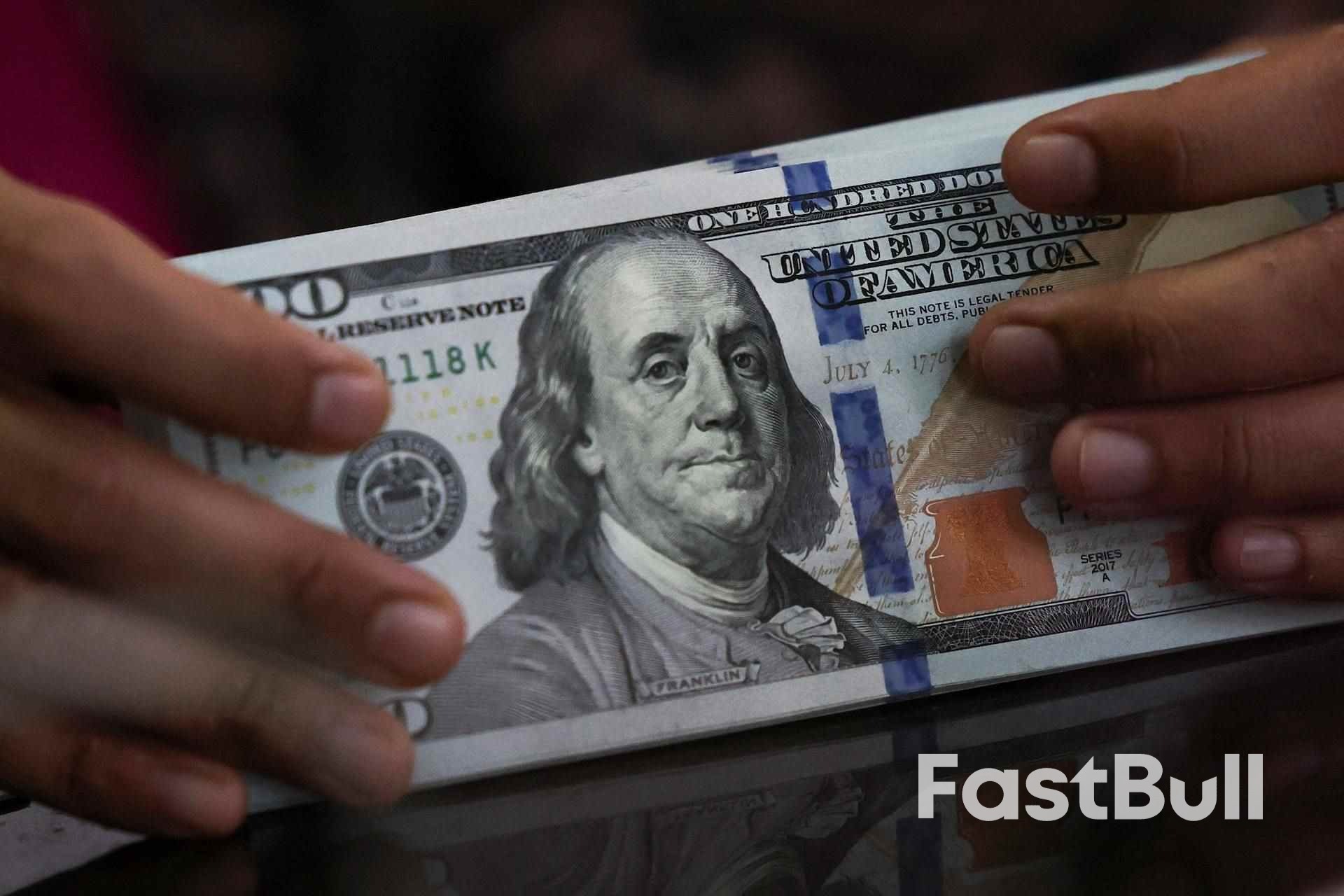
          An employee holds U.S. dollar bank notes at a money changer in Jakarta, Indonesia, April 9, 2025. REUTERS/Willy Kurniawan

          · 'Hawkish cut' expected for Fed
          · Rates seen on hold in Australia, Canada, Switzerland and Brazil

          The U.S. dollar steadied on Monday after two weeks of selling, ahead of a week crammed with central bank meetings and headlined by the U.S. Federal Reserve, where an interest rate cut is all but priced in but a divided committee makes for a wild card.

          Besides Wednesday's Fed decision, central bank policy meetings are also due in Australia, Brazil, Canada and Switzerland, though no moves are expected outside of the Fed.

          The euro , which has been trading in a reasonably tight range since June, hovered at $1.1644. The yen , which has found a footing after sliding through November, traded at 155.28 a dollar.

          Analysts expect a "hawkish cut", where the language of the statement, median forecasts and Chair Jerome Powell's press conference point to a higher bar on further rate reduction.

          That could support the dollar if it pushes investors to dial back expectations for two or three rate cuts next year.

          "We expect to see some dissents, potentially from both hawkish and dovish members," said BNY's head of markets macro strategy Bob Savage in a note to clients.

          The Australian dollar traded just below last week's two-and-a-half-month high at $0.6640, taking a breather after having rallied through 200-day and 50-day moving averages in recent weeks as markets swung away from expecting rate cuts.

          The Reserve Bank of Australia meets on Tuesday after a run of hot data on inflation, economic growth and household spending. Futures implying the next move will be up and possibly as soon as May, leaving the focus on the post-meeting statement and media conference.

          "We expect the RBA to be on an extended hold, with the cash rate to remain at its current level of 3.60%," said analysts at ANZ in a note last week, where they revised previous expectations for a cut.

          A similar dynamic in Canada had the loonie surging to a 10-week high on Friday following strong labour data. The Bank of Canada is widely expected to leave its interest rate on hold on Wednesday and a hike is fully priced by December 2026.

          The currency was marginally weaker at C$1.3829 early on Monday.

          The New Zealand dollar idled at $0.5779, while the Swiss franc edged 0.1% lower to 0.8045 per U.S. dollar.

          Subdued inflation is seen keeping Switzerland's policy interest rate at 0% for a while.

          Sterling was pinned near its 200-day moving average at $1.3324, while China's yuan was taking a breather at 7.068 a dollar in offshore trade.

          A hold is widely expected in Brazil, where the policy rate is at 15%, with a possible nod towards a cut next quarter.

          Source: Reuters

          To stay updated on all economic events of today, please check out our Economic calendar
          Risk Warnings and Disclaimers
          You understand and acknowledge that there is a high degree of risk involved in trading. Following any strategies or investment methods may lead to potential losses. The content on the site is provided by our contributors and analysts for information purposes only. You are solely responsible for determining whether any trading assets, securities, strategy, or any other product is suitable for investing based on your own investment objectives and financial situation.
          Add to Favorites
          Share

          Nissan Reports Strong Orders For Latest Minicar As US Market Opens Up

          Winkelmann

          Stocks

          Economic

          Nissan Motor is hoping its smallest vehicle can help spark a big recovery, with its latest minicar selling well and giving it a headstart against Chinese competition at home, while President Donald Trump is encouraging the introduction of such cars in the vital U.S. market.

          The struggling Japanese carmaker announced on Monday it had received more than 20,000 orders for the latest generation of its Roox kei minicar, the first model it launched after unveiling a radical restructuring plan in May. The vehicle will serve to counter a move by China's BYD into the popular category in Japan and strengthens Nissan's ability to expand in the US.

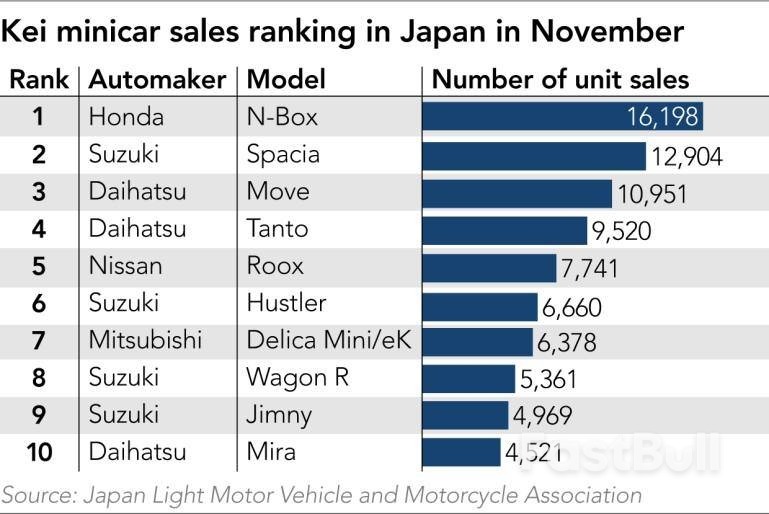
          "The number of orders is very strong and positive," Nissan Chief Marketing Manager Keiko Kondo said, as the company reported orders that opened in mid-September had reached 22,000 by Dec. 1. According to data from the Japan Light Motor Vehicle and Motorcycle Association, Roox sales numbered 7,741 in November, up 43% from October and 41% from the same month last year.

          Kei minicars are a Japanese category of vehicle that meets certain size and engine standards. It accounts for more than 30% of domestic sales, as the cars cope well with Japan's narrow roads and incur lower taxes, making them more affordable than larger ones. Prices for the new Roox start from around 1.6 million yen ($10,300).

          The cars have appealing safety features, with the fourth-generation Roox boasting a wide-angle camera that eliminates blind spots.

          Yuki Tanaka, chief product specialist at Nissan, said, "You've probably had a moment of panic when you come out of an alley onto the street and can't see clearly to the left or right. The camera helps with that."

          Nissan is also aiming to attract female drivers with small kids, offering plenty of storage for a smartphone, tissue box and other items around the front seats of the Roox, and easy access and space created to the rear to care for a child in the back seat.

          As part of the Re:Nissan restructuring efforts to improve development efficiency and reduce production costs, the latest Roox was developed with alliance partner Mitsubishi Motors. Shinichiro Irie, program design director at Nissan, explained that around 70% of its parts were the same as Mitsubishi's Delica Mini, its sister model. The companies have given them different exteriors, interior designs and functions.

          Both are preparing to take on BYD's kei minicar, due to launch in the Japanese market around next summer. The Racco, unveiled at the Japan Mobility Show in October, is BYD's first model designated exclusively for an overseas market, but the Chinese automaker has yet to disclose prices, battery capacity or range.

          Nissan's Tanaka said that while BYD's entry would increase competition, "the growing awareness of EVs in Japan has a positive side which helps expand the [EV] market." Nissan also has the Sakura kei electric car in its lineup and is launching a new Leaf EV, the world's first mass-produced electric vehicle.

          Trump created an unexpected opportunity for Japan's kei cars last week. Speaking at the White House, he said he had seen them on his recent trip to Japan, South Korea and Malaysia.

          "They have a very small car ... They're very small and they're really cute, and I said 'How would that do in this country?'"

          The president added, "But you're not allowed to build them and I've authorized the (transportation) secretary to immediately approve the production of those cars." He stated the names of "Honda, [and] some of the Japanese companies" as major players.

          While U.S. demand remains uncertain, introducing kei cars could expand the market and give added momentum to production cooperation between Japanese automakers there.

          Nissan President and CEO Ivan Espinosa said in an interview with Nikkei Asia last month, "We are talking about how we can collaborate in the U.S. Is there any opportunity for joint product development or for powertrain development?" Mitsubishi President and CEO Takao Kato also stated he was considering manufacturing vehicles in the U.S. with Nissan and Honda Motor. They are all major kei minicar makers in Japan.

          Source: Asia_Nikkei

          To stay updated on all economic events of today, please check out our Economic calendar
          Risk Warnings and Disclaimers
          You understand and acknowledge that there is a high degree of risk involved in trading. Following any strategies or investment methods may lead to potential losses. The content on the site is provided by our contributors and analysts for information purposes only. You are solely responsible for determining whether any trading assets, securities, strategy, or any other product is suitable for investing based on your own investment objectives and financial situation.
          Add to Favorites
          Share

          How India’s Top Airline Unravelled In Quest For Higher Profit

          Samantha Luan

          Stocks

          Economic

          Sometime in the evening of Dec 2, three days before India's largest airline would lose control of its operations in one of the country's worst aviation disruptions, IndiGo executives noticed that a technology glitch in its check-in system was delaying late-night flights.

          This in turn was affecting a pilot duty roster recently fine-tuned to incorporate new government rules mandating longer rest hours and fewer night landings.

          Compounded by winter flight schedule changes, air congestion and adverse weather, the math was suddenly not adding up for the low-cost airline whose relentless optimisation had allowed it to turn a profit within three years of inception and over time capture nearly 66 per cent of India's aviation market.

          The resource-efficient instincts baked into IndiGo's DNA had led to a severe under-estimation of redundancies needed to accommodate the new pilot rest rules, despite carriers having had nearly two years to prepare since the guidance was first announced in January 2024.

          Scheduling changes began to snowball: IndiGo cancelled at least 70 flights on Dec 3, then 300 on Dec 4 and finally, over 1,000 on Dec 5 – about half of the flights it normally operates daily.

          As thousands of furious passengers became stranded in major city airports over the weekend, Prime Minister Narendra Modi's government was forced to suspend the new pilot rest rules, cap fares to avoid price gouging and order more trains into operation.

          On Dec 7, the country's aviation regulator also demanded that chief executive officer Pieter Elbers explain within 24 hours this severe disruption and why action shouldn't be taken against him for the "significant lapses in planning, oversight, and resource management."

          The debacle now threatens IndiGo's position in the industry, and its ambitious expansion plans.

          After cementing its dominant position in domestic skies, IndiGo was boosting its overseas footprint, had ordered more Airbus jets, and added business class seats. Earlier in 2025, it signed a codeshare pact with Delta Air Lines, Air France-KLM and Virgin Atlantic Airways.

          The flight cancellations pushed parent InterGlobe Aviation down 9 per cent last week, making it the company's worst week since Mr Elbers' appointment in 2022. Even with the drop, the shares have almost tripled since the Dutch executive took over as CEO, far outperforming the Sensex's 49 per cent gain and an 8.4 per cent increase in an index tracking Asian carriers.

          The events of the past week, occurring just six months after an Air India crash that killed over 260 people in Ahmedabad, cap one of the worst years for India's aviation industry.

          The sight of one carrier bringing national air traffic to a near-halt underscores the danger of India's reliance on too-big-to-falter industrial giants.

          "This airline is supposed to be a market leader with outstanding management," said Mark D. Martin, founder of India-based aviation advisory Martin Consulting. "This is going to be so extremely damaging to the airline. They have lost credibility."

          It's a stark fall from grace for a company that became a business school case study for its profitable, lean operations in a sector notorious for cash-burn and bankruptcies.

          Lean machine

          IndiGo's tightly-run operations are built on a rapid turnaround of flights and a strategy of sweating every asset - man or machine - to the limit. It flies only one aircraft type, Airbus A320s family jets – a standardisation that cuts costs on pilot and crew training, maintenance and parts inventory.

          The focus is equally sharp on reducing time on the ground, with the carrier terming its punctual reputation "IndiGo Standard Time". Flights have a four-zone system for quick boarding, and crews open all exit doors for speedier disembarking.

          No efficiency is too small: flight staff have even switched to a faster method of weighing sandwiches – their top-selling onboard item– instead of counting them, said people familiar with the matter.

          This modus operandi shaved down an IndiGo jet's turnaround time to 20 or 25 minutes versus an industry average of 45 minutes. This meant it could squeeze in more and more flights over the years.

          "IndiGo's operations are so tightly knit that one flight cancellation would impact at least six flights," said Shakti Lumba, who was IndiGo's head of operations when it first began operating in 2006.

          Lack of slack

          The lack of slack in the system became all too apparent over the last week, as the scheduling breakdown cascaded through its operations. A flight took off with three cabin crew staff meant for another flight that then got stranded, people familiar with the matter said. One IndiGo pilot was stuck for days at his hotel in the Middle East, waiting for his return flying schedule.

          Ground staff cowered from furious throngs of passengers, and could not even retrieve check-in bags that were stuck in grounded aircraft.

          Indian officials are furious with the carrier, people familiar with the matter said, and have now sprung into action to quell public anger by tightening scrutiny around the carrier. It also casts a poor light on the country's aviation infrastructure that the government wants to rapidly develop.

          The situation is stabilising: there were fewer cancellations on Dec 6 at about 850 and the airline said on Dec 7 that it was "confident" operations will stabilize by Dec 10. But observers expect the crisis to trigger some fundamental changes in the industry.

          It's dangerous for one airline to have such a high market share, said Ajay Bodke, a Mumbai-based independent markets analyst.

          In the United States and China, the only other aviation markets bigger than India's domestic market, no carrier has a market share of more than a quarter.

          "Defying government regulations announced months in advance, and now seeking a last-minute two-month reprieve to comply," Mr Bodke said. "This is not inefficiency. It's willful disregard." BLOOMBERG

          Source: Straitstimes

          To stay updated on all economic events of today, please check out our Economic calendar
          Risk Warnings and Disclaimers
          You understand and acknowledge that there is a high degree of risk involved in trading. Following any strategies or investment methods may lead to potential losses. The content on the site is provided by our contributors and analysts for information purposes only. You are solely responsible for determining whether any trading assets, securities, strategy, or any other product is suitable for investing based on your own investment objectives and financial situation.
          Add to Favorites
          Share

          Japanese Market Slightly Lower

          Justin

          Forex

          Stocks

          Commodity

          The Japanese stock market is trading slightly lower on Monday, extending the losses in the previous session, despite the broadly positive cues from Wall Street on Friday, with the Nikkei 225 falling below the 50,450 level, with weakness is index heavyweights, financial and technology stocks partially offset by gains in automakers and exporter stocks.

          The benchmark Nikkei 225 Index is down 54.83 points or 0.11 percent at 50,437.04, after hitting a low of 50,224.65 earlier. Japanese shares ended significantly lower on Friday.

          Market heavyweight SoftBank Group is losing more than 2 percent and Uniqlo operator Fast Retailing is edging down 0.2 percent. Among automakers, Honda is edging up 0.1 percent and Toyota is gaining almost 1 percent.

          In the tech space, Advantest is declining more than 1 percent, Screen Holdings is edging down 0.4 percent and Tokyo Electron is down almost 1 percent.

          In the banking sector, Sumitomo Mitsui Financial is losing almost 1 percent, Mitsubishi UFJ Financial is declining more than 1 percent and Mizuho Financial is edging down 0.5 percent.

          The major exporters are mostly higher. Mitsubishi Electric is gaining more than 2 percent, while Panasonic and Canon are adding almost 1 percent each. Sony losing almost 1 percent.

          Among the other major losers, Aeon is declining almost 5 percent, Lasertec is losing more than 3 percent and Resonac Holdings is down almost 3 percent.

          Conversely, Secom, Fuji Electric and Toppan Holdings are advancing more than 4 percent each, while Japan Steel Works and Mitsubishi Estate are gaining almost 4 percent each. BayCurrent is adding almost 3 percent.

          In economic news, Japan's gross domestic product contracted a seasonally adjusted 0.6 percent on quarter in the third quarter of 2025, the Cabinet Office said in Monday's preliminary reading. That missed forecasts for a decline of 0.4 percent following the 0.5 percent increase in the three months prior. On an annualized basis, GDP declined 2.3 percent - again missing expectations for a fall of 2.0 percent following the 2.2 percent gain in the second quarter.

          Capital expenditure was down 0.2 percent on quarter, missing forecasts for an increase of 1.0 percent following the 0.6 percent gain in the previous three months. External demand was down 0.2 percent on quarter and private consumption was up 0.2 percent on quarter, while the GDP price index jumped 3.4 percent on year.

          Meanwhile, Overall bank lending in Japan was up 4.2 percent on year in November, the Bank of Japan said on Monday - coming in at 652.547 trillion yen. That exceeded expectations for an increase of 4.0 percent and was up from 4.1 percent in October. Excluding trusts, lending was up 4.5 percent at 573.647 trillion yen - accelerating from 4.4 percent in the previous month.

          In the currency market, the U.S. dollar is trading in the lower 155 yen-range on Monday.

          On Wall Street, stocks saw modest strength during trading on Friday after ending Thursday's choppy trading session little changed. With the upward move, the Nasdaq and the S&P 500 reached their best closing levels in a month.

          The major averages gave back ground after an early advance but remained in positive territory. The Dow rose 104.05 points or 0.2 percent to 47,954.99, the Nasdaq climbed 72.99 point or 0.3 percent to 23,578.13 and the S&P 500 increased 13.28 points or 0.2 percent to 6,870.40.

          Meanwhile, the major European markets also turned mixed on the day. While the German DAX Index climbed by 0.6 percent, the French CAC 40 Index edged down by 0.1 percent and the U.K.'s FTSE 100 Index fell by 0.5 percent.

          Crude oil prices edged higher on Friday on persistent geopolitical tension due to the Russia-Ukraine war and the U.S.-Venezuela standoff. West Texas Intermediate crude for January delivery was up $0.35 or 0.59 percent at $60.02 per barrel.

          Source: TradingView

          Risk Warnings and Disclaimers
          You understand and acknowledge that there is a high degree of risk involved in trading. Following any strategies or investment methods may lead to potential losses. The content on the site is provided by our contributors and analysts for information purposes only. You are solely responsible for determining whether any trading assets, securities, strategy, or any other product is suitable for investing based on your own investment objectives and financial situation.
          Add to Favorites
          Share

          Bitcoin Rebound: K33 Research Predicts High Probability Of December Price Recovery

          Michelle Reid

          Is the recent Bitcoin correction finally nearing its end? According to a fresh analysis from K33 Research, the answer might be yes. The firm sees a high probability of a Bitcoin rebound materializing as early as December, suggesting the current downturn could be setting the stage for a significant recovery. This perspective offers a beacon of hope for investors navigating the recent market volatility.

          Why Does K33 Research Predict a Bitcoin Rebound?

          K33 Research's optimistic outlook for a Bitcoin rebound is not based on mere speculation. Instead, it stems from a detailed examination of current market mechanics. The analysts point to specific on-chain and derivatives data that signal the selling pressure is exhausting itself. While the market has faced headwinds, the underlying structure appears resilient, paving the way for a potential upward shift.

          What's Driving the Current Selling Pressure?

          To understand the potential for a rebound, we must first look at what caused the dip. K33 identifies two primary sources of recent selling pressure:

          ● Net ETF Outflows: U.S. spot Bitcoin ETFs have experienced periods of net outflows, creating consistent sell-side pressure in the market.
          ● Reduced CME Activity: Trading volume on the Chicago Mercantile Exchange (CME), a key venue for institutional Bitcoin futures, has declined. This indicates reduced institutional speculative activity in the short term.

          However, the crucial insight is that these factors are now seen as temporary rather than structural.

          The Bullish Case: Key Factors Supporting a BTC Recovery

          Despite the selling, several powerful factors are aligning to support a Bitcoin rebound. K33 highlights these critical bullish signals that mitigate the downward pressure.

          Is Low Leverage a Hidden Strength?

          One of the most encouraging metrics is the low leverage burden across the market. Unlike previous cycles where excessive borrowing amplified crashes, the current correction has occurred with relatively low leverage. This means there are fewer forced liquidations to trigger a cascading sell-off. The market has been de-risking, which creates a more stable foundation for the next leg up.

          Where is Bitcoin's Strong Support Zone?

          Technical and on-chain analysis points to a formidable support zone between $70,000 and $80,000. This price range represents a massive concentration of investor cost basis, meaning many buyers entered the market here. This area acts as a psychological and economic floor, where buying interest historically intensifies, making a sustained drop below it less probable.

          Could Policy Changes Fuel a Structural Uptrend?

          Beyond technicals, K33 expects a "structural uptrend" to be driven by macro policy shifts. The evolving regulatory landscape in major economies like the U.S. is increasingly seen as moving toward clearer, more crypto-friendly frameworks. Positive regulatory clarity has always been a powerful catalyst for institutional capital inflows, which could supercharge the next Bitcoin rebound.

          What Does This Mean for Investors Before December?

          The analysis suggests a strategic perspective for market participants. The approach of December, often a seasonally positive month for asset prices, combined with the identified technical supports, creates a compelling setup. For investors, this period of consolidation may represent an accumulation opportunity ahead of the anticipated Bitcoin rebound.

          In summary, K33 Research provides a data-driven case for optimism. While short-term flows have caused friction, the core market structure remains healthy with strong support, low systemic risk from leverage, and a favorable policy horizon. December is pinpointed not as a guarantee, but as a high-probability window for this positive momentum to manifest, potentially marking a decisive turn from correction to recovery.

          Source: CryptoSlate

          Risk Warnings and Disclaimers
          You understand and acknowledge that there is a high degree of risk involved in trading. Following any strategies or investment methods may lead to potential losses. The content on the site is provided by our contributors and analysts for information purposes only. You are solely responsible for determining whether any trading assets, securities, strategy, or any other product is suitable for investing based on your own investment objectives and financial situation.
          Add to Favorites
          Share

          Japan Confirms Deeper GDP Decline, Backing Stimulus Package

          Bethany Sullivan

          Japan's economy shrank in the three months through September, the government confirmed in a revised report, giving further justification for Prime Minister Sanae Takaichi's stimulus package announced last month.

          Gross domestic product fell at an annualized pace of 2.3% in the third quarter, as revised figures showed business spending and housing investment came in weaker than preliminary figures. The contraction was deeper than the initial reading of a 1.8% fall, and was the first in six quarters.

          The lackluster results back up Takaichi's stimulus package, which featured the largest fresh spending since the pandemic. It adds an element of complexity to the Bank of Japan's upcoming policy decision latesr next week, but likely won't derail it from its gradual hiking path.

          To ease the burden of inflation on households, Takaichi unveiled a stimulus package featuring ¥17.7 trillion ($114 billion) in planned fresh spending. Outlays from the package include price-relief steps such as utility subsidies and tax cuts, as well as wage-support measures aimed largely at helping smaller firms. Labor unions in the country are pushing for continued growth in pay negotiations after the strong pay hikes of recent years.

          The government estimates that the package will lift the nation's GDP by an average of about 1.4 percentage points per year on an annualized basis for three years, assuming the measures take effect during that span. Making sure that voters feel the hit from inflation is easing is key for Takaichi, whose predecessors have been ousted from office partly due to simmering discontent over the cost of living.

          Meanwhile, overnight-indexed swaps now indicate an around 90% chance of the central bank hiking this month, following Governor Kazuo Ueda's strong hints last week that an increase in borrowing costs is coming soon. Given that the quarterly economic decline is likely to be temporary and largely caused by one-off factors including housing regulation changes, Monday's data is unlikely to derail the BOJ from its policy path too much.

          Separate labor ministry data on Monday showed real wages fell 0.7% from the previous year in October, the 10th straight month of decline. While nominal wages rose 2.6% and base salaries climbed at the same pace in a sign of sustained pay momentum, the pace is still slower than inflation. A more stable measure, which avoids sampling issues and excludes bonuses and overtime, climbed 2.2% for regular workers, slowing slightly from the previous month.

          Japan's main price gauge has remained at or above the BOJ's 2% target for more than three and a half years, marking the longest streak since the early 1990s.

          Source: Bloomberg Europe

          Risk Warnings and Disclaimers
          You understand and acknowledge that there is a high degree of risk involved in trading. Following any strategies or investment methods may lead to potential losses. The content on the site is provided by our contributors and analysts for information purposes only. You are solely responsible for determining whether any trading assets, securities, strategy, or any other product is suitable for investing based on your own investment objectives and financial situation.
          Add to Favorites
          Share

          Oil Holds At Two-week Highs On Expected US Rate Cut, Geopolitical Risks

          Alice Winters

          Oil prices hovered at two-week highs on Monday as investors expect a Federal Reserve interest rate cut this week that will lift economic growth and energy demand while eyeing geopolitical risks that threaten oil supplies from Russia and Venezuela.

          Brent crude futures rose 4 cents, or 0.06%, to $63.79 a barrel by 0008 GMT, while U.S. West Texas Intermediate crude was at $60.15 a barrel, up 7 cents, or 0.12%.

          Both contracts closed Friday's session at their highest levels since November 18.

          Markets are pricing in an 84% chance of a quarter-point cut at the Fed meeting on Tuesday and Wednesday, LSEG data show, although it is expected to be one of its most contentious in years and investors are focused on the U.S. central bank's policy direction and internal dynamics.

          In Europe, progress in Ukraine peace talks remains slow, with disputes over security guarantees for Kyiv and the status of Russian-occupied territory still unresolved.

          "The outcome of current negotiations could have a big impact on the oil market," ANZ analysts said in a note.

          "The various potential outcomes from Trump's latest push to end the war could release a swing in oil supply of more than 2 million barrels per day."

          In the meantime, the Group of Seven countries and the European Union are in talks to replace a price cap on Russian oil exports with a full maritime services ban, sources familiar with the matter told Reuters, which may curb supplies from the world's second-largest producer.

          The U.S. has also ramped up pressure on OPEC member Venezuela, including strikes against alleged drug-smuggling boats and threats of military action to overthrow President Nicolas Maduro's government.

          Chinese independent refiners have stepped up purchases of sanctioned Iranian oil from onshore storage tanks using newly issued import quotas, trade sources and analysts said, easing a supply glut.

          Source: Reuters

          Risk Warnings and Disclaimers
          You understand and acknowledge that there is a high degree of risk involved in trading. Following any strategies or investment methods may lead to potential losses. The content on the site is provided by our contributors and analysts for information purposes only. You are solely responsible for determining whether any trading assets, securities, strategy, or any other product is suitable for investing based on your own investment objectives and financial situation.
          Add to Favorites
          Share
          FastBull
          Copyright © 2025 FastBull Ltd

          728 RM B 7/F GEE LOK IND BLDG NO 34 HUNG TO RD KWUN TONG KLN HONG KONG

          TelegramInstagramTwitterfacebooklinkedin
          App Store Google Play Google Play
          Products
          Charts

          Chats

          Q&A with Experts
          Screeners
          Economic Calendar
          Data
          Tools
          Membership
          Features
          Function
          Markets
          Copy Trading
          Latest Signals
          Contests
          News
          Analysis
          24/7
          Columns
          Education
          Company
          Careers
          About Us
          Contact Us
          Advertising
          Help Center
          Feedback
          User Agreement
          Privacy Policy
          Business

          White Label

          Data API

          Web Plug-ins

          Poster Maker

          Affiliate Program

          Risk Disclosure

          The risk of loss in trading financial instruments such as stocks, FX, commodities, futures, bonds, ETFs and crypto can be substantial. You may sustain a total loss of the funds that you deposit with your broker. Therefore, you should carefully consider whether such trading is suitable for you in light of your circumstances and financial resources.

          No decision to invest should be made without thoroughly conducting due diligence by yourself or consulting with your financial advisors. Our web content might not suit you since we don't know your financial conditions and investment needs. Our financial information might have latency or contain inaccuracy, so you should be fully responsible for any of your trading and investment decisions. The company will not be responsible for your capital loss.

          Without getting permission from the website, you are not allowed to copy the website's graphics, texts, or trademarks. Intellectual property rights in the content or data incorporated into this website belong to its providers and exchange merchants.

          Not Logged In

          Log in to access more features

          FastBull Membership

          Not yet

          Purchase

          Become a signal provider
          Help Center
          Customer Service
          Dark Mode
          Price Up/Down Colors

          Log In

          Sign Up

          Position
          Layout
          Fullscreen
          Default to Chart
          The chart page opens by default when you visit fastbull.com