• Trade
  • Markets
  • Copy
  • Contests
  • News
  • 24/7
  • Calendar
  • Q&A
  • Chats
Trending
Screeners
SYMBOL
LAST
BID
ASK
HIGH
LOW
NET CHG.
%CHG.
SPREAD
SPX
S&P 500 Index
6827.42
6827.42
6827.42
6899.86
6801.80
-73.58
-1.07%
--
DJI
Dow Jones Industrial Average
48458.04
48458.04
48458.04
48886.86
48334.10
-245.98
-0.51%
--
IXIC
NASDAQ Composite Index
23195.16
23195.16
23195.16
23554.89
23094.51
-398.69
-1.69%
--
USDX
US Dollar Index
97.950
98.030
97.950
98.500
97.950
-0.370
-0.38%
--
EURUSD
Euro / US Dollar
1.17394
1.17409
1.17394
1.17496
1.17192
+0.00011
+ 0.01%
--
GBPUSD
Pound Sterling / US Dollar
1.33707
1.33732
1.33707
1.33997
1.33419
-0.00148
-0.11%
--
XAUUSD
Gold / US Dollar
4299.39
4299.39
4299.39
4353.41
4257.10
+20.10
+ 0.47%
--
WTI
Light Sweet Crude Oil
57.233
57.485
57.233
58.011
56.969
-0.408
-0.71%
--

Community Accounts

Signal Accounts
--
Profit Accounts
--
Loss Accounts
--
View More

Become a signal provider

Sell trading signals to earn additional income

View More

Guide to Copy Trading

Get started with ease and confidence

View More

Signal Accounts for Members

All Signal Accounts

Best Return
  • Best Return
  • Best P/L
  • Best MDD
Past 1W
  • Past 1W
  • Past 1M
  • Past 1Y

All Contests

  • All
  • Trump Updates
  • Recommend
  • Stocks
  • Cryptocurrencies
  • Central Banks
  • Featured News
Top News Only
Share

Pentagon Says Two USA Army Soldiers And One Civilian USA Interpreter Were Killed, And Three Were Wounded In Syria

Share

Israel Says It Kills Senior Hamas Commander Raed Saed In Gaza

Share

Ukraine's Navy Says Russian Drone Attack Hit Civilian Turkish Vessel Carrying Sunflower Oil To Egypt On Saturday

Share

Israeli Military Says It Put Planned Strike On South Lebanon Site On Hold After Lebanese Army Requested Access

Share

Norwegian Nobel Committee: Calls On The Belarusian Authorities To Release All Political Prisoners

Share

Norwegian Nobel Committee: His Freedom Is A Deeply Welcome And Long-Awaited Moment

Share

Ukraine Says It Received 114 Prisoners From Belarus

Share

USA Embassy In Lithuania: Maria Kalesnikava Is Not Going To Vilnius

Share

USA Embassy In Lithuania: Other Prisoners Are Being Sent From Belarus To Ukraine

Share

Ukraine President Zelenskiy: Five Ukrainians Released By Belarus In US-Brokered Deal

Share

USA Vilnius Embassy: USA Stands Ready For "Additional Engagement With Belarus That Advances USA Interests"

Share

USA Vilnius Embassy: Belarus, USA, Other Citizens Among The Prisoners Released Into Lithuania

Share

USA Vilnius Embassy: USA Will Continue Diplomatic Efforts To Free The Remaining Political Prisoners In Belarus

Share

USA Vilnius Embassy: Belarus Releases 123 Prisoners Following Meeting Of President Trump's Envoy Coale And Belarus President Lukashenko

Share

USA Vilnius Embassy: Masatoshi Nakanishi, Aliaksandr Syrytsa Are Among The Prisoners Released By Belarus

Share

USA Vilnius Embassy: Maria Kalesnikava And Viktor Babaryka Are Among The Prisoners Released By Belarus

Share

USA Vilnius Embassy: Nobel Peace Prize Laureate Ales Bialiatski Is Among The Prisoners Released By Belarus

Share

Belarusian Presidential Administration Telegram Channel: Lukashenko Has Pardoned 123 Prisoners As Part Of Deal With US

Share

Two Local Syrian Officials: Joint US-Syrian Military Patrol In Central Syria Came Under Fire From Unknown Assailants

Share

Israeli Military Says It Targeted 'Key Hamas Terrorist' In Gaza City

TIME
ACT
FCST
PREV
U.K. Trade Balance Non-EU (SA) (Oct)

A:--

F: --

P: --

U.K. Trade Balance (Oct)

A:--

F: --

P: --

U.K. Services Index MoM

A:--

F: --

P: --

U.K. Construction Output MoM (SA) (Oct)

A:--

F: --

P: --

U.K. Industrial Output YoY (Oct)

A:--

F: --

P: --

U.K. Trade Balance (SA) (Oct)

A:--

F: --

P: --

U.K. Trade Balance EU (SA) (Oct)

A:--

F: --

P: --

U.K. Manufacturing Output YoY (Oct)

A:--

F: --

P: --

U.K. GDP MoM (Oct)

A:--

F: --

P: --

U.K. GDP YoY (SA) (Oct)

A:--

F: --

P: --

U.K. Industrial Output MoM (Oct)

A:--

F: --

P: --

U.K. Construction Output YoY (Oct)

A:--

F: --

P: --

France HICP Final MoM (Nov)

A:--

F: --

P: --

China, Mainland Outstanding Loans Growth YoY (Nov)

A:--

F: --

P: --

China, Mainland M2 Money Supply YoY (Nov)

A:--

F: --

P: --

China, Mainland M0 Money Supply YoY (Nov)

A:--

F: --

P: --

China, Mainland M1 Money Supply YoY (Nov)

A:--

F: --

P: --

India CPI YoY (Nov)

A:--

F: --

P: --

India Deposit Gowth YoY

A:--

F: --

P: --

Brazil Services Growth YoY (Oct)

A:--

F: --

P: --

Mexico Industrial Output YoY (Oct)

A:--

F: --

P: --

Russia Trade Balance (Oct)

A:--

F: --

P: --

Philadelphia Fed President Henry Paulson delivers a speech
Canada Building Permits MoM (SA) (Oct)

A:--

F: --

P: --

Canada Wholesale Sales YoY (Oct)

A:--

F: --

P: --

Canada Wholesale Inventory MoM (Oct)

A:--

F: --

P: --

Canada Wholesale Inventory YoY (Oct)

A:--

F: --

P: --

Canada Wholesale Sales MoM (SA) (Oct)

A:--

F: --

P: --

Germany Current Account (Not SA) (Oct)

A:--

F: --

P: --

U.S. Weekly Total Rig Count

A:--

F: --

P: --

U.S. Weekly Total Oil Rig Count

A:--

F: --

P: --

Japan Tankan Large Non-Manufacturing Diffusion Index (Q4)

--

F: --

P: --

Japan Tankan Small Manufacturing Outlook Index (Q4)

--

F: --

P: --

Japan Tankan Large Non-Manufacturing Outlook Index (Q4)

--

F: --

P: --

Japan Tankan Large Manufacturing Outlook Index (Q4)

--

F: --

P: --

Japan Tankan Small Manufacturing Diffusion Index (Q4)

--

F: --

P: --

Japan Tankan Large Manufacturing Diffusion Index (Q4)

--

F: --

P: --

Japan Tankan Large-Enterprise Capital Expenditure YoY (Q4)

--

F: --

P: --

U.K. Rightmove House Price Index YoY (Dec)

--

F: --

P: --

China, Mainland Industrial Output YoY (YTD) (Nov)

--

F: --

P: --

China, Mainland Urban Area Unemployment Rate (Nov)

--

F: --

P: --

Saudi Arabia CPI YoY (Nov)

--

F: --

P: --

Euro Zone Industrial Output YoY (Oct)

--

F: --

P: --

Euro Zone Industrial Output MoM (Oct)

--

F: --

P: --

Canada Existing Home Sales MoM (Nov)

--

F: --

P: --

Euro Zone Total Reserve Assets (Nov)

--

F: --

P: --

U.K. Inflation Rate Expectations

--

F: --

P: --

Canada National Economic Confidence Index

--

F: --

P: --

Canada New Housing Starts (Nov)

--

F: --

P: --

U.S. NY Fed Manufacturing Employment Index (Dec)

--

F: --

P: --

U.S. NY Fed Manufacturing Index (Dec)

--

F: --

P: --

Canada Core CPI YoY (Nov)

--

F: --

P: --

Canada Manufacturing Unfilled Orders MoM (Oct)

--

F: --

P: --

Canada Manufacturing New Orders MoM (Oct)

--

F: --

P: --

Canada Core CPI MoM (Nov)

--

F: --

P: --

Canada Manufacturing Inventory MoM (Oct)

--

F: --

P: --

Canada CPI YoY (Nov)

--

F: --

P: --

Canada CPI MoM (Nov)

--

F: --

P: --

Canada CPI YoY (SA) (Nov)

--

F: --

P: --

Canada Core CPI MoM (SA) (Nov)

--

F: --

P: --

Q&A with Experts
    • All
    • Chatrooms
    • Groups
    • Friends
    Connecting
    .
    .
    .
    Type here...
    Add Symbol or Code

      No matching data

      All
      Trump Updates
      Recommend
      Stocks
      Cryptocurrencies
      Central Banks
      Featured News
      • All
      • Russia-Ukraine Conflict
      • Middle East Flashpoint
      • All
      • Russia-Ukraine Conflict
      • Middle East Flashpoint
      Search
      Products

      Charts Free Forever

      Chats Q&A with Experts
      Screeners Economic Calendar Data Tools
      Membership Features
      Data Warehouse Market Trends Institutional Data Policy Rates Macro

      Market Trends

      Market Sentiment Order Book Forex Correlations

      Top Indicators

      Charts Free Forever
      Markets

      News

      News Analysis 24/7 Columns Education
      From Institutions From Analysts
      Topics Columnists

      Latest Views

      Latest Views

      Trending Topics

      Top Columnists

      Latest Update

      Signals

      Copy Rankings Latest Signals Become a signal provider AI Rating
      Contests
      Brokers

      Overview Brokers Assessment Rankings Regulators News Claims
      Broker listing Forex Brokers Comparison Tool Live Spread Comparison Scam
      Q&A Complaint Scam Alert Videos Tips to Detect Scam
      More

      Business
      Events
      Careers About Us Advertising Help Center

      White Label

      Data API

      Web Plug-ins

      Affiliate Program

      Awards Institution Evaluation IB Seminar Salon Event Exhibition
      Vietnam Thailand Singapore Dubai
      Fans Party Investment Sharing Session
      FastBull Summit BrokersView Expo
      Recent Searches
        Top Searches
          Markets
          News
          Analysis
          User
          24/7
          Economic Calendar
          Education
          Data
          • Names
          • Latest
          • Prev

          View All

          No data

          Scan to Download

          Faster Charts, Chat Faster!

          Download App
          English
          • English
          • Español
          • العربية
          • Bahasa Indonesia
          • Bahasa Melayu
          • Tiếng Việt
          • ภาษาไทย
          • Français
          • Italiano
          • Türkçe
          • Русский язык
          • 简中
          • 繁中
          Open Account
          Search
          Products
          Charts Free Forever
          Markets
          News
          Signals

          Copy Rankings Latest Signals Become a signal provider AI Rating
          Contests
          Brokers

          Overview Brokers Assessment Rankings Regulators News Claims
          Broker listing Forex Brokers Comparison Tool Live Spread Comparison Scam
          Q&A Complaint Scam Alert Videos Tips to Detect Scam
          More

          Business
          Events
          Careers About Us Advertising Help Center

          White Label

          Data API

          Web Plug-ins

          Affiliate Program

          Awards Institution Evaluation IB Seminar Salon Event Exhibition
          Vietnam Thailand Singapore Dubai
          Fans Party Investment Sharing Session
          FastBull Summit BrokersView Expo

          Cross-border Payment Between China and Russia May Be Facilitated with SWIFT Russian Ban

          Samantha Luan

          Russia-Ukraine Conflict

          Summary:

          Some Russian banks have been kicked out of the SWIFT system. There are no specific details yet. Considering that the current inflation is equivalent to the “fourth oil crisis” environment in the United States and Europe, therefore, it is predicted that the sanction will probably leave room for energy trade and will not completely reproduce the situation in Iran. On the other hand, it may further deepen the cross-border payment between China and Russia in trade and push forward the SWIFT withdrawal of international financial markets.
          On February 27, the United States, the United Kingdom, Canada, France, Germany, Italy, and the European Commission jointly announced plans to exclude some Russian banks from SWIFT (Society for Worldwide Interbank Financial Telecommunication) and to freeze the international reserves of the Central Bank of Russian Federation.
          SWIFT is one of the most important financial infrastructures in the world, and more than 10,000 global financial institutions are using SWIFT to secure their cross-border payments, securities transactions, and trade financing. Because of its great influence on the sanctioned countries, SWIFT sanctions are also known as “financial nuclear sanctions”.
          The exclusion of Russia from the SWIFT system and the inability of banks to collect and pay across borders may trigger a huge shock to the Russian economy as oil and gas revenues account for 36% of government budget revenues and nearly half of Russia's total oil and gas exports.

          I. Limited Impact on the Chinese economy

          Russia-Ukraine conflict and sanctions against Russia have a little direct impact on China's economy, but some sectors such as fuel and leather luggage need to be taken seriously.
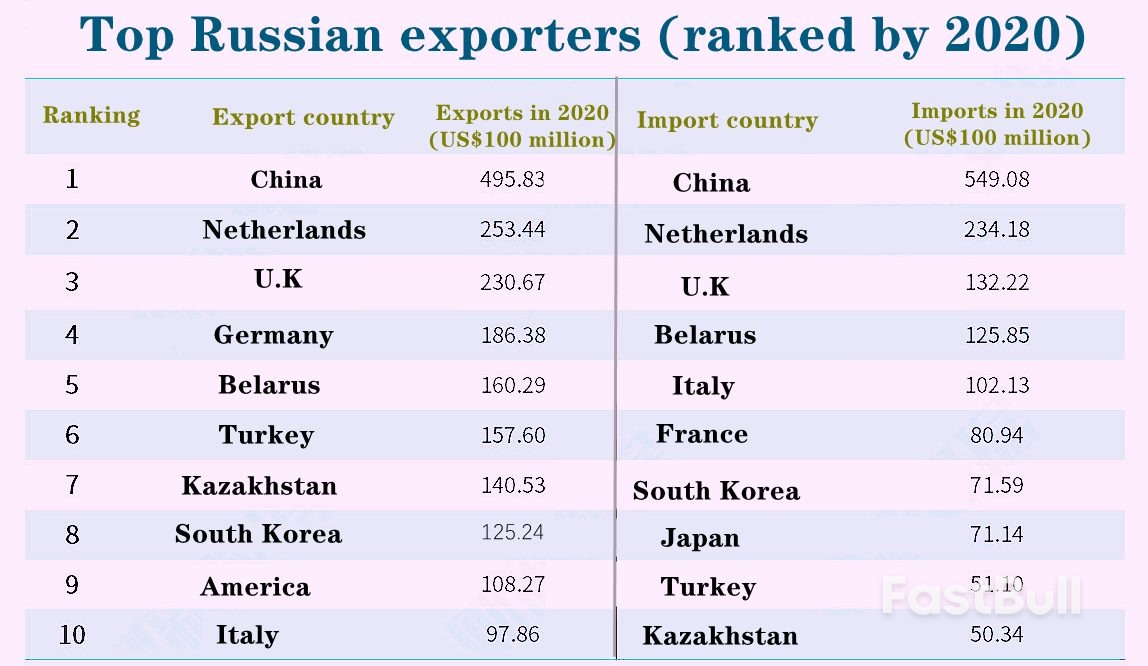
          After 2017, China became the largest Russian trade export recipient and is now also the largest source of Russian imports.
          Cross-border Payment Between China and Russia May Be Facilitated with SWIFT Russian Ban_1
          In 2020, China’s combined exports and imports to Russia and Ukraine accounted for only 2.3% and 3.4% respectively. Among the domestic consumer goods such as leather bags, shoes, umbrellas, vehicles and transportation equipment exported by China, the proportion to Russia is slightly higher, especially the export of leather bags to Russia accounts for 8.7% of the total export of China’s leather bags.
          China imports a slightly higher share of raw materials from Russia, with 12.5%, 10.5%, and 5.7% of fuel, wood products, and metal products, respectively, and especially crude oil, with a 16% share of China’s crude oil imports from Russia in 2021.

          II. No Details Released on the Removal of Some Russian Banks from SWIFT

          As of press time, no details have been released on the sanctions that removed some Russian banks from the SWIFT system, and given that European economies rely heavily on Russian energy supplies, Russian crude oil-related trading may survive if certain banks that focus on the energy sector business are excluded from the sanctions.
          On the contrary, a total ban on Russia’s access to SWIFT would bring a crude oil supply gap at least twice as large as Iran’s, but such an outcome is currently unaffordable for major economies such as Europe, the United States, and even China.
          At present, the negative impact of soaring inflation on the economy is equivalent to the “fourth oil crisis”. Comprehensive sanctions will only be self-inflicted on European economies.
          Therefore, it is predicted that the sanctions will probably leave space in the energy trade sector and will not exactly repeat the situation in Iran.

          III. Smaller Investment Transactions between China and Russia

          3.1 China's foreign investment in Russia and Ukraine accounts for a relatively small share

          At the end of 2020, the stock of Chinese foreign direct investment in Russia and Ukraine accounted for less than 0.5%;
          The stock of Chinese foreign investment attracted from Russia and Ukraine also accounts for only 0.01% of the total foreign investment attracted by China;
          In terms of the sectors of Chinese direct investments in Russia, those with a larger share of the investment amount are mining, agriculture, forestry, animal husbandry, and fishery, and manufacturing respectively;
          At the end of 2020, Chinese portfolio investments in Russia and Ukraine accounted for 0.08% of the amount of Chinese foreign portfolio investments;
          Russian-Ukrainian portfolio investment in China accounts for a much smaller share of 0.003% of the total amount of portfolio investment received by China;
          The direct impact of the trade channel is limited, but a series of interlocking events such as high inflation triggered by financial sanctions, global financial market volatility, and the return of capital to safe-haven assets have paved the way for a common crisis spreading across markets.

          3.2 Potential to accelerate the de-SWIFT process

          This situation regarding Russia may accelerate the withdrawal of the international financial markets from SWIFT.
          Russia had previously constructed a “firewall” of financial sanctions in advance to deal with the possibility of being excluded from “SWIFT”. In the Crimean conflict in 2014, the United States and Europe considered the use of SWIFT sanctions against Russia, but they didn’t actually implement it in the end. At that time, Russia began to accelerate the establishment of its own payment system and Financial Message Transfer System (SPFS), and actively joined China’s CIPS, which went into operation in 2015. Russia also signed currency exchange agreements with other countries to promote “de-dollarization”.
          In addition, banks that are removed from the SWIFT system can be replaced by traditional transaction methods or other messaging systems, which allow transactions to take place despite the inefficiency and high cost, and can be used as an alternative in cases where the SWIFT settlement system remains dominant.
          For China and Russia, the bilateral currency swap agreement has been renewed several times, and the RMB Cross-border Inter-bank Payment System (CIPS) has one direct participating bank and several indirect participating members in Russia. Large banks such as the Bank of China also have local subsidiaries in Russia. They can conduct intra-group transactions without passing through Russian banks. Relevant enterprises still have channels for remittance.
          At present, although the digital RMB is managed uniformly by the banks, its accounting system is distributed, which will automatically record the route and specific details of all transactions, and can automatically complete the inquiry, comparison, and verification while making payment, namely, there is no need for an intermediary similar to SWIFT. Meanwhile, the digital RMB has a national credit endorsement, and there is no mutual trust problem between the two parties, that is, there is no need for SWIFT to provide a credit guarantee.
          For trade exchanges between China and Russia, the current situation may further enhance the trade demand for RMB settlement between China and Russia.
          Risk Warnings and Disclaimers
          You understand and acknowledge that there is a high degree of risk involved in trading. Following any strategies or investment methods may lead to potential losses. The content on the site is provided by our contributors and analysts for information purposes only. You are solely responsible for determining whether any trading assets, securities, strategy, or any other product is suitable for investing based on your own investment objectives and financial situation.
          Comments
          Add to Favorites
          Share

          Shocks From Outbreak Of War Ripple Across One Of The World's Busiest Trade Lanes

          Thomas
          Importers from London to Warsaw will soon face higher shipping costs, longer delays and an obstacle course of sanctions to navigate as Russia’s widening assault on Ukraine complicates the movement of cargo between Europe and Asia.
          Russian President Vladimir Putin’s invasion, and retaliatory steps designed to paralyze his country’s economy, are heaping new disruptions on supply chains that had not yet recovered from unprecedented shocks caused by the pandemic.
          Beyond the devastating human toll, the war threatens higher costs for fuel, grain, industrial metals and other raw materials used in Asian-made consumer goods headed for Europe and beyond.
          Mediterranean Shipping Co. and A.P. Moller-Maersk A/S, the world’s biggest container carriers, halted bookings Tuesday for Russian freight, with Maersk seeing “ripple effects” and “significant delays” across the region — not a good signal for European economies already facing energy spikes, product shortages, clogged ports and the highest inflation since the inception of the common currency more than two decades ago.
          “There is still substantial disruption in the supply chain,” said Jennifer Hillman, a Georgetown University professor and former U.S. trade official. “There is an effort to build resilience but that will take time. With Russia invading Ukraine, we don’t have time.”
          Aside from their commodity exports, Russia and Ukraine aren’t big global traders. Russia is the world’s 16th-largest goods exporter, led by petroleum, coal and gas. Ukraine ranks 48th, led by shipments of grain and iron ore, according to 2020 data from the World Trade Organization.
          But they are situated along one of the world’s oldest trade lanes — one that China has sought to use for its Belt and Road initiative and a route where much of the airspace is now restricted.
          Meanwhile, container ships can’t access Ukrainian ports and many are trying to avoid Russia’s.
          Currently, there’s little if any spare ocean freight capacity to move globally-traded goods to absorb even an isolated, regional shock, said Jan Hoffmann, the head of trade logistics at the United Nations Conference on Trade and Development.
          “There is no slack in the system so anything that holds up ships anywhere will lead to less capacity,” Hoffmann said.
          For cargo between Asia to Europe, that leaves Russia’s rail network — behind only the U.S. and China with its 87,000 kilometers of track — as another possible option.
          Both Maersk and DB Schenker, the logistics unit of German national railway operator Deutsche Bahn, offer intermodal services — by sea from Asia, then on Russian rail lines to Europe — but even those are coming under new restrictions and sanctions concerns.
          “Shying away from sanctions is a key risk,” said Peter Sand, a chief analyst at Oslo-based Xeneta, a freight market-analytics platform. “That means higher prices for bulk shipping, which will make it more expensive to trade and ship around the world.”
          There’s anecdotal evidence of train disruptions already. Networking equipment maker Zyxel Communications Corp. has stopped shipping from China to Europe by rail as the conflict threatens to snarl a key land route. Zyxel, a maker of routers and switches controlled by Taiwan’s Unizyx Holding Corp., suspended freight through the link operated by China Railway about three days ago, President Karsten Gewecke said.
          In Asia, some international shipping companies are adjusting their schedules and the conflict means disruption to the delivery of goods is inevitable, according to Gary Lau, chairman of the Hong Kong Association of Freight Forwarding and Logistics.
          “The longer the tension lasts, the greater the impact on the entire European logistics chain,” Lau said.
          Manufacturing executives such as Ricky Chan, whose Hong Kong-based company makes automotive parts including door handles and mirror shells for global clients, said the crisis may add to transportation constraints that the company was already juggling before the crisis began.
          “For our business in Europe, we may face a longer lead time for our logistics,” said Chan, chief executive officer of Jing Mei Automotive, whose manufacturing facilities are based in Guangdong and Hebei.
          Even before the crisis began, Bloomberg Economics estimated logistics constraints for China’s manufacturers appeared to be the most severe on record. The United Nations estimates around 41% of global exports are sourced from Asia, making it the world economy’s factory floor.
          “This is a moment when corporations will stop taking their supply chains for granted and consumers will begin to understand the costs and inconvenience to satisfying their demands,” said Chris Rogers, a supply chain economist with Flexport Inc. in London.
          Transporeon, a logistics platform with offices in nine European capitals, said a protracted war would mean that flights between the Far East and Europe might be rerouted via the U.S., ramping up delays and costs. The pain will be especially acute for U.K. importers, which would suffer more than those in other European countries due to limited capacity at cargo hubs.
          Still, the disruptions in air freight may be less than the diversions and congestion on the ground. Though the average flight time has increased compared with the previous two months by about 3% to 4% on average, that only translates to about a 20-minute delay, according to Flexport data. On one route, the time rose 8% or about 45 minutes.
          “That’s more jet fuel, more carbon emissions and backups at either end at airports in Asia and Europe,” Rogers said. “The rough conclusion is that there’s an impact but it’s not transformative to how air freight is working.”

          Source: Bloomberg

          Risk Warnings and Disclaimers
          You understand and acknowledge that there is a high degree of risk involved in trading. Following any strategies or investment methods may lead to potential losses. The content on the site is provided by our contributors and analysts for information purposes only. You are solely responsible for determining whether any trading assets, securities, strategy, or any other product is suitable for investing based on your own investment objectives and financial situation.
          Comments
          Add to Favorites
          Share

          UAE And Israel To Strengthen Ties In 2022

          Devin
          Dubai International Chamber, one of the three chambers operating under the restructured Dubai Chambers, today hosted the 'Dubai-Israel: Future Horizons Mission' forum at the headquarters of Dubai Chamber of Commerce, where 200 bilateral business meetings were held between Israeli and UAE companies.
          The forum was organised by Dubai International Chamber, the UAE Embassy in Israel and the Tel Aviv Stock Exchange, as part of The Executive Series, a new flagship series of VIP business missions. The event was the focus of a high-level trade mission which was joined by 50 businessmen representing 25 Israeli companies listed in Tel Aviv Stock Exchange.
          The event aimed to highlight the vast untapped potential that businesses in Israel and the UAE, as well as existing synergies in key sectors of mutual interest and new business opportunities emerging in both markets. In addition, the forum familiarised Israeli businessmen with Dubai’s economy and business environment.
          The visiting Israeli delegation was headed by Ittai Ben-Zeev, CEO of Tel Aviv Stock Exchange (TASE) and joined by Altshuler Shaham, Amos Luzon Dev.& Energy, Beeio Honey, Bezeq, Delek Drilling, Energix, Enlight Enregy, Epitomee, Feat Inv., Glassbox, Group 11, Israel Aerospace, Menara Ventures, Nayax, Nova, Perion Network, Pomvom, Sofwave Medical, Strauss Group, The Phoenix, The Zarasai Group, and Userway.
          Addressing participants, Hamad Buamim, President and CEO of Dubai Chambers, said the event and trade mission supports Dubai Chambers’ efforts to build and expand Dubai’s trade and investment ties with Israel, which he described as a market of strategic importance to the emirate.
          Israeli companies can offer specialised expertise to UAE companies in the areas of food security, information technology and financial services, said Buamim, who stressed the importance of the Israeli delegation visit, the first trade mission to be organised by Dubai International Chamber under The Executive Series.
          He noted that the delegation visit and forum come at a time when Dubai is elevating its position as a global business hub and boosting its value proposition to foreign investors and top companies from around the world as it works towards a new vision for the next 50 years.
          In addition, Buamim revealed that Dubai’s non-oil trade with Israel reached nearly AED 2 billion in the first half of 2021, which he says reflects the huge potential between the two business communities. He added that the trade mission would open new doors of opportunity for Israeli companies in Dubai and take economic cooperation to the next level.
          During the forum, Mohamed Mahmoud Al Khaja, UAE Ambassador to Israel, said, "I am excited to see Emiratis and Israelis show the world what can be accomplished through the joint efforts of our business sectors. Towards that end we must link our financial institutions, ease financial transactions, the flow of capital and investments to realise the true potential of the two markets working together in unison. By partnering we can increase the competitiveness of companies in both countries and better compete in the international arena." "Israeli companies are warmly invited to take advantage of opportunities to pilot, grow and build mega-scale projects in and with the help of the UAE’s business sector. As firm believers that peace leads to prosperity, we will help Israel companies open new markets and reach global scale," Al Khaja added.
          Ittai Ben-Zeev said, "The unique connection between the Dubai International Chamber, the Embassy of the UAE in Israel and the Tel Aviv Stock Exchange contributes greatly to the realisation of the Abraham Accords and the strengthening of the economic and business ties between the countries. TASE’s mission is to expose leading Israeli public companies to a broad range of investors, and now is the time to also reach out to investors from the Globe’s Eastern hemisphere. The UAE is known for its long-term planning and perspective and I am confident that the combination of Israel’s innovation and advanced industry with the UAE’s far-reaching perspective and vision, will be a great strategic contribution to both countries."
          The forum featured workshops and panel discussions covering several high-potential sectors and fields, namely technology and innovation, and financial services and investment, which saw the participation of Mohammed Shael Al Saadi, CEO Strategic Affairs, Department of Economy and Tourism (DET); Faisal Belhoul, Chairman of Ithmar Capital Partners and Founder of Amanat Holdings PJSC; Souad Al Hosani, Director of Investor Care, Abu Dhabi Investment Office; Omar Khan, Director – International Offices, Dubai Chamber of Commerce, Dr. Shimon Eckhouse, Co-Founder and Chairman, Epitomee and Software; Ahmed Al Qassim, Senior Executive Vice President, Group Head, Corporate and Institutional Banking – Emirates NBD; and David Alexander, Deputy CEO for Corporate Holdings and Development at Phoenix Holdings.

          Source:WAM.

          Risk Warnings and Disclaimers
          You understand and acknowledge that there is a high degree of risk involved in trading. Following any strategies or investment methods may lead to potential losses. The content on the site is provided by our contributors and analysts for information purposes only. You are solely responsible for determining whether any trading assets, securities, strategy, or any other product is suitable for investing based on your own investment objectives and financial situation.
          Comments
          Add to Favorites
          Share

          America: Biggest Winner Behind Russia-Ukraine Conflict

          Winkelmann

          Russia-Ukraine Conflict

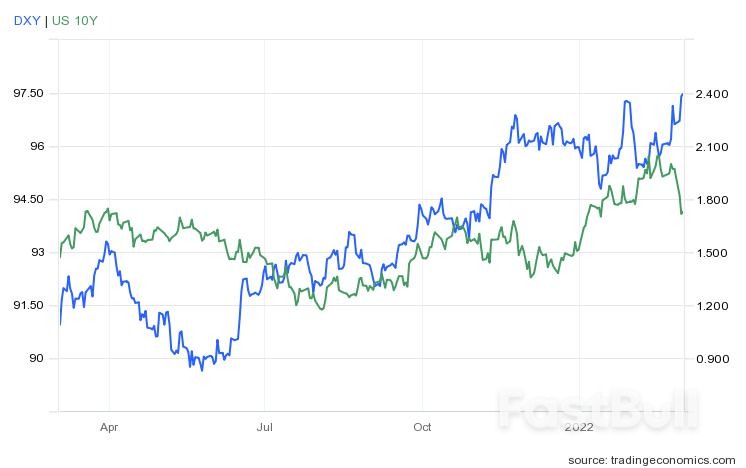
          The tension in the Russia-Ukraine conflict has intensified. Although the two sides have held a negotiation, it seems to have little effect. The war continues to spread, the panic in the capital market is rife, and they have moved closer to safe-haven assets. In addition to the extremely liquid USD, U.S. bonds have also been sought after. We can see that the US dollar index has strengthened significantly, and the yield of T-bonds has dropped from a maximum of 2% to 1.72% due to capital flocking to the safe asset US Treasury bonds.
          America: Biggest Winner Behind Russia-Ukraine Conflict_1In fact, behind this Russia-Ukraine crisis, not only USD assets are benefiting, but also energy exports and geopolitical strategies, etc., the US is a proper big winner.

          USD Assets Become More Attractive

          As we all know, USD's global settlement and reserve currency status is the only weapon for the US to dominate the world. The Bretton Woods system after the end of World War II determined USD's status as the international central currency, and the oil giants in the Middle East established the settlement status of "petroleum USD" through the "lobbying" of the US. After the Plaza Accord, the Japanese yen also went downhill and no longer posed a threat to the USD.
          Over the past 20 years, the USD's international status has been severely challenged after the advent of the Euro, but several geopolitical crises created or instigated by the US in the past have cemented the USD's position. After NATO launched the Kosovo War in 1999, Euro, which had just been officially circulated, suffered a crisis and fell below 1USD for a time. European debt crises have also occurred frequently in these years. After the Ukrainian crisis, the turmoil in Europe made the US a haven, the status of USD strengthened again, and various assets returned to the US one after another. In addition to U.S. Treasury bonds, U.S. stocks are also less affected by the situation in Russia and Ukraine, and market investors even called for a second chance to get on the bus.
          At present, the Fed is about to enter a policy tightening cycle. After the Russian-Ukrainian crisis, with the influx of capital to the US, the pressure on the US' huge debt has been appropriately alleviated.

          U.S. Natural Gas Exports To Europe Significantly Increase

          Russia will account for more than 35 percent of Europe's natural gas supply in 2021, mainly through gas pipelines through Ukraine and Nord Stream 1. The war between Russia and Ukraine affected the two main routes, and Nord Stream 2 was stopped by Germany. In addition, many countries in the US and Europe also put forward SWIFT sanctions against Russia, which greatly obstructs Russia's cross-border trade and sharply shrinks its natural gas export to Europe.
          With gas production capacity set to exceed 1 trillion cubic meters in 2022, the U.S. is in dire need of buyers. At the same time, Europe is struggling to wean itself off energy dependence on Russia, and U.S. natural gas is making up some of the shortfalls. It may not be long before the US overtakes Australia and Qatar to become the world's largest gas exporter.
          On the other hand, with EU countries joining sanctions against Russia and with Russia-EU trade set to shrink significantly because SWIFT is unavailable, a non-threatening European economy serves US interests.

          Strengthening Of US-EU Alliance System

          As the war between Russia and Ukraine continues, on the one hand, The security of Europe is threatened, and Europe needs the protection of the US and NATO more and relies more on the US for national defense, and the alliance between the US and Europe becomes closer. On the other hand, the US, Germany, and other NATO countries are supplying weapons to Ukraine, and NATO countries must increase defense spending when their security is threatened. The most typical example is Germany. The Scholz government has decided to increase the defense fund by 100 billion Euros and increase the defense spending to over 2% of GDP, which is a rare opportunity for the U.S. military industry.
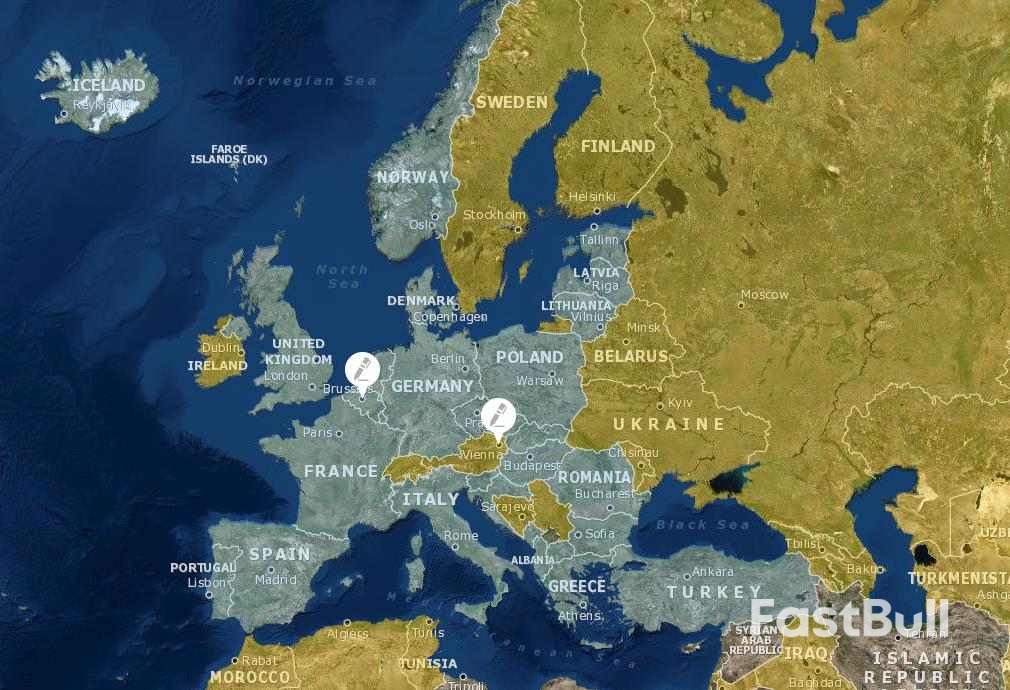
          As we all know, the root cause of the Russia-Ukraine crisis is that Ukraine wants to join NATO, and Russia does not want NATO's eastward expansion to threaten its strategic living space. NATO was created to counter the Soviet Union during the Cold War in the last century. When the Soviet Union collapsed, NATO promised not to expand eastward. However, up to today, the number of NATO members has expanded to 30, and some eastern European countries that originally belonged to the Warsaw Pact organization have also joined NATO. On a map of Europe, Russia's west, except Finland, Belarus, and Ukraine, is almost entirely a NATO member.
          America: Biggest Winner Behind Russia-Ukraine Conflict_2The US and the EU have always taken Russia as the biggest security threat to Europe, and this is also the US constantly instigate Ukraine to join NATO, the US in Russia and Ukraine war has not started to exaggerate the risk of war, through public opinion to instigate the war situation, who would like to see the opponent squatting cannon at their door? This may not be the whole reason for the Crisis in Ukraine, but it is benefiting the US by understanding its economic and geostrategic needs. The US says it is for peace, but only by sending arms and sanctioning the other side.
          Risk Warnings and Disclaimers
          You understand and acknowledge that there is a high degree of risk involved in trading. Following any strategies or investment methods may lead to potential losses. The content on the site is provided by our contributors and analysts for information purposes only. You are solely responsible for determining whether any trading assets, securities, strategy, or any other product is suitable for investing based on your own investment objectives and financial situation.
          Comments
          Add to Favorites
          Share

          Tackling Power Shortages In The Northern Region Of Vietnam

          Thomas
          According to figures from Electricity of Vietnam (EVN), in 2022 the maximum power load capacity in Vietnam's northern region could amount to 24,700MW, surging by up to 2,870MW compared to 2020.
          The northern region of Vietnam would lack around 1,500-2,400MW in several peak hours, or face partial power shortage from May to July in the face of a protracted hot climate with temperatures often exceeding 36 degrees Celsius.
          According to Do Nguyet Anh, chairwoman of Vietnam Northern Power Corporation, the power supply in northern areas was already critical in 2021.
          “The situation could linger on this year,” Anh said, citing that registered loads from the industrial sector’s corporate customers reached 3,400MW, up 24 per cent on-year, whereas power sources in the north have yet to increase.
          Lack of viable plans to tackle hurdles associated with site clearance at a project on installing power lines connected to the Bac Giang power station and Lao Cai-Bao Thang line, developed by Vietnam National Power Transmission Corporation, might further exaggerate power shortages compared to a year ago when production activities were at a standstill due to social and operational restrictions.
          Meanwhile, the water volume flowing into hydropower dams dwindled in 2021 compared to previous years, while hydropower contributed more than 45 per cent of total power volume in northern areas. EVN estimates that by the end of 2021, the total water volume at hydropower dams equalled 14.3 billion kWh, down by 738 million kWh. The water volume kept at northern dams was slightly more than 7.46 billion kWh, resulting in a shortfall of 465 million kWh.
          Coal-fired thermal power has also been fraught with difficulties. A sharp rise in imported coal prices has placed thermal power plants in a critical situation as the more they run, the lower the level of business efficiency. In recent weeks, several such plants have temporarily halted operations for maintenance while several others plan to run below full capacity in an attempt to save money.
          At this time, the Thai Binh 2 thermal power plant is making big endeavours to be able to operate its two turbines with a combined capacity of 1,200MW by the end of the year, but 2023 is deemed more likely once the plant can ensure both technical and financial factors.
          “Power shortages are mainly attributed to the prioritised use of power from renewable energy sources, with reduced mobilised volume from stable sources like hydro or thermal power,” commented Assoc. Prof. Dr. Nguyen Canh Nam from the Vietnam Energy Association.
          In his words, a sharp jump in the rate of mobilised power from renewable sources, particularly from wind and solar power, causes difficulties for system management.
          Currently, the total capacity from wind and solar power amounts to around 20,670MW, an increase of 3,420MW compared to 2020 and accounting for 27 per cent of the power system’s total installed capacity. At many times, the generation capacity from renewable sources reached 60 per cent.
          Lower mobilised volume from traditional power sources has forced gas-fueled thermal power plants, including Phu My thermopower plant, to face operation stoppages on a daily basis.
          Le Van Danh, general director of Power Generation Corporation 3, acknowledged there was a remarkable reduction in mobilised power volume from gas-fired power plants under their management.
          As a result, consumed gas volume for power generation just approximated 4.67 billion cubic metres last year, equalling 65.59 per cent of EVN’s supply capacity. EVN however, has attributed power shortages in the northern region to tough weather conditions and still limited power transmission line systems.
          The power demand for Vietnam economic development is forecast to remain high in 2022. EVN has presented two power supply scenarios for the year: at the base scenario, power growth could fetch 8.2 per cent, equal to 275.5 billion kWh in national power output, while in the higher scenario, power growth fetches 12.4 per cent, equal to 286.1 billion kWh.
          “The national power system will basically meet demand and serve economic development,” said Vo Quang Lam, EVN deputy general director at a conference on implementing related activities in mid-January.
          In Lam’s words, hydropower dams, particularly those in the northern region, have now stored water to maximum limits since late 2021 to upscale plant capacity. EVN has also signed a contract appendix with smaller hydropower plants, adjusting suitable hours to best match power load demand.
          “EVN has also increased studies into power storage system investment and the possibility of raising power import volume from Laos as well as considering load transmission from the central to the northern region,” said Lam, citing that the move would “contribute to curtailing power shortages during peak hours in the northern region.”

          Source: Vietnam Investment Review

          Risk Warnings and Disclaimers
          You understand and acknowledge that there is a high degree of risk involved in trading. Following any strategies or investment methods may lead to potential losses. The content on the site is provided by our contributors and analysts for information purposes only. You are solely responsible for determining whether any trading assets, securities, strategy, or any other product is suitable for investing based on your own investment objectives and financial situation.
          Comments
          Add to Favorites
          Share

          Saudi Arabia’s Exports To Hit $354bn By 2030 Says Study

          Devin
          Saudi Arabia will be a key driver of this global trade growth, with its exports projected to grow at an average annual rate of 7.6 per cent to reach $354 billion by 2030, says new research by Standard Chartered.
          The research, Future of Trade 2030: Trends and markets to watch, projects that global exports will almost double from $17.4 trillion to $29.7 trillion over the next decade.
          The report reveals 13 markets that will drive much of this growth, identifies major corridors, and five trends shaping the future of global trade.
          The UAE, with projected exports totalling $298 billion and growing at 6.1% annually by 2030, also figures among the 13 markets.
          The research found that 18 per cent of global corporates currently do or plan source in Saudi Arabia within the next five to 10 years. This is evidence that Saudi Arabia will be a major driver of global trade growth over the next decade, it said.

          Future growth corridors

          Mainland China and South Korea will continue to be among the largest export corridors for Saudi Arabia, accounting for 20 per cent and 8 per cent of total exports in 2030, respectively.
          India is the fastest growing export corridor for Saudi Arabia with an average annual growth rate of 10.9 per cent from 2020 to 2030.

          Future growth sectors

          Saudi Arabia is reducing its dependence on the petroleum sector and pushing for industry diversification to boost economic growth and attract foreign investments. The following sectors will dominate exports in 2030:
          Metals & minerals – share of exports 80% - CAGR 8.5%Plastic & rubbers - share of exports 7% - CAGR 8.4%Chemicals & pharmaceuticals - share of exports 6% - CAGR 6%
          The 13 markets driving future trade growth with estimated exports in 2030 and annual growth rate:
          Bangladesh - $51bn – 7% annual growthHong Kong - $939bn – 5.7%India - $563bn – 7.6%Indonesia - $347bn – 8.1%Kenya - $10bn – 7.7%Mainland China – $5,022bn - 7.1%Malaysia - $498bn – 8.3%Nigeria - $112bn – 9.7%Saudi Arabia - $354bn – 7.6%Singapore - $687bn – 7.4%South Korea - $971bn – 7.1%UAE - $298bn – 6.1%Vietnam – $533bn – 7%
          The report, commissioned by Standard Chartered and prepared by PwC, is based on an analysis of historical trade data and projections until 2030, as well as insights from a survey of more than 500 C-suite and senior leaders in global companies.
          Global trade will be reshaped by five key trends: the wider adoption of sustainable and fair-trade practices; a push for more inclusive participation; greater risk diversification; more digitisation and a rebalancing towards high-growth emerging markets. Almost 90 per cent of the corporate leaders surveyed agreed that these trends will shape the future of trade and will form part of their five to 10-year cross-border expansion strategies, said the study.
          Globalisation will drive the next decade of growth. Despite the recent push towards onshoring, growth corridors of the future will not just be intraregional – they will be global spanning Africa-East Asia; ASEAN-South Asia; East Asia-Europe; East Asia- Middle East; East Asia-Europe; South Asia-US.
          Asia, Africa and the Middle East will see a ramp-up in investment flows, with 82 per cent of respondents saying they are considering new production locations in these regions in the next five to 10 years, supporting the trend towards rebalancing to emerging markets and greater risk diversification of supply chains.

          Enabling sustainable supply chains

          The research found a significant trend towards the adoption of sustainable trade practices in response to climate concerns and a rising wave of conscious consumerism. However, while almost 90 per cent of corporate leaders acknowledged the need to implement these practices across their supply chains, only 34 per cent ranked it as a ‘top three’ priority for execution over the next five to 10 years.
          Standard Chartered, in line with its commitment to help make global trade more sustainable and drive the transition to Net Zero, launched a Sustainable Trade Finance proposition to enable companies to build more sustainable and resilient supply chains. In addition, we offer a suite of sustainable finance solutions to channel capital towards helping companies achieve their Net Zero goals.
          Yazaid Al Salloom, CEO of Standard Chartered Bank Saudi Arabia, said: “In Saudi Arabia, diversification of export sectors away from oil will be the key driver of its trade performance in the next decade. There is a high-potential opportunity for cross-border growth particularly in India, Mainland China, and South Korea, which are predicted to be the key trade corridors for the nation. Furthermore, sustainability is at the forefront of the nation’s economic transformation, and we expect to see a shift towards adopting more inclusive, sustainable and fair-trade practices that will result in positive environmental and social impact. Against this backdrop, at Standard Chartered, we are continuing to develop and enhance our sustainable finance solutions to help businesses build future ready supply chains.”

          Source: TradeArabia News Service

          Risk Warnings and Disclaimers
          You understand and acknowledge that there is a high degree of risk involved in trading. Following any strategies or investment methods may lead to potential losses. The content on the site is provided by our contributors and analysts for information purposes only. You are solely responsible for determining whether any trading assets, securities, strategy, or any other product is suitable for investing based on your own investment objectives and financial situation.
          Comments
          Add to Favorites
          Share

          How Will The US And EU's Banking And Financial Sanctions On Russia Impact China?

          Thomas

          China-U.S. Relations

          We have analyzed the extent of the US and EU sanctions imposed on Russia and their impact on Chinese businesses operating in the Russian market.

          SWIFT

          SWIFT will be terminated for all currently sanctioned Russian banks, including Sberbank, Alfa-bank, VTB, Otkrytie, and Promsvyazbank. Other non-sanctioned Russian and international banks are not affected. International payments for foreign businesses operating in Russia using sanctioned banks may still make and receive payments however there may be transfer delays. We recommend opening accounts with non-sanctioned banks, ideally the Russian subsidiaries of international banks who use financial agent services to process international payments.
          China’s Union Pay cards are in regular use throughout Russia, while numerous Chinese banks provide business account services in Russia.

          Financial services

          Russia’s state-owned banks have been denied access to the European Union (EU) and the United States (US) capital markets and cannot obtain long-term loans. Correspondent bank accounts of Sberbank within US banks will be closed. International payments by Sberbank that are processed by US banks will be blocked. European Union banks will not provide investment and listing services for Russian state-owned defense companies. It should be noted that these sanctions affect the US and EU capital markets and will not impact regular foreign businesses operating in Russia.

          Seizure of property

          There has been discussion concerning the seizing of US and EU foreign-owned assets including funds, as well as production lines and other assets. While serious, we do not think that this is likely to occur, and if it should, would be at selected foreign investors with seizures made as a political statement. Should a whole-scale war break out between Russia and the West then the situation will escalate towards seizures.

          Energy sanctions

          The US and EU companies are prohibited from transferring any oil/refining technology or products to Russia even if sourced externally from the US or EU. This means that US and EU companies in this sector can be completely shut out of the Russian market.
          There are mitigating options: transferring the business operations to a ‘sleeping company’ model, or exiting the market and liquidating the Russian entity.

          Aviation sanctions

          More than 50 percent of Russia’s aviation market is leased from foreign suppliers and this impacts them. US and EU companies are not permitted to transfer any products or technology for use in aviation and space industries and are banned from selling spare parts and maintenance products to Russian airlines. Chinese suppliers may conduct risk analysis to ascertain the impact on reaching out to this market.

          Restrictions on air travel

          Both Russia and the EU have blocked access to each other’s airspace and barred national airlines from flying to each other’s destinations. Kaliningrad, Russia’s Baltic enclave is now cut off by air from Russia as is Serbia, as overflying EU airspace is now banned.
          Accessing Russia from Europe may instead be arranged by transiting through Helsinki (Finland), Baku (Azerbaijan), Istanbul (Turkey), or Abu Dhabi, Dubai, and Qatar (UAE). Alternatively, road and rail border checkpoints between Russia and the EU remain open, although delays can be expected. Regular flights between Russia and Asia remain unaffected.

          Technology sanctions

          US and EU companies are barred from transferring dual-use products to Russia, including semiconductors, telecommunications equipment, encryption, lasers, navigation, aviation, and maritime technologies. This can be mitigated by transferring such business operations to a ‘sleeping company’ model, transferring the business operations to an alternative CIS country (Azerbaijan, Armenia, Belarus, Kazakhstan, Kyrgyzstan, Moldova, Tajikistan, Turkmenistan, Uzbekistan, or Ukraine), or liquidating the business.

          Counter-sanctions

          Russia has issued counter-sanctions that also affect normal foreign business practices in Russia. The central bank has introduced a temporary ban on securities brokers transferring assets overseas, and foreign holders of Russian securities may not exit or sell out their positions.
          80 percent of all foreign export credits must now be converted to Russian rubles. Russian companies (not foreign) are prohibited from transferring or receiving money from their bank accounts held overseas, and they may not provide loans to foreign businesses. We recommend refraining from any securities transactions, checking your business foreign currency account and cash-flow needs, and being aware of potential foreign currency deviations and transactional delays.

          Summary

          The sanctions imposed by the US and EU appear to affect purely US and EU registered businesses and do not extend to China (or elsewhere). Nonetheless, China-based investors would be advised to ascertain whether the export technology bans imposed could infringe upon China’s ability to service the Russian market as an alternative.
          In terms of Russian businesses operating in China, Chinese banks have been reluctant to offer facilities due to fear of facing US sanctions themselves. However, we are aware of Russian bank accounts being permitted in Shanghai.

          Source: China Briefing

          Risk Warnings and Disclaimers
          You understand and acknowledge that there is a high degree of risk involved in trading. Following any strategies or investment methods may lead to potential losses. The content on the site is provided by our contributors and analysts for information purposes only. You are solely responsible for determining whether any trading assets, securities, strategy, or any other product is suitable for investing based on your own investment objectives and financial situation.
          Comments
          Add to Favorites
          Share
          FastBull
          Copyright © 2025 FastBull Ltd

          728 RM B 7/F GEE LOK IND BLDG NO 34 HUNG TO RD KWUN TONG KLN HONG KONG

          TelegramInstagramTwitterfacebooklinkedin
          App Store Google Play Google Play
          Products
          Charts

          Chats

          Q&A with Experts
          Screeners
          Economic Calendar
          Data
          Tools
          Membership
          Features
          Function
          Markets
          Copy Trading
          Latest Signals
          Contests
          News
          Analysis
          24/7
          Columns
          Education
          Company
          Careers
          About Us
          Contact Us
          Advertising
          Help Center
          Feedback
          User Agreement
          Privacy Policy
          Business

          White Label

          Data API

          Web Plug-ins

          Poster Maker

          Affiliate Program

          Risk Disclosure

          The risk of loss in trading financial instruments such as stocks, FX, commodities, futures, bonds, ETFs and crypto can be substantial. You may sustain a total loss of the funds that you deposit with your broker. Therefore, you should carefully consider whether such trading is suitable for you in light of your circumstances and financial resources.

          No decision to invest should be made without thoroughly conducting due diligence by yourself or consulting with your financial advisors. Our web content might not suit you since we don't know your financial conditions and investment needs. Our financial information might have latency or contain inaccuracy, so you should be fully responsible for any of your trading and investment decisions. The company will not be responsible for your capital loss.

          Without getting permission from the website, you are not allowed to copy the website's graphics, texts, or trademarks. Intellectual property rights in the content or data incorporated into this website belong to its providers and exchange merchants.

          Not Logged In

          Log in to access more features

          FastBull Membership

          Not yet

          Purchase

          Become a signal provider
          Help Center
          Customer Service
          Dark Mode
          Price Up/Down Colors

          Log In

          Sign Up

          Position
          Layout
          Fullscreen
          Default to Chart
          The chart page opens by default when you visit fastbull.com