• Trade
  • Markets
  • Copy
  • Contests
  • News
  • 24/7
  • Calendar
  • Q&A
  • Chats
Trending
Screeners
SYMBOL
LAST
BID
ASK
HIGH
LOW
NET CHG.
%CHG.
SPREAD
SPX
S&P 500 Index
6836.31
6836.31
6836.31
6878.28
6827.18
-34.09
-0.50%
--
DJI
Dow Jones Industrial Average
47684.62
47684.62
47684.62
47971.51
47611.93
-270.36
-0.56%
--
IXIC
NASDAQ Composite Index
23507.03
23507.03
23507.03
23698.93
23455.05
-71.09
-0.30%
--
USDX
US Dollar Index
99.030
99.110
99.030
99.160
98.730
+0.080
+ 0.08%
--
EURUSD
Euro / US Dollar
1.16384
1.16391
1.16384
1.16717
1.16162
-0.00042
-0.04%
--
GBPUSD
Pound Sterling / US Dollar
1.33252
1.33263
1.33252
1.33462
1.33053
-0.00060
-0.05%
--
XAUUSD
Gold / US Dollar
4191.55
4191.99
4191.55
4218.85
4175.92
-6.36
-0.15%
--
WTI
Light Sweet Crude Oil
58.636
58.666
58.636
60.084
58.495
-1.173
-1.96%
--

Community Accounts

Signal Accounts
--
Profit Accounts
--
Loss Accounts
--
View More

Become a signal provider

Sell trading signals to earn additional income

View More

Guide to Copy Trading

Get started with ease and confidence

View More

Signal Accounts for Members

All Signal Accounts

Best Return
  • Best Return
  • Best P/L
  • Best MDD
Past 1W
  • Past 1W
  • Past 1M
  • Past 1Y

All Contests

  • All
  • Trump Updates
  • Recommend
  • Stocks
  • Cryptocurrencies
  • Central Banks
  • Featured News
Top News Only
Share

IMF: Review Pakistan Authorities To Draw The Equivalent Of About US$1 Billion

Share

President Trump Is Committed To The Continued Cessation Of Violence And Expects The Governments Of Cambodia And Thailand To Fully Honor Their Commitments To End This Conflict - Senior White House Official

Share

[Water Overflows From Spent Fuel Pool At Japanese Nuclear Facility] According To Japan's Nuclear Waste Management Company, Following A Strong Earthquake Off The Coast Of Aomori Prefecture Late On December 8th, Workers At The Nuclear Waste Treatment Plant In Rokkasho Village, Aomori Prefecture, Discovered "at Least 100 Liters Of Water" On The Ground Around The Spent Fuel Pool During An Inspection. Analysis Suggests This Water "may Have Overflowed Due To The Earthquake's Shaking." However, It Is Reported That The Overflowed Water "remains Inside The Building And Has Not Affected The External Environment."

Share

Trump Says Netflix, Paramount Are Not His Friends As Warner Bros Fight Heats Up

Share

On Monday (December 8), The ICE Dollar Index Rose 0.11% To 99.102 In Late New York Trading, Trading Between 98.794 And 99.227, Following A Significant Rally After The US Stock Market Opened. The Bloomberg Dollar Index Rose 0.12% To 1213.90, Trading Between 1210.34 And 1214.88

Share

Trump: Has Not Spoken To Kushner About Paramount Bid

Share

US President Trump: I Don’t Know Much About Paramount’s Hostile Takeover Bid For Warner Bros. Discovery

Share

Trump: I Want To Do What's Right

Share

Trump On Bids For Warner Bros: I'd Have To See Netflix, Paramount Percentages Of Market

Share

Trump On Vaccines: We Are Looking At A Lot Of Things

Share

Trump: EU Fine On X A “Nasty One”

Share

Trump: I Don't Want To Pay Insurance Companies, They Are Owned By Democrats

Share

Trump: On Healthcare, I Want The Money To Be Paid To The People

Share

US Treasury Secretary Bessenter: We Are Still Working Towards A Trade Agreement With India

Share

US Natural Gas Futures Drop 7% On Less Cold Forecasts, Near-Record Output

Share

[Trump: The US Will Not Experience Deflation] US President Trump Believes That US Inflation Will Decline Slightly Further, But There Will Be No Deflation

Share

Trump: We Will End Up Putting Severe Tariffs On Fertilizer From Canada If We Have To

Share

Bessent: We Are Still Working On India Trade Deal

Share

Brent Crude Futures Settle At $62.49/Bbl, Down $1.26, 1.98 Percent

Share

Trump: Farming Equipment Has Gotten Too Expensive

TIME
ACT
FCST
PREV
France Trade Balance (SA) (Oct)

A:--

F: --

P: --
Euro Zone Employment YoY (SA) (Q3)

A:--

F: --

P: --
Canada Part-Time Employment (SA) (Nov)

A:--

F: --

P: --

Canada Unemployment Rate (SA) (Nov)

A:--

F: --

P: --

Canada Full-time Employment (SA) (Nov)

A:--

F: --

P: --

Canada Labor Force Participation Rate (SA) (Nov)

A:--

F: --

P: --

Canada Employment (SA) (Nov)

A:--

F: --

P: --

U.S. PCE Price Index MoM (Sept)

A:--

F: --

P: --

U.S. Personal Income MoM (Sept)

A:--

F: --

P: --

U.S. Core PCE Price Index MoM (Sept)

A:--

F: --

P: --

U.S. PCE Price Index YoY (SA) (Sept)

A:--

F: --

P: --

U.S. Core PCE Price Index YoY (Sept)

A:--

F: --

P: --

U.S. Personal Outlays MoM (SA) (Sept)

A:--

F: --

P: --
U.S. 5-10 Year-Ahead Inflation Expectations (Dec)

A:--

F: --

P: --

U.S. Real Personal Consumption Expenditures MoM (Sept)

A:--

F: --

P: --
U.S. Weekly Total Rig Count

A:--

F: --

P: --

U.S. Weekly Total Oil Rig Count

A:--

F: --

P: --

U.S. Consumer Credit (SA) (Oct)

A:--

F: --

P: --
China, Mainland Foreign Exchange Reserves (Nov)

A:--

F: --

P: --

Japan Trade Balance (Oct)

A:--

F: --

P: --

Japan Nominal GDP Revised QoQ (Q3)

A:--

F: --

P: --

China, Mainland Imports YoY (CNH) (Nov)

A:--

F: --

P: --

China, Mainland Exports (Nov)

A:--

F: --

P: --

China, Mainland Imports (CNH) (Nov)

A:--

F: --

P: --

China, Mainland Trade Balance (CNH) (Nov)

A:--

F: --

P: --

China, Mainland Exports YoY (USD) (Nov)

A:--

F: --

P: --

China, Mainland Imports YoY (USD) (Nov)

A:--

F: --

P: --

Germany Industrial Output MoM (SA) (Oct)

A:--

F: --

P: --
Euro Zone Sentix Investor Confidence Index (Dec)

A:--

F: --

P: --

Canada National Economic Confidence Index

A:--

F: --

P: --

U.K. BRC Like-For-Like Retail Sales YoY (Nov)

--

F: --

P: --

U.K. BRC Overall Retail Sales YoY (Nov)

--

F: --

P: --

Australia Overnight (Borrowing) Key Rate

--

F: --

P: --

RBA Rate Statement
RBA Press Conference
Germany Exports MoM (SA) (Oct)

--

F: --

P: --

U.S. NFIB Small Business Optimism Index (SA) (Nov)

--

F: --

P: --

Mexico 12-Month Inflation (CPI) (Nov)

--

F: --

P: --

Mexico Core CPI YoY (Nov)

--

F: --

P: --

Mexico PPI YoY (Nov)

--

F: --

P: --

U.S. Weekly Redbook Index YoY

--

F: --

P: --

U.S. JOLTS Job Openings (SA) (Oct)

--

F: --

P: --

China, Mainland M1 Money Supply YoY (Nov)

--

F: --

P: --

China, Mainland M0 Money Supply YoY (Nov)

--

F: --

P: --

China, Mainland M2 Money Supply YoY (Nov)

--

F: --

P: --

U.S. EIA Short-Term Crude Production Forecast For The Year (Dec)

--

F: --

P: --

U.S. EIA Natural Gas Production Forecast For The Next Year (Dec)

--

F: --

P: --

U.S. EIA Short-Term Crude Production Forecast For The Next Year (Dec)

--

F: --

P: --

EIA Monthly Short-Term Energy Outlook
U.S. API Weekly Gasoline Stocks

--

F: --

P: --

U.S. API Weekly Cushing Crude Oil Stocks

--

F: --

P: --

U.S. API Weekly Crude Oil Stocks

--

F: --

P: --

U.S. API Weekly Refined Oil Stocks

--

F: --

P: --

South Korea Unemployment Rate (SA) (Nov)

--

F: --

P: --

Japan Reuters Tankan Non-Manufacturers Index (Dec)

--

F: --

P: --

Japan Reuters Tankan Manufacturers Index (Dec)

--

F: --

P: --

Japan Domestic Enterprise Commodity Price Index MoM (Nov)

--

F: --

P: --

Japan Domestic Enterprise Commodity Price Index YoY (Nov)

--

F: --

P: --

China, Mainland PPI YoY (Nov)

--

F: --

P: --

China, Mainland CPI MoM (Nov)

--

F: --

P: --

Italy Industrial Output YoY (SA) (Oct)

--

F: --

P: --

Q&A with Experts
    • All
    • Chatrooms
    • Groups
    • Friends
    Connecting
    .
    .
    .
    Type here...
    Add Symbol or Code

      No matching data

      All
      Trump Updates
      Recommend
      Stocks
      Cryptocurrencies
      Central Banks
      Featured News
      • All
      • Russia-Ukraine Conflict
      • Middle East Flashpoint
      • All
      • Russia-Ukraine Conflict
      • Middle East Flashpoint
      Search
      Products

      Charts Free Forever

      Chats Q&A with Experts
      Screeners Economic Calendar Data Tools
      Membership Features
      Data Warehouse Market Trends Institutional Data Policy Rates Macro

      Market Trends

      Market Sentiment Order Book Forex Correlations

      Top Indicators

      Charts Free Forever
      Markets

      News

      News Analysis 24/7 Columns Education
      From Institutions From Analysts
      Topics Columnists

      Latest Views

      Latest Views

      Trending Topics

      Top Columnists

      Latest Update

      Signals

      Copy Rankings Latest Signals Become a signal provider AI Rating
      Contests
      Brokers

      Overview Brokers Assessment Rankings Regulators News Claims
      Broker listing Forex Brokers Comparison Tool Live Spread Comparison Scam
      Q&A Complaint Scam Alert Videos Tips to Detect Scam
      More

      Business
      Events
      Careers About Us Advertising Help Center

      White Label

      Data API

      Web Plug-ins

      Affiliate Program

      Awards Institution Evaluation IB Seminar Salon Event Exhibition
      Vietnam Thailand Singapore Dubai
      Fans Party Investment Sharing Session
      FastBull Summit BrokersView Expo
      Recent Searches
        Top Searches
          Markets
          News
          Analysis
          User
          24/7
          Economic Calendar
          Education
          Data
          • Names
          • Latest
          • Prev

          View All

          No data

          Scan to Download

          Faster Charts, Chat Faster!

          Download App
          English
          • English
          • Español
          • العربية
          • Bahasa Indonesia
          • Bahasa Melayu
          • Tiếng Việt
          • ภาษาไทย
          • Français
          • Italiano
          • Türkçe
          • Русский язык
          • 简中
          • 繁中
          Open Account
          Search
          Products
          Charts Free Forever
          Markets
          News
          Signals

          Copy Rankings Latest Signals Become a signal provider AI Rating
          Contests
          Brokers

          Overview Brokers Assessment Rankings Regulators News Claims
          Broker listing Forex Brokers Comparison Tool Live Spread Comparison Scam
          Q&A Complaint Scam Alert Videos Tips to Detect Scam
          More

          Business
          Events
          Careers About Us Advertising Help Center

          White Label

          Data API

          Web Plug-ins

          Affiliate Program

          Awards Institution Evaluation IB Seminar Salon Event Exhibition
          Vietnam Thailand Singapore Dubai
          Fans Party Investment Sharing Session
          FastBull Summit BrokersView Expo

          Citi Sees Copper Prices Falling Slower As U.S. Tariffs Ease

          Damon

          Economic

          Commodity

          Summary:

          Citi forecast on Tuesday a slower drop in copper prices over the next three months, noting that U.S. President Donald Trump relaxed tariffs over the past week, China has bought on dips, and scrap supply remains tight due to U.S. stockpiling.

          "All point to a more gradual copper price decline through 2Q'25 versus the deeper and faster investor sell-off we previously anticipated, with funds still positioned net bullish," Citi added in a note.

          The investment bank raised its three-month copper forecast to $8,800 per tonne. On April 7, it reduced its forecast to $8,000 following Trump's tariff announcements.

          The bank estimated average copper prices of $9,000 per tonne in the second quarter.

          Citi said it remains bearish over the next three to six months as physical copper consumption and manufacturing activity slow down due to U.S. tariffs, especially the 145% levy on manufacturing hub China.

          "We are unsure exactly how far copper prices can fall but our view is still to wait to buy until President Trump reverses tariffs, fully redistributes tariff revenue, or Fed or China "policy puts" kick in," Citi said.

          Citi also raised its aluminum price forecast to $2,300 per tonne from $2,200 for the second quarter, with an average of $2,400.

          Source: TradingView

          To stay updated on all economic events of today, please check out our Economic calendar
          Risk Warnings and Disclaimers
          You understand and acknowledge that there is a high degree of risk involved in trading. Following any strategies or investment methods may lead to potential losses. The content on the site is provided by our contributors and analysts for information purposes only. You are solely responsible for determining whether any trading assets, securities, strategy, or any other product is suitable for investing based on your own investment objectives and financial situation.
          Add to Favorites
          Share

          Midday: U.S. stocks maintain their upward trend as the market focuses on tariff news

          Kevin Du

          Stocks

          The Dow Jones Industrial Average rose 134.79 points, or 0.33%, to 40,659.58; the Nasdaq rose 81.18 points, or 0.48%, to 16,912.66; and the S&P 500 rose 25.67 points, or 0.47%, to 5,431.64.

          U.S. stocks closed higher on Monday, with the Dow Jones Industrial Average rising more than 300 points, and all three major indexes closed higher for the second consecutive trading day.

          Trump's tariffs remain a focus of markets

          On the evening of April 11, Eastern Time, the U.S. Customs announced that, according to the memorandum signed by President Trump that day, integrated circuits, communication equipment, smartphones, display modules, etc. would be exempted from the so-called "reciprocal tariffs." The U.S. Customs policy boosted U.S. stocks.

          But on the 13th local time, U.S. Commerce Secretary Lutnick said that the Trump administration’s tariff exemptions for technology products such as mobile phones and computers are only "temporary" and that these products will soon be included in the so-called "semiconductor tariffs" and are expected to be implemented "within a month or two."

          Trump posted on Truth Social on Sunday denying that there were "exceptions" to the tariffs on certain electronics products announced by U.S. Customs last Friday, saying that the exempted products were simply transferred to another tariff category, and that semiconductors and the entire electronics supply chain would be reviewed and tariffs would be imposed on the entire electronics supply chain.

          Trump has long threatened to impose tariffs on semiconductors without specifying the scope of the levies. Trump has already imposed industry-specific tariffs on steel, aluminum and autos, while preparing new tariffs on auto parts and copper and promising other tariffs on semiconductor chips, pharmaceuticals, lumber and critical minerals.

          Trump said on Monday he was considering changes to tariffs on auto and parts imports from Mexico, Canada and elsewhere.

          Dan Boardman-Weston, CEO and CIO of BRI Wealth Management, said: "The market has been hungry for any positive signal. The news about electronics and mobile phones last weekend was very positive for market sentiment, so we have seen the market rebound in recent days."

          “The tone is positive as the market is pricing in a temporary relief on auto tariffs and the electronics sector is still responding to the tax cuts, even if they are temporary,” said Georgios Leontaris, chief investment officer for Switzerland and EMEA at HSBC Global Private Bank and Wealth.

          "When tariff exemptions start to appear for certain sectors, the market starts to think that these tariffs may not be across the board and there may even be further exemptions," said Illiana Jain, an economist at Westpac.

          However, analysts generally remained cautious as Trump's changing stance on tariffs continued to cast a shadow over the market and global economic outlook.

          The latest development of Trump’s tariffs is that the U.S. Department of Commerce is advancing new trade investigations into imports of semiconductors and pharmaceutical products, and plans to impose additional tariffs on related products, which may further expand the scope of the trade war.

          The U.S. Federal Government Gazette notified that the U.S. Department of Commerce is conducting a national security investigation into imported semiconductor technology and related downstream products.

          The official document, which asks the public to comment on the investigation, further confirms that the chip and electronics supply chain has not been excluded from Trump's tariff plan despite his statement on Friday that many products in the supply chain were exempted from "reciprocal tariffs."

          The U.S. Commerce Department will investigate the "feasibility of increasing domestic semiconductor production capacity" to reduce dependence on imports and whether additional trade measures, including tariffs, are "necessary to protect national security."

          The scope of this investigation is wide, covering chip components such as silicon wafers, chip manufacturing equipment, and "downstream products containing semiconductors".

          EU expects U.S. to continue imposing tariffs as talks make little progress

          The European Union and the United States made little progress this week in bridging their trade differences as Trump administration officials said most U.S. tariffs on the bloc would not be rolled back.

          According to reports, citing people familiar with the matter, EU trade chief Šefčović left the talks still unclear about the US position and difficult to determine the US intentions. He held talks with US Commerce Secretary Lutnick and Trade Representative Greer in Washington for about two hours on Monday.

          U.S. officials have said the 20% “reciprocal tariff” and other duties on industries such as autos and metals will not be completely rolled back, the people said, asking not to be identified discussing private matters.

          US stock earnings season begins

          The U.S. stock earnings season has just begun, and first-quarter results from Bank of America and Johnson & Johnson exceeded analysts' expectations.

          The corporate earnings season accelerates this week, with several large companies set to release their earnings reports.

          Although Trump's tariff policy has caused sharp fluctuations in U.S. stocks recently, some corporate executives said that current financial reports may not give investors a clear understanding of how Trump's new tariff policy will affect their companies.

          “I think when it comes to earnings season, we’re just going to hear some companies say there’s a lot of uncertainty,” said Brenda Vingiello, CEO of Sand Hill Global Advisors. “I think after this earnings season, we’ll probably know that the first quarter was probably pretty good, but there won’t be a lot of answers (otherwise).”

          Trump wants a change in Fed leadership

          The market is also paying attention to the news that Trump wants to remove Powell from the position of Fed Chairman. The news of the Fed's "change of leadership" has put the global financial market at greater risk of turbulence.

          On Monday local time, U.S. Treasury Secretary Scott Bessent said in an interview that he and President Trump "have been considering" the next Federal Reserve chairman and plan to start interviewing potential candidates in the fall.

          Public information shows that the term of the current Federal Reserve Chairman Powell will end in May 2026, and Bessant's remarks have ignited market speculation about changes in the Federal Reserve's leadership in advance.

          At the same time, the Trump administration is targeting independent institutions and asking the Supreme Court to fire relevant officials. Analysts believe that this move may open up a legal path for Trump to remove Powell, which will challenge the long-standing independence norms of the Federal Reserve.

          In fact, Trump's dissatisfaction with Powell's monetary policy (especially interest rate decisions) has long been known.

          Under Powell's leadership, U.S. inflation is on a cooling track, but its efforts to fight inflation are now facing new threats from Trump's trade war. The market is focused on whether Powell will choose to maintain a hawkish stance to ensure that inflation does not return, or will succumb to market pressure and start a rate cut cycle ahead of schedule.

          In response, the White House continued to put pressure on Powell. According to media reports, Trump has been critical of the interest rate policy of the Federal Reserve under Powell's leadership and has repeatedly pressured Powell to cut interest rates significantly. He once posted on social media to publicly urge Powell to cut interest rates: "He is always 'half a beat' behind the times, but now there is a chance to reverse his image, so he must act quickly."

          Despite the recent tariff shock, the Fed has recently resisted pressure to keep interest rates unchanged. Powell also hit back earlier this month, saying that the tariffs were larger than expected and could trigger "persistent" inflation beyond the short-term price shock.

          Economic data

          According to the U.S. Bureau of Labor Statistics, U.S. import prices fell 0.1% month-on-month in March, up 0.2% the previous month. The median forecast of 24 economists was flat month-on-month, with a range of 0.2% to 0.7%. Import prices rose 0.9% year-on-year in March. Import prices excluding petroleum were flat month-on-month, up 0.1% in February. Export prices were flat month-on-month, up 2.4% year-on-year; up 0.5% month-on-month in February.

          Pete Boockvar, an independent economist and market strategist, said import prices were modest in March, but the data was "very out of date" because of previous tariffs and a weaker dollar.

          “To put it bluntly, many manufacturers are now basically groping in the dark, especially those doing business with China, the automotive industry, and any company that needs to use steel and aluminum as raw materials,” Boockvar wrote. “A 90-day pause on other things sounds fine, but we still don’t know what will happen after 90 days, and we are still facing the reality of a 10% tariff on all imports.”

          A research report released by the San Francisco Federal Reserve shows that although the U.S. unemployment rate has been rising slowly and relatively moderately in recent years, several less-noticed labor market indicators are sending warning signals of the risk of economic recession.

          The authors of the latest issue of the San Francisco Federal Reserve's Economic Newsletter found that before the onset of many past recessions, the unemployed generally showed a continuous extension of the job search cycle and a gradual increase in the time they stayed in the ranks of the unemployed. "Historically, such patterns often appear at the beginning of economic recessions, suggesting that these current changes may be a signal of rising recession risks."

          Fund managers are the most pessimistic about the economic outlook in 30 years, a Bank of America survey showed, but that pessimism is not fully reflected in their asset allocations, which could mean more selling in U.S. stocks.

          In a monthly survey by Bank of America, 82% of fund managers expect the global economy to weaken. At the same time, the survey showed a record number of fund managers planning to reduce their exposure to U.S. stocks.

          “Fund managers are extremely pessimistic on the macro level, but not yet as pessimistic as they could be about the market itself,” said Bank of America strategists led by Michael Hartnett.

          Focus stocks

          U.S. President Trump posted on Truth Social that in view of Nvidia's investment commitment in the United States, "all necessary licenses will be expedited and quickly delivered" to Nvidia. On Monday, Nvidia CEO Huang Renxun said that he would build a $500 billion artificial intelligence infrastructure in the United States within four years.

          Tesla CEO Elon Musk posted on the X platform on Tuesday that Tesla is about to achieve a universal, pure AI fully autonomous driving (FSD) solution. The technology will rely entirely on cameras and Tesla's self-developed AI chips, and will be driven by Tesla's AI software, which is highly consistent with Tesla's long-standing vision of achieving autonomous driving based solely on vision.

          Musk said excitedly: "For the first time, fully autonomous driving will soon have a general, pure AI solution."

          According to media reports, Apple CEO Cook recently explained in an interview why Apple sticks to Made in China. Simply put, it still chooses Made in China not because it is cheap, but because no one can replace it.

          Cook said: "Many people think that Apple came to China for low-cost labor. This statement is outdated. China is no longer a 'low-cost factory'. What really attracted Apple is 'skill density'."

          Bank of America Global Research cut its price target on Microsoft to $480 from $510.

          JPMorgan analyst Samik Chatterjee maintained his buy rating on Apple and cut his price target to $245 from $270.

          UBS analyst Karl Keirstead maintained a buy rating on Microsoft and cut his price target to $480 from $510.

          Morgan Stanley analyst Brian Nowak maintained his buy rating on Amazon and cut his price target to $245 from $280.

          Boeing CEO warns that tariffs may lead to delays in Boeing aircraft deliveries.

          Netflix announced its goal: to achieve a market value of $1 trillion by 2030.

          Ericsson's adjusted EBIT in the first quarter exceeded expectations.

          Total expects refining margins to rise in the first quarter.

          TSMC plans to mass-produce panel-level advanced semiconductor packaging in small batches in 2027.
          Source: Sina Finance

          To stay updated on all economic events of today, please check out our Economic calendar
          Risk Warnings and Disclaimers
          You understand and acknowledge that there is a high degree of risk involved in trading. Following any strategies or investment methods may lead to potential losses. The content on the site is provided by our contributors and analysts for information purposes only. You are solely responsible for determining whether any trading assets, securities, strategy, or any other product is suitable for investing based on your own investment objectives and financial situation.
          Add to Favorites
          Share

          Bitcoin Shows Growing Strength During Market Downturn — Wintermute

          Warren Takunda

          Cryptocurrency

          Bitcoin is showing growing resilience to macroeconomic headwinds compared with traditional financial markets, according to an April 14 report from crypto market maker Wintermute.
          The report noted that Bitcoin has held up relatively well during the ongoing market downturn, even as the S&P 500 and Nasdaq dropped to their lowest levels in a year and bond yields surged to highs that had not been seen since 2007.
          “Bitcoin’s decline was comparatively modest, revisiting price levels from around the US election period,“ Wintermute wrote.
          According to Wintermute, “This marks a notable shift from its historical behavior in crisis situations.” In the past, Bitcoin’s losses were considerably greater than those of traditional finance indexes. The shift highlights Bitcoin’s “apparent growing resilience amid macroeconomic turbulence.“
          Founder of Obchakevich Research, Alex Obchakevich, told Cointelegraph that he expects this to be a temporary trend:
          “As the trade war intensifies, Bitcoin may return to the list of risky assets. Because investors will most likely look for salvation in gold.“
          Obchakevich said that factors that caused the stability of Bitcoin were growing institutional interest through exchange-traded funds (ETFs) and the promotion of Bitcoin as digital gold due to its decentralization and independence.

          A change in Bitcoin market dynamics

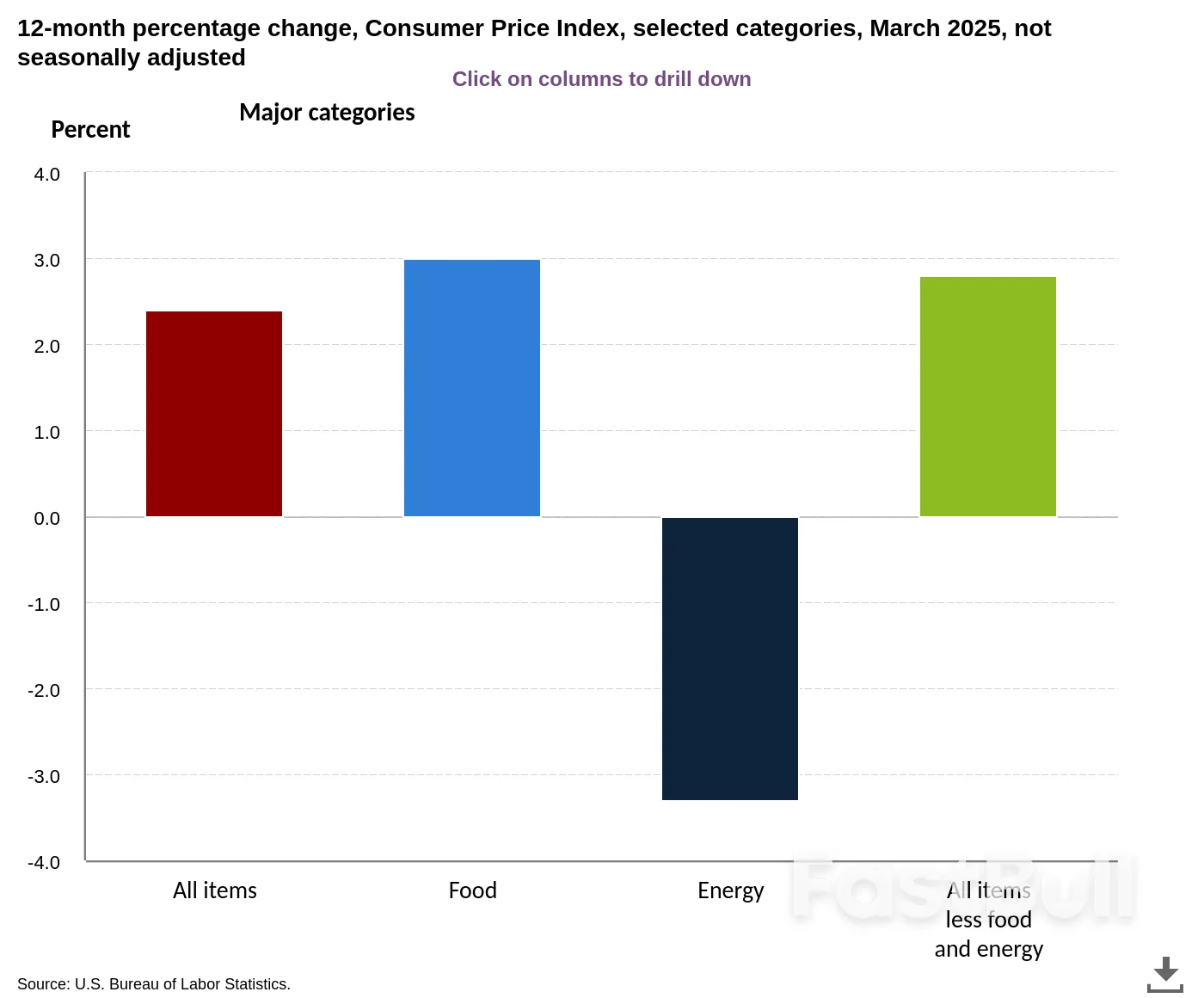
          Over the past week, Bitcoin’s price increased by 7% to $83,700 — later reaching nearly $86,000 at the time of publication. This growth occurred as the Consumer Price Index (CPI) rose by 2.4% year-over-year, with a month-over-month decline of 0.1% — the first monthly decrease since May 2020. This signals that inflation is cooling off.Bitcoin Shows Growing Strength During Market Downturn — Wintermute_1

          Year-over-year CPI percentage change. Source: US Bureau of Labor Statistics

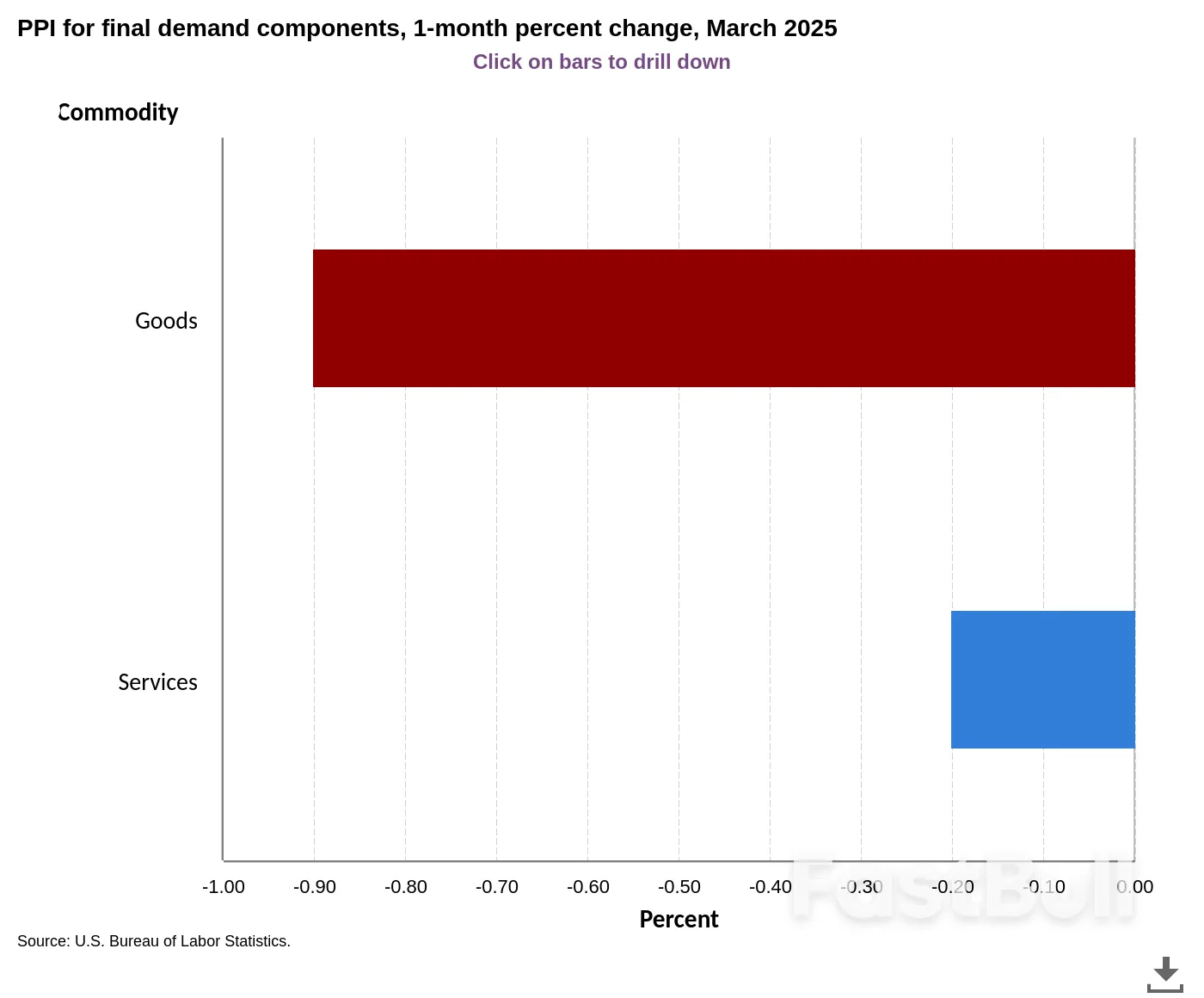
          Furthermore, the Producer Price Index (PPI) rose 2.7% year-over-year in March. The same metric stood at 3.2% in February, also showing signs of disinflationary pressures. Still, according to Wintermute, the trend may soon reverse:
          “Despite this progress toward the Fed’s 2% inflation target, the recent escalation in global trade tensions introduced new potential inflationary risks, which are not yet reflected in March’s data.”Bitcoin Shows Growing Strength During Market Downturn — Wintermute_2

          Monthly PPI percentage change. Source: US Bureau of Labor Statistics

          More market turmoil expected

          Bitwise analyst Jeff Park recently argued that US President Donald Trump’s trade policies will create worldwide macroeconomic turmoil and short-term financial crises that will ultimately lead to greater adoption of Bitcoin. He said that we should expect an inflation increase:
          “The tariff costs, most likely through higher inflation, will be shared by both the US and trading partners, but the relative impact will be much heavier on foreigners. These countries will then have to find a way to fend off their weak growth issues.”
          Wintermute explained that the ongoing trade war heightens the risk of increased inflation and economic slowdown. Prediction market Kalshi traders recently placed the odds of a recession hitting the US this year at 61%, and JPMorgan sees a 60% likelihood.

          Source: Cointelegraph

          Risk Warnings and Disclaimers
          You understand and acknowledge that there is a high degree of risk involved in trading. Following any strategies or investment methods may lead to potential losses. The content on the site is provided by our contributors and analysts for information purposes only. You are solely responsible for determining whether any trading assets, securities, strategy, or any other product is suitable for investing based on your own investment objectives and financial situation.
          Add to Favorites
          Share

          Sell Pound to Euro Rallies, JPMorgan FX Trader Says; as 1.1409 Seen Ahead

          Warren Takunda

          Economic

          Speculative traders should consider selling the Pound to Euro rate on rallies in anticipation of a renewed decline to 1.1409, according to the JPMorgan FX desk.
          GBP/EUR rallied smartly from near six-month lows on Monday as EUR/USD ebbed further from its recent three-year highs and the US Dollar Index climbed off a three-year low in European trade.
          The turnaround came after the White House announced at the weekend that it would reduce the tariff charged on some electronics items imported from China to 20% for a period of time, lifting the US Dollar briefly.
          “There remains little reprieve in newsflow for the pound with fixed income markets remaining relatively heavy in the long end,” says Taylor Broom, a trader on the FX desk at JPMorgan, in a Monday market commentary.

          Above: GBP/EUR at daily intervals with Fibonacci retracements of recent decline indicating possible areas of technical resistance, and shown with US Dollar Index. Click for closer inspection.
          “We took a fair bit of profit into 0.87 (-1.15 in GBPEUR) and only have a modest core left. The position makes a lot of sense and we would look to buy the dop around 0.8560 [sell at 1.1560 in GBPEUR},” he adds.
          The rebound followed a seven day period in which systematic hedge funds trading through the JPMorgan FX desk sold Sterling “quite aggressively,” in tandem with an exodus of ‘real money’ funds from the Dollar.
          Last week’s Dollar sales leaned heavily in favour of currencies from current account surplus jurisdictions such as the Euro Area, Switzerland and Japan in a “reallocation” described as “seismic” by Bloom.
          “We have some UK data this week in LFS employment (which admittedly still has zero credibility) and CPI,” Bloom says.”


          “A soft one on the latter will certainly see the market get more aggressive on the BoE and language from them of late seems to hint that tariffs could be more deflationary than feared,” he adds.
          The rebound in the Pound to Euro rate and renewed speculative interest in betting against it comes ahead of Wednesday’s inflation reading from the UK and Thursday’s European Central Bank interest rate decision.
          Wednesday’s inflation report would be unhelpful for the Sterling bond market in the absence of further meaningful progress toward the 2% target, which might not be all that helpful for the Pound either.
          However, things might be different on Thursday if the recent rally by large components of the trade-weighted Euro index, its impact on the inflation target and competitive headwinds for Euro Area exports leads the Governing Council to adopt a more dovish policy stance.
          Above: Pound to Euro rate shown at daily intervals alongside EUR/USD. Click for closer inspection.

          Source: Poundsterlinglive

          To stay updated on all economic events of today, please check out our Economic calendar
          Risk Warnings and Disclaimers
          You understand and acknowledge that there is a high degree of risk involved in trading. Following any strategies or investment methods may lead to potential losses. The content on the site is provided by our contributors and analysts for information purposes only. You are solely responsible for determining whether any trading assets, securities, strategy, or any other product is suitable for investing based on your own investment objectives and financial situation.
          Add to Favorites
          Share

          Wall Street Set for Lower Open As Tariff Exemption Optimism Fades

          Glendon

          Stocks

          Economic

          China–U.S. Trade War

          U.S. stock index futures pointed to a lower open on Tuesday, as optimism over the possibility of tariff relief for the auto sector waned on signs of new levies on pharma and semiconductor imports.

          Federal Register filings showed the Trump administration was proceeding with probes into imports of pharmaceuticals and semiconductors as part of a bid to impose tariffs on both sectors.

          Johnson & Johnson'sshares slipped 1.3% despite the company beating Wall Street estimates for first-quarter revenue and profit. Drugmakers such as Pfizerand Eli Lillyalso edged lower.

          Trading was choppy, with index futures reversing early gains over hopes of more tarrif cuts after U.S. President Donald Trump on Monday hinted at potential exemptions for the 25% tariffs imposed on imports of autos and auto parts.

          Rapid changes in U.S. policy have sparked steep market selloffs, and left investors, companies and consumers confused over the outlook for policy and economic growth.

          "We had a pretty good day yesterday off not a lot of data, and we've moved pretty far since last Wednesday, it's totally natural at this point just to take a breath, maybe pull back a little bit," said Mark Hackett, chief market strategist at Nationwide.

          The main indexes gained some ground on Monday after key electronics products were granted exemption from reciprocal tariffs.

          Corporate results will be closely monitored over the next weeks for indications on how companies and consumers are coping with changes in trade policy.

          "With all the uncertainty and all the moving parts that we have right now, it is not really in corporate management's best interest to do anything other than be cautious or provide no guidance at all, which is probably more likely," Hackett said.

          Bank of Americaadvanced 1.4% after reporting a higher profit in the first quarter, while Citigrouprose 1.2% as it also reported higher profit, lifted by revenue from equities trading.

          At 08:32 a.m., Dow E-miniswere down 134 points, or 0.33%, S&P 500 E-miniswere down 15.25 points, or 0.28% and Nasdaq 100 E-miniswere down 38.5 points, or 0.2%.

          Among other stocks, Boeinglost 3.2% after a report said China has ordered airlines in the country to not take any further deliveries of the company's jets.

          Most analysts expect markets to remain volatile, until there's more clarity on Trump's tariffs.

          The S&P 500's 50-day moving average (DMA) slipped below the 200-DMA on Monday, producing a "death cross" pattern that suggests a short-term correction could turn into a longer-term downtrend.

          Global investors have slashed their U.S. equity holdings over the past two months, and a record number of managers plan to keep cutting their exposure, BofA Global Research said.

          The S&P 500is down 8.1% this year, while the tech-heavy Nasdaq Compositehas slumped nearly 13%.

          Richmond Fed President Thomas Barkin and Fed Board Governor Lisa Cook are scheduled to speak later in the day.

          Source: TradingView

          To stay updated on all economic events of today, please check out our Economic calendar
          Risk Warnings and Disclaimers
          You understand and acknowledge that there is a high degree of risk involved in trading. Following any strategies or investment methods may lead to potential losses. The content on the site is provided by our contributors and analysts for information purposes only. You are solely responsible for determining whether any trading assets, securities, strategy, or any other product is suitable for investing based on your own investment objectives and financial situation.
          Add to Favorites
          Share

          Number of Payrolled Workers in UK Fell by 78,000 Ahead of Budget Tax Rise

          Warren Takunda

          Economic

          The number of workers on UK company payrolls has fallen at the fastest pace since the height of the Covid pandemic amid mounting global uncertainty and warnings that Rachel Reeves’s budget measures could lead to job losses.
          Figures from the Office for National Statistics show the number of people employed in at least one job paid through pay as you earn fell by 78,000 in March after a revised fall of 8,000 in February.
          Reflecting a slowdown in the jobs market, the latest snapshot showed annual pay growth rose slightly in the three months to February and remained at historically high levels. Regular pay, excluding bonuses, rose to 5.9%, from a revised 5.8% in the previous rolling three-month period to the end of January. This was slightly below a prediction of 6% from City economists.
          Despite the drop in the number of workers on company payrolls, the ONS said its official unemployment rate remained unchanged at 4.4% in the three months to February.
          However, the government agency has warned there are problems with the quality of the UK’s official jobs market statistics because of low response rates to its main labour force survey. Experts have argued this leaves policymakers “flying blind”, with the prospect that decisions are being taken based on flawed data.Number of Payrolled Workers in UK Fell by 78,000 Ahead of Budget Tax Rise_1
          Business leaders had warned that tax rises announced by the chancellor in her October budget would force them to cut jobs and hold back on larger pay increases. Surveys at the start of this year suggested companies were cutting employment at the sharpest rate since the 2008 financial crisis, excluding the Covid pandemic.
          Earlier this month, the government went ahead with a planned £25bn increase in employer national insurance contributions, affecting almost 1m businesses, as well as a 6.7% rise in the “national living wage”.
          Businesses in typically lower-paying sectors, including hospitality, leisure and retail, have warned of the biggest potential hit.
          The latest figures from HMRC payroll data, which provides an early estimate before the official labour force survey, show the biggest changes on the month were in health and social work, where employee numbers rose by 70,000. However, this was more than offset by other sectors, led by a fall of 92,000 in accommodation and food service activities.
          Annual growth in payroll numbers slowed from 0.1% in February to -0.2% in March, the first negative reading since April 2021. Economists said the 78,000 decline was likely to be revised upwards next month, but that it provided some tentative signs that employers were responding to higher costs by cutting headcount.
          “These figures indicate that labour market activity was sluggish in the run-up to this month’s substantial surge in tax and tariff costs, with unease over these twin threats limiting hiring plans,” said Suren Thiru, the economics director at the Institute of Chartered Accountants in England and Wales.
          “The UK’s jobs market is entering a turbulent period with a troubling mix of escalating global uncertainty and rising cost pressures, notably the national insurance hike, likely to moderately push up unemployment, despite continued challenges over skills shortages.”
          The number of vacancies in the UK fell by 26,000 in the three months to March to stand at 781,000, falling below pre-Covid pandemic levels for the first time since 2021.
          The Bank of England is monitoring the jobs market closely for signs of pay resilience, which could feed through into persistently high inflation. With concerns over Donald Trump’s escalating trade war hitting the global economy and the UK, the central bank is expected to cut interest rates from the current level of 4.5% at its next policy meeting on 8 May.
          “Big picture, the MPC [monetary policy committee] has the green light to cut Bank rate in May. Trade uncertainty remains rife. And slack in the labour market is emerging,” said Sanjay Raja, the chief UK economist at Deutsche Bank.
          However, economists said while there were signs of the jobs market cooling, the picture remained resilient amid historically high levels of wage growth and relatively low levels of unemployment.
          Britain’s economy has performed more strongly than expected, with growth in February of 0.5% outpacing analyst forecasts as businesses and consumers continued to spend despite the mounting global uncertainty.
          “Employment continued to cool, but it hasn’t collapsed as the dire warnings from some business surveys suggested,” said Ashley Webb, a UK economist at the consultancy Capital Economics.
          “But if the more uncertain backdrop from the recent US tariffs chaos soon becomes a bigger drag on firms’ hiring intentions, pay growth could start to fade more markedly.”

          Source: Theguardian

          To stay updated on all economic events of today, please check out our Economic calendar
          Risk Warnings and Disclaimers
          You understand and acknowledge that there is a high degree of risk involved in trading. Following any strategies or investment methods may lead to potential losses. The content on the site is provided by our contributors and analysts for information purposes only. You are solely responsible for determining whether any trading assets, securities, strategy, or any other product is suitable for investing based on your own investment objectives and financial situation.
          Add to Favorites
          Share

          European Markets Open Higher on Hopes of Trump Tariff Exemptions

          Warren Takunda

          Economic

          US President Donald Trump has hinted at potential relief from auto tariffs to give car manufacturers “a little bit of time” to switch production back to America. His comments followed the decision to temporarily exempt electronic products from duties, marking a further step back from the sweeping trade tariffs announced earlier this month.
          “I’m looking for something to help some of the car companies, where they’re switching to parts that were made in Canada, Mexico and other places, and they need a little bit of time because they’re going to make them here,” he said at the Oval Office on Monday.
          The Trump administration imposed 25% tariffs on automobile imports on 3 April. Bloomberg previously reported that major carmakers, including Ford Motor, General Motors, and Chrysler parent Stellantis NV, were lobbying for exemptions on certain low-cost car components, as these could face additional taxes on top of the full 25% auto tariffs if sourced from outside the US.
          Meanwhile, the US Department of Commerce released a notice stating it had initiated investigations into the semiconductor and pharmaceutical trades. Both probes fall under Section 232 of the National Security Investigation framework, signalling the potential for further tariffs on the two sectors and adding to the uncertainty surrounding Trump’s tariff agenda.
          These investigation notices came after Trump stated that exemptions on electronic products would be temporary and emphasised that “NOBODY is getting ‘off the hook’ for the unfair Trade Balances” on Sunday.
          The semiconductor investigation document noted that it aims to “determine the effects on the national security of imports of semiconductors and semiconductor manufacturing equipment (SME), and their derivative products”. The pharmaceutical probe will examine imports of “finished drug products, medical countermeasures, critical inputs such as active pharmaceutical ingredients, and key starting materials, and derivative products of those items”.

          European markets rise with automakers hoping for reprieves

          European markets opened slightly higher after Trump’s comments suggesting possible relief on auto tariffs. As of around 9.30am CEST, stocks were broadly positive, with Germany’s DAX up 0.9%, the UK’s FTSE 100 gaining 0.7%, and the STOXX 600 up 0.6%. The CAC 40 was down 3%.
          European automakers’ shares may benefit from the shift in US policy following a bruising sell-off over the past month. Notably, shares in Germany’s major car manufacturers—Volkswagen (VW), BMW, Porsche, and Mercedes-Benz—have each fallen between 15% and 18% during that period. On Tuesday morning, VW shares were up 3.7%, BMW showed a 3.8% jump, Porsche rose 2%, while shares in Mercedes-Benz leapt 3.8%.
          However, Europe’s technology and pharmaceutical stocks could face renewed pressure due to the US probes into the semiconductor and drug sectors. In particular, Danish pharmaceutical giant Novo Nordisk may face heightened scrutiny, as the US is its largest single market for its weight-loss drug. The firm suffered its worst monthly decline in March after a series of disappointing trial results. Investor concerns have also been stoked by Trump’s tariff threat on pharmaceutical products, which could erode profit margins.
          Among tech stocks, ASML—Europe’s largest chip equipment manufacturer—will be in the spotlight ahead of its earnings results on Wednesday. Shares in ASML rose 2.8% on Tuesday morning.

          Euro holds firm on haven demand

          In currencies, the euro held steady above 1.13 during Tuesday’s Asian session, hovering at its strongest level since 2022. The euro has been seen as a haven asset amid Trump’s tariff-driven trade shocks, which have triggered broader risk-off sentiment in global markets over the past month. The EUR/USD pair surged above 1.14 at one point on Monday and is likely to maintain its uptrend on continued economic uncertainty.
          The European Central Bank (ECB) is expected to deliver its third consecutive interest rate cut on Thursday, reinforcing the Eurozone’s accommodative stance amid ongoing risks.
          The euro rose very marginally against the dollar by less than 1% on Tuesday morning.

          Source: Euronews

          To stay updated on all economic events of today, please check out our Economic calendar
          Risk Warnings and Disclaimers
          You understand and acknowledge that there is a high degree of risk involved in trading. Following any strategies or investment methods may lead to potential losses. The content on the site is provided by our contributors and analysts for information purposes only. You are solely responsible for determining whether any trading assets, securities, strategy, or any other product is suitable for investing based on your own investment objectives and financial situation.
          Add to Favorites
          Share
          FastBull
          Copyright © 2025 FastBull Ltd

          728 RM B 7/F GEE LOK IND BLDG NO 34 HUNG TO RD KWUN TONG KLN HONG KONG

          TelegramInstagramTwitterfacebooklinkedin
          App Store Google Play Google Play
          Products
          Charts

          Chats

          Q&A with Experts
          Screeners
          Economic Calendar
          Data
          Tools
          Membership
          Features
          Function
          Markets
          Copy Trading
          Latest Signals
          Contests
          News
          Analysis
          24/7
          Columns
          Education
          Company
          Careers
          About Us
          Contact Us
          Advertising
          Help Center
          Feedback
          User Agreement
          Privacy Policy
          Business

          White Label

          Data API

          Web Plug-ins

          Poster Maker

          Affiliate Program

          Risk Disclosure

          The risk of loss in trading financial instruments such as stocks, FX, commodities, futures, bonds, ETFs and crypto can be substantial. You may sustain a total loss of the funds that you deposit with your broker. Therefore, you should carefully consider whether such trading is suitable for you in light of your circumstances and financial resources.

          No decision to invest should be made without thoroughly conducting due diligence by yourself or consulting with your financial advisors. Our web content might not suit you since we don't know your financial conditions and investment needs. Our financial information might have latency or contain inaccuracy, so you should be fully responsible for any of your trading and investment decisions. The company will not be responsible for your capital loss.

          Without getting permission from the website, you are not allowed to copy the website's graphics, texts, or trademarks. Intellectual property rights in the content or data incorporated into this website belong to its providers and exchange merchants.

          Not Logged In

          Log in to access more features

          FastBull Membership

          Not yet

          Purchase

          Become a signal provider
          Help Center
          Customer Service
          Dark Mode
          Price Up/Down Colors

          Log In

          Sign Up

          Position
          Layout
          Fullscreen
          Default to Chart
          The chart page opens by default when you visit fastbull.com