• Trade
  • Markets
  • Copy
  • Contests
  • News
  • 24/7
  • Calendar
  • Q&A
  • Chats
Trending
Screeners
SYMBOL
LAST
BID
ASK
HIGH
LOW
NET CHG.
%CHG.
SPREAD
SPX
S&P 500 Index
6896.25
6896.25
6896.25
6913.26
6893.48
-9.49
-0.14%
--
DJI
Dow Jones Industrial Average
48367.05
48367.05
48367.05
48471.70
48297.26
-94.87
-0.20%
--
IXIC
NASDAQ Composite Index
23419.07
23419.07
23419.07
23521.05
23414.83
-55.27
-0.24%
--
USDX
US Dollar Index
97.930
98.010
97.930
98.110
97.870
+0.050
+ 0.05%
--
EURUSD
Euro / US Dollar
1.17486
1.17494
1.17486
1.17505
1.17198
+0.00012
+ 0.01%
--
GBPUSD
Pound Sterling / US Dollar
1.34533
1.34543
1.34533
1.34674
1.34255
-0.00142
-0.11%
--
XAUUSD
Gold / US Dollar
4309.36
4309.79
4309.36
4373.05
4274.29
-29.75
-0.69%
--
WTI
Light Sweet Crude Oil
58.114
58.144
58.114
58.217
57.580
+0.261
+ 0.45%
--

Community Accounts

Signal Accounts
--
Profit Accounts
--
Loss Accounts
--
View More

Become a signal provider

Sell trading signals to earn additional income

View More

Guide to Copy Trading

Get started with ease and confidence

View More

Signal Accounts for Members

All Signal Accounts

Best Return
  • Best Return
  • Best P/L
  • Best MDD
Past 1W
  • Past 1W
  • Past 1M
  • Past 1Y

All Contests

  • All
  • Trump Updates
  • Recommend
  • Stocks
  • Cryptocurrencies
  • Central Banks
  • Featured News
Top News Only
Share

Argentina Agro Export Revenue Totals $1.015 Billion In December, Says Ciara-Cec Chamber

Share

Stats Agency - Chile Copper Output -7.18% In November Year-On-Year

Share

Pakistan Econ Report: Inflation Projected To Remain Moderate, In Range Of 5.5 - 6.5% In December, Primarily Reflecting Base Effect

Share

Chinese Automakers Captured A Record 12.8% Share Of The European Electric Vehicle Market In November

Share

Italy's Tajani Calls For Electoral Reform With Majority Bonus Before Next National Vote

Share

Cctv - China Cabinet Meeting: To Promote Green Trade, Cross-Border E-Commerce

Share

Cctv - China Cabinet Meeting: Studied Measures For Facilitating Cross-Border Trade

Share

South African Rand Ends 2025 On High Note, Gains Nearly 13% On The Dollar

Share

Ministry: Poland Has Pre-Financed Around 23% Of 2026 Borrowing Needs

Share

Portugal's 2025 Average Inflation Slows To 2.3%

Share

Finland Police: Finnish Authorities Have Taken Control Of The Vessel As Part Of A Joint Operation

Share

Cctv - Chinese President Xi, In New Year Speech: To Deepen Comprehensive Reform In 2026

Share

Finland Police: The Vessel's Anchor Chain Was Found To Be Lowered Into The Sea

Share

Cctv - Chinese President Xi, In New Year Speech: Trend Of China's 'Reunification' Cannot Be Stopped

Share

Cctv - Chinese President Xi, In New Year Speech: To Support Hong Kong, Macau Better Integration

Share

Finland Police: Telecommunications Service Provider Elisa's Telecommunications Cable Between Helsinki And Tallinn Has Been Damaged

Share

Cctv - Chinese President Xi, In New Year Speech: China Willing To Promote Global Peace Development With Other Countries

Share

Cctv - Chinese President Xi, In New Year Speech:We Achieved New Breakthrough In Chip Self-Development

Share

Finland's President Stubb: Finland Is Prepared For Security Challenges Of Various Kinds, And We Respond To Them As Necessary

Share

Finland's President Stubb: Monitoring The Situation In Close Cooperation With The Government

TIME
ACT
FCST
PREV
South Korea Services Output MoM (Nov)

A:--

F: --

P: --

Russia IHS Markit Services PMI (Dec)

A:--

F: --

P: --

Turkey Economic Sentiment Indicator (Dec)

A:--

F: --

P: --

Brazil Unemployment Rate (Nov)

A:--

F: --

P: --

U.S. Weekly Redbook Index YoY

A:--

F: --

P: --

U.S. S&P/CS 10-City Home Price Index YoY (Oct)

A:--

F: --

P: --

U.S. S&P/CS 10-City Home Price Index MoM (Not SA) (Oct)

A:--

F: --

P: --

U.S. S&P/CS 20-City Home Price Index (Not SA) (Oct)

A:--

F: --

P: --

U.S. S&P/CS 20-City Home Price Index MoM (Not SA) (Oct)

A:--

F: --

P: --

U.S. FHFA House Price Index YoY (Oct)

A:--

F: --

P: --
U.S. S&P/CS 20-City Home Price Index YoY (Not SA) (Oct)

A:--

F: --

P: --

U.S. S&P/CS 20-City Home Price Index MoM (SA) (Oct)

A:--

F: --

P: --
U.S. FHFA House Price Index (Oct)

A:--

F: --

P: --

U.S. FHFA House Price Index MoM (Oct)

A:--

F: --

P: --
U.S. Chicago PMI (Dec)

A:--

F: --

P: --

Brazil CAGED Net Payroll Jobs (Nov)

A:--

F: --

P: --

U.S. Weekly Total Oil Rig Count

A:--

F: --

P: --

U.S. Weekly Total Rig Count

A:--

F: --

P: --

FOMC Meeting Minutes
U.S. API Weekly Refined Oil Stocks

A:--

F: --

P: --

U.S. API Weekly Crude Oil Stocks

A:--

F: --

P: --

U.S. API Weekly Cushing Crude Oil Stocks

A:--

F: --

P: --

U.S. API Weekly Gasoline Stocks

A:--

F: --

P: --

South Korea CPI YoY (Dec)

A:--

F: --

P: --

China, Mainland NBS Manufacturing PMI (Dec)

A:--

F: --

P: --

China, Mainland Composite PMI (Dec)

A:--

F: --

P: --

China, Mainland NBS Non-manufacturing PMI (Dec)

A:--

F: --

P: --

China, Mainland Caixin Manufacturing PMI (SA) (Dec)

A:--

F: --

P: --

Turkey Trade Balance (Nov)

A:--

F: --

P: --

U.S. MBA Mortgage Application Activity Index WoW

--

F: --

P: --

South Africa Trade Balance (Nov)

--

F: --

P: --

U.S. Initial Jobless Claims 4-Week Avg. (SA)

--

F: --

P: --

U.S. Weekly Continued Jobless Claims (SA)

--

F: --

P: --

U.S. Weekly Initial Jobless Claims (SA)

--

F: --

P: --

U.S. EIA Weekly Cushing, Oklahoma Crude Oil Stocks Change

--

F: --

P: --

U.S. EIA Weekly Crude Demand Projected by Production

--

F: --

P: --

U.S. EIA Weekly Gasoline Stocks Change

--

F: --

P: --

U.S. EIA Weekly Crude Stocks Change

--

F: --

P: --

U.S. EIA Weekly Heating Oil Stock Changes

--

F: --

P: --

U.S. EIA Weekly Crude Oil Imports Changes

--

F: --

P: --

U.S. EIA Weekly Natural Gas Stocks Change

--

F: --

P: --

South Korea Trade Balance Prelim (Dec)

--

F: --

P: --

Indonesia Core Inflation YoY (Dec)

--

F: --

P: --

Indonesia Inflation Rate YoY (Dec)

--

F: --

P: --

Turkey Manufacturing PMI (Dec)

--

F: --

P: --

Brazil IHS Markit Manufacturing PMI (Dec)

--

F: --

P: --

Mexico Manufacturing PMI (Dec)

--

F: --

P: --

South Korea IHS Markit Manufacturing PMI (SA) (Dec)

--

F: --

P: --

Indonesia IHS Markit Manufacturing PMI (Dec)

--

F: --

P: --

India HSBC Manufacturing PMI Final (Dec)

--

F: --

P: --

Russia IHS Markit Manufacturing PMI (Dec)

--

F: --

P: --

U.K. Nationwide House Price Index MoM (Dec)

--

F: --

P: --

U.K. Nationwide House Price Index YoY (Dec)

--

F: --

P: --

Turkey Manufacturing PMI (Dec)

--

F: --

P: --

Italy Manufacturing PMI (SA) (Dec)

--

F: --

P: --

Euro Zone Manufacturing PMI Final (Dec)

--

F: --

P: --

Euro Zone M3 Money Supply (SA) (Nov)

--

F: --

P: --

Euro Zone 3-Month M3 Money Supply YoY (Nov)

--

F: --

P: --

Euro Zone Private Sector Credit YoY (Nov)

--

F: --

P: --

Euro Zone M3 Money Supply YoY (Nov)

--

F: --

P: --

Q&A with Experts
    • All
    • Chatrooms
    • Groups
    • Friends
    Size flag
    marsgents
    That’s a solid level to long, especially with the 1H upper band pointing up toward 4420.
    EuroTrader flag
    Slow is Fast
    @Slow is FastAfter the holidays we would definitely get to see volatility come back into the markets
    Ikeh Sunda flag
    reduce ur lot size . greedy is no one killer here
    Slow is Fast flag
    marsgents
    @marsgents I think it's unlikely to fall below 60; it'll probably stay between 60 and 70, or it might touch 60 and then immediately bounce back up.
    Slow is Fast flag
    EuroTrader
    @EuroTrader margin
    EuroTrader flag
    Ikeh Sunda
    pls trade with what you have no matter how small
    @Ikeh Sundathe idea is to go in with a considerable lot size that would not be detrimental in case if any losses
    Ikeh Sunda flag
    Size
    The key is understanding the model and the risks before committing, just like in trading.@Ikeh Sunda
    @Sizeshow me ur account statement for review then I can listen to ur Grammer
    EuroTrader flag
    Slow is Fast
    @Slow is FastYeahh they increased the margin requirements for trading Gold and silever
    Size flag
    Ikeh Sunda
    Fair enough. It’s your choice everyone has their own approach and comfort level with prop firms.
    Slow is Fast flag
    To consider the industrial demand for physical sales, let's assume you're a company. If you see prices suddenly drop, wouldn't you buy in large quantities?
    trish flag
    Kevin
    hello,happy new year
    @Kevin happy new year …?
    Slow is Fast flag
    This is different from the history Hunter Biden hyped up; back then, there was no AI, no self-driving cars, no robots, and silver had no support.
    marsgents flag
    Slow is Fast
    @Slow is Fastim planning yo long on 61-60 bro,got my eyes on 65-67 too
    Size flag
    Ikeh Sunda
    I’m trading my personal account, but I raised the capital through a prop firm.
    Slow is Fast flag
    However, the CME Group's actions are truly disgusting; it seems they're trying to bail out the banks that were sell silver
    Ikeh Sunda flag
    I don't think you understand when i said I have stayed long close to 16yrs here. before it was bonuses and margin over 1000. those will end you up here
    Slow is Fast flag
    However, I suspect that once they break even, the banks might seize the opportunity to reverse course and go long, potentially making a fortune by coordinating with the CME Group's margin requirement reduction.
    EuroTrader flag
    Slow is Fast
    To consider the industrial demand for physical sales, let's assume you're a company. If you see prices suddenly drop, wouldn't you buy in large quantities?
    @Slow is FastIf we get a sudden drop in price the asset becomes cheaper but depending on why the market tanked
    marsgents flag
    Slow is Fast
    This is different from the history Hunter Biden hyped up; back then, there was no AI, no self-driving cars, no robots, and silver had no support.
    @Slow is Fasteven samsung have direct contract to silver mine to secure silver for them
    Ikeh Sunda flag
    I felt for bonuses and high merging those days. so when prop fairm showed up. i already understood the game . those are rat poison
    Type here...
    Add Symbol or Code

      No matching data

      All
      Trump Updates
      Recommend
      Stocks
      Cryptocurrencies
      Central Banks
      Featured News
      • All
      • Russia-Ukraine Conflict
      • Middle East Flashpoint
      • All
      • Russia-Ukraine Conflict
      • Middle East Flashpoint
      Search
      Products

      Charts Free Forever

      Chats Q&A with Experts
      Screeners Economic Calendar Data Tools
      Membership Features
      Data Warehouse Market Trends Institutional Data Policy Rates Macro

      Market Trends

      Market Sentiment Order Book Forex Correlations

      Top Indicators

      Charts Free Forever
      Markets

      News

      News Analysis 24/7 Columns Education
      From Institutions From Analysts
      Topics Columnists

      Latest Views

      Latest Views

      Trending Topics

      Top Columnists

      Latest Update

      Signals

      Copy Rankings Latest Signals Become a signal provider AI Rating
      Contests
      Brokers

      Overview Brokers Assessment Rankings Regulators News Claims
      Broker listing Forex Brokers Comparison Tool Live Spread Comparison Scam
      Q&A Complaint Scam Alert Videos Tips to Detect Scam
      More

      Business
      Events
      Careers About Us Advertising Help Center

      White Label

      Data API

      Web Plug-ins

      Affiliate Program

      Awards Institution Evaluation IB Seminar Salon Event Exhibition
      Vietnam Thailand Singapore Dubai
      Fans Party Investment Sharing Session
      FastBull Summit BrokersView Expo
      Recent Searches
        Top Searches
          Markets
          News
          Analysis
          User
          24/7
          Economic Calendar
          Education
          Data
          • Names
          • Latest
          • Prev

          View All

          No data

          Scan to Download

          Faster Charts, Chat Faster!

          Download App
          English
          • English
          • Español
          • العربية
          • Bahasa Indonesia
          • Bahasa Melayu
          • Tiếng Việt
          • ภาษาไทย
          • Français
          • Italiano
          • Türkçe
          • Русский язык
          • 简中
          • 繁中
          Open Account
          Search
          Products
          Charts Free Forever
          Markets
          News
          Signals

          Copy Rankings Latest Signals Become a signal provider AI Rating
          Contests
          Brokers

          Overview Brokers Assessment Rankings Regulators News Claims
          Broker listing Forex Brokers Comparison Tool Live Spread Comparison Scam
          Q&A Complaint Scam Alert Videos Tips to Detect Scam
          More

          Business
          Events
          Careers About Us Advertising Help Center

          White Label

          Data API

          Web Plug-ins

          Affiliate Program

          Awards Institution Evaluation IB Seminar Salon Event Exhibition
          Vietnam Thailand Singapore Dubai
          Fans Party Investment Sharing Session
          FastBull Summit BrokersView Expo

          China Tightens Silver Export Controls, Elevating It to Strategic Status Amid Soaring Global Demand

          Gerik

          Economic

          Commodity

          Summary:

          Beijing’s new export restrictions on silver, starting January 2026, mark a significant shift in how the metal is regulated, aligning it with rare earths and amplifying its strategic importance....

          Beijing’s Strategic Pivot: Silver Joins the Ranks of Regulated Critical Materials

          China is set to implement new export controls on silver beginning Thursday, a policy shift that will formally elevate the once-ordinary industrial metal to strategic status, akin to rare earth elements. While the measures were announced in October, their enforcement now comes at a time of heightened sensitivity in global markets both economically and politically.
          Silver’s elevation to “strategic material” status, as reported by China’s state-run Securities Times, places it under the same regulatory framework that has governed rare earths for over a decade. This shift aligns with China's broader ambition to consolidate control over critical supply chains while reinforcing its geopolitical leverage amid ongoing economic tensions with the United States and its allies.

          Export Restrictions Reflect Beijing’s Broader Strategic Calculus

          Although China has not imposed a blanket ban on silver exports, it has significantly tightened access by approving only 44 companies to export the metal under new 2026–2027 quotas. These firms will operate under stricter licensing rules, echoing the system used for rare earth exports. This change is causal in nature China’s decision to regulate silver stems directly from its increasing role in global high-tech supply chains, particularly in energy transition, defense, and healthcare technologies.
          The new export rules are part of a larger framework that includes tightened controls over other strategic materials such as tungsten and antimony both vital for advanced military and technological applications. This indicates Beijing's growing intent to weaponize resource control in response to foreign trade pressure, mirroring strategies seen in previous years with rare earth minerals.

          Elon Musk and Industry Voices Raise Alarm on Supply Risks

          Tesla CEO Elon Musk publicly criticized the move on X, stating, “This is not good. Silver is needed in many industrial processes.” His concern underscores the metal’s broad industrial applications, including electric vehicles, solar cells, semiconductors, and anti-bacterial medical tools. Silver’s strategic value has only expanded as technological ecosystems become increasingly dependent on high-conductivity materials.
          The United States has taken note. In November, silver was officially added to the U.S. list of critical minerals, with government analysis citing China as one of the world’s largest producers and holders of silver reserves. U.S. importers now face a complex sourcing environment as Beijing exerts more control over outbound flows.

          Market Response: Price Surge Signals Fear of Supply Squeeze

          Silver prices have more than doubled in 2025, surging to record highs above $80 per ounce before pulling back to around $73. This rally is driven by both supply-side constraints and macroeconomic trends. China exported over 4,600 tons of silver in the first 11 months of the year far outstripping its 220 tons of imports illustrating its dominance in the global silver trade. Now, with tighter controls looming, market participants are rushing to secure physical supply.
          The supply squeeze is no longer theoretical. Canadian silver producer Kuya Silver confirmed that two Chinese buyers recently offered up to $8 per ounce above market rates for physical silver. Days later, an Indian buyer offered a $10 premium. These real-time signals indicate market expectations of a significant supply-demand imbalance going into 2026, catalyzed directly by Chinese policy intervention.

          Broader Financial Landscape: Dollar Weakness Fuels Flight to Metals

          Silver’s price performance also reflects broader financial currents. The U.S. dollar index has fallen nearly 9.5% in 2025 its worst year since 2017 prompting investors to shift toward hard assets as stores of value. Tyler Cowen, an economics professor at George Mason University, characterized the spike in silver and gold prices as “a flashing warning for the [U.S.] economy.” While correlation rather than direct causation links the falling dollar and surging metal prices, investor behavior confirms the market's growing risk aversion.
          Gold has gained over 60% this year, and silver is on pace for its strongest annual performance since 1979, when it surged 470%. Bitcoin, often cited as a modern hedge, has declined by over 5% for the year reinforcing the return of investor confidence in traditional safe-haven assets.

          Resource Nationalism Redefines Silver’s Role in the Global Economy

          China’s decision to regulate silver exports marks a significant turning point in the geopolitics of critical minerals. No longer just a precious metal, silver now sits at the crossroads of industrial demand, strategic policy, and financial hedging. Beijing’s move reshapes the global supply landscape, threatening to disrupt downstream industries across the U.S., EU, and other manufacturing hubs.
          While the immediate policy impact is regulatory, the broader implications are structural. If current price behavior and trade patterns persist, silver could become a new axis of geopolitical competition mirroring the dynamics seen in rare earths over the past decade. In 2026, supply security may rival price stability as the top concern for governments and industries reliant on this increasingly indispensable metal.

          Source: CNBC

          To stay updated on all economic events of today, please check out our Economic calendar
          Risk Warnings and Disclaimers
          You understand and acknowledge that there is a high degree of risk involved in trading. Following any strategies or investment methods may lead to potential losses. The content on the site is provided by our contributors and analysts for information purposes only. You are solely responsible for determining whether any trading assets, securities, strategy, or any other product is suitable for investing based on your own investment objectives and financial situation.
          Add to Favorites
          Share

          China’s Manufacturing Sector Returns to Expansion, Offering Tentative Relief to Policymakers

          Gerik

          Economic

          Manufacturing Revival Provides Year-End Boost for China’s Growth Outlook

          China’s manufacturing sector showed signs of stabilization in December 2025, marking the first expansion in nine months and providing policymakers with a modest but symbolic victory. According to the National Bureau of Statistics (NBS), the official manufacturing Purchasing Managers’ Index (PMI) rose to 50.1 from 49.2 in November, surpassing expectations and breaking the prolonged trend of contraction that had plagued industrial output throughout the year.
          Crossing the 50-point threshold, which separates expansion from contraction, the PMI reading signals a return to growth in one of China’s most critical economic engines. Analysts surveyed by Reuters had anticipated no change from November’s 49.2, highlighting the element of surprise in the December print.

          Sub-Indices Indicate Improved Demand Dynamics

          The sub-index for new orders rose to 50.8 from November’s 49.2, while new export orders increased to 49.0 from 47.6. This partial recovery suggests a mild revival in both domestic and international demand, likely helped by improved logistics and a stronger-than-expected export performance late in the year.
          While causality is difficult to establish definitively, the increase in orders appears to result from easing supply-side constraints and seasonal year-end manufacturing activity, rather than a broad-based demand recovery. Therefore, the improvement may reflect cyclical factors more than a structural turnaround in export competitiveness or consumption.

          Non-Manufacturing Sector Stabilizes as Construction Rebounds

          In parallel, the non-manufacturing PMI, which captures service-sector and construction activity, edged up to 50.2 from a contractionary 49.3 in November. This modest increase signals stabilization in broader economic activity following November’s dip the first such decline in nearly three years.
          The NBS composite PMI, which combines both manufacturing and non-manufacturing, rose to 50.7 in December from 49.7 in the prior month. This rebound may help Beijing justify its decision to avoid launching large-scale fiscal or monetary stimulus in the final quarter, a strategy aimed at preserving policy room for 2026 while still striving to meet the 5% GDP growth goal.

          Underlying Weaknesses Continue to Challenge Recovery Narrative

          Despite the PMI uptick, underlying economic indicators paint a more complex picture. Industrial profits in November slumped 13.1% year-over-year, the steepest drop in over twelve months, underscoring persistent margin pressure amid weak global demand. This disconnect between headline manufacturing activity and corporate profitability suggests the recovery lacks depth and sustainability.
          More structurally, weak consumer confidence continues to hinder domestic rebalancing efforts. Lingering uncertainty in the labor market, combined with a protracted real estate crisis, has eroded household wealth and limited consumption a dynamic repeatedly cited by policymakers as a central obstacle to long-term growth.
          President Xi Jinping recently acknowledged the issue of "overall capacity excess," a term historically dismissed by Beijing as a Western criticism. In a Qiushi Journal article, Xi emphasized the need for consumption to become the primary driver of growth, signaling a rhetorical pivot toward demand-side solutions. However, similar promises in past years have frequently fallen short of execution.

          Structural Transformation vs. Short-Term Stabilization

          Beijing now faces a dual challenge. On one hand, it must ensure short-term stabilization through targeted policy support to industries and consumers. On the other, it must accelerate its longer-term agenda of economic rebalancing shifting from an investment- and export-heavy model to a more consumption-led framework.
          Recent commitments to address price wars, reduce unproductive industrial competition, and manage sector-specific overproduction reflect a broader recognition of the need to prune excess and foster efficiency. These “anti-involution” efforts aim to restructure production incentives and improve resource allocation. While they may support long-term productivity gains, they could also temporarily dampen output in overexposed sectors.

          Encouraging PMI Data Does Not Eliminate Deeper Risks

          December’s unexpected PMI rebound provides a timely morale boost for Chinese policymakers, offering some support to their year-end growth ambitions. However, the underlying structural imbalances excess industrial capacity, soft consumer demand, and falling corporate profits remain largely unresolved.
          The divergence between activity indicators and profitability metrics signals that recovery momentum is fragile and uneven. Unless followed by tangible improvements in consumption and investment quality, the return to PMI expansion may prove to be a temporary reprieve rather than a sustainable turning point. The path forward for China’s economy in 2026 will depend not only on policy flexibility but also on the country’s willingness to address its longstanding demand-side vulnerabilities.

          Source: Reuters

          To stay updated on all economic events of today, please check out our Economic calendar
          Risk Warnings and Disclaimers
          You understand and acknowledge that there is a high degree of risk involved in trading. Following any strategies or investment methods may lead to potential losses. The content on the site is provided by our contributors and analysts for information purposes only. You are solely responsible for determining whether any trading assets, securities, strategy, or any other product is suitable for investing based on your own investment objectives and financial situation.
          Add to Favorites
          Share

          Asian Stocks Mixed Amid Holiday Closures as Wall Street Slips on Fed Division and AI Volatility

          Gerik

          Economic

          Stocks

          Mixed Sentiment in Asian Markets as Year-End Holidays Curtail Activity

          Asian stock markets delivered a muted and mixed performance as 2025 drew to a close. Major exchanges in Tokyo and Seoul were closed on Wednesday for the year-end holidays, while other regional bourses operated under thin trading conditions. In China, the Hang Seng Index dipped by 0.5% to 25,715.16, continuing its volatile trajectory, while the Shanghai Composite inched up less than 0.1% to 3,966.39. Taiwan's Taiex rose 0.7%, showing resilience in contrast to broader regional hesitation. In Australia, the S&P/ASX 200 slipped 0.1% to 8,706.40.
          The closures, including extended holidays in Japan and South Korea, constrained regional volumes and likely dampened investor engagement. With Wall Street’s Thursday session also set to pause, the global trading rhythm has naturally slowed as markets await a clearer start to 2026.

          U.S. Markets Edge Lower as Fed Minutes Reveal Internal Divisions

          On Wall Street, Tuesday’s session ended in mild retreat, as investors reacted to newly released Federal Reserve minutes from the December policy meeting. The S&P 500 lost 9.50 points, or 0.1%, to settle at 6,894.24. This marked a third consecutive day of modest declines, yet the index remains on track to post a full-year gain exceeding 17%. The Dow Jones Industrial Average shed 94.87 points to 48,367.06, while the Nasdaq Composite declined by 55.27 points to 23,419.08.
          The subdued tone reflected a cautious interpretation of the Fed’s internal split over the most recent interest rate cut. The central bank’s decision to lower its target range to 3.50%–3.75% in December its third rate cut of the year was met with divergent views. Some officials pushed for more aggressive easing in response to labor market softening, while others warned that inflation risks remain elevated. This division, detailed in the meeting minutes, has reinforced expectations that the Fed will hold rates steady at its January 2026 meeting.

          Technology Under Pressure While Meta Gains on AI Expansion

          The tech sector continued to act as a drag on broader U.S. equities. High-profile names such as Nvidia and Apple fell by 0.4% and 0.2% respectively, under pressure from valuation concerns and AI-driven volatility. Despite their dominance in the S&P 500, these companies are facing increased scrutiny as 2026 begins, particularly over how sustainable their growth trajectories remain.
          In contrast, Meta Platforms rose 1.1% after announcing the acquisition of AI startup Manus. The deal underscores Meta’s commitment to expanding its artificial intelligence capabilities across its ecosystem, from social platforms to emerging metaverse applications. The market’s response reflects a preference for tangible AI integration over speculative hype.

          Commodities Surge as Economic Uncertainty Fuels Demand for Safe Havens

          While equity markets treaded carefully, commodities saw sharp movements. Gold surged 1.4% to $4,386.30 per ounce, and silver prices jumped an impressive 10.9% a dramatic reversal from Monday’s sell-off triggered by margin hikes at the Chicago Mercantile Exchange. These gains were fueled by persistent economic uncertainty, investor demand for hedging instruments, and continued supply shortages.
          Copper, often seen as a barometer of industrial health, surged 4.4%, closing out the year with a remarkable 40% annual gain. This growth is strongly tied to infrastructure expansion, particularly in energy systems and data centers. The accelerated development of artificial intelligence technology has significantly strained the global energy grid, leading to heightened demand for copper-based components. The relationship between AI expansion and copper demand is causal tech-sector growth directly necessitates more robust infrastructure, thus increasing copper consumption.

          Oil and Bonds Reflect a Cautious Outlook

          Oil markets remained subdued. U.S. crude fell slightly to $57.88 per barrel, while Brent declined 7 cents to $61.26, continuing their downward momentum amid concerns over excess supply and muted global demand.
          In the bond market, Treasury yields were mixed. The 10-year yield rose slightly to 4.12%, while the 2-year yield held steady at 3.45%. These moves reflect a market still gauging the Fed’s next steps amid an evolving economic picture. Yields have broadly declined in 2025 as rate cuts signaled a shift from monetary tightening to support, particularly in the face of weakening consumer confidence and persistent inflationary pressures.

          Economic Crosswinds Keep Fed in a Delicate Balancing Act

          The macroeconomic environment remains highly complex. U.S. inflation continues to exceed the Federal Reserve’s 2% target, even as the job market shows signs of softening. Consumer confidence, a crucial economic indicator, has eroded over the course of the year due to higher living costs and trade-related disruptions. The ongoing trade war, spearheaded by the U.S., has intensified pricing pressures and threatens to further hinder economic expansion.
          The Fed now finds itself navigating a precarious balancing act. Cutting interest rates could stimulate growth and ease employment losses, but it also risks adding more fuel to inflation. The conflicting nature of these outcomes is central to current market indecision and explains the Fed’s recent cautious tone.
          As global markets prepare to transition into 2026, the final days of 2025 have been characterized by mixed signals. While Asian stocks offered no unified direction and U.S. equities wobbled under policy uncertainty, commodities rallied on supply constraints and macroeconomic concerns. With interest rate decisions hanging in the balance and inflation remaining stubborn, investor positioning is likely to stay cautious in early 2026, as markets search for clarity in a fragmented economic landscape.

          Source: AP

          To stay updated on all economic events of today, please check out our Economic calendar
          Risk Warnings and Disclaimers
          You understand and acknowledge that there is a high degree of risk involved in trading. Following any strategies or investment methods may lead to potential losses. The content on the site is provided by our contributors and analysts for information purposes only. You are solely responsible for determining whether any trading assets, securities, strategy, or any other product is suitable for investing based on your own investment objectives and financial situation.
          Add to Favorites
          Share

          Oil Ends 2025 with Deep Losses as Oversupply and Geopolitical Turmoil Offset Early Price Gains

          Gerik

          Economic

          Commodity

          Oil Markets Close 2025 on a Bearish Note Despite Volatile Year

          Crude oil markets ended 2025 on a downtrend, capping a year marked by sharp geopolitical flashpoints and growing economic uncertainty. Brent crude, the global benchmark, dropped nearly 18% its worst annual performance since 2018 settling around $61.27 per barrel for March delivery. Meanwhile, U.S. West Texas Intermediate (WTI) stood at $57.90, down approximately 15% for the year. This marks Brent’s third straight annual decline, the longest streak of yearly losses in its trading history, a milestone shaped more by structural supply-demand imbalances than transient market shocks.
          Oil prices began the year with strong upward pressure. Former U.S. President Joe Biden exited office by tightening sanctions on Russian oil, directly affecting shipments to major importers like China and India. These disruptions, initially perceived as a catalyst for a price surge, were further amplified by intensified warfare in Ukraine, including Ukrainian drone strikes on Russian energy infrastructure. Additionally, a brief 12-day conflict between Iran and Israel in June, which threatened transit through the Strait of Hormuz a critical oil shipping route drove prices higher in mid-year trading.
          However, these geopolitical events, though causal in generating temporary price spikes, failed to produce lasting effects. The price impact was diluted as the market swiftly adjusted to alternative supply chains, and as OPEC+ responded with a surprisingly aggressive ramp-up in production volumes.

          OPEC+ Strategy Adds to Bearish Supply Dynamics

          OPEC and its allies, collectively known as OPEC+, significantly influenced the year’s bearish tilt. Since April, the group added nearly 2.9 million barrels per day (bpd) to the global market. This production increase, though initially intended to stabilize market shares and offset lost supplies from sanctioned states, ultimately led to an oversupplied market environment. The decision to pause further hikes in Q1 2026 reflects a strategic recalibration, but the damage to price levels had already been done by year-end.
          Forecasts for 2026 further highlight the imbalance. The International Energy Agency (IEA) expects supply to exceed demand by as much as 3.84 million bpd, while Goldman Sachs estimates the surplus at around 2 million bpd. These estimates imply that unless demand recovers unexpectedly or OPEC+ initiates a round of deep cuts, the oil glut is likely to persist well into the next year.

          Macroeconomic Uncertainty and Tariffs Dampen Demand Growth

          Another critical factor behind oil’s prolonged weakness in 2025 was the slowdown in global economic momentum. Rising tariffs, especially under President Donald Trump’s administration, have curtailed international trade flows and introduced renewed strain on fuel consumption patterns. As trade volumes contracted, the transportation and industrial sectors two of the largest consumers of oil saw muted demand growth.
          Here, the link is causal: reduced economic activity led directly to weaker oil consumption, which, when combined with excessive supply, drove prices lower. Tariffs did not merely correlate with falling oil prices they contributed to a chain reaction of declining demand, weaker refinery margins, and reduced cargo flows.

          Future Outlook Hinges on OPEC+ Cuts and Price Sensitivity

          Looking forward, oil strategists, including Martijn Rats of Morgan Stanley, believe that deeper cuts will be necessary to stabilize the market if Brent prices fall below the low $50s. His forecast suggests that current prices while already soft are not yet low enough to compel OPEC+ into aggressive corrective action. If present price levels persist, the group may continue tapering their previous cuts instead of reintroducing fresh ones.
          This outlook illustrates a responsive rather than proactive supply-side strategy, with producers opting to watch market signals before acting. The implication is that volatility may remain high, with any meaningful recovery in prices requiring both significant supply restraint and signs of demand revival both of which remain uncertain.
          The oil market's performance in 2025 serves as a stark reminder that geopolitics, while influential in the short term, cannot override structural supply-demand fundamentals. Despite a series of global flashpoints ranging from war in Ukraine to tension in the Middle East the dominant force was the sustained oversupply and tepid economic activity. Unless major producers move decisively in 2026 or global trade conditions improve, oil may face another year of bearish pressure. The year ends not with a shortage, but with a surplus that the market has yet to fully absorb.

          Source: Reuters

          To stay updated on all economic events of today, please check out our Economic calendar
          Risk Warnings and Disclaimers
          You understand and acknowledge that there is a high degree of risk involved in trading. Following any strategies or investment methods may lead to potential losses. The content on the site is provided by our contributors and analysts for information purposes only. You are solely responsible for determining whether any trading assets, securities, strategy, or any other product is suitable for investing based on your own investment objectives and financial situation.
          Add to Favorites
          Share

          English Disclosure Requirement For Listed Firms To Expand, Yellow Envelope Law To Take Effect In 2026

          Justin

          Stocks

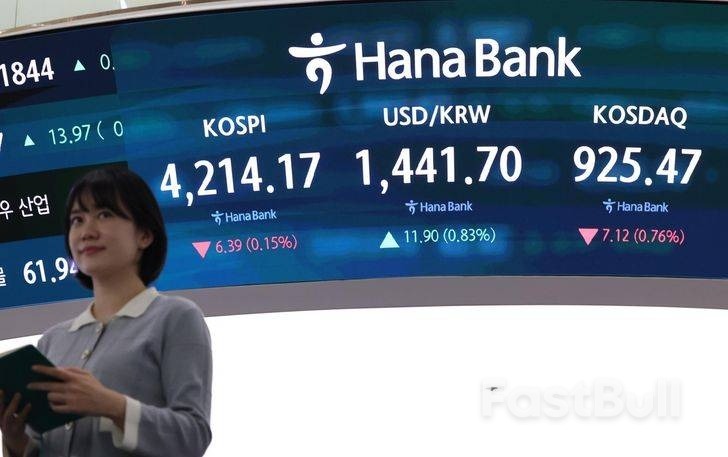
          An electronic trading board at Hana Bank headquarters in central Seoul shows the benchmark KOSPI closing at 4,214.17 points on Tuesday, the last trading day of 2025. Yonhap

          A greater number of Korean companies will be required to provide regulatory filings in English starting next year, offering enhanced transparency and wider market access to foreign investors, while the recently legislated "yellow envelope" pro-labor law will take effect, expanding labor-related liabilities of companies, officials noted Wednesday.

          According to the Financial Services Commission, the scope of firms subject to mandatory English regulatory disclosures will be widened from companies listed on the Korea Composite Stock Price Index (KOSPI) with assets of 10 trillion won ($6.94 billion) or more to those with assets of a minimum of 2 trillion won.

          The new disclosure requirement will take effect May 1.

          The move is aimed at improving transparency and accessibility for overseas investors amid efforts to enhance the competitiveness of the local capital market, according to officials.

          Another major change is the enactment of the yellow envelope law, scheduled to take effect in March.

          The revision to the Labor Union Act is primarily designed to guarantee the bargaining rights of indirectly employed workers of subcontractors. It also prohibits companies from filing lawsuits for damages or provisional seizures against unionized workers, which many argue businesses have used to suppress strikes.

          The labor reform measure is expected to increase compliance burdens for large conglomerates and foreign firms that rely heavily on subcontracting structures.

          The country's minimum wage will increase 2.9 percent to 10,320 won per hour in 2026, lifting minimum monthly labor costs to 2.15 million won.

          The government will also expand tax incentives for reshoring Korean firms and extend eligibility to companies that complete the downsizing of overseas operations within four years after newly establishing or expanding domestic facilities.

          Foreign companies operating liaison offices in Korea will face stricter compliance requirements as well, as a newly introduced rule allows authorities to impose fines of up to 10 million won on foreign corporations that fail to submit necessary liaison office status reports or submit false information.

          Source: Koreatimes

          Risk Warnings and Disclaimers
          You understand and acknowledge that there is a high degree of risk involved in trading. Following any strategies or investment methods may lead to potential losses. The content on the site is provided by our contributors and analysts for information purposes only. You are solely responsible for determining whether any trading assets, securities, strategy, or any other product is suitable for investing based on your own investment objectives and financial situation.
          Add to Favorites
          Share

          China Buys Two-Thirds Of Pledged US Soybeans As 2025 Closes

          Samantha Luan

          Forex

          Commodity

          China has bought at least 8 million tons of US soybeans this year, according to people familiar with the matter, putting the world's top importer on track to meet a pledge it made two months ago as part of an apparent trade truce with Washington.

          State-owned buyers have continued to book US cargoes into late December, the people said, asking not to be named as they are not authorized to discuss the purchases. That extends a buying spree that began in October and maintains a pace that has reassured American exporters, otherwise wary that Beijing's commitment might slip amid limited visibility and unclear deadlines.

          The shipments booked so far are mostly for loading between December and March, the people said.

          The White House said immediately after talks between President Donald Trump and Chinese counterpart Xi Jinping that China had pledged to buy at least 12 million tons of US soybeans by the end of this year. US officials later clarified the deadline was in fact the end of February. Beijing has not confirmed the commitment, but the Chinese government has moved to reduce tariffs on the crop and lifted import bans on three American exporters.

          The return of Chinese buyers is welcome news for US exporters, and a reminder that buying patterns can change fast — but it is not yet a full reset. Even as Beijing takes US shipments, state-owned firms have bought large quantities of beans from Brazil and Argentina, the people said. Commercial buyers in particular have stayed on the sidelines when it comes to US purchases.

          Almost 80% of Brazil's soy went to China in 2025, with exports through November climbing 16% compared to the previous year. That trade continued in December, even in a period when sales are seasonally weaker, and Brazil's upcoming harvest is forecast to be a record.

          "We cannot confirm from China's side that anything beyond the 12 million tons has been pledged," said Ben Buckner, grains and dairy analyst at AgResource Co. The brokerage wrote in a note this week that China was seeking shipments and could reach a "soft target" of 10 million tons in 2025, with an additional 2 million tons in January.

          Without a formal deal confirmed by both sides, traders say uncertainty over future sales is reinforcing pressure on soybean prices. Futures in Chicago are down nearly 7% in December, on track for the worst monthly performance since July 2024.

          Matt Bennett, an Illinois corn and soy farmer, said many farmers have been "pleasantly surprised" with the steady flow of purchases from China so far, but added there has been frustration with the direction of soybean prices.

          "From our vantage point, once you quantify that they're going to buy 12 million tons, you need something in excess of that to get everyone excited," Bennett, co-founder of farm advisory AgMarket.Net, said in a phone interview.

          Trump earlier this month announced $12 billion in relief for US farmers, but growers are still waiting for the administration to provide details on how much they will get in payments promised by February.

          Source: Bloomberg Europe

          Risk Warnings and Disclaimers
          You understand and acknowledge that there is a high degree of risk involved in trading. Following any strategies or investment methods may lead to potential losses. The content on the site is provided by our contributors and analysts for information purposes only. You are solely responsible for determining whether any trading assets, securities, strategy, or any other product is suitable for investing based on your own investment objectives and financial situation.
          Add to Favorites
          Share

          Philippines Challenges Chinese Vessel Off Northern Province Amid Taiwan Tensions

          Justin

          Political

          Economic

          The Philippines Coast Guard said it deployed an aircraft on Tuesday to challenge a Chinese research ship that serves as a base for submersible vessels after it was spotted about 19 nautical miles off the coast of the northern Cagayan province.

          The pilot issued multiple radio challenges to the CRV Tan Suo Er Hao seeking to confirm whether it was conducting marine research without Manila's consent, which would violate Philippine and international law, but received no response, the Philippine Coast Guard (PCG) said in a statement.

          The 87.25‑metre deep‑sea research vessel, which left China's Hainan province earlier this month and entered the western part of the Philippine Exclusive Economic Zone, was then monitored heading east about 55.8 nautical miles off Santa Ana, Cagayan, the PCG said.

          Cagayan, the northernmost province of Luzon near Taiwan, hosts one of nine military bases accessible to U.S. forces under the Enhanced Defense Cooperation Agreement (EDCA).

          On Tuesday, China staged war games around Taiwan, firing rockets into surrounding waters and simulating strikes and blockades in drills dubbed "Justice Mission 2025," launched days after Washington announced a record $11.1 billion arms package for Taipei.

          The PCG said the Chinese research vessel was detected through Canada's satellite-based Dark Vessel Detection system.

          The Chinese Embassy in Manila did not immediately respond to a request for comment.

          Source: Reuters

          To stay updated on all economic events of today, please check out our Economic calendar
          Risk Warnings and Disclaimers
          You understand and acknowledge that there is a high degree of risk involved in trading. Following any strategies or investment methods may lead to potential losses. The content on the site is provided by our contributors and analysts for information purposes only. You are solely responsible for determining whether any trading assets, securities, strategy, or any other product is suitable for investing based on your own investment objectives and financial situation.
          Add to Favorites
          Share
          FastBull
          Copyright © 2025 FastBull Ltd

          728 RM B 7/F GEE LOK IND BLDG NO 34 HUNG TO RD KWUN TONG KLN HONG KONG

          TelegramInstagramTwitterfacebooklinkedin
          App Store Google Play Google Play
          Products
          Charts

          Chats

          Q&A with Experts
          Screeners
          Economic Calendar
          Data
          Tools
          Membership
          Features
          Function
          Markets
          Copy Trading
          Latest Signals
          Contests
          News
          Analysis
          24/7
          Columns
          Education
          Company
          Careers
          About Us
          Contact Us
          Advertising
          Help Center
          Feedback
          User Agreement
          Privacy Policy
          Personal Information Protection Statement
          Business

          White Label

          Data API

          Web Plug-ins

          Poster Maker

          Affiliate Program

          Risk Disclosure

          The risk of loss in trading financial instruments such as stocks, FX, commodities, futures, bonds, ETFs and crypto can be substantial. You may sustain a total loss of the funds that you deposit with your broker. Therefore, you should carefully consider whether such trading is suitable for you in light of your circumstances and financial resources.

          No decision to invest should be made without thoroughly conducting due diligence by yourself or consulting with your financial advisors. Our web content might not suit you since we don't know your financial conditions and investment needs. Our financial information might have latency or contain inaccuracy, so you should be fully responsible for any of your trading and investment decisions. The company will not be responsible for your capital loss.

          Without getting permission from the website, you are not allowed to copy the website's graphics, texts, or trademarks. Intellectual property rights in the content or data incorporated into this website belong to its providers and exchange merchants.

          Not Logged In

          Log in to access more features

          FastBull Membership

          Not yet

          Purchase

          Become a signal provider
          Help Center
          Customer Service
          Dark Mode
          Price Up/Down Colors

          Log In

          Sign Up

          Position
          Layout
          Fullscreen
          Default to Chart
          The chart page opens by default when you visit fastbull.com