• Trade
  • Markets
  • Copy
  • Contests
  • News
  • 24/7
  • Calendar
  • Q&A
  • Chats
Trending
Screeners
SYMBOL
LAST
BID
ASK
HIGH
LOW
NET CHG.
%CHG.
SPREAD
SPX
S&P 500 Index
6827.42
6827.42
6827.42
6899.86
6801.80
-73.58
-1.07%
--
DJI
Dow Jones Industrial Average
48458.04
48458.04
48458.04
48886.86
48334.10
-245.98
-0.51%
--
IXIC
NASDAQ Composite Index
23195.16
23195.16
23195.16
23554.89
23094.51
-398.69
-1.69%
--
USDX
US Dollar Index
97.950
98.030
97.950
98.500
97.950
-0.370
-0.38%
--
EURUSD
Euro / US Dollar
1.17394
1.17409
1.17394
1.17496
1.17192
+0.00011
+ 0.01%
--
GBPUSD
Pound Sterling / US Dollar
1.33707
1.33732
1.33707
1.33997
1.33419
-0.00148
-0.11%
--
XAUUSD
Gold / US Dollar
4299.39
4299.39
4299.39
4353.41
4257.10
+20.10
+ 0.47%
--
WTI
Light Sweet Crude Oil
57.233
57.485
57.233
58.011
56.969
-0.408
-0.71%
--

Community Accounts

Signal Accounts
--
Profit Accounts
--
Loss Accounts
--
View More

Become a signal provider

Sell trading signals to earn additional income

View More

Guide to Copy Trading

Get started with ease and confidence

View More

Signal Accounts for Members

All Signal Accounts

Best Return
  • Best Return
  • Best P/L
  • Best MDD
Past 1W
  • Past 1W
  • Past 1M
  • Past 1Y

All Contests

  • All
  • Trump Updates
  • Recommend
  • Stocks
  • Cryptocurrencies
  • Central Banks
  • Featured News
Top News Only
Share

Iranian Media Says 18 Crew Members Of Foreign Tanker Seized In Gulf Of Oman Over Carrying 'Smuggled Fuel' Detained

Share

Regional Governor: Two Killed In Ukrainian Drone Strike On Russia's Saratov

Share

Chinese Foreign Ministry - China Foreign Minister Met With United Arab Emirates Counterpart On Dec 12

Share

China's Central Financial And Economic Affairs Commission Deputy Director: Will Expand Export And Increase Import In 2026

Share

Thai Leader Anutin: Landmine Blast That Killed Thai Soldiers 'Not A Roadside Accident'

Share

Thai Leader Anutin: Thailand To Continue Military Action Until 'We Feel No More Harm'

Share

Cambodian Prime Minister Hun Manet Says He Had Phone Calls With Trump And Malaysian Leader Anwar About Ceasefire

Share

Cambodia's Hun Manet Says USA, Malaysia Should Verify 'Which Side Fired First' In Latest Conflict

Share

Cambodia's Hun Manet: Cambodia Maintains Its Stance In Seeking Peaceful Resolution Of Disputes

Share

Nasdaq Companies: Allergan, Ferrovia, Insmed, Monolithic Power Systems, Seagate Technology, And Western Digital Will Be Added To The NASDAQ 100 Index. Biogen, CdW, GlobalFoundries, Lululemon, ON Semiconductor, And Tradedesk Will Be Removed From The NASDAQ 100 Index

Share

Witkoff Headed To Berlin This Weekend To Meet With Zelenskiy, European Leaders -Wsj Reporter On X

Share

Russia Attacks Two Ukrainian Ports, Damaging Three Turkish-Owned Vessels

Share

[Historic Flooding Occurs In At Least Four Rivers In Washington State Due To Days Of Torrential Rains] Multiple Areas In Washington State Have Been Hit By Severe Flooding Due To Days Of Torrential Rains, With At Least Four Rivers Experiencing Historic Flooding. Reporters Learned On The 12th That The Floods Caused By The Torrential Rains In Washington State Have Destroyed Homes And Closed Several Highways. Experts Warn That Even More Severe Flooding May Occur In The Future. A State Of Emergency Has Been Declared In Washington State

Share

Trump Says Proposed Free Economic Zone In Donbas Would Work

Share

Trump: I Think My Voice Should Be Heard

Share

Trump Says Will Be Choosing New Fed Chair In Near Future

Share

Trump Says Proposed Free Economic Zone In Donbas Complex But Would Work

Share

Trump Says Land Strikes In Venezuela Will Start Happening

Share

US President Trump: Thailand And Cambodia Are In A Good Situation

Share

State Media: North Korean Leader Kim Hails Troops Returning From Russia Mission

TIME
ACT
FCST
PREV
U.K. Trade Balance Non-EU (SA) (Oct)

A:--

F: --

P: --

U.K. Trade Balance (Oct)

A:--

F: --

P: --

U.K. Services Index MoM

A:--

F: --

P: --

U.K. Construction Output MoM (SA) (Oct)

A:--

F: --

P: --

U.K. Industrial Output YoY (Oct)

A:--

F: --

P: --

U.K. Trade Balance (SA) (Oct)

A:--

F: --

P: --

U.K. Trade Balance EU (SA) (Oct)

A:--

F: --

P: --

U.K. Manufacturing Output YoY (Oct)

A:--

F: --

P: --

U.K. GDP MoM (Oct)

A:--

F: --

P: --

U.K. GDP YoY (SA) (Oct)

A:--

F: --

P: --

U.K. Industrial Output MoM (Oct)

A:--

F: --

P: --

U.K. Construction Output YoY (Oct)

A:--

F: --

P: --

France HICP Final MoM (Nov)

A:--

F: --

P: --

China, Mainland Outstanding Loans Growth YoY (Nov)

A:--

F: --

P: --

China, Mainland M2 Money Supply YoY (Nov)

A:--

F: --

P: --

China, Mainland M0 Money Supply YoY (Nov)

A:--

F: --

P: --

China, Mainland M1 Money Supply YoY (Nov)

A:--

F: --

P: --

India CPI YoY (Nov)

A:--

F: --

P: --

India Deposit Gowth YoY

A:--

F: --

P: --

Brazil Services Growth YoY (Oct)

A:--

F: --

P: --

Mexico Industrial Output YoY (Oct)

A:--

F: --

P: --

Russia Trade Balance (Oct)

A:--

F: --

P: --

Philadelphia Fed President Henry Paulson delivers a speech
Canada Building Permits MoM (SA) (Oct)

A:--

F: --

P: --

Canada Wholesale Sales YoY (Oct)

A:--

F: --

P: --

Canada Wholesale Inventory MoM (Oct)

A:--

F: --

P: --

Canada Wholesale Inventory YoY (Oct)

A:--

F: --

P: --

Canada Wholesale Sales MoM (SA) (Oct)

A:--

F: --

P: --

Germany Current Account (Not SA) (Oct)

A:--

F: --

P: --

U.S. Weekly Total Rig Count

A:--

F: --

P: --

U.S. Weekly Total Oil Rig Count

A:--

F: --

P: --

Japan Tankan Large Non-Manufacturing Diffusion Index (Q4)

--

F: --

P: --

Japan Tankan Small Manufacturing Outlook Index (Q4)

--

F: --

P: --

Japan Tankan Large Non-Manufacturing Outlook Index (Q4)

--

F: --

P: --

Japan Tankan Large Manufacturing Outlook Index (Q4)

--

F: --

P: --

Japan Tankan Small Manufacturing Diffusion Index (Q4)

--

F: --

P: --

Japan Tankan Large Manufacturing Diffusion Index (Q4)

--

F: --

P: --

Japan Tankan Large-Enterprise Capital Expenditure YoY (Q4)

--

F: --

P: --

U.K. Rightmove House Price Index YoY (Dec)

--

F: --

P: --

China, Mainland Industrial Output YoY (YTD) (Nov)

--

F: --

P: --

China, Mainland Urban Area Unemployment Rate (Nov)

--

F: --

P: --

Saudi Arabia CPI YoY (Nov)

--

F: --

P: --

Euro Zone Industrial Output YoY (Oct)

--

F: --

P: --

Euro Zone Industrial Output MoM (Oct)

--

F: --

P: --

Canada Existing Home Sales MoM (Nov)

--

F: --

P: --

Euro Zone Total Reserve Assets (Nov)

--

F: --

P: --

U.K. Inflation Rate Expectations

--

F: --

P: --

Canada National Economic Confidence Index

--

F: --

P: --

Canada New Housing Starts (Nov)

--

F: --

P: --

U.S. NY Fed Manufacturing Employment Index (Dec)

--

F: --

P: --

U.S. NY Fed Manufacturing Index (Dec)

--

F: --

P: --

Canada Core CPI YoY (Nov)

--

F: --

P: --

Canada Manufacturing Unfilled Orders MoM (Oct)

--

F: --

P: --

Canada Manufacturing New Orders MoM (Oct)

--

F: --

P: --

Canada Core CPI MoM (Nov)

--

F: --

P: --

Canada Manufacturing Inventory MoM (Oct)

--

F: --

P: --

Canada CPI YoY (Nov)

--

F: --

P: --

Canada CPI MoM (Nov)

--

F: --

P: --

Canada CPI YoY (SA) (Nov)

--

F: --

P: --

Canada Core CPI MoM (SA) (Nov)

--

F: --

P: --

Q&A with Experts
    • All
    • Chatrooms
    • Groups
    • Friends
    Connecting
    .
    .
    .
    Type here...
    Add Symbol or Code

      No matching data

      All
      Trump Updates
      Recommend
      Stocks
      Cryptocurrencies
      Central Banks
      Featured News
      • All
      • Russia-Ukraine Conflict
      • Middle East Flashpoint
      • All
      • Russia-Ukraine Conflict
      • Middle East Flashpoint
      Search
      Products

      Charts Free Forever

      Chats Q&A with Experts
      Screeners Economic Calendar Data Tools
      Membership Features
      Data Warehouse Market Trends Institutional Data Policy Rates Macro

      Market Trends

      Market Sentiment Order Book Forex Correlations

      Top Indicators

      Charts Free Forever
      Markets

      News

      News Analysis 24/7 Columns Education
      From Institutions From Analysts
      Topics Columnists

      Latest Views

      Latest Views

      Trending Topics

      Top Columnists

      Latest Update

      Signals

      Copy Rankings Latest Signals Become a signal provider AI Rating
      Contests
      Brokers

      Overview Brokers Assessment Rankings Regulators News Claims
      Broker listing Forex Brokers Comparison Tool Live Spread Comparison Scam
      Q&A Complaint Scam Alert Videos Tips to Detect Scam
      More

      Business
      Events
      Careers About Us Advertising Help Center

      White Label

      Data API

      Web Plug-ins

      Affiliate Program

      Awards Institution Evaluation IB Seminar Salon Event Exhibition
      Vietnam Thailand Singapore Dubai
      Fans Party Investment Sharing Session
      FastBull Summit BrokersView Expo
      Recent Searches
        Top Searches
          Markets
          News
          Analysis
          User
          24/7
          Economic Calendar
          Education
          Data
          • Names
          • Latest
          • Prev

          View All

          No data

          Scan to Download

          Faster Charts, Chat Faster!

          Download App
          English
          • English
          • Español
          • العربية
          • Bahasa Indonesia
          • Bahasa Melayu
          • Tiếng Việt
          • ภาษาไทย
          • Français
          • Italiano
          • Türkçe
          • Русский язык
          • 简中
          • 繁中
          Open Account
          Search
          Products
          Charts Free Forever
          Markets
          News
          Signals

          Copy Rankings Latest Signals Become a signal provider AI Rating
          Contests
          Brokers

          Overview Brokers Assessment Rankings Regulators News Claims
          Broker listing Forex Brokers Comparison Tool Live Spread Comparison Scam
          Q&A Complaint Scam Alert Videos Tips to Detect Scam
          More

          Business
          Events
          Careers About Us Advertising Help Center

          White Label

          Data API

          Web Plug-ins

          Affiliate Program

          Awards Institution Evaluation IB Seminar Salon Event Exhibition
          Vietnam Thailand Singapore Dubai
          Fans Party Investment Sharing Session
          FastBull Summit BrokersView Expo

          China Pushes Back: Chip Ban on Nvidia and Domestic Tech Showcase Signal Trade Bargaining Strategy

          Gerik

          Economic

          Summary:

          Beijing’s recent ban on Nvidia’s RTX Pro 6000D chip and promotion of domestic semiconductor capabilities appear both as a show of self-reliance and a calculated move to strengthen China’s position ahead of key trade negotiations with the United States...

          Rising Barriers: China’s Strategic Clampdown on Nvidia

          In a marked escalation of its technological self-sufficiency campaign, China has directed major firms such as ByteDance and Alibaba to halt purchases of Nvidia’s RTX Pro 6000D, a chip specifically designed for the Chinese market under U.S. export restrictions. The order, issued by the Cyberspace Administration of China (CAC), represents a new chapter in Beijing's broader strategy to decouple from foreign technology dependencies, particularly in the domain of AI-capable hardware.
          Jensen Huang, CEO of Nvidia, expressed his disappointment, acknowledging that the Chinese market, despite its volatility, had long been one of Nvidia's most crucial revenue sources. His comments reflect the company's growing unease as years of business expansion begin to face sharp political and regulatory headwinds.
          Nvidia has been the dominant supplier of advanced chips for AI training and inference, powering platforms operated by firms such as OpenAI and Meta. Yet despite developing downgraded versions like the RTX Pro 6000D for China, its foothold is eroding due to tightening U.S. export controls and Beijing’s increasing push for self-reliant technological infrastructure.

          Navigating Export Controls: The RTX Pro 6000D and H20 Saga

          The U.S. began restricting AI chip exports in 2022, citing national security concerns about their potential military applications. These restrictions forced Nvidia to modify or create new chip designs to meet legal requirements while continuing to operate in China. The RTX Pro 6000D, while not among Nvidia’s flagship chips, was designed to cater to enterprise-level graphic processing and could support AI workloads at reduced efficiency.
          Even after a breakthrough in August, where the Trump administration agreed to allow Nvidia to export its H20 chip on the condition that 15 percent of its sales in China be allocated to the U.S. government, Beijing swiftly moved to discourage domestic firms from buying it. This back-and-forth highlights the delicate geopolitical balancing act that Nvidia must navigate, caught between two superpowers with diverging policy objectives.
          Although the U.S. has granted export clearance for a portion of H20 chip shipments, Nvidia reported it had not yet commenced deliveries, underlining the chilling effect China’s informal guidance can exert on market behavior.

          Regulatory Pressure as a Geopolitical Tool

          Beyond chip purchases, China has turned to regulatory levers to exert additional pressure. The State Administration for Market Regulation (SAMR) recently launched an antitrust investigation into Nvidia’s 2020 acquisition of Mellanox, an Israeli firm that supplies networking equipment critical to high-performance computing and data centers. This move coincided with Financial Times reporting on the chip ban, suggesting a multi-pronged approach to limit Nvidia’s influence.
          The correlation between geopolitical pressure and increased domestic regulatory scrutiny points to a coordinated strategy that extends beyond mere retaliation. It aims to leverage domestic market size and political oversight as tools of negotiation in the broader trade dispute.

          China's Technological Showcase and Bargaining Power

          China's simultaneous display of its domestic semiconductor capabilities offers a contrasting narrative to its restrictions on Nvidia. Companies such as Huawei and Cambricon Technologies are making headway in AI chip development, while tech giants like Alibaba and Baidu are investing in homegrown architectures to reduce reliance on U.S. components.
          On September 18, Huawei publicly released its long-term chip roadmap and announced plans to launch some of the world’s most powerful computing systems. This carefully timed announcement occurred just one day before a scheduled phone call between President Xi Jinping and President Donald Trump, a move widely interpreted as an attempt to boost Beijing’s leverage by projecting technological confidence.
          This interplay between showcasing internal advancements and restricting external competitors suggests a complex blend of nationalistic pride and diplomatic posturing.

          Market Realities vs Political Aspirations

          Despite these confident signals, experts suggest that China’s clampdown on Nvidia may also serve a more pragmatic function as a bargaining chip in future U.S.-China negotiations. Vey-Sern Ling of Union Bancaire Privee notes that while Beijing may feel more secure in its domestic tech capabilities, the timing and method of these moves imply a deliberate effort to strengthen negotiating power.
          The cause-effect relationship here is nuanced. China’s advancement in domestic chips may not yet match Nvidia’s performance in high-end AI workloads, but the symbolic and political value of these announcements could outweigh the short-term technological gap in a high-stakes diplomatic context.

          A Calculated Show of Force in Tech Diplomacy

          China’s dual-track approach clamping down on Nvidia’s market presence while amplifying its own semiconductor progress signals more than just protectionism. It reflects a broader geopolitical strategy that seeks to consolidate domestic capabilities, control foreign influence, and extract favorable terms in global negotiations.
          For Nvidia, the ride remains turbulent. The firm must juggle compliance with U.S. policy, appeasement of Chinese regulators, and the erosion of its market share in one of the world’s largest AI markets. The question that remains is not only whether China can technologically catch up, but how both superpowers will maneuver through a tech landscape increasingly shaped by statecraft as much as silicon.
          To stay updated on all economic events of today, please check out our Economic calendar
          Risk Warnings and Disclaimers
          You understand and acknowledge that there is a high degree of risk involved in trading. Following any strategies or investment methods may lead to potential losses. The content on the site is provided by our contributors and analysts for information purposes only. You are solely responsible for determining whether any trading assets, securities, strategy, or any other product is suitable for investing based on your own investment objectives and financial situation.
          Add to Favorites
          Share

          Estonia's Rare Earth Leap: A New Pillar in Europe's Electric Vehicle Strategy

          Gerik

          Economic

          Commodity

          Estonia’s Unexpected Rise in the EV Supply Chain

          In a remarkable pivot of geopolitical significance, a small industrial town on the border of Russia, Narva, Estonia, has become a cornerstone in Europe's electric vehicle ambitions. The completion of a $75 million neodymium magnet plant by Neo Performance Materials in just under 500 days has set a new benchmark for speed and strategic agility in the critical materials sector. The timing is not accidental. China's growing assertiveness over rare earth exports particularly after its April 2025 restrictions has catalyzed a race in the West to regain control over vital inputs for the electric vehicle industry.
          Neodymium magnets, the flagship product of the Narva facility, are indispensable to the conversion of battery energy into rotational force in electric vehicle engines. As the plant begins its journey with an initial capacity of 2,000 tons per year enough for roughly one million EVs it currently accounts for just 10 percent of Europe’s demand. Yet its value lies more in its strategic symbolism than in sheer volume.

          A Response to Growing Sino-Western Trade Tensions

          The causal relationship between China’s export restrictions and the acceleration of Western rare earth projects is unmistakable. Beijing's limitation on neodymium magnet exports was a retaliatory maneuver following tariff hikes by the Trump administration. The ripple effects were immediate and severe. Automakers like Ford temporarily halted production due to material shortages, while General Motors raced to secure alternative domestic sources.
          In this context, the Neo factory stands out not just for being operational, but for being the only non-Asian site with full processing capabilities from extraction to refinement. The location within the European Union offers a double advantage: regulatory stability and political alignment with European Green Deal objectives. This combination has attracted long-term contracts worth $50–100 million, including a deal with Germany’s Schaeffler AG. Major shipments are expected to begin by 2026, with a planned threefold capacity expansion beyond 2027.

          Symbolism and Sovereignty: Narva at the G7

          The strategic weight of the Narva project was underlined when European Commission President Ursula von der Leyen presented a sample magnet from the facility at the G7 Summit. The gesture was a calculated display of Europe’s intent to reassert sovereignty over its critical materials supply chain. Canadian Prime Minister Mark Carney’s endorsement of his country as a complementary supplier further illustrated the emerging transatlantic alignment around rare earth independence.
          From a correlation standpoint, the rise in European legislative urgency and the acceleration of rare earth initiatives like Narva appear to move in tandem with heightened Chinese assertiveness. While not always directly causal, the synchrony of these developments is consistent enough to suggest a reactive policy posture.

          Estonia’s Strategic Positioning and the Broader Industry Shift

          Estonia’s entrance into this niche yet critical industry marks a broader geopolitical realignment. Once peripheral in the global automotive narrative, the country is now gaining recognition as a trusted node in the emerging European EV supply chain. The choice of Estonia known for its political stability and strong EU integration demonstrates a shift toward leveraging small, efficient states for high-impact industrial roles.
          The project has redefined traditional assumptions that only large economies with deep industrial roots can shape global supply chains. With Europe under pressure to meet its 2035 deadline banning internal combustion engine vehicle sales, projects like Narva are not just supportive they are essential.

          Competitive Pressures and the Need for Acceleration

          European automakers are simultaneously grappling with the dual pressures of supply constraints and fierce competition from Chinese EV makers offering affordable alternatives. At events like the Munich Auto Show, giants such as BMW, Mercedes-Benz, and Volkswagen showcased their next-generation EVs. However, the technological performance of these models remains contingent upon stable access to rare earth inputs.
          The relationship between rare earth supply security and vehicle competitiveness is partially causal and partially correlational. Without secured access, performance and production schedules falter; with it, competitive parity becomes achievable.

          From Peripheral Actor to Strategic Anchor

          Estonia’s rare earth magnet factory may produce only a fraction of Europe’s total demand, but it represents a foundational pivot in how the continent structures its electric future. Neo Performance Materials’ bold timeline, robust contract portfolio, and plans for expansion underscore a growing recognition: that supply chain sovereignty is not a luxury, but a prerequisite for industrial resilience.
          Narva’s emergence as a rare earth hub shows how small nations can shift global trajectories. In the geopolitical chessboard of electric mobility, Estonia has claimed a square of critical importance one magnet at a time.
          To stay updated on all economic events of today, please check out our Economic calendar
          Risk Warnings and Disclaimers
          You understand and acknowledge that there is a high degree of risk involved in trading. Following any strategies or investment methods may lead to potential losses. The content on the site is provided by our contributors and analysts for information purposes only. You are solely responsible for determining whether any trading assets, securities, strategy, or any other product is suitable for investing based on your own investment objectives and financial situation.
          Add to Favorites
          Share

          BitGo Files S-1 Form for IPO, Revealing $3B Revenue in 2024

          Manuel

          Stocks

          Cryptocurrency

          BitGo published its S-1 registration statement on Sept. 19, confirming plans for an initial public offering while revealing over $3 billion in revenue for 2024.
          Financial data shared by Bloomberg ETF analyst James Seyffart revealed a preliminary prospectus with significant revenue growth, from $926 million in 2023 to over $3 billion in 2024, representing more than 200% year-over-year expansion.
          Six-month figures show revenue acceleration continuing into 2025, demonstrating sustained momentum in institutional crypto adoption.
          Additionally, the filing confirms confidential paperwork submitted to the SEC on July 21 as the crypto custody firm prepares for a public market debut.
          BitGo Holdings plans to list Class A common stock on the New York Stock Exchange under the ticker “BTGO.” The company will maintain a dual-class structure, with Class A shares carrying one vote per share and Class B shares holding fifteen votes each.

          Financial performance and platform growth

          The filing reveals BitGo’s return to profitability, with a $156.5 million net income in 2024 compared to a $2.1 million loss in 2023.
          Key business metrics demonstrate substantial platform expansion, with Assets on Platform reaching $89.9 billion in 2024, nearly tripling from $30.8 billion in 2023.
          Client growth accelerated to 2,615 from 1,367 year-over-year, while assets staked surged to $31.8 billion from $6 billion. The user base expanded to 1.04 million from 959,813, reflecting growing institutional and retail adoption.
          Six-month 2025 data shows continued momentum with $90.3 billion in assets on the platform and 4,621 clients, indicating accelerating market penetration. Operating expenses totaled $3.09 billion in 2024, primarily driven by $2.53 billion in digital asset sales costs.

          Market position and regulatory strategy

          BitGo specializes in institutional crypto custody solutions and trading platform infrastructure, positioning itself as regulatory frameworks mature.
          The company recently obtained approval under the EU’s Markets in Crypto-Assets framework, enabling pan-European custody services across all member states.
          The firm pursues a national bank charter in the US, which would allow deeper integration with traditional banking infrastructure. This dual regulatory approach positions BitGo for expansion as institutional adoption accelerates globally.
          The preliminary prospectus indicates existing shareholders will sell shares alongside the company’s offering, though specific share counts and pricing remain undisclosed. It also clarifies that co-founder and CEO Michael Belshe will maintain significant control through the dual-class structure.
          The offering represents another crypto-native firm entering public markets as the digital asset sector matures.

          Source: Cryptoslate

          Risk Warnings and Disclaimers
          You understand and acknowledge that there is a high degree of risk involved in trading. Following any strategies or investment methods may lead to potential losses. The content on the site is provided by our contributors and analysts for information purposes only. You are solely responsible for determining whether any trading assets, securities, strategy, or any other product is suitable for investing based on your own investment objectives and financial situation.
          Add to Favorites
          Share

          TikTok Deal Has China´s Blessing, Trump Says After Xi Call

          Manuel

          Stocks

          Political

          President Donald Trump said that his Chinese counterpart Xi Jinping had given approval to a sale of TikTok’s US operations to American investors, though he acknowledged that some final steps still need to be worked out.
          “I had a great call with President Xi and as you know, and approved the TikTok deal, and we’re in the process,” Trump told reporters at the White House hours after speaking with the Chinese leader. “We look forward to getting that deal closed.”
          Both the US and China have indicated that more work needs to be done to iron out final differences on a proposal for Beijing-based ByteDance Ltd. to divest its majority stake in the video-sharing platform in the US. In a statement earlier Friday, China’s foreign ministry stopped short of saying that Beijing had given its final blessing and urged fair treatment of Chinese interests.
          “China’s position on the TikTok issue is clear: The Chinese government respects the wishes of the company in question, and would be happy to see productive commercial negotiations in keeping with market rules lead to a solution that complies with China’s laws and regulations and takes into account the interests of both sides,” the ministry said in a translation provided by the embassy in Washington. “The U.S. side needs to provide an open, fair and non-discriminatory environment for Chinese investors.”
          The call between Trump and Xi came days after US and Chinese negotiators announced a framework deal for ByteDance to sell its US-based TikTok operations to an American buyers group. Officials from both sides have offered few details on the tentative accord, aimed at keeping the app running in the US and avoid a ban on national security grounds under a law signed in 2024 by then-President Joe Biden.
          Trump has floated the idea of the US receiving what he described on Thursday as “a ‘fee plus’ for just making the deal.” Details of that fee structure, including the percentage the government might take, remained unclear. On Friday, the president declined to say whether the US would get a seat on the board of the new US venture.
          Bloomberg has previously reported that a group of American buyers including Oracle Corp., Andreessen Horowitz and private equity firm Silver Lake Management LLC would take control of a new US version of the app. It’s unclear whether ByteDance or the new US-based venture would control TikTok’s lucrative recommendation software — a key sticking point for China, which has balked at the transfer of what it considers critical technology.
          Under the framework agreement, Oracle would continue providing cloud services for TikTok, a business that’s become a steady source of revenue for the Austin-based company. Oracle already works with TikTok to host user data in the US and other countries as part of a multibillion-dollar partnership TikTok has dubbed Project Texas.
          Shares of Oracle rose 4% in trading Friday, outpacing gains in the broader market.
          Spokespeople for TikTok, Oracle, Andreessen and Silver Lake didn’t respond to requests for comment. In a statement, ByteDance thanked Trump and Xi, pledging to “proceed with relevant work in accordance with Chinese law, ensuring that TikTok US continues to serve American users well.”
          Another unknown surrounding the deal includes the price tag attached to one of ByteDance’s most lucrative businesses. TikTok’s US operations have been valued at about $35 billion to $40 billion, though tech valuations have climbed rapidly with the advent of the AI boom.
          To buy additional time to complete a sale, Trump this week extended the deadline for ByteDance to divest for another three months to Dec. 16, the fourth such reprieve he’s granted since taking office. Those extensions are on shaky legal ground, as the 2024 law allows for only one.
          Earlier this week, news of a tentative agreement drew criticism from Congress, including from members of Trump’s own party who say it fails to abide by the national security law that required ByteDance to divest. Their objections signal that the issue may not be fully resolved on Capitol Hill, though it’s unclear whether lawmakers have a path for blocking the deal.
          Since TikTok use exploded in the US early in the pandemic, lawmakers and government officials have raised concerns that China might use the app to gather sensitive information about Americans and push content that divides them. Toward the end of his first term in office, Trump tried, but failed, to force a sale of the app or ban it over these worries.
          Lawmakers across the political spectrum this week emphasized the need for a TikTok deal to prohibit any operational relationship between ByteDance and the new US TikTok app, including its algorithm and data. Representative John Moolenaar, the Republican chairman of the House Select Committee on China, said in a post on X that he plans on “discussing these issues with the transaction parties to ensure any deal adheres to the law’s legal requirements.”
          Democratic Senator Richard Blumenthal said “Congress should scrutinize this deal to make sure Beijing-based ByteDance cannot be allowed to control or influence TikTok’s recommendation algorithm or user data.” In August, the White House created a TikTok account and Trump said any national security concerns were highly overrated.
          It’s unclear how the geopolitical landscape, artificial intelligence race and US-China trade issues might affect the agreed-upon plan between now and the next TikTok deadline in December. This week, China ordered ByteDance and other Chinese firms to stop buying Nvidia Corp. chips that can be repurposed for AI uses after accusing the American company of breaking anti-monopoly laws.

          Source: Bloomberg

          Risk Warnings and Disclaimers
          You understand and acknowledge that there is a high degree of risk involved in trading. Following any strategies or investment methods may lead to potential losses. The content on the site is provided by our contributors and analysts for information purposes only. You are solely responsible for determining whether any trading assets, securities, strategy, or any other product is suitable for investing based on your own investment objectives and financial situation.
          Add to Favorites
          Share

          FTX Creditors set to Receive $1.6B in Third Distribution Round on Sept. 30

          Manuel

          Cryptocurrency

          FTX creditors will receive $1.6 billion on Sept. 30 in the third major distribution since the exchange’s 2022 collapse, bringing some customers to 95% cumulative recovery rates.
          According to the FTX Recovery Trust’s Sept. 19 announcement, creditors must complete multiple verification steps through the FTX Customer Portal before receiving payments, which take one to three business days.
          Requirements include KYC verification, tax form submission, and selecting among BitGo, Kraken, or Payoneer to receive the funds. The process ensures compliance with anti-money laundering regulations while providing payment flexibility.

          Waterfall priorities

          Payment amounts vary by creditor class under the reorganization plan’s waterfall priorities. Dotcom customer entitlement claims receive an incremental 6% distribution, reaching a cumulative recovery of 78%.
          US customer entitlement claims obtain 40% payments, achieving 95% total recovery. General unsecured claims and digital asset loan claims each receive 24% distributions, bringing cumulative recovery to 85%.
          The Recovery Trust emphasized that no wallet connections are required for eligibility verification or reimbursement processing. This clarification addresses potential confusion amid ongoing concerns about crypto fraud affecting bankruptcy proceedings.
          Transferred claims face additional requirements, with distributions only processed for transferee holders reflected on the official claims register after a 21-day notice period without objections.

          Recovery timeline and previous distributions

          The September payout follows two previous distribution rounds totaling approximately $5 billion in creditor repayments.
          The second distribution occurred on May 30, addressing creditors with claims valued at $50,000 or less while adding 9% annual interest accrued since the November 2022 bankruptcy filing. Initial distributions began on Feb. 18, establishing the recovery framework.
          Convenience class creditors receive 120% distributions, representing full recovery plus additional compensation for smaller claims. The overpayment structure aims to expedite resolution for lower-value creditors while reducing administrative costs associated with extended proceedings.
          FTX announced that subsequent record and payment dates will be announced as proceedings continue. The structured approach enables systematic distribution while maintaining adequate reserves for ongoing legal costs and administrative expenses.
          The distribution represents continued progress in one of the crypto industry’s largest bankruptcy cases, following a collapse that sent shockwaves through the sector.

          Source: Cryptoslate

          Risk Warnings and Disclaimers
          You understand and acknowledge that there is a high degree of risk involved in trading. Following any strategies or investment methods may lead to potential losses. The content on the site is provided by our contributors and analysts for information purposes only. You are solely responsible for determining whether any trading assets, securities, strategy, or any other product is suitable for investing based on your own investment objectives and financial situation.
          Add to Favorites
          Share

          Why Trump's Newest Fed Appointee Wants Steep Rate Cuts

          Manuel

          Central Bank

          Political

          According the newest member of the Fed's policy committee, President Donald Trump's economic policies are pushing down inflation, clearing the way for the Federal Reserve to swiftly and steeply cut its key interest rate.
          That was the message from Stephen Miran in his first public appearance since joining the Federal Open Market Committee on Tuesday. Miran was confirmed as a Fed governor just in time to cast the loan dissenting vote in the Fed's decision to cut its influential interest rate by a quarter point.
          In a televised interview on CNBC's Money Matters Friday, he explained why he voted for a larger cut.
          "I don't see very significant tariff inflation," Miran said. "I see very little evidence of any of it to date. I see disinflation coming from the border policies. And I see some downward pressures coming from other coming up from other other forces too, like deregulation."

          Miran Disputes That Tariffs Are Causing Inflation

          Miran seems to be an outlier on the Fed's policy committee and among economists, many of whom have seen signs that tariffs are pushing up prices on store shelves.
          Foreign countries are paying the cost of tariffs, he said, contradicting numerous analyses by other experts that found U.S. companies and consumers are footing the bill for Trump's sweeping import taxes. This week, for instance, the Peterson Institute for Economic Analysis found that U.S. businesses were paying most of the tariffs, and that they would increasingly pass costs along to consumers as they exhausted inventories purchased before the tariffs took hold.
          Miran confirmed he not only voted for a sharper rate cut than his colleagues, but wanted far steeper ones in the future. A set of economic projections released by the Fed on Wednesday showed one person among 19 Fed policymakers favored cutting the fed funds rate to a range of 2.75% to 3% by the end of the year, three-quarters of a percentage point lower than the next lowest projection.
          While the predictions are anonymized in the report, Miran said he was the outlier in the rate projections. Miran said he would fully explain his views in a paper to be published Monday.

          The Fed's Independence

          His advocacy of steep rate cuts—along the lines of what Trump himself has demanded—raised questions about the central bank's independence. Miran said he will take a leave of absence as a member of Trump's Council of Economic Advisors while working in his role on the Fed, but his continued employment at the White House raised concerns for some that he will be influenced by politics rather than economics.
          Miran is the first Fed governor since the central bank was reformed in the 1930s who also has a job in the White House. Miran downplayed the significance of his dual role on Friday and emphasized that his stint on the Fed's board is set to expire in January. He said he would resign from the Council of Economic Advisors if he were nominated to a 14-year term after his current term expires.
          Still, Miran adopted a view of the economy and interest rate policy aligned with Trump, starkly contrasting many economists and analysts, including Fed Chair Jerome Powell and other committee members.
          Some economists have voiced concerns that Trump's installation of Miran and his attempt to fire Fed Governor Lisa Cook represent a takeover of the Fed. But so far, Miran is just one vote out of 12 on the committee and one voice among the 19 leaders who set the bank's monetary policy.
          "The only way for any voter to really move things around is to be incredibly persuasive, and the only way to do that in the context in which we work is to make really strong arguments based on the data and your one's understanding of the economy," Fed Chair Jerome Powell said at a press conference in Washington Wednesday following the Fed's interest rate meeting. "That's really all that matters, and that's how it's going to work."

          Source: Investopedia

          Risk Warnings and Disclaimers
          You understand and acknowledge that there is a high degree of risk involved in trading. Following any strategies or investment methods may lead to potential losses. The content on the site is provided by our contributors and analysts for information purposes only. You are solely responsible for determining whether any trading assets, securities, strategy, or any other product is suitable for investing based on your own investment objectives and financial situation.
          Add to Favorites
          Share

          SEC Will Move to Overhaul Investor Disclosures, Atkins Says

          Manuel

          Political

          Stocks

          The Securities and Exchange Commission will move forward with plans to overhaul investor disclosure rules for publicly-traded companies, agency Chairman Paul Atkins said Friday.
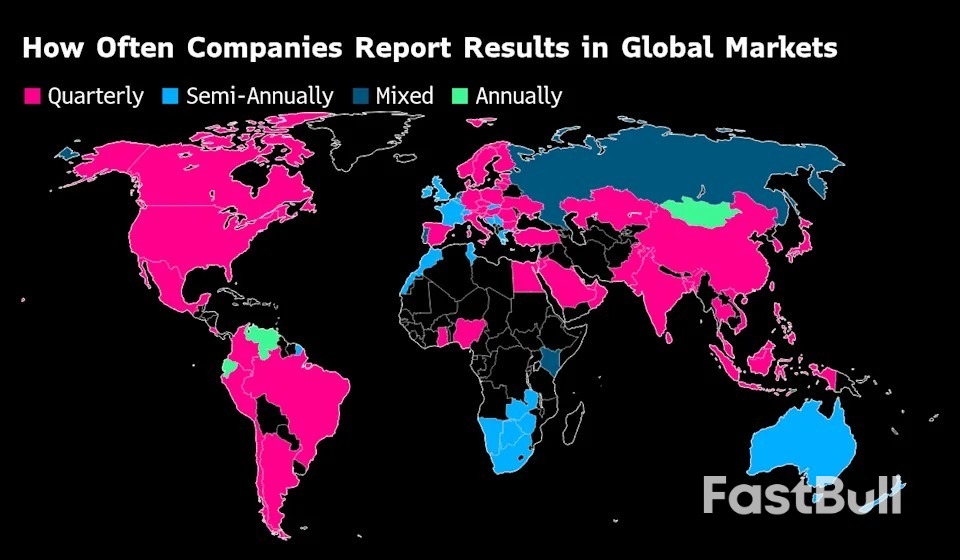
          The announcement comes the same week that President Donald Trump issued a social media post suggesting the SEC should move to semi-annual, rather than quarterly reporting.
          “It’s a good time to look at the whole panoply of ways that people get information, how it’s disseminated and what’s fit for purpose,” Atkins said during an interview on CNBC.
          He noted that many investors get more information from earnings calls rather than the quarterly reports.
          Atkins echoed Trump’s criticism that quarterly reports have driven corporate executives and management to focus too much on short-term returns.
          But the long-time Washington consultant and power player has been a perennial critic of the “overload” of disclosures both for investors and the companies that have to provide them.
          Atkins has already made clear that he plans to reduce disclosures on executive compensation. Other disclosures, such as those related to conflict minerals, could also be targeted for fewer releases or even elimination.
          During the CNBC interview, Atkins said the “huge cost” of complying with regulatory requirements is one of the leading reasons companies remain private.
          Trump’s remarks earlier this week revived an idea he touted during his first term. Then-SEC Chairman Jay Clayton had discussed the possibility at a three-hour roundtable in 2019 and it had been part of an agency request for comment in 2018. But the effort eventually petered out and the idea never made it to even the proposed rule stage, in part because there wasn’t a groundswell of demand for the change.
          The SEC has required companies to issue quarterly reports since 1970. There have been tensions between investor sseeking information and publicly traded companies seeking to shed what some see as unnecessary or overly burdensome reporting requirements ever since.
          Many companies already produce quarterly data for internal oversight, so reducing public-facing reports may only modestly reduce” compliance costs, according to Andrew Jones, principal researcher at the Conference Board, a think tank whose members include hundreds of public and privately traded companies.
          “Limiting disclosures also introduces risks related to reduced transparency and heightened market uncertainty,” Jones said in an emailed statement.
          While many of the world’s largest economies operate on a quarterly disclosure basis, some only require semiannual reports, including France, the United Kingdom and Australia.SEC Will Move to Overhaul Investor Disclosures, Atkins Says_1

          Source: Bloomberg

          Risk Warnings and Disclaimers
          You understand and acknowledge that there is a high degree of risk involved in trading. Following any strategies or investment methods may lead to potential losses. The content on the site is provided by our contributors and analysts for information purposes only. You are solely responsible for determining whether any trading assets, securities, strategy, or any other product is suitable for investing based on your own investment objectives and financial situation.
          Add to Favorites
          Share
          FastBull
          Copyright © 2025 FastBull Ltd

          728 RM B 7/F GEE LOK IND BLDG NO 34 HUNG TO RD KWUN TONG KLN HONG KONG

          TelegramInstagramTwitterfacebooklinkedin
          App Store Google Play Google Play
          Products
          Charts

          Chats

          Q&A with Experts
          Screeners
          Economic Calendar
          Data
          Tools
          Membership
          Features
          Function
          Markets
          Copy Trading
          Latest Signals
          Contests
          News
          Analysis
          24/7
          Columns
          Education
          Company
          Careers
          About Us
          Contact Us
          Advertising
          Help Center
          Feedback
          User Agreement
          Privacy Policy
          Business

          White Label

          Data API

          Web Plug-ins

          Poster Maker

          Affiliate Program

          Risk Disclosure

          The risk of loss in trading financial instruments such as stocks, FX, commodities, futures, bonds, ETFs and crypto can be substantial. You may sustain a total loss of the funds that you deposit with your broker. Therefore, you should carefully consider whether such trading is suitable for you in light of your circumstances and financial resources.

          No decision to invest should be made without thoroughly conducting due diligence by yourself or consulting with your financial advisors. Our web content might not suit you since we don't know your financial conditions and investment needs. Our financial information might have latency or contain inaccuracy, so you should be fully responsible for any of your trading and investment decisions. The company will not be responsible for your capital loss.

          Without getting permission from the website, you are not allowed to copy the website's graphics, texts, or trademarks. Intellectual property rights in the content or data incorporated into this website belong to its providers and exchange merchants.

          Not Logged In

          Log in to access more features

          FastBull Membership

          Not yet

          Purchase

          Become a signal provider
          Help Center
          Customer Service
          Dark Mode
          Price Up/Down Colors

          Log In

          Sign Up

          Position
          Layout
          Fullscreen
          Default to Chart
          The chart page opens by default when you visit fastbull.com