Markets
News
Analysis
User
24/7
Economic Calendar
Education
Data
- Names
- Latest
- Prev


Signal Accounts for Members
All Signal Accounts
All Contests


U.S. Initial Jobless Claims 4-Week Avg. (SA)A:--
F: --
P: --
U.S. Weekly Continued Jobless Claims (SA)A:--
F: --
P: --
Canada Ivey PMI (SA) (Nov)A:--
F: --
P: --
Canada Ivey PMI (Not SA) (Nov)A:--
F: --
P: --
U.S. Non-Defense Capital Durable Goods Orders Revised MoM (Excl. Aircraft) (SA) (Sept)A:--
F: --
U.S. Factory Orders MoM (Excl. Transport) (Sept)A:--
F: --
P: --
U.S. Factory Orders MoM (Sept)A:--
F: --
P: --
U.S. Factory Orders MoM (Excl. Defense) (Sept)A:--
F: --
P: --
U.S. EIA Weekly Natural Gas Stocks ChangeA:--
F: --
P: --
Saudi Arabia Crude Oil ProductionA:--
F: --
P: --
U.S. Weekly Treasuries Held by Foreign Central BanksA:--
F: --
P: --
Japan Foreign Exchange Reserves (Nov)A:--
F: --
P: --
India Repo RateA:--
F: --
P: --
India Benchmark Interest RateA:--
F: --
P: --
India Reverse Repo RateA:--
F: --
P: --
India Cash Reserve RatioA:--
F: --
P: --
Japan Leading Indicators Prelim (Oct)A:--
F: --
P: --
U.K. Halifax House Price Index YoY (SA) (Nov)A:--
F: --
P: --
U.K. Halifax House Price Index MoM (SA) (Nov)A:--
F: --
P: --
France Current Account (Not SA) (Oct)A:--
F: --
P: --
France Trade Balance (SA) (Oct)A:--
F: --
P: --
France Industrial Output MoM (SA) (Oct)A:--
F: --
P: --
Italy Retail Sales MoM (SA) (Oct)A:--
F: --
P: --
Euro Zone Employment YoY (SA) (Q3)A:--
F: --
P: --
Euro Zone GDP Final YoY (Q3)A:--
F: --
P: --
Euro Zone GDP Final QoQ (Q3)A:--
F: --
P: --
Euro Zone Employment Final QoQ (SA) (Q3)A:--
F: --
P: --
Euro Zone Employment Final (SA) (Q3)A:--
F: --
Brazil PPI MoM (Oct)A:--
F: --
P: --
Mexico Consumer Confidence Index (Nov)A:--
F: --
P: --
Canada Unemployment Rate (SA) (Nov)--
F: --
P: --
Canada Labor Force Participation Rate (SA) (Nov)--
F: --
P: --
Canada Employment (SA) (Nov)--
F: --
P: --
Canada Part-Time Employment (SA) (Nov)--
F: --
P: --
Canada Full-time Employment (SA) (Nov)--
F: --
P: --
U.S. Personal Income MoM (Sept)--
F: --
P: --
U.S. Dallas Fed PCE Price Index YoY (Sept)--
F: --
P: --
U.S. PCE Price Index YoY (SA) (Sept)--
F: --
P: --
U.S. PCE Price Index MoM (Sept)--
F: --
P: --
U.S. Personal Outlays MoM (SA) (Sept)--
F: --
P: --
U.S. Core PCE Price Index MoM (Sept)--
F: --
P: --
U.S. UMich 5-Year-Ahead Inflation Expectations Prelim YoY (Dec)--
F: --
P: --
U.S. Core PCE Price Index YoY (Sept)--
F: --
P: --
U.S. Real Personal Consumption Expenditures MoM (Sept)--
F: --
P: --
U.S. 5-10 Year-Ahead Inflation Expectations (Dec)--
F: --
P: --
U.S. UMich Current Economic Conditions Index Prelim (Dec)--
F: --
P: --
U.S. UMich Consumer Sentiment Index Prelim (Dec)--
F: --
P: --
U.S. UMich 1-Year-Ahead Inflation Expectations Prelim (Dec)--
F: --
P: --
U.S. UMich Consumer Expectations Index Prelim (Dec)--
F: --
P: --
U.S. Weekly Total Rig Count--
F: --
P: --
U.S. Weekly Total Oil Rig Count--
F: --
P: --
U.S. Consumer Credit (SA) (Oct)--
F: --
P: --
China, Mainland Foreign Exchange Reserves (Nov)--
F: --
P: --
China, Mainland Exports YoY (USD) (Nov)--
F: --
P: --
China, Mainland Imports YoY (CNH) (Nov)--
F: --
P: --
China, Mainland Imports YoY (USD) (Nov)--
F: --
P: --
China, Mainland Imports (CNH) (Nov)--
F: --
P: --
China, Mainland Trade Balance (CNH) (Nov)--
F: --
P: --
China, Mainland Exports (Nov)--
F: --
P: --
Japan Wages MoM (Oct)--
F: --
P: --


No matching data
Latest Views
Latest Views
Trending Topics
Top Columnists
Latest Update
White Label
Data API
Web Plug-ins
Affiliate Program
View All

No data
European stocks opened higher on Friday, supported by rising expectations of a Fed rate cut and cautious hopes surrounding Ukraine negotiations, even as geopolitical risks remain elevated....
India's government is reviewing a telecom industry proposal to force smartphone firms to enable satellite location tracking that is always activated for better surveillance, a move opposed by Apple, Google and Samsung due to privacy concerns, according to documents, emails and five sources.
A fierce privacy debate erupted in India this week after Prime Minister Narendra Modi's government was forced to rescind an order requiring smartphone makers to preload a state-run cyber safety app on all devices after activists and politicians raised concerns about potential snooping.
For years, the Modi administration has been concerned its agencies do not get precise locations when legal requests are made to telecom firms during investigations. Under the current system, the firms are limited to using cellular tower data that can only provide an estimated area location, which can be off by several meters.
The Cellular Operators Association of India (COAI), which represents Reliance's Jio and Bharti Airtel, has proposed that precise user locations should only be provided if the government orders smartphone makers to activate A-GPS technology - which uses satellite signals and cellular data - according to a June internal federal IT ministry email.
That would require location services to always be activated in smartphones with no option for users to disable them. Apple, Samsung and Alphabet's Google have told New Delhi that should not be mandated, said three of the sources who have direct knowledge of the deliberations.
A measure to track device-level location has no precedent anywhere else in the world, lobbying group India Cellular & Electronics Association (ICEA), which represents both Apple and Google, wrote in a confidential July letter to the government, which was viewed by Reuters.
"The A-GPS network service ... (is) not deployed or supported for location surveillance," said the letter, which added that the measure "would be a regulatory overreach."
India's home ministry had scheduled a meeting of top smartphone industry executives to discuss the matter on Friday but it was postponed, a source with direct knowledge of the matter said. On Thursday, Reuters sent questions related to this topic to the ministry.
India's IT and home ministries, which are both analysing the telecom industry's proposal, did not respond to Reuters queries.
Apple, Samsung, Google, Reliance and Airtel did not respond to requests for comment. Lobby groups ICEA and COAI also did not respond.
At this point, no policy decision has been made by the IT or home ministries.
Taking advantage of A-GPS technology - which is typically only turned on when certain apps are running or when emergency calls are being made - could provide authorities with location data precise enough that a user can be tracked to within about a meter, according to technology experts.
"This proposal would see phones operate as a dedicated surveillance device," said Junade Ali, a digital forensics expert associated with Britain's Institution of Engineering and Technology.
Cooper Quintin, a security researcher at the U.S.-based Electronic Frontier Foundation, said he had not heard of any such proposal elsewhere, calling it "pretty horrifying."
Governments worldwide routinely seek new ways to better track cellphone users' movements or data. Russia has mandated the installation of a state-backed communications app on all mobile phones in the country.
India is the world's second-biggest mobile market with 735 million smartphones as of mid-2025, where Google's Android powers more than 95% of the devices, with the rest using Apple's iOS, Counterpoint Research says.
Apple and Google's lobby group, the ICEA, argued in their July letter that there are significant "legal, privacy, and national security concerns" with the proposal from the telecom group.
It warned their user base would include people from the military, judges, corporate executives and journalists, adding that proposed location tracking risked their security given that they hold sensitive information.
Even the old way of location tracking is becoming problematic, the telecom group said, as smartphone makers show a pop-up message to users, alerting them that their "carrier is trying to access your location."
"A target can easily ascertain that he is being tracked by security agencies," said the telecom group, urging the government to order phone makers to disable the pop-up features.

Privacy concerns should take priority and India should also not consider disabling the pop-ups, Apple and Google's group argued in its July letter to the government.
This will "ensure transparency and user control over their location."
Indonesian officials plan to take legal action against a dozen companies whose actions they say may have worsened deadly floods and landslides in northern Sumatra.
Forestry Minister Raja Juli Antoni told parliament on Thursday that the ministry will investigate 12 companies in connection with the disaster, adding that mismanagement of forests appeared to have contributed to a cyclone-driven catastrophe that has killed more than 800 people in Indonesia.
He said the ministry would also revoke forest-concession permits held by 20 companies managing a combined 750,000 hectares of concessions in Sumatra and elsewhere in the Southeast Asian nation, pending approval from President Prabowo Subianto.
Antoni did not identify the companies.
Hundreds of people remain missing after more than a week of flooding and landslides in Sumatra, officials say.
Separately, the environment ministry has revoked environmental permits of several companies after satellite-imagery analysis and field inspections in disaster areas revealed signs of illegal logging and land clearing, Indonesia's Government Communication Agency said Thursday.
Environment Minister Hanif Faisol Nurofiq said eight companies would be summoned for questioning starting Dec. 8, and that investigations could escalate to criminal prosecution, according to the GCA. The agency added that an initial assessment found evidence that forest areas had been cleared for agricultural use, which it said left them more vulnerable during periods of heavy rainfall.
The US lobbied several countries in the European Union in an effort to block EU plans to use frozen Russian central bank assets to back a massive loan to Ukraine, according to European diplomats familiar with the matter.
US officials argued to member states that the assets are needed to help secure a peace deal between Kyiv and Moscow and should not be used to prolong the war, said the diplomats, who spoke on the condition of anonymity.
The EU put forward a proposal this week to use the immobilized assets to back a €90 billion ($105 billion) loan to cover Ukraine's economic and military needs for the next two years. There are about €210 billion of frozen Russian assets on EU soil and more of those could be used from 2028 on.
The US State Department's press office didn't respond to a request for comment.
The discussions come at a critical time for Ukraine, with the US pressuring Kyiv to agree to a potentially lopsided peace deal with Russia. Ukraine risks running out of money early next year and President Donald Trump's administration has cut off most US aid, putting the onus on Europe.
Washington has also been eyeing the Russian assets as part of its proposals to enable peace talks with Moscow, and had suggested they could be used to fund US-led postwar investments.
A US 28-point peace plan has been modified since it first emerged last month, but assets remain one of the key sticking points, along with the status of Ukrainian territories and providing Kyiv with robust security guarantees, some of the people said.
European leaders have been adamant that how to use the assets is a European matter as the frozen funds are mostly held in Europe.
There is "no possibility of leaving the money we mobilize to the US," German Chancellor Friedrich Merz said on Thursday.
"The American government knows this, and this is also the German government's negotiating position," he said. "This is also the consensus at the European level. There are absolutely no differences of opinion on this. This money must flow to Ukraine — it must help Ukraine."
The EU's plan to use the assets faces domestic opposition as well, particularly from Belgium, where most of the funds are held.
Merz will travel to Brussels Friday for talks with Belgian Prime Minister Bart De Wever and European Commission President Ursula von der Leyen in an effort to break down Belgian resistance to the EU plan.
Merz, who has been a strong advocate of using the Russian assets to aid Ukraine, told reporters that he takes the Belgian premier's concerns "very seriously" and that he would try to address them at Friday's meeting.
"I don't want to persuade him, but rather convince him," he said at a news conference Thursday evening in Berlin after talks with German regional leaders. "If we take this path, we will do so to help Ukraine, possibly for the next two to three years."
Belgium argues that it has yet to receive sufficient guarantees that it won't be left on the hook alone to foot any future bill should Moscow win any future claims on recovering the assets. It also says that using the frozen funds would open Europe, and it's companies, to Russian retaliation.
Belgium's national budget has received hundreds of millions of euros in tax revenue from the immobilized funds, though it argues that the money is being used to provide aid to Ukraine.
Belgium's current rejection of the plan remains the main stumbling block to its approval ahead of an EU leaders' summit later this month, where the bloc will be aiming to sign off on the proposals.
The EU has proposed backing the loan using the bloc's budget or through bilateral guarantees from member states. The assets would remain frozen and Kyiv would only have to pay the loan back if Russia agrees to finance the country's reconstruction and compensate it for the damage the war has inflicted.
In addition to Belgium, Hungary is against the plans and Slovakia has said it will not back proposals that provide Ukraine with military support. Approval would only require a qualified majority of member states.
The commission has also floated the option of issuing joint debt in the event they can't reach an agreement to use the immobilized assets. But member states including Germany reject that idea, and the fact that it requires unanimity makes it improbable.

The US dollar remained soft against major peers during European trading, holding near a five-week low. Even with solid labor data released Thursday, the greenback failed to gain traction as investors continued to price in a more accommodative Federal Reserve.
Initial jobless claims fell to their lowest level in more than three years, underscoring resilience in the US labor market. The reaction in currency markets, however, was muted.
Traders focused less on weekly improvements and more on the Fed's policy direction. Some analysts also noted that the Thanksgiving period may have distorted the data.
Markets now assign roughly an 85–86% probability of a quarter-point rate cut at the December 9–10 FOMC meeting, with expectations for several additional cuts next year. Anticipation of easier policy continues to weigh on the dollar, reducing its appeal even as economic indicators remain firm.
The extended government shutdown has delayed several key economic releases, including monthly payroll figures. With incomplete data, investors have been forced to navigate the outlook with limited visibility, increasing uncertainty around near-term dollar direction.
While the dollar still offers defensive appeal during periods of risk aversion, Fed communication in December and upcoming employment updates will likely determine its next move.
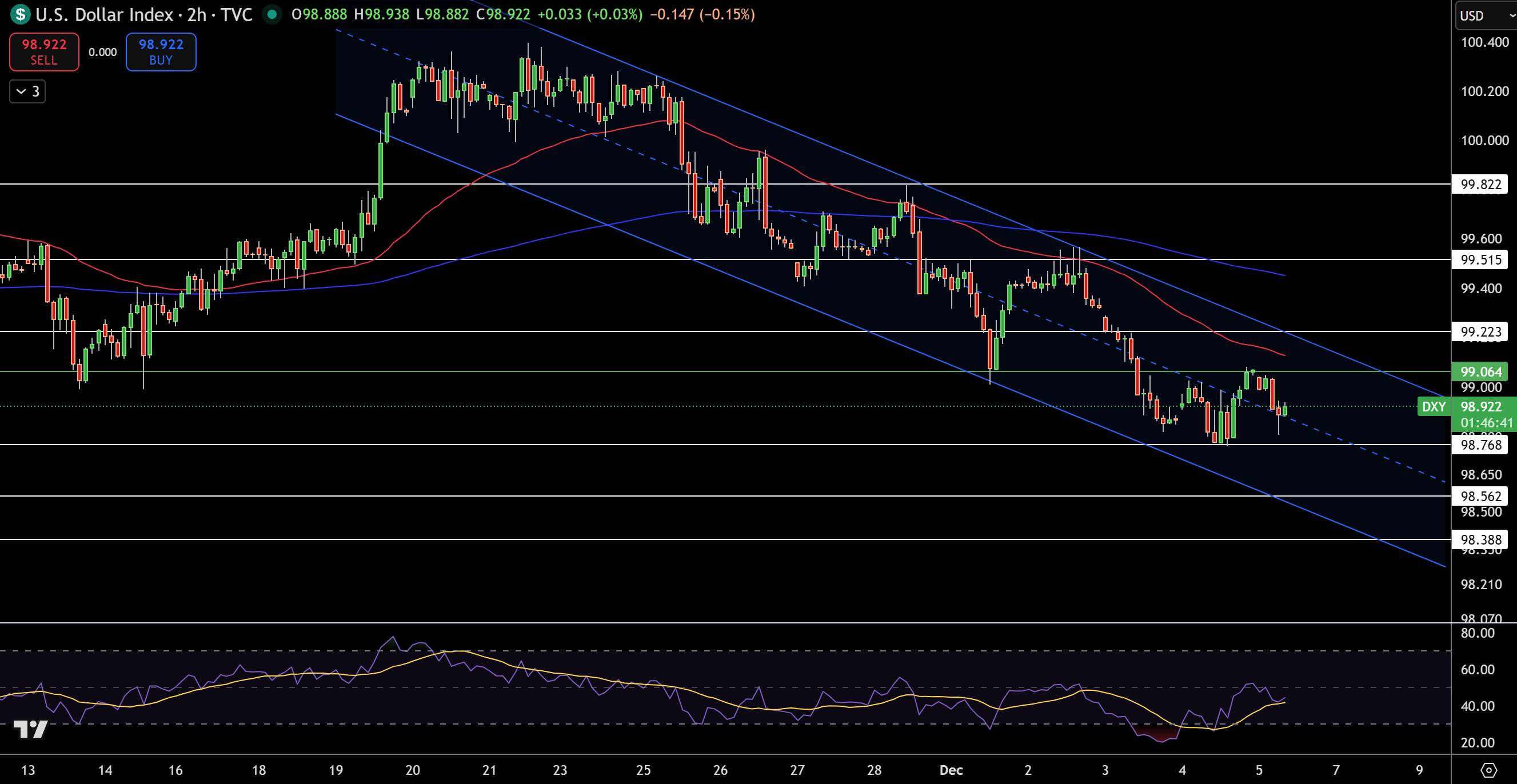
Dollar Index Price Chart – Source: TradingviewThe Dollar Index (DXY) trades near $98.92, moving inside a well-defined descending channel that has guided price lower since late November. Recent candles show rejection at the mid-channel trendline near $99.06, signaling persistent selling pressure. The index remains below both the 50-EMA and 200-EMA, reinforcing a bearish structure.
Immediate support sits at $98.76, followed by $98.56 and $98.38 if downside momentum continues.
A break below these levels would extend the channel toward the lower boundary. On the upside, resistance stands at $99.22, and a close above that level would be required to challenge the broader downtrend.
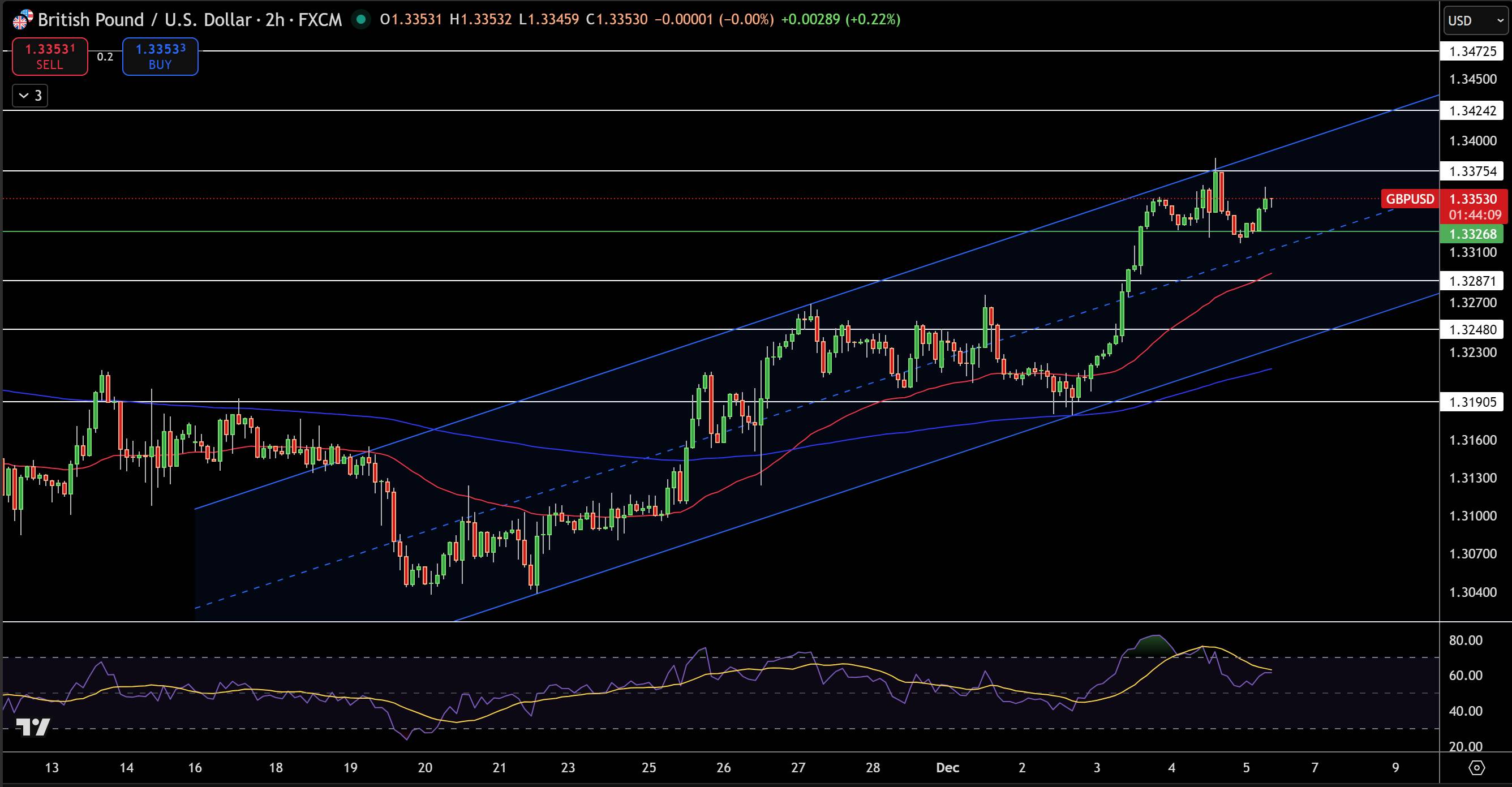
GBP/USD Price Chart – Source: TradingviewGBP/USD trades near $1.3353, holding inside a rising channel that has guided the pair higher since mid-November. Recent candles show buyers defending the mid-channel support at $1.3326, keeping the short-term structure intact. Immediate resistance sits at $1.3375, where multiple rejection wicks indicate supply.
Below current levels, support stands at $1.3287, followed by $1.3248 and $1.3190 if sellers extend pressure. Price remains above the 50-EMA, while the 200-EMA below confirms broader bullish momentum.
RSI is recovering toward 55 after easing from overbought, suggesting stabilizing momentum. A breakout above $1.3375 could open $1.3424, while losing the channel floor risks a deeper pullback toward $1.3287.
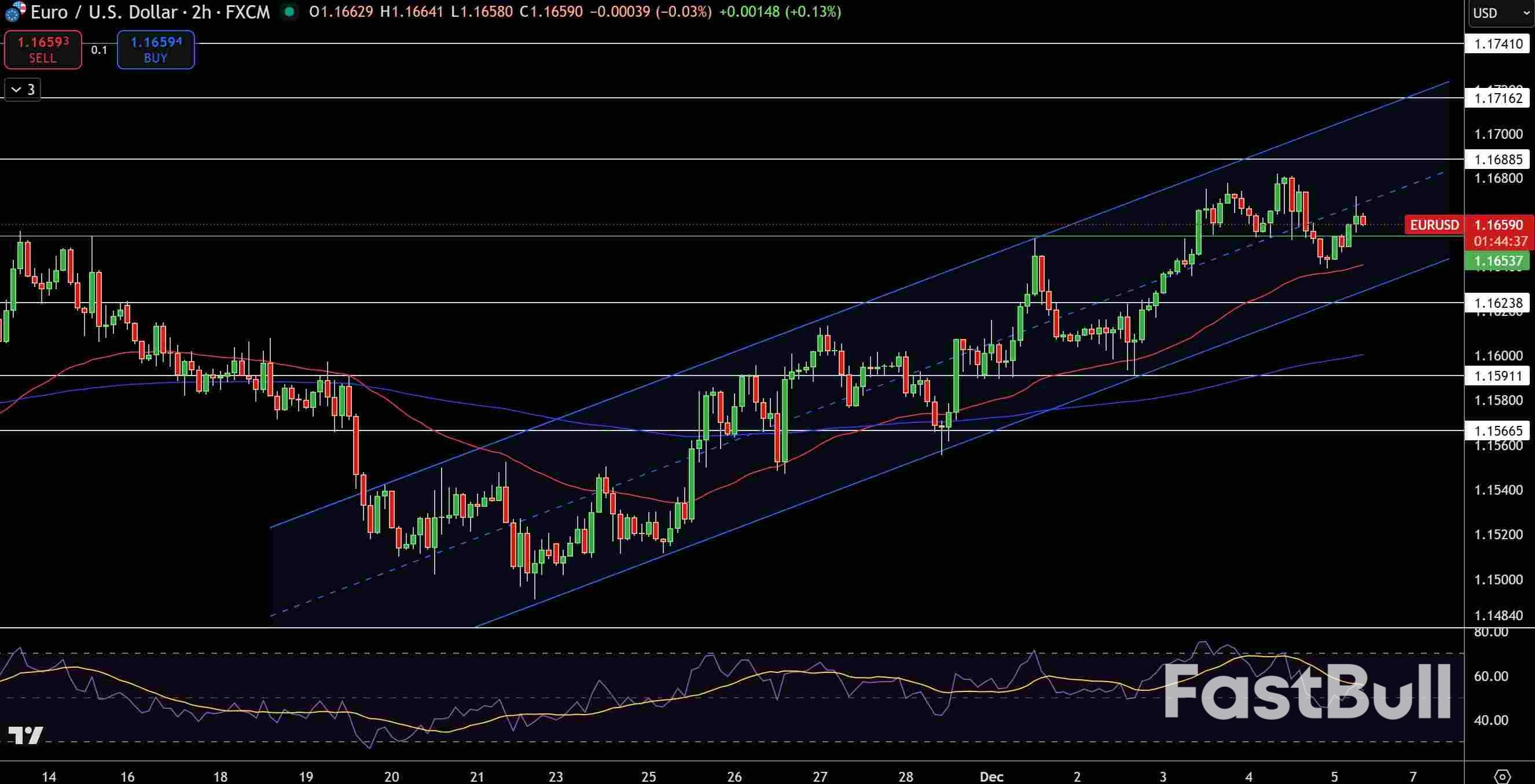
EUR/USD Price Chart – Source: TradingviewEUR/USD trades near $1.1659, holding inside a rising channel that has guided price higher since late November. Recent candles show buyers defending the mid-channel trendline around $1.1653, keeping the short-term bias constructive. Immediate resistance stands at $1.1688, where multiple rejection wicks show supply.
On the downside, support sits at $1.1623, followed by stronger levels at $1.1591 and $1.1566 if sellers pressure the trend. The pair remains above the 50-EMA and 200-EMA, reinforcing broader bullish structure.
RSI is recovering from mid-range toward 55, indicating improving momentum but not stretched conditions. A close above $1.1688 could open $1.1716, while losing the channel floor risks a deeper pullback toward $1.1591.
White Label
Data API
Web Plug-ins
Poster Maker
Affiliate Program
The risk of loss in trading financial instruments such as stocks, FX, commodities, futures, bonds, ETFs and crypto can be substantial. You may sustain a total loss of the funds that you deposit with your broker. Therefore, you should carefully consider whether such trading is suitable for you in light of your circumstances and financial resources.
No decision to invest should be made without thoroughly conducting due diligence by yourself or consulting with your financial advisors. Our web content might not suit you since we don't know your financial conditions and investment needs. Our financial information might have latency or contain inaccuracy, so you should be fully responsible for any of your trading and investment decisions. The company will not be responsible for your capital loss.
Without getting permission from the website, you are not allowed to copy the website's graphics, texts, or trademarks. Intellectual property rights in the content or data incorporated into this website belong to its providers and exchange merchants.
Not Logged In
Log in to access more features

FastBull Membership
Not yet
Purchase
Log In
Sign Up