Markets
News
Analysis
User
24/7
Economic Calendar
Education
Data
- Names
- Latest
- Prev




Signal Accounts for Members
All Signal Accounts
All Contests


France 10-Year OAT Auction Avg. YieldA:--
F: --
P: --
Euro Zone Consumer Inflation Expectations (Dec)A:--
F: --
P: --
Euro Zone Unemployment Rate (Nov)A:--
F: --
P: --
Euro Zone PPI MoM (Nov)A:--
F: --
P: --
Euro Zone Selling Price Expectations (Dec)A:--
F: --
P: --
Euro Zone PPI YoY (Nov)A:--
F: --
P: --
Euro Zone Industrial Climate Index (Dec)A:--
F: --
P: --
Euro Zone Economic Sentiment Indicator (Dec)A:--
F: --
Euro Zone Services Sentiment Index (Dec)A:--
F: --
Euro Zone Consumer Confidence Index Final (Dec)A:--
F: --
P: --
Mexico 12-Month Inflation (CPI) (Dec)A:--
F: --
P: --
Mexico Core CPI YoY (Dec)A:--
F: --
P: --
Mexico PPI YoY (Dec)A:--
F: --
P: --
Mexico CPI YoY (Dec)A:--
F: --
P: --
U.S. Challenger Job Cuts MoM (Dec)A:--
F: --
P: --
U.S. Challenger Job Cuts (Dec)A:--
F: --
P: --
U.S. Challenger Job Cuts YoY (Dec)A:--
F: --
P: --
U.S. Exports (Oct)A:--
F: --
P: --
U.S. Trade Balance (Oct)A:--
F: --
U.S. Initial Jobless Claims 4-Week Avg. (SA)A:--
F: --
Canada Imports (SA) (Oct)A:--
F: --
U.S. Weekly Initial Jobless Claims (SA)A:--
F: --
U.S. Weekly Continued Jobless Claims (SA)A:--
F: --
Canada Exports (SA) (Oct)A:--
F: --
Canada Trade Balance (SA) (Oct)A:--
F: --
U.S. Unit Labor Cost Prelim (SA) (Q3)A:--
F: --
P: --
U.S. Wholesale Sales MoM (SA) (Oct)A:--
F: --
P: --
U.S. EIA Weekly Natural Gas Stocks ChangeA:--
F: --
P: --
U.S. Consumer Credit (SA) (Nov)A:--
F: --
U.S. Weekly Treasuries Held by Foreign Central BanksA:--
F: --
P: --
Japan Foreign Exchange Reserves (Dec)--
F: --
P: --
China, Mainland CPI YoY (Dec)--
F: --
P: --
China, Mainland PPI YoY (Dec)--
F: --
P: --
China, Mainland CPI MoM (Dec)--
F: --
P: --
Japan Leading Indicators Prelim (Nov)--
F: --
P: --
Germany Industrial Output MoM (SA) (Nov)--
F: --
P: --
Germany Exports MoM (SA) (Nov)--
F: --
France Industrial Output MoM (SA) (Nov)--
F: --
P: --
Italy Retail Sales MoM (SA) (Nov)--
F: --
P: --
Euro Zone Retail Sales MoM (Nov)--
F: --
P: --
Euro Zone Retail Sales YoY (Nov)--
F: --
P: --
Italy 12-Month BOT Auction Avg. Yield--
F: --
P: --
India Deposit Gowth YoY--
F: --
P: --
Brazil IPCA Inflation Index YoY (Dec)--
F: --
P: --
Mexico Industrial Output YoY (Nov)--
F: --
P: --
Brazil CPI YoY (Dec)--
F: --
P: --
U.S. Building Permits Revised YoY (SA) (Sept)--
F: --
P: --
U.S. Building Permits Revised MoM (SA) (Sept)--
F: --
P: --
U.S. U6 Unemployment Rate (SA) (Dec)--
F: --
P: --
U.S. Manufacturing Employment (SA) (Dec)--
F: --
P: --
U.S. Labor Force Participation Rate (SA) (Dec)--
F: --
P: --
U.S. Private Nonfarm Payrolls (SA) (Dec)--
F: --
P: --
U.S. Unemployment Rate (SA) (Dec)--
F: --
P: --
U.S. Nonfarm Payrolls (SA) (Dec)--
F: --
P: --
U.S. Average Hourly Wage YoY (Dec)--
F: --
P: --
Canada Full-time Employment (SA) (Dec)--
F: --
P: --
Canada Part-Time Employment (SA) (Dec)--
F: --
P: --
Canada Unemployment Rate (SA) (Dec)--
F: --
P: --
Canada Labor Force Participation Rate (SA) (Dec)--
F: --
P: --
Canada Employment (SA) (Dec)--
F: --
P: --


No matching data
Latest Views
Latest Views
Trending Topics
Top Columnists
Latest Update
White Label
Data API
Web Plug-ins
Affiliate Program
View All

No data
Canada rethinks its oil export strategy, debating domestic refining over pipelines amid global market shifts and US policy uncertainty.
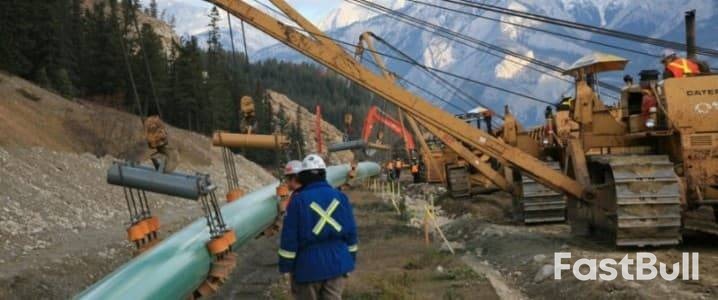
A long-standing debate over Canada's oil export strategy has taken a sharp turn. British Columbia Premier David Eby recently argued that Ottawa should focus on building domestic refineries instead of new export pipelines, reframing a conversation that has dominated the nation's energy politics for years.
Eby’s proposal comes as U.S. policy shifts regarding Venezuela create new uncertainties in global oil markets, highlighting Canada's heavy reliance on the United States as its primary customer for crude. The premier suggests that rather than simply shipping raw oil to the coast for export, Canada should invest in its own refining capacity to capture more value and reduce its dependence on foreign fuel processors.
Currently, Canada is not self-sufficient in refined fuels. The country exports most of its oil as raw crude while importing much of the fuel consumed in Eastern Canada and British Columbia. Building new refineries, Eby argues, would keep more jobs and revenue within Canada and make its energy system more resilient to external disruptions.
This push for domestic refining clashes with ongoing efforts by Ottawa and Alberta to develop a privately financed pipeline to the Pacific Coast. This plan, introduced late last year, aims to diversify Canada's trade away from the U.S. but has struggled to gain traction.
So far, no private company has committed to building the pipeline. Furthermore, opposition from Indigenous groups and coastal communities remains a significant obstacle, particularly concerning the potential increase in oil tanker traffic.
Globally, refining has become more profitable. Margins in North America, Europe, and Asia have climbed as refinery closures, outages, and sanctions have tightened the supply of processed fuels. While crude oil supply is expected to be sufficient into 2026, the availability of gasoline and diesel is much tighter, boosting the value of refining capacity.
However, Canada's existing refining infrastructure is aging and primarily designed to serve the domestic market, not global exports.
Building new refineries presents its own set of substantial challenges:
• High Upfront Costs: New facilities would require billions in initial investment.
• Regulatory Hurdles: The permitting process would likely take years and involve navigating complex regulations.
• Political Coordination: Such projects demand a level of political alignment rarely seen in Canadian energy policy.
• Market Risk: Critics warn that Canada could invest heavily only to face weaker-than-expected demand or intense competition from newer, low-cost refineries in the Middle East and Asia.
The situation is further complicated by U.S. policy toward Venezuela. The Trump administration has signaled its intention to help revive Venezuelan oil production, with much of that volume potentially heading to U.S. refiners.
Many of these American facilities, particularly on the Gulf Coast, are already configured to process heavy crude—the same type produced in Canada's oil sands. A flood of Venezuelan oil into this market would directly compete with Canadian exports, potentially putting downward pressure on prices and sales volumes.
Federal officials in Canada have downplayed this risk, expressing confidence that Canadian oil will stay competitive even if Venezuelan output recovers. Ottawa continues to support the oil sands industry through initiatives like carbon capture projects and regulatory adjustments, all while maintaining its commitment to climate targets.
Ultimately, Canada faces a decision that goes beyond a simple choice between pipelines and refineries. The core question is whether the country can successfully move up the energy value chain in a way that withstands political shifts, market cycles, and trade volatility.
With refining markets tight, U.S. trade policy unpredictable, and Venezuelan oil potentially re-entering the picture, Canada's next move will be critical. It will determine not only its economic future but also its long-term position in the global energy system.
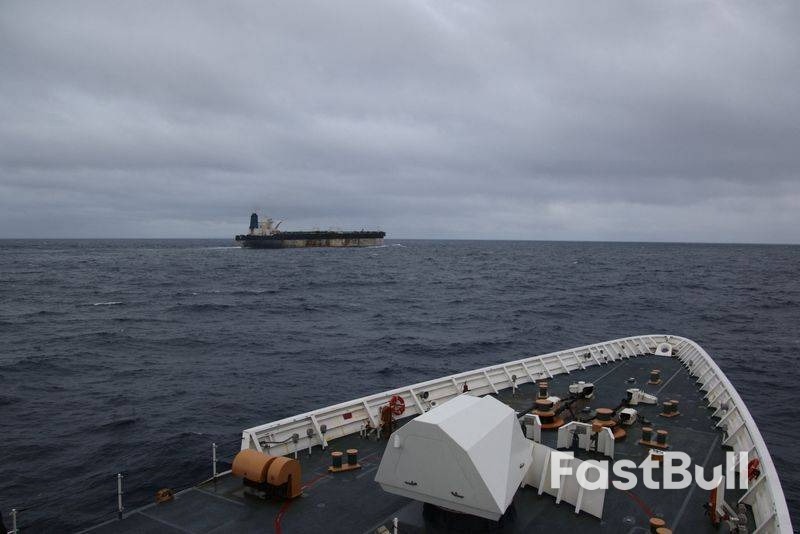
Jan 7 (Reuters) - Russia said on Wednesday that the U.S. seizure of a Russian-flagged oil tanker in the Atlantic was a violation of maritime law, and a senior lawmaker described it as "outright piracy".
Russia's Transport Ministry said contact with the vessel, the Marinera, had been lost after U.S. naval forces boarded it near Iceland as part of efforts to block oil exports from Venezuela.
"In accordance with the 1982 U.N. Convention on the Law of the Sea, freedom of navigation applies in the high seas, and no state has the right to use force against vessels duly registered in the jurisdictions of other states," the ministry said in a statement.
Russia is demanding that the United States ensure humane and decent treatment of the Russian crew members and their swift return home, state news agency TASS quoted the Foreign Ministry as saying.
The Marinera, originally known as the Bella-1, had previously slipped through a U.S. maritime blockade of sanctioned tankers in the Caribbean.
U.S. WAGING PRESSURE CAMPAIGN AGAINST VENEZUELA
The blockade was part of a U.S. pressure campaign against Venezuela that culminated when President Donald Trump sent in U.S. special forces on January 3 to capture Venezuelan President Nicolas Maduro and bring him to New York to face drug trafficking charges, which he has denied.
"After a 'law enforcement operation' that killed several dozen people in Venezuela, the U.S. has engaged in outright piracy on the high seas," Andrei Klishas, a lawmaker from the ruling United Russia party, posted on Telegram.
Two U.S. officials, speaking on condition of anonymity, told Reuters that Wednesday's operation was carried out by the Coast Guard and U.S. military.
They said Russian military vessels, including a submarine, were in the general vicinity. There were no indications of any confrontation between U.S. and Russian military forces.
Relations between Moscow and Washington plunged to their worst state since the Cold War after Russia invaded Ukraine in February 2022, though they have become more cordial since Trump began his second term last year and started engaging with President Vladimir Putin to seek an end to the conflict.
Military incidents between the nuclear-armed powers are rare. In March 2023, a U.S military surveillance drone crashed into the Black Sea after being intercepted by Russian fighter jets, prompting Washington to protest and warn of the risk of an escalation.
Venezuelan leader Maduro was the second close ally of Russia to be ousted in just over a year, following the toppling of Syrian President Bashar al-Assad in December 2024.

Russia has said it backs Delcy Rodriguez, sworn in on Monday as interim president, and will continue to support Venezuela in the face of what Moscow has called "blatant neocolonial threats and foreign armed aggression".
With Russians still in the midst of an extended New Year holiday period, Putin has yet to comment publicly on the U.S. action to remove Maduro.

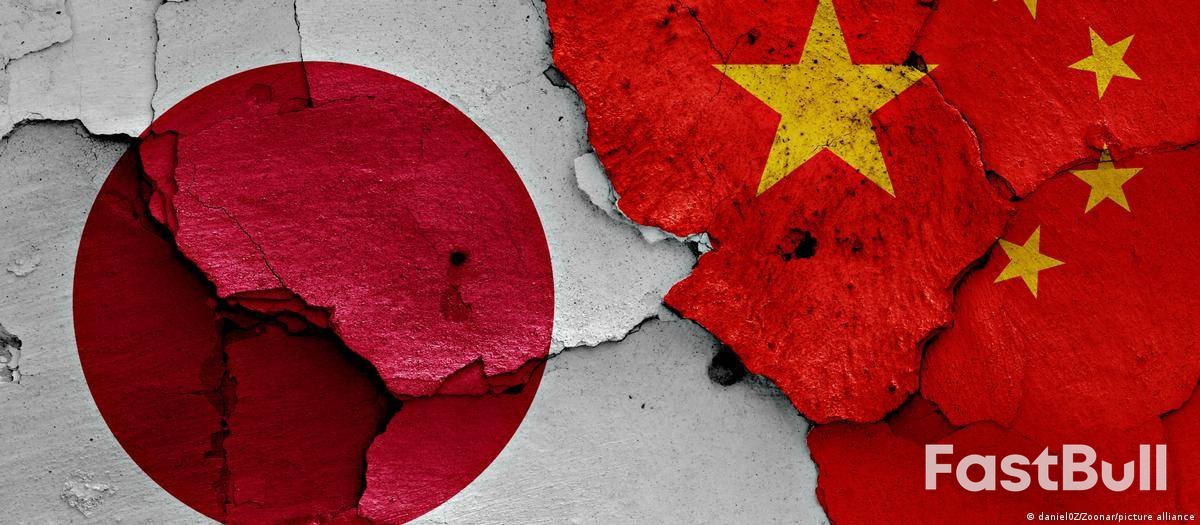
Japan has sharply criticized new Chinese export restrictions targeting its industries, a move widely seen as retaliation for Tokyo's recent comments on Taiwan's security. Beijing's measures focus on dual-use goods, which are items that have both civilian and military applications.
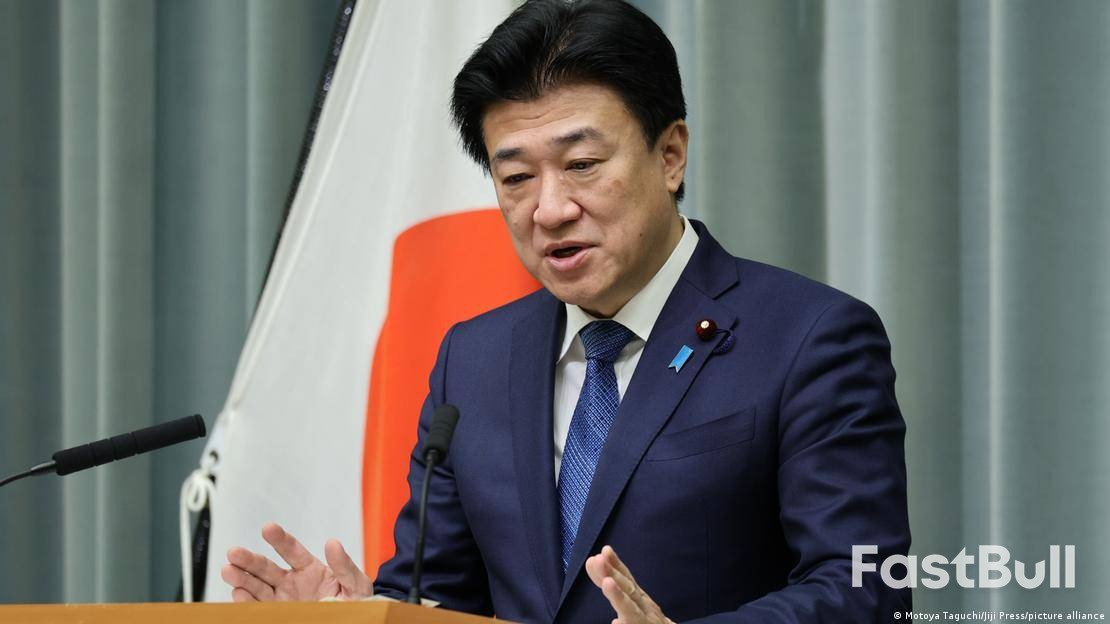
"A measure such as this, targeting only our country, differs significantly from international practice, is absolutely unacceptable and deeply regrettable," stated Minoru Kihara, Japan's Chief Cabinet Secretary and top government spokesman.
The trade restrictions apply to a range of goods, software, and technologies classified as dual-use. This category can include critical materials like rare earths, which are essential for manufacturing advanced products such as computer chips and drones.
China followed up its initial announcement by launching an investigation into imported dichlorosilane, a chemical gas vital for semiconductor production. The probe came after China's domestic industry complained that the price of the chemical imported from Japan had fallen by 31% between 2022 and 2024.
China's Commerce Ministry alleged on Wednesday that "the dumping of imported products from Japan has damaged the production and operation of our domestic industry."

The trade friction follows growing displeasure in Beijing over recent statements from Japan’s new government regarding Taiwan.
On November 7, just weeks after taking office, Japanese Prime Minister Sanae Takaichi suggested to parliament that a Chinese attack on Taiwan would represent an existential threat to Japan. She hinted that Japan's military might even mobilize to support the United States if it acted to protect Taipei. This comes as Japan increases its defense budget and redefines its military's role away from a purely defensive force.
Beijing, which views Taiwan as its own territory, has demanded Takaichi retract her comments. While she has not done so, she stated on Monday that her government remains "open to various opportunities for dialogue with China and has never closed the door."
Tensions escalated further on Tuesday when Japanese lawmaker Hei Seki visited Taipei and declared Taiwan an independent country. Seki, who was sanctioned by China last year for "spreading fallacies," said his visit was intended to show that China and Taiwan were "different countries."
When asked about the visit, Chinese Foreign Ministry spokesman Mao Ning dismissed the lawmaker, stating, "The nasty words of a petty villain like him are not worth commenting on."
Officially, Japan, like the U.S. and many Western nations, adheres to the "One China" principle, which does not formally recognize Taiwan as an independent state. However, it simultaneously provides support to the island and opposes any forceful change to the status quo.
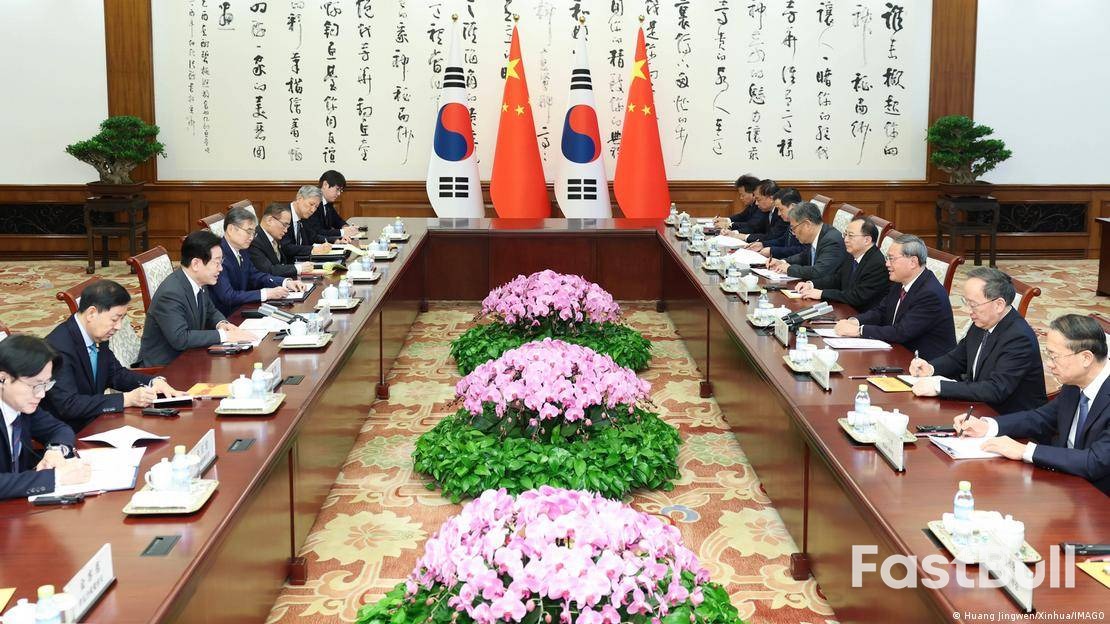
China's actions against Japan stand in stark contrast to its warming ties with South Korea. The trade restrictions coincided with the first state visit by a South Korean president since the COVID-19 pandemic.
President Lee Jae Myung concluded a four-day trip on Wednesday, during which he and Chinese President Xi Jinping signed several cooperation agreements covering technology, trade, transportation, and environmental protection.
Crucially, Lee’s government did not join Japan in condemning China's military drills near Taiwan in late December, signaling a different diplomatic strategy.

Mexican President Claudia Sheinbaum confirmed that the country will continue to supply Cuba with crude oil, framing the shipments as essential humanitarian aid. The announcement comes after the U.S. seizure of Venezuelan leader Nicolas Maduro, a development that puts Cuba's traditional energy supply at risk.
Sheinbaum stressed Mexico's heightened importance as a supplier in light of the situation in Venezuela. "With the current situation in Venezuela, Mexico has become an important supplier," she told reporters. "Previously it was Venezuela, but it's part of what has historically been sent."
Mexico's state-owned oil company, Petroleos Mexicanos (Pemex), has been shipping oil to Cuba for decades. In 2024, these shipments grew by nearly 20%, reaching an average of approximately 20,000 barrels per day. This policy finds support within segments of Sheinbaum's Morena party, which sympathizes with Cuba's government as it grapples with severe energy shortages.
Sheinbaum clarified that the oil exports are driven by a mix of factors, not just political goodwill. "For many years, oil has been sent to Cuba for various reasons, some of which are contracts, some of which are humanitarian aid," she explained. She also pointed out that the administration of former President Enrique Peña Nieto used oil to settle outstanding debts owed by the Mexican government to Cuba.
When asked about the scale of the oil exports, President Sheinbaum denied that shipments had increased in recent months. She also declined to comment on whether Mexico plans to send more or larger oil deliveries in the future.
Shipping data tracked by Bloomberg aligns with the president's statement on recent volumes. According to vessel-tracking reports, Mexico's oil shipments to Cuba have not risen since last September, when Pemex sent 400,000 barrels. Another shipment of the same size is expected this month.
Venezuela has historically been a key ally for Cuba, providing oil in exchange for services from Cuban doctors and security personnel. With potential U.S. control over Venezuelan oil, it remains uncertain if Cuba will lose access to this vital supply line entirely.
Mexico has also deepened its relationship with Cuba through other means. In recent years, including during the pandemic, Mexico has welcomed Cuban doctors to work in its healthcare system. According to a report from the newspaper El Universal, the Mexican government paid over 2 billion pesos ($111 million) for Cuban physicians between 2022 and 2025.
Kim Jong Un’s New Year's address on December 31 offered few clues about North Korea's policy direction for 2026. In a notable departure from tradition, his speech made no mention of either South Korea or the United States, focusing instead on domestic themes of patriotism, loyalty, and economic growth.
More detailed domestic and foreign policy objectives are expected to be unveiled at the Ninth Party Congress of the Workers' Party of Korea, which is scheduled for early this year. In the meantime, two critical questions are set to define North Korea's trajectory in 2026.
The first major uncertainty revolves around who will eventually succeed Kim Jong Un. His 13-year-old daughter, Kim Ju Ae, has made increasingly frequent public appearances, fueling speculation that she is being positioned as his heir. However, it remains far too early to draw any firm conclusions about a future leadership transition.
The second key question is whether Pyongyang will restart dialogue with Seoul and Washington. Both South Korean President Lee Jae-myung and US President Donald Trump have expressed a desire to revive talks. Yet, Kim has drawn a clear red line, stating he will not return to the negotiating table unless the US abandons its "obsession with denuclearization."
The prospects for productive talks between the US and North Korea appear significantly lower than they were during the first Trump administration. Pyongyang also shows far less interest in engaging with Seoul than with Washington, a stance reinforced by its decision in December 2023 to remove the peaceful reunification of the Korean peninsula as an official policy goal.
The new US national security strategy, published in December 2025, signals a significant pivot in Washington's priorities. Unlike the 2017 strategy from the first Trump administration, which heavily emphasized the threat from North Korea and the US alliance with South Korea, the new document omits North Korea entirely.
Instead, the strategy mentions China 21 times. It calls for greater burden-sharing from allies, explicitly stating that South Korea and Japan must increase their defense spending "to deter adversaries and protect the First Island Chain," which includes Japan, Taiwan, the Philippines, and Borneo.
While the US is not disengaging from East Asia, its primary focus has clearly shifted from deterring Pyongyang to countering Beijing, particularly on the economic front. The omission of North Korea could also be a strategic move to avoid antagonizing Kim, given President Trump's stated goal of resuming dialogue.
This shift did not go unnoticed in Pyongyang. A pro-North Korean newspaper in Japan with close ties to the regime commented that "mentioning North Korea would mean the US is admitting a complete failure in its policy to denuclearize the Korean peninsula."
North Korea's own strategic calculus has evolved, driven by a growing alignment with Moscow and the failure of the 2019 Hanoi summit with Trump. Since then, Pyongyang's interest in diplomacy has waned while its nuclear program has accelerated.
In late December 2025, North Korean state media reported that Kim had inspected a new 8,700-tonne nuclear-powered submarine. He described the vessel as an "epoch-making crucial change" in the country's deterrence capabilities. Although details about the submarine are scarce, its existence underscores Pyongyang’s unwavering commitment to advancing its nuclear and missile technologies.
This development follows a key decision made in November when Presidents Lee and Trump met, and the US gave its approval for South Korea to build its own nuclear-powered submarines. On December 19, Seoul and Washington finalized a standalone agreement to advance this cooperation. The deal allows South Korea to enrich low-enriched uranium for submarine fuel and permits the US to transfer nuclear materials for military use—a framework similar to the AUKUS security pact with Australia.
Kim Jong Un responded sharply, declaring that any such cooperation between the US and South Korea would be viewed as "an aggressive act" and a "security threat that must be countered." China has also weighed in, urging Seoul to "handle the matter with prudence."
While the submarine agreement strengthens the US–South Korea alliance, it also raises questions about Washington's long-term commitment. Allowing Seoul to develop this capability could be part of a broader US strategy to shift the burden of deterring Pyongyang onto its ally, freeing up American resources to focus on Beijing.
Against this backdrop, President Lee is currently in Beijing for a four-day state visit. In talks with Chinese President Xi Jinping, Lee hailed a "new phase" in relations and asked Xi to act as a mediator on the Korean peninsula, including on the nuclear issue.
Pyongyang, however, appears unimpressed. Just before Lee’s arrival in Beijing, North Korea test-fired several missiles, including hypersonic ones, in response to what it termed the "recent geopolitical crisis," an apparent reference to the US attack on Venezuela.
President Trump is also scheduled to visit Beijing in 2026. It remains uncertain whether either leader can persuade China to apply pressure on North Korea, especially after Beijing reaffirmed its "friendly" relationship with Pyongyang last year.
If dialogue with North Korea is revived, Kim Jong Un will demand tangible concessions. These could include:
• The easing of international sanctions.
• A halt to US–South Korea joint military exercises.
• Official recognition of North Korea as a nuclear-armed state.
Even if talks do not materialize, Washington and Seoul must maintain a strong, unified front to deter Pyongyang. This requires continued joint military exercises, including trilateral drills with Japan, robust enforcement of sanctions, and a refusal to offer unconditional dialogue. As North Korea strengthens its ties with China and Russia, the US and South Korea must not lose sight of the threat it poses, even as Beijing emerges as a more pressing challenge.
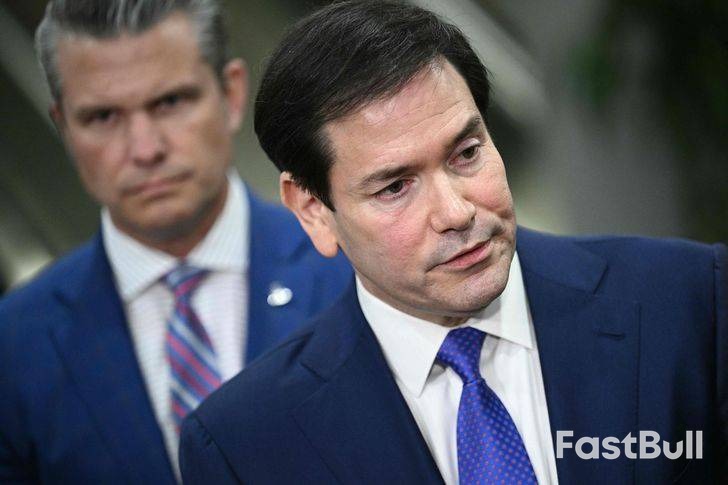
The Trump administration's intention to acquire Greenland has ignited a diplomatic firestorm, placing the United States in direct opposition to Denmark and raising serious questions about the future of the NATO alliance. Danish and Greenlandic officials are now seeking an urgent meeting with U.S. Secretary of State Marco Rubio as tensions escalate over the strategic Arctic territory.
At the heart of the issue is President Donald Trump's argument that U.S. control of the world's largest island is essential for national security, particularly against growing Russian and Chinese influence in the Arctic.
In a classified briefing to lawmakers, Secretary of State Marco Rubio clarified that the administration’s primary goal is to purchase Greenland, a self-governing territory of Denmark, rather than seize it by force. According to an individual familiar with the private discussion, Rubio confirmed this preference during a Monday evening meeting on Capitol Hill.

Speaking to reporters on Wednesday, Rubio noted that Trump has discussed acquiring Greenland since his first term. The topic resurfaced during a full briefing for the Senate and House, where questions also focused on the recent U.S. operation to capture former Venezuelan leader Nicolás Maduro.
However, the White House complicated its diplomatic message on Tuesday by stating that the "U.S. military is always an option," a comment that immediately amplified tensions with NATO allies.
The response from Denmark and its European partners has been swift and unified. Danish Prime Minister Mette Frederiksen issued a stark warning earlier this week, stating that a U.S. takeover of Greenland would effectively mean "the end of NATO."
Maria Martisiute, a defense analyst at the European Policy Centre, noted the gravity of such statements. "The Nordics do not lightly make statements like this," she told The Associated Press. Martisiute pointed to Trump's "bombastic language bordering on direct threats" as the primary cause for alarm among allies.
In a powerful show of solidarity, the leaders of France, Germany, Italy, Poland, Spain, and the United Kingdom joined Frederiksen in a joint statement on Tuesday. They reaffirmed that the mineral-rich island, which is critical to the defense of North America's Arctic and North Atlantic approaches, "belongs to its people."
Copenhagen Seeks Direct Talks
In an effort to de-escalate, Danish Foreign Minister Lars Løkke Rasmussen and Greenland's Foreign Minister Vivian Motzfeldt have formally requested a meeting with Rubio. A statement on Greenland's government website noted that previous requests for a discussion had been unsuccessful.
Military analysts question the strategic necessity of a U.S. annexation. Thomas Crosbie, an associate professor at the Royal Danish Defense College, argued that Washington already enjoys the security access it needs.
"The United States will gain no advantage if its flag is flying in Nuuk versus the Greenlandic flag," he explained. "If there's any specific security access that they want to improve American security, they'll be given it as a matter of course, as a trusted ally."
Under an agreement approved by Denmark's parliament last June, U.S. military forces are already permitted on Danish soil, expanding a 2023 deal that granted broad access to airbases. Rasmussen previously confirmed that Denmark could terminate this agreement if the U.S. attempts to annex any part of Greenland.
Should a military scenario unfold, the U.S. Department of Defense operates the remote Pituffik Space Base in northwestern Greenland, whose troops could be mobilized. Crosbie suggested a takeover would not require significant force. "They could just direct the military personnel currently there to drive to the center of Nuuk and just say, 'This is America now,'" he said.
The real danger, Crosbie warned, is the "erosion of the rule of law globally and to the perception that there are any norms protecting anybody on the planet."
While some U.S. officials have tried to soften the administration's rhetoric, concerns remain. French Foreign Minister Jean-Noël Barrot said he spoke with Rubio, who dismissed the idea of a military operation in Greenland akin to the one in Venezuela.
However, Trump's statements have drawn criticism at home. Senators Jeanne Shaheen and Thom Tillis, the Democratic and Republican co-chairs of the Senate NATO Observer Group, issued a joint statement rebuking the administration's approach.
"When Denmark and Greenland make it clear that Greenland is not for sale, the United States must honor its treaty obligations and respect the sovereignty and territorial integrity of the Kingdom of Denmark," they wrote. "Any suggestion that our nation would subject a fellow NATO ally to coercion or external pressure undermines the very principles of self-determination that our Alliance exists to defend."
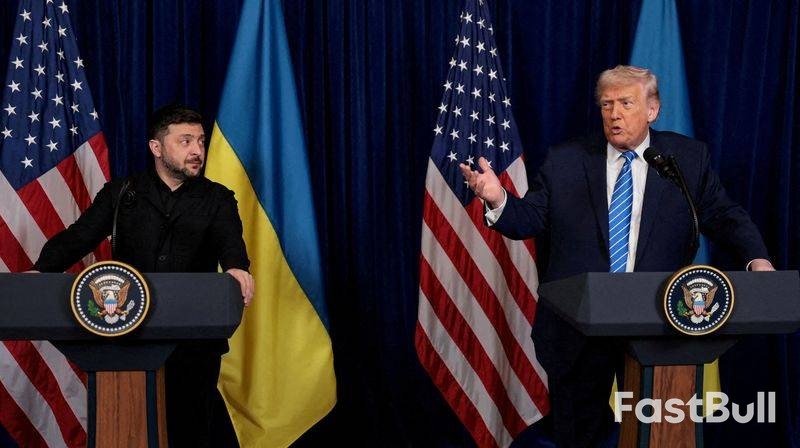
The U.S. International Development Finance Corporation (DFC) has officially launched an online portal for its new U.S.-Ukraine Reconstruction Investment Fund (URIF), inviting project submissions for what it expects to be a $200 million vehicle by the end of the year.
The fund, which began operations in December, was established as part of a minerals agreement signed by the two countries in April. It aims to fast-track investments into Ukraine’s critical industries, with the first projects expected to be announced in the coming months.
"We look forward to reviewing project proposals and making our first investments in the months ahead," said Conor Coleman, DFC's head of investments and a board member of the fund.
DFC CEO Ben Black stated that the portal's launch highlights President Donald Trump's commitment to securing a lasting peace in Ukraine by enabling investments that advance the shared national interests of both nations.
The DFC has outlined several key areas for investment. The fund is designed to inject capital into projects that are vital for Ukraine's economic resilience and future growth.
Priority sectors for proposals include:
• Critical Minerals: Both upstream and midstream projects.
• Energy: Power generation, transmission, and hydrocarbon extraction.
• Infrastructure: Transport and logistics.
• Technology: Information and communications technology (ICT) and other emerging technologies.
In its initial years, the fund is expected to prioritize equity and equity-like investments to drive long-term value.
The creation of the URIF stems from a minerals deal Kyiv signed after months of pressure from the Trump administration. The agreement grants the U.S. preferential access to new Ukrainian mineral projects in exchange for investment, a move intended to secure ongoing support from Washington.
A senior U.S. official noted that the deal has significantly improved dialogue with Kyiv and revitalized the U.S.-Ukraine relationship.

However, officials acknowledge the complexities of investing in the country, which will mark the fourth anniversary of Russia's invasion on February 24. The U.S. will require that all projects satisfy the interests of both governments and generate commercial returns.
The fund launched with $150 million in seed money and has already received an additional $23 million from hydrocarbon auctions. The senior U.S. official stated the fund is "ballparking around $200 million" by the year's end.
The URIF is structured to expand over time and is designed to encourage co-investment from other international bodies, including the World Bank and the European Bank for Reconstruction and Development.
Unlike typical private equity projects, the fund's investments will focus on strategic sectors and begin immediately, without waiting for a ceasefire. Officials emphasized that a key goal is to mobilize private capital to invest alongside the fund.
A significant advantage, according to the official, is that these projects will "carry both a U.S. and Ukrainian flag." This dual backing is intended to offer a layer of protection and encourage greater private sector participation in Ukraine's reconstruction efforts.
White Label
Data API
Web Plug-ins
Poster Maker
Affiliate Program
The risk of loss in trading financial instruments such as stocks, FX, commodities, futures, bonds, ETFs and crypto can be substantial. You may sustain a total loss of the funds that you deposit with your broker. Therefore, you should carefully consider whether such trading is suitable for you in light of your circumstances and financial resources.
No decision to invest should be made without thoroughly conducting due diligence by yourself or consulting with your financial advisors. Our web content might not suit you since we don't know your financial conditions and investment needs. Our financial information might have latency or contain inaccuracy, so you should be fully responsible for any of your trading and investment decisions. The company will not be responsible for your capital loss.
Without getting permission from the website, you are not allowed to copy the website's graphics, texts, or trademarks. Intellectual property rights in the content or data incorporated into this website belong to its providers and exchange merchants.
Not Logged In
Log in to access more features

FastBull Membership
Not yet
Purchase
Log In
Sign Up