• Trade
  • Markets
  • Copy
  • Contests
  • News
  • 24/7
  • Calendar
  • Q&A
  • Chats
Trending
Screeners
SYMBOL
LAST
BID
ASK
HIGH
LOW
NET CHG.
%CHG.
SPREAD
SPX
S&P 500 Index
6920.92
6920.92
6920.92
6965.70
6919.18
-23.90
-0.34%
--
DJI
Dow Jones Industrial Average
48996.07
48996.07
48996.07
49621.43
48951.99
-466.00
-0.94%
--
IXIC
NASDAQ Composite Index
23584.26
23584.26
23584.26
23723.37
23504.22
+37.10
+ 0.16%
--
USDX
US Dollar Index
98.800
98.880
98.800
98.990
98.760
-0.120
-0.12%
--
EURUSD
Euro / US Dollar
1.16534
1.16541
1.16534
1.16576
1.16359
+0.00115
+ 0.10%
--
GBPUSD
Pound Sterling / US Dollar
1.34521
1.34532
1.34521
1.34586
1.34190
+0.00314
+ 0.23%
--
XAUUSD
Gold / US Dollar
4631.46
4631.87
4631.46
4639.52
4588.51
+45.36
+ 0.99%
--
WTI
Light Sweet Crude Oil
61.699
61.729
61.699
61.750
60.145
+0.843
+ 1.39%
--

Community Accounts

Signal Accounts
--
Profit Accounts
--
Loss Accounts
--
View More

Become a signal provider

Sell trading signals to earn additional income

View More

Guide to Copy Trading

Get started with ease and confidence

View More

Signal Accounts for Members

All Signal Accounts

Best Return
  • Best Return
  • Best P/L
  • Best MDD
Past 1W
  • Past 1W
  • Past 1M
  • Past 1Y

All Contests

  • All
  • Trump Updates
  • Recommend
  • Stocks
  • Cryptocurrencies
  • Central Banks
  • Featured News
Top News Only
Share

EU Commission Chief Von Der Leyen: Arctic Securty Is A Topic For The EU, We Have Invested In Greenland Relations

Share

Russian Foreign Minister Lavrov: It Would Be Helpful If The USA Briefed Russia On Latest Ukraine Peace Efforts And Coalition Of Willing Actions

Share

EU Commission Chief Von Der Leyen: The Glue Between NATO Allies Is One For All All For One

Share

Just One In Five Americans Support Trump's Efforts To Acquire Greenland, Reuters/Ipsos Poll Finds

Share

[Bitcoin Hodl Strategy Currently Has An Unrealized Gain Of 26.3%, Approximately $13.63 Billion] January 14Th, According To Htx Market Data, As Bitcoin Briefly Broke Through $96,000, It Is Now Trading At $95,176. Strategy'S Bitcoin Position Is Currently Unrealized Gain Of 26.3%, Approximately $13.63 Billion.As Of January 11, 2026, Strategy Holds 687,410 Btc, With A Total Value Of Around $51.8 Billion, And An Average Purchase Price Of About $75,353

Share

Russian Foreign Minister Lavrov: Such Ideas Are Designed To Buy Time For The Ukrainian Leadership

Share

Lavrov, Asked About Witkoff And Kushner Coming To Moscow For Talks, Says Putin Has Repeatedly Said He Is Open To Talks On Ukraine If They Are Of A Serious Nature

Share

Economic Confrontation Replaces Armed Conflict As Top Risk In Wef Survey

Share

Russian Foreign Minister Lavrov: USA Methods On World Stage Reflect Fact That Its Competitive Position Is Steadily Worsening

Share

Russian Foreign Minister Lavrov: Russia Needs To Keep Working With Iran To Implement Bilateral Agreements

Share

Russian Foreign Minister Lavrov: USA Actions Focused On Oil And Getting Other Resources Make It Look Unreliable

Share

Russian Foreign Minister Lavrov: A Third Party Cannot Change The Nature Of Ties Between Russia And Iran

Share

Indonesia Tin Exporters Association Estimates Tin Production Quota Of Around 60000 Metric Tons For 2026

Share

Parliament Appoints Mykhailo Fedorov As Ukraine's Defence Minister

Share

Russia's Foreign Minister Lavrov On Venezuela: United States Aims To Destroy Model Of Globalisation

Share

EU Commission Chief Von Der Leyen: Proposal On Reparations Loan Based On Russian Assets Remains On The Table

Share

EU Commission Chief Von Der Leyen: Money Will Be To Buy Equipment Mainly From EU And Efta Countires, But Occasionally Also For Equipment From Outside The EU

Share

EU Commission Chief Von Der Leyen: 90 Billion Euros For Ukraine In 2026-2027 Will Be Split In Two Parts : 60 Billion For Military Support And 30 Billion For Budget Suport

Share

[US Prosecutor Says Subpoenaing For Powell Not An Attack On The Federal Reserve] On The 13th Local Time, U.S. Attorney For The District Of Columbia, Jeanine Piro, Said That Issuing A Subpoena And Launching A Criminal Investigation Against Federal Reserve Chairman Jerome Powell Was Intended To Demonstrate That "no One Is Above The Law" And Should Not Be Seen As An Attack On The Fed's So-called "independence"

Share

Indonesia May Approve Nickel Ore Production Quota Of Around 260 Million Metric Tons In 2026 -Local Media, Citing Mining Official

TIME
ACT
FCST
PREV
U.S. Cleveland Fed CPI MoM (Dec)

A:--

F: --

P: --

China, Mainland M0 Money Supply YoY (Dec)

--

F: --

P: --

China, Mainland M1 Money Supply YoY (Dec)

--

F: --

P: --

China, Mainland M2 Money Supply YoY (Dec)

--

F: --

P: --

U.S. EIA Natural Gas Production Forecast For The Next Year (Jan)

A:--

F: --

P: --

U.S. EIA Short-Term Crude Production Forecast For The Next Year (Jan)

A:--

F: --

P: --

U.S. EIA Short-Term Crude Production Forecast For The Year (Jan)

A:--

F: --

P: --

EIA Monthly Short-Term Energy Outlook
U.S. 30-Year Bond Auction Avg. Yield

A:--

F: --

P: --

Argentina 12-Month CPI (Dec)

A:--

F: --

P: --

U.S. Budget Balance (Dec)

A:--

F: --

P: --

Argentina CPI MoM (Dec)

A:--

F: --

P: --

Argentina National CPI YoY (Dec)

A:--

F: --

P: --

Richmond Federal Reserve President Barkin delivered a speech.
U.S. API Weekly Cushing Crude Oil Stocks

A:--

F: --

P: --

U.S. API Weekly Crude Oil Stocks

A:--

F: --

P: --

U.S. API Weekly Refined Oil Stocks

A:--

F: --

P: --

U.S. API Weekly Gasoline Stocks

A:--

F: --

P: --

South Korea Unemployment Rate (SA) (Dec)

A:--

F: --

P: --

Japan Reuters Tankan Non-Manufacturers Index (Jan)

A:--

F: --

P: --

Japan Reuters Tankan Manufacturers Index (Jan)

A:--

F: --

P: --

China, Mainland Exports YoY (CNH) (Dec)

A:--

F: --

P: --

China, Mainland Trade Balance (USD) (Dec)

A:--

F: --

P: --

China, Mainland Trade Balance (CNH) (Dec)

A:--

F: --

P: --

China, Mainland Exports (Dec)

A:--

F: --

P: --

China, Mainland Imports YoY (CNH) (Dec)

A:--

F: --

P: --

China, Mainland Imports (CNH) (Dec)

A:--

F: --

P: --

China, Mainland Imports YoY (USD) (Dec)

A:--

F: --

P: --

China, Mainland Exports YoY (USD) (Dec)

A:--

F: --

P: --

U.K. 10-Year Note Auction Yield

A:--

F: --

P: --

Canada Leading Index MoM (Dec)

--

F: --

P: --

U.S. MBA Mortgage Application Activity Index WoW

--

F: --

P: --

U.S. Core PPI YoY (Nov)

--

F: --

P: --

U.S. PPI MoM (SA) (Nov)

--

F: --

P: --

U.S. PPI YoY (Nov)

--

F: --

P: --

U.S. Current Account (Q3)

--

F: --

P: --

U.S. Retail Sales YoY (Nov)

--

F: --

P: --

U.S. Retail Sales (Nov)

--

F: --

P: --

U.S. Core Retail Sales MoM (Nov)

--

F: --

P: --

U.S. PPI YoY (Excl. Food, Energy & Trade) (Nov)

--

F: --

P: --

U.S. PPI MoM Final (Excl. Food, Energy and Trade) (SA) (Nov)

--

F: --

P: --

U.S. Core Retail Sales (Nov)

--

F: --

P: --

U.S. Retail Sales MoM (Excl. Automobile) (SA) (Nov)

--

F: --

P: --

U.S. Retail Sales MoM (Nov)

--

F: --

P: --

U.S. Retail Sales MoM (Excl. Gas Stations & Vehicle Dealers) (SA) (Nov)

--

F: --

P: --

U.S. Core PPI MoM (SA) (Nov)

--

F: --

P: --

Philadelphia Fed President Henry Paulson delivers a speech
U.S. Commercial Inventory MoM (Oct)

--

F: --

P: --

U.S. Existing Home Sales Annualized Total (Dec)

--

F: --

P: --

U.S. Existing Home Sales Annualized MoM (Dec)

--

F: --

P: --

U.S. EIA Weekly Cushing, Oklahoma Crude Oil Stocks Change

--

F: --

P: --

U.S. EIA Weekly Crude Stocks Change

--

F: --

P: --

U.S. EIA Weekly Gasoline Stocks Change

--

F: --

P: --

U.S. EIA Weekly Crude Demand Projected by Production

--

F: --

P: --

U.S. EIA Weekly Crude Oil Imports Changes

--

F: --

P: --

U.S. EIA Weekly Heating Oil Stock Changes

--

F: --

P: --

U.S. Refinitiv/Ipsos Primary Consumer Sentiment Index (PCSI) (Jan)

--

F: --

P: --

Japan Domestic Enterprise Commodity Price Index YoY (Dec)

--

F: --

P: --

Japan Domestic Enterprise Commodity Price Index MoM (Dec)

--

F: --

P: --

Japan PPI MoM (Dec)

--

F: --

P: --

Australia Consumer Inflation Expectations (Jan)

--

F: --

P: --

Q&A with Experts
    • All
    • Chatrooms
    • Groups
    • Friends
    3296682 flag
    The overall trend for gold is unlikely to decline.
    3296682 flag
    Buy low
    Ashok flag
    gold will break the law
    JustLeon flag
    SlowBear ⛅
    @SlowBear ⛅fr fam but yo there are alot of multi millionaires in South Africa who trade currencies bro😭😭
    Vibhav Rai flag
    hello everyone,what you ppl trading on ?
    SlowBear ⛅ flag
    JustLeon
    @JustLeon Really? then you are about to be one of them boss
    SlowBear ⛅ flag
    Vibhav Rai
    hello everyone,what you ppl trading on ?
    @Vibhav RaiAs you can see my boss here ->>> @JustLeon is buying EURCAD while others are in GBPUSD i am curently holding Gold long
    SlowBear ⛅ flag
    SlowBear ⛅ flag
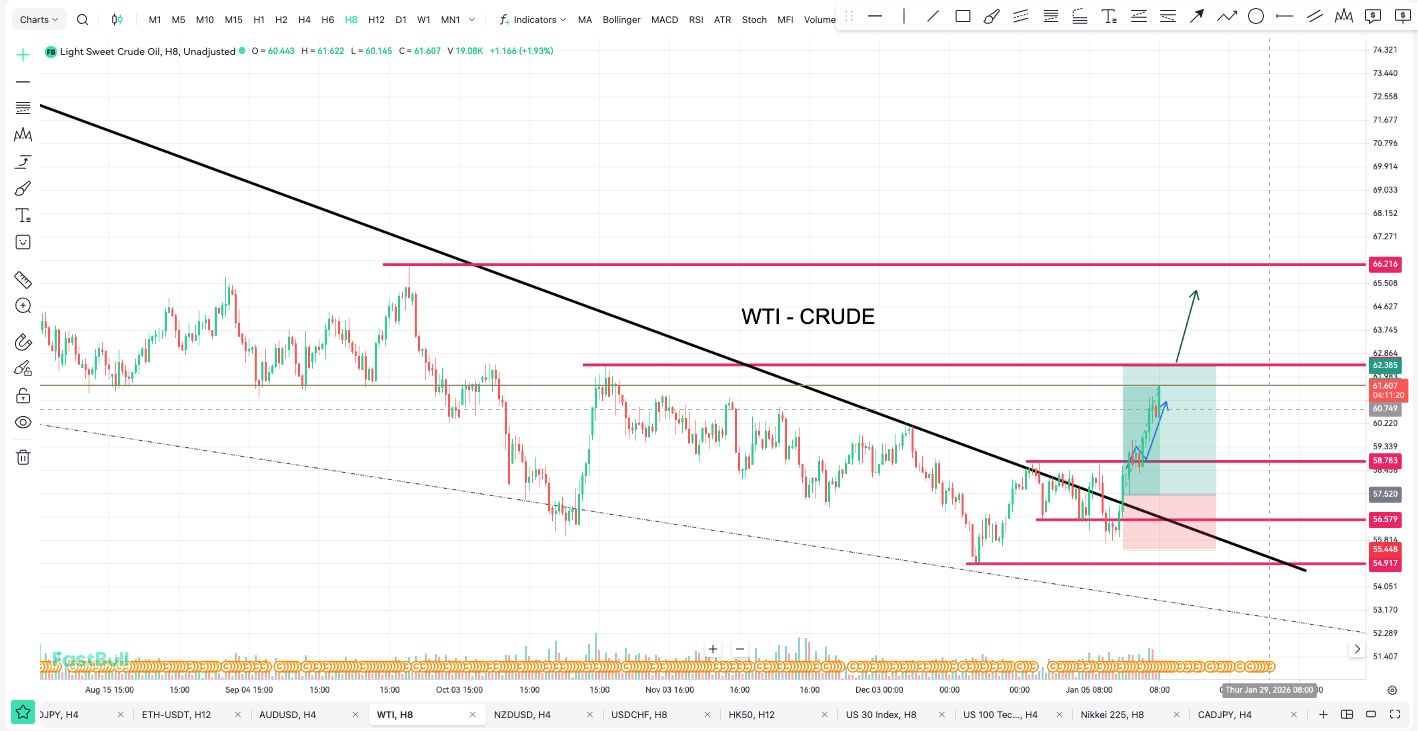
    @Vibhav Rai WTIO (US Cride) is nother trade i am curently holding bro, so far it looks really cool!
    SlowBear ⛅ flag
    SlowBear ⛅
    [@Vibhav Rai] WTIO (US Cride) is nother trade i am curently holding bro, so far it looks really cool!
    Vibhav Rai flag
    SlowBear ⛅
    @Vibhav Rai WTIO (US Cride) is nother trade i am curently holding bro, so far it looks really cool!
    @SlowBear ⛅ i think crude can go touch 78 theres liquidity there with pull back what say??
    SlowBear ⛅ flag
    Vibhav Rai
    @Vibhav Rai Ultimately yes, but i am currently tarheting 63/66/70 and from there i am fluid!
    Vibhav Rai flag
    SlowBear ⛅
    @SlowBear ⛅ 66.571 & 70.520
    Vibhav Rai flag
    good going
    SlowBear ⛅ flag
    Vibhav Rai
    @Vibhav Rai That is corret bro, those are the exact location if we are to type them complete
    SlowBear ⛅ flag
    Vibhav Rai
    good going
    @Vibhav RaiAre you also buying WTI? or you are in for Gold?
    EuroTrader flag
    James trader
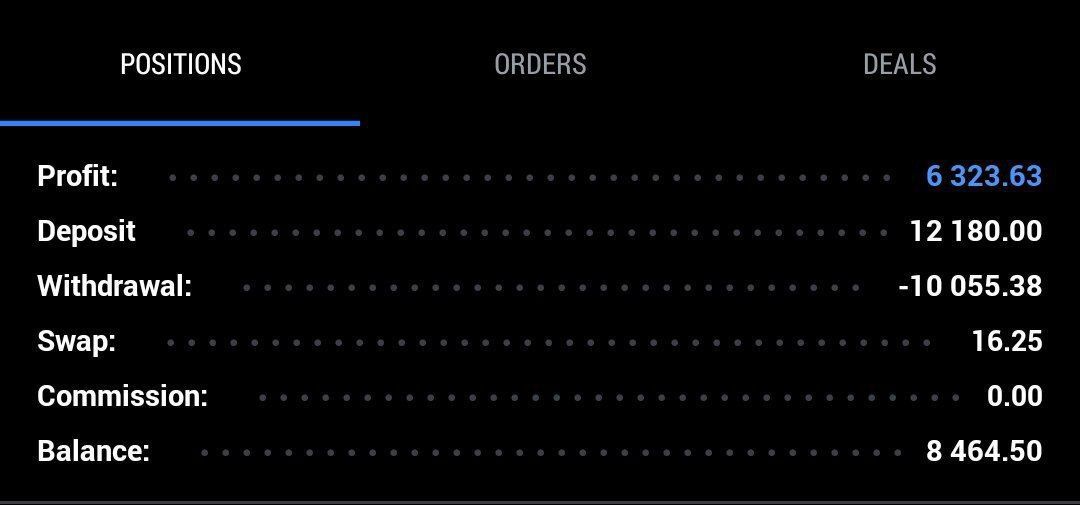
    @James trader Wowww. This is nice. Congrats brother on your big win. Am so happy for you
    Vibhav Rai flag
    SlowBear ⛅
    @SlowBear ⛅no i dont trade oil but i keep track of it only XAUUSD and if i find good setups than any pairs
    EuroTrader flag
    3296682
    The overall trend for gold is unlikely to decline.
    @Visitor3296682That's because the fundamentals still support upside movements for Gold
    Nawhdir. Øt flag
    Iran's domestic situation is entering a phase of increasingly severe economic crisis. High inflationary pressures, coupled with a crisis of confidence in the domestic currency, are putting the economy of the Land of the Mullahs under severe pressure.
    Type here...
    Add Symbol or Code

      No matching data

      All
      Trump Updates
      Recommend
      Stocks
      Cryptocurrencies
      Central Banks
      Featured News
      • All
      • Russia-Ukraine Conflict
      • Middle East Flashpoint
      • All
      • Russia-Ukraine Conflict
      • Middle East Flashpoint
      Search
      Products

      Charts Free Forever

      Chats Q&A with Experts
      Screeners Economic Calendar Data Tools
      Membership Features
      Data Warehouse Market Trends Institutional Data Policy Rates Macro

      Market Trends

      Market Sentiment Order Book Forex Correlations

      Top Indicators

      Charts Free Forever
      Markets

      News

      News Analysis 24/7 Columns Education
      From Institutions From Analysts
      Topics Columnists

      Latest Views

      Latest Views

      Trending Topics

      Top Columnists

      Latest Update

      Signals

      Copy Rankings Latest Signals Become a signal provider AI Rating
      Contests
      Brokers

      Overview Brokers Assessment Rankings Regulators News Claims
      Broker listing Forex Brokers Comparison Tool Live Spread Comparison Scam
      Q&A Complaint Scam Alert Videos Tips to Detect Scam
      More

      Business
      Events
      Careers About Us Advertising Help Center

      White Label

      Data API

      Web Plug-ins

      Affiliate Program

      Awards Institution Evaluation IB Seminar Salon Event Exhibition
      Vietnam Thailand Singapore Dubai
      Fans Party Investment Sharing Session
      FastBull Summit BrokersView Expo
      Recent Searches
        Top Searches
          Markets
          News
          Analysis
          User
          24/7
          Economic Calendar
          Education
          Data
          • Names
          • Latest
          • Prev

          View All

          No data

          Scan to Download

          Faster Charts, Chat Faster!

          Download App
          English
          • English
          • Español
          • العربية
          • Bahasa Indonesia
          • Bahasa Melayu
          • Tiếng Việt
          • ภาษาไทย
          • Français
          • Italiano
          • Türkçe
          • Русский язык
          • 简中
          • 繁中
          Open Account
          Search
          Products
          Charts Free Forever
          Markets
          News
          Signals

          Copy Rankings Latest Signals Become a signal provider AI Rating
          Contests
          Brokers

          Overview Brokers Assessment Rankings Regulators News Claims
          Broker listing Forex Brokers Comparison Tool Live Spread Comparison Scam
          Q&A Complaint Scam Alert Videos Tips to Detect Scam
          More

          Business
          Events
          Careers About Us Advertising Help Center

          White Label

          Data API

          Web Plug-ins

          Affiliate Program

          Awards Institution Evaluation IB Seminar Salon Event Exhibition
          Vietnam Thailand Singapore Dubai
          Fans Party Investment Sharing Session
          FastBull Summit BrokersView Expo

          Canada-China Trade Declines Ahead of PM Carney's Beijing Visit

          Michael Ross

          Data Interpretation

          Political

          Remarks of Officials

          Economic

          China–U.S. Trade War

          Summary:

          Canadian PM Carney in China amid falling trade, seeking to mend strained ties and assert strategic autonomy.

          China's imports from Canada fell in 2025 for the first time since 2020, according to official data released just hours before Canadian Prime Minister Mark Carney’s scheduled arrival in Beijing. The figures underscore the economic leverage China holds as the two nations navigate a period of tense relations.

          The high-stakes visit, the first by a Canadian prime minister since 2017, aims to mend a diplomatic rift that has strained economic ties.
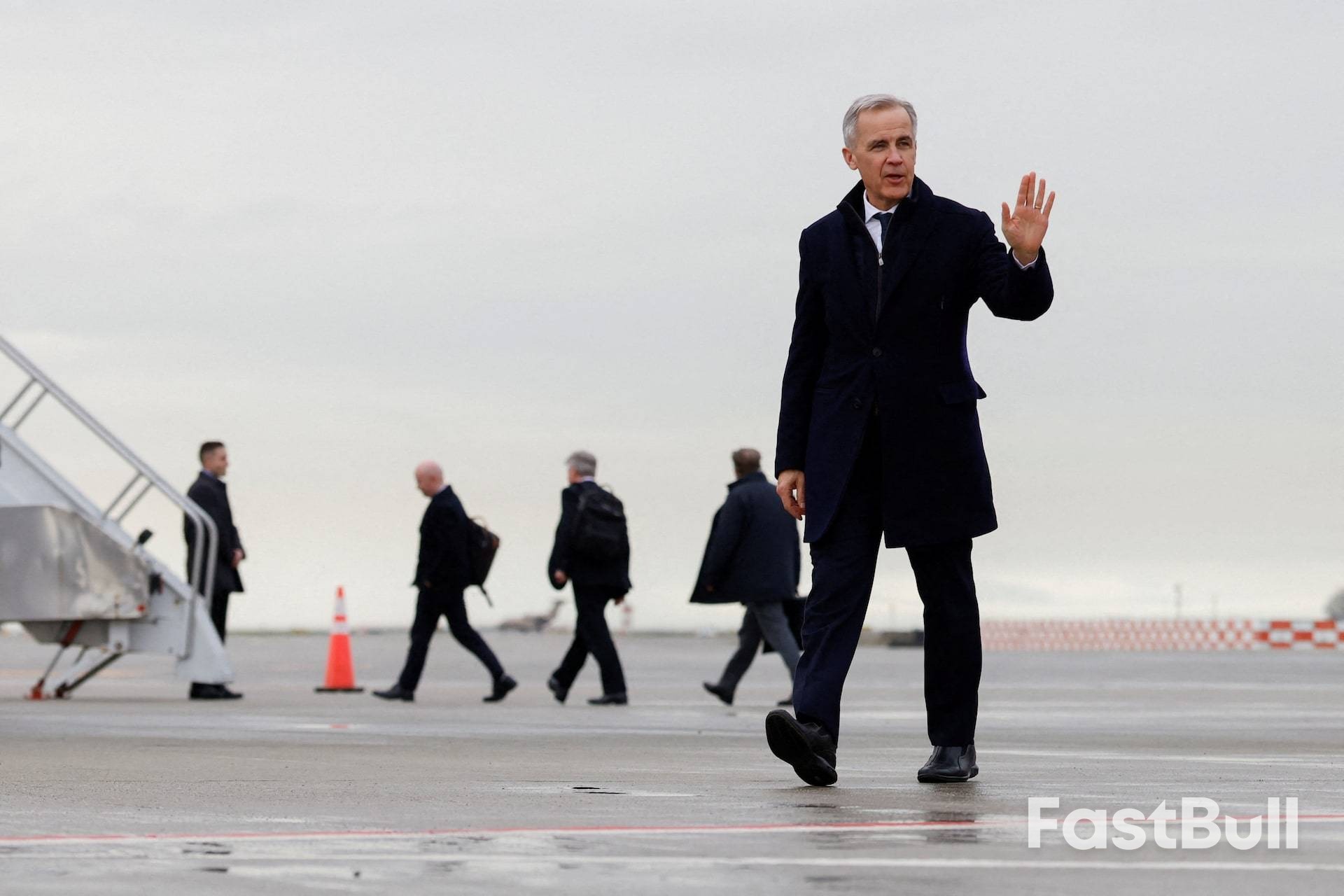
          Canadian Prime Minister Mark Carney travels to China for a high-stakes diplomatic visit aimed at stabilizing trade relations.

          A Look at the Sharp Downturn in Trade

          According to China's customs authority, Chinese imports from Canada dropped by 10.4% in 2025, falling to $41.7 billion. This marks a notable decline from the all-time high of $46.6 billion recorded in 2024.

          The last time inbound shipments from Canada decreased was during the pandemic in 2020, when they fell by 22.3%. The trend isn't isolated to Canada; Chinese imports from the United States also slumped by 14.6% in 2025.

          Carney's Mission to Repair Strained Relations

          Prime Minister Mark Carney is expected to arrive in Beijing on Wednesday with a focus on narrowing the diplomatic divide. Relations soured significantly in 2024 after former Prime Minister Justin Trudeau mirrored the Biden administration's policy by imposing 100% tariffs on Chinese electric vehicles.

          "I'm headed to Beijing," Carney announced on social media as he departed. "China is our second-largest trading partner, and the world's second largest economy. A pragmatic and constructive relationship between our nations will create greater stability, security, and prosperity on both sides of the Pacific."

          The trip follows a positive meeting between Carney and Chinese leader Xi Jinping in South Korea in October. While that encounter did not result in major breakthroughs—Chinese tariffs continue to block Canadian canola from its largest market—both leaders agreed to move bilateral ties forward, leading to Xi's invitation.

          The US Factor: Seeking 'Strategic Autonomy'

          Canada's renewed engagement with China is also driven by a need to diversify its export markets. This comes after U.S. President Donald Trump imposed tariffs on Canada last year and made inflammatory remarks about the country's sovereignty.

          Ahead of the visit, Chinese state media advised Carney to maintain "strategic autonomy" from the United States. An editorial in the state-run China Daily on Monday argued that Ottawa could better serve its interests by working directly with Beijing to manage differences.

          The outlet suggested that previous setbacks in the relationship were caused by the Trudeau government's policy of aligning with Washington's efforts to contain China, and that upholding strategic independence would help avoid similar outcomes.

          To stay updated on all economic events of today, please check out our Economic calendar
          Risk Warnings and Disclaimers
          You understand and acknowledge that there is a high degree of risk involved in trading. Following any strategies or investment methods may lead to potential losses. The content on the site is provided by our contributors and analysts for information purposes only. You are solely responsible for determining whether any trading assets, securities, strategy, or any other product is suitable for investing based on your own investment objectives and financial situation.
          Add to Favorites
          Share

          German Bankruptcies Hit 20-Year High in 2025

          Oliver Scott

          Remarks of Officials

          Data Interpretation

          Economic

          Germany’s corporate landscape faced a severe downturn in 2025, as business bankruptcies surged to their highest level in two decades. The wave of insolvencies accelerated late in the year, casting a shadow over the economy despite government promises of a turnaround.

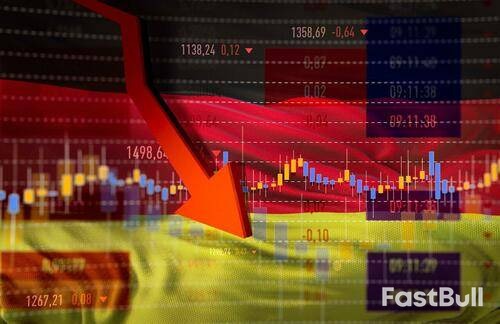
          Figure 1: Germany's economy faced a historic wave of corporate insolvencies in 2025, reaching a 20-year peak and signaling significant financial distress.

          The Scale of the Insolvency Wave

          Data from the Leibniz Institute for Economic Research Halle (IWH) reveals a total of 17,604 corporate bankruptcies for the year. This figure translates to an average of 48 partnerships and corporations failing every day.

          The institute noted that this total is approximately 5% higher than the number recorded during the 2009 financial crisis, highlighting the severity of the current situation.

          The problem worsened significantly in the final month of the year. December saw 1,519 insolvency applications, a figure 75% higher than the monthly average for December between 2016 and 2019.

          Jonas Eckhardt, an economic expert at the transformation consultancy Falkensteg, described the situation bluntly: "The German economy is no longer just struggling with headaches. She's got a fever. That won't change anytime soon."

          Key Sectors Under Pressure

          According to Professor Dr. Steffen Müller, Head of IWH Insolvency Research, the rise in bankruptcies was a broad-based phenomenon affecting the entire economy. However, certain sectors were hit particularly hard.

          • Hospitality

          • Construction

          • Real Estate

          Müller identified the interest rate increases at the end of 2022 as a primary factor, noting that higher borrowing costs stalled investment and expansion plans across these industries.

          From Local Businesses to Large Corporations

          The financial distress has impacted companies of all sizes. In Saxony, a sausage company was forced to dismiss its entire staff. In Lower Saxony, the Leifert bakery chain’s insolvency affected 220 employees, while the failure of another large bakery, Hansen Mürwik, impacted 145 workers.

          Large corporations have not been immune. A survey by Falkensteg found that 471 companies with annual sales over €10 million filed for insolvency in 2025, marking a 25% increase from the previous year. The number of these major insolvencies has nearly tripled since 2021.

          National Concerns and Broader European Woes

          The escalating crisis has captured the attention of Germany’s leadership. Chancellor Friedrich Merz recently stated that parts of the German economy are in a "very critical state." While he did not specify which sectors, the automotive industry is widely seen as being under intense pressure, largely due to rising competition from Chinese manufacturers.

          This economic strain is not unique to Germany. French President Emmanuel Macron recently traveled to China, telling leaders there that "European industry is facing a 'life or death' moment." Macron argued that China's trade surplus is "untenable" and warned that Europe may resort to tariffs if China does not adjust its trade practices to allow for more European imports.

          The trip, however, concluded without any major business deals, and analysts widely viewed it as unsuccessful in achieving its primary objectives. In a notable observation, China has achieved its economic status with very low levels of immigration, with the total number of foreigners in the country comparable to the foreign population of the city of Berlin alone.

          Outlook for 2026 Remains Grim

          While some experts, like Professor Müller, suggest that insolvencies can serve as a market adjustment mechanism to make way for more resilient companies, the immediate outlook is negative.

          Jonas Eckhardt emphasized that for many medium-sized businesses, the current climate is no longer a simple downturn but a "question of survival." Experts do not foresee a recovery in 2026 and instead predict a further increase in bankruptcies, particularly among large companies.

          To stay updated on all economic events of today, please check out our Economic calendar
          Risk Warnings and Disclaimers
          You understand and acknowledge that there is a high degree of risk involved in trading. Following any strategies or investment methods may lead to potential losses. The content on the site is provided by our contributors and analysts for information purposes only. You are solely responsible for determining whether any trading assets, securities, strategy, or any other product is suitable for investing based on your own investment objectives and financial situation.
          Add to Favorites
          Share

          China's Record Oil Imports Signal Strategic Stockpiling

          Dark Current

          Data Interpretation

          Economic

          Energy

          Commodity

          China's crude oil imports surged to an all-time high last year, with official statistics showing an average daily intake of 11.55 million barrels. This amounted to a total of 557.73 million tons for the year, marking a 4.4% increase from 2024.

          The momentum continued into the final month of the year, as December imports also set a new record. The daily average for the month hit 13.18 million barrels, for a total of 55.97 million tons.

          Record Imports Challenge Demand Slowdown Narrative

          These record-breaking figures cast doubt on the narrative that China's oil demand is entering a permanent decline driven by the electrification of its transport sector.

          However, a significant portion of these imports did not fuel the economy directly but instead flowed into the country's growing strategic and commercial stockpiles. Despite this, China's strong purchasing activity has provided crucial support for global oil prices, helping to counteract production hikes from OPEC+ and persistent concerns over the global demand outlook amid uncertain U.S. trade policies.

          The Real Driver: A Massive Stockpiling Strategy

          The scale of China's oil stockpiling became particularly clear starting in March 2025. Frederic Lasserre, global head of research and analysis at commodity trading firm Gunvor, highlighted an "impressive rate of stockpiling, like close to one million barrels per day" around that time.

          Lasserre anticipates that China will continue building its crude reserves well into 2026. He noted that the country's storage facilities are only about 60% full, suggesting significant capacity remains for further inventory accumulation.

          Building for the Future: Expanding Storage Capacity

          To support this long-term strategy, China is aggressively building out its storage infrastructure. A total of 11 new storage sites are planned for construction across the country over 2025 and 2026.

          Key details on the expansion include:

          • Total New Capacity: The new sites will add a combined storage capacity of approximately 169 million barrels.

          • Import Equivalence: This volume is equal to roughly two weeks' worth of China's crude oil imports.

          • Historical Context: This follows the addition of between 180 and 190 million barrels of new storage capacity between 2020 and 2024, according to data from Vortexa and Kpler.

          To stay updated on all economic events of today, please check out our Economic calendar
          Risk Warnings and Disclaimers
          You understand and acknowledge that there is a high degree of risk involved in trading. Following any strategies or investment methods may lead to potential losses. The content on the site is provided by our contributors and analysts for information purposes only. You are solely responsible for determining whether any trading assets, securities, strategy, or any other product is suitable for investing based on your own investment objectives and financial situation.
          Add to Favorites
          Share

          Yen Slides To 18-Month Low As Election Uncertainty And Fiscal Concerns Weigh On Markets

          Gerik

          Forex

          Economic

          Election Speculation And Renewed Pressure On The Yen

          The Japanese yen fell to its weakest level in a year and a half on Wednesday, reflecting heightened investor sensitivity to domestic political uncertainty. Reports suggesting that Prime Minister Sanae Takaichi may call a snap lower house election on February 8 revived expectations of potential fiscal expansion, a scenario that often coincides with concerns over higher government spending and increased debt issuance.
          During trading, the yen declined as much as 0.2 percent to 159.45 per dollar, marking its weakest point since July 2024. Although the currency later recovered modestly, it remained under pressure, last trading near 159.215 per dollar. The movement underscores how political developments can influence currency markets through expectations about fiscal direction rather than immediate policy actions, a relationship that is primarily correlational but reinforced by market precedent.

          Bond Auction Signals Investor Caution

          Pressure on the yen intensified following a lackluster auction of five-year Japanese government bonds. Demand at the auction was described as cautious, with investors seeking higher yields and refraining from aggressive positioning. According to Mizuho’s chief desk strategist Shoki Omori, bidding reflected unease linked to possible dissolution of the lower house, concerns about fiscal expansion, and elevated market volatility.
          The subdued response to the bond sale suggests investor hesitation toward increased government borrowing, especially in an environment where fiscal policy uncertainty is rising. While weak auction demand does not automatically translate into currency depreciation, it often coincides with softer sentiment toward government assets, reinforcing downward pressure on the yen through correlated risk perceptions.

          Approaching Intervention Territory

          As the yen edges closer to the psychologically significant level of 160 per dollar, market participants are increasingly alert to the possibility of intervention by Japanese authorities. Analysts at DBS noted that while verbal warnings remain the primary defensive tool, the absence of clear guidance regarding the timing or scale of any intervention continues to sustain speculative pressure against the currency.
          This dynamic illustrates how uncertainty itself can amplify currency weakness. Without explicit signals from policymakers, traders tend to test perceived tolerance levels, particularly when momentum favors further depreciation.

          US Dollar Stability And Federal Reserve Expectations

          The yen’s weakness unfolded alongside relative stability in the US dollar, which held near a one-month high. US inflation data for December showed consumer prices rising 0.3 percent month-on-month, broadly in line with expectations. This reinforced market consensus that the Federal Reserve will keep interest rates unchanged at its next meeting later in January.
          Fed funds futures now imply a 98.3 percent probability that rates will remain on hold, up from 95.6 percent the previous day. Support for Federal Reserve independence from global central bankers and senior Wall Street executives further stabilized dollar sentiment, even amid political rhetoric questioning the institution’s autonomy. Analysts emphasized that as long as inflation remains contained, indirect challenges to Fed independence are unlikely to trigger major market disruption, reflecting a causal link between inflation control and policy credibility.

          Global Currency And Risk Asset Movements

          Elsewhere in currency markets, volatility remained subdued during early Asian trading. The US dollar index was steady at 99.154, while the dollar traded flat against the offshore Chinese yuan at 6.9752, following data showing China ended the year with a record trade surplus of nearly 1.2 trillion dollars.
          The Australian and New Zealand dollars both gained around 0.2 percent, while the euro remained flat and sterling edged slightly higher. In digital asset markets, risk appetite appeared firmer. Bitcoin rose 1.4 percent to 95,390.91 dollars, its highest level in two months, while ether surged 4.2 percent to 3,342.43 dollars, the strongest level since mid-December.
          Overall, the yen’s decline highlights the sensitivity of foreign exchange markets to political and fiscal expectations. While no immediate policy shifts have occurred, speculation around elections, fiscal expansion, and bond market demand has combined to weaken sentiment toward the currency. Whether this pressure persists will depend less on short-term headlines and more on how clearly Japanese authorities communicate their fiscal and monetary intentions in the weeks ahead.
          To stay updated on all economic events of today, please check out our Economic calendar
          Risk Warnings and Disclaimers
          You understand and acknowledge that there is a high degree of risk involved in trading. Following any strategies or investment methods may lead to potential losses. The content on the site is provided by our contributors and analysts for information purposes only. You are solely responsible for determining whether any trading assets, securities, strategy, or any other product is suitable for investing based on your own investment objectives and financial situation.
          Add to Favorites
          Share

          China Tightens Leverage Controls As Margin Financing Requirement Is Lifted To Full Coverage

          Gerik

          Economic

          A Regulatory Shift Toward Stricter Risk Containment

          Chinese regulators have moved to tighten risk management in domestic equity markets by increasing the minimum margin financing ratio to 100 percent. Under the new rule, investors must now provide collateral equal to the full value of securities purchased with borrowed funds, compared with the previous threshold of 80 percent. The policy applies uniformly across the Shenzhen, Shanghai, and Beijing stock exchanges, highlighting a coordinated regulatory response rather than a localized adjustment.
          This decision reflects regulators’ growing sensitivity to leverage accumulation during periods of rising market optimism. By raising the margin requirement, authorities effectively reduce the scale of positions investors can take without committing additional capital. The mechanism is direct in design, as higher collateral requirements mechanically constrain borrowing capacity and reduce leverage embedded in equity trading.

          Leverage Dynamics And Market Behavior

          The higher margin threshold does not eliminate margin trading activity among local funds and retail investors. Instead, it limits the extent to which investors can amplify exposure using borrowed money. As a result, speculative positioning becomes more capital-intensive, particularly for investors who rely heavily on leverage to enhance returns.
          Regulators have historically adjusted margin financing rules during phases of accelerated buying or when signs of excessive risk-taking emerge. In this case, the timing coincides with a strong start to the year for Chinese equities, supported by renewed risk appetite linked to the country’s technological progress. Margin loans had increased sharply, and trading turnover reached record levels, indicating a strong correlation between rising optimism and expanding leverage.

          Immediate Market Reaction And Investor Sentiment

          The announcement triggered a swift market response. Chinese equities reversed earlier gains, with the CSI 300 Index erasing a 1.2 percent advance after markets reopened from the mid-day break. This reaction suggests that a portion of the recent rally had been supported by leverage-sensitive positioning rather than purely long-term capital allocation.
          The link between the policy change and the market pullback is primarily causal in structure, as the sudden tightening of margin rules directly altered trading constraints and investor expectations. However, the magnitude of the decline also reflects broader sentiment dynamics, as markets recalibrate assumptions about regulatory tolerance for rapid asset price appreciation.

          Balancing Market Growth And Financial Stability

          The move underscores a familiar tension in China’s capital market governance. Authorities aim to support healthy market development while preventing destabilizing leverage cycles. Raising the margin financing ratio does not signal a rejection of equity market growth, but rather a recalibration of the conditions under which that growth occurs.
          By requiring full funding for leveraged purchases, regulators reinforce the principle that market participation should be backed by genuine capital commitment. This approach seeks to temper short-term speculative surges without undermining the structural role of equities in capital formation. In doing so, policymakers continue to prioritize financial stability as a core objective, even during periods of improving market confidence.
          To stay updated on all economic events of today, please check out our Economic calendar
          Risk Warnings and Disclaimers
          You understand and acknowledge that there is a high degree of risk involved in trading. Following any strategies or investment methods may lead to potential losses. The content on the site is provided by our contributors and analysts for information purposes only. You are solely responsible for determining whether any trading assets, securities, strategy, or any other product is suitable for investing based on your own investment objectives and financial situation.
          Add to Favorites
          Share

          Thailand's Economy to Rebound as BOT Signals Rate Cut Caution

          John Adams

          Commodity

          Political

          Remarks of Officials

          Forex

          Economic

          Central Bank

          Daily News

          The Bank of Thailand (BOT) expects the nation's economic growth to turn positive in the fourth quarter of 2025, but the central bank must be careful about deploying further interest rate cuts, according to Deputy Governor Piti Disyatat.

          "We expect the fourth quarter (gross domestic product) to be positive quarter-on-quarter," Piti stated, highlighting that this metric offers a clear view of near-term momentum. He affirmed that Thailand is on track to meet its annual growth forecast of 2.2% for 2025.

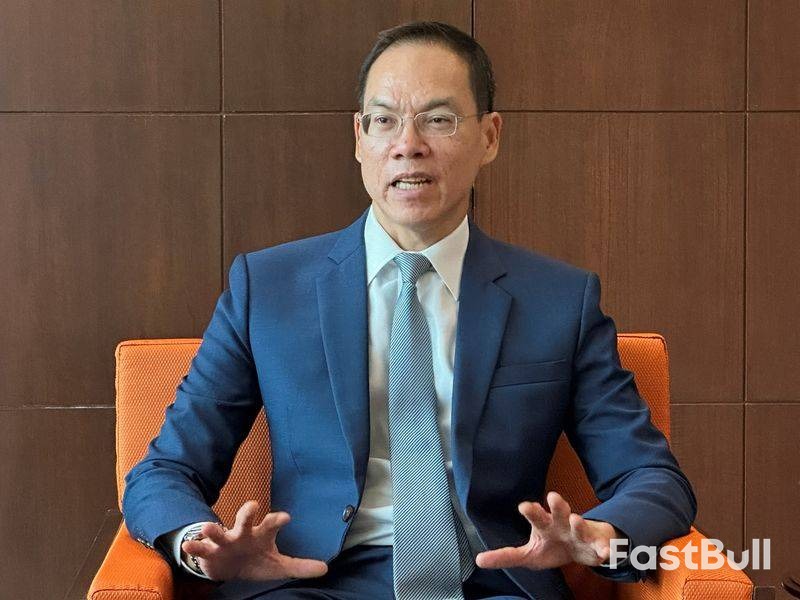
          Bank of Thailand Deputy Governor Piti Disyatat discusses the nation's economic outlook and the central bank's policy constraints.

          If this forecast holds, Southeast Asia's second-largest economy would sidestep a technical recession after contracting by 0.6% in the third quarter—its first decline in 11 quarters. The BOT projects growth will moderate to 1.5% this year before accelerating to 2.3% in 2027.

          Inflation and Monetary Policy Outlook

          Piti also anticipates that headline inflation will return to positive territory by March or April of this year. This follows a period of deflation, with annual headline inflation remaining negative for eight consecutive months through November. According to a Reuters poll, Thailand's December annual inflation is expected to be minus 0.34%. The central bank has forecast an average inflation rate of negative 0.1% for 2025, rising to 0.3% in 2026.

          In response to economic conditions, the BOT has been active, lowering its key interest rate five times since October 2024. These moves brought the rate down by a total of 125 basis points to 1.25%. Market participants, according to LSEG data, are pricing in at least one more rate cut in February.

          However, Piti signaled a more cautious approach ahead. "We are already running low on the policy space (and) have to be very judicious in using that room when the impact is most needed," he said. He assured that the BOT would use its "remaining ammunition" to counter potential shocks from tightening global financial conditions, deteriorating global markets, or a further slowdown in domestic demand.

          Managing Baht Volatility and Gold Trading

          A volatile Thai baht has compounded the country's economic challenges. The currency surged 8% in 2025, making it Asia's second-best performer but adding to headwinds for the economy. Other significant pressures include:

          • U.S. tariffs

          • Thailand's high household debt

          • A border conflict with Cambodia

          • Political uncertainty ahead of a February election

          The baht's sharp movements prompted the central bank to intervene heavily in the currency market during the second half of 2025. Piti clarified that the BOT does not target specific baht levels. "Our main focus is to make sure (baht) volatility is not excessive and doesn't get too driven by non-fundamental factors," he explained.

          To further manage the currency, the finance ministry is considering a tax on online gold transactions and measures to limit trading volumes by major players. While traders have opposed these steps, fearing they could diminish Thailand's role as a gold trading hub, Piti framed the objective differently.

          "It's not like we're trying to kill off all gold trade. We just try to reduce the amount of gold trading that is excessive in baht," he said. The central bank's goal is to encourage dollar-denominated gold trading to lessen the impact on the local currency. The BOT estimates that gold transactions by large traders will be equivalent to 50% of the country's 2025 GDP.

          This focus on gold comes after the precious metal rallied 64% in 2025—its largest annual increase in 46 years—driven by geopolitical tensions and expectations of U.S. rate cuts. Market analysts now foresee gold potentially reaching $5,000 per ounce in 2026.

          To stay updated on all economic events of today, please check out our Economic calendar
          Risk Warnings and Disclaimers
          You understand and acknowledge that there is a high degree of risk involved in trading. Following any strategies or investment methods may lead to potential losses. The content on the site is provided by our contributors and analysts for information purposes only. You are solely responsible for determining whether any trading assets, securities, strategy, or any other product is suitable for investing based on your own investment objectives and financial situation.
          Add to Favorites
          Share

          Vietnam’s FDI Outlook For 2026 Remains Resilient As Long-Term Capital Stays Committed

          Gerik

          Economic

          Short-Term Volatility And The Broader FDI Picture

          Although global financial conditions became more volatile in the second half of 2025, Vietnam’s ability to attract international investment is expected to remain broadly intact in 2026. Speaking at the Data Talk program on macroeconomic trends for 2025–2026, Tran Ngoc Bau, CEO of WiGroup, emphasized that Vietnam’s FDI outlook continues to follow a positive trajectory rather than a cyclical downturn.
          According to his assessment, foreign capital flows into Vietnam can be broadly separated into two distinct categories. One group consists of short-term, opportunity-driven capital that seeks interest rate differentials and rapid returns. The other represents long-term investment capital that evaluates structural factors such as economic growth potential, political stability, and Vietnam’s evolving position within regional and global production networks.

          Speculative Capital And The Normalization Of Risk Factors

          For speculative capital, the most significant risks in recent periods stemmed from negative interest rate differentials and heightened domestic and geopolitical uncertainties. These conditions contributed to capital volatility during 2025. However, moving into 2026, these pressures are widely viewed as having eased. As risk perceptions stabilize, the probability of a gradual return of short-term capital improves, although such flows remain inherently sensitive to global financial conditions. The relationship here is largely correlational, shaped by shifting risk sentiment rather than structural policy changes.
          In contrast, long-term investment capital continues to view Vietnam as a compelling destination. Political stability, consistent economic growth prospects, broad social consensus around development goals, and tax incentive policies form the core of this appeal. Tran Ngoc Bau stressed that the slowdown in registered FDI observed in the latter half of 2025 should be interpreted as a temporary adjustment rather than a weakening of Vietnam’s competitive position. Over the medium to long term, Vietnam’s capacity to attract global capital remains firmly in place.
          This perspective highlights an important distinction between cyclical investment pauses and structural investment decisions. While registration volumes may fluctuate, the underlying commitment of multinational firms tends to follow longer planning horizons linked to production capacity, market access, and supply chain resilience.

          Geopolitical Realignment And Supply Chain Shifts

          Reinforcing this view, Nguyen Duc Hai, Senior Investment Director at Manulife Investments Vietnam, pointed to global geopolitical dynamics as a decisive factor shaping capital flows. Increasing polarization and strategic separation between the United States and China are accelerating supply chain realignment. As firms seek to diversify manufacturing bases and reduce concentration risks, Vietnam has emerged as a strategically attractive alternative.
          In this context, Vietnam’s relevance is not solely derived from cost competitiveness. It is increasingly connected to the demand structure of major economies, particularly as the United States looks to secure alternative supply sources to meet large import needs. The link between geopolitical fragmentation and supply chain relocation reflects a causal mechanism, as strategic policy shifts directly influence corporate investment decisions.

          Institutional Credibility And Trade Integration

          Beyond supply chain positioning, Nguyen Duc Hai emphasized Vietnam’s cooperative stance toward international partners. Compliance with evolving US regulations, gradual market liberalization, and improvements in export transparency have strengthened institutional credibility. These elements contribute to investor confidence by reducing regulatory uncertainty and enhancing predictability in cross-border trade relationships.
          Vietnam’s commitment to free trade further reinforces this credibility. With a network of 17 signed free trade agreements, the country stands out in the region for its depth of trade integration. This framework expands market access for investors and lowers structural barriers to cross-border production and distribution.

          Market Access, Demographics, And Investment Horizons

          From an investor perspective, the decision to allocate capital to Vietnam extends beyond domestic market size. The country’s manufacturing capacity and high degree of integration into global trade networks allow firms to access international markets efficiently. Complementing this is a young demographic profile and a sizable labor force expected to remain available over the next 10 to 15 years. These factors collectively strengthen Vietnam’s long-term investment appeal, with their influence operating through correlation with productivity and scalability rather than immediate output gains.
          Based on these conditions, Nguyen Duc Hai concluded that long-term investment flows, particularly FDI, retain substantial growth potential. Short-term speculative capital may continue to experience sharp fluctuations, but it is not a strategic priority for Vietnam due to its potential impact on exchange rate volatility and financial market stability. The policy preference for stable, long-term capital reflects a causal relationship with macroeconomic resilience, as sustained investment supports productive capacity without amplifying financial fragility.
          Overall, Vietnam’s FDI outlook for 2026 remains anchored by structural strengths rather than short-term market movements, positioning the country as a continued beneficiary of long-horizon global capital reallocation.
          To stay updated on all economic events of today, please check out our Economic calendar
          Risk Warnings and Disclaimers
          You understand and acknowledge that there is a high degree of risk involved in trading. Following any strategies or investment methods may lead to potential losses. The content on the site is provided by our contributors and analysts for information purposes only. You are solely responsible for determining whether any trading assets, securities, strategy, or any other product is suitable for investing based on your own investment objectives and financial situation.
          Add to Favorites
          Share
          FastBull
          Copyright © 2026 FastBull Ltd

          728 RM B 7/F GEE LOK IND BLDG NO 34 HUNG TO RD KWUN TONG KLN HONG KONG

          TelegramInstagramTwitterfacebooklinkedin
          App Store Google Play Google Play
          Products
          Charts

          Chats

          Q&A with Experts
          Screeners
          Economic Calendar
          Data
          Tools
          Membership
          Features
          Function
          Markets
          Copy Trading
          Latest Signals
          Contests
          News
          Analysis
          24/7
          Columns
          Education
          Company
          Careers
          About Us
          Contact Us
          Advertising
          Help Center
          Feedback
          User Agreement
          Privacy Policy
          Personal Information Protection Statement
          Business

          White Label

          Data API

          Web Plug-ins

          Poster Maker

          Affiliate Program

          Risk Disclosure

          The risk of loss in trading financial instruments such as stocks, FX, commodities, futures, bonds, ETFs and crypto can be substantial. You may sustain a total loss of the funds that you deposit with your broker. Therefore, you should carefully consider whether such trading is suitable for you in light of your circumstances and financial resources.

          No decision to invest should be made without thoroughly conducting due diligence by yourself or consulting with your financial advisors. Our web content might not suit you since we don't know your financial conditions and investment needs. Our financial information might have latency or contain inaccuracy, so you should be fully responsible for any of your trading and investment decisions. The company will not be responsible for your capital loss.

          Without getting permission from the website, you are not allowed to copy the website's graphics, texts, or trademarks. Intellectual property rights in the content or data incorporated into this website belong to its providers and exchange merchants.

          Not Logged In

          Log in to access more features

          FastBull Membership

          Not yet

          Purchase

          Become a signal provider
          Help Center
          Customer Service
          Dark Mode
          Price Up/Down Colors

          Log In

          Sign Up

          Position
          Layout
          Fullscreen
          Default to Chart
          The chart page opens by default when you visit fastbull.com