Markets
News
Analysis
User
24/7
Economic Calendar
Education
Data
- Names
- Latest
- Prev


Signal Accounts for Members
All Signal Accounts
All Contests


U.S. Weekly Continued Jobless Claims (SA)A:--
F: --
U.S. Initial Jobless Claims 4-Week Avg. (SA)A:--
F: --
U.S. Real Personal Consumption Expenditures Final QoQ (Q3)A:--
F: --
P: --
Canada New Housing Price Index MoM (Dec)A:--
F: --
P: --
U.S. Weekly Initial Jobless Claims (SA)A:--
F: --
U.S. Real GDP Annualized QoQ Final (Q3)A:--
F: --
P: --
U.S. PCE Price Index Final QoQ (AR) (Q3)A:--
F: --
P: --
U.S. PCE Price Index MoM (Nov)A:--
F: --
P: --
U.S. PCE Price Index YoY (SA) (Nov)A:--
F: --
P: --
U.S. Real Personal Consumption Expenditures MoM (Nov)A:--
F: --
P: --
U.S. Personal Income MoM (Nov)A:--
F: --
P: --
U.S. Core PCE Price Index MoM (Nov)A:--
F: --
P: --
U.S. Personal Outlays MoM (SA) (Nov)A:--
F: --
P: --
U.S. Core PCE Price Index YoY (Nov)A:--
F: --
P: --
Euro Zone Consumer Confidence Index Prelim (Jan)A:--
F: --
P: --
U.S. EIA Weekly Natural Gas Stocks ChangeA:--
F: --
P: --
U.S. Kansas Fed Manufacturing Composite Index (Jan)A:--
F: --
U.S. Kansas Fed Manufacturing Production Index (Jan)A:--
F: --
P: --
U.S. EIA Weekly Crude Stocks ChangeA:--
F: --
P: --
U.S. EIA Weekly Crude Demand Projected by Production--
F: --
P: --
U.S. EIA Weekly Cushing, Oklahoma Crude Oil Stocks ChangeA:--
F: --
P: --
U.S. EIA Weekly Gasoline Stocks ChangeA:--
F: --
P: --
U.S. EIA Weekly Crude Oil Imports ChangesA:--
F: --
P: --
U.S. EIA Weekly Heating Oil Stock ChangesA:--
F: --
P: --
U.S. 10-Year TIPS Auction Avg. YieldA:--
F: --
P: --
Argentina Retail Sales YoY (Nov)A:--
F: --
P: --
U.S. Weekly Treasuries Held by Foreign Central BanksA:--
F: --
P: --
Australia Manufacturing PMI Prelim (Jan)A:--
F: --
P: --
Australia Services PMI Prelim (Jan)A:--
F: --
P: --
Australia Composite PMI Prelim (Jan)A:--
F: --
P: --
Japan CPI YoY (Excl. Fresh Food & Energy) (Dec)--
F: --
P: --
Japan National CPI YoY (Excl. Food & Energy) (Dec)--
F: --
P: --
Japan National CPI MoM (Excl. Food & Energy) (Dec)--
F: --
P: --
Japan National CPI MoM (Not SA) (Dec)--
F: --
P: --
Japan National Core CPI YoY (Dec)--
F: --
P: --
Japan National CPI MoM (Dec)--
F: --
P: --
Japan National CPI YoY (Dec)--
F: --
P: --
Japan CPI MoM (Dec)--
F: --
P: --
U.K. GfK Consumer Confidence Index (Jan)--
F: --
P: --
Japan Manufacturing PMI Prelim (SA) (Jan)--
F: --
P: --
Japan Benchmark Interest Rate--
F: --
P: --
BOJ Monetary Policy Statement
BOJ Press Conference
U.K. Retail Sales MoM (SA) (Dec)--
F: --
P: --
U.K. Core Retail Sales YoY (SA) (Dec)--
F: --
P: --
U.K. Retail Sales YoY (SA) (Dec)--
F: --
P: --
Turkey Consumer Confidence Index (Jan)--
F: --
P: --
France Manufacturing PMI Prelim (Jan)--
F: --
P: --
France Services PMI Prelim (Jan)--
F: --
P: --
France Composite PMI Prelim (SA) (Jan)--
F: --
P: --
Germany Manufacturing PMI Prelim (SA) (Jan)--
F: --
P: --
Germany Services PMI Prelim (SA) (Jan)--
F: --
P: --
Germany Composite PMI Prelim (SA) (Jan)--
F: --
P: --
Euro Zone Composite PMI Prelim (SA) (Jan)--
F: --
P: --
Euro Zone Manufacturing PMI Prelim (SA) (Jan)--
F: --
P: --
Euro Zone Services PMI Prelim (SA) (Jan)--
F: --
P: --
U.K. Composite PMI Prelim (Jan)--
F: --
P: --
U.K. Manufacturing PMI Prelim (Jan)--
F: --
P: --
U.K. Services PMI Prelim (Jan)--
F: --
P: --
India Deposit Gowth YoY--
F: --
P: --
Mexico Economic Activity Index YoY (Nov)--
F: --
P: --


No matching data
Latest Views
Latest Views
Trending Topics
Top Columnists
Latest Update
White Label
Data API
Web Plug-ins
Affiliate Program
View All

No data
PM Carney steers Canada toward new markets amid US protectionism and sharp warnings against China ties.
Canadian Prime Minister Mark Carney is urging the nation to accelerate its economic rebuilding and seek new global markets, signaling a strategic pivot as its trade relationship with a protectionist United States undergoes a fundamental shift.
Speaking in Quebec City, Carney addressed the challenges facing Canada as the U.S. moves in a starkly different direction on trade and foreign policy than it has in decades. The uncertainty is already having an impact, with tepid economic activity as Canadian businesses and households delay spending decisions pending clarity on the future of U.S.-Canada trade.
Carney's remarks follow a sharp exchange with U.S. President Trump. After the Canadian leader spoke at the World Economic Forum in Davos about the need for middle powers to counter economic coercion from "hegemons," Trump responded directly.
"Canada gets a lot of freebies from us," Trump said in Davos. "Canada lives because of the United States. Remember that Mark the next time you make your statements."
In his Quebec speech, Carney offered a direct rebuttal. "Canada and the United States have built a remarkable partnership in the economy, in security, and in a rich cultural exchange," he stated. "But Canada doesn't live because of the United States. Canada thrives because we are Canadian."
U.S. Commerce Secretary Howard Lutnick echoed Trump's sentiment, telling Bloomberg News that Canada has the "second-best trade deal in the world with the U.S., after Mexico," but that Carney chooses to "whine and complain."
The core of the economic uncertainty lies in the upcoming renegotiation of the U.S.-Mexico-Canada trade treaty (USMCA). This agreement is critical for the Canadian economy, as it allows approximately 80% of its imports to enter the U.S. without tariffs.
Carney emphasized that Canadians are living in a "time of great consequence" and must "redouble our efforts" to strengthen their domestic economy. He framed the push for resilience as a choice to work together and build a unified Canadian economic front.
Adding another layer of tension, U.S. officials have warned Canada about its deepening trade ties with China. Commerce Secretary Lutnick stated that this relationship would not be viewed favorably by Trump during the USMCA renegotiation and that Canada would ultimately have to choose between doing business with the U.S. or China.
This warning came just a week after Carney secured an agreement with Chinese leader Xi Jinping. That deal resolved trade irritants related to electric vehicles and agricultural products and included promises of increased Chinese investment in Canadian manufacturing.
Carney suggested Canada's path could serve as a global example. "We can't solve all the world's problems, but we can show that another way is possible," he said, "that the arc of history isn't destined to be warped towards authoritarianism and exclusion."
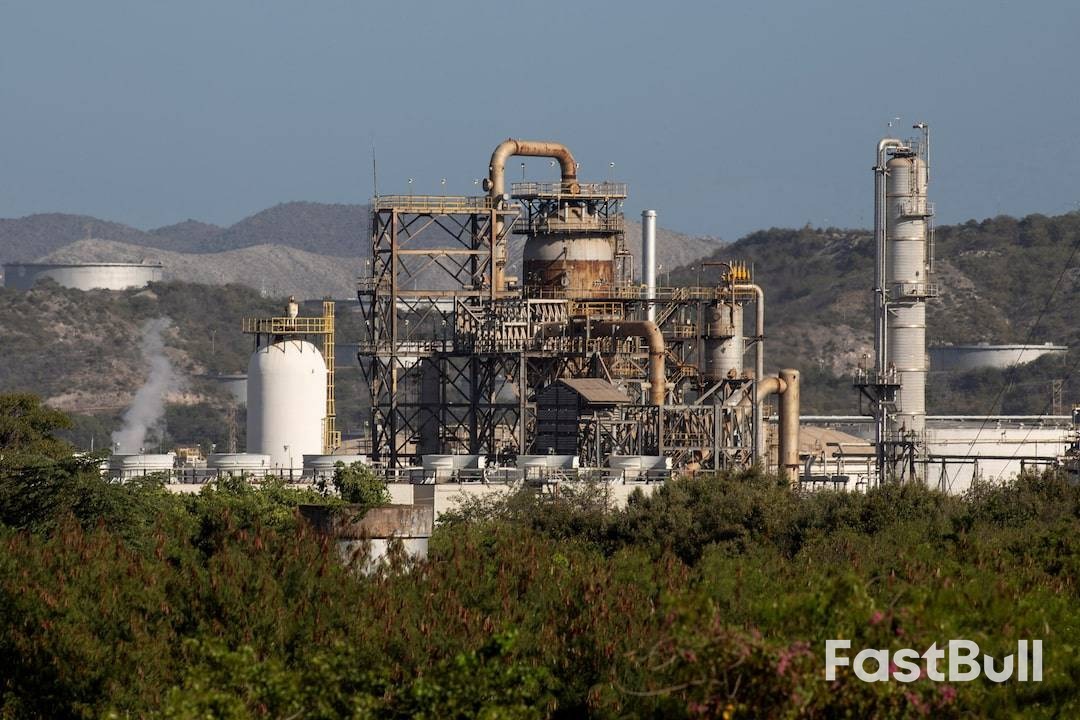
Venezuela is proposing a sweeping reform of its hydrocarbons law in a landmark effort to overhaul its struggling oil industry and attract critical foreign and local investment. Drafts of the proposal reveal a plan to give companies greater control over operations, including the ability to manage oilfields independently and directly commercialize their output.

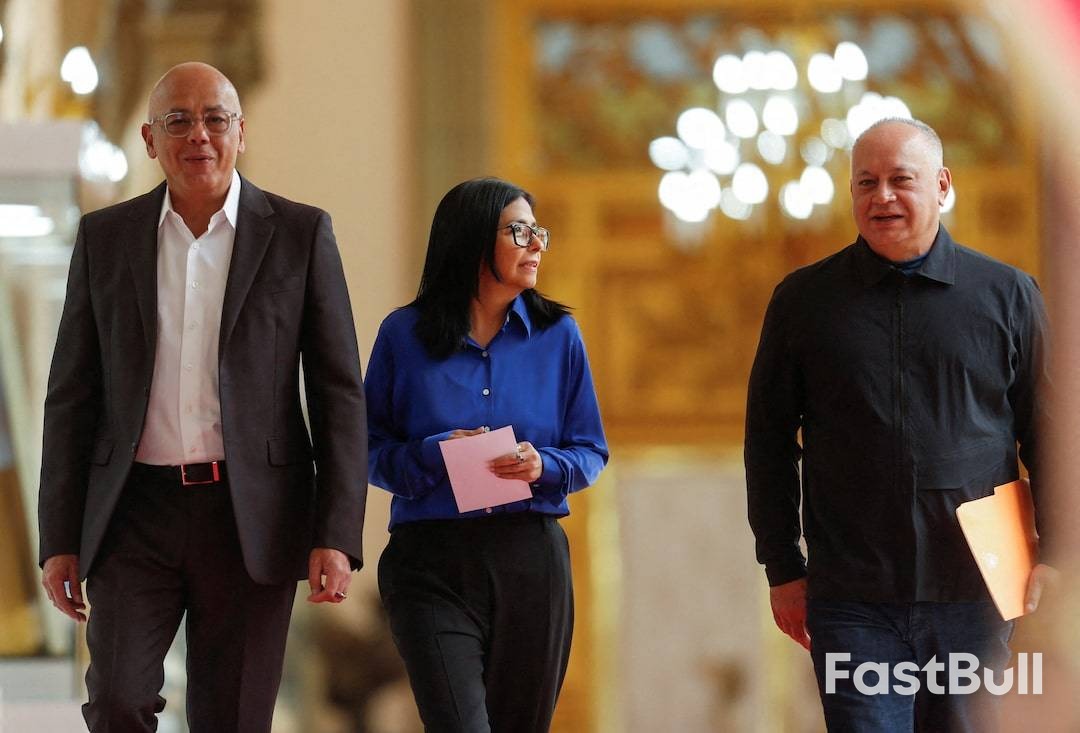
This initiative, submitted to the National Assembly by interim President Delcy Rodriguez, aims to fundamentally change the oil law established under former President Hugo Chavez, signaling a significant pivot in the OPEC nation's energy policy.
The proposed changes are designed to offer more attractive and flexible conditions for companies operating in Venezuela. The core elements of the reform include:
• New Contract Models: The law would formalize production-sharing contracts, allowing companies to manage operations at their own risk and expense. Under this model, the state avoids acquiring debt, and companies are compensated with a percentage of the oil they produce.
• Flexible Royalty Rates: The government would gain the discretion to lower royalties and related taxes from 33% to 15% for special projects or those requiring massive investment. "These are fields that require large investments, but to achieve them, there must also be flexibility in royalties," explained lawmaker Orlando Camacho.
• Independent Arbitration: To resolve disputes, the reform introduces the option of independent arbitration. This has been a long-standing request from foreign companies following numerous lawsuits over asset expropriations.
This new framework would allow private firms, even as minority partners with the state-run company PDVSA, to receive proceeds from oil sales directly.
The reform proposal has already cleared an initial hurdle, with lawmakers in the National Assembly approving it in a first vote. A second debate and vote are required for final approval.
During the session, National Assembly head Jorge Rodriguez urged legislators to support the changes to attract foreign capital, stating, "Oil beneath the ground is useless." No lawmakers present spoke out against the proposal.

This legislative push follows a 50-million-barrel oil supply deal between Caracas and Washington this month. The deal was agreed upon after the U.S. captured President Nicolas Maduro, giving the U.S. control over Venezuela's primary revenue source, according to U.S. President Donald Trump.
However, the National Assembly, which contains only a few opposition lawmakers, is not formally recognized by the United States due to questions about its legitimacy.
The proposed reforms directly address demands from oil executives and potential investors, who have been calling for more autonomy to produce, export, and manage cash flow. These demands are part of a broader $100 billion reconstruction plan for Venezuela's energy sector and reflect deep-seated concerns stemming from the nationalizations that occurred two decades ago.
Despite the potential benefits, independent lawyers have raised serious concerns. They warn that the reforms may conflict with Venezuela's Constitution, which reserves the oil industry's main activities for the state. Implementing the changes would also require scrapping numerous related laws passed under Chavez and Maduro.
Experts also point to potential confusion arising from the coexistence of two different operating models. The new production-sharing contracts would operate alongside the traditional joint-venture model, where PDVSA holds a dominant partnership role. This could complicate an industry that has already lost investors due to inflexible rules, nationalizations, and the impact of U.S. sanctions.
Donald Trump has filed a $5 billion lawsuit against JPMorgan Chase and its CEO, Jamie Dimon, alleging the bank illegally closed his accounts for political reasons.
The lawsuit, submitted in Miami-Dade County, Florida, claims the largest lender in the United States singled out Trump and his businesses to align with the prevailing "political tide." This action, the suit argues, directly violated JPMorgan's own stated policies.
JPMorgan Chase has pushed back against the accusations, stating the lawsuit has no merit while acknowledging Trump's right to sue.
In a formal statement, the bank asserted that it does not terminate customer relationships based on political or religious beliefs. Instead, JPMorgan explained that account closures are a necessary step when they pose a "legal or regulatory risk" to the company. "We regret having to do so but often rules and regulatory expectations lead us to do so," the bank clarified.
Trump's filing counters that the bank acted unilaterally and without warning, causing "extensive reputational harm" to him and his hospitality companies. The lawsuit claims being forced to seek new financial institutions made it clear that JPMorgan had "debanked" them.
The complaint also accuses Dimon, who has led JPMorgan for two decades, of orchestrating a "blacklist" to discourage other banks from doing business with the Trump Organization and family members. The suit describes this alleged blacklist as an "intentional and malicious falsehood."
This legal battle highlights a growing political flashpoint for the banking industry. Banks have faced mounting pressure, especially from conservatives, who argue that financial institutions are improperly adopting "woke" political stances. These critics claim banks have discriminated against controversial but legal industries, such as firearms and fossil fuels.
This pressure has intensified during Trump's second term, with the president claiming that some banks have refused to provide services to him and other conservatives—an allegation the banks have denied.
Last month, a U.S. banking regulator acknowledged that the country's nine largest banks had previously restricted financial services to certain industries in a practice often described as "debanking." In response to the administration's scrutiny, JPMorgan confirmed last year that it was cooperating with government inquiries into its policies and procedures.
The lawsuit arrives as the Trump administration and the banking sector find themselves at odds over other key policies. The industry strongly opposes Trump's proposal to cap credit card interest rates at 10%, a move Dimon has labeled an "economic disaster."
At the same time, many bankers have welcomed the administration's broader deregulatory agenda, which they believe will reduce red tape and stimulate economic growth.
Federal regulators have begun to loosen their oversight, announcing last year they would no longer police banks based on "reputational risk." This standard previously allowed supervisors to penalize institutions for activities that, while not illegal, could expose them to negative publicity or litigation. Banks have long complained that the reputational risk standard is vague and gives regulators too much discretion.
The industry has also called for updated anti-money laundering rules, which can require banks to close suspicious accounts without providing a reason to the customer.
As of Thursday afternoon, shares of JPMorgan Chase were trading up 1.2%. The lawsuit was first reported by Fox Business. The White House has stated it will refer the matter to the president's outside counsel.
The European Union is preparing to resume work on a major trade deal with the United States after President Donald Trump withdrew a recent tariff threat, according to European Parliament President Roberta Metsola.
"We are happy to see that the escalation is off the table for now," Metsola stated on Thursday. She explained that the development allows for the continuation of internal EU discussions on the trade agreement, which had been paused.
Earlier this week, the European Parliament decided to suspend its work on the transatlantic trade deal. The move was a direct response to fresh tariff threats issued by the Trump administration, reportedly connected to the U.S. president's attempt to acquire Greenland.
With that specific threat now removed, lawmakers are optimistic about restarting the legislative process.
The trade deal in question focuses on removing numerous EU import duties on U.S. goods. The framework for the agreement was established in Turnberry, Scotland, at the end of July.
A key component of the pact is the continuation of zero duties for U.S. lobsters, a policy first agreed upon with President Trump in 2020. The proposals require final approval from both the European Parliament and the governments of EU member states.
Lawmaker Concerns and Conditions
The deal has faced criticism from many lawmakers who argue it is lopsided. Their primary complaint is that the EU is expected to cut most of its import duties while the U.S. largely maintains a broad 15% tariff rate.
Despite these reservations, parliamentarians had previously seemed willing to accept the agreement, provided certain conditions were met. These included adding an 18-month sunset clause and establishing measures to counteract any potential surges of U.S. imports.
The European Parliament's trade committee had been scheduled to vote on its official position on January 26-27 before the process was paused.
President Metsola noted that lawmakers are hopeful that discussions can resume soon, putting the trade deal back on its original track for approval.
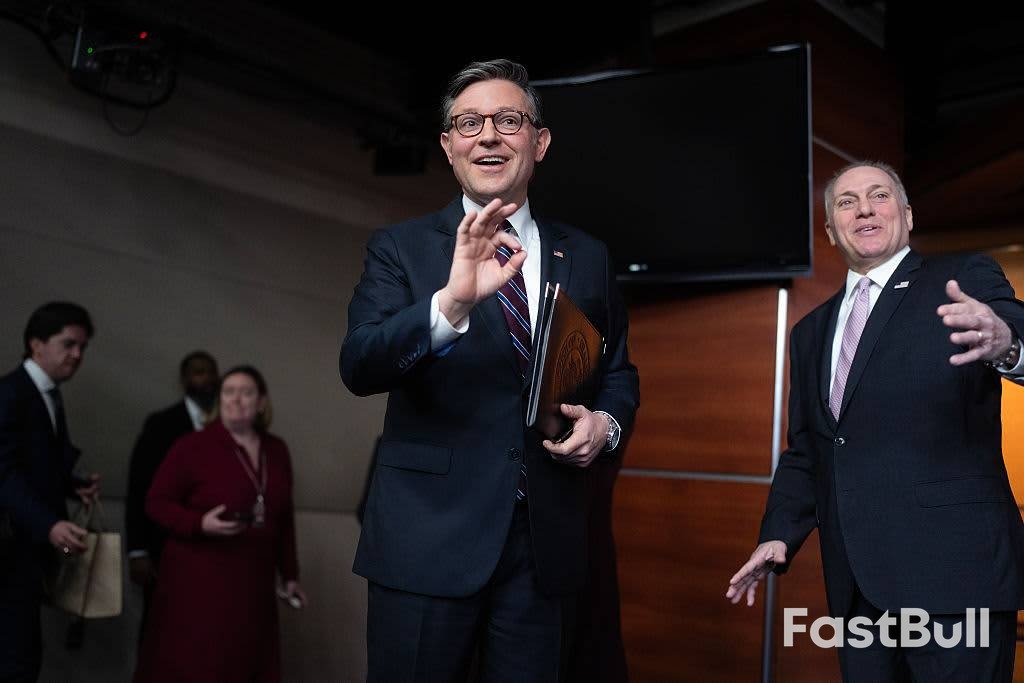
The U.S. House of Representatives is set for a critical vote on Thursday to pass the last major government funding bills, racing against a January 30 deadline to prevent a partial federal shutdown.
Momentum for the package grew after it narrowly passed a key procedural hurdle earlier in the day. The 214-213 vote to establish rules for consideration suggests the measures have enough support to clear the chamber, with a final vote expected Thursday afternoon.

This legislative package represents the largest portion of government spending, totaling approximately $1.2 trillion. The four bills are the final pieces of the 12 annual appropriations bills required to keep the government fully operational.
The funding covers several key federal departments, including:
• Defense
• Health and Human Services
• Homeland Security
• Labor
• Housing and Urban Development
• Transportation
• Education
Even if the bills pass the House, they must still be approved by the Senate, which does not return until next week, before heading to President Donald Trump for his signature. Lawmakers from both parties are eager to avoid a repeat of last year's record-setting 43-day shutdown.
Despite a general consensus to prevent a shutdown, specific provisions within the bills have created significant political friction, forcing leadership to navigate delicate compromises.
Homeland Security Funding Under Fire
Democrats have voiced strong opposition to the bill funding the Department of Homeland Security. The resistance follows the fatal shooting of a U.S. citizen in Minnesota by an Immigration and Customs Enforcement (ICE) agent earlier this month. Due to this political sensitivity, the Homeland Security bill is being considered separately from the other three.
Midwest Republicans Demand E15 Concession
Meanwhile, a group of Midwestern Republicans has been pushing for a provision to allow the year-round sale of gasoline with a high ethanol blend, known as E15. This fuel is typically restricted during summer months over concerns about smog, though waivers are common.
To secure their votes, House Republican leadership agreed to create a congressional "E-15 Rural Domestic Energy Council" to address their concerns, avoiding a direct change in the spending bill itself.
Looking ahead, President Trump commented to Fox Business on Thursday that he "think[s] we're going to probably end up in another Democrat shutdown," though he did not clarify if he was referring to the imminent January 30 deadline.
The Trump administration will not deploy troops to provide on-the-ground security for oil companies operating in Venezuela, according to Energy Secretary Chris Wright. This clarification dismisses any speculation that the U.S. military would be used to safeguard corporate assets in the nation.
In an interview Thursday, Secretary Wright outlined the administration's strategy, emphasizing financial controls over direct intervention. "We are not going to get involved in providing on-the-ground security," he stated.
Instead, the U.S. aims to use its influence over financial flows to stabilize the country. "The US involvement right now in controlling the flow of funds in Venezuela gives us huge leverage to reduce the criminality in that country, reestablish peace and better business conditions," Wright explained.
He argued that these financial measures have already made Venezuela a more secure environment for businesses. He also noted that major oil companies have extensive experience operating in challenging regions globally.
The energy industry has been clear about its prerequisites for committing capital to Venezuela. Executives have highlighted the need for:
• Comprehensive political and legal reforms
• Certainty and stability in contracts
• Guarantees for physical security
This comes after the apprehension of former President Nicolás Maduro, which has opened discussions about future investment. While President Donald Trump has previously pledged to provide "total safety" for companies in Venezuela, the specifics of that promise have remained unclear.
According to Wright, a full-scale return of investment will require fundamental changes, including a representative government, new laws, and constitutional amendments.
Wright acknowledged that rebuilding Venezuela's political and legal framework will not happen overnight. "But that will take time," he said, predicting a phased return of foreign capital.
He expects more agile, risk-tolerant operators to move in first. "There's always different risk and reward situations in time, which is why the wildcatters will move first," Wright commented.
However, major corporations planning substantial, long-term projects will remain on the sidelines. "The bigger, longer-term, tens of million of dollars of investment, they're going to wait until there's more clarity in that environment," he added.
To facilitate this process, Wright announced plans to travel to Venezuela within the next few weeks. His agenda includes meetings with government officials, including acting President Delcy Rodríguez, and an assessment of the country's oil infrastructure.
He anticipates that American energy firms will soon follow. "We will definitely see a number of American oil and gas companies going down as well and investigating opportunities on the ground," he said. To support these efforts, the administration will expedite OFAC approvals for any company wishing to explore opportunities in Venezuela.
White Label
Data API
Web Plug-ins
Poster Maker
Affiliate Program
The risk of loss in trading financial instruments such as stocks, FX, commodities, futures, bonds, ETFs and crypto can be substantial. You may sustain a total loss of the funds that you deposit with your broker. Therefore, you should carefully consider whether such trading is suitable for you in light of your circumstances and financial resources.
No decision to invest should be made without thoroughly conducting due diligence by yourself or consulting with your financial advisors. Our web content might not suit you since we don't know your financial conditions and investment needs. Our financial information might have latency or contain inaccuracy, so you should be fully responsible for any of your trading and investment decisions. The company will not be responsible for your capital loss.
Without getting permission from the website, you are not allowed to copy the website's graphics, texts, or trademarks. Intellectual property rights in the content or data incorporated into this website belong to its providers and exchange merchants.
Not Logged In
Log in to access more features

FastBull Membership
Not yet
Purchase
Log In
Sign Up