• Trade
  • Markets
  • Copy
  • Contests
  • News
  • 24/7
  • Calendar
  • Q&A
  • Chats
Trending
Screeners
SYMBOL
LAST
BID
ASK
HIGH
LOW
NET CHG.
%CHG.
SPREAD
SPX
S&P 500 Index
6827.42
6827.42
6827.42
6899.86
6801.80
-73.58
-1.07%
--
DJI
Dow Jones Industrial Average
48458.04
48458.04
48458.04
48886.86
48334.10
-245.98
-0.51%
--
IXIC
NASDAQ Composite Index
23195.16
23195.16
23195.16
23554.89
23094.51
-398.69
-1.69%
--
USDX
US Dollar Index
97.950
98.030
97.950
98.500
97.950
-0.370
-0.38%
--
EURUSD
Euro / US Dollar
1.17394
1.17409
1.17394
1.17496
1.17192
+0.00011
+ 0.01%
--
GBPUSD
Pound Sterling / US Dollar
1.33707
1.33732
1.33707
1.33997
1.33419
-0.00148
-0.11%
--
XAUUSD
Gold / US Dollar
4299.39
4299.39
4299.39
4353.41
4257.10
+20.10
+ 0.47%
--
WTI
Light Sweet Crude Oil
57.233
57.485
57.233
58.011
56.969
-0.408
-0.71%
--

Community Accounts

Signal Accounts
--
Profit Accounts
--
Loss Accounts
--
View More

Become a signal provider

Sell trading signals to earn additional income

View More

Guide to Copy Trading

Get started with ease and confidence

View More

Signal Accounts for Members

All Signal Accounts

Best Return
  • Best Return
  • Best P/L
  • Best MDD
Past 1W
  • Past 1W
  • Past 1M
  • Past 1Y

All Contests

  • All
  • Trump Updates
  • Recommend
  • Stocks
  • Cryptocurrencies
  • Central Banks
  • Featured News
Top News Only
Share

Ukraine Says It Received 114 Prisoners From Belarus

Share

USA Embassy In Lithuania: Maria Kalesnikava Is Not Going To Vilnius

Share

USA Embassy In Lithuania: Other Prisoners Are Being Sent From Belarus To Ukraine

Share

Ukraine President Zelenskiy: Five Ukrainians Released By Belarus In US-Brokered Deal

Share

USA Vilnius Embassy: USA Stands Ready For "Additional Engagement With Belarus That Advances USA Interests"

Share

USA Vilnius Embassy: Belarus, USA, Other Citizens Among The Prisoners Released Into Lithuania

Share

USA Vilnius Embassy: USA Will Continue Diplomatic Efforts To Free The Remaining Political Prisoners In Belarus

Share

USA Vilnius Embassy: Belarus Releases 123 Prisoners Following Meeting Of President Trump's Envoy Coale And Belarus President Lukashenko

Share

USA Vilnius Embassy: Masatoshi Nakanishi, Aliaksandr Syrytsa Are Among The Prisoners Released By Belarus

Share

USA Vilnius Embassy: Maria Kalesnikava And Viktor Babaryka Are Among The Prisoners Released By Belarus

Share

USA Vilnius Embassy: Nobel Peace Prize Laureate Ales Bialiatski Is Among The Prisoners Released By Belarus

Share

Belarusian Presidential Administration Telegram Channel: Lukashenko Has Pardoned 123 Prisoners As Part Of Deal With US

Share

Two Local Syrian Officials: Joint US-Syrian Military Patrol In Central Syria Came Under Fire From Unknown Assailants

Share

Israeli Military Says It Targeted 'Key Hamas Terrorist' In Gaza City

Share

Rwanda's Actions In Eastern Drc Are A Clear Violation Of Washington Accords Signed By President Trump - Secretary Of State Rubio

Share

Israeli Military Issues Evacuation Warning In Southern Lebanon Village Ahead Of Strike - Spokesperson On X

Share

Belarusian State Media Cites US Envoy Coale As Saying He Discussed Ukraine And Venezuela With Lukashenko

Share

Belarusian State Media Cites US Envoy Coale As Saying That US Removes Sanctions On Belarusian Potassium

Share

Thai Prime Minister: No Ceasefire Agreement With Cambodia

Share

US, Ukraine To Discuss Ceasefire In Berlin Ahead Of European Summit

TIME
ACT
FCST
PREV
U.K. Trade Balance Non-EU (SA) (Oct)

A:--

F: --

P: --

U.K. Trade Balance (Oct)

A:--

F: --

P: --

U.K. Services Index MoM

A:--

F: --

P: --

U.K. Construction Output MoM (SA) (Oct)

A:--

F: --

P: --

U.K. Industrial Output YoY (Oct)

A:--

F: --

P: --

U.K. Trade Balance (SA) (Oct)

A:--

F: --

P: --

U.K. Trade Balance EU (SA) (Oct)

A:--

F: --

P: --

U.K. Manufacturing Output YoY (Oct)

A:--

F: --

P: --

U.K. GDP MoM (Oct)

A:--

F: --

P: --

U.K. GDP YoY (SA) (Oct)

A:--

F: --

P: --

U.K. Industrial Output MoM (Oct)

A:--

F: --

P: --

U.K. Construction Output YoY (Oct)

A:--

F: --

P: --

France HICP Final MoM (Nov)

A:--

F: --

P: --

China, Mainland Outstanding Loans Growth YoY (Nov)

A:--

F: --

P: --

China, Mainland M2 Money Supply YoY (Nov)

A:--

F: --

P: --

China, Mainland M0 Money Supply YoY (Nov)

A:--

F: --

P: --

China, Mainland M1 Money Supply YoY (Nov)

A:--

F: --

P: --

India CPI YoY (Nov)

A:--

F: --

P: --

India Deposit Gowth YoY

A:--

F: --

P: --

Brazil Services Growth YoY (Oct)

A:--

F: --

P: --

Mexico Industrial Output YoY (Oct)

A:--

F: --

P: --

Russia Trade Balance (Oct)

A:--

F: --

P: --

Philadelphia Fed President Henry Paulson delivers a speech
Canada Building Permits MoM (SA) (Oct)

A:--

F: --

P: --

Canada Wholesale Sales YoY (Oct)

A:--

F: --

P: --

Canada Wholesale Inventory MoM (Oct)

A:--

F: --

P: --

Canada Wholesale Inventory YoY (Oct)

A:--

F: --

P: --

Canada Wholesale Sales MoM (SA) (Oct)

A:--

F: --

P: --

Germany Current Account (Not SA) (Oct)

A:--

F: --

P: --

U.S. Weekly Total Rig Count

A:--

F: --

P: --

U.S. Weekly Total Oil Rig Count

A:--

F: --

P: --

Japan Tankan Large Non-Manufacturing Diffusion Index (Q4)

--

F: --

P: --

Japan Tankan Small Manufacturing Outlook Index (Q4)

--

F: --

P: --

Japan Tankan Large Non-Manufacturing Outlook Index (Q4)

--

F: --

P: --

Japan Tankan Large Manufacturing Outlook Index (Q4)

--

F: --

P: --

Japan Tankan Small Manufacturing Diffusion Index (Q4)

--

F: --

P: --

Japan Tankan Large Manufacturing Diffusion Index (Q4)

--

F: --

P: --

Japan Tankan Large-Enterprise Capital Expenditure YoY (Q4)

--

F: --

P: --

U.K. Rightmove House Price Index YoY (Dec)

--

F: --

P: --

China, Mainland Industrial Output YoY (YTD) (Nov)

--

F: --

P: --

China, Mainland Urban Area Unemployment Rate (Nov)

--

F: --

P: --

Saudi Arabia CPI YoY (Nov)

--

F: --

P: --

Euro Zone Industrial Output YoY (Oct)

--

F: --

P: --

Euro Zone Industrial Output MoM (Oct)

--

F: --

P: --

Canada Existing Home Sales MoM (Nov)

--

F: --

P: --

Euro Zone Total Reserve Assets (Nov)

--

F: --

P: --

U.K. Inflation Rate Expectations

--

F: --

P: --

Canada National Economic Confidence Index

--

F: --

P: --

Canada New Housing Starts (Nov)

--

F: --

P: --

U.S. NY Fed Manufacturing Employment Index (Dec)

--

F: --

P: --

U.S. NY Fed Manufacturing Index (Dec)

--

F: --

P: --

Canada Core CPI YoY (Nov)

--

F: --

P: --

Canada Manufacturing Unfilled Orders MoM (Oct)

--

F: --

P: --

Canada Manufacturing New Orders MoM (Oct)

--

F: --

P: --

Canada Core CPI MoM (Nov)

--

F: --

P: --

Canada Manufacturing Inventory MoM (Oct)

--

F: --

P: --

Canada CPI YoY (Nov)

--

F: --

P: --

Canada CPI MoM (Nov)

--

F: --

P: --

Canada CPI YoY (SA) (Nov)

--

F: --

P: --

Canada Core CPI MoM (SA) (Nov)

--

F: --

P: --

Q&A with Experts
    • All
    • Chatrooms
    • Groups
    • Friends
    Connecting
    .
    .
    .
    Type here...
    Add Symbol or Code

      No matching data

      All
      Trump Updates
      Recommend
      Stocks
      Cryptocurrencies
      Central Banks
      Featured News
      • All
      • Russia-Ukraine Conflict
      • Middle East Flashpoint
      • All
      • Russia-Ukraine Conflict
      • Middle East Flashpoint
      Search
      Products

      Charts Free Forever

      Chats Q&A with Experts
      Screeners Economic Calendar Data Tools
      Membership Features
      Data Warehouse Market Trends Institutional Data Policy Rates Macro

      Market Trends

      Market Sentiment Order Book Forex Correlations

      Top Indicators

      Charts Free Forever
      Markets

      News

      News Analysis 24/7 Columns Education
      From Institutions From Analysts
      Topics Columnists

      Latest Views

      Latest Views

      Trending Topics

      Top Columnists

      Latest Update

      Signals

      Copy Rankings Latest Signals Become a signal provider AI Rating
      Contests
      Brokers

      Overview Brokers Assessment Rankings Regulators News Claims
      Broker listing Forex Brokers Comparison Tool Live Spread Comparison Scam
      Q&A Complaint Scam Alert Videos Tips to Detect Scam
      More

      Business
      Events
      Careers About Us Advertising Help Center

      White Label

      Data API

      Web Plug-ins

      Affiliate Program

      Awards Institution Evaluation IB Seminar Salon Event Exhibition
      Vietnam Thailand Singapore Dubai
      Fans Party Investment Sharing Session
      FastBull Summit BrokersView Expo
      Recent Searches
        Top Searches
          Markets
          News
          Analysis
          User
          24/7
          Economic Calendar
          Education
          Data
          • Names
          • Latest
          • Prev

          View All

          No data

          Scan to Download

          Faster Charts, Chat Faster!

          Download App
          English
          • English
          • Español
          • العربية
          • Bahasa Indonesia
          • Bahasa Melayu
          • Tiếng Việt
          • ภาษาไทย
          • Français
          • Italiano
          • Türkçe
          • Русский язык
          • 简中
          • 繁中
          Open Account
          Search
          Products
          Charts Free Forever
          Markets
          News
          Signals

          Copy Rankings Latest Signals Become a signal provider AI Rating
          Contests
          Brokers

          Overview Brokers Assessment Rankings Regulators News Claims
          Broker listing Forex Brokers Comparison Tool Live Spread Comparison Scam
          Q&A Complaint Scam Alert Videos Tips to Detect Scam
          More

          Business
          Events
          Careers About Us Advertising Help Center

          White Label

          Data API

          Web Plug-ins

          Affiliate Program

          Awards Institution Evaluation IB Seminar Salon Event Exhibition
          Vietnam Thailand Singapore Dubai
          Fans Party Investment Sharing Session
          FastBull Summit BrokersView Expo

          US Forces Strike Iran Nuclear Sites, Trump Says Fordow Gone

          Michael Ross

          Middle East Situation

          Summary:

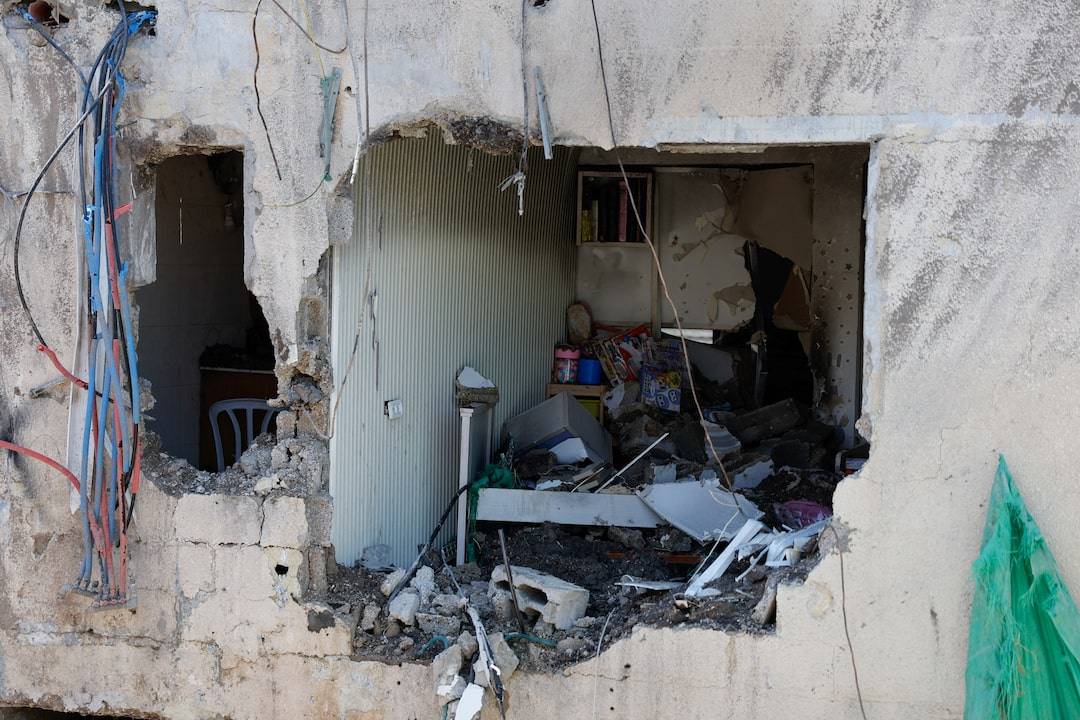
          U.S. forces struck three Iranian nuclear sites in a "very successful attack," President Donald Trump said on Saturday, adding that the crown jewel of Tehran's nuclear program, Fordow, is gone.

          U.S. forces struck three Iranian nuclear sites in a "very successful attack," President Donald Trump said on Saturday, adding that the crown jewel of Tehran's nuclear program, Fordow, is gone.

          After days of deliberation and two weeks before his self-imposed deadline, Trump's decision to join Israel's military campaign against its major rival Iran represents a major escalation of the conflict.

          "This was an amazing success tonight," Trump told Reuters in a telephone interview. "They should make peace immediately or they'll get hit again."

          He had earlier posted on Truth Social that all U.S. planes were safely on their way home, and he congratulated "our great American Warriors."

          He was due to deliver a televised Oval Office address at 10 p.m. ET (0200 GMT).

          CBS News reported that the U.S. reached out to Iran diplomatically on Saturday to say the strikes are all the U.S. plans and it does not aim for regime change.

          In his late night address, NBC News said, Trump is expected to say he is not currently planning more strikes inside Iran.

          Trump said U.S. forces struck Iran's three principal nuclear sites: Natanz, Esfahan and Fordow. He told Fox News six bunker-buster bombs were dropped on Fordow, while 30 Tomahawk missiles were fired against other nuclear sites.

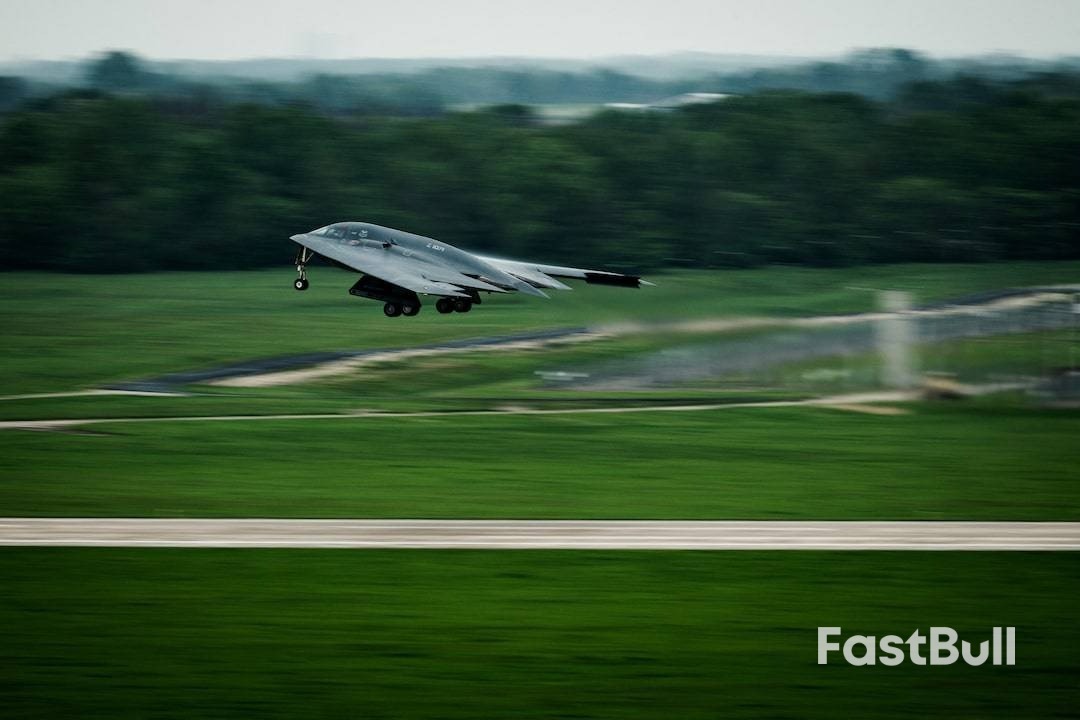
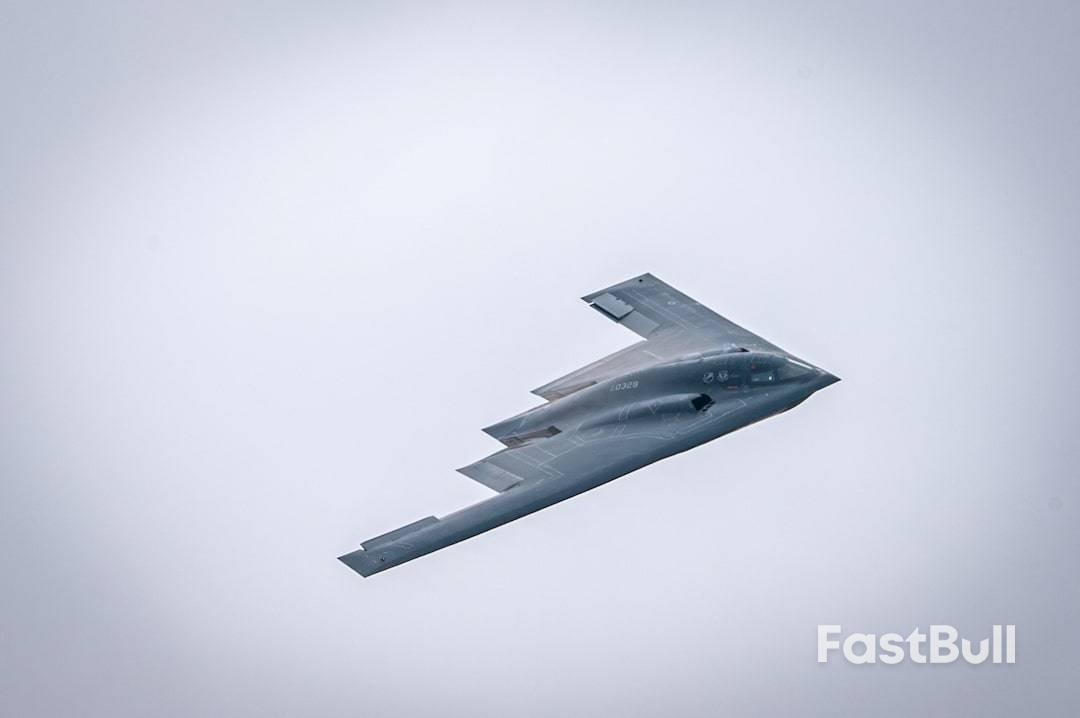
          U.S. B-2 bombers were involved in the strikes, a U.S. official told Reuters, speaking on condition of anonymity.

          "A full payload of BOMBS was dropped on the primary site, Fordow," Trump posted. "Fordow is gone."

          "IRAN MUST NOW AGREE TO END THIS WAR," he added.

          Reuters had reported earlier on Saturday the movement of the B-2 bombers, which can be equipped to carry massive bombs that experts say would be needed to strike Fordow, which is buried under a mountain south of Tehran.

          An Iranian official, cited by Tasnim news agency, confirmed that part of the Fordow site was attacked by "enemy airstrikes."

          Israel's public broadcaster Kan cited an Israeli official saying the country was "in full coordination" with Washington on the U.S. attack.
          US Forces Strike Iran Nuclear Sites, Trump Says Fordow Gone_1

          US Forces Strike Iran Nuclear Sites, Trump Says Fordow Gone_2

          US Forces Strike Iran Nuclear Sites, Trump Says Fordow Gone_3

          US Forces Strike Iran Nuclear Sites, Trump Says Fordow Gone_4

          US Forces Strike Iran Nuclear Sites, Trump Says Fordow Gone_5

          US Forces Strike Iran Nuclear Sites, Trump Says Fordow Gone_6

          A White House official said Trump spoke with Israeli Prime Minister Benjamin Netanyahu after the strikes.

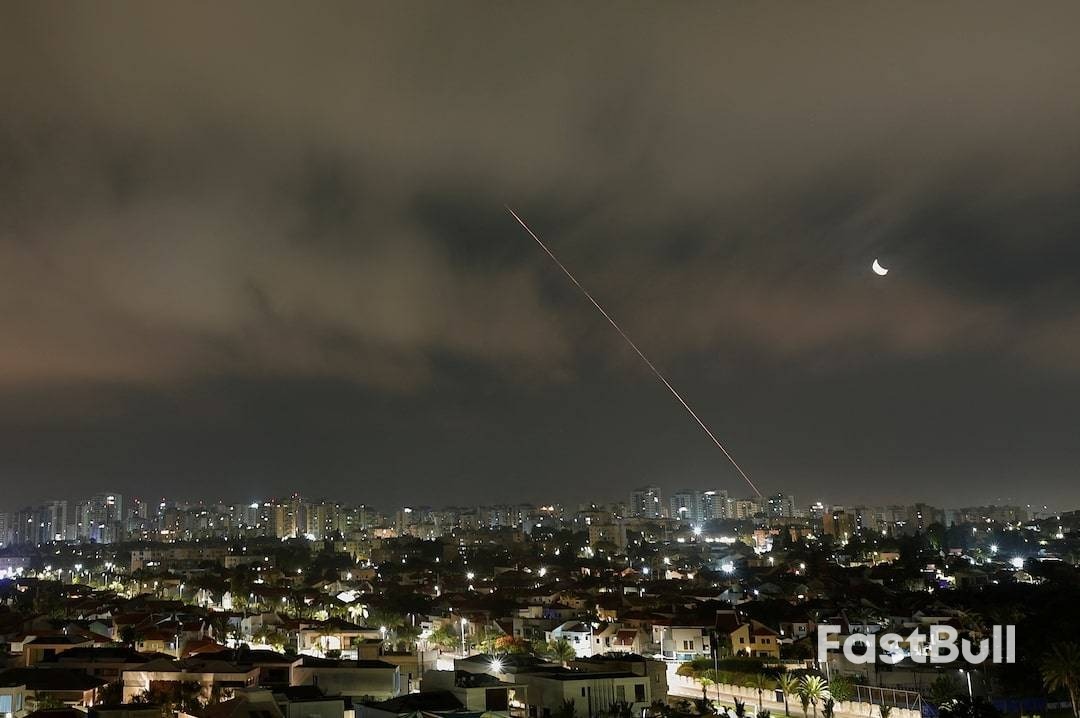
          The strikes came as Israel and Iran have been engaged in more than a week of aerial combat that has resulted in deaths and injuries in both countries.

          DIPLOMACY UNSUCCESSFUL

          Israel launched the attacks on Iran saying that it wanted to remove any chance of Tehran developing nuclear weapons. Iran says its nuclear program is for peaceful purposes only.

          Diplomatic efforts by Western nations to stop the hostilities have been unsuccessful.

          In recent days, Democratic lawmakers and some Republicans have argued that Trump must receive permission from the U.S. Congress before committing the U.S. military to any combat against Iran.

          Republican Senate Armed Services Committee Chairman Roger Wicker of Mississippi applauded the operation but cautioned that the U.S. now faced "very serious choices ahead."

          Senate Foreign Relations Committee Chairman Jim Risch, a Republican, said that despite the heavy U.S. bombings over Iran, "This war is Israel's war not our war." He added, "There will not be American boots on the ground in Iran."

          One Republican lawmaker, Representative Thomas Massie of Kentucky, simply said, "This is not constitutional."

          Democratic Senator Tim Kaine of Virginia said the U.S. public "is overwhelmingly opposed to the U.S. waging war on Iran" and accused Trump of displaying "horrible judgment."

          Israel launched attacks on June 13, saying Iran was on the verge of developing nuclear weapons. Israel is widely assumed to possess nuclear weapons, which it neither confirms nor denies.

          At least 430 people have been killed and 3,500 injured in Iran since Israel began its attacks, Iranian state-run Nour News said, citing the health ministry.

          In Israel, 24 civilians have been killed by Iranian missile attacks, according to local authorities, in the worst conflict between the longtime enemies. More than 450 Iranian missiles have been fired towards Israel, according to the Israeli prime minister's office.

          Israeli officials said 1,272 people have been injured since the beginning of the hostilities, with 14 in serious condition.

          Source: Reuters

          Risk Warnings and Disclaimers
          You understand and acknowledge that there is a high degree of risk involved in trading. Following any strategies or investment methods may lead to potential losses. The content on the site is provided by our contributors and analysts for information purposes only. You are solely responsible for determining whether any trading assets, securities, strategy, or any other product is suitable for investing based on your own investment objectives and financial situation.
          Add to Favorites
          Share

          US Enjoys A Rare Moment Of Oil Supremacy In Iran

          Owen Li

          Economic

          Commodity

          Few noticed earlier this month, but there was a symbolic crack in the world’s geopolitical map. Everyone’s attention at that point was on the nuclear talks between Tehran and Washington. In the oil market, some looked at a major shift: For just a week in early June, the US didn’t import a single barrel of Saudi crude — a feat only seen once before in half a century.

          The timing couldn’t be more fortuitous. On June 9, US President Donald Trump received a fateful call from Israeli Prime Minister Benjamin Netanyahu saying war against Iran was imminent.

          Since the first oil crisis in 1973-1974, generations of American politicians have dreaded a similar call, fearful of the risks around oil. In the global economy there are hardly any certainties, but one of the few is that conflict in the Middle East means higher energy prices. In US politics, too, there are few certainties, but one is that Americans hate expensive gasoline.

          These days, however, Washington can worry less about such constraints. The US shale revolution has transformed America into the world’s largest oil producer, elbowing out Saudi Arabia, Russia, Iran and every member of the OPEC+ cartel. This freedom from Middle Eastern oil offers Trump a chance to redo US foreign policy in a volatile region in ways his predecessors could have only dreamed — all without having to fear a recession. On Thursday, Trump said it would give diplomacy a two-week window before deciding whether to aid Israel and attack Iran. Oil may still be an impediment to American war adventurism, but it’s not the major brake it once was. The shale revolution has been a “game-changer for oil markets, prices and energy security,” Fatih Birol, the head of the International Energy Agency, tells me.

          The market is making this clear. US oil benchmark West Texas Intermediate has surged 15% over the last week, changing hands at around $74 a barrel on Friday. Zoom out, and the increase is small — less than 5% from where oil started the year. In historical terms, it’s a pittance. WTI is trading at around the same level as it was 20 years ago, and that’s in today’s money. In real terms, adjusted by the cumulative impact of inflation, oil is today at a similar level as it was in the mid-1980s.

          A few years ago, the consensus was that an Israeli attack against the Iranian nuclear program would push oil to surpass the all-time high of $147 a barrel set in mid-2008 and perhaps go as high as $200, $250 or even $300 a barrel. The Iranian propaganda machine even talked recently about the risk of $400 a barrel. “This is what everyone thought was the mother of all geopolitical oil risk,” Jason Bordoff, a top oil adviser to President Barack Obama during his first term at the White House, tells me. “And yet, the response is muted compared to ‘definitely triple-digit prices’ everyone talked about.” We’re in the early days, but for now those predictions have proven way off the mark. US drivers aren’t feeling the pain at the pump. Gasoline, the most visible everyday price in the US, is cheaper than it was a couple of months ago during the Easter holiday, the last period of heavy driving.

          Although American oil hegemony certainly changes the psychology of the market, it doesn’t mean Middle East outages don’t have a real impact. Hence why I prefer to talk about America’s oil imperialism rather than MAGA’s “oil freedom.” There are still many dangers of the US getting involved in Iran — a desperate Tehran could, even if briefly, disrupt a large chunk of the world’s oil supply. The choke points are ingrained in the mind of generations of oil traders: the Strait of Hormuz, the Kharg Island oil terminal, the Saudi processing plant of Abqaiq, the Al-Zour and Ruwais refineries in Kuwait and the United Arab Emirates. And so on. It’s a long list.

          Yet, as the war enters its second week, WTI remains below the nearly $85 a barrel it reached in October 2023, when Hamas launched the attack on Israel which started a cascade of conflict. The reason is that there’s lots of oil, and shale is largely responsible for that.

          Today, the US pumps more than a fifth of the world’s total oil. It’s worth repeating: Two out of 10 barrels worldwide are made in the USA. The last time the country had such a large share of the global market was 55 years ago. Saudi Arabia and Russia come in well behind, accounting for about 10% each of global output.

          Since the development of hydraulic fracturing, or fracking, about two decades ago, American total oil production has surged. It reached a record high of 20.8 million barrels a day in March, the last month with data available, up more than 180% from the 7.4 million of two decades earlier. Alongside the boom in output, oil imports have collapsed. Back in 2005, the US bought overseas, on a net basis, about 12 million barrels of petroleum — crude and refined products; last week, it exported a net of nearly 4 million barrels a day.

          The new era looks like an embarrassment of riches compared with the years following the 1973 and 1979 oil crises, when countries like Saudi Arabia and Kuwait controlled more than half of the world’s oil reserves. The price of oil rose from less than $2 to more than $30, “death to America” became a rallying cry across the Middle East, and the Organization of the Petroleum Exporting Countries cartel became a fixture of nighttime television news. America became addicted to foreign oil (and foreign involvement), and every regional crisis meant economic chaos at home.

          Nothing summarizes the new relationship between Washington and Middle Eastern oil better than the amount of Saudi crude flowing into America. After falling briefly to zero in early June, the US has imported an average year-to-date of 259,000 barrels a day from the kingdom. That’s the lowest level since 1985, when flows briefly plunged as Riyadh cut output to try to push oil prices higher. To find several years of similarly low imports, one must go back to the late 1960s, when Lyndon B. Johnson was in the White House.

          Unsurprisingly, Saudi Arabia is trying to restore its status in the global oil market, pushing the OPEC+ cartel, which it leads alongside Russia, to boost production to recover the market share the group lost over the last few years. But that’s coming at a cost of lower oil prices.

          But no matter how few barrels America buys overseas, the price of oil is set in the global market. A disruption in the Middle East still means higher prices in Washington. The most obvious danger is that the muted market reaction encourages capricious decision-making. I was reporting in Baghdad in early 2003 in the run-up to the American invasion and in Benghazi in mid-2011 during the civil war — I know that what you break, you own. It would be ironic if Trump, who has campaigned on a platform against so-called “forever wars,” starts another.

          The other peril is complacency about oil disruptions. “Shale has deluded folks into thinking that the US could replace OPEC as the world’s oil swing producer and that America didn't need to worry about the Middle East from an energy perspective,” Bob McNally, a top oil adviser to former President George W. Bush, tells me. “Neither is true,” he adds. If anyone knows, it’s McNally, who was at the White House’s Situation Room during the 2003 Iraq War.

          Indeed, Washington isn’t free from the ups and downs of the petroleum market. Oil is a fungible commodity, and while the US may sell more than it buys, the price at home will always be the same as it is overseas. If the Iranian regime, fighting for survival and with nothing to lose, targeted regional oil facilities and tanker traffic in the Strait of Hormuz, America will feel the pain. And the threat is alarmingly high.

          The choke points are obvious. Israel — with help from the US — could disable 90% of Iranian oil sales by attacking Kharg Island, where the country’s main oil export terminal is located. But if Israel has a target, so does Iran. Tehran could attempt to blockade the Strait of Hormuz, disrupting 20% of the world’s seagoing crude.

          Then there are the vast Saudi oilfields only 100 kilometers (62 miles) away from the Iranian coast on the other side of the Persian Gulf. In September 2019, Iran — via its Yemeni Houthi proxies — attacked the Abqaiq plant, which serves as the gathering and processing center for the largest Saudi oilfields, including Ghawar. For a few days, the world lost 5% of its oil supply.

          Even the collapse of the Islamic Republic is dangerous. Ironically, Iranian oil exports are booming while bombs are flying, with monthly production in June heading toward a seven-year high of more than 3.5 million barrels a day. The chaos that will follow the end of the theocratic rule could send output into a tailspin, as was the case in Libya after the fall of the 42-year regime of Moammar Al Qaddafi. The Libyan crisis kept oil prices above $100 a barrel as the world lost about 1% of global supply.

          For now, both sides have largely avoided ensnaring the global oil market. Iran hit one of Israel’s two oil refineries, while its archenemy attacked Tehran’s domestic energy industry, including a gas processing plant and two tank farms around the capital. Neither impacted highly crucial export facilities, and both sides have since refrained from hitting energy assets.

          The White House must also be careful about expecting the US oil bonanza to last forever. The country’s geological endowment is marvelous, but it’s finite. Every anecdotal sign suggests that the shale boom is largely in the rearview mirror, with further production gains limited.

          Oil remains a boom-and-bust industry, and shale production is extremely price sensitive. The difference between US oil production growing or declining is measured in a fistful of dollars, perhaps as little as $10 to $20 a barrel. At $50, many shale companies are staring at financial calamity and production is in free fall; $55 is survivable; $60 isn’t great, but money still flows and output holds; at $65, everyone is back to more drilling; and at $70, the industry is printing money and output is rising.

          Still, even at current prices of $75 a barrel, it’s difficult to see how US oil production would grow much further between 2028 and 2030. When output plateaus, and eventually falls, Washington will have to grapple with the looming problem of domestic oil demand remaining sticky. American petroleum consumption averaged 20.3 million barrels a day in the first quarter, the latest period with reliable data available. That’s on par with pre-Covid-19 figures for the same period, and not far below the peaks reached in 2004-2007.

          The problem is exacerbated even more with Trump removing every tax break to shift transportation and heating away from petroleum and toward electricity. On current trends, annual US oil demand will remain above 20 million barrels a day until at least 2030, according to the International Energy Agency. By the end of this decade, the US will still consume more oil than it did in 2015. Among major economies, which are reducing quickly their reliance on oil via electrification, the US is poised to be an outlier.

          Imperial ages come and go. America is enjoying a rare moment of oil power, unmatched in the last half-century. But betting on its longevity — and its infallibility — would be a mistake.

          Trump seems aware of what’s at stake. Last week, one day before Israel attacked Iran, he was already laser-focused on the rising price of oil. At an event at the White House, he asked US Secretary of Energy Chris Wright, perhaps rhetorically, what was going on.

          “Chris you are doing great. But I don’t like that the oil price has gone up,” the president said, with Wright sitting in the audience. “I was going to call and really start screaming at you,” he continued. “Is it going to keep coming down, right? Because we have inflation under control.” Even an oil empire has limits.

          Source: Bloomberg Europe

          To stay updated on all economic events of today, please check out our Economic calendar
          Risk Warnings and Disclaimers
          You understand and acknowledge that there is a high degree of risk involved in trading. Following any strategies or investment methods may lead to potential losses. The content on the site is provided by our contributors and analysts for information purposes only. You are solely responsible for determining whether any trading assets, securities, strategy, or any other product is suitable for investing based on your own investment objectives and financial situation.
          Add to Favorites
          Share

          Fed Says Labor Market Balanced, Points To Immigration Slowdown

          Devin

          Central Bank

          A sharp stepdown in immigration has led the supply of workers to grow more slowly, helping to keep the labor market in balance as job growth cools, the Federal Reserve said Friday.

          “Labor supply has increased less robustly than in previous years, with immigration appearing to have slowed sharply since the middle of last year and the labor force participation rate having declined a bit,” the Fed said in its semi-annual report to Congress on monetary policy, released on Friday.

          The report described the labor market as being in “solid shape,” with jobs growing at a “moderate” pace and the unemployment rate low. “As labor demand has gradually eased over the past few years, a variety of measures suggest the labor market has moved into balance and is now less tight than just before the pandemic,” the report said.

          The benefits appear to be broad-based, with the unemployment rates remaining stable over the past year and at relatively low levels for different groups of workers based on age, education, sex and racial and ethnic groups, the Fed said.

          The report reiterated the message from Fed Chair Jerome Powell and other officials that monetary policy is well positioned for policymakers to wait for more clarity on the economic outlook. Officials left interest rates unchanged Wednesday, as they have all year, as they seek to learn more about how President Donald Trump’s policies will affect the economy.

          Source: Bloomberg Europe

          Risk Warnings and Disclaimers
          You understand and acknowledge that there is a high degree of risk involved in trading. Following any strategies or investment methods may lead to potential losses. The content on the site is provided by our contributors and analysts for information purposes only. You are solely responsible for determining whether any trading assets, securities, strategy, or any other product is suitable for investing based on your own investment objectives and financial situation.
          Add to Favorites
          Share

          Tesla Agrees To Build China's Largest Grid-scale Battery Power Plant

          Devin

          Economic

          Tesla has inked its first deal to build a grid-scale battery power plant in China amid a strained trading relationship between Beijing and Washington.

          The U.S. company posted on the Chinese social media service Weibo that the project would be the largest of its kind in China when completed.

          Utility-scale battery energy storage systems help electricity grids keep supply and demand in balance. They are increasingly needed to bridge the supply-demand mismatch caused by intermittent energy sources such as solar and wind.

          Chinese media outlet Yicai first reported that the deal, worth 4 billion yuan ($556 million), had been signed by Tesla, the local government of Shanghai and financing firm China Kangfu International Leasing, according to the Reuters news agency.

          Tesla said its battery factory in Shanghai had produced more than 100 Megapacks — the battery designed for utility-scale deployment — in the first quarter of this year. One Megapack can provide up to 1 megawatt of power for four hours.

          "The grid-side energy storage power station is a 'smart regulator' for urban electricity, which can flexibly adjust grid resources," Tesla said on Weibo, according to a Google translation.

          This would "effectively solve the pressure of urban power supply and ensure the safe, stable and efficient electricity demand of the city," it added. "After completion, this project is expected to become the largest grid-side energy storage project in China."

          According to the company's website, each Megapack retails for just under $1 million in the U.S. Pricing for China was unavailable.

          The deal is significant for Tesla, as China's CATL and carmaker BYD compete with similar products. The two Chinese companies have made significant inroads in battery development and manufacturing, with the former holding about 40% of the global market share.

          CATL was also expected to supply battery cells and packs that are used in Tesla's Megapacks, according to a Reuters news source.

          Tesla's deal with a Chinese local authority is also significant as it comes after U.S. President Donald Trump slapped tariffs on imports from China, straining the geopolitical relationship between the world's two largest economies.

          Tesla Chief Executive Elon Musk was also a close ally of President Trump during the initial stages of the trade war, further complicating the business outlook for U.S. automakers in China.

          The demand for grid-scale battery installation, however, is significant in China. In May last year, Beijing set a new target to add nearly 5 gigawatts of battery-powered electricity supply by the end of 2025, bringing the total capacity to 40 gigawatts.

          Tesla has also been exporting its Megapacks to Europe and Asia from its Shanghai plant to meet global demand.

          Capacity for global battery energy storage systems rose 42 gigawatts in 2023, nearly doubling the total increase in capacity observed in the previous year, according to the International Energy Agency.

          Source: CNBC

          To stay updated on all economic events of today, please check out our Economic calendar
          Risk Warnings and Disclaimers
          You understand and acknowledge that there is a high degree of risk involved in trading. Following any strategies or investment methods may lead to potential losses. The content on the site is provided by our contributors and analysts for information purposes only. You are solely responsible for determining whether any trading assets, securities, strategy, or any other product is suitable for investing based on your own investment objectives and financial situation.
          Add to Favorites
          Share

          Japan Battles to Revive Shipbuilding Industry Amid Fierce Regional Competition

          Gerik

          Economic

          Losing Ground to Neighbors: China and South Korea Surge Ahead

          Japan’s shipbuilding output has plunged 31% over the past five years, falling to 10.05 million tons in 2023. In contrast, China and South Korea recorded approximately 30% growth, reaching 31.48 million and 18.35 million tons respectively. Japan's shipyards have also decreased in number—from 194 in 2018 to 178 in 2024—highlighting the country’s shrinking industrial capacity.
          While Japan lags, its neighbors have made aggressive investments in technology, workforce development, and international exports. The decline has become a strategic concern, given Japan’s reliance on maritime transport for 99% of its trade volume.

          State-Led Revival: The “National Shipyard” Model

          To address this, Japan’s Liberal Democratic Party (LDP) has proposed a sweeping recovery policy. Central to the plan is the “national shipyard” model, where the government will fund and build shipyard infrastructure, then lease operations to private enterprises. The strategy is projected to require ¥1 trillion (about 6.9 billion USD) in public and private investment, potentially included in the 2025 fiscal year’s supplementary budget.
          Additionally, the plan classifies ship hulls—including both commercial and military vessels—as “strategic products,” qualifying them for financial support and long-term supply protection.

          Labor Shortages: A Crisis in Skilled Workforce

          Labor remains a major bottleneck. The number of workers in Japan’s shipbuilding sector—including foreign workers—has dropped by over 10,000 in five years, leaving only 71,000 as of 2024. Aging demographics, declining interest in manufacturing careers, and inadequate vocational training are key factors.
          To combat this, the government aims to establish training centers in coastal shipbuilding hubs and expand programs to recruit foreign technical workers, ensuring skill continuity in the industry.

          Strategic Alignment with the U.S. and Trump’s Trade Agenda

          Japan’s shipbuilding revival also aligns with U.S. President Donald Trump’s push to rebuild American manufacturing, including the maritime sector. Japan has floated joint shipbuilding efforts as part of its broader negotiations over U.S. tariffs, highlighting the industry's geopolitical significance beyond mere economic value.
          Japan’s push to rebuild its shipbuilding industry is about more than restoring economic competitiveness—it’s a calculated move to reclaim sovereignty over its trade routes and strategic infrastructure. The success of this initiative will depend heavily on swift public-private collaboration, sustained investment, and rapid resolution of workforce gaps. Failing to act decisively could leave Japan further behind in the global maritime race.

          Source: Nikkei Asia

          To stay updated on all economic events of today, please check out our Economic calendar
          Risk Warnings and Disclaimers
          You understand and acknowledge that there is a high degree of risk involved in trading. Following any strategies or investment methods may lead to potential losses. The content on the site is provided by our contributors and analysts for information purposes only. You are solely responsible for determining whether any trading assets, securities, strategy, or any other product is suitable for investing based on your own investment objectives and financial situation.
          Add to Favorites
          Share

          EU Official Accused of Quiet Campaign to Loosen Russian Gas Ban Amid Internal Tensions

          Gerik

          Economic

          Political

          Allegations Surface Against Spain’s EU Commissioner

          According to a Politico investigation citing five anonymous EU and diplomatic sources, Teresa Ribera — the European Commissioner for Climate Action and a prominent Spanish official — has allegedly attempted to dilute Brussels’ plan to phase out Russian gas imports by 2027. The accusations suggest that Ribera worked behind the scenes to insert legal flexibility into the draft ban, potentially allowing for a future resumption of Russian energy flows.
          Ribera's spokesperson has dismissed the allegations as "absurd," reaffirming her consistent support for phasing out fossil fuels and her public calls for companies to halt Russian energy purchases. However, internal sources suggest otherwise, claiming she intervened multiple times during the drafting process, concerned about potential legal repercussions for Spanish firms with long-term contracts with Russian suppliers.

          Strategic and Legal Tensions in the Draft Gas Ban

          On June 17, the European Commission formally unveiled its legal proposal to end all imports of Russian gas by 2027. The policy, aimed at cutting off a key source of revenue for the Kremlin, reflects a core pillar of the EU’s energy and geopolitical strategy in response to the Ukraine conflict. However, a last-minute clause reportedly inserted into the proposal leaves room for potential re-engagement with Russian gas under undefined future conditions.
          This new clause has sparked suspicion among EU insiders, particularly because it appears to accommodate the interests of Russia-friendly member states such as Hungary, Austria, and Slovakia. The provision may also benefit countries like Spain, which have commercial exposure to Russian LNG through long-term contracts.

          Spain’s Gas Exposure Complicates Political Commitments

          Spain is currently the EU’s third-largest importer of Russian liquefied natural gas (LNG), receiving 4.7 million tons in 2024, largely through a long-term agreement between Spanish energy giant Naturgy and Russia’s Novatek, which runs through 2042. These contractual obligations pose potential legal risks for Spain if the EU enforces a unilateral ban. Arbitration cases could arise under international trade frameworks, exposing EU firms to compensation claims for breach of contract.
          This backdrop may explain Ribera’s alleged advocacy for including legal “safety valves” in the EU’s ban framework — a maneuver viewed by some officials as pragmatic, but by others as undermining the policy’s credibility and cohesion.

          Broader Implications for EU Energy and Political Unity

          The episode reflects deeper tensions within the EU over how far and how fast to decouple from Russian energy. While the Commission insists the legal foundations of the gas ban are robust, experts have warned that companies may still be vulnerable to lawsuits under bilateral investment treaties or international commercial arbitration clauses. The potential liability for EU firms adds another layer of complexity to policymaking in a region still working to diversify its energy sources.
          Meanwhile, the episode also highlights the political dilemma faced by officials like Ribera, who must reconcile pan-European energy sanctions with national economic interests. The clash between legal, political, and commercial imperatives illustrates the delicate balance the EU must strike as it navigates the energy transition and geopolitical decoupling from Moscow.
          The controversy surrounding Teresa Ribera underscores the challenges of maintaining EU unity on energy sanctions amid uneven national exposures and legal complexities. Whether or not the allegations are substantiated, the debate they have sparked reveals the fragile intersection of energy policy, commercial risk, and political alignment within the EU. As the bloc edges closer to its 2027 gas embargo, its ability to hold firm against Russian energy — while safeguarding internal consensus — remains a defining test of its geopolitical resolve.

          Source: Politico

          To stay updated on all economic events of today, please check out our Economic calendar
          Risk Warnings and Disclaimers
          You understand and acknowledge that there is a high degree of risk involved in trading. Following any strategies or investment methods may lead to potential losses. The content on the site is provided by our contributors and analysts for information purposes only. You are solely responsible for determining whether any trading assets, securities, strategy, or any other product is suitable for investing based on your own investment objectives and financial situation.
          Add to Favorites
          Share

          Global Turmoil Puts Central Banks in a Tight Spot Amid Diverging Inflation and Growth Paths

          Gerik

          Economic

          ECB Cuts While Remaining Cautious

          The European Central Bank (ECB) has executed its eighth rate cut since mid-2024, bringing the deposit rate down to 2% from 2.25%, and refinancing and lending rates to 2.15% and 2.4% respectively. Inflation in the Eurozone, now at 1.9%, is near the 2% target, signaling a possible shift away from inflation control toward economic stimulus.
          However, ECB President Christine Lagarde has left the door open for further action, cautioning that while inflation appears under control, external shocks — particularly from U.S. tariffs and geopolitical unrest — still pose risks to investment and exports. The ECB also noted that increased public spending on defense and infrastructure, combined with resilient labor markets and real income gains, may support medium-term growth.
          Despite current optimism, the ECB's outlook remains tempered by global trade uncertainties. The possibility of further easing later in 2025 is still on the table if inflation trends downward or if growth underperforms.

          U.S. Fed Holds Rates as Tariffs Cloud the Outlook

          The U.S. Federal Reserve held its benchmark interest rate at 4.25%-4.50%, unchanged since December 2024. While inflation has eased, the Fed now forecasts slower growth and higher inflation in 2025 due to President Trump's newly imposed tariffs and rising geopolitical risks. Chair Jerome Powell emphasized that future rate decisions will be “highly data-dependent” and warned against placing excessive trust in long-term projections.
          The Fed has signaled that rate cuts remain likely in 2025, with markets pricing in two 25-basis-point reductions, possibly in the latter half of the year. However, Powell noted that if tariff-related inflationary pressures persist, the Fed may be forced to delay or temper its easing trajectory. Without these tariffs, he hinted, the Fed might already have begun cutting.

          Bank of England Faces a Delicate Balancing Act

          The Bank of England (BoE) also kept its interest rate unchanged at 4.25%, matching market expectations. Inflation in the UK rose to 3.4% in May — its highest in over a year — which remains well above the BoE’s 2% target. Despite this, wage growth is slowing, and labor market softness is beginning to show, creating conflicting signals for policymakers.
          Governor Andrew Bailey acknowledged the complexity of the current landscape, confirming that while inflationary pressures remain, the bank is moving toward gradual rate cuts. Markets expect two more cuts in 2025, but the BoE’s nine-member Monetary Policy Committee is split: three members already favor immediate reductions, while others urge caution.

          Bank of Japan Slows Normalization as External Risks Mount

          Among major central banks, Japan’s BoJ stands out as the only one still in a rate-hiking cycle. Nevertheless, at its latest meeting, the BoJ held its policy rate at 0.5%, in line with investor forecasts, and announced it would halve the pace of quantitative tightening in 2026.
          BoJ Governor Kazuo Ueda signaled that U.S. tariffs and Middle East tensions could slow Japan’s already fragile recovery. He emphasized monitoring their impact on wage dynamics and corporate investment, especially as Japan continues transitioning away from ultra-loose monetary policy. The BoJ’s balance sheet remains outsized compared to GDP, and its exit strategy will be cautious to avoid derailing the recovery.

          Norway Surprises With Rate Cut Amid Global Divergence

          In a move that surprised markets, the Norwegian central bank cut its policy rate from 4.5% to 4.25%. This underscores how even traditionally conservative monetary authorities are being forced to respond to softening growth and rising global uncertainty. The decision reflects Norway’s vulnerability to shifts in energy demand and external volatility, despite earlier inflation concerns.
          Central banks are entering uncharted territory as global uncertainty — fueled by trade disruptions, geopolitical tensions, and uneven post-pandemic recoveries — makes the usual policy playbook less reliable. While inflation is gradually easing in many advanced economies, the path forward is complicated by conflicting indicators. With U.S. tariffs reintroducing cost-push pressures and global supply chains still fragile, policymakers face a dilemma: stimulate slowing economies or guard against a potential resurgence in inflation. The months ahead will likely see increasingly divergent monetary paths, reflecting local economic conditions and the global shift from synchronized tightening to uncertain easing.

          Source: Reuters

          To stay updated on all economic events of today, please check out our Economic calendar
          Risk Warnings and Disclaimers
          You understand and acknowledge that there is a high degree of risk involved in trading. Following any strategies or investment methods may lead to potential losses. The content on the site is provided by our contributors and analysts for information purposes only. You are solely responsible for determining whether any trading assets, securities, strategy, or any other product is suitable for investing based on your own investment objectives and financial situation.
          Add to Favorites
          Share
          FastBull
          Copyright © 2025 FastBull Ltd

          728 RM B 7/F GEE LOK IND BLDG NO 34 HUNG TO RD KWUN TONG KLN HONG KONG

          TelegramInstagramTwitterfacebooklinkedin
          App Store Google Play Google Play
          Products
          Charts

          Chats

          Q&A with Experts
          Screeners
          Economic Calendar
          Data
          Tools
          Membership
          Features
          Function
          Markets
          Copy Trading
          Latest Signals
          Contests
          News
          Analysis
          24/7
          Columns
          Education
          Company
          Careers
          About Us
          Contact Us
          Advertising
          Help Center
          Feedback
          User Agreement
          Privacy Policy
          Business

          White Label

          Data API

          Web Plug-ins

          Poster Maker

          Affiliate Program

          Risk Disclosure

          The risk of loss in trading financial instruments such as stocks, FX, commodities, futures, bonds, ETFs and crypto can be substantial. You may sustain a total loss of the funds that you deposit with your broker. Therefore, you should carefully consider whether such trading is suitable for you in light of your circumstances and financial resources.

          No decision to invest should be made without thoroughly conducting due diligence by yourself or consulting with your financial advisors. Our web content might not suit you since we don't know your financial conditions and investment needs. Our financial information might have latency or contain inaccuracy, so you should be fully responsible for any of your trading and investment decisions. The company will not be responsible for your capital loss.

          Without getting permission from the website, you are not allowed to copy the website's graphics, texts, or trademarks. Intellectual property rights in the content or data incorporated into this website belong to its providers and exchange merchants.

          Not Logged In

          Log in to access more features

          FastBull Membership

          Not yet

          Purchase

          Become a signal provider
          Help Center
          Customer Service
          Dark Mode
          Price Up/Down Colors

          Log In

          Sign Up

          Position
          Layout
          Fullscreen
          Default to Chart
          The chart page opens by default when you visit fastbull.com