


Markets
News
Analysis
User
24/7
Economic Calendar
Education
Data
- Names
- Latest
- Prev



Signal Accounts for Members
All Signal Accounts
All Contests
 U.S. 2-Year Note Auction Avg. Yield
A:--
F: --
P: --
 U.K. BRC Shop Price Index YoY (Jan)
A:--
F: --
P: --
 China, Mainland Industrial Profit YoY (YTD) (Dec)
A:--
F: --
P: --
 Germany 2-Year Schatz Auction Avg. Yield
A:--
F: --
P: --
 Mexico Trade Balance (Dec)
A:--
F: --
P: --
U.S. Weekly Redbook Index YoYA:--
F: --
P: --
U.S. S&P/CS 20-City Home Price Index YoY (Not SA) (Nov)A:--
F: --
P: --
U.S. S&P/CS 20-City Home Price Index MoM (SA) (Nov)A:--
F: --
U.S. FHFA House Price Index MoM (Nov)A:--
F: --
P: --
U.S. FHFA House Price Index (Nov)A:--
F: --
P: --
U.S. FHFA House Price Index YoY (Nov)A:--
F: --
U.S. S&P/CS 10-City Home Price Index YoY (Nov)A:--
F: --
P: --
U.S. S&P/CS 10-City Home Price Index MoM (Not SA) (Nov)A:--
F: --
P: --
U.S. S&P/CS 20-City Home Price Index (Not SA) (Nov)A:--
F: --
P: --
U.S. S&P/CS 20-City Home Price Index MoM (Not SA) (Nov)A:--
F: --
P: --
U.S. Richmond Fed Manufacturing Composite Index (Jan)A:--
F: --
P: --
U.S. Conference Board Present Situation Index (Jan)A:--
F: --
P: --
U.S. Conference Board Consumer Expectations Index (Jan)A:--
F: --
P: --
U.S. Richmond Fed Manufacturing Shipments Index (Jan)A:--
F: --
P: --
U.S. Richmond Fed Services Revenue Index (Jan)A:--
F: --
P: --
U.S. Conference Board Consumer Confidence Index (Jan)A:--
F: --
U.S. 5-Year Note Auction Avg. YieldA:--
F: --
P: --
U.S. API Weekly Refined Oil StocksA:--
F: --
P: --
U.S. API Weekly Crude Oil StocksA:--
F: --
P: --
U.S. API Weekly Gasoline StocksA:--
F: --
P: --
U.S. API Weekly Cushing Crude Oil StocksA:--
F: --
P: --
 Australia RBA Trimmed Mean CPI YoY (Q4)
A:--
F: --
P: --
Australia CPI YoY (Q4)A:--
F: --
P: --
Australia CPI QoQ (Q4)A:--
F: --
P: --
Germany GfK Consumer Confidence Index (SA) (Feb)A:--
F: --
P: --
Germany 10-Year Bund Auction Avg. Yield--
F: --
P: --
 India Industrial Production Index YoY (Dec)
--
F: --
P: --
India Manufacturing Output MoM (Dec)--
F: --
P: --
U.S. MBA Mortgage Application Activity Index WoW--
F: --
P: --
 Canada Overnight Target Rate
--
F: --
P: --
BOC Monetary Policy Report U.S. EIA Weekly Crude Stocks Change--
F: --
P: --
U.S. EIA Weekly Cushing, Oklahoma Crude Oil Stocks Change--
F: --
P: --
U.S. EIA Weekly Crude Demand Projected by Production--
F: --
P: --
U.S. EIA Weekly Crude Oil Imports Changes--
F: --
P: --
U.S. EIA Weekly Heating Oil Stock Changes--
F: --
P: --
U.S. EIA Weekly Gasoline Stocks Change--
F: --
P: --
BOC Press Conference Russia PPI MoM (Dec)
--
F: --
P: --
Russia PPI YoY (Dec)--
F: --
P: --
U.S. Target Federal Funds Rate Lower Limit (Overnight Reverse Repo Rate)--
F: --
P: --
U.S. Interest Rate On Reserve Balances--
F: --
P: --
U.S. Federal Funds Rate Target--
F: --
P: --
U.S. Target Federal Funds Rate Upper Limit (Excess Reserves Ratio)--
F: --
P: --
FOMC Statement FOMC Press Conference Brazil Selic Interest Rate
--
F: --
P: --
Australia Import Price Index YoY (Q4)--
F: --
P: --
 Japan Household Consumer Confidence Index (Jan)
--
F: --
P: --
 Turkey Economic Sentiment Indicator (Jan)
--
F: --
P: --
 Euro Zone M3 Money Supply (SA) (Dec)
--
F: --
P: --
Euro Zone Private Sector Credit YoY (Dec)--
F: --
P: --
Euro Zone M3 Money Supply YoY (Dec)--
F: --
P: --
Euro Zone 3-Month M3 Money Supply YoY (Dec)--
F: --
P: --
 South Africa PPI YoY (Dec)
--
F: --
P: --










No matching data

Latest Views
Latest Views
Trending Topics
Top Columnists
Latest Update
White Label
Data API
Web Plug-ins
Affiliate Program
View All
No data
The Reserve Bank of Australia (RBA) kept interest rates unchanged at 4.35 percent for the seventh consecutive meeting. In its monetary policy statement, the RBA retained its hawkish tone, emphasizing that no options are off the table in the fight against inflation. It underscored that policy needs to be sufficiently restrictive until the Board is confident that inflation is moving sustainably towards the target range.

The top news this European morning is a package of monetary easing measures delivered by Chinese authorities overnight. Our Chief Economist for Greater China, Lynn Song, details the measures in this article. It is tempting to describe these measures as a monetary 'bazooka', but as Lynn highlights there is much work to be done to get Chinese demand back on its feet. However, these measures have delivered decent 3-4% gains in local equity markets and a similar jump in iron ore, seen as a key benchmark for the Chinese property sector. Whilst in theory monetary easing should be negative for a currency, USD/CNH has in fact broken down to a new low. We suspect this reflects both Chinese exporters belatedly hedging dollar receivables, but also a re-rating of the China investment thesis and investors being forced to pare back underweight positions in China.
What does this all mean for the dollar? Chinese measures add to the reflationary sentiment we were discussing in yesterday's FX Daily. This environment is characterised by steeper yield curves, higher equities and as we pointed out yesterday normally sees the benchmark reflationary FX pair, EUR/AUD, come lower. Indeed, EUR/AUD has dropped 1.3% over the last 24 hours. For the dollar itself, a reflationary environment is mildly negative as investors rotate into more pro-cyclical and EM currencies. However, in today's environment, investors need to be very selective as to which currencies they choose to hold against the dollar. For example, European FX looks very mixed at the moment and the euro will be struggling with fiscal consolidation over coming years – and potentially sending it on a collision course with the US over trade policy given Europe's export growth model.
For today the only US data of note is September Conference Board consumer confidence. With equities doing well, this is expected to tick a little higher and keep the soft landing in play. Given more manufacturing malasie expected out of Germany today and the euro's large weight in the DXY, this probably means DXY continues to trade a tight 100.50-101.00 range. However, if a recovery in Chinese domestic demand is the flavour of the day, expect currencies like the South African rand, the Brazilian real and the Australian dollar to do well.
After another drop in the eurozone manufacturing PMI yesterday and the composite index dropping into contractionary territory, investors will be bracing for a soft German Ifo number today. Indeed, yesterday's swathe of PMI data took its toll on the rates markets (two-year EUR swap rates off 7bp) and the euro. Were it not for the global inflationary environment EUR/USD would look more vulnerable under 1.1100. For the time being, however, we slightly favour this 1.1100-1.1150 range to hold, with the best news for EUR/USD potentially coming with US price data on Friday.
As above, we continue to see the possibility of EUR/AUD trading lower and expect that the trend could extend to 1.60. Helping the move is the consistently hawkish Reserve Bank of Australia. The RBA remains definitely on inflation-watch and looks unlikely to cut rates this year.
Sterling continues to perform well. The majority of yesterday's drop in EUR/GBP was down to the miserable eurozone PMI data for September. In addition, the market is looking at some headlines coming out of the Labour Party conference in Liverpool. The focus here has been comments from Chancellor Rachel Reeves hinting at a loosening of fiscal rules which will allow for greater investment. Speculation is growing that there could be a change in the accounting treatment for some of Labour's new institutions – such as the National Wealth and GB Energy – which could potentially unlock an extra £15bn of borrowing. So far the UK sovereign CDS has not widened on this and the concept of these plans seems credible so far.
But sterling has enough support at the moment without these potential investment plans. We do not see GBP/USD positioning as particularly stretched and given perhaps a softer dollar environment, the direction of travel continues to be towards 1.35. EUR/GBP has impressed by taking out support at 0.8340/45. Next stop, 0.8300.
The National Bank of Hungary is scheduled to meet today and we expect a 25bp rate cut to 6.50% in line with market expectations. Even before the Fed's latest decision, we were leaning towards a 25bp cut at the September NBH meeting. Post-Fed, we see a non-negligible chance of a slight dovish shift in forward guidance, with the 6.00-6.25% range cited as a realistic target for the 2024 terminal rate.
The NBH will publish its latest set of macroeconomic projections for the main measures (GDP and inflation) alongside the interest rate decision, while the detailed September Inflation Report is due on 26 September. Given the downside surprise in second quarter GDP growth and the weaker-than-expected start to the third quarter, we expect a significant downward revision to the GDP forecast. After a 1.0ppt cut, we see the central bank's forecast range for economic activity this year at 1.0-2.0%. The lack of domestic demand is worrying enough to prompt a 0.5ppt downgrade in 2025 GDP growth to a range of 3.0-4.0%.
On the inflation front, actual headline data since the June forecast release has been more or less in line with the projected path. However, as we approach the end of the year, we expect the NBH to narrow its forecast range from 3.0-4.5% to 3.5-4.5%, as the lower end of the previous forecast has become statistically unlikely to be reached. While we see average inflation next year above but close to 4%, we don't think the central bank is ready to pull the trigger on a forecast change just yet. In turn, the NBH's inflation forecast for 2025-2026 will remain at 2.5-3.5%, in our view.
We expected to go into the meeting with a range of 392-393 EUR/HUF. While the rate differential still points to these levels, weaker German numbers and a weaker EUR seemed to pull down most CEE currencies yesterday. As we pointed out earlier, the risk is a dovish move in NBH communication, and market pricing seems rather neutral to us given the macro numbers in recent weeks. The indication of more rate cuts in our view would translate into further rate receiving in the HUF market, and so we could see a continuation of the reversal in EUR/HUF that may have already started yesterday.
Almost since the beginning of this year we have been using the 390-400 trading range framework for EUR/HUF, which has worked very well. In recent months the space has probably narrowed to 392-400. While we see a move to the upper bound of the range, we think it is too early to go above 400. One of the reasons is a higher EUR/USD. which will dampen the pressure on HUF, but also a potentially hawkish NBH reversal if HUF comes under pressure.
Support from the world’s major central banks, and the dovish expectations continue to rise this week. After lowering its 14-day reverse repo rate yesterday, the People’s Bank of China (PBoC) announced today that it will lower its 7-day reverse repo rate from 1.7% to 1.5% and its reserve rate – the amount of money that the banks should keep aside – by 50bp to unlock 1 trillion yuan in hope to boost growth. They also announced a package to support the housing market. That’s a lot measures announced all at the same time. Good news is that investors reacted positively to the stimulus measures, sending the CSI 300 and the Hang Seng index nearly 4% higher at the time of writing. Bad news is that the rebound in Chinese assets will likely remain fragile until the stimulus measures lead to concrete amelioration of the economic data.
A few Federal Reserve (Fed) members spoke to back the idea that further rate cuts – and maybe big ones – are on the horizon in the US. Neel Kashkari expects two more 25bp cuts this year, while the Chicago Fed head Austan Goolsbee thinks that the Fed’s current policy rates are ‘hundreds’ of basis points above the neutral rate and that the Fed has a ‘long way to come down to get the interest rate to something like neutral to hold the conditions where they are’.
Released yesterday, the S&P’s PMI data showed that the economic activity grew in September but grew at a slower-than-expected pace; services did okay, but the slowdown in manufacturing accelerated. The mixed data demoralized less than the dovish Fed expectations boosted appetite. The US 2-year yield remained below the 3.60% level, the S&P500 consolidated near an ATH level, Nasdaq 100 and Dow Jones industrial index were bid. Only the Russell 2000 and oil didn’t see enough demand to carry their prices higher.
The barrel of US crude lost more than 1% yesterday despite the announcement of first stimulus measures from China and the rising geopolitical tensions between Israel and Lebanon. US crude sees support this morning above the $71pb level on the back of additional stimulus measures from China. But black gold’s timid rebound on rising central bank support from around the world and seriously mounting geopolitical tensions raises the questions regarding its upside potential. Strong resistance is still in play near the $72.85 level – the major 38.2% Fibonacci retracement, which should distinguish between the continuation of the actual bearish trend and a medium term bullish reversal for a return to $75/77pb range.
The yellow gold, on the other hand, was catapulted to a fresh ATH yesterday on the back of soft US yields and rising demand for the safety of gold due to the rising geopolitical worries in the Middle East. The RSI indicator flashes the overbought conditions, suggesting that gold has been bought to rapidly in a too short period of time and that a downside correction would be healthy at the current levels. Yet, confusion regarding whether the stock markets deserve to advance to fresh records while the Fed is rushing toward exiting its tightening policy and the tense geopolitical setup could help gold bulls overlook the overbought conditions for a little while.
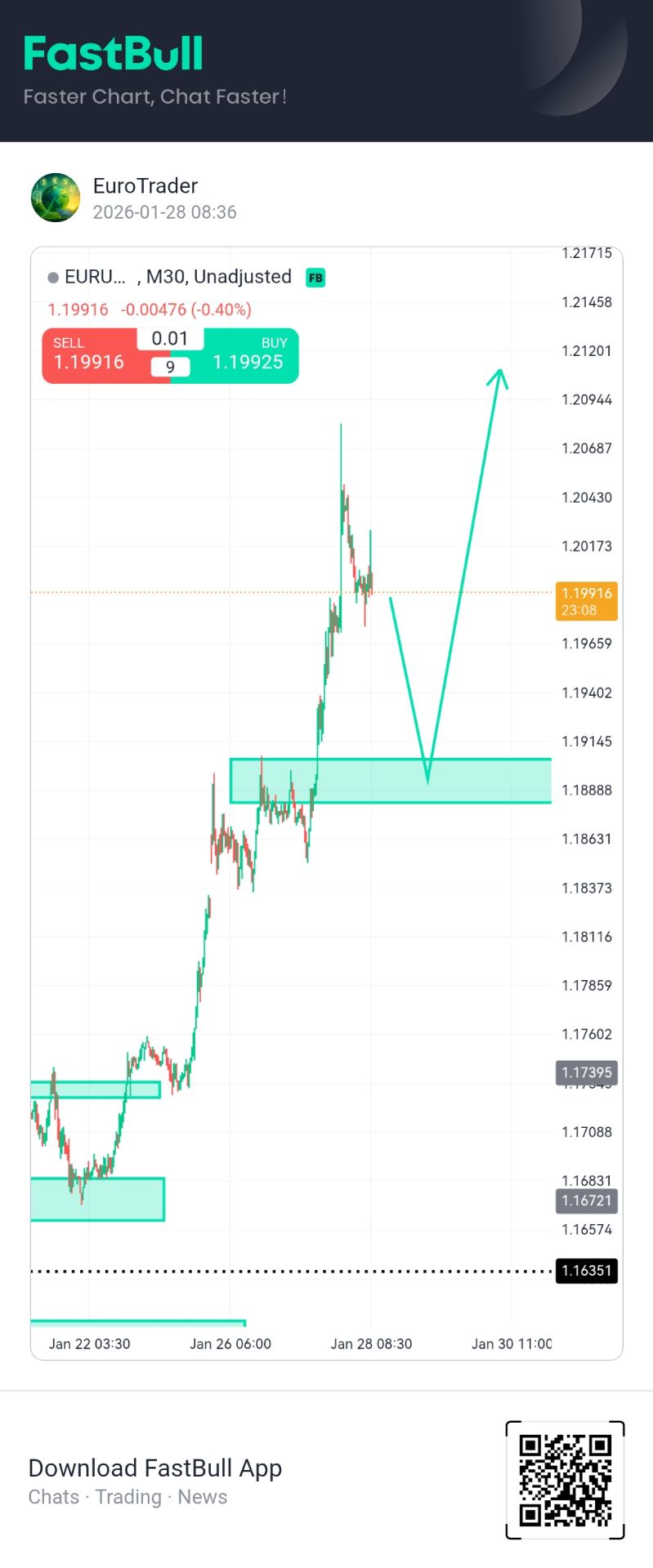
A soft set of PMI data from the Eurozone revived the European Central Bank (ECB) doves on Monday. The latest data showed that euro area’s private sector shrank for the first time since March, the deterioration in German manufacturing accelerated and French services slipped into contraction in September, as the positive vibes from the Summer Olympics continued to fade. The soft data revived the idea that the ECB could, and should cut more thoroughly to give support to the sputtering European economies. The EURUSD sold off, tipped a toe below the 1.11 but rebounded above this level since than as the dollar bears came back in charge again. The French and Spanish CPI updates are due Friday. Sufficiently soft figures will likely keep the euro sold, even against a weakened US dollar.
There is one central bank that stands out in the middle of a jungle of doves and that’s the Reserve Bank of Australia (RBA). The RBA kept its policy rate unchanged for the 7th consecutive meeting today and its Governor said that they don’t care about what the other central banks do, that they are focused on their domestic economy, that the board wants to see inflation come firmly back to 2-3% range and that they were not expecting to cut rates in the near future. Voila, that’s pretty clear.
The Aussie hit the highest level this year against the greenback on the back of the clear divergence between the RBA which refuses to cut rates, and the Fed where the bankers rush – maybe prematurely – toward rate cuts. Note that the Chinese stimulus news also carry the potential to give a boost to iron ore futures and the Aussie. All in all, supportive factors are gathering to pave the way for a further Aussie strength against both the greenback, the euro and the Japanese yen.


728 RM B 7/F GEE LOK IND BLDG NO 34 HUNG TO RD KWUN TONG KLN HONG KONG


White Label
Data API
Web Plug-ins
Poster Maker
Affiliate Program
The risk of loss in trading financial instruments such as stocks, FX, commodities, futures, bonds, ETFs and crypto can be substantial. You may sustain a total loss of the funds that you deposit with your broker. Therefore, you should carefully consider whether such trading is suitable for you in light of your circumstances and financial resources.
No decision to invest should be made without thoroughly conducting due diligence by yourself or consulting with your financial advisors. Our web content might not suit you since we don't know your financial conditions and investment needs. Our financial information might have latency or contain inaccuracy, so you should be fully responsible for any of your trading and investment decisions. The company will not be responsible for your capital loss.
Without getting permission from the website, you are not allowed to copy the website's graphics, texts, or trademarks. Intellectual property rights in the content or data incorporated into this website belong to its providers and exchange merchants.
Not Logged In
Log in to access more features


Log In
Sign Up


