• Trade
  • Markets
  • Copy
  • Contests
  • News
  • 24/7
  • Calendar
  • Q&A
  • Chats
Trending
Screeners
SYMBOL
LAST
BID
ASK
HIGH
LOW
NET CHG.
%CHG.
SPREAD
SPX
S&P 500 Index
6857.13
6857.13
6857.13
6865.94
6827.13
+7.41
+ 0.11%
--
DJI
Dow Jones Industrial Average
47850.93
47850.93
47850.93
48049.72
47692.96
-31.96
-0.07%
--
IXIC
NASDAQ Composite Index
23505.13
23505.13
23505.13
23528.53
23372.33
+51.04
+ 0.22%
--
USDX
US Dollar Index
98.890
98.970
98.890
98.980
98.890
-0.090
-0.09%
--
EURUSD
Euro / US Dollar
1.16547
1.16554
1.16547
1.16555
1.16408
+0.00102
+ 0.09%
--
GBPUSD
Pound Sterling / US Dollar
1.33402
1.33413
1.33402
1.33402
1.33165
+0.00131
+ 0.10%
--
XAUUSD
Gold / US Dollar
4217.76
4218.14
4217.76
4218.25
4194.54
+10.59
+ 0.25%
--
WTI
Light Sweet Crude Oil
59.278
59.315
59.278
59.469
59.187
-0.105
-0.18%
--

Community Accounts

Signal Accounts
--
Profit Accounts
--
Loss Accounts
--
View More

Become a signal provider

Sell trading signals to earn additional income

View More

Guide to Copy Trading

Get started with ease and confidence

View More

Signal Accounts for Members

All Signal Accounts

Best Return
  • Best Return
  • Best P/L
  • Best MDD
Past 1W
  • Past 1W
  • Past 1M
  • Past 1Y

All Contests

  • All
  • Trump Updates
  • Recommend
  • Stocks
  • Cryptocurrencies
  • Central Banks
  • Featured News
Top News Only
Share

India's NIFTY IT Index Last Up 1.3%

Share

India's Nifty 50 Index Rises 0.35%

Share

Israel Sets 2026 Defence Budget At $34 Billion

Share

Russia Says Azov Sea's Port Of Temryuk Damaged In Ukrainian Attack

Share

Israel's Defense Budget For 2026 Will Be 112 Billion Israeli Shekels - Defense Minister Office

Share

One India Rate Panel Member Ram Singh Was Of View That Stance Should Be Changed To 'Accommodative' From 'Neutral' - Monetary Policy Committee Statement

Share

Reserve Bank Of India Chief: Will Continue To Meet Productive Needs Of Economy In Proactive Manner

Share

Reserve Bank Of India Chief: System Level Financial Parameters Of Nbfcs Sound

Share

Reserve Bank Of India Chief: Dollar Rupee Swap To Be For 3 Years, To Be Conducted This Month

Share

India's Nifty Realty Index Extend Gains, Last Up 1.4%

Share

India's Nifty Psu Bank Index Rises 1%

Share

Reserve Bank Of India Chief: Commited To Providing Sufficient Durable Liquidity

Share

Reserve Bank Of India Chief: Transmission Has Been Broad Based Across Sectors, Satisfactory

Share

Reserve Bank Of India Chief: As Of Nov 28, India's Forex Reserves Stood At $686 Billion

Share

Reserve Bank Of India Chief: Healthy Services Exports With Strong Remittances To Keep Cad Modest In This Year

Share

Reserve Bank Of India Chief: CPI Inflation Seen At 0.6% In Q3 Fy26

Share

Reserve Bank Of India Chief: Fy26 CPI Inflation Seen At 2% Versus 2.6% Previously

Share

India's Nifty Realty Index Up 1% After Reserve Bank Of India's Rate Cut

Share

India's Nifty Psu Bank Index Turns Positive, Up 0.43% After Reserve Bank Of India's Rate Cut

Share

Reserve Bank Of India Chief: Merchandise Exports Face Some Headwinds

TIME
ACT
FCST
PREV
Turkey Trade Balance

A:--

F: --

P: --

Germany Construction PMI (SA) (Nov)

A:--

F: --

P: --

Euro Zone IHS Markit Construction PMI (Nov)

A:--

F: --

P: --

Italy IHS Markit Construction PMI (Nov)

A:--

F: --

P: --

U.K. Markit/CIPS Construction PMI (Nov)

A:--

F: --

P: --

France 10-Year OAT Auction Avg. Yield

A:--

F: --

P: --

Euro Zone Retail Sales MoM (Oct)

A:--

F: --

P: --

Euro Zone Retail Sales YoY (Oct)

A:--

F: --

P: --

Brazil GDP YoY (Q3)

A:--

F: --

P: --

U.S. Challenger Job Cuts (Nov)

A:--

F: --

P: --

U.S. Challenger Job Cuts MoM (Nov)

A:--

F: --

P: --

U.S. Challenger Job Cuts YoY (Nov)

A:--

F: --

P: --

U.S. Initial Jobless Claims 4-Week Avg. (SA)

A:--

F: --

P: --

U.S. Weekly Initial Jobless Claims (SA)

A:--

F: --

P: --

U.S. Weekly Continued Jobless Claims (SA)

A:--

F: --

P: --

Canada Ivey PMI (SA) (Nov)

A:--

F: --

P: --

Canada Ivey PMI (Not SA) (Nov)

A:--

F: --

P: --

U.S. Non-Defense Capital Durable Goods Orders Revised MoM (Excl. Aircraft) (SA) (Sept)

A:--

F: --

P: --
U.S. Factory Orders MoM (Excl. Transport) (Sept)

A:--

F: --

P: --

U.S. Factory Orders MoM (Sept)

A:--

F: --

P: --

U.S. Factory Orders MoM (Excl. Defense) (Sept)

A:--

F: --

P: --

U.S. EIA Weekly Natural Gas Stocks Change

A:--

F: --

P: --

Saudi Arabia Crude Oil Production

A:--

F: --

P: --

U.S. Weekly Treasuries Held by Foreign Central Banks

A:--

F: --

P: --

Japan Foreign Exchange Reserves (Nov)

A:--

F: --

P: --

India Repo Rate

A:--

F: --

P: --

India Benchmark Interest Rate

A:--

F: --

P: --

India Reverse Repo Rate

A:--

F: --

P: --

India Cash Reserve Ratio

A:--

F: --

P: --

Japan Leading Indicators Prelim (Oct)

A:--

F: --

P: --

U.K. Halifax House Price Index YoY (SA) (Nov)

--

F: --

P: --

U.K. Halifax House Price Index MoM (SA) (Nov)

--

F: --

P: --

France Current Account (Not SA) (Oct)

--

F: --

P: --

France Trade Balance (SA) (Oct)

--

F: --

P: --

France Industrial Output MoM (SA) (Oct)

--

F: --

P: --

Italy Retail Sales MoM (SA) (Oct)

--

F: --

P: --

Euro Zone Employment YoY (SA) (Q3)

--

F: --

P: --

Euro Zone GDP Final YoY (Q3)

--

F: --

P: --

Euro Zone GDP Final QoQ (Q3)

--

F: --

P: --

Euro Zone Employment Final QoQ (SA) (Q3)

--

F: --

P: --

Euro Zone Employment Final (SA) (Q3)

--

F: --

P: --
Brazil PPI MoM (Oct)

--

F: --

P: --

Mexico Consumer Confidence Index (Nov)

--

F: --

P: --

Canada Unemployment Rate (SA) (Nov)

--

F: --

P: --

Canada Labor Force Participation Rate (SA) (Nov)

--

F: --

P: --

Canada Employment (SA) (Nov)

--

F: --

P: --

Canada Part-Time Employment (SA) (Nov)

--

F: --

P: --

Canada Full-time Employment (SA) (Nov)

--

F: --

P: --

U.S. Dallas Fed PCE Price Index YoY (Sept)

--

F: --

P: --

U.S. PCE Price Index YoY (SA) (Sept)

--

F: --

P: --

U.S. PCE Price Index MoM (Sept)

--

F: --

P: --

U.S. Personal Outlays MoM (SA) (Sept)

--

F: --

P: --

U.S. Core PCE Price Index MoM (Sept)

--

F: --

P: --

U.S. UMich 5-Year-Ahead Inflation Expectations Prelim YoY (Dec)

--

F: --

P: --

U.S. Core PCE Price Index YoY (Sept)

--

F: --

P: --

U.S. 5-10 Year-Ahead Inflation Expectations (Dec)

--

F: --

P: --

U.S. UMich Current Economic Conditions Index Prelim (Dec)

--

F: --

P: --

U.S. UMich Consumer Sentiment Index Prelim (Dec)

--

F: --

P: --

U.S. UMich 1-Year-Ahead Inflation Expectations Prelim (Dec)

--

F: --

P: --

U.S. UMich Consumer Expectations Index Prelim (Dec)

--

F: --

P: --

Q&A with Experts
    • All
    • Chatrooms
    • Groups
    • Friends
    Connecting
    .
    .
    .
    Type here...
    Add Symbol or Code

      No matching data

      All
      Trump Updates
      Recommend
      Stocks
      Cryptocurrencies
      Central Banks
      Featured News
      • All
      • Russia-Ukraine Conflict
      • Middle East Flashpoint
      • All
      • Russia-Ukraine Conflict
      • Middle East Flashpoint

      Search
      Products

      Charts Free Forever

      Chats Q&A with Experts
      Screeners Economic Calendar Data Tools
      Membership Features
      Data Warehouse Market Trends Institutional Data Policy Rates Macro

      Market Trends

      Market Sentiment Order Book Forex Correlations

      Top Indicators

      Charts Free Forever
      Markets

      News

      News Analysis 24/7 Columns Education
      From Institutions From Analysts
      Topics Columnists

      Latest Views

      Latest Views

      Trending Topics

      Top Columnists

      Latest Update

      Signals

      Copy Rankings Latest Signals Become a signal provider AI Rating
      Contests
      Brokers

      Overview Brokers Assessment Rankings Regulators News Claims
      Broker listing Forex Brokers Comparison Tool Live Spread Comparison Scam
      Q&A Complaint Scam Alert Videos Tips to Detect Scam
      More

      Business
      Events
      Careers About Us Advertising Help Center

      White Label

      Data API

      Web Plug-ins

      Affiliate Program

      Awards Institution Evaluation IB Seminar Salon Event Exhibition
      Vietnam Thailand Singapore Dubai
      Fans Party Investment Sharing Session
      FastBull Summit BrokersView Expo
      Recent Searches
        Top Searches
          Markets
          News
          Analysis
          User
          24/7
          Economic Calendar
          Education
          Data
          • Names
          • Latest
          • Prev

          View All

          No data

          Scan to Download

          Faster Charts, Chat Faster!

          Download App
          English
          • English
          • Español
          • العربية
          • Bahasa Indonesia
          • Bahasa Melayu
          • Tiếng Việt
          • ภาษาไทย
          • Français
          • Italiano
          • Türkçe
          • Русский язык
          • 简中
          • 繁中
          Open Account
          Search
          Products
          Charts Free Forever
          Markets
          News
          Signals

          Copy Rankings Latest Signals Become a signal provider AI Rating
          Contests
          Brokers

          Overview Brokers Assessment Rankings Regulators News Claims
          Broker listing Forex Brokers Comparison Tool Live Spread Comparison Scam
          Q&A Complaint Scam Alert Videos Tips to Detect Scam
          More

          Business
          Events
          Careers About Us Advertising Help Center

          White Label

          Data API

          Web Plug-ins

          Affiliate Program

          Awards Institution Evaluation IB Seminar Salon Event Exhibition
          Vietnam Thailand Singapore Dubai
          Fans Party Investment Sharing Session
          FastBull Summit BrokersView Expo

          Nikkei 225: Bulls Back In Vogue With 4% “Takaichi Trade” Rally

          MarketPulse by OANDA Group

          Stocks

          Summary:

          Nikkei 225 remains supported by macro tailwinds, including aggressive fiscal stimulus under PM Takaichi and a renewed steepening in Japan's government bond yield curves, both historically correlated with upside in the index.

          Nikkei 225 remains supported by macro tailwinds, including aggressive fiscal stimulus under PM Takaichi and a renewed steepening in Japan's government bond yield curves, both historically correlated with upside in the index.

          A weakening Japanese yen is attracting stronger foreign inflows, with USD/JPY at a 10-month high and foreign net purchases of Japanese equities trending higher, reinforcing bullish pressure on the Nikkei 225.

          Short-term technicals lean positive, with the Japan 225 CFD Index holding above key moving averages and momentum indicators strengthening; a break above 50,730 could unlock the next leg higher towards 51,530 and 52,775/52,830.

          The Japan 225 CFD Index (a proxy of the Nikkei 225 futures) has staged the expected minor bullish reversal right at the 49,370/48,450 key inflection support zone as it dropped to an intraday low of 49,099 on 5 November before it rallied by 4.9% to hit an intraday high of 51,514 on 13 November.

          Thereafter, it wobbled, erased its earlier gains, and declined by 4.8% to retest the lower limit of the key inflection support at 48,450 on Tuesday, 18 November, on the backdrop of a weaker footing from the US stock market due to fears of overvaluation in Artificial Intelligence (AI)- related stocks.

          Interestingly, several localized macro factors remain supportive of the ongoing short- to medium-term bullish trend of the Nikkei 225. Let's examine them in greater detail.
          Further steepening of the JGB yield curve as it broke new highs

          Nikkei 225: Bulls Back In Vogue With 4% “Takaichi Trade” Rally_1

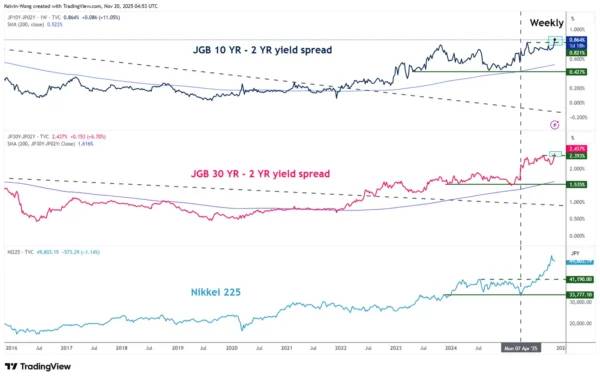
          Fig. 1: JGGs yield curve with Nikkei 225 major trends as of 20 Nov 2025 (Source: TradingView)

          The "Takaichi Trade" is backed in the front seat as market participants turn their attention to focus on the new Japanese Prime Minister Takaichi's push on the implementation of an aggressive fiscal policy and a tilt towards lower interest rates to drive economic growth in Japan.

          Takaichi's administration is expected to unveil a new economic package in parliament this week, where the additional supplementary budget for this fiscal year is expected to be at around 20 trillion yen, far bigger than the 13.9 trillion-yen package compiled a year ago by Takaichi's predecessor.

          The higher fiscal stimulus is likely to trigger a boost to domestic consumption in Japan as early as the first quarter of 2026, in turn, causing the Japanese Government (JGB) yield curves (both the 10-year and 30-year against 2-year) to steepen further (see Fig. 1).

          The 10-year/2-year JGB yield curve has broken above its prior May 2025 high of 0.82% and currently trades at 0.86%, a 13-year high.

          In addition, the 30-year/2-year JGB yield curve jumped to a new record high of 2.44% at the time of writing, surpassing the September 2025 peak of 2.39%.

          The major bullish breakout (steepening conditions) of the JGB yield curves (both 10-year and 30-year against the 2-year) since June 2022 has a direct correlation with the movements of the Nikkei 225.

          Hence, the continuation of a further steepening of the JGB yield curves is likely to trigger another round of a positive feedback loop in the Nikkei 225.
          A weak JPY may attract higher foreign net inflows into Japanese equities

          Nikkei 225: Bulls Back In Vogue With 4% “Takaichi Trade” Rally_2

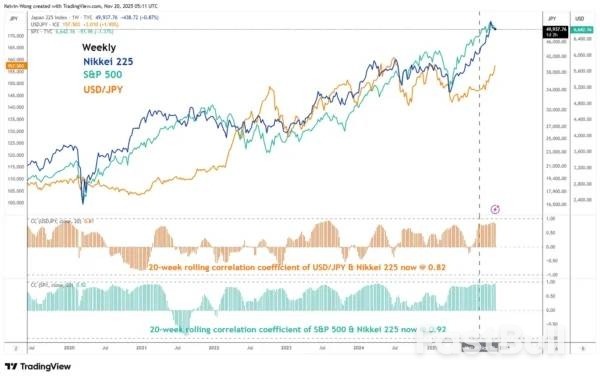
          Fig. 2: Correlation trends of USD/JPY & S&P 500 with Nikkei 225 as of 20 Nov 2025 (Source: TradingView)

          Nikkei 225: Bulls Back In Vogue With 4% “Takaichi Trade” Rally_3

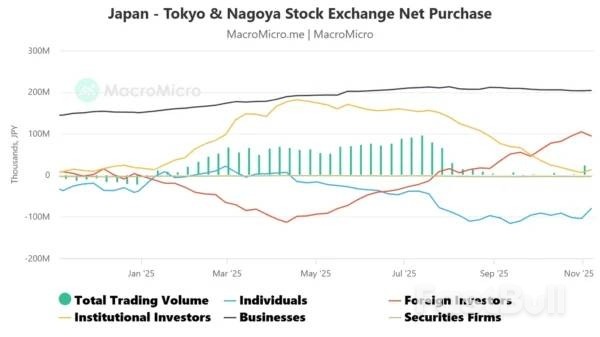
          Fig. 3: Net purchases of Tokyo & Nagoya stock exchanges as of 7 Nov 2025 (Source: MacroMicro)

          Another "cause and effect" from the "Takaichi Trade" is a weaker JPY, as the Bank of Japan (BoJ) is likely to face an increased risk of jawboning from the new administration in pushing back the gradual interest rate hikes advocated by BoJ's latest monetary policy stance.

          The Japanese yen has weakened significantly against the US dollar in the past month, where it shot past 154.00 "easily" to trade at a 10-month low of 157.50 per US dollar at the time of writing.

          The USD/JPY has been moving in direct union with the Nikkei 225 since September 2025, where the 20-week rolling correlation coefficient of the USD/JPY with the Nikkei 225 stands at a high value of 0.82 as of 20 November 2025 (see Fig. 2).

          In conjunction, the 52-week average of foreign investors' net purchases of Japanese equities listed on the Tokyo and Nagoya stock exchanges has continued to increase from 77.44 billion in the week of 10 October 2025 to 93.98 billion for the week of 7 November 2025 (see Fig. 3).

          Hence, a further weakening of the JPY may see a continuation of more foreign inflows to support the bullish trend of the Nikkei 225.

          Let's now shift to Nikkei 225's potential share price trajectory from a short-term technical perspective, focusing on the next one to three days.
          Preferred trend bias (1-3 days) – Potential bullish break above 20-day moving average

          Nikkei 225: Bulls Back In Vogue With 4% “Takaichi Trade” Rally_4

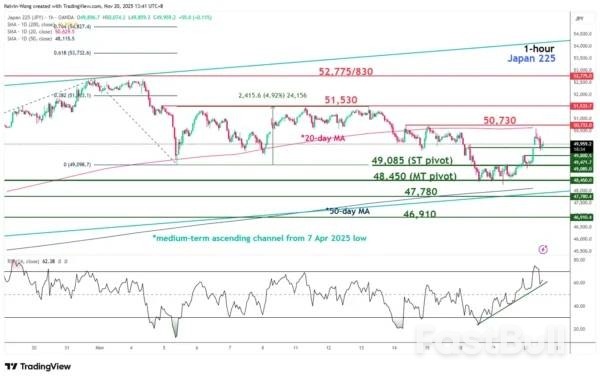
          Fig. 4: Japan 225 CFD Index minor trend as of 20 Nov 2025 (Source: TradingView)

          Bullish bias with 49,085 as key short-term pivotal support for the Japan 225 CFD Index (a proxy of the Nikkei 225 futures).

          A clearance above 50,730 (also the 20-day moving average) reinforces the potential bullish impulsive up move sequence to see the next intermediate resistances coming in at 51,530 and 52,775/52,830 next (see Fig. 4).

          Key elements

          · The price action of the Japan 225 CFD Index has continued to oscillate above its 50-day moving average and a medium-term ascending channel support that has been in place since the 7 April 2025 low.
          · The hourly RSI momentum indicator has continued to shape a series of "higher lows" without any bearish divergence condition at its overbought zone (above the 70 level).
          · These observations suggest the medium-term uptrend phase of the Japan 225 CFD Index remains intact with a build-up in short-term bullish momentum.

          Alternative trend bias (1 to 3 days)

          Failure to hold at the 49,085 key short-term support negates the bullish tone on the Japan 225 CFD Index for a slide to retest the 48,450 key medium-term pivotal support.

          Source: MarketPulse by OANDA Group

          Risk Warnings and Disclaimers
          You understand and acknowledge that there is a high degree of risk involved in trading. Following any strategies or investment methods may lead to potential losses. The content on the site is provided by our contributors and analysts for information purposes only. You are solely responsible for determining whether any trading assets, securities, strategy, or any other product is suitable for investing based on your own investment objectives and financial situation.
          Add to Favorites
          Share

          NuEnergy Completes Drilling For 'Early Gas Sales' Project In Indonesia

          Winkelmann

          Commodity

          Forex

          NuEnergy Gas Ltd said it had completed drilling for the fourth and final well in its "Early Gas Sales" project under the initial development plan for the Tanjung Enim coalbed methane (CBM) production sharing contract (PSC) in Indonesia.

          "Gas shows were observed at surface via surface logging equipment, confirming the presence of methane across multiple seams", the Australian company said in a stock filing.

          The TE-B01-003 well, drilled 451 meters (1,479.66 feet) deep, intersected five coal seams at depths ranging between 299 and 419 meters, according to NuEnergy.

          "NuEnergy has installed a progressive cavity pump system for the TE-B01-003 well and preparations are now underway to commence dewatering - a key step toward establishing stable gas flow and optimizing well performance", the company said.

          "Gas will be gathered at the surface facility and delivered to the gas processing facility upon reaching target production levels".

          It added, "Pursuant to the signed heads of agreement with PT Perusahaan Gas Negara Tbk (PGN), gas produced from the drilled wells, TE-B06-001, TE-B06-002, TE-B06-003 well and the TE-B01-003 well, will be delivered via an infield pipeline to PGN's processing and distribution facility".

          The Early Gas Sales project will sell one million standard cubic feet a day (MMscfd) to Indonesian state-owned gas distributor PGN, toward the 25-MMscfd initial plan for the Tanjung Enim license, according to NuEnergy. On September 8, it announced approval from the Energy and Mineral Resources Ministry for the one-MMscfd sale through its subsidiary Dart Energy (Tanjung Enim) Pte Ltd (DETE).

          "With the gas allocation approval now secured, DETE will proceed with finalizing the Gas Sale and Purchase Agreement with PGN", NuEnergy said then.

          Meanwhile the bigger Tanjung Enim Plan of Development (POD) 1 was approved June 2021 "under a gross split scheme which will allow the PSC to proceed field development, surface facility construction and selling of the gas", NuEnergy says on its website. "The approval also represents the first coalbed methane POD in Indonesia".

          The 30-year PSC, awarded August 2009, has proven and probable reserves of 215 billion cubic feet (Bcf) and gas in place of 484 Bcf and spans 249.1 square kilometers (96.18 square miles), according to NuEnergy.

          The contract area sits about 50 kilometers (31.07 miles) and 130 km from the cities of Prabumulih and Palembang respectively and approximately 35 km from major gas trunk lines, according to NuEnergy.

          It operates the license with a 45 percent stake. Indonesia's state-owned oil and gas company PT Pertamina and state-owned coal mining company PT Bukit Asam each own 27.5 percent.

          Source: Rigzone

          Risk Warnings and Disclaimers
          You understand and acknowledge that there is a high degree of risk involved in trading. Following any strategies or investment methods may lead to potential losses. The content on the site is provided by our contributors and analysts for information purposes only. You are solely responsible for determining whether any trading assets, securities, strategy, or any other product is suitable for investing based on your own investment objectives and financial situation.
          Add to Favorites
          Share

          In October, FOMC Members Expressed Disagreement About December’s Decision

          Samantha Luan

          Forex

          Political

          Economic

          The Federal Reserve Open Market Committee (FOMC) lowered the federal funds rate to a target range of 4.00% to 3.75% in October, despite the government shutdown leaving them with little additional official data since their September decision.

          The minutes showed that the committee is still concerned about the impact of tariffs on inflation. Many participants also noted expectations of core goods inflation to pick up over the coming quarters, as tariffs pass through to firms' prices. On the other hand, a few participants did note that productivity gains from AI and automation may help tamp down cost increases. Still, participants seemed to agree that inflation expectations remained well anchored.

          On the labor market, participants did comment on the lack of a jobs report for September and reported relying on private-sector estimates and limited government data. Pointing to the available data, including surveys, participants generally viewed the data as consistent with layoffs and hiring both having remained low, and the job market having softened through September and October, but not sharply.

          Participants generally judged that "uncertainty about the economic outlook remained elevated", while still noting that inflation had moved up from earlier in the year and remained elevated. Many participants who voted in favor of lowering rates this meeting "could have also supported maintaining the level of the target range".

          Critically, participants expressed strongly differing views about what would be appropriate at their December meeting. While most participants seem to favor reducing the policy rate over time, several of those with that view are unconvinced that would be appropriate in December. Many participants suggested that it would likely be appropriate to keep the target range unchanged for the rest of the year given their economic outlook.

          Key Implications

          The key takeaway from this meeting, and the real surprise, is how strongly FOMC members disagree about what is likely in their December meeting. The recent upticks in inflation and the signs that tariffs are going to start passing through to inflation are eroding some members confidence in the balance of risks, and may be pushing out rate cuts further.

          The release of the missing jobs data tomorrow will be critical for the FOMC. The potential for the committee to favor holding rates constant in December rests in part on the assessment of the labor market as softening but not sharply deteriorating. This potentially puts the rate outlook in a "bad news is good news" situation – jobs reports for September and October that confirm the labor market is only softening and not severely weakening will strengthen the case made by some FOMC members in September that a pause in December may be appropriate.

          Source: ACTIONFOREX

          To stay updated on all economic events of today, please check out our Economic calendar
          Risk Warnings and Disclaimers
          You understand and acknowledge that there is a high degree of risk involved in trading. Following any strategies or investment methods may lead to potential losses. The content on the site is provided by our contributors and analysts for information purposes only. You are solely responsible for determining whether any trading assets, securities, strategy, or any other product is suitable for investing based on your own investment objectives and financial situation.
          Add to Favorites
          Share

          Oil Markets Hold Steady Ahead of Russia Sanctions Deadline, Geopolitical Uncertainty Clouds Outlook

          Gerik

          Economic

          Commodity

          Market Caution as Sanctions Deadline Nears

          Oil prices steadied on Thursday after recent volatility, with Brent crude hovering around $64 per barrel and West Texas Intermediate (WTI) remaining under the $60 mark. This stabilization follows a sharp 2% drop the previous day the largest decline in a week triggered by mixed signals from both supply and inventory data.
          Investor focus has now turned to the enforcement of U.S. sanctions against Russia’s two major oil producers, Rosneft PJSC and Lukoil PJSC, scheduled to take effect on Friday. These measures have already disrupted global crude flows, particularly to India, and forced Lukoil to divest its overseas assets. The causal relationship between impending sanctions and market stabilization lies in the uncertainty over future supply chains and potential price volatility as trade routes are reshuffled.

          Structural Supply Pressures vs. Geopolitical Risk Premium

          Despite the looming sanctions, oil remains on track for a yearly decline. Expectations of a global surplus fueled by increased production from OPEC+ and other producers continue to place downward pressure on prices. Yet, geopolitical developments, including infrastructure attacks in Russia and tightened sanctions, are simultaneously adding an upward risk premium.
          In the first half of November, Russia’s fuel exports declined to their lowest levels since the 2022 Ukraine invasion. These declines stem from both physical disruptions to refining infrastructure and the correlated effect of economic pressure from sanctions. Thus, while supply abundance remains the primary pricing force, geopolitical shocks could temporarily override those fundamentals.

          Lukoil Asset Sell-Off and Strategic Realignments

          The sanctions have triggered a global rush for Lukoil’s international assets. A notable example is ExxonMobil’s recent meeting with Iraq’s Oil Minister to discuss a potential takeover of Lukoil’s stake in the West Qurna 2 oil field a site contributing approximately 10% of Iraq’s total oil output.
          This move illustrates the direct consequence of sanctions: enforced divestitures and market realignments. For U.S. firms and allies, such shifts may open strategic opportunities to re-enter or expand in key oil fields, further altering the global oil production and ownership landscape.

          EU Targets Russia’s Shadow Fleet Operations

          In parallel to U.S. measures, the European Union is developing additional restrictions aimed at curtailing Russia’s so-called “shadow fleet” tankers that transport oil covertly to bypass sanctions. If enacted, these steps would further restrict Moscow’s capacity to monetize its energy exports, deepening the financial impact of existing penalties and complicating its war financing strategy.
          The causal intent of both U.S. and EU sanctions is to constrain Russia’s energy revenues, but the efficacy depends on enforcement capacity and global compliance particularly from countries outside the sanctioning coalitions.

          Inventory Movements and Mixed Market Signals

          Oil’s subdued reaction to these developments also reflects underlying inventory dynamics. While crude inventories fell by 3.4 million barrels last week surprising analysts who expected a build gasoline and distillate (diesel and heating oil) stockpiles rose for the first time in over a month. The rise in refined product inventories contributed to the prior day’s price dip, highlighting a correlation between short-term demand concerns and pricing sentiment.
          These mixed signals illustrate a market at crossroads: geopolitical drivers are amplifying volatility, yet structural fundamentals such as oversupply and uneven demand recovery are keeping a lid on sustained rallies.
          As markets await the enforcement of U.S. sanctions against Rosneft and Lukoil, oil prices remain caught between opposing forces. The prospect of tightened Russian supply injects geopolitical risk, while broader market expectations of surplus production and rising inventories cap gains. The evolving landscape including divestments, shadow fleet crackdowns, and diplomatic recalibrations will likely define oil’s path through the end of 2025, with volatility expected to remain elevated.

          Source: Bloomberg

          To stay updated on all economic events of today, please check out our Economic calendar
          Risk Warnings and Disclaimers
          You understand and acknowledge that there is a high degree of risk involved in trading. Following any strategies or investment methods may lead to potential losses. The content on the site is provided by our contributors and analysts for information purposes only. You are solely responsible for determining whether any trading assets, securities, strategy, or any other product is suitable for investing based on your own investment objectives and financial situation.
          Add to Favorites
          Share

          Asian Markets Rally on Nvidia’s Blowout Earnings, AI Optimism Fuels Tech Surge

          Gerik

          Economic

          Stocks

          Nvidia’s Outperformance Reignites Global Tech Momentum

          Asian stock markets staged a broad rally on Thursday following Nvidia’s release of exceptional quarterly earnings, with revenue soaring to $57 billion far surpassing analysts' expectations. This performance reassured investors that the rally in AI-related stocks, often criticized for being speculative, may still be underpinned by genuine earnings strength.
          Japan’s Nikkei 225 saw early gains of up to 4.2% before settling at a 2.6% increase, while South Korea’s Kospi advanced 3% to 4,047.57, driven by surging technology stocks. Samsung Electronics rose 6.1% and SK Hynix gained 3.5%, reflecting direct exposure to Nvidia’s semiconductor ecosystem. The causal link here is evident: Nvidia’s revenue beat has reaffirmed demand for AI chips, thereby supporting suppliers and peer firms across Asia.

          Semiconductor Trade Policy and Market Relief

          Reports suggesting a potential delay in planned U.S. tariffs on semiconductors further bolstered optimism. This contributed to positive sentiment in South Korea, a major chip-exporting nation, reinforcing the causal relationship between trade uncertainty and investor confidence in tech-related equities.
          Meanwhile, Chinese markets registered more restrained advances. The Hang Seng Index in Hong Kong rose just 0.1% and Shanghai’s Composite Index added 0.4%, reflecting a correlated effect rather than direct AI earnings linkage. Regulatory overhang and domestic economic concerns likely limited upside for mainland China despite the global tech euphoria.

          Broader Market Impacts and Wall Street Trends

          In the U.S., Nvidia’s dominance now extends across the entire S&P 500. It is the most heavily weighted stock and its performance significantly impacts the direction of the index. On Wednesday, the S&P 500 gained 0.4%, snapping a four-day losing streak, while the Nasdaq climbed 0.6%. Nvidia jumped 2.8% during regular hours and surged another 5.1% in after-hours trading after the earnings report.
          The causal connection between Nvidia’s financial results and broader market direction underscores its growing role as a bellwether for AI enthusiasm and tech valuation trends. Its gains also counterbalanced weakness in retailers like Target, which fell 2.8% after disappointing quarterly revenues.

          Energy, Currencies, and Inflation Expectations

          Oil prices edged higher, with U.S. crude rising to $59.41 and Brent crude climbing to $63.67, supported by investor optimism around economic growth. Meanwhile, the U.S. dollar strengthened slightly against the Japanese yen, trading at 157.32. This reflects expectations that Japan may further delay fiscal consolidation efforts amid increased public spending.
          The euro weakened marginally to $1.1520, signaling a shift in global capital flows towards U.S. assets, driven by Nvidia’s performance and speculation over U.S. interest rate policy. While some Federal Reserve officials continue to hint at a December pause, inflation persistence remains a concern, with core CPI still above the 2% target. This introduces a correlation between macroeconomic data and central bank policy, which in turn influences both stock and currency markets.

          AI Rally Gains Renewed Justification

          Nvidia’s Q3 earnings not only beat expectations but also offered fresh evidence that the AI sector’s explosive growth narrative may be supported by fundamental performance rather than pure speculation. This earnings-driven momentum has renewed investor appetite for tech-heavy markets, particularly in Asia, where companies are tightly linked to the AI supply chain.
          The global rally, however, remains sensitive to interest rate outlooks, inflation data, and trade policy developments. If Nvidia and other AI leaders continue delivering strong results, the cause-effect logic suggests that further upside remains possible especially if monetary easing resumes in early 2026.
          The upbeat mood across Asian markets reflects a convergence of earnings-driven optimism and easing geopolitical concerns. Nvidia’s stellar performance has acted as a catalyst for tech equities worldwide, reaffirming the sector’s central role in shaping global financial narratives in the era of artificial intelligence. However, markets remain alert to macroeconomic headwinds, ensuring that volatility will persist even as the AI boom charges forward.

          Source: AP

          To stay updated on all economic events of today, please check out our Economic calendar
          Risk Warnings and Disclaimers
          You understand and acknowledge that there is a high degree of risk involved in trading. Following any strategies or investment methods may lead to potential losses. The content on the site is provided by our contributors and analysts for information purposes only. You are solely responsible for determining whether any trading assets, securities, strategy, or any other product is suitable for investing based on your own investment objectives and financial situation.
          Add to Favorites
          Share

          EU's Ambassador Urges Reset with China Amid Supply Chain Tensions and Political Friction

          Gerik

          Economic

          Political

          Deteriorating Relations and Post-Summit Disappointment

          Jorge Toledo, the European Union’s chief envoy to China, delivered a candid assessment of the current state of EU-China relations, declaring that little progress has been made since the summer summit between the two powers. Speaking at a panel in Beijing on Thursday, Toledo acknowledged that bilateral ties remain strained due to a confluence of issues particularly export controls and supply chain vulnerabilities. This frank admission signals that recent diplomatic engagements have failed to mend deeper rifts, despite ongoing political and economic interdependence.
          The lack of improvement in ties since the summit represents a causal result of unresolved tensions surrounding trade practices, regulatory transparency, and access to critical materials such as rare earth elements. The continued friction has prevented the formation of new trust mechanisms and left key issues lingering without meaningful resolution.

          Rare Earth Policy Shift Presents a Strategic Opening

          Toledo emphasized that China’s recent decision to suspend its export controls on rare earth magnets offers a window of opportunity to recalibrate the relationship. Rare earth elements are vital to numerous European industries from electric vehicles to renewable energy systems and China’s dominance in their production has raised alarms about strategic dependence.
          The earlier restrictions had placed European manufacturers in a precarious position, prompting urgent efforts to diversify supply sources. While China's easing of controls may not fully resolve those concerns, Toledo described the move as “good news” and a potential platform for diplomatic and economic progress. The correlation between rare earth access and political goodwill underscores how tactical policy shifts can influence broader strategic alignments.

          Media Criticism and Misunderstandings About EU Cohesion

          Toledo also addressed a more sensitive issue: the portrayal of the European Union in Chinese media. He criticized recent narratives that depict the EU as a fragmented and obstructive bloc, arguing that such messaging disregards the political unity and shared purpose among member states. According to Toledo, these portrayals are misleading and counterproductive, as they ignore the institutional structure and consensus-based decision-making that underpin the Union's actions.
          This mischaracterization, in his view, undermines mutual understanding and complicates diplomatic engagement. The causal effect of persistent media attacks, he implied, is a deterioration of trust, making it harder for both sides to pursue pragmatic dialogue.

          Political Union as a Foundation for Engagement

          Reiterating the EU’s commitment to constructive relations, Toledo called for recognition of the bloc as a political union not merely a collection of sovereign states. His remarks sought to correct misconceptions that may lead Beijing to underestimate the EU’s ability to act collectively on strategic issues such as trade policy, climate goals, and geopolitical alliances.
          He cautioned that failing to acknowledge this unified stance “would be risky and would not be conducive,” signaling that future diplomatic overtures must engage the EU as a single, coherent actor rather than as disparate national interests.
          Despite recent steps such as the suspension of rare earth export controls, EU-China relations remain fragile and unresolved. Ambassador Jorge Toledo’s remarks highlight both the opportunities and limitations of the current diplomatic landscape. While China’s recent policy shift offers a narrow path toward rebuilding trust, continued misinformation and systemic differences threaten to widen the divide unless both sides commit to mutual understanding and strategic compromise.

          Source: Bloomberg

          To stay updated on all economic events of today, please check out our Economic calendar
          Risk Warnings and Disclaimers
          You understand and acknowledge that there is a high degree of risk involved in trading. Following any strategies or investment methods may lead to potential losses. The content on the site is provided by our contributors and analysts for information purposes only. You are solely responsible for determining whether any trading assets, securities, strategy, or any other product is suitable for investing based on your own investment objectives and financial situation.
          Add to Favorites
          Share

          Germany Shocks Markets by Backing 50% Tariff on Chinese Steel, Deepening EU-China Trade Tensions

          Gerik

          Economic

          Political

          Strategic Pivot: Germany Aligns With EU’s Tougher Trade Agenda

          In a move that has surprised both domestic observers and international stakeholders, German Chancellor Friedrich Merz publicly endorsed the European Commission's plan to significantly raise import tariffs on Chinese steel, potentially up to 50%. This announcement followed a high-level Steel Summit held at the Chancellor’s office, where Merz affirmed full support for what he described as “a step in the right direction,” emphasizing the urgency of safeguarding Germany’s domestic steel sector.
          Germany’s decision carries considerable weight not only because it is the third-largest economy in the world and the EU’s industrial leader, but also because it marks a sharp deviation from Berlin’s previously measured stance toward Beijing. The shift represents a causal reaction to rising pressures from both domestic industry and broader EU policy objectives focused on reasserting control over vulnerable sectors in the face of global competition.

          Context of the Tariff Proposal and Underlying Industry Strain

          The European Commission’s October proposal involves doubling existing tariffs on steel imports, with a ceiling of 50%, while slashing tax-exempt quotas by 47%. This aggressive policy mirrors former U.S. President Donald Trump’s protectionist steel agenda and signals Europe’s readiness to adopt similar hardline measures to defend its industrial base.
          This policy evolution reflects a cause-effect relationship between structural weaknesses in Europe’s steel sector and the urgency of trade defense. High energy costs 2 to 4 times higher than competitors along with three consecutive years of falling downstream demand, have driven capacity utilization down to 67%, far below the 80% benchmark for industrial health. These adverse conditions have already forced mass layoffs and eroded output among major players like ThyssenKrupp, with the German steel workforce shrinking by 90,000 since 2008.

          Diplomatic Fallout and Deteriorating Sino-German Relations

          Germany’s policy reversal adds to escalating tensions with China. The recent postponement of German Foreign Minister Johann Wadephul’s visit to Beijing, officially attributed to scheduling issues, has been widely interpreted as symptomatic of deepening disagreements on trade and security. Although Wadephul later clarified that the trip was postponed not canceled the incident underscores increasing strain in bilateral ties.
          Beijing had previously welcomed signs of reconciliation, making Berlin’s sudden pivot particularly jarring. By backing punitive tariffs, Germany is signaling alignment with EU-wide concerns about industrial dumping, state subsidies, and strategic dependence on Chinese materials. This tension is likely to trigger correlated responses, such as reciprocal trade barriers or more assertive Chinese lobbying within international trade forums.

          Global Implications and Risks to Supply Chain Stability

          If implemented, the EU’s new steel tariff regime could restructure global trade flows. Analysts suggest that other Western nations, notably the U.S. and U.K., may explore coordinated regional alliances or protectionist blocks to counterbalance Chinese influence. This potential fragmentation introduces risks of retaliatory measures and more pervasive industrial decoupling, increasing uncertainty in global manufacturing and trade.
          The ramifications extend beyond trade. A rising tide of industrial nationalism, catalyzed by this tariff plan, may reinforce the trend toward supply chain regionalization, reducing global interdependence but increasing duplication of resources and inefficiencies.

          Domestic Dilemma: Balancing Protection and Production Costs

          Germany’s backing of EU protectionist measures also introduces economic complexity at home. As the EU’s industrial engine, Germany relies heavily on affordable inputs for its export-driven manufacturing ecosystem. Imposing high tariffs on Chinese steel may provide short-term relief for domestic producers, but it also risks raising input costs for downstream sectors such as automotive and construction core pillars of the German economy.
          This creates a delicate trade-off between shielding foundational industries and preserving the cost-competitiveness of value-added manufacturers. How Germany navigates this balancing act will influence both internal economic dynamics and broader EU policymaking on industrial protectionism.
          Germany’s endorsement of a 50% tariff on Chinese steel is more than a trade measure it is a geopolitical signal, a domestic policy gamble, and a contribution to the global reconfiguration of industrial supply chains. As tensions between the EU and China escalate, and internal pressures mount within Germany’s manufacturing heartland, the steel tariff debate may serve as a bellwether for future confrontations in a fracturing global economic order.
          To stay updated on all economic events of today, please check out our Economic calendar
          Risk Warnings and Disclaimers
          You understand and acknowledge that there is a high degree of risk involved in trading. Following any strategies or investment methods may lead to potential losses. The content on the site is provided by our contributors and analysts for information purposes only. You are solely responsible for determining whether any trading assets, securities, strategy, or any other product is suitable for investing based on your own investment objectives and financial situation.
          Add to Favorites
          Share
          FastBull
          Copyright © 2025 FastBull Ltd

          728 RM B 7/F GEE LOK IND BLDG NO 34 HUNG TO RD KWUN TONG KLN HONG KONG

          TelegramInstagramTwitterfacebooklinkedin
          App Store Google Play Google Play
          Products
          Charts

          Chats

          Q&A with Experts
          Screeners
          Economic Calendar
          Data
          Tools
          Membership
          Features
          Function
          Markets
          Copy Trading
          Latest Signals
          Contests
          News
          Analysis
          24/7
          Columns
          Education
          Company
          Careers
          About Us
          Contact Us
          Advertising
          Help Center
          Feedback
          User Agreement
          Privacy Policy
          Business

          White Label

          Data API

          Web Plug-ins

          Poster Maker

          Affiliate Program

          Risk Disclosure

          The risk of loss in trading financial instruments such as stocks, FX, commodities, futures, bonds, ETFs and crypto can be substantial. You may sustain a total loss of the funds that you deposit with your broker. Therefore, you should carefully consider whether such trading is suitable for you in light of your circumstances and financial resources.

          No decision to invest should be made without thoroughly conducting due diligence by yourself or consulting with your financial advisors. Our web content might not suit you since we don't know your financial conditions and investment needs. Our financial information might have latency or contain inaccuracy, so you should be fully responsible for any of your trading and investment decisions. The company will not be responsible for your capital loss.

          Without getting permission from the website, you are not allowed to copy the website's graphics, texts, or trademarks. Intellectual property rights in the content or data incorporated into this website belong to its providers and exchange merchants.

          Not Logged In

          Log in to access more features

          FastBull Membership

          Not yet

          Purchase

          Become a signal provider
          Help Center
          Customer Service
          Dark Mode
          Price Up/Down Colors

          Log In

          Sign Up

          Position
          Layout
          Fullscreen
          Default to Chart
          The chart page opens by default when you visit fastbull.com