- USDCAD
- XAUUSD
- XAGUSD
- WTI
- USDX


Markets
Analysis
User
24/7
Economic Calendar
Education
Data
- Names
- Latest
- Prev








The 20-year doubling guarantee offers unique security, but is it enough? We analyze the current ee bonds interest rate to assess its role in your portfolio.
Understanding the current ee bonds interest rate is essential for long-term investors seeking guaranteed returns. With recent adjustments by the U.S. Treasury, these low-risk assets offer a unique proposition for those who can hold them to maturity. This guide breaks down current yields, the powerful 20-year doubling rule, and how these bonds fit into a smart portfolio.
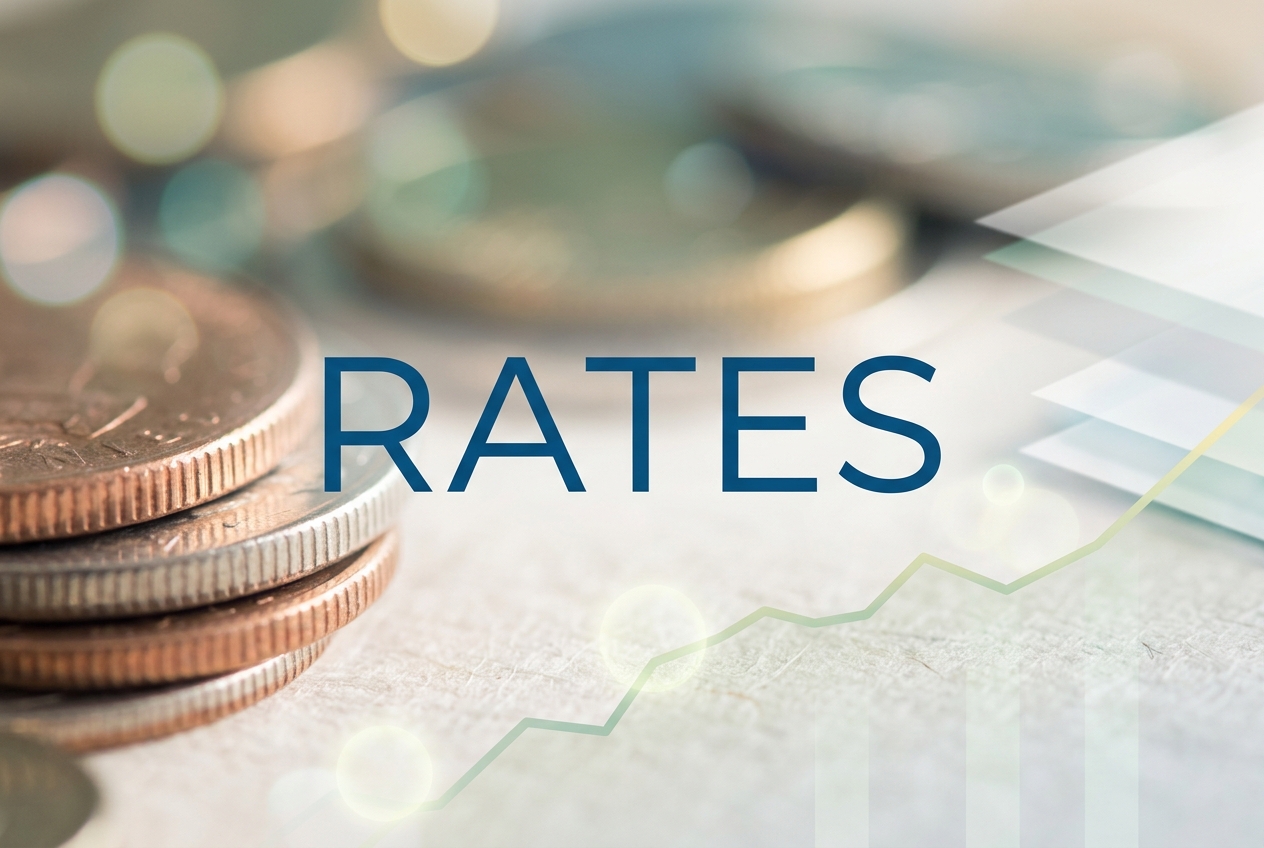
The U.S. Treasury announced that Series EE savings bonds issued from May 1, 2026, through October 31, 2026, earn a fixed annual rate of 2.40%. Once you purchase a bond, this stated percentage is locked in for the first 20 years of its 30-year life. Because these issues are entirely electronic, the value of savings bonds automatically updates in your TreasuryDirect account as interest accrues monthly.
The Treasury Department determines the fixed rate for new issues twice a year, on May 1 and November 1. Officials base this figure on prevailing market yields for long-term government debt. However, they also adjust the rate downward to account for unique benefits, such as tax deferral and the option to cash out early.
A 2.40% fixed return might appear modest compared to other fixed-income assets in today’s market. Interest on these bonds compounds semiannually, meaning your principal grows twice a year, slightly accelerating your overall gains. However, if you rely solely on this stated percentage, your wealth will likely struggle to keep pace with standard inflation metrics over time.
The true appeal of this asset lies in a specific government promise: your investment will double in value if held for exactly two decades. This contractual guarantee transforms a seemingly low-yield asset into a highly predictable wealth-building tool for patient investors.
When a bond doubles over 20 years, it generates an effective annualized yield of approximately 3.53%. This hidden return is significantly higher than the baseline 2.40% fixed rate offered in mid-2026. For investors looking for absolute certainty over a two-decade horizon, this guaranteed performance often outweighs the standard accrual rate.
You can legally redeem your bond after holding it for just 12 months. However, if you decide to figure out how to cash in ee savings bonds before the five-year mark, the Treasury will penalize you by withholding the last three months of interest. Furthermore, cashing out anywhere between year one and year 19 means you forfeit the doubling guarantee entirely and only receive the stated 2.40% return.
If you hold the bond for exactly 20 years, the Treasury evaluates its accrued value. Because a 2.40% yield mathematically falls short of doubling your initial principal in that timeframe, the government makes a one-time upward adjustment to cover the shortfall. After this adjustment, the bond continues to earn its original fixed rate for its remaining 10 years.
Deciding whether to lock up capital requires comparing these securities against other government-backed alternatives. While they offer unparalleled safety and a predictable 20-year payout, their lack of liquidity makes them unsuitable for emergency funds or short-term financial goals.
Investors frequently ask how do i bonds work compared to standard savings bonds. While EE bonds offer a fixed rate and a 20-year doubling promise, Series I bonds provide a composite rate tied directly to inflation, currently sitting at 4.26% for May 2026.
| Investment Type | Current 2026 Rate | Key Feature | Best For |
|---|---|---|---|
| Series EE Bonds | 2.40% (3.53% yield at year 20) | Guaranteed to double in 20 years | 20-year targeted savings |
| Series I Bonds | 4.26% (Variable) | Adjusts semi-annually for inflation | Preserving purchasing power |
| Certificates of Deposit | Varies by Bank | Fixed rate for 1 to 5 years | Short-term cash management |
| Treasury Bills | Market Yield | Highly liquid, short durations | Risk-free short-term yield |
To understand historical inflation protection, investors often review an i bond interest rate chart, which shows how variable rates shift with the Consumer Price Index.
These instruments are ideal for parents setting aside money for a newborn’s future college tuition. Under current tax laws, interest used for qualified higher education expenses may be entirely exempt from federal income taxes. They also serve as a reliable, risk-free anchor for individuals building a retirement portfolio with a firm 20-year horizon.
You can only purchase new issues electronically through the official TreasuryDirect portal. The minimum purchase is $25, and you can buy up to $10,000 per Social Security Number in a single calendar year. If you have older paper versions and are wondering how much is a $50 series ee bond worth today, you must use the official savings bond calculator on the Treasury website, as older issues carry different legacy rates.
A $100 bond reaches its final maturity after 30 years, but its exact cash value depends entirely on the interest rates active during its issue date. For a bond issued today, it is guaranteed to reach $200 at year 20, plus an additional 10 years of accrued fixed interest.
The current fixed interest rate is 2.40% for Series EE bonds issued from May 1, 2026, through October 31, 2026. This baseline rate applies for the first 20 years of the bond's lifespan.
Yes, the U.S. Treasury legally guarantees that your bond will be worth at least twice its original purchase price exactly 20 years after issuance. If the fixed interest rate does not achieve this naturally, the government covers the difference via a one-time adjustment.
Series I bonds are generally superior for protecting your cash against near-term inflation. However, EE bonds are better if you want a guaranteed effective yield of 3.53% and are absolutely certain you can hold the asset for exactly 20 years.
Navigating the ee bonds interest rate is simple once you understand the timeline. While the current 2.40% fixed return seems low, the 20-year doubling guarantee provides a reliable, risk-free wealth-building mechanism. By aligning this investment with a strict two-decade time horizon, you can secure predictable growth for major future financial milestones.

728 RM B 7/F GEE LOK IND BLDG NO 34 HUNG TO RD KWUN TONG KLN HONG KONG


The risk of loss in trading financial instruments such as stocks, FX, commodities, futures, bonds, ETFs and crypto can be substantial. You may sustain a total loss of the funds that you deposit with your broker. Therefore, you should carefully consider whether such trading is suitable for you in light of your circumstances and financial resources.
No decision to invest should be made without thoroughly conducting due diligence by yourself or consulting with your financial advisors. Our web content might not suit you since we don't know your financial conditions and investment needs. Our financial information might have latency or contain inaccuracy, so you should be fully responsible for any of your trading and investment decisions. The company will not be responsible for your capital loss.
Without getting permission from the website, you are not allowed to copy the website's graphics, texts, or trademarks. Intellectual property rights in the content or data incorporated into this website belong to its providers and exchange merchants.
Not Logged In
Log in to access more features


Log In
Sign Up